Wheelchair-Accessible Yosemite: What You Need to Know for a 2026 Visit

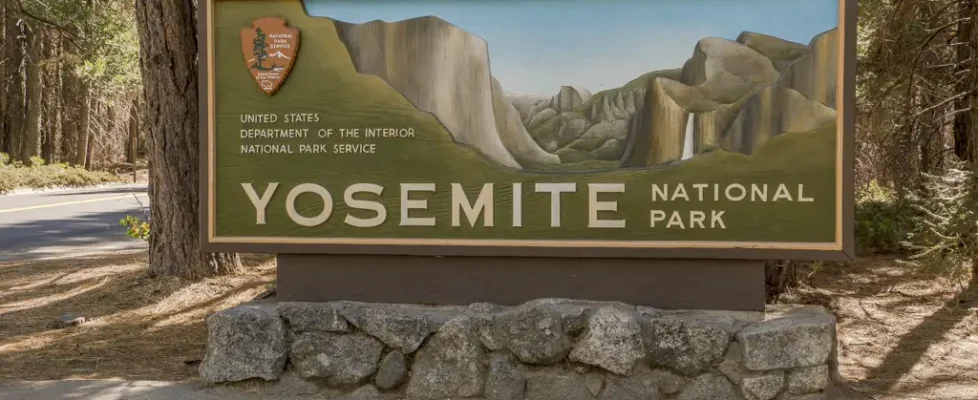
One of the most popular national parks in the US, Yosemite is on many a traveler’s must-do list. The good news is, it’s entirely possible to plan a wheelchair-accessible Yosemite visit (https://emerginghorizons.com/barrier-free-travelyosemite-sequoia-and-kings-canyon-national-parksfor-wheelers-and-slow-walkers/#itins. The bad news? Things may be a little bit more crowded this year, so some advance planning is necessary to make things go smoother.
Why the Crowds in 2026?
Yosemite has always been a popular destination, and in order to manage the crowds in previous years advance vehicle reservations were necessary. These were cheap and easy to get at www.recreation.gov. And once you got to the park at your appointed time, there wasn’t a wait, because the required vehicle reservations metered the traffic.
Fast forward to 2026, and vehicle reservations are no longer required (https://emerginghorizons.com/yosemite-entrance-reservations-not-required-in-2026-but-plan-ahead/). Why? Well it depends who ask, but there was a huge outcry from locals who opposed the reservations, and then apparently the park statistics showed they weren’t needed. In any case, no vehicle reservations are required in 2026, and that’s led to major traffic jams. Because traffic is no longer metered, there’s a huge back-up at the gates. Just last week there were reports of 90-minute waiting times at the gates – and it’s not even peak season.
Once you get in the park, finding parking is another issue, and of course finding accessible parking is always harder. To be honest, I’d really advise against a visit this year. And it’s not that I’m anti-Yosemite, but I’m just being pragmatic. I grew up in the mountains near Yosemite and for most of my life it was my “home national park”. And I love it. I just feel that with it’s over popularity, and non-metered traffic, it’s just really hard to enjoy this gem. Perhaps things will change next year.
That said, if you absolutely must visit Yosemite in 2026, here are a few tips for wheelchair-users, to help minimize your wait times, and more fully enjoy the park.
Spend the Night
Spending the night in the park is best way to maximize your sleep, and still get that much-needed early start in the morning. That said, lodging in Yosemite Valley can be extremely hard to get during peak season. Hard, but not impossible.
The cancellation period for Yosemite Valley hotels and lodges in seven days. That means that people can cancel their reservations with no penalty up to seven days before their visit. So, if you’re looking for Yosemite lodging in the peak months, and can do a spur-of -the-moment trip, then try searching for available properties early in the day, seven days ahead of time. It’s not guaranteed to work, but it’s the best shot at a vacancy. And yes, sometimes wheelchair-accessible rooms get cancellations too.
And my favorite wheelchair-accessible room in the park is room 421 at the Ahwahnee. It has a king bed, a roomy bathroom with a roll-in shower and an impressive view of Half Dome.
Park and Walk (or Roll)
If you can’t spend the night inside the park, then you need to get an alpine start for a hassle-free wheelchair-accessible Yosemite visit in 2026. It depends on where you spend the night, but try to get to the park no later than 6 AM. Yes, you read that correctly, 6 AM.
Years ago, you could have the park to yourself at that time; but with the crowded entrance stations today, it only cuts down on the crowds. Still, that’s a good thing. Your goal after getting to Yosemite Valley is to find an accessible parking spot in the Yosemite Village parking lot. And then leave your car there for the day.
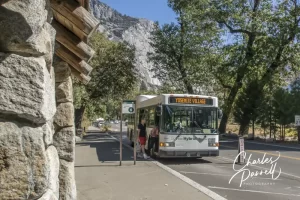
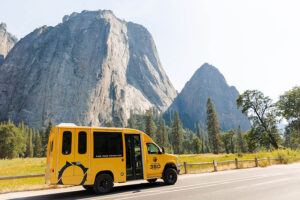
The good news is, there are a lot of sites, viewpoints, concessions and attractions in Yosemite Valley; and they are all connected on the wheelchair-accessible Yosemite Valley shuttle (https://www.nps.gov/yose/planyourvisit/images/valleyshuttle2.jpg). And there’s a shuttle stop near the parking area and in front of the Visitor Center.
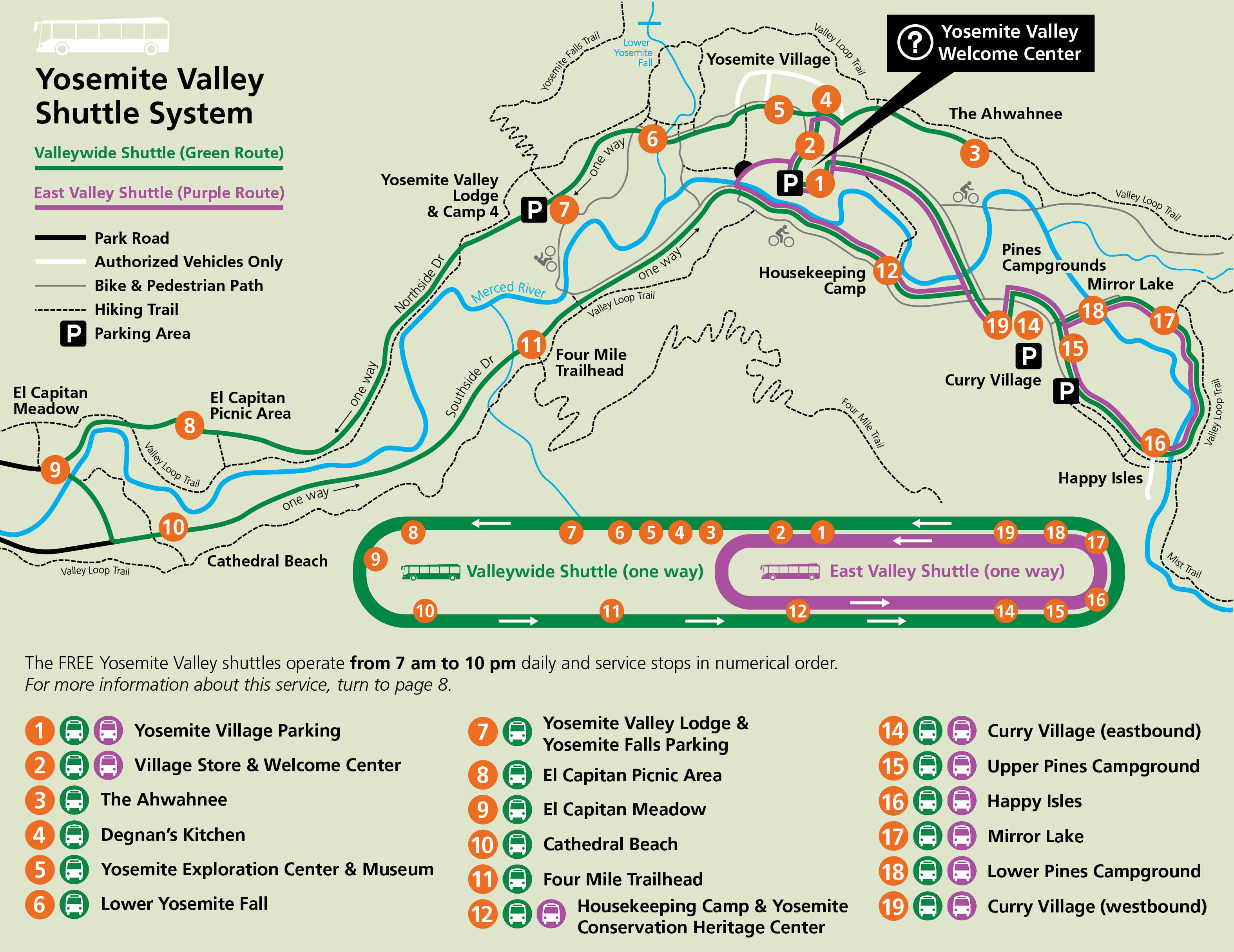
The shuttles from 7 AM to 10 PM daily, and there’s usually about a 15-minute wait for a bus. There are two routes in Yosemite Valley – The Valley Shuttle, which covers the whole area, and the East Side Shuttle which stops at Yosemite Village, Curry Village and the campgrounds and trailheads on the east side of the valley
All of the shuttle buses are wheelchair-accessible, and they come equipped with wheelchair-lifts and tie-downs. They can accommodate wheelchairs up to 24 inches wide by 46 inches long, with a weight of up to 750 pounds.
Alternatively it you’d like to get a little exercise, rental handcycles are available at the Curry Village Bike Stand (209-372-8323) and the Yosemite Valley Lodge Bike Stand (209-372-1208). It’s best to reserve those in advance though, as supplies are limited and they go quickly.
Ride YARTS!
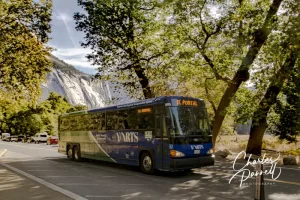
Another way to to get the most our of your wheelchair-accessible Yosemite visit is to take public transportation to the park – more specifically YARTS (https://www.yarts.com/). Based in nearby Merced, YARTS stands for Yosemite Area Regional Transportation System, and it has four routes that lead to the park. So you can overnight in a nearby community, ride YARTS to the park, and not worry about any delays at the entrance (public transport takes an express lane) or finding an accessible parking space.
The routes run from Merced, Fresno, Sonora, and Mammoth Lakes to Yosemite Valley, and stop at mountain communities along the way. So you could overnight in a variety of places including, Mariposa, Groveland, El Portal, Oakhurst and June Lake. All YARTS buses are equipped with wheelchair lifts; however you either need to contact them 48 hours in advance, or indicate on your online reservation that you require wheelchair seating. And attendants traveling with a wheelchair-user get a 50 percent discount. So not only is riding YARTS accessible it’s also affordable.
And once you get to Yosemite Valley, you can hop on the shuttle or rent a handcycle. And at the end of the day, you can take YARTS back to your accommodations. Additionally, YARTS is located close to many accessible accommodations, such at AutoCamp Yosemite (https://emerginghorizons.com/autocamp-yosemite-a-comfortable-wheelchair-accessible-home-base/).
Drive to Mirror Lake
Although the general public has to hike in to Mirror Lake, if you have an accessible parking placard or license plate, you can drive along the this road. Although you won’t have the lake to yourself, the hike in – even though it’s easy – eliminates a lot of folks. Even better – go early in the day to dodge the bulk of the visitors.
The road up to mirror lake is about a mile long, and motorists will be sharing the road with pedestrians and cyclists. You must travel with your hazard light on, and the speed limit is 15 mph along this road. And of course you need to watch out for pedestrians – especially kids – along the way.
About half way up, the roads gets steeper, and bicycles are prohibited beyond this point. Once you get to the top there’s accessible parking near the lake. There are some accessible vault toilets nearby and some picnic tables on level ground that may be doable for wheelchair-users. That said, Mirror Lake is seasonal and it usually dries up by late summer; however the granite views are spectacular from there. It’s well worth the drive.
Take a Tour
Of course one of the best ways to dodge the entrance traffic is to take a tour. And one of the best wheelchair-accessible tours around is operated by Tenaya Lodge (https://emerginghorizons.com/wheelchair-accessible-explorer-cabins-at-tenaya-lodge/), which is located near the South Entrance.
Although they have some great wheelchair-accessible cabins (called havens) at adjacent Waybound Yosemite (operated by Tenaya Lodge) you don’t have to be a lodge guest in order to book one of their tours. The accessible tour bus has a lift and tie downs, so you can stay in your own wheelchair or transfer to a seat.
The day-long accessible tours feature stops at all the popular attractions, a picnic lunch, and time to explore Yosemite Valley on your own on the free wheelchair-accessible shuttle. Plus you don’t have to worry about parking, waiting in the entrance line or driving. Book early though, as this popular tour sells out quickly.
Visit Mariposa Grove
Last but certainly not least, one of the best ways to enjoy a quieter slice of Yosemite is to get out of the valley and visit Mariposa Grove (https://emerginghorizons.com/escape-to-the-wheelchair-accessible-mariposa-grove/). You can access the grove on the Yosemite Shuttle Bus, but if you have a accessible parking placard, you can drive along the road that is reserved for shuttles, hiker and cyclists.
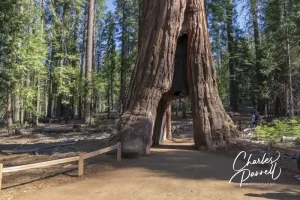
With an accessible parking placard, you can drive to the Mariposa Grove Arrival Center and check out the accessible Big Trees Loop. From there you can drive to the Grizzly Giant Trailhead and take part of the trail to the Grizzly Giant and the California Tunnel Tree. Not only are these massive trees, a must-see on any Yosemite itinerary, but you can dodge some of the crowds by driving there.
And as with any Yosemite itinerary, get an alpine start to beat some of the crowds. This is especially important in 2026, when there are no vehicle restrictions at the entrance stations. So plan ahead for a trouble-free wheelchair-accessible Yosemite visit this year.