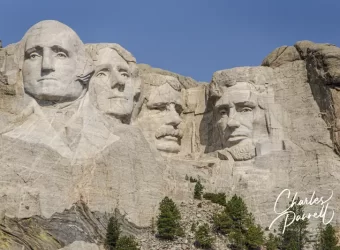
A Wheelchair-Accessible Mount Rushmore Visit

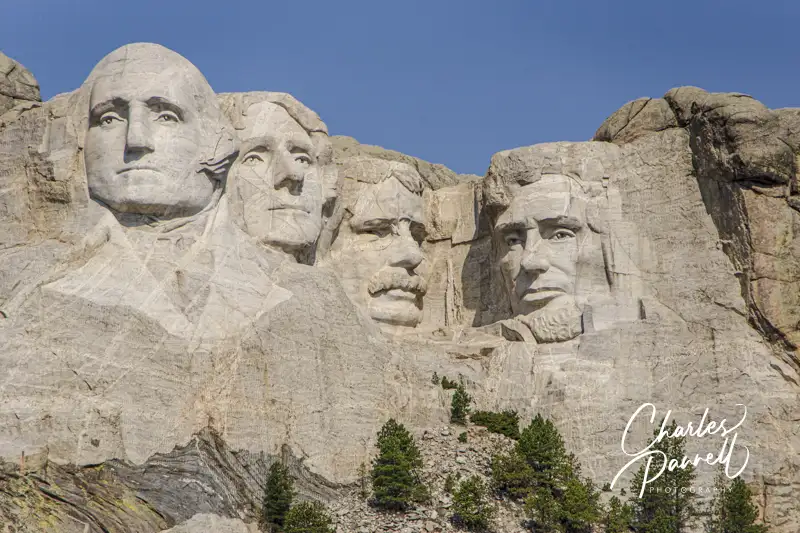
Mount Rushmore is a bucket list item for many folks. It’s also makes a great stop on any Black Hills road trip. And although the stately presidential carvings are indeed a sight to see, there’s also a scenic drive with lots of wildlife viewing opportunities nearby. And the the good news is that Mount Rushmore — like the majority of US National Parks and monuments — includes some upgraded access features. So don’t forget to make a stop at wheelchair-accessible Mount Rushmore on your next trip through South Dakota.
Mount Rushmore for Wheelchair-Users
Located just 35 minutes from Rapid City, Mount Rushmore (www.nps.gov/moru/) was sculpted by the father-son team of Gutzom and Lincoln Borglum. It took them 14 years to complete the intricate carvings of the four presidents — Washington, Jefferson, Roosevelt and Lincoln. And as a result of their hard work, the sculptures have stood the test of time.
Although there’s no entrance fee to Mount Rushmore, there is a fee to park in the garage. Accessible parking is available in the garage, with ramp and elevator access up to the main level. Additionally, there’s a drop-off area right in front of the main entrance. Loaner wheelchairs are available at the Information Center, which is located near the main entrance, just across from the restrooms (which are also accessible).
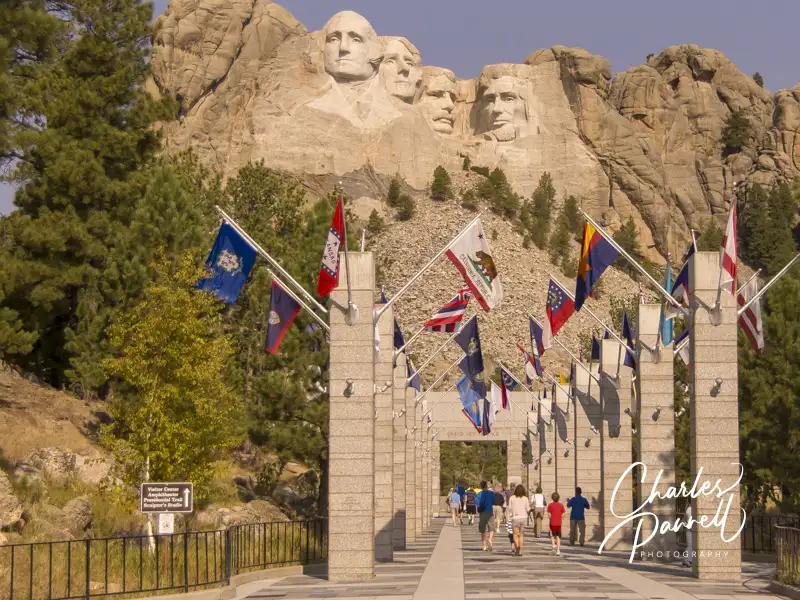
There is barrier-free access down the Avenue of the Flags to Grand View Terrace, where you’ll catch your first glimpse of the four presidents. From there, take the left entrance to the Presidential Trail, which travels past the Lakota Indian Heritage Village to four alcoves with optimal views of each president. The trail is paved and level, and the accessible portion ends at the Upper Terrace, where you’ll get another good view of the mountain. From there you’ll have to double back, as the trail continues downhill with lots of steps along the way. Still, the quarter-mile accessible stretch offers the best views of the presidential carvings.
There’s also elevator access to the amphitheater and the Lincoln Borglum Visitors Center, on both sides of Grand View Terrace. And if you’ve worked up an appetite, the Carver’s Cafe along the Avenue of the Flags is wheelchair-accessible.
A Scenic Drive and More
After your wheelchair-accessible Mount Rushmore visit, save some time to enjoy one of the most scenic drives in the state. From Mount Rushmore, follow the signs back to Highway 16A, then head towards Custer State Park. Along the way you’ll pass through three one-lane tunnels, and get some absolutely gorgeous windshield views of the scenic Black Hills. Have your camera ready as you exit the second tunnel, as it’s a great vantage point for the iconic shot of Mount Rushmore.
It’s about a 45-minute drive to Custer State Park, but allow for extra time for photo stops along the way. Once you arrive, follow Wildlife Loop Road for some up-close-and-personal shots of the resident bison, and stop at the Bison Center (emerginghorizons.com/watchable-wildlife-in-custer-state-park/). Although there’s tons of wildlife in the park year-round, it’s especially entertaining to visit during the annual buffalo roundup (emerginghorizons.com/head-over-to-the-custer-buffalo-roundup/) in the fall. And if you’d like to spend the night, there’s also a nice wheelchair-accessible camping cabin in the Blue Bell Campground (emerginghorizons.com/wheelchair-accessible-camping-cabins-at-custer-state-park/).
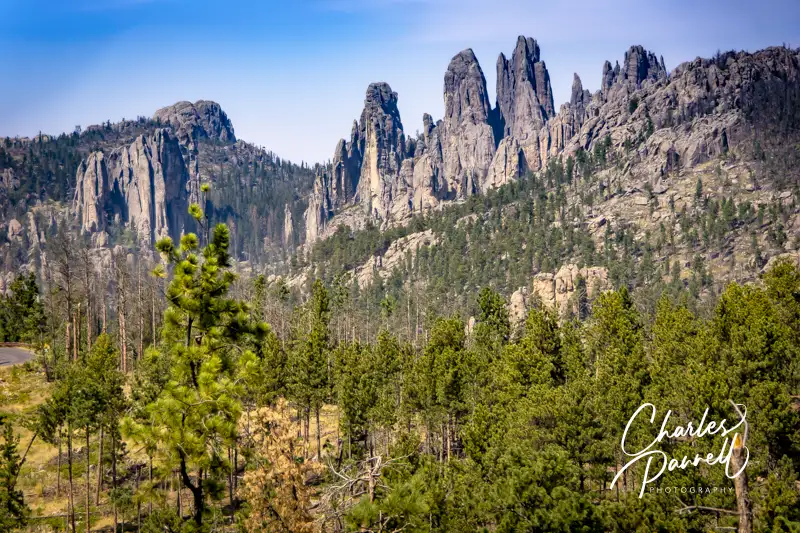
After your visit, be sure to take a cruise along the Needles Highway Scenic Drive. At the end of Wildlife Loop Road, take a right on Highway 87 and follow the signs. Named for the needle-like formations and cathedral spires that dot the landscape, the route traverses a Ponderosa Pine forest and passes through three narrow tunnels.
There are lots of spots to stop and enjoy the view, but make sure and use the pullout right before tunnel five, for a great view of Little Devil’s Tower and Cathedral Spires. After that, you’ll get up-close-and-personal with the spire-like formations, as the road cuts right through them. It’s a once-in-a-lifetime drive, and a great way to end a wheelchair-accessible Mount Rushmore visit.
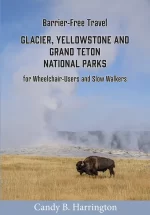
Barrier-Free Travel
Glacier, Yellowstone
and Grand Teton National Parks
for Wheelchair-Users and Slow Walkers