4203 Loring Park
Converse, Texas
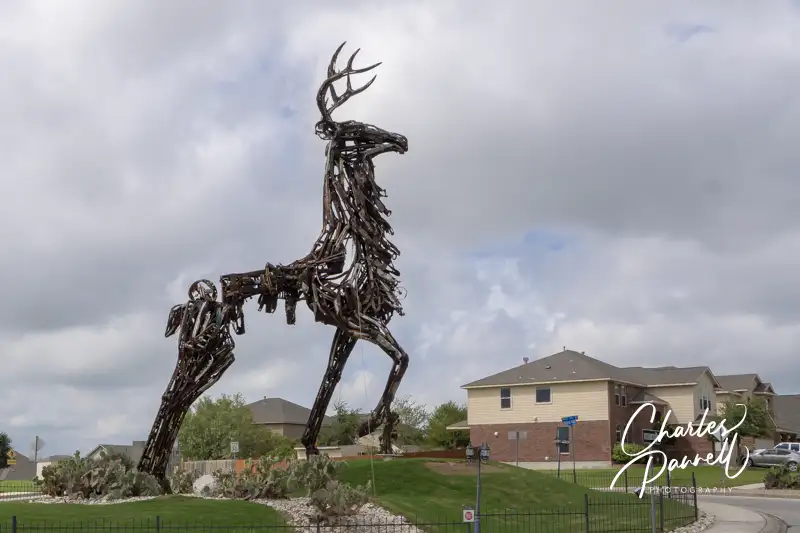
If you need a break from the monotonous drive along Interstate 10 near San Antonio, then take a short detour to check out this interesting — and massive — art installation. Just take exit 585 and head north on FM 1516 for about a half-mile. Make a right on Hays Park Road — the Giant Junk Stag sculpture is just down the road.
This larger-than-life stag is perched on a mound of dirt in the first round-about through the upscale subdivision. There’s parking in a level paved lot near the playground, which is the perfect vantage point to view the piece. Crafted by Mexico City artist, Florentino Narcis, this community centerpiece is comprised of junk, including engine parts, rusted fenders, license plates and even a bicycle seat or two. Check it out and see how many scrap parts you can spot. And if you’d like to get a closer look at the sculpture, there’s curb-cut-access to a short sidewalk from the parking area. There aren’t any public facilities at this stop, but this interesting sculpture is definitely worth a short look on the way through the Lone Star state.
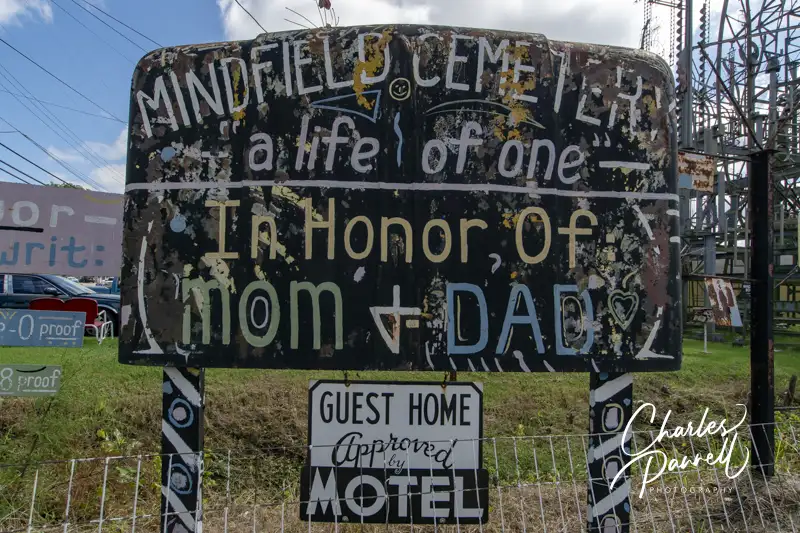
This local artist’s ongoing creation is just a short jog off of Interstate 40, about midway between Nashville and Memphis. If you take exit 66 and follow Highway 70 for about eight miles, you’ll find yourself cruising down Brownsville’s main drag, just minutes away from the installation. You can see Billy Tripp’s Mindfield from the street, but for a closer look, park at the Food Giant next door. There’s accessible parking in the lot, and it’s a level roll over to a good vantage point.
Started in 1989 with some salvaged metal, this burgeoning sculpture represents Mr. Tripp’s emotional and personal growth over the years. The installation towers over the nearby businesses, and includes everyday objects that are intricately woven into the piece. From a basketball hoop and a claw foot bathtub, to a canoe and several grain hoppers, it’s clear that just about anything is fair game for inclusion. Don’t miss the water tower, which was transported to the site from a defunct Kentucky factory, and is said to stand as a memorial to the artist’s parents. And when Tripp dies, he’s already got permission from the city to be entombed in his work of art.
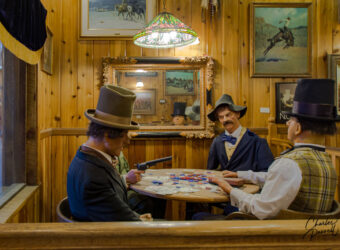
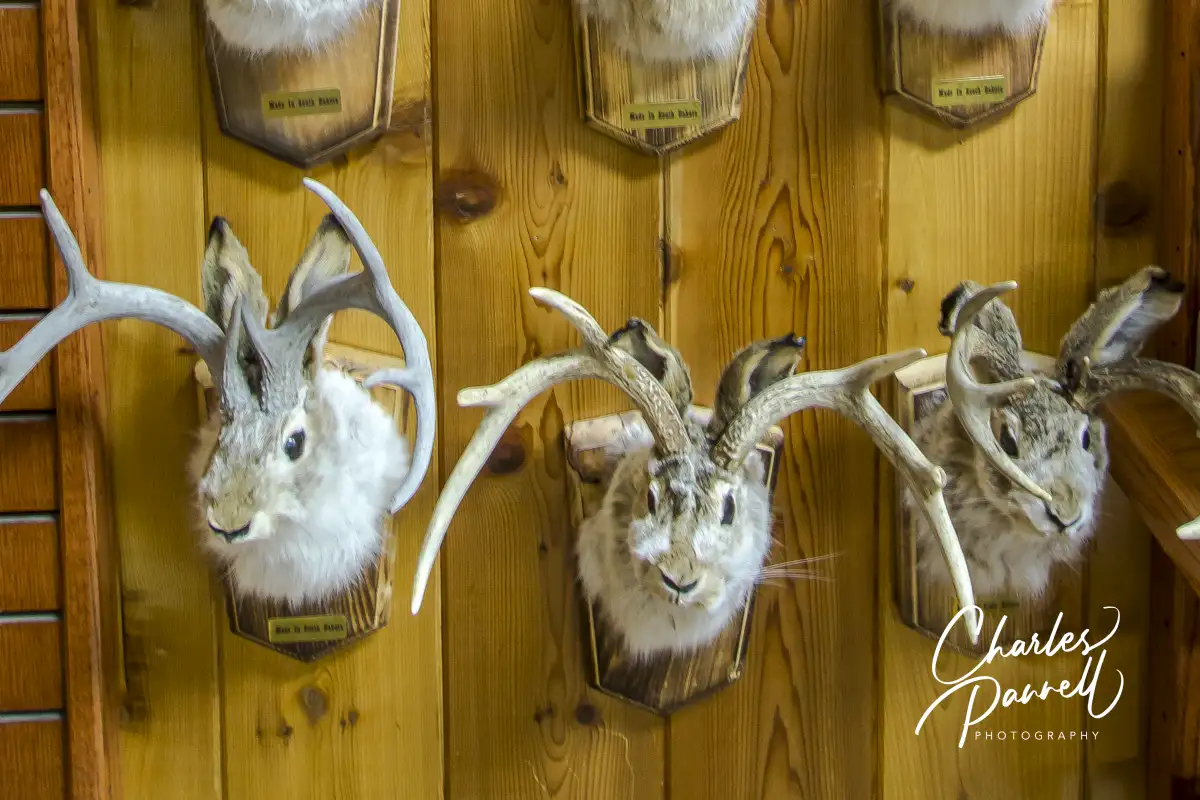
A required stop on any Badlands Visit, Wall Drug Store is appropriately located in the hamlet of Wall, South Dakota. Back in the 1930s Dorothy and Ted Hustead brought visitors to their drug store with Burma Shave-like billboards advertising free ice water. Today the operation has expanded, but this iconic drug store still attracts visitors in droves. The most recent incarnation includes everything thing from a life sized-carving of Butch Cassidy and a giant jackalope to a silver dollar bar, a shooting gallery and even a life-sized animated T-Rex. And yes they still have free ice water.
There’s accessible street parking on Main Street near 5th and 6th streets, with level access to most areas of the massive drug store. Stop by and browse, people-watch, shop or have a bite to eat. Stop at the soda fountain for a scoop of their excellent homemade ice cream, and just sit back and take it all in. There’s something there for just about everybody, and there’s truly nothing like it anywhere in South Dakota.
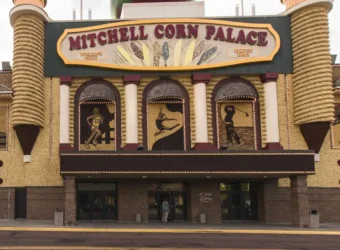
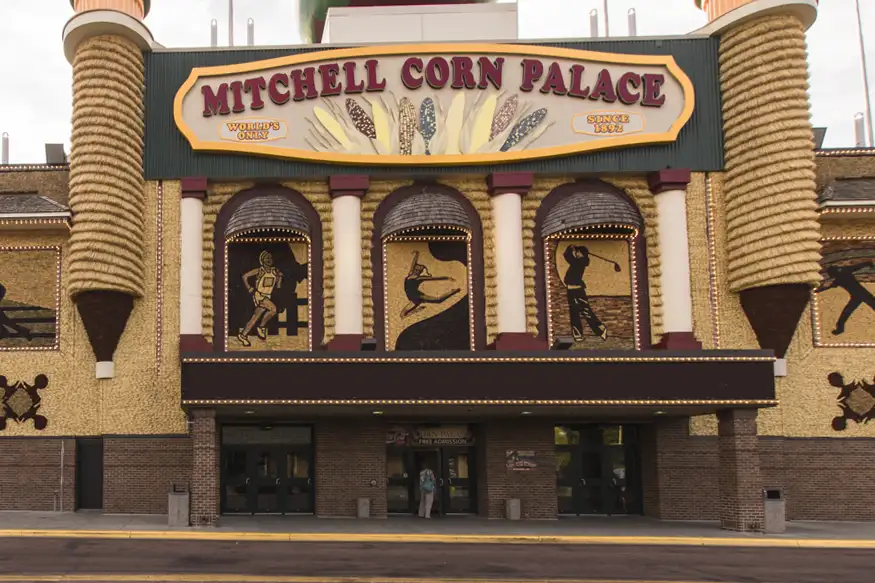
Located in Eastern South Dakota, the World’s Only Corn Palace makes a great stop on any Interstate 90 road trip. This multi-use center hosts stage shows, concerts and sports events, but it’s worth a stop even when there’s no live entertainment. What sets this venue apart are the corn murals that adorn the outside of the structure. Each year they are stripped down and new murals are created, so even if you’ve seen the corn palace once, it’s still worth a return visit.
Accessible parking is available in nearby lots, with level access over to the front entrance. Inside there’s plenty of room to maneuver a wheelchair throughout the venue. A free guided tour, which includes a video that tells the story of the corn palace is available. Afterwards, visitors are free to browse through the historic exhibits at their own pace. And if you visit in the peak summer season, you’ll mostly likely see folks adding new murals to the outside facade. Don’t forget to get your photo taken with the statue of Cornelius, the World’s Only Corn Palace mascot. He’s located across the street form the corn palace — just look for the giant ear of corn!
If you happen to be on the way to see the historic Gettysburg Battlefield, plan on a short side trip to Orrtanna for a stop at Mr. Ed’s Elephant Museum & Candy Emporium. The museum started after Ed Gotwalt received an “elephant-themed wedding gift”, and as he freely admits, “Things kind of got out of hand from there.” Today the collection has grown and his grandaughter Nicole has taken over the museum and candy store.
Located just off Highway 30 W, Mr. Ed’s offers an accessible parking place on a cement pad near the front door; and level access to the front entrance. Inside, there’s plenty of room to navigate a wheelchair through the candy store, and over to the museum proper.
There’s good access to the display area, which is literally lined with elephants. From wicker to ceramic, metal, glass and stuffed incarnations; the museum boasts more inanimate pachyderms than most folks have seen in a lifetime. Notable artifacts include an elephant hair dryer, a Dumbo riding model (a photo op for youngsters), and an unusual sculpture of a head with elephants protruding from the top. Add in the requisite Jim Beam collector bottles, a few elephant clocks and even a lamp, and you have a pretty comprehensive collection.
The candy shop is worth a visit too, as it’s filled with lots of sweets from yesteryear, and includes a large selection of mix-and-match wrapped goodies. Add in a Jelly Belly self-service bar, and an odd selection of edible insects and you’ll find something for just about everyone on your gift list. And don’t forget to sample the home-made fudge — the selection is impressive and the quality is second-to-none.
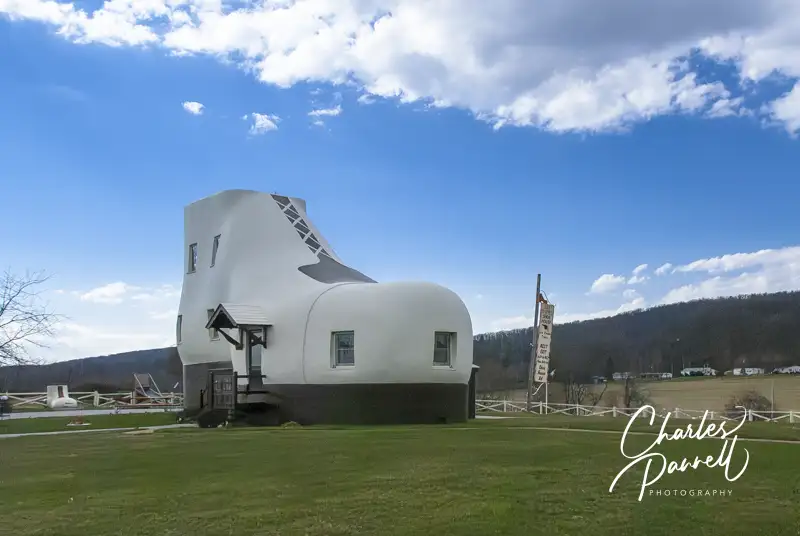
Built in 1949, this three-bedroom home looks like a giant work boot — a Haines work boot to be more specific. It was built in 1948 by Mahlon Haines to promote his shoe store chain. The 1500-quare foot stucco and wood frame house, which measures 48 feet long, 25 feet high and 17 feet wide, cost $26,000 to construct. Originally used as a vacation spot for newlyweds, it’s also been a public rental space and even an ice cream shop. Today it’s a vacation rental, but you can still drive by and snap a photo or two of this unusual domicile from the street. There’s room to pull off the road and take a gander at the Haines Shoe, but only guests are permitted to go any closer. Unfortunately the home is not wheelchair-accessible, but it’s worth a quick stop on any Pennsylvania road trip.
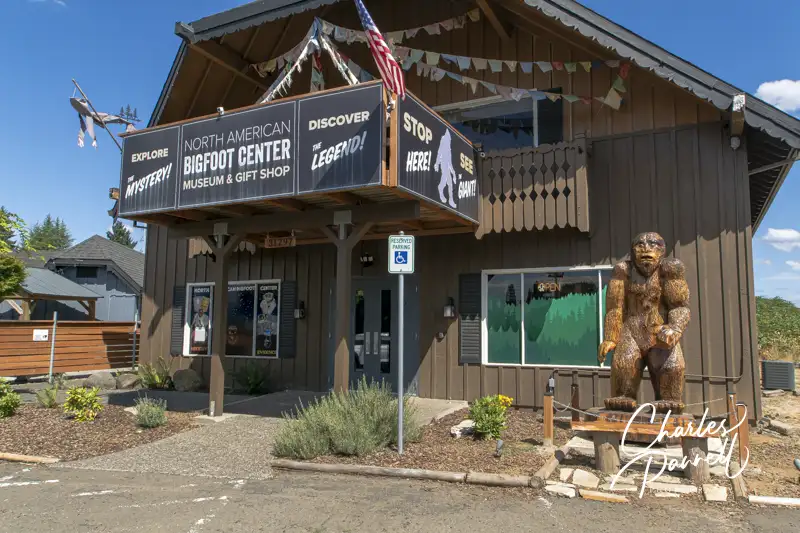
A must stop along the Mount Hood Infinity Loop (emerginghorizons.com/drive-the-scenic-mount-hood-infinity-loop/), The North American Bigfoot Center includes an impressive collection of artifacts about the “mythical” forest creature. There’s accessible parking outside, with level access to this unusual museum. Along with a life-sized Sasquatch statue for a photo-op, the galleries are filled with photos, videos and other documentation that prove — or disprove — the existence of Bigfoot. Add in some real-life Bigfoot researchers that man the front desk, and you’ve got all the makings for an very entertaining stop. And don’t miss the gift shop.
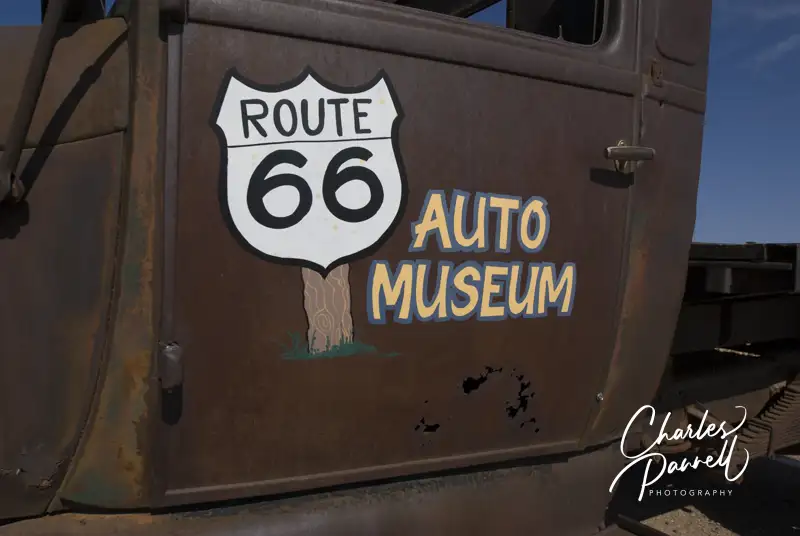
Located along the post-1937 incarnation of Route 66, Santa Rosa, the Route 66 Auto Museum is a must-stop for car buffs on any Interstate 40 road trip. This brainchild of Bozo and Anna Cordova — who also own Bozo’s Garage & Wrecker Service — is the result of Bozo’s lifelong love affair with automobiles. He built his first car when he was just 12, and subsequently Bozo and his crew have custom built over 150 different vehicles. These restorations, many of which required some “out of the box thinking” have been subsequently displayed in the museum.
There’s accessible parking in front, with level access to the museum, and plenty of room for even the largest wheelchair to navigate around the displays. The cars range from 1920 to 2005, and there’s also a good collection of old signs, Route 66 memorabilia, photos and vintage vending machines on display. It’s a great blast from the past.
.
Barrier-Free Travel the Grand Canyon for Wheelers and Slow Walkers
Jack Sisemor RV Museum
14501 Interstate 27
Amarillo, TX www.rvmuseum.net
For a fun trip down Memory Lane, be sure to stop in at The Jack Sisemor RV Museum on your next trip through Amarillo. Even if you’ve never been in a RV in your life, you’ll still love the nostalgic touches to the rigs and the accompanying displays. From that ever-so-familiar 70s shag carpeting, to a collection of vintage cameras, and even some old Coca Cola coolers, there’s bound to be some object that tugs at your heartstrings and evokes fond memories of yesteryear. And chances are high that you’ll also blurt out, “Hey, I had one of those!” at some point during your visit.
Open seasonally, the museum consists of an army of vintage RVs that have been lovingly restored. And that’s something that makes Jack Sisemore incredibly proud. There’s barrier-free access around the exhibits inside the museum. Highlights include a 1921 Ford Lamsteed Kampkar (one of only five made), the 1948 Flxible Bus used in the Robin Williams movie RV, and a 1976 FMC that was owned by Max Factor, Jr. Avid RVers will also love the 1975 Itasca (the first one ever built – serial number 1) and the cute little 1962 Bambi Airstream, which is in pristine condition. And don’t miss the large dirt and street bike collection scattered throughout the museum.
Best of all, there’s no admission charge to the museum. As an added bonus, more pieces are continually added to the collection, so you never know what you’ll find at this offbeat museum.
If you’re cruising along Interstate 40 near Amarillo, Cadillac Ranch is a required stop. Located on South Frontage Road between Arnot and Hope Roads, this public art display was created by an artist’s collective called The Ant Farm. It features 10 Cadillacs planted nose first into the ground. Built along the remains of Route 66, they were meant to symbolize the “golden age” of the American automobile. The cars are routinely painted with graffiti and even dressed up on some holidays. And although the creator frowned on this practice at first, it’s now encouraged.
There’s just a wide spot on the road to park in front of Cadillac Ranch, but there’s plenty of room for an accessible van. The entrance gate has a 24-inch clearance, but after that there is a six-foot wide hard-packed dirt path out to the cars. And if you can’t manage the walk, you can still a good view from the road. This roadside attraction is a good appetizer for The RV Museum & Storage (emerginghorizons.com/jack-sisemor-rv-museum/) located up the road on Interstate 27.