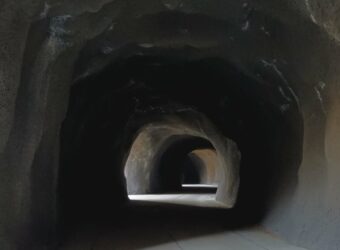
Most people don’t really think about wheelchair access, but to be honest it’s in the back of my mind everywhere I go. I’ve seen the good, the bad and the ugly when it comes to accessibility. I’d like to say that bad access doesn’t even faze me any more, but it does. Sometimes I just can’t believe folks can’t get it right in this day and age. And then there are the unexpected good surprises, like Mitchell Point Tunnel.
A Little History
Located down in Northern Oregon, the original Mitchell Point Tunnel dates back to 1915, when John Arthur Elliott built it along the Historic Columbia River Highway. The highway was subsequently re-routed when larger cars wouldn’t fit through the tunnel; and then it was then closed and later demolished when the interstate was constructed in the 1960s. But lo and behold the Oregon Department of Transportation decided to reconstruct a pedestrian version this highway landmark in 2021.
Suffice it to say it was a huge project, and it took many years to complete. Finally in 2025 the new – and improved – Mitchell Point Tunnel was opened, and much to my surprise, it offers excellent wheelchair access. Granted, it’s not that difficult to include access when you are constructing something from the ground up, but it’s amazing how often simple access features are overlooked.
So here are a few access details that they got right at the new Mitchell Point Tunnel.
Parking
Accessible parking is easy, right? Well perhaps it is, but you’d be amazed at how many folks get it wrong. There are only about 16 spaces in the tiny Mitchell Point Tunnel parking lot, but they did manage to include an accessible parking space with adequate room for ramp deployment. And it’s located right next to the trailhead and the picnic area. It’s not rocket science, but I’m thrilled they got it right.
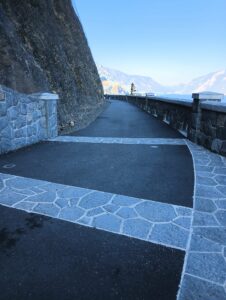
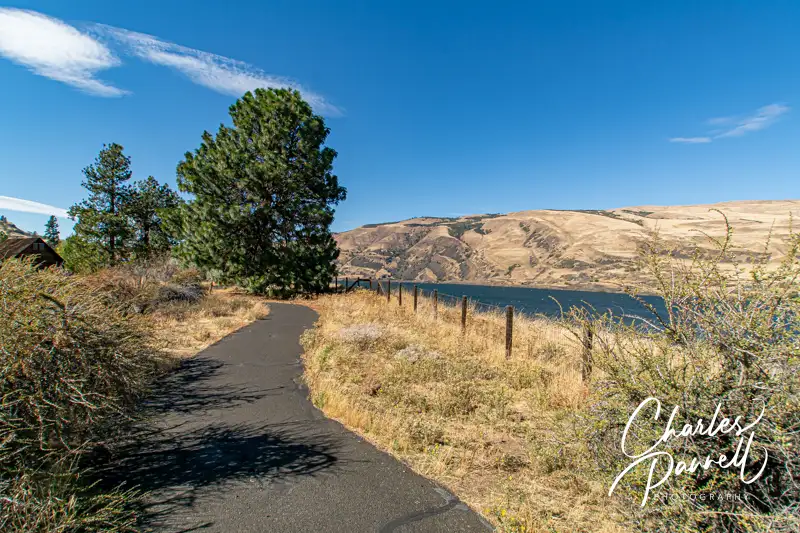
Good pathway access at Mitchell Point Tunnel
Pathway Access
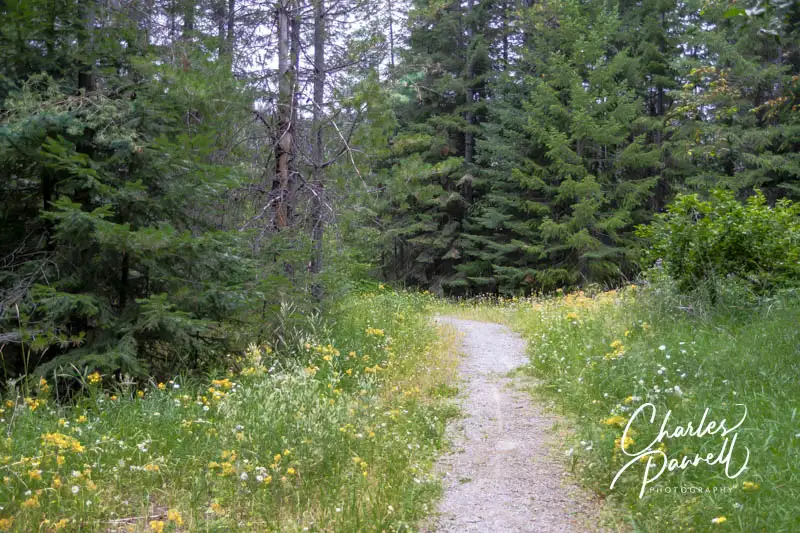
There’s a paved accessible pathway that runs from the accessible parking area, past the picnic tables and over to the tunnel. Once inside the tunnel, the pathway is also paved and wheelchair-accessible. No gaps, no bumps, no access shortfalls. It’s a pleasant half-mile round-trip stroll.
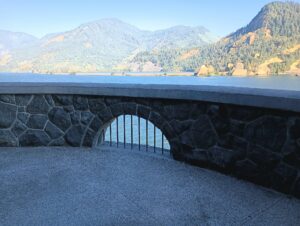
Cutouts so everyone can enjoy the view below
The View From Above
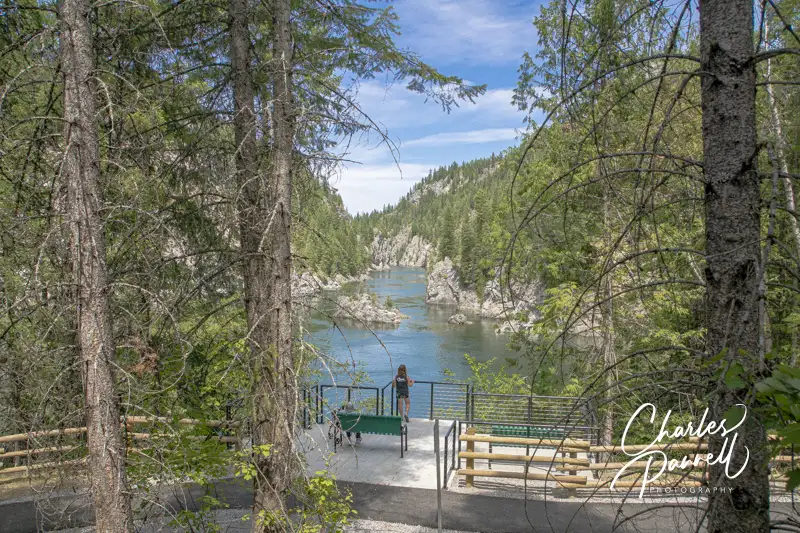
Now here is where this project really shines – in the view department. To say that this short trail offers a scenic view of the Columbia River below is an understatement. That said, I totally understand that the powers-that-be had to “idiot-proof” things and make a wall high enough so that some bozo doesn’t hop up on it for a selfie (trust me it happens). Their solution was to make archway cutouts in the rock wall below, so that you can get a good view from a seated position. Not only does it help keep the idiots in line, but it’s also an attractive and accessible solution.
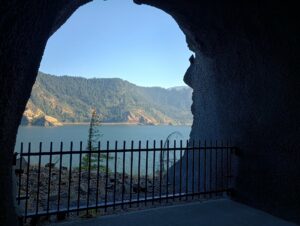
The view from inside Mitchell Point Tunnel
Inside the Tunnel
I was equally impressed with the full sized cutout windows that they have inside the tunnel. Granted they had to put up railing because of “stupid people”, but they still look good and are also quite functional. These five openings let natural light in the tunnel so it’s easier for everyone to navigate and see possible tripping hazards. Without these openings it would be pitch black in the tunnel, and people would be grabbing for their phones to safely navigate. I’ve been in tunnels like that before, and this one is so much safer.
Accessible Vault Toilets
Granted, vault toilets are not my favorite amenity; however they are necessary. These models are on a cement slab with good access from the accessible parking space. Many times vault toilets are just placed on the dirt, and over time erosion creates a large step up to them. These are done right. And of course, there’s plenty of room for even the largest wheelchair or scooter inside.
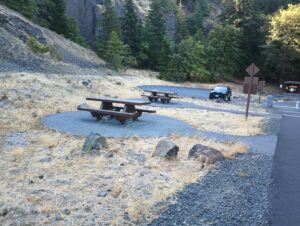
And they didn’t forget truly accessible picnic tables at Mitchell Point Tunnel
Picnic Tables
Last but certainly not least, they remembered the accessible picnic tables. And they are close to the accessible parking space. They are on a nice new level asphalt surface, and they are the true accessible models – with room on the ends for wheelchairs. Add that all up and the Mitchell Point Tunnel makes a great accessible stop to enjoy the view, stretch your legs, use the facilities or have a picnic lunch.
So stop in and check out the Mitchell Point Tunnel for yourself, on your next Oregon road trip, It’s easy to find – just take exit 58 off of Interstate 84 near Hood River, follow the signs, and enjoy!
Nicknamed Thunder Road because bootleggers once roared along it in their hot rods, this one-time moonshine running route just east of Knoxville is also the birthplace of stock car racing. Today the bootleggers are gone, and this Northeastern Tennessee route is now aptly named the White Lightening Trail. The 200-mile route begins and ends in Knoxville and features historic towns, a slice or two of Appalachian history and some absolutely gorgeous scenery. And although access varies along the route, many of the stops along the way are doable for wheelchair-users and slow walkers.
Main Street USA
Although you can drive this circle route in either direction, if you head east on Highway 25W the first stop in Dandridge is about 30 miles away. Dandridge is a historic small town, and as such there are a few bumps in the sidewalks, but for the most part the pavement is level and there are curb-cuts at most corners. Be sure and stop at the Visitors Center on Main Street to pick up a town map that points out the historic buildings.
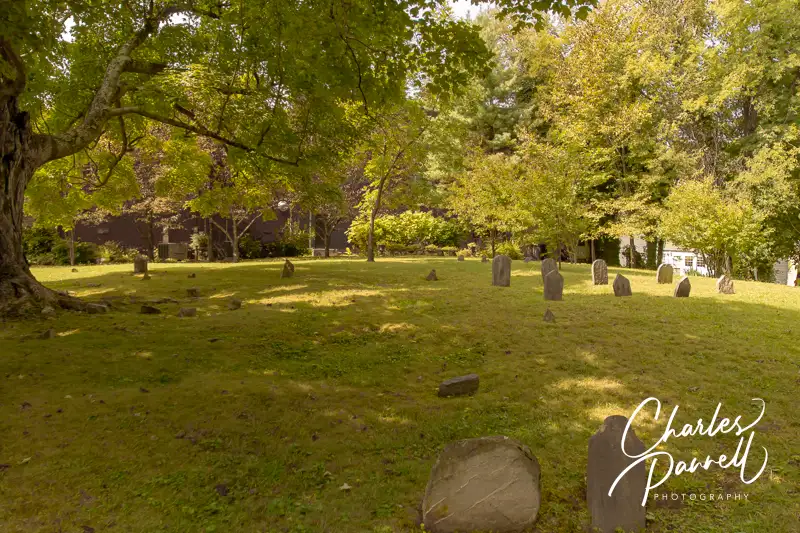
Revolutionary Cemetery in Dandridge, Tennessee
There’s also a revolutionary cemetery across the street from the Visitor Center, and although there are six steps up to it, you can still get a pretty good view from the sidewalk. Be sure and stop in at Tinsley Bible Drug (www.tinsleybibledrugs.com) for a look at their old lunch counter. And although there’s no shortage of places to chow down along the White Lightening Trail, you just can’t beat the daily lunch specials at this stop. Alternatively, if you don’t have time for lunch, you can always have a scoop or two of ice cream. Even if you don’t partake, it’s still worth a look inside, as it’s a classic blast from the past.
Beans and More
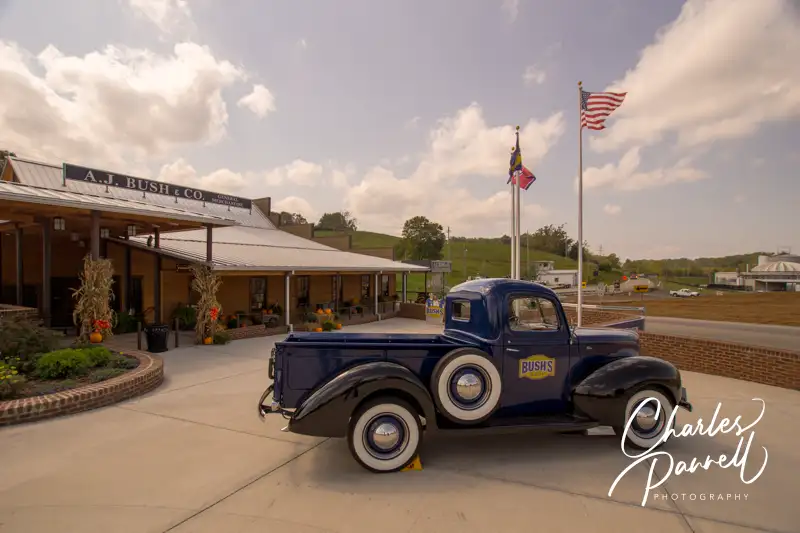
Bush’s Beans Visitor Center
Once you leave Dandridge head south on Highway 92, then go east on Highway 411. Soon you’ll come upon Bush’s Visitor Center (www.bushbeans.com/en_US), which is a fun stop. Bush’s Beans was originally opened as a tomato cannery in 1904 by A.J. Bush, and it slowly morphed into the baked bean giant. Today the brand is synonymous with cookouts, campfires and home-style meals.
There’s plenty of accessible parking in the large lot, with ramped access to the general store and museum. The exhibits inside take you on a virtual tour through the canning plant, and you’ll learn a few fun facts about beans and the company. And at the end, you can get your photo taken with owner Jay Bush and his dog Duke.
Don’t miss Bush’s Family Café, which is located next door to the general store. There is good pathway access inside the restaurant, which serves up everything from hamburgers to ham dinners, with more bean choices than you can ever imagine. And don’t forget to try the pinto bean pecan pie – it’s delicious.
Enjoy the Scenery
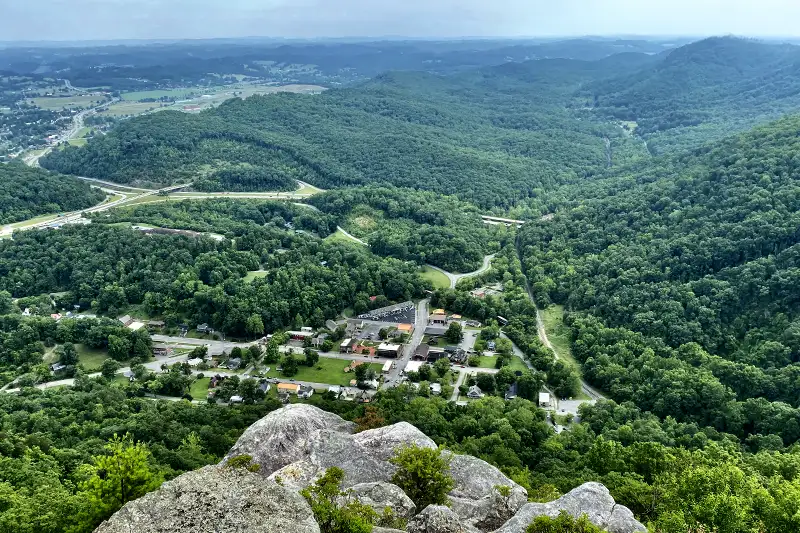
Pinnacle Overlook
After you’ve had your fill of beans, continue east on highway 411, and then follow Highway 25E (also known as the Cumberland Gap Parkway) to the Kentucky border, where you’ll find Cumberland Gap National Historical Park (www.nps.gov/cuga/). Long used by Native Americans, this natural passage through the Cumberland Mountains was widened by Daniel Boone and a team of loggers, and later used by pioneers who explored western Kentucky and Tennessee.
Accessible parking is located outside the Visitor Center with level access to the entrance. Inside there’s a museum, a theater and accessible restrooms on the first floor. After you’ve watched the movie and browsed through the interpretive exhibits, pick up a park map and head out to Pinnacle Overlook. It’s just a short drive, and you’ll be able to see Virginia, Kentucky and Tennessee from the viewpoint. And although the view is beautiful, the drive to and from the park is equally scenic.
A Taste of Appalachia
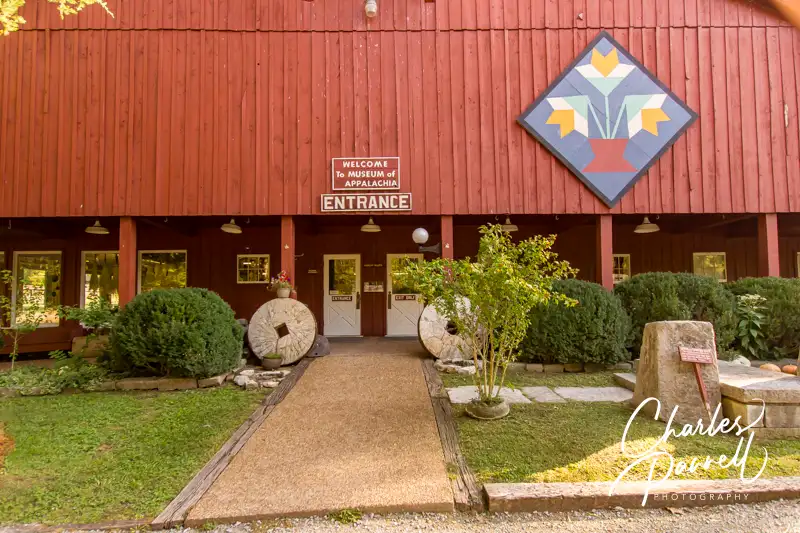
Museum of Appalachia
After you’ve enjoyed the Cumberland Gap scenery, backtrack south on the Cumberland Gap Parkway and then head west on Highway 63W. At Caryville take Highway 116 south to Highway 441 and make a stop in Norris. The big attraction in this little berg is the impressive Museum of Appalachia (www.museumofappalachia.org), which is known for depicting an authentic replica of Appalachian pioneer life.
Accessible parking is available in front of the museum, with ramped access to the gift shop. Accessible restrooms are also available in this building. Some buildings on the museum grounds have level access, while others have one or two steps at the entrance. The good news is, many of the inaccessible buildings are small, so it’s easy to take a peek inside of them.
There’s level access to the Appalachian Hall of Fame which is filled with historic photos and artifacts, and a large collection of Cherokee baskets, pottery and arrowheads. “What better way to know a people than to study the everyday objects they made with their own hands?”, reads the sign above the exhibit. Outside, there is level access to an old jail cell and the adjacent barn room, which is filled with old farming implements.
The rest of the complex is dotted with old farm houses and cottages, with costumed docents on hand to demonstrate crafts and old time daily living skills. Many of the paths are level and easily accessible. And don’t forget to stop by the restaurant before you leave, as it offers some tasty daily specials as well as home made desserts.
A Tasty Finale
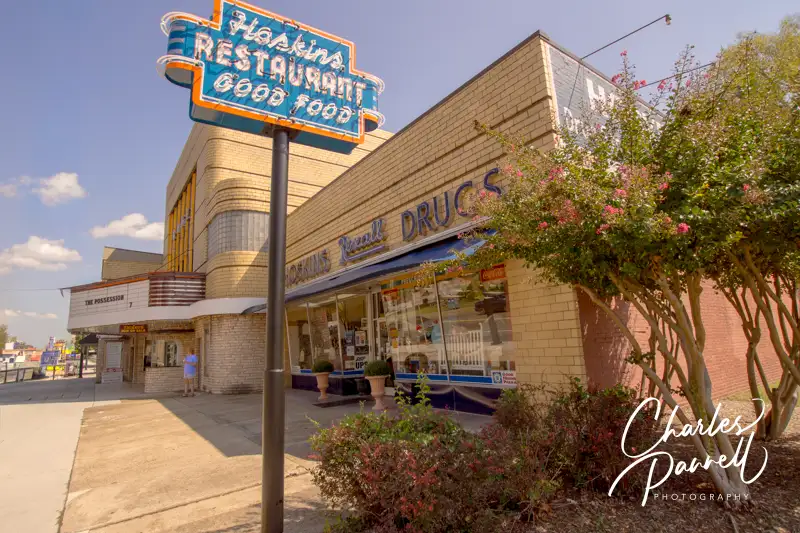
Hoskins Drug Store & Soda Fountain
And although there’s certainly no shortage of nibbles along the White Lightening Trail, take Highway 61W eight miles to Clinton for the grand finale at Hoskins Drug Store & Soda Fountain (hoskinsdrugstoreandsodafountain.com).
Established in 1930 to serve the Tennessee Valley Authority and textile mill workers, this store was the first of what grew to be an eight-store chain. It still retains much of its old time flavor, and includes a small lunch counter and a soda fountain. There’s accessible street parking available on Main Street, with level access to the drug store. Inside there’s plenty of room to roll around between the aisles. There is counter and booth seating in the restaurant, and there’s room enough to sit at the end of the booth if you can’t transfer.
Although there are a good number of lunch selections on the menu, the best thing to get at Hoskins Drug Store is a good old fashioned milkshake. Just sit back, slurp down the delicious concoction and take a short trip back to yesteryear. Then, pack up your memories and head back to civilization in downtown Knoxville. Although you can take the interstate back, the last part of the White Lightening Trail takes the backroads through Maynardville, Luttrell and Halls Crossroads, before it returns to Knoxville. It’s a fitting way to wrap up this scenic and historic road trip.
Barrier-Free Travel
22 Accessible Road Trips Driving Vacations
for Wheelchair-users and Slow Walkers
Located along scenic Highway 97, just north of Bend, Lava Lands Visitor Center (www.fs.usda.gov/r06/deschutes/recreation/lava-lands-visitor-center) is worth a stop on any Crater Lake road trip. Unfortunately many visitors zip right on by this volcanic site on the way to the more popular national park. Beside the visitor center, this site offers several trails that wind through the eerie remnants of an ancient eruption. And despite its foreboding name, this remote Oregon stop is actually a good choice for wheelchair-users and slow walkers.
Lava Lands Visitor Center
There’s accessible parking near the Lava Lands Visitor Center, with curb-cut access to a paved pathway that leads to the front door. Inside there’s plenty of room to maneuver a wheelchair through the galleries. The visitor center serves as the interpretive hub for the Newberry National Volcanic Monument, which includes over 54,000 acres of lava flows. Exhibits focus on the geology and cultural history of the area, and rangers are available to field questions. There’s also a bookstore, a theater and accessible restrooms inside the visitor center.
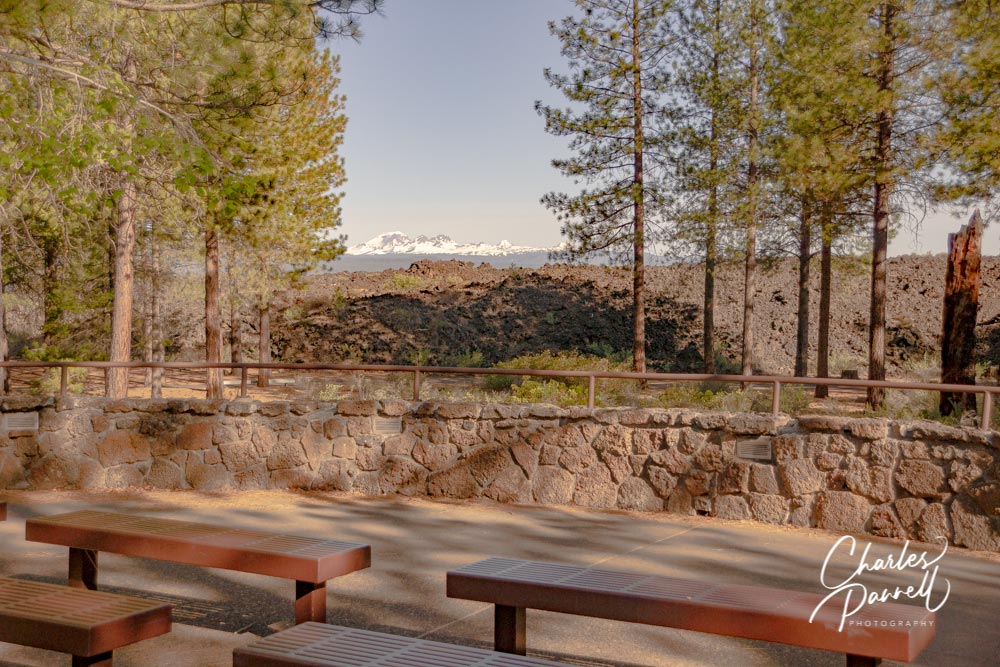
Outside on the back patio there are several benches to sit and enjoy the mountain views. It’s also the site for ranger programs and presentations. It should be noted that the visitor center is only open seasonally, usually from late May until winter.
Explore the Lava Flow
Trail of Molten Land
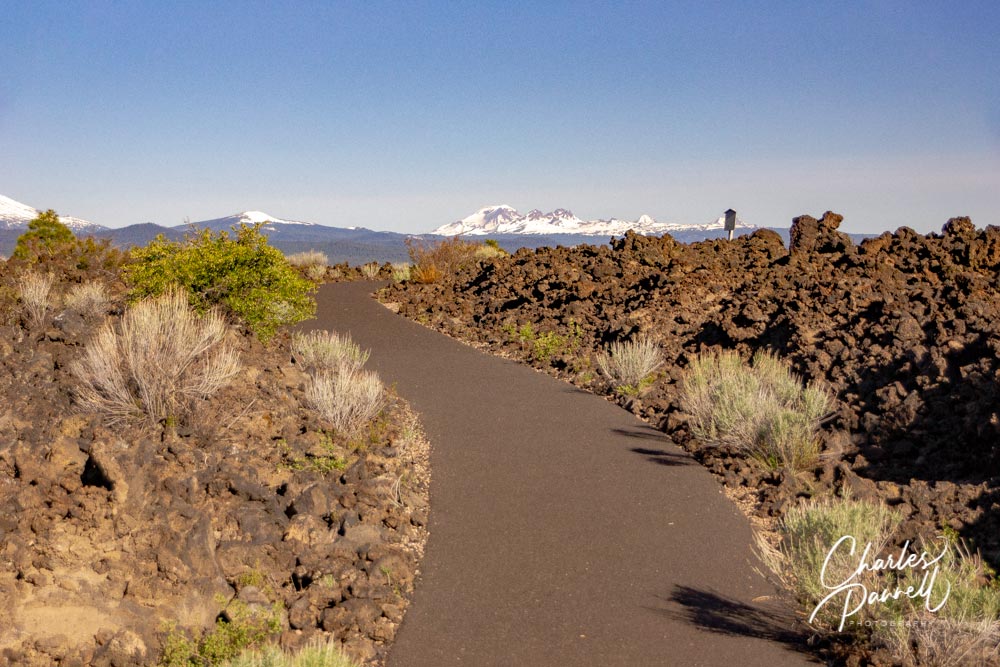
Save some time to explore the unusual landscape near the visitor center, on one or more of the accessible trails. At the top of the list is the Trail of Molten Land, which begins just to the right of the visitor center patio. The first part of the trail is shaded by pines, but once you turn the corner the stark reality of the eruption that happened some 7,000 years ago really hits home. The Lava Butte cinder cone is clearly visible in the background, as the trail winds around the basalt lava flow. To say it’s stark is an understatement.
The paved trail has a slight elevation gain in the beginning, but there are level spots to stop and rest. At about the .3-mile mark there’s a nice viewpoint which offers a stunning Cascade panorama. Unfortunately the wheelchair-access ends at this point, as the trail continues on with a steep uphill climb. Still it’s a nice .6-mile round-trip stroll.
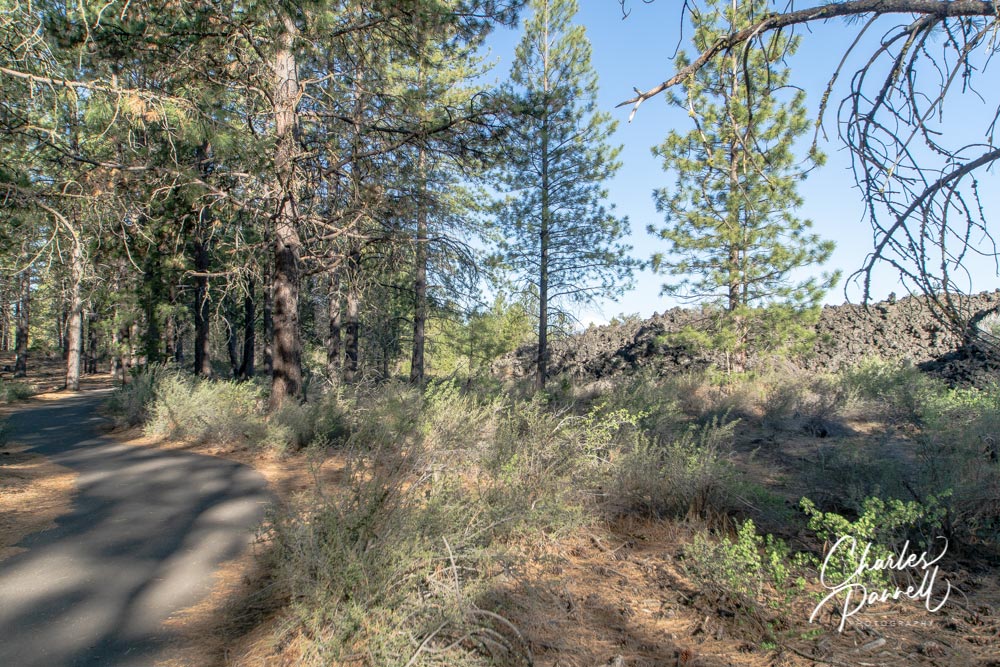
In contrast, the nearby Trail of the Whispering Pines offers a pleasant walk through a pine forest, on the edge of the lava flow. The trailhead is located to the left of the visitor center patio. This quarter-mile trail is paved and includes a nice shaded bench to rest and take in the the snow-capped mountain view. The trail winds around the Ponderosa Pines and skirts the parking lot, before it circles back to the visitor center.
Enjoy a Longer Stroll
Sun-Lava Paved Path
Finally, if you’d fancy a longer hike, the Sun-Lava Paved Path begins at the far side of the parking lot, near the accessible porta-potty. This wide paved trail runs through the forest, gradually descends to the Deschutes River, then continues on to Sunriver Resort. Although the grade never exceeds 5%, and there are level places to rest along the way, remember it’s an uphill trek on the return trip, so plan accordingly. It’s a beautiful trail, and you can do as little or as much of it as you like.
Once you’ve concluded your hikes, you can hop back on Highway 97 and continue on to Crater Lake. All in all, it’s a pleasant detour, and there are also a few accessible picnic tables near the parking lot if you happen to visit around lunch time.
Barrier-Free Travel
Washington National Parks
for Wheelchair-Users and Slow Walkers
Named by French Canadian fur traders for the stone islands in the middle of the treacherous rapids in the Columbia River, The Dalles is steeped in history. That said, although the town name comes from the French word for flagstone, there’s far more to see than a few river stones in this Northwestern Oregon city. From the history of early explorers to the impressive dam and even a vibrant if not eclectic downtown area, there’s plenty to see and do in this thriving Columbia River community. And the good news is, much of it is wheelchair-accessible.
A Downtown Stroll
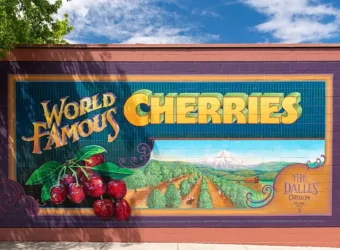
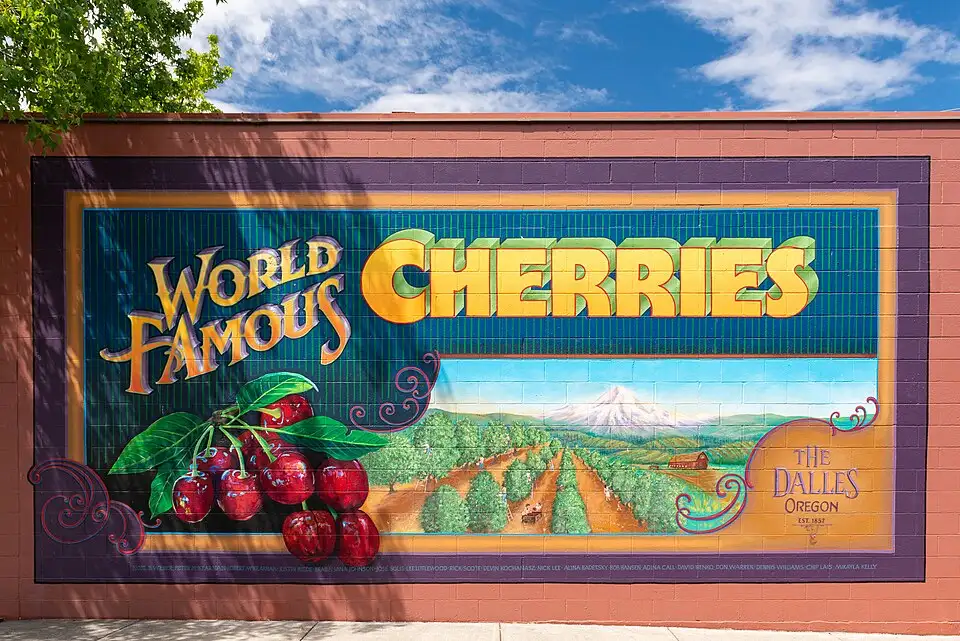
One of the best ways to acquaint yourself with the history and character of The Dalles is to explore some of the 30-plus murals in the downtown area (explorethedalles.com/murals/). A project of the Dalles Mural Society these pieces depict the people and places that shaped the area. And along the mural walk, there are also a few must-see historic stops.
At the top of the list is The Dalles City Hall, which is located at 313 Court Street. Accessible street parking is located on Court Street; and although the outside of City Hall offers is nice photo op, there’s also a noteworthy display inside. The Dalles Fire Museum is located on the ground floor and is open during City Hall business hours. It offers a historic look at the local fire companies and honors the lifesaving actions of local firefighters. It’s a fun look at some vintage equipment. Best of all, there’s barrier-free access to this historic display/
And for more ideas of things to do in the downtown area, visit explorethedalles.com.
A Slice of History
Fort Dalles Museum
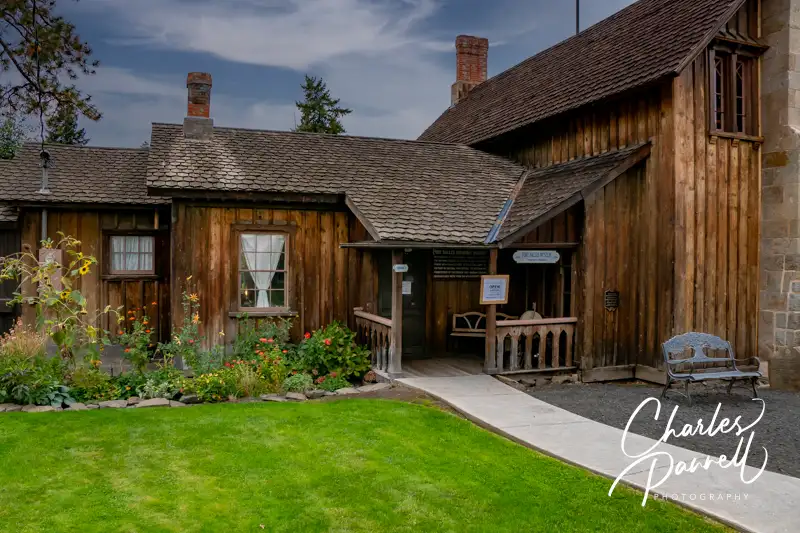
For a dive into the history of the area, make sure and stop at the Fort Dalles Museum (www.fortdallesmuseum.org). Despite the age of this historic structure, wheelchair-access was worked into the master plan, so today most folks can easily navigate the grounds.
One of Oregon’s oldest museum buildings, the main house dates back to 1856, when it served as the surgeon’s quarters at the original fort. There’s parallel parking on the street in front of the fort, and a nice accessible pathway to the front door. Inside, there’s good access on their first floor, which has a large living area, a kitchen and dining room and a music room. There’s also a narrow stairway to the two small upstairs bedrooms. Still the first floor houses the bulk of the exhibits, which include old photos, furniture, rifles, dishes, surgeon’s tools, and a nice collection of Native American artifacts. And if you have any questions, just ask the helpful docent.
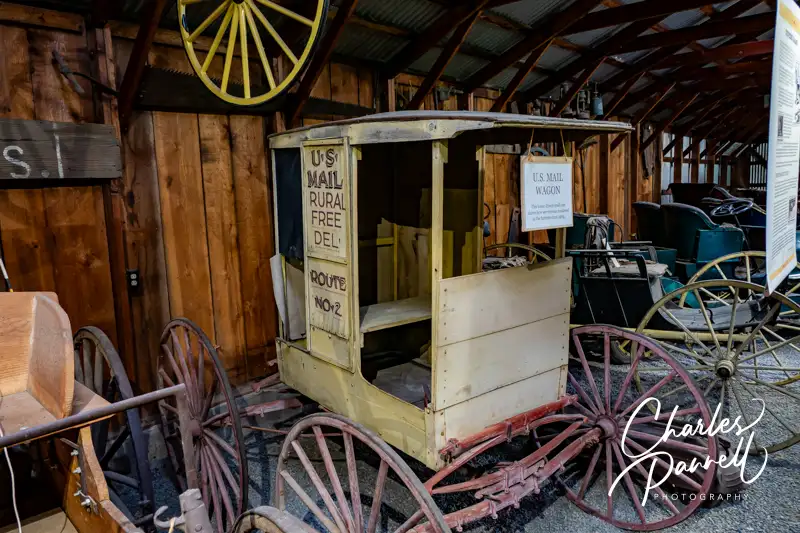
Out back there’s a gravel pathway down to the the antique vehicle building which houses a gaggle of historic cars. They are in various states or restoration and include a 1908 Knox touring car, a 1925 Ford roadster, an 1884 Hansom cab, a milk wagon and a few vintage hearses. Next door there’s an outside display of carriages, and although there’s a wide pathway, some folks may need assistance with the slight uphill slope.
Antique Vehicle Building at the Fort Dalles Museum
There are also a few picnic tables in a level area near the back of the house, with accessible restrooms just around the corner. And you can get a nice view of the historic Anderson House from the back of the property, so pack along a picnic lunch, take a break and enjoy the view.
Riverside trail at the Columbia Gorge Discovery Center
And for a deeper dig into the history of the area, a stop at the Columbia Gorge Discovery Center (emerginghorizons.com/columbia-river-gorge-discovery-center/) is certainly warranted. This excellent museum celebrates the cultural and natural resources of the Columbia Gorge; and as an added bonus it also offers a nice accessible riverside trail.
Dalles Dam viewed from the Dalles Lock & Dam Visitor Center
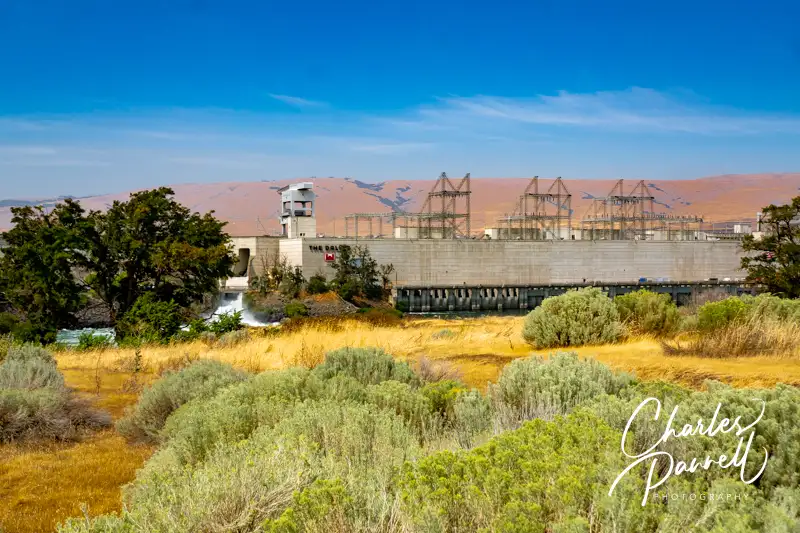
Don’t forget to stop at the Dalles Lock & Dam Visitor Center while you are in the area, as it offers a nice view of the dam. Just take exit 87 from Interstate 84 and follow the signs. There’s level access to the visitor center, but the hours are usually limited to summer and fall weekends. You can still get a good view of the dam from the accessible scope in the parking lot, and there are some covered accessible picnic tables next to the visitor center if you’d like to have lunch there.
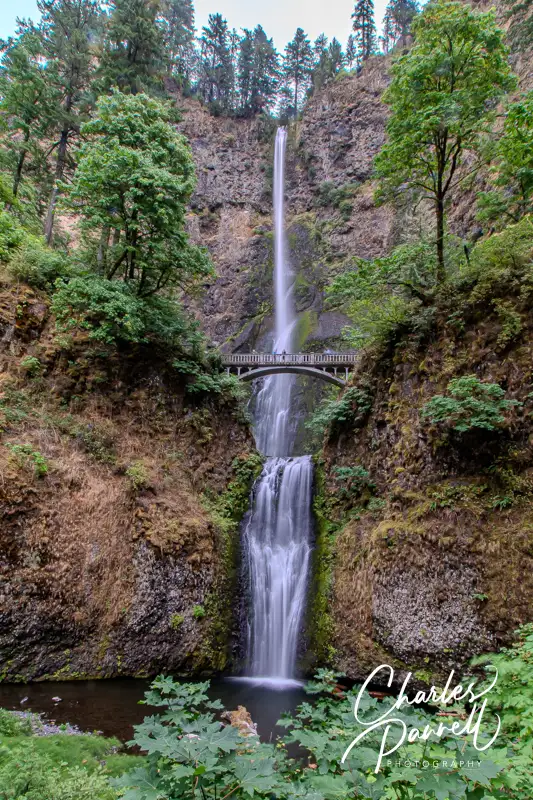
Multnomah Falls on the Columbia River Highway Waterfall Corridor
Of course, with all the things to see and do in the area, it’s best to spend a night or two. And in that respect, Cousins’ Country Inn (cousinscountryinn.com) is a comfortable and accessible choice.
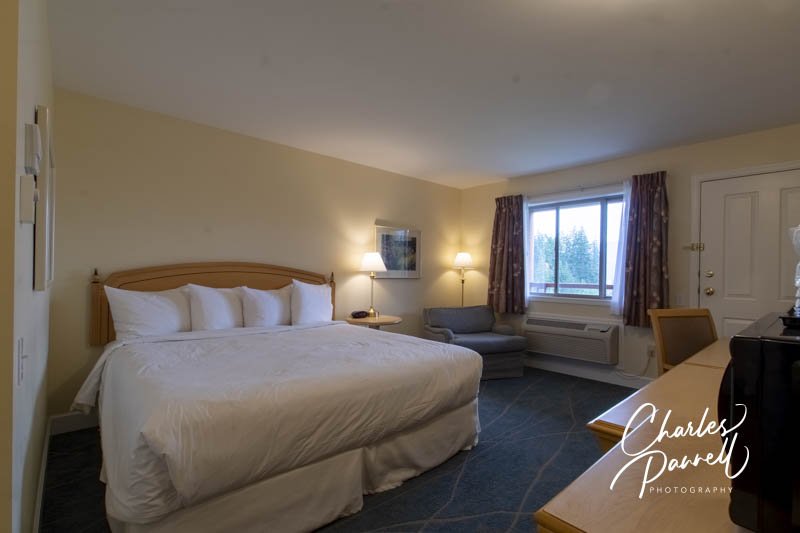
There’s an accessible drop-off area in front of the office, with level access to the front desk, and the adjacent restaurant. From there, it’s just a short drive to accessible room 149. There’s accessible parking in front, with level access over to the front door.
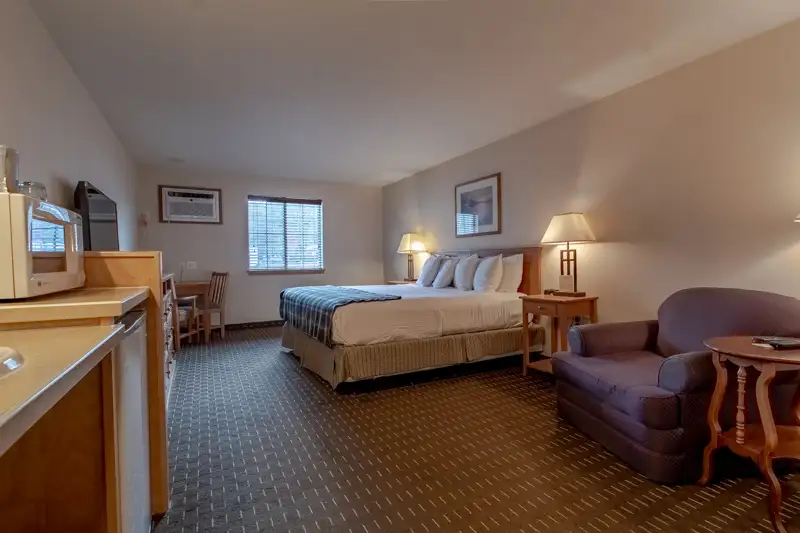
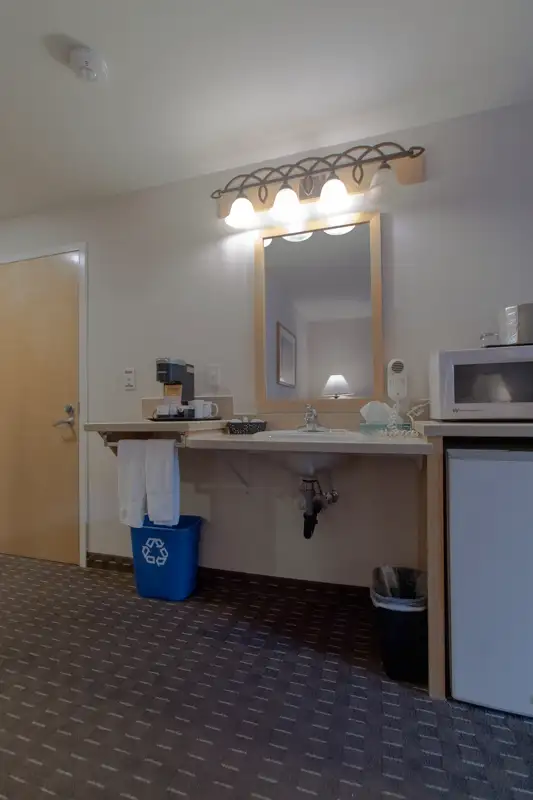
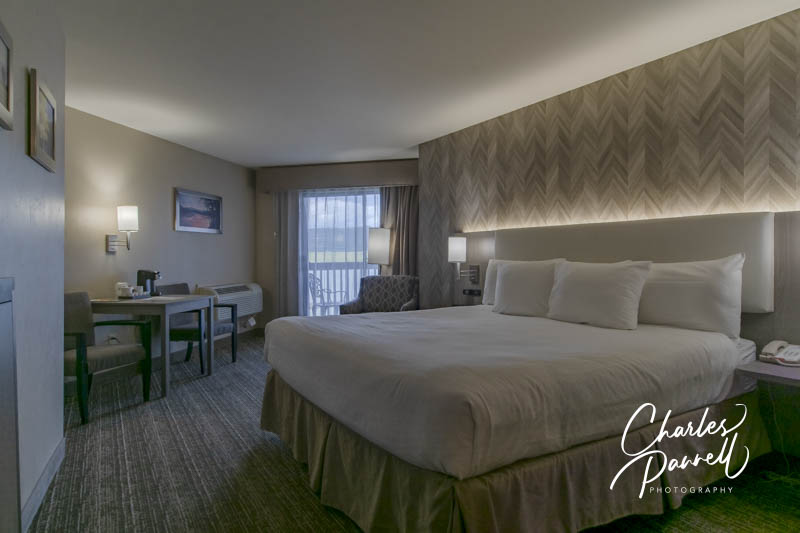
Access features in the room include wide doorways, lever handles, a lowered closet rod and low-pile carpet for easy rolling. It’s furnished with a 27-inch high king-sized platform bed with wheelchair access on both sides, two nightstands, a chest of drawers, an easy chair and a dining table with two chairs. And even with all that furniture, there’s still plenty of room to maneuver a wheelchair. The room also has a refrigerator and a microwave, and there’s a roll-under sink in the main room, next to the bathroom.
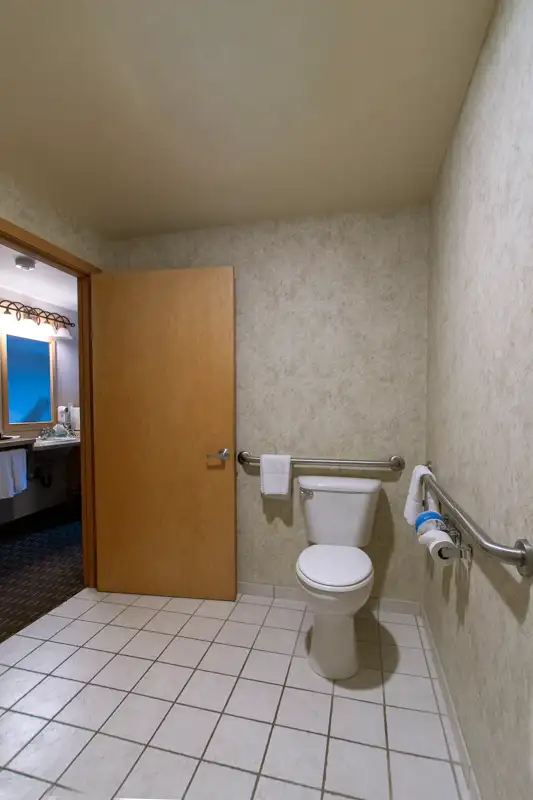
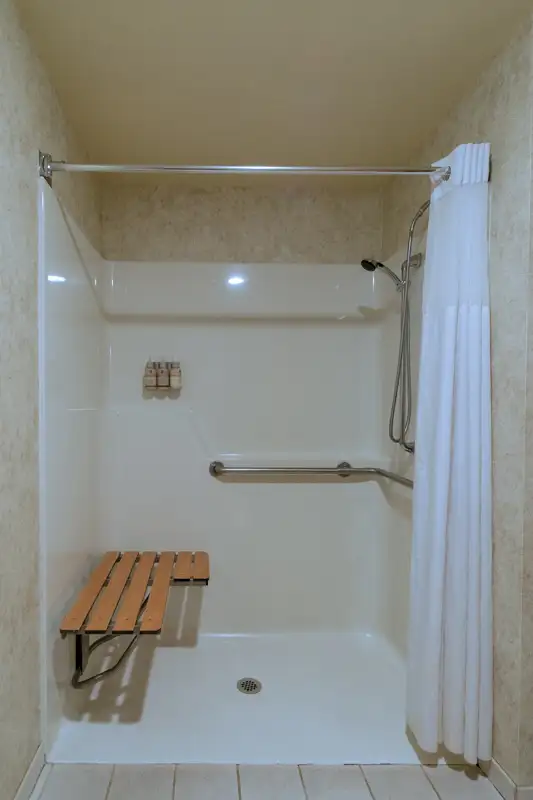
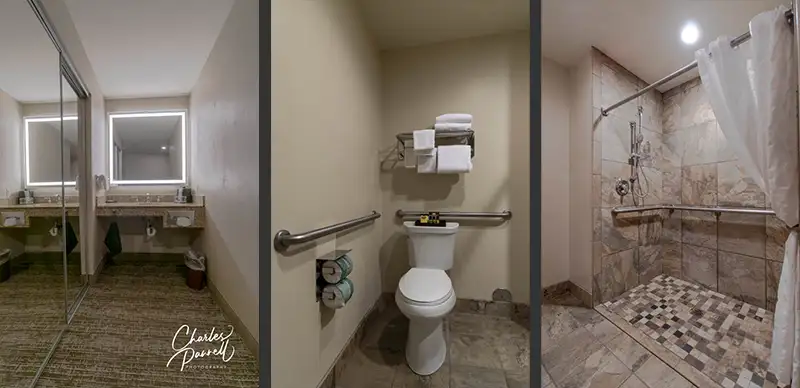
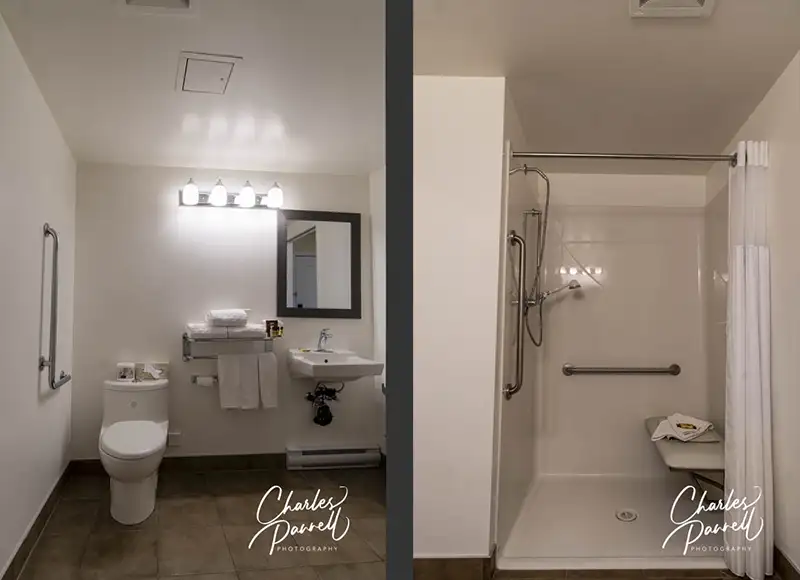
The bathroom has a full five-foot turning radius and is equipped with a roll-in shower with grab bars, a hand-held showerhead and a fold-down shower bench. Top it off with a toilet with grab bars on the back and left walls (as seated) and you have a very functional and accessible bathroom.
Overnight guests also get a discount on breakfast at Cousins’ Restaurant, which is located off the lobby. All in all, Cousins’ Country Inn is an affordable and accessible lodging choice.
(click for larger image)
Room 149
Toilet in Room 149
Shower in Room 149
Vanity in Room 149
Barrier-Free Travel California National Parks Road Trips Travel Ideas for Wheelchair-users and Slow Walkers
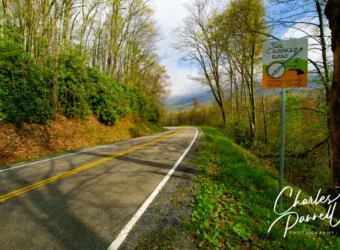
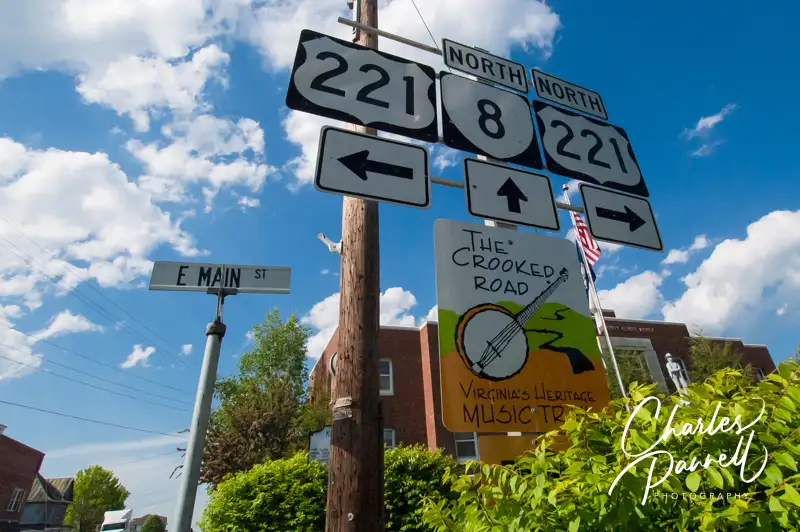
Located in Southwest Virginia, the Crooked Road (thecrookedroadva.com) is more than just a driving route. This 330-mile heritage music trail winds through the Appalachian Mountains and connects major music venues and heritage sites which highlight the traditional music of the region. Along the way you’ll find stage shows, outdoor concerts, festivals and jam sessions.
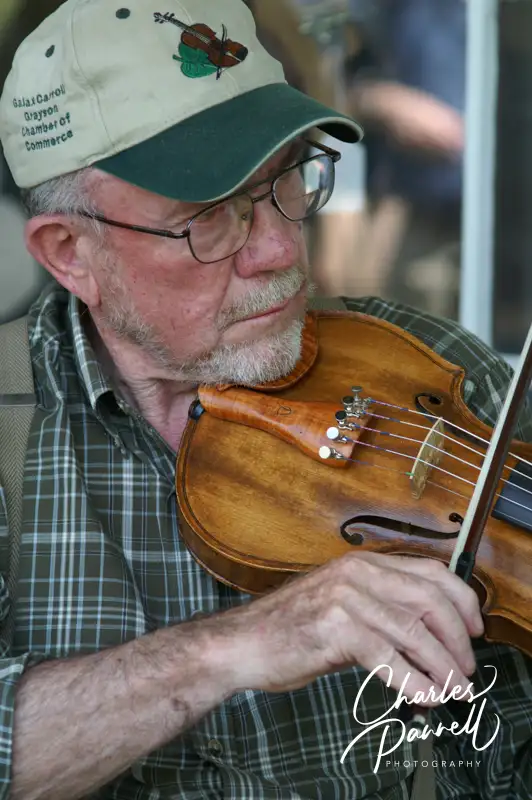
Fiddler on The Pickin’ Porch
That said, the music is only half the draw. As one local banjo player noted, “Music is a living tradition here. It evolves as people evolve. Folks come here to experience this living heritage and to meet the people involved in it.” So in the end, the Crooked Road is just as much about the people as it is about the music. And not only is it a great spot to hop off-the-beaten-path and experience some local culture, but it also boasts a number of wheelchair-accessible sites.
A Great Road Trip!
Although you can hop on the Crooked Road just about anywhere along the route, a good starting point is at its eastern terminus – Rocky Mount. And it’s conveniently located just 25 miles south of Roanoke. From there, just take VA 40 west towards Ferrum and follow the Crooked Road signs. Not only is this the easiest access point, but Ferrum makes a great first stop; as the Blue Ridge Institute and Museum (www.ferrum.edu/brim/home) offers a good overview on the regional heritage.
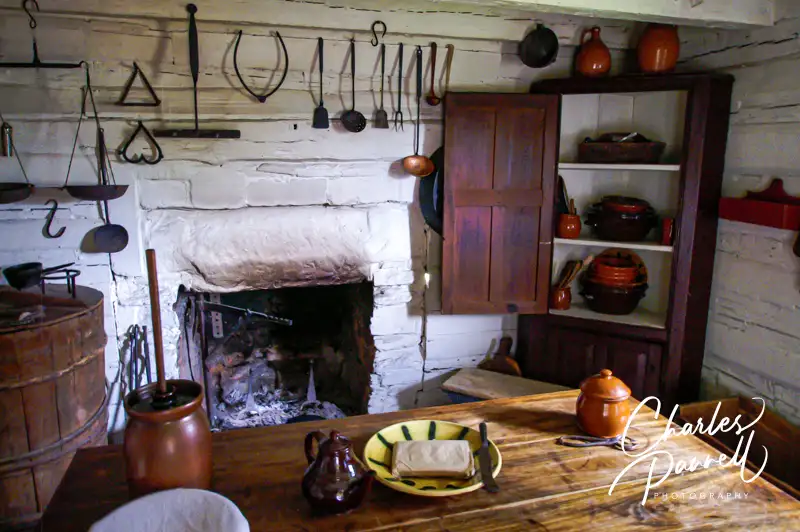
Blue Ridge Institute Heritage Farm Museum
Located on the campus of Ferrum College, the Blue Ridge Institute and Museum features indoor gallery space plus an outdoor heritage farm museum. The gallery space hosts exhibitions which highlight the people and heritage of the region. There is level access to the museum, barrier-free access throughout the exhibits, and plenty of accessible parking outside.
Save some time to look around the Farm Museum, which is located just across the street There are level dirt and gravel pathways throughout this open-air farmstead, with ramps up to the barns and a few steps up into the farmhouse. The pathways are doable for most people in dry weather; and even though you can’t access every display, you can still get a good feel for what Virginia farm life was like back in 1800.
And don’t miss the Blue Ridge Folk Life Festival, held at the Blue Ridge Institute on the fourth Saturday in October. This annual event is billed as the largest celebration of Virginia’s folkways and includes live music, old time food, a quilt show, a moonshiners’ storytelling stage, coon dog contests and a mule jumping contest. It’s a great way to really experience the heritage of the area.
Friday Night at the Rex
No Speed Limit Playing at the Rex Theater
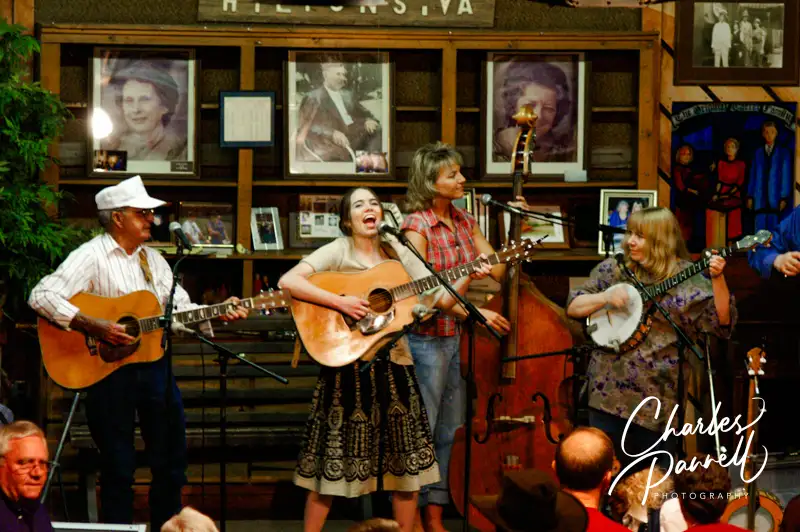
Located about 60 miles east of Ferrum, Galax is another must-stop; more specifically it’s a must-stop on a Friday night. Galax is known as the world’s capital of old time mountain music, and on Friday nights everyone heads over to the historic Rex Theater (www.rex.theater) for the weekly installment of Blueridge Backroads Live.
School Children Clogging at the Rex Theater
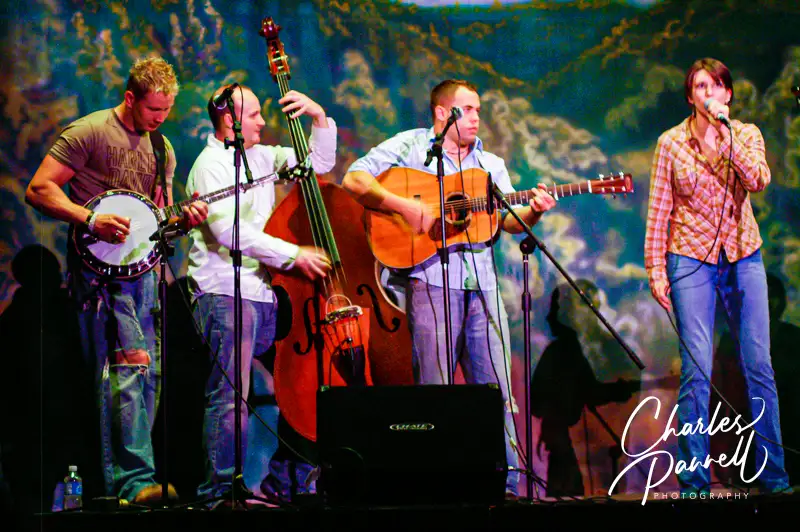
This entertaining radio show features local musicians, and is broadcast live on WBRF 98.1. It’s kind of the Crooked Road version of the Grand Old Opry. The show features fiddle, mandolin, acoustic guitar, autoharp and banjo music along with local dancers. The wheelchair access at the Rex is good too, as even though the theater was built in 1938, it features level access, an accessible unisex family restroom in the lobby, and wheelchair seating. Even better – tickets for the accessible seats can be purchased online.
Birthplace of Country Music
Bristol, which is located just 115 miles west of Galax, is a required stop on any Crooked Road itinerary. Known as the Birthplace of Country Music, it’s where Victor Talking Machine talent scout, Ralph Peer made recordings of local artists like Jimmie Rodgers and the Carter Family in 1927. And with those recordings (known as the Bristol Sessions), he introduced the world to the music of Appalachia.
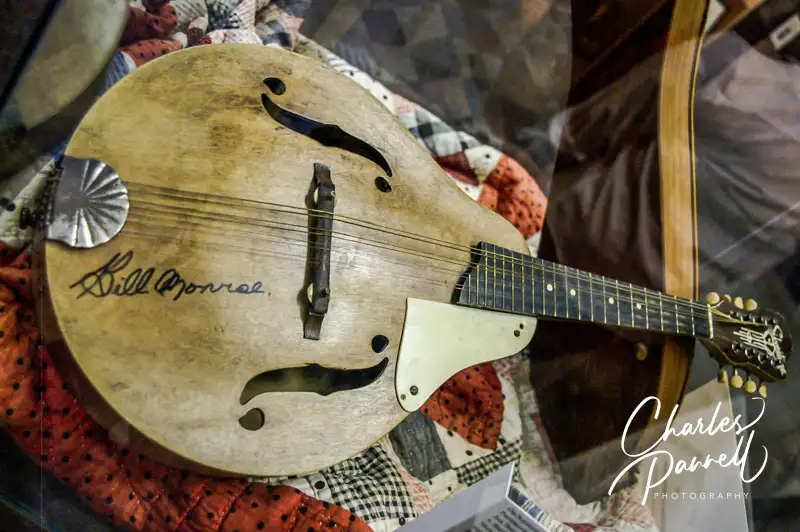
Bill Monroe’s Mandolin at the Birthplace of Country Music Alliance Museum
Today, Bristol’s Birthplace of Country Music Alliance Museum (birthplaceofcountrymusic.org) focuses on the history of country music, with emphasis on the period after the Bristol Sessions. This unique museum contains exhibits about the roots of country music and the musicians that helped shape the genre, including an extensive exhibit about Tennessee Ernie Ford, Bristol’s native son. It’s a good primer on the music, and it helps put the whole Crooked Road experience in the proper perspective. Access is excellent throughout the museum, with a level entrance and barrier-free access to all the exhibits.
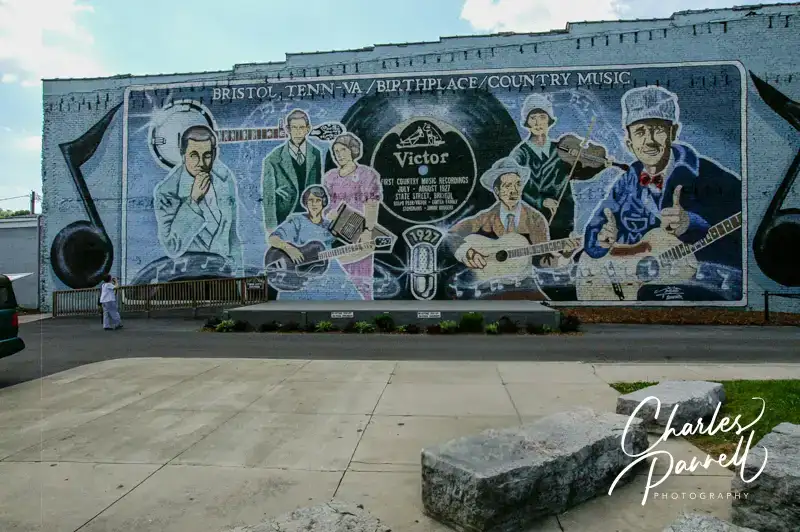
The Bristol Mural
There’s plenty of live music to be had in Bristol too, with weekly concerts at the Birthplace of Country Music Mural. And as far as access goes, there is good wheelchair-access to the seating area at the mural.
White Top Mountain at The Carter Family Fold
Then on Saturday night, be sure and head to the Carter Family Fold (carterfamilyfold.org), which is located in Hiltons, about 20 minutes from Bristol. The AP and Sara Carter homestead is home to a long standing weekly concert, where only acoustic instruments are allowed and no alcohol is served. There’s accessible parking near the entrance and accessible seating up front. It’s truly a Crooked Road highlight.
A Man And His Music
Ralph Stanley Museum
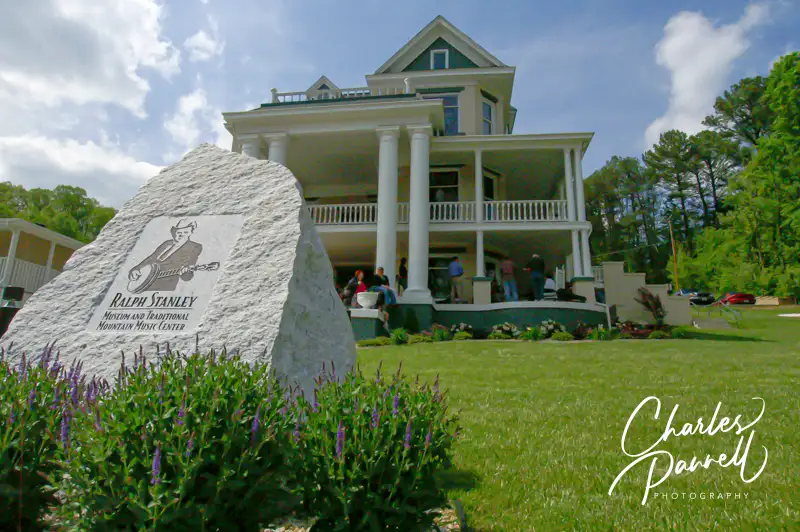
No Crooked Road trip is complete with out a visit to the Ralph Stanley Museum (ralphstanleymuseum.com) located in Clintwood, near the western terminus of the route. Also known as the “Man of Constant Sorrow”, Ralph achieved national fame when he recorded the soundtrack for O Brother Where Art Thou.
Although stairs grace the front entrance of the museum, there is level access in back, near the accessible parking. Inside there’s elevator access to all floors, accessible restrooms, and barrier-free access to all the exhibits. The museum gives a good history of Ralph Stanley and traditional mountain music through interactive displays, audio and video clips and personal memorabilia.
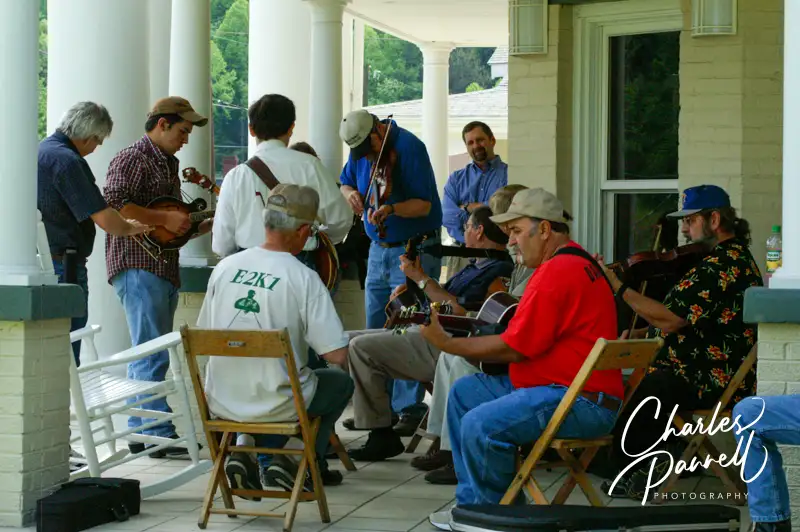
Local Musicians Jamming at the Ralph Stanley Museum
But the exhibits are only half the draw of the museum. Save some time to sit a spell on the front porch and listen to the locals jam. Either way, it’s well worth the trip and the perfect way to end this Virginia road trip.
Barrier-Free Travel 22 Accessible Road Trips Driving Vacations for Wheelers and Slow Walkers
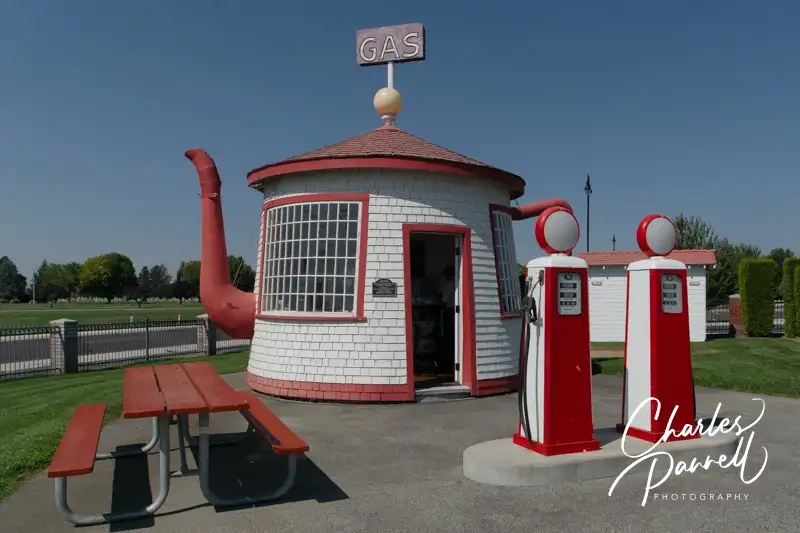
Handcrafted by Jack Ainsworth in 1922, the Zilla Teapot was originally constructed as a political statement, in response to the Teapot Dome Scandal in the Harding administration. It sat next to the Old Dalton Trading Company General Store for many years, until it was purchased by Mrs. AJ Thomas in 1928. Dalton then operated the Teapot Dome as a gas station for decades. During the construction of Interstate 82 in 1978, the teapot was scheduled to be removed; however before that happened it was hit by a car and nearly destroyed, It was subsequently reconstructed with the help of the Washington State Department of Transportation and moved to a site on the Yakima Valley Highway. In 2012 it was relocated to its current venue, where it serves as a visitor information center.
The teapot is located off of Interstate 82 at exit 52. There’s a small parking lot in front of the Zillah Teapot, but the accessible parking spot is located in the larger parking lot next door. There’s curb-cut access and an accessible sidewalk from the accessible parking space over to the teapot. A lone picnic table is located next to the teapot, but unfortunately it’s not shaded. Alternatively there are a few covered picnic tables in the park next door, which is connected to the teapot area by an accessible sidewalk. Round it out with accessible restrooms and a Fallen Firefighters Memorial, and you have everything you need for a road trip stop.
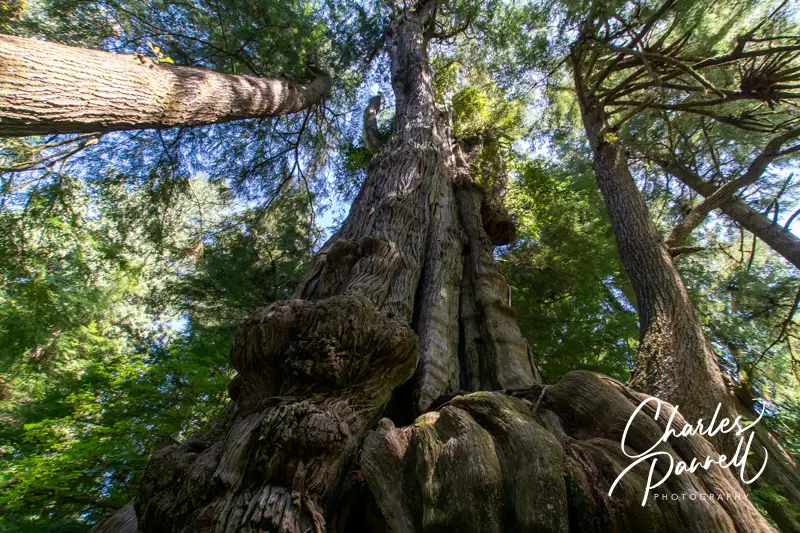
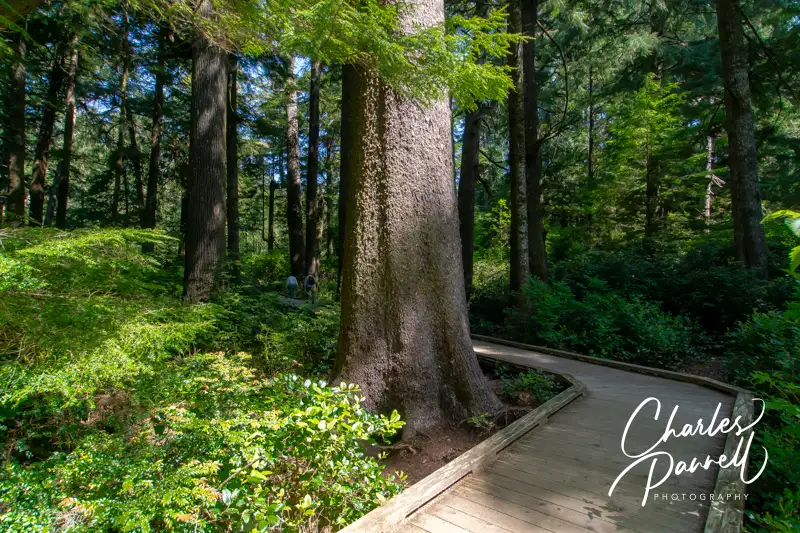
There are lots of self-named “big trees” in the world, but if you happen to be in Northwestern Oregon, be sure and stop in Rockaway Beach, for a gander at Oregon’s largest cedar tree. Lovingly nicknamed the Rockaway Cedar by the locals, this giant stands over 150-feet high, and is surrounded by an equally impressive forest. And believe it or not, it’s in a preserve in the middle of town. The best part is, the half-mile boardwalk that leads out to this local landmark is wheelchair-accessible. So slow down on your next trek down Highway 101, and stop in Rockaway Beach to enjoy a short walk through the forest to admire this stately giant.
A Wheelchair-Accessible Boardwalk
Rockaway Beach Old Growth Cedar Preserve Boardwalk to the Rockaway Cedar
It’s easy to zip by the small parking lot for the Rockaway Beach Old Growth Cedar Preserve. If you’re heading south, slow down when you see the giant hot dog on your left, and look for the parking lot just past Washington Street, on the left. There’s only six standard spaces in the lot, and two accessible slots, but the accessible ones are usually available.
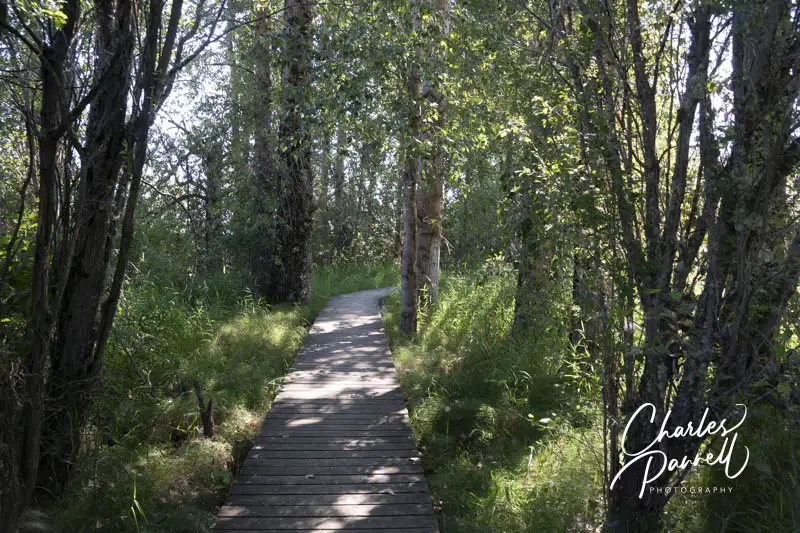
From the parking area, the level boardwalk winds through the 45-acre old growth forest filled with skunk cabbage, salmonberry and coast sedge. About midway along there’s also a level boardwalk over to a viewing platform with a picnic table and benches. It’s a nice secluded spot for a lunch break.
And Oregon’s largest cedar tree – a 154-foot giant — sits at the end of the .6-mile trail. There are a few benches to sit and admire the giant, as well as another picnic table there. There’s also a short stretch of boardwalk that leads over to a more secluded bench if you’d like a little privacy. All in all, it’s a beautiful stroll through the forest, and a must-stop on any Pacific Northwest road trip. And while you’re in the area, be sure to plan a stop at the equally wheelchair-accessible Kilchis Point Reserve, which is just down the road in Bay City emerginghorizons.com/kilchis-point-reserve-a-wheelchair-accessible-tillamook-county-gem/.
Barrier-Free Travel Yosemite, Sequoia and Kings Canyon National Parks for Wheelchair-users and Slow Walkers
Billed as America’s only multi-national scenic drive, the International Selkirk Loop (selkirkloop.org) traverses Northeastern Idaho and Washington, and dips into a swath of Southern British Columbia. This 280-mile loop is known for its spectacular scenery, big skies, crystal clear waterways and of course the namesake Selkirk Range.
Although it can be easily done as a stand alone trip, because of its proximity to Interstate 90, it can also be incorporated into a longer road trip. The scenery along the route is beautiful year-round; however summer is prime time for this drive, as many business and attractions are closed in the other seasons. Wheelchair-users and slow walkers are in luck too, as there are numerous accessible stops along the way. With that in mind, here’s a three-day wheelchair-accessible itinerary for this Pacific Northwest scenic drive.
Day 1 — Post Falls, ID to Bonners Ferry, ID
To get to the International Selkirk Loop from Interstate 90, take exit 5 in Post Falls, Idaho. From there, follow Highway 41 north through Rathdrum, Spirit Lake, and Blanchard to Highway 2 in Oldtown. To go directly to the Selkirk Loop, make a right on Highway 2; however if you’d like a fun little detour just a mile off the route, continue straight and follow the signs to Pioneer Park
An Accessible Forest Hike
The Kalispel Heritage Trail in Pioneer Park
One of the great things about Pioneer Park is that since it’s a US Forest Service area, there’s no charge to enter if you have an America the Beautiful Access Pass. The other great thing about the park is the accessible Kalispel Heritage Trail. It’s easy to find — just take the first left after you enter the park, and look for the trailhead on the left, across from the campground.
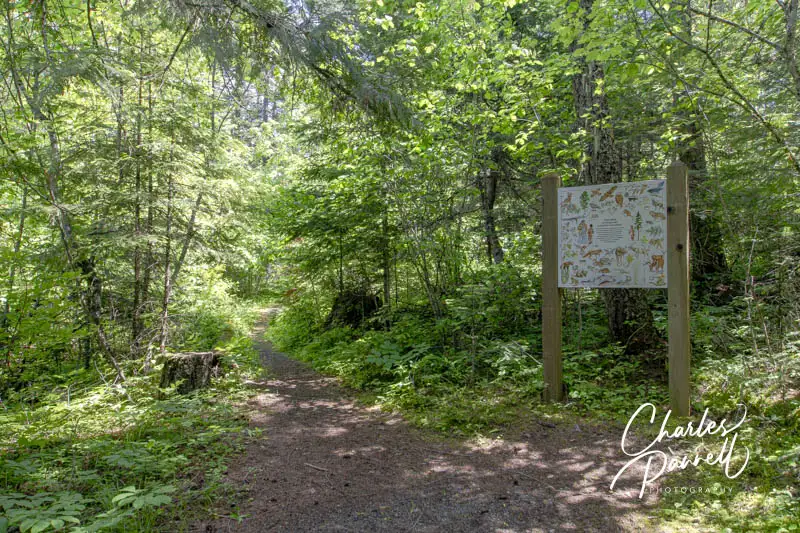
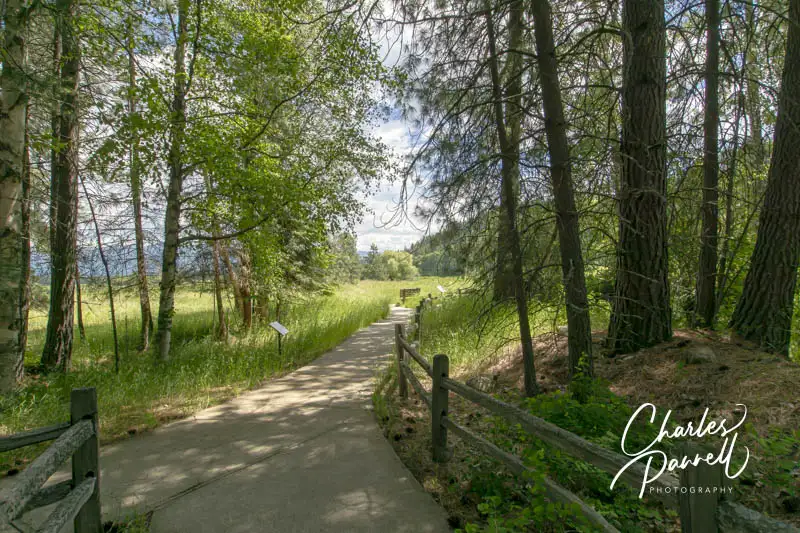
The hard-packed dirt loop is about .3 miles long, and although there are elevation changes here and there, it’s still within the access guidelines. The shaded trail winds through the forest, with interpretive plaques about the the language and culture of the native Kalispel people along the way. Important native vegetation is also identified. An accessible boardwalk that offers some great views of the Pend Oreille River is located halfway along the trail. And if you’d like to stop and enjoy the peaceful view, there are benches near the overlook.
A Great Dam Lunch on the International Selkirk Loop
Albeni Falls Dam
After your hike, head back out to Highway 2, then make a left to begin your journey on the International Selkirk Loop. About 15 minutes up the road, you’ll find Albeni Falls Dam (facebook.com/AlbeniFallsDam) on your right. Not only does it make a nice scenic stop, but it’s also a great place to enjoy a picnic lunch.
There’s level access to a shaded picnic area from the upper parking lot; however most folks completely miss the lower picnic choice down by the dam. The trail to the right of the upper picnic area is too steep for wheelchair-users and slow walkers to descend; however you don’t have to walk down as there is an accessible road to the left of the visitor center. Just follow the sign to the powerhouse.
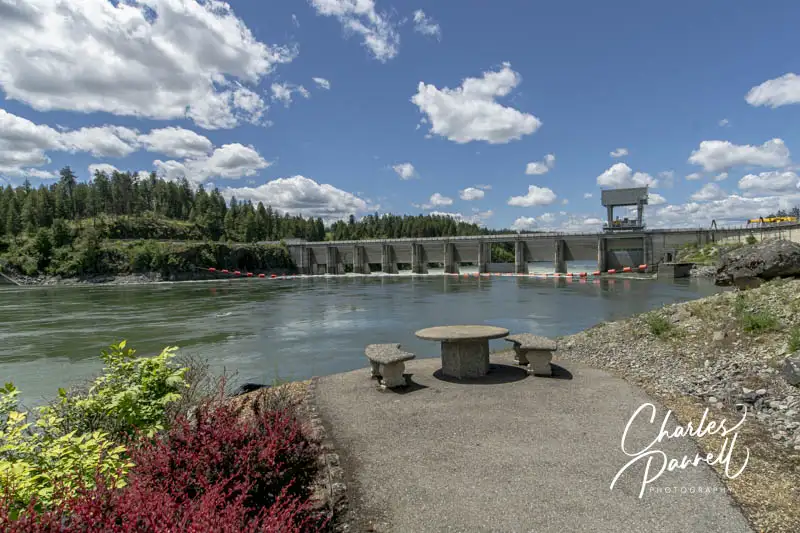
At the bottom of the road there’s level access to a picnic area that offers an expansive view of the Pend Oreille River, Albeni Falls Dam, and of course the powerhouse. It’s a pleasant place to stop, even if you don’t plan to picnic. And if you need to use the facilities, accessible restrooms are located inside the visitor center near the upper parking area.
A Little History and Horticulture
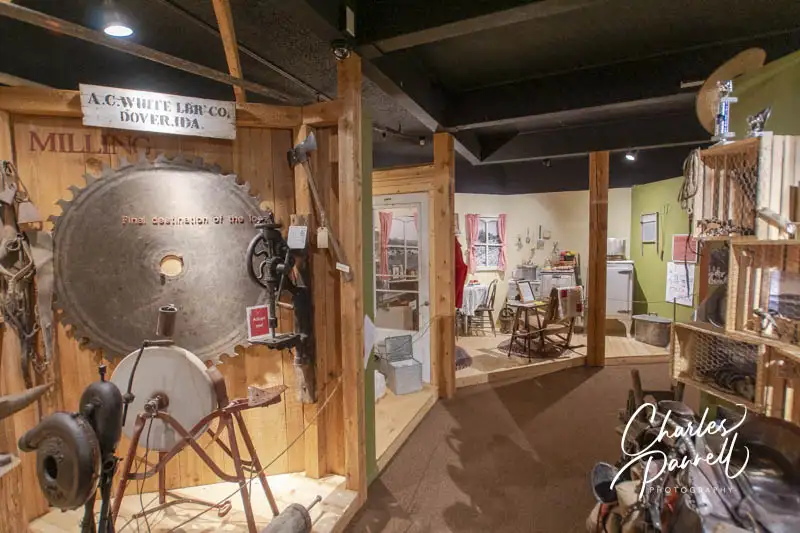
Exhibits in the Bonner County History Museum
Continue along Highway 2, through the pine and fir forest for about 40 minutes to get to your next stop — the Bonner County History Museum (bonnercountyhistory.org) and the North Idaho Native Plant Arboretum. Located in Lakeview Park in Sandpoint, both of these sites can be accessed from the parking lot on South Ella Avenue.
There’s a paved pathway from the accessible parking spot to the accessible entrance of the Bonner County History Museum. Inside there’s plenty of room to roll around the first-floor galleries; however the small second floor exhibit can only be accessed by stairs. There’s also a wheelchair-accessible family restroom downstairs.
The first floor contains a mix of permanent and rotating exhibits; but perhaps the most interesting installation is “Digging into the Past”. When a nearby highway was widened in 2006, archeologists set to work to unearth treasures from the past. Their finds are showcased in this exhibit, which is arranged by the different geographical areas in town. Highlights include a Dr. Scholl’s Foot-Ezer, a collection of opium pipes discovered near the former Chinese laundry, and some interesting objects unearthed in the brothel district.
Add in some permanent installations about the work of the forest service, a little watercraft and railroad history, and a a primer on logging in North Idaho, for a comprehensive look at the history of the area.
Outside there are level pathways through the mostly shaded arboretum,. There are a few dips and ruts in the dirt pathways, but for the most part they are easy to dodge. The historic cabin is not accessible, but it’s usually locked. The five-acre arboretum features North Idaho native and medicinal plants, and also includes herbs, fruit trees and edibles. And there are lots of benches if you’d just like to sit and relax.
Walk on the Wild Side
Chickadee Trail in the Kootenai Wildlife Refuge
The next stop on the International Selkirk Loop — the Kootenai Wildlife Refuge (www.fws.gov/refuge/kootenai) — is just a 45-minute drive up the road. Continue east on Highway 2 for about 35 minutes, until you get to Bonners Ferry; then make a left on Pine Island Road (just past the ranger station). To be honest this turn is easy to miss, so it’s best to turn into the ranger station for easier access to the road. From there, make a right on Mirror Lake Road and and left on Riverside Drive. The refuge headquarters is about four miles up the road on the right.
There’s accessible parking near the refuge office and accessible restrooms next door. A sheltered accessible spotting scope is also located on the far side of the parking lot. The accessible Chickadee Trail begins just to the left of the refuge office. This 1,000-foot paved cement loop winds through the pines and around the pond, with interpretive plaques along the way.
The Myrtle Falls Trail is located across the street. This wide paved trail winds through the forest and out to a bridge that offers a great view of roaring Myrtle Creek below. The trail loses its access on the other side of the bridge, but it’s a nice .25-mile round-trip jaunt out to the roaring rapids.
Finally, make sure and drive the 4.5-mile auto loop before your leave the refuge. There are a number of interpretive plaques at pullouts along the way, and some great windshield views. Be on the lookout for Northern harriers, red-tailed hawks and American kestrels hunting over the wide open fields. And keep your eye out for the resident bald eagle pair that nests there in the spring.
A Blast From the Past
Exhibit in the Boundary County Museum
Finally, for a taste of local history on the International Selkirk Loop, make a stop at the Boundary County Museum (boundarycountymuseum.org) before you call it a day. Just backtrack on Riverside Drive along the levee for about 30 minutes until you get to town. Make a right on Main Street, and take the next left on Bonner Street. Although the museum is located on Main Street, the best accessible parking is behind the museum, next to the visitor center.
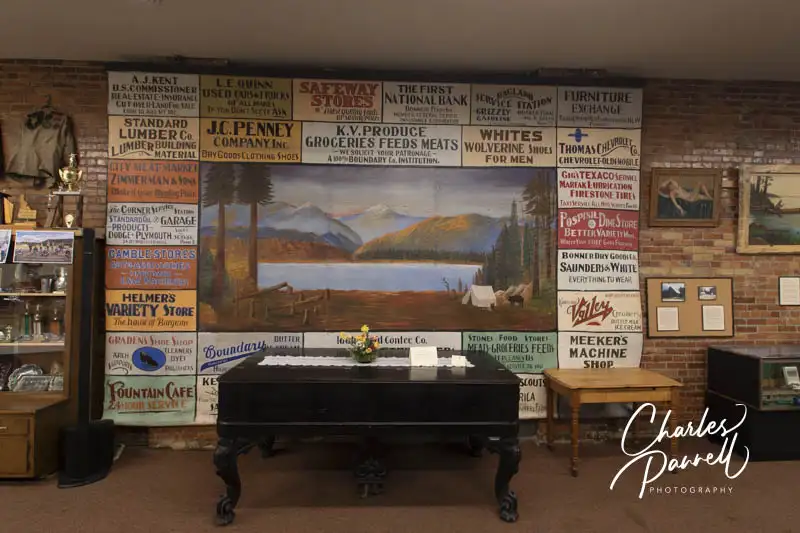
There’s barrier-free access throughout the museum, and accessible restrooms inside. This local mainstay includes a little bit of everything, from a large exhibit about the Kootenai Tribe and a collection of hand made clocks by Ned Dyer, to a still discovered nearby, lots of vintage furniture, appliances and dishes, and even some seats from the old Bonner County High School Auditorium. And don’t miss the recreation of the Historic White Caribou Saloon, which includes a variety of taxidermy, including the namesake white caribou.
Be aware that the museum has limited hours — usually Thursday through Saturday — so make sure and time your visit accordingly. Even if it’s not open, there is level access from the accessible parking in back to some outside exhibits that focus on early railroads and farming methods. There’s also level access to a covered picnic table on a cement pad. It’s just a fun — and educational — stop.
And if you’d like more maps and information on North Idaho and British Columbia, then pop in to the visitor center just across the parking lot from the museum. There’s level access to the lobby and accessible restrooms around the corner. To complete your first day 125-mile drive, hop back on Highway 2 and continue around the curve, to the Kootenai River Inn on your left.
Spend the Night
The Kootenai River Inn (kootenairiverinn.com) is a great place to overnight. Not only does it offer good access, but it also includes a few restaurants and a casino. Accessible parking is located near the lobby door, with barrier-free access over to the front desk. And although there’s a barrier-free pathway to accessible room 125 from the lobby, there’s also additional accessible parking closer to the room.
Room 125 at the Kootenai River Inn
Access features in room 125 include wide doorways, lever handles, low-pile carpet for easy rolling, a lowered closet rod and good pathway access. It’s furnished with a 28-inch high king-sized bed with wheelchair access on both sides, a chest of drawers and an easy chair with an ottoman. The spacious room also includes a table with two chairs, a microwave and a refrigerator.
There’s level access out to a private balcony that’s furnished with a table and two chairs. And although there’s room enough for a wheelchair out there, you’ll probably have to move the patio furniture around a bit. Best of all, the balcony boasts a peaceful river view.
The oversized bathroom includes a full five-foot turning radius and is equipped with a large roll-in shower with grab bars and a hand-held showerhead. A shower chair is also available upon request. The toilet grab bars are located on the back and right walls (as seated), and a roll-under sink is located right outside the bathroom.
Vanity area and Bathroom in Room 125
There’s good access to all the public areas of the property, including the Springs Restaurant, the Riverside Deli and the casino. Breakfast is also included with your stay. The staff is attentive, and the Kootenai River Inn is a comfortable and accessible place to spend the night.
Day 2 — Bonners Ferry, ID to Balfour, BC
After a good nights rest, continue along Highway 2 on the International Selkirk Loop. The route only covers 90 miles today; however it also involves a border crossing so it doesn’t hurt to get an early start.
Crossing the Border
From Bonners Ferry continue on Highway 2, cross the Kootenay River, then head east on Highway 95. About 75 miles up the road, take Highway 1 to the Porthill-Rykerts border crossing. It’s just under a two-hour drive.
Although Canadian entry requirements may vary due to COVID outbreaks, currently there are no restrictions, extra paperwork or health screenings required to enter Canada by car. All vehicle occupants are required to have a passport, and you will also be asked questions about alcohol, firearms, and other items you may be carrying.
Border crossing times can vary, depending on traffic and staffing. A list of wait times and delays at Canadian ports of entry can be found at cbsa-asfc.gc.ca/bwt-taf/menu-eng.html. And it’s also a good idea to keep updated on the latest border crossing requirements. More information can be found at cbsa-asfc.gc.ca/travel-voyage/menu-eng.html. The good news is that the once you arrive at the Porthill-Rykerts border crossing it’s a fairly expeditious process, as there’s not a lot of traffic there.
Creston Wildlife Management Area
Boardwalk at the Creston Discovery Center
After you enter Canada, US Highway 1 transitions into Canadian Highway 21. From the border it’s a short 20 minute hop up to the Corn Creek section of the Creston Wildlife Management Area (crestonwildlife.ca). It’s located off of Highway 3, just northeast of Creston.
There’s no striped parking in the paved lot next to the Discovery Center at Corn Creek, but there’s usually plenty of room to parallel park an adapted vehicle. The Discovery Center — which has exhibits and information — is ramped, and there’s an accessible porta-potty in the parking lot. The boardwalk trail is right behind the Discovery Center.
Theoretically the whole boardwalk loop is accessible, as it’s relatively flat; however a large patch of tall grass at the midway point makes it impassable for most wheelchair-users and slow walkers. That said, you can do this trail as two out-and-back sections.
To do the first section, make a left turn after you cross the bridge behind the Discovery Center. The short hard-packed dirt trail is level but narrow, and it soon transitions to a boardwalk over the marsh. The accessible part of this half-mile round trip jaunt ends at the end of the boardwalk, when you hit the tall grass, near the viewing tower. It’s a half-mile round-trip hike.
To access the second section of the boardwalk loop, turn right after you cross the bridge behind the Discovery Center. A .3-mile dirt and boardwalk trail leads to the viewing tower near the tall grass. From there you can continue on the .4-mile hard-packed dirt Songbird Stroll out to West Creston Road. If you do the whole length it’s a nice 1.4-mile out-and-back hike. And when you’re done, stop for lunch at the shaded picnic table near the Discovery Center.
Hop on a Ferry
To continue on the International Selkirk Loop, head east on Highway 3, then go north on Highway 3A. It’s about a 1.5-hour drive to Kootenay Bay, where you can catch the longest free ferry in the world. The drive along the way is nothing to sneeze at though, as the road winds through a lush forest and offers a peek at Kootenay Lake every now and again.
The Kootenay Lake Ferry www2.gov.bc.ca/gov/content/transportation/passenger-travel/water-travel/inland-ferries/kootenay-lake-ferry) runs from Kootenay Bay to Balfour year-round; however it operates on a reduced schedule in the winter. In the summer the ferry operates on a hourly schedule from 7:10 AM to 10:20 PM; however since this is the peak season there may be a wait for the next ferry, so allow some extra time. The summer schedule begins the third week of June, and ends after Labor Day.
The crossing itself takes just 35 minutes, and as indicated earlier, it’s free. Access isn’t really an issue as most folks just stay in their vehicles, roll down their car windows and enjoy the ride; in fact in some cases the cars are parked so close together that you can’t open your car door. Still it’s a pleasant crossing, and you just can’t beat the price.
Overnight in Canada on the International Selkirk Loop
View from room 206 at the Kootenay Lake Resort
Once you arrive in Balfour, it’s just a short drive to your home for the night — the Kootenay Lakeview Resort (kootenaylakeviewresort.com). Not only does it boast a nice accessible room, but as the name implies, it also has an impressive view of Kootenay Lake.
There are no stripes in the lower lobby parking lot, but there’s room enough to parallel park an adapted vehicle, and there’s level access over to the front door. Inside there’s plenty of room to maneuver a wheelchair over to the front desk and the adjacent breakfast area.
Room 206 — an accessible king — is located a short drive away, with accessible parking near the building. There’s ramp access up to the building, and a slight lip at the room door. Access features include wide doorways, lever handles, low-pile carpet for easy rolling and good pathway access.
Room 206 at the Kootenay Lake Resort
The room is furnished with a 26-inch high king-sized bed with wheelchair-access on the right side (as you face it). Other furnishings include a table, an easy chair, a desk with a chair and a chest of drawers. There’s also a microwave and a refrigerator in the room. A threshold ramp leads out to the balcony which includes two plastic chairs and a small table, and offers plenty of room for a wheelchair. And you just can’t beat that lake view!
The bathroom has a wide pocket door and a full five-foot turning radius. It’s equipped with a roll-in shower with grab bars, a hand-held showerhead and a fold-down shower bench. Other access features include toilet grab bars on the right wall (as seated), a lowered towel rod and a roll-under sink.
Bathroom in room 206 at the Kootenay Lake Resort
Top it all off with a light breakfast in the morning, and you have a very comfy place to rest your head.
Day 3 — Balfour, BC to Newport, WA
Get an early start on the final day of your International Selkirk Loop drive, as it’s the longest leg of the drive — 135 miles — with lots to see and do along the way.
Take a Hike
The Pond Flume Trail at the Mill Pond Historic Site
From Balfour, head west on Highway 3A to Nelson, then take Highway 6 south to the Nelway-Metaline border crossing. The drive takes about an hour and twenty minutes, and again, the lush forest lines the road for most of the trip.
The border crossing back into the US is pretty straightforward. No extra paperwork is required — you just need your passport or drivers license. There’s usually not much of a line at this outpost, but you can check wait times and operating hours at cbp.gov. It’s always a good idea to check the website before you travel, as entry requirements can change.
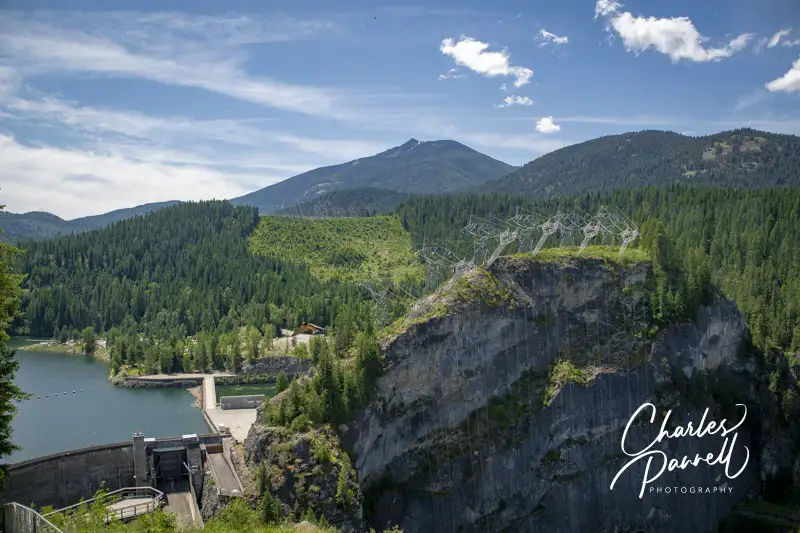
For a short — but scenic — side trip, make a right on East Side Road (about 2 miles from the border), and continue on to Vista House for a sweeping view of Boundary Dam on the Pend Oreille River. After you’ve enjoyed the view, head on back to Highway 31.
Boundary Dam on the Pend Oreille River Viewed From Vista House
Continue south on Highway 31 for about 8 miles, make a left on Sullivan Lake Road, then continue on for about three miles. The Mill Pond Historic Site (www.fs.usda.gov/r06/colville/recreation/mill-pond-historic-site) will be on your right. Go all the way down to the lower parking lot, where you will find accessible parking next to two trailheads.
The most accessible trail — the Mill Pond Flume Loop — begins just across the bridge, about a quarter-mile from the parking lot. This level hard-packed dirt loop winds through the former work camp of the old mill. Interpretive plaques that describe the flume construction and maintenance procedures are located along the way. It’s a pleasant .6-mile loop through the forest, but be sure to apply insect repellent before you set out, as the mosquitoes are thick in the shady sections.
Additionally, if you’d like to dine alfresco there’s also a nice covered picnic area with accessible tables in the upper parking lot. An accessible vault toilet is also located nearby.
A Peaceful River View
Pend Oreille River View at Portage Park
Located on the east side of Metaline Falls in the village area, Portage Park is worth a quick stop for the lovely river view, and wheelchair-accessible walkways. Take Larsen Boulevard off of Highway 31, then bear left at the fork and continue on down to the water.
There’s accessible parking next to the accessible vault toilets, and barrier-free access to the riverside trail. The short trail leads to two accessible viewing platforms and a gaggle of picnic tables. It’s a pleasant spot to sit and enjoy the river view and a nice space for a picnic lunch. This is one of the newer developments in the area, and great thought was put into the access.
Metaline Falls
If, on the other hand, you’d like to have someone else do the cooking, then head on down the road to the quaint hamlet of Metaline Falls. For the best access, parallel park on Washington Street, near the visitor center in Busta Park. From there, it’s a short level walk to the Farmhouse Cafe (facebook.com/farmhousecafe221), which is located across the street on 5th Avenue.
There’s ramp access to this local eatery, with plenty of room to maneuver a wheelchair inside. Menu choices range from burgers and hot or cold sandwiches, to plated dishes served with soup or salad. The servers are friendly and the portions are substantial. Make sure and save room for a slice of home made pie for dessert.
After lunch, save some time to browse through the visitor center in the park. There’s ramp access up to the old rail car that houses the visitor center, and room enough to maneuver a wheelchair around the exhibits. There’s lots of visitor information, maps, historic photos of the area, and some old relics. And if you are in need of reading material, there’s also a nice collection of books that are free for the taking.
Sweet Creek Falls
Picnic Table on the Trail to Sweet Creek Falls
After you’ve had a chance to explore Metaline Falls, continue south on Highway 31 for about three miles to the Sweet Creek Falls Rest Area. Although it’s designated as a rest area, there’s a bit more to see there than just toilets.
There’s accessible parking near the accessible vault toilets, with a paved pathway over to an accessible picnic table. There are also two short trails nearby that offer views of the falls. The most accessible option is located to the left of the vault toilets.
This short quarter-mile round-trip trail crosses over a bridge, then skirts the river until it ends at a viewpoint. The hard-packed dirt trail has a slight uphill grade for about 25 feet but other than that it’s fairly level. There’s a bench at the end of the trail with a decent view of Sweet Creek Falls. Wheelchair users will probably need assistance over a two-foot uneven patch of dirt near the end, but it’s still a pleasant stroll through the shaded forest. The quiet bench also makes a nice secluded picnic spot. Additionally, there’s a standard picnic table on a level patch of ground near the river, just after you cross the bridge.
The trail to the right of the vault toilets leads past several shaded picnic tables to an observation point above the falls. The first part of the trail is asphalt, but it transitions to dirt and gravel near the top. After the transition there’s about a 100-foot steep section before you get to the viewpoint. It’s not a realistic option for wheelchair-users, and many slow walkers may find it difficult. Still the standard picnic tables on this side of the rest area are shaded and secluded, and are doable for most wheelchair-users. Enjoy the view from the other side, and have a picnic on this side.
Tiger Store
The Tiger Store on Highway 20
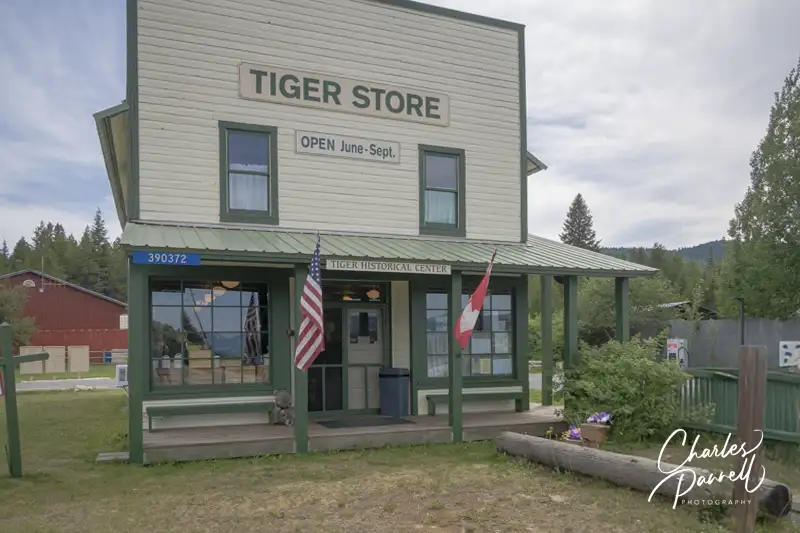
From the Sweet Creek Falls Rest Area, continue south on Highway 31 for about 11 miles until you get to the Tiger Store, at the intersection of Highway 20. Constructed in 1912, this building once housed the general store and post office. Today it includes a mini museum operated by the Tiger Historical Society, as well a small store, information center and gift shop.
There’s accessible parking next to the store, with ramp access up to the front door. Inside there’s a collection of artifacts from the old post office, school and general store. They have a little bit of everything, from antique school desks, photos and old post office boxes filled with vintage letters, to assorted tools, kitchen items and even a mimeograph machine. And the folks that volunteer there are quite helpful with information about other things to see in the area. They also have a nice selection of local maps and brochures. Top it off with an ice cream bar or a soda and you’ve got more than enough reasons to make the Tiger Store a required stop on the International Selkirk Loop.
A Pend Oreille River View
Cusick Wetland Educational Trail
From the Tiger Store, continue south on Highway 31, then bear left when the road transitions to Highway 20. For a short walk and a nice view of the Pend Oreille River, make a left on Monument Way in Cusick. Continue down the road and bear left as you reach the water. There’s accessible parking next to the accessible restrooms, and level access over to the Cusick Wetland Educational Trail, near the boat ramp.
The best way to access this grassy trail is to go through the gate to the shaded shelter, then follow the pathway up to the arch which marks the beginning of the wetlands trail. The trail is wide, and relatively flat in the beginning, and it’s a combination of hard-packed dirt with some gravel and grassy areas. Later it transitions to mostly mowed grass, as it winds along the river, with interpretive signs and benches along the way. At about the .15-mile mark the trail forks off to left, but for the river views stay to the right. It’s a pleasant stroll, and if you’re lucky you’ll catch a glance of the bald eagles and osprey that frequent this area. Unfortunately the wheelchair-access ends at about the .45-mile point, where there’s a steep section followed by some uneven terrain. Still it’s worth the stroll for the river view.
If you’d like a longer walk, then head back to the fork in the trail and follow the left branch through the grassland forest for another quarter-mile. This is an excellent spot for birders and there are some shaded benches along the way to sit and take a break. The trail winds around and joins the original pathway to form a loop; however it loses it’s access after the last viewing meadow. Still it’s a nice out-and back walk, and it’s definitely a must-do for birders.
Where the Buffalo Roam
Kalispel Buffalo Herd
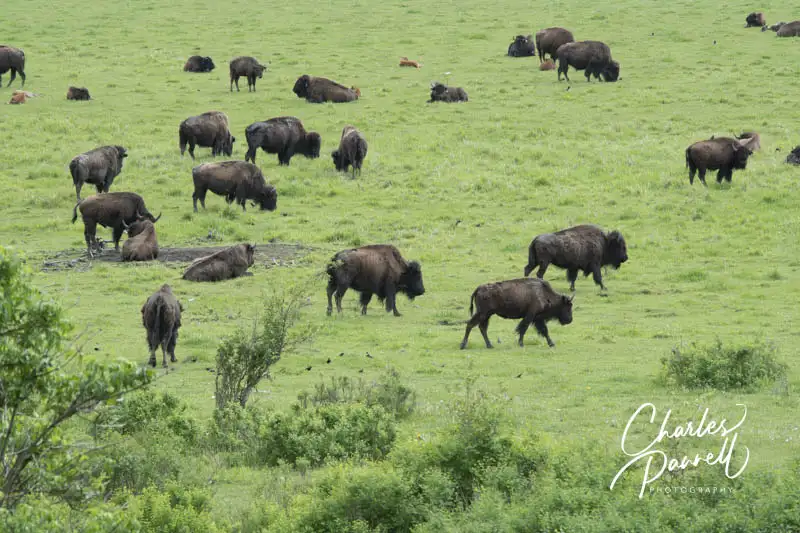
From the Cusick Wetland Educational Trail, head back to Highway 20 and continue south. For a gander at the Kalispel Tribe’s buffalo herd, make a left on Kings Lake Road in Usk, which is about three miles from Cusick. From there, cross the Pend Oreille River and make the first left on Le Clerc Road. It’s about 1.5 miles to Camas Center, which is near the area where the herd is located. The heard began with just 12 buffalo that were presented to the tribe by the National Park Service in 1974. Today it has grown to over 100 head, which roam throughout the reservation.
Of course, since the buffalo are mobile, they’re not in the same place every day. Sometimes you can spot them from the Camas Center parking lot, while other times you’ll get a better view a little further up the road. There’s a level place to pull over just north of Camas Center, which sometimes offers a close look at the massive beasts. And if they wander further south, there’s a nice wide level spot to pull out near the mailboxes.
Truth be told you never know where they will be grazing on any particular day. So just consider it a treasure hunt on the International Selkirk Loop. Actually, tracking them down is half the fun. And if you visit in spring, bring your binoculars and keep an eye out for the newborn calves.
A Little History and a Scoop
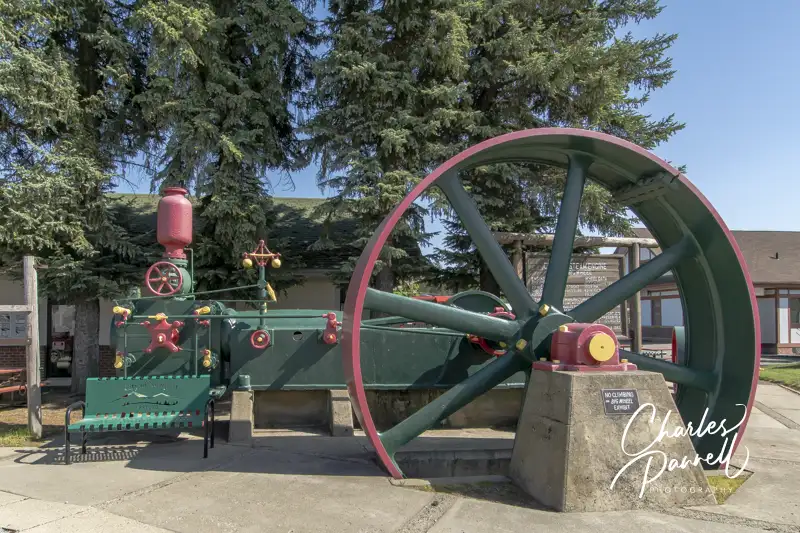
Corliss Steam Engine (The Big Wheel) at the Pend Oreille County Historical Museum
Newport, which is just 20 miles away, marks the official end to the International Selkirk Loop. That said, take some time to explore the history museum and have a sweet treat, before you head on your way.
Located next to the Newport Visitor Center on Highway 2 and Washington Street, the Pend Oreille County Historical Museum (pochsmuseum.org) offers visitors a peek into the past of Northeastern Washington. Accessible parking is located in front of the museum, at the far end of the parking lot across from the train depot.
There’s level access to the front door, with plenty of room to navigate around the first-floor and outdoor exhibits. Inside you’ll find everything from rodeo gear, vintage toys and cooking tools, to an old dentist office and even a Newport Miner printing press. Outside there are a variety of vintage buildings, including three log cabins, the Claire Howe Schoolhouse and a pioneer church. The ground around the exhibits is level, but there are a few rocks here and there. Vintage artifacts are tucked into every nook and cranny, and if you get tired there are plenty of places to sit and rest.
When you’re done browsing through the museum, be sure and stop in at Owen’s (facebook.com/owensgro), which is located across the street. There’s level access to this deli and grocery store, but the main attraction is the soda fountain, which offers a wide variety of ice cream treats. From a huckleberry ice cream cone to a hot fudge sundae or even a banana split, there’s something to please just about everyone. And it’s the perfect way to top off any International Selkirk Loop adventure.
Barrier-Free Travel Glacier, Yellowstone and Grand Teton National Parks for Wheelchair-Users and Slow Walkers
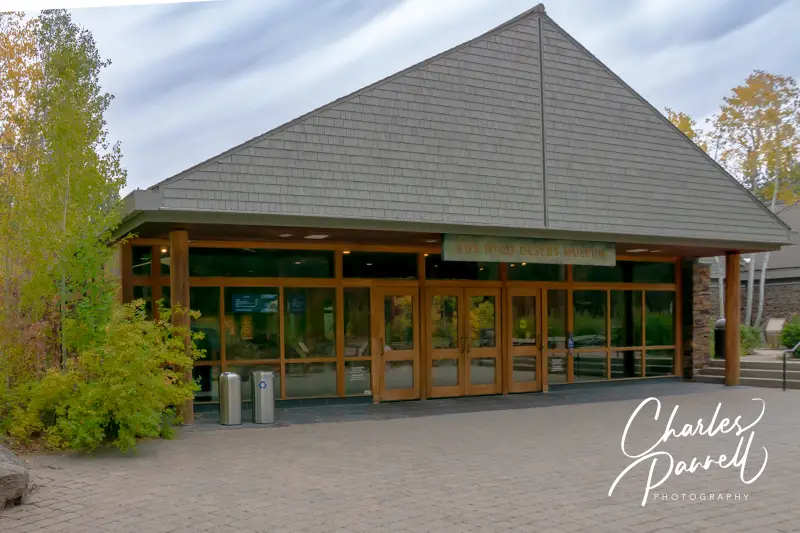
Located along Highway 97 just south of Bend, the High Desert Museum (highdesertmuseum.org/) doesn’t look like much from the lone sign that graces the entrance. That said, as you wind your way up the driveway through the surrounding forest, things begin to come into focus as you spot the main museum building. And by the time you enter the complex, and check out the surrounding enclosures and exhibits, it becomes apparent that this off-the beaten-path find is much more than initially anticipated.
Defined as the highland area on the eastern side of the Cascades, the high desert is the ancestral home to native peoples, as well as a land that supports an abundant wildlife population. The High Desert Museum explores — and even celebrates — the combined history and zoology of the area. This 135-acre campus, which is nicely hidden from the adjacent highway, includes a 100,000-foot indoor museum space, as well as expansive outdoor exhibits. And although the complex was constructed in a rugged natural environment, great thought was given to inclusion, so today wheelchair-users and slow walkers can also enjoy this beautiful space.
A High Desert Primer
Exhibit in the Main Museum
There’s plenty of accessible parking in the front lot, with level access over to the High Desert Museum entrance. And if you can’t walk far, there’s also a large drop-off area near the door. Inside there’s good pathway access to all the exhibits, accessible restrooms and a good number of benches to sit and take a break. A loaner wheelchair is also available.
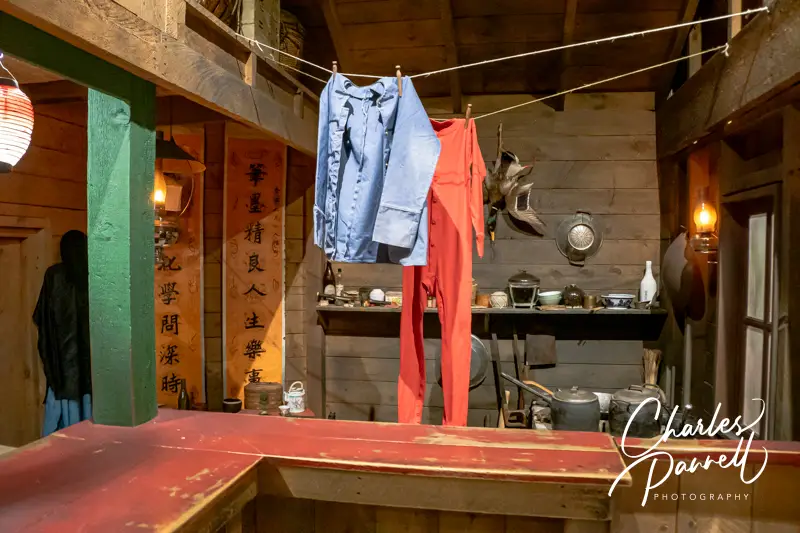
The bulk of the inside galleries focus on the resistance and resilience of the native people, and highlight the changes in the area over the past 100 years. And then there’s the Desertarium, which has an impressive collection of reptiles and amphibians that reside in the high desert. And don’t miss Juniper, the porcupine who lives in a natural habitat in the Schnitzer Entrance Hall. She and her brother Tumbleweed were born in captivity and imprinted on humans, and as a result they cannot be released in the wild.
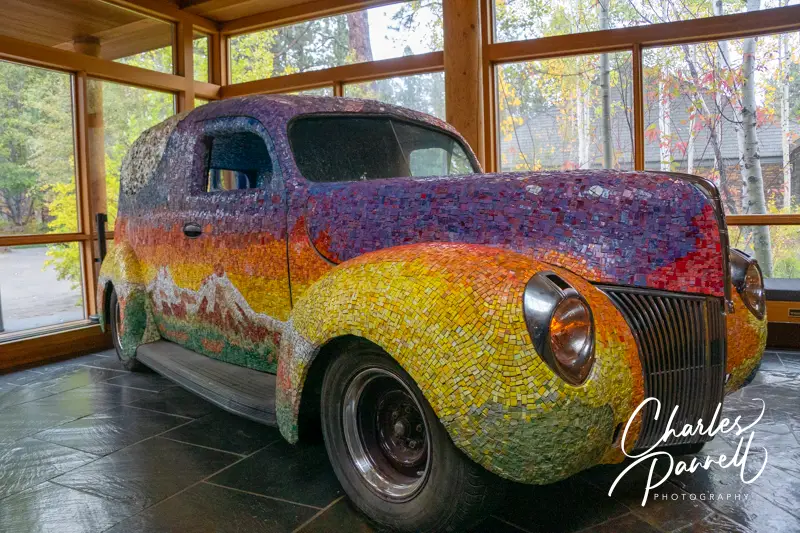
Voyager 1941 Panel Truck with High Desert Mosaic
There are also a number of rotating exhibits in the other galleries, and if you get hungry the Rimrock Cafe has some nice lunch or snack options. And don’t forget to stop in the gift shop to pick up a souvenir of your visit, before you head outside to explore the rest of the campus.
Discover the Forest
Birds of Prey Trail at the High Desert Museum
Outside, a series of trails wind around the exhibits and enclosures; and although not all of the trails are accessible, the museum map clearly highlights the routes that have steep grades. From the main building head over to the popular Donald M Kerr Birds of Prey Center, which features a courtyard with some rehabilitated residents, as well as inside exhibits. Outside, you can get up-close-and-personal with a few owls, hawks and eagles; while the inside exhibits focus on the habitat and behavior of the raptors. And don’t miss the pitch black enclosure with the barred owl.
After you’ve had your fill of raptors, head over to the Forest at Night exhibit, with a quick stop at the pond viewing area along the way. There’s barrier-free access to the Changing Forest pavilion, which includes some interpretive signs and wayside exhibits. Inside there’s equally good access to the Forest at Night interactive installation. This exhibit features the constellations above and highlights the nocturnal forest creatures. And there’s also a touchscreen that allows visitors to learn about the adaptations of the nocturnal forest creatures. It’s a fun and educational exhibit for all ages.
Step Back in Time
Settlers Cabin at The High Desert Museum
Another outside exhibit with good wheelchair access is the High Desert Ranch and Sawmill. And this area is truly a step back in time, as it tells the story of the early Central Oregon homesteaders. It includes a 1904 vintage cabin and barn (complete with chickens), a corral, bunkhouse, root cellar and old schoolhouse. Docents are on hand to answer questions, and there’s always a demonstration or two in the area. There’s ramped or level access to most of the buildings, as well as the old sawmill. Kids love this area, but it’s also nostalgic step back in time for adults.
After you’ve has a taste of farm life, continue on along the paved trail through the forest to the Autzen Otter Exhibit. There’s level access to the outdoor viewing area, where you can view the antics of the Brook, Pitch and Wesley, the resident otters. And for a good underwater look at them. there are also some wheelchair-height viewing windows as well as an indoor viewing area.
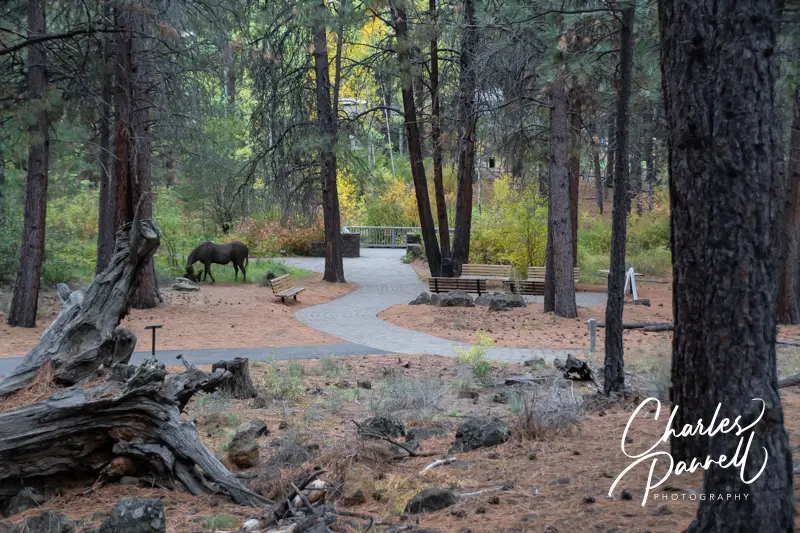
Of course you can always double back to any of the outdoor exhibits, but to conclude your High Desert Museum visit continue along the paved the trail. The pathway passes a playground and a large open meadow before it ends back at the main museum buildings. All in all, it’s just a half-mile trail, with good signage along the way.
And combined with the indoor exhibits this expansive outdoor area gives visitors a comprehensive – and wheelchair-accessible – look at the residents of the high desert.
Near the Entry to The High Desert Museum
Barrier-Free Travel Washington National Parks for Wheelers and Slow Walkers
Located in its namesake town in Northwestern Oregon, the Tillamook Creamery is worth a stop on any road trip. There’s plenty of accessible parking near the front entrance, with elevator access up to the second floor for the factory tour. From that upper vantage point you can look down on the factory floor, while numerous videos and touch screen presentations describe the production process. Top it off with some samples at end, for the full Tillamook experience. Of course the self-guided factory tour is interesting, but real fans will definitely want to stop for a scoop – or two – of Tillamook ice cream at the ice cream counter. And if you still haven’t had enough, there’s also a cafe on the premises that serves up tasty cheese treats, and a market where you can purchase all of the Tillamook products. A fun stop for all ages, with excellent wheelchair access.