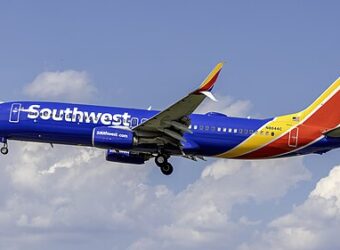
Beginning on September 25, 2025 Southwest Airlines will implement new regulations for passengers traveling with lithium-powered mobility devices. The new regulation requires customers to remove all lithium batteries from their wheelchairs or scooters before boarding the aircraft. The batteries will need to be carried aboard by passengers, but will not count towards their checked baggage allowance or personal items.
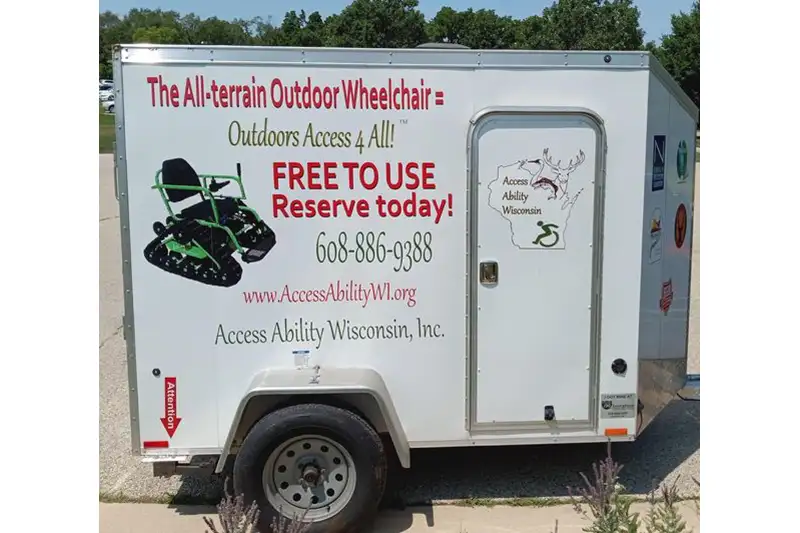
Based in Southern Wisconsin, Access Ability Wisconsin (www.accessabilitywi.org/) offers free loaner track chairs throughout the state. These track chairs have tank tracks instead of tires and unlike most wheelchairs, they can travel over rough terrain.
On-site track chairs, as well as track chairs that can be towed to the location of your choice are available for loan. The towable track chairs come with a trailer and everything that’s needed to tow it. The track chair weighs 350 pounds and the trailer weighs 800 pounds, so you need a vehicle with a towing capacity of at least 1,150 pounds in order to tow the trailer. The hitch uses a two-inch ball, and for safety reasons at least 8 inches of ground clearance is required. A mid-sized SUV, van or truck is suggested, in order to meet these safety requirements.
Reservations for the track chairs can be made at https://www.accessabilitywi.org/reserves-types . A $50 refundable deposit is required at the time of the reservation, and a $2.75 non-refundable processing fee will be charged for each chair. The processing fee will be deducted from the deposit when the equipment is returned.
If the track chair will be towed, a copy of your drivers license and proof of insurance are also required. A Waiver of Liability and User Agreement must also be signed in order to borrow the track chair.
The goal of Access Ability Wisconsin is to have at least one track chair for loan in every county. Their available inventory is continually growing, so check back often. For more information about these Wisconsin track chairs for loan, visit the Access Ability Wisconsin website or call (608) 886-9388.
Barrier-Free Travel National Park Lodges for Wheelers and Slow Walkers
Can you sue an airline because they damaged your wheelchair, delayed your deplaning, or otherwise infringed on your rights as a wheelchair-user? That’s a question I often get. And rightly so, because litigation is a logical solution to bad customer service.
To be honest, you can sue anyone for anything; however the bigger question in this case is, will you prevail in court?
An unfortunately in cases regarding the Air Carrier Access Act (ACAA) — the law that mandates wheelchair access on US airlines — the answer is no.
The Air Carrier Access Act
The ACAA, which was implemented in 1986, covers access issues on US airlines and on flights to and from the US. It’s the law of the land as far as accessible air travel goes, and it even predates the Americans with Disabilities Act.
Unfortunately the ACAA does not allow for private lawsuits. On the other hand it doesn’t specifically prohibit them either. So, it was basically up to the courts to decide if you can sue an airline for for a disability-related issue. And although the ACAA has been mentioned in numerous other cases, the final decision on this matter came in 2017 in Stokes v. Southwest Airlines
Stokes v. Southwest Airlines
In Stokes v. Southwest Airlines, Kelli Stokes claimed that her autistic son suffered physical, emotional and mental injuries, because of a denied boarding due to his disruptive behavior and disability. The lower court dismissed the case, on the grounds that the ACAA did not specifically provide for private lawsuits.
And the Fifth District Court of Appeals upheld that decision. The final ruling held that no private right of action exists to enforce the ACAA. So, yes, you can always try to sue, but because of this precedent, then it will most likely be dismissed. And with that in mind, you’ll be hard pressed to find an attorney to take a ACAA case on contingency. So, can you sue an airline for mishandling your wheelchair? No, you can’t.
That said, even though you can’t prevail in a lawsuit if an airline violates the ACAA, there’s still something you can — and should — do instead. File an ACAA complaint. I know, I can hear the eyes rolling as I type this, but this is really the only way to effect change.
So, What Happens Next?
Will filing an ACAA complaint compensate you for your damages? No. If your personal property has been damaged or you have been injured by the airline, you need to take that issue up directly with them. Keep your receipts, bills and quotes and file a claim with the airline for your damages. You should always do this, however you can also file an ACAA complaint at the same time.
Granted the Department of Transportation (DOT) may do nothing more than log your complaint; however it’s essential to have it on file. That way if an airline continues to violate the ACAA, then the DOT has a paper trail of the complaints. And once an airline starts to accrue complaints, the DOT usually takes action.
What do they do? Well they can issue hefty fines, require remedial training regarding access issues, and even order the airline to implement new policies. But again, nothing will happen if you don’t file an ACAA complaint.
So next time your rights are ignored when you fly the friendly skies, don’t just look the other way. File an official complaint so some remedial action will be taken. It’s really the best way to make air travel more accessible, and to make sure that the ACAA is followed.
Opened in 1898, the historic Castaneda Hotel (castanedahotel.org) was the flagship property of the newly christened Atchison Topeka & Santa Fe Railway. After a successful opening of this Las Vegas, New Mexico Harvey House, the railroad proceeded to build more trackside hotels across the Southwest. These properties were run by hospitality entrepreneur Fred Harvey, who successfully operated trackside restaurants along the line. Harvey subsequently recruited Midwestern women to move out west and become Harvey Girls to staff his restaurants. And just like that, the rail travel era in the west was born.
And although the Harvey Houses prospered for decades, the Great Depression and the the rise of the popularity of automobiles ultimately took its toll on the trackside hotel business model. The Castaneda Hotel was closed by the railway in 1948, and sat largely unused for the next 70 years. That’s when a modern-day Fred Harvey — Allan Affeldt who also restored Winslow’s La Posada to its former glory — came on the scene. Affeldt and his artist wife, Tina Mion, purchased the Castaneda Hotel, along with the historic Plaza Hotel, and ignited the rebirth of Las Vegas.
After an ambitious renovation, the Castaneda Hotel reopened in 2019. And although the restored property has the ambiance of yesteryear, modern-day access features were also added, so today wheelchair-users and slow walkers can overnight in a well appointed wheelchair-accessible room in this grand old gem.
A Grand Transformation
Designed by architect Frederick Louis Roehrig, the Castaneda Hotel was built in the Mission Revival style, with an original price tag of $105,000 — an impressive sum for the time. It had 37 guestrooms, plus an 108-seat dining room and a 51-seat lunch counter. The railroad also had their offices on the first floor.
The guestrooms were most often described as cozy — today we would call them downright tiny — and they were spartanly furnished with a bed, a radiator, a dresser and a sink. There were only six bathrooms at the hotel, which were shared by overnight guests — a common practice of the time.
Today the property boasts 22 spacious suites, all equipped with equally spacious bathrooms. And if you look carefully in the rooms, you can see the vague outlines of the former room borders on the floors. The hallway doors to the original rooms were also left intact — some now go to storage rooms, while others are merely decorative.
Furnishing the historic property was a project in itself, as Affeldt networked with antique dealers across the country to find Victorian-era furnishings. And luckily he also found some era-appropriate furnishings in the Southwest, to give the property a real local feel.
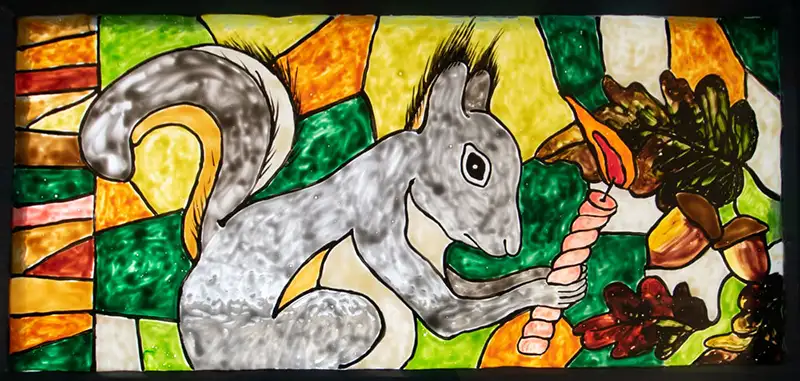
Tina Mion played an equally instrumental role in the design of the property, as many of her provocative paintings hang in the guestrooms and public spaces of the Castaneda Hotel. She also crafted a series of stained glass windows for the guestroom transoms, which each depict a different endangered Southwestern animal. Her collective work serves to unify the theme of endangered treasures — both buildings and animals — that can be saved.
Wheelchair Access And More
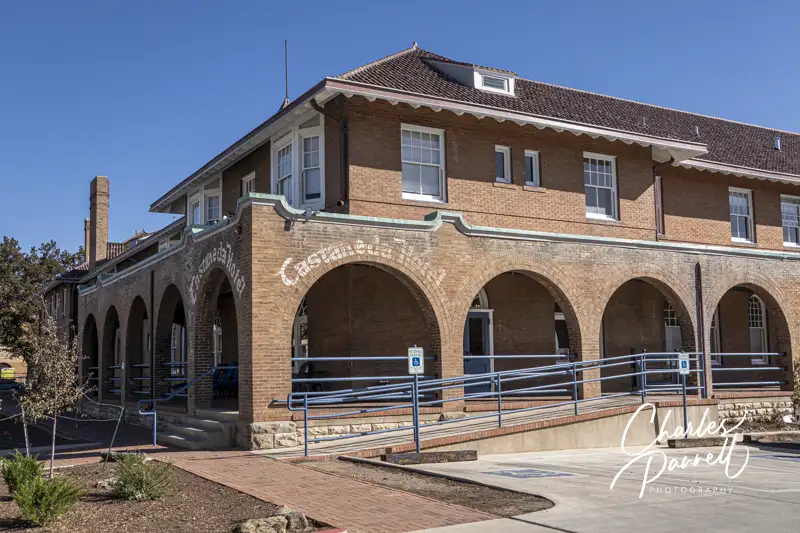
Entrance to the Castaneda Hotel In Las Vegas, New Mexico
Although the Castaneda Hotel was not originally designed to be wheelchair-accessible, the renovation allowed Affeldt to add access upgrades to the property. And he did an excellent job of providing modern day access features, while still retaining the historic Harvey House charm of the property.
There’s accessible parking located in the front and on the side of the property, with barrier-free access to a ramp that leads up to the front porch. From there, a wide door leads into the large lobby, which has wood floors and plenty of room to maneuver a wheelchair or scooter over to the registration desk. A grand staircase dominates the stately lobby, but there’s also elevator access to the second floor, where the accessible guest room is located.
There’s good wheelchair access to the public spaces of the property as well, including the second floor sitting area which features Mion’s art work. Downstairs there’s barrier-free access to the lobby, the bar and the dining room. Enjoy a drink or have a meal, and take in the view of the nearby restored depot. Then, take a walk around to the trackside of the property — just follow the accessible path — to see the facade that greeted folks as they disembarked from their long train journeys.
Wheelchair-Accessible Guest Room
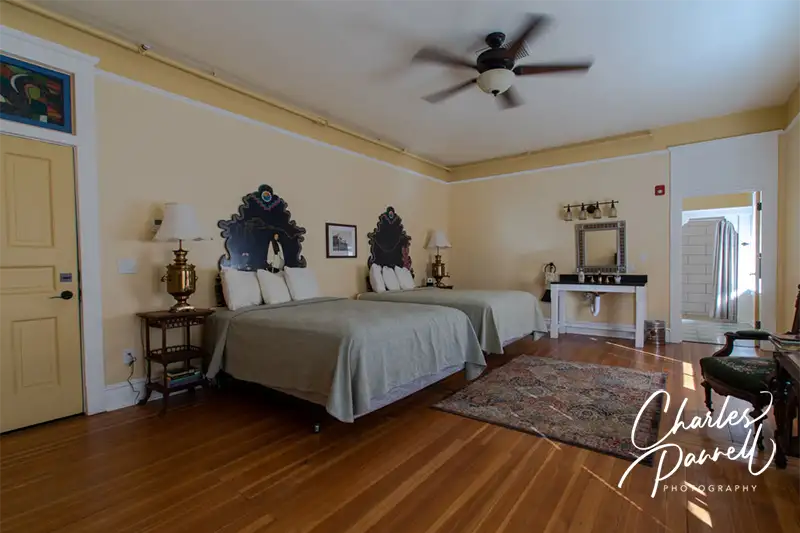
Room 204 at the Castaneda Hotel
Located on the second floor, room 204 has a bevy of accessible features that were unknown in Fred Harvey’s days. Access features include wide doorways, lever handles, wood and tile floors, and excellent pathway access. The room is furnished with two 28-inch high open-frame queen-sized beds with wheelchair access on all sides.
Other furnishings include two night stands, a secretary, a table and two easy chairs — including one chair that is 14-inches high. There’s also a roll-under sink with a lowered mirror located on the far end of the room, but even with that addition there’s still plenty of room to maneuver even the largest wheelchair or scooter around the room.
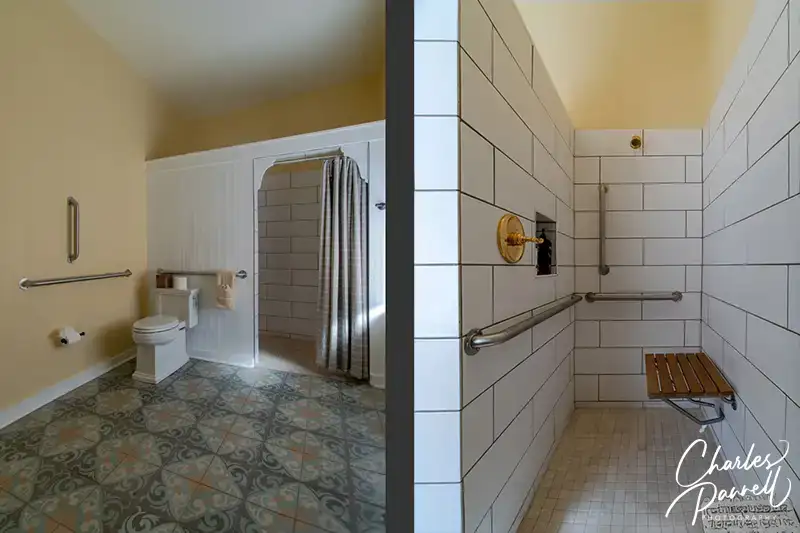
The bathroom is equally accessible, and it boasts a full five-foot turning radius. It’s equipped with a custom-built roll-in shower with grab bars and a fold-down shower bench. The toilet grab bars are located on the back and right walls (as seated); and the right wall also has a vertical grab bar in addition to the standard horizontal one.
Bathroom in room 204 at the Castaneda Hotel
The room includes lots of homey touches, including two antique headboards, a pair of bedside lamps made from coffee earns, vintage windows that actually open, and one of Tina Mion’s transom pieces — and endangered squirrel. Add in some modern conveniences such as a TV and internet access and you have a very comfortable room — one that Harvey House guests of 1898 would surely envy.
All in all, the Castaneda Hotel features the charm of the yesteryear, and the comforts and access features of today. And that’s a winning combination in any book!
Tina Mion’s stained glass transom
Barrier-Free Travel the Grand Canyon for Wheelers and Slow Walkers