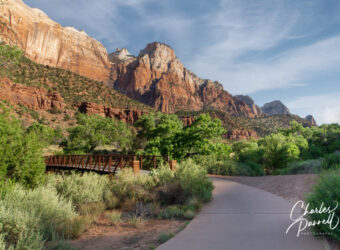
Improved Wheelchair Access in Utah National Parks

Looking back on my career, I think that the first national park I covered for accessibility was Yosemite National Park. Back then there weren’t any accessible trails, and I remember scrambling up the slippery path to the base of Yosemite Falls, and just wondering, “Why can’t this trail be made to be wheelchair-accessible?”
Many years later access improvements were made to that trail, and now it is truly wheelchair-accessible. I remember talking to Mark Wellman at the “grand opening ceremony, and saying that I really wished more national parks would follow suit with improved access. He just nodded in agreement,
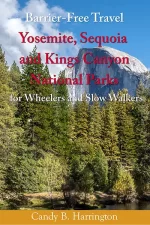
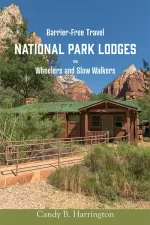
And although it’s taken some time, and a lot of work by advocates, I’m thrilled to see the access improvements at more national lands across the country. In fact, it’s kind of fun to look back and see how much access really has improved whenever I release a new edition of a national park access guide. So as the second edition of Barrier-Free Travel; Utah National Park for Wheelchair-Users and Slow Walkers, (https://emerginghorizons.com/barrier-free-travel-utah-national-parks-for-wheelchair-user-and-slow-walkers/) hits the streets, I’d like to reflect on the improved access in the Utah national parks.
Truly Accessible Trails
At the top of my list for improved wheelchair access in Utah national parks is the creation of more truly accessible trails. Trails that offer folks more than just a short walk near the visitor center – longer accessible trails so wheelchair-users can truly explore the parks.
One of my favorite Utah accessible trails is the Bryce Canyon Shared Use Path. This five-mile trail is paved, and it runs from Inspiration Point all the way down to the shuttle staging area at Ruby’s. The great thing about this trail – besides the access – is that you can do as little or as much of it as you like, as it passes several shuttle bus stops along the way. If you get tired, then just hop on the wheelchair-accessible shuttle.
And then there’s the Pa’rus Trail over in Zion National Park. It’s 1.8 miles long and it runs from the Visitor Center up to Canyon Junction. You can’t beat the scenery along this paved trail, as it crosses the Virgin River several times and offers some impressive red rock views. And if you just want to take the trail one-way, it also connects with the park shuttle bus. Scenic, accessible and convenient – what could be better?
Upkeep is Equally Important
Although developing accessible trails is essential, trail upkeep, repair and improvements are also important factors in the national parks accessibility equation. And in that respect, Utah gets great marks.
For example, there was once a slight access issue over at the Petroglyph Boardwalk in Capitol Reef National Park. The boardwalk itself is nicely accessible, and it offers slow walkers and wheelchair-users a close look at the ancient petroglyphs. Unfortunately time and weather had deteriorated the curb-cut that allowed wheelchair-users access to the boardwalk. Well, I’m happy to report that the curb-cut was repaired and this site is once again accessible to everyone.
And over in Zion there was an issue with one of the access points to the Pa’rus Trail. Formerly there was a short section of a steep grade near the Canyon Junction trailhead. But again, that’s all been repaired to make it accessible to everyone.
And then there’s the annual weather damage. This area of the country gets some pretty severe weather, including snow, heavy rains and sometimes even floods. And of course that can take a toll on the trails. That said, I’m happy to report that the weather damage in the Utah National Parks is usually repaired as soon as possible. And that’s a huge thing.
The Little Things
Finally, there are the little improvements that help with the wheelchair access in Utah national parks. First and foremost is the trail signage. I noticed new and more detailed signs at the trailheads – not just for the accessible trails, but all the trails.
And the interesting thing about the signs is the amount of information that they have. They include important details about the length, surface, width, cross slope and grade of the trails. They also list any possible obstructions. I think this is great for some slow walkers who don’t need a totally accessible trail, but would like one with a gentle grade. These signs really paint an accurate picture of the trail conditions.
And then there are the picnic tables. On my last visit to the parks, there was a problem with folks moving the accessible picnic tables to inaccessible areas. This was done not to be vindictive, but merely because it was shadier in the inaccessible areas. I talked to many rangers about this issue, and the tried different solutions. Unfortunately visitors even managed to cut the chains on secured accessible tables in order to move them to shady spots. Sad, but true.
Fast forward to this year, when now more and more picnic tables are covered, so there’s no need to relocate them. I realize this wasn’t done because of access issues, but the result benefits wheelchair-users who need an accessible picnic table. And that’s a very positive change.
All in all, there’s a sustained move to improve access in our national parks, And I look for that that trend to continue over the years. So make plans to go out and enjoy our national parks – and take one of my access guides along with you!




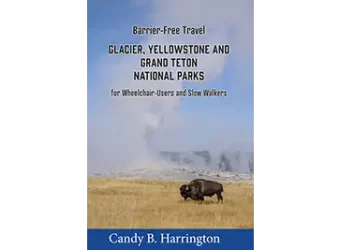
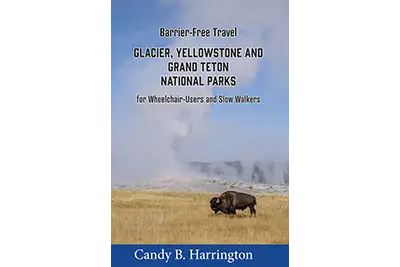 I’m thrilled to announce that my newest national park access guide was just released. The second edition of Barrier-Free Travel; Glacier, Yellowstone and Grand Teton National Parks for Wheelchair-Users and Slow Walkers (