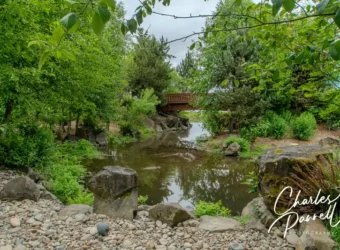
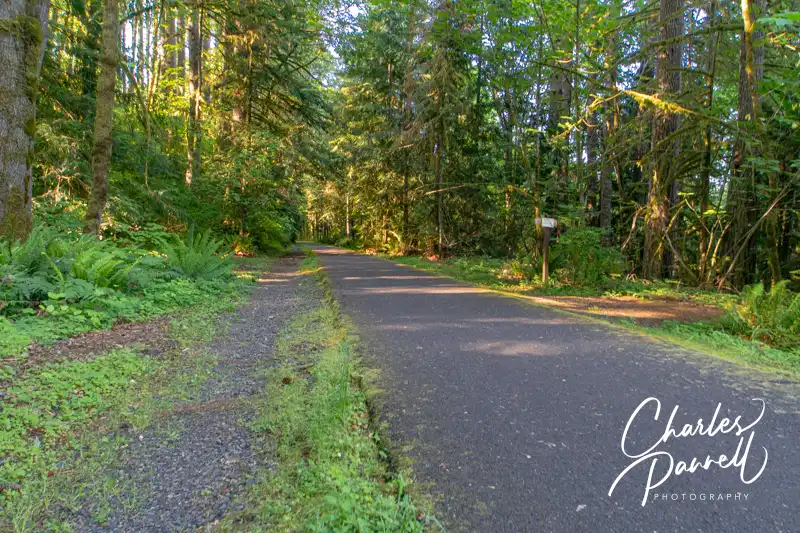
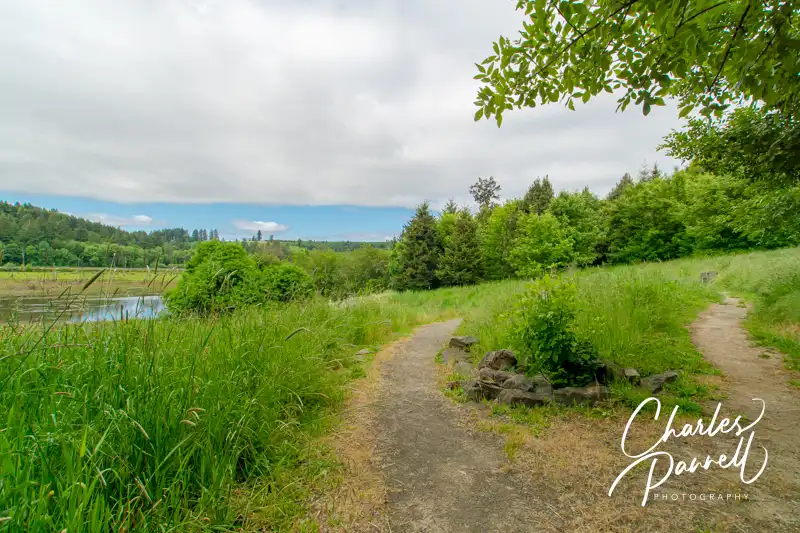
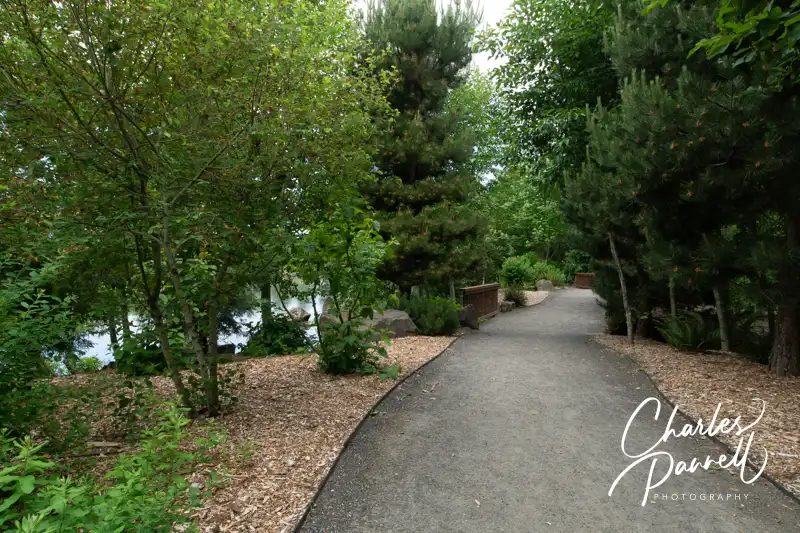
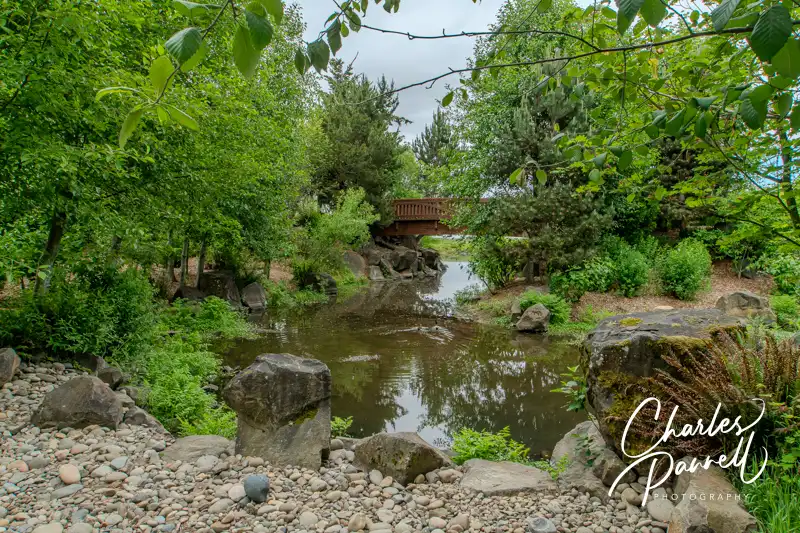
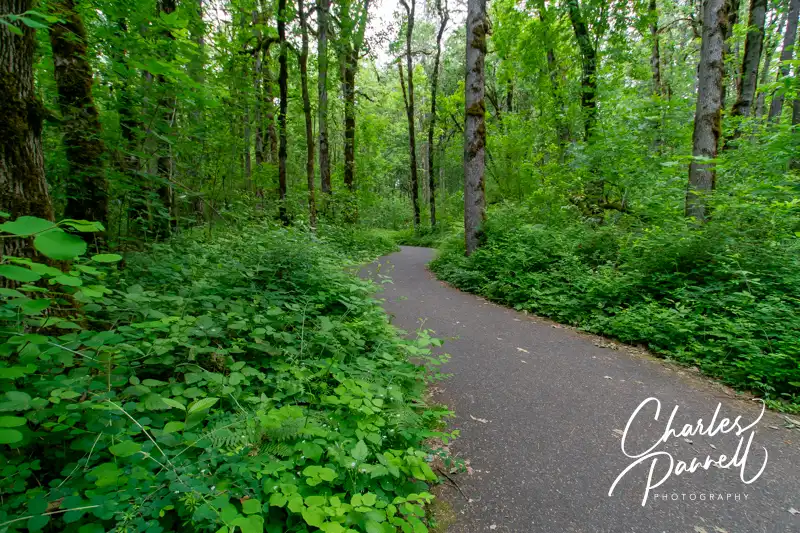
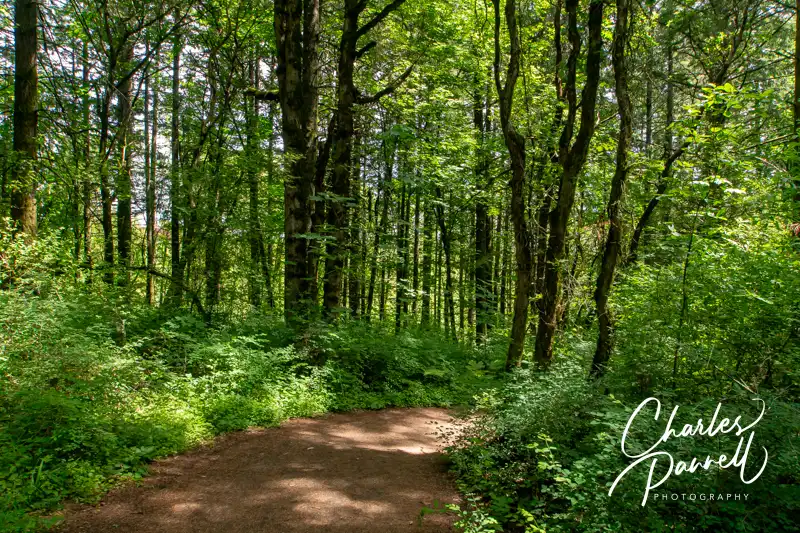
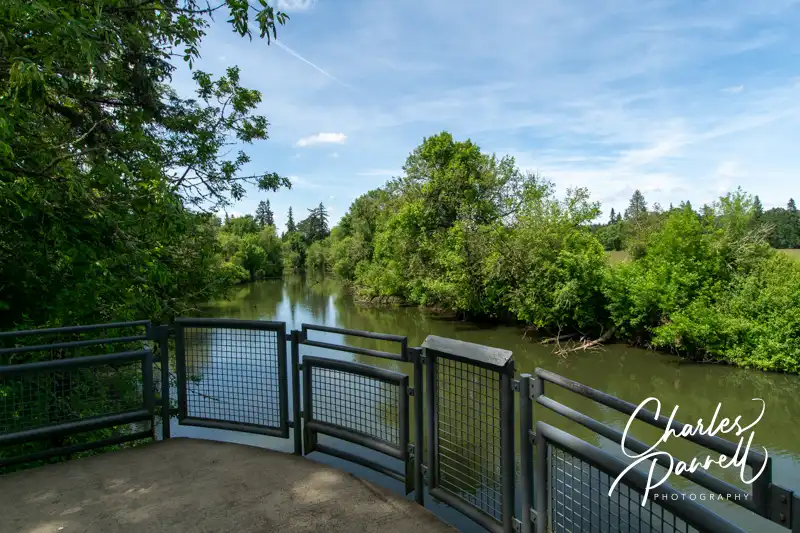
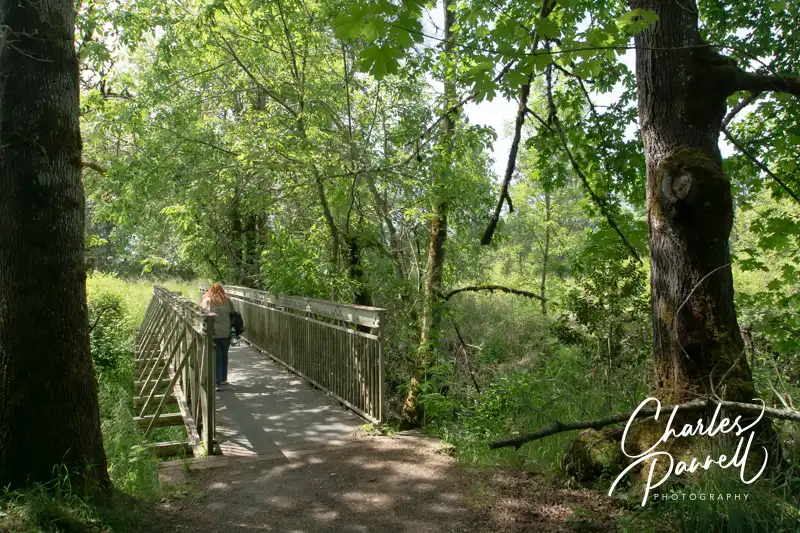
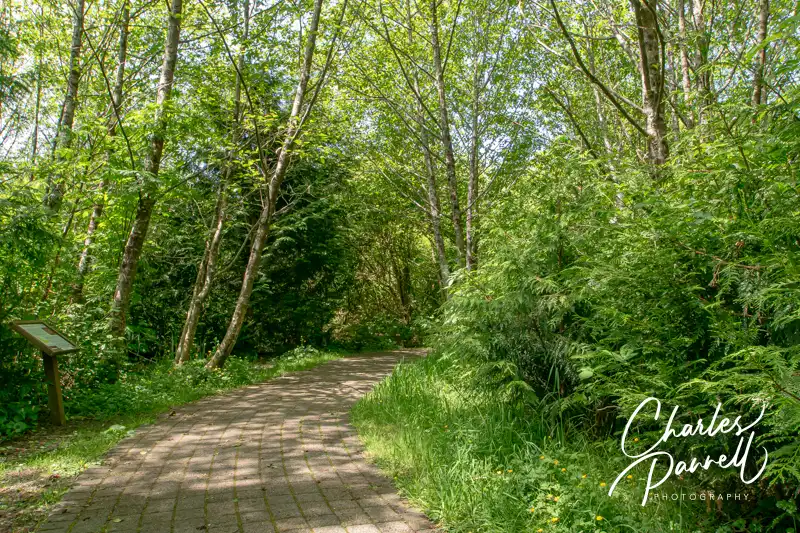
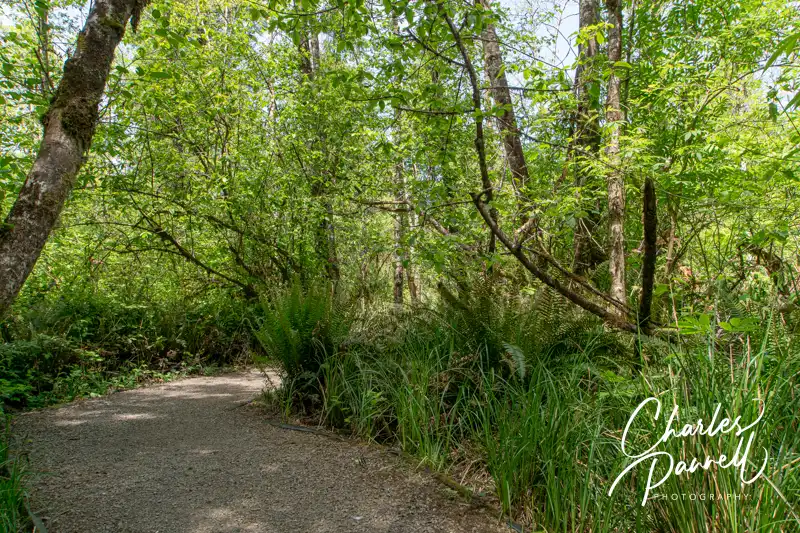
Located along scenic Highway 97, just north of Bend, Lava Lands Visitor Center (www.fs.usda.gov/r06/deschutes/recreation/lava-lands-visitor-center) is worth a stop on any Crater Lake road trip. Unfortunately many visitors zip right on by this volcanic site on the way to the more popular national park. Beside the visitor center, this site offers several trails that wind through the eerie remnants of an ancient eruption. And despite its foreboding name, this remote Oregon stop is actually a good choice for wheelchair-users and slow walkers.
Lava Lands Visitor Center
There’s accessible parking near the Lava Lands Visitor Center, with curb-cut access to a paved pathway that leads to the front door. Inside there’s plenty of room to maneuver a wheelchair through the galleries. The visitor center serves as the interpretive hub for the Newberry National Volcanic Monument, which includes over 54,000 acres of lava flows. Exhibits focus on the geology and cultural history of the area, and rangers are available to field questions. There’s also a bookstore, a theater and accessible restrooms inside the visitor center.
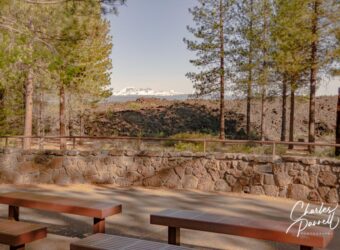
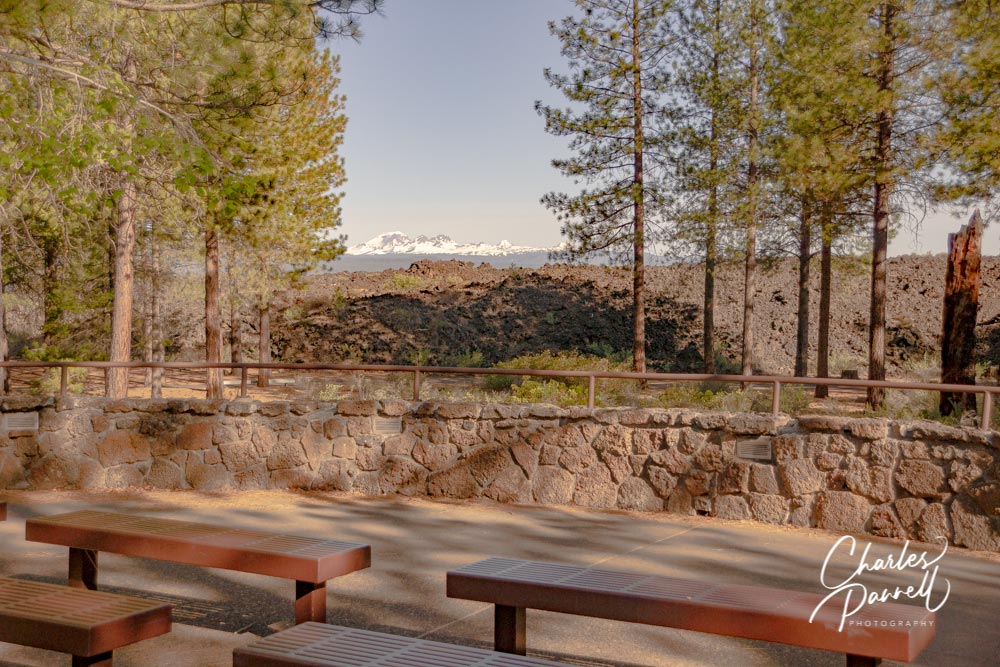
Outside on the back patio there are several benches to sit and enjoy the mountain views. It’s also the site for ranger programs and presentations. It should be noted that the visitor center is only open seasonally, usually from late May until winter.
Explore the Lava Flow
Trail of Molten Land
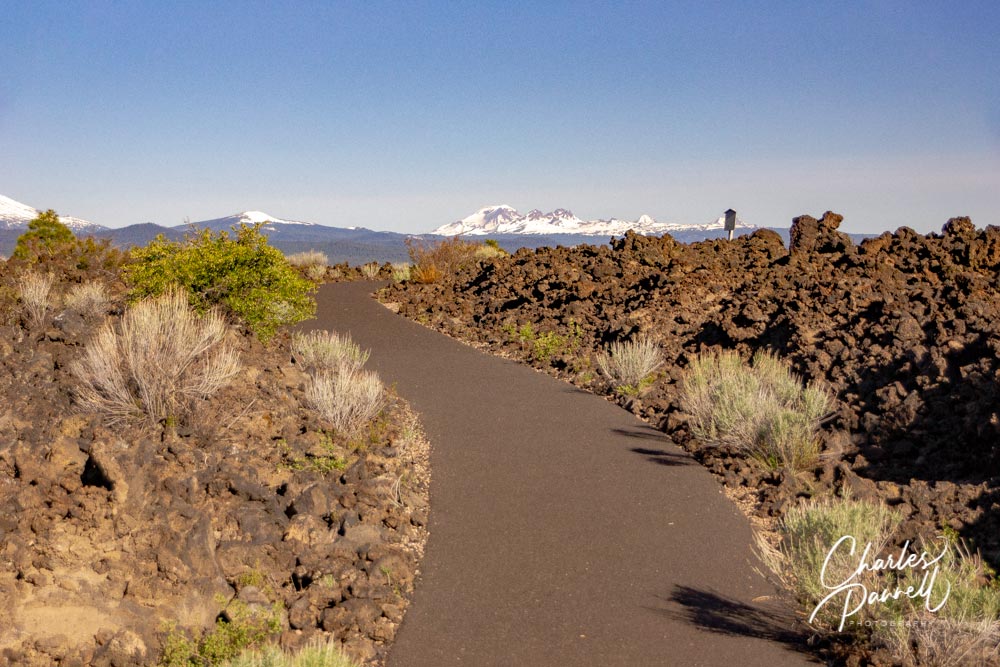
Save some time to explore the unusual landscape near the visitor center, on one or more of the accessible trails. At the top of the list is the Trail of Molten Land, which begins just to the right of the visitor center patio. The first part of the trail is shaded by pines, but once you turn the corner the stark reality of the eruption that happened some 7,000 years ago really hits home. The Lava Butte cinder cone is clearly visible in the background, as the trail winds around the basalt lava flow. To say it’s stark is an understatement.
The paved trail has a slight elevation gain in the beginning, but there are level spots to stop and rest. At about the .3-mile mark there’s a nice viewpoint which offers a stunning Cascade panorama. Unfortunately the wheelchair-access ends at this point, as the trail continues on with a steep uphill climb. Still it’s a nice .6-mile round-trip stroll.
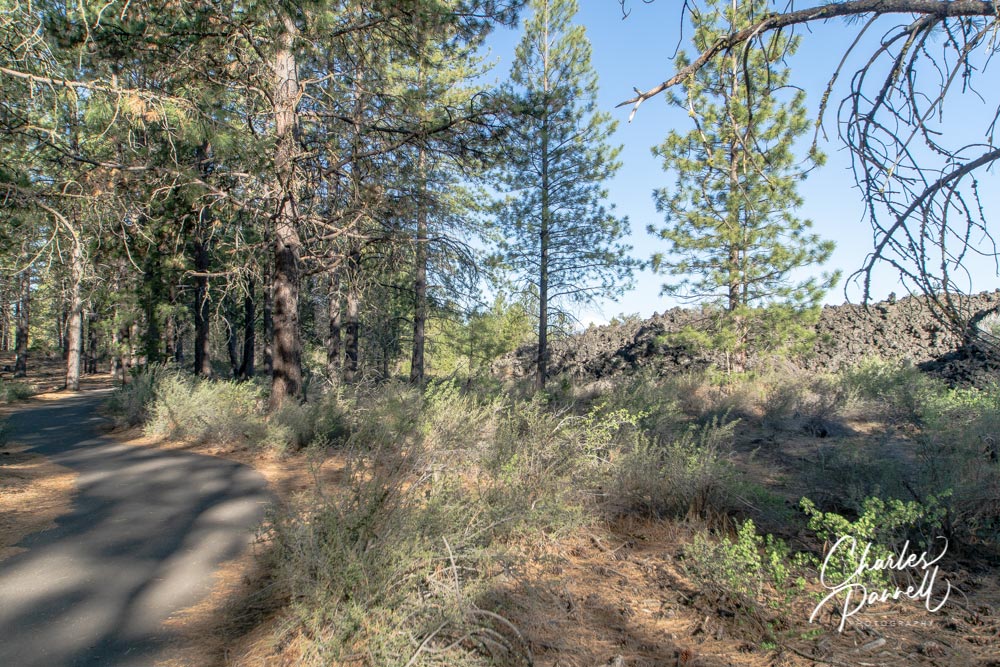
In contrast, the nearby Trail of the Whispering Pines offers a pleasant walk through a pine forest, on the edge of the lava flow. The trailhead is located to the left of the visitor center patio. This quarter-mile trail is paved and includes a nice shaded bench to rest and take in the the snow-capped mountain view. The trail winds around the Ponderosa Pines and skirts the parking lot, before it circles back to the visitor center.
Enjoy a Longer Stroll
Sun-Lava Paved Path
Finally, if you’d fancy a longer hike, the Sun-Lava Paved Path begins at the far side of the parking lot, near the accessible porta-potty. This wide paved trail runs through the forest, gradually descends to the Deschutes River, then continues on to Sunriver Resort. Although the grade never exceeds 5%, and there are level places to rest along the way, remember it’s an uphill trek on the return trip, so plan accordingly. It’s a beautiful trail, and you can do as little or as much of it as you like.
Once you’ve concluded your hikes, you can hop back on Highway 97 and continue on to Crater Lake. All in all, it’s a pleasant detour, and there are also a few accessible picnic tables near the parking lot if you happen to visit around lunch time.
Barrier-Free Travel
Washington National Parks
for Wheelchair-Users and Slow Walkers
In order to make their natural areas more accessible to wheelchair-users and slow walkers, a number of Texas state parks offer loaner assistive wheelchairs . These manual and power models help folks navigate over sand, rocky areas and other obstacles that standard manual and power wheelchairs cannot handle. The following models are now available in select Texas State Parks. Visit tpwd.texas.gov/state-parks/park-information/accessibility/assistive-chairs for more information on the specific state parks that offer these loaner assistive wheelchairs, .
GRIT Freedom Chair
GRIT Freedom Chair
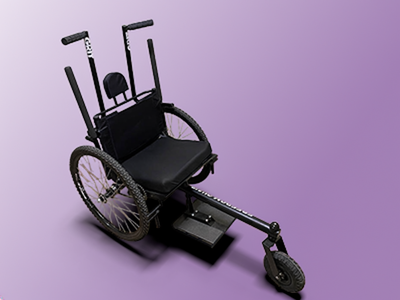
The GRIT Freedom Chair is a cross between a manual wheelchair and a mountain bike, and it allows wheelchair-users and slow walkers to access rugged terrain or sandy beaches. Built with mountain bike parts, the GRIT Freedom Chair has three wheels – two standard wheelchair wheels on the sides of the seat, and a smaller wheel in front of the chair. It’s easier to self-propel than a standard wheelchair, thanks to the lever handles installed on each side of the seat; however there are also push handles on the back of the chair for folks who need more assistance. Add in some all terrain tires, and you have a rugged wheelchair, built to tackle rougher terrain.
Motorized Track Chairs
Action Track Chair
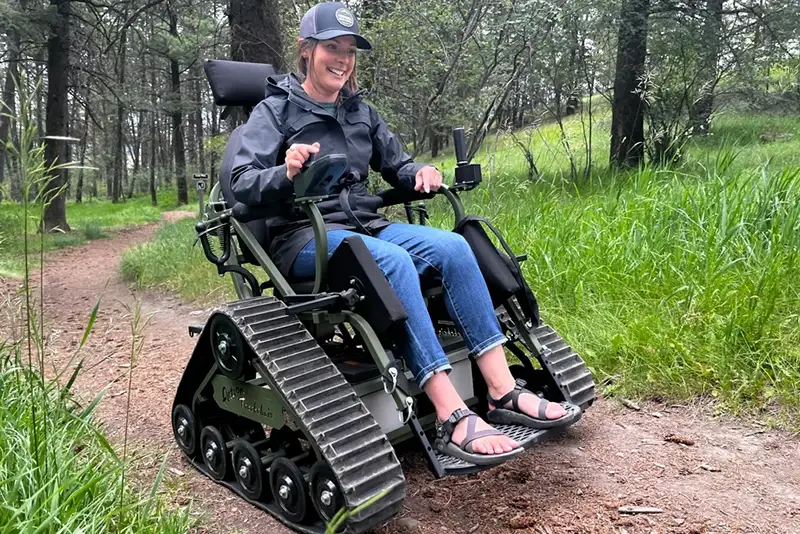
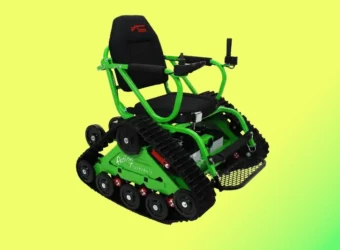
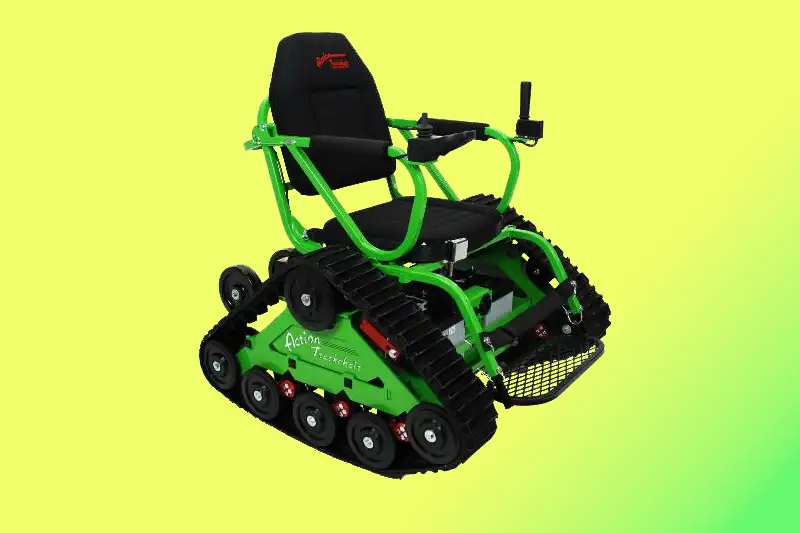
Several motorized track chairs models are also available at select Texas State Park. These rugged wheelchairs are outfitted with tank track instead of wheels and can traverse over rugged obstacles. They are user-operated, but there is also an option for a companion to operate the track chairs. The motorized track chair models that Texas State Parks offer include the Action Trackchair (weight capacity 400 pounds), the EcoRover (weight capacity 350 pounds), the X8 and the Terrain Hopper. These motorized track chairs can be used on designated park trails, and even though they can be operated independently a companion is suggested. You may also bring you own wheelchair-cushion to use on these models.
Tandem Hiking Carts
Cascade Tandem Hiking Cart
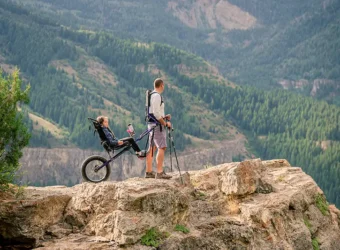
The Cascade Tandem Hiking Cart allows a “sherpa” (that the wheelchair-user provides) to pull a passenger in the cart which is attached to a backpack. These carts can traverse over sand, snow and singletrack trails, and they are built for backcountry access that some all-terrain wheelchairs can’t always reach. Although they are rated to carry passengers of up to 150 pounds, Texas State Parks sets the recommended passenger weight limit at no more than 100 pounds for “new users”. Additionally, the total weight of the passenger and the gear must not exceed 50 percent of the sherpa’s weight. A helmet is recommended for the rider; and cushions, adaptive supports and other comfort items can also be brought along. The sherpa should be in good physical condition, and it’s best to plan for a shorter hike on your first outing.
So make plans to enjoy a Texas State park with one of these loaner assistive wheelchairs. It’s a great – and very accessible – way to enjoy the outdoors.
Barrier-Free Travel
Utah National Parks for Wheelchair-users and Slow Walkers
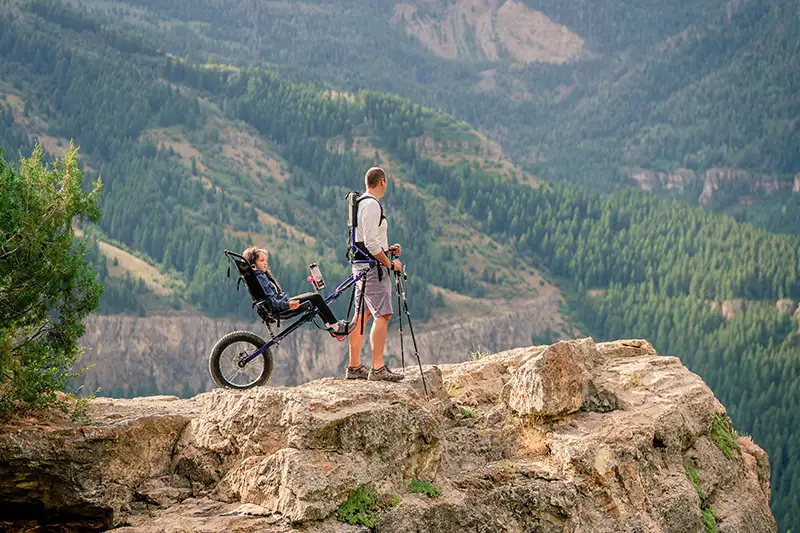
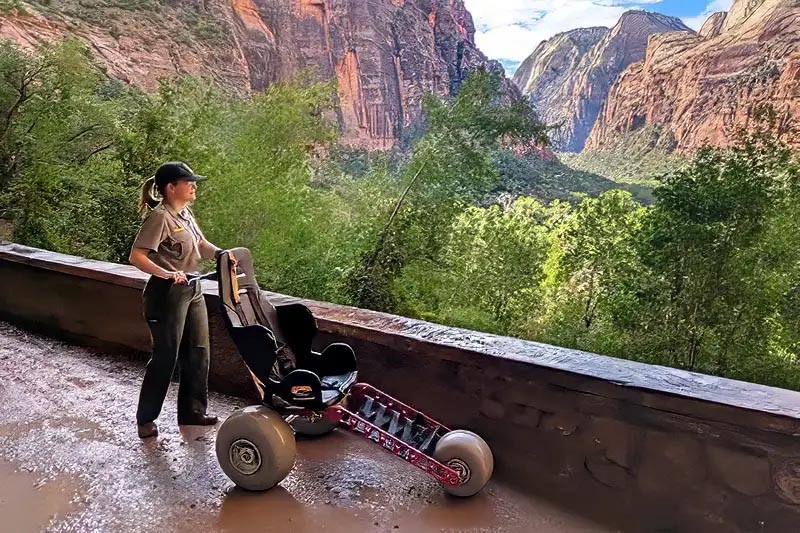
Slow walkers and wheelchair-users who want to explore a few of the more challenging trails in Zion National Park, can now borrow an Extreme Motus wheelchair. This wheelchair has a long wheelbase for maximum stability and is fitted with three balloon tires to absorb bumps on the rougher trails. It has a maximum user weight of 250 pounds and a maximum user height of 6 feet. And although the Extreme Motus gives folks a smoother ride over difficult terrain, it cannot be operated independently, so you’ll need someone to assist you if you borrow it.
The chair can be checked-out at the Zion Canyon Visitor Center on a first-come first-serve basis. A valid ID and proof of insurance is required to borrow the chair, and a brief training is provided to all users. Additionally, since the park shuttle cannot accommodate the Extreme Motus, visitors who borrow this all terrain wheelchair will also be given a pass to drive their own vehicle up Zion Canyon. And as an aside, if you have a disability that prevents you from taking the shuttle (larger wheelchair, oxygen, extra medical equipment) you can also get a pass to drive your personal vehicle up Zion Canyon (emerginghorizons.com/driving-passes-for-disabled-national-park-visitors/) even if you don’t borrow the Extreme Motus.
So where can you go with the Extreme Motus in Zion National Park? Well of course you can do the Pa’rus Trail, but to be honest you can do that in a regular wheelchair. You might want to try it on the Riverside Walk, as sometimes that trail gets rough from the extreme weather conditions. Other suggestions are the Weeping Rock Trail and Lower Emerald Pools, although you may want to have a little extra help on those. You can also give most of park’s inaccessible intermediate trails a try; however you cannot go on the more dangerous and challenging trails like the Zion Narrows or Angels Landing.
So give the Extreme Motus in Zion National Park a try on your next visit. You won’t be sorry!
Barrier-Free Travel
Utah National Parks for Wheelchair-users and Slow Walkers
If you love the great outdoors, but literally cringe at the thought of pitching a tent, then head over to Fort Stevens State Park (oregonstateparks.org/index.cfm?do=parkPage.dsp_parkPage&parkId=129) and spend a night or two in a wheelchair-accessible cabin. Located at the mouth of the Columbia River, about 10 miles west of Astoria, this popular park was the site of the namesake fort that once guarded the river in Civil War times. A few remnants of the fort have survived over the years; but today the park’s biggest draw is the scenic Oregon coastline.
A Cabin in the Woods
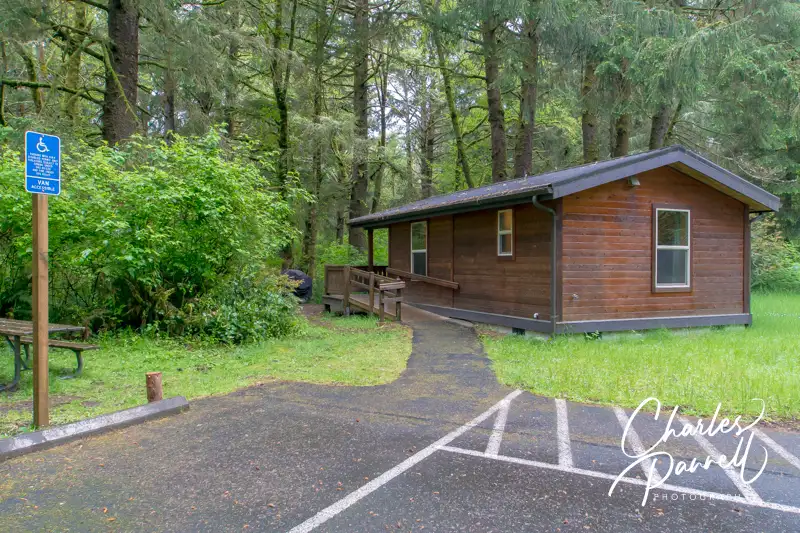
And there’s not just one accessible cabin in Fort Stevens State Park. People who need accessible accommodations have choices, as the park offers 11 cabins, including eight which are wheelchair-accessible. Cabin K15 is a favorite though, as it not only gets top marks for accessibility, but it also borders the woods.
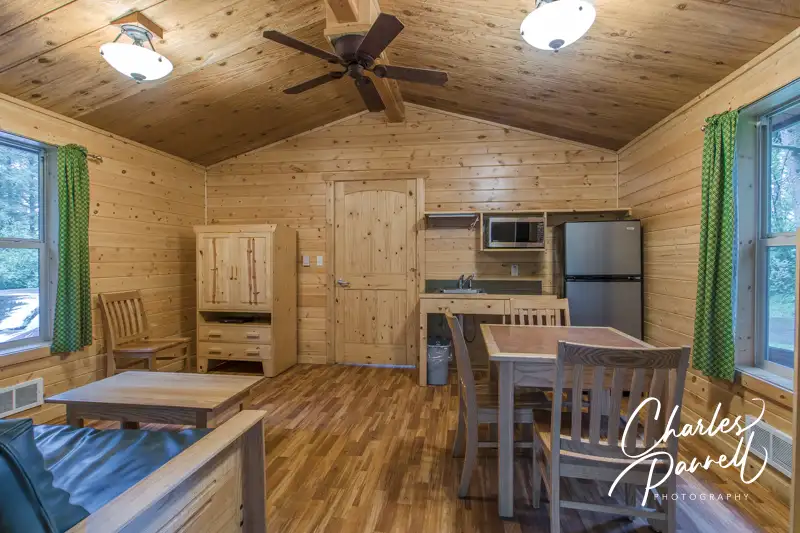
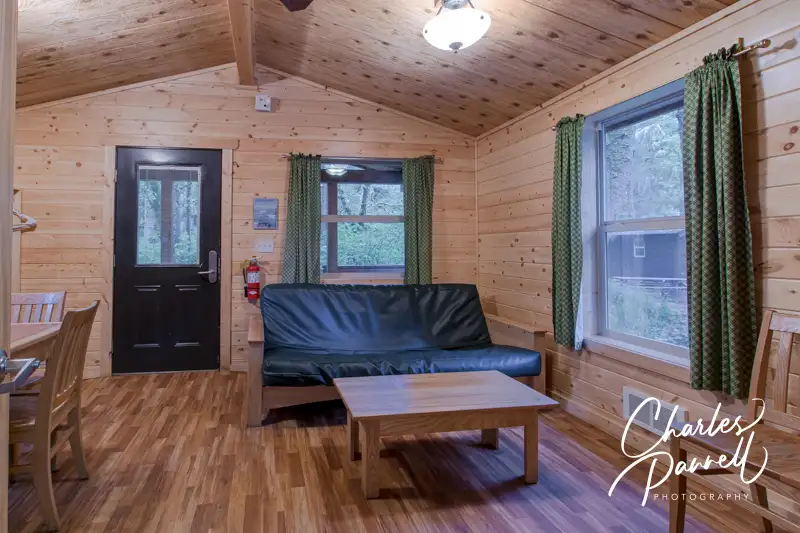
Accessible parking is located next to the cabin, with ramp access over to the back door. Access features include a level threshold, wide doorways, wood floors and good pathway access. The spacious great room is furnished with a 19-inch high futon, an armoire with drawers, a table with four chairs, and a kitchenette with a roll-under sink, microwave and refrigerator.
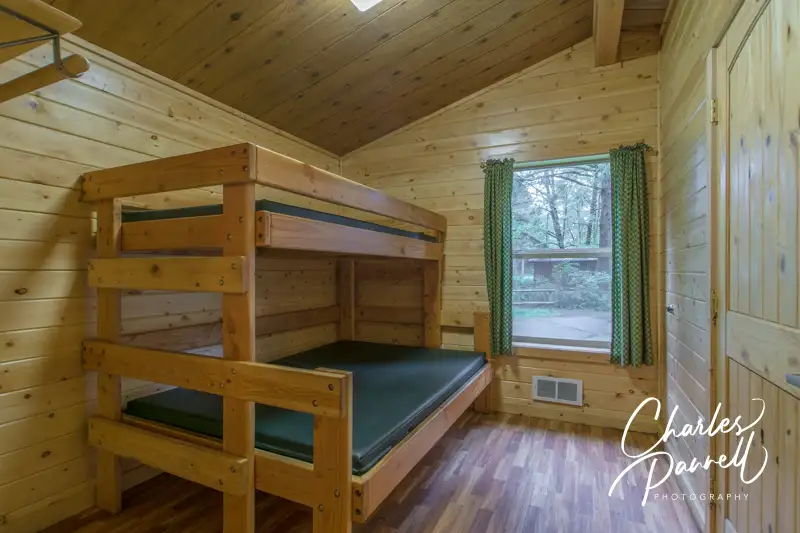
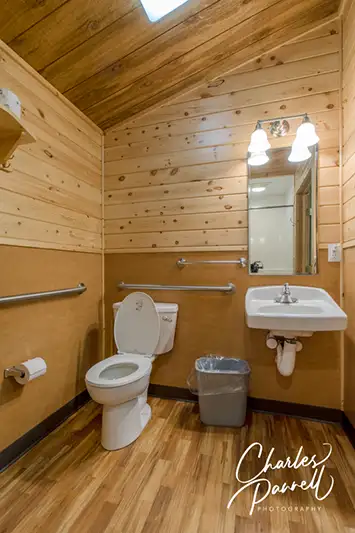
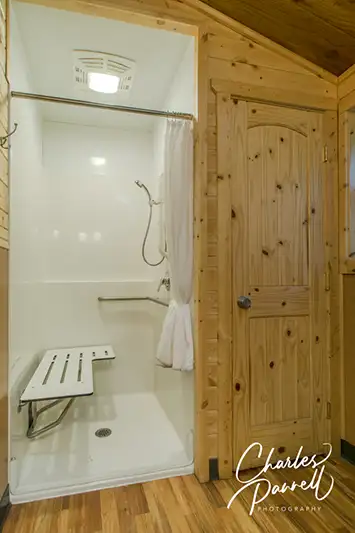
The bedroom includes a bunk bed with a 21-inch high double below and a single on top. The bathroom is equipped with a 36-inch-square transfer-type shower with grab bars, a hand-held showerhead and a fold-down shower seat. It also includes a flexible rubber dam that helps control the drainage, yet still allows access. Other access features include a toilet with grab bars on the back and right walls (as seated), and a roll-under sink.
And outside, the wheelchair-accessible cabin offers plenty of room to roll around on the back deck. There’s also a gas barbeque, an accessible picnic table and a fire ring located in a level area near the deck. The best part is, that the deck backs up on the forest, so you really get that genuine outdoor experience.
There are no dishes or utensils in the cabin, so pack along your camping box. Guests must also supply their own bedding and towels. Reservations for the wheelchair-accessible cabin can be made at oregonstateparks.reserveamerica.com or by calling (800) 452-5687.
Inside Cabin K15 (view 1)
Inside Cabin K15 (view 2)
Bedroom In Cabin K15
Toilet and Sink In Cabin K15
Shower In Cabin K15
Enjoy the View
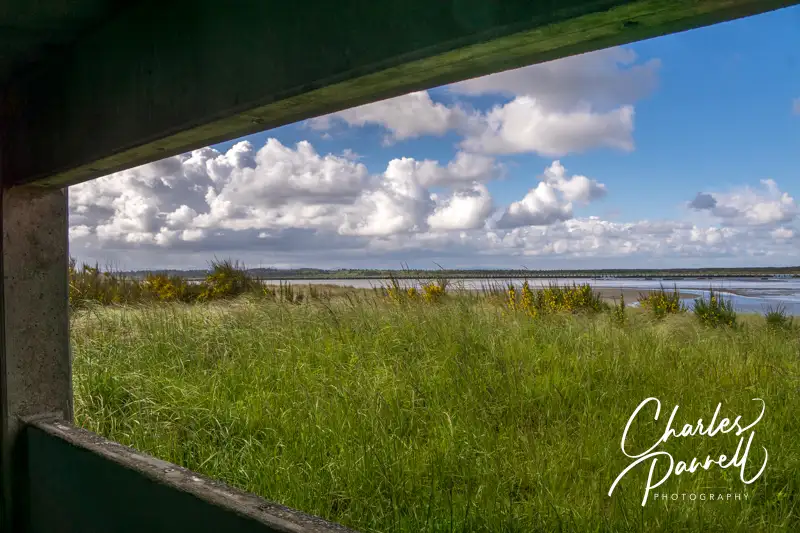
View From the Bunker
There are a number of paved level multiuse trails throughout the park, but one of the most poplar things to do is to drive to lands end on the park road. It’s a gorgeous journey, with the Pacific Ocean on one side and the Colombia River on the other. In addition to the magnificent windshield views enroute, there are several spots to stop and admire the rugged landscape along the way.
At the end of the line, there’s a large paved parking area, with an accessible vault toilet, and an accessible boardwalk trail over to a wildlife viewing bunker. There’s level access to this roomy bunker, which affords a good view of the adjacent marshland. It’s an excellent place to spot waterfowl, especially near dusk and dawn.
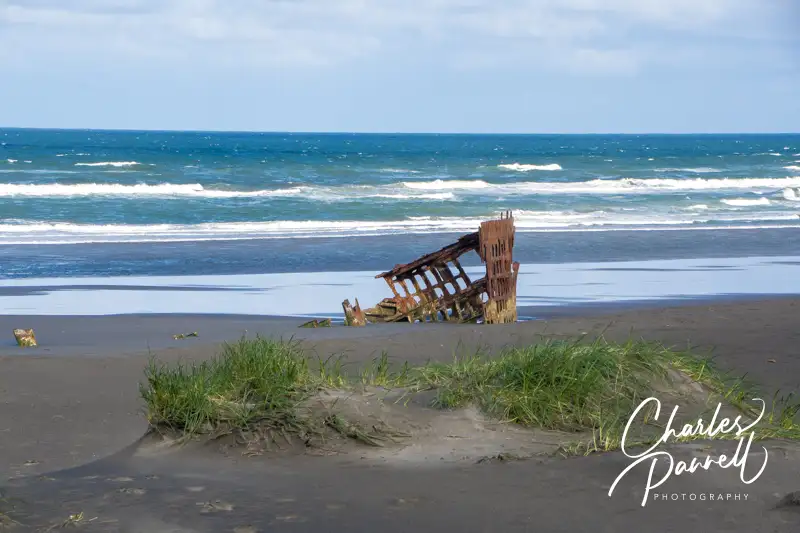
Finally, don’t miss the remains of the Peter Iredale on your way out of the park. It’s located near the North Lake day use area, with parking available near the Sunset Trail. This four-masted vessel ran aground on Clatsop Beach one foggy morning in 1906. Miraculously the crew escaped unharmed, and what’s left of the steel hull can be seen from the parking lot. It’s a must-see on any visit, and one of the most poplar sights in the park.
Remains of the Peter Iredale
Barrier-Free Travel Washington National Parks for Wheelers and Slow Walkers
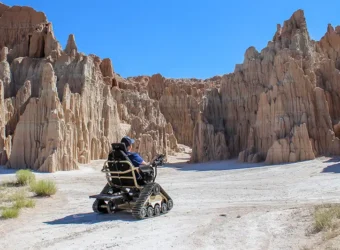
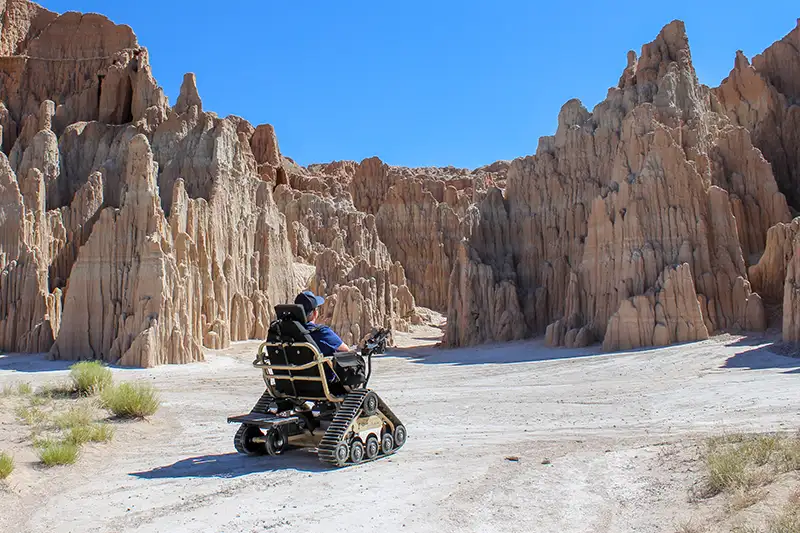
Located in Southeastern Nevada, Cathedral Gorge State Park (parks.nv.gov/parks/cathedral-gorge) is home to a long narrow valley filled with cathedral-like spire formations that were crafted by wind and rain over the years. At first glance, it’s doesn’t exactly look like a wheelchair-friendly environment. On the other hand, thanks to modern technology, wheelchair-users and slow walkers can now explore this rugged region on a loaner track chair.
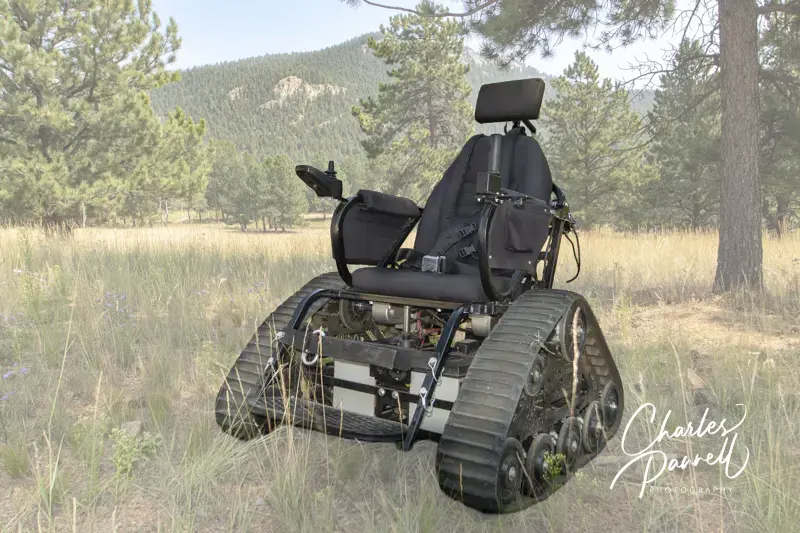
The power Action Trackchair has tank tank tracks instead of wheels, and it will easily wheel over obstacles that are inaccessible in a standard wheelchair. The track chair is available for loan upon advance reservation. Once you arrive at the park, the staff will brief you on how to operate the chair and answer any questions that you may have. And after that, you are off on your own adventure in the park. For more information about the track chair or to make reservations, call (775) 728-8101. Plan ahead though, as this loaner track chair is bound to book up quickly.
Barrier-Free Travel California National Parks Road Trips Travel Ideas for Wheelchair-users and Slow Walkers
I’m often asked what I think is the most important element of an accessible travel destination or facility. That’s a tough call for sure, because I truly believe all access elements are important, no matter how small or inexpensive. That said, there’s one critical building block that’s consistently overlooked, when it comes to accessibility – signage.
Accessible signage seems simple enough when it’s in place, but it can lead to a lot of confusion, and maybe even injury when it’s overlooked. Here are some examples of where a little signage could of gone a long way to improve the accessibility and overall visitor experience.
Where’s the Entrance?
Accessible entrances are one of the basic building blocks for inclusion; however even in this day and age, not all businesses have them. I’ll skip the debate of why so many things are not “readily achievable” and get to the meat of the matter here – signage at inaccessible entrances.
Sure, I’ve gone to plenty of places with wheelchair-users, only to find a step or two at the entrance. For me, it’s not problem, as I can just go in and ask about the location of the accessible entrance for my friends. Sometimes they pull out a portable ramp, while other times I’m directed to an alternate entrance, usually in back. It’s time consuming, but it works. Everybody gets in the door.
But what if you’re not there with someone that can navigate the inaccessible entrance and go inside to inquire about things? That’s where accessible signage comes in. I’ve seen way too many inaccessible buildings that lack any signage as to where the accessible entrance may be. Oh, and if you’re going to put a phone number on your sign, make sure it goes to a phone that you actually answer. Don’t even get me started on that one.
You’ve Got to Be Kidding!
And then there was this shopping center in Philadelphia that had stairs up to the front entrance. Two flights of stairs, mind you. So I walked around the large building several times, but I just couldn’t see any type of accessible entrance. It was puzzling for sure, as this seemed like an establishment that had enough money to make things accessible.
So I tromped up those two flights of stairs to the entrance. And what do I find at the entrance? A sign with a phone number that says to call for information about the accessible entrance. OK, folks, this isn’t rocket science – if a person needs an accessible entrance then they are most likely not going to be able to read the sign at the top of two flights of stairs that gives them the magic phone number. Put the sign on the ground level where a person who uses a wheelchair can actually find it.
And yes, I did call the phone number. It went to voice mail and I never received a return call. Again, put a phone number that you routinely answer on all access signs, because the person that’s calling probably needs immediate assistance.
Scratching My Head
Signage is good, but to be honest, sometimes it makes me scratch my head. I’ve visited more than one place that just has blue wheelchair signs intermittently scattered around the grounds. Not at entrances, or facilities, but just haphazardly scattered. It’s like they purchased a set amount signs and they were determined to use them all. I guess it really didn’t harm anything, except it made me scratch my head. It also made me wonder if they were suppose to be used somewhere else, like an accessible entrance or a path of travel.
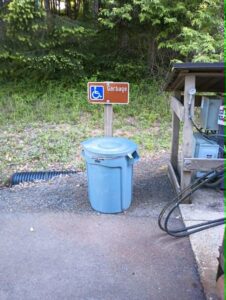
And then there was the garbage can. We were camping in Oregon and on our way out of the campground we stopped to throw out our trash. Some public garbage cans can be very complicated. At this location there was one can for plastic, one for paper, one for refuse, and the list went on. To be honest it was confusing because there was also a list of things you couldn’t put in each can. And then at the very end there was a trash can standing alone, and it had the blue wheelchair sign on it. I guess it was accessible, but so were the other 20 cans that I just passed. And to be honest, a quad would have a really difficult time getting the lid off – it was hard for me. So, I couldn’t really figure out what it was for, but since I didn’t understand the other cans either, I just put all our trash in that one.
And then there are signs, that make absolutely no sense, but have nothing to do with access. We were driving down the highway on a road trip a few weeks ago and we saw a sign that read, “Intermittent Road Work for the Next 52 Miles”. Really? Talk about being non-committal.
Don’t Forget Printed Material
And although accessible signage is important out in the real world, it’s also equally important in printed material. You want to let folks know about access to your place of business in all your printed material. Otherwise, if accessibility isn’t listed, many folks will assume your business is not accessible. And you will lose out on business; and it won’t be just wheelchair-users, but also their friends and family who want to go to an inclusive place.
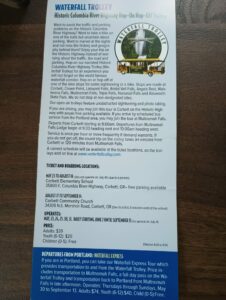
Case and point is a brochure I picked up the other day about a new shuttle service to some Oregon waterfalls. It’s a great service, as it can be difficult to find parking at some of the scenic waterfalls on the route; however there wasn’t one word about accessibility mentioned in the brochure.
They took the time – and space — to describe the routes, make notes of all the stops, and include information about bus connections to neighboring cities, but there wasn’t one word about wheelchair access. So I went to their website and it did state that they were wheelchair-accessible, and told folks to be sure and note their needs when they made reservations so appropriate vehicles could be dispatched. How hard would that be to include in the brochure? Just saying.
Where Am I?
One of the most frustrating things about accessible signage, or lack thereof, is that it can turn a nice outing into a frustrating challenge. I’ve looked at hundreds of accessible trails, because it’s something that interests my readers. My goal is to give folks solid and accurate information so that they can easily access and enjoy accessible trails. But sometimes that’s a challenge for me.
Charles and I were out exploring some accessible possibilities one day, and after a nice picnic lunch we set out to find this accessible trail. It was mentioned on the park website, but the directions to the trailhead were unclear. When we got to the park we followed several signs to nowhere, and then one to a trail that branched off in three different directions, with no signage whatsoever. We then found a sign for the trail on the other side of the park, and figured if we followed it, it would lead back to the start. Wrong, it led to a a trail that wasn’t even on the map. In the end I gave up, and so will most other people.
The same is true, when we set out to find this new accessible boardwalk on a lake. Some people said it went around the lake, but we couldn’t find it. Turns out the trail goes around the lake, but the accessible boardwalk is only a portion of that trail. And with zero signage it was just by luck we found it. Now at least we can tell others where to look, as it’s a pretty cool trail. But a little signage would of helped.
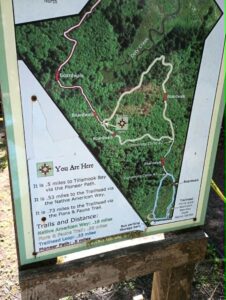
The reserve is owned and maintained by the Tillamook County Pioneer Museum, and it’s funded through donations, grants and membership dues. And even with this limited funding, their signage is excellent. Additionally, all of their trails of wheelchair-accessible.
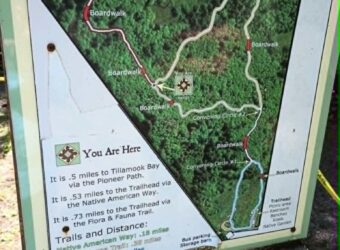
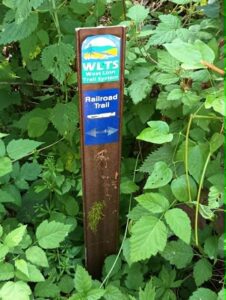
They way I look at things, if this small reserve can provide such excellent signage on a limited budget, then anyone can do it. It’s a beautiful preserve and you always know exactly where you are, and what trail leads where. At the trailheads there’s a large map, showing your location, and listing the length of all the trails. And every time you cross another trail, it’s clearly marked. You have absolutely no doubt where you are at any point in Kilchis Point Reserve. It’s really a great place to visit.
Finally, I’d be remiss if I didn’t also give a shoutout to the National Park Service for their excellent trail signage. They not only list the location of the trails, but also include the length, width, slope and cross-slope. So not only can you determine the accessibility of a trail, but again, you always know exactly where you are.
So see, it is possible to get the signage right. I’d really like to see more of that in the future.
Variety is the key word for wheelchair access in Oregon’s Tualatin Valley. Located in the northwestern corner of the state, this lush area is filled with wetlands and woodlands, and crowned with a Rails to Trails bicycle and pedestrian pathway. Aptly described as a Mecca for wheelchair-users who enjoy the outdoors, this region offers a hearty supply of accessible trails, picnic areas and spectacular views. Add in some great wildlife viewing opportunities and you have all the ingredients for a great outdoor getaway. So pack your bags and get ready to enjoy the wheelchair-accessible Tualatin Valley.
First up on the Tualatin Valley list is the Banks-Vernonia Rail Trail. Constructed along an abandoned rail corridor, this 21-mile trail features an easy grade along a paved trail. The trail is six-to-eight-feet wide, and for the most part has a grade of less than 5%. The most accessible parts of the trail are near the Banks trailhead in the south and around L.L. Stub Stewart State Park.
The Banks Trailhead marks the beginning of the trail, and it’s located near the intersection of Highway 26 and Northwest Banks Road. There’s accessible parking in the lot and an accessible restroom near the parking area. The parking lots for the Banks Verononia Rail Trail are operated by the state, and you can either buy a day pass at the trailhead, or use your Oregon State Parks Annual Permit (stateparks.oregon.gov/index.cfm?do=visit.day-use).
From the Banks Trailhead the trail heads north, as it passes through agricultural lands and riparian areas. It’s a fairly level ride through this area, and you can do as little or as much of it as you like. There’s also a nice section of the trail in L.L. Stubb Stewart State Park. Accessible parking is located near the trailhead, and there’s even a lone picnic table near the trail. This part of the trail is lined with trees and wildflowers and it makes for a pleasant mountain hike. And any part of the trail is great for handcyclists.
Killin Wetlands, which is located near the Banks Trailhead, has two nice accessible trails. This rare peat moss wetlands area is home to a large variety of bird life as well as beaver, river otters and elk. And the scenic rolling hills that surround the wetlands offer some great photo ops.
Accessible parking is located near the barn, with an accessible vault toilet near the trailhead. There are also some accessible picnic tables behind the barn, and some benches that look out onto the wetlands area. It’s a great spot for birders who don’t want to hike into the wetlands.
The .4-mile Peat Swamp Trail begins on the far side of the picnic area. This hard-packed dirt trail does narrow a bit to about two feet in places in the beginning, and there can be a lot of tall grass on the side of this part of the trail. That said, once you wind around to the forest canopy the trail opens up, so if you can manage the first stint, you’re good to go.
About halfway along the Peat Swamp Trail intersects with Waterfowl Way, which is a .2-mile loop through the wetlands. This is a great area for wildlife viewing and birding, so don’t pass it up. The trail reconnects to the Peat Swamp Trail, and then winds back up to the other side of the picnic area. It’s a short trail but definitely worth a stop, as you’ll find lots of bird life on the trail and wading birds in the wetlands.
Fernhill Wetlands
1399 SW Fern Hill Road Forest Grove, OR 97116 fernhillnts.org
Fernhill Wetlands Trail
Another good Tualatin Valley birding site is located over in Forest Grove, at Fernhill Wetlands. The area is owned by Clean Water Services and the trails are managed in cooperation with City of Forest Grove Parks Department. It’s a very pleasant area, with great access.
There’s accessible parking near the visitor center (which is sporadically open) and level access over to a spacious covered picnic area. There’s plenty of waterfowl viewing spots near the parking area, but for the best experience take the .6-mile Water Garden Loop.
There are two ways to get to the Water Garden. You can follow the paved path along the water, or you can take the shaded trail on the right. The latter option is the most scenic choice, as the hard-packed dirt trail winds through the gardens and is sheltered from the sum by bordering trees. And although the water attracts a good amount of birds, the trees are filled with an equally diverse avian population.
Once you get to the Water Garden, take your time to wind around the pathways, cross the bridges and enjoy the waterfalls. The area is home to 200 kinds of birds, so save time to enjoy the view of Fernhill Lake and catch a glimpse of the local residents.
Over in Beaverton, Tualatin Hills Nature Park is also worth a stop. And the good news is, the park boasts two accessible trails.
There’s accessible parking near the entrance, with level access to the Nature Center, accessible restrooms, and the two accessible trails. The Oak Trail heads off the the right, while the Vine Maple trail is on the left. The Oak Trail makes a nice 1.4-mile out-and-back hike, through a hardwood forest, with lots of wildlife viewing opportunities. The equally lush Vine Maple trail, which leads through the forest, over Cedar Mill Creek and out to the Lily Pond, offers an equally enjoyable 1.4-mile round trip hike. Both trails are wide, level and paved, and they make an excellent choice for manual or power wheelchair-users and slow walkers.
Another Beaverton stop, Cooper Mountain Nature Park offers a pleasant accessible nature trail. There’s accessible parking in the large lot, with barrier-free access over to the playground and the picnic area with accessible tables. Accessible restrooms are located near the Nature Center, on the far side of the playground, and there’s level access over to the accessible Little Prairie Loop.
This .75-mile trail is wide and level, with a hard-packed dirt surface. It winds through the forest, and as you move along the trail there’s more forest growth, which results in a nicely shaded route. The forest also provides shelter for the abundant bird population in the park. The trail heads out around a wildflower-filled meadow and then circles back to the start. There are several switchbacks along the last leg of the trail, and although it’s not entirely level it’s still doable for most folks. It’s a pleasant escape into nature.
Wildlife Viewing Deck In Back Of The Tualatin River National Wildlife Refuge Visitor Center
Last but not least, don’t miss the excellent Tualatin River National Wildlife Refuge on your Tualatin Valley adventure. Although there’s parking near the park entrance, it’s best to park in the top lot near the Visitor Center for best access to the trails. There’s accessible parking near the visitor center, and good access to the restrooms and exhibits inside the building.
There are two accessible trails in the refuge; however one is seasonal. The year-round River Trail begins to the right of the Visitor Center and winds out a mile to the Wetland Observation Deck and the photo blind. This wide shaded pathway travels through the forest, and the hard-packed dirt trail is fairly level. It’s a 1.5-mile trek out to the end, but you can always double back if you want a shorter hike
The River Trail at Tualatin River National Wildlife Refuge
At times the River Trail parallels the equally accessible Wetland Trail, which is only open between May 1 and September 30. This dirt trail is level and begins to the left of the Visitor Center. This 3.66-mile loop travels around the wetlands near Chicken Creek, and offers ample wildlife and waterfowl viewing opportunities.
And if hiking is not your thing, there’s a nice accessible wildlife viewing deck in back of the Visitor Center. Additionally, you can reserve a track chair to explore the refuge. Reservation slots are limited, so plan ahead and reserve your track chair online at www.davidschair.org. In the end if you roll, stroll or just sit and enjoy the view, the Tualatin River National Wildlife Refuge has something for just about everyone.
Barrier-Free Travel Washington National Parks for Wheelers and Slow Walkers
Known for its delicious ice cream and cheese, Tillamook County is one of those Oregon areas that’s often skipped over by hurried travelers. They rush off to Portland or Vancouver, or linger along the scenic coast, and just zip right on by this beautiful Northwestern Oregon area. And although a stop at the Tillamook Creamery is a must for a tasty treat, the Kilchis Point Reserve (www.tcpm.org/kilchis-point-reserve.html) tops the list if you want to explore several wheelchair-accessible trails and enjoy some pristine coastal views. So next time you visit Tillamook County, slow down when you hit Bay City, and spend a few hours at this serene coastal retreat.
A Space for Everyone
Trailhead Loop Trail at Kilchis Point Reserve
Located just off Highway 101, Kilchis Point Reserve is easy find once you reach Bay City. Just head south on Warren Street off of Highway 101, then make a left on Spruce Road. Granted, it doesn’t look like much from the parking lot, but first impressions can sometimes be deceiving.
As far as access goes, there’s accessible parking near the entrance, and level access to the accessible restrooms and the Trailhead Loop. There’s also a nice shaded picnic area with an accessible picnic table off to the right near the restrooms. So pack along a lunch to enjoy before or after your hike.
The reserve is owned and maintained by the Tillamook County Pioneer Museum, and it’s funded through donations, grants and membership dues. Wheelchair access is a top priority at Kilchis Point, because the powers that be want everybody to be able to enjoy this beautiful area. To that end, all of the trails within the reserve are wheelchair-accessible; so the only decisions that need to be made are how long you’d like to stay and how far you’d like to hike. Additionally, if any access obstacles pop up because of weather or other damage, they are well marked, so it’s easy to dodge them.
Folks who can’t manage the distance on the trails can also opt for a golf cart ride out to the ocean-view gazebo. Because of staffing issues advance notice is needed for this service, so please try to make reservations at least two weeks in advance. Call (503) 842-4553 for more information.
Hit the Trails
The accessible trails begin in both parking areas on the Trailhead Loop. This .33-mile trail circles the entrance area and includes interpretive plaques about the natural history of the area. The level brick pathways are lined with native plants, and the trees provide a pleasant shaded canopy. The loop leads to the First Convening Circle, where it branches off into two different routes to the ocean overlook.
The Native American Trail (.18 miles) is on the left, while the longer Flora and Fauna Trail (.38 miles) is on the right. Both hard-packed dirt trails are nicely accessible, and they wind through the forest and over the wetlands. The wetland areas have boardwalks, and although the trails have a few dips, they are still well within ADAAG guidelines for accessible trails. Interpretive plaques line both trails, and every now and then there’s a bench to take a break.
Flora and Fauna Trail at the Kilchis Point Reserve
Both trails end at the the Second Convening Circle, where the .5-mile Pioneer Path leads out to a viewpoint on Tillamook Bay. This trail is also hard-packed dirt and has a few ups and downs, but it’s still relatively level. Near the end there is a clearing which has a group of benches, so if you want to have lunch on the trail it’s a nice spot to stop.
Caitlin Heusser Bird Watching Station
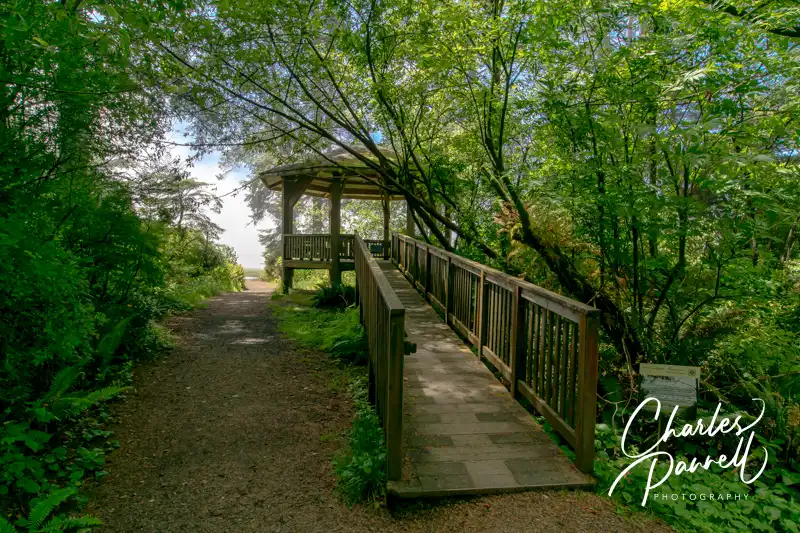
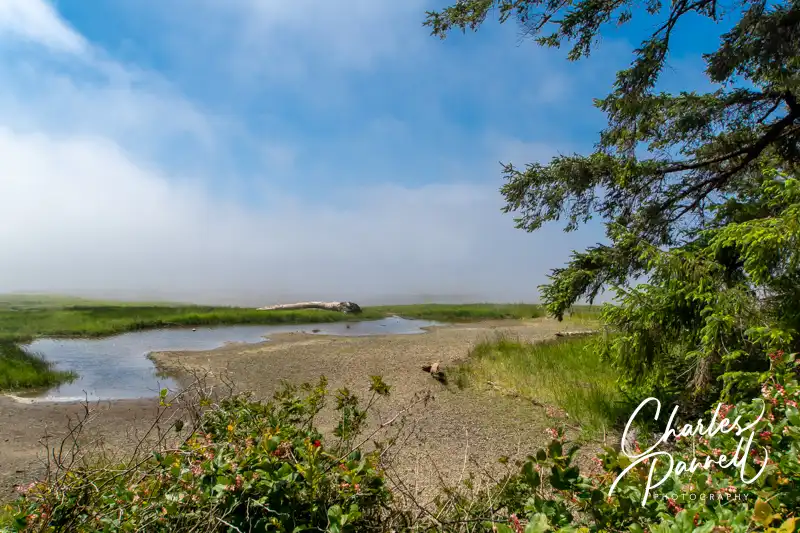
The Caitlin Heusser Bird Watching Station sits at the end of the trail, and offers a commanding ocean view. This elevated gazebo has ramp access, and several benches inside. It’s a great spot to get a gander at the local avian life, so bring your binoculars. And if you want a closer look, there’s also level access over to a viewpoint on the side of the gazebo. Either way, it’s an excellent – and very accessible — spot for a beautiful ocean view.
Ocean View From the Caitlin Heusser Bird Watching Station
Barrier-Free Travel California National Parks Road Trips Travel Ideas for Wheelchair-users and Slow Walkers
Located in the Southern California Verdugo Mountains, Slough Canyon Nature Center offers loaner track chairs so wheelchair-users and slow walkers can explore the nearby rugged mountain trails. While Southern California has a number of accessible beach programs, this Burbank facility is the first to introduce wheelchair-users to track chair mountain hiking in the area.
The all terrain track chairs are designed to handle the rugged terrain and fire roads in the Slough Canyon Nature Center, They were purchased with funds from community fundraising efforts by Leadership Burbank.
Track chair reservations are available in two-hour time slots, and they must be booked at least 14 days in advance. A companion must accompany the track chair-user, and a trained docent or volunteer will also join the hike. A short safety orientation and a test drive will also be required before hikers can set out on the mountain trails in the track chairs. The track chairs are available to anyone with mobility challenges.
Loaner track chairs are now available at some Missouri State Parks. These off-road wheelchairs allow visitors to more fully explore some inaccessible areas and historic sites in the parks that might not accommodate a standard wheelchair. The track chairs are available to reserve two days in advance, and due to battery life they can only be reserved for a maximum of two hours. Park employees are unable to assist with transfers, and people under 18 years old must be accompanied by a parent or guardian in order to use the track chairs. And before using the track chair, all users must go through a short briefing and sign a user agreement.
Track chairs are available at the following stare parks
Battle of Lexington State Historic Site
Bennett Spring State Park
Bryant Creek State Park
Castlewood State Park
Elephant Rocks State Park
General John J. Pershing Boyhood Home State Historic Park
Details about how to reserve track chairs are listed on the individual state park websites. It’s also important to remember that the track chairs cannot be used in the rain, snow or ice, so plan accordingly. For more information about loaner track chairs at Missouri state parks, visit mostateparks.com/track-chair.
Barrier-Free Travel Washington National Parks for Wheelers and Slow Walkers