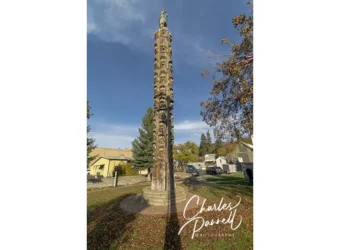
This local landmark has a fun history, and it’s a nice spot to take a break while driving along Highway 195 in the Palouse. It’s a small site, so if you have an adapted van it’s best to parallel park on the street in front of the tiny park that surrounds the Codger Pole. There’s also standard parking in the Farmers Insurance lot next door. From either point there’s level access to this unusual monument, which also has a picnic table on a cement pad.
The story behind the Codger Pole dates back to a historic 1938 football game between the Colfax Bulldogs and the St. John Eagles. The Colfax team lost, but 50 years later the “old codgers” asked for a rematch, and this time they won. This monument stands to commemorate the resolve and determination of that team. The pole, which is actually comprised of five 65-foot tall cedar poles, was carved with a chainsaw by John LaBenne. It includes the faces of all 51 players along with their original leather football helmets. It’s a fitting tribute to codger-hood.
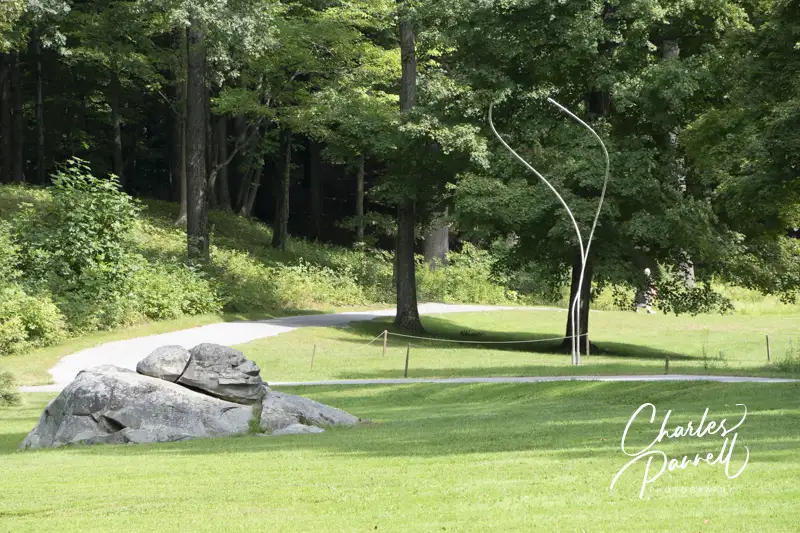
Located in the Hudson Valley three miles from Cornwall, Storm King Art Center (stormking.org) isn’t your average art installation. For starters it’s located on a 500-acre parcel dotted with meadows, ponds, hills and forests, that offer a taste of the natural beauty and diversity of the area. Add in over 100 small-scale and larger-than-life sculptures in a variety of mediums, and you have one of the region’s largest — and most diverse — outdoor sculpture parks. And although there are a few hills and rocky patches in certain parts of the landscape, Storm King Art Center is still an excellent choice for wheelchair-users and slow walkers.
Access with a Capital A
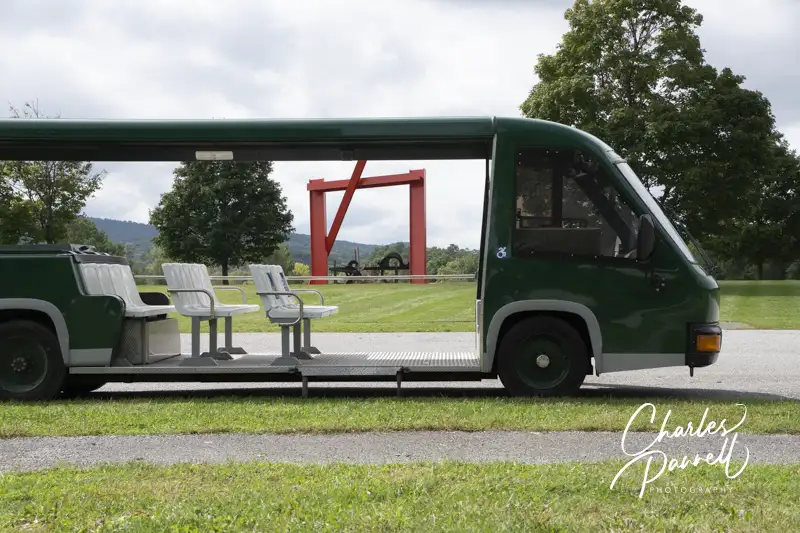
Storm King Art Center Tram
Wheelchair access is first-rate at the Storm King Art Center, starting with their large parking area. There’s accessible parking with level access over to the outdoor lobby, which features accessible restrooms, visitor information and ticketing windows. From there, you have several choices.
The easiest way to explore the park is to hop on the wheelchair-accessible tram. There’s ramp access to the tram, and you can stay in your own wheelchair or transfer to a bench seat. The tram stops at all the major areas of the park, and it’ a great option for slow walkers too.
Alternatively, you can walk over to Museum Hill, the focal point of the park. It’s a .4-mile level walk through the South Fields to the elevator which goes up to Museum Hill. As an added bonus, you can check out some of the sculptures on your stroll through the South Fields.
Although the bulk of the park is flat and easy to navigate in a wheelchair, there are some steep and rocky areas. The free visitor map is an excellent resource, as it points out all the paved pathways, as well as the steep areas, uneven paths and stairs. The park also operates an accessible cart service to help visitors navigate over areas with inaccessible terrain. For more information or to reserve a ride, call (845) 534-3115.
Explore the Grounds
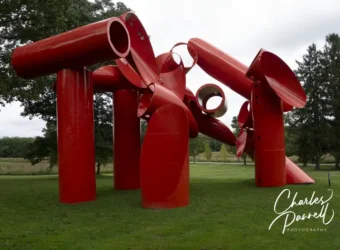
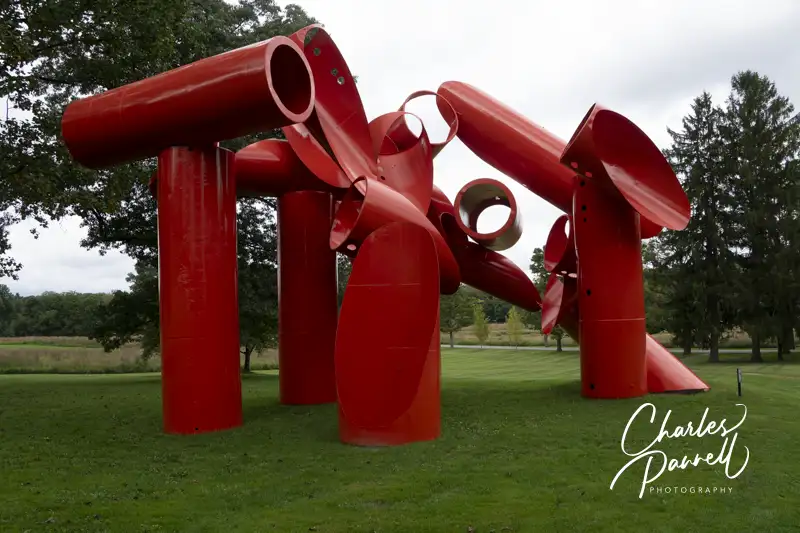
Iliad by Alexander Liberman
The grounds are filled with varied landscapes, and although there are hills here and there, you can also use the accessible tram to bypass them. The best bet is to start with Museum Hill. There’s ramp access to the Museum and ample room to maneuver a wheelchair through the galleries, which offer rotating exhibits. There is a step down to one of the galleries, but it’s also accessible from outside. And if you’re a slow walker, you might want to pick up one of the loaner wheelchairs at the Museum Store.
Museum Hill is fairly level, and it’s dotted with abstract cubes, tubes, triangles and a variety of other shapes. Two favorite pieces are also located on Museum Hill — City on the High Mountain, by Louise Nelson and Dwellings by Charles Simonds. Both of these pieces are located near the Museum, so they’re relatively easy to find.
The North Woods, which is located near Museum Hill, is one of the least accessible areas in the park. Although there are some fairly level paths through the lower part, the upper areas are rocky and steep. Still there’s plenty to see in the lower areas, which are located near the tram stop.
New pieces are continually added to the collection at Storm King Art Center, and sometimes there are also special exhibitions. And don’t miss the four Alexander Calder sculptures! Take some time to explore all the areas of the park, and if you get tired, catch the accessible tram and head back to your car. Alternatively you can use the tram as a tour vehicle to see the whole park, as it offers a good look at many of the sculptures along the route.
Grab a Bite to Eat
If you’d like to take a break and grab a bite to eat, stop in at the Storm King Café, which is located near the parking lot in the North Woods. The tram stops near the café, and there’s level access over to the entrance, and plenty of room to maneuver a wheelchair inside. Offerings include a selection of sandwiches, salads, cookies, snacks and soft drinks.
If you’d prefer to pack along your own lunch, there are plenty of places to picnic on the grounds. Management welcomes guests to bring in their own food, but no cooking is allowed in the park. Accessible picnic tables are available near the parking area, or you can bring a blanket and and enjoy your lunch anywhere on the grounds, except for Museum Hill. Pick a spot with a view, and enjoy the sculptures during your lunch break.
It’s also important to note that peak times at the Storm King Art Center are on weekends in September and October. If you don’t like crowds, it’s best to avoid those times. And no matter when you visit, it’s a still good idea to arrive early. That way you’ll have a more serene and crowd-free experience in this beautiful outdoor space.
Barrier-Free Travel the Grand Canyon for Wheelers and Slow Walkers
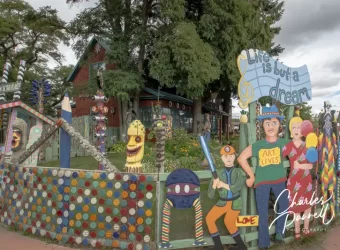
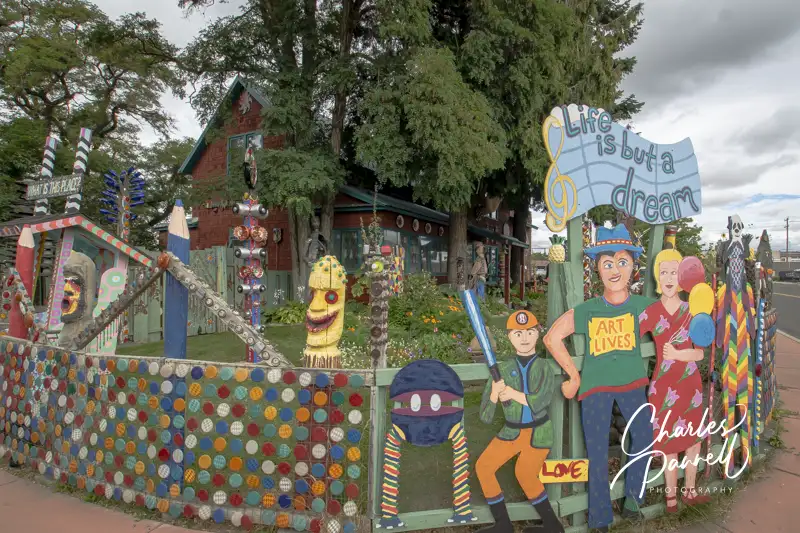
Created by Jane Orleman and Dick Elliott, this downtown Ellensburg home is decorated in a conglomeration of reflectors and other common items. And it’s more than just a work of art, as Jane still lives there. Sadly Dick passed away in 2008, but his artistic creation lives on in this house that the couple purchased in 1978.
The home is surrounded by a fence with posts adorned with everything from nails and keys, to bottle caps, insulators and even a few cooking implements here and there. A “Life is But a Dream” mural graces one side of the fence, and a nook with a guest book sits near the end. Add in a few insulators on the side, a racy mannequin with reflectors for boobs (Big Red), and a man with a camera for a face and you have everything but the kitchen sink — all artistically done of course. And don’t miss the gigantic hand that adorns the front, near the doorway. Dick and Jane’s Spot is truly a work of art, and everywhere you look, you find something different — and sometimes it’s pretty subtle. Other times, it’s hard to miss.
Access is good around the house, with sidewalks lining the venue, and curb-cuts at the corner. And there’s a little side alley that gives folks access to another aspect of the decorated home. There’s a parking lot that’s adjacent to the house, but there are no accessible parking spaces. Best bet is to park in the accessible street parking spots in front of the police station across the street. If you need accessible parking, set your GPS to 100 N. Pearl Street, as otherwise you’ll be routed through a few parking lots to the side of the house. Worth a quick stop for sure — an excellent photo-op.
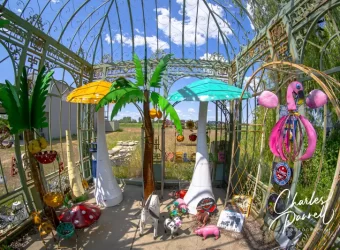
Located just west of Spokane, Way Out West Statue Farm is worth a stop on any Interstate 90 road trip. Owned by two brothers who relocated from downtown Spokane, this rural property allows them plenty of room for expansion. You get your first glance of the property on the north frontage road while driving east on Interstate 90. Fortunately it’s not hard to backtrack. Just take the next exit (272), cross the freeway, then head west on the frontage road. The parking lot is not paved and it has gravel to fill in the low spots, so it’s not that great for most wheelchairs. That said, the whole area where the metallic works of art are displayed is level. The pathways are narrow and not paved, but it’s still a great choice for slow walkers. But if you have a little help it may also work for some wheelchairs.
The selection of yard art is second-to-none at the Way out West Statue Farm. You’ll find a little bit of everything, from signs and metal sculptures to small decorations and larger works of art. A chicken here, an alligator there, flamingos planted in the flowerbeds and a cactus or two are just a few examples of the offerings; but trust me, there’s much more. Everything is for sale, but browsers are also welcome. There are no pushy salespeople there; in fact if you want to buy something you’ll have to flag down one of the owners who are usually roaming the grounds in golf carts. If you can’t find them, then just ask — the other tenants are usually out and about and they will go and fetch them for your. As one friendly guy told me “It’s part of our job”. Either way it’s a fun stop, and I came home with a cool “welcome rooster”. And had a wonderful conversation with the owner, who wanted to make sure the rooster was going to a good home. This fun roadside attraction is also worth a revisit, as the selection constantly changes, but the owners are always friendly. And don’t miss their trademark alien spaceship.
14880 Interstate 90
Valentine, Texas
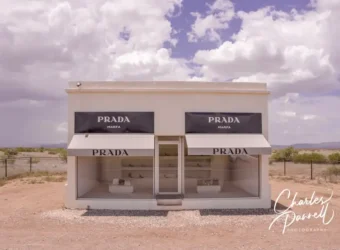
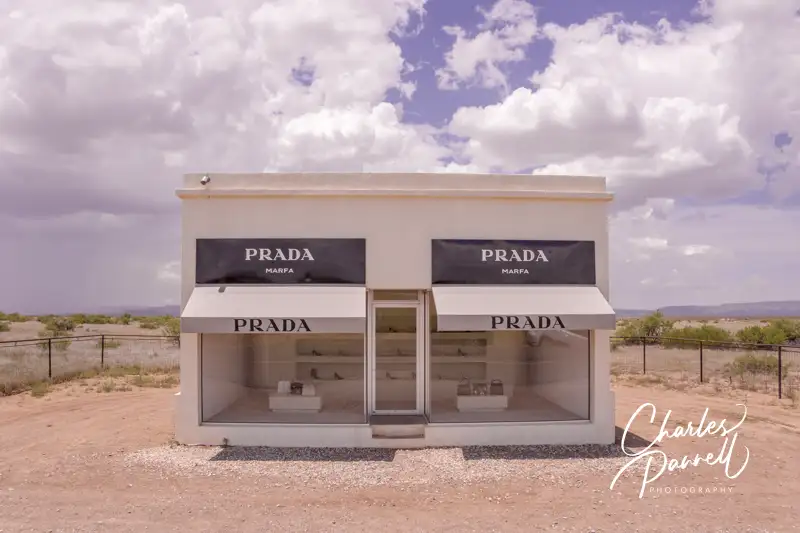
This permanently installed sculpture by artists Elmgreen and Dragset is located about a mile or so north of Valentine along a lonely stretch of Texas Highway 90. Most likely Marfa Prada takes its name from the the non-profit that sponsored the installation — Ballroom Marfa — as it’s located some 35 miles from the namesake town.
There’s no parking lot per-say for the store, but you can pull over on either side of the freeway, park in a level dirt area and find a barrier-free pathway to the locked building. The faux showroom contains 20 left foot shoes and six purses from the 2005 Prada collection, and it’s been dubbed a “permanent land art project” by the creators.
Although the installation has been vandalized a few times, it’s always been restored to its original state. And today the Prada purses hide part of the elaborate security system. It’s a nice stop in the middle of nowhere, plus you’ll probably also bump into some interesting characters who seem to flock to this popular roadside attraction.
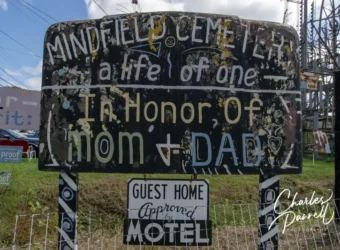
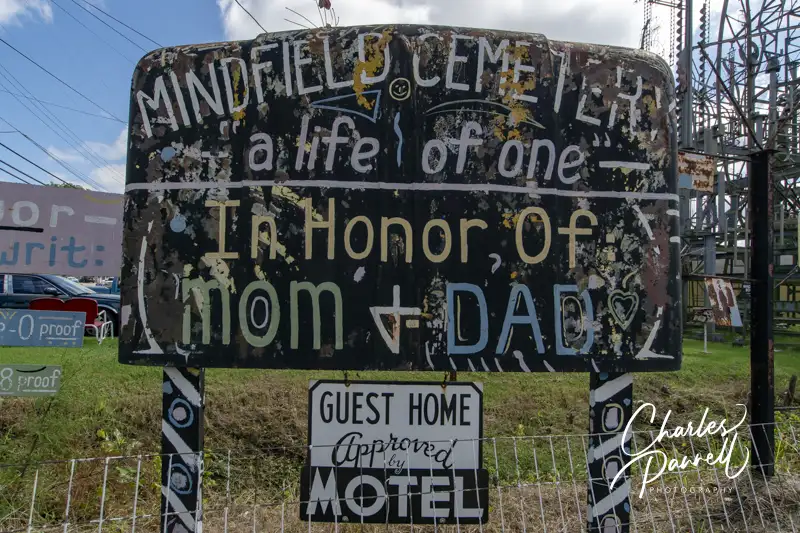
This local artist’s ongoing creation is just a short jog off of Interstate 40, about midway between Nashville and Memphis. If you take exit 66 and follow Highway 70 for about eight miles, you’ll find yourself cruising down Brownsville’s main drag, just minutes away from the installation. You can see Billy Tripp’s Mindfield from the street, but for a closer look, park at the Food Giant next door. There’s accessible parking in the lot, and it’s a level roll over to a good vantage point.
Started in 1989 with some salvaged metal, this burgeoning sculpture represents Mr. Tripp’s emotional and personal growth over the years. The installation towers over the nearby businesses, and includes everyday objects that are intricately woven into the piece. From a basketball hoop and a claw foot bathtub, to a canoe and several grain hoppers, it’s clear that just about anything is fair game for inclusion. Don’t miss the water tower, which was transported to the site from a defunct Kentucky factory, and is said to stand as a memorial to the artist’s parents. And when Tripp dies, he’s already got permission from the city to be entombed in his work of art.
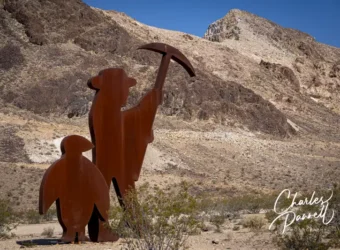
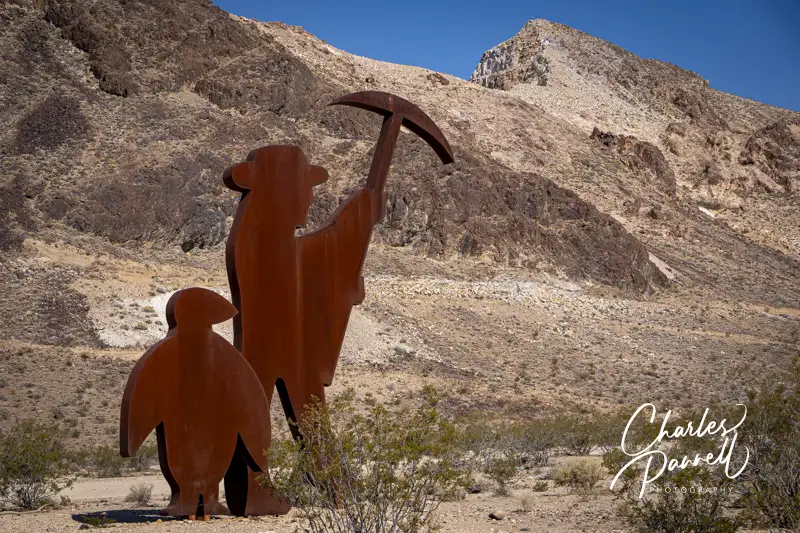
Located on the way to Rhyolite — and Tom Kelley’s Bottle House (www.emerginghorizons.com/tom-kellys-bottle-house) — this unique open-air sculpture installation is definitely worth a stop. From Beatty, head west on Highway 374 for about four miles, then turn right on Rhyolite Road. Take the first left on the road – look for a miner with a penguin – and you’ve found the museum. It’s really pretty hard to miss. There’s parking in a level dirt area, and usually there’s plenty of room for an adapted van. A small information center that’s ramped in the back is located nearby. The information center is open periodically, but even if it’s closed you can still pick up a brochure about the artwork.
The sculptures are dotted throughout the desert, with mostly level paths covered in gravel leading out and around them. That said, you can get a good look at the bulk of them from the information center, so it’s worth a stop even if you can’t negotiate the paths. The sculptures range from a ghostly interpretation of the Last Supper, to the more traditional Tribute to Shorty Harris, a legendary Rhyolite prospector. And there are even a few pieces that visitors can sit or lean on, and snap a selfie or two.
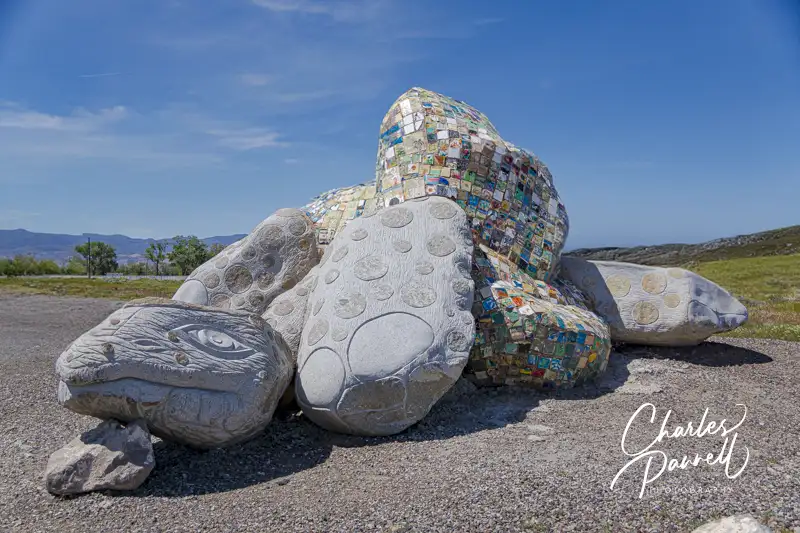
This lone sculpture sits on the side of the road just off Interstate 80 in Fernley. At one time the Bottle Cap Gazebo stood nearby, but it was permanently removed in 2024. To be fair, that piece was originally designed as a temporary structure for Burning Man in 2014; so it’s impressive that it braved the elements for as long as it did. Still the tortoise is worth a quick stop. To find it, take exit 48 off of interstate 80 and follow the signs to Fernley. Keep right on Main Street, and look for the tortoise on the right, across the street from the 76 gas station.
Although the parking lot is composed of gravel, there’s also an accessible parking spot on a cement pad, with a level sidewalk over the Desert Tortoise. This permanent installation was created by artist Pan Pantoja, with assistance from Fernley Elementary School’s fourth-graders.
This 25-foot long and 17-foot tall sculpture was crafted from boulders from a local quarry and decorated with hand painted ceramic tiles that reflect the culture of Fernley and the surrounding area. Although the vision and execution came from Pantoja, the fourth-graders supplied the artist with the creative tiles. There’s level access around the sculpture which weighs in at an impressive 70 tons, and there’s also a smaller slab covered with leftover tiles located next to the tortoise.
It’s a good place to stretch your legs, and a fun photo op, while tooling along Interstate 80 through the desert.
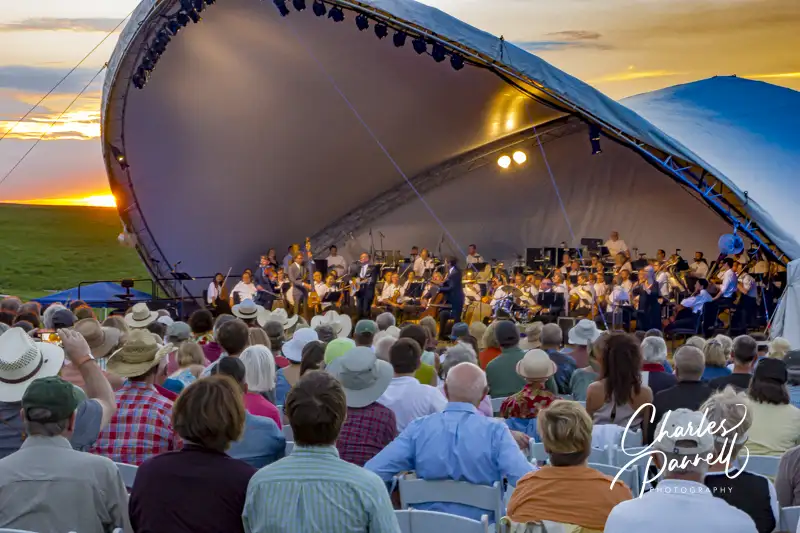
Tickets are now available for the 2025 Symphony in the Flint Hills, which is slated for Saturday June 14, 2025. A eclectic mixture of classical music and cowboy culture, this day-long event celebrates the history, ecology and culture of the last stand of native tallgrass prairie. This years concert will be held at the Evans Family Ranch in Chase County, Kansas. Although the venue changes yearly, great care is always taken to insure this popular event is accessible to wheelchair-users and slow walkers.
Wheelchair Access at 2025 Symphony in the Flint Hills
The Evans Family Ranch is large, and the concert site is located a good distance from the ticket gate. That said, accessible parking will be available to anyone who has a placard, and there will be limited golf cart transportation to the front gate for folks who cannot manage the walk. A special entrance lane will be designated for disabled patrons, where wristbands that allow access to accessible seating and transportation will be available.
Most attendees walk over the rock and dirt covered prairie to the concert site; however accommodations will be in place for folks who can’t manage the walk. A lift-equipped shuttle bus will transport wheelchair-users and slow walkers to the concert site. From there, a separate shuttle will be available to transfer folks with special assistance wristbands between the waiting area, the Patron Tent and the ADA concert area. Accessible porta-potties will also be located throughout the venue.
The Grand Finale
Now in its 20th year, the Symphony in the Flint Hills will celebrate its Grand Finale in 2025. Says Mary Ice, Board Chair of Symphony in the Flint Hills, “This 20th anniversary represents a moment to reflect on how far we’ve come, and the many possibilities ahead for sharing our mission.”
Gates will open at 1 PM. During the afternoon, lectures and activities will be presented in the tents near the concert site. There will be level access to all tents, where you’ll also find a silent art auction, adult libations, and a scrumptious BBQ dinner with all the trimmings. The sunset concert is the highlight of the day, but plan to arrive in the early afternoon so you can enjoy the other activities.
You’ll never forget the experience of listening to the music of the Kansas City Symphony Orchestra set against the backdrop of the tallgrass prairie. As the sun sets, cowboys appear on horseback on the horizon, and then slowly make their way down to the stage area. And when the show nears an end they ride off into the distance. It’s probably the only symphony performance where you’ll feel comfortable in blue jeans and cowboy boots.
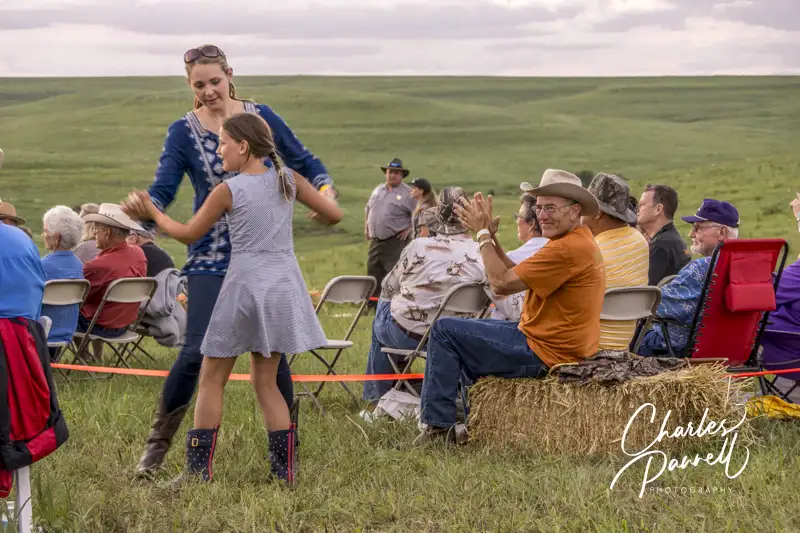
And in keeping with tradition, the performance concludes with a rousing sing along of Home on the Range. Afterwards, guests are welcome to linger on and enjoy the night sky, or maybe listen in on the story circle, or indulge in a little dancing. Whatever you choice, you’ll have a full day of fun on the beautiful Kansas prairie.
Advance tickets are required for the 2025 Symphony in the Flint Hills, and they can be purchased at symphonyintheflinthills.org. Plan ahead though as tickets go like hotcakes, and this popular event always sells out.
Barrier-Free Travel 22 Accessible Road Trips for Wheelers and Slow Walkers

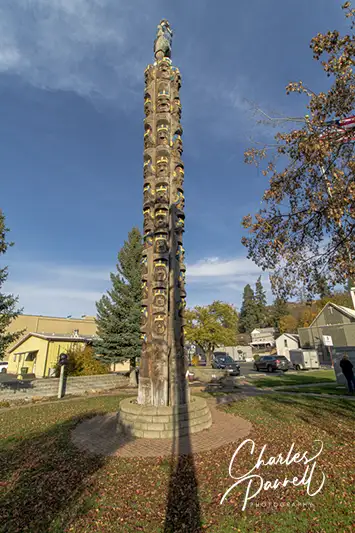 This local landmark has a fun history, and it’s a nice spot to take a break while driving along Highway 195 in the Palouse. It’s a small site, so if you have an adapted van it’s best to parallel park on the street in front of the tiny park that surrounds the Codger Pole. There’s also standard parking in the Farmers Insurance lot next door. From either point there’s level access to this unusual monument, which also has a picnic table on a cement pad.
 101 N. Pearl Street