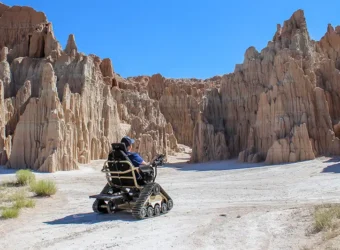
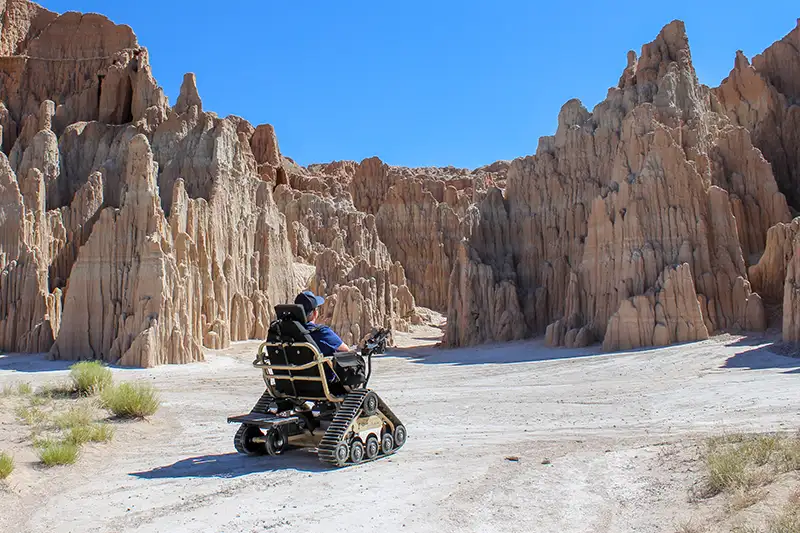
Located in Southeastern Nevada, Cathedral Gorge State Park (parks.nv.gov/parks/cathedral-gorge) is home to a long narrow valley filled with cathedral-like spire formations that were crafted by wind and rain over the years. At first glance, it’s doesn’t exactly look like a wheelchair-friendly environment. On the other hand, thanks to modern technology, wheelchair-users and slow walkers can now explore this rugged region on a loaner track chair.
The power Action Trackchair has tank tank tracks instead of wheels, and it will easily wheel over obstacles that are inaccessible in a standard wheelchair. The track chair is available for loan upon advance reservation. Once you arrive at the park, the staff will brief you on how to operate the chair and answer any questions that you may have. And after that, you are off on your own adventure in the park. For more information about the track chair or to make reservations, call (775) 728-8101. Plan ahead though, as this loaner track chair is bound to book up quickly.
Barrier-Free Travel California National Parks Road Trips Travel Ideas for Wheelchair-users and Slow Walkers
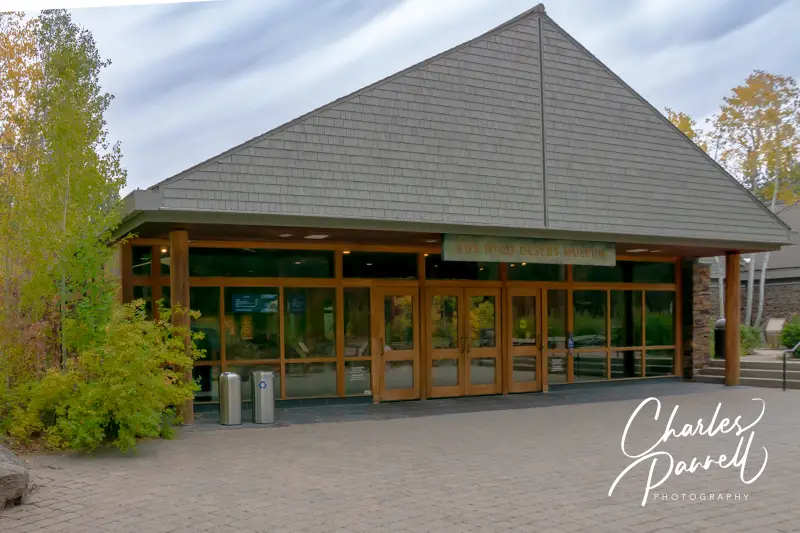
Located along Highway 97 just south of Bend, the High Desert Museum (highdesertmuseum.org/) doesn’t look like much from the lone sign that graces the entrance. That said, as you wind your way up the driveway through the surrounding forest, things begin to come into focus as you spot the main museum building. And by the time you enter the complex, and check out the surrounding enclosures and exhibits, it becomes apparent that this off-the beaten-path find is much more than initially anticipated.
Defined as the highland area on the eastern side of the Cascades, the high desert is the ancestral home to native peoples, as well as a land that supports an abundant wildlife population. The High Desert Museum explores — and even celebrates — the combined history and zoology of the area. This 135-acre campus, which is nicely hidden from the adjacent highway, includes a 100,000-foot indoor museum space, as well as expansive outdoor exhibits. And although the complex was constructed in a rugged natural environment, great thought was given to inclusion, so today wheelchair-users and slow walkers can also enjoy this beautiful space.
A High Desert Primer
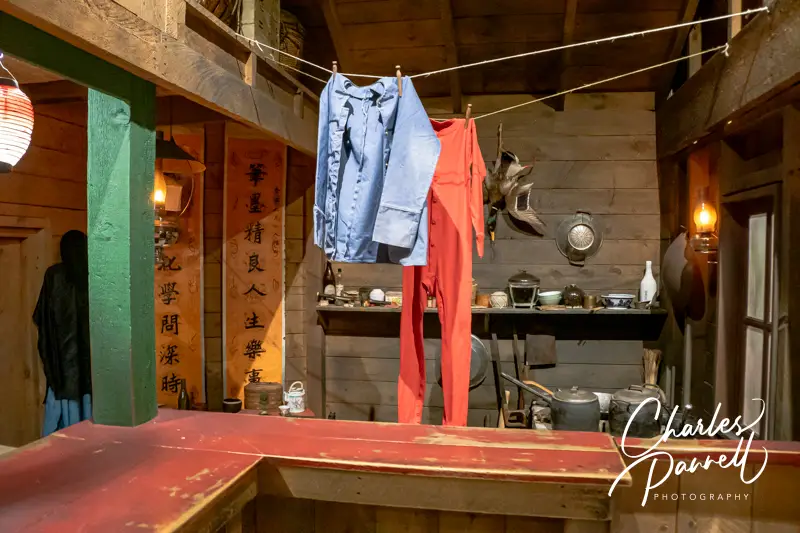
Exhibit in the Main Museum
There’s plenty of accessible parking in the front lot, with level access over to the High Desert Museum entrance. And if you can’t walk far, there’s also a large drop-off area near the door. Inside there’s good pathway access to all the exhibits, accessible restrooms and a good number of benches to sit and take a break. A loaner wheelchair is also available.
The bulk of the inside galleries focus on the resistance and resilience of the native people, and highlight the changes in the area over the past 100 years. And then there’s the Desertarium, which has an impressive collection of reptiles and amphibians that reside in the high desert. And don’t miss Juniper, the porcupine who lives in a natural habitat in the Schnitzer Entrance Hall. She and her brother Tumbleweed were born in captivity and imprinted on humans, and as a result they cannot be released in the wild.
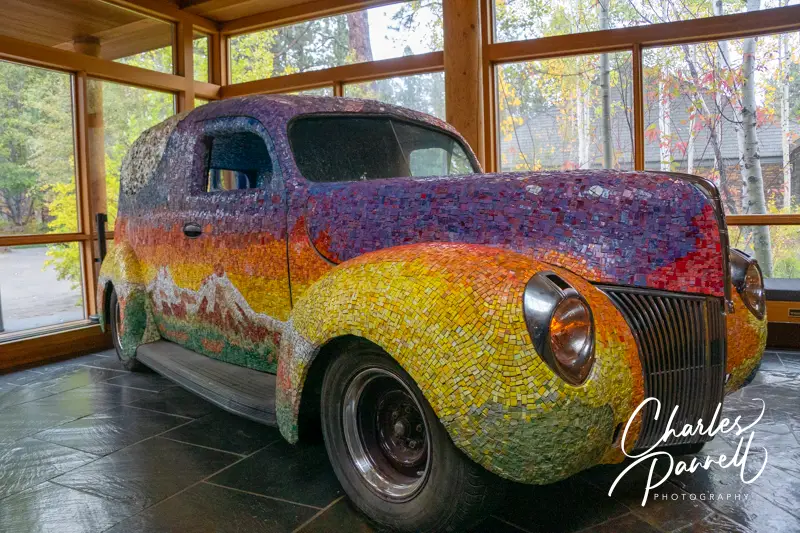
Voyager 1941 Panel Truck with High Desert Mosaic
There are also a number of rotating exhibits in the other galleries, and if you get hungry the Rimrock Cafe has some nice lunch or snack options. And don’t forget to stop in the gift shop to pick up a souvenir of your visit, before you head outside to explore the rest of the campus.
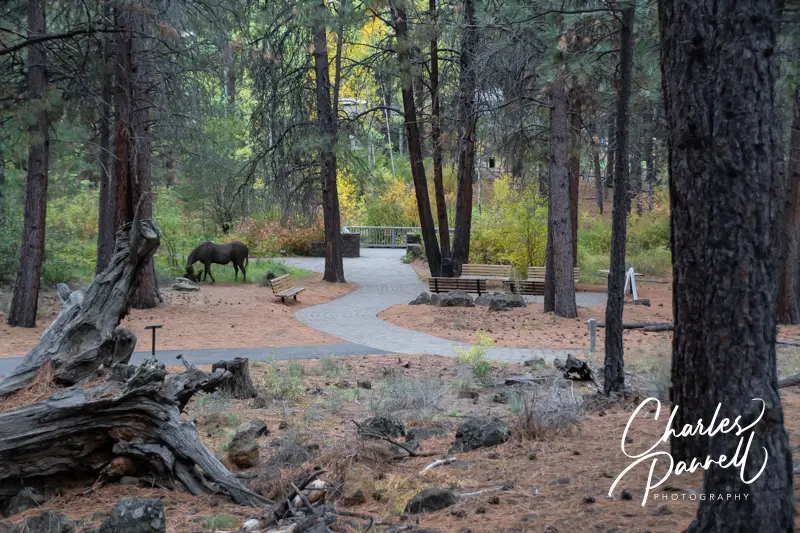
Discover the Forest
Birds of Prey Trail at the High Desert Museum
Outside, a series of trails wind around the exhibits and enclosures; and although not all of the trails are accessible, the museum map clearly highlights the routes that have steep grades. From the main building head over to the popular Donald M Kerr Birds of Prey Center, which features a courtyard with some rehabilitated residents, as well as inside exhibits. Outside, you can get up-close-and-personal with a few owls, hawks and eagles; while the inside exhibits focus on the habitat and behavior of the raptors. And don’t miss the pitch black enclosure with the barred owl.
After you’ve had your fill of raptors, head over to the Forest at Night exhibit, with a quick stop at the pond viewing area along the way. There’s barrier-free access to the Changing Forest pavilion, which includes some interpretive signs and wayside exhibits. Inside there’s equally good access to the Forest at Night interactive installation. This exhibit features the constellations above and highlights the nocturnal forest creatures. And there’s also a touchscreen that allows visitors to learn about the adaptations of the nocturnal forest creatures. It’s a fun and educational exhibit for all ages.
Step Back in Time
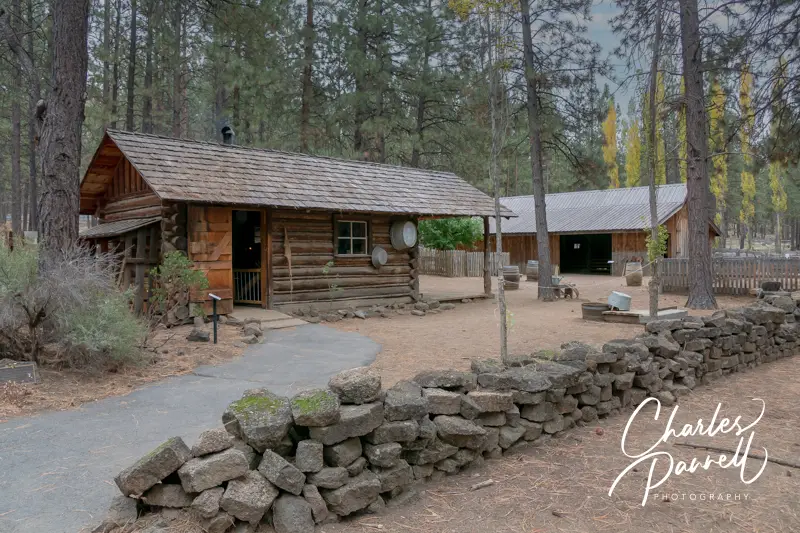
Settlers Cabin at The High Desert Museum
Another outside exhibit with good wheelchair access is the High Desert Ranch and Sawmill. And this area is truly a step back in time, as it tells the story of the early Central Oregon homesteaders. It includes a 1904 vintage cabin and barn (complete with chickens), a corral, bunkhouse, root cellar and old schoolhouse. Docents are on hand to answer questions, and there’s always a demonstration or two in the area. There’s ramped or level access to most of the buildings, as well as the old sawmill. Kids love this area, but it’s also nostalgic step back in time for adults.
After you’ve has a taste of farm life, continue on along the paved trail through the forest to the Autzen Otter Exhibit. There’s level access to the outdoor viewing area, where you can view the antics of the Brook, Pitch and Wesley, the resident otters. And for a good underwater look at them. there are also some wheelchair-height viewing windows as well as an indoor viewing area.
Of course you can always double back to any of the outdoor exhibits, but to conclude your High Desert Museum visit continue along the paved the trail. The pathway passes a playground and a large open meadow before it ends back at the main museum buildings. All in all, it’s just a half-mile trail, with good signage along the way.
And combined with the indoor exhibits this expansive outdoor area gives visitors a comprehensive – and wheelchair-accessible – look at the residents of the high desert.
Near the Entry to The High Desert Museum
Barrier-Free Travel Washington National Parks for Wheelers and Slow Walkers
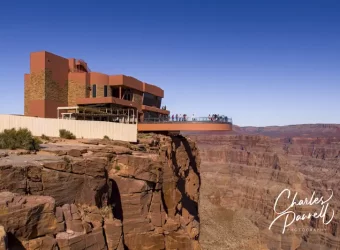
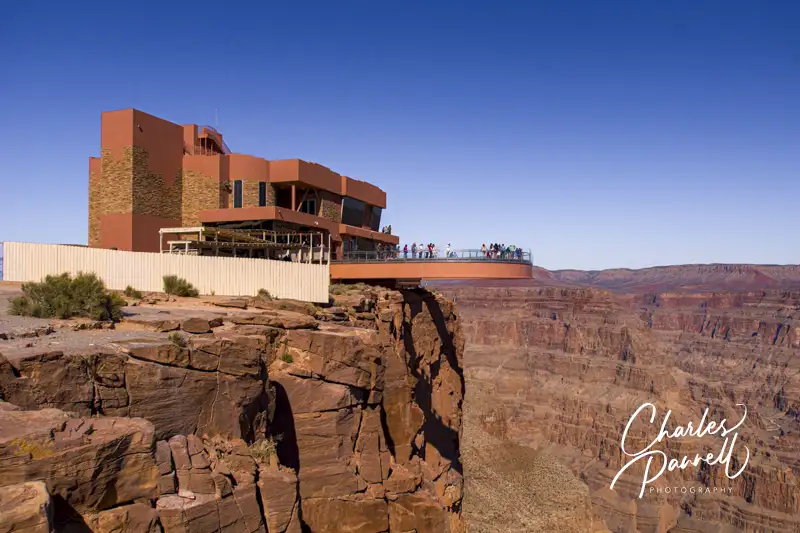
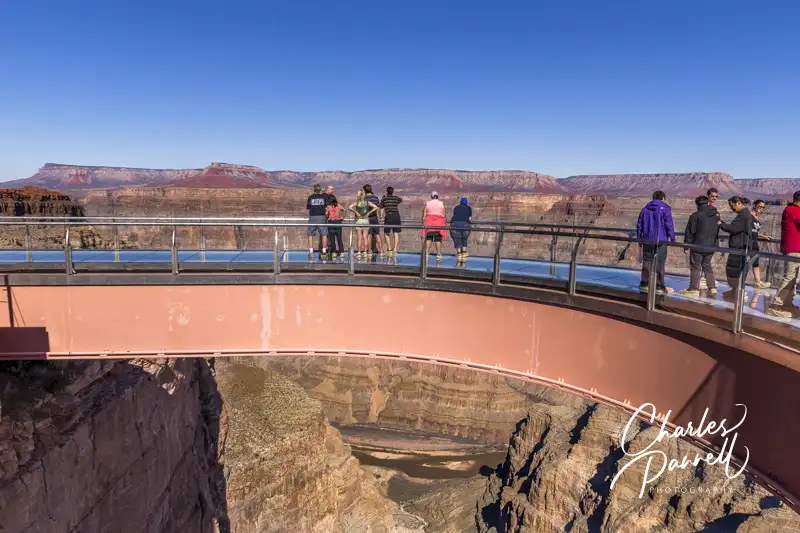
Located 130 miles southeast of Las Vegas, Grand Canyon West (grandcanyonwest.com) is not part of the US National Park System. It’s located on the Hualapai Reservation, and it’s home to the Grand Canyon Skywalk. This massive cantilever glass bridge extends out over the canyon rim and gives visitors a panoramic view of the canyon below. And although it’s outside the jurisdiction of the US government, this popular attraction offers good access for wheelchair-users and slow walkers. You can roll right out on the skywalk, and enjoy the beautiful canyon.
The Basics
Grand Canyon West is not located anywhere near the popular South Rim or the more remote North Rim of Grand Canyon National Park. It’s about a four-hour drive from the South Rim, and over six-hours from the North Rim. It’s definitely not a doable day trip from either of those sites. On the other hand, it’s just a two-hour drive from Las Vegas, so if you get an early start it makes a good day excursion from there.
It should be noted that because Grand Canyon West is not part of the US National Park system, national park passes are not valid for admission. Unfortunately the entrance price tag isn’t cheap either, but many consider it a treat and a once-in-a-lifetime experience. Still, leave room in your budget for the hefty entrance fee — usually about $100 per person.
On the Skywalk at Grand Canyon West
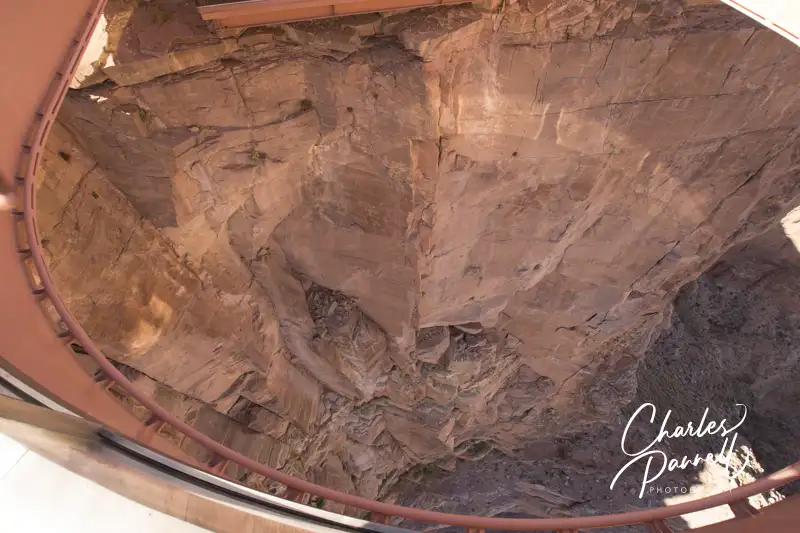
The Skywalk itself is considered an engineering marvel, as it extends out over the canyon and provides unobstructed views below. If you’re a little hesitant, don’t worry, as it’s incredibly sturdy. It’s built to withstand an 8.0 earthquake and winds up to 100 miles-per-hour. Still, looking straight down through the glass at the canyon floor may cause temporary vertigo in some people. If that happens, there’s one simple cure — just close your eyes.
The Grand Canyon Skywalk Experience
Vertical View from the Skywalk at Grand Canyon West
There are three main sections to Grand Canyon West, and a wheelchair-accessible shuttle connects these areas with the entrance plaza. Eagle Point is where the Skywalk is located, Guano Point is an abandoned mining site with some great canyon views, and Hualapai Point is home to the lodge, ranch and western village.
The Skywalk itself offers great wheelchair access. There’s ramp access up to the entrance and level access to the adjacent locker area. Nothing is permitted out on the skywalk, so all purses, cameras, backpacks and bags must be left in the lockers. Ambulatory visitors are asked to wear disposable booties on the skywalk, but there are no restrictions for wheelchair-users.
From the locker area, you can just roll right out to the skywalk, to get a bird’s eye view of the canyon below. It’s truly a breathtaking experience, and you can spend as much time on the skywalk as you want. And since cameras are prohibited on the skywalk, staff photographers are on hand to photograph visitors. Granted there’s an extra charge for this, but it’s a highly recommended souvenir.
It’s important to note that Grand Canyon West gets extremely busy with bus tours after 11 AM. Best bet for a more memorable experience is to get an alpine start and hit the Skywalk when it opens at 8 AM. Spend some time at Guano Point and Hualapai Point afterwards, enjoy the native dancers, browse through the crafts market and then have a bite to eat. And as you head out, the bulk of the crowds will be entering the site. Truly, it’s the most relaxing way to enjoy the Grand Canyon Skywalk.
Barrier-Free Travel the Grand Canyon for Wheelers and Slow Walkers
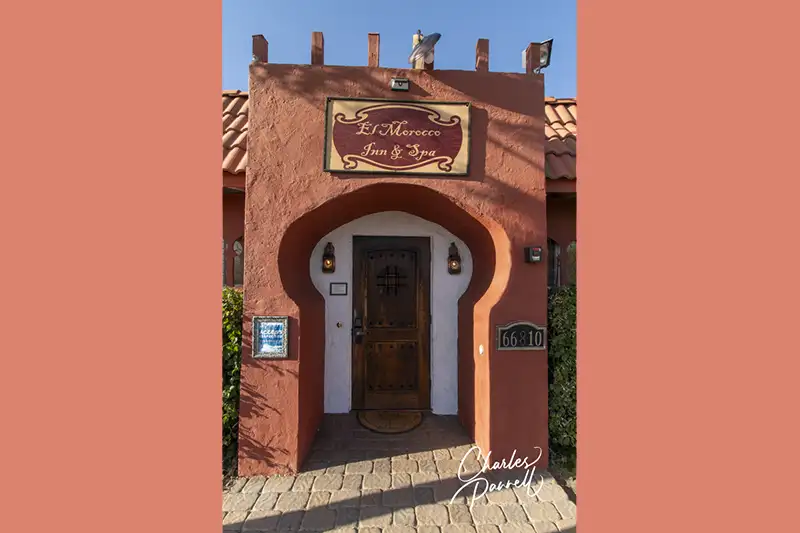
As you walk under the entry arch and peel back the heavy brocade curtains at the El Morocco Inn & Spa (www.elmoroccoinn.com), you’re instantly transported to another world – one that’s filled with the sights, sounds and even the smells of Morocco. From the bright blue doors and the massive ceramic pots throughout the courtyard, to the smell of incense wafting on the desert breeze, and strains of Moroccan music in the background, you definitely get that “I’m not in Kansas any more” feeling as you enter this sanctuary.
And that’s exactly the reaction that Bruce Abney wants all of his guests to have – he wants everyone to have an amazing experience at his little piece of Morocco in the middle of Desert Hot Springs. And the good news is, Bruce’s desert oasis is also accessible for wheelchair-users and slow walkers.
A Man with a Vision
Hot Spring Soaking Pool
Built in the late 1950s the El Morocco Inn was originally known as the Caravan Spa-tel. The property thrived in the 50s and 60s, when Desert Hot Springs was known as “California’s Spa City”. Visitors traveled for miles to soak in the healing waters. Unfortunately, many of the resorts closed over the years — including the Caravan Spa-tel — because of the high cost of maintaining the hot springs. Bruce stepped into the picture in 2001, when he purchased the property and proceeded to transform it into a Moroccan paradise.
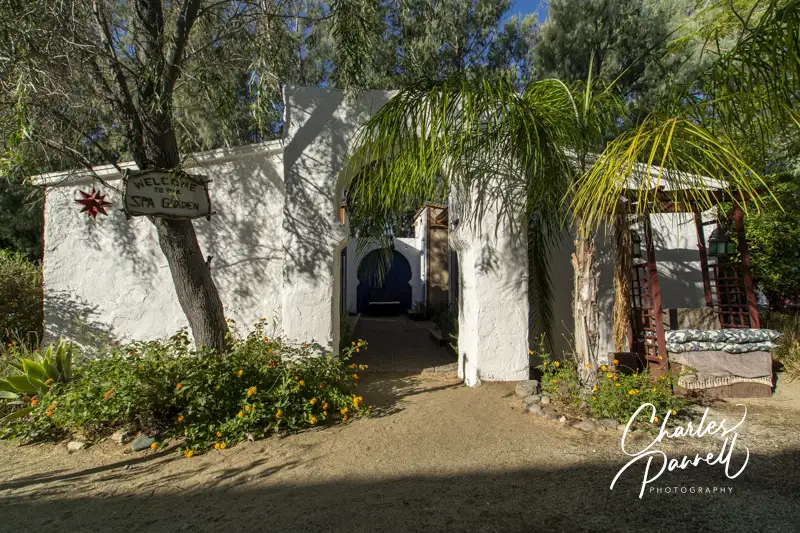
As a child, Bruce was intrigued by the El Morocco Hotel in Las Vegas, so when the Caravan Spa-tel renovations began, that Las Vegas property became his inspiration. He also immensely enjoyed his own journey to Morocco, and he wanted to create that feeling of “being a million miles away from home” for his guests. And he wanted something authentic, so he purchased handwoven fabrics from Moroccan co-ops, and filled the property with goatskin wrapped lights and hanging lamps that cast mesmerizing geometric shadows. “Even the tent in the Spa Garden is the real deal, as are the little touches like the succulent dates available in the Kasbah Lounge,” says Bruce.
As for his inclusive attitude and his decision to add top-drawer access features to this 13-room property, Bruce chalks it all up to “good hospitality”. “I had to ask myself ‘Did I want to share this experience with as many folks as possible who might enjoy it?,’” says Bruce. “The answer back to myself was a heartfelt yes, so I decided to go all out,” he adds. So although the inn itself has the look and feel of a Marrakech riad, it also has first-rate access features for wheelchair-users and slow walkers.
An Accessible Oasis
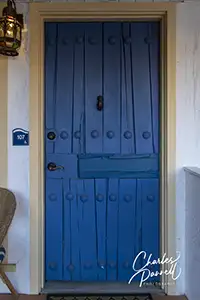
Door to room 107
El Morocco’s access begins in the parking lot, with accessible parking and level access to the front door. Inside there’s barrier-free access to the front desk, and ramp access into the courtyard. Accessible room 107 is located on the opposite side of the courtyard. And In keeping with the Moroccan theme, the room is a patchwork of vivid colors, with a sheer canopy with tassel accents hanging above the bed.
Access features include ramp access, wide doorways, lever handles and good pathway access. It’s furnished with a 27-inch high open-frame king-sized bed with wheelchair access on the right side (as you face it), but there’s plenty of room for it to be moved over if you require wheelchair access on the left side. Other furnishings include two night tables, a chair, a wardrobe, a chest of drawers, a mini-fridge and a microwave.
Room 107 at the El Morocco InnBathroom in Room 107 at the El Morocco Inn
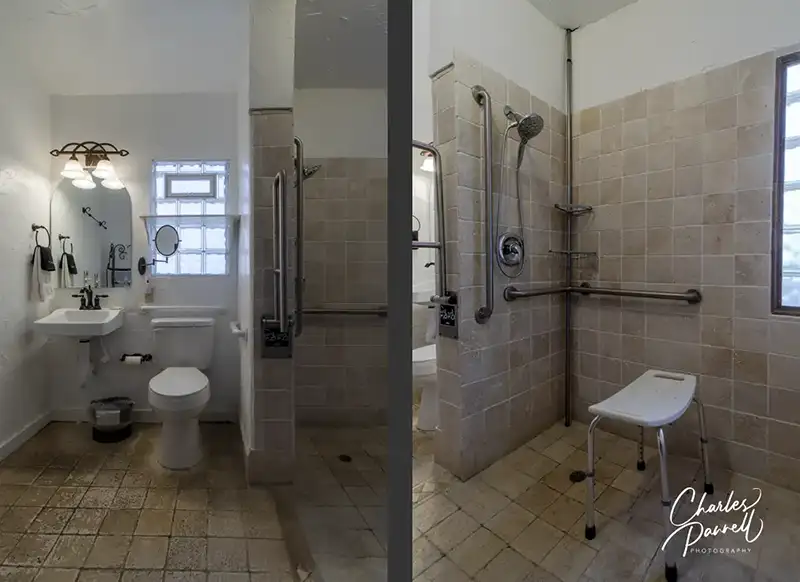
A wide sliding barn door leads into the spacious bathroom, which has a full five-foot turning radius and is equipped with a custom-built roll-in shower with grab bars, a hand-held showerhead and a portable shower bench. There’s also a set of fold-down grab bars for easier transfers. The toilet grab bars are located on the back and left walls (as seated), and the bathroom also has a roll-under sink, a lowered mirror and a lowered towel bar. And even with all those access features, the bathroom still retains the Moroccan ambiance with colorful accent pieces.
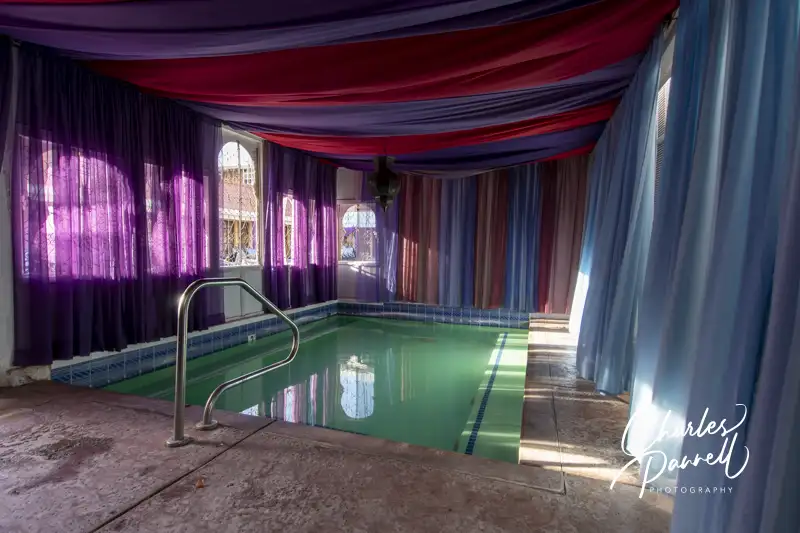
There’s wheelchair-access to the public spaces as well, including the Kasbah Lounge, the Spa Garden, the outdoor showers and the public restroom. There’s also plenty of room for even the largest wheelchair or scooter to maneuver around the lift-equipped mineral pool, and over to the fire pit.
But Wait – There’s More
Spa Garden at the El Morocco Inn
In the end, it’s the little extras that make for a memorable getaway, and the El Morocco Inn has no shortage of those. At the top of the list is breakfast. Although it’s called a Continental breakfast, I’d actually describe it as a Continental-plus affair. Each morning the Kasbah Lounge is filled with fresh fruit, juices, freshly baked goodies, hard-boiled eggs and all the accompaniments to put together a luscious — and filling — meal. And the pièce de résistance? French press coffee. Guests can either choose to enjoy their repast at one of the courtyard tables, or in their own rooms.
Even the spa treatments have a taste of Morocco – minus the overzealous exfoliation treatments found in the hammams. Guests can choose from a variety of massages and body treatments including a Moroccan clay body mask, which uses Moroccan Rhassoul clay. Known for its ability to stimulate cell renewal, this treatment revitalizes and softens the skin.
And last but not least, there’s the library – a little nook located next to the Kasbah Lounge. Filled with books and DVDs to borrow, it’s a cozy spot to retreat and relax. Alternatively, you can watch that Bogart classic, Casablanca, which plays on a continuous loop throughout the day. A subtle nod to El Morocco’s roots, the film also creates the perfect ambiance for this wheelchair-accessible oasis in the California desert.
Barrier-Free Travel the Grand Canyon for Wheelers and Slow Walkers
Population 13,802
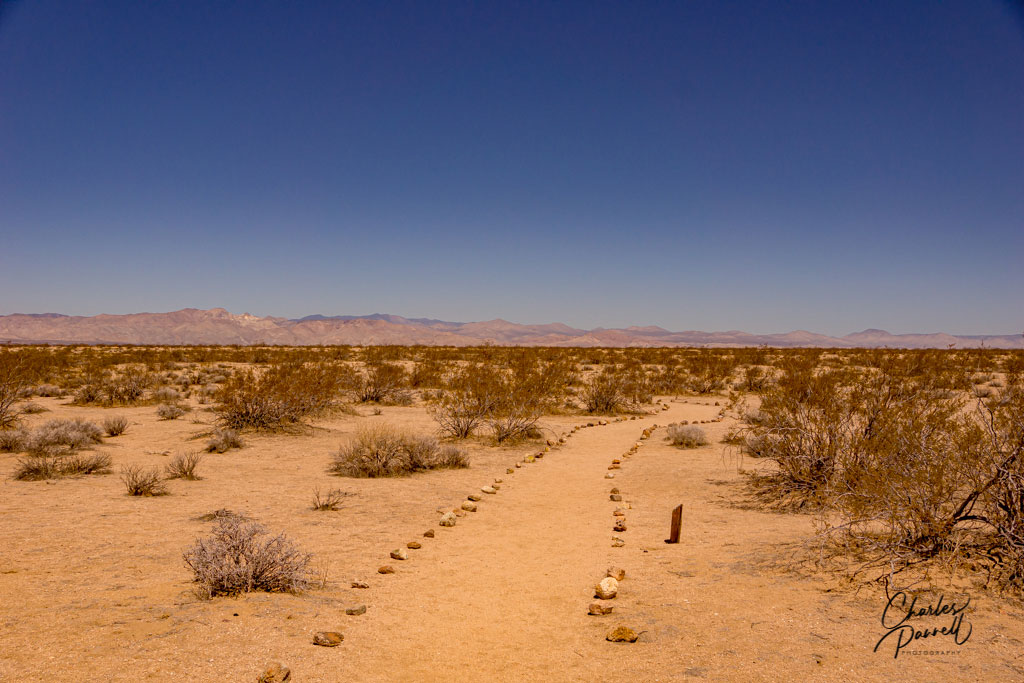
California City — which is smack dab in the middle of the Mojave Desert — is actually the third largest city in the state by land area. And although it spans 203 square miles, it has a population of just over 13,000 people. Compare that to San Francisco, which occupies 49 square miles, with a population of 885,000, and you begin to understand the vastness of this desert burg. And truly the big attraction — the desert tortoise — is found far outside of the populated section of the city, at the Desert Tortoise Natural Area. There’s a level parking area near a kiosk filled with interpretive exhibits, and barrier-free access over to the quarter-mile hard packed loop trail. Look for the tortoises near the creosote bushes that line the trail, as that’s where their burrows are located. There are also three other trails through the desert — the .5-mile Plant Trail, the .75-mile Animal Trail, and the 1.75-mile Discovery Loop — all of which are wheelchair-accessible. The best time to spot the tortoises is from March through May, in the early mornings or late afternoons.
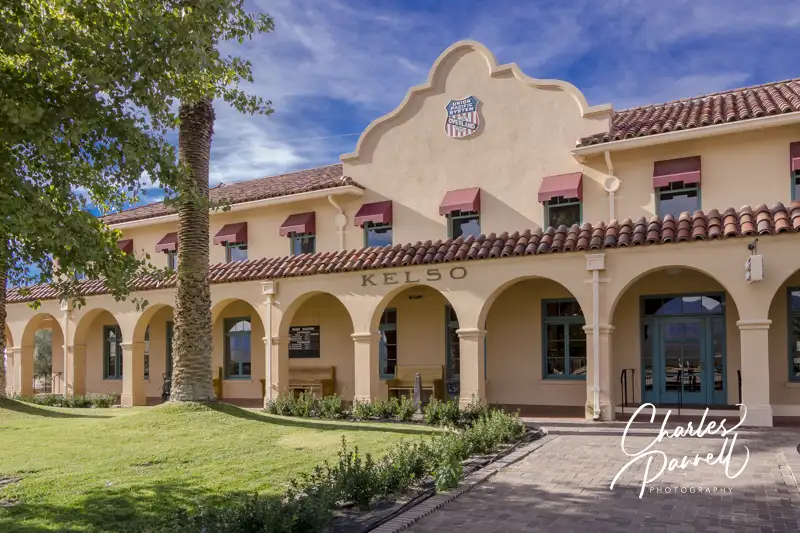
Built in 1924 Kelso Depot was more than just a train depot, as it also included employee sleeping quarters as well as a full-service restaurant. The Los Angeles & Salt Lake Railroad constructed the facility in order to compete with the popular Harvey Houses operated by the Santa Fe Railroad. Kelso Depot was upscale for the time, and it even had a billiard room and a library. The depot ceased functioning in 1962, although the restaurant remained open until 1985. Today it houses the visitor center for the Mojave National Preserve.
Kelso Depot is pretty easy to find — just take Kelebaker Road from Baker, and continue on through the desert for 34 miles until you reach the historic site. Accessible parking is located in front of the depot, with level access over to the visitor center and the nearby accessible restrooms. Inside there’s barrier-free access throughout the facility, which includes interpretive exhibits about the Mojave National Preserve. Additionally the baggage room, ticket office and two dormitory rooms are furnished as they would have been in the 1920s. Even if the visitor center is closed, you can still get a gander at the lunch counter, vintage desks and old equipment through the large front windows. It’s definitely worth a stop while exploring the Mojave National Preserve.
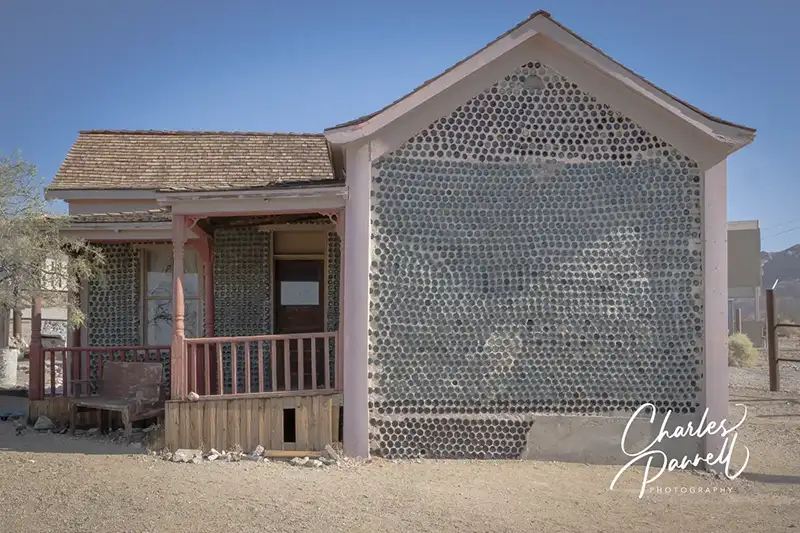
Located off Highway 374 just west of Beatty in the ghost town of Rhyolite, Tom Kelly’s Bottle House is worth a stop on the way to Death Valley. Constructed in 1906 during the gold rush, Kelly built his masterpiece from 51,000 beer bottles, adobe and mud. And since there were some 50 bars in town, there was never a shortage of building materials. As for Kelly’s motivation and reasoning for his chosen medium, he was often known to say that it was easier to build a home from beer bottles than it was to mill lumber from the native Joshua trees. Kelly’s creation is easy to find too — just follow the signs to it from Rhyolite Road. And the good news is, there’s an accessible parking pad and a level sidewalk over to the house. The bottle house sits behind a fence to protect it from vandals, but it’s sometimes opened for private tours. Still you can get an excellent gander at the house from the sidewalk near the entrance.
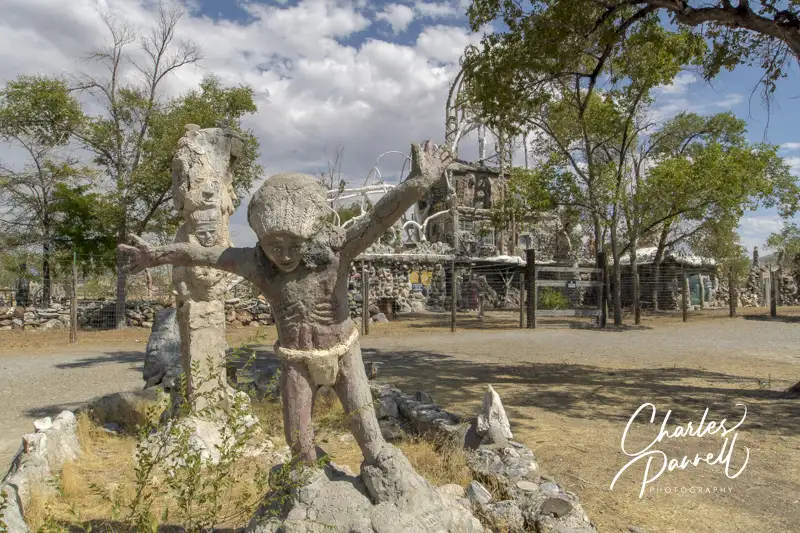
Located along a barren stretch of Interstate 80 in Northwestern Nevada, Thunder Mountain offers motorists a much needed — and somewhat entertaining — break between Reno and Winnemucca. It’s easy to find too — just take exit 145, turn east, and then make a left turn on the frontage road. Soon the asphalt is replaced by dirt, and then gravel, before the first remnants of Frank Van Zant’s paradise lost comes into view on the left.
As the story goes, an old Creek medicine woman told Frank that in the final days there shall rise up a place called Thunder Mountain, and only those that lived there would survive the apocalypse. So he set out to build this mythical place of refuge after his car broke down along the interstate. Shortly thereafter he changed his name to Chief Rolling Mountain Thunder as he set to work to craft his mansion patterned after Tom Kelly’s Bottle House in Rhyolite (emerginghorizons.com/tom-kellys-bottle-house/). It all began with his travel trailer, which he parked in the sagebrush and covered in concrete. That was in 1968. Sadly Chief Rolling Mountain Thunder committed suicide in 1989, and although the elements — and sadly some vandals — have taken their toll on this creation over the years, it’s still worth a visit.
As far as access goes, it’s doable for many folks. There’s no striped parking, but there’s plenty of room to park an adapted van in the large dirt parking area next to the entrance. From there; it’s a level roll to the front gate which is 35 inches wide. Inside the compound, the pathways around the sculptures, homes and exhibits are flat, and although there’s a bit or gravel here and there, it’s easy to dodge.
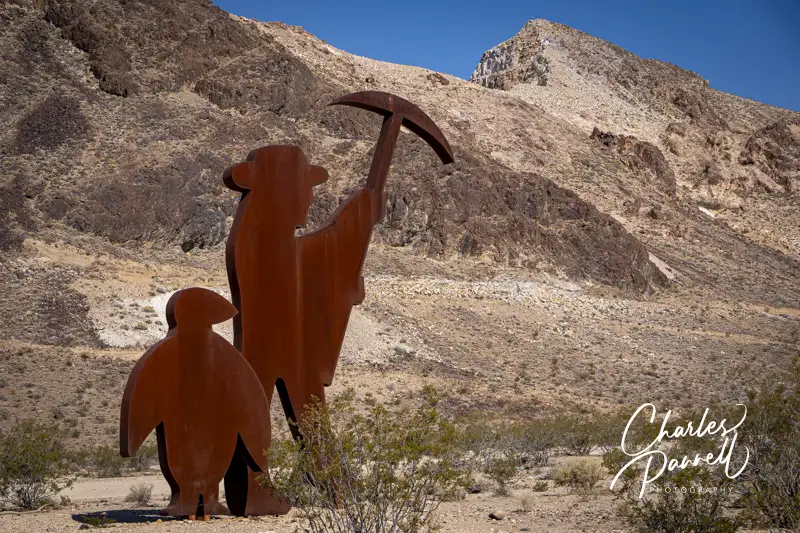
Located on the way to Rhyolite — and Tom Kelley’s Bottle House (www.emerginghorizons.com/tom-kellys-bottle-house) — this unique open-air sculpture installation is definitely worth a stop. From Beatty, head west on Highway 374 for about four miles, then turn right on Rhyolite Road. Take the first left on the road – look for a miner with a penguin – and you’ve found the museum. It’s really pretty hard to miss. There’s parking in a level dirt area, and usually there’s plenty of room for an adapted van. A small information center that’s ramped in the back is located nearby. The information center is open periodically, but even if it’s closed you can still pick up a brochure about the artwork.
The sculptures are dotted throughout the desert, with mostly level paths covered in gravel leading out and around them. That said, you can get a good look at the bulk of them from the information center, so it’s worth a stop even if you can’t negotiate the paths. The sculptures range from a ghostly interpretation of the Last Supper, to the more traditional Tribute to Shorty Harris, a legendary Rhyolite prospector. And there are even a few pieces that visitors can sit or lean on, and snap a selfie or two.
This lone sculpture sits on the side of the road just off Interstate 80 in Fernley. At one time the Bottle Cap Gazebo stood nearby, but it was permanently removed in 2024. To be fair, that piece was originally designed as a temporary structure for Burning Man in 2014; so it’s impressive that it braved the elements for as long as it did. Still the tortoise is worth a quick stop. To find it, take exit 48 off of interstate 80 and follow the signs to Fernley. Keep right on Main Street, and look for the tortoise on the right, across the street from the 76 gas station.
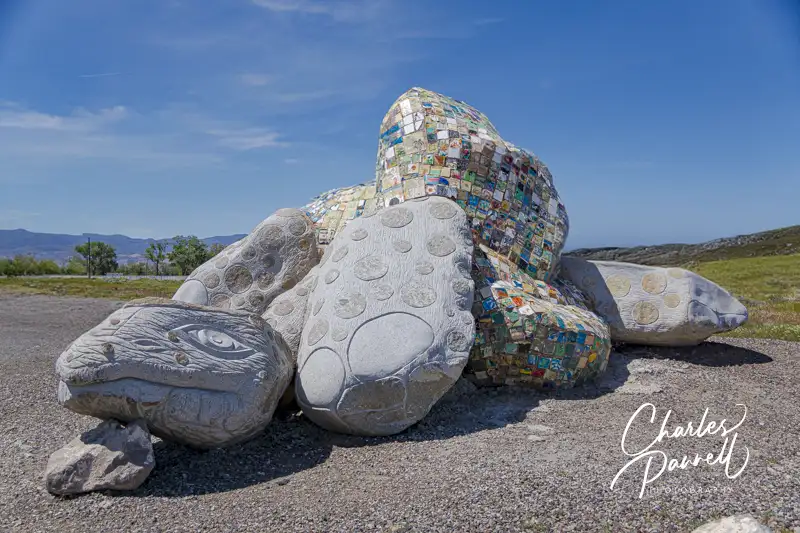
Although the parking lot is composed of gravel, there’s also an accessible parking spot on a cement pad, with a level sidewalk over the Desert Tortoise. This permanent installation was created by artist Pan Pantoja, with assistance from Fernley Elementary School’s fourth-graders.
This 25-foot long and 17-foot tall sculpture was crafted from boulders from a local quarry and decorated with hand painted ceramic tiles that reflect the culture of Fernley and the surrounding area. Although the vision and execution came from Pantoja, the fourth-graders supplied the artist with the creative tiles. There’s level access around the sculpture which weighs in at an impressive 70 tons, and there’s also a smaller slab covered with leftover tiles located next to the tortoise.
It’s a good place to stretch your legs, and a fun photo op, while tooling along Interstate 80 through the desert.