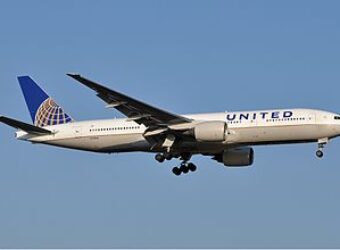
There’s been a lot of misinformation on the internet lately about the US Department of Transportation (DOT) rolling back or not enforcing wheelchair-access rules under the Air Carrier Access Act (ACAA). First and foremost, this is not true, and all protections that are in place under the ACAA will continue to be recognized by US air carriers and foreign air carriers on flights to and from the US. The misunderstanding stems from a misinterpretation of the process of updating the current ACAA.
The ACAA Update Process
The ACAA dates back to 1986, and over the years as technology and travel have evolved so have the regulations. But because they are government regulations it’s not like they can be easily updated. It’s a process. And it usually takes years.
It begins when the need for a change is recognized by the DOT. Then there are usually a series of public meetings to gather feedback on the proposed changes, and to determine the exact needs of the public. Then the proposed regulations are crafted by a committee, which usually takes years. Sometimes it takes longer, as there is a lot of input from the disabled community, airlines and other businesses.
After the proposed changes are finally agreed upon, they are published in the Federal Register. Then there is a public comment period, which can take six months or more. Then the Access Board reconvenes and considers the public comments from both consumers and the airlines. And then they may make changes if appropriate. But we’re not done yet!
The final rule is then published in the Federal Register, along with an implementation date. Depending on the complexity of the regulation that implementation date may be six months or six years in the the future.
The “Current” Proposed Changes
Which brings us to our current situation, and the most recent changes to the ACAA. They have been “in the works” for many years and they were finally released in 2024.
Most of these changes were originally scheduled to go into effect in 2025, but were subsequently delayed until December 31, 2026. The DOT recently further delayed that implementation date on four of those changes until April 30, 2027. The delayed changes are those that pertain to:
Mishandled wheelchairs
Refresher training frequency
Pre-departure notifications
Fare difference reimbursements
Additionally the DOT also extended implementation of the refreshed training frequency in the Accessible Lavatories on Single Aisle Aircraft Rule, to April 30, 2027.
But remember this delay only applies to the training. That rule will still take decades to be fully implemented.
So why did the DOT delay the implementation of the changes? Well basically some of the airlines initiated legal proceedings against the changes and that prompted the DOT to give things a closer look.
And to be honest, just about anything can happen between now and April 30, 2027, the new scheduled implementation date. The rules may go into effect as written, they may be updated, or there could be another delay. Only time will tell. After all, it is a government process.
The important thing to remember is that the current ACAA remains in full effect. Nothing has changed. These new regulations have not even been implemented yet, and only a portion of them will be delayed. And when you consider the protections that the ACAA already offers, those changes are minor.
Bottom line – slow walkers and wheelchair-users are still fully protected under the ACAA.
Know Your Rights
Of course it’s still important to know your rights under the ACAA. Here are the basics.
And remember, the DOT is NOT rolling back wheelchair access rules on airplanes, as reported by some media. It’s merely going through the routine process of updating those rules. In other words – business as usual.
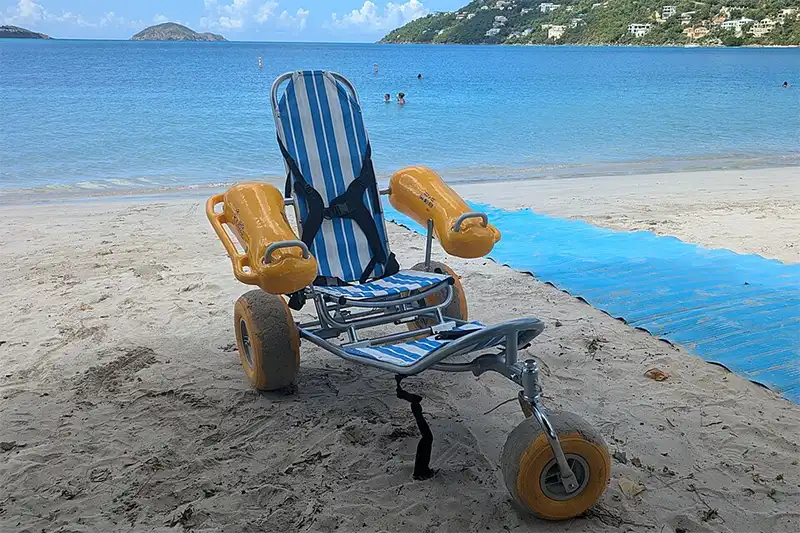
Beach Wheelchair and Beach Mat at Megans Bay, St. Thomas
Located along the northern coast of St. Thomas, about 15 minutes from Charlotte Amalie, Megans Bay is the first accessible beach in the US Virgin Islands. It’s the result of legislation to help make local beaches more accessible for disabled visitors. Megans Bay includes accessible parking, restrooms and changing rooms, as well as good pathway access to the concession area. There’s also a paved pathway from the parking area out to a beach mat, which allows wheelchair-users to roll out on the sandy beach. Additionally, a Waterwheels floating wheelchair is available for loan. This specialized wheelchair can roll over the sand and into the water, and allows wheelchair-users to safely enjoy the ocean. For more information about the wheelchair-accessible beach at Megans Bay, visit www.friendsmagens.org/focus-areas/traffic-accessibility/disability-access.
Barrier-Free Travel
101 Accessible Vacations: Travel Ideas for Wheelchair-users and Slow Walkers
Located across the country, presidential museums and libraries (https://www.archives.gov/presidential-libraries) not only contain an archive of presidential photos and documents, but they also offer exhibits about the former presidents and the eras of their presidency. In most cases they are funded by private foundations and donations; and they are located in the former presidents’ home state or in a state where they had close ties or spent the majority of their life. And the good news is, since these museums serve as visible faces of the former presidents, most of them go well beyond the letter of the law as far as wheelchair access is concerned. So check out these favorites in your future travels.
Dwight D. Eisenhower Presidential Museum
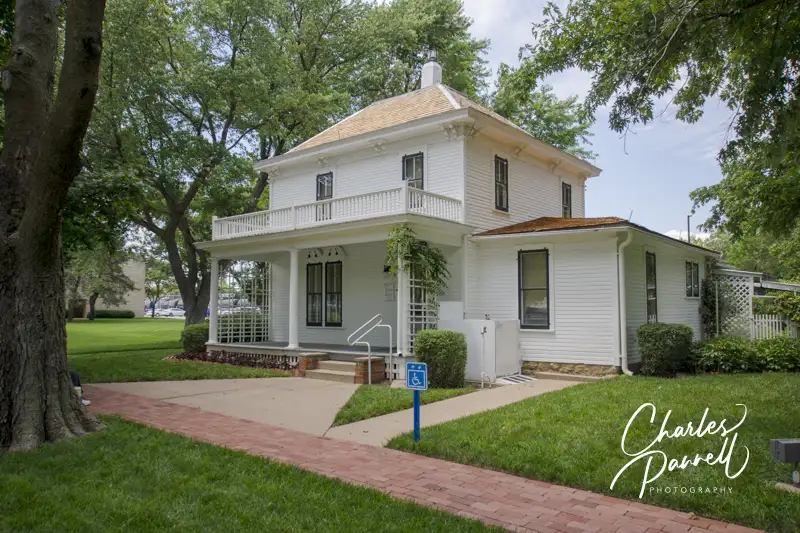
President Eisenhower’s boyhood home at the Eisenhower Presidential Library, Museum & Boyhood Home
eisenhowerlibrary.gov Located in Abilene, Kansas the Eisenhower museum complex includes a visitors center, the Place of Meditation, Ike’s boyhood home, the museum and the library. There is level access to the visitors center, where you can pick up a loaner wheelchair. Just to the left of the visitors center you’ll find Ike’s boyhood home. Although there are three steps at the front, there is also a wheelchair lift on the side. The first floor of the house is open to the public and it features original furnishings, photographs and personal items of the Eisenhower family.
The museum itself is just a short walk from the home and it features barrier-free access and a wheelchair-lift at the front entrance. It’s really a must-see for anyone interested in World War II history, as the excellent Military Gallery features documents, photographs and artifacts from the war. It also includes a gallery devoted to Mamie Eisenhower, and one that presents a comprehensive overview of President Eisenhower’s life and achievements.
Last but not least, save some time to visit the Place of Meditation, where President Eisenhower was buried on April 2, 1969. There is level access to the chapel and good pathway access inside. The stained glass windows, which were designed by Odell Prather, are particularly striking.
The LBJ Library
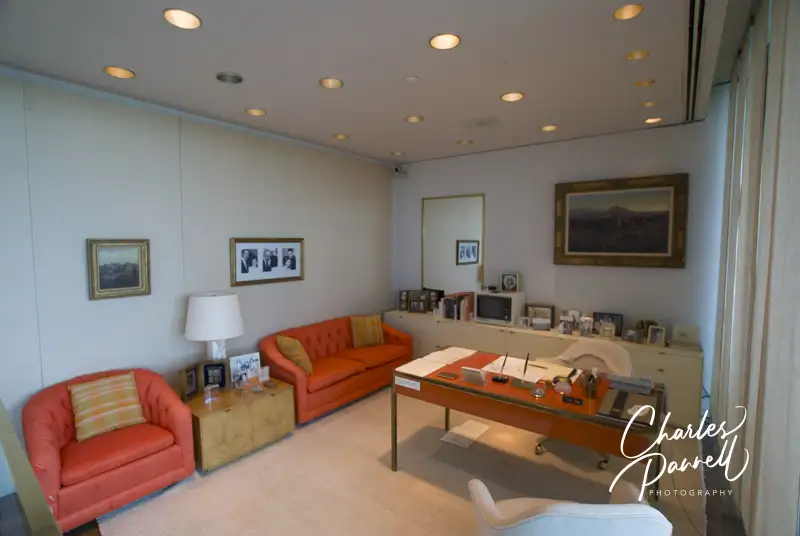
Replica of Lady Bird’s office at the LBJ Presidential Library
lbjlibrary.org This presidential museum is located on the campus of the University of Texas at Austin. Free accessible parking is available in lot 38, which is just a short walk from the museum entrance. Access is excellent throughout the museum too, with elevator access to all floors, accessible restrooms, loaner wheelchairs and plenty of space to wheel around the galleries.
As with all presidential museums, a good chunk of the exhibits chronicle the lives of the first family. And along the way you’ll learn some interesting tidbits. For example, Lady Bird got her nickname from a nurse who declared that she was “as pretty as a lady bird”. Add in a reproduction of the Oval Office, as well as Lady Bird’s office, and the official presidential limousine and you have a well-rounded representation of presidential life.
Like the other presidential museums this one also focuses on the events of the times — in this case the 1960s and the 1970s — so if you happened to grow up in those decades it will be especially interesting to you.
Richard Nixon Presidential Library and Museum
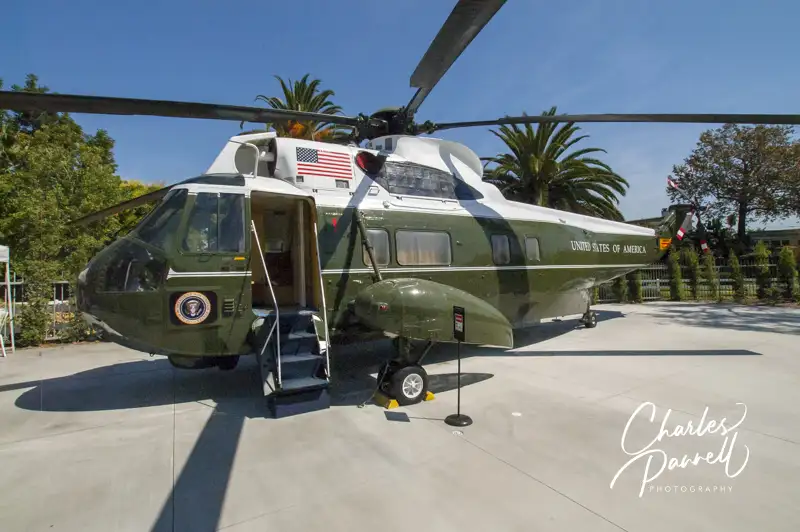
Sikorsky VH-3A “Sea King” helicopter Richard Nixon used for his final departure from the White House after resigning in 1974 at the Richard Nixon Presidential Library and Museum
nixonlibrary.gov Although the Richard M. Nixon Presidential Library and Museum tends to focus more on Mr. Nixon’s long political career, this Yorba Linda museum also includes some small exhibits on Watergate, the Middle East and Nixon’s farewell speech. The Vietnam Gallery also offers some interesting insights on the conflict, as well as an exhibit of items collected by the POWs. Outside, there’s the Richard Nixon birthplace and the presidential helicopter, which was used by presidents Kennedy, Johnson, Nixon and Ford.
Access is good throughout the museum with plenty of accessible parking, ramped access to the front entrance and barrier-free access throughout all the galleries. There is an accessible path from the museum to the birthplace, and a ramped entrance at the back door of the birthplace. There are several steps up to the helicopter; however there is a wide level space around it, with plenty of room to navigate a wheelchair. And it’s an excellent photo op.
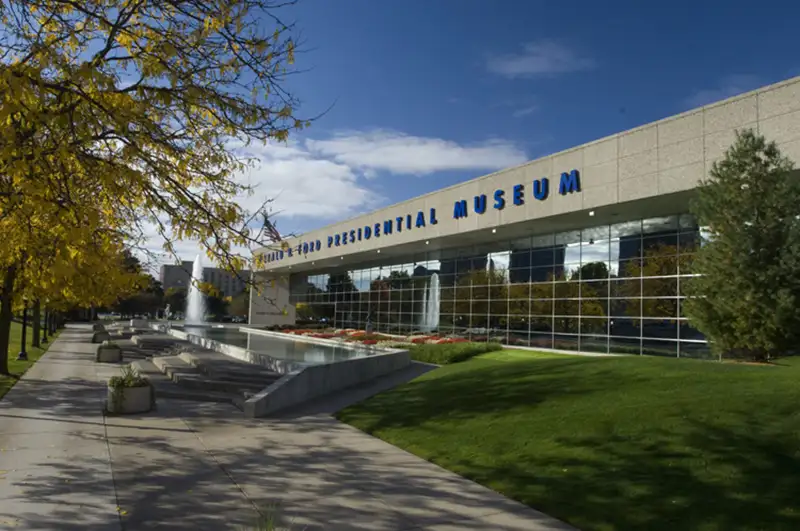
Gerald R. Ford Presidential Museum
Gerald R. Ford Presidential Library and Museum
fordlibrarymuseum.gov Located in Grand Rapids, Michigan, this presidential museum gives visitors a good dose of 1970s history. No matter what your political party affiliation, if you lived through the Watergate years, you’ll love this museum. That’s because the former president wanted the museum to be more about history and less about him.
There is level access to the front entrance of the museum, elevator access to all floors and ample room to wheel around in all of the galleries. Part of the museum focuses on the 38th President’s career, family and military life; however the bulk of it is dedicated to events that occurred just prior to and during his presidency, or those that were influenced by his presidency. Must-sees include the tools used in the Watergate break in and a fascinating exhibit about the Nixon pardon.
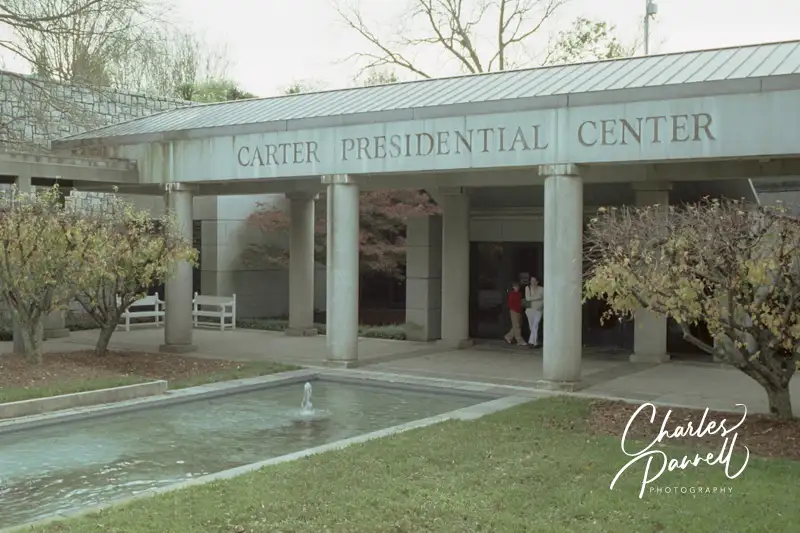
Jimmy Carter Library and Museum
Jimmy Carter Presidential Library and Museum
jimmycarterlibrary.gov The Jimmy Carter Library and Museum is located about five minutes from downtown Atlanta, on a 35-acre wooded parcel dotted with ponds. Highlights of this museum include a replica of the Oval Office, photographs and memorabilia from the Carter Presidency, and an interesting Camp David exhibit. And of course, don’t miss the gallery filled with Head of State gifts.
Accessible parking is located near the museum, with ramp access to the entrance. Inside there’s plenty of room to wheel around the spacious galleries, with ramp access to some exhibits. Outside, paved pathways lead around the spacious grounds, with wheelchair access to most areas.
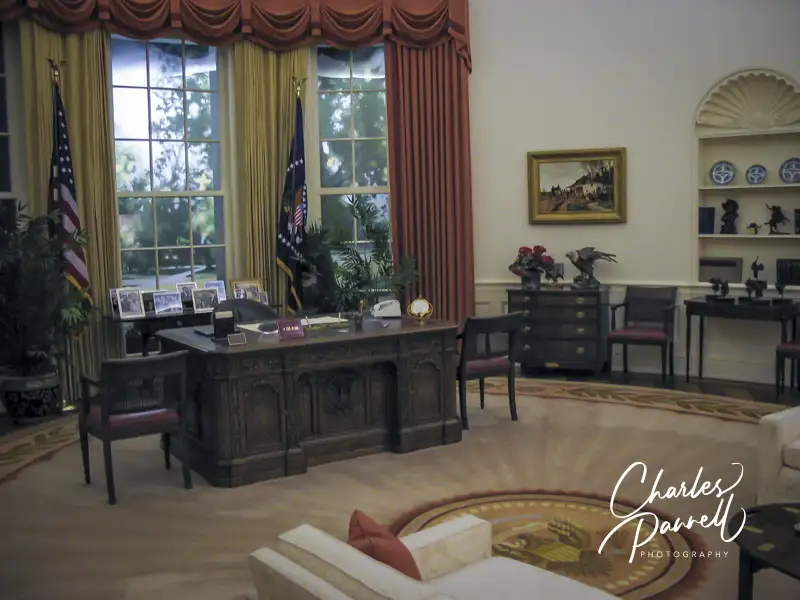
Ronald Regan Library & Museum
Replica of the Oval Office at the Ronald Regan Presidential Foundation & Institute
reaganlibrary.com Located in Simi Valley, California, the Ronald Regan Library & Museum features hundreds of artifacts that chronicle the former-president’s life, career and political accomplishments. There’s a drop-off area for wheelchair-users and slow walkers in front of the museum, with barrier-free access to the entrance and good pathway access inside. A loaner wheelchair is also available at the front desk.
The museum features 125,000 square-feet of gallery space that highlights Regan’s family life, movie career and life in the White House. It also includes a replica of the Oval Office and a section of the Berlin Wall. As an added bonus, many of the exhibits are interactive, so visitors can act in a movie with Ronald Regan or set a table for a White House dinner.
One of the highlights of the museum is Air Force One. There is elevator access down to the tarmac in the Air Force One Pavilion, where you can walk and roll around the plane. Although stairs lead up to the plane, there is also a lift available. That said the airplane aisle is only 28-inches wide, so it may be too narrow for some wheelchair-users. Still it’s fun to great a peek inside.
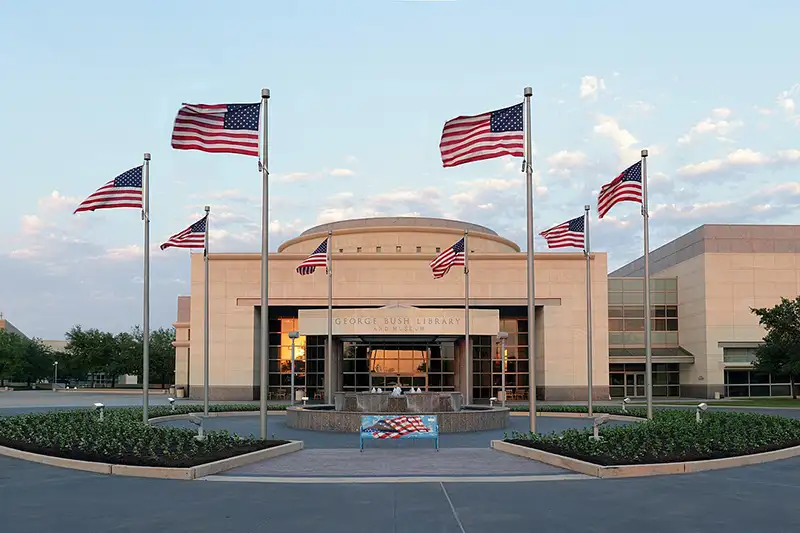
George H.W. Bush Presidential Library and Museum
George H.W. Bush Presidential Library and Museum
bush41.org Located about 100 miles east of Austin, College Station is the site of the George H. W. Bush Presidential Library and Museum. More specifically, the museum is located on the Texas A&M University Campus.
There’s plenty of accessible parking near the museum, with level access through the plaza to the front lobby. Wheelchairs are available for loan at the front desk, and there’s elevator access to all floors, with barrier-free pathways though the galleries.
Exhibits focus on the life of the former president, and include some reflections of Mr. Bush’s time in the Navy. As one of the Navy’s youngest pilots, he was shot down in the Pacific, and his rescue was recorded on a hand-held movie camera. Today that film clip is on display in the museum. Other exhibits focus on Mr. Bush’s presidential campaigns, his oil business and his stint as a United Nations Ambassador.
Several exhibits focus on events that had an impact on the Bush presidency, with video screens playing back snippets of history. Then there’s the replica of the Oval Office, the collection of state gifts and even the president’s reaction to Watergate. And of course there is a gallery dedicated to the First Lady, as well as one which focuses on the life of President and Mrs. Bush after leaving the White House.
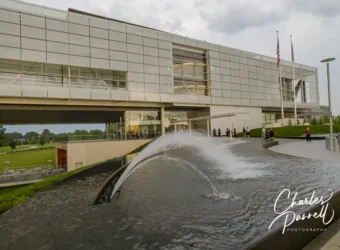
Clinton Presidential Center
Clinton Presidential Center
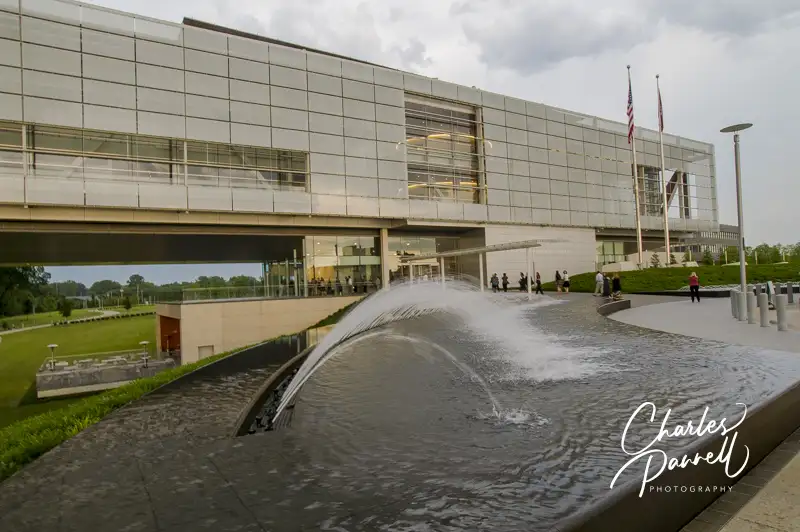
clintonfoundation.org/clinton-presidential-center Last but certainly not least in our roundup of presidential museums is the Clinton Presidential Center, located in the River Market District in Little Rock, Arkansas. The 20,000 square-foot exhibit space features excellent access to all galleries, sleek wood floors and level access to the front entrance. And if you don’t think you can manage this massive space on foot, loaner wheelchairs are available.
The exhibits chronicle the Clinton presidency, and include a replica of the Oval Office (complete with a moon rock), items from Bill’s childhood, and even a collection of Saturday Night Live clips featuring Clinton impersonations. There’s also a wing that features the splendor of the White House during the holidays and shows how the Clinton’s gave the presidential residence special touches to really make it their home.
All in all the Clinton Presidential Center houses one of the best presidential collections, and it’s definitely worth a visit. Plan to spend the whole day there though, as there’s definitely a lot to see.
Barrier-Free Travel 22 Accessible Road Trips Driving Vacations for Wheelers and Slow Walkers
Road trips are an excellent vacation choice for wheelchair-users and slow walkers. Not only can you take things at your own pace on a road trip, but you can also map out a custom itinerary that includes accessible attractions, rest stops and lodging choices. Plus you can pack along all of your equipment, and you don’t have to worry about wheelchair damage by airline baggage handlers.
Additionally, a wheelchair-accessible road trip is are a great way to explore small towns that are often overlooked on large group tours. And although some small towns may lack accessible facilities, that’s not the case across the board. With that in mind, here are 36 towns across America that have wheelchair accessible lodgings, attractions and even trails. Some are along less traveled byways, some are near national parks, and some are located on popular road trip routes; however they’re all worthy of consideration on your next road trip adventure. So add them to your itinerary on your next wheelchair-accessible road trip.
National park lodges are more than just places to rest your head. Not only are they part of the essential infrastructure of our national parks, but they’re also filled with history . In fact, more than a few national park lodges are listed on the National Register of Historic Places. And the good news is, the bulk of these historic properties have added access upgrades over the years, so wheelchair-users and slow walkers can also enjoy them. Thinking about staying in a national park lodge on your next road trip? Here are a few more benefits of staying “in park”.
Beat the Crowds
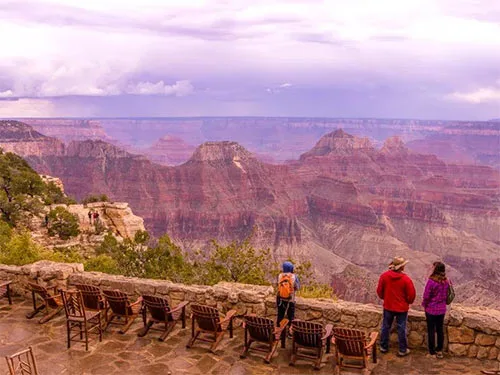
The best way to beat the crowds at national parks is to arrive early in the morning, and that’s much easier to do if you stay overnight in the park. The crowds drastically increase after 10 AM, when a lot of tour buses also appear. For example in Grand Canyon National Park, it’s almost impossible to enjoy Hermit Road during peak season in the afternoons. The shuttle buses are full and private vehicles are not permitted along the route. If however you get an early start, you’ll have a much more pleasant experience. Even better, it’s just a short walk to a shuttle bus stop from any of the park lodges, and five of the lodges have wheelchair-accessible rooms.
Nature Surrounds You
There’s just no comparison between staying at a chain hotel in a gateway city and bedding down in a national park lodge surrounded by nature. How can you beat opening your drapes to a view of Half Dome, or enjoying the red rock beauty of Zion Canyon from your front porch?
And Then There’s the Wildlife!
No place is off limits to the native wildlife in national parks. For example, at Mammoth Hot Springs Hotel in Yellowstone National Park, it’s not unusual to see the resident elk graze outside the accessible cabins. It’s an especially impressive sight during the rut, when the large bulls heard their harems. And you’ll never forget the bugling cry of the bulls.
First Dibs on Dinner Reservations
The more popular restaurants in some national parks require dinner reservations, and first dibs on those go to lodge guests. For example in Yellowstone, reservations at the Old Faithful Inn, Grant Village and the Lake Yellowstone Hotel are available 60 days in advance to lodge guests; while folks staying elsewhere can only make same day reservations.
Location, Location, Location
Let’s face it, some national parks are just too far from the city to make a daily commute, so staying at an in-park lodge is the only option. Take Isle Royale National Park for example. It’s located on an island in the middle of Lake Superior, and since it’s a four-hour ferry ride from the mainland, staying overnight just makes sense. Fortunately Rock Harbor Lodge has a comfortable wheelchair-accessible room.
Competitive Pricing
Last but certainly not least, most of the popular national parks have rooms in all price ranges, and some national park concessionaires even have programs in place that offer competitively priced rooms. For example, Curry Village in Yosemite National Park offers affordable family accommodations, while the luxurious Ahwahnee offers high end rooms with prices to match. And over in Yellowstone National Park, the Xanterra Travel Collection prices a good chunk of their in-park rooms at rates comparable to those found in the surrounding gateway communities. So yes, you can book a national park lodge at gateway community prices, but you do have to book early to take advantage of these great bargains.
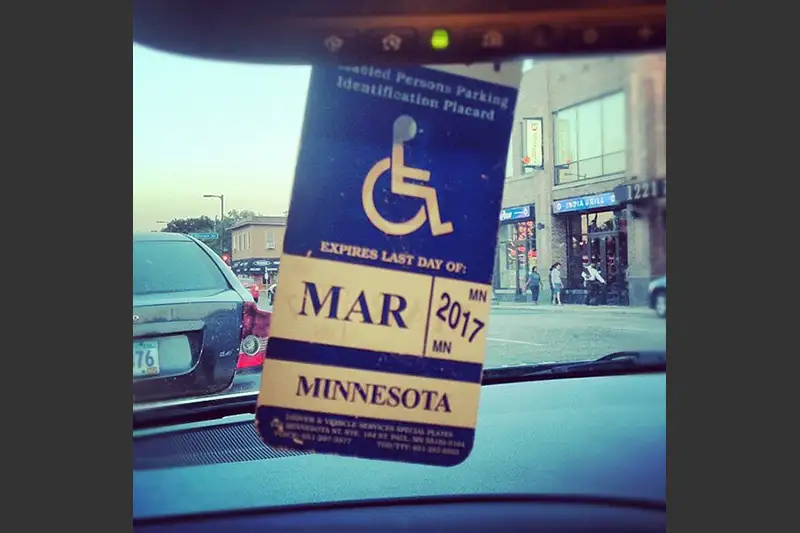
I have a accessible parking placard that was issued to me in CA, and I’d like to take a few road trips out of state. First I’d like to hit the road and travel across the US and visit some national parks along the way. After I have the hang of a road trip, I’d like to fly to Europe, rent a car and explore Germany, Austria and Switzerland. My one big question is, can I use my parking placard in other US states as well as in Europe, or do I need to get other permits? Also can you tell me where I can find out about accessible parking regulations in Europe?
Using an Accessible Parking Placard in the US
For the most part, a parking placard issued in any US state is good in all 50 states. The one big exception to this rule is New York City. Although out-of-state placards are good in New York state, you cannot use them to park on the street in New York City. You can however use out-of-state placards in accessible spaces in off-street lots in New York City.
In order to park on the street in New York City, you need a New York City Parking Permit for People with Disabilities (NYC PPPD). This permit allows people with a severe permanent disability to park at most curbside locations in New York City. It is available to both city residents and non-city residents who have a severe disability that affects their ability to walk. This permit is generally for people who are unable use public transportation, and require the use of a private vehicle.
In order to obtain a NYC PPPD your disability must be certified by your personal physician, as well as a New York City physician designated by the Department of Health and Mental Hygiene Medical Certification Unit. For more information about the NYC PPPD, visit nyc.gov/html/dot/html/motorist/pppdinfo.shtml.
Your parking placard is also valid in Europe, so definitely take it with you. In 1997 the European Conference of Ministers of Transport (ECMT) passed Resolution No. 97/4, on Reciprocal Recognition of Parking Badges for Persons with Mobility Handicaps. As of Jan. 1, 1999, travelers from associate countries, including the USA and Canada, are also included in this resolution.
The resolution requires permit holders to “display a document that shows the international symbol for persons with disabilities, as well as the name of the holder of the document,” in order to receive reciprocal parking privileges in ECMT countries. And most European countries honor this reciprocal agreement.
Bear in mind that accessible parking regulations vary from country to country, so it’s best to review them before you travel.
Have a great trip!
Barrier-Free Travel Yosemite, Sequoia and Kings Canyon National Parks for Wheelers and Slow Walkers