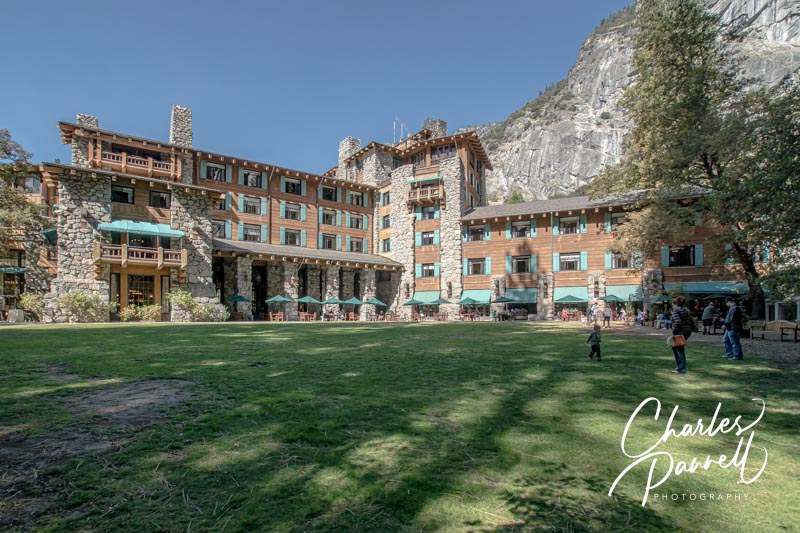
Located in Yosemite National Park, The Ahwahnee is the most luxurious property in the park. The site of fairy tale weddings and grand holiday celebrations, this historic structure boasts a subtle mix of Art Deco, Native American and Middle Eastern architectural styles. Not only is it a cornerstone in Yosemite history, but according to many accounts it’s also haunted. The good news is, in spite of its ghostly residents, numerous renovations have made to this historic property over the years; and today it’s an excellent choice for wheelchair-users and slow walkers.
An Accessible Suite to Remember
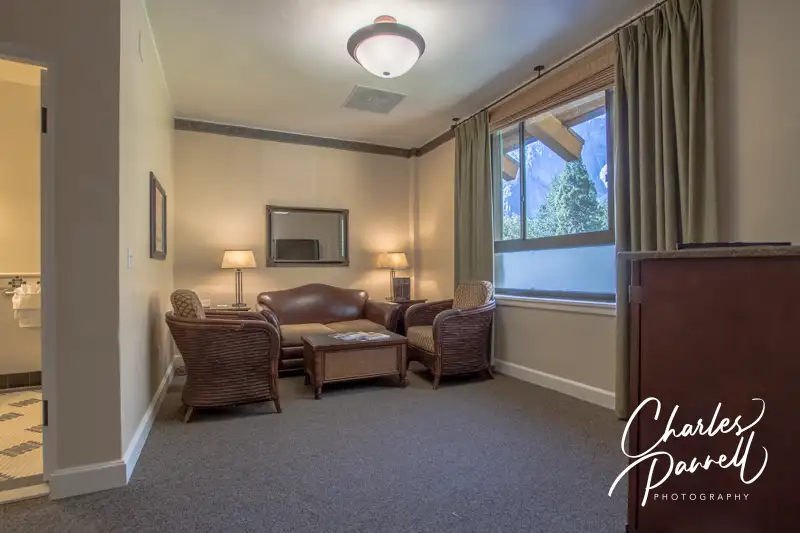
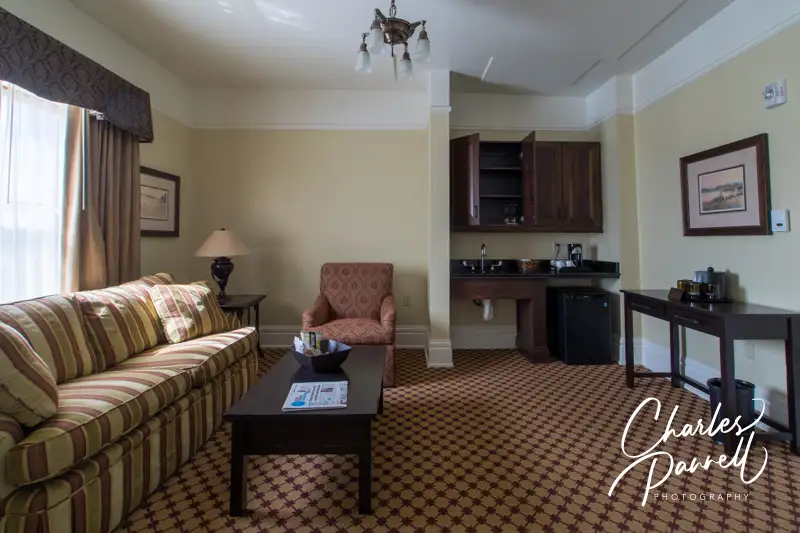
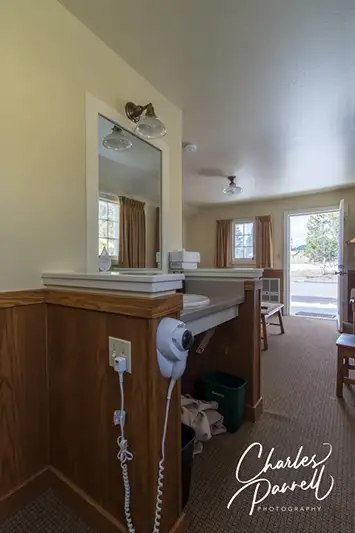
Sitting Room in Suite 206 at the Ahwahnee Hotel
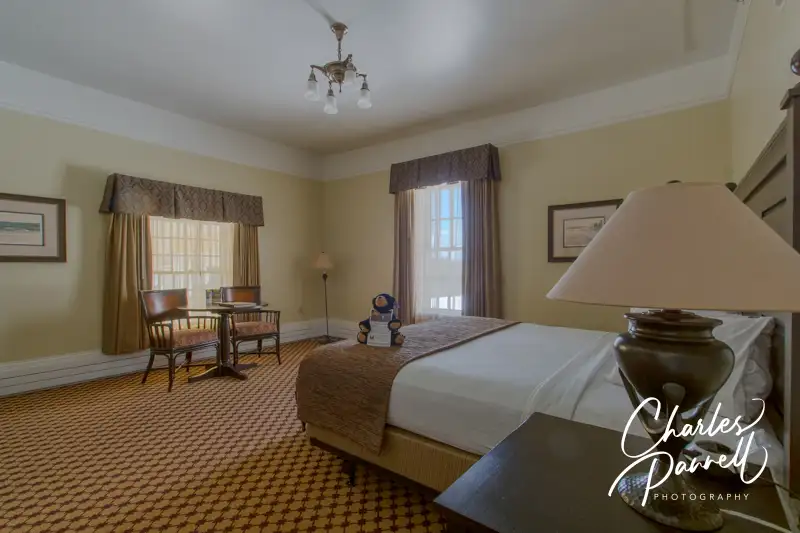
Although the Ahwahnee boasts a nice variety of accessible rooms, the accessible junior suite — room 206 — is the perfect choice for any national park getaway. Access features include wide doorways, barrier-free pathways, and plenty of room in this spacious suite which occupies the space of two standard hotel rooms.
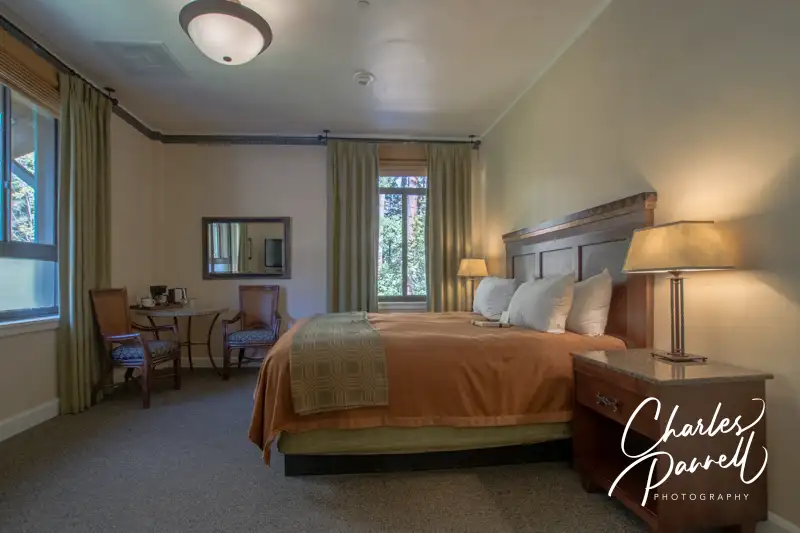
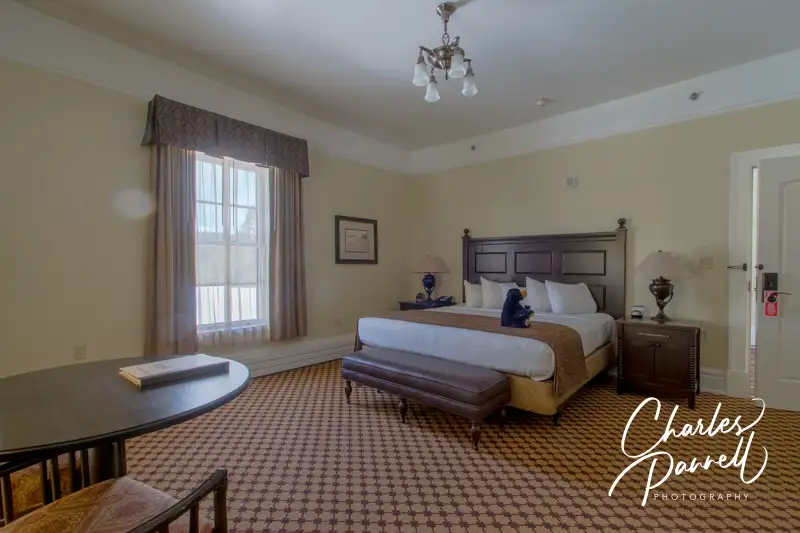
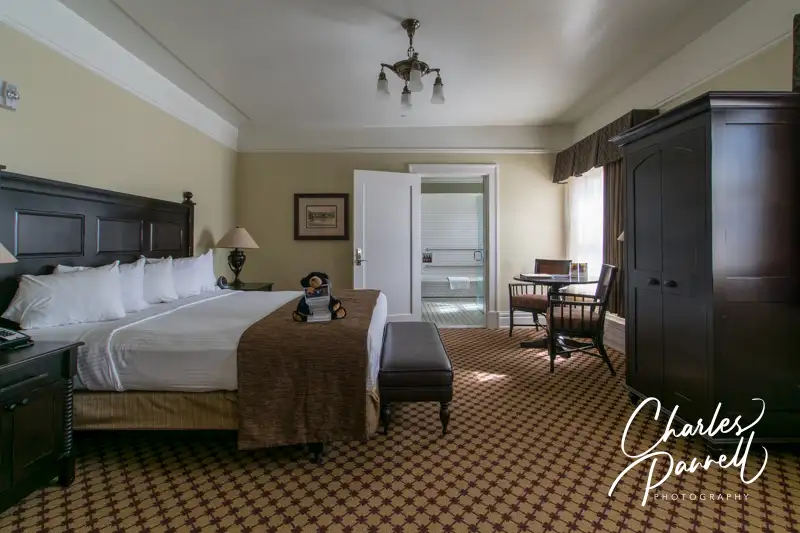
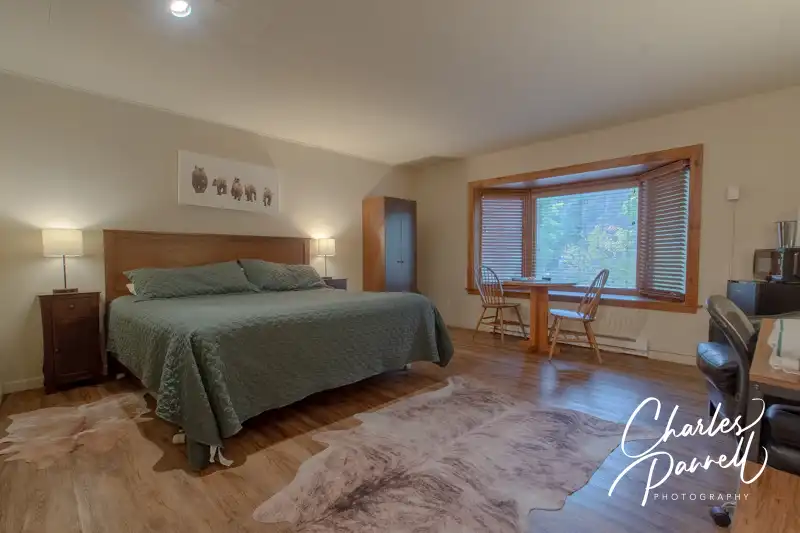
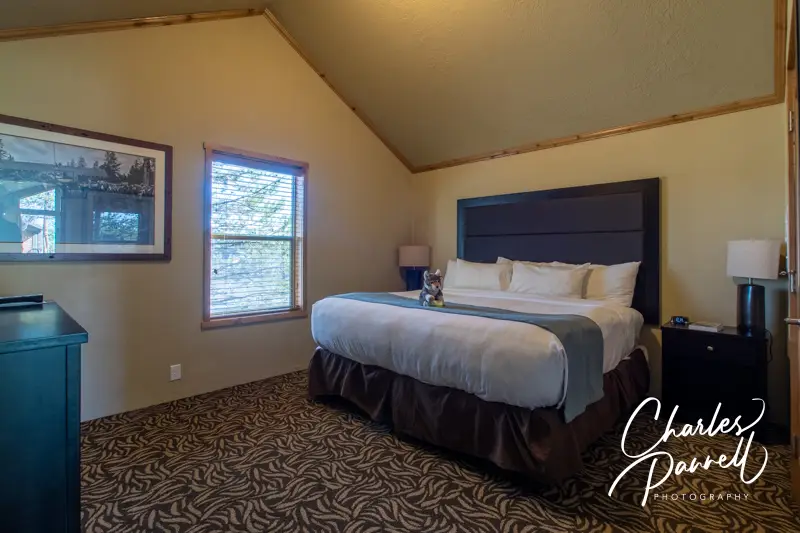
The sitting room has a 12-inch high single sofa bed, two end tables, a coffee table, two side chairs, an armoire and a mini refrigerator. There’s level access to the adjacent bedroom, which features equally good access, and is furnished with a 30-inch high king-sized bed with wheelchair-access on both sides, two bedside tables, a small table with two chairs, an armoire and a mini refrigerator.
Bedroom in Suite 206 at the Ahwahnee Hotel
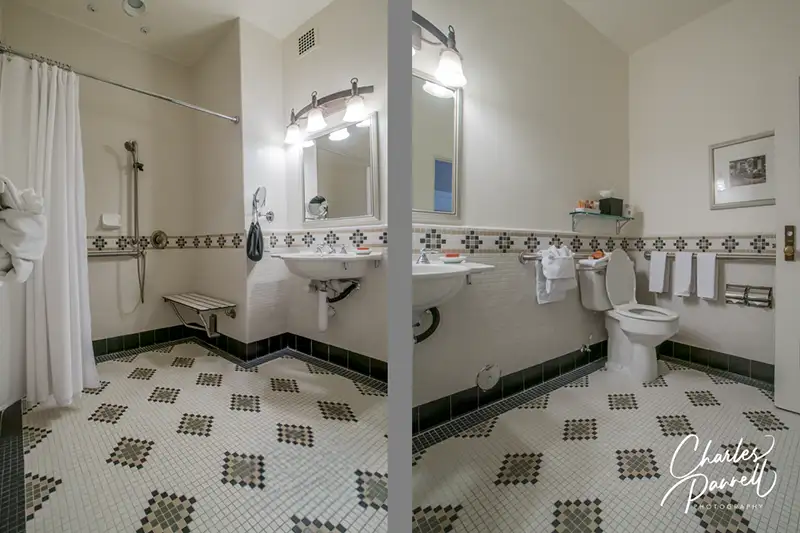
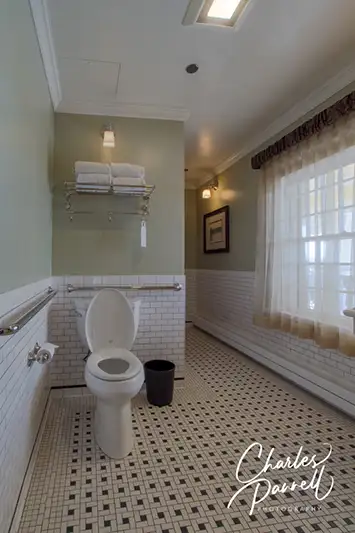
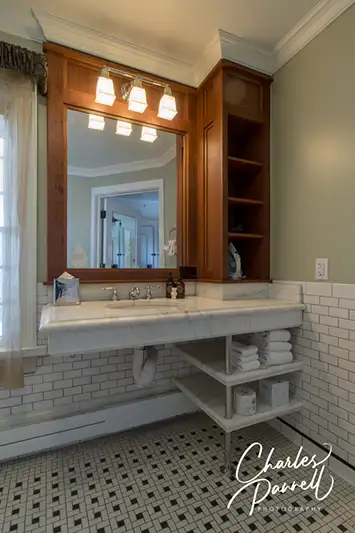
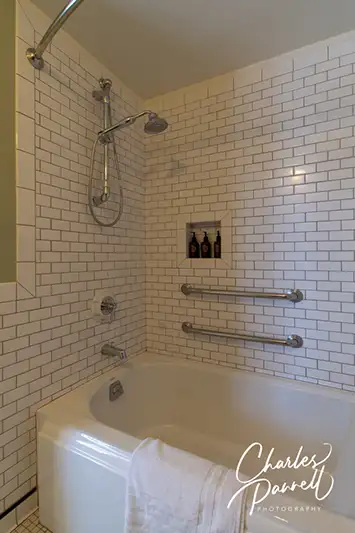
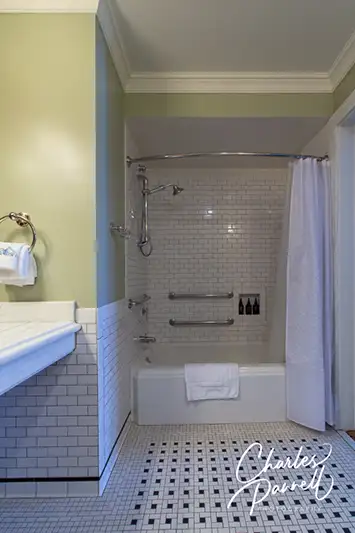
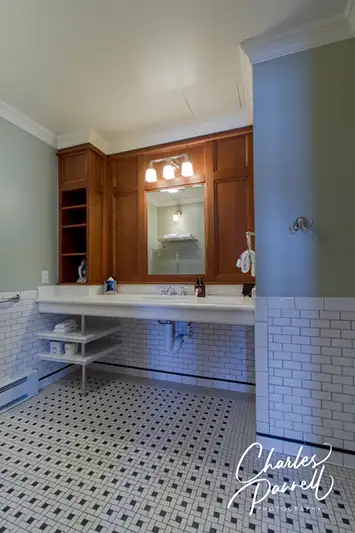
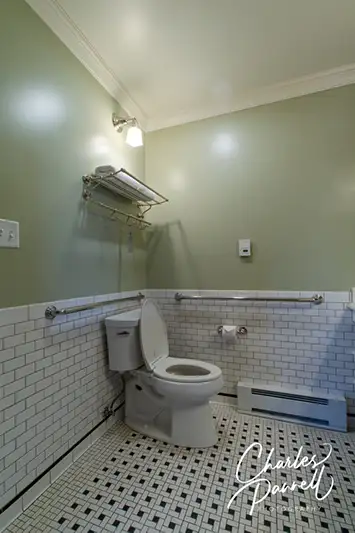
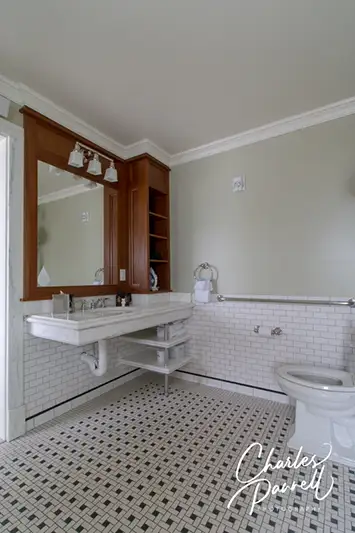
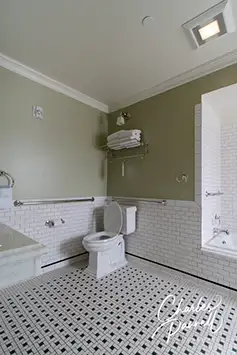
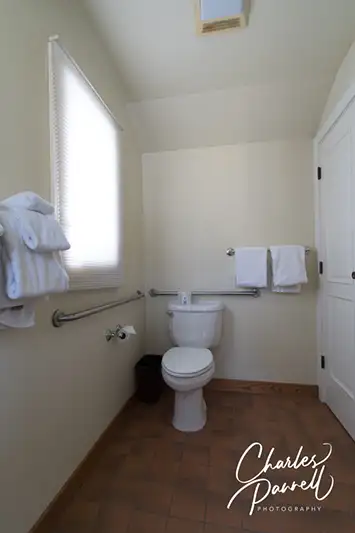
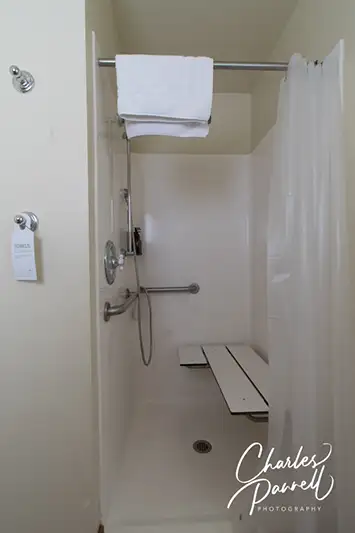
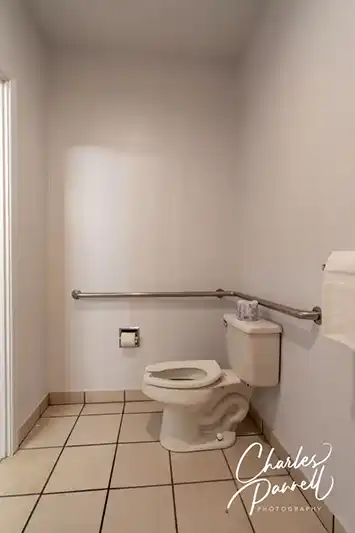
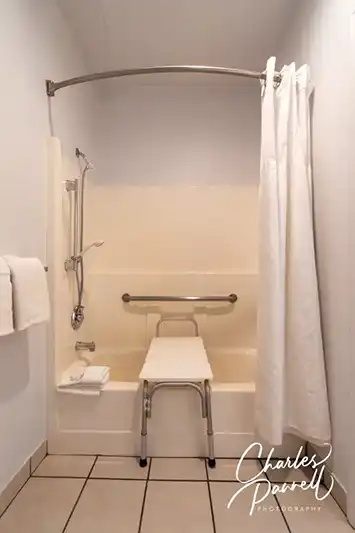
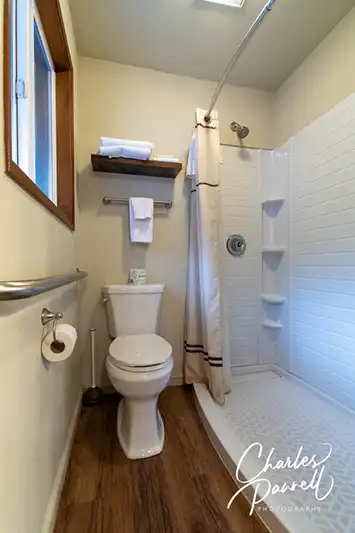
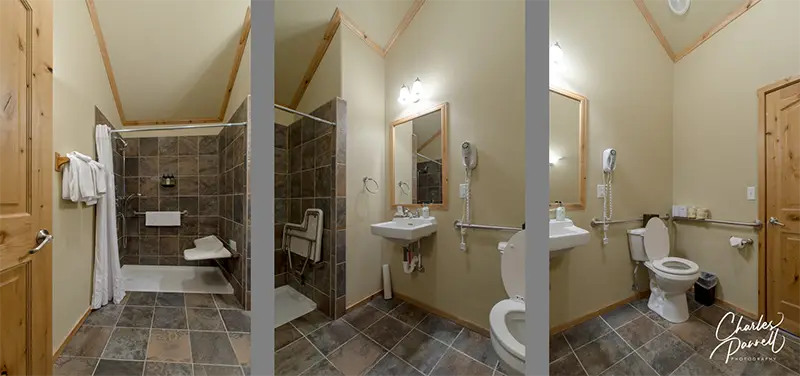
The bathroom has a full five-foot turning radius, and is equipped with a roll-in shower with grab bars, a hand-held showerhead and a fold-down shower bench. The toilet grab bars are located on the left and back walls (as seated), and the bathroom also has a roll-under sink.
Bathroom in Suite 206 at the Ahwahnee Hotel
Top it off with a lowered peephole, lever handles and a lowered clothing rod, and you have a very well designed and functional accessible room. It’s really one of the nicest accessible rooms on the property.
A Little Haunted?
The public areas of the hotel are equally accessible. As you stroll through the lobby and adjacent rooms you can’t help but notice the towering ceilings, stained glass windows and the massive fireplace in this historic property. And while we’re talking historic, lets also talk haunted.
The spirit of Mary Curry Tresidder, who once operated the hotel, is said to frequent the sixth floor. Many guests have reported feeling her presence there, and a few folks have even witnessed her dancing in the common areas. And then there’s the spirit of Mary’s husband Donald Tressider, whose footsteps are sometimes heard on the stairway. Some guests have also reported seeing figures of soldiers in the hallways; a throwback to the time when the hotel served as a convalescent hospital during World War II.
And then there’s the mysterious JFK “haunting”. The former U.S. president stayed at the hotel in 1962. He reportedly requested a rocking chair for his suite during his visit. The chair was subsequently removed after the president departed; however it’s been known to magically reappear in the suite from time to time. Ghostly shenanigans or spring cleaning furniture rearrangement? You be the judge. In the end, even if the hotel isn’t really haunted, it’s a popular stop for diehard horror movie fans, as the property served as the inspiration for the grand interior shots of the fictional Overlook Hotel in The Shining. Haunted or not, The Ahwahnee makes a great wheelchair-accessible home base for any Yosemite visit.
Barrier-Free Travel Yosemite, Sequoia and Kings Canyon National Parks for Wheelchair-users and Slow Walkers
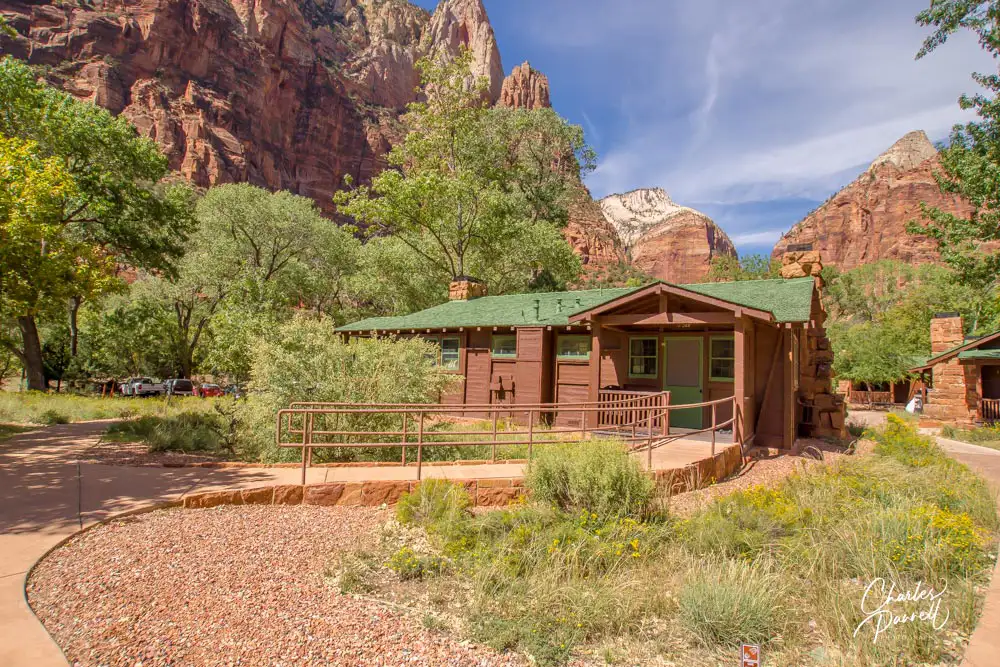
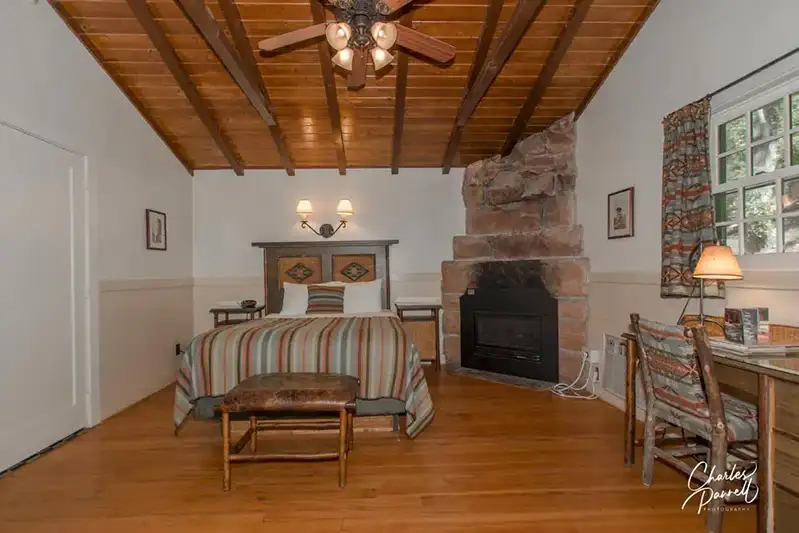
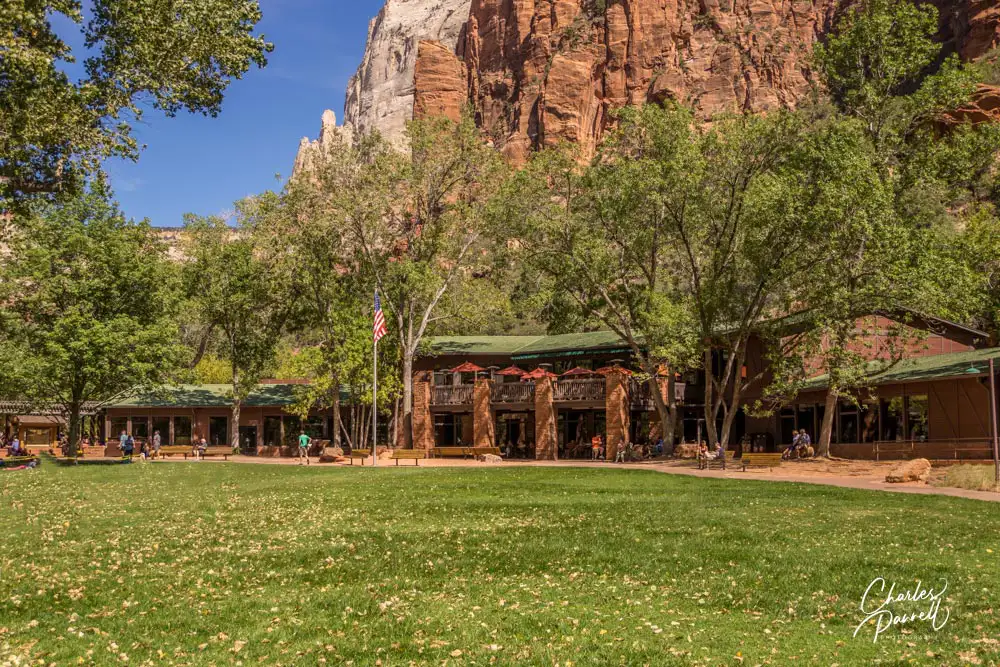
As the only in-park lodging option, Zion Lodge (www.zionlodge.com/) is a popular choice for visitors to Zion National Park. This historic property was originally constructed in the 1920s, but it was destroyed by a fire in 1966. Although it was quickly rebuilt, the new design lacked the historic appeal that visitors had come to appreciate, so it was rebuilt once again to resemble the original structure. And not only does the property offer a nicely accessible — and secluded — cabin; but you just can’t beat the location as it’s literally surrounded by Zion Canyon.
Wheelchair-Accessible Cabin at Zion Lodge
Interestingly enough the cabin section of the fire survived the 1966 fire, so you’ll be staying in a piece of Zion history. That said, accessible cabin 529 is a modern wheelchair-accessible Zion Lodge cabin.
Although personal vehicles are prohibited on Zion Canyon Scenic Drive, confirmed Zion Lodge guests receive a permit to drive to the hotel and an access code to park there. From the accessible parking space, there’s level access to the main lodge, and barrier-free access to the front desk, bookstore and accessible restrooms.
Cabin 529 is located a short walk away from the main lodge, but that’s a good thing, as it’s nicely isolated from the hustle and bustle of the main lodge. Accessible parking is available directly in front of the cabin, with ramp access up to the front porch. Access features include wide doorways, a level threshold and good pathway access. The rustic cabin is furnished with a 27-inch high queen-sized bed with wheelchair access on both sides, a desk with a chair, and two side chairs. And just to set the ambiance, the original coal-powered fireplace has been converted to propane.
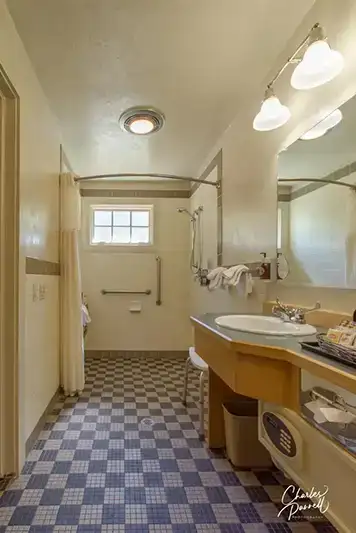
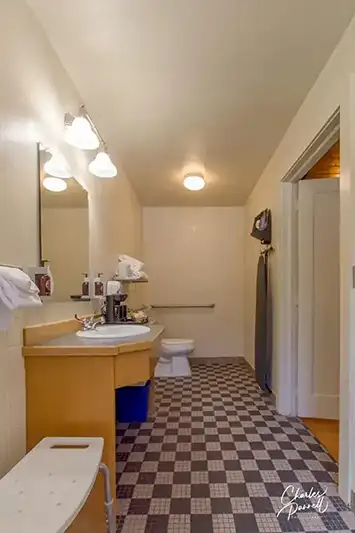
The bathroom is equipped with a roll-in shower with a fold-down shower bench, grab bars and a hand-held showerhead. The toilet grab bars are located on the back and left walls (as seated), and the bathroom also includes a roll-under sink and a portable shower bench. Best of all, there’s no television in the cabin, so you can just sit back and enjoy the sounds of Mother Nature.
Additionally, the cabin is located at the far end of the parking lot, so it doesn’t face any other cabins. It’s the perfect spot to sit back and enjoy the splendor of Zion Canyon from your own front porch.
Bedroom in Cabin 529
Shower in Cabin 529
Toilet in Cabin 529
Zion Lodge Perks
Zion Lodge
Of course a comfortable wheelchair-accessible Zion Lodge cabin with a great view is only one of the perks of staying in the park. First of all, Zion Lodge is home to the two in-park restaurants. The Red Rock Grill is just a short elevator ride away from the main lobby and the front desk. Open year-round for breakfast, lunch and dinner; the menu features a combination of American classics and Southwest favorites.
The more casual Castle Dome Café, which is closed during the winter months, is located to the left of the gift shop, just off the main lobby. There’s level access to the snack bar, which offers coffee and pastries in the morning, and burgers, hot dogs, fries and other snack items throughout the rest of the day. Accessible seating is available in the adjacent patio. And if you’d like an adult beverage, there’s level access to the outdoor Beer Garden, which is located next to the café.
Another perk of staying at Zion Lodge is the scenery. Not only can you enjoy Zion Canyon from your own cabin, but it’s not unusual to spot wild turkeys and deer on the front lawn of the main lodge. Get up early and stake out a place on the patio, and enjoy a little wildlife viewing with your morning coffee.
And finally, it’s easy find and book the accessible cabin. Just go to the website, pick a date, and select your room to book it online. It’s that easy — no phone calls or special requests are required.
Barrier-Free Travel Utah National Parks for Wheelchair-users and Slow Walkers
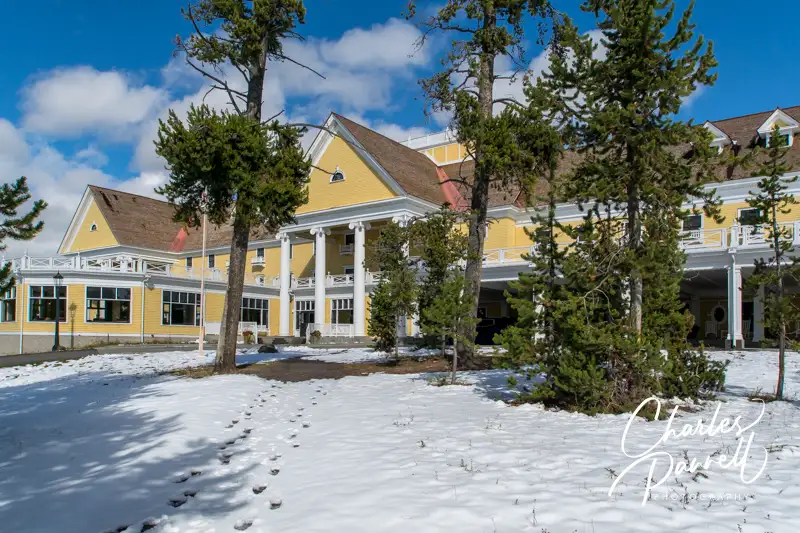
Located on the scenic lakeshore, the Lake Yellowstone Hotel (www.yellowstonenationalparklodges.com) is the oldest property in Yellowstone National Park. That said, old doesn’t necessarily equate with shabby, as this 1891 gem has undergone massive renovations over the years. The result is not only a comfortable, modern and luxurious place to rest your head, but also a property that boasts excellent wheelchair access. Top off your stay with a meal in the luxurious Lake Hotel Dining Room and you have all the ingredients for the perfect wheelchair-accessible Lake Yellowstone stay.
A Variety of Wheelchair-Accessible Rooms
The good news is that variety is the key word at the Lake Yellowstone Hotel. Not only does this property offer good wheelchair access in the public areas, but it also has a variety of accessible rooms – 18 to be exact, including seven which have roll-in showers.
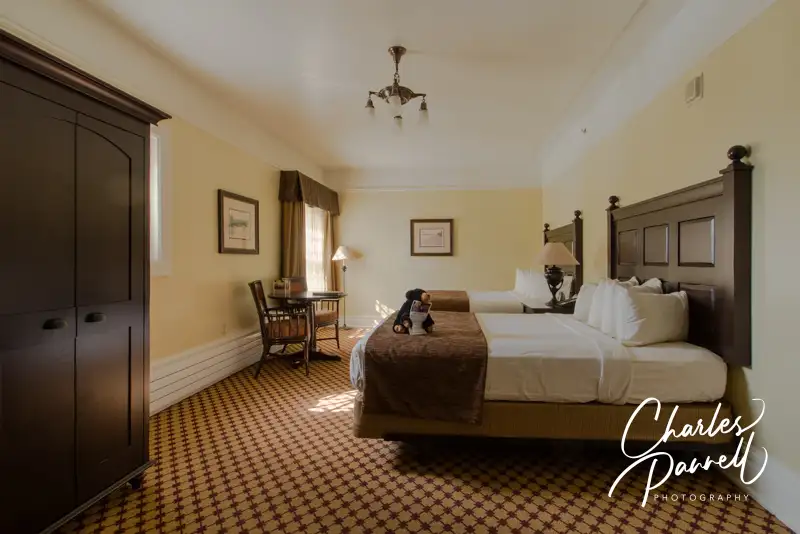
Room 226 has two queen-sized beds and is equipped with a bathroom with a tub/shower combination, grab bars, a hand-held showerhead and a portable shower chair. If you’d prefer a shower instead of a tub, then room 126 is just your cup of tea. It offers the same bed configuration as room 226, except the bathroom includes a roll-in shower.
Bedroom in Room 226
Toilet in Room 226
Vanity in Room 226
Shower in Room 226
Room 202, on the other hand, is a spacious corner accessible room. It’s furnished with a king-sized bed with wheelchair access on both sides, two chairs, an armoire and two bedside tables. The bathroom, which features a full five-foot turning radius, is equipped with a tub/shower combination with grab bars, a hand-held showerhead and a portable shower bench. Other bathroom access features include toilet grab bars on the back and left walls (as seated), and a roll-under sink.
Room 202 (view 1)
Room 202 (view 2)
Shower in Room 202
Vanity in Room 202
Toilet in Room 202
And if you’d like even more room, then check out room 446 – an accessible suite. The living area is furnished with a sleeper sofa, and it also includes a wet bar with a refrigerator. The separate bedroom includes a king-sized bed, and the spacious bathroom boasts a roll-in shower.
Living Area in Suite 446
Bedroom in Suite 446
Vanity in Suite 446
Toilet in room 446
Bathtub in Suite 446
Shower in Suite 446
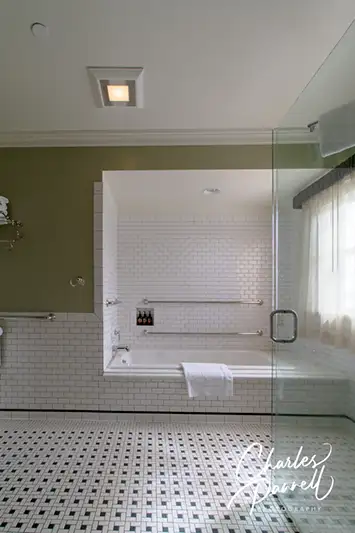
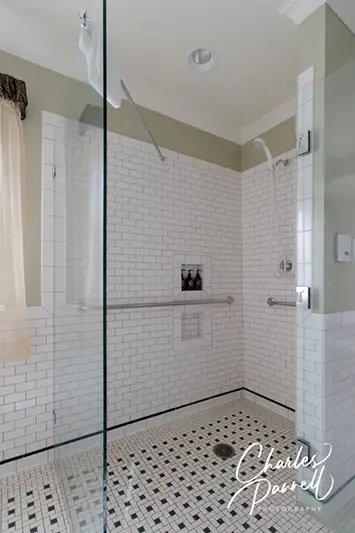
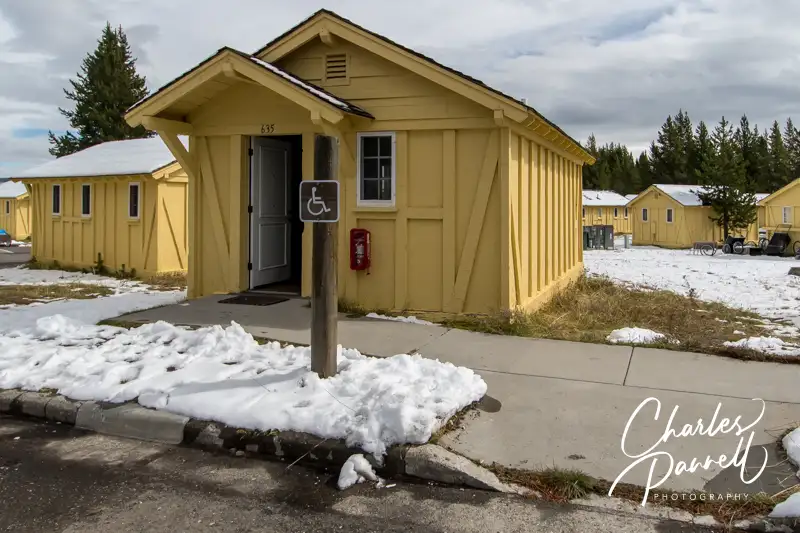
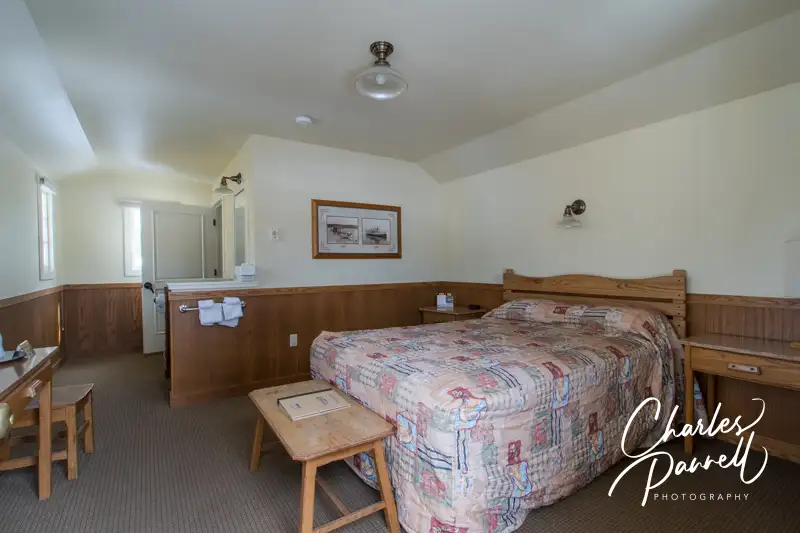
Finally if you’d like something a bit different, then try cabin 635. It’s furnished with a double bed, and the bathroom is equipped with a roll-in shower with grab bars, a hand-held showerhead and a fold-down shower bench. The toilet grab bars are located on the back and right walls (as seated), but if you’d prefer them on the other side, cabin 636 has that configuration.
Cabin 635
Bedroom in Cabin 635
Toilet in Cabin 635
Shower in Cabin 635
Vanity in Cabin 635
Public Spaces and Beautiful Views
There’s also good wheelchair access to the public spaces at this lakeside property, which offers a wide variety of beautiful views. Let’s start with the spacious lobby, which features nice views of the lake. And then there’s a large porch where you can get an equally enticing view. And if you’d like to get a closer look, there’s ramp access to a paved pathway down to the lakeshore.
There’s also level access to the Lake Hotel Dining Room, with plenty of room to maneuver a wheelchair between the tables. Open for breakfast, lunch and dinner, this popular eatery offers a relaxed dining experience, and features a beautiful lake view. Plan ahead though, as reservations are required for dinner. And if you’d prefer some lighter fare, then check out the Lake Hotel Deli. The menu includes a variety of soups, salads, pastry items and hot and cold drinks. It’s also a good place to pick up a picnic lunch to enjoy in the park.
In the end, the wheelchair-accessible Lake Yellowstone Hotel makes a great home base for any visit. You can enjoy scenic Lake Yellowstone at your leisure; and the Grand Canyon of the Yellowstone River is just a short drive away. You can explore the rugged scenery in the canyon area by day, and return to a placid lake view each evening. Truly it’s the best of both worlds.
Barrier-Free Travel Glacier, Yellowstone and Grand Teton National Parks for Wheelers and Slow Walkers
Located in Northwestern Washington, the Chinook Scenic Byway runs from the mountain community of Enumclaw to the fertile Naches Valley. This picturesque slice of Highway 410 winds through the Mt. Baker-Snoqualmie National Forest, snags the northeast corner of Mount Rainier National Park, and crosses over Chinook Pass, before it winds down to Naches. Dense forests line this mountain route; and if the cloud cover lifts, you’ll also get a magnificent Mount Rainier view. You can drive the route straight through in just two hours, but it’s best to budget a whole day, so you can fully enjoy the scenic wheelchair-accessible stops along the way. The Chinook Scenic Byway is much more than just a mountain highway — it’s a destination by itself.
Mount Rainier Gateway
Located about an hour southeast of Seattle, the mountain community of Enumclaw marks the beginning of the Chinook Scenic Byway. Known as the gateway to Mount Rainier National Park, Enumclaw is a good place to base yourself to explore the Sunrise section of the park, or to overnight before a Chinook Scenic Byway jaunt.
The GuestHouse Enumclaw (www.stayinns.com), which is located in the Enumclaw historic district, is a good choice for wheelchair-users and slow walkers. There’s an accessible drop-off area in front, with barrier-free access over to the front desk. Accessible room 1001 is located on the ground floor, just a short roll from the lobby.
Access features include, wide doorways, lever handles, laminate flooring for easy rolling and good pathway access. It’s furnished with two 27-inch high open-frame queen-sized beds with an access aisle in the middle. Other furnishings include a nightstand, an easy chair, a desk with a chair and a chest of drawers. The room also has a refrigerator and a microwave.
The bathroom has a tub/shower combination with grab bars and a hand-held showerhead. There’s also a portable shower bench in the bathroom. The toilet grab bars are located on the back and right walls (as seated), and there’s a roll-under sink just outside the bathroom.
A Continental breakfast is included with each stay, and it includes waffles, bread, cereal, fruit and beverages. Additionally, guests receive a 10% discount at Ranchitos Mexican Restaurant, which is located near the lobby. It’s a comfortable road trip property.
Room 1001 at the GuestHouse Enumclaw
Room 1001 at the GuestHouse Enumclaw (view 2)
Vanity in Room 1001 at the GuestHouse Enumclaw
Toilet in Room 1001 at the GuestHouse Enumclaw
Shower in Room 1001 at the GuestHouse Enumclaw
Hit the Road
Whispering Hemlocks Loop Trail in Federation Forest State Park
From Enumclaw, head east on the Chinook Scenic Byway (Highway 410). Although it’s a beautiful route, with more than a fair share of windshield views, there are a few places worth a stop along this first stretch of the road. At the top of that list is Federation Forest State Park (parks.wa.gov/find-parks/state-parks/federation-forest-state-park), which is located about 15 miles east of downtown Enumclaw.
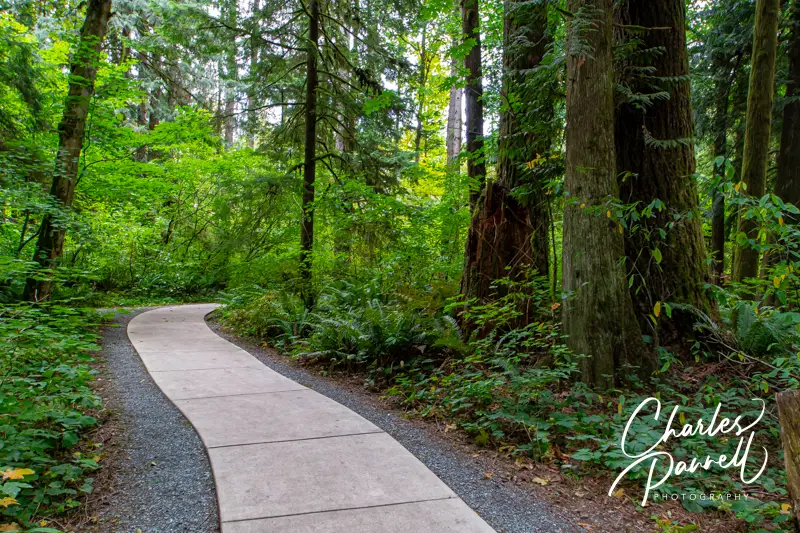
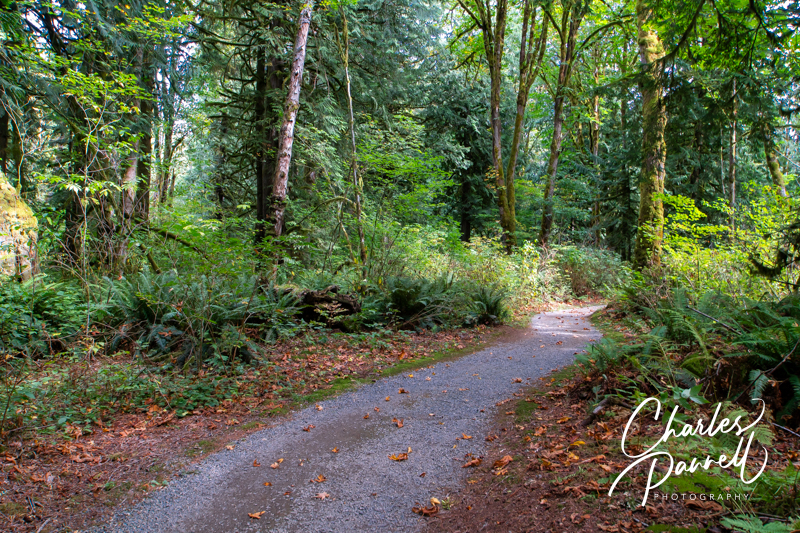
There’s accessible parking in the large lot, with level access over to the visitor center and the trailhead. The Whispering Hemlocks Loop Trail, which is the most accessible trail in the park, begins just to the left of the visitor center. This wide level hard-packed dirt trail is covered in crushed gravel, and winds through a shady slice of the forest. There are interpretive plaques along the way and a few benches tucked in secluded nooks here and there. This .3-mile loop trail offers a pleasant stroll through the forest, and it’s an excellent choice for wheelchair-users and slow walkers.
And if you’d like to stop for lunch, there’s also a nice picnic area in the park. The main park road loops through the picnic area, and about midway along there’s an accessible family restroom with accessible parking nearby. From there it’s just a short level walk to a shaded accessible picnic table.
As you continue east on the byway, be on the lookout for Skookum Falls Viewpoint on the right. It’s easy to miss as the signs aren’t always visible from the road, but it’s located about eight miles east of Greenwater. There’s a small paved parking lot at the viewpoint, with room for an adapted van to parallel park. To be honest, this is more of a river view; however you can usually spot the falls in the distance. Take your binoculars!
Mount Rainier Visit
View from the Visitor Center at Paradise
The byway continues south through the forest; and just after it passes the turnoff to Crystal Mountain Resort, it enters Mount Rainier National Park. At this point, keep your eyes peeled to the west for some impressive views of Mount Rainier. There’s a small turnout between mileage markers 63 and 64 that’s worth a stop. There’s no paved parking, but it’s easy to parallel park and get a great view of the mountain from your vehicle. But to be honest, you’ll catch some great views all along this leg of the trip.
Although it’s a slight detour off the byway, a stop at Mount Rainier National Park is highly recommend. Just take the The White River Entrance south of Crystal Creek, and follow the 11.5-mile road to Sunrise — the highest point in the park navigable by vehicle.
At the top of the road, you’ll find the visitor center on the far side of the parking lot. The accessible entrance is on the side, and there’s barrier-free access throughout the building which is filled with exhibits on the surrounding area. The highlight of the visitor center is the Mount Rainier view, which can be had from the far window. And if you’d like a closer look, there’s an accessible scope set up near the window. There’s an equally good view outside, near the picnic tables to the left of the building.
On the way back down the hill be sure and stop at Sunrise Point, which is located on the last switchback before the top. There’s a paved lot in the middle of the switchback, or you can pull over on the side of the road. Either way, you’ll get a beautiful view.
More Mount Rainier Views
Wildflowers at Tipsoo Lake
After you’ve explored the Sunrise area, head back down the mountain and rejoin Highway 410. Continue south through the park and be on the lookout for more gorgeous Mount Rainier views on the west side of the road. When you come to the junction oh Highway 410 and Highway 123, continue east on Highway 410 towards Chinook Pass. There’s no shortage of windshield views along this stretch of the byway, but make sure and stop at Tipsoo Lake for a closer look at the landscape.
Located near the summit, this stop boasts a large picnic area and trailhead. There’s accessible parking near the accessible vault toilet, and near a few usable tables in the picnic area. There’s no view of the namesake lake from the parking area; however there are some great mountain views. Even if you don’t park the car, it’s worth a quick drive-through.
As you approach Chinook Pass (5,432 feet), you’ll pass under a pedestrian bridge that crosses the byway; and just up ahead there’ a pullout on the right. There are spots to parallel park in the lot, and there’s a lowered wall nearby to afford wheelchair-users a better view. And if you need to use the facilities, there’s an accessible vault toilet in the parking lot across the street.
A Scenic Drive
Mather Memorial Parkway
After Chinook Pass, the byway winds down the mountain, past the turnoff to Bumping Lake and through the evergreen forest. As it descends to a lower altitude, you’ll spot deciduous trees and the Naches River flowing alongside the road. It’s an especially scenic drive in the fall, with the changing colors.
There’s no shortage of pullouts along the route, so feel free to pull over and take in the scenery. It’s also a great route for photographers. Additionally, there’s a nice rest stop about 24 miles from Chinook Pass on the east side of the road. Technically it’s the trailhead for the Mather Memorial Parkway Nature Trail; however there are also accessible vault toilets near the accessible parking area at this site. It’s a nice spot to take a break, but keep in mind that it may be closed near the end of the season.
A Historic Lodge
Just down the road in Cliffdell, Whistlin’ Jack’s Outpost and Lodge (www.whistlinjacks.com), is also worth a stop. A Washington state icon since 1957, the lodge was named for the the whistling warning sounds made by marmots, which later became associated with the local lumberjacks. There’s accessible parking in front of the office with level access over to the gift shop and restaurant. It makes a nice lunch stop, or even a spot for a short break. There’s a pleasant river view from the restaurant, and a few picnic tables outside on a level grassy area.
And although the lodge doesn’t have any wheelchair-accessible rooms, Room 1 may work for some slow walkers. There’s standard parking in front of the room; however there’s some additional space on one side. The room has a one-inch lip at the threshold but it has a wide door, lever handles and laminate flooring. It’s furnished with a 26-inch high open-frame king-sized bed with plenty of room on both sides, two night stands, a wardrobe, an easy chair and a desk with a chair. There’s also a microwave, a refrigerator, a coffee maker and a table with two chairs.
The bathroom has a sliding pocket door with a 29-inch clearance, but there’s not enough room for a wheelchair inside the bathroom. It includes a large low-step shower (three inch lip) that measures 58 inches by 28 inches. There are no grab bars in the shower, but the toilet has a grab bar on the right side (as seated). And there’s a standard sink and mirror just outside of the bathroom. Again, the room is not wheelchair-accessible, but it may work for some slow walkers.
Room 1 at Whistlin’ Jack’s
Toilet and Shower in Room 1 at Whistlin’ Jack’s
Vanity in Room 1 at Whistlin’ Jack’s
Naches and Beyond
Autumn View at the Oak Creek Big Horn Sheep Feeding Station
Although the Chinook Scenic Byway technically ends when Highway 410 transitions into Highway 12, there are still a few worthwhile stops past the official end point. The Oak Creek Big Horn Feeding Station is located on Old Naches Road, about a half-mile from the intersection of Highway 410 and Highway 12. Although they only put food out for the bighorn sheep in the winter months, you can sometimes catch a gander of them in the nearby hills. Plus the scenery is beautiful, so it’s worth the short detour even if you don’t spot any wildlife.
Natches Trading Post
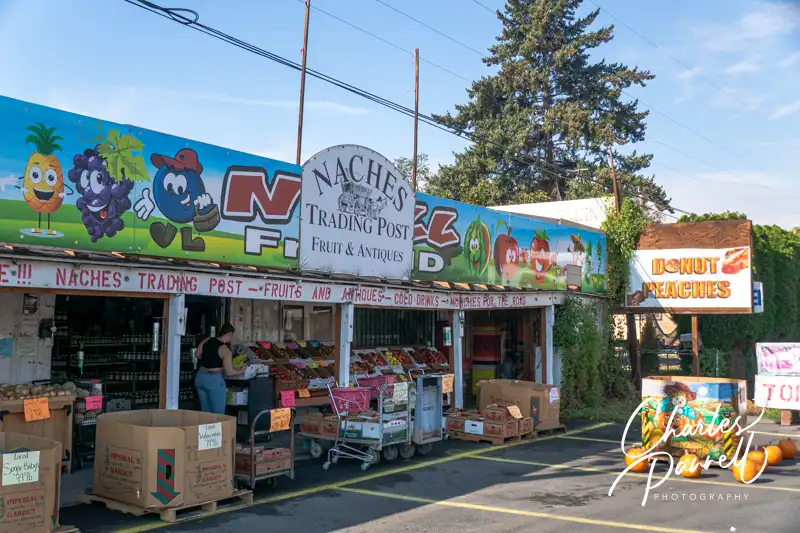
Just down the Road in Naches, the Naches Trading Post (www.facebook.com/nachestradingpost/) makes a good stop for some fresh produce, a collection of antiques and some yummy huckleberry fudge. There’s accessible parking in front, and level access to this huge fruit stand. Even if you don’t buy anything, it’s a fun place to stop and look at the antiques and collectables.
Be sure to take some time to enjoy the scenery on this stretch of the road, as orchards line both sides of the highway on this final part of the drive. And after you complete the route, you can continue on to the end of Highway 12 in Yakima, linger on and enjoy Washington wine country or continue along your way. Either way, the Chinook Scenic Byway is a must-drive route on any Northwestern Washington road trip.
Barrier-Free Travel Washington National Parks for Wheelers and Slow Walkers
Many US National Parks offer a variety of wheelchair-accessible lodging options within their borders. That said, sometimes it’s just not possible to snag a reservation at some of those popular properties. And then there are those remote national parks that don’t offer any in-park lodgings. The solution? Consider booking a property in a national park gateway city. With that in mind, here are some wheelchair-accessible lodging picks located close to some favorite US national parks.
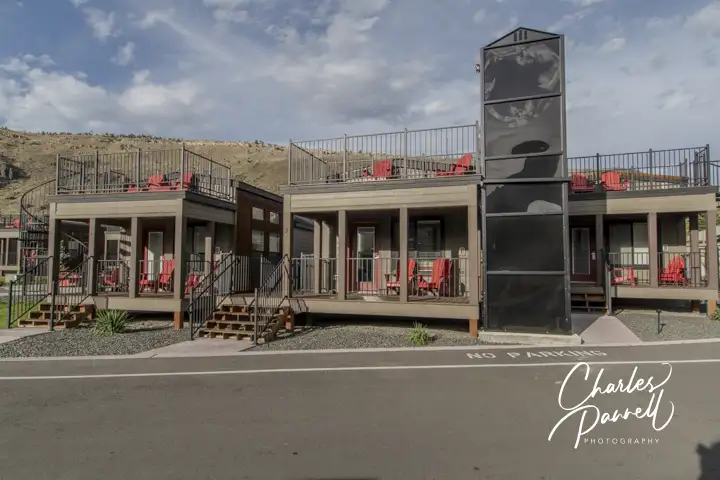
The Jim Bridger Cabins in Gardiner is at the top of our wheelchair-accessible lodging list. Located near the North Entrance to Yellowstone National Park, this complex features a wheelchair-accessible two-bedroom cabin. It includes a compact kitchen, a living room with a fireplace and large bathroom with a roll-in shower. And there’s even elevator access to the top deck, which offers some great star gazing opportunities.
The Explorer Cabins at Yellowstone are located in West Yellowstone, just a short drive from the West Entrance to the park. They have two accessible one-bedroom cabins which each have a small kitchen, a living room with a fireplace, and a bathroom with a roll-in shower. They also include a spacious front porch and several public fire rings where guests can whip up some s’mores.
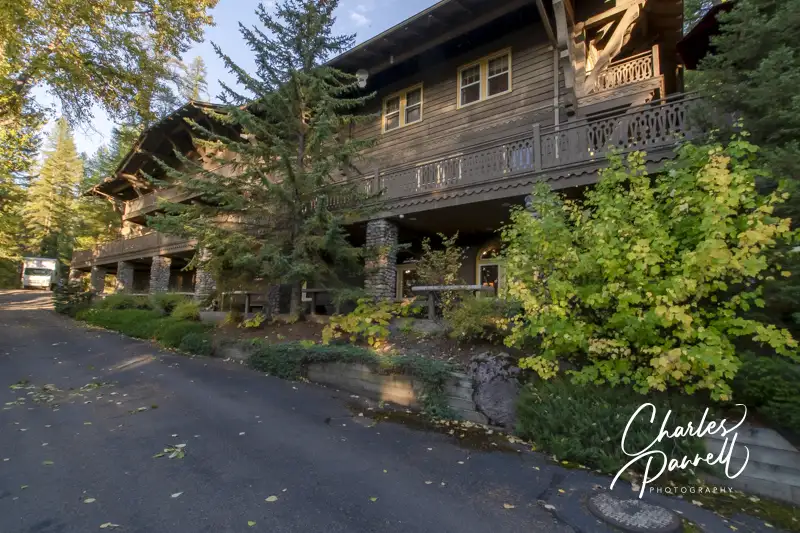
Located across from the railroad station in West Yellowstone, this historic property was built in 1910 by the Great Northern Railroad. Today it still boasts an old world ambiance but it also includes a nice accessible room with a roll-in shower. It’s a great property for railroad buffs, and it’s just a few minutes from the park entrance.
West Glacier Village has two wheelchair-accessible cabins, which each have a full kitchen, a large living room and a bathroom with a roll-in shower. And if you’d like to let someone else do the cooking, the complex is just a short walk away from West Glacier Village, where you’ll find a few eateries and shops.
Zion National Park
AutoCamp Zion
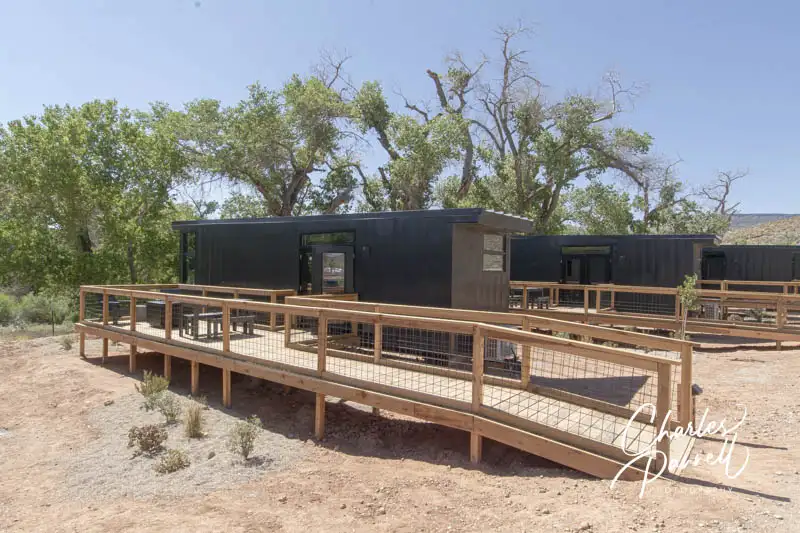
emerginghorizons.com/autocamp-zion-excels-in-accessibility/ This unique lodging complex, which offers a collection of upscale Airstream camping trailers, is located about 20 miles from the South Entrance to Zion National Park. The accessible cabins feature a small kitchen and living area and a bathroom with a large roll-in shower. Add in some nice public spaces, a few fire rings and a swimming pool with a lift, and you have all the essential vacation elements.
This charming little complex is located along Highway 12 about 15 miles from Bryce Canyon National Park. It includes an accessible cabin with a small kitchen, and a nicely equipped bathroom with a roll-in shower. It’s also got a roomy front porch and a nearby picnic table.
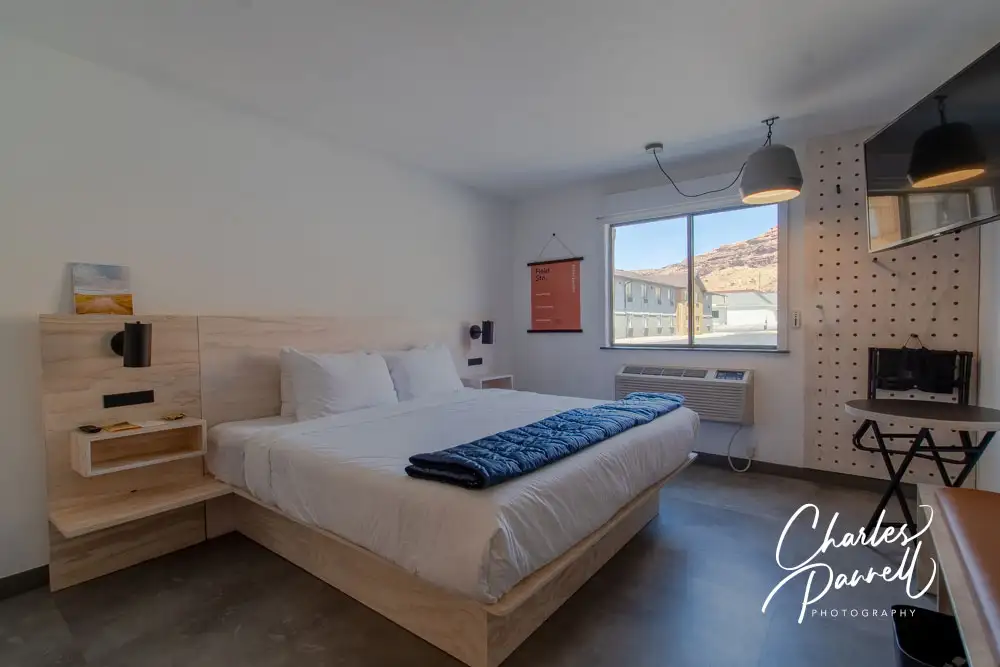
There are no lodges inside of Arches National Park, but Slackline Moab is located in its namesake town, about four miles away from the national park entrance. It has a variety of accessible rooms. Some rooms have roll-in showers, while others have tub/shower combinations. Add in a gear shop, a café, and a nice fire circle, and you have a comfortable and accessible property.
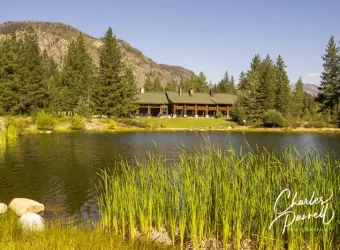
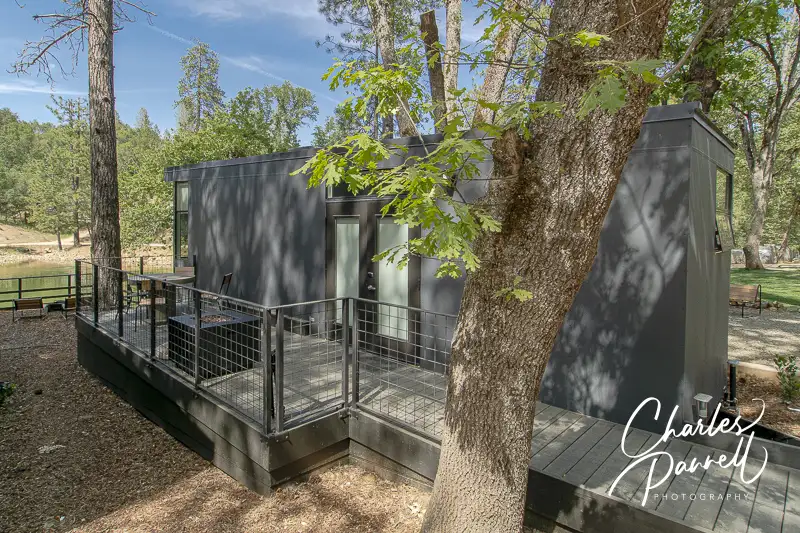
Located near the South Entrance of Yosemite National Park on Highway 41, Waybound Yosemite includes a number of top-drawer wheelchair-accessible cabins, called “havens”. They are nestled in a sugar pine forest next to Tenaya Lodge, and they are available in a variety of bed configurations. The havens also include a kitchen, living area and a small deck. Add in the clubhouse and a few firepits and you have everything you need in an accessible cabin. And guests have access to all the facilities at Tenaya Lodge.
Like its sister property in Zion, AutoCamp Yosemite features comfortable accommodations in upscale travel trailers. It’s located near the Arch Rock Entrance to the park, on Highway 140. The complex includes several accessible units that have a kitchen, living area and a bathroom with a roll-in shower. Add in a spacious deck to enjoy the sunset and you have a very relaxing lodging choice.
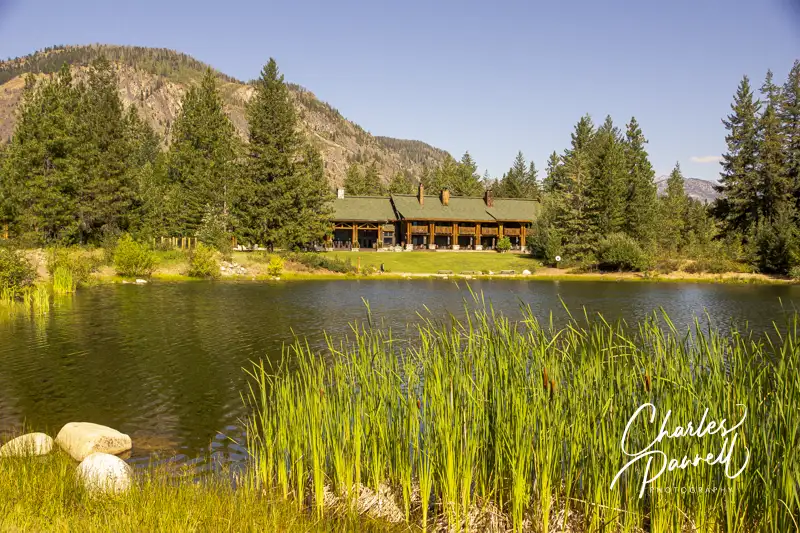
This North Cascades retreat features an accessible guestroom with a roll-in shower and a porch with a view. It’s located in the hamlet of Mazama on the eastern side of the park. Along with the creature comforts, the lodge borders a small scenic lake. And if you get a hankering for a pizza, there’s a parlor within walking distance.
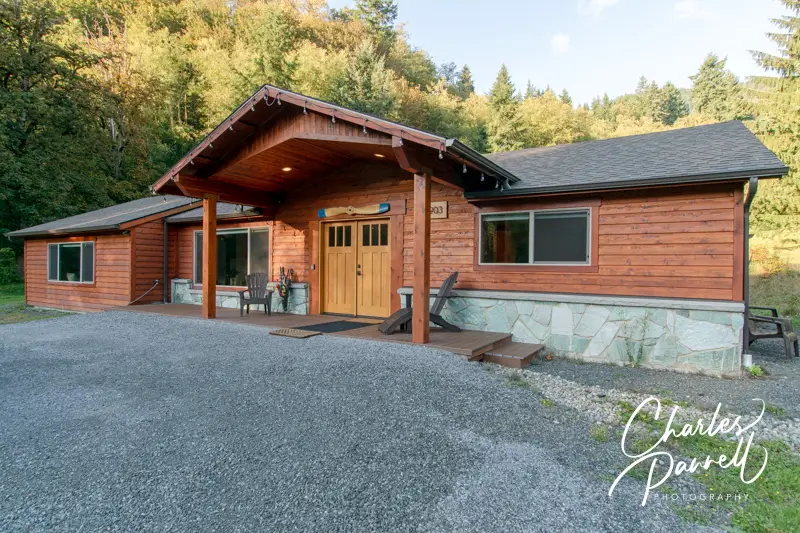
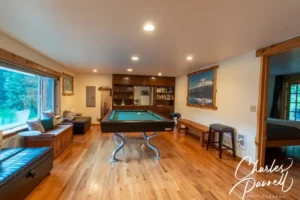
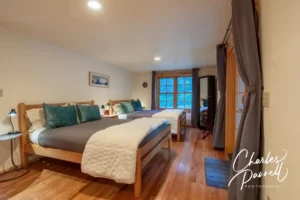
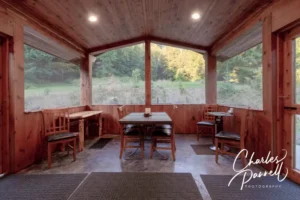
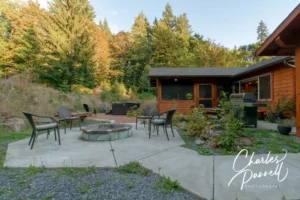
Named after a local bush pilot this two-bedroom home features excellent access and has one bathroom with an oversized roll-in shower. It’s located just five miles from the Nisqually Entrance to Mount Rainier National Park, and it has some pleasant outdoor spaces, a fully stocked kitchen and even a pool table in the game room. A comfortable and accessible find.
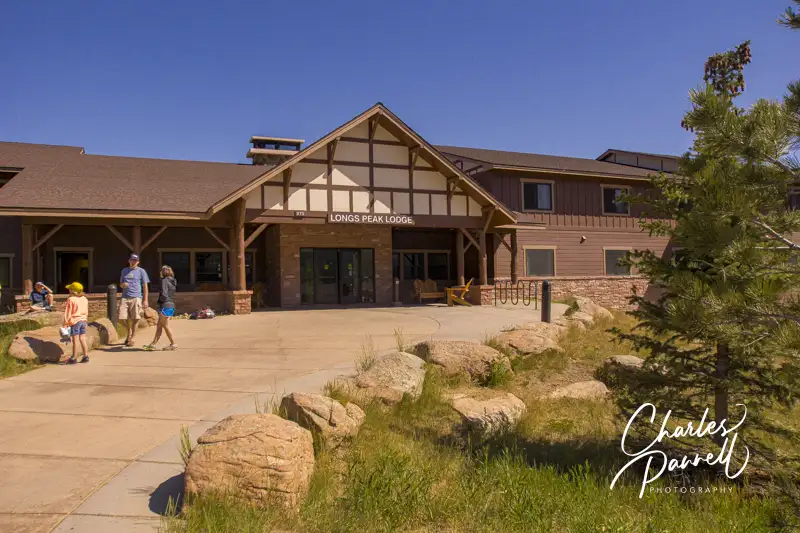
Operated by the YMCA of the Rockies, this complex includes hotel-style accommodations nestled in a Ponderosa Pine forest, about three miles from the Beaver Meadows Entrance to Rocky Mountain National Park. The larger accessible rooms are a great option for families as they have multiple beds, plenty of space and large bathrooms with roll-in showers. Add in some accessible public areas, and a nice cafeteria and you have everything you need for a comfortable – and accessible – stay.
Last but certainly not least on our list of wheelchair-accessible lodging picks, is this collection of Alaska properties located near Denali National Park. Although there are no lodges within the park these three nearby properties have a nice selection of accessible rooms. And as an added bonus, some properties even have a wheelchair-accessible shuttle to and from the park. They all make a great home-base for a Denali visit.
Barrier-Free Travel Glacier, Yellowstone and Grand Teton National Parks for Wheelers and Slow Walkers
Located just outside the west entrance to Yellowstone National Park, the Explorer Cabins at Yellowstone (www.yellowstonevacations.com) offer a comfortable and convenient lodging choice for park visitors. This 50-unit property focuses on cabineering — a lodging concept which offers the comforts of home and the perks of a hotel in a remote natural setting. And the good news is, the complex boasts two accessible cabins, which makes it an excellent wheelchair-accessible Yellowstone lodging choice.
Wheelchair-Accessible Explorer Cabins
The Explorer Cabins are grouped around communal fire pits and public spaces, with barrier-free access throughout the complex. There’s no dedicated office for the cabins, so-check in is done at the nearby Yellowstone Park Hotel. This property also has good wheelchair access, with accessible parking in front and barrier-free access to the lobby. Luggage assistance is also available upon request.
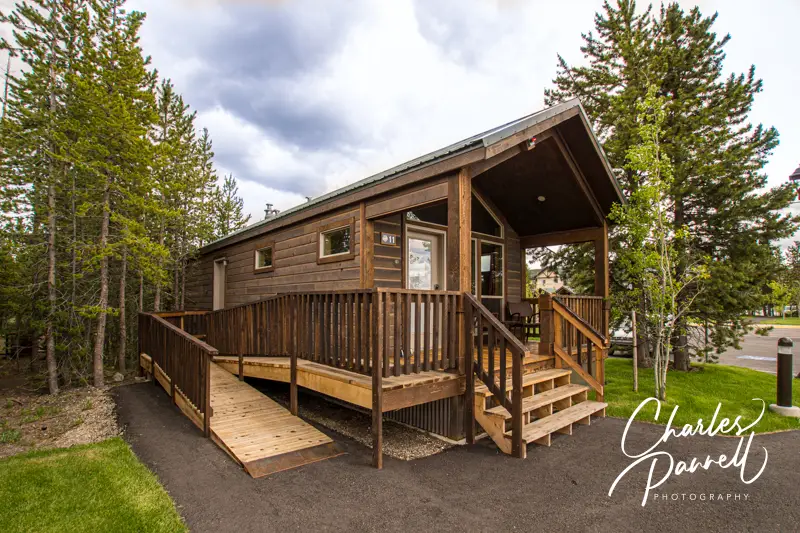
Cabin 11 is one of two accessible models. It’s located in the Washburn Camp, with accessible parking in a nearby lot, and ramp access to the front porch. This modern log cabin is furnished with a 14-inch high sleeper sofa in the living room, and has a kitchenette with a refrigerator, microwave, cook top, sink and a full set of dishes and utensils. There’s also a gas fireplace to snuggle up to if you get chilly. And in keeping with the rustic ambiance, the cabin is pleasantly minus a television.
The bedroom is furnished with a 31-inch high king-sized bed, with 32 inches of clearance on one side and 26 inches on the other. There’s level access to the adjacent bathroom, which features a wide doorway and a five-foot turning radius. It’s equipped with a roll-in shower with grab bars, a hand-held showerhead, and a fold-down padded shower bench. Toilet grab bars are located on the back and left walls (as seated), and the bathroom also has a roll-under sink.
There’s some outdoor furniture on the large front porch, but you can also enjoy the view through the floor-to-ceiling windows in the living room. The cabin also comes with some extra amenities like binoculars, walking sticks, flashlights and even a s’mores kit. It’s a perfect choice for a family vacation, and a great wheelchair-accessible Yellowstone lodging choice.
Living Area in Explorer Cabin 11
Living Area in Explorer Cabin 11 (view 2)
Bedroom in Explorer Cabin 11
Bathroom in Explorer Cabin 11
Explore West Yellowstone
Visitor Center at Yellowstone West
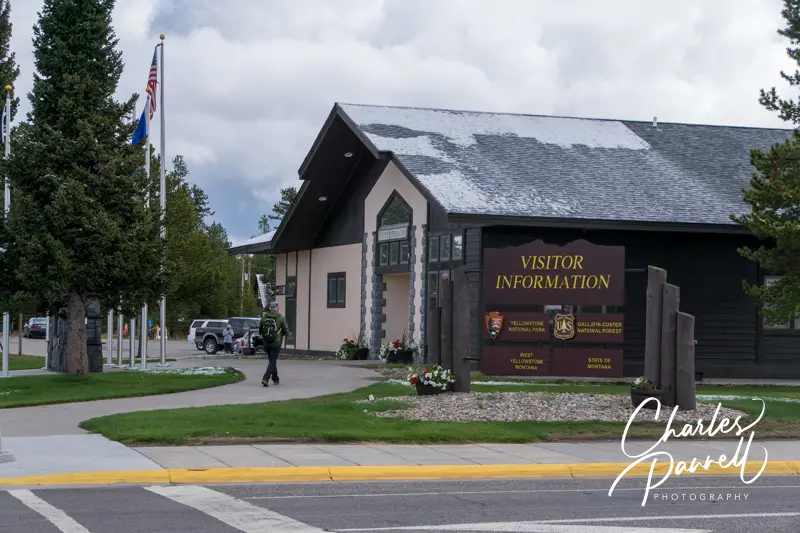
As well as acting as a gateway to the national park, West Yellowstone offers a number of accessible attractions of its own. And the best place to find out about them is to drop by the West Yellowstone Visitor Information Center (destinationyellowstone.com/), which is located on the corner of Yellowstone Avenue and Canyon Street.
There’s accessible parking in the large lot, with level access over to the visitor center. Inside there’s barrier-free access throughout the building, which features a plethora of local information. Be sure an pick up the free walking tour map of the historic district while you’re there. The two-block historic district is level, with wide sidewalks and curb-cuts at every corner; and the tour offers a good overview of the town, with an emphasis of its railroad history.
Yellowstone Museum
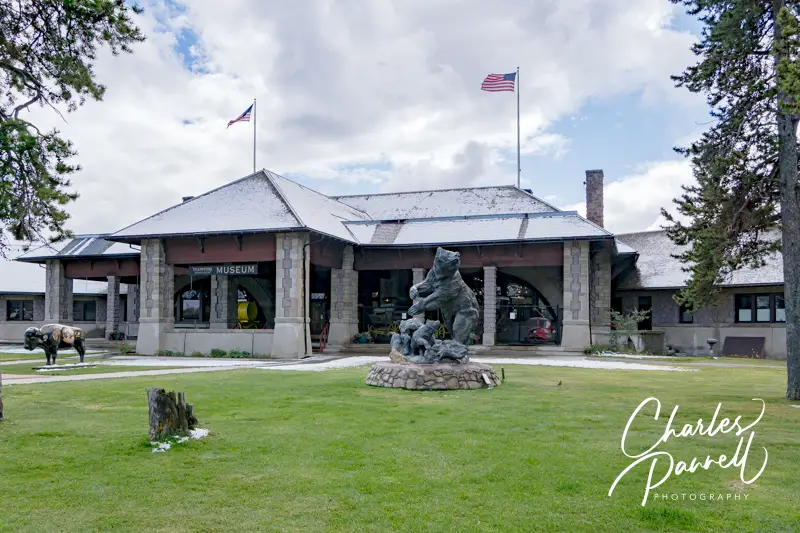
The Yellowstone Museum (museumoftheyellowstone.org/), which is located along the tour route, is also worth a stop. Housed in the historic Union Pacific Railroad Station, the museum features level access and contains exhibits about Yellowstone, lots of old photos and even the original shoe shine stand from the depot.
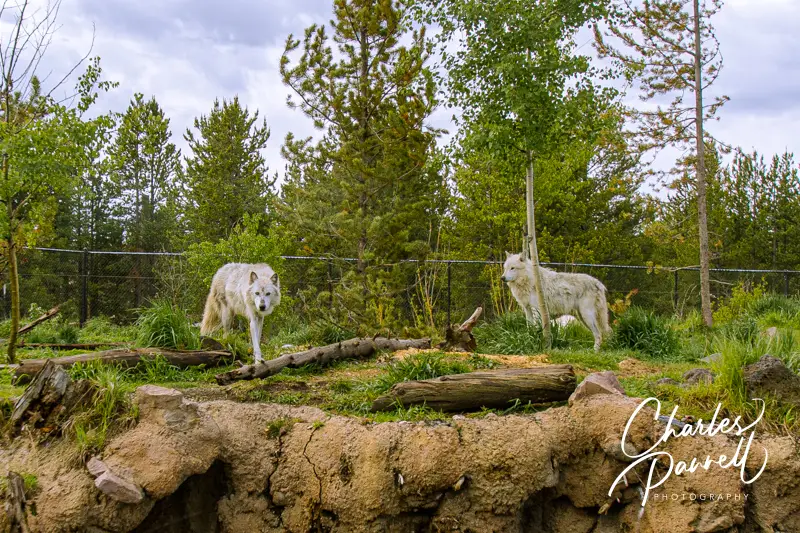
Wolves at the Yellowstone Grizzly and Wolf Center
Last but not least, don’t miss the The Grizzly & Wolf Discovery Center (www.grizzlydiscoveryctr.org/). There’s accessible parking near the entrance and level access to the front door to this combination wildlife park and educational facility. Inside you’ll find interpretive exhibits about wolves and bears, ranging from ecology, poaching and bear safety, to a brief run down on the bears of the world.
Outside there’s level access to the enclosures, where you can get up-close-and-personal with the inhabitants. From bears, wolves and even a bald eagle, there’s certainly plenty to see. It’s truly a must-stop on any Yellowstone visit.
Barrier-Free Travel Glacier, Yellowstone and Grand Teton National Parks for Wheelers and Slow Walkers
Although not originally built to be wheelchair-accessible, access upgrades were added during the Gardiner’s multi-year renovation project. As Jana puts it, “Since there weren’t any wheelchair-accessible rental homes in Ashford, we just decided to embrace access and make the Jimmy Beech House a welcoming place for everybody.” And with a wheelchair-user friend who acted as their access advisor, they even managed to incorporate the little things — things that are often missed — into the final design.
A Comfortable Retreat
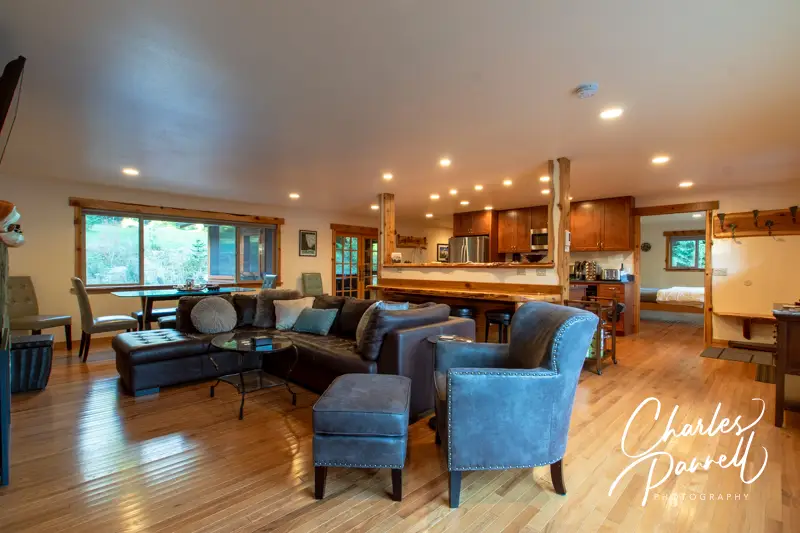
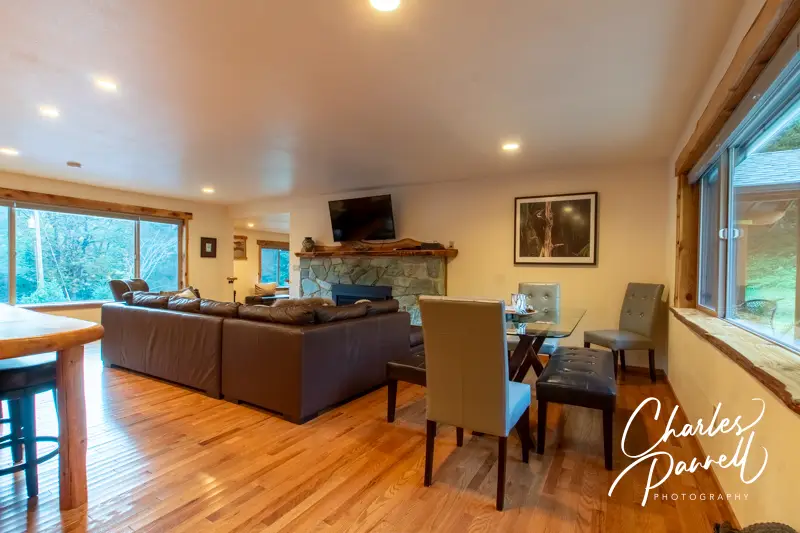
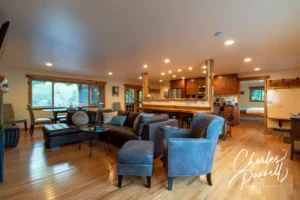
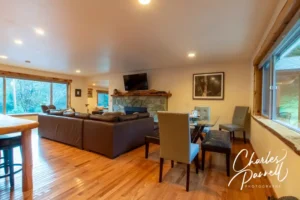
There’s plenty of room to park an adapted van in the driveway at the Jimmy Beech House, with level access to the front door. Inside there’s excellent pathway access throughout the spacious unit, which is decorated with art that highlights the natural beauty of the Mount Rainier National Park area. Access features include wide doorways, lever handles and wood floors for easy rolling. Add in some large picture windows, a bevy of wood accents, and a fireplace with an artistic rock hearth, and you have a very homey — and accessible — place to hang your hat.
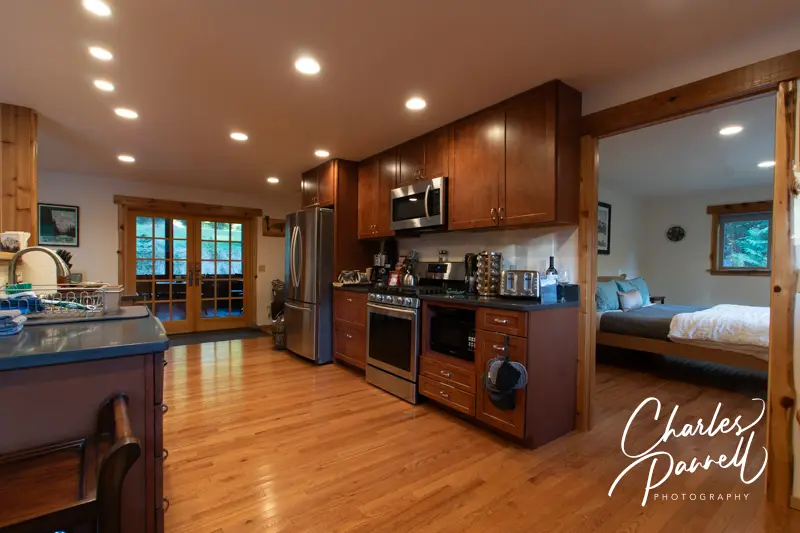
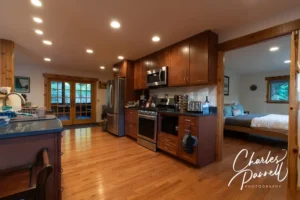
The great room is furnished with a large sectional and an easy chair grouped around the fireplace, a dining table with chair and bench seating, and a lowered bar with four bar stools. The adjacent kitchen includes a refrigerator, stove, dishwasher, two microwaves (including one that’s lowered) and a roll-under sink. It’s equipped with all the basics, and includes just about every utensil and small appliance — from a crock pot to a waffle maker — that you could possible need. Truly it’s a chef’s delight. And there’s also a washer and dryer tucked into a nook around the corner.
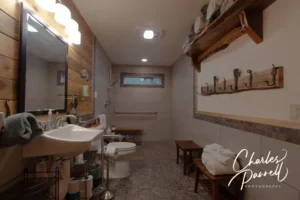
The master bedroom is furnished with a 23-inch high open-frame king-sized bed with wheelchair-access on both sides. The adjacent bathroom — which was dubbed “the car wash” by Jana’s contractor — was custom designed and includes a large roll-in shower with a fold-down shower bench (located near the controls), grab bars and a hand-held showerhead. Other access features include a toilet with grab bars on the back and right sides (as seated), a lowered make-up mirror and a roll-under sink. There’s also a standard hall bathroom that includes a tub with a hand-held showerhead, a toilet and a sink.
The Little Extras
The second bedroom is furnished with two 23-inch high open-framed queen sized beds, with wheelchair-access between them. Wide French doors lead out to the comfortable back patio, which is furnished with some Adirondack chairs. Thoughtful touches like a threshold ramp make the outdoor space as welcoming as the indoor space.
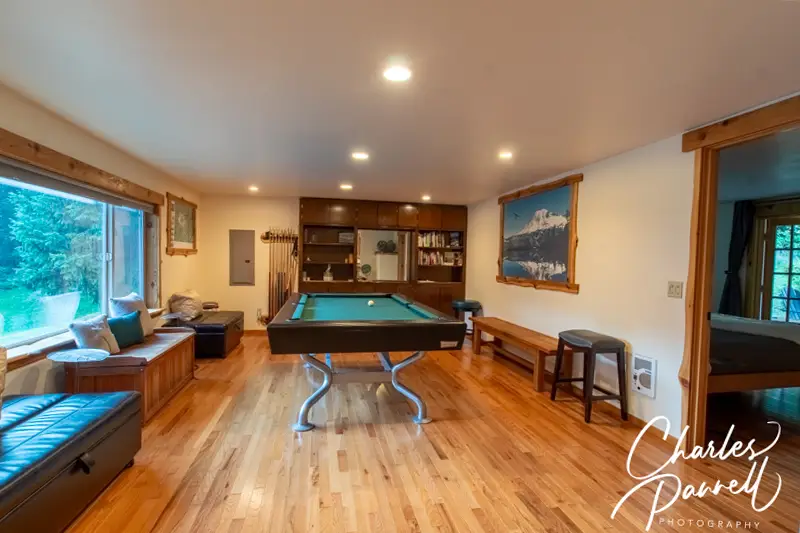
And there are more extras. The former garage has been converted to a game room that’s furnished with a wheelchair-accessible pool table. And even though there’s a five-inch step down to the room, there’s also a portable ramp for wheelchair-access. If you’re not in the mood for pool, there’s also a large selection of games and books available.
The home is also equipped with a large screen porch that has a dining table and four chairs, as well as some casual seating. There’s also level access to the back patio from the screen porch. Access throughout the outside area is excellent, and it’s furnished with a hot tub with steps and a railing, a fire circle and a gas BBQ. Jana even incorporated some of her own access ideas into the design — like the 21-inch high transfer tables for sunning or star-gazing.
Says Jana, “I realize that people with disabilities have a variety of different needs, so I tried to make the home as versatile as possible.” And to say that she did a good job would be a huge understatement. Top it off with the little extras like the makings for s’mores, and you have the perfect home base for a Mount Rainier National Park visit.
Accessible Bedroom at the Jimmy Beech House
Bathroom at the Jimmy Beech House
Living Area at the Jimmy Beech House
Living Area and Fireplace at the Jimmy Beech House
Kitchen at the Jimmy Beech House
Game Room at the Jimmy Beech House
Second Bedroom at the Jimmy Beech House
Enclosed, Screened Patio at the Jimmy Beech House
Fire Circle at the Jimmy Beech House
Barrier-Free Travel Washington National Parks for Wheelers and Slow Walkers
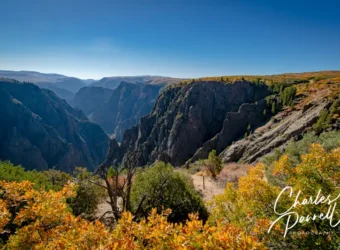
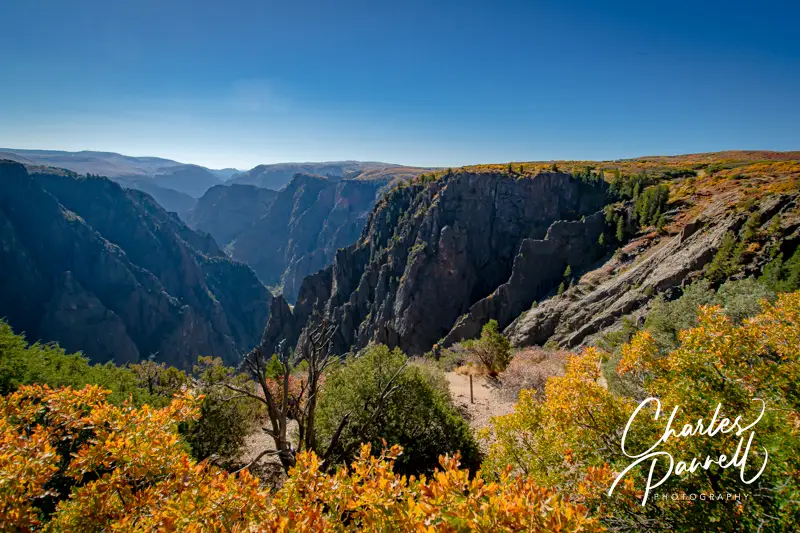
Tomichi Point in Black Canyon of the Gunnison National Park
Although Grand Canyon National Park (emerginghorizons.com/the-grand-canyon-for-wheelers-and-slow-walkers/) is one the country’s most popular national parks, it’s not the only spectacular gorge managed by the National Park Service. Quite the contrary; in fact little known Black Canyon of the Gunnison National Park (www.nps.gov/blca/index.htm) boasts some of the steepest cliffs, oldest rocks and craggiest spires in North America. In contrast to the 21-mile wide Grand Canyon, this Colorado chasm is just nine miles across. Couple that with 2,000-foot canyon walls which drop almost vertically to the Gunnison River, and the result is an eye-popping view. And although the canyon itself isn’t wheelchair-accessible, the best views are had from scenic overlooks along the rim, many of which are doable for wheelchair-users and slow walkers.
A Scenic Drive
The best way to experience the natural beauty of Black Canyon of the Gunnison National Park is to take the seven-mile scenic drive along the south rim. Just follow Highway 50 west from Montrose, then continue along Highway 347 until it dead ends at the park entrance.
You’ll get your first view of the canyon at Tomichi Point, which is near the entrance, just past the campground. There is accessible parking near the rim, with level access out to the overlook. Not only is this a nice canyon view, but if you’re lucky you’ll also get a glimpse of the hikers on the aptly name Rim Rock Trail below.
Be sure and stop in at the Visitor Center, which is just up the road. There’s plenty of accessible parking there, and there’s level access to a very clean accessible restroom. Inside the visitor center, there is barrier-free access to the theater and good pathway access around the interpretive exhibits. There’s also level access to a large deck which offers an impressive canyon view.
The next accessible stop at Black Canyon of the Gunnison is at Pulpit Rock Overlook. Accessible parking is available on the road, near a hard-packed dirt trail that leads out to the lower overlook and offers a sweeping view of the Gunnison River. There are a few bumps at the beginning of the trail, but it’s doable for most folks. To get to the upper overlook you have to go down some steps and then up a very steep ramp, but the river view is much better from the lower vantage point. There is also an accessible restroom at this stop.
Enjoy the Views
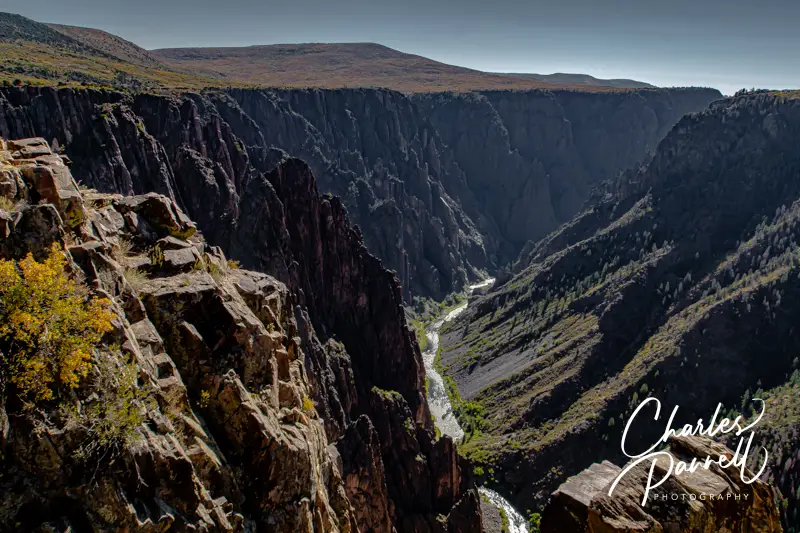
Chasm View in Black Canyon of the Gunnison National Park
Chasm View, which is the next stop on the route, offers the most impressive canyon view. Accessible parking is available near the main trail out to the overlook, but there are nine steps down to the viewpoint. The accessible trail, which is located to the left of the main trail, is longer, but there are no steps along the way. From this viewpoint you’ll get a dramatic view down into the chasm with the Gunnison River below.
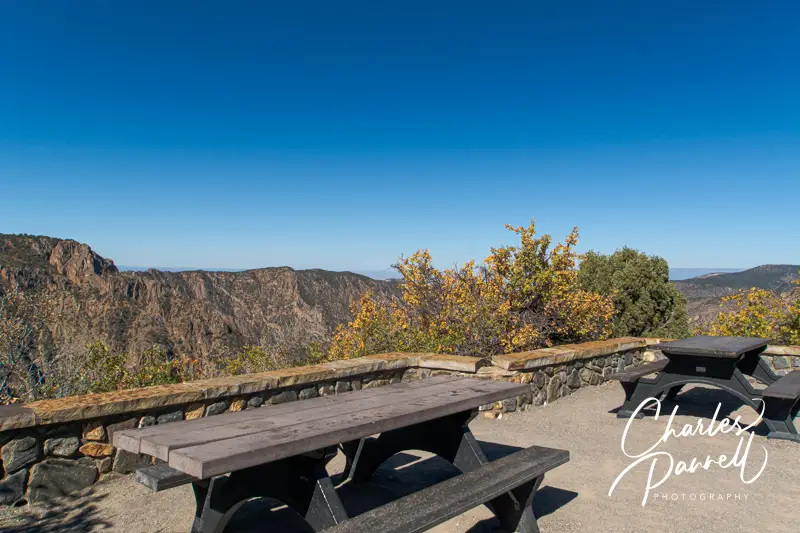
Sunset View, which is just up the road, is a great spot to sit and enjoy the sunset (hence the name). There is accessible parking near the accessible sidewalk out to the overlook. Here you’ll find two picnic tables, including one that is accessible. There’s a lower overlook to the right, but there are 15 steps along the route and some rocks and roots on the trail. Still, it’s hard to beat the view from the picnic tables. There’s also an accessible restroom in the parking lot.
Picnic Tables at Sunset Point in Black Canyon of the Gunnison National Park
Last but not least, don’t forget to stop at High Point, at the end of the road. Although the one-and-a half-mile trail to the overlook isn’t accessible, it’s still worth a stop. There’s accessible parking in the lot, and a dirt path at the far end that leads out to an accessible picnic table. It’s a much nicer spot to picnic than Sunset View, and since it’s away from the trailhead, it’s pretty isolated. Even if you’ve already eaten, this is a good place to take a quiet break before you head back. As an added bonus, the windshield views are totally different on the return trip.
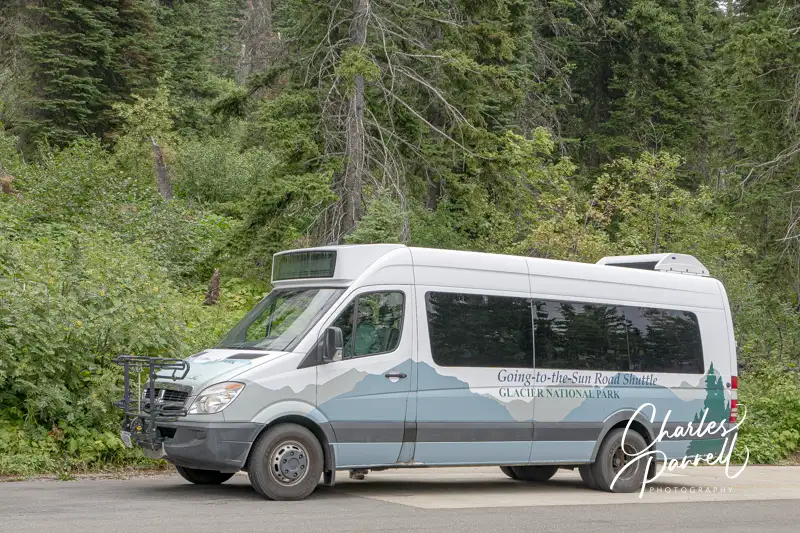
All shuttles are wheelchair-accessible, and the ticket price is a very reasonable $1 for passengers over 2 years old (there’s no charge for lap children). Shuttles depart from Apgar Visitor Center and Lake McDonald Lodge on the west side, and St. Mary Visitor Center and the Rising Sun Picnic Area on the east side. Advance tickets are required, and they are only available at www.recreation.gov. A portion of the tickets are released 60 days in advance, while the remainder are available 7 PM MDT for next day entry. Plan ahead, as walk-up tickets are not available at the park.
Why Take the Shuttle?
And in case you are on the fence about riding the shuttle, here are six reasons that make it a worthwhile choice.
The drive on the winding road up to Logan Pass can be daunting if you’re not used to driving in the mountains. Taking the shuttle allows you to relax and leave the driving to someone else.
You’ll definitely save on gas if you take the shuttle. And you won’t have to worry about filling up your tank to make it to your next destination.
You can really enjoy the view along the way, and even take some breathtaking photos if you’re not driving.
You don’t have to worry about finding a parking place at Logan Pass. The shuttle drops you off right in front of the Visitor Center. And there’s a nice accessible trail near the Visitor Center.
If you’re worried about time management, taking the shuttle can help you keep to a schedule. It’s easy for time to slip away while stopping at every pullout along the way to Logan Pass.
Last but not least, you don’t have to worry about driving in inclement weather if you take the shuttle. Rain storms and even a summer snowfall can make the winding mountain road to the top of Logan Pass slick, and even dangerous, in some places. Play it safe and take the shuttle.
So get your Glacier National Park tickets today at www.recreation.gov and have a safe and relaxing visit to Glacier National Park.
Barrier-Free Travel Glacier, Yellowstone and Grand Teton National Parks for Wheelchair-Users and Slow Walkers
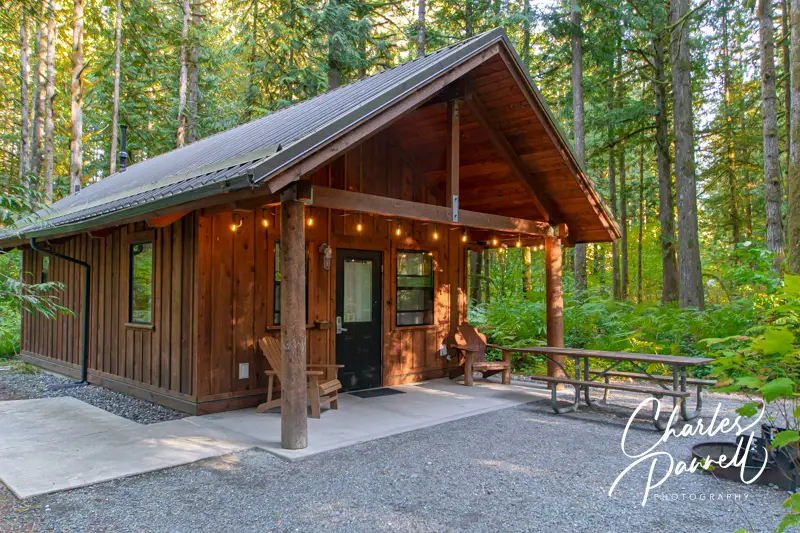
Rasar State Park (https://parks.wa.gov/find-parks/state-parks/rasar-state-park) offers a peaceful taste of the forest with some great Skagit River views, a few barrier-free hikes, and several wheelchair-accessible deluxe camping cabins. This lush state park is located about 40 miles west of the North Cascades National Park Visitor Center in Newhalem, just off Highway 20. And with a second-growth forest filled with big-leaf maples, Douglas firs and western red cedars, it’s the perfect place to sit back, relax and enjoy all that Mother Nature has to offer.
Stay in Style
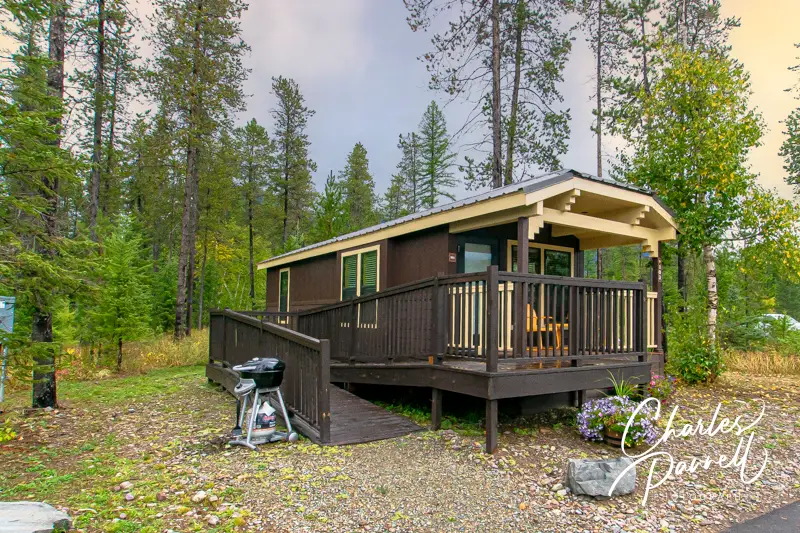
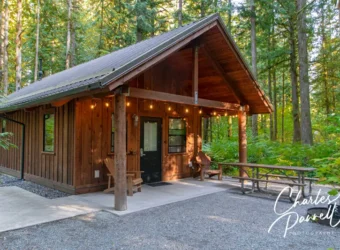
If you’d like to spend the night in Rasar State Park, but don’t want to pitch a tent, then check out one of their three wheelchair-accessible deluxe camping cabins. There’s accessible parking in front of the accessible Chinook Cabin, with paved access over to the front porch. Outside there’s an accessible picnic table and a raised grill, and two oversized Adirondack chairs.
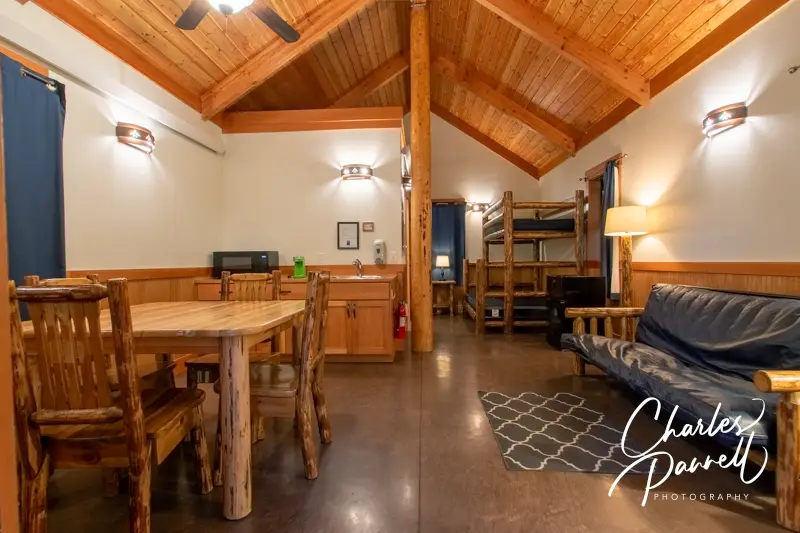
The cabin features a level threshold, wide doorways, lever handles, good pathway access and laminate floors for easy rolling. There’s a small kitchen counter area, with a few cabinets and a sink, with a dinning table and four chairs next to it. The kitchen includes a microwave, a small refrigerator and a K Cup coffee maker (bring your own K Cups).
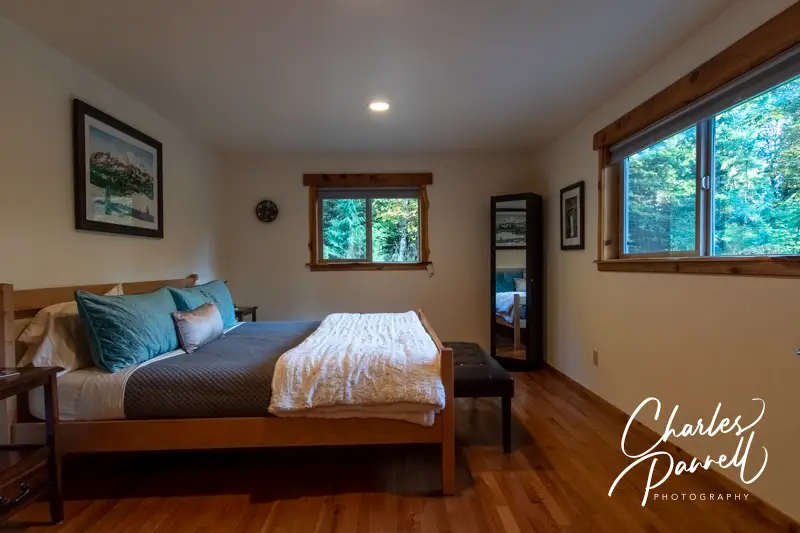
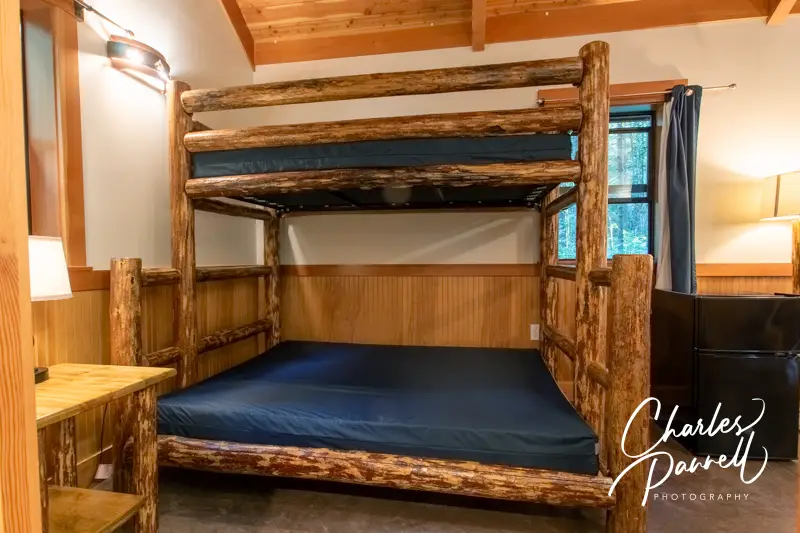
This rustic cabin features exposed beams and natural wood, and includes hand crafted log furniture. For sleeping, there’s a 16-inch high futon in the living area and a bunk bed near the bathroom. The bunk bed includes a 16-inch high double on the bottom and a single on the top. There’s a night table next to the bunk beds, and a floor lamp in the living area. Top it off with a roomy closet, overhead lights, heating and a ceiling fan, and you have a pretty comfortable setup.
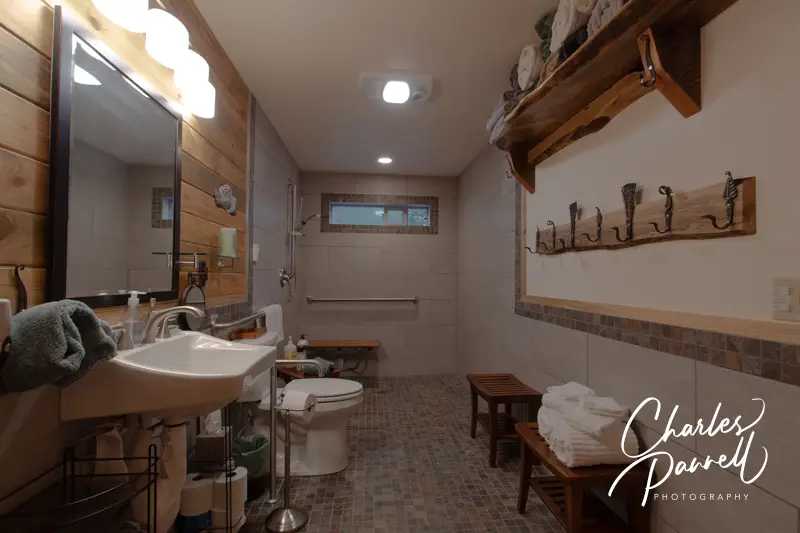
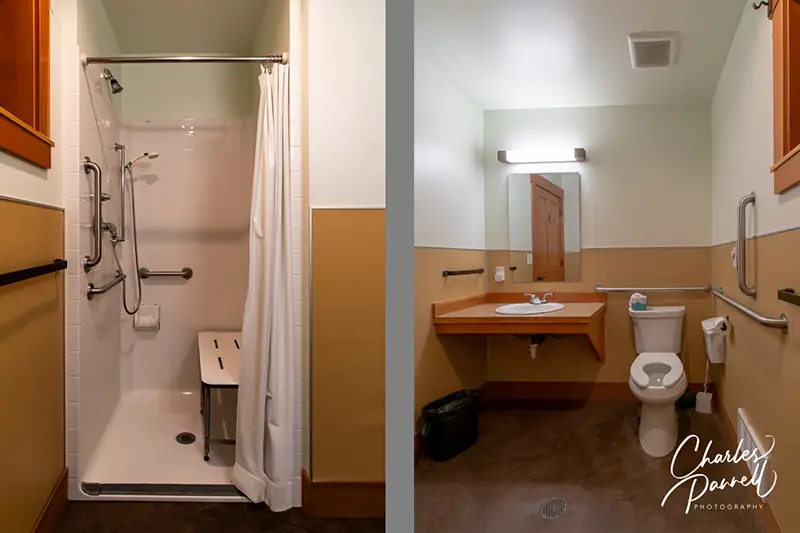
The bathroom features a full five-foot turning radius and includes a 36-inch-square transfer-type shower, with a fold-down shower bench, a hand-held showerhead and grab bars. The toilet grab bars are located on the back and left walls (as seated) and the bathroom also has a roll-under sink.
The Coho Cabin, which is located next door has the same access features, but if you want more privacy, choose the Skagit Cabin across the road. On the plus side, all of the cabins are surrounded by the lush forest.
Living Area in the Chinook Cabin at Rasar State Park
Bathroom in the Chinook Cabin at Rasar State Park
Bedroom in the Chinook Cabin at Rasar State Park
Take a Hike
Even though it’s fairly small, Rasar State Park offers a varied landscape with several accessible trails. Most of the trails are located in the south area of the park, near the Skagit River. There’s accessible parking near the picnic area, and level access over to the trailheads. There are also accessible picnic tables on the grass, if you’d like to stop for a short lunch break.
The paved Skagit River Access begins near the picnic area, and winds through the meadow out to the river. It’s about a .3-mile jaunt down to the river, and although you can walk a little further on the hard-packed sand beach, the wheelchair-access ends at that point. After that you’ll encounter steps, bumps, rocks, and a significant uphill climb. Still, it’s a nice accessible out-and-back trail to the river.
Skagit River Trail at Rasar State Park
The Cedar Trail also starts in the picnic area. This hard-packed dirt trail leads through a canopy of trees, before the access ends at the .25-mile point. Still it’s another nice out-and-back walk, and there are a few shaded picnic tables along the way.
Cedar Trail at Rasar State Park
Another accessible trail option is located on the north side of the park. This hard-packed dirt trail loops through the second-growth forest, past the cabins and group campsites. This 1.5-mile trail begins across the road from the Chinook Cabin and to the right of the Skagit Cabin, and continues past the group camps and the private lands that border the park. And if you’d like a shorter hike, it’s easy to exit the trail at the halfway point.
Finally, if you’d like to hike through some old growth forest nearby, be sure to check out Rockport State Park and Baker Lake for some accessible options. It’s a great way to extend a Rasar State Park Visit.
Barrier-Free Travel Washington National Parks for Wheelers and Slow Walkers