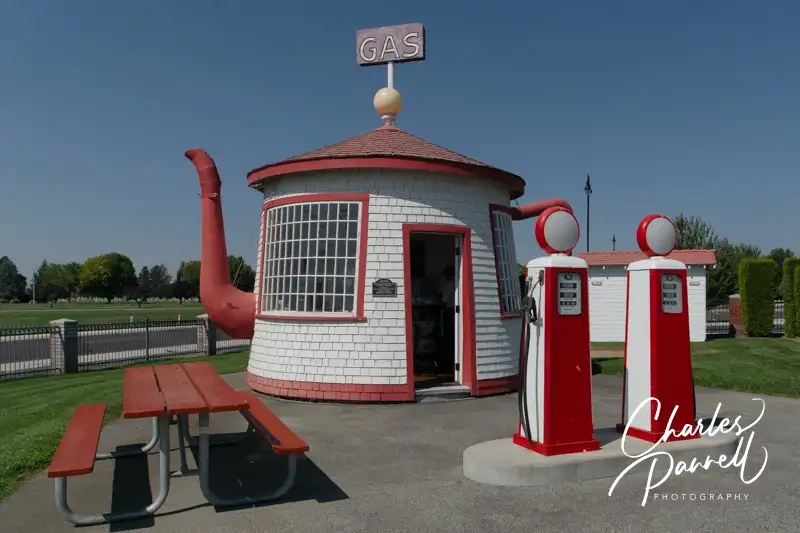
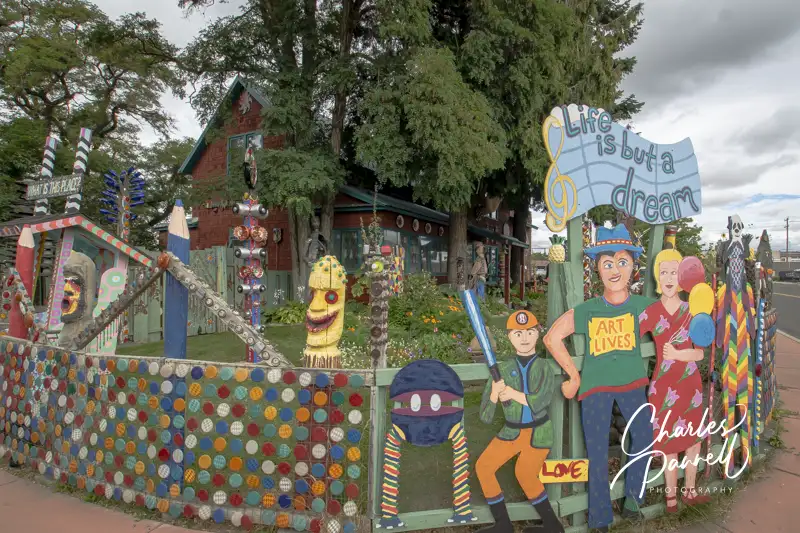
Handcrafted by Jack Ainsworth in 1922, the Zilla Teapot was originally constructed as a political statement, in response to the Teapot Dome Scandal in the Harding administration. It sat next to the Old Dalton Trading Company General Store for many years, until it was purchased by Mrs. AJ Thomas in 1928. Dalton then operated the Teapot Dome as a gas station for decades. During the construction of Interstate 82 in 1978, the teapot was scheduled to be removed; however before that happened it was hit by a car and nearly destroyed, It was subsequently reconstructed with the help of the Washington State Department of Transportation and moved to a site on the Yakima Valley Highway. In 2012 it was relocated to its current venue, where it serves as a visitor information center.
The teapot is located off of Interstate 82 at exit 52. There’s a small parking lot in front of the Zillah Teapot, but the accessible parking spot is located in the larger parking lot next door. There’s curb-cut access and an accessible sidewalk from the accessible parking space over to the teapot. A lone picnic table is located next to the teapot, but unfortunately it’s not shaded. Alternatively there are a few covered picnic tables in the park next door, which is connected to the teapot area by an accessible sidewalk. Round it out with accessible restrooms and a Fallen Firefighters Memorial, and you have everything you need for a road trip stop.
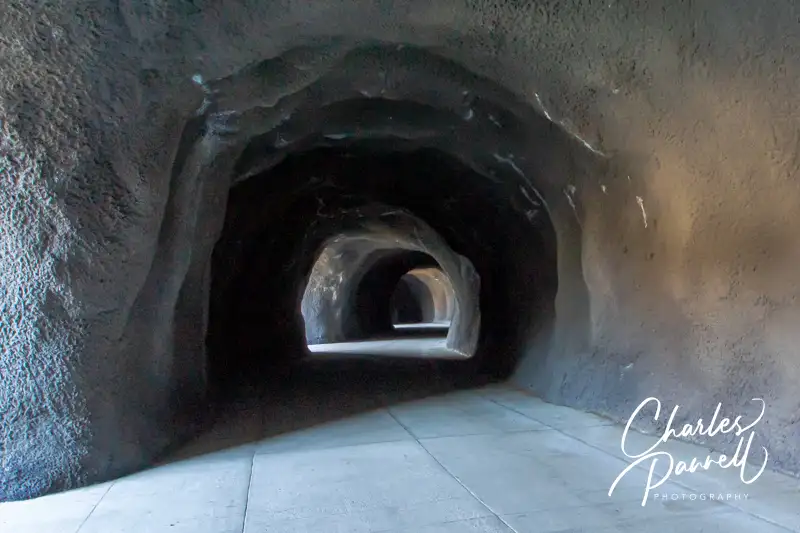
Designed by John Arthur Elliott who took his inspiration from a cliffside tunnel above Lake Lucerne, the original Mitchell Point automotive tunnel was built in 1915. Over the years, traffic along the Historic Columbia River Highway was rerouted to accommodate larger vehicles. In the 1950s the original tunnel was blocked with debris, and it was subsequently destroyed in 1966 during construction of the interstate. After decades of closure, in 2021 the Oregon Department of Transportation launched an ambitious project to build a replica pedestrian tunnel in the same location. The project was completed in 2025, and today the new Mitchell Point Tunnel is a must-stop when you’re heading east on Interstate 84, near Hood River. Just take exit 58 and follow the signs.
There’s accessible parking in the small parking lot, with level access over to the paved trail that leads out to the new Mitchell Point Tunnel. The trail parallels the Columbia River below, and thanks to cutouts in the high rock wall lining the path, everyone can enjoy the expansive view. It’s a pleasant walk, with lots of photo ops. The tunnel itself has five arched openings along its length, to let in light and ease navigation. And when you get to the end there’s an equally impressive Columbia River view. It’s about a half-mile round-trip stroll, and there are also accessible picnic tables and vault toilets near the trailhead. It’s a nice stop for a driving break and a picnic lunch.
Located in its namesake town in Northwestern Oregon, the Tillamook Creamery is worth a stop on any road trip. There’s plenty of accessible parking near the front entrance, with elevator access up to the second floor for the factory tour. From that upper vantage point you can look down on the factory floor, while numerous videos and touch screen presentations describe the production process. Top it off with some samples at end, for the full Tillamook experience. Of course the self-guided factory tour is interesting, but real fans will definitely want to stop for a scoop – or two – of Tillamook ice cream at the ice cream counter. And if you still haven’t had enough, there’s also a cafe on the premises that serves up tasty cheese treats, and a market where you can purchase all of the Tillamook products. A fun stop for all ages, with excellent wheelchair access.
Located at Mile Marked 18 on Highway 26 in Seaside Oregon, this unique museum and memorial makes a good stop if you’re heading over to the coast. It’s located next door to the famous Camp 18 restaurant, so if you miss the turn, just park in the restaurant parking lot. From there, it’s a level walk over to the Loggers Memorial; however there’s also accessible parking near the building.
There’s level access to the Loggers Memorial, which contains over 400 copper plaques that honor the memory of those who felled timber in the Pacific Northwest. And you’ll also find a collection of tools, artifacts, and notes to the honorees throughout the exhibit. It’s a somber but educational display.
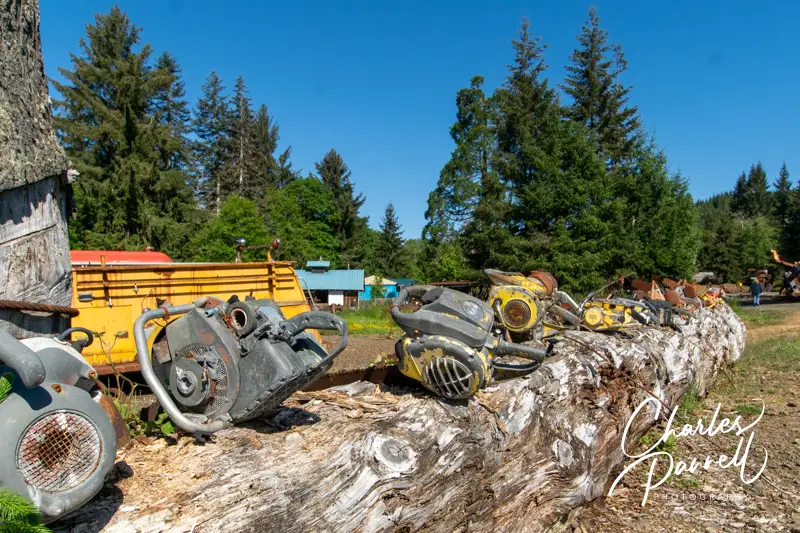
Outside the open-air Logging Museum features a collection of logging equipment including chainsaws, a boiler, a few railroad cars, a blacksmith shop, and every hand tool imaginable. The paths around the exhibits are mostly level and covered with gravel; however if you can’t manage the walk there’s a level overlook near the Loggers Memorial. And after you’ve had a gander at the artifacts, head next door for a loggers breakfast. There’s accessible parking near the restaurant, with ramp access up to the front door. All in all it’s a fun stop, but don’t follow your GPS, as it will take you to a neighboring farm.
Road trips are an excellent vacation choice for wheelchair-users and slow walkers. They offer the freedom to motor through the countryside at your own pace, and stop whenever you want. There’s no tour group to keep up with, no mandatory stops at oddball attractions, and no worries about personality conflicts with other tour participants. You can go wherever you want, and do whatever you choose on a road trip. Additionally, road trips are a great way to explore small towns that are often overlooked on large group tours. Of course road tips require some serious planning and advance research, so here are some tips to help you plan a wheelchair accessible road trip (emerginghorizons.com/wheelchair-accessible-road-trip-tips/)
Half the fun of a road trip is stopping at quirky roadside attractions along the way. It’s a great way to take a break, get off the highway and get some fresh air. And although you’ll probably not find these fun and funky stops splattered across the pages of high end travel magazines, they are all great spots to take a break and enjoy the local color. So here’s a fun assortment of wheelchair-accessible roadside attractions to consider for your next getaway.
Although Mesa Verde is now a national park, it was once home to the Ancestral Pueblo people. Today this Southwestern Colorado area boasts the remains of intricately crafted cliff dwellings, pueblos and pithouses that date back to 600 AD. And although there are some access obstacles, it’s still possible for wheelchair-users and slow walkers to explore portions of the ancient ruins. So here’s the scoop on how to plan a wheelchair-accessible Mesa Verde National Park (www.nps.gov/meve) visit.
Explore Mesa Verde
Mesa Verde Visitor and Research Center
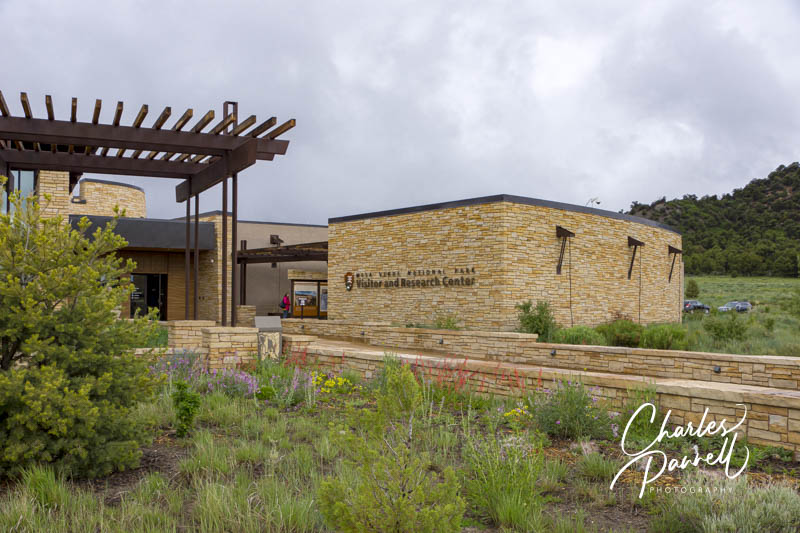
The best place to begin your visit is at the Mesa Verde Visitor and Research Center, which is located near the park entrance. There’s accessible parking with ramp access up to the visitor center, and plenty of room to navigate a wheelchair around the interpretive exhibits, ranger information desk, and book store inside. The building also houses a research center, where visitors can catch a glance at the archaeologists at work through wheelchair-height observation windows. Top it off with a loaner wheelchair, accessible restrooms and an accessible picnic table with a view, and you have everything you need.
After you finish exploring the visitor center, grab a map and follow Mesa Top Ruins Road towards the high point in the park — Park Point. This scenic route winds across the mesa and offers several excellent photo stops along the way; but the most accessible choice is Montezuma Valley Overlook. Not only does this stop offer a superb valley view, but it also has an accessible picnic table and vault toilet.
Another must see are the Far View Sites, which are located a few miles south of Far View Lodge. At one time this area housed as many as 50 villages, but today the pueblo-style ruins includes Far View House, four other villages and a dry reservoir. Unfortunately, uneven terrain hampers wheelchair access to all of the ruins, but Far View House is doable for most folks.
You can also get a good view of Pipe Shrine House in the distance from the far corner of the site. Some slow walkers may also be able to access the entire 3/4-mile dirt loop trail that begins at the far corner of this site. The trail is fairly level, but it has some gravel, rocks and uneven spots along the way.
Visit Chapin Mesa Headquarters
Next up on your wheelchair-accessible Mesa Verde visit is Chapin Mesa Headquarters. From the Far View Sites, continue along Chapin Mesa Road and turn right at the stop sign. Chapin Mesa Headquarters has a large variety of services, including a museum, restrooms, ranger information, gift shops, a restaurant, a picnic area and some great views. The most convenient accessible parking is located in the main parking lot, across the street from the Chapin Mesa Archeological Museum.
From the parking lot, there’s an accessible pathway to the front door of the museum, which is housed in one of the oldest buildings in the National Park Service. And thanks to a multi-year renovation project, there’s wheelchair-access to the lobby, the bookstore, the auditorium and the galleries. Not only did the renovation provide improve physical access, but the historic structure was also preserved during the process.
Formerly the exhibits in this museum focused on the story of the park entirely from a 20th century archeological perspective. The new exhibits, which were designed in collaboration with the Colorado Museum of Natural History, offer an added perspective from the Native communities, who consider Mesa Verde a sacred place. It’s an excellent museum, and a must-see on any visit.
Save some time for a glance at Spruce Tree House, the third-largest cliff dwelling in the park. Although it’s not accessible to wheelchair-users and slow walkers, you can still get a good view of it from the back deck of the Chief Ranger’s Office. There’s a wheelchair-accessible pathway from the Chapin Mesa Archeological Museum, and plenty of room for large wheelchairs and scooters on the deck. As an added bonus, occasional ranger programs are also held there.
Drive the Mesa Top Loop
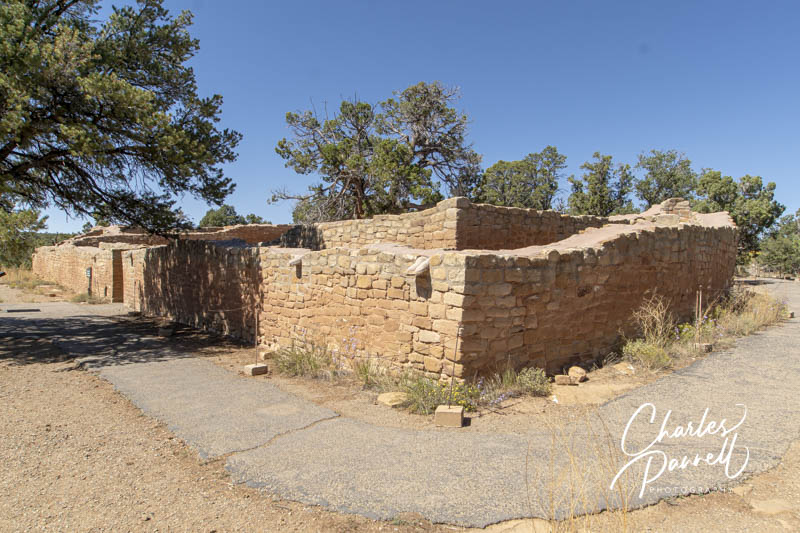
Sun Temple at Mesa Verde National Park
Although there are two scenic mesa drives, the Mesa Top Loop is the the best choice for a wheelchair-accessible Mesa Verde visit. This scenic six-mile drive features a variety of archeological sites grouped in chronological order, and offers a good representation of the variety of housing styles used by the Ancestral Pueblo people.
The first stop along the drive is the Pithouse site, which features one of the oldest permanent structures on the mesa. There’s a level pathway out to a covered structure which protects the excavated pithouses. These semi-subterranean structures, which date back to 600 AD, took advantage of the earth’s natural insulation.
The Pithouses & Pueblos site, which dates back to 700 AD to 950 AD is also a recommended stop. A short .2-mile loop trail leads out to the ruins, which includes standard pithouses as well as masonry structures. There’s level access to both structures, with plenty of room for wheelchairs inside. This stop offers a good overview of how the shelter styles evolved over a few hundred years.
The Mesa Top Sites, which date back to 900 AD are just up the road. A .1-mile trail leads out to the ruins, which was home to three different villages that were were built on top of one another. The three circular towers, which are the most intact features, were part of the last village built on the site in 1075 AD.
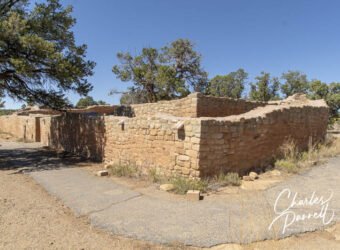
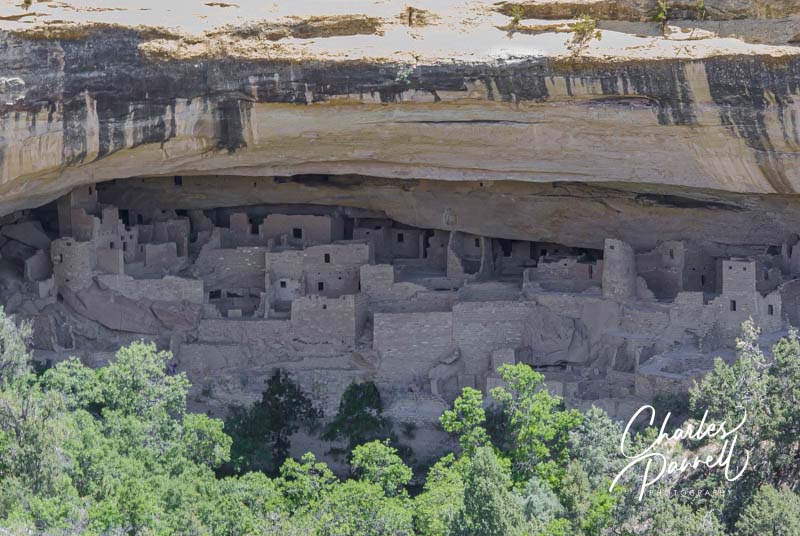
Make a quick stop at Sun Temple, and follow the paved path to the ruins, but don’t miss Cliff Palace View, near the end of the drive. There’s a paved path out to a lowered viewing scope, which offers an excellent view of Cliff Palace in the distance. And if you can’t manage the short walk, there’s also a good view of the cliff dwelling from the parking area.
Spend the Night
A great way to top off a wheelchair-accessible Mesa Verde visit is to spend the night in the park. Of course you can always camp out at Morefield Campground, but if you’d prefer a few more creature comforts, then Far View Lodge (www.visitmesaverde.com) is the perfect choice. Located about a mile north of the Far View Sites, this 150-room property features good wheelchair access and great views of the surrounding countryside.
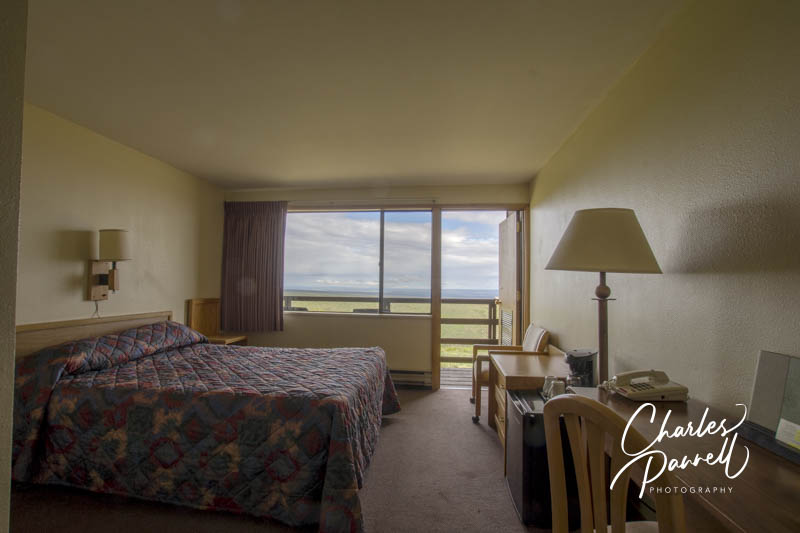
There’s accessible parking near the main lodge building, with level access to the lobby. From there is just a short drive to accessible room 159. The room includes a threshold ramp, wide doorways, a lowered clothing rod and good pathway access. Decorated in a decidedly western theme, it’s furnished with a 22-inch high queen-sized bed with wheelchair access on both sides, a chest of drawers, a desk and a refrigerator.
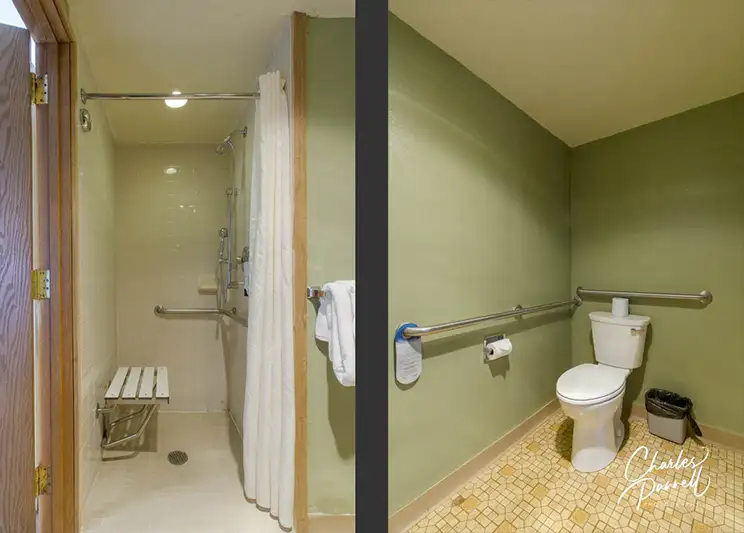
The spacious bathroom is equipped with a three-foot-square transfer-type shower with a fold-down shower bench, grab bars and a handheld showerhead. The toilet grab bars are located on the back and right walls (as seated), and there is a roll-under sink just outside the bathroom. The room is very nicely done, and they even remembered to lower the towel bars.
On of the best features of this room is the private balcony, which offers level access and plenty of room for a wheelchair. Even if it’s too cold to sit outside, you can still enjoy the view from the large picture window. And since there’s no television in the room, you can occupy your time by star gazing and enjoying all that Mother Nature has to offer — and that’s reason enough make Far View Lodge your home base in Mesa Verde National Park.
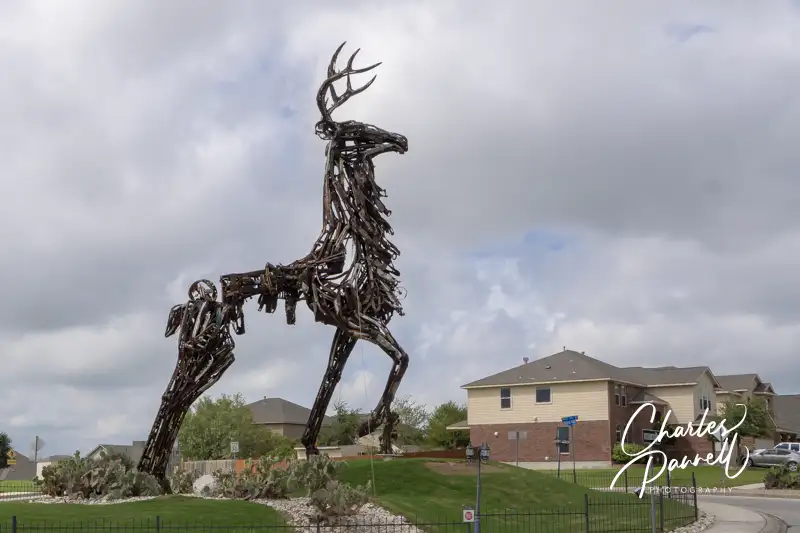
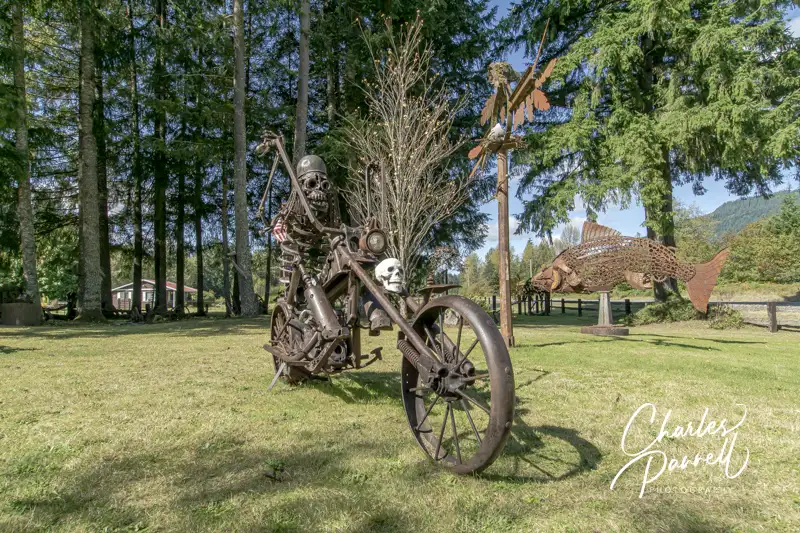
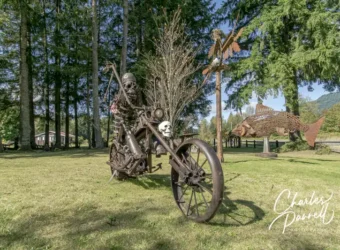
Located 11 miles west of the Nisqually Entrance to Mount Rainier National Park, Recycled Spirits of Iron Sculpture Park features the works of Daniel Klennert. And as the name implies, his creations are crafted from recycled and discarded objects. The front installations are dwarfed by a giant train near the entrance, and they include everything from a broomstick horse, and a wagon wheel, to a seahorse crafted from horseshoes, a collection of birds, and a number of themed motorcycles. Around back the installations continue with another train, more motorcycles, a collection of outhouses and an X-rated Mona Lisa. And although it’s a little bumpy in the back, the front garden and the inside gallery and gift shop are wheelchair-accessible.
Although swamps are generally not a top destination choice for wheelchair-users, Everglades National Park (www.nps.gov/ever) may well be the exception. Located in South Florida, this vast track of protected wetlands spans over 1.5 million acres and attracts backcountry enthusiasts from around the world. Granted, the undeveloped areas of the park are not wheelchair-accessible; however there are still plenty of Everglades options for wheelchair-users and slow walkers. In fact, two particular areas of the park – Royal Palm and Shark Valley – boast a bevy of boardwalks and trails for visitors of all abilities.
Royal Palm
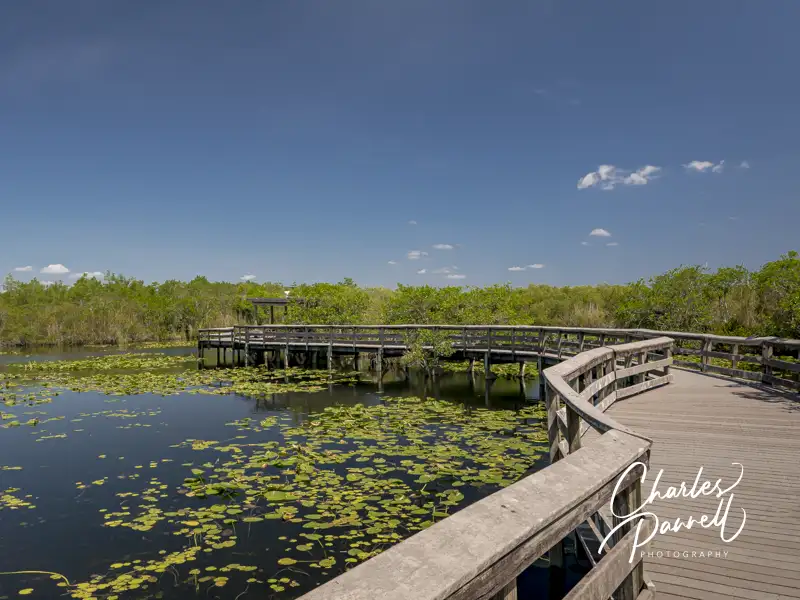
The Anhinga Trail in Everglades National Park
First up on our wheelchair-accessible Everglades visit is Royal Palm, which is located about 20 miles southwest of Florida City. Named for the former state park that grew into the Everglades, this area offers two accessible trails that give visitors a good overview of the native wildlife. There’s plenty of accessible parking in the large lot, with level access to the accessible restrooms, visitor center and gift shop.
The Anhinga Trail – one of the most popular trails in the park — is located behind the visitor center. This .8-mile loop trail begins as a paved path, before it transitions to a wide level boardwalk around the sawgrass marsh. A shaded viewing platform is located midway along the boardwalk, and there’s ample opportunity to catch a glimpse of alligators, turtles and a wide variety of wading birds. And if you get tired, no worries, as there are plenty of benches along the way too. Keep a lookout for the namesake Anhingas, that can be seen in abundance drying their colorful wings in the sun, or perched peacefully in the trees along the trail.
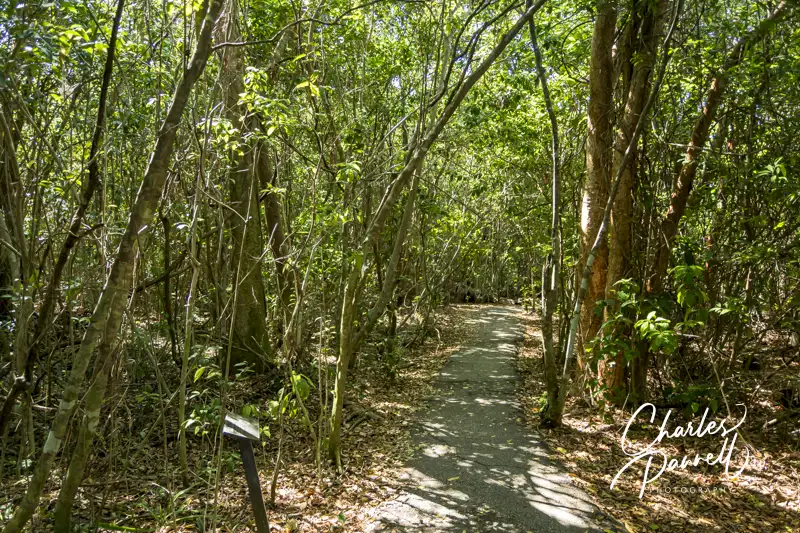
The Gumbo Limbo Trail is also worth a stop while you’re in the area. This .4-mile loop trail begins behind the visitor center, and travels through a tropical hardwood hammock. There are plenty of interpretive plaques along this paved trail; and although the pavement has a few cracks here and there, it’s still quite doable for most folks. The gumbo limbo trees, with their unique peeling red bark, offer shelter to a variety of avian life; and the royal palms, ferns and air plants add a bit of diversity to the forest. It’s a refreshing stroll, especially on a hot day.
The Gumbo Limbo Trail in Everglades National Park
Take a Tram Tour
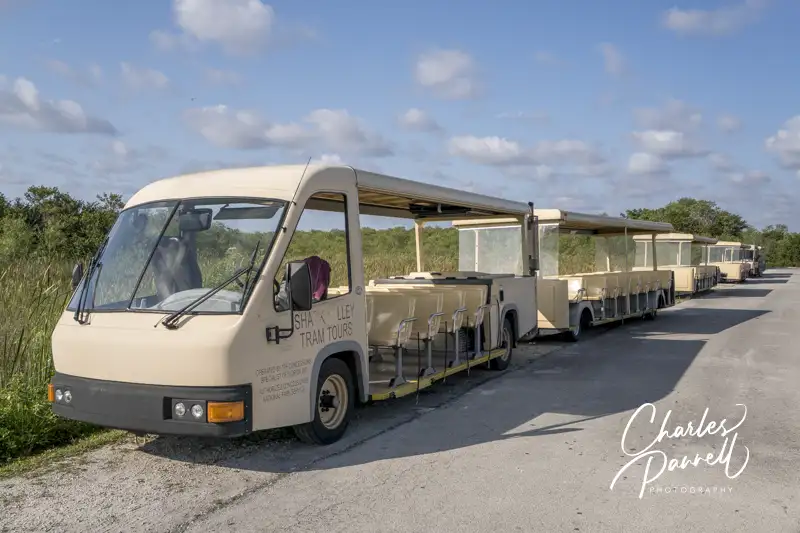
The Shark Valley Tram in Everglades National Park
Shark Valley is another area of the park worth a visit on a wheelchair-accessible Everglades itinerary. It’s located north of Royal Palm, on the Tamiami Trail (Highway 41), about 40 miles west of Miami. And although it doesn’t have any sharks, and it’s really not much of a valley, the sawgrass marsh supports a healthy freshwater ecosystem.
There’s barrier-free access from the accessible parking area to the visitor center, which is the departure point for the popular Shark Valley Tram Tour (www.sharkvalleytramtours.com). This two-hour tour is led by a naturalist who points out some of the hidden treasures in the Everglades. The tour stops at the halfway point at a 45-foot high observation tower, where visitors can get a bird’s eye view of the surrounding swamp. Even better, the tower includes a gently sloping ramp that allows wheelchair access to the top deck.
The tour is conducted in an open-air tram, which can be configured for wheelchair access. There’s ramp access up to the accessible car, which features two wheelchair spaces with tie-downs. Advance notice is required for accessible tours, and reservations can be made by calling (305) 221-8455. And since there are no facilities along the way, it’s a good idea to use the accessible restrooms at the visitor center before the tour. It’s also a good idea to bring along some water and a snack, as there aren’t any concession areas along the tour route either.
Explore Shark Valley
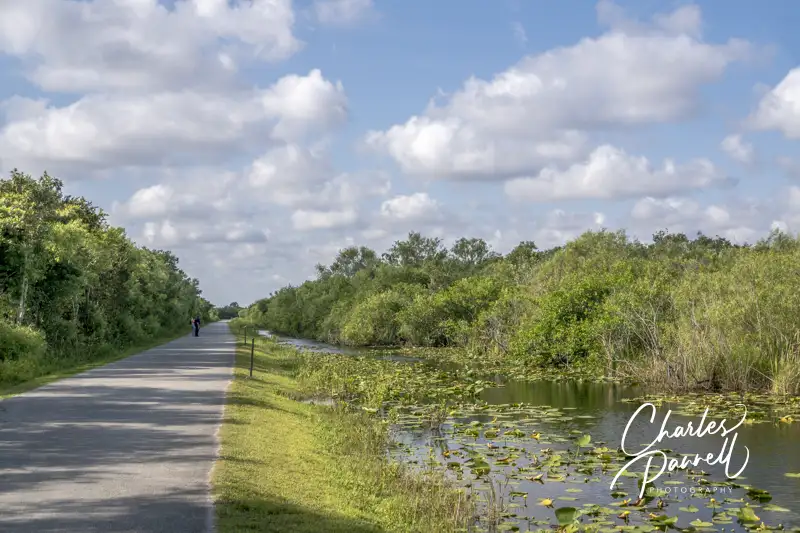
Shark Valley Trail
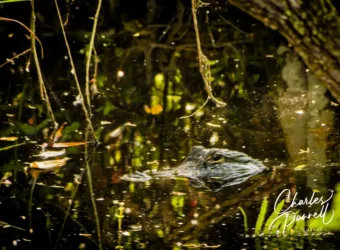
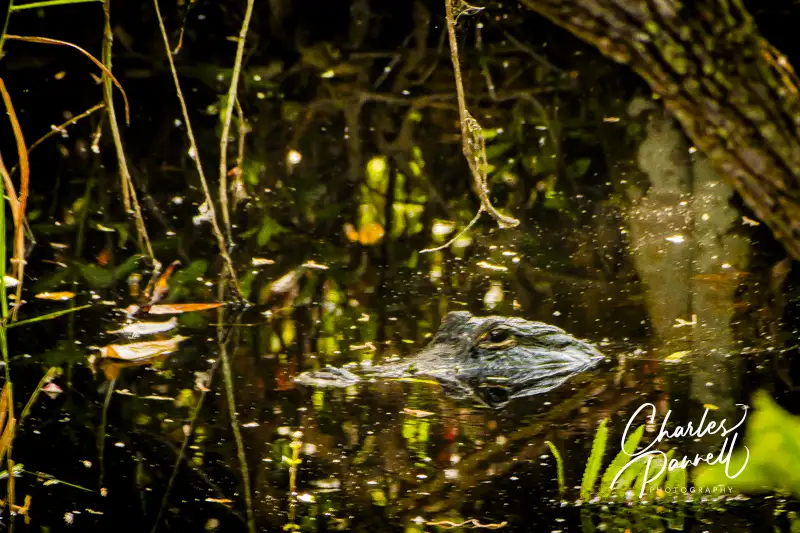
The road that the tram tours runs along — Shark Valley Loop Road — is flat and paved, and it’s also a good choice for wheelchair-users who don’t opt for the tram tour. There’s a fair amount of bicycle traffic along the road, but it’s pretty wide, so there’s plenty of room for everyone. Be sure and stop and look in the grass alongside the road, as it’s not unusual to find alligators there. And if you hear something growling at you from the water, don’t be alarmed, as it’s probably only the mating call of the harmless pig frog.
The Bobcat Boardwalk, which is located behind the visitor center, is also a good place to get a look at – and have a listen to – the swamp inhabitants. This wide level .5-mile boardwalk winds over the marsh and through a mature gumbo limbo forest. There’s a wheelchair accessible overlook along the way, and although you may hear bobcats rustle in the underbrush, they are usually pretty shy. That said, it’s still a good place to spot alligators, and the forest canopy provides a welcome respite on sunny days.
Big Cypress National Preserve
The Kirby Storter Boardwalk in Big Cypress National Preserve
Although it’s not part of the Everglades, save some time to stop at the Kirby Storter Roadside Park on your way to or from Shark Valley. Part of the Big Cypress National Preserve (nps.gov/bicy/), this accessible rest area is located about 30 miles west of Shark Valley. It features accessible parking, with accessible vault toilets nearby, and level access to a shaded picnic area.
After you’ve had a bite to eat, take a stroll along the half-mile accessible Kirby Storter Boardwalk. There’s level access to the boardwalk which travels through a young cypress marsh, before it transitions to a mature pop ash and red maple forest dotted with orchids. The forest canopy shades the trail until it opens up to a full swamp at the end of the boardwalk. There are interpretive signs along the way, and a bench to enjoy the swamp view at the end. It’s a good place to spot alligators, especially during mating season. And since many people pass right on by this scenic stop, you may even have it all to yourself. It’s a great way to top off a wheelchair-accessible Everglades visit.
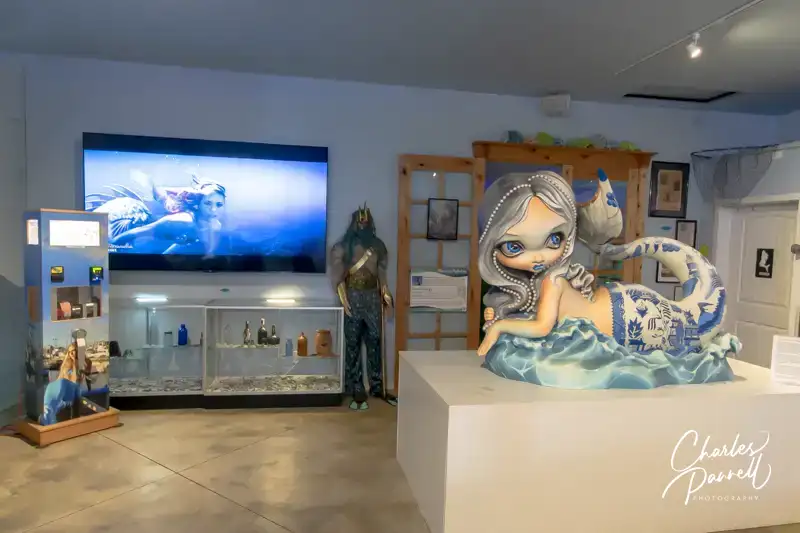
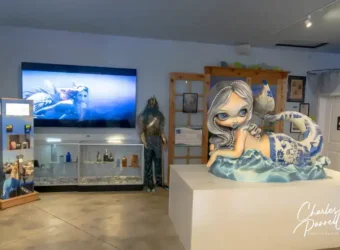
www.mermaidmuseum.org This eclectic museum is worth a stop while exploring Northwestern Washington. It’s located off Highway 105, between Aberdeen and Westport. The building is set back off the road and easy to miss, so look for the signs for Westport Winery, which is located next door. There’s accessible parking out front, with barrier-free access over to the museum. Inside, there’s plenty of space to maneuver a wheelchair around the mounds of memorabilia, photos, artwork and ocean treasures.
The exhibits range from a sea glass collection to clips from the Little Mermaid, to shark jaw bones, sea creature photos and a sizable art collection. As you browse through the artifacts, you’ll learn about the anatomy of a mermaid, see objects that illustrate the siren sea stories, hear about hoaxes and learn about different cultural views of mermaids. These mythical creatures were described by Christopher Columbus as “not half as beautiful as they are painted”, and seafarers who captured them reportedly received three wishes. Myth or mystery, it’s a fun and fanciful stop. And don’t miss the gift shop that’s bursting with mermaid memorabilia.
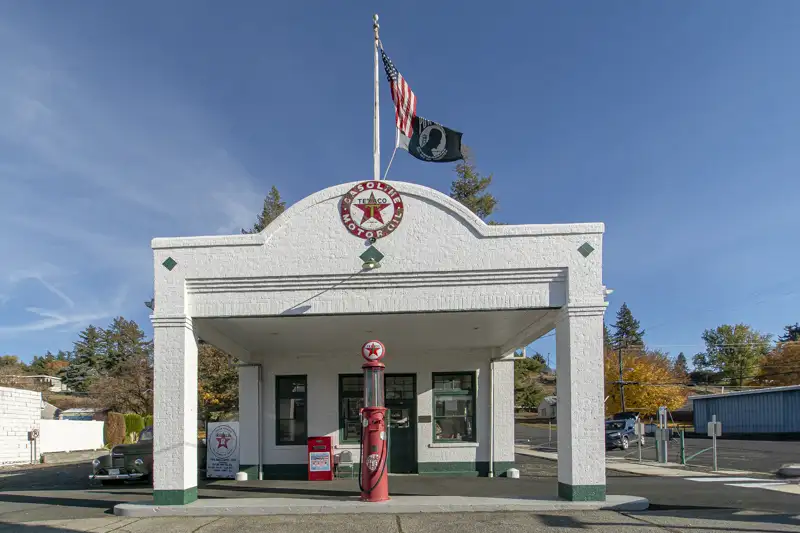
Located along the main drag in Rosalia, this Texaco service station was built in 1923. It’s listed on the National Register of Historic Places, and the brick building stands as an intact example of the “house and canopy” design that was prevalent in that period. Today this Texaco station boasts a vintage gas pump, and evokes a feeling of yesteryear. The restoration is well done, and it’s kept up nicely. There’s street parking available, and when the station is open, there’s also a accessible parking spot cordoned off with an orange cone. There’s a vintage truck on the side of the station, and it’s a great photo op. The station is sporadically open as a visitor information center, but even if it’s closed you can still peer in the windows for a gander at the interior, which is also restored. There’s good access all around the station, and it’s just a few miles off Highway 95 in Southeastern Washington, so it’s a nice stop on a Palouse road trip.