I’d like to plan a trip to the Big Island of Hawaii with my brother who has Cerebral Palsy. He uses a large manual wheelchair, and we have an adapted van at home. Do you know where I can find a wheelchair-accessible rental van on the Big Island for a week? I will do the driving, so hand controls are not necessary. Thanks for any information you can provide.
It sounds like you are planning a wonderful trip, as the Big Island is a beautiful place. It also doesn’t get as many tourists as more popular Honolulu. And yes, you can rent a wheelchair-accessible van on the Big Island.
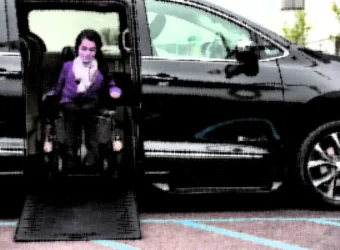
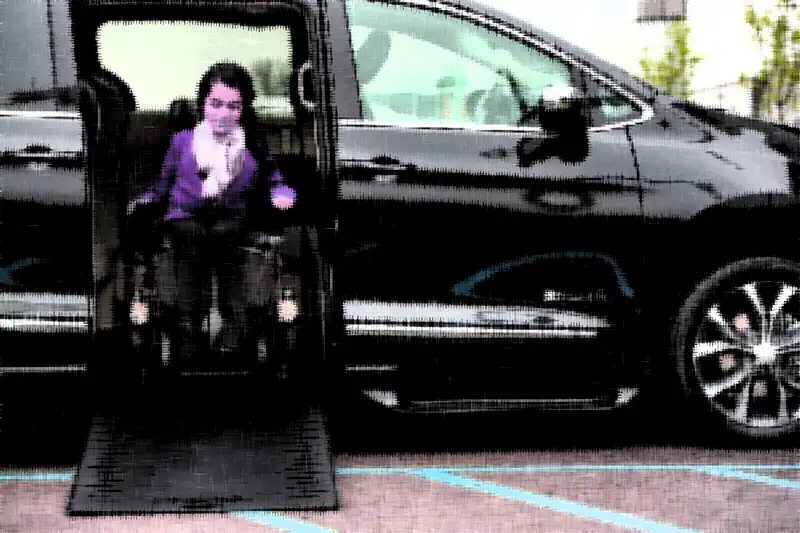
Wheelers of Hawaii (wheelersofhawaii.com/) can provide a wheelchair-accessible rental van on the Big Island.They offer Dodge and Toyota minivans with manual side ramps. The rental vans must be booked in advance, and they can be delivered to Kona International Airport upon your arrival.
Alternatively, if you would like someone else to do the driving, and not have to rent a van for the full week, then check out the accessible services of Go Hawaii Transportation (www.bigislandlimousine.net/services/wheelchair-service/). They can provide accessible ramped vans with a driver at both Hilo and Kona airports, as well as provide connections to anywhere on the Big Island.
In the end, you may want to do a combination of both private transportation and a wheelchair-accessible rental van on the Big Island. Have a great trip!
Have a Question for the Expert?
Barrier-Free Travel
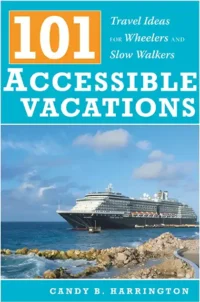
101 Accessible Vacations: Travel Ideas for Wheelchair-users and Slow Walkers
I’m taking a Canadian vacation next year and I will be basing myself in Calgary for a few weeks. I use a manual wheelchair and I’d like to take a side trip to Banff for a few days. I’m looking for an accessible transportation provider that will allow me to say in my manual wheelchair for the trip between Calgary and Banff. I’ve found one company that can provide accessible transfers in a private van, but they are out of my price range. Can you recommend a company that can provide affordable wheelchair-accessible transportation to Banff from Calgary?
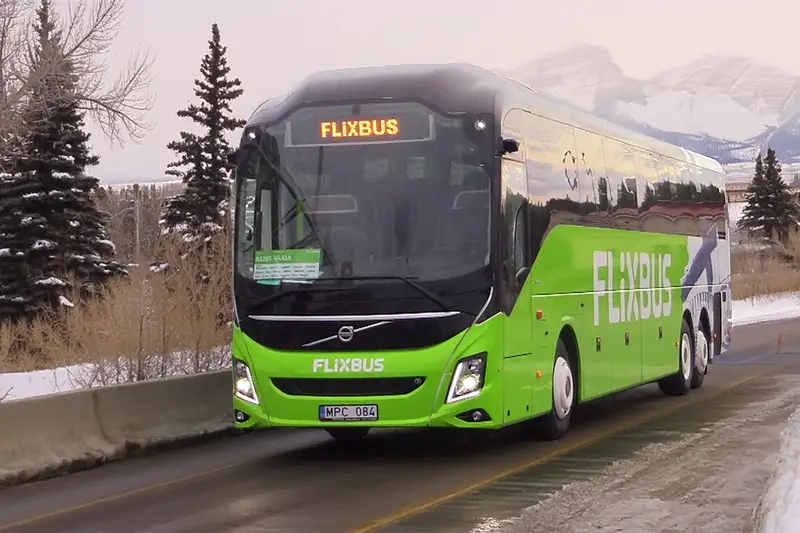
Hop Aboard Flixbus!
Well if you are looking for affordability, then look no further than Flixbus (www.flixbus.com). They offer accessible bus transportation between Calgary and Banff that won’t break the bank. Instead of standard fares, Flixbus uses a dynamic pricing model, where fares are driven by demand, booking time and seat availability. This model is similar to the one used by airlines, with fares usually increasing as the departure date approaches. So if you have the ability to plan ahead, you can save more money. That said, even the highest Flixbus fares are still a deal.
Flixbus also offers good accessibility, and you can certainly stay in your wheelchair for the entire journey. In fact they can accommodate wheelchairs or scooters with a combined total weight (including the passenger) of 600 pounds and dimensions of 30 inches X 48 inches for wheelchairs, and 30 inches X 30 inches X 48 inches for scooters. Additionally, some buses have hydraulic lifts with weight limits of 800 pounds to accommodate heavier devices.
Booking a wheelchair ticket on Flixbus is pretty easy. After you choose your destination, you can book the kind of fare you need from the drop-down menu. One of those choices is for “traveling with a wheelchair or mobility device”. After you book your ticket, customer services gets an automatic notification of the booking, so that accessibility can be confirmed and the appropriate equipment is dispatched. If the wheelchair spaces are already book on your first choice, you will automatically be rebooked on the next available bus.
And of course, if you have any problems or issues, you can always contact customer service at (855) 626-8585. So give Flixbus a try – it’s an affordable and accessible option for your Canadian vacation.
Have a Question for the Expert?
Barrier-Free Travel Glacier, Yellowstone and Grand Teton National Parks for Wheelers and Slow Walkers
I was looking around for an Airbnb and found what I thought would be the perfect one for me. It’s a large owner-occupied house, with a private room and access to the public areas. I travel with a service animal, and the owner noted that no animals are allowed in her Airbnb. I understand a “no pets” policy, but aren’t service animals covered under the Americans with Disabilities Act (ADA)? Can this Airbnb deny my service animal under the law?
Airbnbs and Service Animals
Airbnbs are becoming more and more popular, and as such they are also becoming a doable choice for people with disabilities. With the aging of society in general, many Airbnbs have made access improvements, so now more slow walkers and wheelchair-users can also enjoy them. But you bring up a valid point about service animals. Are Airbnbs required to accept service animals under the ADA?
Title III of the ADA (www.ada.gov/resources/title-iii-manual/) covers public accommodations like places of lodging, restaurants, stores and public spaces. And these public accommodations are required to accept service animal (dogs). This includes Airbnbs and other overnight rentals; however the rules are slightly different for owner-occupied units. Under the law, owner-occupied homes that rent fewer than six rooms are exempt from the ADA, so those properties can exclude service animals.
So yes, if this property offers fewer than six rental rooms, it can legally forbid you to bring your service animal.
That said, some private rentals allow animals – all animals. So I would search around for those properties that welcome animals, so you won’t run into any problems with your service animal.
Barrier-Free Travel the Grand Canyon for Wheelchair-users and Slow Walkers
My husband and I are planning a trip to Yellowstone National Park. We live in New Hampshire, so we plan to fly out west and rent an accessible van to explore the area. Can you tell me where I can find an accessible rental van in Yellowstone National Park? Also any suggestions for accessible hotels in the park would be greatly appreciated. I use a manual wheelchair and I absolutely love the outdoors.
Rent an Adapted Van
Well if you love the outdoors, then Yellowstone National Park is certainly the place for you. The scenery is beautiful and the park boasts a lot of accessible trails, picnic areas, sights and lodging options.
Unfortunately you won’t find an accessible rental van in Yellowstone National Park. Instead, you can rent one in one of the gateway cities. I suggest flying into Salt Lake City, Utah. It’s about a five-hour drive from the airport to the the West Entrance of Yellowstone National Park, where you can begin your visit. And you can rent an accessible van from United Access (www.unitedaccess.com) in Wood Cross, which is about 15 minutes from the Salt Lake City Airport.
Finally, let’s talk about accessible lodging in Yellowstone National Park. All of the major park hotels offer accessible rooms; however Canyon Lodge (www.yellowstonenationalparklodges.com/lodgings/cabin/canyon-lodge-cabins/) is one of my favorites. It’s the largest property in the park, with over 500 rooms, and it’s located near the Grand Canyon of the Yellowstone River. And even though it’s a large property, there is a wheelchair-accessible shuttle that runs between all the lodge buildings to the dining facilities, retail outlets and the visitor center in nearby Canyon Village. So, you can just park the car when you arrive.
Canyon Lodge offers a variety of accessible rooms. Room 1136 is furnished with two 26-inch high queen-sized beds with an access aisle between them, and has a bathroom that’s equipped with a tub/shower combination with grab bars and a hand-held showerhead. Add in a toilet with grab bars and a roll-under sink, and you have a very nice accessible room. If, on the other hand, you’d prefer an accessible room with a roll-in shower, room 4305 will work nicely for you.
Canyon Lodge also has an accessible cabin (cabin 32) which is furnished with with a 24-inch high twin bed (with a trundle), and a 26-inch high open-framed queen-sized bed. The bathroom is equipped with a roll-in shower with grab bars, a hand-held showerhead and a fold-down shower bench. The toilet is outfitted with grab bars, and there’s a roll-under sink in the guest bedroom. It’s a nice premium accessible lodging choice.
Truly, Canyon Lodge has a room to suit just about every taste and budget. There’s also barrier-free access to all the public areas at this property. It’s a great place to base yourself for a wheelchair-accessible Yellowstone adventure.
Barrier-Free Travel Glacier, Yellowstone and Grand Teton National Parks for Wheelers and Slow Walkers
My husband uses a manual wheelchair and we are planning a European vacation. I’d like to rent a van and do a self-drive trip instead of relying on a car with a driver or a tour. Do you know of any agencies that rent wheelchair-accessible rental vans in Europe?
Doing a self-drive European vacation is a great idea, because it allows you a lot of flexibility. You can visit sites whenever you want, and take a break if you feel a little low on energy. It also puts you in total control of doing exactly what you want to do every day on your vacation.
Here are a few resources for finding wheelchair-accessible rental vans in Europe.
Handynamic
handynamic.com Handynamic has agencies located in France and Portugal, which offer wheelchair-accessible vehicles. They have vans with multiple wheelchair spaces, minivans with one wheelchair space, and cars with hand controls.
Wheeliz
wheeliz.com/en Headquartered in France, Wheeliz partners with private individuals to offers the largest fleet of wheelchair-accessible rental vehicles in the country. Offerings include both ramped vans and cars with hand controls. As an added bonus, the car owner’s insurance covers the rental, so no additional policy is necessary.
Mobility Ireland
motabilityireland.com/hire-vehicle Available at the Dublin Airport, Mobility Ireland offers several adapted vehicle rental options. They have an automatic transmission van with hand controls and steering aids, as well as a ramped accessible van available. Hand controls are also available on the ramped van.
Europcar
europcar.com/en-us/p/offers/mobility-for-disabled-people Last but not least in our lineup in wheelchair-accessible rental vans in Europe is Europcar. Located in Switzerland, they have a VW Caddy Maxi that can accommodate four passengers as well as one wheelchair-user. It includes a rear-entry ramp and tie-downs in the vehicle. And thanks to co-financing from the Cerebral Foundation, these adapted rental vehicles are available at a reduced cost.
Barrier-Free Travel 22 Accessible Road Trips Driving Vacations for Wheelers and Slow Walkers
I reserved an accessible room through an online third-party booking site. All seemed OK when I reserved the room, but when I got to the hotel, there was no accessible room for me. The hotel blamed it on the booking site and the booking site blamed it on the hotel. What did I do wrong and what can I do to avoid this in the future?
Who is to Blame?
First and foremost, you didn’t do anything wrong. Unfortunately it’s a bit of a convoluted system. Basically it’s up to each property to provide third-party booking sites with the availability and description of their of accessible rooms. Unfortunately this can and does change a lot, as folks also make reservations directly at the hotels. So, the hotel is supposed to keep the booking sites updated with this information. Does this always happen? In a word, no.
When it doesn’t happen, people end up making reservations for accessible rooms that are already reserved and should have been taken out of inventory. So, when a guest who has booked one of these non-existent accessible rooms arrives, that room is not available.
And unfortunately, since you technically didn’t make a reservation through the hotel, they cannot refund your money to you. You have to go back to third-party booking site to recover it. To say it’s a flawed system is somewhat of an understatement.
What’s a Traveler to Do?
It’s a difficult situation when each entity claims that it’s the other ones fault. And quite frankly, customers just don’t have the time to figure it all out. I feel strongly that you should file an ADA complaint in this situation, but who do you complain about? If you can’t figure it out, then let the Department of Justice (DOJ) sort it out.
File an ADA complaint against the third-party booking site and the hotel, and let the chips fall where they may. The DOJ needs to hear about cases like this, not only to possibly enforce the regulations, but to see and understand why they are not working. Filing an ADA complaint is easy – here are the details (emerginghorizons.com/why-you-should-file-an-ada-complaint/)
I’d also refrain from making reservations for an accessible room through a third-party booking site in the future. I understand that the discounted priced is a big draw; however is it really worth the discount if the accessible room won’t be available when you arrive? And today many properties advertise that they will meet the discounted rates of third-party booking sites, so I’d at least give them a call and ask if that’s a possibility.
In the end, it really is better to to book directly. Sometimes having a middleman just introduces errors, and when accessibility is at stake, you really don’t want errors.
I’m sorry you had this experience, and I hope that your next trip goes better.
Barrier-Free Travel Glacier, Yellowstone and Grand Teton National Parks for Wheelers and Slow Walkers
My husband and I like to travel. He has Multiple Sclerosis and I am his caregiver, but for a vacation I’d like a break too. We are on a budget and can’t afford to have a full-time agency CNA travel with us, plus my husband only needs help in the mornings and evenings. Do you have any suggestions for finding a traveling PCA (personal care attendant) so I can relax on our vacation too?
I totally understand your desire for a break from caregiving duties, as after all, it’s your vacation too. If you are going to base yourself in one city, I suggest contacting the local Center for Independent Living (CIL) and ask if they have any PCA referrals for your visit. Many of the folks who work at the centers have PCAs, so sometimes it works out if you just need help for a few hours a day. It’s not free, but usually the rates are reasonable. You might also contact the MS Association in your destination city and ask the same question. After all, personal referrals are the best way to find good PCAs.
Alternatively, you might get a friend or family member to agree to perform PCA duties in exchange for their travel expenses. I have known people who have gone this route, and it only works if you have a very clear understanding of duties and hours. It’s a way to dodge the charges of a traveling PCA, but again you need to thoroughly talk things out before you commit to this solution.
Hopefully this gives you a few ideas of where to look for some help. I hope you have a pleasant and restful vacation.
Barrier-Free Travel California National Parks Road Trips Travel Ideas for Wheelchair-users and Slow Walkers
I use a power wheelchair and I’m thinking about taking a cruise with my husband. I’ve never traveled before but a cruise really appeals to me. Are cruise ships wheelchair-accessible? And if so, will they work for my power wheelchair? I’d also appreciate any tips you have for planning a wheelchair-accessible cruise.
Access on the High Seas
The good news is that many cruise ships are wheelchair-accessible. Part of the reason is because they have responded to a growing market, and part of the reason is due to litigation. More specifically, there are two court cases that helped form the access requirements on cruise ships that call on US ports.
First and foremost is Spector v Norwegian Cruise Line. On June 6, 2005 the US Supreme Court decided in favor of the plaintiffs in this case, and ruled that the Americans with Disabilities Act applies to all foreign-flagged cruise ships that call on US ports. This ruling, however, fell short of requiring specific access guidelines for vessels.
Then in 2015 the Justice Department reached a settlement with Carnival Cruise Lines that provided the access standards for ships — even foreign flagged ships — that call on US ports. They must have fully accessible cabins, which are dispersed throughout the various classes of accommodations. These cabins must have 32-inch wide doorways, include accessible pathway access and turning radius, and have an accessible bathroom. And the reservation system must allow passengers with a disability to reserve an accessible cabin, and guarantee that accessible cabin reservation.
Cruise Planning Tips & Tricks
It’s great to have these standards, and to be honest, most cruise ships go above and beyond as far as access is concerned. That said, it does take a little more advance planning to book an accessible cruise.
First and foremost — start early. Even though cruise ships have accessible cabins, they are limited and they go quickly. Keep tabs on your cruise and try and book your cabin as soon as it’s released. It’s the best way to get the accessible cabin you need.
Also, remember to ask a lot of questions about the accessible cabin. They differ from cruise line to cruise line, and even on ships on the same cruise line. Always ask about access details that are important to you, such as bed height, toilet height and grab bar placement. And if you still have questions, ask them to e-mail you some photos. When you inquire about access, you might also want to include the pertinent measurements for your power wheelchair because just saying “wheelchair” can lead to a wide variety of interpretations. The good news is, you will find that many cruise ships can accommodate your power wheelchair.
It’s also a good idea to search for accessible shore excursions first, before you decide on a cruise. Some ports have more accessible options than others. It’s also prudent to book these accessible excursions directly with the provider as early as possible. Many cruise lines use the same providers and if you wait for them to book them, they may already be booked. Plan ahead to avoid disappointment.
I use a power wheelchair and I don’t drive or own a vehicle at home. I live in a big city and pretty much rely on public transportation. When I do take a taxi, I must remain in my wheelchair, as I cannot transfer to a standard seat.
I’m planning on taking several trips in the US and although I know that accessible cabs and van hires are available in some places, their service seems spotty and expensive. With the advent of ride sharing services I’m wondering how reasonable it is for me to rely on them for my future travels. Are Uber and Lyft wheelchair-accessible? I’ve heard they have accessible vehicles in some areas, but that’s about it. Can you give me more information on what wheelchair-accessible ride share services are available in the US, and how I can go about reserving them for my future travels.
The short answer to that question is that both Uber and Lyft have limited accessibility for power wheelchair-users; however they do have other services that will work for folks who use manual wheelchairs, or just need a little extra assistance.
Technically these ride sharing services are not required to have wheelchair-accessible vehicles in all of their locations, as they are considered a service that subcontracts out transportation rather than a transportation company. In short, they operate a network, while the individual contactors maintain their own vehicles and provide rides to customers. That said, under a 2022 settlement agreement, they are prohibited from charging waiting fees if disabled patrons happen to take longer to board their vehicles.
So although there’s not across the board accessibility in all locations, both Uber and Lyft can offer some wheelchair-accessible services in select US cities. Here’s how to secure an accessible ride on them.
Uber
Uber provides two type of accessible vehicle options — Uber Assist and Uber WAV. Uber Assist is for people who can transfer from their wheelchair or just need a little extra help getting into the vehicle; while Uber WAV is for wheelchair-users who cannot transfer to a standard seat.
Uber Assist drivers are trained to give assistance to slow walkers and wheelchair-users. Drivers can assist with transfers, and they have room to accommodate folding wheelchairs, collapsible scooters and walkers in their vehicles. These vehicles are not adapted, and they do not have ramps or lifts. Still, if you just need a bit of assistance, then Uber Assist is for you. To see if it’s available, log into the app, select your pick up point and destination, and scroll down to see if Uber Assist is one of the choice. It’s now available in over 40 cities on Uber X rides.
Uber WAV, on the other hand, provides transportation in a wheelchair-accessible vehicle. These vehicles have ramp of lift access so riders do not need to transfer to a seat. You order it the same way you order any Uber vehicle — just open the Uber App and enter your location and destination. If Uber WAV is available in your area it will appear in the choices. It should be noted that because of limited availability, wait times for Uber WAV scan be longer than for standard vehicles.
Uber WAVs are available in these US cities.
Boston
Chicago
Los Angeles
New York
Philadelphia
San Francisco
Washington DC
Lyft
Lyft also provides wheelchair-accessible vehicles (WAV). These WAV rides can fit a fixed frame wheelchair, and have ramp or lift access. You can reserve one much in the same way you reserve an Uber WAV. Once you download the Lyft app, go to the settings tab and check “wheelchair-access”. After you do this you will see a ride type called “wheelchair” when you request a ride. Just click on that, and you are good to go.
As with Uber, Lyft only has wheelchair-accessible vehicles in select markets. If you request a ride in an area that doesn’t have wheelchair-accessible vehicles, Lyft will send you a list of local resources that can provide wheelchair-accessible transportation.
Lyft drivers will assist with boarding wheelchair passengers. Additionally, you don’t need to request an accessible vehicle if you can transfer to the vehicle and stow your assistive device in the trunk. Drivers will also assist with the storage of mobility equipment.
Lyft WAVs are available in these US cities.
Boston
Chicago
Dallas
Los Angeles
New York City
Philadelphia
Phoenix
Portland
San Francisco
Ask a Local
Of course, true wheelchair access with ride share companies is still limited. Additionally, because of driver turnover it’s not always consistent. For the most accurate updated information, it’s best to talk to someone local who uses these services on a regular basis. They will be able to tell you about the local availability of Uber and Lyft wheelchair-accessible vehicles. Alternatively, you can also ask someone who has visited the area recently.
Local Facebook groups are a good resource for this information. Search for them in or around your destination. Additionally, some Facebook accessible travel groups may have folks who have recently visited your destination and are willing to share updated local transportation information.
Finally, be sure to plan ahead and give yourself plenty of extra time, as the waiting times for WAVs may be longer than for standard vehicles. Hopefully as technology and the need expands, we will start to see reliable ride share options in even more cities.
Barrier-Free Travel Yosemite, Sequoia and Kings Canyon National Parks for Wheelers and Slow Walkers
My husband uses a power wheelchair, and we really like road trips. We have an accessible van, and it’s nice that we can pack all our essential equipment with us, and have accessible transportation to get around and see the sights. That said, lately we have had a few problems finding accessible hotels that really meet our needs. I know everyone is different, and it’s nothing against the hotels, but some of the access features we would like to see are purely personal preference.
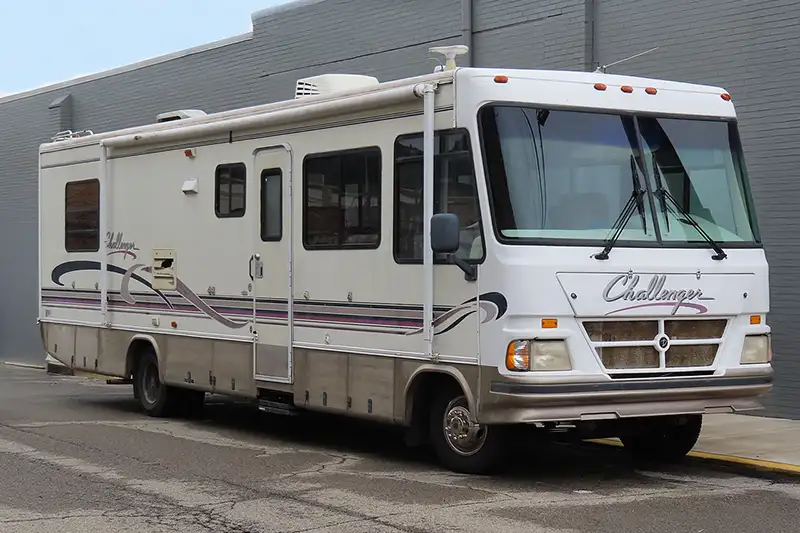
So I thought that perhaps renting a wheelchair-accessible RV would be a good solution for us. We could tow our vehicle and have an accessible place to spend the night. Sadly I’ve not been able to find a wheelchair-accessible RV for rent at the major dealers, so I think we will probably end up buying a rig. Still it would be nice to be able to “try before we buy”. Do you have any resources or tips for buying or renting a wheelchair-accessible RV in the US? Any information would be greatly appreciated.
Try Before You Buy
Wheelchair-accessible RVs are indeed a great choice for a road trip, for all of the reasons you mentioned. And yes, the “try before you buy” concept is a great idea; however I will say that wheelchair-accessible rental RVs are in short supply. Additionally, chances are they might not be the exact model you will eventually purchase. Still it will give you an idea if you like the RV lifestyle.
Unfortunately none of the mainstream RV rental websites really have what I would call accessible RVs. Granted you can search for “ADA-RVs” or “wheelchair” on some of them, but the results returned are far from what the average person would consider wheelchair-accessible. If you do go this route, I suggest you ask a lot of questions and request copious photos, as what I have seen would not accommodate a power wheelchair.
One good resource for wheelchair-accessible RV rentals is the Handicapped Travel Club. This group has been around for a long time, and the members have accessible RVs and meet annually for rallies. They also have a newsletter, and they share resources about accessible RV travel. Additionally, some of their members rent out their accessible rigs when they are not in use, so it might be a good place to find one to try before you buy. Their website (handicappedtravelclub.com) has lots of accessible RV travel tips, the current newsletter and a link to some accessible used RVs for sale. And their Facebook group (www.facebook.com/groups/handicappedtravelclub) is a good place to connect with other members.
Buying An Accessible RV
Once you decide you like the RV life, then it’s time to think about purchasing a rig. The good news is that many more companies now offer accessible models. Here are some to choose from.
The accessible Maxvan Pathway (maxvan.com/pathway) is a wide body Class B RV. It has a rear entry ramp, a compact toilet and shower area, a fold-out bed, tie-downs and an awning.
Newmar offers several Class A wheelchair-accessible RVs. (www.newmarcorp.com/wheelchair-accessible/). These spacious units all feature lift access and roll-in showers. And some even come equipped with adjustable height beds and dining tables.


 It sounds like you are planning a wonderful trip, as the Big Island is a beautiful place. It also doesn’t get as many tourists as more popular Honolulu. And yes, you can rent a wheelchair-accessible van on the Big Island.