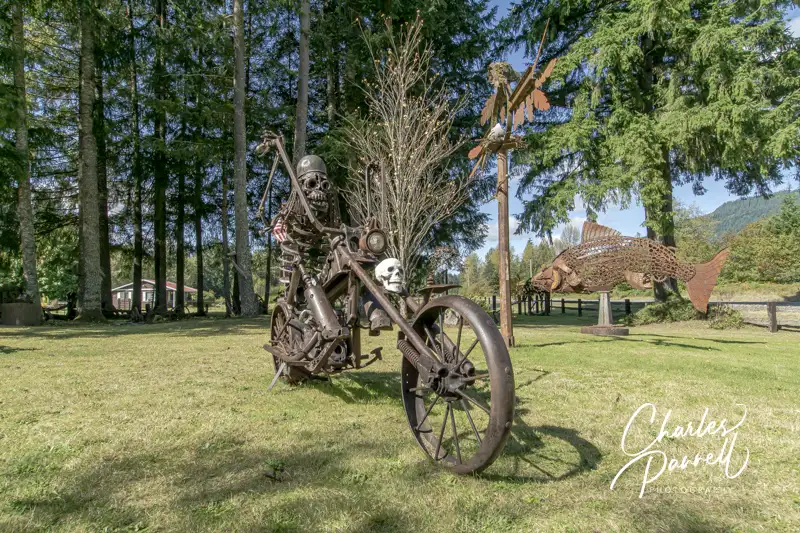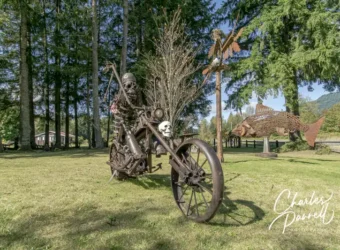
Located 11 miles west of the Nisqually Entrance to Mount Rainier National Park, Recycled Spirits of Iron Sculpture Park features the works of Daniel Klennert. And as the name implies, his creations are crafted from recycled and discarded objects. The front installations are dwarfed by a giant train near the entrance, and they include everything from a broomstick horse, and a wagon wheel, to a seahorse crafted from horseshoes, a collection of birds, and a number of themed motorcycles. Around back the installations continue with another train, more motorcycles, a collection of outhouses and an X-rated Mona Lisa. And although it’s a little bumpy in the back, the front garden and the inside gallery and gift shop are wheelchair-accessible.
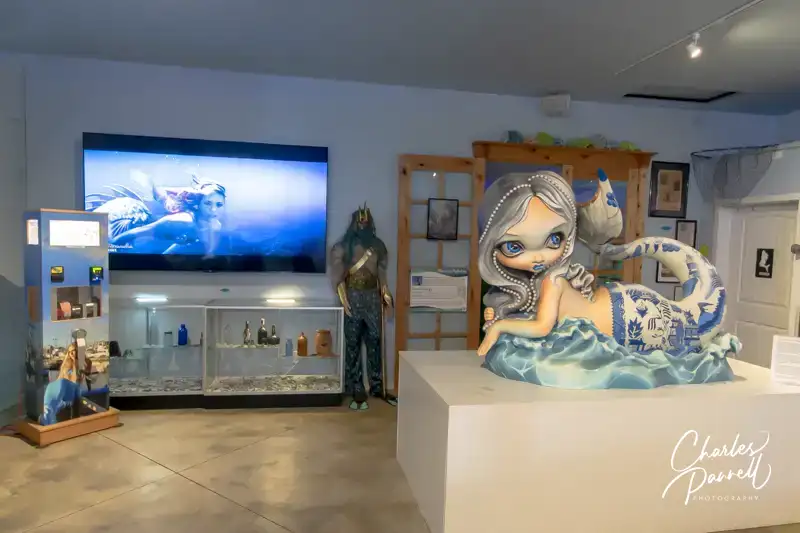
www.mermaidmuseum.org This eclectic museum is worth a stop while exploring Northwestern Washington. It’s located off Highway 105, between Aberdeen and Westport. The building is set back off the road and easy to miss, so look for the signs for Westport Winery, which is located next door. There’s accessible parking out front, with barrier-free access over to the museum. Inside, there’s plenty of space to maneuver a wheelchair around the mounds of memorabilia, photos, artwork and ocean treasures.
The exhibits range from a sea glass collection to clips from the Little Mermaid, to shark jaw bones, sea creature photos and a sizable art collection. As you browse through the artifacts, you’ll learn about the anatomy of a mermaid, see objects that illustrate the siren sea stories, hear about hoaxes and learn about different cultural views of mermaids. These mythical creatures were described by Christopher Columbus as “not half as beautiful as they are painted”, and seafarers who captured them reportedly received three wishes. Myth or mystery, it’s a fun and fanciful stop. And don’t miss the gift shop that’s bursting with mermaid memorabilia.
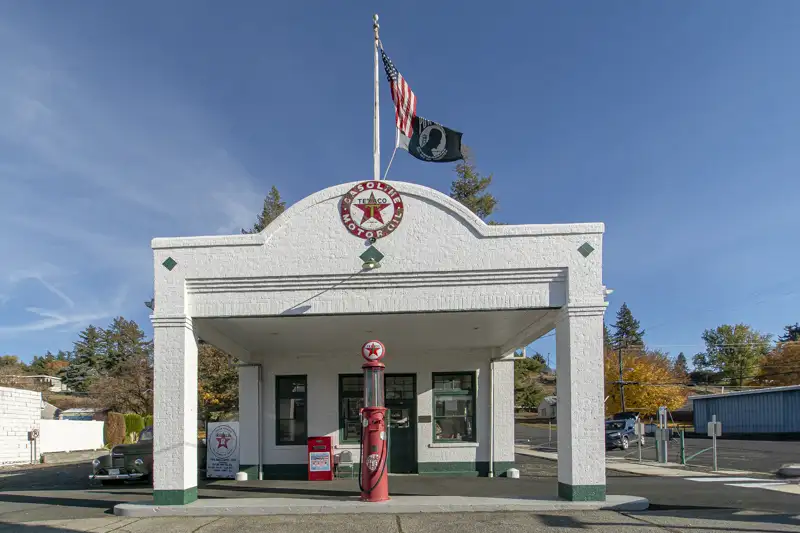
Located along the main drag in Rosalia, this Texaco service station was built in 1923. It’s listed on the National Register of Historic Places, and the brick building stands as an intact example of the “house and canopy” design that was prevalent in that period. Today this Texaco station boasts a vintage gas pump, and evokes a feeling of yesteryear. The restoration is well done, and it’s kept up nicely. There’s street parking available, and when the station is open, there’s also a accessible parking spot cordoned off with an orange cone. There’s a vintage truck on the side of the station, and it’s a great photo op. The station is sporadically open as a visitor information center, but even if it’s closed you can still peer in the windows for a gander at the interior, which is also restored. There’s good access all around the station, and it’s just a few miles off Highway 95 in Southeastern Washington, so it’s a nice stop on a Palouse road trip.
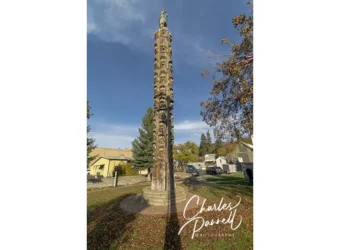
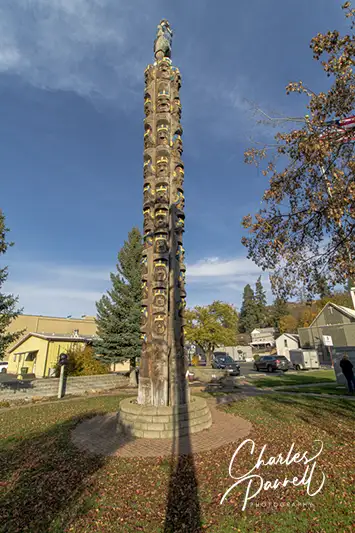
This local landmark has a fun history, and it’s a nice spot to take a break while driving along Highway 195 in the Palouse. It’s a small site, so if you have an adapted van it’s best to parallel park on the street in front of the tiny park that surrounds the Codger Pole. There’s also standard parking in the Farmers Insurance lot next door. From either point there’s level access to this unusual monument, which also has a picnic table on a cement pad.
The story behind the Codger Pole dates back to a historic 1938 football game between the Colfax Bulldogs and the St. John Eagles. The Colfax team lost, but 50 years later the “old codgers” asked for a rematch, and this time they won. This monument stands to commemorate the resolve and determination of that team. The pole, which is actually comprised of five 65-foot tall cedar poles, was carved with a chainsaw by John LaBenne. It includes the faces of all 51 players along with their original leather football helmets. It’s a fitting tribute to codger-hood.
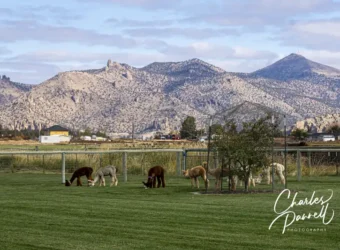
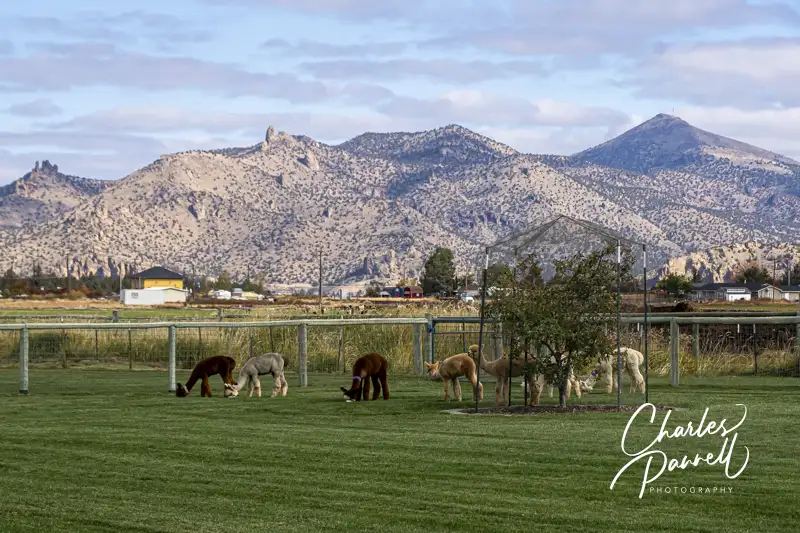
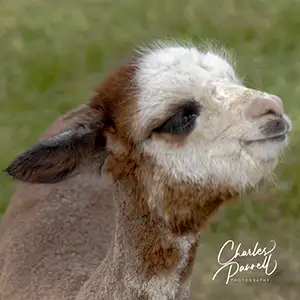
Crescent Moon Ranch is a working alpaca ranch, which is located on Highway 97 in Western Oregon, about 20 miles north of Bend. There’s accessible parking in front of the boutique — a required stop before you tour the grounds — with level access to the front door. Inside there’s plenty of room to roll around amongst the alpaca products, from socks and scarves to sweaters, shawls and even toys. And if you’d like to buy some food to feed to the alpacas, you can also find that there.
From there, you can wind around the barn and follow the marked path to the alpaca pens. The pathway is level, and a combination of dirt and grass. Although passable in a wheelchair, it’s muddy when it rains. The path winds arounds some large enclosures, and since the alpacas are used to getting fed, they’ll come up to you even if you don’t have any food. Along the way, you’ll get a little alpaca education from the informational signs posted on the pens. About half of the trail is doable for wheelchair-users; and after that the trail goes a bit uphill, crosses an irrigation pipe and bridge, and then heads over to the other side of the pasture. And the trail on that side is pretty uneven. So go in and enjoy the alpacas, and when the trail loses its access for you, just turn around. As an added bonus there are also some great views of the Three Sisters, Mt. Jefferson and Smith Rock from the ranch.
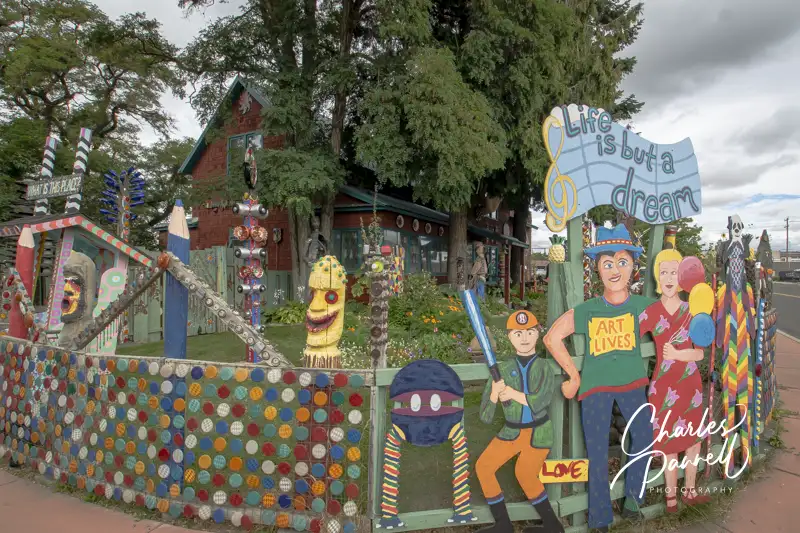
Created by Jane Orleman and Dick Elliott, this downtown Ellensburg home is decorated in a conglomeration of reflectors and other common items. And it’s more than just a work of art, as Jane still lives there. Sadly Dick passed away in 2008, but his artistic creation lives on in this house that the couple purchased in 1978.
The home is surrounded by a fence with posts adorned with everything from nails and keys, to bottle caps, insulators and even a few cooking implements here and there. A “Life is But a Dream” mural graces one side of the fence, and a nook with a guest book sits near the end. Add in a few insulators on the side, a racy mannequin with reflectors for boobs (Big Red), and a man with a camera for a face and you have everything but the kitchen sink — all artistically done of course. And don’t miss the gigantic hand that adorns the front, near the doorway. Dick and Jane’s Spot is truly a work of art, and everywhere you look, you find something different — and sometimes it’s pretty subtle. Other times, it’s hard to miss.
Access is good around the house, with sidewalks lining the venue, and curb-cuts at the corner. And there’s a little side alley that gives folks access to another aspect of the decorated home. There’s a parking lot that’s adjacent to the house, but there are no accessible parking spaces. Best bet is to park in the accessible street parking spots in front of the police station across the street. If you need accessible parking, set your GPS to 100 N. Pearl Street, as otherwise you’ll be routed through a few parking lots to the side of the house. Worth a quick stop for sure — an excellent photo-op.
Don’t let the “state park” moniker fool you, as this spot really is just a quick road trip stop. It makes for a good break if you are tooling along Interstate 90 in Southern Montana. Just take exit 208, then follow Highway 1 for about seven miles. You can’t miss it — just look for the small parking area right before abandoned guard shack.
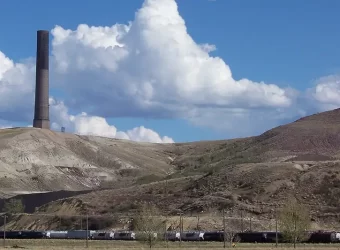
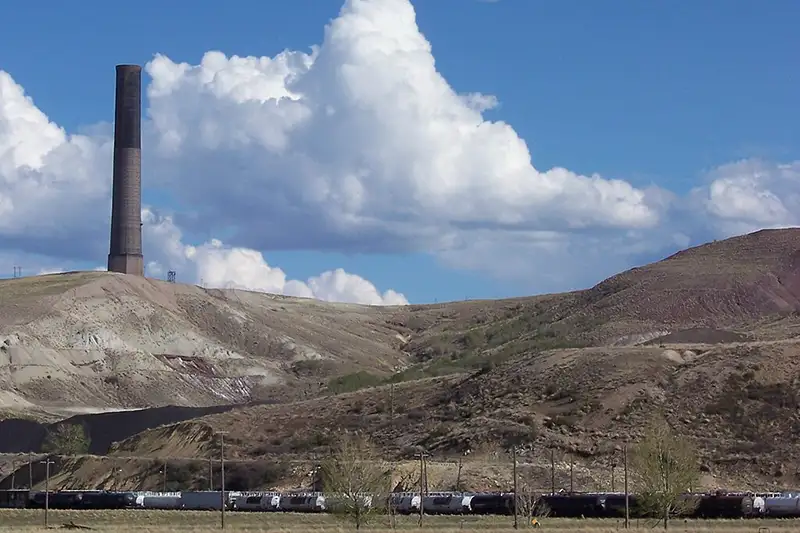
There’s accessible parking in the parking lot, with level access over to the exhibits. The first installation is a metal sculpture of a miner, a smelter worker and a railroad worker, and it represents the labor that built the local copper industry. From there, a level sidewalk leads up to a viewing area where you can get a good look at the remaining smoke stack. The smoke stack is 585 feet tall — about 30 feet taller than the Washington Monument. It’s one of the tallest freestanding brick structures in the world, and it serves as a reminder of the copper smelter industry that once dominated the local economy. Today the smokestack is all that remains of that era, and that industry.
There are no facilities in the parking lot — which pretty much comprises the whole state park — but there’s a rest area near the Interstate 90 exit. The smoke stack makes a nice detour if you are getting off to use the rest area; and it’s a good vantage point to get some smoke stack photos. And it’s free.
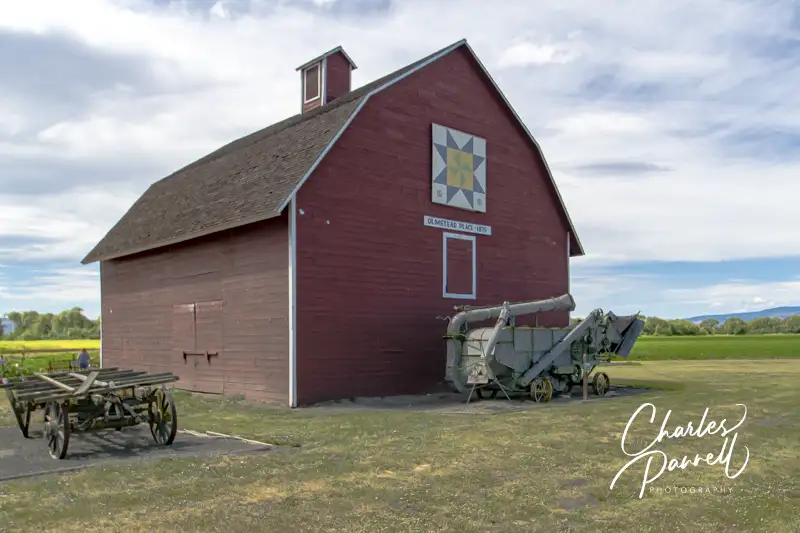
Located off Interstate 90 in Northwestern Washington, Olmstead Place State Park makes a nice road trip picnic stop. The GPS directions will take you to the old barn, but continue along Ferguson Road to the next driveway for the picnic area. There’s no striping in the small paved lot, but that’s OK because you’ll most likely have it to yourself. There are accessible vault toilets in the parking area, and a level gravel path leads over to several picnic tables on the grass. They aren’t any accessible tables, but there’s room at the end for wheelchairs. There’s a little freeway noise, but it’s a nice departure from the rest area picnic tables. And it’s not crowded.
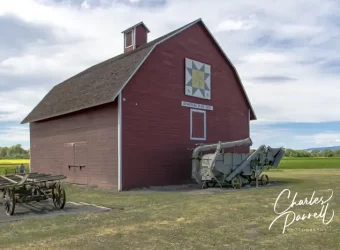
After lunch feel free to browse around the old homestead. The site is level and there are some gravel pathways but you’ll have to roll over the grass to get to a number of the buildings. There are a lot of farm out buildings as well as the old homestead to peruse. The barn area is also worth a look, and if you can’t manage the pathway, then it’s a short easy roll down Ferguson to get to it. There’s not much traffic on Ferguson, so it’s pretty safe. There’s a sizable display of farm implements next to the barn, and a decorative quilt square adorns the front. It’s a nice picnic spot, and a great place to dodge the crowds.
Dedicated to the rivers and fish of the Methow Valley, Homestream Park is a spot to pause, reflect and observe. And since it’s just off Highway 20, it makes for a good stop. That said, unless you have an accessible parking placard, there’s no vehicle parking in this urban oasis. There’s level access from the accessible parking area over to a covered and uncovered picnic area. And the good news is, both areas have accessible tables.
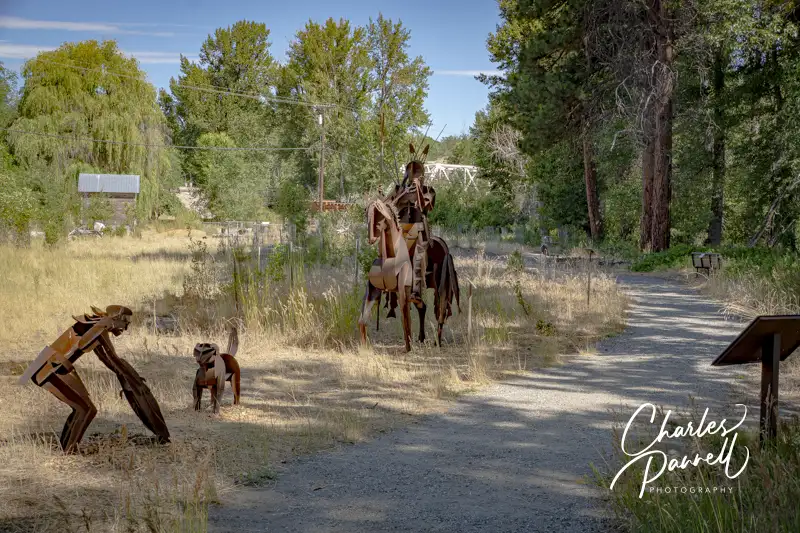
A short .2-mile trail runs along the river and loops back to the picnic area. And along the way it’s dotted with works by sculptor Smoker Marchand. These sculptures focus on the salmon and the original inhabitants of the Methow Valley. About half of the level hard-packed dirt trail is accessible, and there are several benches to sit down and take a break along the way. After the halfway point there are nine boulders along the trail, which represent the nine dams that the salmon encounter on their journey to the Pacific Ocean. Some slow walkers may be able to get around the boulders, but most spaces are too tight for wheelchair-users, so you’ll have to double back. Still it’s a nice spot to stop, enjoy a picnic, and peruse the sculptures.
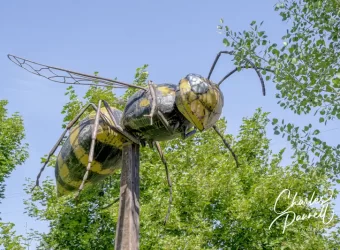
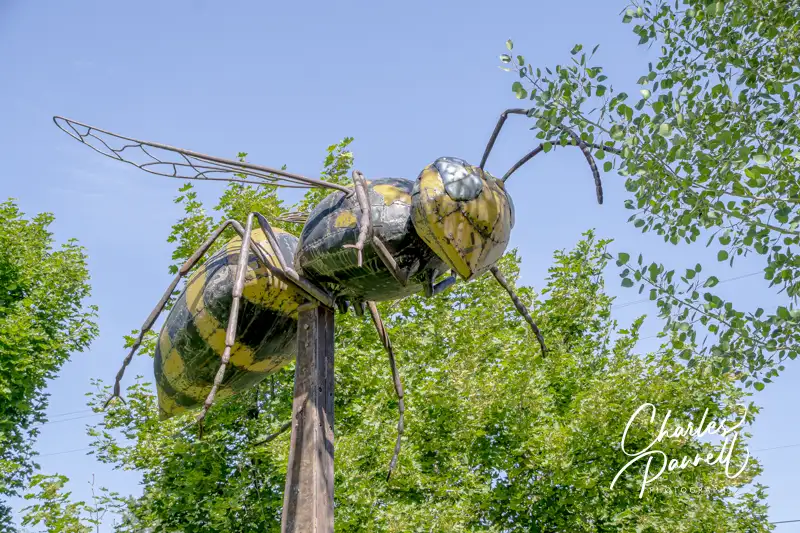
Created by local artist Barry Stromberger, this giant metal yellowjacket sculpture sits on a 15 foot pole in Twisp Commons Park. What makes it unique is that it was crafted from a 1951 Plymouth Cranbrook that was pulled from the Methow River, in an effort to improve the salmon habitat. Why a yellowjacket? It’s widely believed that the name of the town (Twisp) comes from the Okanagan word txʷəc’p, which supposedly translates to yellowjacket or wasp. And in keeping with the theme, the local high school also has a yellowjacket as a mascot.
There’s accessible parking in front of the Methow Valley Community Center across the parking lot from the sculpture. And if you need local visitor information, there’s ramped access to the building which has a nice selection of Methow Valley brochures and maps in the lobby. It makes a nice quick stop off of Highway 20.