Although it only takes a day to complete, the Golden Circle drive is the highlight of any Iceland visit. This popular route loops past waterfalls, geysers and all the spectacular scenery that makes the country a photographer’s dream. Not only are there some fantastic windshield views on the drive, but three of Iceland’s top natural attractions are also located along the route. So pack a picnic lunch and get ready to enjoy the scenic south on this fun Reykjavik side trip.
The Basics
The good news is, the Golden Circle route is an easy drive from Reykjavik. The roads are good, and there are plenty of signs along the way. The 190-mile route includes stops at Thingvellir, Geysir and Gullfoss, and features a beautiful country drive back to the city.
The bad news is that accessible rental vans are nearly non-existent in Iceland. That said, station wagons are widely available; so if you can transfer, fold up your wheelchair and stow it in back, that might be an option.
If not, there are several tour companies that can provide accessible Golden Circle tours. Prime Tours (primetours.is/) can customize a tour to meet your specific needs and interests. Their accessible van can carry one wheelchair-user and four other people, and their guides are well versed about access needs.
Where it All Began
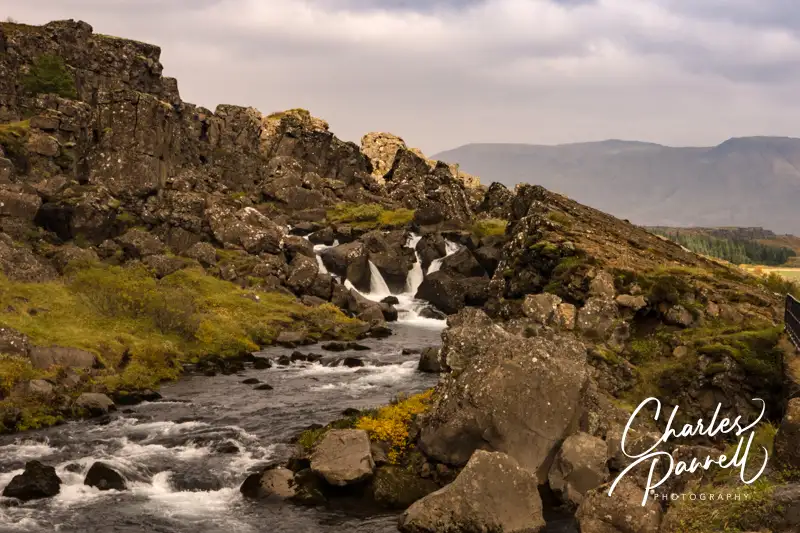
Waterfall in Allmanagjá Canyon, Thingvellir National Park
Located just 31 miles east of Reykjavik, Thingvellir National Park (www.thingvellir.is/en) is the first stop on most Golden Circle tours. Noted for both its beauty and geological value, this UNESCO World Heritage site is where the oldest existing Parliament first met.
People traveled to the Parliament sessions from all over the country and erected stone and turf shelters to protect them from the elements. Today, ruins of those structures can be seen in the surrounding fields. The assembly, which was held outside, took place at the Logberg (Law Rock) and the Logretta (Law Council). Unfortunately their precise locations are unknown, however interpretive panels that outline the history of the site are located throughout this national shrine.
The site was also designated as a national park in 1928 because of its tectonic and volcanic features. The continental drift on the North American and Eurasian tectonic plates can clearly be seen in the cracks and faults that are found in the area.
Access is variable throughout the site. Although paved pathways lead past the interpretive panels, there are a lot of rocks on the paths. Still, it depends on the time of year, and how recently the paths have been cleared. Some of the walkways may be a little steep, but there’s no harm in just doing as much as you can. It’s still a great stop as the drive around Lake Thingvallavatn is absolutely beautiful.
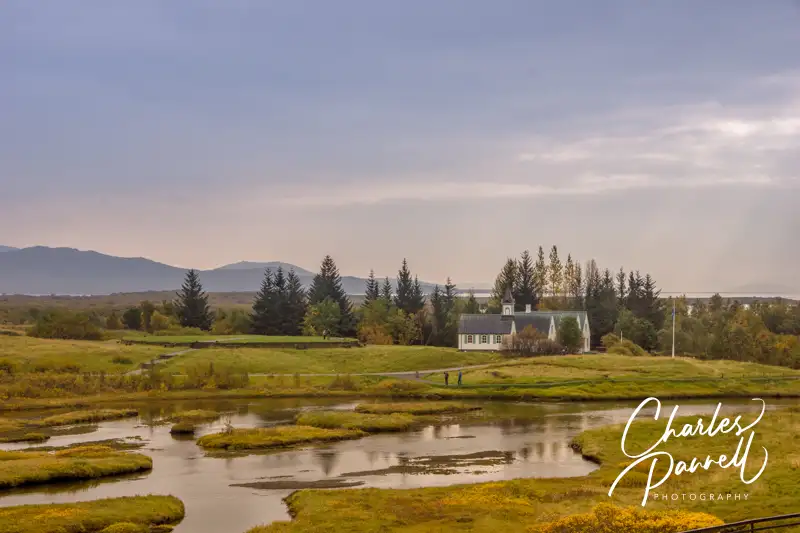
Thingvallakirkja Church in Thingvellir National Park
Geothermal Activity
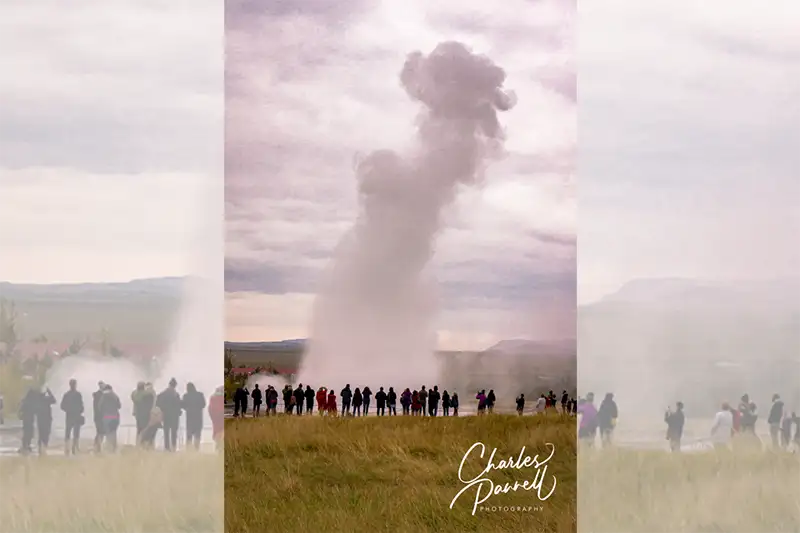
Strokkur Geyser
From Thingvellir, the route continues east to Highway 35, where you’ll find Geysir, a site of high geothermal activity. There’s level access to the Visitor Center, which has automatic doors and barrier-free access throughout the building. Inside there’s a restaurant, a cafeteria, a gift shop and a small collection of interpretive exhibits about the geothermal area. An accessible family restroom is also located in the building.
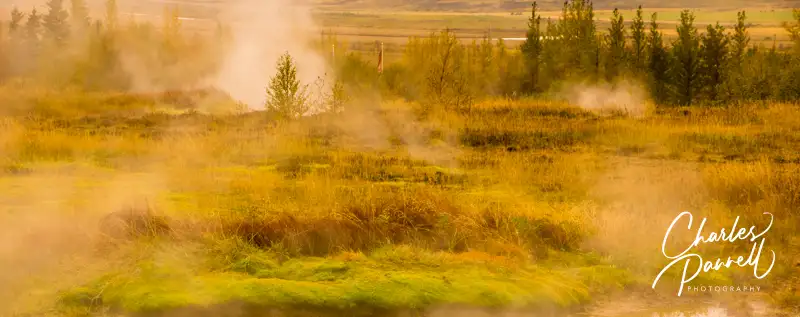
The geothermal area is located across the street, where a paved brick pathway leads around the Haukadalur geothermal area, which contains mud pools, fumaroles, algal deposits and geysers. The highlight of the geothermal area is the Strokkur geyser, which erupts every four-to-eight minutes. And although this Old Faithful of Iceland erupts regularly, some eruptions are more spectacular than others, so stick around until you catch one of the 30-foot high displays.
Steaming Grounds in Geysir
Cascading Waters
Gullfoss Waterfall
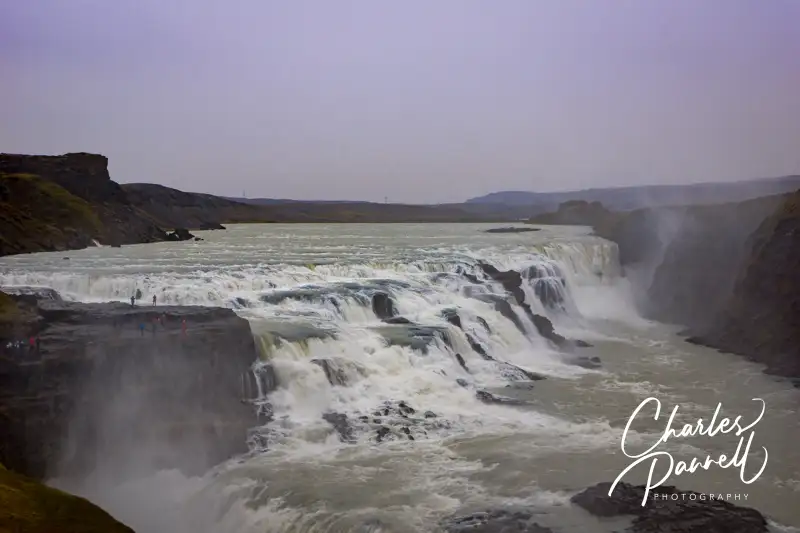
Just down the road from Geysir, you’ll find the crown jewel of the Golden Circle route, Gullfoss. Literally translated Gullfoss means “golden falls”, and on sunny days there’s usually a shimmering rainbow over the falls.
Accessible parking is located near a level boardwalk that leads out to an overlook. Even if you can’t manage the walk to the overlook, you’ll still get an excellent view of the double cascade falls tumbling down the rugged canyon, from just about anywhere along the boardwalk.
There is also stair access to an upper overlook, but the view is actually better from the lower overlook. Either way, the second largest waterfall in Iceland is definitely worth a stop, and it’s the perfect way to top off any Golden Circle drive.
Barrier-Free Travel 101 Accessible Vacations: Travel Ideas for Wheelchair-users and Slow Walkers
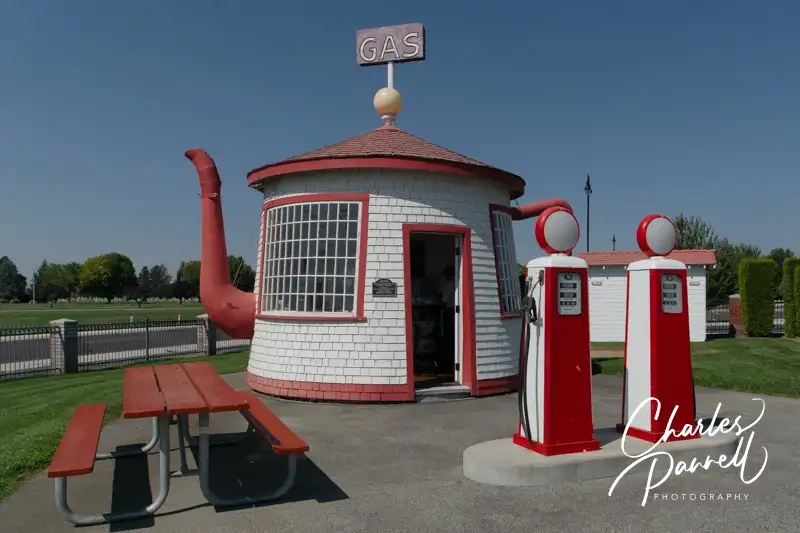
Handcrafted by Jack Ainsworth in 1922, the Zilla Teapot was originally constructed as a political statement, in response to the Teapot Dome Scandal in the Harding administration. It sat next to the Old Dalton Trading Company General Store for many years, until it was purchased by Mrs. AJ Thomas in 1928. Dalton then operated the Teapot Dome as a gas station for decades. During the construction of Interstate 82 in 1978, the teapot was scheduled to be removed; however before that happened it was hit by a car and nearly destroyed, It was subsequently reconstructed with the help of the Washington State Department of Transportation and moved to a site on the Yakima Valley Highway. In 2012 it was relocated to its current venue, where it serves as a visitor information center.
The teapot is located off of Interstate 82 at exit 52. There’s a small parking lot in front of the Zillah Teapot, but the accessible parking spot is located in the larger parking lot next door. There’s curb-cut access and an accessible sidewalk from the accessible parking space over to the teapot. A lone picnic table is located next to the teapot, but unfortunately it’s not shaded. Alternatively there are a few covered picnic tables in the park next door, which is connected to the teapot area by an accessible sidewalk. Round it out with accessible restrooms and a Fallen Firefighters Memorial, and you have everything you need for a road trip stop.
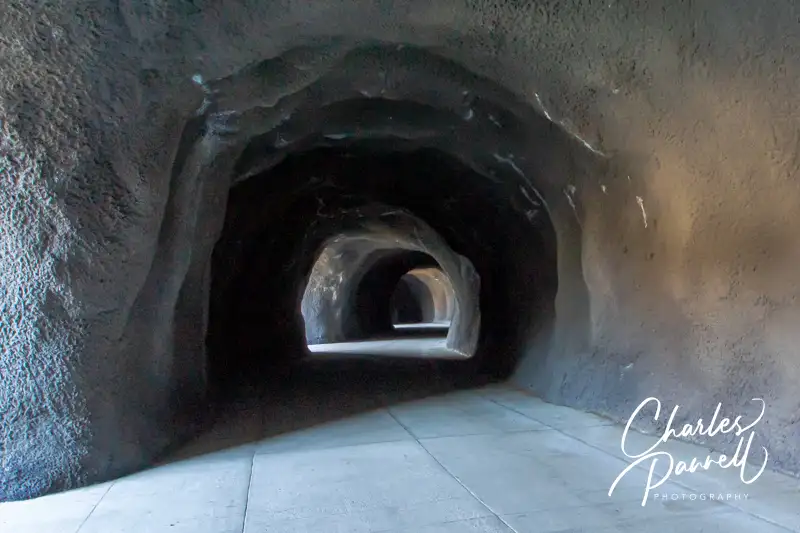
Designed by John Arthur Elliott who took his inspiration from a cliffside tunnel above Lake Lucerne, the original Mitchell Point automotive tunnel was built in 1915. Over the years, traffic along the Historic Columbia River Highway was rerouted to accommodate larger vehicles. In the 1950s the original tunnel was blocked with debris, and it was subsequently destroyed in 1966 during construction of the interstate. After decades of closure, in 2021 the Oregon Department of Transportation launched an ambitious project to build a replica pedestrian tunnel in the same location. The project was completed in 2025, and today the new Mitchell Point Tunnel is a must-stop when you’re heading east on Interstate 84, near Hood River. Just take exit 58 and follow the signs.
There’s accessible parking in the small parking lot, with level access over to the paved trail that leads out to the new Mitchell Point Tunnel. The trail parallels the Columbia River below, and thanks to cutouts in the high rock wall lining the path, everyone can enjoy the expansive view. It’s a pleasant walk, with lots of photo ops. The tunnel itself has five arched openings along its length, to let in light and ease navigation. And when you get to the end there’s an equally impressive Columbia River view. It’s about a half-mile round-trip stroll, and there are also accessible picnic tables and vault toilets near the trailhead. It’s a nice stop for a driving break and a picnic lunch.
Although Mesa Verde is now a national park, it was once home to the Ancestral Pueblo people. Today this Southwestern Colorado area boasts the remains of intricately crafted cliff dwellings, pueblos and pithouses that date back to 600 AD. And although there are some access obstacles, it’s still possible for wheelchair-users and slow walkers to explore portions of the ancient ruins. So here’s the scoop on how to plan a wheelchair-accessible Mesa Verde National Park (www.nps.gov/meve) visit.
Explore Mesa Verde
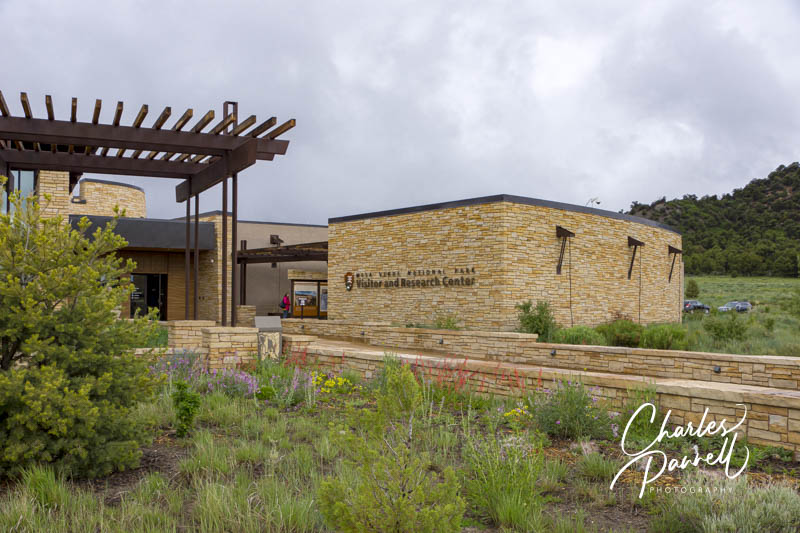
Mesa Verde Visitor and Research Center
The best place to begin your visit is at the Mesa Verde Visitor and Research Center, which is located near the park entrance. There’s accessible parking with ramp access up to the visitor center, and plenty of room to navigate a wheelchair around the interpretive exhibits, ranger information desk, and book store inside. The building also houses a research center, where visitors can catch a glance at the archaeologists at work through wheelchair-height observation windows. Top it off with a loaner wheelchair, accessible restrooms and an accessible picnic table with a view, and you have everything you need.
After you finish exploring the visitor center, grab a map and follow Mesa Top Ruins Road towards the high point in the park — Park Point. This scenic route winds across the mesa and offers several excellent photo stops along the way; but the most accessible choice is Montezuma Valley Overlook. Not only does this stop offer a superb valley view, but it also has an accessible picnic table and vault toilet.
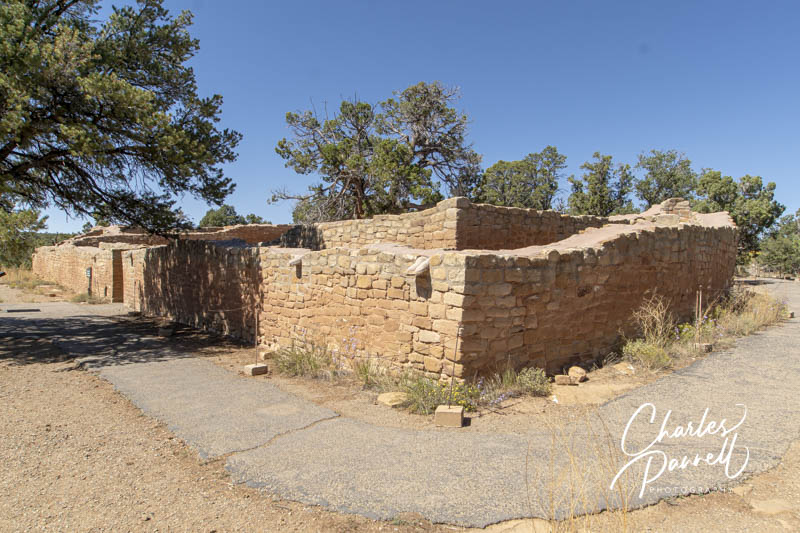
Another must see are the Far View Sites, which are located a few miles south of Far View Lodge. At one time this area housed as many as 50 villages, but today the pueblo-style ruins includes Far View House, four other villages and a dry reservoir. Unfortunately, uneven terrain hampers wheelchair access to all of the ruins, but Far View House is doable for most folks.
You can also get a good view of Pipe Shrine House in the distance from the far corner of the site. Some slow walkers may also be able to access the entire 3/4-mile dirt loop trail that begins at the far corner of this site. The trail is fairly level, but it has some gravel, rocks and uneven spots along the way.
Visit Chapin Mesa Headquarters
Next up on your wheelchair-accessible Mesa Verde visit is Chapin Mesa Headquarters. From the Far View Sites, continue along Chapin Mesa Road and turn right at the stop sign. Chapin Mesa Headquarters has a large variety of services, including a museum, restrooms, ranger information, gift shops, a restaurant, a picnic area and some great views. The most convenient accessible parking is located in the main parking lot, across the street from the Chapin Mesa Archeological Museum.
From the parking lot, there’s an accessible pathway to the front door of the museum, which is housed in one of the oldest buildings in the National Park Service. And thanks to a multi-year renovation project, there’s wheelchair-access to the lobby, the bookstore, the auditorium and the galleries. Not only did the renovation provide improve physical access, but the historic structure was also preserved during the process.
Formerly the exhibits in this museum focused on the story of the park entirely from a 20th century archeological perspective. The new exhibits, which were designed in collaboration with the Colorado Museum of Natural History, offer an added perspective from the Native communities, who consider Mesa Verde a sacred place. It’s an excellent museum, and a must-see on any visit.
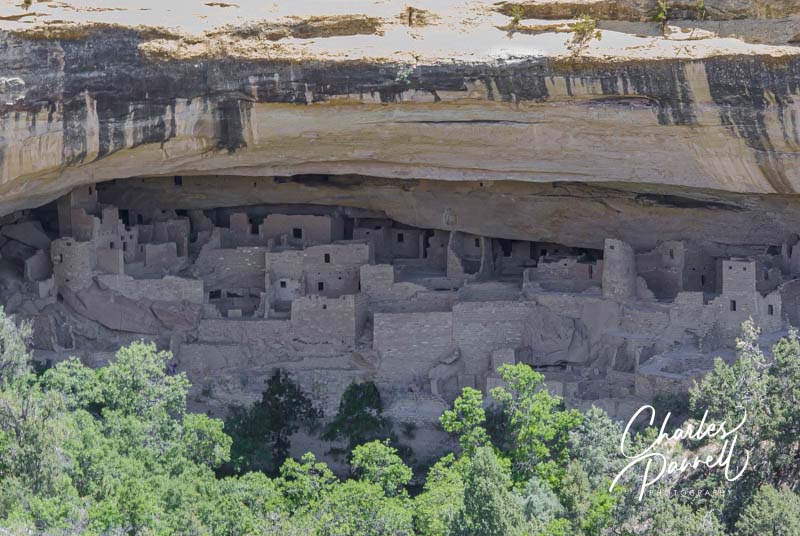
Save some time for a glance at Spruce Tree House, the third-largest cliff dwelling in the park. Although it’s not accessible to wheelchair-users and slow walkers, you can still get a good view of it from the back deck of the Chief Ranger’s Office. There’s a wheelchair-accessible pathway from the Chapin Mesa Archeological Museum, and plenty of room for large wheelchairs and scooters on the deck. As an added bonus, occasional ranger programs are also held there.
Drive the Mesa Top Loop
Sun Temple at Mesa Verde National Park
Although there are two scenic mesa drives, the Mesa Top Loop is the the best choice for a wheelchair-accessible Mesa Verde visit. This scenic six-mile drive features a variety of archeological sites grouped in chronological order, and offers a good representation of the variety of housing styles used by the Ancestral Pueblo people.
The first stop along the drive is the Pithouse site, which features one of the oldest permanent structures on the mesa. There’s a level pathway out to a covered structure which protects the excavated pithouses. These semi-subterranean structures, which date back to 600 AD, took advantage of the earth’s natural insulation.
The Pithouses & Pueblos site, which dates back to 700 AD to 950 AD is also a recommended stop. A short .2-mile loop trail leads out to the ruins, which includes standard pithouses as well as masonry structures. There’s level access to both structures, with plenty of room for wheelchairs inside. This stop offers a good overview of how the shelter styles evolved over a few hundred years.
The Mesa Top Sites, which date back to 900 AD are just up the road. A .1-mile trail leads out to the ruins, which was home to three different villages that were were built on top of one another. The three circular towers, which are the most intact features, were part of the last village built on the site in 1075 AD.
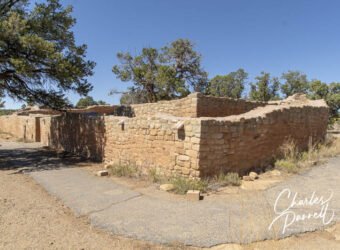
Make a quick stop at Sun Temple, and follow the paved path to the ruins, but don’t miss Cliff Palace View, near the end of the drive. There’s a paved path out to a lowered viewing scope, which offers an excellent view of Cliff Palace in the distance. And if you can’t manage the short walk, there’s also a good view of the cliff dwelling from the parking area.
Spend the Night
A great way to top off a wheelchair-accessible Mesa Verde visit is to spend the night in the park. Of course you can always camp out at Morefield Campground, but if you’d prefer a few more creature comforts, then Far View Lodge (www.visitmesaverde.com) is the perfect choice. Located about a mile north of the Far View Sites, this 150-room property features good wheelchair access and great views of the surrounding countryside.
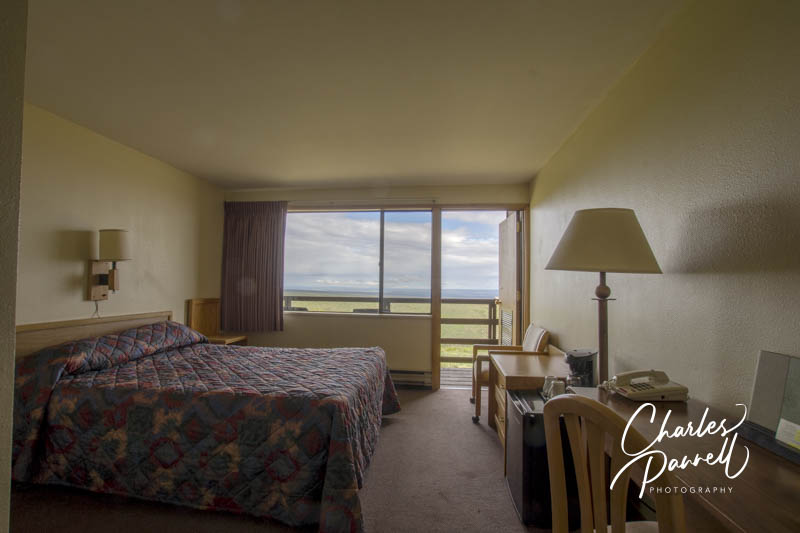
There’s accessible parking near the main lodge building, with level access to the lobby. From there is just a short drive to accessible room 159. The room includes a threshold ramp, wide doorways, a lowered clothing rod and good pathway access. Decorated in a decidedly western theme, it’s furnished with a 22-inch high queen-sized bed with wheelchair access on both sides, a chest of drawers, a desk and a refrigerator.
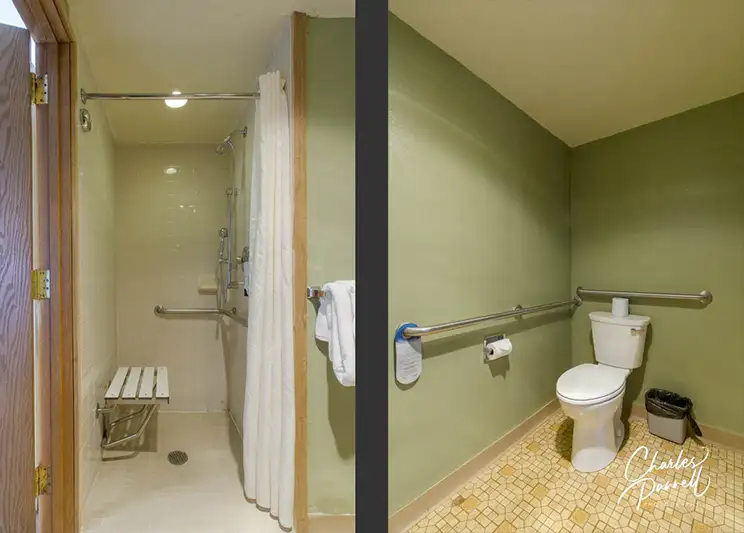
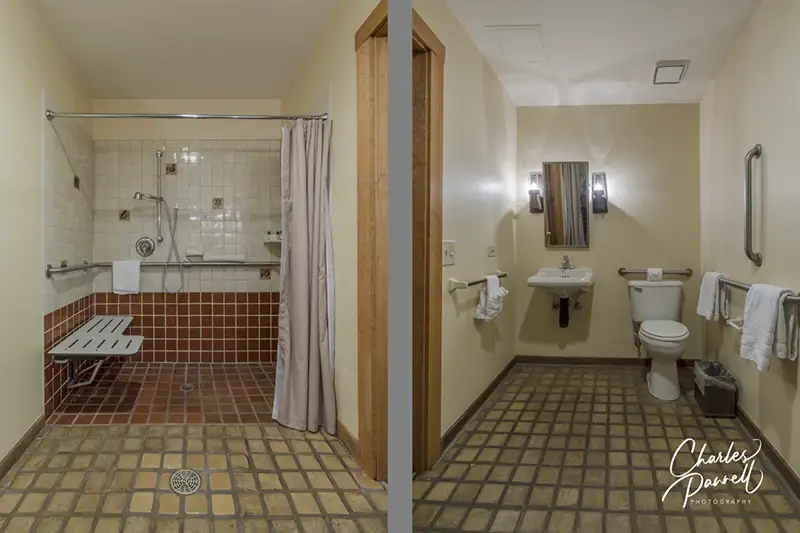
The spacious bathroom is equipped with a three-foot-square transfer-type shower with a fold-down shower bench, grab bars and a handheld showerhead. The toilet grab bars are located on the back and right walls (as seated), and there is a roll-under sink just outside the bathroom. The room is very nicely done, and they even remembered to lower the towel bars.
On of the best features of this room is the private balcony, which offers level access and plenty of room for a wheelchair. Even if it’s too cold to sit outside, you can still enjoy the view from the large picture window. And since there’s no television in the room, you can occupy your time by star gazing and enjoying all that Mother Nature has to offer — and that’s reason enough make Far View Lodge your home base in Mesa Verde National Park.
Fred Harvey is a bit of a legend in the hospitality industry. Back in 1876, long before railroad dining cars were part of the rolling stock, he realized the need for restaurants along the major rail routes. To remedy the situation, he negotiated a contract with the Santa Fe Railroad, and opened the first of many Harvey Houses in Topeka, Kansas along the rail line. These restaurants were known for their generous portions and quality furnishings, and of course the Harvey Girls, who fed hungry passengers in the time it took to service the trains and change the crews. As time went on, Harvey expanded his empire to include hotels and resorts, and at the time of his death he operated 47 restaurants and 15 hotels.
And although many of these historic properties have faded into oblivion, you can still find remnants of the Harvey empire throughout the Southwestern US. Some buildings are in ruins, while others have been renovated; and there are even a select few where you can spend the night. And although access wasn’t a consideration during Fred Harvey’s lifetime, thanks to some access upgrades, today wheelchair-users and slow walkers can enjoy some of the remaining properties. So check out these historic Harvey Houses on your next road trip through the Southwestern US.
Casa Del Desierto Barstow, CA
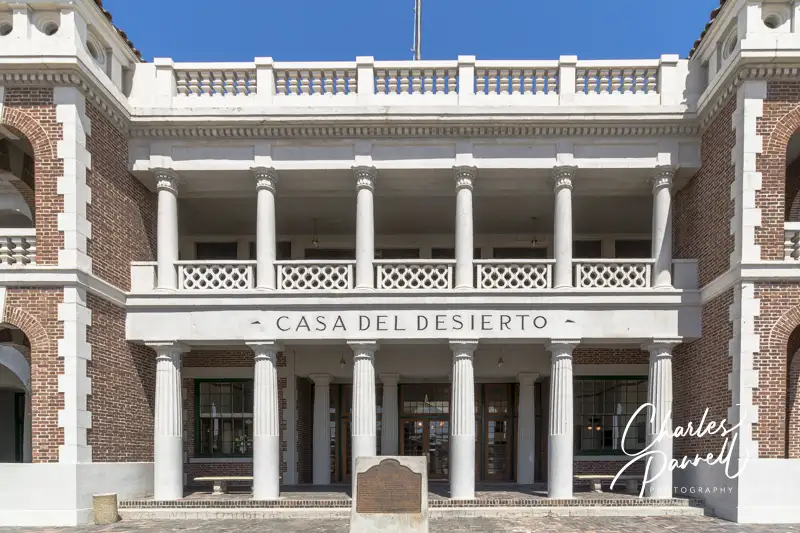
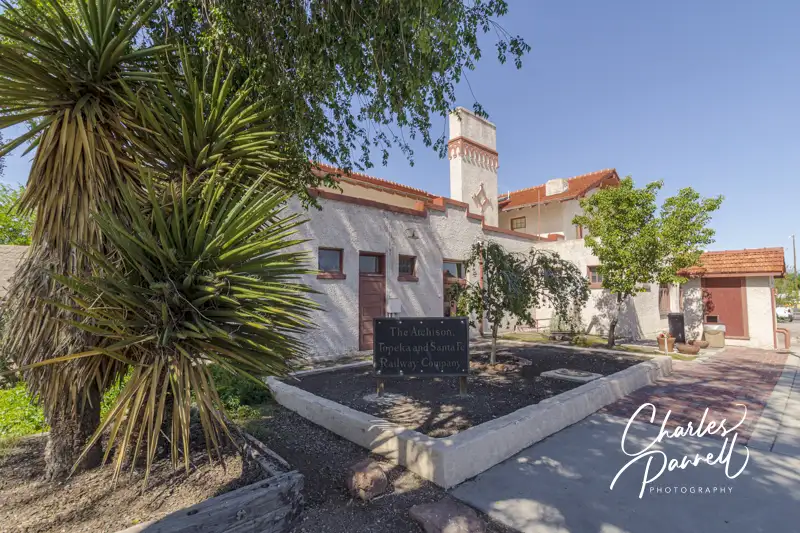
Casa Del Desierto in Barstow, California
Located in Southern California, Casa Del Desierto was considered the crown jewel of the Harvey House chain. It opened its doors in 1911, and not only did it house a restaurant, but it also provided comfortable overnight accommodations for passengers on the the Atchison Topeka and Santa Fe Railway. The building was renovated in 1999, and today it houses the local visitor center as well as the excellent Western America Railroad Museum (emerginghorizons.com/western-america-railroad-museum/) – both of which have good wheelchair access. And if you’d just like to stop by and glance at the exterior of the historic structure, you can do that too.
Kelso Depot Kelso, CA
Kelso Depot in Mojave National Preserve, California
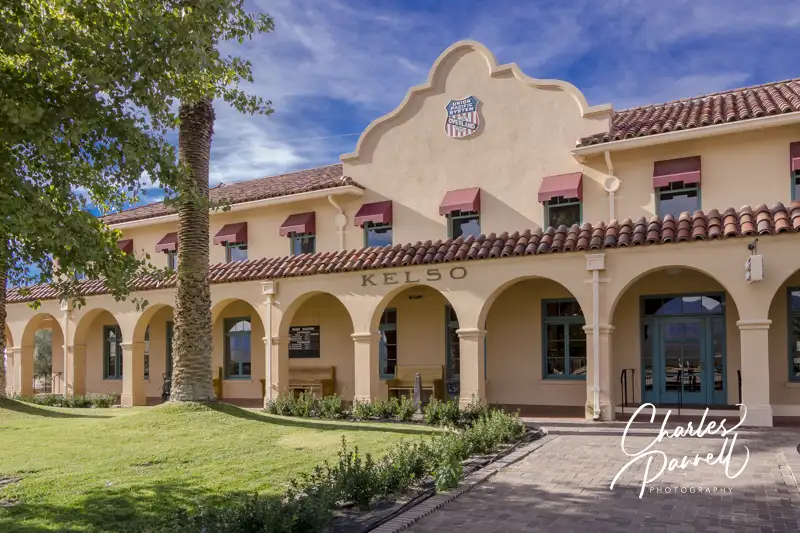
Located in the Mojave National Preserve, Kelso Depot (nps.gov/moja/planyourvisit/visitorcenters.htm wasn’t a Harvey House, but it’s definitely worth a mention. It was constructed in 1924 by the Los Angeles & Salt Lake Railroad as competition for the popular Harvey Houses operated by the Santa Fe Railroad. Today it houses the visitor center for the Mojave National Preserve. It also has several restored rooms that are open to the public. These include the baggage room, ticket office and two dormitory rooms. Accessible parking is available in the parking lot, with level access to the depot buildings. And even if the building isn’t open, you can still get a gander at the lunch counter, vintage desks and old equipment through the large front windows. Additionally, the restrooms are always open, so it’s a good spot to take a rest break.
El Garces Needles, CA
El Garces Intermodal Transportation Facility in Needles, California
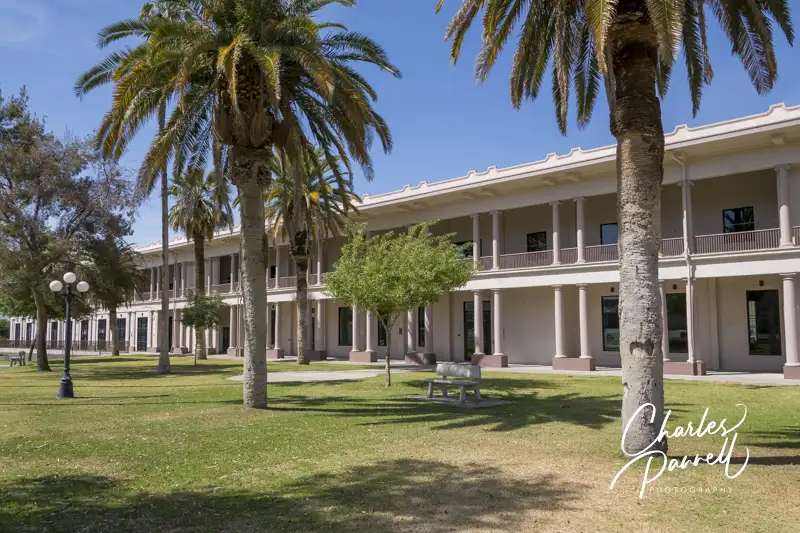
Named for Father Francisco Garces — the first European to cross the Mojave Desert — El Garces (nps.gov/places/el-garces.htm) was once said to resemble a Greek temple. This Southern California train depot housed a hotel and restaurant. After the depot was closed, it fell into disrepair and was subsequently shuttered. Fortunately the City of Needles came to the rescue in 1999, and purchased the building; which was added to the National Register of Historic Places in 2002. In 2014 the city embarked on an ambitious $5 million renovation project to restore this Needles landmark to its former glory. Today the finished project transports visitors back to the golden age of rail travel, and makes a nice stop on an Route 66 road trip.
There’s accessible parking on the side with level access over to the front of the depot, which is surrounded by tall palms and flanked by stately white columns. Although the building is only sporadically open, visitors can still get a look at the restored interior through the large glass windows. There’s also barrier-free access around to the back — track side — of the building, and level access to the back door. A majestic fountain dominates the courtyard near the back door, and it’s a pleasant spot to rest and admire the building. And like the front, large windows line the back of the building, so it’s easy to get a peek inside.
Santa Fe Depot Kingman, AZ
Santa Fe Depot in Kingman, Arizona
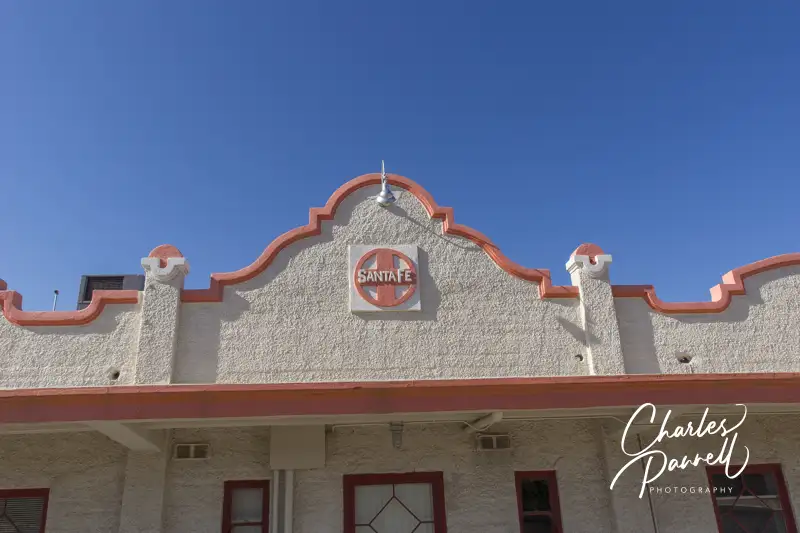
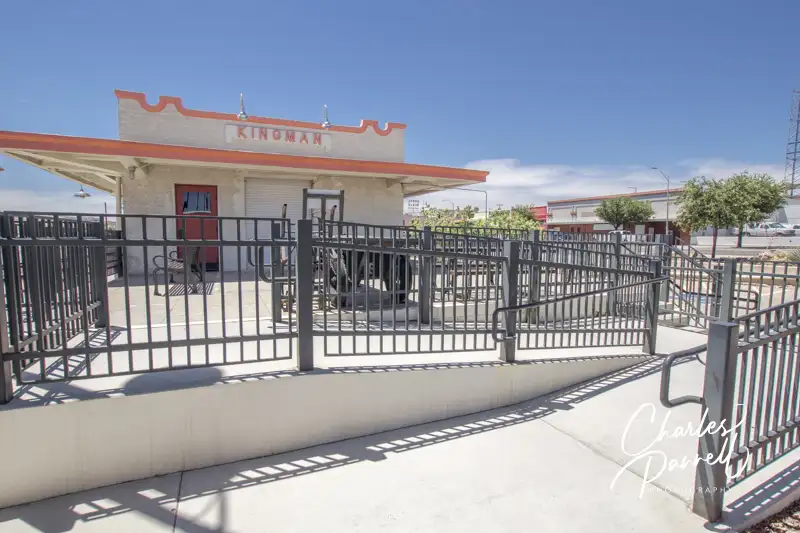
The beautifully restored Santa Fe Depot is located on the corner of 4th Street and Andy Divine Avenue in downtown Kingman. Unfortunately the Santa Fe Eating House, which was staffed by Harvey Girls, has been demolished. It once sat across from the Santa Fe Depot, but today all that’s left of it are a few remnants of the foundation. Still it’s worth a stop to see the depot.
Accessible Entrance Near Parking
There’s accessible parking in the small lot, with ramp access up to the 1907 depot. The Kingman Railroad Museum (kingmanrailroadmuseum.com) is located on one side of the building, while the Amtrak waiting room is located on the other side. There’s level access to the depot and the museum, and there are accessible restrooms inside the depot. It’s definitely worth a stop for history buffs, as the building is on the National Register of Historic Places.
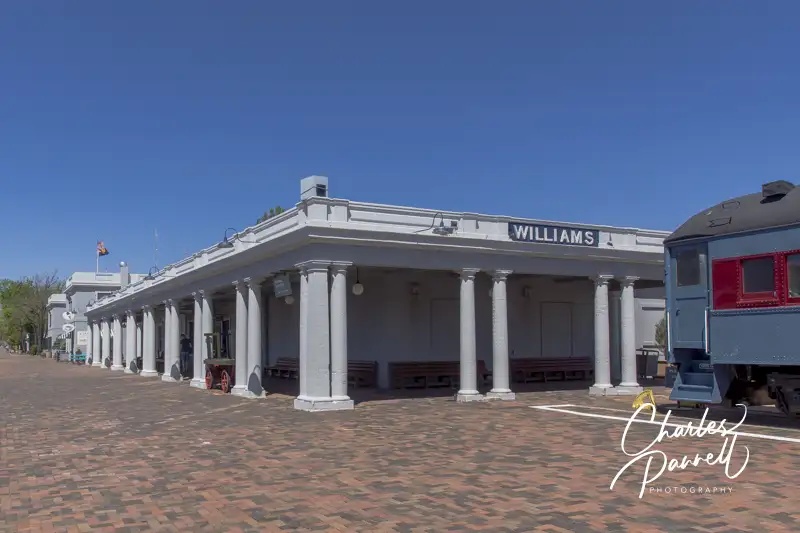
Fray Marcos Hotel Williams, AZ
Depot at the Fray Marcos Hotel in Williams, Arizona
The Fray Marcos Hotel, and the adjoining depot were opened in 1908. This Harvey House had 43 guest rooms at its peak. Today the depot is still in operation, while the former hotel houses the Grand Canyon Railway (thetrain.com) administrative offices. Accessible parking is located near the Williams Depot, with level access to the track side of the station. Take some time to admire the exterior, then pop inside for a look at the former Indian Building — you can’t miss it, as it’s the room with the massive fireplace.
The old hotel lobby is adjacent to the Indian Building, next to the stairs that lead up to the Grand Canyon Railway offices. There are some old photographs in the lobby, and the room exudes a definite historic vibe. Although the depot is deserted most of the day, traffic picks up when the daily Grand Canyon train arrives and departs. Still with a little advance planning, you’ll have the place to yourself.
El Tovar & Bright Angel Lodge Grand Canyon National Park, AZ
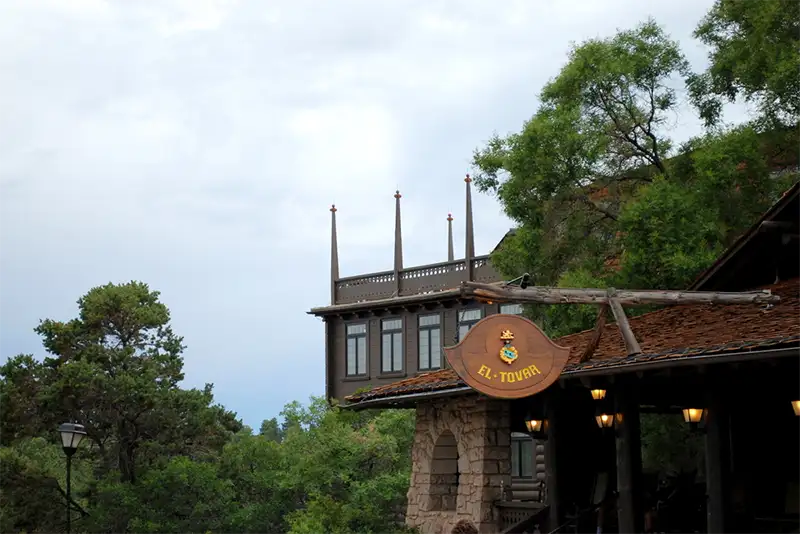
El Tovar
Grand Canyon National Park, which is located north of Williams, is home to two historic Harvey Houses. Perched on the south rim of the canyon, El Tovar and Bright Angel Lodge both feature Mary Colter’s signature southwestern touches.
El Tovar (grandcanyonlodges.com/lodging/el-tovar-hotel) first opened in 1905, and although it was considered a luxury hotel, guests still shared one bathroom at the end of the hall. Today the property boasts modern access features, including a ramped accessible entrance on the canyon side, and several wheelchair-accessible guest rooms.
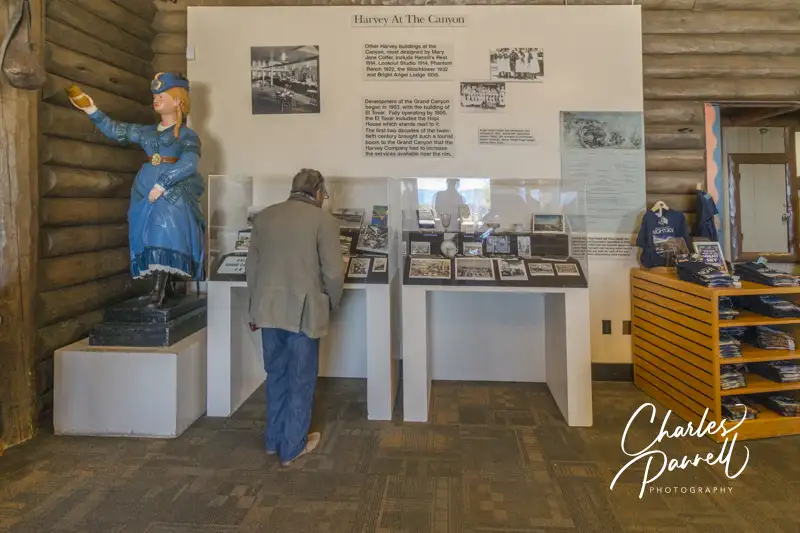
Harvey House Exhibit in the Bright Angel History Room
Bright Angel Lodge (grandcanyonlodges.com/lodging/bright-angel-lodge-cabins) was constructed in 1935 as a budget alternative to the El Tovar. Although there are no accessible rooms at the Bright Angel Lodge, it’s still worth a visit to see the Harvey House exhibit in the Bright Angel History Room. There’s good wheelchair access throughout the Bright Angel History Room, which features artifacts from the two Harvey Houses, as well as old photos, an 1880 Harvey House dinner gong, and even a vintage Harvey Girl uniform. It also includes information and photos from a Harvey Indian Detours excursion, which took train passengers on overnight trips to nearby Native American sites.
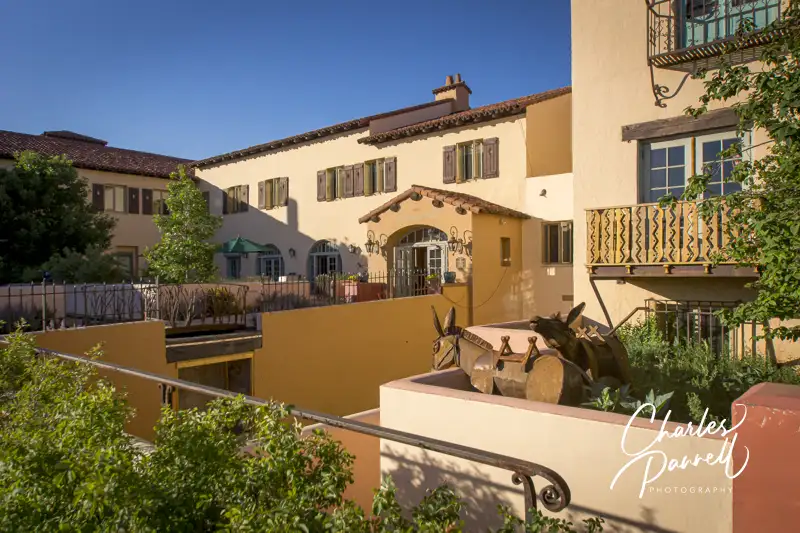
La Posada Winslow, AZ
The La Posada Hotel in Winslow, Arizona
Over in Winslow, Arizona, La Posada (laposada.org) was added to the Harvey family in 1929. And although Mary Colter received wide recognition for her Grand Canyon buildings, she always considered La Posada her masterpiece. Access is good throughout this historic property, with accessible parking in front, and a level sidewalk to the front entrance.
Even if you don’t overnight there, make sure to stop and enjoy a short walking tour, as the property is filled with lots of nooks and crannies that contain historic photos and artifacts. Although the building lacks an elevator, the majority of the artifacts are located on the first floor. Out back, the Affeldt Mion Museum is housed in the 1930 depot, and contains exhibits about the history of the Las Posada, Fred Harvey and Mary Colter.
The Turquoise Room, which faces the railroad tracks, once served as the Harvey House lunch room. Today the menu offers a good selection of southwestern and traditional favorites. And for a real nostalgic feel, the waitresses are even dressed in in traditional Harvey House uniforms. Additionally, if you’d like to spend the night at the Las Posada, they also have a nice wheelchair-accessible guest room on the first floor.
Painted Desert Inn Petrified Desert National Park, AZ
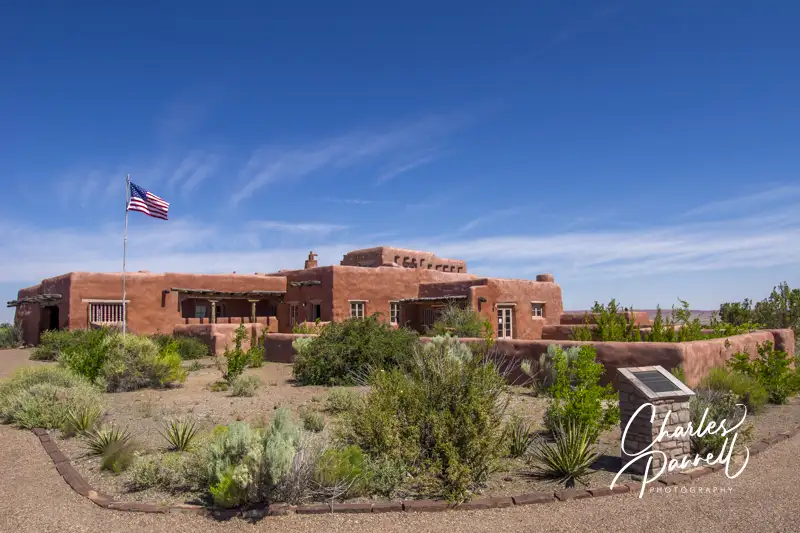
Painted Desert Inn in Petrified Forest National Park, Arizona
Located east of Winslow, the Painted Desert Inn (nps.gov/pefo/learn/historyculture/pdi.htm) officially opened in 1940 on the site of the former Stone Tree House, which once provided Route 66 travelers with food, souvenirs and lodging. Sadly the war brought an end to the boom days and the Painted Desert Inn was closed in 1942. Five years later the Fred Harvey Company took over management and hired Mary Colter to renovate the property; and the legendary Harvey Girls were brought to the Petrified Forest.
The property operated until 1963, but the inn was saved from the wrecking ball due to a massive public outcry. Finally in 1987 it was declared a National Historic Landmark, and the property was rehabilitated and returned to its former glory. Today you can see the old dining counter and lunch room, complete with vintage place settings. Access has also been improved over the years, with level access to most areas of the inn, and plenty of room for wheelchairs and scooters. After you’re done browsing through the inn, don’t miss the colorful desert view from the accessible viewpoint in back of the inn.
Belen Harvey House Belen, NM
Belen Harvey House in Belen, New Mexico
This 1910 Belen Harvey House (harveyhousemuseum.org) once contained a large lunch room, a formal dining room, a newsstand and an upstairs Harvey Girls dormitory. Today it houses a museum and an adjacent restaurant. There’s good access throughout the museum which contains lots of Harvey House memorabilia, including old photos, dishes, uniforms and even menus. There’s also a number of exhibits about the history of the railroad, and even some old railroad equipment on display. There’s no elevator access to the second floor, but the bulk of the exhibits up there focus on Belen history, rather than the Harvey Houses. As an added bonus the museum is staffed by volunteers who love to talk about the Harvey House heyday.
The Whistle Stop Café is also worth a stop while you are there. This casual eatery includes home made treats like muffins, carrot cake, cobbler and a variety of soups. Everything is delicious, and all proceeds from the café go to help support the museum.
Puye Rest House Espanola, NM
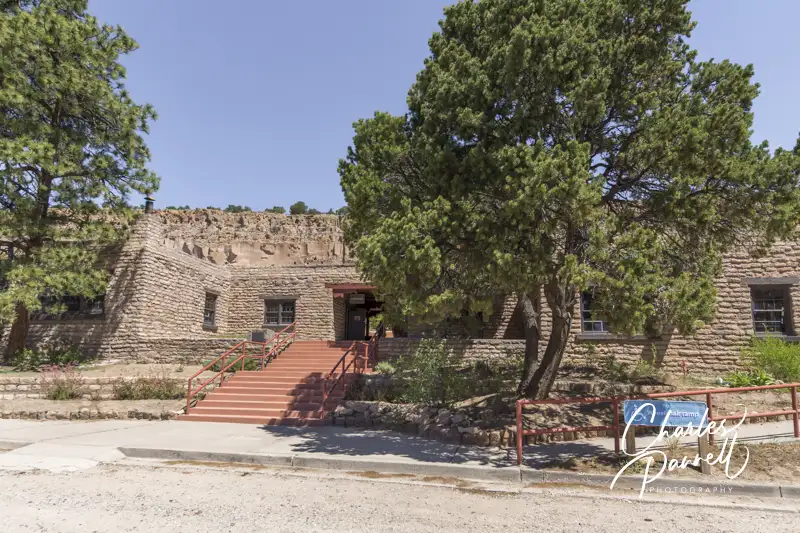
Puye Rest House in Espanola, New Mexico
Located well off the main train line in the Santa Clara Pueblo, this Harvey House was part of the Indian Detours program. Built on tribal land in the 1920s, the Puye Rest House (puyecliffdwellings.com/tours/harvey-house) hosted guests who traveled on the “Chili Line”, and were then transferred to the Santa Clara Pueblo in covered wagons in the early years, and in Model Ts in later years. The tours operated from 1925 to 1939, and the big attraction of this location was the hilltop cliff dwellings in back of the hotel.
Today the two buildings that made up the Harvey House are now an interpretive center and a gift shop, and although the cliff dwellings aren’t accessible, the buildings are very doable for wheelchair-users and slow walkers. Most of the exhibits in the interpretive center are focused on the history of the Santa Clara Pueblo, and the excavation of the cliff dwellings in 1907. Still it’s a chance to go inside the historic Harvey House building. There’s also a nice view of the cliff dwellings from the back porch. And if you just want to look at the outside of this historic building, it’s definitely worth the drive.
Castaneda House Las Vegas, NM
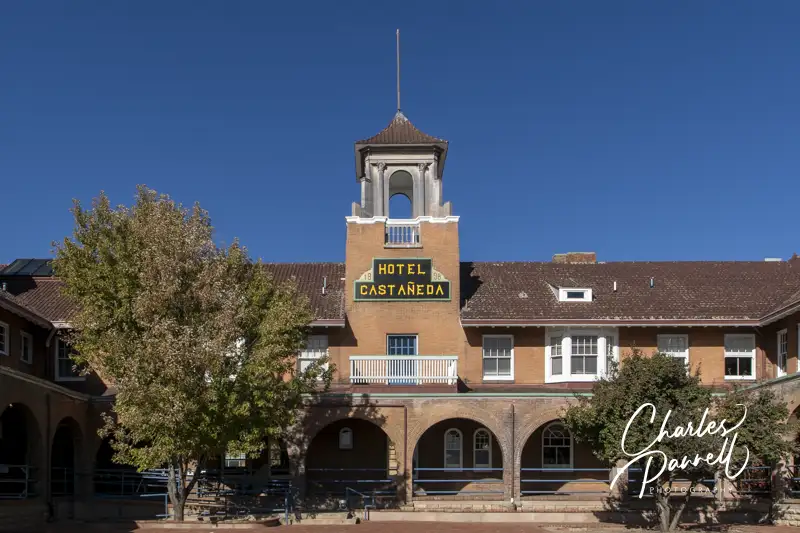
The Castaneda Hotel In Las Vegas, New Mexico
Last but certainly not least on our Harvey Houses of the Southwest tour is the Castaneda House (emerginghorizons.com/the-castaneda-hotel-a-wheelchair-accessible-harvey-house/), which opened in 1898. It closed in 1948 and was shuttered until a local investor purchased it in 2019. Today the restored property has the ambience of yesteryear, with the access features of modern times.
The Mission Revival style building once housed 37 guestrooms, a 108-seat dining room a 51-seat lunch counter, and a cluster of railroad offices. Today the renovated property has 22 suites; and if you look carefully in the rooms, you can see vague outlines of the former room borders on the floors. The hallway doors to the original rooms were also left intact — some now go to storage rooms, while others are merely decorative. And there’s also a nice wheelchair-accessible guest room with a roll-in shower. All in all, the Castaneda Hotel features the charm of the yesteryear, and the comforts and access features of today.
Barrier-Free Travel the Grand Canyon for Wheelchair-users and Slow Walkers
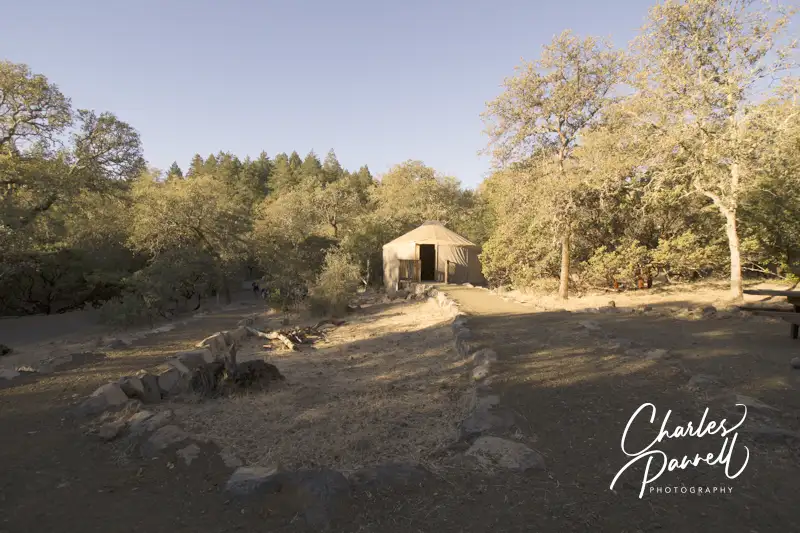
Located along the St. Helena Highway, Bothe Napa State Park (napaoutdoors.org/parks/bothe-napa-valley-state-park/) is easy to overlook, especially if you’re winery hopping along this popular Napa County thoroughfare. That said, it’s not only a nice place to stop for a picnic or to enjoy a short hike; but if you’re up for an adventure, it’s also an excellent place to overnight. Although the park offers wheelchair-accessible campsites, it also boasts a comfortable wheelchair-accessible yurt. Granted, this yurt is pretty basic — some would even describe it as rustic — however it provides a quiet, off-the-beaten-path lodging option in what can often be described as a crowded and overly congested area of the state.
Sleeping in a Wheelchair-Accessible Yurt
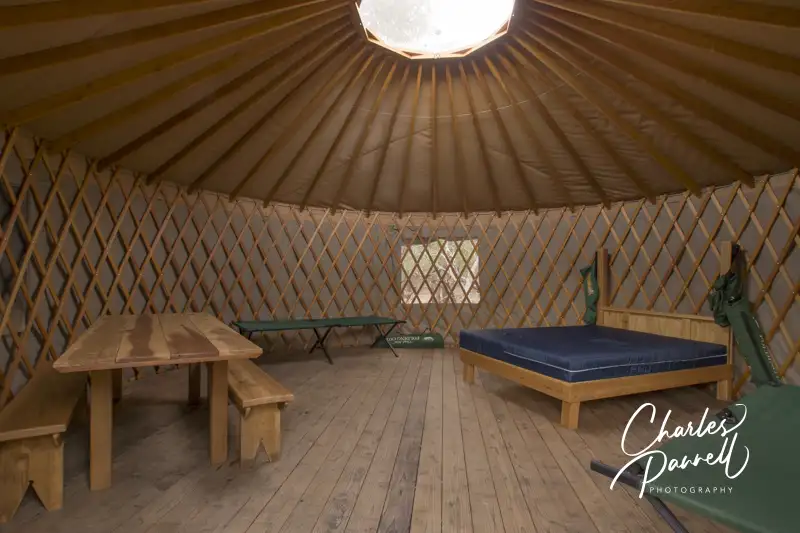
Inside Yurt 26 at Bothe Napa State Park
There are two campgrounds and yurt areas in the park, but this accessible yurt (26) is located away from the Group Campground, in the quieter Ritchey Creek Campground. There’s plenty of room to park on a level dirt pad in front of Yurt 26, with ramp access up to the front door. Access features inside the yurt include a wide doorway, wooden floors and ample space to navigate a wheelchair. Furnishings include a 21-inch high queen-sized bed with wheelchair access on both sides, four folding cots, and a table with two benches.
You’ll need to supply your own bedding, sleeping bags, pillows and towels; and since the yurt lacks electricity it’s also a good idea to pack along a lantern, flashlights and a camp stove. And although the mattress is certainly adequate, if you prefer more support you might also want to bring an air mattress.
Outside, there is a short accessible path over to a picnic table and a storage locker. It’s the perfect place to enjoy the outdoors, sip some wine, and relax as the sun sets. As an added bonus, it’s also very dark in the park, and with no ambient light you can really enjoy the night sky.
The bathhouse is just a short walk away. A family restroom with a roll-under sink and toilet grab bars is located in the front section of the bathhouse, while the private pay showers are located on the side. The accessible shower room includes a roll-in shower with grab bars, a built-in shower bench and a lowered showerhead. There’s plenty of room for an attendant in the large shower room, and it also features a spacious changing area with lowered hooks.
A Nice Picnic Stop
Picnic Grounds at Bothe Napa State Park
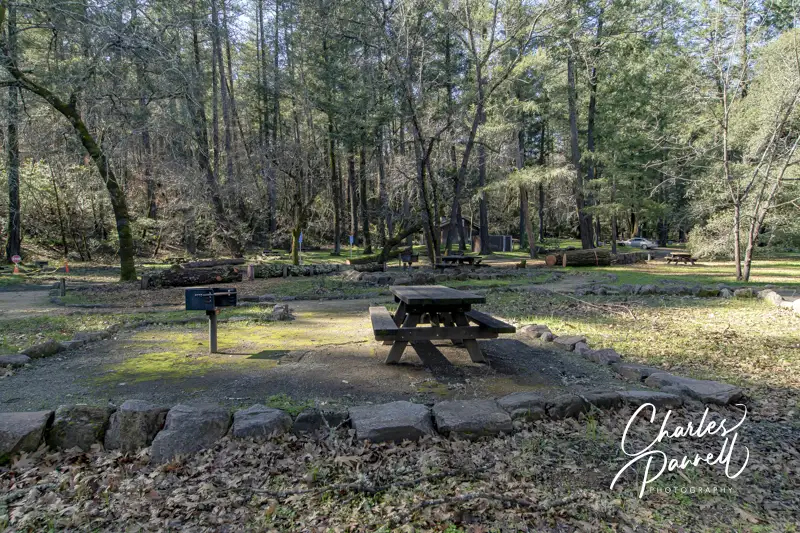
Even if you don’t spend the night in the wheelchair-accessible yurt, make plans to stop in for a picnic lunch and explore the park. The bulk of the accessible picnic tables are located in the day use area, which is located just down the park road from the visitor center. Accessible parking is located near the tables, with paved pathways to the tables and the accessible restrooms. If you’d prefer a more secluded repast, drive all the way to the end of the park road, park in the accessible parking spot, and feast at one the tables in the level shaded area.
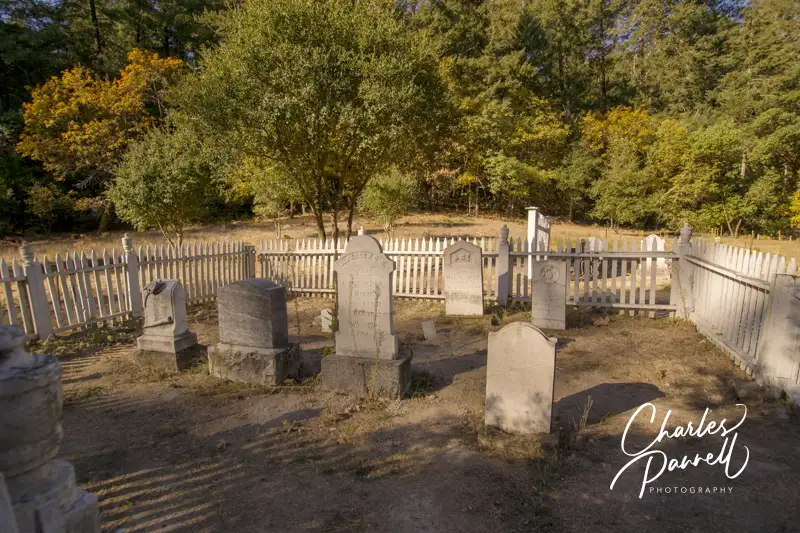
Pioneer Cemetery at Bothe Napa State Park
Save some time for a short walk to the Pioneer Cemetery on the accessible trail, which begins near the picnic tables at the end of the road. The hard-packed dirt loop winds around the restored graveyard, which dates back to the mid 1800s. There are benches to sit and rest along the way, while you gaze at the plots surrounded by quaint white picket fences. The trail then loops back through the woods to the site of the historic White Church, before it returns to the picnic area.
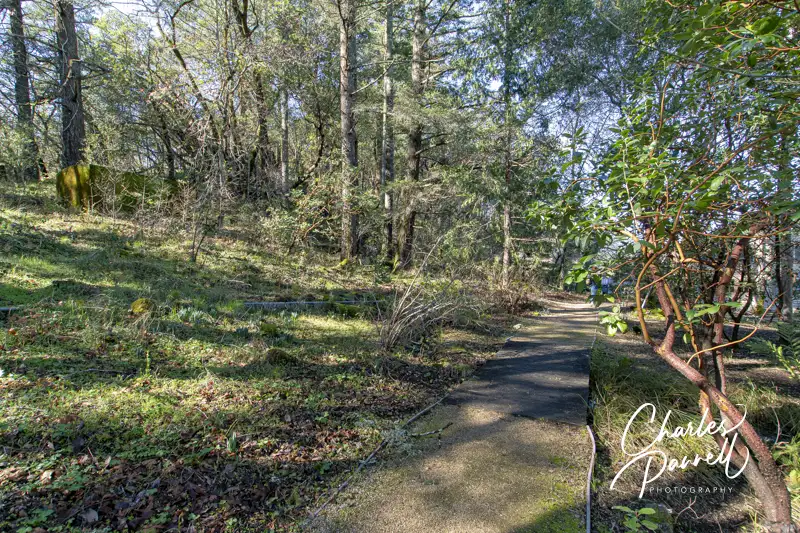
Last but not least, make sure and stop at the Native American Garden, which is located on the left side of the visitor center. The accessible pathway begins near the back of the building and winds through a natural garden filled with plants that were important to the first people of the area — the Wappo. Although a few of the species are labeled, the visitor center also has a plant guide to enhance your understanding of the native people. It’s just a short trail — only 150 yards or so — but it’s a pleasant stroll to top off your Bothe Napa State Park visit.
Trail to the Native American Garden at Bothe Napa State Park
Barrier-Free Travel California National Parks Road Trips Travel Ideas for Wheelchair-users and Slow Walkers
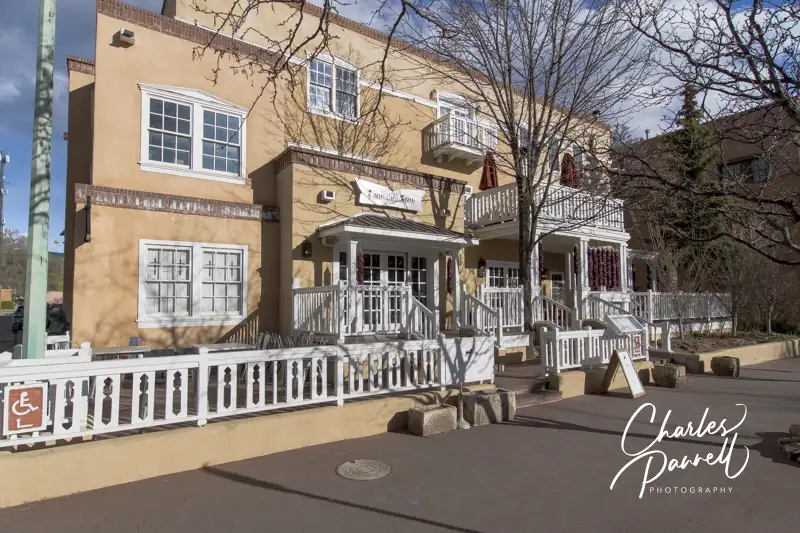
Located just a block from the historic Santa Fe Plaza, the Hotel Chimayo (www.hotelchimayo.com) takes its name from a Northern New Mexican town that dates back to the 17th century. And although this upscale boutique hotel offers a bevy of modern creature comforts, it also celebrates the history and culture of its namesake village with traditional architecture, hand-crafted furnishings and original artwork. And the good news is, historic and accessible aren’t mutually exclusive at the Hotel Chimayo. So check out this wheelchair-accessible Santa Fe lodging pick on your next southwestern sojourn.
Historic Yet Accessible
The Hotel Chimayo features brick steps that grace the historic front entrance; however there’s easy access to a ramped entrance on the left side of the building. Alternatively, accessible parking is located in an underground garage, with elevator access up to the lobby.
There’s barrier-free access throughout the lobby, which is adorned with Viga ceilings, hand woven-textiles and a collection of retablos — small religious paintings — that are incorporated into the design of the massive brick fireplace. Add in a large crucifix on the mantle, an adjacent hand-carved altar, and a collection of Spanish colonial wooden furniture, and you get a real feel for historic Chimayo.
A Comfy Accessible Suite
Living Room in Suite 102 at the Chimayo Hotel
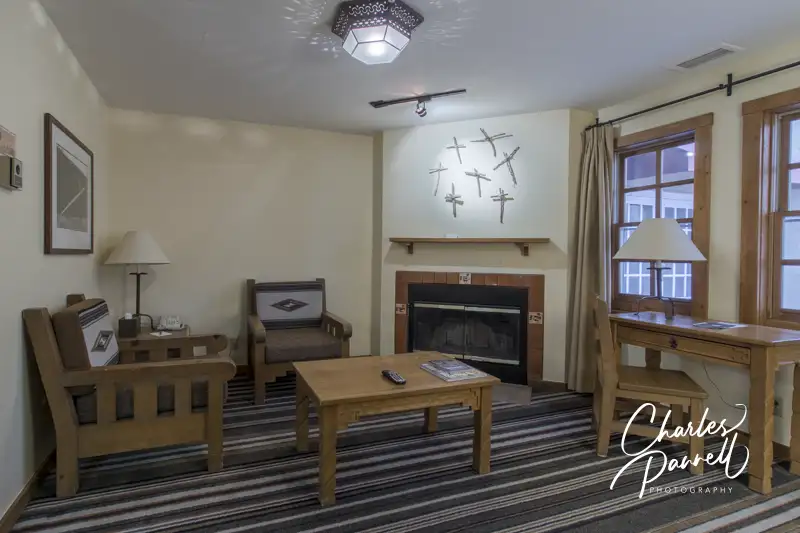
Room 102 — an ADA junior fireplace suite — is located near the front lobby, just off a brick courtyard that’s accented with colorful bunches of hanging chilies. Access features in the spacious suite include wide doorways, lever handles, good pathway access, and low-pile carpet for easy rolling.
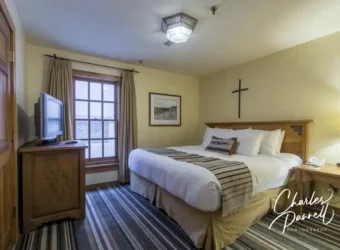
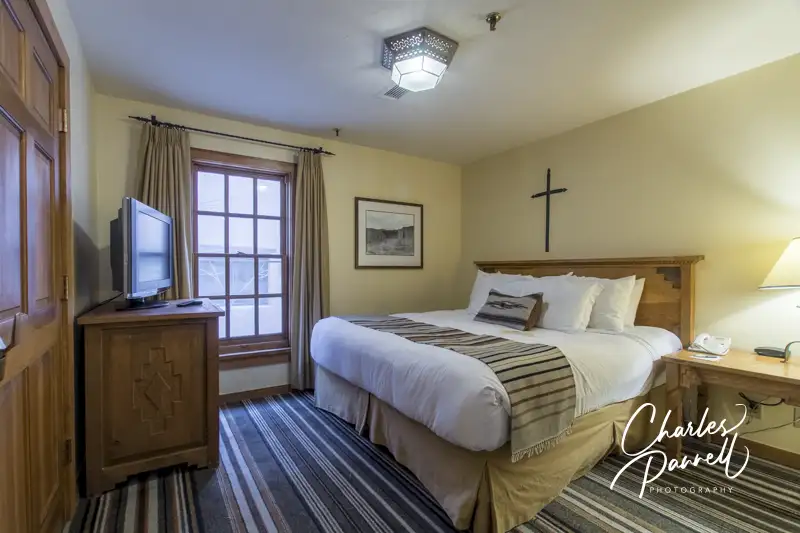
The large living room in this comfortable suite features a wood burning fireplace that comes complete with firewood. It’s surrounded by comfortable furniture, and it also include a refrigerator and a wet bar. A 28-inch high king-sized bed with wheelchair access on the right side (as you face it), is located in a separate alcove. Other furnishings include a chest of drawers and a TV. Top it off with a lowered closet rod and you have a very accessible suite.
Bedroom in Suite 102 at the Chimayo Hotel
There’s barrier-free access to the adjacent bathroom, which has a tile floor and a full five-foot turning radius. It’s equipped with a roll-in shower with grab bars, a hand-held showerhead and a fold-down shower bench. The tile shower is nicely designed for access and it includes shower controls that are located within easy reach of the shower bench. The toilet grab bars are located on the back and left walls (as seated), and the bathroom also has a roll-under sink and an angled mirror.
Bathroom in Suite 102 at the Chimayo Hotel
It’s a very accessible and comfortable suite; and as an added bonus it also includes some historic photos and custom artwork. In fact more than 70 Chimayo artists created the artwork and furniture that adorns this property; and that’s quite a tribute to the small town.
The Public Areas
There’s good access to the public areas of this wheelchair-accessible Santa Fe lodging choice as well. There’s level access to the Low ‘n Slow Bar, which is located on the second floor. And the decor is worth a visit by itself. True to the low rider theme, it’s decked out with diamond-tuck upholstered seats, chrome chain-link steering wheel tables, hubcaps, vintage photos and the odd piece of car memorabilia here and there. It’s a fun place to stop for a cocktail or grab one of their yummy “hawt” pizzas
Best of all, you just can’t beat the location of the Hotel Chimayo, as it’s within rolling distance of all the major attractions. You can park your car for the duration of your stay, and explore the historic district on foot. And if you want to take a break during the day, your comfortable room is just steps away. Good wheelchair access, comfortable rooms, and a prime location makes the Hotel Chimayo is an excellent wheelchair-accessible Santa Fe lodging choice.
Barrier-Free Travel the Grand Canyon for Wheelchair-users and Slow Walkers
Visiting the Minuteman Missile National Historic Site (www.nps.gov/mimi) is like taking a step back in time. Back to the days of the Cold War, the threat of Communism, duck and cover drills and fallout shelters. It’s difficult to comprehend today, but ballistic missiles that had the capability to destroy humanity were once buried in missile silos across the Great Plains. These Minuteman Intercontinental Ballistic Missiles were poised to launch at a moments notice, and the facilities were manned around the clock in case the launch command ever came down. Luckily it never did.
Today the launch facilities have been shut down and the weapons have been disarmed. That said, in an effort to preserve a piece of American history and help visitors understand this often confusing era, one South Dakota minuteman missile site has been preserved and is open to visitors. And although wheelchair access is difficult if not impossible in a missile silo, the National Park Service has made access improvements so wheelchair-users and slow walkers can now explore a portion of this historic site.
A Little Background
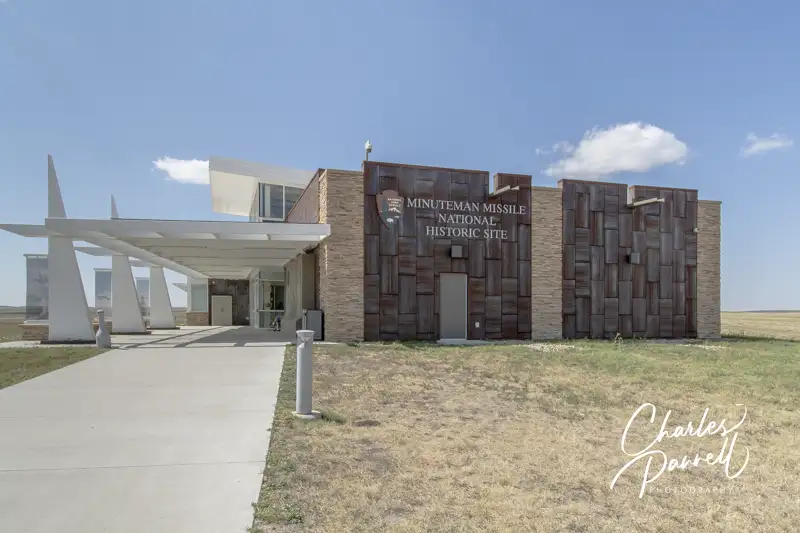
There are actually three separate attractions, which are a short drive apart, at the Minuteman Missile National Historic Site. The visitor center is the best place to begin your visit. It’s located off of Interstate 90, about 75 miles east of Rapid City South Dakota. And although it’s a bit off-the-beaten track it’s just four miles north of the Northeast Entrance to Badlands National Park (emerginghorizons.com/explore-wheelchair-accessible-badlands-national-park/).
Accessible parking is available in front, and a sidewalk that leads over to the front door. Inside there’s ample room to maneuver a wheelchair in the galleries, and over to the information desk and gift shop. An accessible restroom is also located in the building. There’s level access to the theater, which shows the 30-minute film “The Minuteman Missile on Alert”. Wheelchair seating and adjacent companion seating is available in the theater.
The interpretive exhibits focus on the missiles and the men and women who manned the launch control facility, as well as the history of the nuclear weapons and arms race. Add in photos of fallout shelters, information about duck and cover drills and a vintage video clip of the US Civil Defense film “Bert the Turtle”, and you have a comprehensive look at the Cold War. And don’t forget to pick up a brochure, which has a map of the other stops at the site.
Tour the Launch Control Facility
The historic Delta-01 Launch Control facility is located four miles west of the visitor center, at exit 127 off of Interstate 90. The facility is behind a locked gate, but visitors are welcome to peer through the gate and take the cell phone tour to learn more about operations at the launch control facility. The pathway from the parking area to the launch facility is level, but it does cross a dirt road at one point.
Guided tours are also available for a fee, but advance reservations are required. The standard tour is not accessible as this Cold War era facility was built to house two missile officers and has a tiny elevator and restrictive space underground. A wheelchair-accessible topside tour was added in 2019, to make this site partially accessible. This tour does not go to the underground area, but instead focuses on the topside structures and uses technology to offer a virtual visit to the underground space.
To insure adequate staffing, this tour must be booked at least five days in advance. The minimum number of participants required for the accessible tour is two. This tour can be booked on the park website or by calling (605) 717-7629.
Visit the Silo
Minuteman Missile National Historic Site Delta-09 Missile Silo
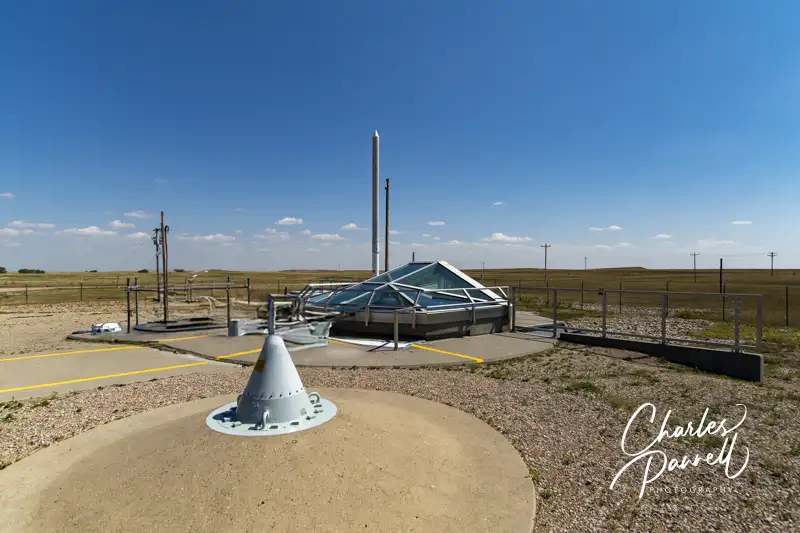
The final stop at the Minuteman Missile National Historic Site is the Delta-09 Missile Silo. It’s located 11 miles west of the launch site, at exit 116 off of Interstate 90. Although the missile in the silo today is disarmed, a fully operational missile which contained a 1.2 megaton nuclear warhead was housed here until the early 1990s. In fact, this Delta-09 missile silo was one of 120 buried across western South Dakota.
Parking is available in a level area, and although the path to the silo itself is level, the gravel driveway may be problematic for some wheelchair-users. There’s also an accessible porta-potty near the silo. The silo, which is made of reinforced concrete with a steel plate liner, is 12 feet in diameter and 80 feet deep. The top of the silo has been removed and replaced with a glass roof, so visitors can peer down inside.
There is a small step up to the concrete apron that surrounds the silo, so most wheelchair-users won’t be able to get close enough to see the missile. It’s still worth a stop while you’re in the area though, as you can see the support building, personnel access hatch, the ultra high frequency antenna, and the interpretive panels. There’s also an excellent cell phone tour available which touches on everything from why South Dakota was chosen as a launch site, to how they installed the missiles in the silos, and even some details about the technology on board these 1963 vintage weapons. It’s a comprehensive presentation, and a good way to conclude your visit at the Minuteman Missile National Historic Site.
Barrier-Free Travel Washington National Parks for Wheelers and Slow Walkers
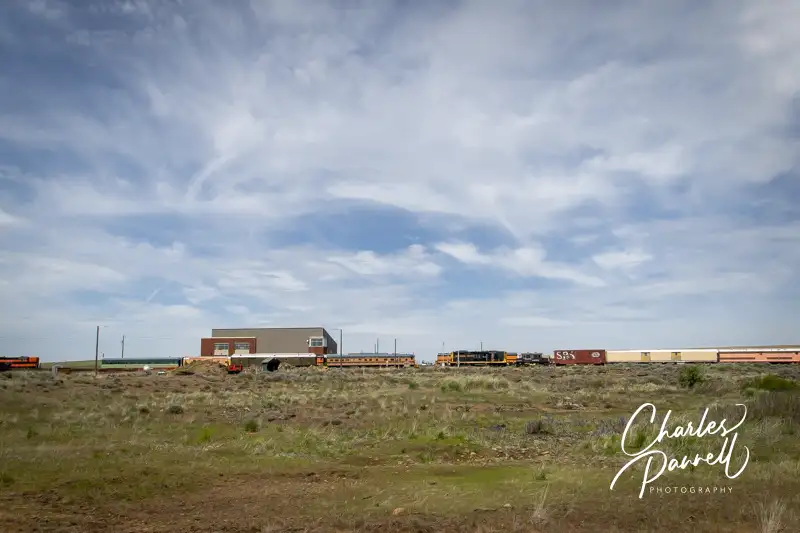
Located off Highway 2, about 25 miles west of Spokane in Reardon, the Inland Northwest Rail Museum (inlandnwrailmuseum.com) is a bit off the beaten path. That said, if you happen to be traveling from Spokane to North Cascades National Park (emerginghorizons.com/north-cascades-national-park/), it makes a nice road trip stop. Make sure and check the website for their operating hours though, as as this largely volunteer-operated museum is open on limited days — usually weekends. Still it’s worth a stop on any North Cascades road trip
A Bit of PNW Railroad History
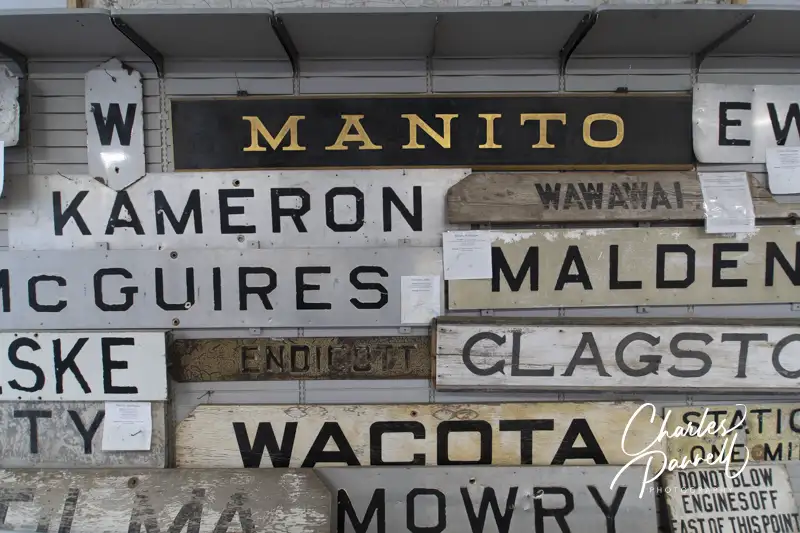
Railroad Signs At The Inland Northwest Rail Museum
The Inland Northwest Rail Museum’s collection focuses on railroad history in the Pacific Northwest (PNW). There’s accessible parking in front, with level access to the front door. And although the folks at the museum have done a good job providing access throughout the facility, there are still some limitations due to the nature of the exhibits.
There’s level access around most of the inside exhibits, elevator access to the second floor, and accessible restrooms on the ground floor. That said, most of the rolling stock — which comprises at least half of their exhibits — can only be accessed by climbing a few steps. Still it’s a great — and very nostalgic stop — for slow walkers.
The centerpiece downstairs exhibit is the 1906 Spokane United Railways Streetcar. After streetcar use was discontinued in Spokane, this car served as a restaurant in Chewelah, and was later donated to the museum. There are several steps up to the streetcar, and it’s kind of fun to walk through, sit down and imagine the public transportation system of yesteryear.
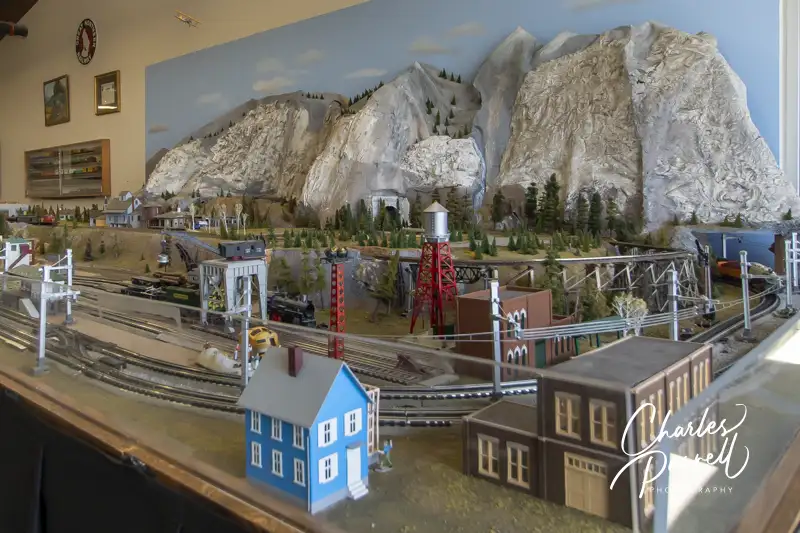
The inside exhibits also include a large collection of railroad equipment, signs, signals, photos, horns, uniforms and lots of interesting tidbits. Don’t miss the model trains and the photo collection of PNW train wrecks upstairs. And while you’re upstairs, stroll down to the end of the building and get a birds eye view of the rolling stock out in the yard.
Model Train Layout at The Inland Northwest Rail Museum
All Aboard!!
The great thing about the rolling stock in the yard is that you can explore as little or as much of it as you want, depending on your energy level. There’s level access to the yard, and the 1941 American Scene Sleeper Car sits rights outside the back door of the museum. Although there’s level access to it — no steps required — the hallways of yesteryear are too narrow for a wheelchair.
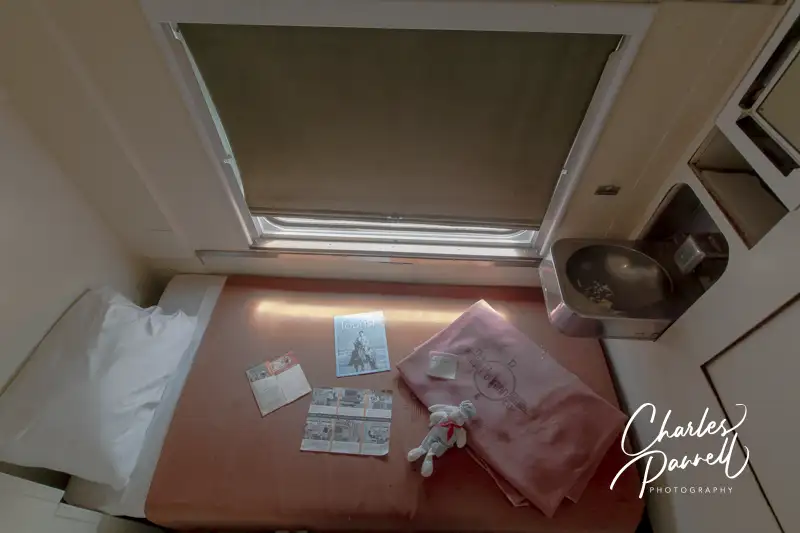
Inside the sleeper car, many of the compartments are set up as they would have been in the 1940s. And there are other exhibits about railroad life peppered in throughout the car. The sleeping car is attached to a dining car which has more exhibits that highlight life on board. From dishes and photos, to a uniform and even a telegraph display, there’s something for everyone.
Berth in Sleeper Car at The Inland Northwest Rail Museum
And don’t miss the Spokane, Portland & Seattle Railway’s St. Helens Sleeper Buffet Lounge Car. It’s located a short walk away, and although the ground is covered with gravel it’s fairly level. There are several steps up to this beauty, which was built by the Pullman Standard Company in 1950. Inside the compartments are roomier than the 1940s model, and they each include a toilet that pulls out from the sink cabinet. Although it’s a far cry from modern day trains, it was luxurious back in the day.
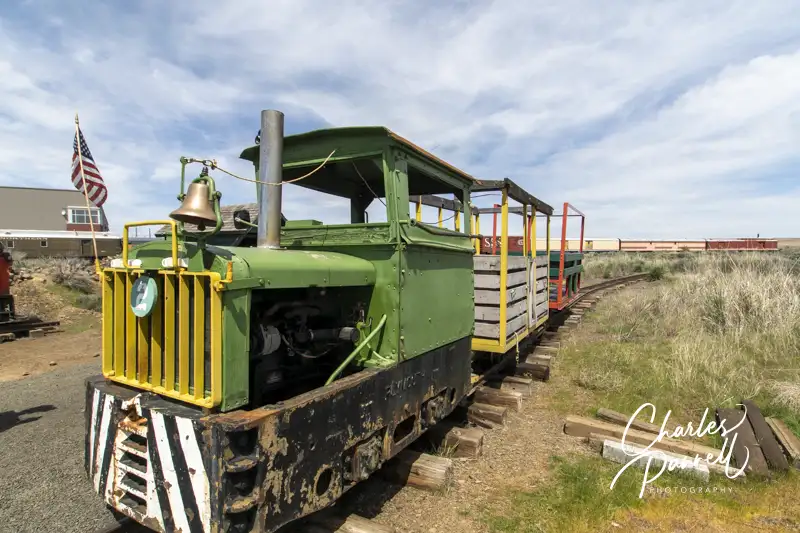
Last but not least, don’t miss a ride on the Rearden Rocket — a two-foot gauge railroad that runs through the museum grounds. You have to be able to step up into the open-air car for this two-mile ride that circles the campus, but it’s a fun finale. The engines are operated by enthusiastic volunteers, and hearing their stories is part of the fun. It’s the perfect finale to any Inland Northwest Rail Museum visit.
The Reardon Rocket at The Inland Northwest Rail Museum
Barrier-Free Travel Washington National Parks for Wheelers and Slow Walkers
Located off Interstate 90 in Northwestern Washington, Olmstead Place State Park makes a nice road trip picnic stop. The GPS directions will take you to the old barn, but continue along Ferguson Road to the next driveway for the picnic area. There’s no striping in the small paved lot, but that’s OK because you’ll most likely have it to yourself. There are accessible vault toilets in the parking area, and a level gravel path leads over to several picnic tables on the grass. They aren’t any accessible tables, but there’s room at the end for wheelchairs. There’s a little freeway noise, but it’s a nice departure from the rest area picnic tables. And it’s not crowded.
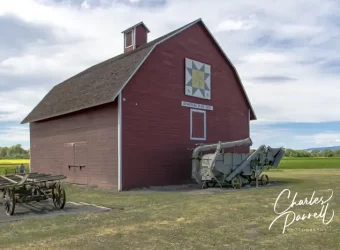
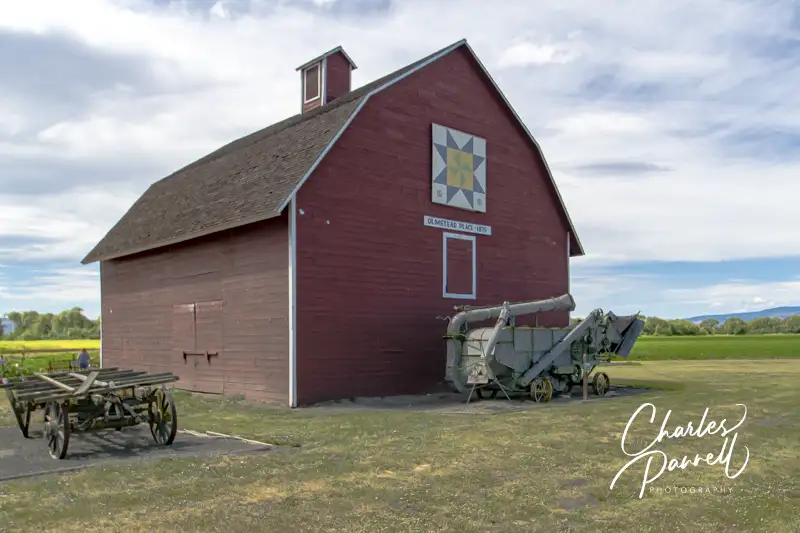
After lunch feel free to browse around the old homestead. The site is level and there are some gravel pathways but you’ll have to roll over the grass to get to a number of the buildings. There are a lot of farm out buildings as well as the old homestead to peruse. The barn area is also worth a look, and if you can’t manage the pathway, then it’s a short easy roll down Ferguson to get to it. There’s not much traffic on Ferguson, so it’s pretty safe. There’s a sizable display of farm implements next to the barn, and a decorative quilt square adorns the front. It’s a nice picnic spot, and a great place to dodge the crowds.


 Although it only takes a day to complete, the Golden Circle drive is the highlight of any Iceland visit. This popular route loops past waterfalls, geysers and all the spectacular scenery that makes the country a photographer’s dream. Not only are there some fantastic windshield views on the drive, but three of Iceland’s top natural attractions are also located along the route. So pack a picnic lunch and get ready to enjoy the scenic south on this fun Reykjavik side trip.