Wheelchair-Accessible Hilton Head beaches are now a reality, thanks to a number of local programs and improvements.
For starters, many of the public beach parks and access points have beach mats down to the high water line. These mats allow wheelchair-users and slow walkers to access the beach without sinking into the sand. The beach mats can be found at these locations.
Alder Lane Beach Access
Burkes Beach Access
Coligny Beach Park
Driessen Beach Park
Fish Haul Beach Park
Folly Field Beach Park
Islanders Beach Park
Additionally, there are also loaner beach wheelchairs available at several beach locations. It’s easy to reserve a beach wheelchair on the town website. Just go to secure.rec1.com/SC/hilton-head-island-sc/catalog and create an account. Then look at the calendar and pick an available date.
Beach wheelchairs are available for loan in eight-hour blocks from 8 AM to 4PM, seven days a week. They must be reserved at least three days in advance. After you’ve made your selection, you’ll be prompted to sign a waiver, and then enter a payment method for the $25 refundable deposit. The deposit will be refunded within three business days after the beach wheelchair is returned. Once the transaction is complete, you’ll be given instructions on when and where to pick up your loaner beach wheelchair.
So make plans to explore the wheelchair-accessible Hilton Head beaches.
Barrier-Free Travel 101 Accessible Vacations Travel Ideas for Wheelers and Slow Walkers
If you’d like to explore some of the more rugged trails and beaches in Southeastern Texas, then pick up this Texas Tow & Go track chair from David’s Chair in Huntsville. Although most track chairs are required to be used in specific places, this loaner comes with a trailer so you can tow it to the location — or locations — of your choice.
This track chair, which has a maximum capacity of 350 pounds, is located at the 10 Mile Ranch in Huntsville, Texas. Reservations are required to borrow the track chair, which comes with a fully enclosed trailer that has ramp access in the rear. In order to tow this trailer you’ll need a vehicle with at least a 1,500-pound towing capacity, that has a 2-inch ball and a straight 4-prong trailer hookup with safety chains. The driver must provide a current drivers license and proof of insurance. Tow & Go reservations must be submitted at least two weeks in advance, and the reservations may not exceed seven days. This Texas Tow & Go track chair is a great option for an active vacation. For more information or to make a reservation, visit davidschair.org/request-tow-n-go-chair/.
Barrier-Free Travel 22 Accessible Road Trips Driving Vacations for Wheelers and Slow Walkers
The good news is, Daytona Beach is very accessible; in fact it’s known for it’s hard-packed sand beaches. You can drive on the beach, and wheelchair-users have no problems rolling over the almost cement-like sand surface. That said, if you’d like information on loaner beach wheelchairs, visit volusia.org/services/public-protection/beach-safety/beach-information-for-the-disabled.stml. There’s also information about accessible beach parking there.
And for a detailed information on Daytona Beach wheelchair accessible activities, including, accessible trails, dining, transportation and itinerary suggestions, visit daytonabeach.com/accessibility/. Compiled by local accessibility expert Steve Deal, this helpful resource includes copious information about each listing, so visitors will have no problems determining what will and what won’t work for them,
Check out these two great resources before your next Daytona Beach visit.
Barrier-Free Travel Favorite Florida State Parks for Wheelers and Slow Walkers
If you’d like to hit the beach while you are in Honolulu, but you’re a wheelchair-user or slow walker, rest assured it’s still possible. Thanks to the Department of Parks and Recreation, beach mats and beach wheelchairs are available at many Honolulu beaches.
The hard plastic beach mats make it easy for wheelchair-users and slow walkers to navigate over the soft sand. And if you’d like to pave your own way, the beach wheelchairs make that possible too. The beach wheelchairs have three balloon tires, and have a weight capacity of 300 pounds. They are available on a first-come basis, in two-hour increments. It’s important to note that the beach wheelchairs cannot be self propelled, so you must bring along a companion to push you around the beach.
The following locations have beach mats and beach wheelchairs.
Beach Mats
Waimea Bay Beach Park
Ehukai Beach Park
Waimanalo Bay Beach Park
Sans Souci Beach at Kaimana Beach Hotel
Kuhio Beach Park
Hale’iwa Ali’i Beach Park
Hunananiho
Beach Wheelchairs
Kualoa Regional Beach Park
Hanauama Bay Nature Preserve
Beach Mats & Beach Wheelchairs
Kailu Beach
Ala Moana Beach Park
For more information about the Honolulu beach wheelchairs and beach mats, visit www.honolulu.gov/dpr/therapeutic-recreation-beach-wheelchairs/. That site also has a helpful map of all the beach mat and beach wheelchair locations. So get ready to enjoy the sand and surf on your next Honolulu trip.
Barrier-Free Travel California National Park Road Trips for Wheelchair-Users and Slow Walkers
If a trip to Greece is in your future, then a stop at the Acropolis is an absolute must. This ancient citadel sits on an hill that overlooks the city and contains the remains of several structures, including the Parthenon. And although ruins can be problematic for wheelchair-users and slow walkers, this wheelchair-accessible Acropolis guide (www.acropolis-athens-tickets.com/wheelchair-accessibility), provides some much needed information on how to access this historic structure.
This wheelchair-accessible Acropolis guide includes information on how to get free admission if you are disabled, a link to details about the accessible routes through the ruins, plus information on the location and hours of the elevator to the Parthenon. This accessible Acropolis guide also includes information on how to get to the site by the accessible Athens Metro, and includes lots of helpful tips and even a FAQ section. Although the tours mentioned on the website do not appear to be accessible, this guide provides important details for anybody with a mobility issue who wants to include this historic site on their Greece itinerary.
Barrier-Free Travel the Grand Canyon for Wheelers and Slow Walkers
Ever wonder why some people end up with upgrades and refunds whenever they make a wheelchair-access travel complaint, while others walk away with zero compensation? Truth be told, it’s all in the details. Knowing when to complain, how to complain and who to complain to are the keys to not only resolving the issue at hand, but also to receiving adequate compensation for your inconvenience. So the next time you encounter an access-related problem on the road, follow this roadmap for prompt resolution and adequate compensation.
Save Your Trip
The first and foremost rule about making a wheelchair-access travel complaint is to address the problem at hand. If your wheelchair arrives damaged, request a suitable loaner from the airline. If that supposedly accessible bus arrives but has two steps, request an appropriate replacement. If you arrive at a hotel to find that they gave your accessible room away, have them find you one at another property. Try and remedy the access shortfall, so you can salvage your vacation and enjoy the rest of your trip.
Additionally, you should try to prevent further damage. In other words, don’t throw the baby out with the bathwater. For example, if you miss a connection because the airline didn’t have a wheelchair waiting at the gate for you, don’t just throw in the towel. Work with the airline to get on the next available flight, so you can at least enjoy part of your vacation.
Don’t be afraid to address your loss while you are trying to mitigate damages, but don’t put a dollar price tag on it. For example, in the case of the missed connection, if the next available flight isn’t until late at night, don’t be afraid to point out that you are missing a whole day of vacation because of their error. And then ask if perhaps an upgrade is available. Keep in mind, this doesn’t wipe the slate clean, but it will make your travels more comfortable.
It’s also a good idea to jot down a few notes about the incident while it’s fresh in your mind. Write down times, dates and names if you have them. Then, put the notebook away, and don’t dwell on the incident. Enjoy what’s left of your vacation, then address the matter when you return home.
When You Return Home
The time to file an official wheelchair-access travel complaint with a service provider is after you return from your trip. And although every situation is different, here are some tips to help you approach the official complaint process.
Although it’s easy to pick up the phone, your complaint will receive more attention if you put it in writing.
Address the appropriate person. Don’t start with the President or CEO, but instead begin at the bottom and work your way up. You want to be able to show that you followed the company’s complaint procedure in an effort to resolve your accessibility issue.
Keep your complaint letter short and to the point. It should be no longer than one page. Avoid superfluous details and get to the point quickly.
Keep it polite, professional and G-rated. Abstain from vulgarities and name-calling.
Have someone who isn’t emotionally invested in the incident proofread your letter for clarity.
Never threaten to sue or to file an Americans with Disabilities Act (ADA) complaint in your initial complaint. This just creates an adversarial situation and makes the matter harder to resolve.
If you are going to quote the law, make sure you know the law.
Make sure and enclose all documentation, including receipts and photos.
Most important, ask for some type of resolution. Don’t be afraid to ask for specific compensation, but be realistic. If you’re reasonable with your request, most companies will be generous in their response.
Make it Official
You should also file an official ADA or Air Carrier Access Act (ACAA) complaint when you return home. This can be done in addition to your complaint with the provider, and even if you received compensation from them. This type of a complaint won’t get you anything personally, but it may help effect change.
The Department of Justice (DOJ) and the Department of Transportation (DOT) look for patterns, and the number of complaints against individual companies. If they see a lot of a certain type of complaint, they can issue fines and directives to help avoid future access-related failures. And that in turn may lead to better compliance in the future.
Plus it’s pretty easy to file an official wheelchair-access travel complaint.
If your issue involves physical access at a hotel, attraction, restaurant, outdoor area or venue in the United States, then you can file an ADA complaint. Information about an ADA complaint can be found at www.ada.gov/file-a-complaint. And the online form is located at civilrights.justice.gov/report.
Filing an official complaint is the final step in the process. And again, although it won’t benefit you personally, it can help to make the world a more accessible place.
Barrier-Free Travel 22 Accessible Road Trips for Wheelers and Slow Walkers
Changes are coming to the Disney Disability Access System (DAS) hat may affect some wheelchair-users and slow walkers. These changes will go into effect on May 20, 2024 at Walt Disney World, and on June 18, 2024 at Disneyland.
The DAS pass allows guests who cannot wait in long lines to go to the ride and schedule a return time. The biggest change in this system is the criteria for qualification. Previously, all “guests who have difficulty tolerating extended waits in a conventional queue environment due to a disability” qualified for the DAS pass. Under the new system, the qualifications have been narrowed to “guests who, due to a developmental disability such as autism or similar, are unable to wait in a conventional queue for a long period of time.” And although some guests who qualify under the new criteria may also have a physical disability, they must also have a developmental disability that renders them unable to wait in long lines.
How the Program Works
Under the old program, guests could meet with a Cast Member at the Disney parks, have a short interview and then get their DAS. Under the new program, all DAS interviews will be done virtually, and they can be done two to 30 days in advance. In-person registration will no longer be an option. Additionally, professionals from Health Alliance will assist Cast Members to determine a guest’s eligibility for a DAS pass.
After you get your DAS pass, you can reserve a return time on rides through the My Disney Experience Mobile app. Guests can only reserve one wait time; and although they won’t have to stand in line, the return time will be comparable to the current waiting time for that ride or attraction. The DAS pass is good for the length of your ticket or 120 days, whichever is shorter. And it’s only good for a total of four people, unless they are immediate family.
The DAS may not be used for guests with a service animal, unless they meet the eligibility criteria for a developmental disability. Instead, guests with a service animal can use the Rider Switch Program. This program allows guests to split their party, and have half of their party board the ride, then have the rest of the party take the ride when they are done. This program is available to guests who have a service animal that cannot board the attraction or who do not want to use the provided kennel.
Why Did the Disney Disability Access System Criteria Change?
So why the big changes to the Disney Disability Access System? There are basically two reasons for this. Improved access and abuse of the previous system.
Years ago wheelchair-users got front-of-line privileges, usually because the entrances were not accessible. They had to go in the exit or an alternate entrance, and since there wasn’t a line at the exit, well they skipped the queue. Today many theme parks have worked hard to make their rides accessible to as many people as possible, so a separate entrance is not necessary.
And that leads to the second reason. Abuse. There’s no shortage of stories about folks who “faked” a disability in order to get a DAS pass. Basically if you rolled into guest services in a wheelchair — your own or not — you got one. Of course that ruined things for folks who really needed the access.
Once such “incident” involved some Manhattan moms who booked an accessible VIP Disney tour through a Florida tour company, even though nobody in the party was disabled. And they saw absolutely nothing wrong with booking an accessible tour to get what they considered concierge access to the front of the line. As one mom told the New York Post, “This is how the 1% does Disney.”
And after that went public, Disney cut their front-of-line policy for wheelchair-users and went to a more stringent evaluation for the DAS. But the latest change to their plan is just an attempt to fine tune it, and to meet the needs of guests with developmental disabilities who just cannot physically wait in long lines.
And with the entrances to most modern rides now being accessible, it makes for a more inclusive environment at Disney parks. So plan ahead for your next Disney visit so you know what to expect.
If you’ve always dreamed of enjoying some fun and sun on the beach, but thought it was impossible because you use a wheelchair, then think again. Thanks to an enterprising man on the Gulf Coast, power beach wheelchairs on Alabama beaches are a reality for wheelchair-users and slow walkers..
A Man With a Plan
After retiring to the Gulf Coast, Jerry Nasello was diagnosed with ALS. A diehard beachgoer, Nasello was devastated, but he was also determined to find a way to navigate over the sand without walking. He remembered a power beach wheelchair that he once saw in California, and his analytical mind went to work and he created his own version. And over the years he improved it, so he and other wheelchair users could hit the beach.
His first model used PVC pipe, but subsequent models incorporated lightweight metal frames and non-corrosive alloys into the design. He then added an upholstered seat and a joystick for steering for the perfect beach access solution for wheelchair-users and slow walkers. And shortly thereafter he started a company and began renting his fleet of power beach wheelchair to others.
New Owners Continue The Dream
Sadly Jerry is no longer with us, however his power beach wheelchairs on Alabama beaches are still a reality. Today Beach Power Rentals (www.BeachPowerRentals.com) offers rental power beach wheelchair in Gulf Shores. You can rent them by the day, week or month, and delivery is available for an extra charge. It’s the perfect solution for folks who have level or ramped access to a beach near their accommodations. And if you also need a beach umbrella, manual beach wheelchair, a scooter or a shower chair, they can deliver those too.
Additionally, they can make adjustments to the power beach wheelchairs based on individual needs. They can mount the joystick on either side, or take it off to allow a companion to steer it. They can also adjust the length, height, width and rotation of the footrests. And if there are other adjustments that you need, just let the folks at Beach Power Rentals know, and they will do their best to make it happen.
So get ready to hit the beach in a power wheelchair on your next Gulf Shores visit.
Barrier-Free Travel Favorite Florida Parks for Wheelers and Slow Walkers
Miami Beach wheelchair access just got a little bit better, thanks to the availability of loaner beach wheelchairs and the installation of Mobi-Mats and swim ropes.
Power and manual beach wheelchairs are available for loan at Beach Patrol Headquarters at 1001 Ocean Drive, and the Beach Patrol location at South Pointe Park. They are available on a first-come basis from 9 AM to 6 PM from February to October, and from 9 AM to 4:30 PM from November to January. Although there’s no charge to use the beach wheelchairs, visitors are asked to leave something of value (drivers license, wheelchair, etc.) as a security deposit, to ensure the return of the equipment.
The manual beach wheelchairs can go into water up to six inches deep, but the power beach wheelchairs, cannot enter the water. For more information, or to check on the availability of the beach wheelchairs, call (305) 673-7714.
Miami Beach also has Mobi-Mats installed at a number of their beaches. These hard-surfaced mats allow slow walkers and wheelchair-users to travel over sandy sections and offer barrier-free access to the beach. Additionally, a number of beaches are also equipped with swim ropes. For more information, and details about the Mobi-Mat and swim rope locations, visit www.miamibeachfl.gov/city-hall/public-works/ada/beach-wheel-chair-access/. So get out and enjoy the improved Miami Beach wheelchair access.


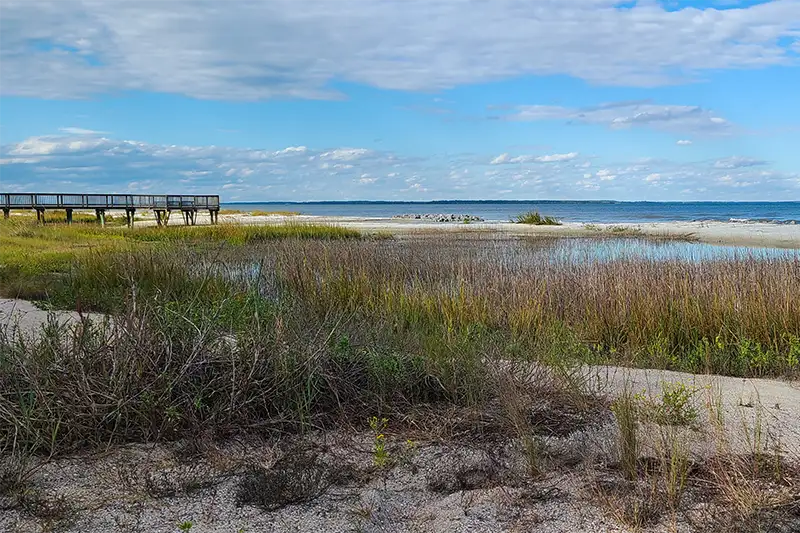 Wheelchair-Accessible Hilton Head beaches are now a reality, thanks to a number of local programs and improvements.













 Ever wonder why some people end up with upgrades and refunds whenever they make a wheelchair-access travel complaint, while others walk away with zero compensation? Truth be told, it’s all in the details. Knowing when to complain, how to complain and who to complain to are the keys to not only resolving the issue at hand, but also to receiving adequate compensation for your inconvenience. So the next time you encounter an access-related problem on the road, follow this roadmap for prompt resolution and adequate compensation.


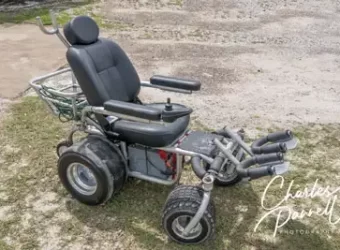
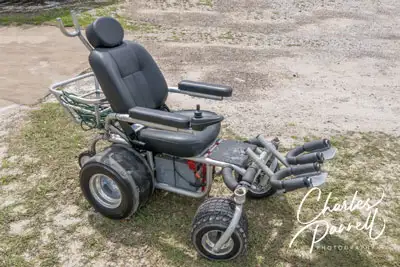 If you’ve always dreamed of enjoying some fun and sun on the beach, but thought it was impossible because you use a wheelchair, then think again. Thanks to an enterprising man on the Gulf Coast, power beach wheelchairs on Alabama beaches are a reality for wheelchair-users and slow walkers..