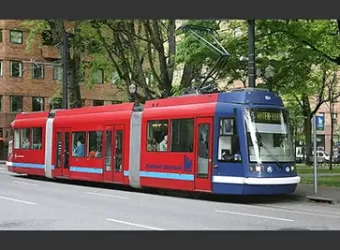
Getting to and from your vacation destination is one thing, but getting around town without a car — especially if you use a wheelchair — can throw a wrench into even the best laid plans. That is, unless your vacation destination is Portland, Oregon, where accessible and affordable public transportation is abundant and easy to use. So here’s the skinny on how to get around town when you visit Portland in a wheelchair.
Ride the Streetcar
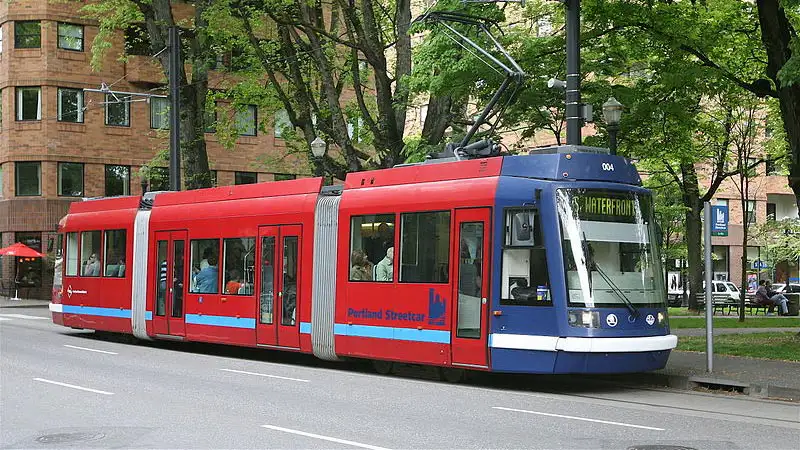
Getting around downtown Portland in a wheelchair is pretty easy, as there are wide sidewalks, plentiful curb-cuts and a fairly level terrain. Add in the Portland Streetcar (portlandstreetcar.org), which runs through the downtown area and connects to nearby business districts, and you have a very accessible way to see the city highlights.
The North – South Line runs from Nob Hill in the north, through the downtown area to the south waterfront; while the A and B loops circle the Lloyd District, Rose Quarter, Pearl District and downtown area. The A Loop runs in a clockwise direction, and the B Loop runs in a counterclockwise direction, so it’s easy to backtrack along the route.
Access is excellent on the Portland Streetcar, as every streetcar has has a ramp-equipped entrance. Boarding is a snap — just press the blue button to deploy the ramp, roll into one of the wheelchair-accessible seating areas and lock your brakes. When the streetcar arrives at your stop, push the blue button to deploy the ramp; and if you run into problems or have an emergency, just use the intercom near the accessible seating area.
Streetcar tickets can be purchased from machines at the platforms or at the Tri-Met ticket office in Pioneer Square. The fare for a 2.5-hour streetcar pass is $2, and the Hop pass (for the city bus) is also good on the streetcar.
Hop on a Bus
Getting around other areas of Portland in a wheelchair is easy too, thanks to the Tri-Met bus line (trimet.org/bus). Tri-Met buses run throughout the downtown area and connect with the Portland Streetcar, as well as offer access to outlying Portland neighborhoods. They are ramp or lift-equipped and many can also kneel, which makes boarding much easier for slow walkers. All buses have priority seating for disabled passengers and wheelchair tie-downs; and the drivers are happy to assist passengers — especially visitors.
If you need the ramp or lift deployed and you disability isn’t obvious, just ask the driver. Drivers are also available to help passengers on and off the the lift, and to secure assistive devices in the tie-downs.
Although Tri-Met buses accept cash, the best deal for visitors is the Hop card, which can be picked up and filled at the Tri-Met ticket office in Pioneer Courthouse Square. A 2.5-hour pass on the Hop card costs $2.80 and a day pass is $5.60 a day. Seniors and disabled passengers get a 50 percent discount, and if you decide to extend your stay in Portland, you can always add more money to your Hop card.
Airport Transfers
Getting to and from the Portland International Airport is easy too, thanks to MAX Rail (trimet.org/max), the city’s light rail system. It also connects downtown Portland with Beaverton, Clackamas, Gresham, Hillsboro, North/Northeast Portland and Milwaukie. And like the rest of Portland’s public transportation, all the MAX Rail lines are wheelchair-accessible.
All MAX Rail trains have accessible boarding areas, which are located in the center of the low-floor cars. The conductor will deploy the ramp for wheelchair-users, but slow walkers can also deploy the ramp by pressing the blue button. The accessible cars all have large accessible seating areas, and a ramp request button next to the doors.
The Hop card is also good on MAX Rail, and it can be purchased or refilled from machines at the station. The MAX Rail Airport Station is located near baggage claim on the lower level
Taxi Tours of Portland in a Wheelchair
Finally, if you’d prefer to just grab a cab, then contact Radio Cab (radiocab.net) for wheelchair-accessible service. Radio Cab offers 24-hour taxi service in lift-equipped vans, throughout the Portland Area. And the fares are the same as standard taxi fares.
Radio Cab also offers accessible day tours of the city with stops at Washington Park, the Rose Gardens, the Japanese Gardens and the Columbia River Gorge. Or if you’d like to get out and do a little wine tasting, Radio Cab can put together a wine tour to the Yamhill Valley and Hood River. And everything is customizable, as you can do as little or as much as you want on a personalized Radio Cab tour.
For more information or to book a Radio Cab call (503) 205-3317. It’s a very accessible way to enjoy all that Portland has to offer.
Barrier-Free Travel Washington National Parks for Wheelers and Slow Walkers
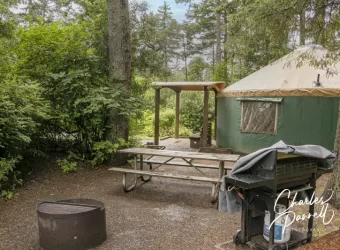
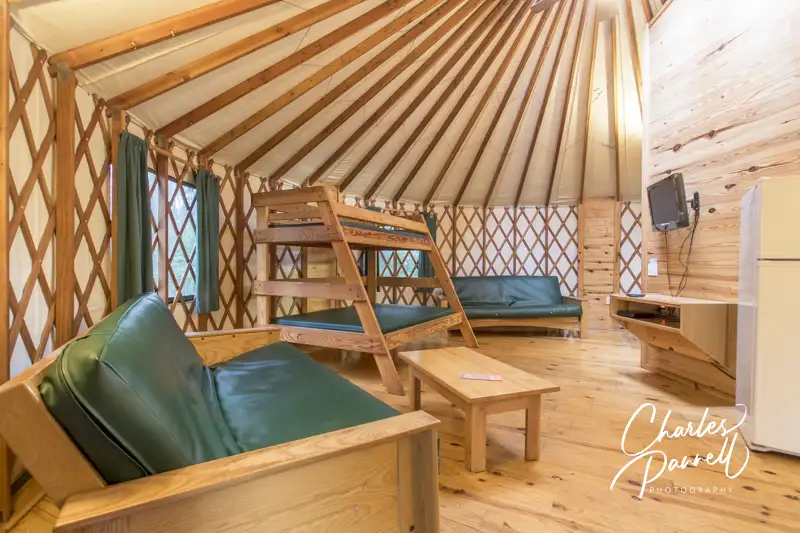
Let’s face it, all yurts are not created equal. These round canvas structures with wooden floors are popping up at state parks and campgrounds across America; and let’s just say some offer more creature comforts than others. Some are pretty basic, with just the roof over your head and a pair of bunk beds. Others, such as this wheelchair-accessible Umpqua yurt, offer a bevy of deluxe features, including a private bathroom, a kitchen and electricity. And you just can’t beat the location — in the heart of Umpqua Lighthouse State Park (oregonstateparks.org/index.cfm?do=parkPage.dsp_parkPage&parkId=83). So pack you car and hit the road to the Oregon coast, and spend the night in this deluxe wheelchair-accessible Umpqua yurt.
Sleeping in Style
Located in a secluded enclave just north of the campground, the Yurt Village includes six yurts, including the wheelchair-accessible model (yurt 16). Accessible parking is located in a small parking lot near the yurt village, which is a short level roll to the wheelchair-accessible Umpqua yurt. The yurt is is surrounded by vegetation for maximum privacy, and there’s level access to the covered front porch.
Great room in Yurt 16 at Umpqua Lighthouse State Park
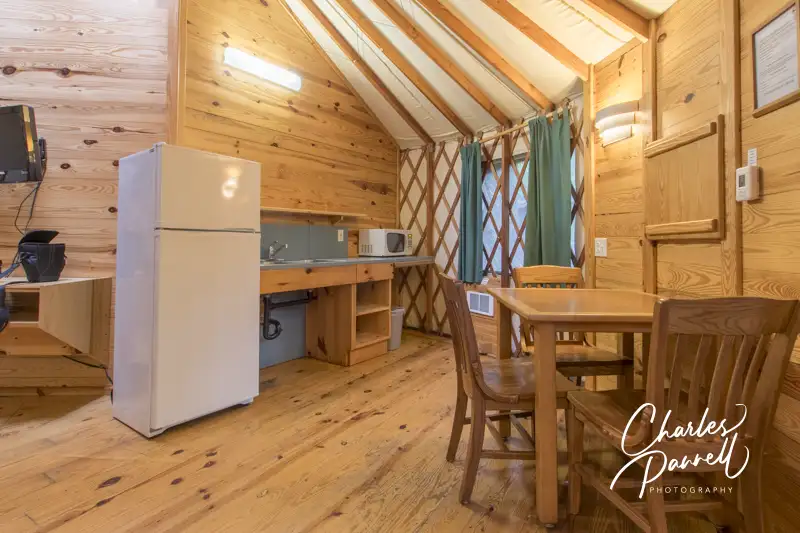
There’s plenty of room to maneuver a wheelchair around the great room, which is furnished with two 18-inch high futons and a 21-inch high bunk bed (bring your own linens), with a double on the bottom and a single on the top. There’s also a DVD player and a TV in the unit, and although there’s no TV reception, it’s a good entertainment option if you bring along your own DVDs. As an added bonus the yurt also comes equipped with lights, electric outlets and even a heater.
Kitchen in Yurt 16 at Umpqua Lighthouse State Park
The adjacent kitchen is equipped with full size refrigerator, a microwave, and a sink. There’s also a table with four chairs next to the kitchen. It’s a simple set-up, but quite functional, although you do need to pack along dishes, cookware and utensils.
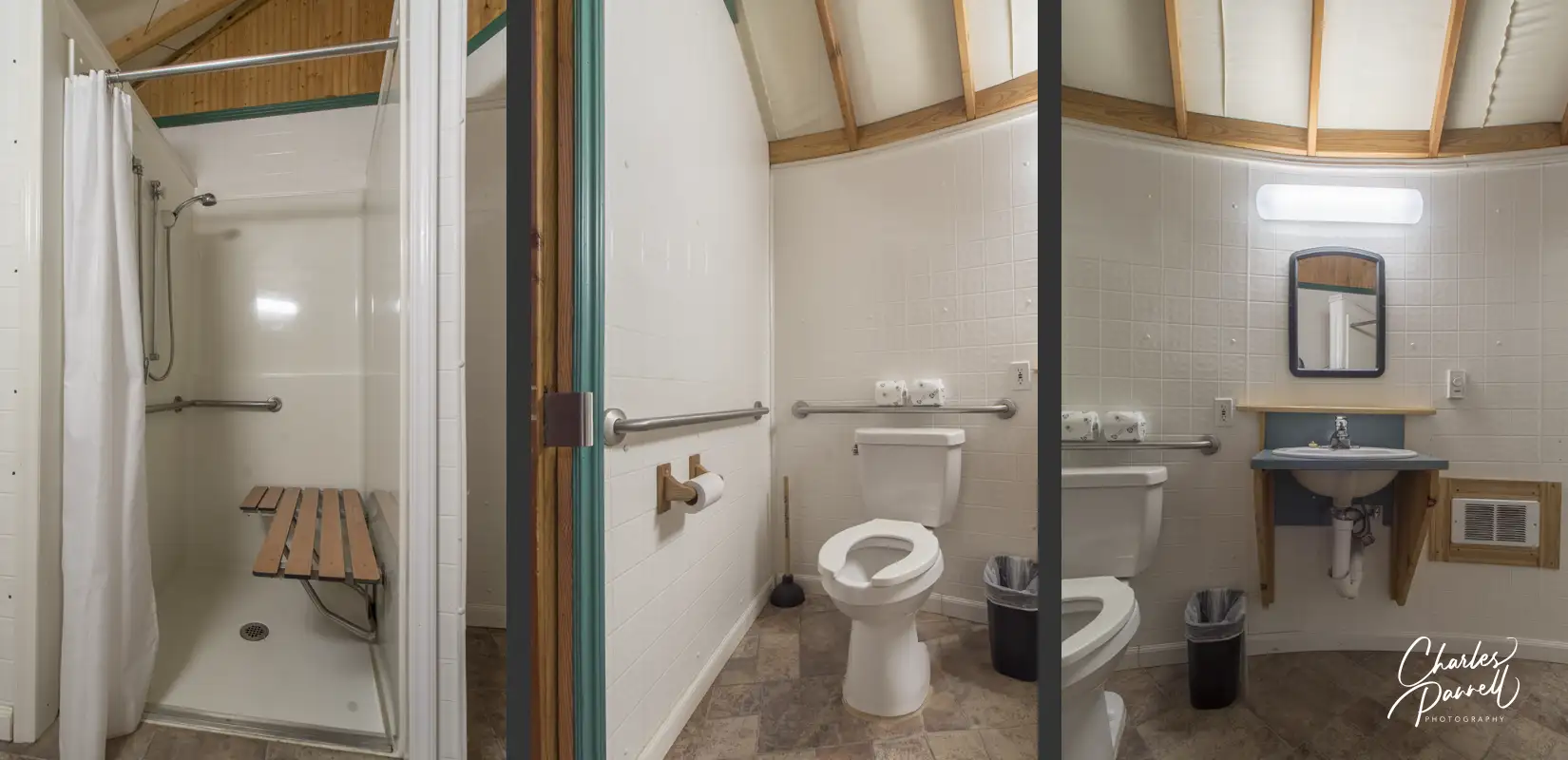
The bathroom has a wide sliding door, and it features a full five-foot turning radius. It’s equipped with a roll-in shower with grab bars, a hand-held showerhead and a fold-down shower bench. Other access features include toilet grab bars on the back and right walls (as seated), and a roll-under sink.
Bathroom in Yurt 16 at Umpqua Lighthouse State Park
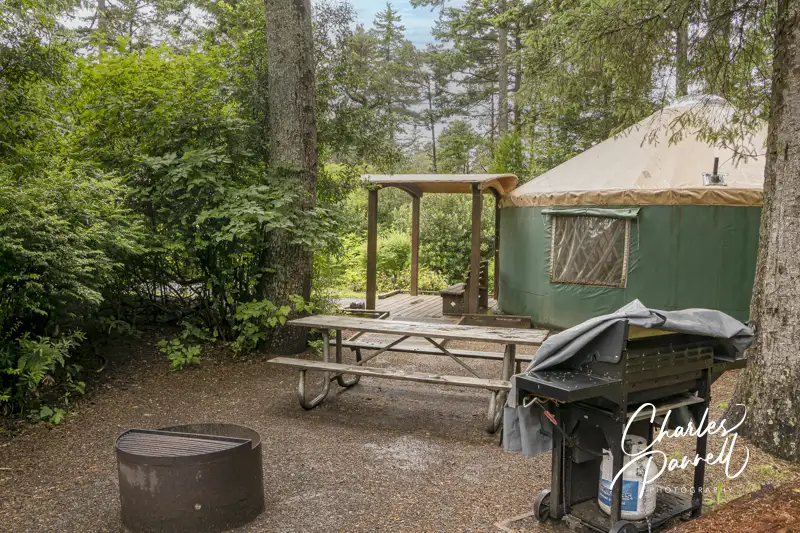
And if you’d like to grill your dinner, there’s also a propane BBQ near the front porch. Top it off with an accessible picnic table and a fire ring, and you have everything you need.
Reservations for this wheelchair-accessible Umpqua yurt can be made up to nine months in advance at www.reserveamerica.com.
Whale Watching and More
While you’re in the area, be sure to take a short drive over to the Umpqua River Lighthouse. Built in 1857, this 65-foot tall tower sits at the entrance to Winchester Bay. There’s accessible parking near the lighthouse, with level access over to the adjacent museum. Even though the museum is accessible, admission is only offered as part of the lighthouse tour, which is not accessible. Still it’s worth a stop just to get a look at the outside of the historic lighthouse. And if you have a picnic lunch, there’s also a few accessible picnic tables in front of the museum.
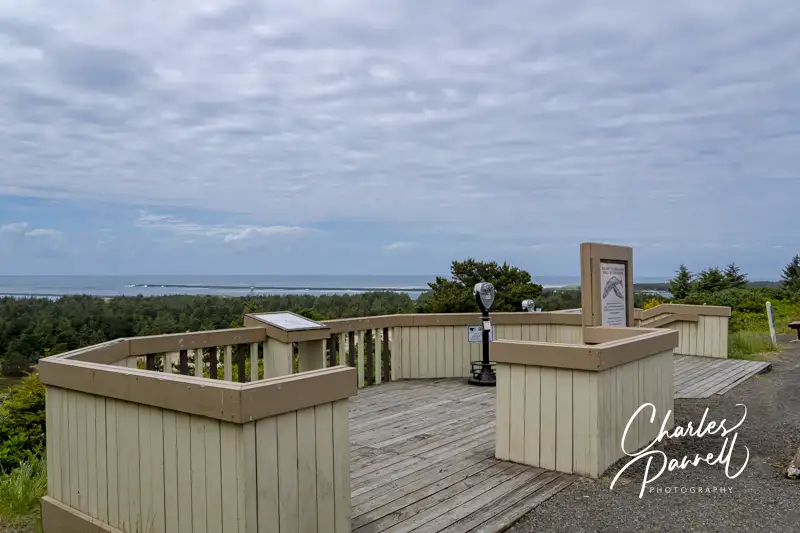
Save some time to stroll across the street, where you’ll find an accessible overlook which offers a nice view of the Umpqua River and the Pacific Ocean. And although the scenery by itself is splendid, during the winter months it’s also possible to spot migrating gray whales in the distance. Be on the lookout for these massive giants from late November to early January, when the pregnant females head south from Alaska, to give birth in the warm waters off of Baja California. Of course whale watching is a matter of luck and timing, but to increase your odds, visit during the peak migration in early January. And don’t forget to bring along your binoculars.
Whale watching platform at Umpqua Lighthouse State Park
Dean Creek Detour
For more wildlife viewing, take a short detour to Dean Creek Elk Viewing Area (www.blm.gov/visit/dean-creek-elk-viewing-area). Just follow highway 38 east from Reedsport for about three miles, and keep your eyes peeled for Roosevelt Elk on the right side of the road.
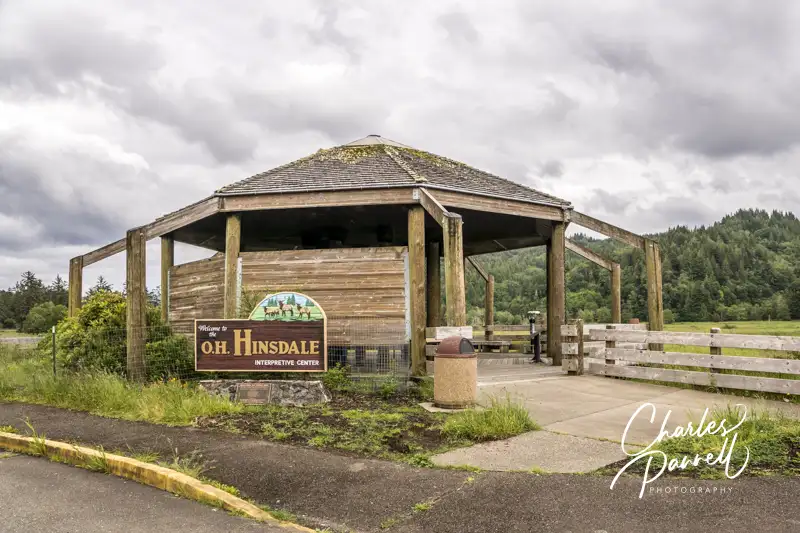
Interpretive display at Dean Creek Elk Viewing Area
There are several spots along the road that have accessible viewpoints and overlooks, and there’s even a small interpretive display near one popular viewing area. Access is good at all the viewing areas, with accessible parking, level access out to the overlooks, and accessible restrooms. There’s also a pullout on the right side of the road at about the 4.5-mile mark that offers some incredible windshield views.
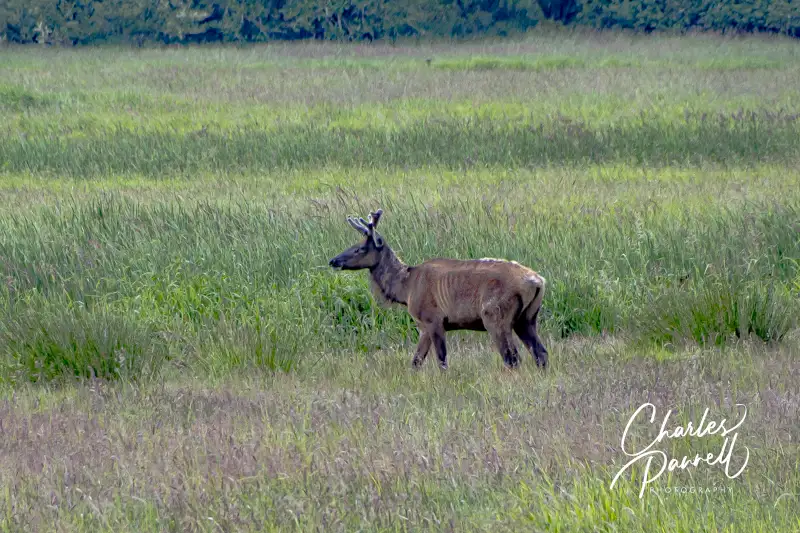
The good news is that because of mild winter temperatures and abundant food supplies, the elk remain in the area year-round. The not so good news is that, like most wildlife viewing opportunities, spotting these animals depends a lot on luck. That said, you can increase your odds by visiting in the early morning, or just before dusk. On the plus side, the Dean Creek Elk Viewing Area is close to Umpqua Lighthouse State Park, so it’s possible to make several return visits during your stay.
Elk at Dean Creek Elk Viewing Area
Barrier-Free Travel California National Park Road Trips for Wheelchair-Users and Slow Walkers
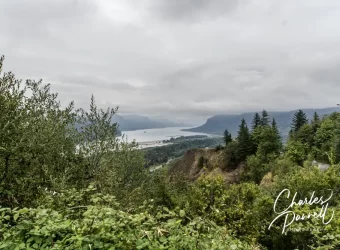
Located in Northern Oregon, the Historic Columbia River Highway parallels Interstate 84 and runs from Troutdale to The Dalles. This scenic two-lane road, which is also known as Highway 30, snakes through the Columbia River Gorge and offers some spectacular windshield views. And although Interstate 84 is the quicker way to traverse the gorge, Highway 30 is definitely the more picturesque choice.
Granted, there’s no shortage of bold scenery along the entire length of the 75-mile route; however the 10-mile segment between Vista House and Horsetail Falls is a don’t-miss side trip for wheelchair-users and slow walkers. Known as the waterfall corridor, this segment includes a number of wheelchair-accessible viewpoints, trails and historic stops, and offers a closer look at some of the beautiful cascades along the way.
Vista House
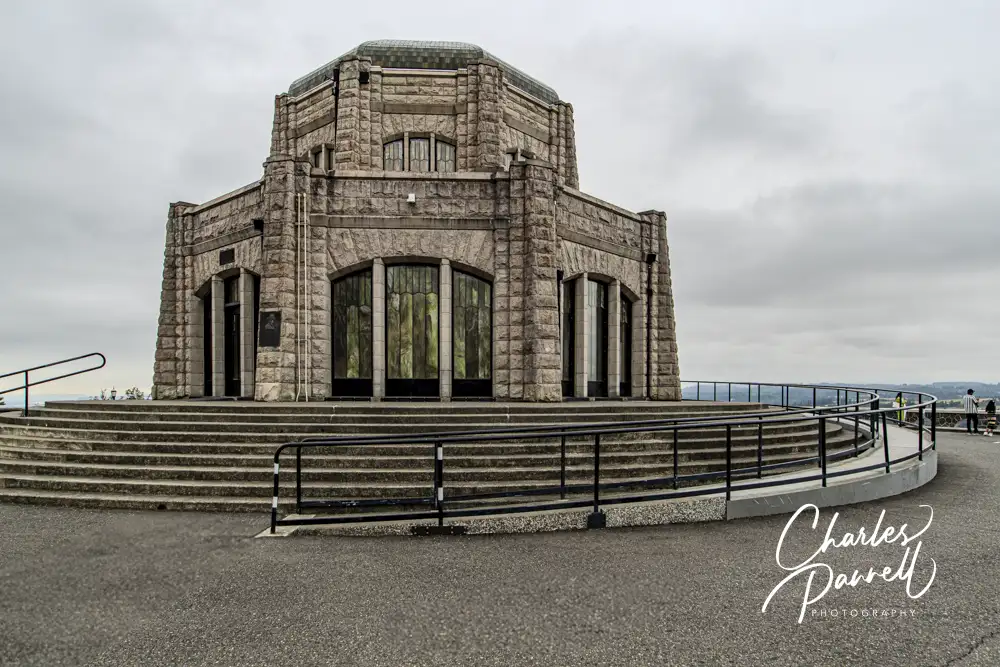
The Vista House on the Columbia River Highway Waterfall Corridor
Finding the waterfall corridor is easy. Head east from Portland on Interstate 84, then take exit 22 at Corbett and turn right. From there just follow the signs, and make a left on the Historic Columbia River Highway. This portion of the road winds through the forest for about three miles, before it heads uphill to Vista House at Crown Point (www.vistahouse.com).
Built in 1916 as a rest stop and observation tower, Vista House is a fitting starting point for the drive, as it was also the site of the 1916 dedication of the highway. There’s accessible parking near the front, with ramp access around to the back entrance. There’s level access through the automatic doors and plenty of room to maneuver around the main floor of this architectural treasure. Perched some 600 feet above the Columbia River, Vista House is lined with marble floors and filled with stained glass windows.
Listed on the National Register of Historic Places, this historic building also includes a cleverly hidden wheelchair lift. Designed to blend in with the architecture, the lift allows wheelchair-users and slow walkers access to the restrooms, exhibits, gift shop and cafe that are housed in the lower level. The building is usually open from Friday to Monday, but it depends on available staffing. And even if the building isn’t open you can still peer inside. There’s also a great river view near the back entrance.
Latourell Falls
Latourell Falls is located 2.5 miles up the road, in the verdant Guy W. Talbolt State Park. There’s accessible parking with level access over to a viewing area, where you can get a gander at the majestic falls, as it tumbles 224 feet down over columnar basalt pillars. There’s a trail to an upper viewing area, but it’s steep and not wheelchair-accessible. Still you can get a great view from below.
There’s also an accessible vault toilet at this stop. And if you’d like to enjoy lunch alfresco, there’s an accessible picnic table located near the parking lot.
Bridal Veil Falls
Bridal Veil Falls, which is located two miles up the road, is also worth a stop. Although the trail to the the falls is steep and has steps, there’s another accessible trail that offers a good river view. There’s accessible parking in the large lot, with level access over to the trailhead. The trail to the right goes up to the falls, while the accessible Overlook Trail on the left leads over to the river. There’s also an accessible vault toilet near the trailhead.
The half-mile Overlook Trail has a few bumps along the way, but it’s still doable for most wheelchair-users and slow walkers. It winds through the woods, passes a picnic table and then skirts the river. There are a few places where you can get good view of the Columbia River, before the trail winds back through the woods to the beginning. It’s a pleasant stroll, and definitely worth a stop.
Wahkeena Falls
As you continue along Highway 30, Wahkeena Falls is located three miles up the road. Accessible parking is available on the left, above the picnic area. There’s also an old restroom with an accessible stall in the picnic area; however it’s best to drive down if you need to use it, as the road is pretty steep.
The accessible trail to the falls viewpoint is located across the street. The 200-foot paved trail is fairly level and winds over to the perfect vantage point. You can’t see these falls from the road, but there’s a great view of them at the end of the accessible trail.
Multnomah Falls
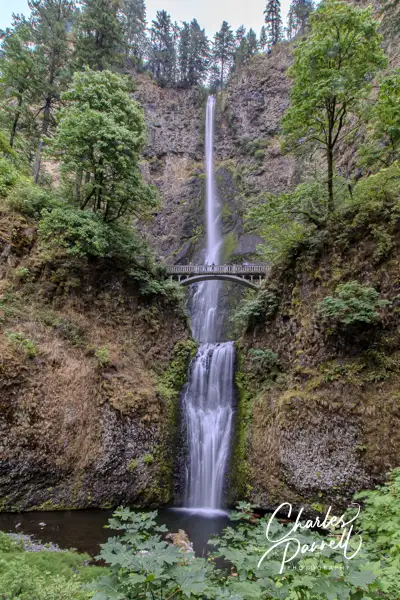
By far the most popular waterfall along the route is Multnomah Falls, which is located a half-mile from Wahkeena Falls. There’s accessible parking in the small lot across from Multnomah Falls Lodge, with level access over to the lower viewing area. Across the street, there’s a paved walkway that leads about 200 yards to the upper viewing area. Although this is a good option for power wheelchair-users, it’s a bit steep for manual wheelchair-users and slow walkers. Still you can get a nice view from the lower vantage point.
There’s also level access to the lodge, which houses a visitor center and a gift shop on the lower level; and offers elevator access up to the restaurant on the second floor. Accessible restrooms are also located on the lower level. And if you drive by slowly, you can get a nice view of the falls from Highway 30.
There’s also another parking area off of Interstate 84 for this popular stop. Just take exit 31 and follow the signs. There’s plenty of accessible parking in the lot; however the path over to the Highway 30 parking area is steep — especially near the bridge — so it’s not a viable option for most folks. The best bet is to park in the Highway 30 parking area. It should also be noted that there is no vehicular access from the Interstate 84 parking area to the Highway 30 parking area; so if you use the Interstate 84 parking area you won’t be able to drive to the Historic Columbia River Highway from there.
Multnomah Falls Timed Use Permit
During the peak summer season, a Multnomah Falls Timed Use Permit is required in order to park in the parking lot off of Interstate 84. The permit is required from late May to early September from 9 AM to 6PM. One permit per car is required, and the permits are checked on the path from the parking lot to the falls.
The permits are available for $2 at www.recreation.gov. They are valid for entry during a one-hour time frame, and if not used they will expire at the end of the issued time. For example, if you buy a permit for 1:00 PM and have not used it by 2:00 PM it will expire at that time. That said, you can spend as much time at the falls as you want, as long as you enter within the specified time frame.
The bulk of the permits are available 14 days in advance; while a smaller batch is released two days prior to the arrival date. Permits are not sold on site, so make sure to get one ahead of time. Additionally, just because you have a permit, does not mean you are guaranteed a parking space.
Horsetail Falls
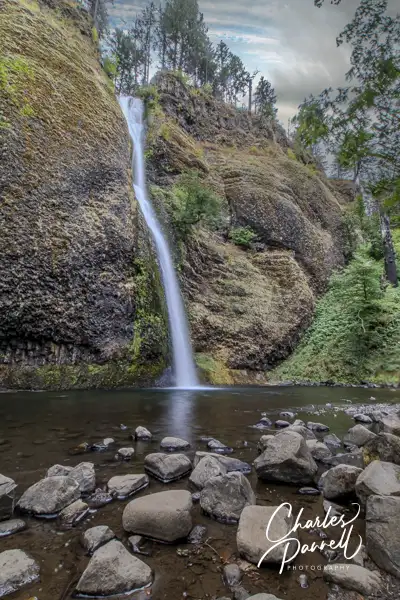
Last but certainly not least on this Historic Columbia River Highway drive is Horsetail Falls, which is located 2.5 miles from Multnomah Falls. There’s accessible parking in the lot across the street from the falls. From there a short paved level trail leads 150 feet over to a nice viewpoint. There are also a few picnic tables near the viewpoint, and although there are no services at this stop there’s a bench to sit and enjoy the falls. As an added bonus, you can also get an excellent view of Horsetail Falls from Highway 30 or even from the adjacent parking lot.
After you’d had time to enjoy the falls, continue east on Highway 30 to Dodson, and hop on Interstate 84. From there you can either circle back to Portland, or continue east to explore more of Oregon. Either way, this scenic drive is well worth the short detour.
Latourell Falls
Bridal Veil Falls
Multnomath Falls
Horsetail Falls
Historic Columbia River Highway Travel Tips
Although the scenic waterfall corridor is a must-do on any Oregon road trip, there are a few things you can do to make your visit go smoother.
First and foremost, try and arrive early in the day. The route gets extremely crowded in the afternoon, and parking places — even accessible spots — are hard to come by.
The early bird rule applies double for the Multnomah Falls area. Even if you don’t plan to stop, that section of the route routinely backs up after 11 AM, as people sit in the road and wait for available parking spots.
It’s also a good idea to travel from west to east along the route. Most of the e-bike rentals begin at Cascade Locks and head west along Highway 30; and since there aren’t any alternative trails they have to ride in the road along the waterfall corridor. This tends to slow down the traffic that’s going in the westerly direction, and even backs it up at some spots.
There aren’t many services along the waterfall corridor, so pack along water and snacks. There are however a lot of pleasant picnic spots to enjoy a quiet breakfast or lunch.
Summer is the most crowded season along the Columbia River Gorge, so try to visit in the off season. The peak flow seasons for the waterfalls are winter and spring, which are usually less crowded.
Fall is also becoming a busy time along the route, as the fall foliage show is spectacular. It’s especially crowded on the weekends, so try to visit mid-week if possible.
Finally, take your time and stay a while to enjoy the Columbia River Gorge. For a fun getaway, spend the night in an accessible treehouse at nearby Skamania Lodge.
Barrier-Free Travel Washington National Parks for Wheelers and Slow Walkers
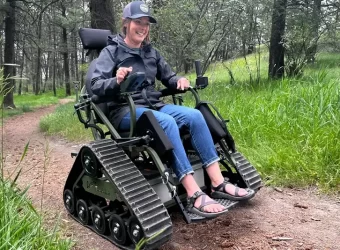
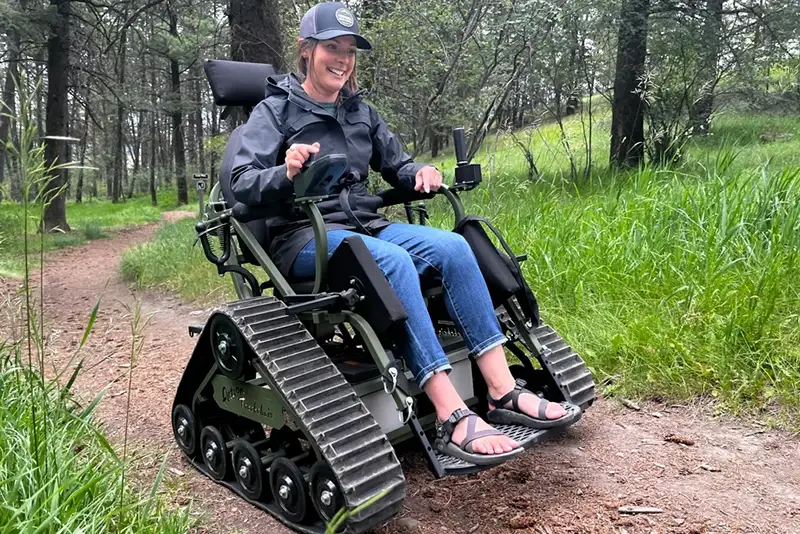
Thanks to the work of David’s Chair, loaner track chairs are now available at a number of Oregon locations. These rugged wheelchairs are outfitted with tank tracks instead of wheels and they can easily travel over sand and other obstacles found on inaccessible trails and beaches.
About the Track Chairs
Three types of track chairs are available — standing models, seated models and a youth chair. All have a maximum weight capacity of 350 pounds. Although the majority of the chairs are available at fixed locations, there are also several several models in the tow-and-go program. This program includes a track chair in a ramped trailer that can be towed by a personal vehicle. Tow vehicles need to have a two-inch ball with a straight four-prong trailer hookup and safety chain hooks.
Advance reservations are required for all loaner track chairs, and a liability waiver must also be signed. Some locations offer limited time slots, so plan ahead to avoid disappointment. Reservations for fixed location chairs can only be made at davidschair.org/request-fixed-location-chair/, while reservations for tow-and-go track chairs can be made at davidschair.org/request-tow-n-go-chair/.
Track Chair Locations
Fixed Locations
Seaside Elks Lodge #1748
324 Avenue A
Seaside, OR 97138
This seated model can be only used at the beach, which is located 2.5 blocks from the lodge.
Manzanita Visitor Center
30 Laneda Avenue
Manzanita, OR 97130
This seated model can only be used at the the beach off of Laneda Avenue, which is a short roll from the visitor center.
Gold Beach Visitor Center
94080 Shirley Lane
Gold Beach, OR 97444
This seated model can only be used on the beach near the Gold Beach Visitor Center.
Heceta Beach County Park
88466 1st Avenue
Florence, OR 97439
This seated model can only be used on the beach north of Driftwood Shores Resort, which can be accessed by the Heceta Beach access point.
Don and Ann Davis Park
840 West Olive Street
Newport, OR 97565
This seated model can only be used to access the beach near Don and Ann Davis Park.
The Pelican (Cape Kiwanda Parking Lot)
33180 Cape Kiwanda Drive
Pacific City, OR 97135
This standing model can only be used to access Pacific City Beach from the nearby parking lot.
Mount Pisgash Arboretum
34901 Frank Parrish Road
Eugene, OR
This seated model can only be used at the Mount Pisgash Arboretum.
Lithia Park Cabin
340 S. Pioneer Street
Ashland, OR
This seated model can only be used in Lithia Park.
Westport by the Sea Condos
1600 W Ocean Ave
Westport, WA 98595
Happy Camp Hideaways
825 Happy Camp Rd.
Tillamook OR 97141
This chair can only be used on the beach off 825 Happy Camp Road.
St Mary by the Sea Catholic Church
275 S. Pacific St.
Rockaway Beach, OR 97136
This chair can only be used on the beach that can be accessed via the St Mary by the Sea parking lot.
Tow-and-Go Locations
White City
This location has a standing model, a seated model and a youth chair.
Coos Bay
This location has a seated model.
For more information about these programs, visit davidschair.org/.
Barrier-Free Travel Washington National Parks for Wheelers and Slow Walkers
Located along the Historic Columbia River Highway in Dalles, the Columbia River Gorge Discovery Center (gorgediscovery.org) is a must-stop on any Northern Oregon road trip. If you’re already on the historic highway, just follow Taylor Franz Road and Discover Drive to the museum; and if you’re on Interstate 84, then take exit 82 and follow the signs. Either way it’s easy to find.
The Columbia Gorge Discovery Center, which is located in an award-winning 48,200 square-foot building, serves to create appreciation for the Columbia River Gorge through the interpretation of cultural and natural resources. To that end it presents a comprehensive history of the area, offers daily raptor shows and has a wheelchair-accessible trail that’s filled with native plants and exhibits. And it’s also the starting point of the accessible Riverside Trail. It’s a great primer for any Columbia River Gorge trip, and a must do on a Historic Columbia River Highway excursion.
Discover the Gorge
Access is good at the Columbia River Gorge Discovery Center, with plenty of accessible parking, level access to the front door; and ample room to maneuver a wheelchair inside. There’s elevator access to the second floor, and accessible restrooms are located near the boardroom. And if you’d like to bring along lunch, there’s a picnic area with accessible tables in back.
There’s good pathway access throughout the Discovery Center, which focuses on the history of the the gorge from the ice age to present day. Exhibits include displays about the geology of the gorge, Lewis & Clark, gorge ecology, the Oregon Trail and transportation. There are a number of interactive and tactile exhibits, and the whole museum offers a comprehensive look at the Columbia River Gorge.
And don’t miss the live raptor presentations that are held in the theater. These educational seminars are included with admission and in addition to having a raptor — or two — present, they also offer a good overview of raptor habits, behavior and habitat. And there’s barrier-free access to the theater, with plenty of room for wheelchairs in the front and on the sides. Check the theater schedule when you arrive so you don’t miss this educational and entertaining presentation.
A Little History
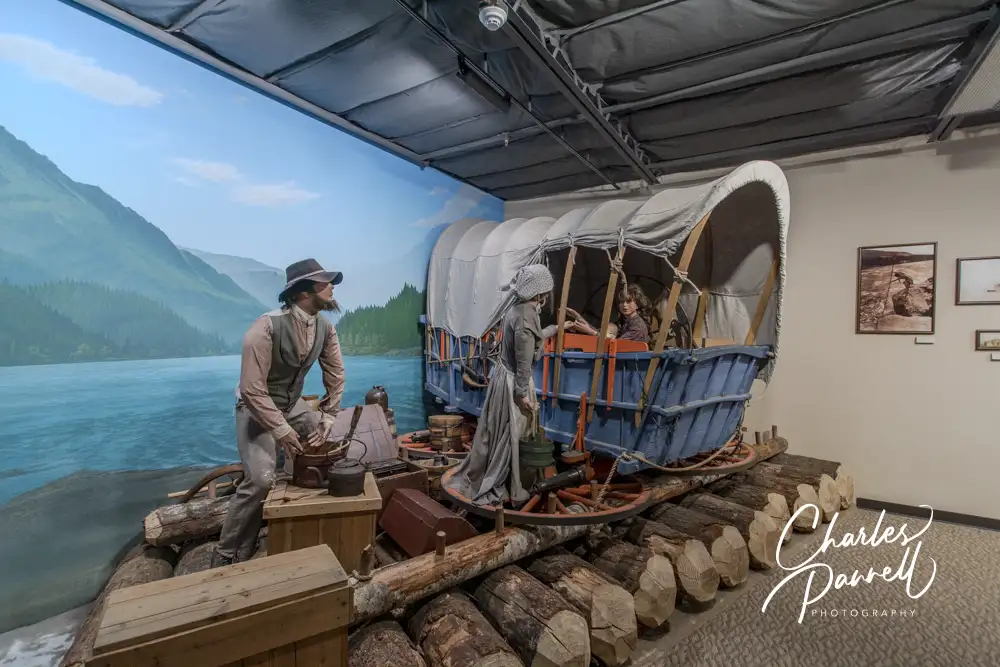
Display inside the Columbia River Gorge Discovery Center
The Wasco County Historical Museum, which is located in the east wing, also has excellent wheelchair access. Established in 1854, Wasco County is home to portions of the Lewis & Clark Trail and the Oregon Trail; while Native Americans, missionaries, pioneers and folks looking to strike it rich in the gold rush also inhabited the area over the years. And the museum offers a wide variety of displays on the diverse history of the area.
There’s plenty of room for a wheelchair to maneuver around the exhibits about the early inhabitants, shipwrecks on the Columbia River, the former cannery, a rail depot and the old Umatilla House hotel. And there’s even a turn-of the-century street scene of Dalles. Round it out with a agriculture exhibit and a gallery filled with George Lawrence Company saddles, and you get a pretty good picture of the early settlers of Wasco County.
Take a Hike
Along the Native Plant Walk outside the Columbia River Gorge Discovery Center
Finally, save some time to explore the outdoor areas of the museum. There’s level access out the back door to the paved Native Plant Walk. Make a left as you exit the museum and head all the way to the end of the trail to the Columbia River scenic overlook, where’ you’ll get a good view of the river with the Klickitat Hills in the background.
Next head back to the museum — past some evidence of beaver activity — to the Native American petroglyph rock art near the back door. The remainder of the trail winds past Olney’s cabin, Crate’s Cabin and a tepee, and includes over 40 identified plants. Pick up a guide at the front desk and see how many you can find. The whole trail is paved and wheelchair-accessible.
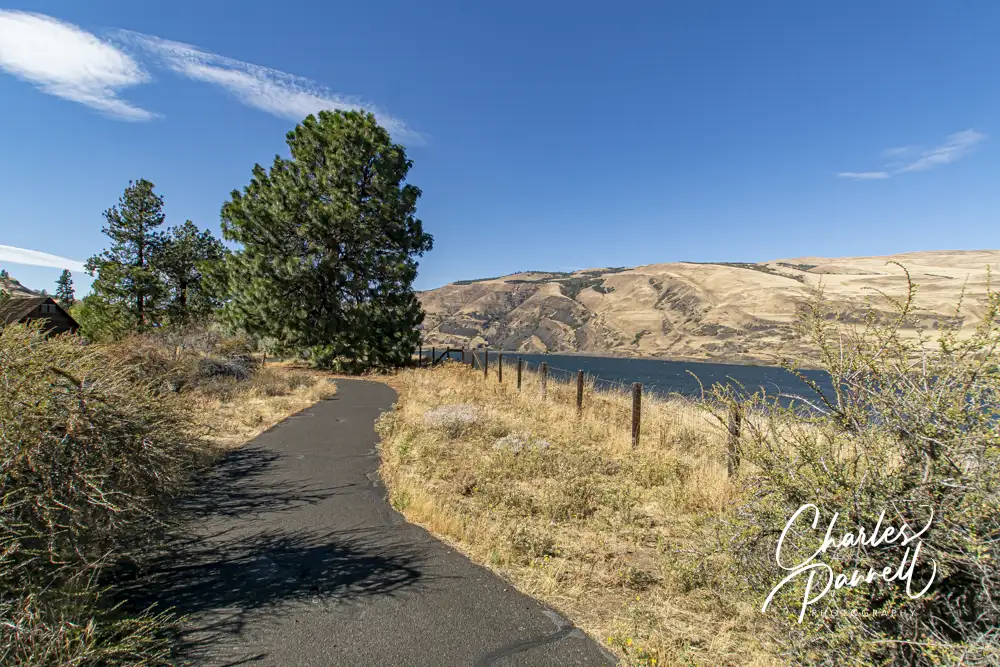
And near the end of the Native Plant Walk, you’ll find the beginning on the Riverfront Trail. This wide paved trail winds along the southern bank of the Columbia River, from the Columbia River Gorge Discovery Center to the Dalles Dam Visitor Center. The trail is an excellent option for wheelchair-users and slow walkers; and the great part is, you can do as little or as much of it as you want. That said, even if time is short, try to fit in a short stint along this scenic thoroughfare. It’s the perfect way to top off a visit to the Columbia River Gorge Discovery Center.
Barrier-Free Travel Washington National Parks for Wheelers and Slow Walkers