I’m taking a Canadian vacation next year and I will be basing myself in Calgary for a few weeks. I use a manual wheelchair and I’d like to take a side trip to Banff for a few days. I’m looking for an accessible transportation provider that will allow me to say in my manual wheelchair for the trip between Calgary and Banff. I’ve found one company that can provide accessible transfers in a private van, but they are out of my price range. Can you recommend a company that can provide affordable wheelchair-accessible transportation to Banff from Calgary?
Hop Aboard Flixbus!
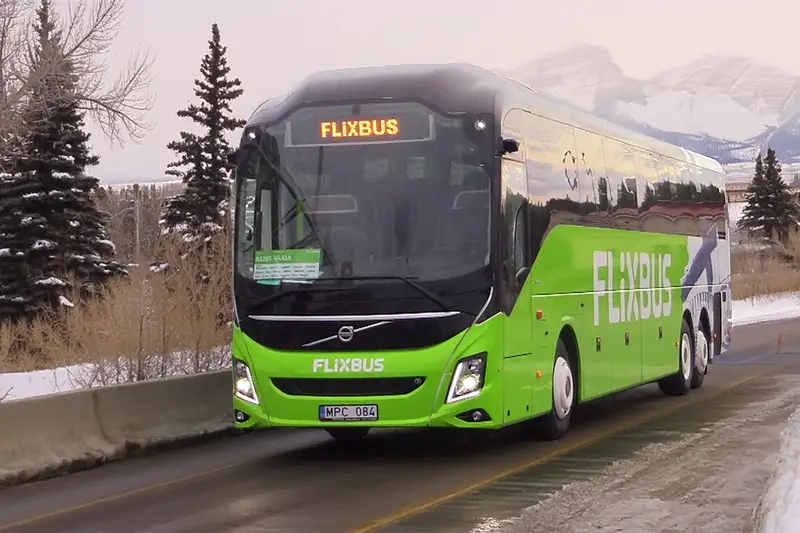
Well if you are looking for affordability, then look no further than Flixbus (www.flixbus.com). They offer accessible bus transportation between Calgary and Banff that won’t break the bank. Instead of standard fares, Flixbus uses a dynamic pricing model, where fares are driven by demand, booking time and seat availability. This model is similar to the one used by airlines, with fares usually increasing as the departure date approaches. So if you have the ability to plan ahead, you can save more money. That said, even the highest Flixbus fares are still a deal.
Flixbus also offers good accessibility, and you can certainly stay in your wheelchair for the entire journey. In fact they can accommodate wheelchairs or scooters with a combined total weight (including the passenger) of 600 pounds and dimensions of 30 inches X 48 inches for wheelchairs, and 30 inches X 30 inches X 48 inches for scooters. Additionally, some buses have hydraulic lifts with weight limits of 800 pounds to accommodate heavier devices.
Booking a wheelchair ticket on Flixbus is pretty easy. After you choose your destination, you can book the kind of fare you need from the drop-down menu. One of those choices is for “traveling with a wheelchair or mobility device”. After you book your ticket, customer services gets an automatic notification of the booking, so that accessibility can be confirmed and the appropriate equipment is dispatched. If the wheelchair spaces are already book on your first choice, you will automatically be rebooked on the next available bus.
And of course, if you have any problems or issues, you can always contact customer service at (855) 626-8585. So give Flixbus a try – it’s an affordable and accessible option for your Canadian vacation.
Have a Question for the Expert?
Barrier-Free Travel Glacier, Yellowstone and Grand Teton National Parks for Wheelers and Slow Walkers
Although there’s no train station in Yosemite National Park, with a little advance planning it is possible to plan a wheelchair-accessible Yosemite rail excursion. Here’s what you need to know to ride the rails to Yosemite National Park.
Hop Aboard Amtrak
Amtrak Gold Runner
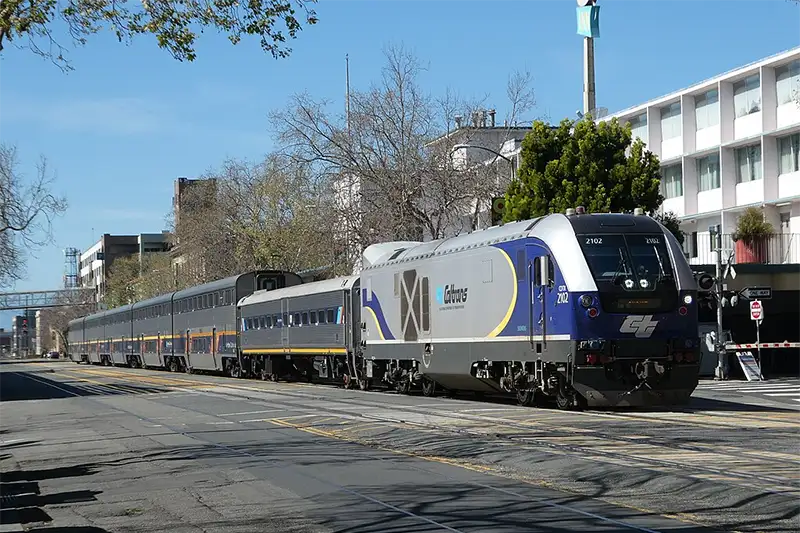
The best way to take a wheelchair-accessible Yosemite rail excursion is to hop aboard Amtrak’s Gold Runner. This route runs through the Central Valley from Oakland to Bakersfield, and offers bus connections from Los Angeles, Sacramento and San Francisco. The train also stops in Emeryville, Richmond, Martinez, Antioch, Lodi, Stockton, Modesto, Denair, Merced, Madera, Fresno, Hanford, Corcoran and Wasco. And it’s easy to transfer to Yosemite via YARTS at the Merced Amtrak Station.
All Amtrak trains feature ramp or lift boarding, wheelchair-accessible seating and large accessible restrooms. Wheelchair-users can remain in their own wheelchair or transfer to a coach seat for the journey. The Gold Runner can accommodate manual and power wheelchairs up to a maximum width of 29.5 inches, and an occupied weight of up to 600 pounds. Special accessibility requests can be submitted at www.amtrak.com/contact-us/email.html (click on accessibility request) at least 72 hours prior to travel, or by calling (800) 872-7245. On-the-spot accessibility requests can usually be accommodated if they do not present a safety issue.
The Gold Runner route features coach seating, free WI-FI, and food for sale on board. Amtrak offers a 10% discount to passengers with a disability and one companion. For more information about Amtrak’s Gold Runner route, visit www.amtrak.com/san-joaquins-train.
Take YARTS to Yosemite
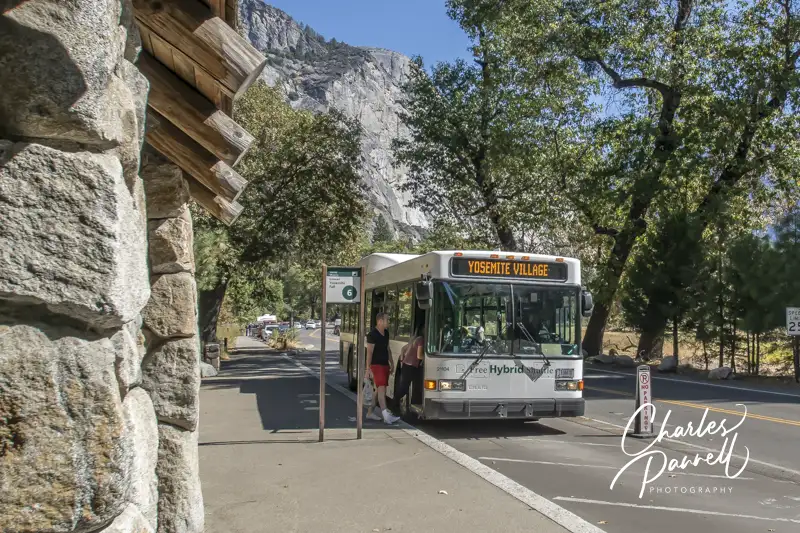
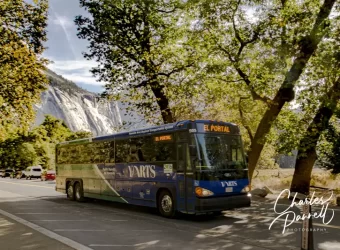
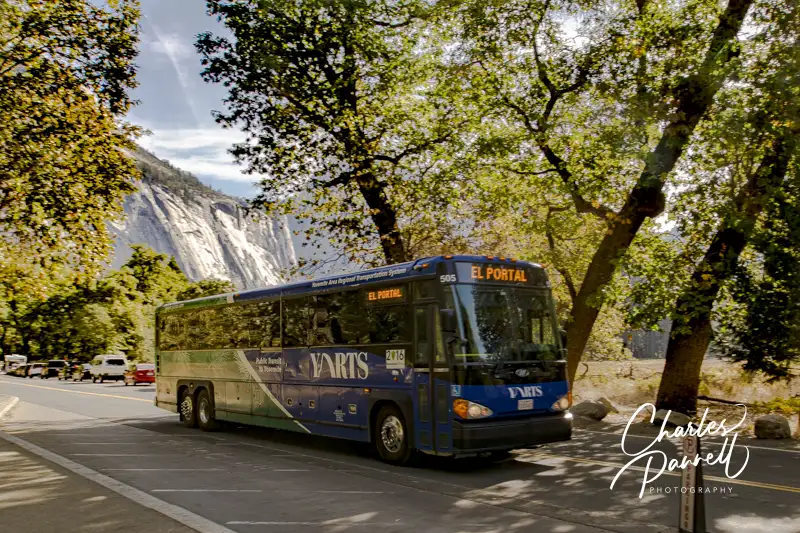
YARTS bus in Yosemite Valley
It’s about a three-hour trip from Oakland to Merced, and a two-hour trip from Bakersfield; plus an additional, 3.5-hour bus connection from Bakersfield to Los Angeles. Amtrak has partnered with YARTS to provide a bus connection from the Merced Amtrak Station to Yosemite, and that transfer is included with your Amtrak ticket.
All YARTS buses feature lifts and accessible seating; however it’s important to note on your Amtrak reservation that wheelchair-accessible seating is required. Alternately, call (877) 989-2787 at least 48 hours in advance to secure an accessible seat. Additionally, reduced fares are available to people with a disability and seniors over 62 years old.
The Highway 140 YARTS route runs from the Merced Amtrak Station to Yosemite Valley with stops in Catheys Valley, Mariposa, Midpines and El Portal. Stops in Yosemite Valley include the Yosemite Valley Visitor Center, Yosemite Valley Lodge and Curry Village. This route runs year-round, and it takes 2.5 hours to get from the Merced Amtrak station to Yosemite Valley.
The Highway 140 YARTS route is an excellent choice for folks with lodging reservations at Yosemite Valley Lodge or Curry Village; however this route also stops at accessible properties outside of the park. Two excellent accessible lodging choices on the route are the Yosemite Bug and AutoCamp Yosemite.
The Yosemite Bug (www.yosemitebug.com/) is located in Midpines and features a large wheelchair-accessible guest room with a roll-in shower. Located nearby, AutoCamp Yosemite (autocamp.com/location/yosemite/) offers wheelchair-accessible accommodations in custom designed luxury travel trailers. And both properties have daily YARTS connections to the national park.
Getting Around Yosemite
Yosemite Shuttle
Passengers who take a wheelchair-accessible Yosemite rail excursion have several options to get around the park. First and foremost is the free Yosemite shuttle system.
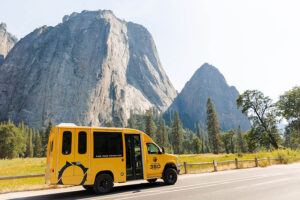
There are currently two shuttle routes in the valley — the Valleywide Shuttle and the East Valley Shuttle. The former stops at Yosemite Valley lodges, campgrounds, restaurants and trailheads, while the latter calls on Yosemite Village, Curry Village, the Pines Campgrounds and the eastern Yosemite Valley trailheads. All shuttle buses are equipped with wheelchair lifts and tie-downs, and can accommodate wheelchairs up to 24 inches wide and 46 inches long. The lifts have a weight limit of 750 pounds.
Aramark (www.travelyosemite.com) — a Yosemite lodging concessionaire — also operates several tours. The popular Valley Floor Tour is conducted in an open-air tram and offers good views of the surrounding landscape. Although not all trams are accessible, wheelchair-users can request a lift-equipped one with 48 hours notice. And if you’d like to explore more of the park, opt for four-hour Glacier Point Tour or the day-long Yosemite Grand Tour. Accessible buses for these tours are also available with 48 hours advance notice.
Finally, if you’d like to get a little exercise, then rent a handcycle at the bike stands at Yosemite Valley Lodge or Curry Village and explore the 12 miles of bicycle paths in Yosemite Valley. Most of the bicycle paths are wheelchair-accessible except for a short patch near Housekeeping Camp.
So leave the car at home, and get out and ride the rails to Yosemite National Park. It’s a fun and wheelchair-accessible way to travel.
Barrier-Free Travel Yosemite, Sequoia and Kings Canyon National Parks for Wheelers and Slow Walkers

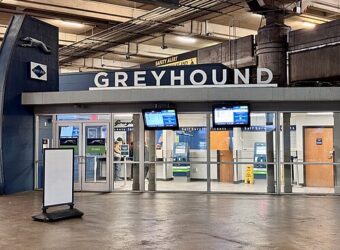
Have you ever had an access-related problem while traveling on Greyhound or FlixBus? If so, the Department of Justice (DOJ) wants to hear from you. After receiving a number of complaints on these carriers, the DOJ is in full investigation mode. But they can’t proceed without your help. They want to hear from you if you’ve ever had your Americans with Disabilities Act (ADA) rights violated. This includes:
Failure to maintain bus lifts.
Refusal to assist disabled passengers.
Refusal to allow service animals aboard.
Abandoned disabled passengers in the middle of their journey.
Failure to assist disabled passengers off the bus at rest stops.
Disabled passengers who travel on domestic planes, trains, buses or ferries within Canada may be eligible for free caregiver fares under the One Person One Fare regulation (otc-cta.gc.ca/eng/highlights-one-person-one-fare-policy-decision). This regulation mandates that domestic carriers cannot charge a disabled person for their caregiver’s fare, if that caregiver’s assistance is required during their journey. In 2008 this regulation was challenged in the Supreme Court of Canada, but in the end the rule was upheld. There are of course a few restrictions; so here’s what you need to know to get free caregiver travel under the One Person One Fare regulation.
The Program
One Person One Fare mandates free caregiver travel it you fall under the requirements of the regulation. First off, the passenger needing assistance has to be disabled as defined by the Canada Transportation Act. That definition includes “any impairment, including a physical, mental, intellectual, cognitive, learning, communication or sensory impairment — or a functional limitation — whether permanent, temporary or episodic in nature, or evident or not, that, in interaction with a barrier, hinders a person’s full and equal participation in society.”
Furthermore, the passenger has to require assistance with their personal care or safety during the flight. This can include assistance with:
Eating
Taking medication
Using the washroom
Orientation or communication
Responding to an emergency
One Person One Fare doe not apply if you just need assistance boarding, help with your luggage or attendant care at your destination. This regulation generally applies to people with severe disabilities who cannot travel alone.
The Process
So how do you get free caregiver travel under the One Person One Fare regulation? First and foremost, check the website of your transportation carrier, as most have detailed instructions on the documentation required for the One Person One Fare exemption. Most carriers have a “fitness to travel” form that needs to be filled out by a physician. This form has detailed questions about your medical condition and limitations. A separate doctors certificate may also be required.
It may take the carrier between 48 and 96 hours to get back to you after you have submitted your forms, And if they have any questions, then the whole process will take even longer. It’s essential to plan ahead and allow adequate time to get the required forms completed and signed.
Granted, the first time that you fill out the documents is time intensive, but the good news is, that you don’t have to do it for every trip. Ask your carrier to keep a copy of the documentation on file, and save a copy for yourself, just in case. The documentation is good for three years, so it you travel with the same carrier you won’t have to resubmit it during that time.
One Person One Fare helps more folks get out and travel domestically. So the next time you travel within Canada, don’t forget to make advance plans for your free caregiver travel under this program. It may take a little extra planning, but it’s worth it in the long run.
Barrier-Free Travel 22 Accessible Road Trips for Wheelers and Slow Walkers
Known as the “Crown of the Continent” because the Continental Divide bisects the park, Glacier National Park encompasses more than a million acres of coniferous forests, alpine meadows, pristine lakes and glacier-carved peaks. The wildlife in the park is just as diverse at the landscape that supports it, and it includes elk, bighorn sheep, moose, and one of the largest remaining grizzly populations in the lower 48 states.
Insider Tips
A well kept secret along Going-to-the-Sun Road, Red Rock Point offers a beautiful view of McDonald Creek cascading down over the massive red rocks. The turnout is located about a mile north of the Trail of the Cedars on the left side of the road. Keep your eyes peeled when you get close, as there is absolutely no signage to mark the overlook. There’s accessible parking near a hard-packed dirt path that leads .06 miles out to a boardwalk viewing platform.
Although the historic Red Buses of Glacier National Park are not wheelchair-accessible, Xanterra Parks and Resorts has two wheelchair-accessible vehicles in their. The lift-equipped buses have roll-up plastic flaps on the windows, and passengers get a full view of everything around them, thanks to an on-board camera and monitors Even better — the accessible vehicle is booked solely for your party, so you get a private tour at the regular tour price.
In addition to an entrance fee or a park pass, a day use entrance reservation is also required for Glacier National Park visitors during peak visitation periods in the summer. Entrance reservations are currently required for the West Entrance Station, the Camas Entrance Station and Many Glacier Valley. That said the park adjusts the system annually, so check the park website for the most current information. Entrance reservations are not available at the park. They must be purchased at recreation.gov in advance. Visitors without an entrance reservation will not be admitted.
Getting to and from your vacation destination is one thing, but getting around town without a car — especially if you use a wheelchair — can throw a wrench into even the best laid plans. That is, unless your vacation destination is Portland, Oregon, where accessible and affordable public transportation is abundant and easy to use. So here’s the skinny on how to get around town when you visit Portland in a wheelchair.
Ride the Streetcar
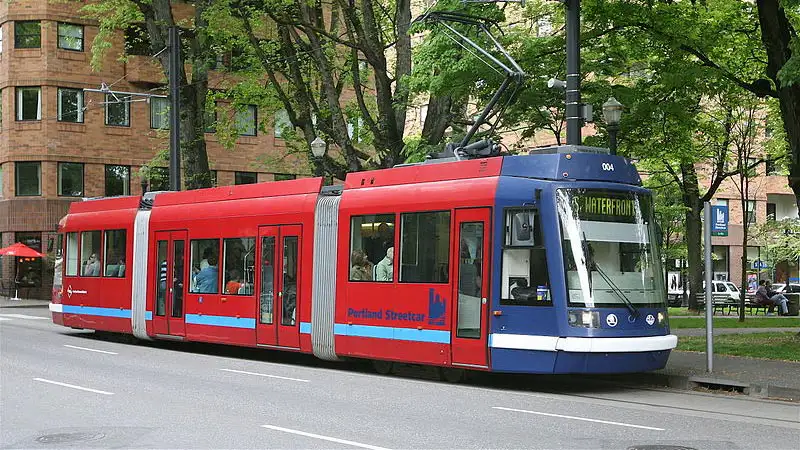
Getting around downtown Portland in a wheelchair is pretty easy, as there are wide sidewalks, plentiful curb-cuts and a fairly level terrain. Add in the Portland Streetcar (portlandstreetcar.org), which runs through the downtown area and connects to nearby business districts, and you have a very accessible way to see the city highlights.
The North – South Line runs from Nob Hill in the north, through the downtown area to the south waterfront; while the A and B loops circle the Lloyd District, Rose Quarter, Pearl District and downtown area. The A Loop runs in a clockwise direction, and the B Loop runs in a counterclockwise direction, so it’s easy to backtrack along the route.
Access is excellent on the Portland Streetcar, as every streetcar has has a ramp-equipped entrance. Boarding is a snap — just press the blue button to deploy the ramp, roll into one of the wheelchair-accessible seating areas and lock your brakes. When the streetcar arrives at your stop, push the blue button to deploy the ramp; and if you run into problems or have an emergency, just use the intercom near the accessible seating area.
Streetcar tickets can be purchased from machines at the platforms or at the Tri-Met ticket office in Pioneer Square. The fare for a 2.5-hour streetcar pass is $2, and the Hop pass (for the city bus) is also good on the streetcar.
Hop on a Bus
Getting around other areas of Portland in a wheelchair is easy too, thanks to the Tri-Met bus line (trimet.org/bus). Tri-Met buses run throughout the downtown area and connect with the Portland Streetcar, as well as offer access to outlying Portland neighborhoods. They are ramp or lift-equipped and many can also kneel, which makes boarding much easier for slow walkers. All buses have priority seating for disabled passengers and wheelchair tie-downs; and the drivers are happy to assist passengers — especially visitors.
If you need the ramp or lift deployed and you disability isn’t obvious, just ask the driver. Drivers are also available to help passengers on and off the the lift, and to secure assistive devices in the tie-downs.
Although Tri-Met buses accept cash, the best deal for visitors is the Hop card, which can be picked up and filled at the Tri-Met ticket office in Pioneer Courthouse Square. A 2.5-hour pass on the Hop card costs $2.80 and a day pass is $5.60 a day. Seniors and disabled passengers get a 50 percent discount, and if you decide to extend your stay in Portland, you can always add more money to your Hop card.
Airport Transfers
Getting to and from the Portland International Airport is easy too, thanks to MAX Rail (trimet.org/max), the city’s light rail system. It also connects downtown Portland with Beaverton, Clackamas, Gresham, Hillsboro, North/Northeast Portland and Milwaukie. And like the rest of Portland’s public transportation, all the MAX Rail lines are wheelchair-accessible.
All MAX Rail trains have accessible boarding areas, which are located in the center of the low-floor cars. The conductor will deploy the ramp for wheelchair-users, but slow walkers can also deploy the ramp by pressing the blue button. The accessible cars all have large accessible seating areas, and a ramp request button next to the doors.
The Hop card is also good on MAX Rail, and it can be purchased or refilled from machines at the station. The MAX Rail Airport Station is located near baggage claim on the lower level
Taxi Tours of Portland in a Wheelchair
Finally, if you’d prefer to just grab a cab, then contact Radio Cab (radiocab.net) for wheelchair-accessible service. Radio Cab offers 24-hour taxi service in lift-equipped vans, throughout the Portland Area. And the fares are the same as standard taxi fares.
Radio Cab also offers accessible day tours of the city with stops at Washington Park, the Rose Gardens, the Japanese Gardens and the Columbia River Gorge. Or if you’d like to get out and do a little wine tasting, Radio Cab can put together a wine tour to the Yamhill Valley and Hood River. And everything is customizable, as you can do as little or as much as you want on a personalized Radio Cab tour.
For more information or to book a Radio Cab call (503) 205-3317. It’s a very accessible way to enjoy all that Portland has to offer.
Barrier-Free Travel Washington National Parks for Wheelers and Slow Walkers
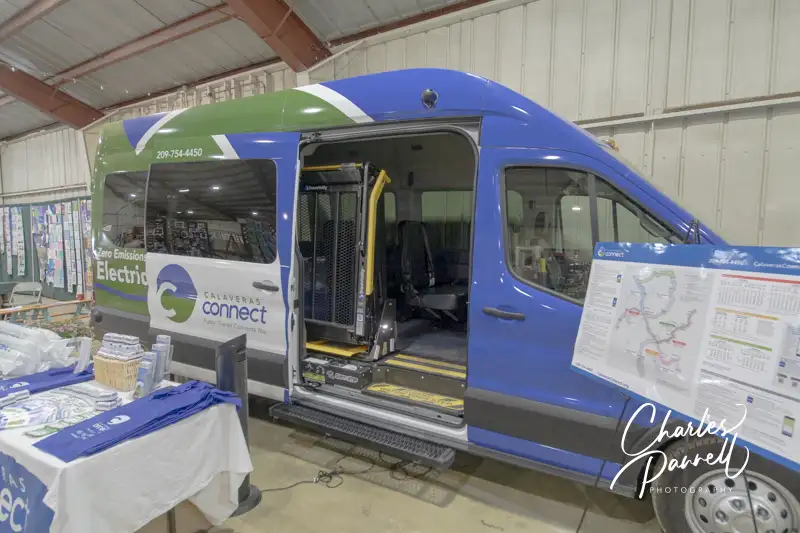
It’s fun to go wine tasting with friends on the weekend. But then you have that age-old problem — who is going to be the designated driver? Of course you could always make a promise to limit your consumption, but sometimes that just doesn’t work. Well, if you happen to be visiting Murphys or Angels Camp on a Saturday, there is another solution — take the Hopper. This short shuttle route connects the two cities and even makes a stop at Ironstone Vineyards. And the good news is, they will also go a little off route with advance notice. So pack your bag, gather your friends, and get ready to enjoy a wine tasting weekend on the Calaveras Hopper.
The Basics
The Calaveras Hopper only runs on Saturdays from 10 AM to 6 PM. But that’s OK, as that’s when the tasting rooms do the bulk of their business. There’s about an hour wait between buses, and the schedules are posted at all hopper stops as well as at calaverasconnect.org/routes/saturday-hopper/. This route is also seasonal — it only operates from March to November.
The fare is a very reasonable $3 (seniors are half price). Drivers do not carry change so the exact fare is required if you pay cash. You can also pay with the Token Transit app, which is available from the App Store, Google Play, or by texting “token” to 41411.
Access is excellent on the Calaveras Hopper, with lift access and wheelchair spaces available. The drivers are also pretty friendly, and are happy to offer assistance if needed.
The route begins in Angels Camp and travels on Highway 4 to Murphys. It makes six stops along the way:
Travelodge Copello (Angels Camp)
WorldMark (Angels Camp)
Save Mart (Angels Camp)
Angels Camp Visitor Center (Angels Camp)
Murphys Creek Theater (Murphys)
Ironstone Vineyards (Murphys)
Murphys Creek Theater is just around the corner from several tasting rooms, and Ironstone Vineyards is a destination in itself. And if you want to get picked up at another spot with ¾ mile of the route, then call (209) 754-4450 at least two hours in advance. Additionally, drivers will usually stop at any safe location along the route. So enjoy a little Saturday wine tasting in Calaveras County, and leave the driving to the Hopper.
Barrier-Free Travel Yosemite, Sequoia and Kings Canyon National Parks for Wheelers and Slow Walkers
Located just outside the South Entrance of Yosemite National Park (www.emerginghorizons.com/yosemite-national-park), Tenaya Lodge at Yosemite (tenayalodge.com) has long been a favorite pick for park visitors. And although this luxury property boasts a robust selection of accessible rooms and cabins, the wheelchair-accessible Explorer Cabins at Tenaya Lodge offer guests an upscale glamping experience in a secluded forest location. Add in a custom-built accessible bus for tours of Yosemite Valley, and you have all the ingredients for a perfect national park getaway.
The Explorer Cabin Concept
Located a short drive away from the main lodge, the Explorer Cabins offer a bevy of creature comforts combined with the personalized services and perks of a full-service resort. Nestled in a sugar pine and incense cedar forest, the cabins exude a dual theme of exploration and community. They inspire guests to explore Yosemite’s great outdoor areas, and then invite them to commune with their fellow travelers and share their adventures in the intimate public spaces dotted throughout the Explorer Cabin complex.
The cornerstone of the complex is the 1,800-square foot Explorer Clubhouse, an exclusive communal retreat with an expansive deck that offers a panoramic view of the surrounding forest. There’s accessible parking in front, with level access over to the clubhouse, and plenty of room to maneuver a wheelchair inside. Explorer Cabin guests check-in at the clubhouse, and later they can lounge by fire or grab a bottle of water before a hike.
A light breakfast, which is included with the Explorer Cabins, is available in the Explorer Clubhouse each morning. Breakfast offerings include pastries, breakfast burritos, fruit and beverages. And don’t miss the wine reception each evening. And if you’d like to enjoy some s’mores around one of the firepits, then stop by for their S’moregasboard, where you can build your own tasty s’mores kit.
Another exclusive feature of the Explorer Cabins is the onsite Camp Host. This roving ambassador is available to offer sightseeing suggestions, book spa appointments or even offer tips for roasting the perfect marshmallow. Think of the Camp Host as a remote concierge — an ambassador of adventure that’s ready, willing and able to offer personal assistance to create a more memorable Yosemite visit.
Accessible Explorer Cabins
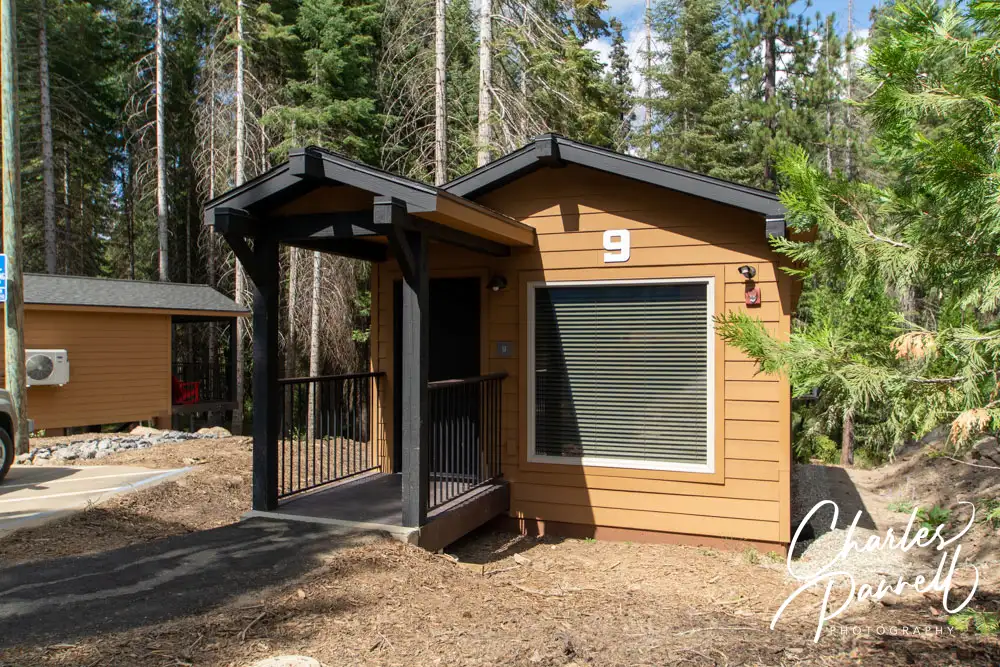
There are five wheelchair-accessible Explorer Cabins at Tenaya Lodge — Cabins 9, 17, 24, 34 and 42. Cabin 9, which is a premium accessible cabin is located a short walk from the Explorer Clubhouse. Accessible parking is located next to the two-bedroom unit, with level access to the front door. Access features include wide doorways, lever handles, lowered environmental controls, good pathway access and plank floors for easy rolling.
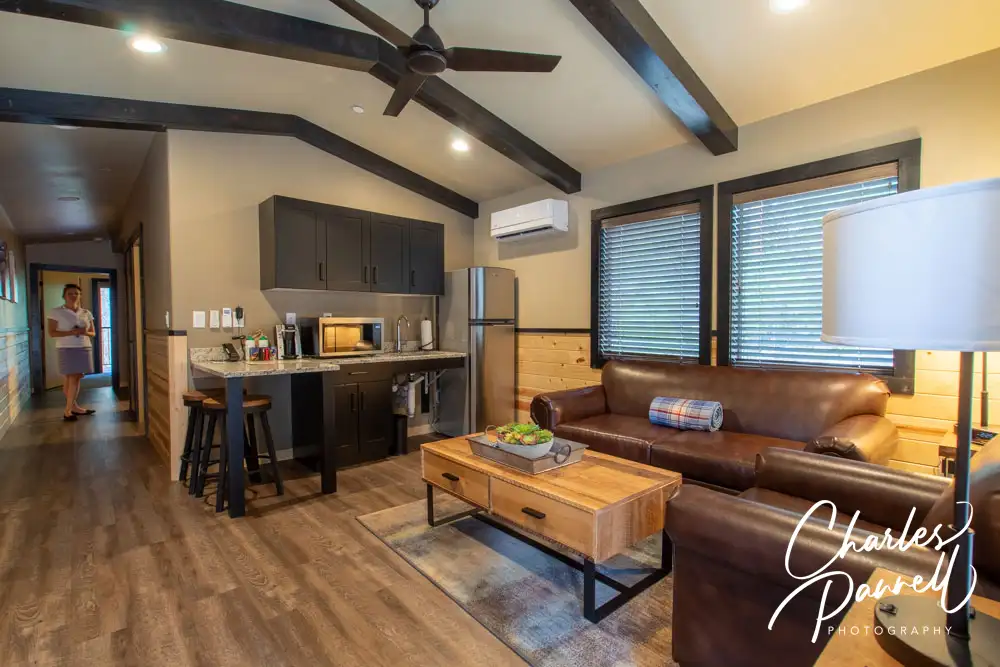
The living area is furnished with a 11-inch high sleeper sofa and an easy chair, which are nestled in front of a cozy gas fireplace. The adjacent kitchenette is equipped with a sink, a microwave, and a refrigerator. It also boasts counter seating with two bar stools.
Living Space in Cabin 9
Master Bedroom in Cabin 9
Second Bedroom in Cabin 9
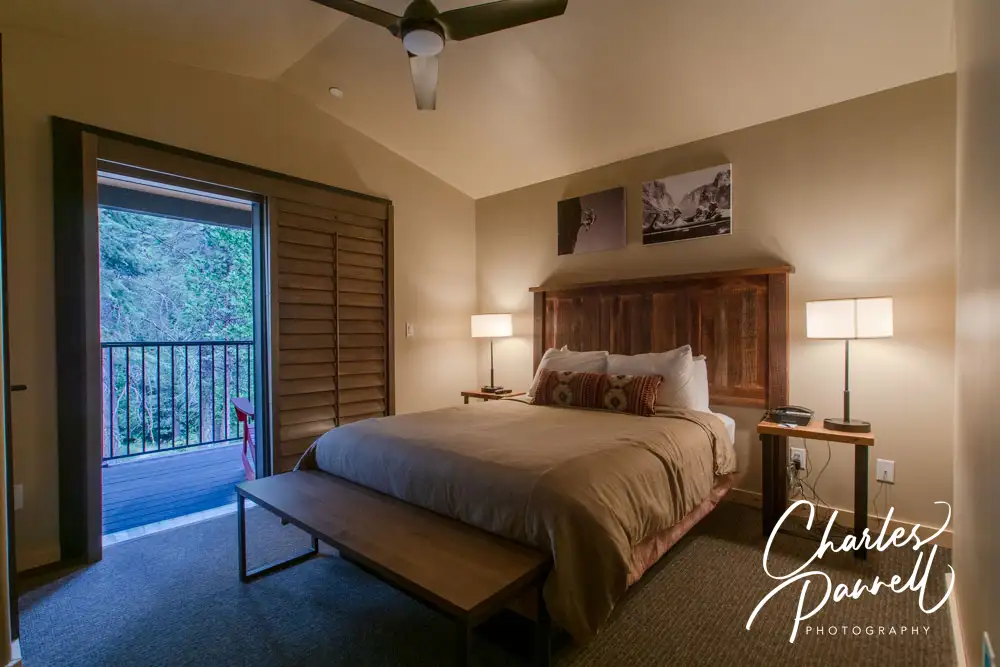
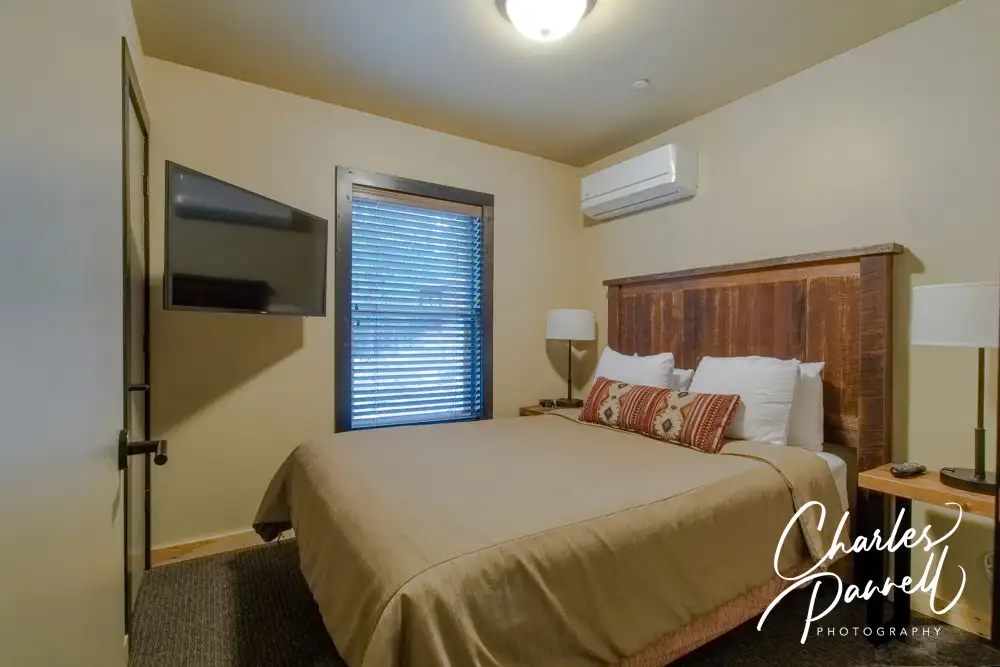
The master bedroom is furnished with a 23-inch high queen-sized bed with wheelchair access on both sides, a chest of drawers and two night stands. There’s level access out to the roomy back deck, which offers a sweeping view of Big Creek, and is furnished with two Adirondack chairs. The second bedroom is a bit smaller, and it’s also furnished with a 23-inch high queen-sized bed. There’s room enough for a manual wheelchair on one side, but this bedroom is really best suited for a slow walker.
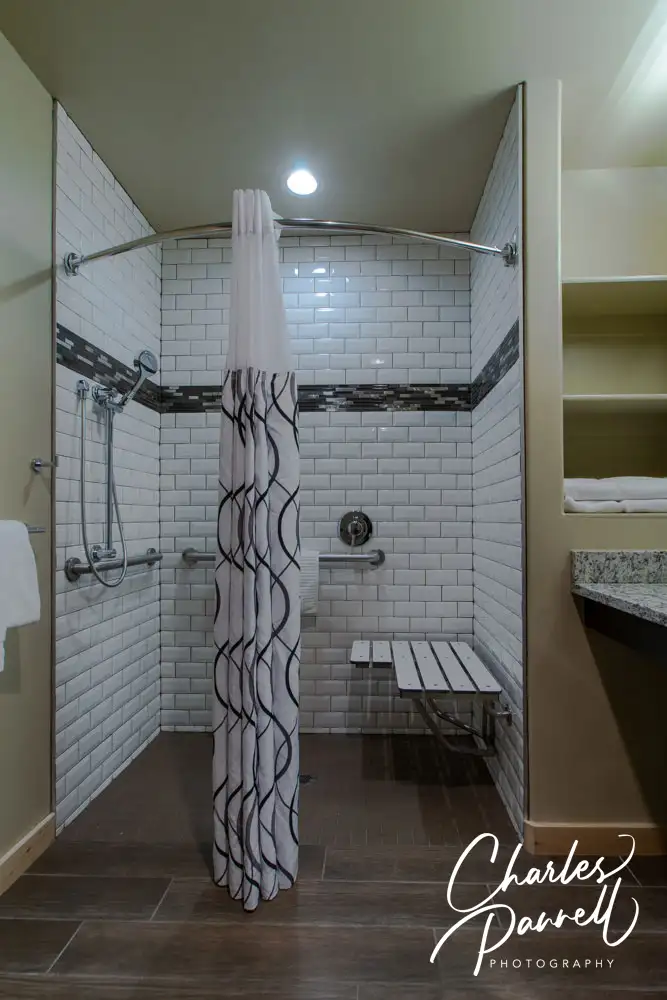
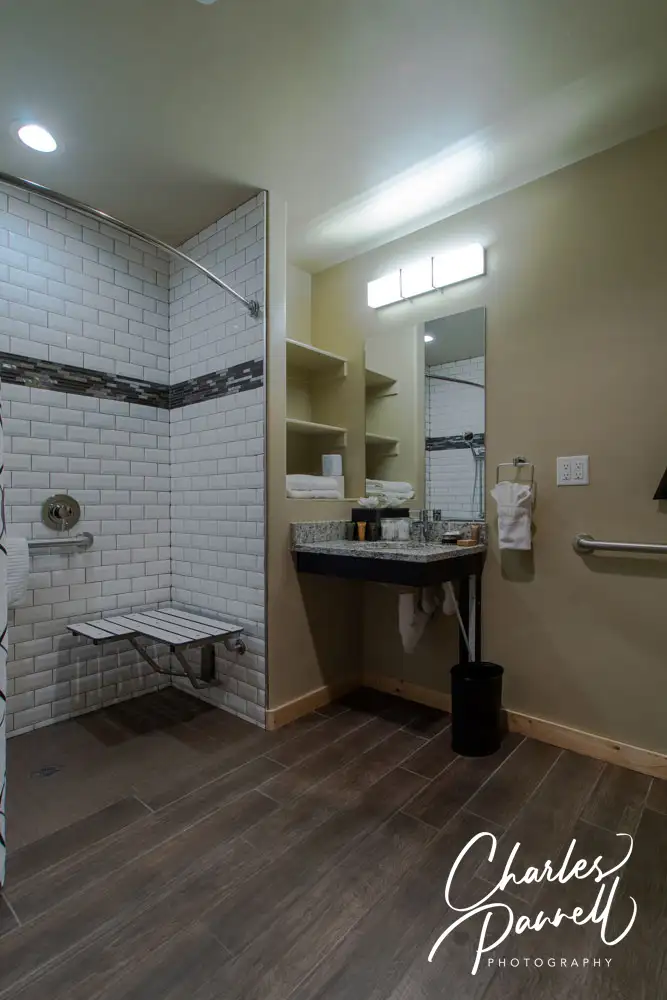
The spacious bathroom features a full five-foot turning radius. It’s equipped with a roll-in shower with grab bars, a hand-held showerhead and a fold-down shower seat. Other access features include a roll-under sink with a lowered mirror, and toilet grab bars on the back and left walls (as seated).
Shower in Cabin 9
Sink in Cabin 9
Toilet in Cabin 9
Cabin 42 is also an accessible premium cabin, and cabins 17, 24 and 34 are accessible deluxe cabins. They all have the exact same access features and furnishings as cabin 9; but the deluxe cabins have a porch instead of a back deck.
Tour Yosemite Valley
Even if you don’t stay in one of the wheelchair-accessible Explorer Cabins at Tenaya Lodge, you’ll still want to book a tour of Yosemite with the lodge. And the good news is, they have a luxurious wheelchair-accessible bus that can accommodate everyone.
Accessible Tenaya Lodge tour vehicle
The accessible tour bus features lift access and is equipped with wheelchair tie-downs. Wheelchair-users and slow walkers can opt to stay in their own wheelchairs or transfer to one of the comfortable bus seats. The day long Yosemite Valley tour includes stops at Tunnel View, Bridalveil Fall, Half Dome, Yosemite Falls and Valley View. And you’ll also have some time to spend in Yosemite Valley to ride the shuttle bus and explore more of the park.
You just can’t beat the convenience of a Tioga Lodge Tour, as you can dodge the traffic and parking woes, and still manage to see all of the major Yosemite Valley sites in one day. It’s the perfect choice if you have limited time in the park. So book a Tenaya Lodge tour on your next Yosemite visit, for a perfectly accessible seamless travel experience.
Barrier-Free Travel Yosemite, Sequoia and Kings Canyon National Parks for Wheelers and Slow Walkers