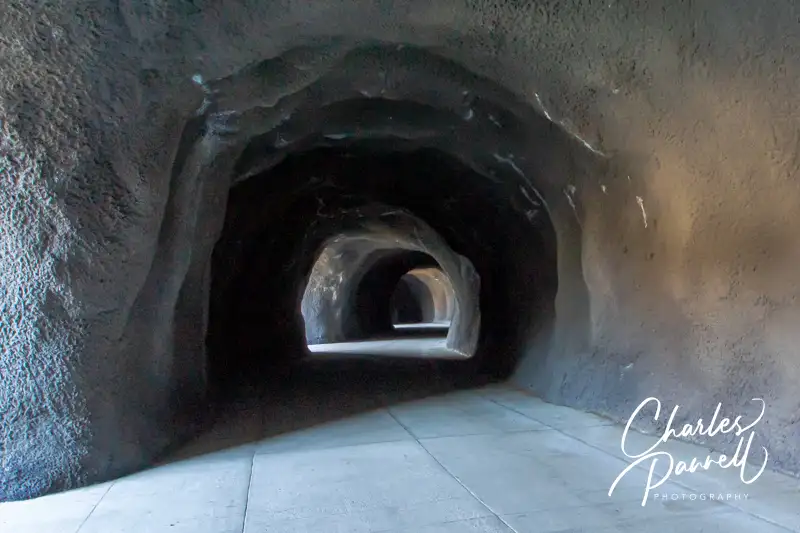
Designed by John Arthur Elliott who took his inspiration from a cliffside tunnel above Lake Lucerne, the original Mitchell Point automotive tunnel was built in 1915. Over the years, traffic along the Historic Columbia River Highway was rerouted to accommodate larger vehicles. In the 1950s the original tunnel was blocked with debris, and it was subsequently destroyed in 1966 during construction of the interstate. After decades of closure, in 2021 the Oregon Department of Transportation launched an ambitious project to build a replica pedestrian tunnel in the same location. The project was completed in 2025, and today the new Mitchell Point Tunnel is a must-stop when you’re heading east on Interstate 84, near Hood River. Just take exit 58 and follow the signs.
There’s accessible parking in the small parking lot, with level access over to the paved trail that leads out to the new Mitchell Point Tunnel. The trail parallels the Columbia River below, and thanks to cutouts in the high rock wall lining the path, everyone can enjoy the expansive view. It’s a pleasant walk, with lots of photo ops. The tunnel itself has five arched openings along its length, to let in light and ease navigation. And when you get to the end there’s an equally impressive Columbia River view. It’s about a half-mile round-trip stroll, and there are also accessible picnic tables and vault toilets near the trailhead. It’s a nice stop for a driving break and a picnic lunch.
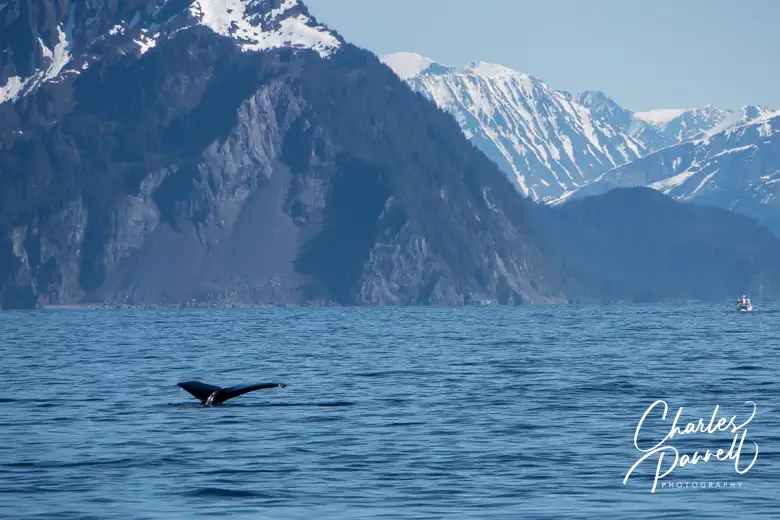
Whale Tail Breaching at Kenai Fjords National Park
Located at the head of Resurrection Bay, Seward is a popular port for many cruise ships, including Celebrity, Viking, Royal Caribbean and Silversea vessels. It’s also the gateway to rugged Kenai Fjords National Park, and the southern terminus of the Seward Highway. The good news is, it is possible to explore Seward in a wheelchair. In fact, this port city offers visitors a number of wheelchair-accessible tours and attractions. And that’s reason enough to spend at least one day in this Kenai Peninsula community on your next Alaskan cruise or road trip.
Explore Kenai Fjords
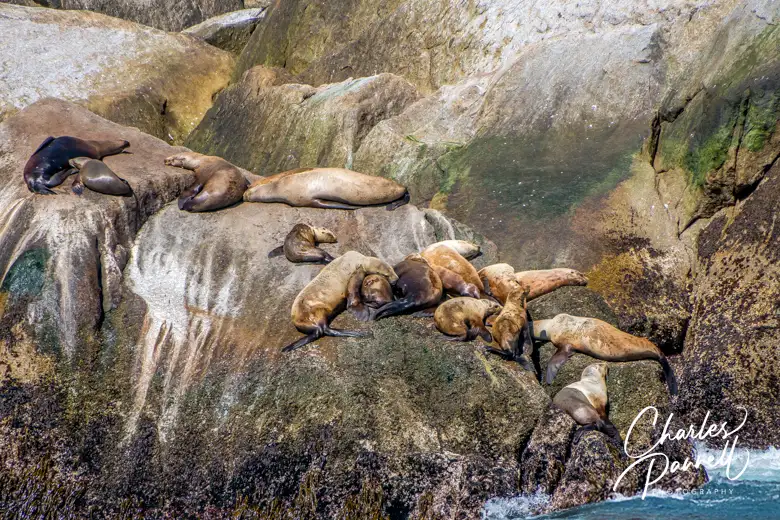
Seals viewed on the Kenai Fjords Tours
Although the lion’s share of Kenai Fjords National Park (www.nps.gov/kefj/) is comprised of backcountry trails and inaccessible glaciers, visitors can get a peek at the diverse wildlife and stunning scenery of the park on a day cruise.
Conducted by Kenai Fjords Tours (www.alaskacollection.com/day-tours/kenai-fjords-tours/), the Classic Kenai Fjords Park Tour tour departs twice daily from the Seward harbor. There’s level access to the ticket office , with a large drop-off area in front. Accessible parking is available in front of the Kenai Fjords Tours office, and in the remote parking lot, which is a few blocks away. There’s also accessible shuttle service from the remote parking lot to and from the harbor.
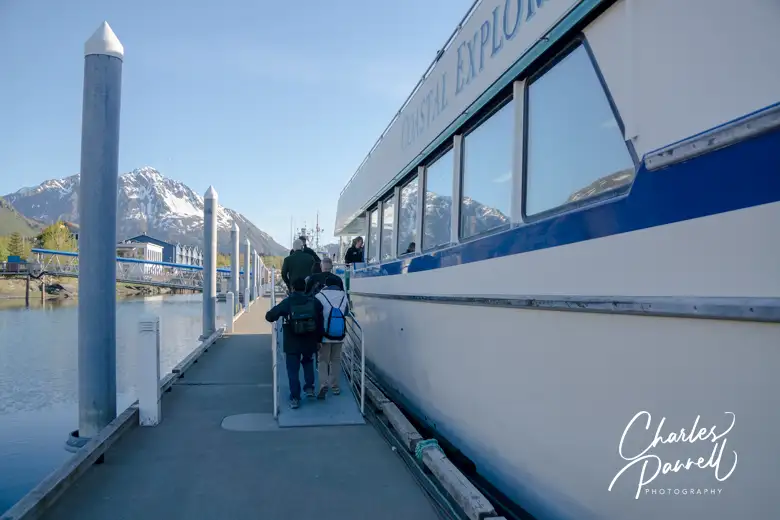
There’s level access out to the tour boat, and employees will provide boarding assistance with advance notice. Unfortunately the vessels cannot accommodate scooters. The main deck features good pathway access; and wheelchair users can transfer to a reserved accessible table or stay in their own wheelchair. If you opt for the latter, there’s also a handy fold-down table next to the accessible space. Additionally, there’s a large accessible marine head — reserved for disabled passengers — on the main deck.
Enjoy the Cruise
Boarding the Kenai Fjords Tour Boat
Although there’s only stairway access to the top deck, the main deck has large picture windows, so the view is equally good in both spaces. And the captain provides an excellent interpretation of the wildlife found in the water and along the shore. Sightings include whales, seals and puffins and maybe even bear or moose.
About midway along, the captain stops and turns off the engine so passengers can see and hear the glaciers calve off into the water below. Afterwards the crew retrieves a piece of an iceberg, so everybody can get a closer look. In short, it’s a very scenic, informative and entertaining cruise. Add in a tasty lunch served at your table, and a very accommodating crew, and you have the perfect way to enjoy Seward in a wheelchair.
Alaska Sealife Center
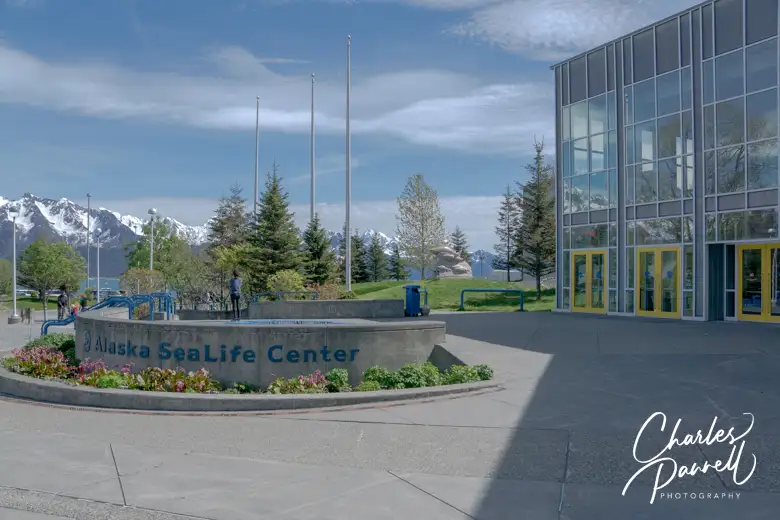
Alaska Sealife Center
A visit to the Alaska Sealife Center (www.alaskasealife.org/) is the ideal companion to a Kenai Fjords Cruise, as it offers a closer look at some of the local marine life. This unique facility, which is a cross between an aquarium and a research center, was partially funded by Exxon after the Valdez oil spill in 1989. Prior to that disaster, researchers had very little knowledge about the delicate ecosystem of Prince William Sound.
The tourism component of the facility allows visitors the chance to get up-close-and-personal with a variety of marine mammals, birds and fish found in the area. Accessible parking is available in the adjacent lot, and there’s level access to the center. There’s barrier-free access throughout the building, elevator access to all floors and a loaner wheelchair at the information desk. Best of all, the wheelchair-height aquariums offer unobstructed views of the marine life.
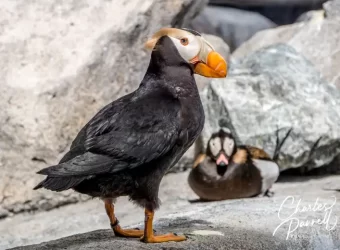
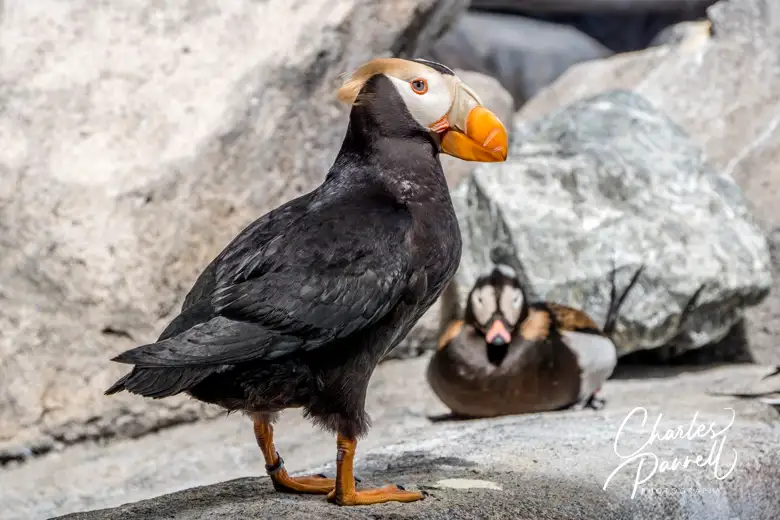
The first-floor exhibits include interpretive panels about fishing sustainably and wild Alaskan seafood, while the second floor has a nice collection of interactive exhibits. There’s also level access to the seabird aviary on the second floor, where visitors can get a close look at the resident puffins, cormorants and murres. And don’t miss the equally enjoyable antics of the stellar sea lions, harbor seals and ringed seals in the enclosure across the hall. And if you’d like a backstage look at the animal enclosures, a level overlook offers an accessible glimpse of that too. All in all, the Alaska Sealife Center is a fun and educational stop, and a must-see on any Seward itinerary.
Puffin at the Alaska Sealife Center
Visit Exit Glacier
Exit Glacier in Kenai Fjords National Park
Finally, a drive out to Kenai Fjords National Park to see Exit Glacier is a must-do on any Seward visit. Not only is it one of Alaska’s walk-up glaciers, but Exit Glacier is the only part of Kenai Fjords National Park that is accessible by road. It’s located three miles north of Seward, just off the Seward Highway. Keep a lookout for Herman Leirer Road and follow it for about eight miles, until it dead-ends in the parking lot.
There’s accessible parking near the Exit Glacier Nature Center, with level access over to the small building. Inside there are a few exhibits as well as a staffed ranger desk. There are also a few accessible picnic tables outside, near the accessible restrooms.
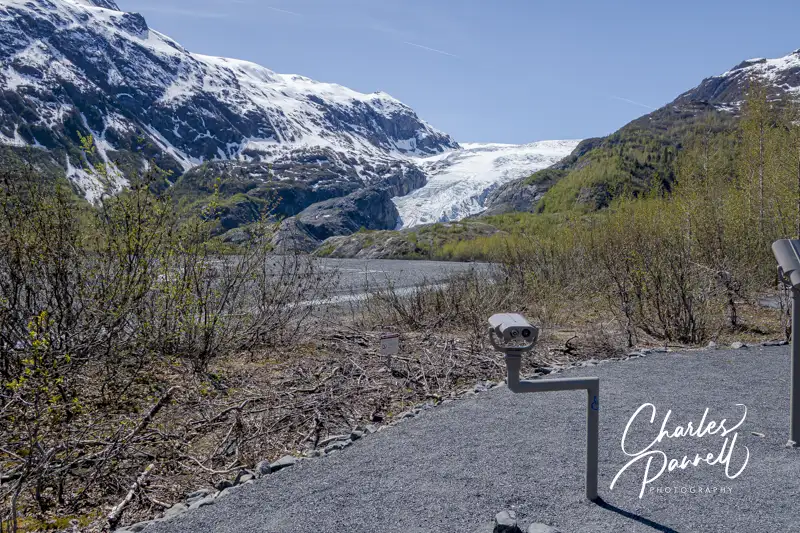
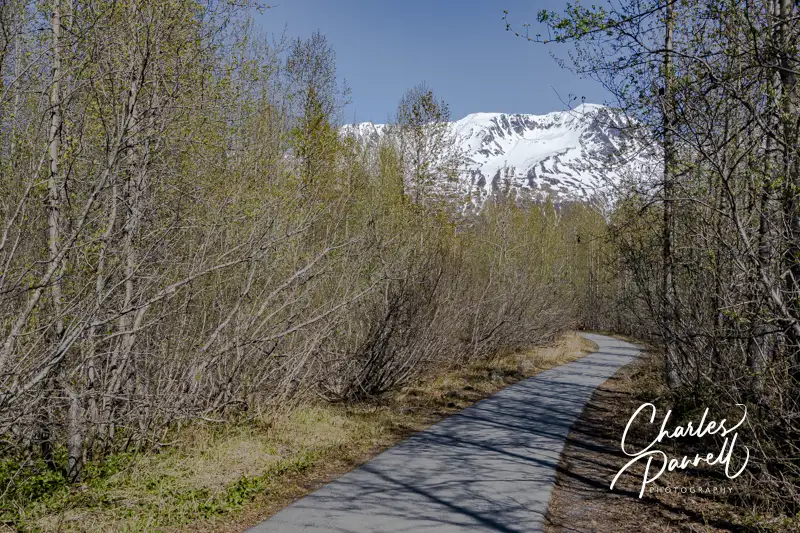
The wheelchair-accessible one-mile Glacier View Loop Trail begins on the other side of the nature center. The paved trail leads through a cottonwood forest and transitions into a hard-packed dirt trail topped with stabilized granite. About halfway along the trail there’s a level viewing spot, where you can get an excellent view of Exit Glacier, as it spills down the mountain from the Harding icefield. And if you didn’t bring along binoculars, there’s also a wheelchair-height viewing scope in the viewing area.
And although the view is spectacular, the walk is equally pleasant, as there are interpretive plaques and benches to sit and enjoy the forest along the way. And if you are visiting Seward on a cruise, Exit Glacier makes a great shore excursion. No matter how you get there, Exit Glacier is a must-see for anyone who visits Seward in a wheelchair.
Trail to the Exit Glacier in Kenai Fjords National Park
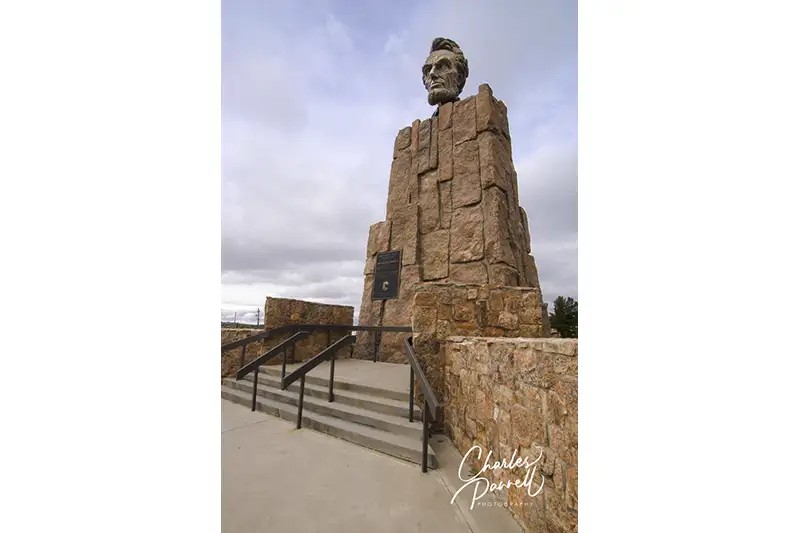
Although it may seem a bit unusual to see a Giant Lincoln Head sculpture in the middle of Wyoming, it makes more sense once you realize that it’s located along the Lincoln Highway. More specifically, it’s on Sherman Summit on Interstate 80, just east of Laramie. And although it’s called a highway, it’s actually a collection of roads that run from San Francisco to New York City. And this stretch of Interstate 80 just happens to be part of that historic route, with Sherman Summit marking the highest place along the way.
The larger-than-life Lincoln head was first sculpted by Robert Russin from 70 tons of clay, and then cast in bronze in Mexico City. The Giant Lincoln Head stands 12.5 feet high, but it rests on smaller shoulders, giving it a somewhat caricature-like appearance. Still it’s an impressive work, with the former president looking down on his audience. And it was fittingly dedicated in 1959, 150 years after the former presidents was born.
Although you can see the massive head from Interstate 80, it’s worth a stop to get a closer look. There’s accessible parking with a cement walkway over to sculpture, and although there are four steps up, you can still get an adequate look at Mr. Lincoln from ground level.
Roswell, New Mexico
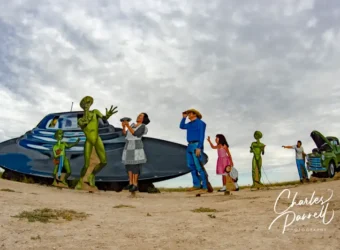
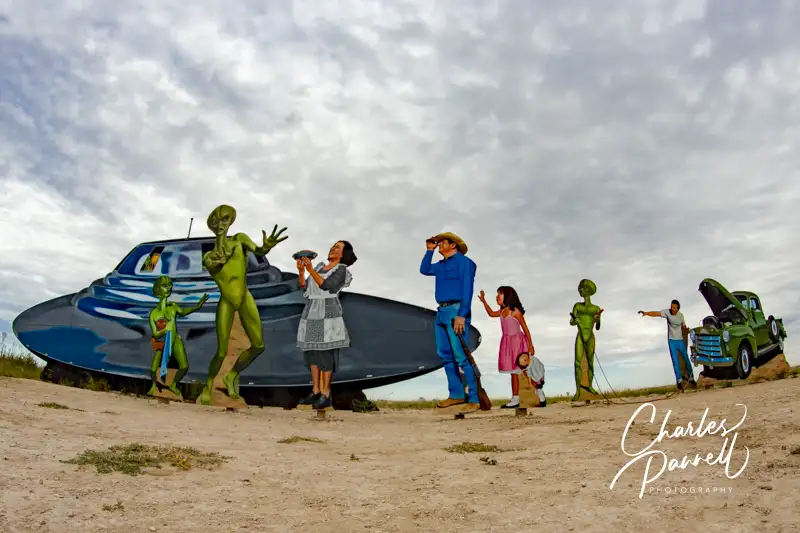
If a trip to the unofficial UFO capital of the world is on your travel itinerary, then be sure and stop at the creative Welcome to Roswell art piece just outside town. You’ll find the masterpiece on the east side of Highway 285, about six miles south of the city. Unveiled in 2013, the John Cerney piece is best described as giant cut-out art. Cerney’s Rockwell-like highway murals are designed to blend into the existing landscape and catch passing motorists off guard. And the Roswell installation does just that.
There’s no official parking lot for the mural, but there’s a wide level dirt area where you can stop and have a good look at the piece. And if you’d like a photo op with it — and who wouldn’t — there’s also a level dirt path over to the mural.
The mural itself depicts an alien spacecraft with a few green beings in front of it, who are being offered a pie by a local woman. The aliens seems put-off by the culinary creation, and one of them appears to be holding ET of movie fame in his arms. Back on the ship, the navigator is reading a map with Roswell prominently marked, which also includes a “photo” of two figures that eerily resemble The X-Files Scully and Mulder. And over on the other side, a rancher is receiving roadside assistance for his broken down California truck from yet another alien. There’s a lot going on in the mural, so take some time and look for the “little things”. And again, it blends into the landscape, so keep an eye out for it as you approach town.
Known as America’s Mountain, Pikes Peak is a don’t-miss while you’re in the Colorado Springs area. Of course you can certainly admire the mountain from afar; however there are also two accessible ways to get to the top. One way is take the Pikes Peak Cog Railway and leave the driving to someone else. And although the railway is also a must-do while you’re in the area, save some time to take the other accessible route to the top — drive the Pikes Peak Highway. Not only is it an equally scenic alternative, but you can take things at your own pace and spend as much time on top as you like.
The Basics
The Pikes Peak Highway is located about 15 miles west of Colorado Springs, just off Highway 24 in Cascade. The tollgate is a quarter-mile past the North Pole amusement park. In an effort to make sure there’s ample parking at the summit for all guests, a timed entry permit is required from late May to late September. The permits are good for a two-hour window, and one permit per car is required. In addition to the permit, everyone in the car must also purchase an admission ticket. Timed entry permits and admission tickets are available at https://coloradosprings.gov/pikes-peak-americas-mountain/page/tickets-and-reservations.
The road closes at night, and although it’s technically open year-round, the higher elevations are closed in the winter. Typically the road is only open to the 13-mile mark beginning in mid-October, or after the first snow storm. The round-trip drive itself usually takes two to three hours, but if you plan on stopping at every viewpoint, allow four or five hours. Best bet is to get an early start and have at least a half-tank of gas when you begin. Don’t be in a rush to get to the top, but remember to use the pullouts if you go slower than the traffic flow.
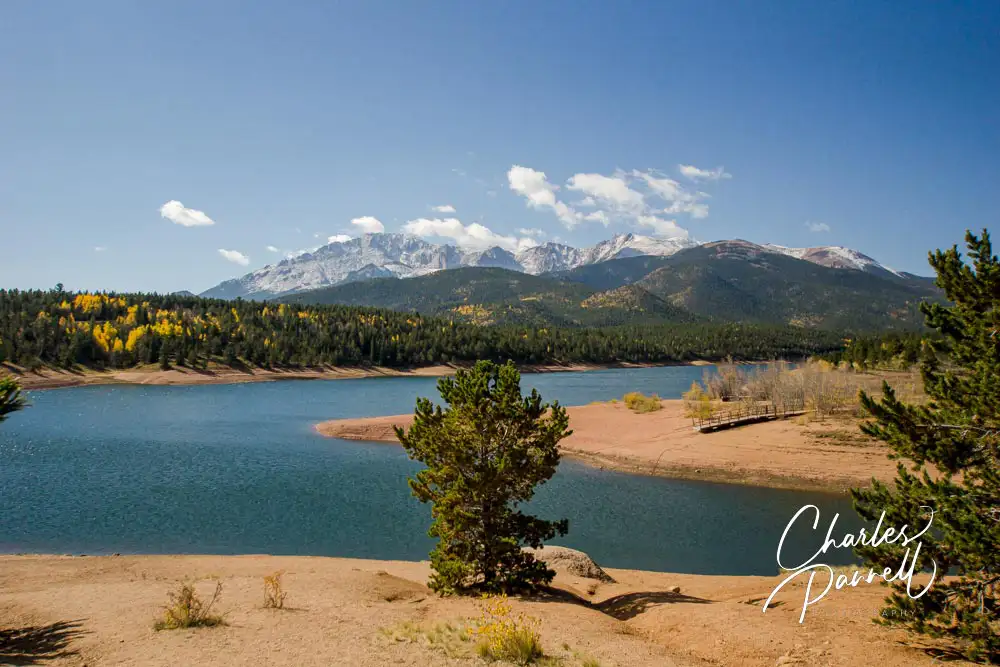
Crystal Reservoir
Crystal Reservoir
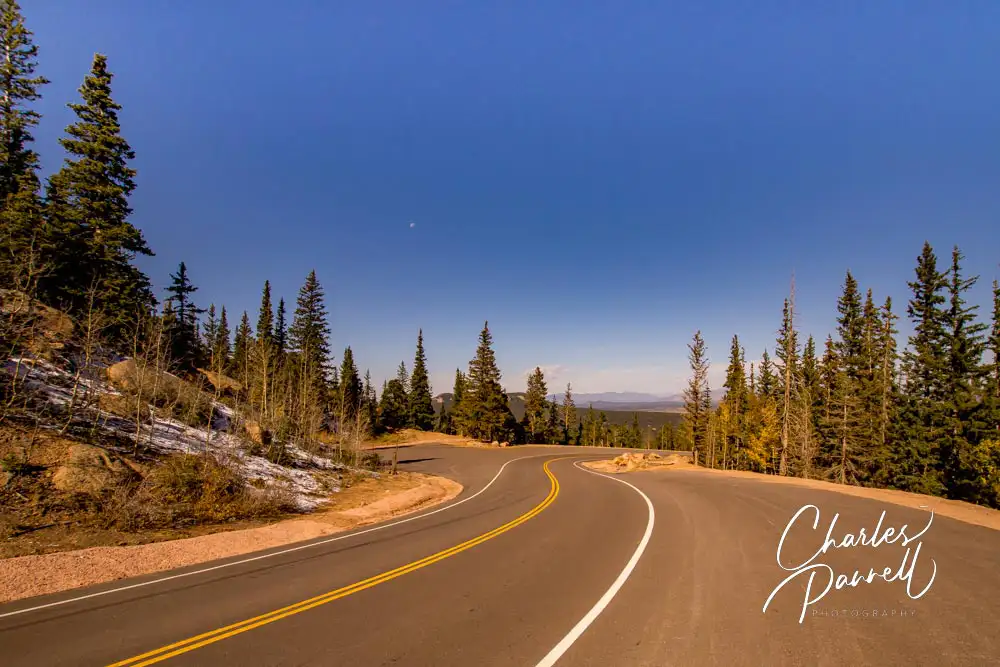
The 20-mile route starts at 7,800 feet and climbs to the 14,115-foot summit with lots of scenic overlooks along the way. Pikes Peak is first visible around the three-mile mark as the highway winds through Pike National Forest.
The Crystal Reservoir Visitor Center is located at the six-mile mark. Accessible parking is available on a level asphalt patch and there are accessible vault toilets in the parking lot. There’s level access to the visitor center and gift shop, and some nice accessible picnic tables on a cement slab next to the visitor center. And there’s also a short 200-yard paved pathway down to the boat ramp, which offers a nice view of the reservoir. The path to the right of the visitor center winds past some accessible restrooms and also dead ends in the reservoir. It’s about a .2-mile round trip hike.
The road begins to slowly climb up the hill past the Crystal Reservoir Visitor Center, and the Halfway Picnic Area is about four miles ahead on the right. At first glance this stop appears to be a no-go for wheelchair-users as there are no accessible parking spots or restrooms along the main road. That said, if you turn down the dirt road just before the parking area there’s a nice secluded accessible table next to an accessible vault toilet. And there’s a large level area to park near the facilities.
Glen Cove and Beyond
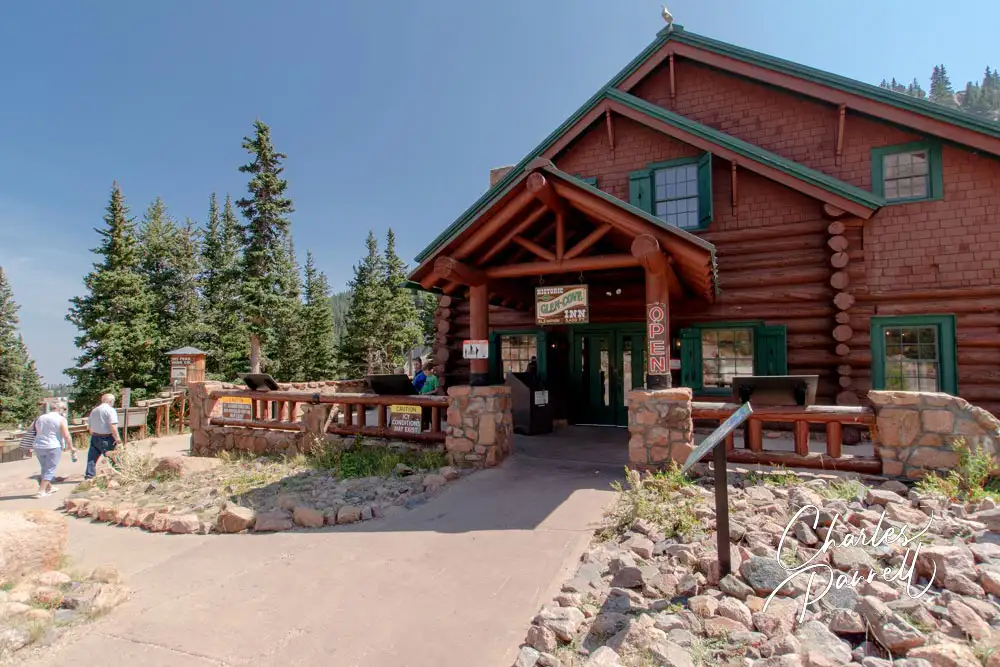
The Glen Cove Lodge
Glen Cove, which is located near mile 13, is also worth a stop. There’s accessible parking in front of the lodge, with ramp access to the front door. Inside there’s plenty or room to maneuver around the gift shop, and over to the small café which offers burgers, hot dogs and snacks. An accessible family restroom is also located inside. A small picnic area with accessible tables on a cement pad is located on the the right side of the building. Glen Cove is also the site of the mandatory brake check on the way back down the mountain.
As you climb up the mountain past Glen Cove you get a real sense of the the elevation gain. After mile 14 there’s a lot of exposure and precious few guardrails, so if you’re skittish about heights it’s best to turn around at Glen Cove. Alternatively you can take the shuttle bus from the mile 7 parking area. Advance tickets are required to take the shuttle, and a lift-equipped bus is available upon request. Shuttle tickets can be purchased at https://coloradosprings.gov/pikes-peak-americas-mountain/page/tickets-and-reservations.
Be sure and stop at the pullout near mile 16 for an impressive view of the switchbacks below, as well as Pikes Peak Reservoir and the Platte River Valley. And as you near the top, be on the lookout for big horn sheep
At the Summit
At the top there’s accessible parking and barrier-free access to the Summit House, which was constructed in 2021. Inside there’s level access to the visitor center, a gift shop, a cafeteria and accessible restrooms. The cafeteria serves up sandwiches, burgers and soup, but their homemade doughnuts are a must on any Pikes Peak adventure.
Save some time to browse through the interpretive exhibits which include information on the history, geology and climate of Pikes Peak, as well as an entertaining story about the first woman to summit the mountain — “the bloomer girl”. And don’t forget to take the elevator upstairs for more spectacular mountain views before you head back down the mountain. And when you head downhill, you’ll be treated to an entirely new set of windshield views!
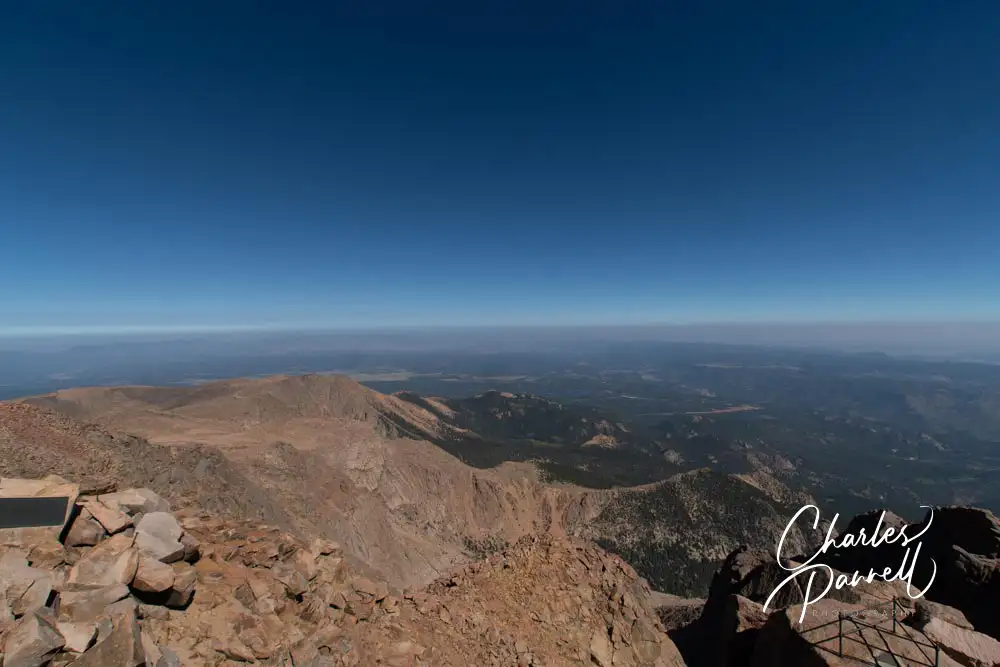
View from the summit of Pikes Peaks Highway
Barrier-Free Travel
Utah National Parks for Wheelchair-users and Slow Walkers
Located in Northern Oregon, the Historic Columbia River Highway parallels Interstate 84 and runs from Troutdale to The Dalles. This scenic two-lane road, which is also known as Highway 30, snakes through the Columbia River Gorge and offers some spectacular windshield views. And although Interstate 84 is the quicker way to traverse the gorge, Highway 30 is definitely the more picturesque choice.
Granted, there’s no shortage of bold scenery along the entire length of the 75-mile route; however the 10-mile segment between Vista House and Horsetail Falls is a don’t-miss side trip for wheelchair-users and slow walkers. Known as the waterfall corridor, this segment includes a number of wheelchair-accessible viewpoints, trails and historic stops, and offers a closer look at some of the beautiful cascades along the way.
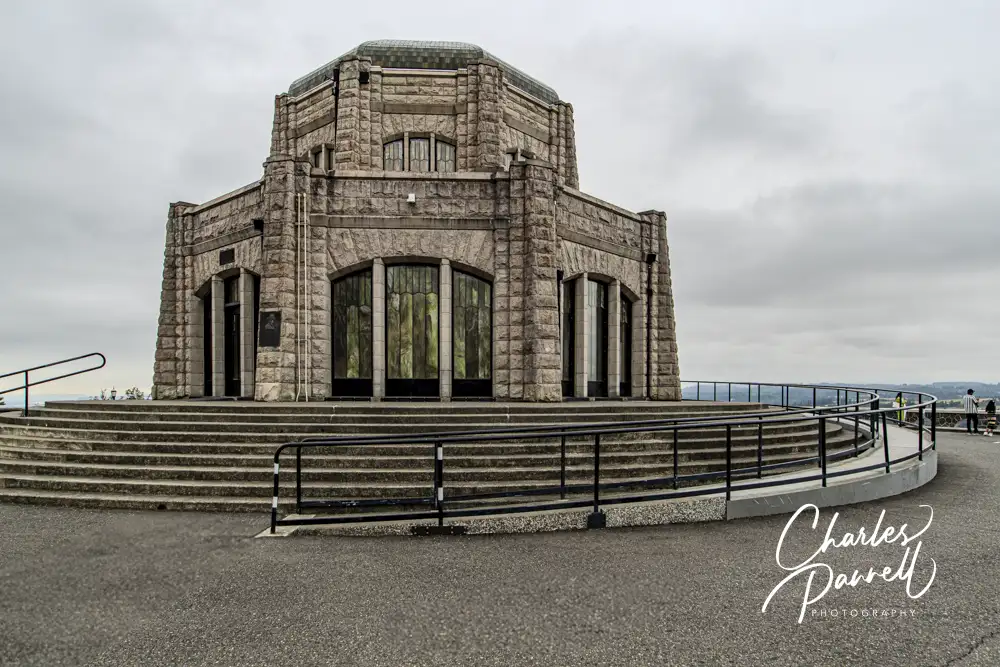
Vista House
The Vista House on the Columbia River Highway Waterfall Corridor
Finding the waterfall corridor is easy. Head east from Portland on Interstate 84, then take exit 22 at Corbett and turn right. From there just follow the signs, and make a left on the Historic Columbia River Highway. This portion of the road winds through the forest for about three miles, before it heads uphill to Vista House at Crown Point (www.vistahouse.com).
Built in 1916 as a rest stop and observation tower, Vista House is a fitting starting point for the drive, as it was also the site of the 1916 dedication of the highway. There’s accessible parking near the front, with ramp access around to the back entrance. There’s level access through the automatic doors and plenty of room to maneuver around the main floor of this architectural treasure. Perched some 600 feet above the Columbia River, Vista House is lined with marble floors and filled with stained glass windows.
Listed on the National Register of Historic Places, this historic building also includes a cleverly hidden wheelchair lift. Designed to blend in with the architecture, the lift allows wheelchair-users and slow walkers access to the restrooms, exhibits, gift shop and cafe that are housed in the lower level. The building is usually open from Friday to Monday, but it depends on available staffing. And even if the building isn’t open you can still peer inside. There’s also a great river view near the back entrance.
Latourell Falls
Latourell Falls is located 2.5 miles up the road, in the verdant Guy W. Talbolt State Park. There’s accessible parking with level access over to a viewing area, where you can get a gander at the majestic falls, as it tumbles 224 feet down over columnar basalt pillars. There’s a trail to an upper viewing area, but it’s steep and not wheelchair-accessible. Still you can get a great view from below.
There’s also an accessible vault toilet at this stop. And if you’d like to enjoy lunch alfresco, there’s an accessible picnic table located near the parking lot.
Bridal Veil Falls
Bridal Veil Falls, which is located two miles up the road, is also worth a stop. Although the trail to the the falls is steep and has steps, there’s another accessible trail that offers a good river view. There’s accessible parking in the large lot, with level access over to the trailhead. The trail to the right goes up to the falls, while the accessible Overlook Trail on the left leads over to the river. There’s also an accessible vault toilet near the trailhead.
The half-mile Overlook Trail has a few bumps along the way, but it’s still doable for most wheelchair-users and slow walkers. It winds through the woods, passes a picnic table and then skirts the river. There are a few places where you can get good view of the Columbia River, before the trail winds back through the woods to the beginning. It’s a pleasant stroll, and definitely worth a stop.
Wahkeena Falls
As you continue along Highway 30, Wahkeena Falls is located three miles up the road. Accessible parking is available on the left, above the picnic area. There’s also an old restroom with an accessible stall in the picnic area; however it’s best to drive down if you need to use it, as the road is pretty steep.
The accessible trail to the falls viewpoint is located across the street. The 200-foot paved trail is fairly level and winds over to the perfect vantage point. You can’t see these falls from the road, but there’s a great view of them at the end of the accessible trail.
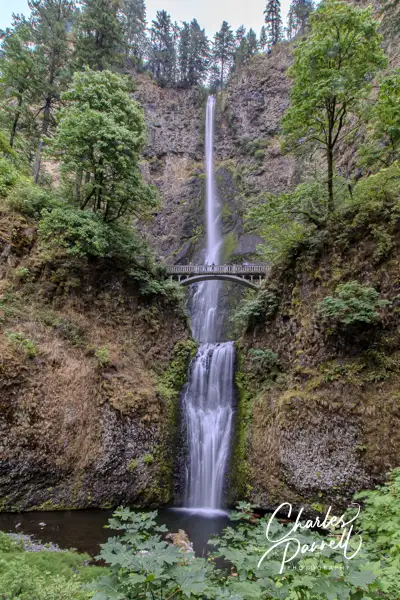
Multnomah Falls
By far the most popular waterfall along the route is Multnomah Falls, which is located a half-mile from Wahkeena Falls. There’s accessible parking in the small lot across from Multnomah Falls Lodge, with level access over to the lower viewing area. Across the street, there’s a paved walkway that leads about 200 yards to the upper viewing area. Although this is a good option for power wheelchair-users, it’s a bit steep for manual wheelchair-users and slow walkers. Still you can get a nice view from the lower vantage point.
There’s level access to the lodge, which houses a visitor center and a gift shop on the lower level; and offers elevator access up to the restaurant on the second floor. Accessible restrooms are also located on the lower level. And if you drive by slowly, you can get a nice view of the falls from Highway 30.
There’s also a parking area located off of Interstate 84 for this popular stop. Just take exit 31 and follow the signs. There’s plenty of accessible parking in the lot; however the path over to the Highway 30 parking area is steep — especially near the bridge — so it’s not a viable option for most folks. The best bet is to park in the Highway 30 parking area. It should also be noted that there is no vehicular access from the Interstate 84 parking area to the Highway 30 parking area; so if you use the Interstate 84 parking area you won’t be able to drive to the Historic Columbia River Highway from there.
Multnomah Falls Timed Use Permit
During the peak summer season, a Multnomah Falls Timed Use Permit is required in order to park in the parking lot off of Interstate 84. The permit is required from late May to early September from 9 AM to 6PM. One permit per car is required, and the permits are checked on the path from the parking lot to the falls.
The permits are available for $2 at www.recreation.gov. They are valid for entry during a one-hour time frame, and if not used they will expire at the end of the issued time. For example, if you buy a permit for 1:00 PM and have not used it by 2:00 PM it will expire at that time. That said, you can spend as much time at the falls as you want, as long as you enter within the specified time frame.
The bulk of the permits are available 14 days in advance; while a smaller batch is released two days prior to the arrival date. Permits are not sold on site, so make sure to get one ahead of time. Additionally, just because you have a permit, does not mean you are guaranteed a parking space.
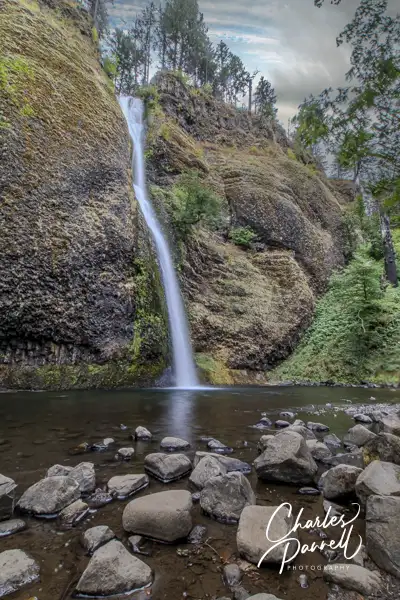
Horsetail Falls
Last but certainly not least on this Historic Columbia River Highway drive is Horsetail Falls, which is located 2.5 miles from Multnomah Falls. There’s accessible parking in the lot across the street from the falls. From there a short paved level trail leads 150 feet over to a nice viewpoint. There are also a few picnic tables near the viewpoint, and although there are no services at this stop there’s a bench to sit and enjoy the falls. As an added bonus, you can also get an excellent view of Horsetail Falls from Highway 30 or even from the adjacent parking lot.
After you’d had time to enjoy the falls, continue east on Highway 30 to Dodson, and hop on Interstate 84. From there you can either circle back to Portland, or continue east to explore more of Oregon. Either way, this scenic drive is well worth the short detour.
Latourell Falls
Bridal Veil Falls
Multnomath Falls
Horsetail Falls
Historic Columbia River Highway Travel Tips
Although the scenic waterfall corridor is a must-do on any Oregon road trip, there are a few things you can do to make your visit go smoother.
First and foremost, try and arrive early in the day. The route gets extremely crowded in the afternoon, and parking places — even accessible spots — are hard to come by.
The early bird rule applies double for the Multnomah Falls area. Even if you don’t plan to stop, that section of the route routinely backs up after 11 AM, as people sit in the road and wait for available parking spots.
It’s also a good idea to travel from west to east along the route. Most of the e-bike rentals begin at Cascade Locks and head west along Highway 30; and since there aren’t any alternative trails they have to ride in the road along the waterfall corridor. This tends to slow down the traffic that’s going in the westerly direction, and even backs it up at some spots.
There aren’t many services along the waterfall corridor, so pack along water and snacks. There are however a lot of pleasant picnic spots to enjoy a quiet breakfast or lunch.
Summer is the most crowded season along the Columbia River Gorge, so try to visit in the off season. The peak flow seasons for the waterfalls are winter and spring, which are usually less crowded.
Fall is also becoming a busy time along the route, as the fall foliage show is spectacular. It’s especially crowded on the weekends, so try to visit mid-week if possible.
Finally, take your time and stay a while to enjoy the Columbia River Gorge. For a fun getaway, spend the night in an accessible treehouse at nearby Skamania Lodge.
Barrier-Free Travel Washington National Parks for Wheelers and Slow Walkers
Located in the Southern Sierra Nevada Mountains, Sequoia National Park is home to a large grove of stately giant sequoia trees, including the 275-foot tall General Sherman Tree, the largest tree on Earth. The park is about a four-hour drive from Yosemite Valley, via Highways 41, 99 and 198, through Visalia to the Ash Mountain park entrance. From there the Generals Highway travels through the foothills up to the Giant Forest, and then continues through the Sequoia National Forest and on to Kings Canyon National Park.
Insider Tips
The most accessible way to get to the General Sherman Tree is to park in the lower accessible parking lot on the Generals Highway, and take the quarter-mile paved trail over to the tree. And if you can’t manage the entire length of the trail, you can still get an excellent view of the towering giant about .1-mile up the trail.
You know you’ve found a good picnic spot when you see that the rangers also frequent it – and that’s exactly the case for Pinewood Picnic Area. Located on the Generals Highway just north of the Big Trees Trail, not only is this picnic area very pleasant, but it’s also one of the most accessible ones in the park. The shaded grove features a paved pathway over to the accessible tables and grills, with accessible vault toilets nearby. Additionally, there’s level access to many of the standard tables in the grove.
Wuksachi Lodge, which is located four miles north of the General Sherman Tree, offers a nice selection of accessible rooms. To be more specific, the property boasts eight accessible rooms, all of which have roll-in showers. There’s also good access to the main lodge building which houses the Peaks Restaurant, that offers patrons a panoramic view of the surrounding forest.
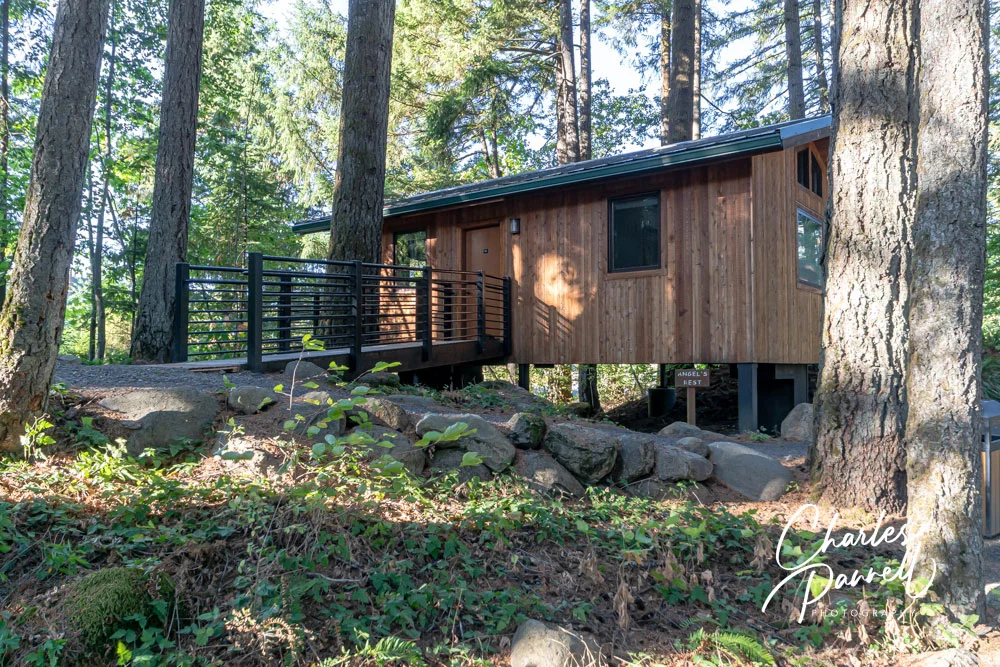
Angels Rest Wheelchair-Accessible Treehouse Suite at Skamania Lodge, Oregon
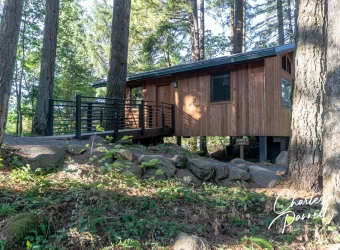
Although Skamania Lodge (https://www.skamania.com/) is just a 45-minute drive from Portland, it’s a world away from the trappings of urban life. Surrounded by towering evergreens, the 175-acre property offers upscale amenities in the scenic Columbia River Gorge. Of course the standard lodge rooms and suites at Skamania Lodge are beyond comfortable; however if you want to raise the meter on the exclusivity index, then check-in to their new wheelchair-accessible treehouse suite. Located in an private corner of the property, this luxurious tree-level suite offers comfortable furnishings, first-rate-amenities and more than a few little extras. And even though most treehouses aren’t doable for people with mobility issues, this wheelchair-accessible treehouse suite at Skamania Lodge is an excellent lodging choice for wheelchair-users and slow walkers.
A Wheelchair-Accessible Treehouse
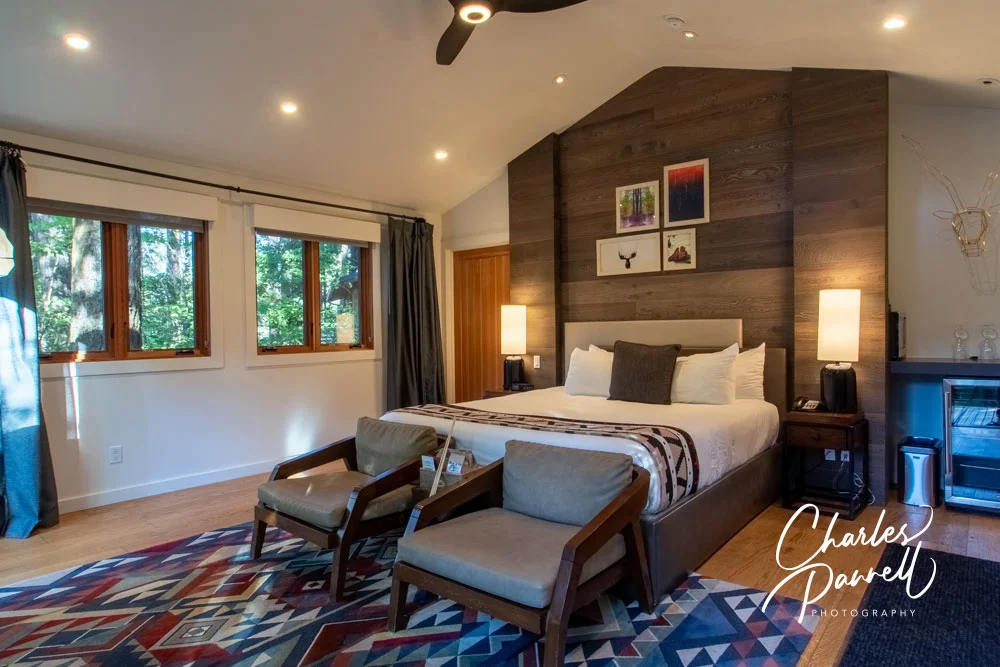
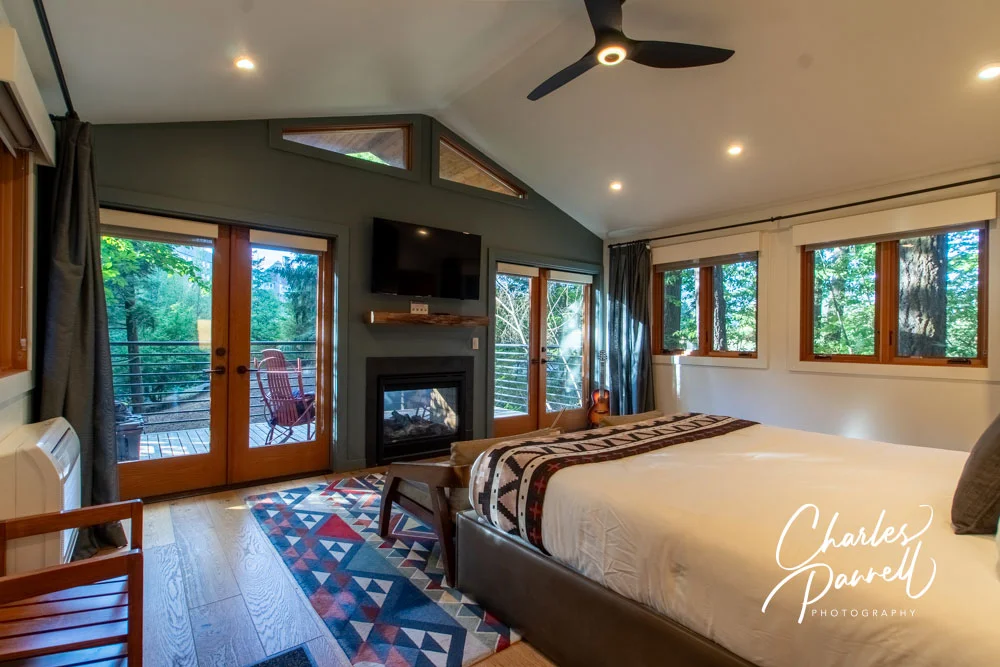
Inside the Angels Rest wheelchair-accessible treehouse suiteThere are Lots of Windows in the Angels Rest wheelchair-accessible treehouse suite
The new treehouse suites are located in a quiet corner of the lodge property that’s reserved for treehouse guests. There’s plenty of room to deploy a ramp in the parking space reserved for the Angels Rest (701) wheelchair-accessible treehouse suite. From there a 300-foot paved pathway leads up to the treehouse. There’s a slight incline to the path near the end, but it’s doable for most power wheelchair and scooter-users. Golf cart assistance is available to anyone who needs it — just inquire at check in. And if you encounter any problems, just call the front desk.
Access features in Angels Rest include wide doorways, lever handles and plenty of room to maneuver a wheelchair or scooter. The main room is lined with windows that bring the outside in — you really feel like you are in a tree. It’s furnished with a 26-inch high king-sized bed with wheelchair access on both sides, two night tables, a refrigerator and a microwave. And there are two comfy chairs in front of the indoor-outdoor gas fireplace, and a vintage guitar tucked away in the corner. There’s also level access to the spacious deck through two double doors.
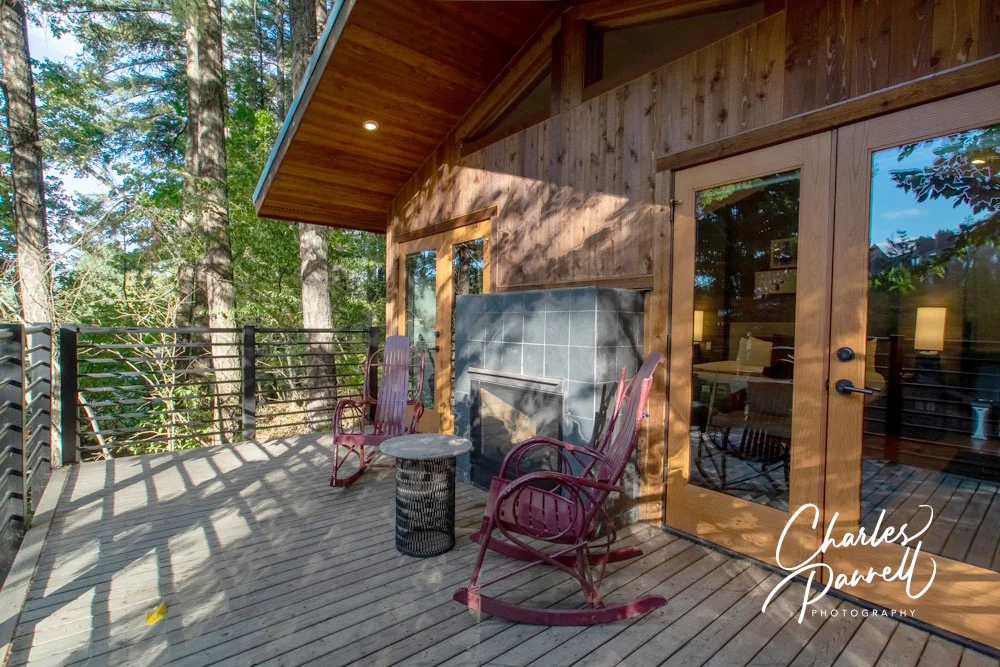
Deck outside the Angels Rest wheelchair-accessible treehouse suite
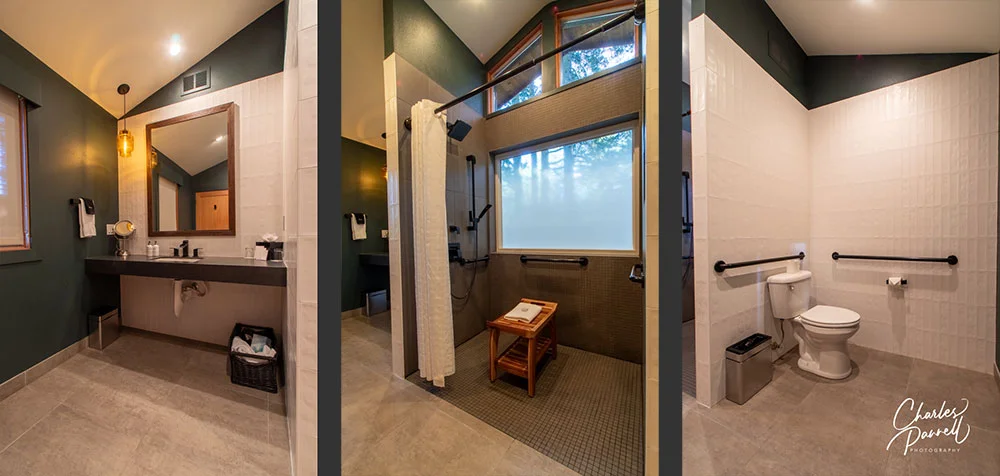
The bathroom is cavernous, and includes a full five-foot turning radius. It’s outfitted with a large roll-in shower with grab bars, a hand-held showerhead and a wooden shower bench. The toilet, which is located in an alcove around the corner, has grab bars on the back and left walls (as seated). Top it off with a large roll-under sink and a lowered mirror and you have a nicely outfitted and accessible suite.
Bathroom in the Angels Rest wheelchair-accessible treehouse suite
Those Little Extras
And then there are those little extras that are included in this luxurious wheelchair-accessible treehouse. For starters, there’s not just a coffee maker, but a Nespresso machine. Just pop in a pod for a perfectly brewed cup of expresso. Of course if you prefer tea or cocoa, they have that too.
And let’s talk about the robes. Many hotels provide guests with robes and slippers, but the treehouse robe was the softest and plushest one I’ve ever worn. Seriously, I didn’t want to take it off.
There were also some nice extras outside. Not only are there comfy chairs and a table on the deck, but there’s also a Yeti ice chest. And it’s filled with ice, so bring your favorite beverage and enjoy. And although the whole treehouse suite simply oozes romance, the deck is a particularly romantic retreat. There’s also a nice open meadow below the deck, where the deer like to hang out near the end of the day.
Last but certainly not least, there’s the gas firepit that’s located close to the treehouse. There’s level access to the firepit, which is reserved for treehouse guests. And you don’t have to worry about actually starting a fire — just push a button and you’re good to go. Of course you can just sit around the fire and enjoy the evening, or you can whip up some tasty s’mores. And in keeping with the “little extras included” theme, s’more kits are also included in the treehouse suites. Truly they thought of everything.
But Wait, There’s More
Of course the wheelchair-accessible treehouse is just the tip of the iceberg at Skaminia Lodge. Let’s not forget the public spaces. There’s plenty of accessible parking near the main lodge building with a barrier-free path over to the spacious lobby. On the far side of the registration desk there’s a large fireplace, with plenty of spots to sit and enjoy the warmth, and take in the view of the surrounding forest.
The Cascade Dining Room, which is located just down the hall, also offers good wheelchair access. Guests can enjoy eggs benedict for brunch and feast on a rack of lamb at dinner. Lighter fare and gluten-free selections are also available. But one of the best features of the dining room is the expansive view of the forest, with the Columbia River in the background.
If you’d prefer some lighter fare, there’s also barrier-free access to the River Rock Lounge, which is located just down the hall.
And if you’d like to go for a swim, then just take the elevator to the basement and check out the indoor swimming pool. Not only is there good access around the pool, but there’s also a wheelchair lift to get into it. And since it’s protected from the elements, you can enjoy the water year-round.
In the end, not only does Skamania Lodge have all the bells and whistles, but it’s also just a short drive from the Historic Columbia River Highway, where you’ll find scenic vistas, jaw-dropping views and cascading waterfalls. It’s the perfect spot for a romantic retreat. After all a segment of The Bachelorette was filmed there!
Barrier-Free Travel Washington National Parks for Wheelers and Slow Walkers