Although it only takes a day to complete, the Golden Circle drive is the highlight of any Iceland visit. This popular route loops past waterfalls, geysers and all the spectacular scenery that makes the country a photographer’s dream. Not only are there some fantastic windshield views on the drive, but three of Iceland’s top natural attractions are also located along the route. So pack a picnic lunch and get ready to enjoy the scenic south on this fun Reykjavik side trip.
The Basics
The good news is, the Golden Circle route is an easy drive from Reykjavik. The roads are good, and there are plenty of signs along the way. The 190-mile route includes stops at Thingvellir, Geysir and Gullfoss, and features a beautiful country drive back to the city.
The bad news is that accessible rental vans are nearly non-existent in Iceland. That said, station wagons are widely available; so if you can transfer, fold up your wheelchair and stow it in back, that might be an option.
If not, there are several tour companies that can provide accessible Golden Circle tours. Prime Tours (primetours.is/) can customize a tour to meet your specific needs and interests. Their accessible van can carry one wheelchair-user and four other people, and their guides are well versed about access needs.
Where it All Began
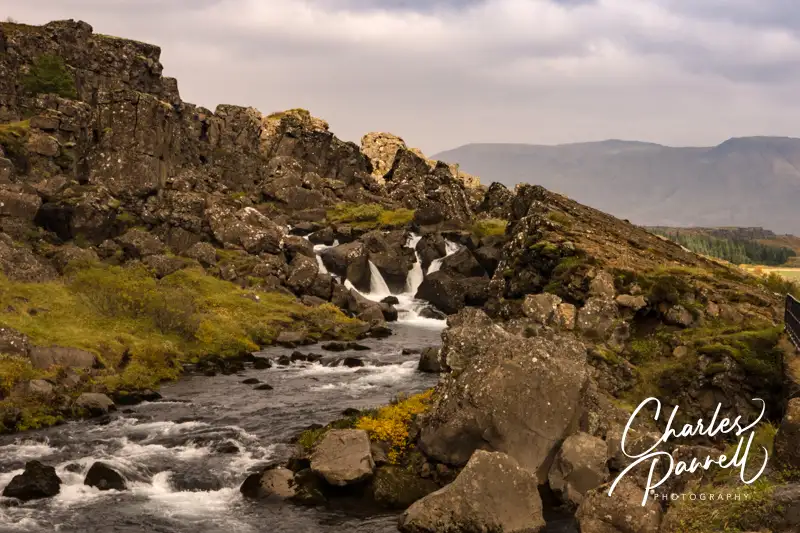
Waterfall in Allmanagjá Canyon, Thingvellir National Park
Located just 31 miles east of Reykjavik, Thingvellir National Park (www.thingvellir.is/en) is the first stop on most Golden Circle tours. Noted for both its beauty and geological value, this UNESCO World Heritage site is where the oldest existing Parliament first met.
People traveled to the Parliament sessions from all over the country and erected stone and turf shelters to protect them from the elements. Today, ruins of those structures can be seen in the surrounding fields. The assembly, which was held outside, took place at the Logberg (Law Rock) and the Logretta (Law Council). Unfortunately their precise locations are unknown, however interpretive panels that outline the history of the site are located throughout this national shrine.
The site was also designated as a national park in 1928 because of its tectonic and volcanic features. The continental drift on the North American and Eurasian tectonic plates can clearly be seen in the cracks and faults that are found in the area.
Access is variable throughout the site. Although paved pathways lead past the interpretive panels, there are a lot of rocks on the paths. Still, it depends on the time of year, and how recently the paths have been cleared. Some of the walkways may be a little steep, but there’s no harm in just doing as much as you can. It’s still a great stop as the drive around Lake Thingvallavatn is absolutely beautiful.
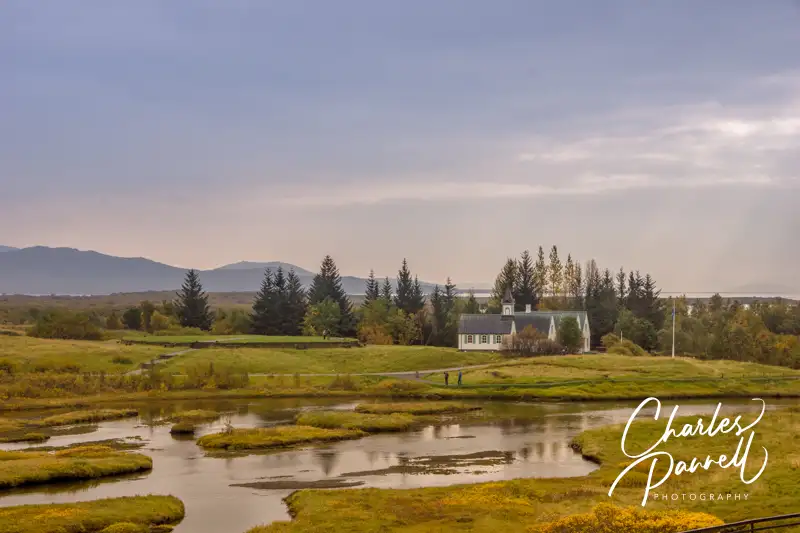
Thingvallakirkja Church in Thingvellir National Park
Geothermal Activity
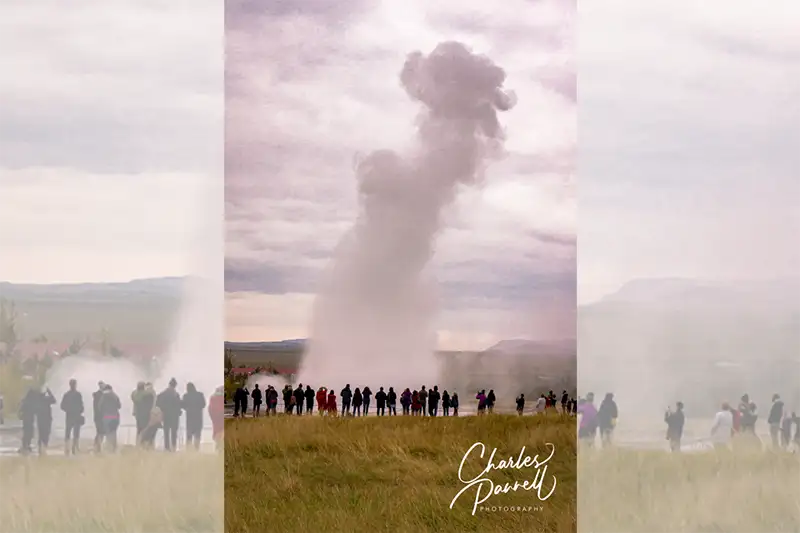
Strokkur Geyser
From Thingvellir, the route continues east to Highway 35, where you’ll find Geysir, a site of high geothermal activity. There’s level access to the Visitor Center, which has automatic doors and barrier-free access throughout the building. Inside there’s a restaurant, a cafeteria, a gift shop and a small collection of interpretive exhibits about the geothermal area. An accessible family restroom is also located in the building.
The geothermal area is located across the street, where a paved brick pathway leads around the Haukadalur geothermal area, which contains mud pools, fumaroles, algal deposits and geysers. The highlight of the geothermal area is the Strokkur geyser, which erupts every four-to-eight minutes. And although this Old Faithful of Iceland erupts regularly, some eruptions are more spectacular than others, so stick around until you catch one of the 30-foot high displays.
Steaming Grounds in Geysir
Cascading Waters
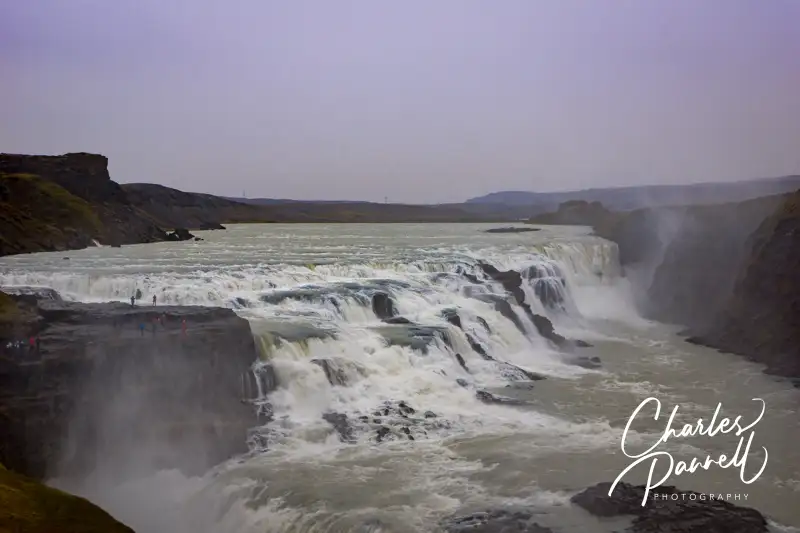
Gullfoss Waterfall
Just down the road from Geysir, you’ll find the crown jewel of the Golden Circle route, Gullfoss. Literally translated Gullfoss means “golden falls”, and on sunny days there’s usually a shimmering rainbow over the falls.
Accessible parking is located near a level boardwalk that leads out to an overlook. Even if you can’t manage the walk to the overlook, you’ll still get an excellent view of the double cascade falls tumbling down the rugged canyon, from just about anywhere along the boardwalk.
There is also stair access to an upper overlook, but the view is actually better from the lower overlook. Either way, the second largest waterfall in Iceland is definitely worth a stop, and it’s the perfect way to top off any Golden Circle drive.
Barrier-Free Travel 101 Accessible Vacations: Travel Ideas for Wheelchair-users and Slow Walkers
Located in its namesake town in Northwestern Oregon, the Tillamook Creamery is worth a stop on any road trip. There’s plenty of accessible parking near the front entrance, with elevator access up to the second floor for the factory tour. From that upper vantage point you can look down on the factory floor, while numerous videos and touch screen presentations describe the production process. Top it off with some samples at end, for the full Tillamook experience. Of course the self-guided factory tour is interesting, but real fans will definitely want to stop for a scoop – or two – of Tillamook ice cream at the ice cream counter. And if you still haven’t had enough, there’s also a cafe on the premises that serves up tasty cheese treats, and a market where you can purchase all of the Tillamook products. A fun stop for all ages, with excellent wheelchair access.
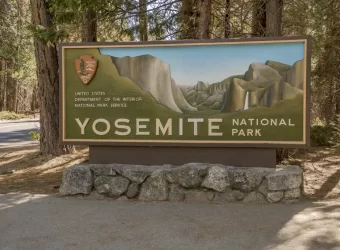
Yosemite has always been a popular destination, and in order to manage the crowds in previous years advance vehicle reservations were necessary. These were cheap and easy to get at www.recreation.gov. And once you got to the park at your appointed time, there wasn’t a wait, because the required vehicle reservations metered the traffic.
Fast forward to 2026, and vehicle reservations are no longer required (https://emerginghorizons.com/yosemite-entrance-reservations-not-required-in-2026-but-plan-ahead/). Why? Well it depends who ask, but there was a huge outcry from locals who opposed the reservations, and then apparently the park statistics showed they weren’t needed. In any case, no vehicle reservations are required in 2026, and that’s led to major traffic jams. Because traffic is no longer metered, there’s a huge back-up at the gates. Just last week there were reports of 90-minute waiting times at the gates – and it’s not even peak season.
Once you get in the park, finding parking is another issue, and of course finding accessible parking is always harder. To be honest, I’d really advise against a visit this year. And it’s not that I’m anti-Yosemite, but I’m just being pragmatic. I grew up in the mountains near Yosemite and for most of my life it was my “home national park”. And I love it. I just feel that with it’s over popularity, and non-metered traffic, it’s just really hard to enjoy this gem. Perhaps things will change next year.
That said, if you absolutely must visit Yosemite in 2026, here are a few tips for wheelchair-users, to help minimize your wait times, and more fully enjoy the park.
Spend the Night
Spending the night in the park is best way to maximize your sleep, and still get that much-needed early start in the morning. That said, lodging in Yosemite Valley can be extremely hard to get during peak season. Hard, but not impossible.
The cancellation period for Yosemite Valley hotels and lodges in seven days. That means that people can cancel their reservations with no penalty up to seven days before their visit. So, if you’re looking for Yosemite lodging in the peak months, and can do a spur-of -the-moment trip, then try searching for available properties early in the day, seven days ahead of time. It’s not guaranteed to work, but it’s the best shot at a vacancy. And yes, sometimes wheelchair-accessible rooms get cancellations too.
And my favorite wheelchair-accessible room in the park is room 421 at the Ahwahnee. It has a king bed, a roomy bathroom with a roll-in shower and an impressive view of Half Dome.
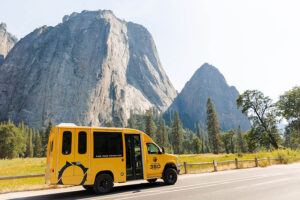
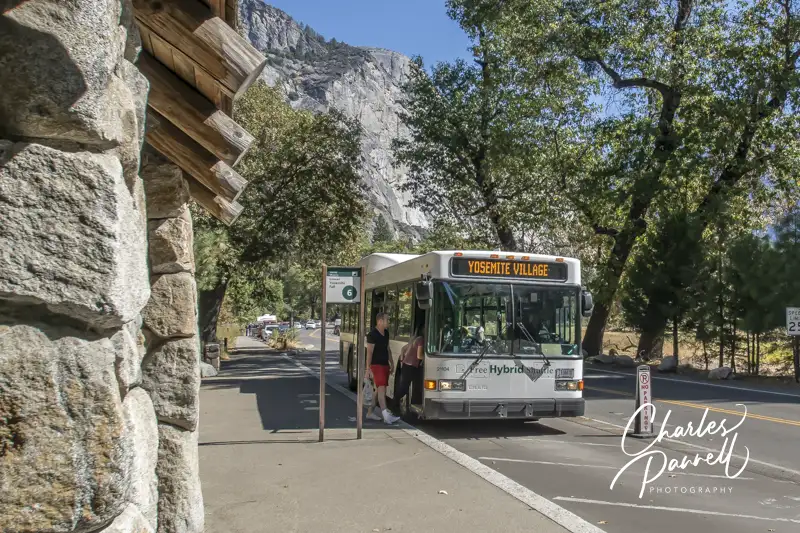
Yosemite Shuttle
Park and Walk (or Roll)
If you can’t spend the night inside the park, then you need to get an alpine start for a hassle-free wheelchair-accessible Yosemite visit in 2026. It depends on where you spend the night, but try to get to the park no later than 6 AM. Yes, you read that correctly, 6 AM.
Years ago, you could have the park to yourself at that time; but with the crowded entrance stations today, it only cuts down on the crowds. Still, that’s a good thing. Your goal after getting to Yosemite Valley is to find an accessible parking spot in the Yosemite Village parking lot. And then leave your car there for the day.
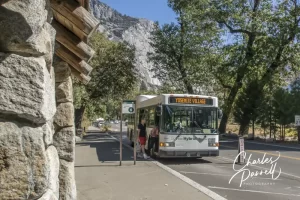
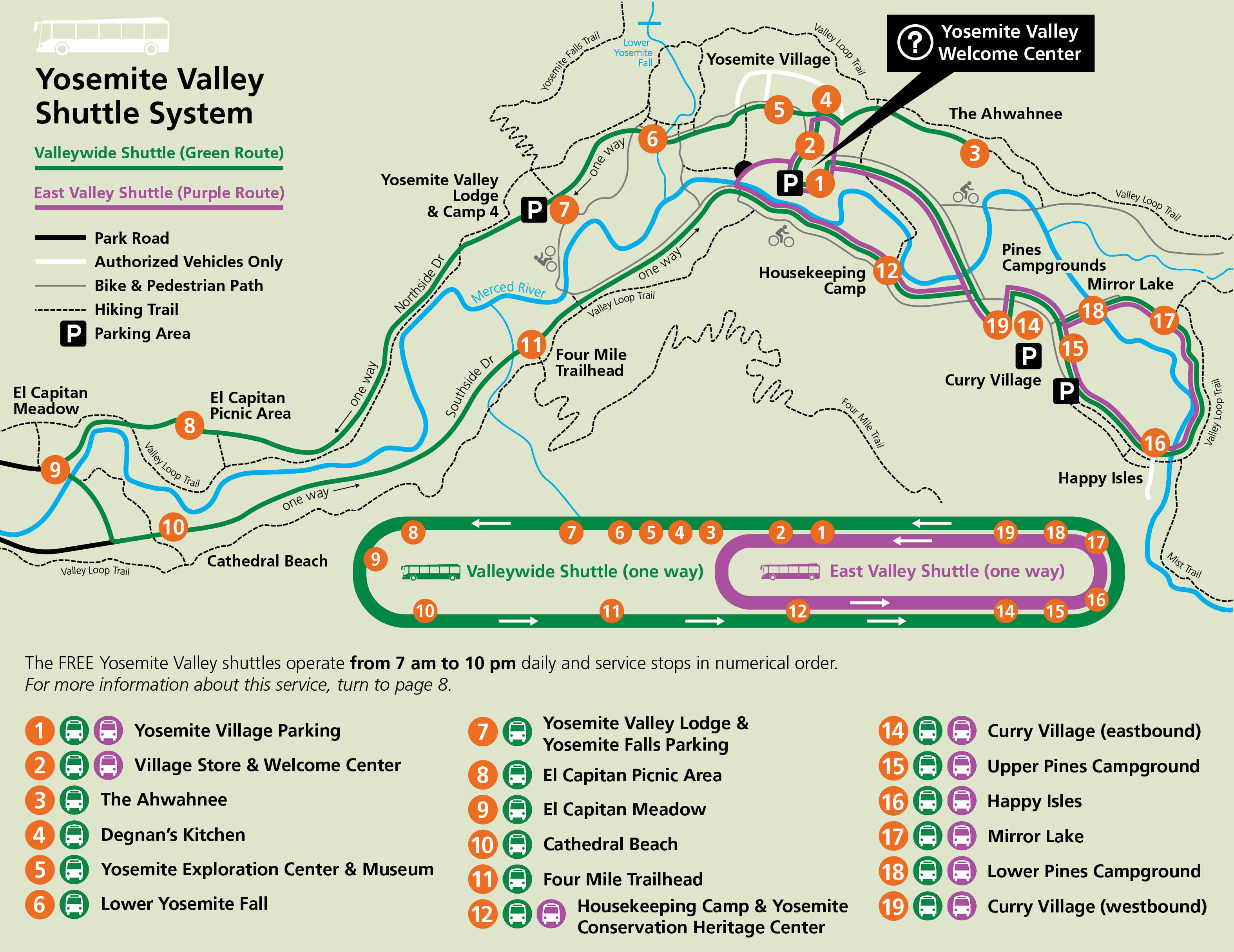
The good news is, there are a lot of sites, viewpoints, concessions and attractions in Yosemite Valley; and they are all connected on the wheelchair-accessible Yosemite Valley shuttle (https://www.nps.gov/yose/planyourvisit/images/valleyshuttle2.jpg). And there’s a shuttle stop near the parking area and in front of the Visitor Center.
The shuttles from 7 AM to 10 PM daily, and there’s usually about a 15-minute wait for a bus. There are two routes in Yosemite Valley – The Valley Shuttle, which covers the whole area, and the East Side Shuttle which stops at Yosemite Village, Curry Village and the campgrounds and trailheads on the east side of the valley
All of the shuttle buses are wheelchair-accessible, and they come equipped with wheelchair-lifts and tie-downs. They can accommodate wheelchairs up to 24 inches wide by 46 inches long, with a weight of up to 750 pounds.
Alternatively it you’d like to get a little exercise, rental handcycles are available at the Curry Village Bike Stand (209-372-8323) and the Yosemite Valley Lodge Bike Stand (209-372-1208). It’s best to reserve those in advance though, as supplies are limited and they go quickly.
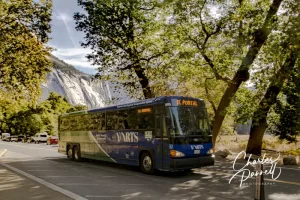
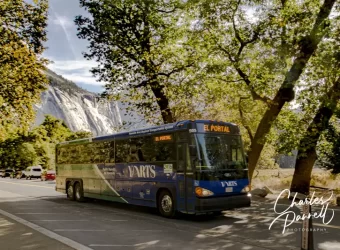
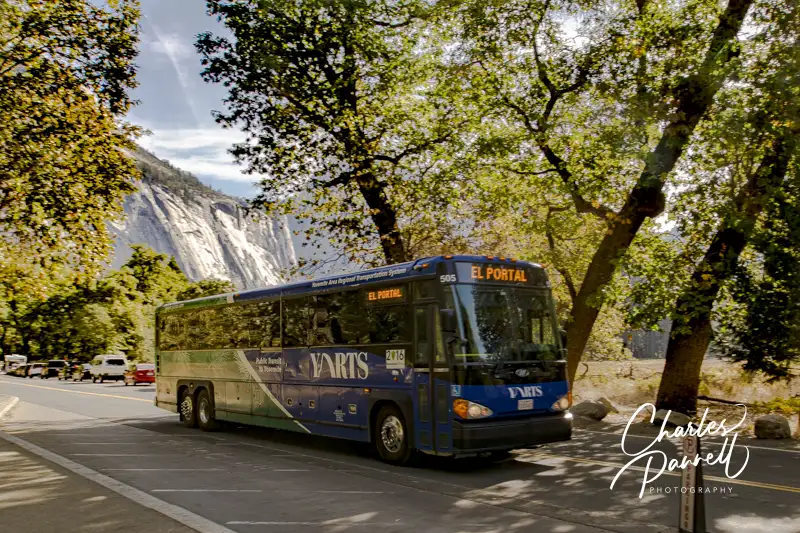
YARTS bus in Yosemite Valley
Ride YARTS!
Another way to to get the most our of your wheelchair-accessible Yosemite visit is to take public transportation to the park – more specifically YARTS (https://www.yarts.com/). Based in nearby Merced, YARTS stands for Yosemite Area Regional Transportation System, and it has four routes that lead to the park. So you can overnight in a nearby community, ride YARTS to the park, and not worry about any delays at the entrance (public transport takes an express lane) or finding an accessible parking space.
The routes run from Merced, Fresno, Sonora, and Mammoth Lakes to Yosemite Valley, and stop at mountain communities along the way. So you could overnight in a variety of places including, Mariposa, Groveland, El Portal, Oakhurst and June Lake. All YARTS buses are equipped with wheelchair lifts; however you either need to contact them 48 hours in advance, or indicate on your online reservation that you require wheelchair seating. And attendants traveling with a wheelchair-user get a 50 percent discount. So not only is riding YARTS accessible it’s also affordable.
Although the general public has to hike in to Mirror Lake, if you have an accessible parking placard or license plate, you can drive along the this road. Although you won’t have the lake to yourself, the hike in – even though it’s easy – eliminates a lot of folks. Even better – go early in the day to dodge the bulk of the visitors.
The road up to mirror lake is about a mile long, and motorists will be sharing the road with pedestrians and cyclists. You must travel with your hazard light on, and the speed limit is 15 mph along this road. And of course you need to watch out for pedestrians – especially kids – along the way.
About half way up, the roads gets steeper, and bicycles are prohibited beyond this point. Once you get to the top there’s accessible parking near the lake. There are some accessible vault toilets nearby and some picnic tables on level ground that may be doable for wheelchair-users. That said, Mirror Lake is seasonal and it usually dries up by late summer; however the granite views are spectacular from there. It’s well worth the drive.
Although they have some great wheelchair-accessible cabins (called havens) at adjacent Waybound Yosemite (operated by Tenaya Lodge) you don’t have to be a lodge guest in order to book one of their tours. The accessible tour bus has a lift and tie downs, so you can stay in your own wheelchair or transfer to a seat.
The day-long accessible tours feature stops at all the popular attractions, a picnic lunch, and time to explore Yosemite Valley on your own on the free wheelchair-accessible shuttle. Plus you don’t have to worry about parking, waiting in the entrance line or driving. Book early though, as this popular tour sells out quickly.
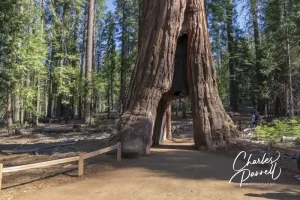
Walk-through Tree at Mariposa Grove in Yosemite National Park
Visit Mariposa Grove
Last but certainly not least, one of the best ways to enjoy a quieter slice of Yosemite is to get out of the valley and visit Mariposa Grove (https://emerginghorizons.com/escape-to-the-wheelchair-accessible-mariposa-grove/). You can access the grove on the Yosemite Shuttle Bus, but if you have a accessible parking placard, you can drive along the road that is reserved for shuttles, hiker and cyclists.
With an accessible parking placard, you can drive to the Mariposa Grove Arrival Center and check out the accessible Big Trees Loop. From there you can drive to the Grizzly Giant Trailhead and take part of the trail to the Grizzly Giant and the California Tunnel Tree. Not only are these massive trees, a must-see on any Yosemite itinerary, but you can dodge some of the crowds by driving there.
And as with any Yosemite itinerary, get an alpine start to beat some of the crowds. This is especially important in 2026, when there are no vehicle restrictions at the entrance stations. So plan ahead for a trouble-free wheelchair-accessible Yosemite visit this year.
If a trip to the City of Brotherly Love is in your future, then check out CityPASS (www.citypass.com), for an affordable way to explore accessible Philadelphia. CityPASS users can choose from three, four or five of the following attractions; and the ticket book is good for nine days once it’s validated.
Adventure Aquarium
The Franklin Institute
Philadelphia Zoo
Big Bus Company and Philadelphia Trolley Works
Eastern State Penitentiary
Museum of the American Revolution
Battleship New Jersey Museum and Memorial
Academy of Natural Sciences of Drexel University
National Constitution Center
Barnes Foundation
There are several ways to enjoy the Philadelphia CityPASS, but here’s a suggestion for a five-attraction itinerary.
Take A Big Bus Tour
A good way to get a good overview of the city is to hop on the Big Bus (www.bigbustours.com/en/philadelphia/philadelphia-bus-tours). A 24-hour Big Bus pass is one CityPASS ticket option; and although the whole bus fleet is not accessible, arrangements for an accessible bus can be made with 48-hours notice. The wheelchair-lift can accommodate up to 650 pounds, but if you want to enjoy the view from the top of the double-decker bus, you have to negotiate the narrow staircase.
There are two ways to ride the Big Bus; you can ride the entire route as a tour, or you can hop off and enjoy attractions along the way. If you elect to hop off, the same accessible bus will return to your stop two hours later, so be sure and check with the driver and plan accordingly.
Visit the Historic District
A visit to the historic district — including the Liberty Bell, Independence Hall and the Benjamin Franklin Museum — is a must-do on any accessible Philadelphia itinerary. And the good news is, it’s a stop on the Big Bus tour. There’s so much to see in the area, that you might want to set aside two days to see it all at a leisurely pace.
And while you’re in the historic district be sure and use your CityPASS ticket to visit the National Constitution Center (constitutioncenter.org). Located across Arch Street from the Independence Visitor Center, the National Constitution Center is the first and only institution established by Congress to disseminate information about the United States Constitution on a non-partisan basis. And although that sounds like a mouthful, it’s a world away from eighth grade civics.
There is level access to the front entrance through the courtyard on Arch Street, with barrier-free access throughout the galleries. The interactive exhibits depict the effects that milestone events have had on our freedom. From slavery, the New Deal and prohibition, to Watergate, women’s rights and even the Americans with Disabilities Act, it’s a very thought provoking collection. .
Hit the Big House
The Eastern State Penitentiary (easternstate.org), which is also a Big Bus stop is definitely worth a visit. There’s level access over to the entrance, with curb-cuts and wide sidewalks along the way. There are steps down into the ticket office, but they can be easily bypassed (just ask one of the guards). Most of the pathways along the tour route are level, and although a few cells are not accessible, you can certainly get a good look at them from the corridors. They’ve done a pretty good job of making this aging facility doable for wheelchair-users.
Make sure and pick up the audio tour (included with admission) as it’s narrated by former guards and prisoners and it paints an accurate picture of prison life. Opened in 1830, the Eastern State Penitentiary was designed to strike fear into the prisoners, and to isolate them so they could reflect on their crimes. They spent 23 hours a day in their cells, and when they did leave they had to wear a black hood so they wouldn’t see anyone else. Talking to anyone — prisoners or guards — was strictly forbidden. Indeed it was a solitary life and the tour reflects that fact.
Franklin Institute
After the somber prison atmosphere, hop back on the Big Bus and get off at the more relaxed Franklin Institute (fi.edu/en). Although steps grace the front entrance of this Philly favorite, there’s an accessible entrance just to the right. Known as an innovator in hands-on interactive exhibits, the Franklin Institute has a large collection of science-based touchable attractions that explore everything from sports to space. And it’s a great place for wheelchair-users, as there’s barrier-free access through the galleries, with elevator access to all floors.
Admission to the planetarium is also included with the CityPASS ticket. There is level access to the planetarium, with wheelchair and companion seating in front. Unlike most planetariums, the seats don’t tip back a lot, and most of the show is easy to see from a wheelchair or a standard chair.
There are also a number of demonstrations throughout the museum during the day, so make sure and check your program. And although there are a lot of kids at this attraction, it’s also a fun place for adults.
Cross the Delaware
Last but certainly not least, plan to visit the Adventure Aquarium (www.adventureaquarium.com), located across the Delaware River on your Philadelphia visit. If you’re riding the Big Bus, get off at Penn’s Landing and catch the RiverLink Ferry (www.riverlinkferry.com) to cross the river. There is level access to the ferry, and plenty of room for wheelchairs on the main deck, with lots of companion seating nearby. Access to the upper deck is only by stairs, but the view from below is just as nice. It’s almost like a mini river cruise, as you get views of the waterfront, the Benjamin Franklin Bridge, the Battleship New Jersey and the Philadelphia skyline on the way to Camden.
Over on the other side, there’s level access access to the Adventure Aquarium, accessible restrooms inside, and elevator access to the second floor. Additionally, all of the galleries have ramp access, wheelchair-height exhibits and plenty of room to navigate a wheelchair.
Must-sees include Hippo Haven, which houses Nile hippos Button and Genny, and a stop at the Touch-A-Shark exhibit to get up close and personal with epaulet sharks and bamboo sharks. And don’t miss the the Plexiglas tunnel that offers a 360-degree view of the shark exhibit. Last, but not least, check out Penguin Park, where you’ll see the incredibly cute Black-footed African Penguins.
All in all, it’s a great accessible place to spend the day. Take your time to enjoy it all, before you head back to Philadelphia on the return ferry.
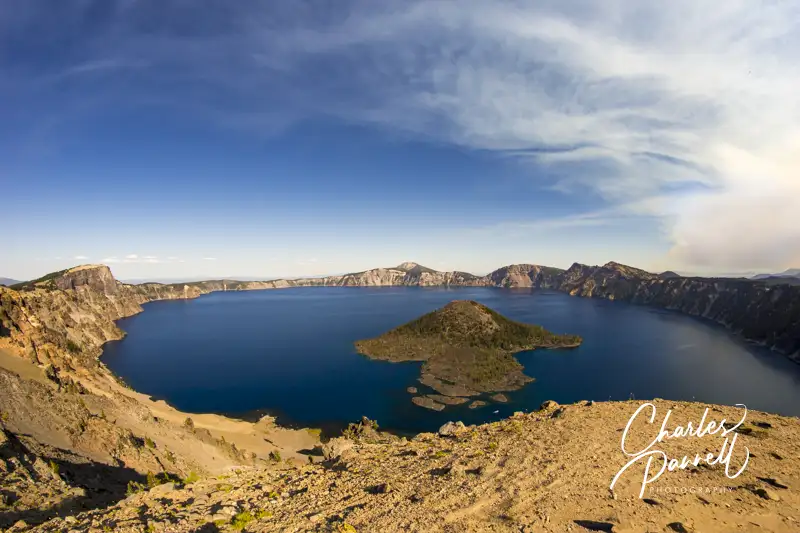
Located at 7,100 feet along Southern Oregon’s Cascade Crest, Crater Lake was created over 7,700 years ago after a massive eruption of Mount Mazama. The resulting caldera filled with melted snow and rainwater, and subsequently the 1943-foot-deep lake took on a deep blue — if not somewhat ethereal — hue. Add in the surrounding cliffs that are nearly 2,000-feet high, two picturesque islands, and an old growth forest, and you have all the ingredients for a scenic national park experience. And although the lake itself isn’t wheelchair-accessible, there are many other areas in Crater Lake National Park (www.nps.gov/crla) that wheelchair-users and slow walkers can enjoy.
The Rim Drive
View from the Phantom Ship Overlook
A good way to enjoy Crater Lake National Park is to take the 31-mile Rim Drive that circles the caldera. For the best windshield views take the drive in a counterclockwise direction starting on West Rim Drive. There are a number of overlooks and pullouts along the drive, but the windshield views are also spectacular.
Be sure and stop at Watchman Overlook, which offers an excellent view of Wizard Island. There’s accessible parking near the accessible vault toilet, with curb-cut access to a sidewalk over to the lower overlook. The upper overlook is only accessible by stairs or a steep path, but don’t fret if you can’t make it to the top, as you’ll catch some of the best views from the road. Cloudcap Overlook and Phantom Ship Overlook also offer some great windshield views of the lake. And don’t miss Vidae Falls on the last section of East Rim Drive, as this 100-foot waterfall can be easily seen from the pullout.
If you’d like to leave the driving to someone else, Crater Lake Trolley (craterlaketrolley.net) offers an accessible tour which travels along Rim Drive and stops at five to seven viewpoints. This two-hour tour departs from Rim Village, and the lift-equipped trolley has space for one wheelchair. At least 24-hours advance notice is required for wheelchair accessibility (541-882-1896). It should be noted that wheelchairs must be no wider than 28-inches and have a combined weight limit of no more than 400 pounds.
Explore the Forest
The Godfrey Glen Trail
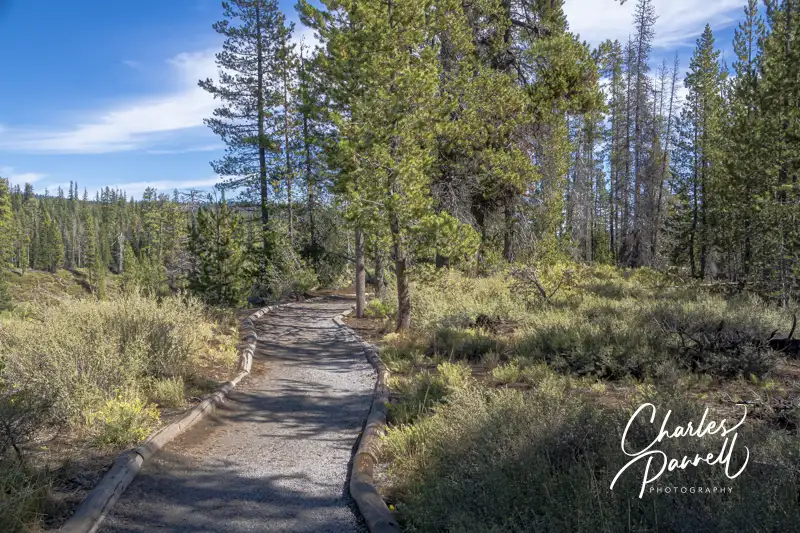
Although the lake is the crown jewel of the park, the surrounding forest also offers some impressive vistas. To that end, one of the most accessible trails in the park– the Godfrey Glen Trail — is located near the south park entrance, on Munson Valley Road between Mazama Village and Park Headquarters.
This hard-packed dirt trail passes through an old growth hemlock and fir forest; and although there are some ruts and roots along the way, most are easy to dodge. The biggest obstacle along this 1.1-mile loop is the steep grade at the halfway point. Best bet it to travel in a clockwise direction, and double back when it gets too steep. Even if you can’t complete the whole trail, you’ll still get some nice canyon views along the way.
Pinnacles Road Trails
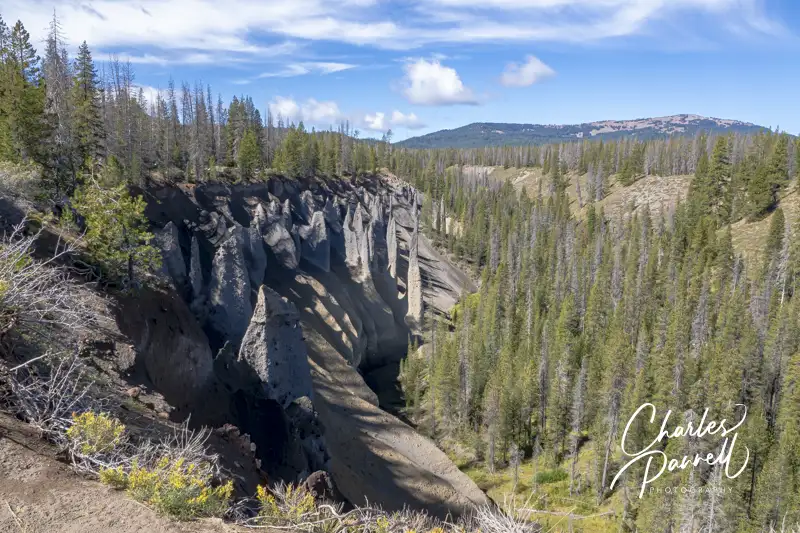
View from the First Overlook on the Pinnacles Trail
Although the Rim Drive is a must-do on any Crater Lake National Park visit, save some time to hop off-the-beaten-path and explore two accessible trails off of Pinnacles Road. Located on the south side of the lake, this seven-mile road begins near Phantom Ship Overlook, and runs out to Pinnacles Overlook, near the southeastern border of the park. The road and the overlook are named for the spire-like pumice formations that dot this river valley. Accessible parking is located next to the Pinnacles Trail, which offers a closer look at these unusual formations, that were created when hot volcanic gases shot up through the ash.
The Pinnacles Trail passes by several overlooks that offer good views of the formations. The hard-packed dirt trail is covered in crushed rock, and although it’s not entirely level, the undulations are doable for most wheelchair-users. Even if you can’t manage the whole half-mile hike to the park boundary, at least take the level 250-foot walk out to the first overlook. You won’t be disappointed.
The Plaikni Falls Trail, which is located near the beginning of Pinnacles Road is also worth a stop. Accessible parking is located near this trail that winds through an old growth forest to the base of the falls. That said, the last quarter-mile is extremely steep, and probably not doable for most wheelchair-users and slow walkers. On the other hand, the stroll through the forest is fairly level, and there are numerous wheelchair turn-outs and benches located along the way.
And although Pinnacles Road makes a nice outing, be forewarned that there are no accessible toilets at either trailhead. Best bet is to plan ahead and make a rest stop at White Bark Pine Picnic Area or the Crater Peak Trail Picnic Area before hitting the trails.
Rim Village
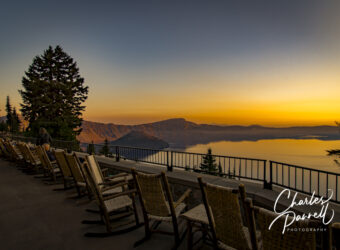
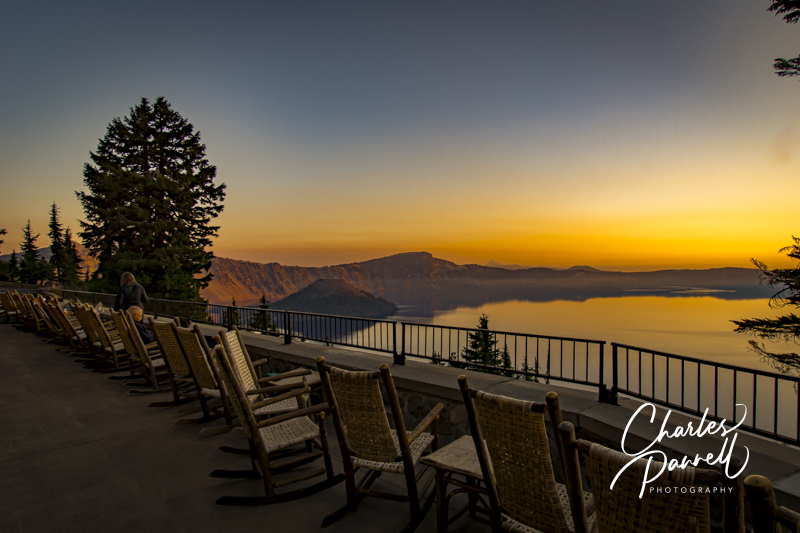
Sunrise on the Back Terrace at Crater Lake Lodge
Last, but certainly not least, save some time to enjoy the rim view on foot on the accessible section of the Rim Village Promenade. This level trail runs alongside the rim from the Rim Village Café and Gift Shop to the back terrace of Crater Lake Lodge. Accessible parking is located near the gift shop, with paved access to the trail behind the gift shop. When you get to the rim, make a right and continue along .3-miles until you hit the lodge.
Interpretive plaques are located along the way, and it’s the perfect spot for a selfie or two, as the views are grand. The trail is mostly paved, and undulating, with a slight change in elevation just past Kiser Studio. Still, most manual wheelchair-users can manage the grade with a little assistance. Alternatively, there’s ramp access down to the trail from the back terrace at Crater Lake Lodge. Either way, the views at both ends of the trail are equally impressive. Alternatively, if you don’t feel like hiking, then just sit and enjoy the lake view from the terrace. And, if you’d like to spend the night at the lodge, they do have a wheelchair-accessible room. (emerginghorizons.com/spend-the-night-at-wheelchair-accessible-crater-lake-lodge/). So pack your bags, and head to Crater Lake – it’s a great accessible destination.
The Grand Canyon is definitely a must-see on the life bucket list. Most people arrive at this popular national park by car, as there’s not exactly an international airport on the rim. That said, there’s an alternative way to get to the South Rim of the Grand Canyon – ride the rails on the Grand Canyon Railway (www.thetrain.com)). And not only is this journey scenic, it’s also wheelchair-accessible. So check out this fun excursion on your next Arizona visit.
The Historic Williams Depot
This scenic rail excursion begins at the Williams Depot; and despite the historic nature of the building, there’s good wheelchair access to all areas. The Fray Marcos Hotel — which opened to the public in 1908 — once occupied the left portion of the depot. Today most vestiges of this 43-room Harvey House are gone;, however there are some vintage photos in the former lobby which is located next to the gift shop.
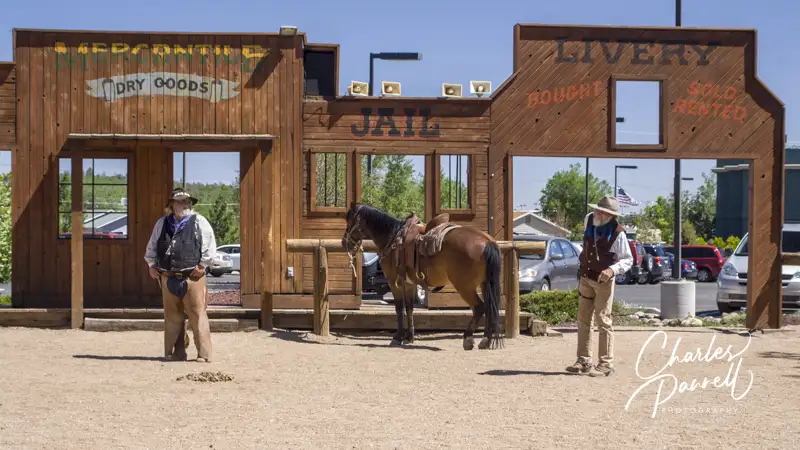
And while you’re at the depot, there’s also a little entertainment before boarding the train. The local marshal and the nefarious Cataract Creek Gang stage a wild west shootout before the train departs. There is level access to the show area, and wheelchair-accessible seating is available in front of the bleachers or at nearby tables. Then after the shootout, everyone heads over to the train.
Cataract Creek Gang at the Grand Canyon Railway
Access Aboard the Railway
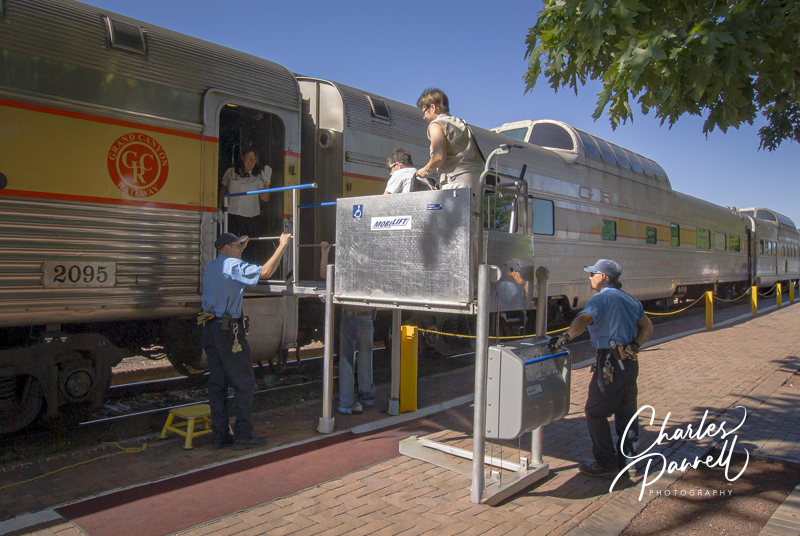
Boarding the Grand Canyon Rail
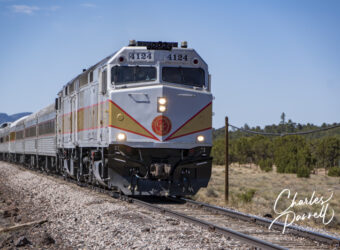
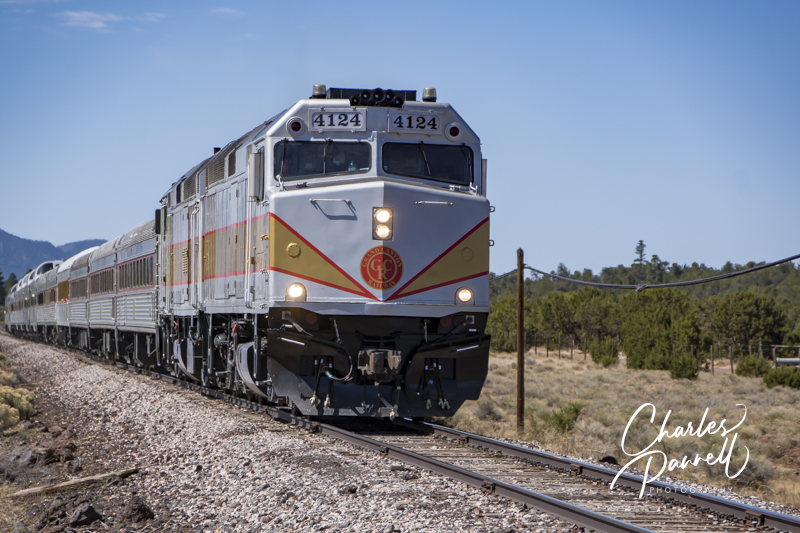
The excellent access at the Grand Canyon Railway continues with pre-boarding, when wheelchair-users and slow walkers are boarded before the rest of the passengers. Access is good on this historic train; and train buffs are wowed by the vintage train cars which are pulled by diesel locomotives. There are six classes of service, with Pullman, Coach and First Class being the most accessible.
The Harriman-Style Pullman cars have bench seats that flip so families can sit together and windows that open; while the Budd coach cars have front facing bench seats and air conditioning. The first-class cars have comfortable reclining seats, large windows and air conditioning. All of these cars can be accessed by a portable lift, and they all have wheelchair tie-downs and nearby companion seats. Accessible restrooms with grab bars, wide doorways and ample pathways are also located in these cars
And of course, if you just can’t make up your mind about which class to book, you can always mix classes; and take one class going up and another on the return trip.
The Trip and Beyond
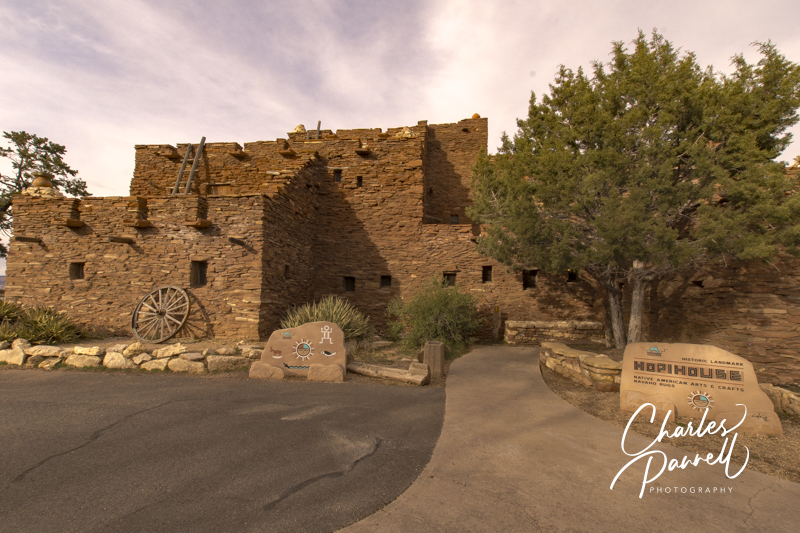
Hopi House on the South Rim of the Grand Canyon
The journey to the South Rim of the Grand Canyon takes about two hours, and you just can’t beat the passing scenery. As an added bonus, roving musicians entertain passengers with western songs along the way. And on-board attendants are always available to field questions and suggest activities for the stop on the South Rim.
Once the train arrives, passengers can explore the South Rim on the the wheelchair-accessible Grand Canyon shuttle. The return train departs for Williams about three hours later; however if you’d like to spend more time on the South Rim you can extend your visit for a night or two. The railway also offers South Rim hotel packages with wheelchair-accessible rooms. And if you’d like to spend the night in Williams after the train returns, they also have wheelchair-accessible rooms at the Grand Canyon Railway Hotel.
No matter which package you choose, you’ll have a great time on this scenic railway. Not only is the scenery second-to-none, but the railway employees are extremely accommodating. It’s a great wheelchair-accessible way to experience the Grand Canyon.
Barrier-Free Travel the Grand Canyon for Wheelchair-users and Slow Walkers
Although there’s no train station in Yosemite National Park, with a little advance planning it is possible to plan a wheelchair-accessible Yosemite rail excursion. Here’s what you need to know to ride the rails to Yosemite National Park.
Hop Aboard Amtrak
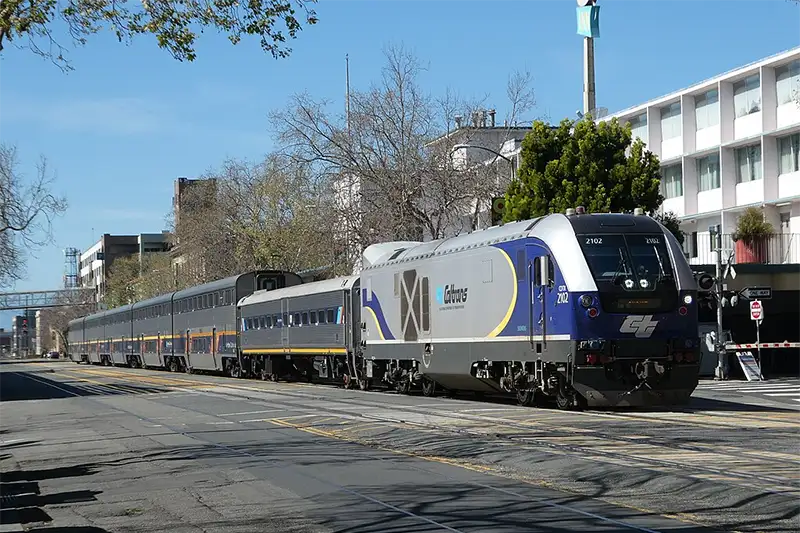
Amtrak Gold Runner
The best way to take a wheelchair-accessible Yosemite rail excursion is to hop aboard Amtrak’s Gold Runner. This route runs through the Central Valley from Oakland to Bakersfield, and offers bus connections from Los Angeles, Sacramento and San Francisco. The train also stops in Emeryville, Richmond, Martinez, Antioch, Lodi, Stockton, Modesto, Denair, Merced, Madera, Fresno, Hanford, Corcoran and Wasco. And it’s easy to transfer to Yosemite via YARTS at the Merced Amtrak Station.
All Amtrak trains feature ramp or lift boarding, wheelchair-accessible seating and large accessible restrooms. Wheelchair-users can remain in their own wheelchair or transfer to a coach seat for the journey. The Gold Runner can accommodate manual and power wheelchairs up to a maximum width of 29.5 inches, and an occupied weight of up to 600 pounds. Special accessibility requests can be submitted at www.amtrak.com/contact-us/email.html (click on accessibility request) at least 72 hours prior to travel, or by calling (800) 872-7245. On-the-spot accessibility requests can usually be accommodated if they do not present a safety issue.
The Gold Runner route features coach seating, free WI-FI, and food for sale on board. Amtrak offers a 10% discount to passengers with a disability and one companion. For more information about Amtrak’s Gold Runner route, visit www.amtrak.com/san-joaquins-train.
Take YARTS to Yosemite
YARTS bus in Yosemite Valley
It’s about a three-hour trip from Oakland to Merced, and a two-hour trip from Bakersfield; plus an additional, 3.5-hour bus connection from Bakersfield to Los Angeles. Amtrak has partnered with YARTS to provide a bus connection from the Merced Amtrak Station to Yosemite, and that transfer is included with your Amtrak ticket.
All YARTS buses feature lifts and accessible seating; however it’s important to note on your Amtrak reservation that wheelchair-accessible seating is required. Alternately, call (877) 989-2787 at least 48 hours in advance to secure an accessible seat. Additionally, reduced fares are available to people with a disability and seniors over 62 years old.
The Highway 140 YARTS route runs from the Merced Amtrak Station to Yosemite Valley with stops in Catheys Valley, Mariposa, Midpines and El Portal. Stops in Yosemite Valley include the Yosemite Valley Visitor Center, Yosemite Valley Lodge and Curry Village. This route runs year-round, and it takes 2.5 hours to get from the Merced Amtrak station to Yosemite Valley.
The Highway 140 YARTS route is an excellent choice for folks with lodging reservations at Yosemite Valley Lodge or Curry Village; however this route also stops at accessible properties outside of the park. Two excellent accessible lodging choices on the route are the Yosemite Bug and AutoCamp Yosemite.
The Yosemite Bug (www.yosemitebug.com/) is located in Midpines and features a large wheelchair-accessible guest room with a roll-in shower. Located nearby, AutoCamp Yosemite (autocamp.com/location/yosemite/) offers wheelchair-accessible accommodations in custom designed luxury travel trailers. And both properties have daily YARTS connections to the national park.
Getting Around Yosemite
Yosemite Shuttle
Passengers who take a wheelchair-accessible Yosemite rail excursion have several options to get around the park. First and foremost is the free Yosemite shuttle system.
There are currently two shuttle routes in the valley — the Valleywide Shuttle and the East Valley Shuttle. The former stops at Yosemite Valley lodges, campgrounds, restaurants and trailheads, while the latter calls on Yosemite Village, Curry Village, the Pines Campgrounds and the eastern Yosemite Valley trailheads. All shuttle buses are equipped with wheelchair lifts and tie-downs, and can accommodate wheelchairs up to 24 inches wide and 46 inches long. The lifts have a weight limit of 750 pounds.
Aramark (www.travelyosemite.com) — a Yosemite lodging concessionaire — also operates several tours. The popular Valley Floor Tour is conducted in an open-air tram and offers good views of the surrounding landscape. Although not all trams are accessible, wheelchair-users can request a lift-equipped one with 48 hours notice. And if you’d like to explore more of the park, opt for four-hour Glacier Point Tour or the day-long Yosemite Grand Tour. Accessible buses for these tours are also available with 48 hours advance notice.
Finally, if you’d like to get a little exercise, then rent a handcycle at the bike stands at Yosemite Valley Lodge or Curry Village and explore the 12 miles of bicycle paths in Yosemite Valley. Most of the bicycle paths are wheelchair-accessible except for a short patch near Housekeeping Camp.
So leave the car at home, and get out and ride the rails to Yosemite National Park. It’s a fun and wheelchair-accessible way to travel.
Barrier-Free Travel Yosemite, Sequoia and Kings Canyon National Parks for Wheelers and Slow Walkers
Although swamps are generally not a top destination choice for wheelchair-users, Everglades National Park (www.nps.gov/ever) may well be the exception. Located in South Florida, this vast track of protected wetlands spans over 1.5 million acres and attracts backcountry enthusiasts from around the world. Granted, the undeveloped areas of the park are not wheelchair-accessible; however there are still plenty of Everglades options for wheelchair-users and slow walkers. In fact, two particular areas of the park – Royal Palm and Shark Valley – boast a bevy of boardwalks and trails for visitors of all abilities.
Royal Palm
The Anhinga Trail in Everglades National Park
First up on our wheelchair-accessible Everglades visit is Royal Palm, which is located about 20 miles southwest of Florida City. Named for the former state park that grew into the Everglades, this area offers two accessible trails that give visitors a good overview of the native wildlife. There’s plenty of accessible parking in the large lot, with level access to the accessible restrooms, visitor center and gift shop.
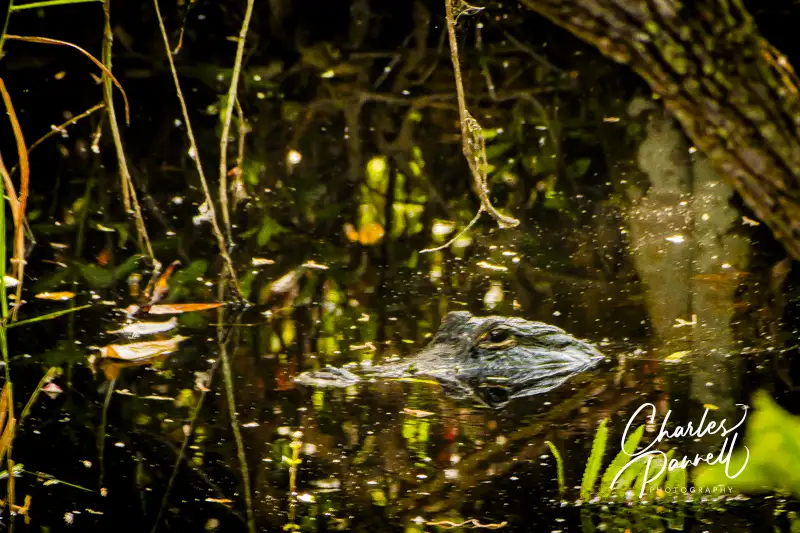
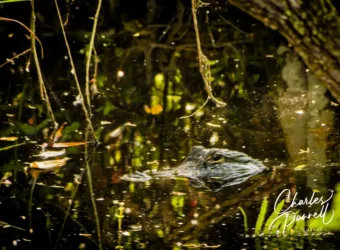
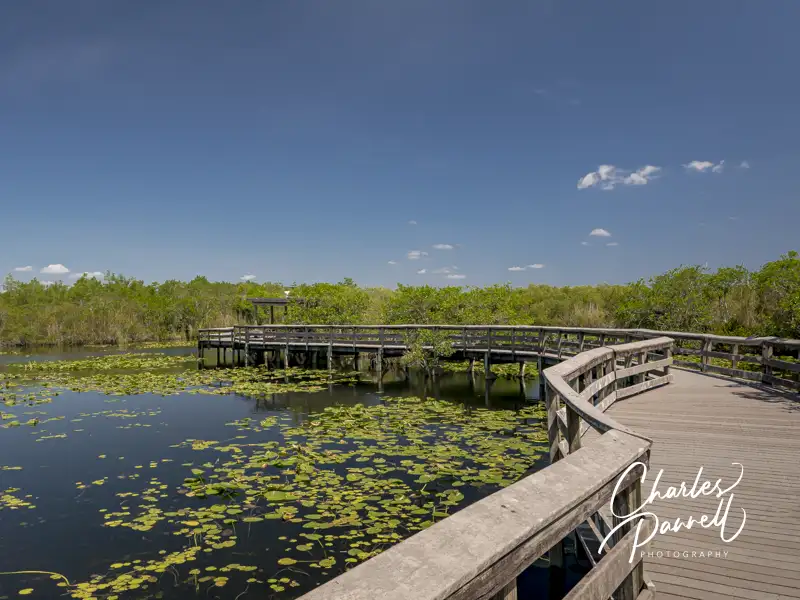
The Anhinga Trail – one of the most popular trails in the park — is located behind the visitor center. This .8-mile loop trail begins as a paved path, before it transitions to a wide level boardwalk around the sawgrass marsh. A shaded viewing platform is located midway along the boardwalk, and there’s ample opportunity to catch a glimpse of alligators, turtles and a wide variety of wading birds. And if you get tired, no worries, as there are plenty of benches along the way too. Keep a lookout for the namesake Anhingas, that can be seen in abundance drying their colorful wings in the sun, or perched peacefully in the trees along the trail.
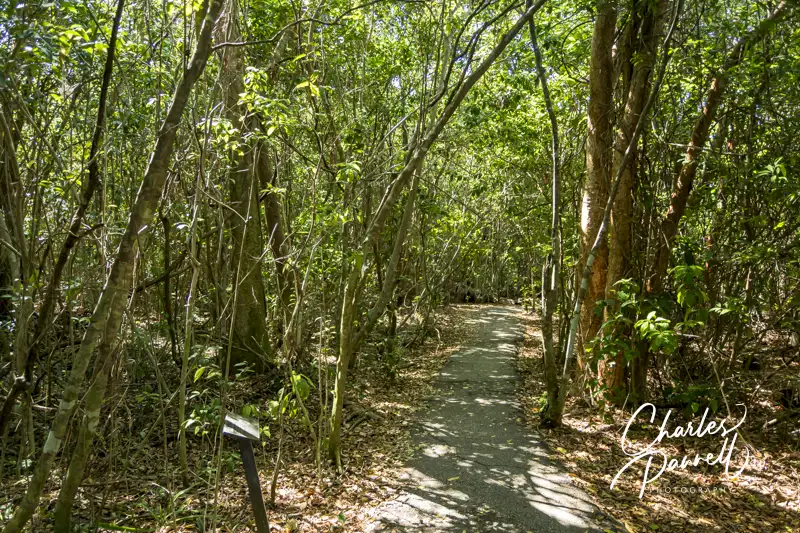
The Gumbo Limbo Trail is also worth a stop while you’re in the area. This .4-mile loop trail begins behind the visitor center, and travels through a tropical hardwood hammock. There are plenty of interpretive plaques along this paved trail; and although the pavement has a few cracks here and there, it’s still quite doable for most folks. The gumbo limbo trees, with their unique peeling red bark, offer shelter to a variety of avian life; and the royal palms, ferns and air plants add a bit of diversity to the forest. It’s a refreshing stroll, especially on a hot day.
The Gumbo Limbo Trail in Everglades National Park
Take a Tram Tour
The Shark Valley Tram in Everglades National Park
Shark Valley is another area of the park worth a visit on a wheelchair-accessible Everglades itinerary. It’s located north of Royal Palm, on the Tamiami Trail (Highway 41), about 40 miles west of Miami. And although it doesn’t have any sharks, and it’s really not much of a valley, the sawgrass marsh supports a healthy freshwater ecosystem.
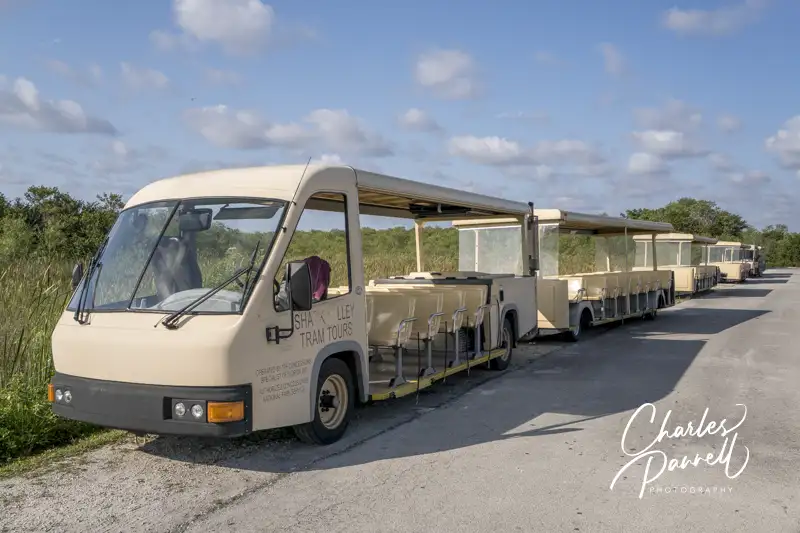
There’s barrier-free access from the accessible parking area to the visitor center, which is the departure point for the popular Shark Valley Tram Tour (www.sharkvalleytramtours.com). This two-hour tour is led by a naturalist who points out some of the hidden treasures in the Everglades. The tour stops at the halfway point at a 45-foot high observation tower, where visitors can get a bird’s eye view of the surrounding swamp. Even better, the tower includes a gently sloping ramp that allows wheelchair access to the top deck.
The tour is conducted in an open-air tram, which can be configured for wheelchair access. There’s ramp access up to the accessible car, which features two wheelchair spaces with tie-downs. Advance notice is required for accessible tours, and reservations can be made by calling (305) 221-8455. And since there are no facilities along the way, it’s a good idea to use the accessible restrooms at the visitor center before the tour. It’s also a good idea to bring along some water and a snack, as there aren’t any concession areas along the tour route either.
Explore Shark Valley
Shark Valley Trail
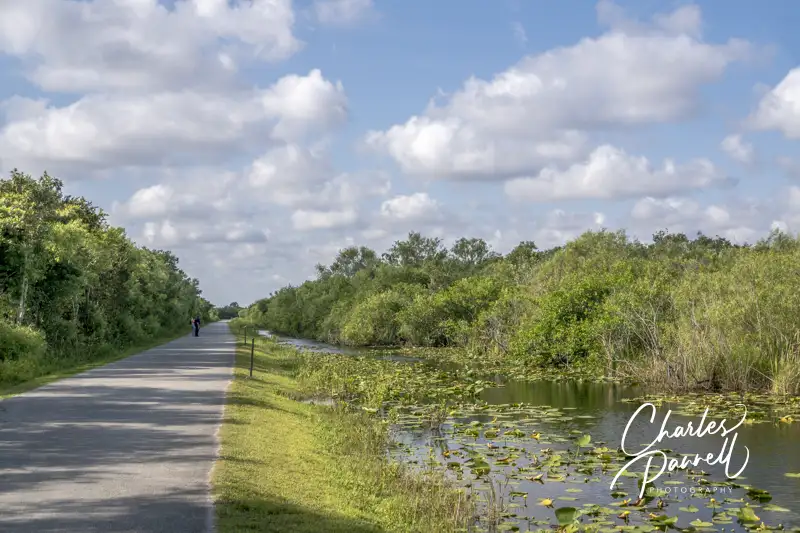
The road that the tram tours runs along — Shark Valley Loop Road — is flat and paved, and it’s also a good choice for wheelchair-users who don’t opt for the tram tour. There’s a fair amount of bicycle traffic along the road, but it’s pretty wide, so there’s plenty of room for everyone. Be sure and stop and look in the grass alongside the road, as it’s not unusual to find alligators there. And if you hear something growling at you from the water, don’t be alarmed, as it’s probably only the mating call of the harmless pig frog.
The Bobcat Boardwalk, which is located behind the visitor center, is also a good place to get a look at – and have a listen to – the swamp inhabitants. This wide level .5-mile boardwalk winds over the marsh and through a mature gumbo limbo forest. There’s a wheelchair accessible overlook along the way, and although you may hear bobcats rustle in the underbrush, they are usually pretty shy. That said, it’s still a good place to spot alligators, and the forest canopy provides a welcome respite on sunny days.
Big Cypress National Preserve
The Kirby Storter Boardwalk in Big Cypress National Preserve
Although it’s not part of the Everglades, save some time to stop at the Kirby Storter Roadside Park on your way to or from Shark Valley. Part of the Big Cypress National Preserve (nps.gov/bicy/), this accessible rest area is located about 30 miles west of Shark Valley. It features accessible parking, with accessible vault toilets nearby, and level access to a shaded picnic area.
After you’ve had a bite to eat, take a stroll along the half-mile accessible Kirby Storter Boardwalk. There’s level access to the boardwalk which travels through a young cypress marsh, before it transitions to a mature pop ash and red maple forest dotted with orchids. The forest canopy shades the trail until it opens up to a full swamp at the end of the boardwalk. There are interpretive signs along the way, and a bench to enjoy the swamp view at the end. It’s a good place to spot alligators, especially during mating season. And since many people pass right on by this scenic stop, you may even have it all to yourself. It’s a great way to top off a wheelchair-accessible Everglades visit.
West bay on Roatan Island, HondurasFounded by Roatan native Victor Bodden, Bodden Tours (boddentours.com/accessible.htm) offers custom wheelchair-accessible Honduras day tours. Transportation is provided in either a 16-passenger lift equipped bus, or a smaller ramped Toyota Sienna van. Participants can choose from a variety of accessible activities on their Roatan tour, including Victor Bodden’s Monkey Business, Sherman Arch’s Iguana Farm, Ixora Spa, Spa Baan Saerle and the Stone Castle Cameo Factory. The guides can also take participants on an accessible scenic drive, arrange a shopping excursion and even suggest lunch and rest stops appropriate for wheelchair-users and slow walkers. The company also offers several partially accessible day tours. For more information about these wheelchair-accessible Honduras tours, call or text Victor at +(504) 9910 52017.
Barrier-Free Travel 101 Accessible Vacations: Travel Ideas for Wheelchair-users and Slow Walkers
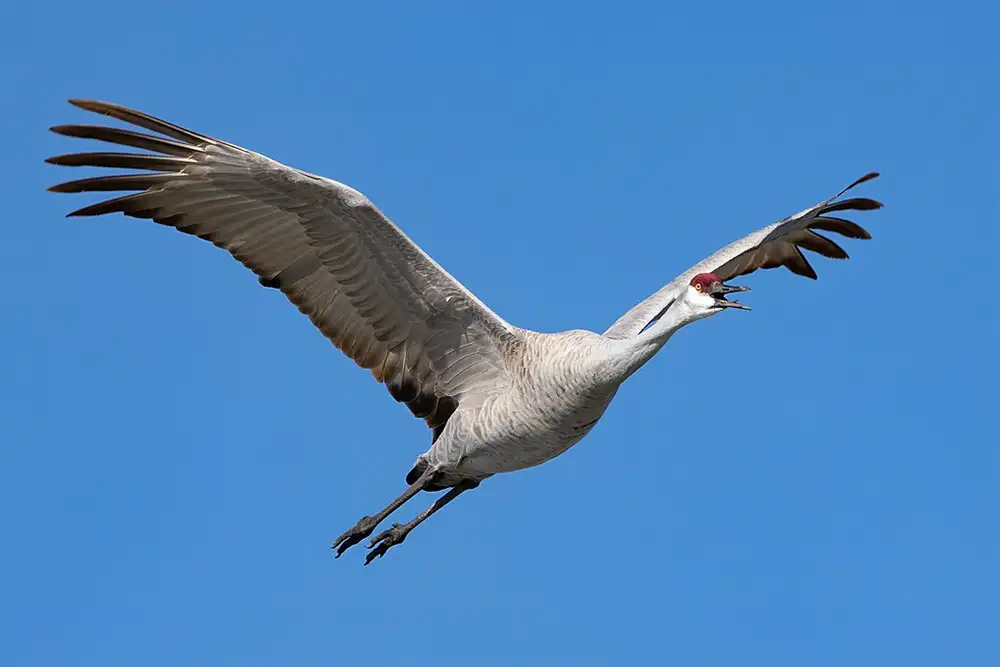
Every fall Sandhill Cranes take to the Pacific Flyway in a mass migration from their breeding grounds in Alaska and British Columbia, to travel to their wintering areas in California. And one of their favorite places to winter is in the California Delta near Lodi. In fact, from October to February masses of these majestic birds can be seen feeding in the fields that line the roads of this rural agricultural area.
And to celebrate their yearly return, the Lodi Sandhill Crane Association presents the annual Lodi Sandhill Crane Festival. Now in its 27th year, the 2025 event will run from Friday November 7 to Sunday November 9, with most of the events happening over the weekend. And the good news is, not only are the festival venues wheelchair-accessible, but there’s no admission charge to many of the festival events.
Exhibits, Presentations and More
The bulk of the festival events take place at the Hutchins Street Square Community Center in downtown Lodi. There’s barrier-free access to the building, with plenty of room for wheelchairs and scooters to maneuver. For a full schedule of the downtown exhibits and educational presentations, visit lodisandhillcrane.org.
The festival kicks off with the opening night reception on Friday evening. Attendees can nosh on hors d’oeuvres and beer and wine, while enjoying a program that includes the presentation of the Lodi Sandhill Crane Association Conservation Award. Top it off with a silent auction and for a fun opening event.
The educational presentations about the life and habits of the Sandhill Cranes are a perennial favorite of festival attendees. These weekend sessions include speakers, videos, and hands-on projects. And there’s even a few activities for kids. Additionally there’s a variety of vendors and exhibitors that focus on birding, wildlife, and of course the Sandhill Cranes. Box lunches will be for sale in the exhibit hall, while snacks will be available to purchase in the rotunda.
One of the highlights of the Lodi Sandhill Crane Festival is the Art Show. There are two divisions. One division is photography and the other is fine arts, which includes oils, watercolors, pastels and sculptures. There are two subject areas within each division — Sandhill Cranes in California and other California wildlife in their natural habitat. There are lots of creative entries, and the best part is that the winners are picked by the attendees. So be sure and stop by and vote for your favorites.
Take a Tour
A more remote aspect of the Lodi Sandhill Crane Festival are the local tours. Led by naturalist guides, these tours cover all aspects of the migratory cranes, and include a variety of landscapes. Although some tours are not a good choice for wheelchair-users and slow walkers because of the rough terrain, several other tours are doable.
At the top of the list is the Consumnes River Preserve Guided Wetlands Walk. Led by Mary DuBose, this three-hour morning walk begins at the Consumnes River Preserve Visitor Center. It includes a one-to-two-mile walk over a smooth level trail and some boardwalks. You’ll not only see the Sandhill Cranes on this walk, but also find a nice selection of ducks, geese, raptors and woodland birds along the way. There is a $20 charge for this tour.
The Crane Fly-In tours are also good choices for wheelchair-users and slow walkers. They take place at the North and South Units of the Woodbridge Ecological Preserve. These offerings include a short presentation, before the Sandhill Cranes descend en masse to their nightly resting spots. It’s quite a sight to see! Both the North and South Units have level access to a wheelchair-accessible viewing area for the program. The South Unit Tours are priced at $30, while the North Unit tours are $40. And if you’d like to get up early, there’s also a Fly-Out tour at the North Unit that’s priced at $45.
It’s also important to note that all participants in the North and South Unit tours must also posses a current hunting or fishing license, or purchase a Lands Pass at wildlife.ca.gov/licensing/lands-pass.


 Although it only takes a day to complete, the Golden Circle drive is the highlight of any Iceland visit. This popular route loops past waterfalls, geysers and all the spectacular scenery that makes the country a photographer’s dream. Not only are there some fantastic windshield views on the drive, but three of Iceland’s top natural attractions are also located along the route. So pack a picnic lunch and get ready to enjoy the scenic south on this fun Reykjavik side trip.