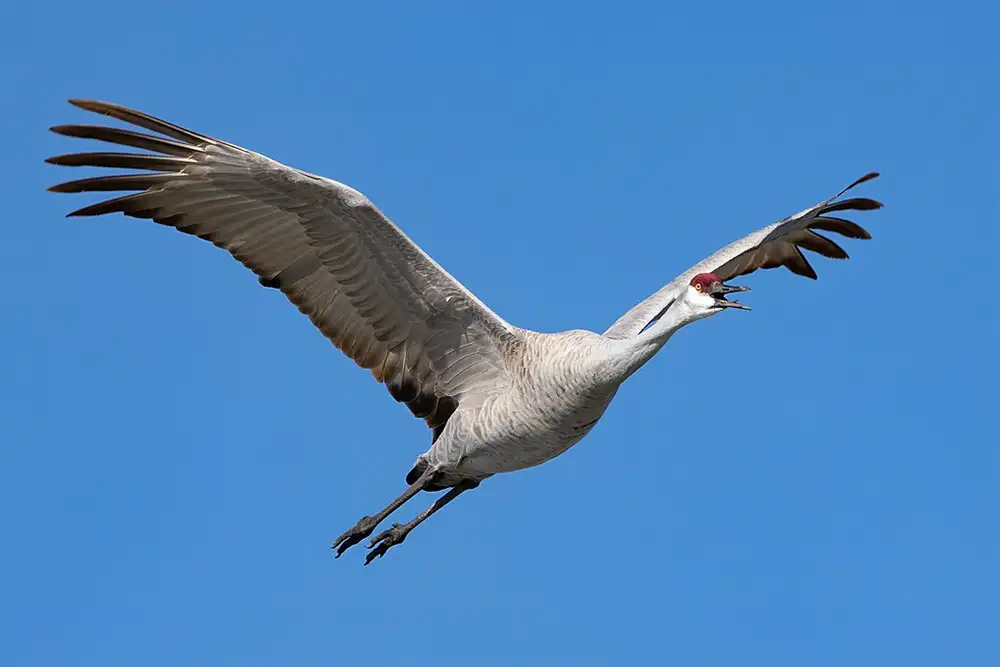
Every fall Sandhill Cranes take to the Pacific Flyway in a mass migration from their breeding grounds in Alaska and British Columbia, to travel to their wintering areas in California. And one of their favorite places to winter is in the California Delta near Lodi. In fact, from October to February masses of these majestic birds can be seen feeding in the fields that line the roads of this rural agricultural area.
And to celebrate their yearly return, the Lodi Sandhill Crane Association presents the annual Lodi Sandhill Crane Festival. Now in its 27th year, the 2025 event will run from Friday November 7 to Sunday November 9, with most of the events happening over the weekend. And the good news is, not only are the festival venues wheelchair-accessible, but there’s no admission charge to many of the festival events.
Exhibits, Presentations and More
The bulk of the festival events take place at the Hutchins Street Square Community Center in downtown Lodi. There’s barrier-free access to the building, with plenty of room for wheelchairs and scooters to maneuver. For a full schedule of the downtown exhibits and educational presentations, visit lodisandhillcrane.org.
The festival kicks off with the opening night reception on Friday evening. Attendees can nosh on hors d’oeuvres and beer and wine, while enjoying a program that includes the presentation of the Lodi Sandhill Crane Association Conservation Award. Top it off with a silent auction and for a fun opening event.
The educational presentations about the life and habits of the Sandhill Cranes are a perennial favorite of festival attendees. These weekend sessions include speakers, videos, and hands-on projects. And there’s even a few activities for kids. Additionally there’s a variety of vendors and exhibitors that focus on birding, wildlife, and of course the Sandhill Cranes. Box lunches will be for sale in the exhibit hall, while snacks will be available to purchase in the rotunda.
One of the highlights of the Lodi Sandhill Crane Festival is the Art Show. There are two divisions. One division is photography and the other is fine arts, which includes oils, watercolors, pastels and sculptures. There are two subject areas within each division — Sandhill Cranes in California and other California wildlife in their natural habitat. There are lots of creative entries, and the best part is that the winners are picked by the attendees. So be sure and stop by and vote for your favorites.
Take a Tour
A more remote aspect of the Lodi Sandhill Crane Festival are the local tours. Led by naturalist guides, these tours cover all aspects of the migratory cranes, and include a variety of landscapes. Although some tours are not a good choice for wheelchair-users and slow walkers because of the rough terrain, several other tours are doable.
At the top of the list is the Consumnes River Preserve Guided Wetlands Walk. Led by Mary DuBose, this three-hour morning walk begins at the Consumnes River Preserve Visitor Center. It includes a one-to-two-mile walk over a smooth level trail and some boardwalks. You’ll not only see the Sandhill Cranes on this walk, but also find a nice selection of ducks, geese, raptors and woodland birds along the way. There is a $20 charge for this tour.
The Crane Fly-In tours are also good choices for wheelchair-users and slow walkers. They take place at the North and South Units of the Woodbridge Ecological Preserve. These offerings include a short presentation, before the Sandhill Cranes descend en masse to their nightly resting spots. It’s quite a sight to see! Both the North and South Units have level access to a wheelchair-accessible viewing area for the program. The South Unit Tours are priced at $30, while the North Unit tours are $40. And if you’d like to get up early, there’s also a Fly-Out tour at the North Unit that’s priced at $45.
It’s also important to note that all participants in the North and South Unit tours must also posses a current hunting or fishing license, or purchase a Lands Pass at wildlife.ca.gov/licensing/lands-pass.
From historic museums to wine tasting, and even a grove of giant sequoias, there’s a definite diversity in California’s Calaveras County. And if you’d like to spend a night or two, there’s also a good selection of comfortable inns and lodges. The good news is, many of the lodgings, attractions and trails are excellent choices for slow walkers and wheelchair-users. So pack your suitcase, gas up the car and check out this Calaveras County Wheelchair Travel Guide for a fun weekend in the California Gold Country.
What’s not to like about a road trip? After all you get to set your own pace, explore a few off-the-beaten-track sights, and take in some gorgeous scenery. And although the highways and byways across the US offer a plethora of gorgeous windshield views, these seven western drives top my must-do list. Not only are they all easily doable in one day, but each route also features one don’t-miss wheelchair-accessible scenic highlight, where you can get out of the car and get up-close-and-personal with Mother Nature.
Tioga Road
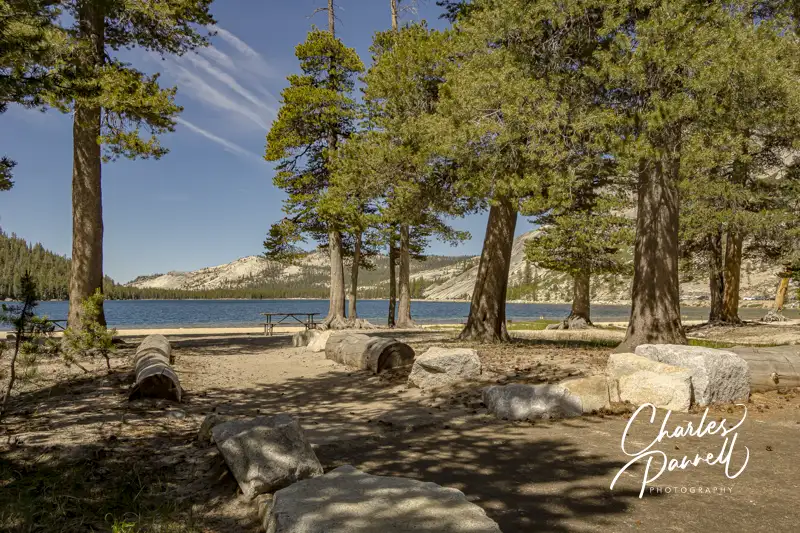
Tenaya Lake on the Tioga Road in Yosemite National Park, California
At the top of the Western road trips list is Tioga Road. This classic drive across the high country of Yosemite National Park (emerginghorizons.com/barrier-free-travelyosemite-sequoia-and-kings-canyon-national-parksfor-wheelers-and-slow-walkers/#itins), connects Crane Flat near Yosemite Valley with Highway 395 in Lee Vining. Along the way you’ll be treated to some great views of Tenaya Lake and Tuolumne Meadows, as you pass by isolated snowfields and travel over the 9,943-foot high mountain pass.
Take some time to get out of your car at the east end of Tenaya Lake. Located at 8,150 feet, this alpine lake offers a short wheelchair-accessible path down to the lakeshore, where you’ll find an accessible picnic table on an asphalt pad. It’s the perfect spot for a secluded picnic lunch.
Keep in mind that timing is extremely important along this route though, as heavy snow makes the road impassable during the winter months. Fall is a lovely time on Tioga Road, but try and hit it before the end of October. Mountain weather is unpredictable and this road has closed as early as mid-October.
Kings Canyon Scenic Byway
Grizzly Falls Picnic Area on the Kings Canyon Scenic Byway in Kings Canyon National Park, California
Located in the National Forest just outside of Kings Canyon National Park, The Kings Canyon Scenic Byway begins just north of Grant Grove on Highway 180. This scenic route travels through a pine forest before it descends alongside granite walls deep into magnificent Kings Canyon. After the road reaches the canyon floor, it follows the roaring Kings River and then it re-enters the park just past Grizzly Falls Picnic Area.
There are several viewpoints with interpretive plaques along the way, and although none of them have striped parking, all of them are paved and level, with plenty of room to deploy a ramp when parked parallel. McGee View offers a look at the destruction and rebirth of the forest since the 2015 Round Fire, while Yucca Point and Junction View give visitors a close look at the massive canyon walls. The Boyden Cave site is worth a stop too, as even though the cave tours haven’t operated for many years (and they are not accessible), you’ll still get a good view of the mighty Kings River from either side of the road.
And don’t miss the Grizzly Falls Picnic Area . A short paved loop leads from the parking area, up around several accessible picnic tables on cement pads. It’s about 100 feet up to the interpretive plaque near the base of the falls, but after that you’ll have to scramble over the rocks to get any closer. Still, there’s a great view of the falls from the plaque, the picnic tables and even the parking area. Even if you don’t stop for lunch, be sure and pop in for the view.
Newton B. Drury Parkway
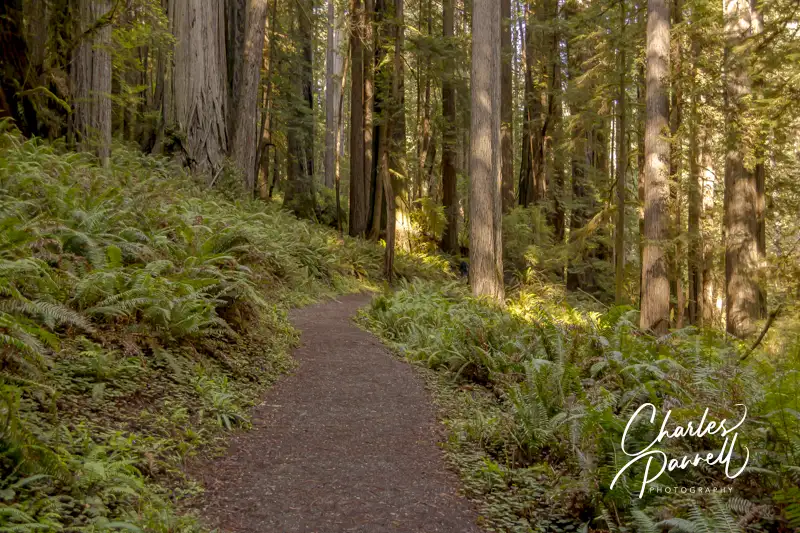
Prairie Creek Foothill Trail in the Newton B. Drury Parkway in Prairie Creek Redwoods State Park, California
Next up on our Western road trips list is a drive through some old growth redwoods on the Newton B. Drury Parkway, which bisects Prairie Creek Redwoods State Park (www.parks.ca.gov/?page_id=415) in Northern California.
Although there are some nice windshield views along the 10-mile route, you’ll definitely want to stop for a close look at the Big Tree, near the visitor center. There’s accessible parking and restrooms near this wayside exhibit, and a 100-yard paved path to the tree. There’s also ramp access up to this 304-foot giant, which towers over the surrounding forest.
If you’d like to take a hike through the grove, the accessible Prairie Creek Foothill Trail is the perfect choice. This 2.3-mile loop trail starts just to the right of the visitor center and follows fern-lined Prairie Creek for 1.2 miles. The trail is hard-packed dirt, and although it’s not totally level, the grade is up to code and there are level spots every 30 feet, with benches to rest along the way.
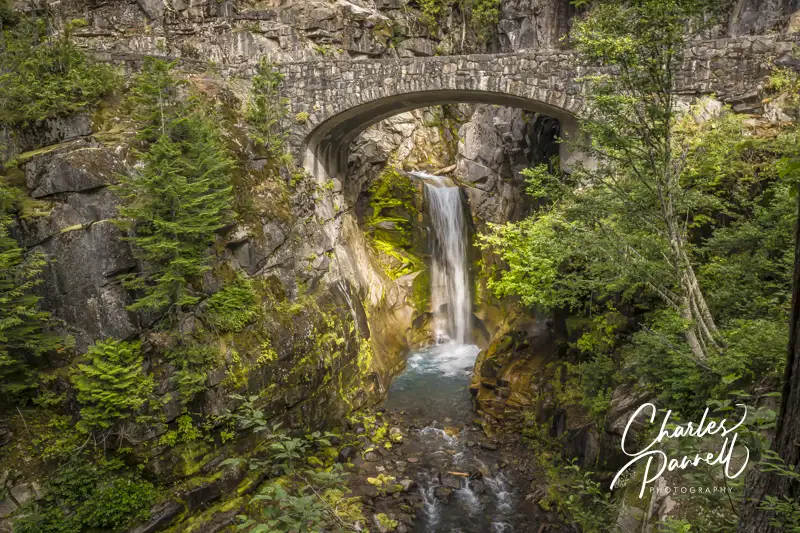
Christine Falls on the Longmire to Sunrise Drive in Mount Rainier National Park
One of the most accessible things to do in Mount Rainier National Park (emerginghorizons.com/barrier-free-travel-washington-national-parks-for-wheelers-and-slow-walkers/#itins) is to take the 56-mile scenic drive from Longmire to Sunrise. Although the drive takes about two-and-a-half hours straight through, it’s best to allow a whole day for it, as you’ll want to stop and enjoy the views along the way, as well as spend some time on top. And although the windshield views are breathtaking on the drive up, they are even more spectacular on the trip back down the hill.
Highlights along the way include Ricksecker Point Loop Drive, Narada Falls and Reflection Lakes; however, the pièce de résistance is Christine Falls. It’s located on the left side of the road, just past Longmire; but if you take time to admire it from your car, you’ll completely miss the parking area on the right side.
Up at the top, be sure and stop in at the Sunrise Visitor Center. The front entrance has steps, but there’s good signage to the accessible side entrance. Inside, there’s plenty of room to navigate a wheelchair around the interpretive exhibits. Best of all, you can get an absolutely amazing view of Mt. Rainier from the scope that’s trained on the mountain inside the visitor center.
Scenic Byway 12
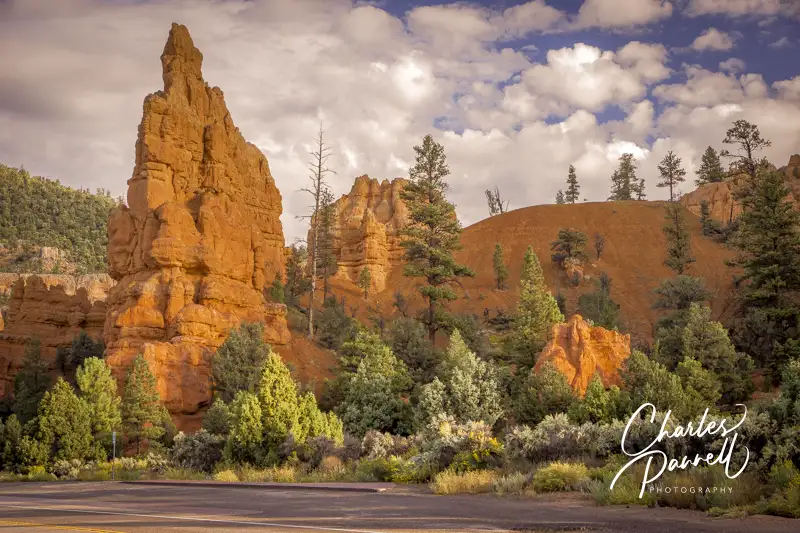
Roadside View in Red Canyon on Scenic Byway 12, Utah
Located in Southern Utah, Scenic Byway 12 travels west from Torrey to Highway 89, and offers views of Kodachrome Basin, Grand Staircase-Escalante National Monument, Glen Canyon National Recreation Area and the Dixie National Forest. And although this byway was a dirt road until 1985, the 124-mile route has been repeatedly described as one of the most diverse, remote and ruggedly beautiful landscapes in the country.
From Torrey to Boulder the road winds through a Ponderosa Pine and Aspen forest, where the fall foliage show is second-to-none. And from Boulder west, the route passes through Grand Staircase-Escalante National Monument and offers a breathtaking canyon view.
One of the most striking sights along the route is Red Canyon (emerginghorizons.com/spend-the-night-in-red-canyon-village/) , which is located near Highway 89. Often called “Little Bryce”, Red Canyon is filled with pullouts, and there’s even a nice paved bicycle trail on the south side of the highway. The eight-mile bicycle trail is paved and fairly level for most of the way, but there are also a few undulating and steeper sections. It’s not technically wheelchair-accessible because of the grade, but some handcyclists and manual wheelchair-users with good upper body strength may be able to manage it. That said, since a good chunk of the trail is level, it’s worth a try, and you can always turn back if it becomes too steep.
And just off Highway 12 in Boulder, there’s the scenic Burr Trail which offers a lovely drive through Grand Staircase-Escalante National Monument. And as with most scenic drives, the view is entirely different on the return trip.
Historic Route 66
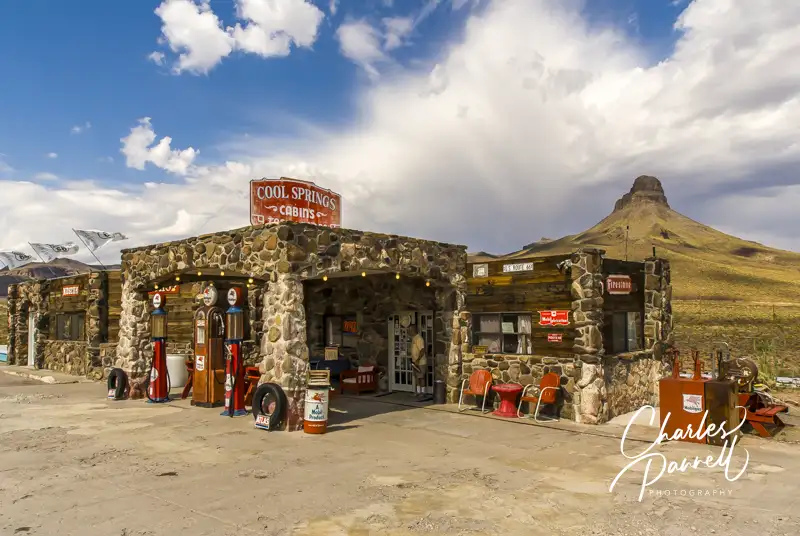
Cool Springs, Arizona on Route 66
Rounding out our Western road trips is Historic Route 66. Fondly known as the Mother Road, Route 66 (www.historic66.com) began as a series of dirt trails and unnamed roads cobbled together to create America’s first interstate highway. Today, the road has been replaced by Interstate 40; however you can still jump off the interstate and explore sections of the old road (emerginghorizons.com/wheelchair-accessible-route-66-a-great-grand-canyon-side-trip/). And one of the best places to begin this drive is in Kingman, Arizona.
Take the West Beale Street exit from Interstate 40, bear right at the Y, and follow the signs through Kingman to Oatman on Historic Route 66. Once outside of town, you’ll notice a pleasant lack of traffic as you make your way across the Sacramento Wash to Cool Springs, which is scantily more than a wide spot in the road.
From Cool Springs the Mother Road climbs up Gold Hill to Sitegreaves Pass. Hairpin turns and sheer drop-offs are commonplace on this stretch of the road, and there’s a noticeable lack of guard rails along the way. On the plus side, there’s no shortage of awesome views, including a great one near the 30-mile marker. After you reach the summit, the downhill drive is just as exhilarating, with plenty of twists and turns along the way. As you breathe that final sigh of relief, you’ll roll into Oatman. Years ago, the miners used burros to work the gold mines, and today their descendants roam the streets. Take an apple or two to feed them and you’ll be the center of attention.
From Oatman it’s another 26 miles to Topock, where you can rejoin Interstate 40. Although this Route 66 detour is just 140 miles long, it’s a wonderful opportunity to turn back the clock and step into the past.
Barrier-Free Travel Yosemite, Sequoia and Kings Canyon National Parks for Wheelers and Slow Walkers
With 63 parks in the US National Park System, it’s really hard to choose a favorite. That said, wheelchair-access plays a big part in my top choices. But there has to be more than just access to a visitor center or a few overlooks to make my list. Diversity also plays into my choices, but so does the quality of the visit. Accessible overnight lodging has to be in that mix too.
And let’s not forget about the price of popularity. Sadly, with so many visitors flocking to some of these national treasures, sometimes it feels like you are lined up for a popular ride at an iconic theme park at some national parks. That definitely takes away from the natural experience. So taking that all these factors into consideration, here are my five favorite wheelchair-accessible national parks .
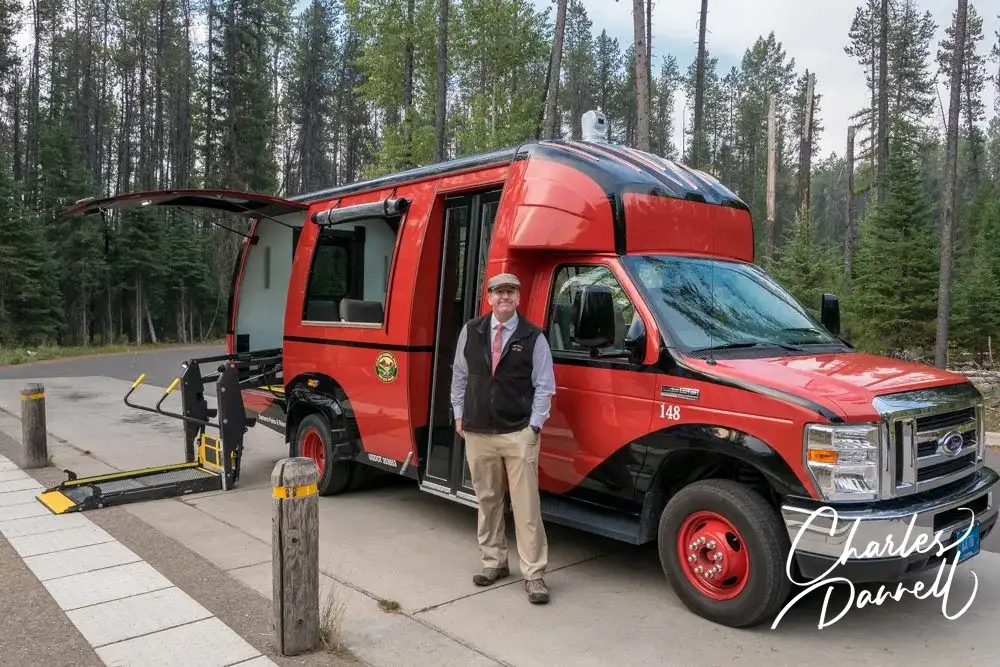
Glacier National Park (emerginghorizons.com/barrier-free-travel-glacier-yellowstone-and-grand-teton-national-parks-for-wheelchair-users-and-slow-walkers/#itin-1) tops my list of wheelchair-accessible national parks, not only for the beautiful scenery and variety of accessible lodging choices, but for its ease of access without a vehicle. That’s right, you can take the Amtrak Empire Builder to this iconic national park, and then hop on the visitor shuttle to your in-park lodge and then book a Red Bus tour to see the park. And the good news is, that all of these transportation options are wheelchair-accessible. Plus, you don’t have to worry about getting an entrance reservation (emerginghorizons.com/national-park-entrance-reservations-required-in-2024/) if you stay in the park. So ditch your car and visit this Montana gem this summer!
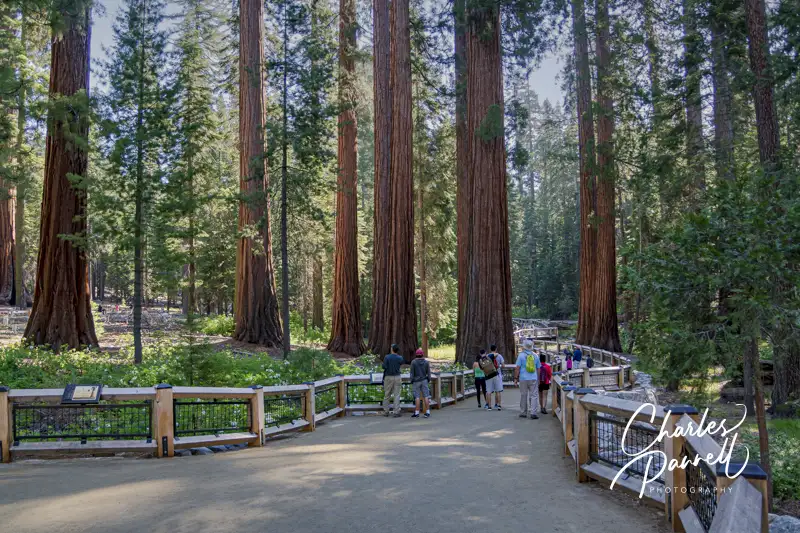
Big Trees Loop at Mariposa Grove in Yosemite National Park
Yosemite (emerginghorizons.com/barrier-free-travelyosemite-sequoia-and-kings-canyon-national-parksfor-wheelers-and-slow-walkers/#itins holds a special place in my heart, as I grew up near there and spent a good chunk of my adult life in the area. Nothing beats the grandeur of Yosemite Falls or Half Dome; however Yosemite Valley can get extremely crowded, even in the off season. One way to dodge some of the crowds is to plan an excursion to a non-valley site. And my top pick for that is Mariposa Grove. Located near the South Entrance of the park, Mariposa Grove is home to over 500 mature giant sequoias. And thanks to upgrades over the years, there are two wheelchair-accessible trails through this often overlooked corner of the park.
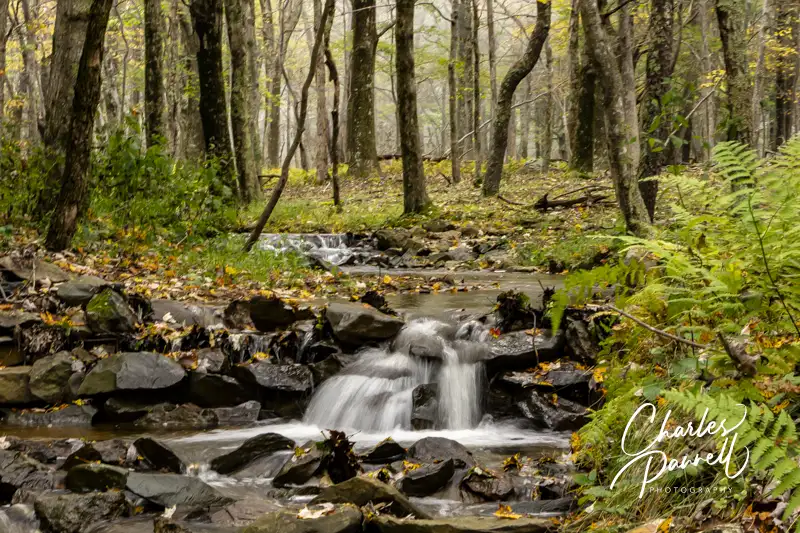
Next up on my list of favorite wheelchair-accessible national parks is Shenandoah National Park. This Northwestern Virginia national park is chocked full of beautiful views, and the wildflower blooms in the summer are absolutely gorgeous. There’s also a beautiful 1.3-mile accessible trail that runs through a wooded area and over a boardwalk. And the trail is close to Skyland, an excellent choice for wheelchair-accessible lodging. The property boasts a spacious accessible room with a roll-in shower and the restaurant offers more great views. It’s the perfect spot to unwind and spend a night or two.
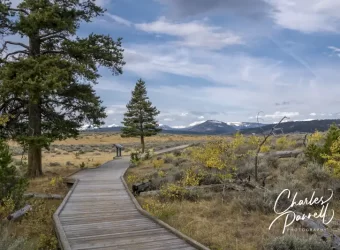
Forces of the Northern Range Boardwalk in Yellowstone National Park
I love Yellowstone National Park (emerginghorizons.com/barrier-free-travel-glacier-yellowstone-and-grand-teton-national-parks-for-wheelchair-users-and-slow-walkers/#itin-1), and I’m not alone with that opinion. It’s an incredibly busy national park. That said, if you get there early you can enjoy a somewhat uncrowded experience at Old Faithful, one of the park’s biggest draws. But there’s much more to see beyond the iconic geyser, and even a few places that are a little off-the-beaten-path. Some of my wheelchair-accessible favorites are West Thumb Geyser Basin, Frying Pan Spring and the Forces of the Northern Range Boardwalk. And one of my friends even had an accessible hunting adventure there (emerginghorizons.com/a-disabled-hunting-adventure-stalking-big-game-out-west/). Truly, they sky’s the limit as far as accessible things to do in the nation’s first national park.
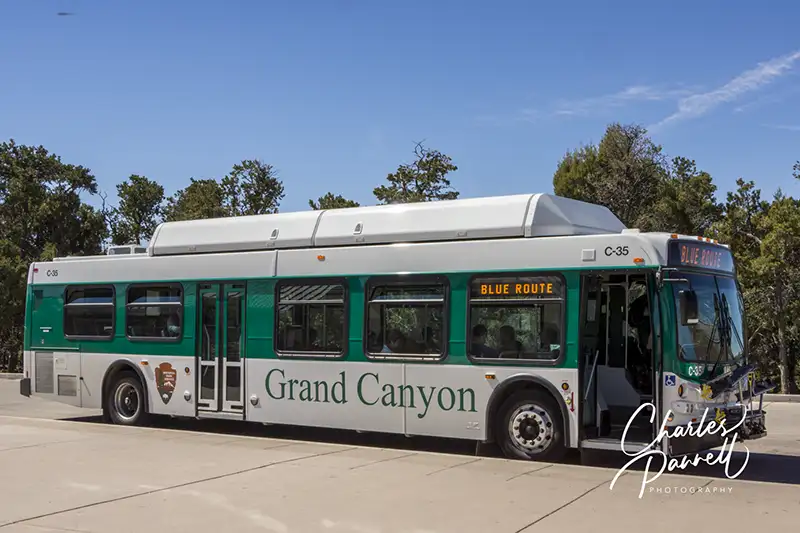
Rounding out my list of favorite wheelchair-accessible national parks is and oldie but goodie — Grand Canyon National Park (emerginghorizons.com/the-grand-canyon-for-wheelers-and-slow-walkers/#itin-1). More specifically, the South Rim of this iconic national park. I love it not only because of the accessible canyon views and lodging options, but also because it’s another national park that you can see without a car. You can take Amtrak’s Southwest Chief to Flagstaff and connect with an accessible shuttle to the park. Alternately, you can take an Amtrak thruway bus to Williams and hop on the equally accessible Grand Canyon Railway and ride it to the park. Add in an overnight at the Grand Canyon Railway Hotel, and you have a truly accessible car-free Grand Canyon package. And once you’re in the park, there’s an accessible shuttle that stops at the most popular South Rim sites. Enjoy the scenery and leave the driving to someone else in this beautiful national park.
Barrier-Free Travel National Park Lodges for Wheelers and Slow Walkers
Although it’s great to eat in an iconic restaurant when you’re on a road trip, it’s also nice to be able to stop for a picnic lunch. This is especially true if you’re traveling to a rural destination. Not only does it help trim the food budget a bit, but it’s also very relaxing to enjoy a midday meal surrounded by Mother Nature’s beauty. And Calaveras County is the perfect place to do exactly that. Located in the heart of California’s Gold Country, this rural area is composed largely of unincorporated areas, filled with flowers, greenery and beautiful scenery. So check one of these Calaveras County picnic areas on your next Golden State road trip.
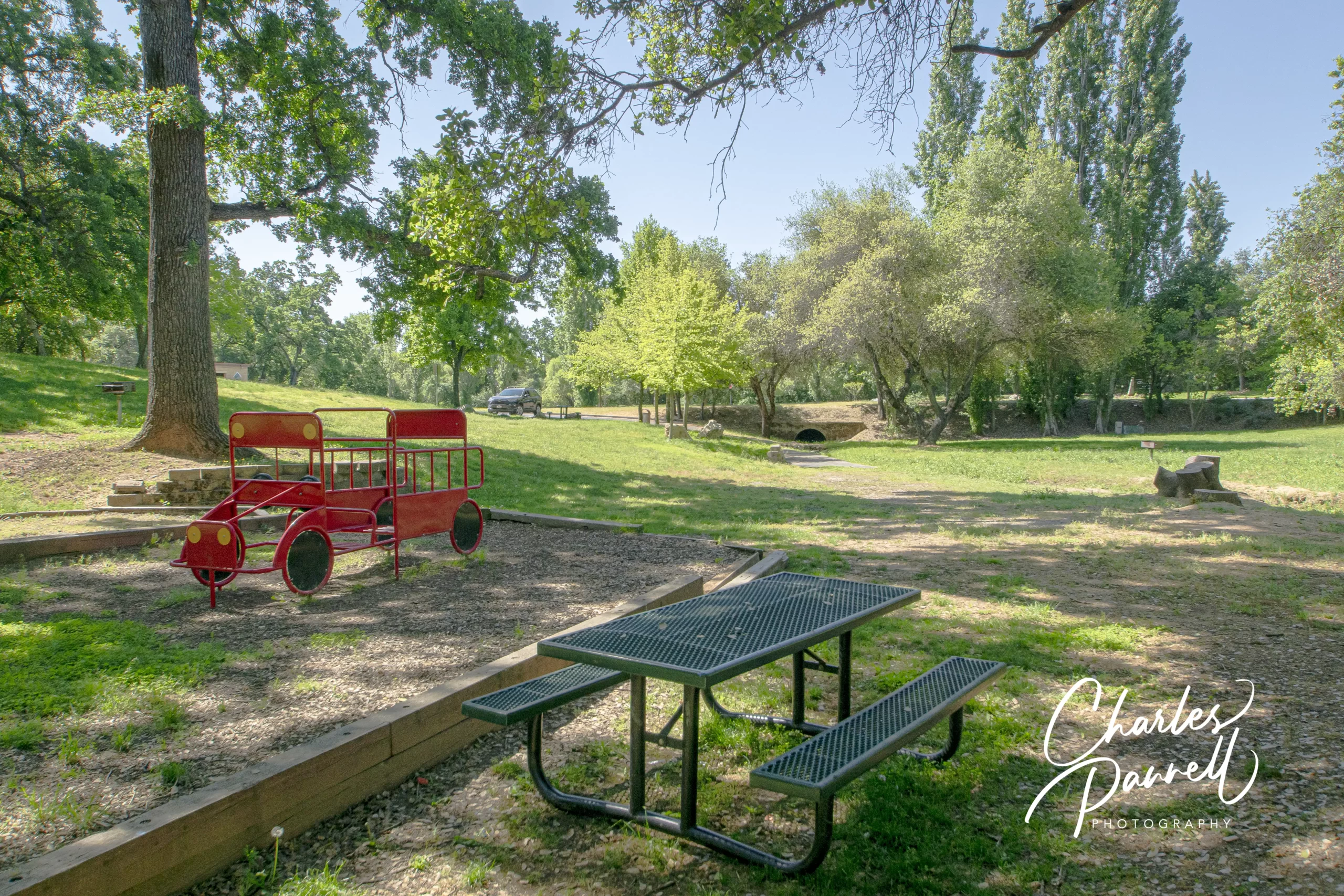
First up on the list of Calaveras County picnic areas is Gateway Park. This small park in Angels Camp is definitely off the tourist trek. There’s accessible parking next to an accessible restroom, and a level trail down to a picnic table in a grassy area. Although it’s a standard table, there’s room for a wheelchair at the end. There’s also a paved path along the creek to another table under a tree near the play area. And although it’s not a busy park, you may have a few deer join you for lunch.
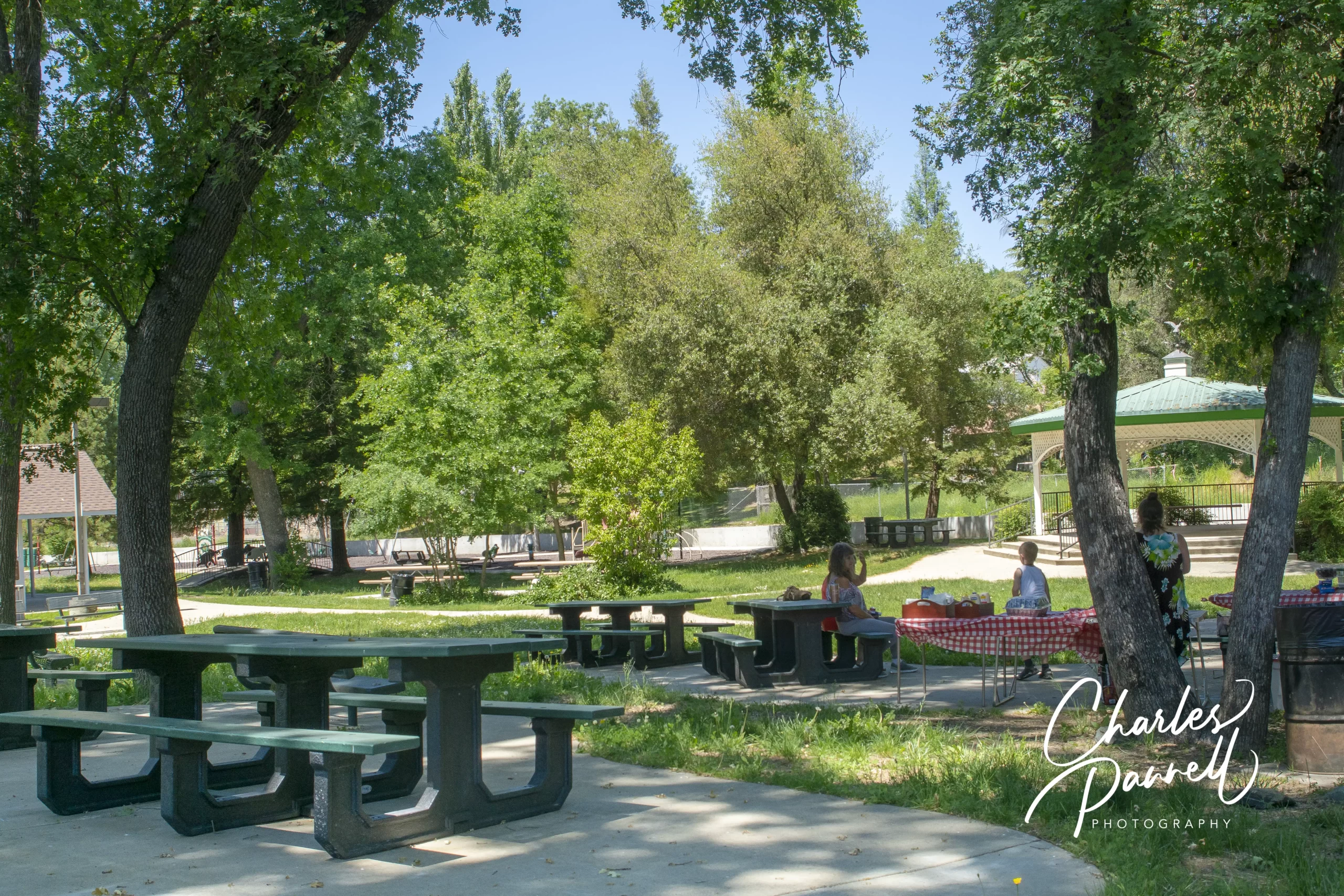
If you use GPS to get to this park, it will take you to a row of houses on Pope Avenue behind the park. If you find yourself in this situation, then just turn on Treat Avenue to find the entrance to this small park. There’s no accessible parking in the small lot, but there’s level access on a cement pathway over to the picnic tables at this community park. And there’s plenty of room for a wheelchair to maneuver around the tables, and there’s room for wheelchair seating on the ends. There’s also a gazebo and a kids area at this park. The restrooms are accessible, but they may be locked in the off season.
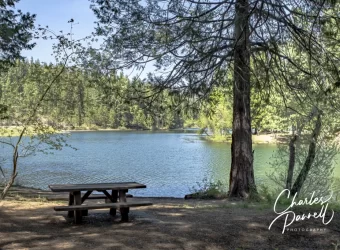
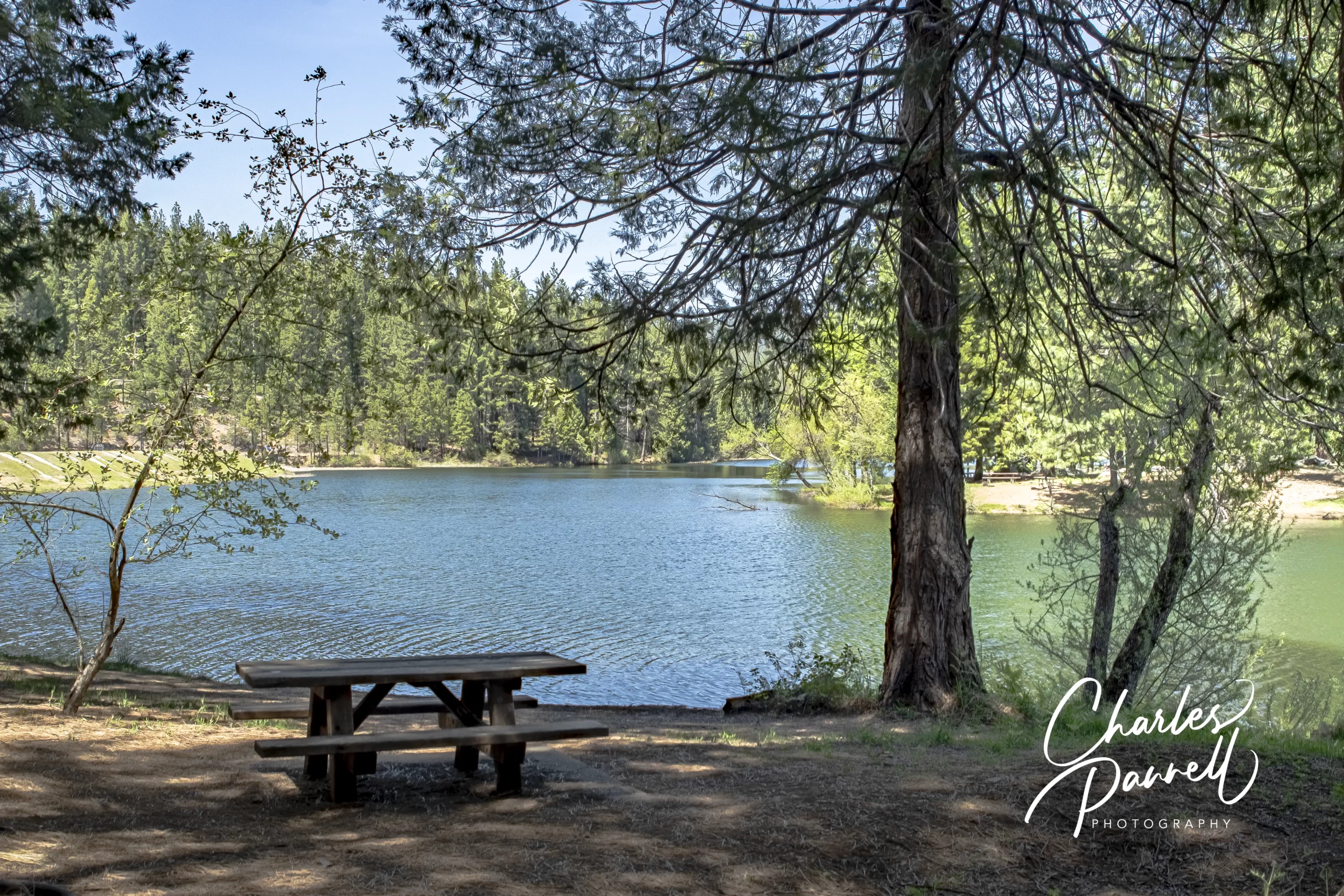
Next up on the list of Calaveras County picnic areas is White Pines Park. This small lakeside park is just down Dunbar Road from the Sierra Nevada Logging Museum. Turn left into the small parking lot just past the museum — it you hit Blagen Road, you’ve gone too far. There’s accessible parking near the lake, with level access out to an accessible picnic table. There are also BBQ grills available near the lakeside tables. And the great part about this park is that you can also wander over and enjoy the outdoor exhibits at the museum, even if they’re not open.
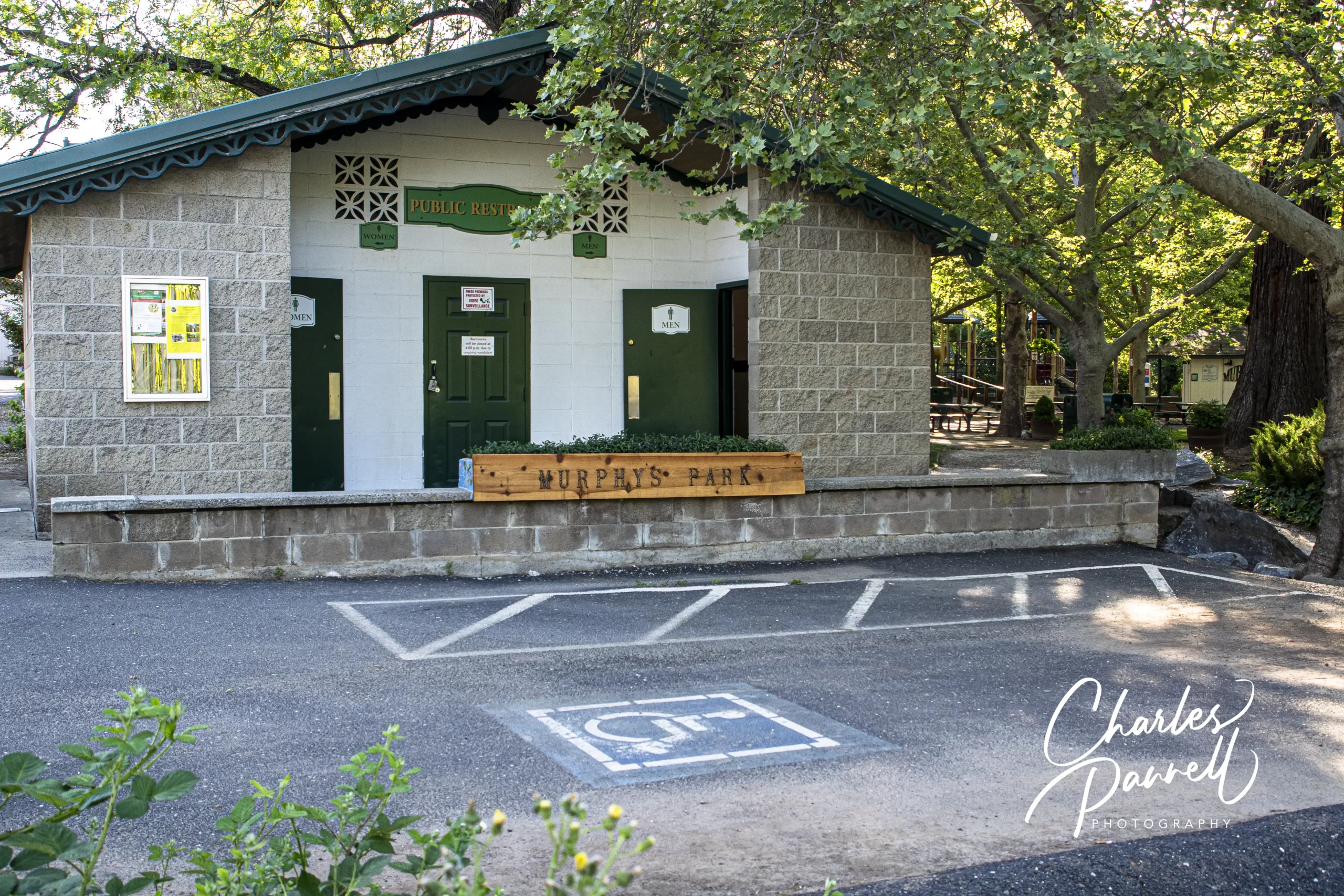
This popular park is located on Algiers Street, just around the corner from the Murphys Historic Hotel. There’s accessible parking in front of the restrooms near the park, and it’s just a short roll down to the park entrance. There’s also a large accessible stall in the park restrooms. Inside the park, there are a number of picnic tables under the trees, and some on pavement near the creek, with plenty of room for a wheelchair. And if you’d like to do a little wine tasting after lunch, you’re just a short walk from the Main Street tasting rooms.
Town Square Park in Copperopolis
facebook.com/TheTownSquareAtCV/
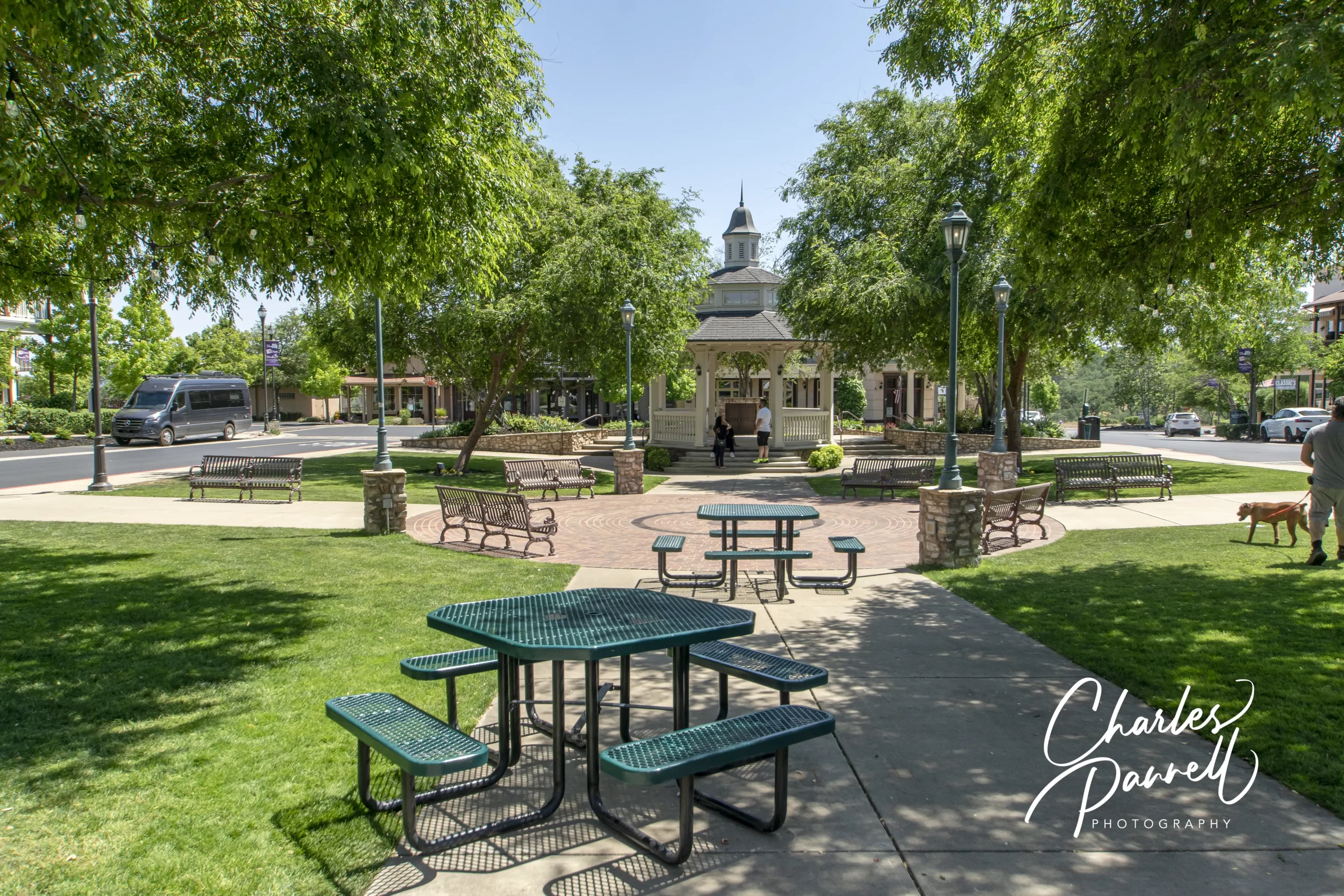
Last but not least on our roundup of Calaveras County picnic areas is Town Square Park in Copperopolis. It’s also one of the newest parks in the area. There’s level access to this small park, which is located across the street from The Gateway Hotel on Stone Street. Accessible parking is located in the Town Square parking lot, and in back of the Gateway Hotel. There’s only a few picnic tables in the park, but there are a number of benches and a gazebo as well. It’s just a pleasant spot to take a break.
Barrier-Free Travel Yosemite, Sequoia and Kings Canyon National Parks for Wheelers and Slow Walkers
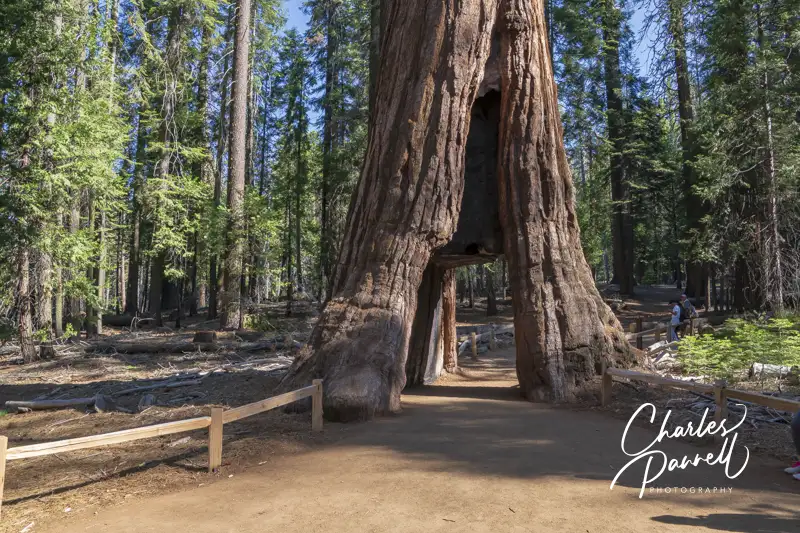
Walk-through Tree at Mariposa Grove in Yosemite National Park
Located near the South Entrance to Yosemite National Park, Mariposa Grove is a must-see on any Yosemite visit. The bulk of the Yosemite crowds tend to gravitate to Yosemite Valley, and this large stand of sequoias remains overlooked by many visitors. That said, if you want a little one-on-one time with Mother Nature, then Mariposa Grove is just the place for you. Granted, it takes a bit of extra planning to get there, but this stately grove is definitely worth a visit. So head south, bypass the crowds and enjoy a visit to wheelchair-accessible Mariposa Grove on you next Yosemite adventure.
A Few Logistics
Getting to Mariposa Grove isn’t difficult, but you need to be aware of a few things. This secluded grove of over 500 mature giant sequoias previously housed a number of commercial operations including a tram tour and a gift shop. These facilities — along with the asphalt pathways around the trees — were removed in a massive renovation project designed to preserve the ecological integrity of the grove. Today there are natural trails and boardwalks through the grove — with nearly a mile of accessible routes — but aside from a few restrooms, there are no developed facilities in the area.
The Welcome Plaza, which is located near the South Entrance, is the starting point for most Mariposa Grove visits. In order to lessen visitor impact on the trees, vehicle traffic is not permitted in the grove. Instead, wheelchair-accessible shuttles take visitors from the Welcome Plaza to the Mariposa Grove Arrival Center, where the accessible Big Trees Trail begins. If however you’d like to drive, and you have an accessible parking placard, you can bypass the shuttle and take your personal vehicle aIl the way to the Mariposa Grove Arrival Center. That said, it’s important to note that the road to the grove is closed to all vehicle during the winter months, as it’s not plowed.
Additionally, if you are planning a visit during the peak summer season, you’ll also need an entrance reservation to see the Mariposa Grove. This entrance reservation is in addition to any national park pass that you may have. For more information about entrance reservations, visit this helpful site. Plan ahead to avoid disappointment, as entrance reservations are not available at the park.
Hike the Big Trees Loop
Big Trees Loop at Mariposa Grove in Yosemite National Park
The Mariposa Grove Arrival Center marks the beginning of the wheelchair-accessible Big Trees Loop. Accessible parking, restrooms and a water bottle filling station are located near the trailhead; and there’s barrier-free access from the shuttle bus stop and accessible parking area over to the .3-mile Big Trees Loop.
The wide, hard-surfaced trail has excellent wheelchair access, and also includes level boardwalk sections over the wetlands areas. There are plenty of benches to sit and rest along the way, and a number of interpretive panels provide information about the grove. Although the trail loops back around to the parking lot, there is a short accessible jag out to the Fallen Monarch — a sequoia that came down more than 300 years ago. Even if you can’t do the whole loop, take some time to enjoy the sequoia forest on the boardwalk near the beginning of the trail.
Enjoy the Grizzly Giant
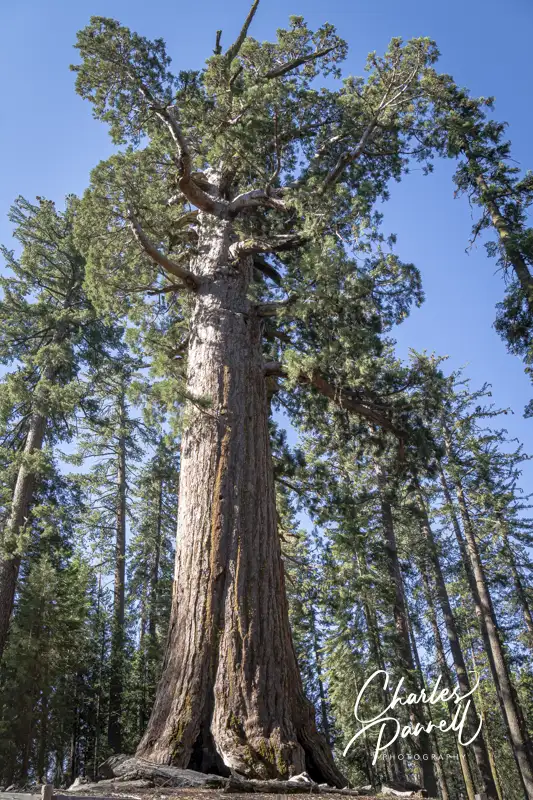
Grizzly Giant at Mariposa Grove in Yosemite National Park
Visitors with an accessible parking placard can also drive over to the trailhead for the accessible portion of the Grizzly Giant Loop. This trail can also be accessed from the Mariposa Grove Arrival Center; however that portion of the trail is not wheelchair-accessible, so it’s best to drive to the accessible trailhead..
From the accessible parking area it’s a level .1-mile walk through the forest to the Grizzly Giant Loop, and another 425-foot stroll on a wide level trail out to the Grizzly Giant. The California Tunnel Tree, which was carved out as a novelty for stagecoaches in 1895, is another 425 feet down the trail. It’s a nice photo op and you can still walk or roll through this giant today.
After the California Tunnel Tree, the trail continues back through the forest to the Mariposa Grove Arrival Center; however it loses its access in another 425 feet, due to rocks and a steep grade. Still it’s a lovely 2/3-mile out-and-back stroll, and it offers visitors a very accessible overview of the lower grove.
Although the accessible part of the Grizzly Giant Loop is a bit longer than the Big Trees Loop Trail, it’s worth the short trek. And no matter how far you hike, the wheelchair-accessible Mariposa Grove is definitely worth a stop on any Yosemite itinerary.
Barrier-Free Travel California National Park Road Trips for Wheelchair-Users and Slow Walkers
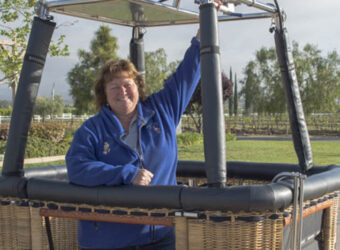
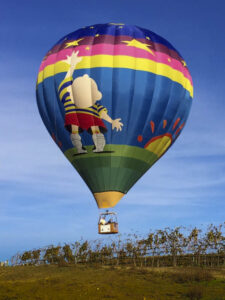
I first spoke with Kim Lynch about 11 years ago. At that time she and her husband David had just taken the reins of Reach for the Stars (https://www.reach4thestars.org/), a non-profit that provides accessible ballooning experiences for everyone. I was doing a feature on accessible ballooning, and since we were traveling down to Temecula — her home base — we arranged for a meet up and a photo shoot of her balloon.
I was impressed with her, and her husband David from the moment we first met.
Kim & David & Accessible Ballooning
Kim and David were both balloon pilots, and they loved sharing their experience with everyone. To say they were pioneers in the ballooning world is probably an understatement, as they designed one of the first wheelchair-accessible gondolas, so everyone could join in on the fun. Their gondola held one wheelchair user and two able bodied-companions; and the money that they raised from their flights went to the charitable arm of their organization. And as a result of their year-round fundraising efforts, they were able to offer free accessible tethered flights at many children’s camps and events. They really were quite a team.
You may have noticed that I used the past tense in the last paragraph. That’s because, sadly Kim & David passed away recently, as the result of an automobile accident.
And although this is a sad time in the ballooning community, it’s also an appropriate time to remember these pioneers of access. After all, there are no regulations that require hot air balloons to be wheelchair-accessible. But Kim and David made that happen many, many years ago. And they shared this accessibility freely with children and other folks who couldn’t necessarily afford a hot air balloon ride.
The didn’t do it for the headlines — they did it for the access. As did so many other access pioneers. So the next time you get into an accessible vehicle, hike an accessible trail, or even explore the woods on a track chair, take a few moments to quietly thank those pioneers who made it all possible. May of them, like Kim and David, are gone but not forgotten.
As the ballooning community says, soft landings Kim and David. You will be greatly missed. Thanks for your advocacy!
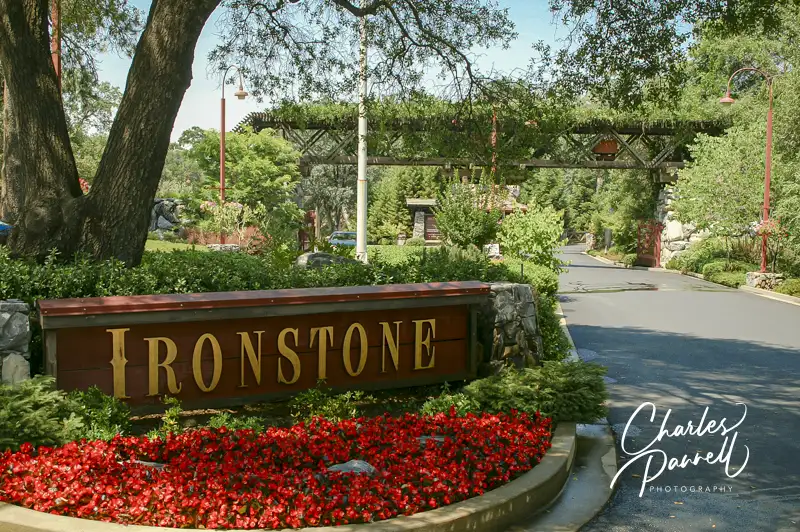
Located in the Sierra Nevada foothills, just 133 miles east of San Francisco, Calaveras County is the perfect spot to slip away for a weekend wine tasting getaway. The pace is slower than some of the more famous California wine regions, and the winemakers are unpretentious and happy to chat about their wines. It’s a relaxing and refreshing experience. And although there’s no shortage of tasting rooms in the area, Ironstone Vineyards tops the list for location, variety and wheelchair access
Ironstone Vineyards
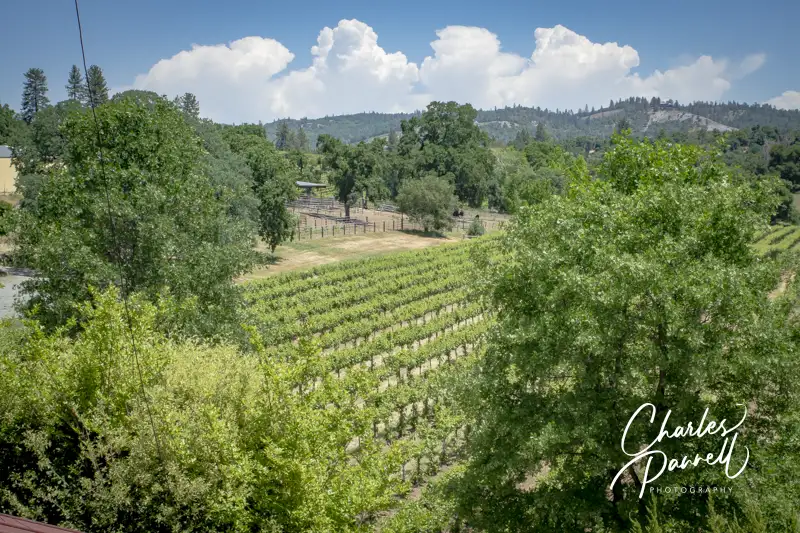
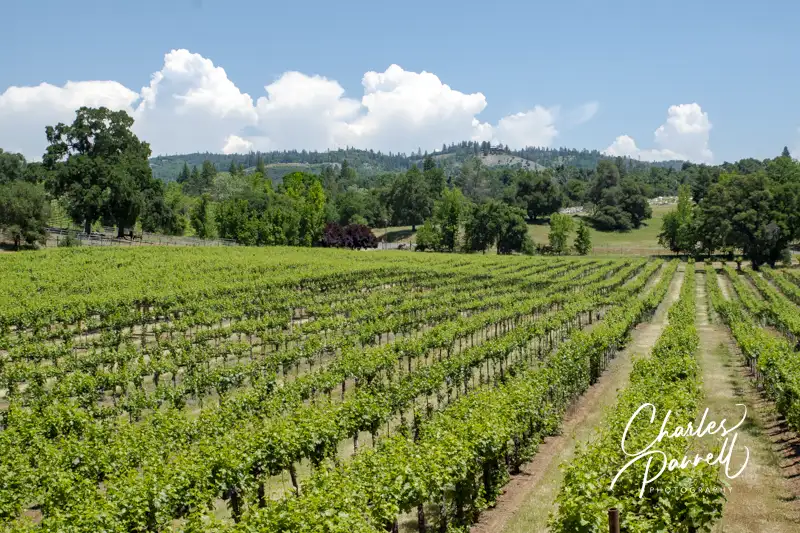
Vineyards at the Ironstone Winery
Getting to Calaveras County is easy. From the Bay Area head east on Interstate 5 to Stockton, then continue east on Highway 4. As you leave the city you’ll feel the stress melt away while you cruise along this country byway. About an hour down the road, just outside of Murphys, make a left on 6 Mile Road. Ironstone Vineyards (www.ironstonevineyards.com) is about three miles down the road — you can’t miss it.
There’s plenty of accessible parking at this popular winery, with level access over to the tasting room. Owned by the Kautz family, this vineyard grows a variety of fruit, including Cabernet Franc, Symphony, Cabernet Sauvignon and Merlot. Visitors can choose five tastes from the daily menu, to see what strikes their fancy. There’s also a store, a lakeside park, a museum , and even an amphitheater in the complex. And access is good throughout the complex, with elevator access to all floors, level thresholds and paved pathways.
Estate tours are also available, and most of the stops on this walking tour feature level access. And if you can’t manage the walk, golf cart transportation is also available. Highlights of the tour include the 44-pound gold nugget in the Heritage Museum, the 1,200-pipe organ in the Alhambra Music Room and the spectacular seasonal flower gardens. Ironstone Vineyards is definitely more than just a winery.
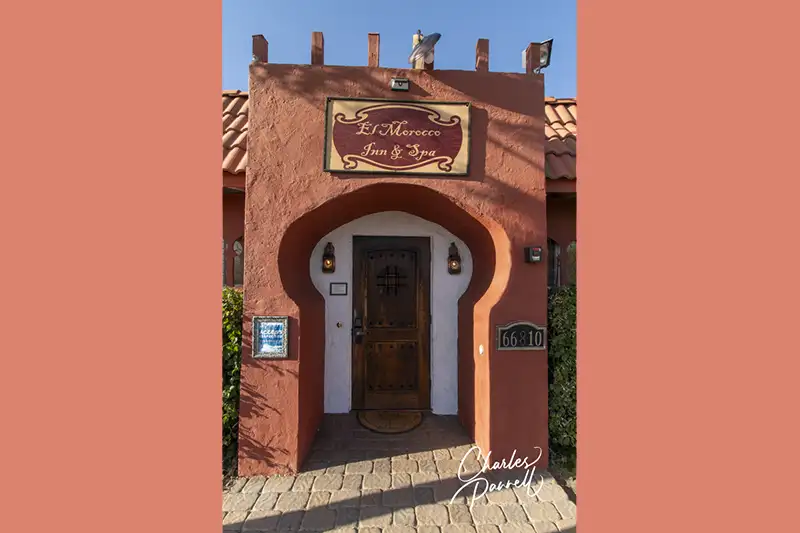
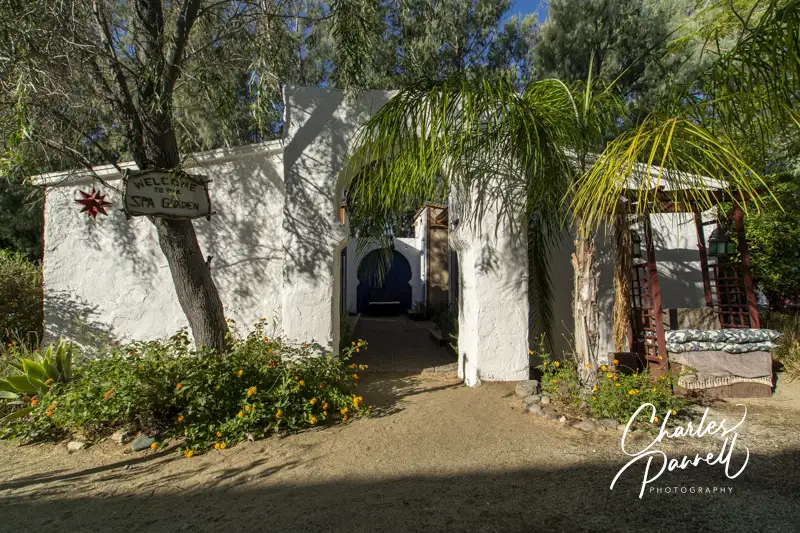
As you walk under the entry arch and peel back the heavy brocade curtains at the El Morocco Inn & Spa (www.elmoroccoinn.com), you’re instantly transported to another world – one that’s filled with the sights, sounds and even the smells of Morocco. From the bright blue doors and the massive ceramic pots throughout the courtyard, to the smell of incense wafting on the desert breeze, and strains of Moroccan music in the background, you definitely get that “I’m not in Kansas any more” feeling as you enter this sanctuary.
And that’s exactly the reaction that Bruce Abney wants all of his guests to have – he wants everyone to have an amazing experience at his little piece of Morocco in the middle of Desert Hot Springs. And the good news is, Bruce’s desert oasis is also accessible for wheelchair-users and slow walkers.
A Man with a Vision
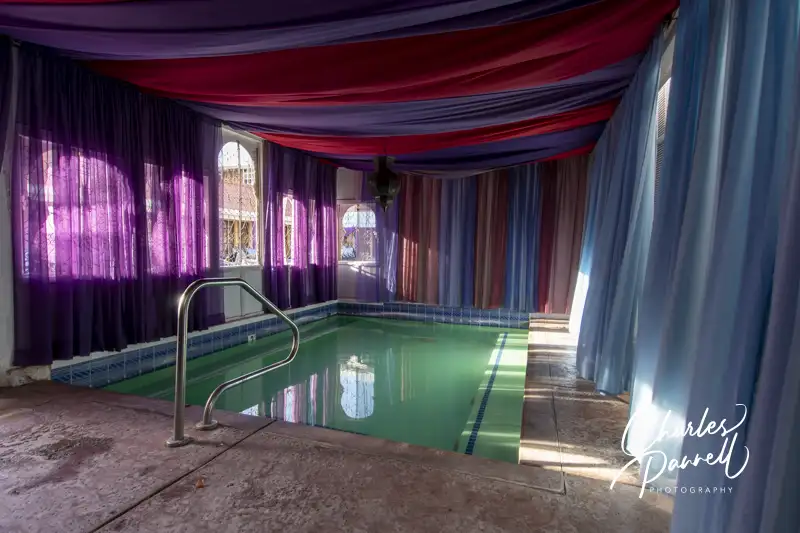
Hot Spring Soaking Pool
Built in the late 1950s the El Morocco Inn was originally known as the Caravan Spa-tel. The property thrived in the 50s and 60s, when Desert Hot Springs was known as “California’s Spa City”. Visitors traveled for miles to soak in the healing waters. Unfortunately, many of the resorts closed over the years — including the Caravan Spa-tel — because of the high cost of maintaining the hot springs. Bruce stepped into the picture in 2001, when he purchased the property and proceeded to transform it into a Moroccan paradise.
As a child, Bruce was intrigued by the El Morocco Hotel in Las Vegas, so when the Caravan Spa-tel renovations began, that Las Vegas property became his inspiration. He also immensely enjoyed his own journey to Morocco, and he wanted to create that feeling of “being a million miles away from home” for his guests. And he wanted something authentic, so he purchased handwoven fabrics from Moroccan co-ops, and filled the property with goatskin wrapped lights and hanging lamps that cast mesmerizing geometric shadows. “Even the tent in the Spa Garden is the real deal, as are the little touches like the succulent dates available in the Kasbah Lounge,” says Bruce.
As for his inclusive attitude and his decision to add top-drawer access features to this 13-room property, Bruce chalks it all up to “good hospitality”. “I had to ask myself ‘Did I want to share this experience with as many folks as possible who might enjoy it?,’” says Bruce. “The answer back to myself was a heartfelt yes, so I decided to go all out,” he adds. So although the inn itself has the look and feel of a Marrakech riad, it also has first-rate access features for wheelchair-users and slow walkers.
An Accessible Oasis
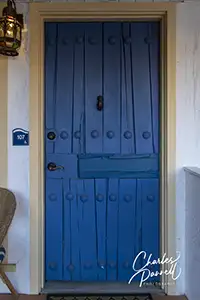
Door to room 107
El Morocco’s access begins in the parking lot, with accessible parking and level access to the front door. Inside there’s barrier-free access to the front desk, and ramp access into the courtyard. Accessible room 107 is located on the opposite side of the courtyard. And In keeping with the Moroccan theme, the room is a patchwork of vivid colors, with a sheer canopy with tassel accents hanging above the bed.
Access features include ramp access, wide doorways, lever handles and good pathway access. It’s furnished with a 27-inch high open-frame king-sized bed with wheelchair access on the right side (as you face it), but there’s plenty of room for it to be moved over if you require wheelchair access on the left side. Other furnishings include two night tables, a chair, a wardrobe, a chest of drawers, a mini-fridge and a microwave.
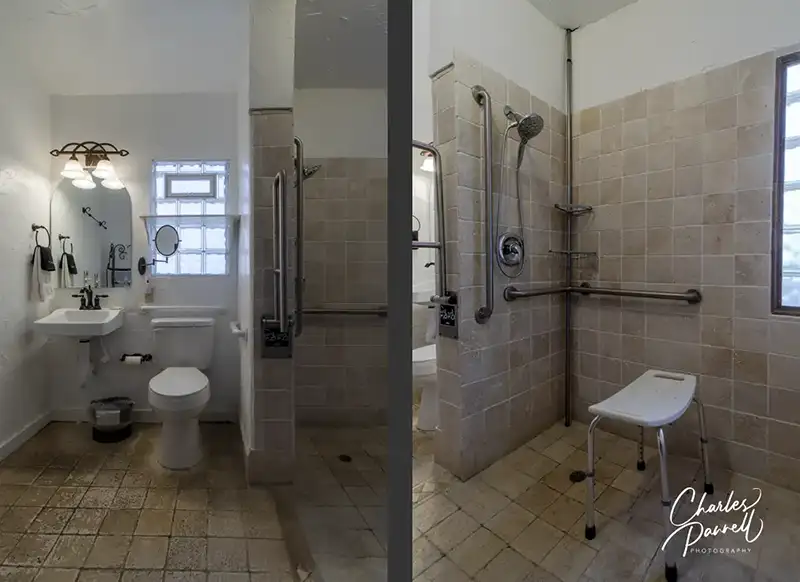
Room 107 at the El Morocco InnBathroom in Room 107 at the El Morocco Inn
A wide sliding barn door leads into the spacious bathroom, which has a full five-foot turning radius and is equipped with a custom-built roll-in shower with grab bars, a hand-held showerhead and a portable shower bench. There’s also a set of fold-down grab bars for easier transfers. The toilet grab bars are located on the back and left walls (as seated), and the bathroom also has a roll-under sink, a lowered mirror and a lowered towel bar. And even with all those access features, the bathroom still retains the Moroccan ambiance with colorful accent pieces.
There’s wheelchair-access to the public spaces as well, including the Kasbah Lounge, the Spa Garden, the outdoor showers and the public restroom. There’s also plenty of room for even the largest wheelchair or scooter to maneuver around the lift-equipped mineral pool, and over to the fire pit.
But Wait – There’s More
Spa Garden at the El Morocco Inn
In the end, it’s the little extras that make for a memorable getaway, and the El Morocco Inn has no shortage of those. At the top of the list is breakfast. Although it’s called a Continental breakfast, I’d actually describe it as a Continental-plus affair. Each morning the Kasbah Lounge is filled with fresh fruit, juices, freshly baked goodies, hard-boiled eggs and all the accompaniments to put together a luscious — and filling — meal. And the pièce de résistance? French press coffee. Guests can either choose to enjoy their repast at one of the courtyard tables, or in their own rooms.
Even the spa treatments have a taste of Morocco – minus the overzealous exfoliation treatments found in the hammams. Guests can choose from a variety of massages and body treatments including a Moroccan clay body mask, which uses Moroccan Rhassoul clay. Known for its ability to stimulate cell renewal, this treatment revitalizes and softens the skin.
And last but not least, there’s the library – a little nook located next to the Kasbah Lounge. Filled with books and DVDs to borrow, it’s a cozy spot to retreat and relax. Alternatively, you can watch that Bogart classic, Casablanca, which plays on a continuous loop throughout the day. A subtle nod to El Morocco’s roots, the film also creates the perfect ambiance for this wheelchair-accessible oasis in the California desert.
Barrier-Free Travel the Grand Canyon for Wheelers and Slow Walkers
Calaveras County played an integral part in the California Gold Rush, as folks flocked to the area in hopes of striking it rich. Today the 49ers are long gone; however there’s another rush in this famous county — a wine rush, of sorts. The mining equipment of yesteryear has been replaced with vineyards and tasting rooms, as over two dozen wineries now dot the county.
And there’s no better place to enjoy the fruits of the harvest then in the tiny hamlet of Murphys. Located two hours southeast of Sacramento, this quaint town is a wine lovers paradise, as it boasts a gaggle of tasting rooms along the main drag. And even if you can’t walk or roll very far, there are still some excellent choices along this wheelchair-accessible Murphys wine tasting route.
Getting Around Downtown
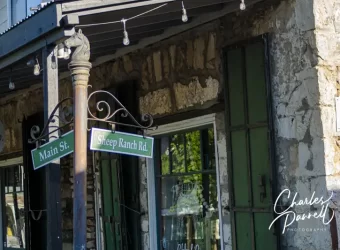
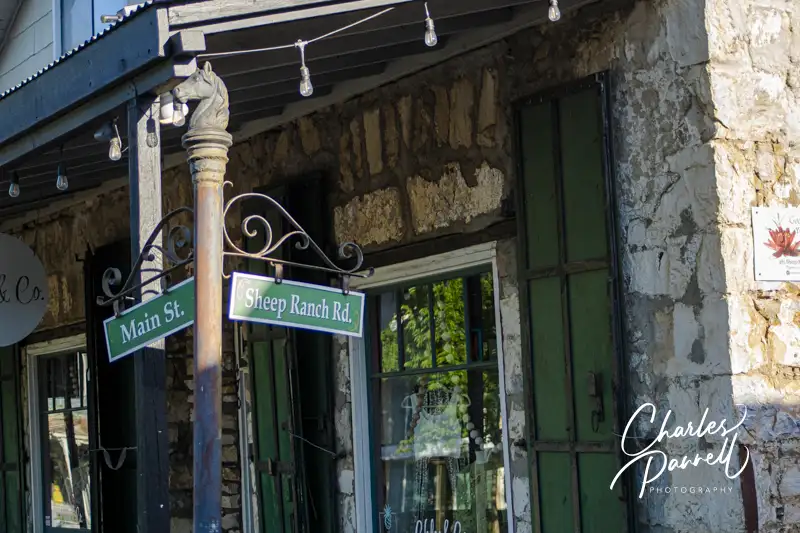
Street Signs and Historic Building in Downtown Murpyys
Although Murphys is a historic town, access upgrades have been added over the years. Accessible parking can be difficult to locate, but the Murphys Creek Theater lot on Algiers Street has the largest number of accessible parking spots. The lot is located about 150 yards off of Main Street, but manual wheelchair-users may require some assistance getting up the steeper section of Algiers Street to access the main drag.
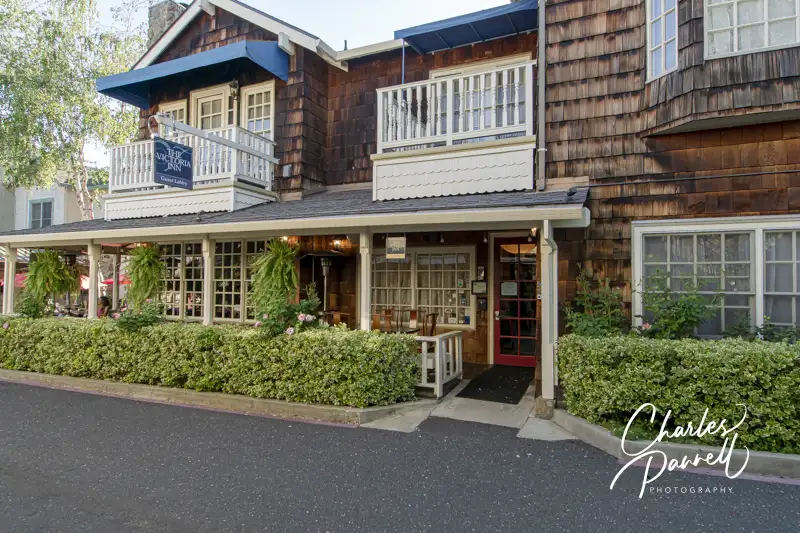
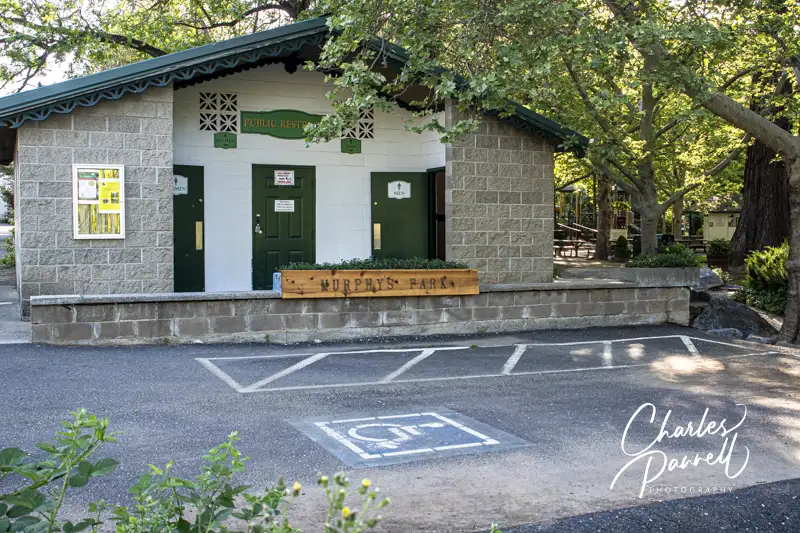
There is also one accessible parking spot next to the City Park restrooms, just down the street from the theater. Additional accessible parking is available in the public lot on Church Street and in the lot behind the Victoria Inn, both of which offer level access to Main Street. And if you can’t walk far, there are two tasting rooms close to accessible parking in Country Square on Main Street.
Most of the sidewalks in town are relatively free of obstructions, and once you get on Main Street, everything is pretty level. Although there are a few steps here and there, it’s still possible to navigate downtown in a wheelchair. Granted, some shops are housed in historic buildings with one or two steps, but all of the tasting rooms mentioned below have barrier-free access.
City Park restrooms in Murphys, California
Take a Wine Stroll
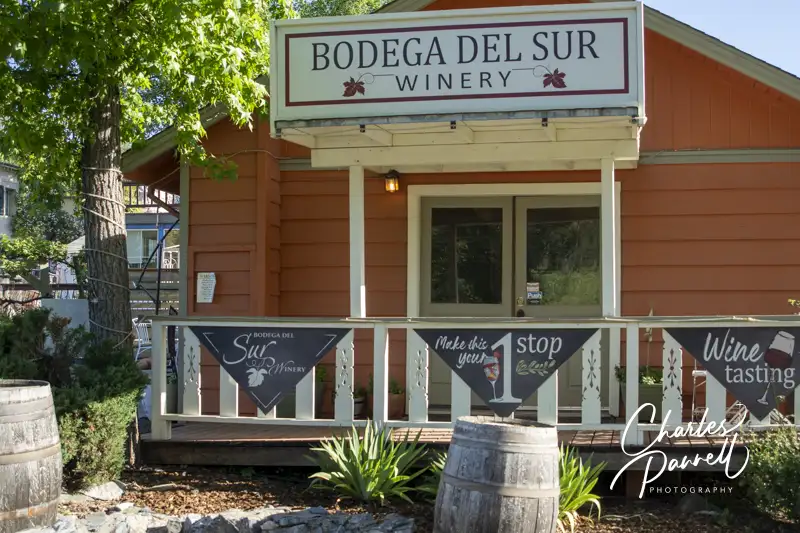
Bodega del Sur in Murphys, California
The Bodega del Sur (bodegadelsur.com) tasting room, which is located on Algiers Street just shy of Main Street, makes a good first stop on any wheelchair-accessible Murphys wine tasting stroll. There’s level access to the tasting room with plenty of room for wheelchairs and scooters inside. This boutique winery features wines made from locally grown grapes, with a decidedly Latin influence.
The Tanner Winery (tannervineyards.com) tasting room is a short walk away on the corner of Algiers and Main Streets. There is level access to the tasting room, where samples of Cabernet Sauvignon, Carignane, Barbera, Mourvèdre and several blends can be had.
Wrap up your Murphys wine tasting stroll at Newsome Harlow (nhvino.com), which is located on Main Street, near Church Street. The tasting room offers level access through the courtyard, with plenty of room to roll around inside. A Murphys favorite, this winery is heavy on the reds and it produces some excellent Zinfandels.
Stay Put and Sip
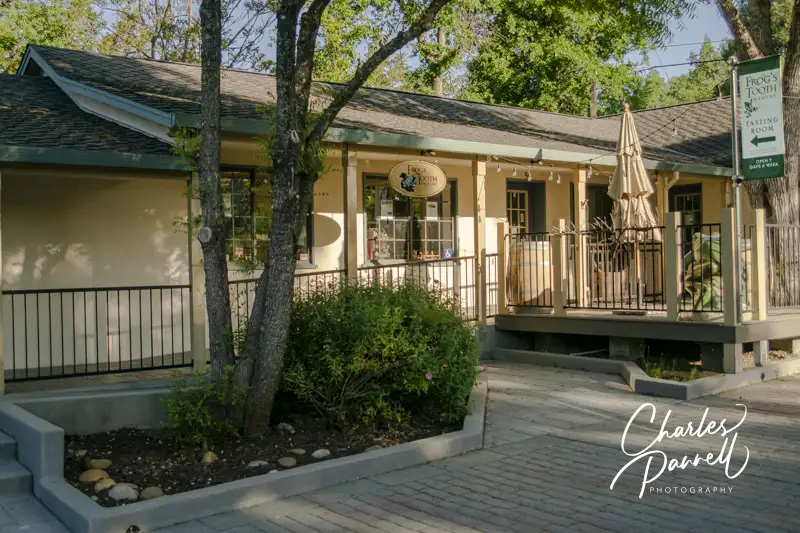
If all that strolling is a bit too much for you, you can also opt to park close to a few tasting rooms in Country Square. Accessible parking is located off of Main Street, but it can only be accessed by vehicle from the back entrance. From Main Street, turn north on Church Street, then make a left at the stop sign. Country Square is the third driveway on the left, past Murphys Pourhouse and Murphys Professional Center. And as luck would have it, the accessible parking space is right across from the Frog’s Tooth
There’s ramp access up to the Frog’s Tooth tasting room and the adjacent deck. Inside you’ll find wood floors, plenty of room to maneuver a wheelchair and a lowered bar. Frog’s Tooth is known for their small batch locally produced wines. Favorites include Tempranillo, Syrah, a variety of red blends, Viognier, Sauvignon Blanc and Rose.
And if you’d like to try another winery, Jazz Cellars (jazzcellars.com/) is located just across the courtyard from Frog’s Tooth. There’s barrier-free access to this tasting room, which features wide doorways and level access. Have a taste of their award-winning Barbera, Viognier, Sauvignon Blanc, Zinfandel or Syrah. And in keeping with their name, you can also often find live music at Jazz Cellars. It’s a great way to top off any wheelchair-accessible Murphys wine tasting stroll.
Barrier-Free Travel Yosemite, Sequoia and Kings Canyon National Parks for Wheelers and Slow Walkers