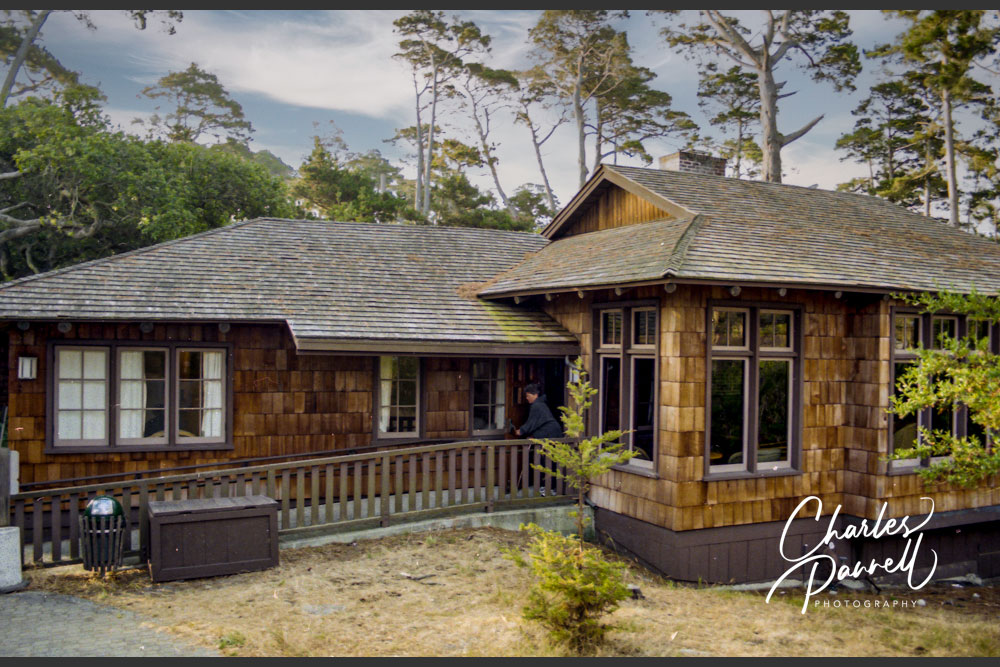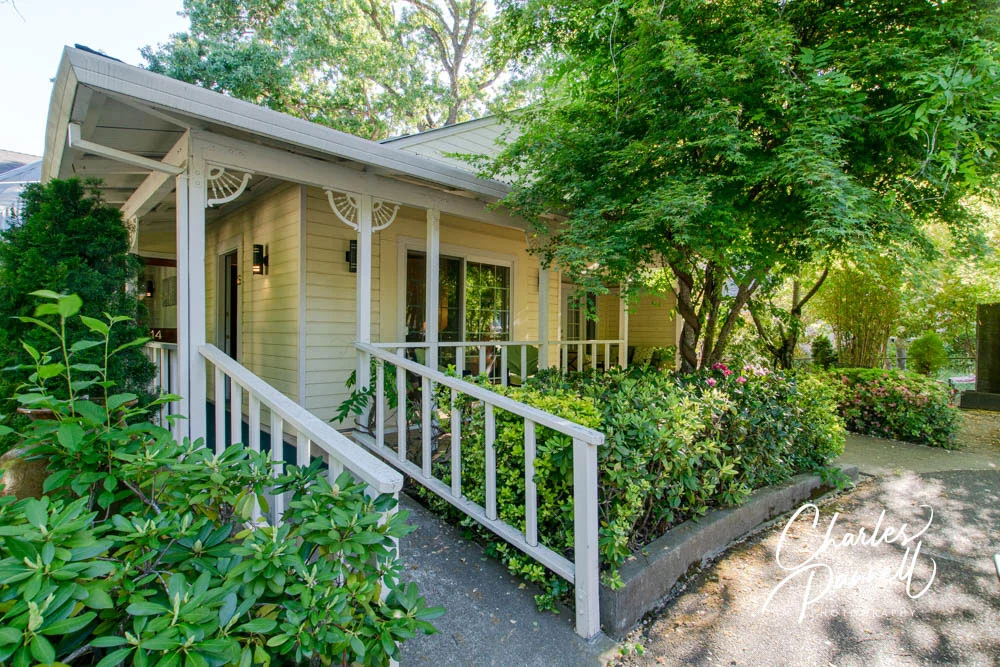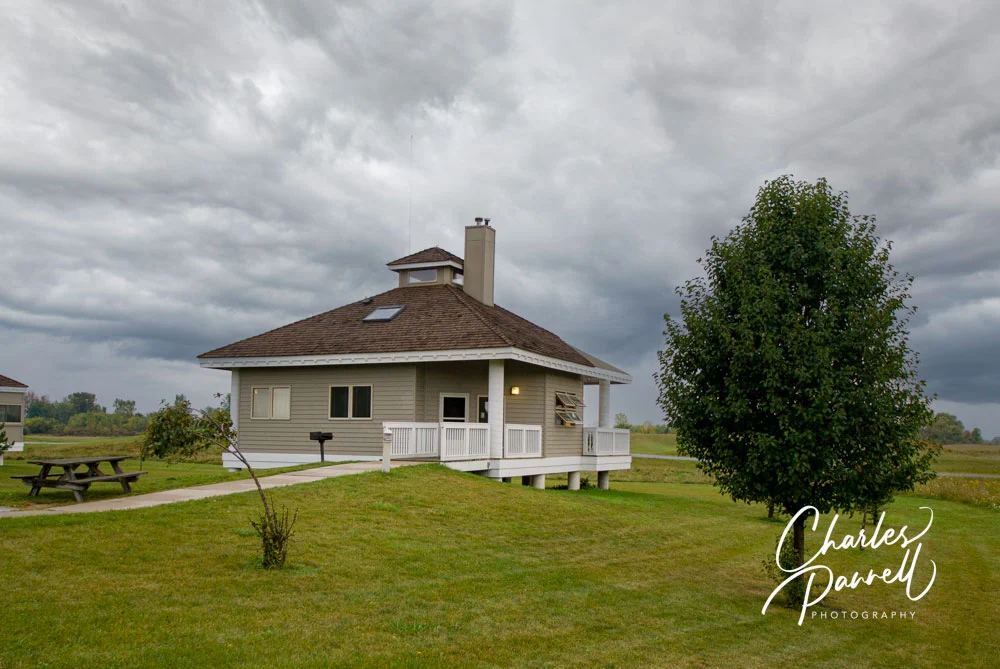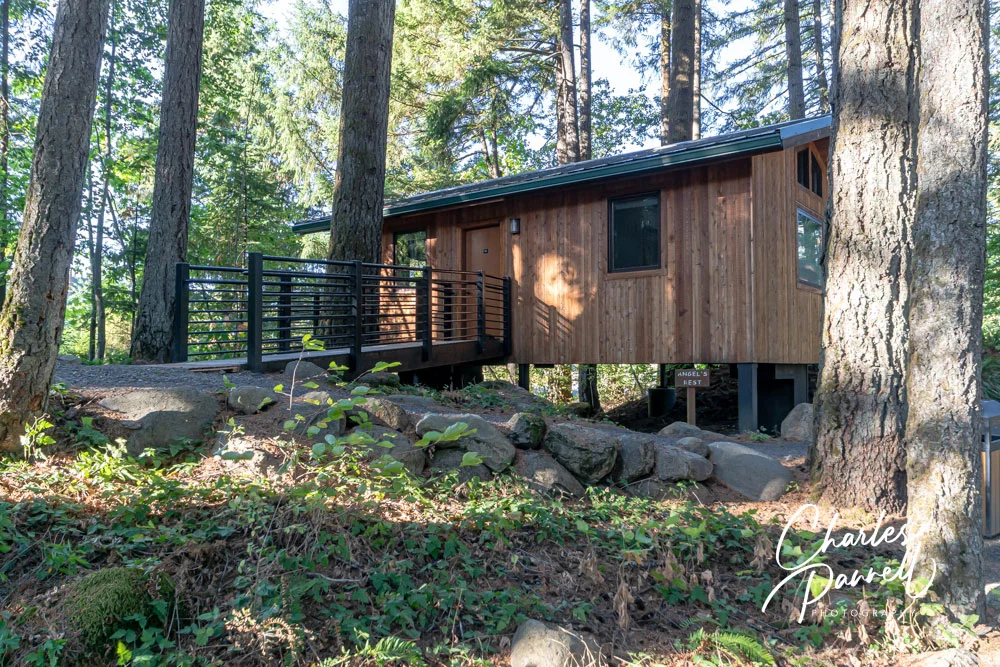
Located 120 miles south of San Francisco, Carmel-by-the-Sea simply oozes charm. This one-square-mile European-style village boasts Bavarian architecture, quaint shops, galleries of all sorts, and one of the most beautiful beaches in Northern California. Often described as a storybook setting, this Northern California enclave is the perfect place to unplug, relax and recharge. And there’s no better lodging choice than Hofsas House — a historic property with modern access upgrades and an owner with the right attitude.
Hofsas House
Located just a few blocks from the town center, Hofsas House (www.hofsashouse.com) is a great lodging pick for wheelchair-users and slow walkers. Although this property dates back to 1947, owner Carrie Theis has proactively made access upgrades over the years. And thanks to her efforts, guests with mobility disabilities can now truly enjoy this Carmel-by-the-Sea gem.
Although there are two steps up to the front office (and absolutely no room for a ramp), Carrier offers in-car registration for guests with mobility disabilities. After that, you can drive around and parallel park right in front of accessible room 37. And if you need help, luggage assistance is also available. There are a few slight half-inch lips along the pathway to the room, but all-in-all it’s pretty doable.
Access features in the room include wide doorways, good pathway access, and level access out to the spacious back balcony. Since the property is built into the hillside, this street level room is actually on the third floor, so there’s a great ocean view from the balcony. There is wheelchair-access to both sides of the 25-inch high open-frame king-sized bed, and the room is furnished with two easy chairs, a small table, a microwave and a refrigerator,
The bathroom has a full five-foot turning radius, and it’s equipped with a roll-in shower with grab bars and a hand-held showerhead. The toilet has grab bars on the back and left walls (as seated); and there’s a roll-under sink with a very spacious counter located just outside the bathroom.
Bottom line — it’s a comfortable room with good access and a great view.
(click image to enlarge)
Room 37 at Hofsas House
Toilet and Shower in room 37 at Hofsas House
Vanity in room 37 at Hofsas House
But Wait — There’s More!
Of course there’s more to Hofsas House than just the room — they also go above and beyond in the service department too. For example, since there are two steps up into the hotel lobby (where the Continental breakfast is served), Carrie will happily arrange for breakfast delivery to your room if you can’t manage the steps.
In the end, Carrie is constantly finding ways to make her historic property more accessible. Previously the pool area was not accessible to wheelchair-users and slow walkers. Now, thanks to Carrie, there’s an accessible path to the pool from the lower parking area, and the pool also has a lift. So now everyone can enjoy some pool fun.
Says Carrie, “If we can accommodate folks, we will; but I encourage people to call us and discuss their access needs, so we can provide them with the right room.” A long-time business owner in Carmel-by-the-Sea, Carrie adds, “I know every property in town, and if our place won’t work, I will suggest one that will.”
Barrier-Free Travel California National Park Road Trips for Wheelchair-Users and Slow Walkers
, via Wikimedia Commons” width=”1000″ height=”667″ Sandhill Crane
Every fall Sandhill Cranes take to the Pacific Flyway in a mass migration from their breeding grounds in Alaska and British Columbia, to travel to their wintering areas in California. And one of their favorite places to winter is in the California Delta near Lodi. In fact, from October to February masses of these majestic birds can be seen feeding in the fields that line the roads of this rural agricultural area.
And to celebrate their yearly return, the Lodi Sandhill Crane Association presents the annual Lodi Sandhill Crane Festival. Now in its 26th year, the 2024 event will run from Friday November 1 to Sunday November 3, with most of the events happening over the weekend. And the good news is, not only are the festival venues wheelchair-accessible, but there’s no admission charge to many of the festival events.
Lodi Sandhill Crane Festival
The bulk of the festival events take place at the Hutchins Street Square Community Center in downtown Lodi. There’s barrier-free access to the building, with plenty of room for wheelchairs and scooters to maneuver. For a full schedule of the downtown exhibits and educational presentations, visit lodisandhillcrane.org.
The festival kicks off with the opening night reception on Friday evening. Attendees can nosh on hors d’oeuvres and sip beer and wine, and enjoy a program that includes the presentation of the Lodi Sandhill Crane Association Conservation Award. Top it off with a silent auction for a fun opening event.
The educational presentations about the life and habits of the Sandhill Cranes are a perennial favorite of festival attendees. These sessions include speakers, videos, and hands-on projects. And there’s even a few activities for kids. Additionally there’s a variety of vendors and exhibitors that focus on birding, wildlife, and of course the Sandhill Cranes. Box lunches will be on sale in the exhibit hall, while snacks will be available to purchase in the rotunda.
One of the highlights of the Lodi Sandhill Crane Festival is the Art Show. There are two divisions. One division is photography and the other is fine arts, which includes oils, watercolors, pastels and sculptures. There are two subject areas within each division — Sandhill Cranes in California and other California wildlife in their natural habitat. There are lots of creative entries, and the best part is that the winners are picked by the attendees. So be sure and stop by and vote for your favorites.
Take a Tour
A more remote aspect of the Lodi Sandhill Crane Festival are the local tours. Led by naturalist guides, these tours cover all aspects of the migratory cranes, and include a variety of landscapes. Although some tours are not a good choice for wheelchair-users and slow walkers because of the rough terrain, several other tours are doable.
At the top of the list is the Consumnes River Preserve Guided Wetlands Walk. Led by Mary DuBose, this three-hour morning walk begins at the Consumnes River Preserve Visitor Center. It and includes a one-to-two-mile walk over a smooth level trail and some boardwalks. You’ll not only see the Sandhill Cranes on this walk, but also find a nice selection of ducks, geese, raptors and woodland birds along the way. There is a $20 charge for this tour.
The Crane Fly-In tours are also good choices for wheelchair-users and slow walkers. They take place at the North and South Units of the Woodbridge Ecological Preserve. These offerings include a short presentation, before the Sandhill Cranes descend en masse to their nightly resting spots. It’s quite a sight to see! Both the North and South Units have level access to a wheelchair-accessible viewing area for the program. The South Unit Tours are priced at $30, while the North Unit tours are $40. And if you’d like to get up early, there’s also a Fly-Out tour at the North Unit that’s priced at $45.
It’s important to note that all participants in the North and South Unit tours must also posses a current hunting or fishing license, or purchase a Lands Pass at wildlife.ca.gov/licensing/lands-pass.
For more information about the Lodi Sandhill Crane Festival tour offerings, visit lodisandhillcrane.org/events-calendar, or e-mail your questions to tours@lodisandhillcrane.org.
Barrier-Free Travel California National Park Road Trips for Wheelchair-Users and Slow Walkers
Romantic retreats come in all shapes and sizes, but truly there’s nothing better than toasting your sweetheart as you both enjoy a magical sunset on the rugged Northern California coast. Picture it — the waves crash against the rocks, there’s a slight breeze in the air, and the sun slips slowly beneath the colorful horizon. What could be more perfect? And although this idyllic moment may seem like something that can only be created on a Hollywood soundstage, truly it’s well within your reach. As with real estate transactions, the key ingredient here is location; and in this case, that location is the Little River Inn (littleriverinn.com) in scenic Mendocino County. And the great news is, it’s also an excellent choice for wheelchair-users and slow walkers.
The Wheelchair-Accessible Mendocino Coast Inn
Perched on a hillside with a commanding view of the Pacific Ocean, the Little River Inn is one of the oldest properties in the area. It was built in 1857 by Ole Coombs, and it remains in the family today. In fact, the Combs family is very proud of their “five generations in the hospitality business”. And their experience definitely shows in their excellent customer service.
The 65-room property, which is set on 225 wooded acres, now also boasts luxury suites and spacious cottages, along with a nine-hole golf course, tennis courts and even a salon and day spa. Access upgrades have also been added over the years; in fact the Coombs family did a great job of preserving the ambiance of this historic property, while making it an attractive and accessible choice for customers with mobility issues.
The office and registration area is located in the historic building near the front of the property. Accessible parking is located close to the front door; however there are steps up to the front porch. Best bet is to pull around on the left side to access a ramp that winds around to the front porch. From there, it’s a piece of cake, with ramp access to the office, and plenty of room to maneuver a wheelchair inside.
The Room
Room 166 at the Little River Inn
Room 166, which is a accessible deluxe oceanview room, is located near the back of the complex, well away from the main road. Standard parking is located just steps from the front door, and with two spaces reserved for the room, there’s plenty of room to park an accessible van and deploy the lift or ramp. There’s level access to the front door with excellent pathway access in the spacious room. Other access features include wide doorways, lever handles, a lowered clothing rod, drapery wands and low-pile carpet for easy rolling.
Furnishings include a 27-inch high king-sized bed with wheelchair access on both sides, two night tables, and a desk with a chair. A table and two chairs are strategically positioned by the picture window, and two easy chairs sit near the gas fireplace. Top it off with a wet bar with a refrigerator and a coffee maker and you have everything you need.
Toilet in room 166
Image 1 of 4
Toilet in room 166
The spacious bathroom includes a full five-foot turning radius, and is outfitted with a roll-in shower with grab bars, a hand-held showerhead and a built-in ceramic tile shower bench. The well designed shower is extremely user-friendly, with the bench located close to the shower controls, and plenty of room for transfers. There’s also a separate 22-inch high Jacuzzi tub with grab bars in the bathroom. The toilet grab bars are located on the back and right walls (as seated), and a lowered mirror hangs above the roll-under sink.
Room 166 at the Little River Inn, (view 2)
It’s a comfortable room with excellent access, and a spectacular ocean view from the balcony. There’s level access out to the balcony through a large sliding glass door, and plenty of room to maneuver a wheelchair outside. And if it’s stormy, there’s also a beautiful view from just about any spot in the room.
The Cuisine
Of course the accommodations at this wheelchair-accessible Mendocino Coast inn are only half the story, as the Little River Dining Room is also the perfect choice for a romantic dinner. Located next to the office, the restaurant features barrier-free access, with plenty of room to maneuver a wheelchair. And you just can’t beat the serene ocean and garden views.
The menu highlights fresh local fare and includes offerings such as salads filled with local greens, luscious bowls of clam chowder and Thai inspired rock cod. And if you’d like some pub fare, they also offer fish and chips and cheeseburgers. Add in an extensive wine list and you have everything you need,
Although the restaurant offers an equally enticing breakfast menu, room service is also available. Choose from Eggs Benedict, Huevos Rancheros, a bevy of traditional breakfast favorites and even Swedish Hotcakes. Plus you just can’t beat the ocean view from your room.
All in all, the Little River Inn is the perfect place to steal away with your sweetie for a wheelchair-accessible Mendocino Coast getaway. And if you forget the name of the property, just think of romance and you’ll remember their phone number — (888) INN-LOVE.
Sunset view at the Little River Inn
Barrier-Free Travel Yosemite, Sequoia and Kings Canyon National Parks for Wheelers and Slow Walkers
It’s fun to go wine tasting with friends on the weekend. But then you have that age-old problem — who is going to be the designated driver? Of course you could always make a promise to limit your consumption, but sometimes that just doesn’t work. Well, if you happen to be visiting Murphys or Angels Camp on a Saturday, there is another solution — take the Hopper. This short shuttle route connects the two cities and even makes a stop at Ironstone Vineyards. And the good news is, they will also go a little off route with advance notice. So pack your bag, gather your friends, and get ready to enjoy a wine tasting weekend on the Calaveras Hopper.
The Basics
The Calaveras Hopper only runs on Saturdays from 10 AM to 6 PM. But that’s OK, as that’s when the tasting rooms do the bulk of their business. There’s about an hour wait between buses, and the schedules are posted at all hopper stops as well as at calaverasconnect.org/routes/saturday-hopper/. This route is also seasonal — it only operates from March to November.
The fare is a very reasonable $3 (seniors are half price). Drivers do not carry change so the exact fare is required if you pay cash. You can also pay with the Token Transit app, which is available from the App Store, Google Play, or by texting “token” to 41411.
Access is excellent on the Calaveras Hopper, with lift access and wheelchair spaces available. The drivers are also pretty friendly, and are happy to offer assistance if needed.
The route begins in Angels Camp and travels on Highway 4 to Murphys. It makes six stops along the way:
Travelodge Copello (Angels Camp)
WorldMark (Angels Camp)
Save Mart (Angels Camp)
Angels Camp Visitor Center (Angels Camp)
Murphys Creek Theater (Murphys)
Ironstone Vineyards (Murphys)
Murphys Creek Theater is just around the corner from several tasting rooms, and Ironstone Vineyards is a destination in itself. And if you want to get picked up at another spot with ¾ mile of the route, then call (209) 754-4450 at least two hours in advance. Additionally, drivers will usually stop at any safe location along the route. So enjoy a little Saturday wine tasting in Calaveras County, and leave the driving to the Hopper.
Barrier-Free Travel Yosemite, Sequoia and Kings Canyon National Parks for Wheelers and Slow Walkers
Easy Rider is the quintessential road trip movie; and although much of it was filmed on Hollywood back lots, a good chunk of the scenes were shot on location in the Southwestern US. Even though many of the sites have substantially changed since Peter Fonda and Dennis Hopper first climbed on their Harleys for their exotic and erotic adventure, you can still catch a glimpse of this classic 1969 movie at a few key sites. So hop off the beaten path and enjoy a blast from the past at these Easy Rider filming sites on your next Southwestern road trip. Oh yes, and don’t forget to watch or re-watch the movie before you begin your own adventure.
Park Moabi
Located about 10 miles east of Needles off Interstate 40, Park Moabi Road is the site for some of the opening credits of Easy Rider. Billy and Wyatt ride along the road, which borders the Colorado River, as they begin their fateful journey. Although there’s now a Zip line and a large marina at the intersection of Park Moabi Road and National Trails Highway (Route 66), you can still drive a short distance down both sections of the Mother Road before it dead ends. Then after you get back on Interstate 40, you’ll cross the bridge that’s also featured in the opening credits.
La Contenta
One of the most popular Easy Rider filming sites is located near Taos New Mexico. The opening segment of the flick — where Billy and Wyatt scored their Mexican coke — was filmed in El Prado. Formerly the home of the Red Arrow Emporium – which has since relocated down the road – this site is located at 1302 Paseo Del Pueblo Norte, just north of Cisneros Street on the west side of the street. Today the building is used by the Red Arrow as warehouse space, so it’s usually deserted. There’s a level spot to park in the front, and barrier-free access around the building. Although the La Contenta sign was added for filming – and since removed — you can still recognize the facade of the building. It’s worth a quick stop, especially if your road trip takes you up the road to the Rio Grande Bridge.
Ballarat, CA
Ballarat Ghost Town
Next up on our Easy Rider filming sites is the ghost town of Ballarat in Southern California. This is where the key scene where Wyatt tossed his Rolex out in the desert was filmed. This former boom town was founded in 1897 following the discovery of gold at the nearby Radcliff Mine, and fittingly named for the famous gold city in Victoria, Australia. It’s located about 45 miles east of Ridgecrest in the middle of the desert, between Trona and Stovepipe Wells. There’s a graded dirt road that leads from Highway 178 to the town site, and although it’s passable in a low-clearance vehicle in dry weather, it’s prone to flooding when it rains. There’s no designated parking, but there’s plenty of room to pull over on the dirt and explore the area. A nearby sign welcomes visitors and reminds folks, “You learn nothing sitting in your car.” There’s plenty of room to wander around the level town site, which is more accurately described as a ruins. There are a few buildings still standing, including the jail and a trading post, but other than that it’s you and the desert. Still it makes a pleasant scenic drive, and there’s even a picnic shelter at the far end of town where you can enjoy a secluded lunch break.
Pine Breeze Inn
One of the most memorable scenes in Easy Rider — where Billy and Wyatt stop at a motel, only to have the “no vacancy sign” quickly illuminated when the owner takes a gander at the duo — was filmed in Bellemont, Arizona, about 12 miles west of Flagstaff. Take exit 185, and continue south for a block, then turn left on Old Route 66. The vintage gas station — which served as the office in the scene — is located about a mile down the road on the left. There’s a nice level area to pull over and take a few photos of the building; however if you want to see the original “No Vacancy” sign, you’ll have to double back to the Route 66 Roadhouse Bar and Grill near exit 185.
Lumberjack Café
Lumberjack at Northern Arizona University
The Route 66 scene where Bill and Wyatt passed the Lumberjack Cafe — marked by a 220-foot tall lumberjack statue — was actually filmed in Flagstaff. The filming site was on Milton Street, near Tucson Street; however that lumberjack statue has since been moved to Northern Arizona University (go Lumberjacks!). Currently the building that was the Lumberjack Cafe is vacant, and a smaller lumberjack statue sits in the parking lot. There are several places to pull in and get a look at the storefront and the statue; however the better photo op is at the university, where the original lumberjack sits outside the Walkup Skydome (1701 S. San Francisco Street). Accessible parking is located directly in front of the statue, so you don’t even have to get out of your car to enjoy it.
Loop Road
Another Flagstaff filming site is located on Highway 89 about 13 miles north of downtown, near the turnoff to Sunset Crater Volcano National Monument on Loop Road. This is where Billy and Wyatt picked up the hitchhiking stranger. Save some time to explore Sunset Crater too while you’re in the neighborhood, as there’s a quarter-mile wheelchair-accessible section of the Lava Flow Trail that offers a good look at the mountain that erupted over 900 years ago. Sunset Crater also make a good lunch stop, as the site includes accessible picnic tables and restrooms.
Wuputaki Pueblo
Wuputaki Pueblo, which is located about 35 miles up Loop Road from Sunset Crater, is where the camping scene in the deserted ruins was filmed. And although camping is prohibited at Wuputaki Pueblo, the half-mile wheelchair-accessible trail gives visitors a good view of this 100-room pueblo which was occupied by 85 to 100 people in 1182. And although this sacred site is not physically occupied today, the Hopi people believe their ancestors remain there as spiritual guardians. It does have a certain energy to it.
Sacred Mountain Gas Station
Sacred Mountain gas station
Sacred Mountain Gas Station — where the hitchhiker refuses to let Billy and Wyatt pay for gas — is located nearby. Just take Loop Road back to Highway 89 and head south. You’ll spot the now deserted gas station on the right side of the road, just past milepost 437 at 150 Road. There’s not much else there — just a level spot to pull off and admire the relic — but it does have a certain following.
Las Vegas, New Mexico
The building that once housed Tito’s Gallery was the jail in Las Vegas, NM
Las but not least on our tour of Easy Rider filming sites is Las Vegas, New Mexico. This is where things start to go downhill for Billy and Wyatt. After they join a parade headed down the main drag they are unceremoniously thrown into jail for parading without a permit. Ultimately, that’s where they meet up with (a very young) Jack Nicholson. The parade route is located downtown, on Plaza Street between Hot Springs Boulevard and Gonzales Street. The jail, which was formerly Tito’s Gallery, is on nearby Bridge Street. Just follow Plaza Street past Gonzales and look for 157 Bridge Street on the right. There’s no accessible parking, but parallel parking is available on the street. The sidewalks have a few bumps here and there, but they are doable. As you head back to Plaza Park there’s a slight uphill grade, but street parking is also available near the parade route. And don’t forget to pop in at the Plaza Hotel, across from the park. Also included in the flick, the hotel has been lovingly restored to its former grandeur and now features ramp access. It’s definitely a must-see on any Las Vegas stop.
Barrier-Free Travel
Utah National Parks for Wheelchair-users and Slow Walkers
Although the America the Beautiful Passes (emerginghorizons.com/how-to-get-a-lifetime-national-park-pass) grant free admission to US national parks, not everybody qualifies for them. Of course you can always purchase a yearly pass that will get you in any national park; however if you only visit a few parks that’s not very cost effective. On the other hand, not all national parks charge an admission fee. With that in mind, here are six national parks you can visit for free.
North Cascades National Park
Accessible pier on Diablo Lake in North Cascades National Park
emerginghorizons.com/north-cascades-national-park
Located in Northern Washington, North Cascades National Park, not only offers free admission, but it also boasts nearly three miles of wheelchair-accessible trails. Enjoy a short jaunt on the .3-mile Trail of the Cedars, or go for a longer hike on the 1.4-mile accessible section of the River Loop. Or just enjoy the scenic drive on the State Route 20 Corridor.
Redwood National & State Parks
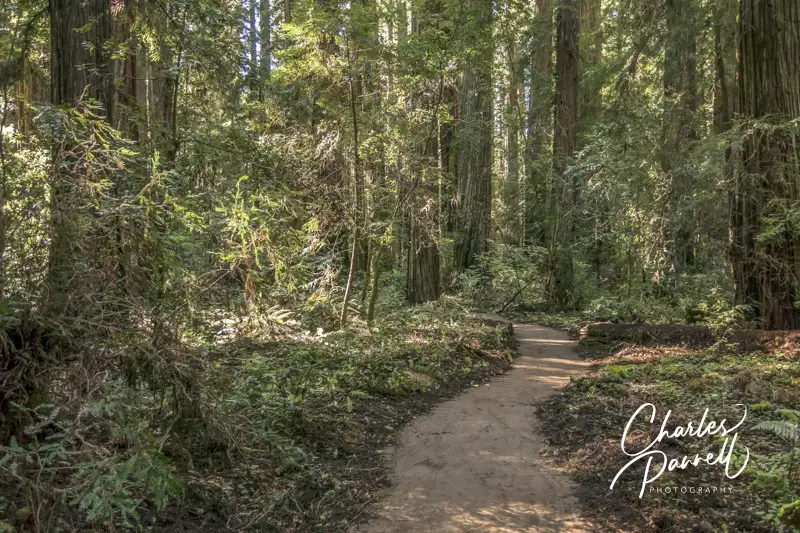
Prairie Creek trail in Prairie Creek Redwoods State Park
emerginghorizons.com/redwood-national-and-state-parks
Nothing beats the majesty of Northern California’s coastal redwoods in this mixture of federal and state lands. There are numerous wheelchair-accessible trails, campsites and attractions in both the original national park, and the three additional state parks. And if you’d like to spend the night, two of the state parks offer wheelchair-accessible camping cabins.
Great Basin National Park
Wheeler Peak Overlook in Big Basin National Park
A bit off-the-beaten-path in Eastern Nevada, Great Basin National Park is one of America’s least visited national parks. And that makes it a great place to get away from the crowds. There are numerous accessible overlooks on the Wheeler Peak Scenic Drive that offer excellent views of the “great basin”. And if you’d like to stretch your legs, the wheelchair-accessible Island Forest trail makes a .4-mile loop through a pine and fir forest.
Great Smoky Mountains National Park
Cades Cove in Great Smokey National Park
Although there’s no entrance fee to this popular national park, there is a parking fee if you stop for longer than 15 minutes. That said, the Roaring Fork Motor Trail begins just outside of Gatlinburg, and winds 5.5 miles through a hardwood forest filled with chestnuts, oaks, maples and magnolias. You can stop along the way and snap a few photos, and still visit without a parking pass. And it’s an absolutely beautiful fall foliage drive.
Cuyahoga Valley National Park
Everett Covered Bridge in Cuyahoga National Park
This Ohio national park offers a scenic drive along the Cuyahoga River, plus several accessible trails and attractions. Save some time to stop at the Canal Exploration Center and the Breckville Nature Center, and don’t miss the Everett Covered Bridge. And if you’d like a little hike, then take the wheelchair-accessible Ohio & Erie Canal Towpath to the Beaver Boardwalk.
Kenai Fjords
View of Exit Glacier
Wrapping up our list of national parks you can visit for free is Kenai Fjords National Park. Although you can certainly visit this Alaska national park by taking a cruise to see some of the nearly 40 glaciers in the Harding Icefield, you can also get a good view of Exit Glacier from the shore. Located three miles north of Seward, Kenai Fjords National Park boasts a one-mile wheelchair accessible loop trail that leads through a cottonwood forest to an accessible viewing area. And you just can’t beat the sight of Exit Glacier, as it seemingly spills down the mountain.
Barrier-Free Travel Washington National Parks for Wheelers and Slow Walkers
Driving along Prison Road the sight of the massive granite walls of Folsom State Prison are unmistakable, as you approach the nation’s first maximum-security prison. Interestingly enough, the granite for the walls was quarried by the prisoners, and the imposing structure was later built by inmates back in the early 1900s. That’s just one of the fun facts you’ll learn on a visit to the Folsom Prison Museum (www.bighouseprisonmuseum.org).
To be honest, visiting the museum is a tad bit intimidating, as it’s located just inside the prison grounds. That said, I timidly approached the guard after following the “museum” signs that led to the prison entrance, and hesitantly stammered, “I’m looking for the museum”. I heaved a giant sigh of relief when the guard cracked a smile and enthusiastically directed me to the museum entrance, located just beyond the checkpoint.
Accessible parking is located across the street from the checkpoint, and there’s a level pathway over to the ramped museum. Inside, quarters are a bit tight in the historic structure, however there’s still room enough to maneuver a wheelchair around the exhibits. The tiny restroom is not accessible — so plan ahead — and there’s about a half-inch step down to the Johnny Cash room, but again it’s all quite manageable.
The Folsom Prison Museum
Folsom Prison Museum
Operated by retired correctional officers, the museum features an impressive collection of weapons, shackles and confiscated items. Highlights include a hand-crank Gatling gun, a substantial number of inmate-crafted firearms, and even a homemade bomb. Add in some old gas masks, an operating table and Rick James’ guitar, and you have a very eclectic collection. There’s also a sizable display of things made from everyday items by the inmates, including a purse made from potato chip bags, a Ferris wheel crafted from a quarter-million toothpicks, a hangman’s noose made from toilet tissue and a number of creative soap bar carvings. A large collection of California license plates also adorn one wall in this room, just to remind folks where they are all manufactured today.
There’s also a room devoted to Johnny Cash, who visited the prison and recorded a live album there in 1968. There’s a load of photographs of Cash and his wife at the prison, along with his own “gag” mug shot and even some stationary from the Sacramento hotel where he stayed. It’s definitely a must-see for any Cash fan.
Granted this small museum doesn’t warrant a dedicated trip to Folsom; however if you’re heading to South Lake Tahoe on Highway 50, it’s definitely worth a stop. Just take the Folsom Boulevard exit, turn left and then make a right on Natoma Street. From there turn left on Prison Road which dead-ends in the visitor parking lot. And when you’re back on your way to Lake Tahoe, take note of the granite mileage markers along the road, as those were also crafted by Folsom Prison inmates.
Barrier-Free Travel Yosemite, Sequoia and Kings Canyon National Parks for Wheelers and Slow Walkers
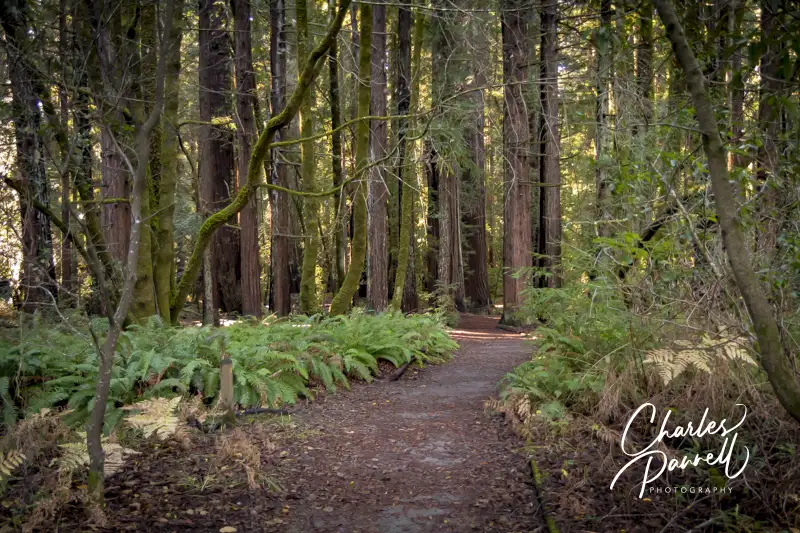
At first glance it appears that Northern California’s coastal redwoods are out of reach for wheelchair-users and slow walkers. After all, these majestic giants are located in some pretty remote areas. Granted, many redwood groves present some formidable access barriers; however these three coastal stands offer a nice selection of accessible trails, picnic areas and even camping cabins. So check out these wheelchair-accessible coastal redwoods on your next California road trip
Redwood National Park
Lost Man Creek trail in Redwood National Park
Located about 320 miles north of San Francisco, Redwood National Park (emerginghorizons.com/redwood-national-and-state-parks/) tops the list of the Golden State’s wheelchair-accessible coastal redwoods. Although the drive through the park offers some stunning windshield views, the Lost Man Creek Trail is definitely worth a stop. The trail is easy to find — just follow Highway 101 north for about five miles from Orick, and turn on Lost Man Creek Road. The trailhead is about a mile down the road.
There’s accessible parking near the trailhead, next to an accessible vault toilet, with level access over to the trail. This former logging road is wide, level and free of obstacles for the first half-mile. After that the grade becomes steeper and there are rocks and other obstacles along the way, until the last bastions of access are obliterated at the ¾-mile point. Still, it makes a lovely out-and-back one-mile hike.
Additionally, there’s an accessible picnic table on a level dirt pad near the trailhead, so bring along a lunch and enjoy your repast in the shaded grove. It’s the ideal way to top off this very accessible hike.
Trees of Mystery
Paul Bunyan and Babe the Ox at the Trees of Mystery
The Trees of Mystery (www.treesofmystery.net) is another fun stop on Highway 101. It’s located about 25 miles north of the Lost Man Creek Trail, up in Klamath. You can’t miss it, as a giant statue of Paul Bunyan and Babe the Ox mark the site of the kitschy yet cool roadside attraction.
There’s plenty of accessible parking in the large lot, and barrier-free access over to the gift shop and ticket booth. The main attraction at this site is the Sky Trail, an aerial tramway which takes visitors on a scenic journey through the tree tops. There is a .8-mile trail that leads from the parking lot to the upper Sky Trail station; however it has a steep grade and a substantial cross slope in a few places, so it’s not a good option for wheelchair-users and slow walkers. Alternatively, accessible transportation in a lift-equipped vehicle to the upper Sky Trail station is available for anyone who can’t manage the trail.
There’s ramped access up to the upper Sky Trail station, with roll-on access and plenty of room for a wheelchair in the individual gondola cars. Be sure and stop for a view from the adjacent observation deck before you board though, as the bird’s eye view is magnificent. From the upper Sky Trail station, it’s a seven-minute 1570-foot descent back down to the lower station. And when you get there, treat yourself to some fudge or ice cream, and take time to browse through the gift shop. It’s a fun stop and definitely a unique way to experience the coastal redwoods.
Jedidiah Smith Redwoods State Park
The Simpson-Reed-Trail at Jedidiah Smith Redwoods State Park
Last but not least on the list of wheelchair-accessible coastal redwoods is Jedidiah Smith Redwoods State Park (www.parks.ca.gov/?page_id=413). This Northern California state park is located about 20 minutes north of Klamath along scenic Highway 199, near Crescent City.
One of the highlights of this park is the accessible Simpson-Reed Discovery Trail, which can be found near the end of Walker Road, off of the main highway. Accessible parking is located next to the accessible vault toilet, near the trailhead. This one-mile loop, passes a number of fallen giants as it weaves through the forest and along the Smith River. It’s a very pleasant — and accessible — stroll.
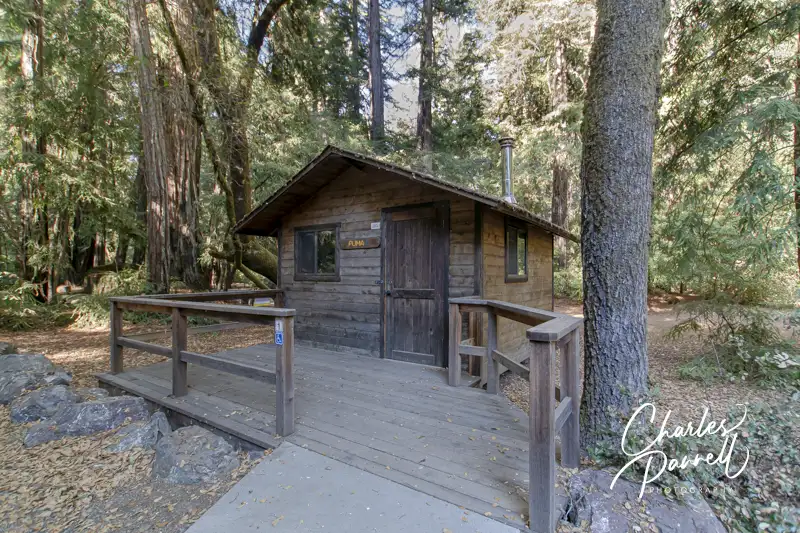
And if you’d like to spend the night in the park, there are four accessible camping cabins in the campground. Cabins 24, 26, 30 and 105 feature accessible parking with ramp access up to the front porch. They are each furnished with two bunk beds, with a single on top and a double on the bottom. Other cabin features include, electricity, lights, a heater, a raised grill and an accessible picnic table.
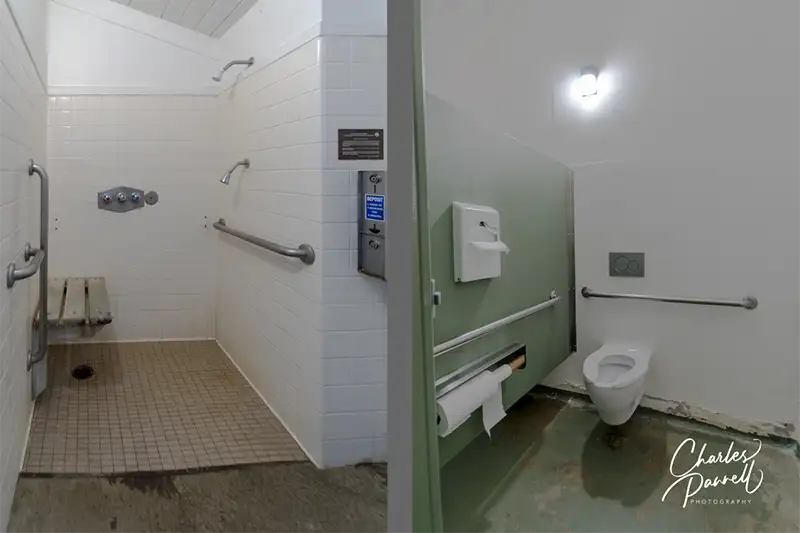
Guests need to bring their own bedding, and an air mattress or mattress pad is also recommended. There’s no water in the cabins, but an accessible showerhouse with a roll-in shower is located nearby. It’s a beautiful campground, and the perfect place to top off a visit to California’s wheelchair-accessible coastal redwoods.
Barrier-Free Travel California National Park Road Trips for Wheelchair-Users and Slow Walkers
Located a little over two hours from Sacramento, the tiny town of Murphys is barely a blip on the map. And although that’s not such a good thing if you need the services of a metropolitan city, it’s just what the doctor ordered if you’re seeking refuge from the hustle and bustle of city life. And the Courtwood Inn (www.courtwoodinn.com) is the perfect place to get a heaping helping of the latter. As an added bonus, you just can’t beat the wheelchair access.
Courtwood Inn
Perched on a pine-covered hillside just outside of town, this five-room tennis-themed inn is the brainchild of Larry and Chris Parker. It’s named for two things that this tennis pro couple holds near and dear — the game of tennis and their lovely three story cedar log lodge. And although local codes didn’t require an accessible room, the Parkers opted to include one, so everyone can enjoy this peaceful mountain retreat.
Access is excellent at the inn, with accessible parking just steps from the front door, and level access to the entrance. Inside, there’s barrier-free access throughout the great room, which offers a magnificent view of the pine-studded hillside. In keeping with the tennis theme, each guestroom is named after a grand slam event, and decorated with items reminiscent of the host country. The accessible US Open room is located right off the great room.
Wheelchair-Accessible US Open Room
The US Open room at Courtwood Inn
Access features in the US Open room include wide doorways, level access and plenty of room to maneuver even the largest wheelchair or scooter. It’s furnished with a 32-inch high king-sized bed, but with advance notice it can be replaced with a lower bed. Other furnishings include two bedside tables, a chest of drawers, two chairs and a small table.
Decorated in a red, white and blue palette, the color scheme reflects the location of the US Open; while rackets, balls and even a poster for the event can be found throughout the room. And for a bit a local flavor, the room also comes adorned with a stuffed frog, in honor of Mark Twain’s famous short story, The Jumping Frog of Calaveras County.
The bathroom is equipped with a tiled roll-in shower with a built-in shower bench and a hand-held showerhead. A portable shower chair is also available. Other access features include a roll-under sink, and toilet grab bars on the back and right walls (as seated). There’s also a hydrotherapy tub in the bathroom, and in keeping with the Calaveras theme, the standard rubber ducky has been replaced with a rubber frog. There’s also a refrigerator and a coffee maker in the large walk-in closet, which is adjacent to the bathroom.
Bathroom in the US Open Room at Courtwood Inn
The Little Extras
One of the best features of this room is actually located outside — the large deck that offers a great view of the surrounding forest. There’s level access to the deck through a sliding door, and plenty of room to roll around outside. It’s a nice place to watch the sunset or enjoy a quiet morning cup of coffee.
There’s also barrier-free access to the dining room, where Chris serves up a healthy breakfast every morning. And the beverage bar, along with homemade snacks and goodies is open all day.
Although it took the Parkers nearly two years to build their dream inn, they didn’t stop there. They also added tennis courts (the lower one is accessible) and now they offer private tennis lessons to their guests. It’s the perfect fit for two former professional tennis players, and a great addition to this tennis-themed inn. And they are always adding new features to the inn, so check back often — you never know what else the Parkers might have up their sleeves.
Inside the Couetwood Inn
Barrier-Free Travel Yosemite, Sequoia and Kings Canyon National Parks for Wheelers and Slow Walkers
Power beach wheelchairs at Coronado Beach in San Diego, California
Although a number of San Diego beaches have beach wheelchairs and beach mats, a few locations go one step further. Along with the standard beach wheelchairs — that require a strong helper to push — some San Diego beaches now have power beach wheelchairs to loan.
These San Diego power beach wheelchairs are somewhat of a cross between a standard beach wheelchair with large balloon tires, and a power wheelchair with a joystick. They are easy to operate, and after a brief orientation from the lifeguard you can easily cruise along the sandy beach. And the best part about the power beach wheelchairs is that they allow wheelchair-users independent access to the beach. You don’t need a helper to push you and you can go wherever you want and take things at your own pace. They are also a great option for slow walkers who may tire easily trudging over the sand.
These power beach wheelchairs are available on a first-come basis; however it’s best to call in advance as some locations have limited hours.
The San Diego power beach wheelchairs must stay at least five feet away from the water; however if you’d like to go for a swim, then check out the floating beach wheelchairs at Moonlight Beach in nearby Encinitas. You will need some assistance to wheel these chairs down to the water, but once you hit the surf they float. You can choose to enjoy the ocean by yourself, or have a companion there to assist you. Either way, it’s a great way to enjoy the water.
And if you’d prefer to stay dry, they also have power beach wheelchairs available at Moonlight Beach. For more information about the floating beach wheelchairs or the power beach wheelchairs at Moonlight Beach, call (760) 633-2740.
Barrier-Free Travel California National Park Road Trips for Wheelchair-Users and Slow Walkers