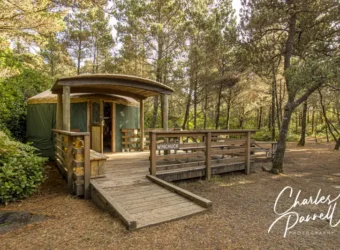
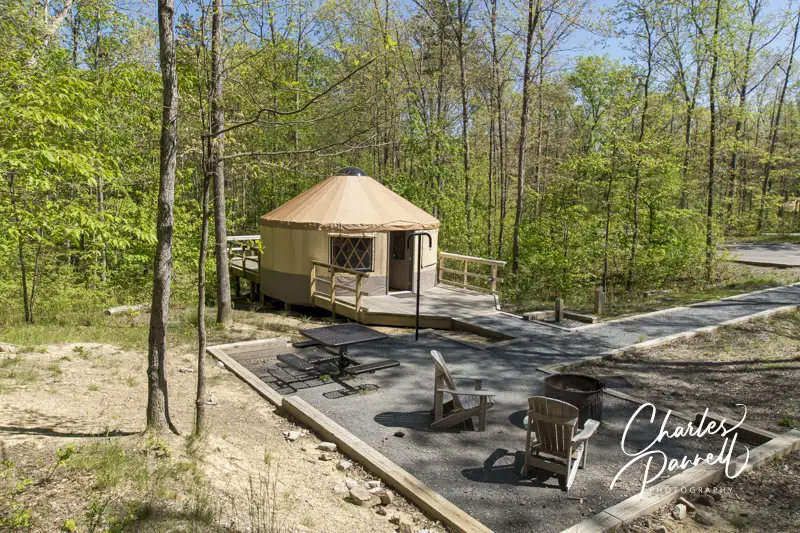
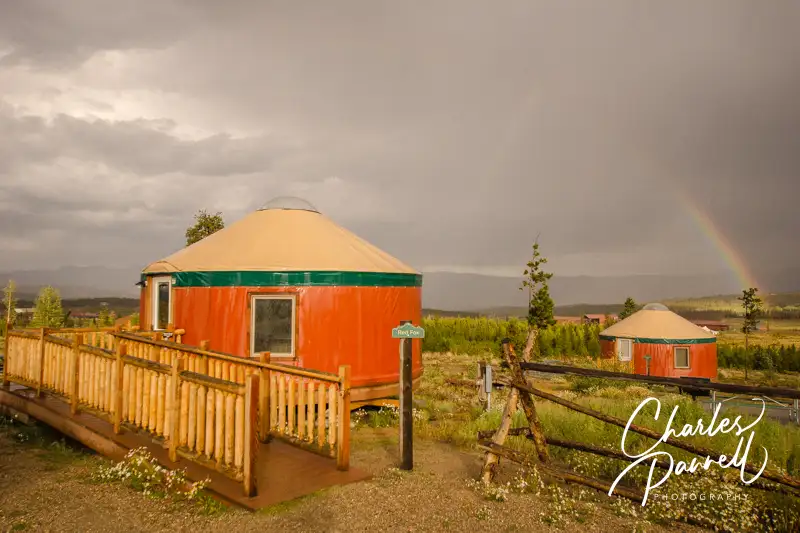
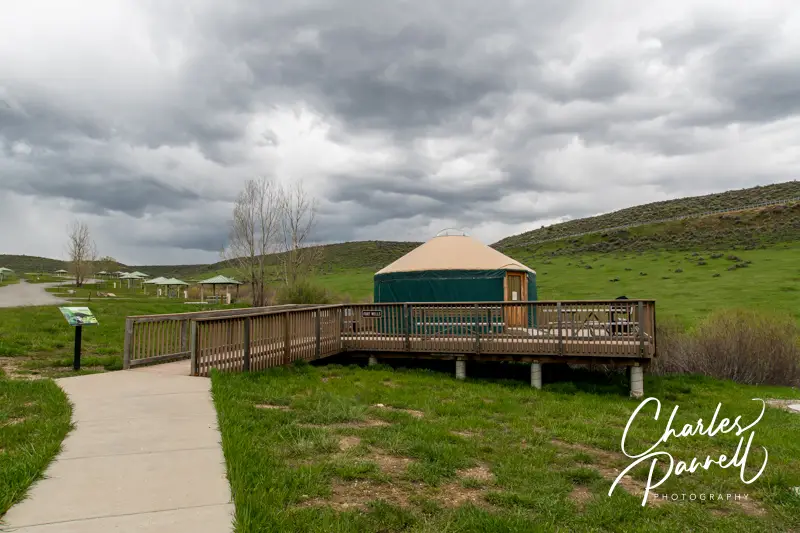
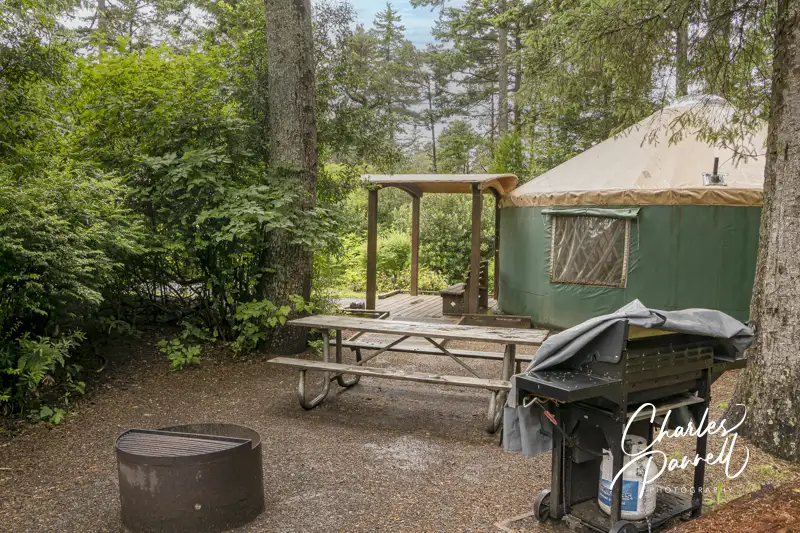
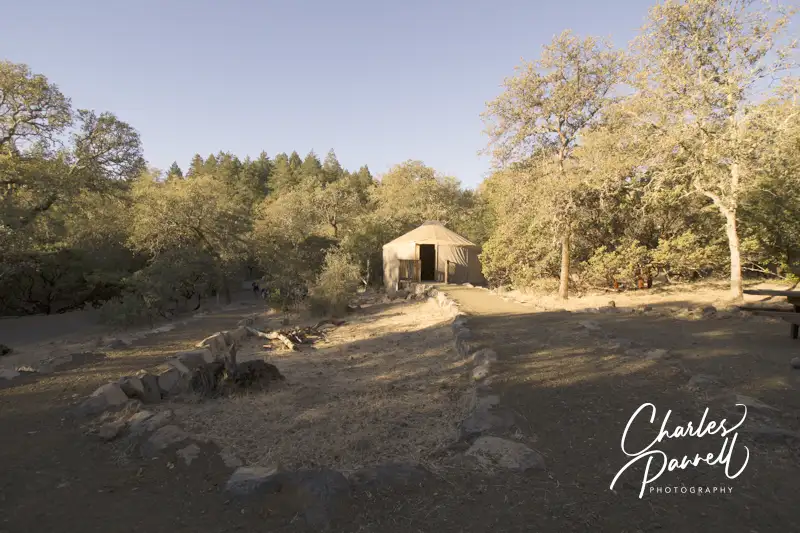
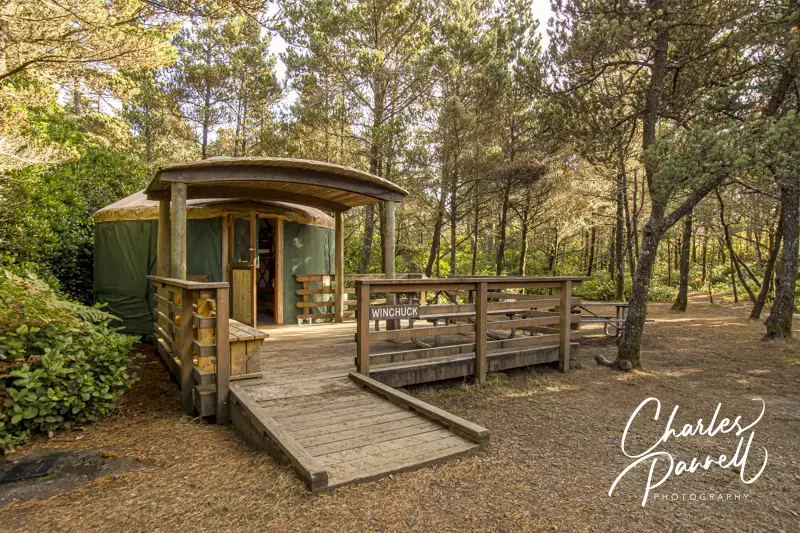
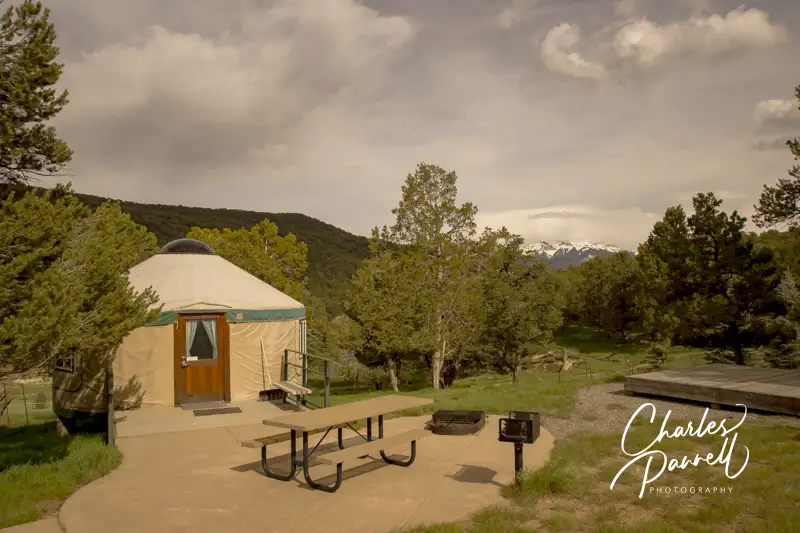
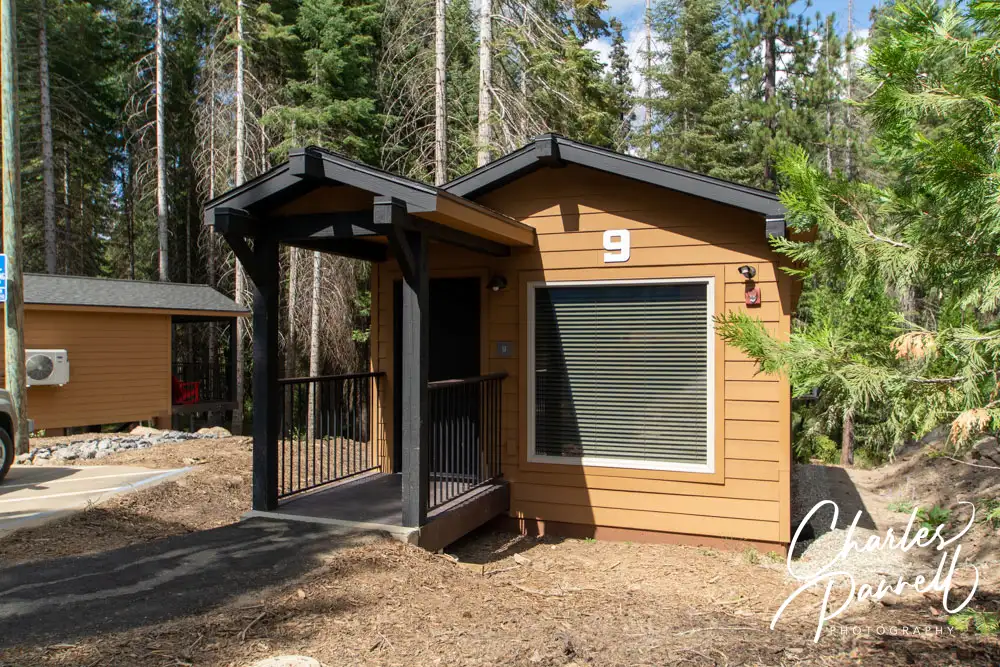
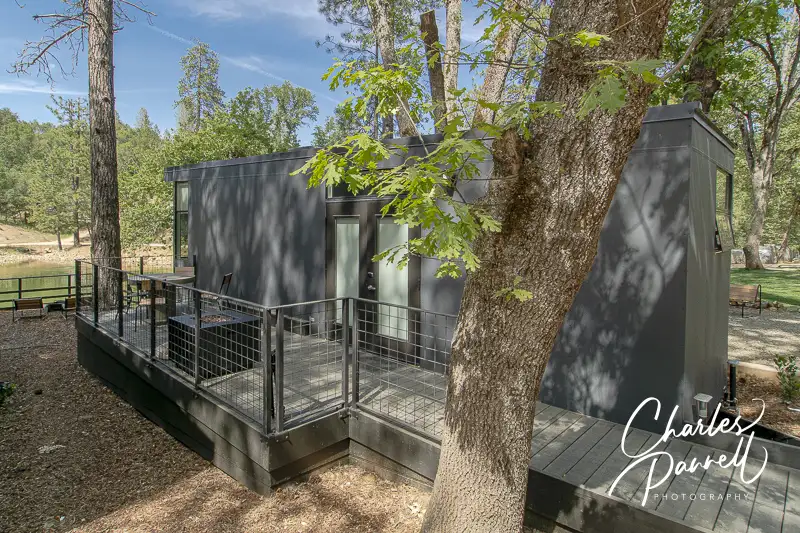
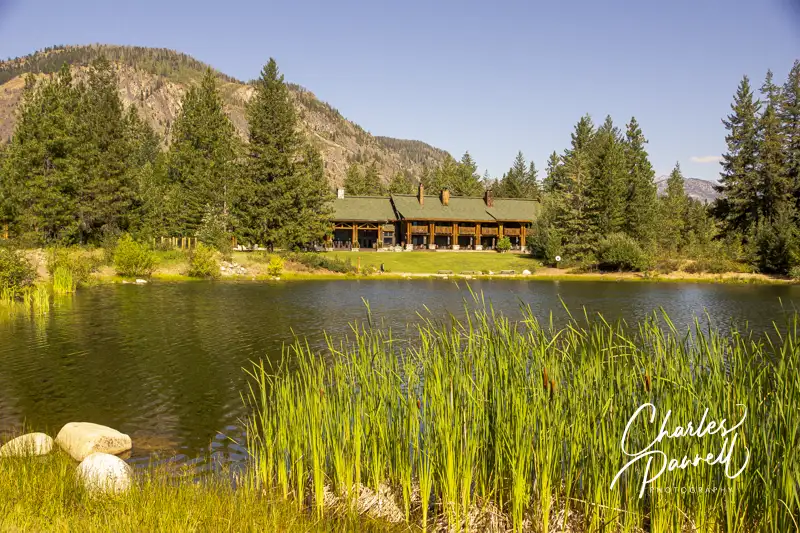
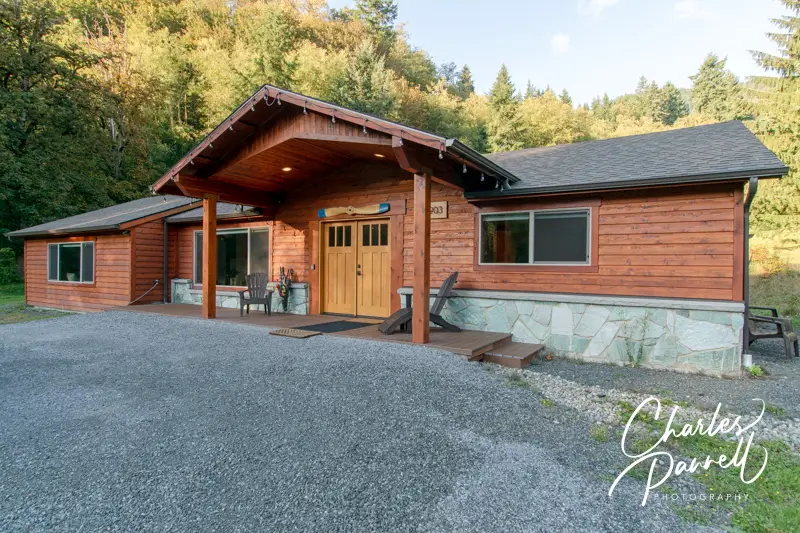
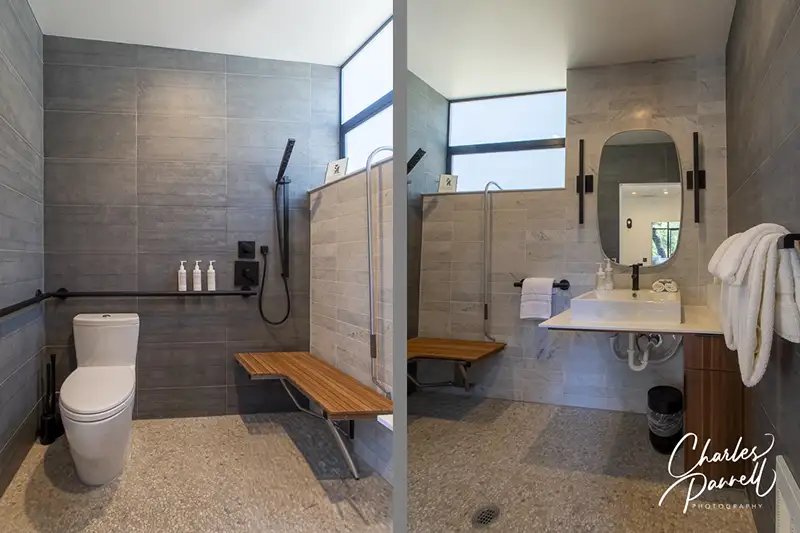
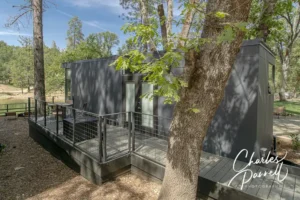
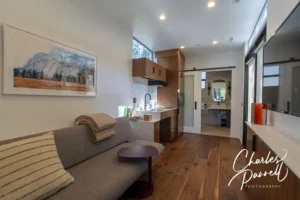
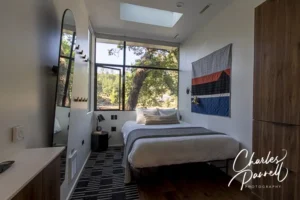
Yurts are all the rage these days. An alternative to pitching a tent, they come in all shapes and sizes. Some are pretty basic, while others offer all the comforts of home. They are all set in stunning locations, and since you just have to take along bedding and towels, it’s easy to pack for a yurting vacation. And the good news is, wheelchair-accessible yurts are popping up at campgrounds across America.
This accessible yurt is located in a popular state park in Northwestern Georgia. Spend a night or two and enjoy some of the views from the accessible Overlook Trail.
These two wheelchair-accessible yurts are surrounded by Colorado’s scenic beauty. One is located in Golden Gate Canyon, while the other is near Rocky Mountain National Park.
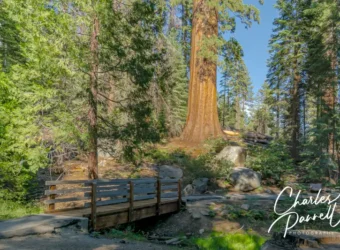
Located south of highly visited Sequoia National Park, this secluded yurt is in a campground with only 11 other sites. And it’s just a stones throw away from a wheelchair-accessible trail through the Sequoias.
This simple yurt is perched on a hillside overlooking a scenic Utah lake. Add in a spacious deck with a gas BBQ and you have a perfectly accessible retreat.
If you want to dodge the tourist crowds in popular Napa Valley, then head over to Boothe Napa State Park and spend the night in this wheelchair-accessible yurt. And then enjoy some of the wheelchair-accessible trails in the park.
South Beach State Park, which is located on the Oregon coast, features 23 wheelchair-accessible yurts. Add in some accessible trails and you have the perfect spot to stay for a few days.
Last but certainly not least, this wheelchair-accessible yurt is located in Ridgeway State Park, nestled at the base of the San Juan Mountains in Southwestern Colorado. And it’s just a short drive from Black Canyon of the Gunnison National Park.
Barrier-Free Travel
California National Park Road Trips
for Wheelchair-Users and Slow Walkers
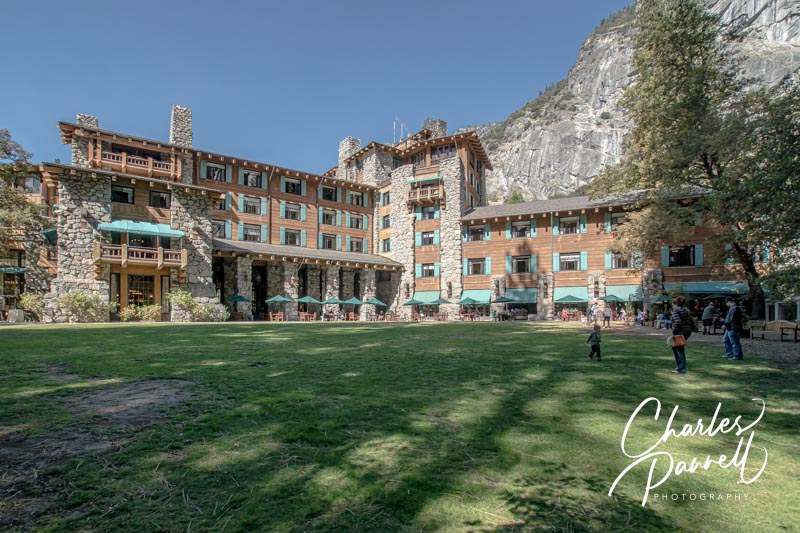
Located in Yosemite National Park, The Ahwahnee is the most luxurious property in the park. The site of fairy tale weddings and grand holiday celebrations, this historic structure boasts a subtle mix of Art Deco, Native American and Middle Eastern architectural styles. Not only is it a cornerstone in Yosemite history, but according to many accounts it’s also haunted. The good news is, in spite of its ghostly residents, numerous renovations have made to this historic property over the years; and today it’s an excellent choice for wheelchair-users and slow walkers.
An Accessible Suite to Remember
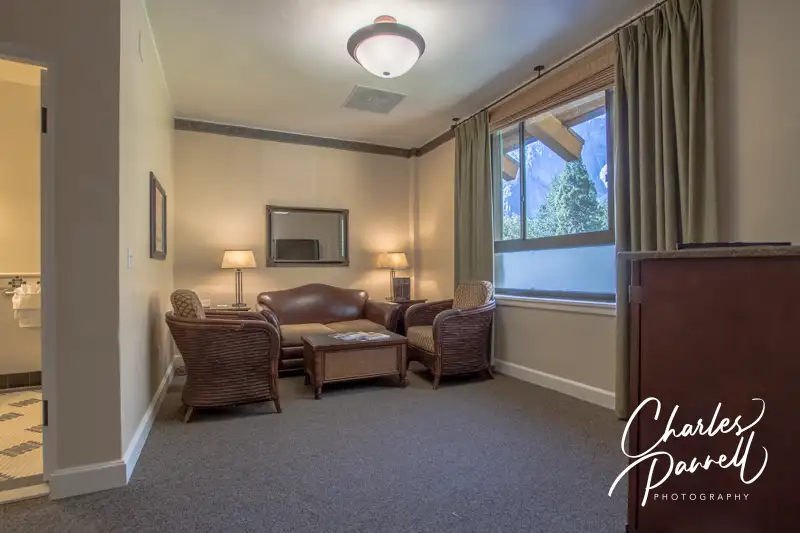
Sitting Room in Suite 206 at the Ahwahnee Hotel
Although the Ahwahnee boasts a nice variety of accessible rooms, the accessible junior suite — room 206 — is the perfect choice for any national park getaway. Access features include wide doorways, barrier-free pathways, and plenty of room in this spacious suite which occupies the space of two standard hotel rooms.
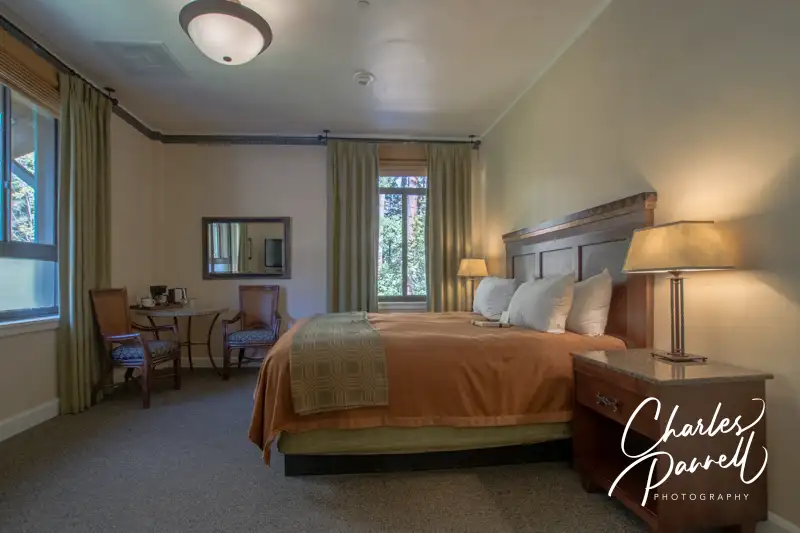
The sitting room has a 12-inch high single sofa bed, two end tables, a coffee table, two side chairs, an armoire and a mini refrigerator. There’s level access to the adjacent bedroom, which features equally good access, and is furnished with a 30-inch high king-sized bed with wheelchair-access on both sides, two bedside tables, a small table with two chairs, an armoire and a mini refrigerator.
Bedroom in Suite 206 at the Ahwahnee Hotel
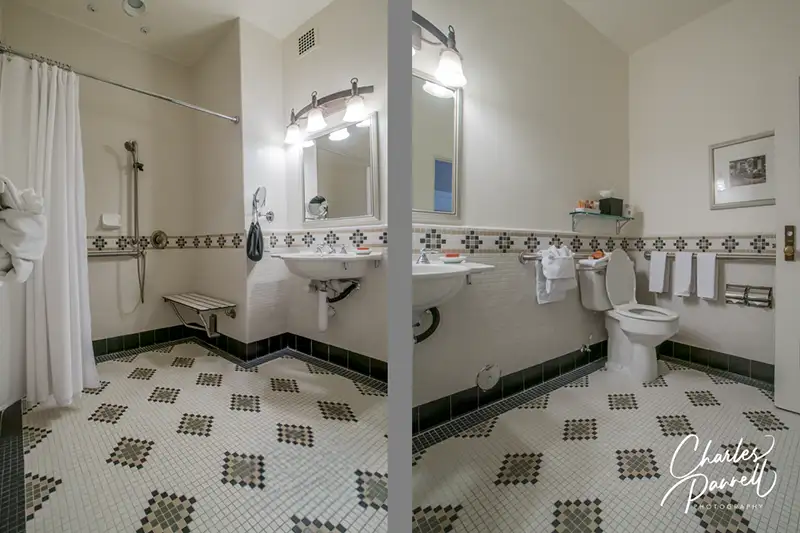
The bathroom has a full five-foot turning radius, and is equipped with a roll-in shower with grab bars, a hand-held showerhead and a fold-down shower bench. The toilet grab bars are located on the left and back walls (as seated), and the bathroom also has a roll-under sink.
Bathroom in Suite 206 at the Ahwahnee Hotel
Top it off with a lowered peephole, lever handles and a lowered clothing rod, and you have a very well designed and functional accessible room. It’s really one of the nicest accessible rooms on the property.
A Little Haunted?
The public areas of the hotel are equally accessible. As you stroll through the lobby and adjacent rooms you can’t help but notice the towering ceilings, stained glass windows and the massive fireplace in this historic property. And while we’re talking historic, lets also talk haunted.
The spirit of Mary Curry Tresidder, who once operated the hotel, is said to frequent the sixth floor. Many guests have reported feeling her presence there, and a few folks have even witnessed her dancing in the common areas. And then there’s the spirit of Mary’s husband Donald Tressider, whose footsteps are sometimes heard on the stairway. Some guests have also reported seeing figures of soldiers in the hallways; a throwback to the time when the hotel served as a convalescent hospital during World War II.
And then there’s the mysterious JFK “haunting”. The former U.S. president stayed at the hotel in 1962. He reportedly requested a rocking chair for his suite during his visit. The chair was subsequently removed after the president departed; however it’s been known to magically reappear in the suite from time to time. Ghostly shenanigans or spring cleaning furniture rearrangement? You be the judge. In the end, even if the hotel isn’t really haunted, it’s a popular stop for diehard horror movie fans, as the property served as the inspiration for the grand interior shots of the fictional Overlook Hotel in The Shining. Haunted or not, The Ahwahnee makes a great wheelchair-accessible home base for any Yosemite visit.
Barrier-Free Travel Yosemite, Sequoia and Kings Canyon National Parks for Wheelchair-users and Slow Walkers
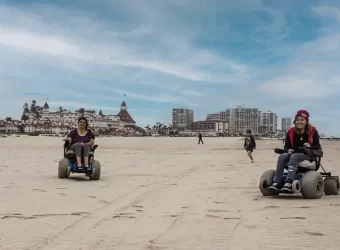
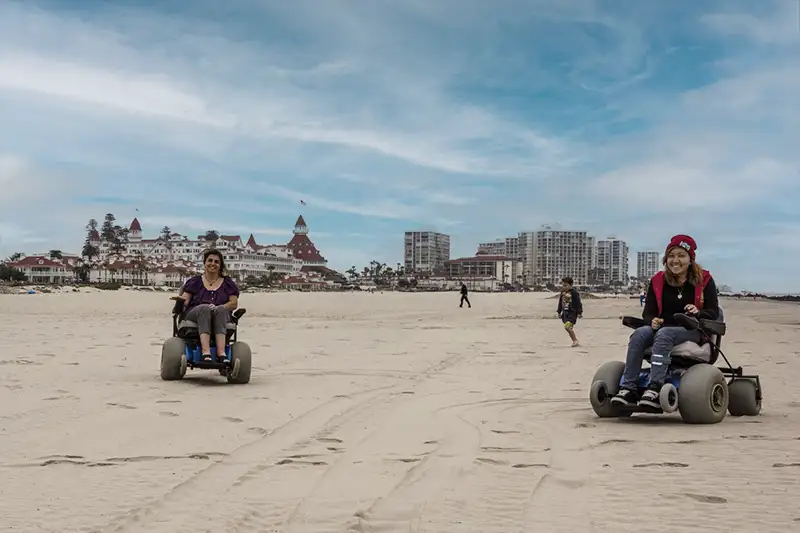
Power beach wheelchairs at Coronado Beach in San Diego, California
If a trip to a California beach is in your future, then check out this list of loaner California beach wheelchairs at www.coastal.ca.gov/access/beach-wheelchairs.html#text. Compliments of the California Coastal Commission. the list is organized by county, and it contains contact information and some brief details about the wheelchairs available. Although there’s no charge to borrow the beach wheelchairs, customers are usually asked to leave a drivers license as a deposit. The beach wheelchairs are most commonly found at life guard stands or at entrance kiosks. As always, it’s best to call in advance, just to make sure you don’t need to make advance arrangements, especially on busy holiday weekends.
Barrier-Free Travel California National Parks Road Trips Travel Ideas for Wheelchair-users and Slow Walkers
California is home to numerous Giant Sequoia groves. That said, some are more tranquil than others. The good news is, it is possible to spend the night just steps from these stately giants, in a rustic wheelchair-accessible yurt at a peaceful Central California campground. Not only is this remote campground pleasantly bereft of the summertime crowds, but it’s right across the street from a wheelchair-accessible Trail of 100 Giants (www.fs.usda.gov/r05/sequoia/recreation/trail-100-giants-long-meadow-grove). So pack up the car, and get ready to enjoy this wheelchair-accessible Giant Sequoia getaway.
On the Road
Whoever said that getting there is half the fun, most likely took a road trip to the Trail of 100 Giants. The best advice is to turn off your GPS on your wheelchair-accessible Giant Sequoia adventure. It won’t do you any good and will most likely take you in the wrong direction; but more importantly, you’ll miss the scenery along the way if your eyes are glued to a screen.
From Highway 99, take exit 65 A in Earlimart, which is about a half-hour south of Visalia. Continue on through town and head east on Road 56 for about 30 miles, past Ducor, Fountain Springs and California Hot Springs. When the main road makes a sharp turn to the right just past California Hot Springs, turn left on Parker Canyon Road (M 50). If you end up in Pine Flat, turn around — you’ve missed the turn.
Continue along Parker Canyon Road for about 13 miles, but watch for livestock, as it’s open range up there. At the stop sign make a left turn on M 90 and continue along for two miles. You’ll pass the day use parking lot on the right, with access to the Trail of 100 Giants across the street. Just up the road the Redwood Meadow Campground (www.recreation.gov/camping/campgrounds/232825?q=Redwood%20Meadow) is on the right.
A Yurt in the Forest
Yurt 2 in the Redwood Meadows Campground
The Redwood Meadows Campground has just 12 campsites, but the good news is, half of them have wheelchair-accessible yurts. And although the accommodations are pretty basic, you just can’t beat the location. Additionally, you’ll never feel crowded at this small campground.
Yurt 2 is a top wheelchair-accessible choice. It’s close enough to the facilities, yet it has a lot of privacy, and there’s a beautiful picnic area behind the yurt. Parking is available in a level dirt area in front of the yurt; and although the yurt is ramped, there is a one-to-two inch lip at the head of the ramp because of erosion. That’s also the case for the other accessible yurts in this campground. Still, with a little help, it’s doable. On the plus side, the yurt has a wide doorway, a level threshold and plenty of maneuvering room.
Furnishings include a bunk with a 20-inch high double bed on the bottom and a twin bed on the top, as well as a 16-inch high queen-sized bed. There’s also a large chair in the yurt, but other than that there’s no furniture. It’s important to note that there’s no electricity in the yurt, and you’ll also need to bring your own bedding and water. Accessible vault toilets are located nearby, close to the campground entrance, with accessible parking next to them. And although they are cleaned regularly, it’s best to bring your own toilet paper as sometimes it’s in short supply.
It should also be noted that this seasonal campground in closed in the winter. It’s usually open from mid-May through October, so plan ahead to avoid disappointment.
Inside Yurt 2 in the Redwood Meadows Campground
Explore the Giant Sequoias
Trail of 100 Giants
From the Redwood Meadows Campground, cross the street to explore the trails in Long Meadow. This secluded grove features approximately 125 giant sequoias, the largest of which is 220 feet tall and has a diameter of 20 feet.
The trail forks off in two directions shortly after the main trailhead; and the path to the right leads to the Trail of 100 Giants. The half-mile trail is paved and has a six percent maximum grade, but it’s best to take the loop in a clockwise direction to dodge most of the uphill sections. There are interpretive signs along the way, as well as benches to sit and rest and enjoy the forest. And one of the best parts of this trail is that you can get amazingly close to the giant trees.
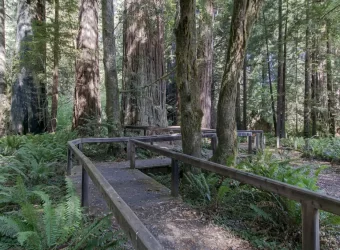
Once you circle back to the beginning of the loop, follow the signs to the Fallen Giants Loop to the left. At one time there was only one trail through the grove, but on September 30, 2011 two massive trees fell and blocked a portion of the existing trail. Since then an elevated boardwalk has been constructed alongside the fallen trees, which connects back to the original trail. The whole loop is just over a mile long, and it gives visitors an up-close-and-personal look at the downed trees. And although there are few a dips in the paved trail, it’s well maintained, and the bad sections are easy to dodge. It’s a nice meander through the forest, and this trail is also easy to access from the day-use parking area.
Both trails make for a beautiful summertime stroll, and although the grove is a bit hard to find, it’s definitely worth the effort.
Barrier-Free Travel Yosemite, Sequoia and Kings Canyon National Parks for Wheelchair-users and Slow Walkers
National Parks are a popular vacation choice. Unfortunately that means some of the more popular ones are now more crowded than ever. So how do you beat the crowds? Well you can always get an early start or visit in the off season, but to be honest that’s not always possible. Alternatively you might want to visit one of these lesser known national parks for a more relaxed experience. Not only do they all offer some scenic natural beauty, but they are also good choices for wheelchair-users and slow walkers.
Isle Royale National Park
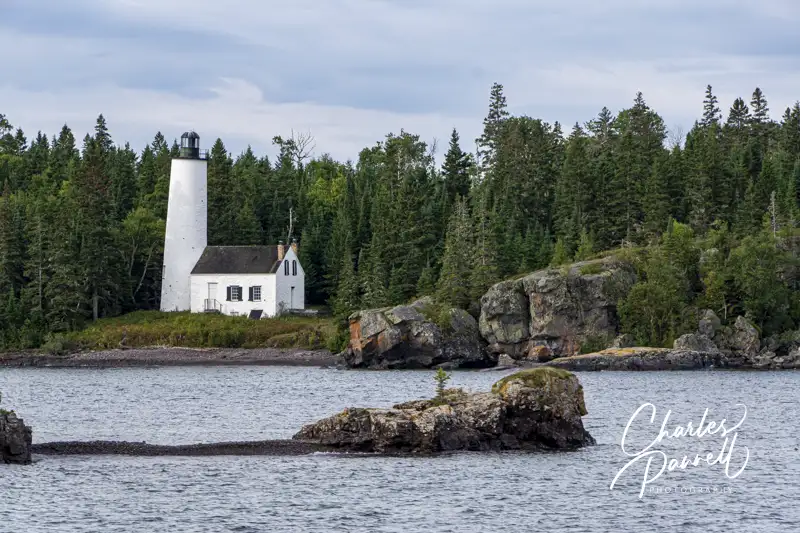
Rock Harbor Lighthouse in Isle Royale National Park
emerginghorizons.com/an-isle-royale-wheelchair-accessible-retreat At the top of the list of lesser known national parks for wheelchair-users is Isle Royale National Park. Located in the middle of Lake Superior, there’s a wheelchair-accessible ferry that takes visitors to this remote national park. And once you get to Isle Royale National Park there’s even a cozy lodge with a wheelchair-accessible room.
North Cascades National Park
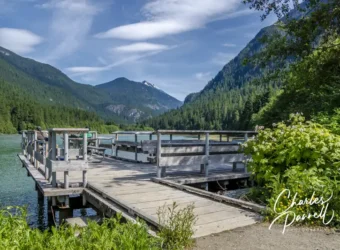
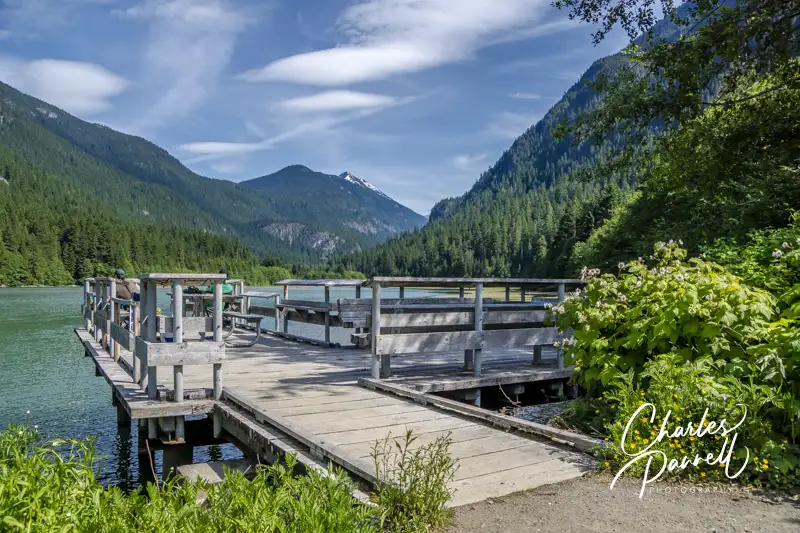
Accessible Pier on Diablo Lake in North Cascades National Park
emerginghorizons.com/the-freestone-inn-a-wheelchair-accessible-north-cascades-retreat Located in far Northern Washington, North Cascades National Park offers some scenic drives, a couple of accessible trails and even a campground with an accessible campsite. And although there’s no lodging in the park, there’s an upscale lodge with a spacious wheelchair-accessible room located near the eastern gateway.
Great Basin National Park
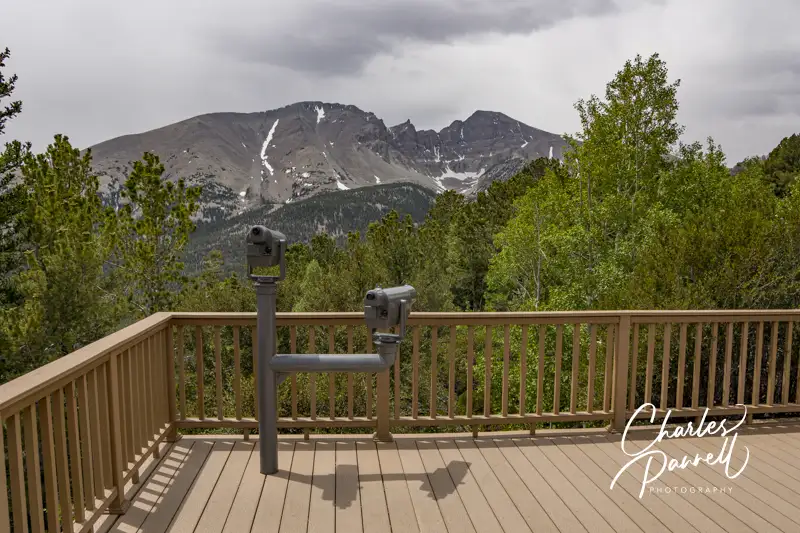
Wheeler Peak Overlook in Big Basin National Park
emerginghorizons.com/escape-the-crowds-in-great-basin-national-park Definitely one of the lesser known national parks, Great Basin National Park is located just off the “loneliest road in America” in Eastern Nevada. Enjoy the scenic drive with accessible overlooks, take a hike on a forest boardwalk or explore Lehman Caves on an accessible tour.
Pinnacles National Park
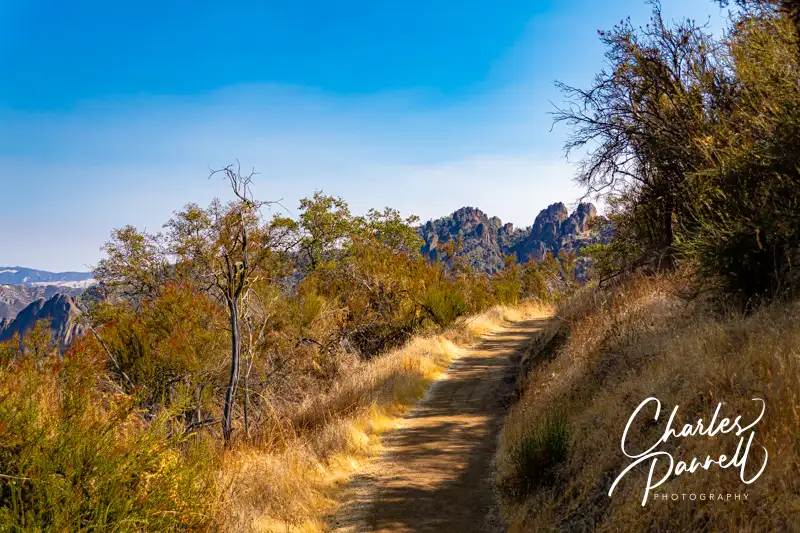
Prewett Point Trail in Pinnacles National Park
emerginghorizons.com/pinnacles-national-park/ Pinnacles National Park is a great place to spot the endangered California Condor. There are also a few accessible trails, scenic drives and some comfortable accessible tent cabins at this California national park.
Guadalupe Mountains National Park
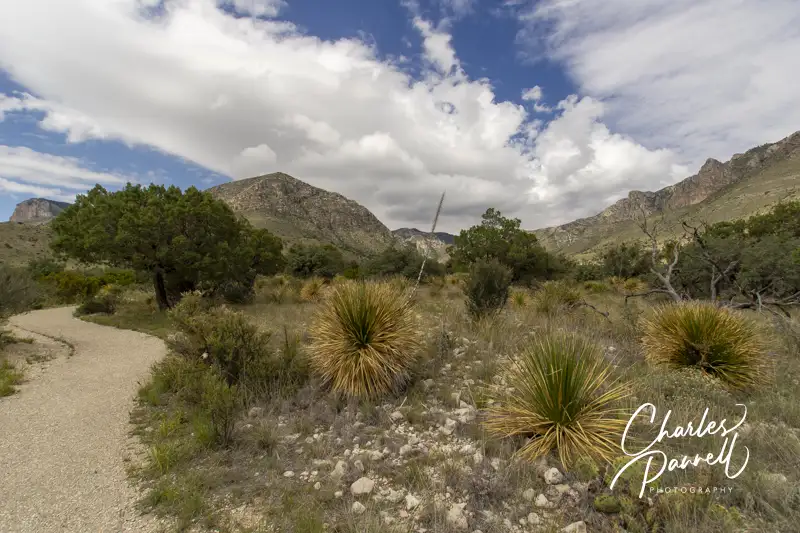
The Pinery Trail in Guadalupe Mountains National Park
emerginghorizons.com/discover-historic-guadalupe-mountains-national-park/ Located halfway between El Paso and Carlsbad Caverns, Guadalupe Mountains National Park is the site of the historic Pinery Stage Stop. There are a few accessible trails in the park, and the Frijole Ranch site is also worth a visit.
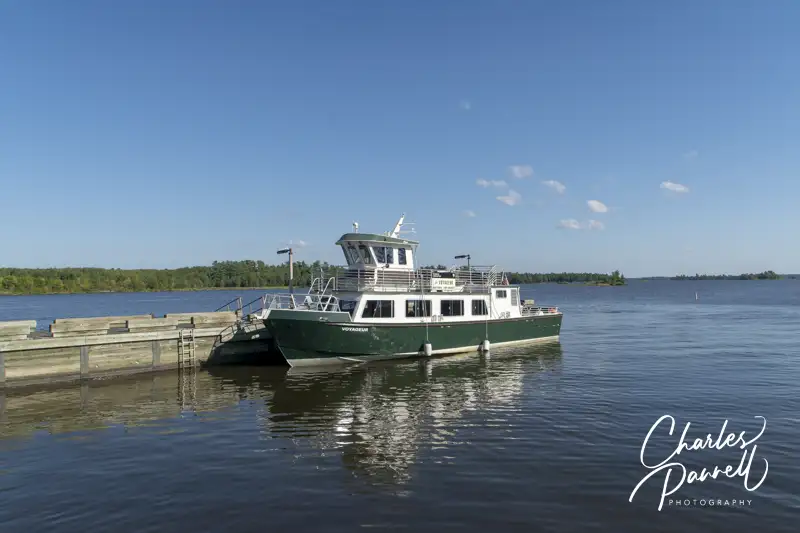
Voyageurs National Park
Tour Boat on Rainy Lake in Voyageurs National Park
emerginghorizons.com/wheelchair-accessible-voyageurs-national-park Voyageurs National Park is located in Northern Minnesota, just shy of the Canadian border. It’s filled with accessible trails, but one of the best ways to see the park is to take an accessible boat tour on Rainy Lake.
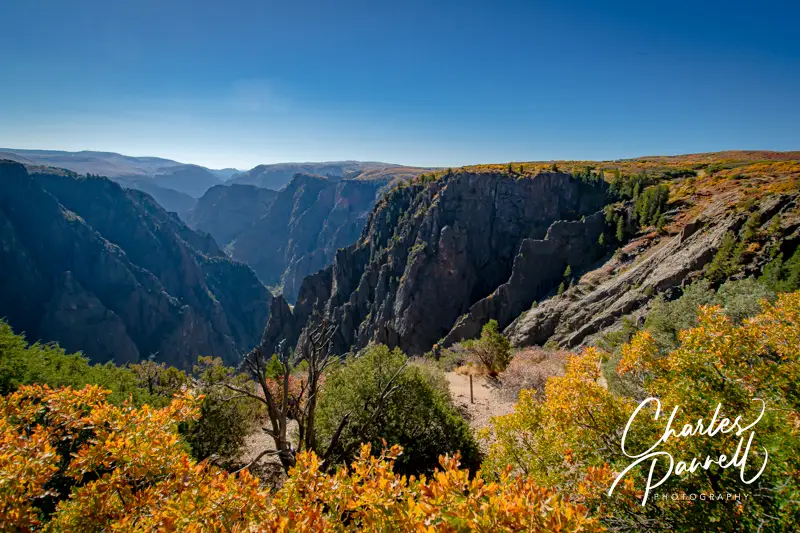
Black Canyon of the Gunnison National Park
Tomichi Point in Black Canyon of the Gunnison National Park
emerginghorizons.com/wheelchair-accessible-black-canyon-of-the-gunnison/ Known as America’s Other Grand Canyon, Black Canyon of the Gunnison National Park has far fewer visitors than its Arizona counterpart. It offers a scenic drive with some gorgeous views, and a campground with a wheelchair-accessible campsite.
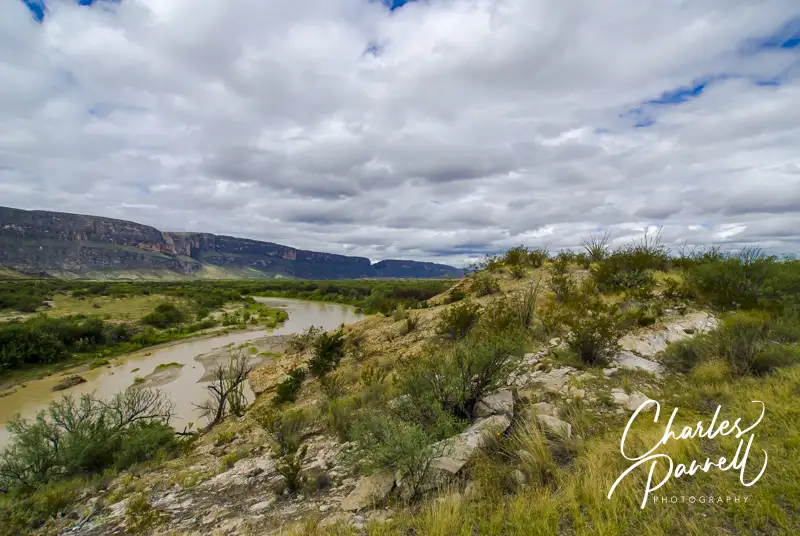
Big Bend National Park
The Rio Grande in Big Bend National Park
emerginghorizons.com/enjoy-a-spring-road-trip-to-big-bend-national-park/ Billed as being more than 100 miles from the nearest freeway, shopping center or hospital, Big Bend National Park is bordered by the Rio Grande on the south. This expansive park features scenic drives, accessible desert trails, drop dead gorgeous views and an accessible in-park lodge.
Redwood National and State Parks
The Lost Man Creek Trail in Redwood National Park, California
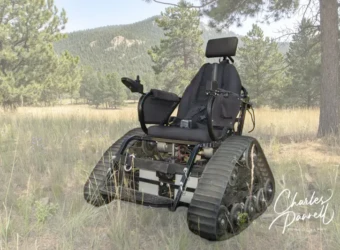
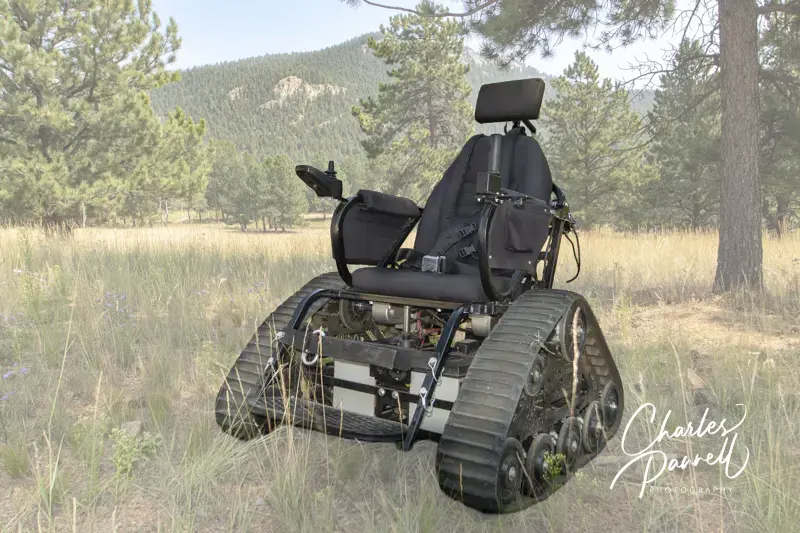
emerginghorizons.com/redwood-national-and-state-parks/ This California national park also includes three state parks. Its easy to spend a week exploring trails lined with giant redwoods.. Additionally, there’s a loaner track chair available at Kuchel Visitor Center for use on Freshwater Beach. They also have accessible campsites and cabins in several of the parks, so it’s easy to sleep under the redwoods.
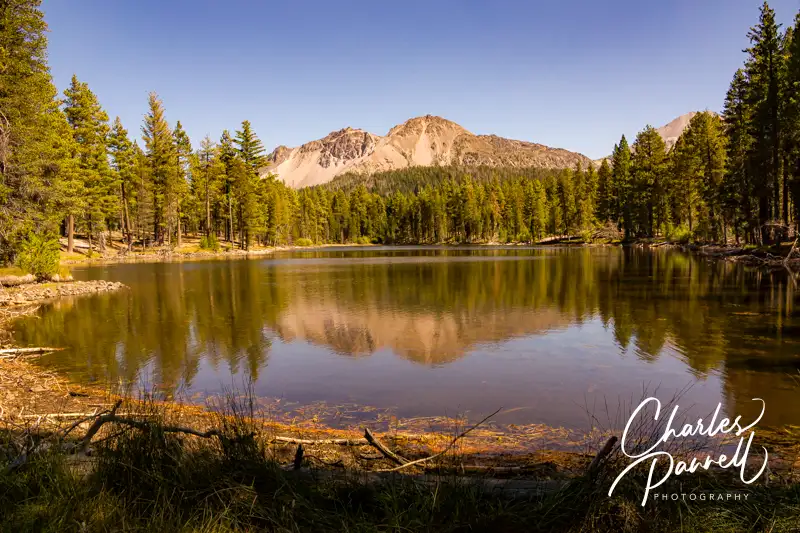
Lassen National Park
Lilly Lake in Mount Lassen National Park
emerginghorizons.com/lassen-volcanic-national-park/ Last but not least on our list of lesser known national parks for wheelchair-users is Lassen Volcanic National Park. Located in Northern California, this remote gem offers a variety of accessible trails and thermal features, as well as some accessible camping cabins. It’s a great place to get away from the city and truly enjoy Mother Nature.
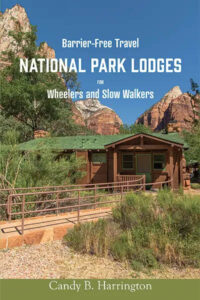
Barrier-Free Travel National Park Lodges for Wheelchair-users and Slow Walkers
Many US National Parks offer a variety of wheelchair-accessible lodging options within their borders. That said, sometimes it’s just not possible to snag a reservation at some of those popular properties. And then there are those remote national parks that don’t offer any in-park lodgings. The solution? Consider booking a property in a national park gateway city. With that in mind, here are some wheelchair-accessible lodging picks located close to some favorite US national parks.
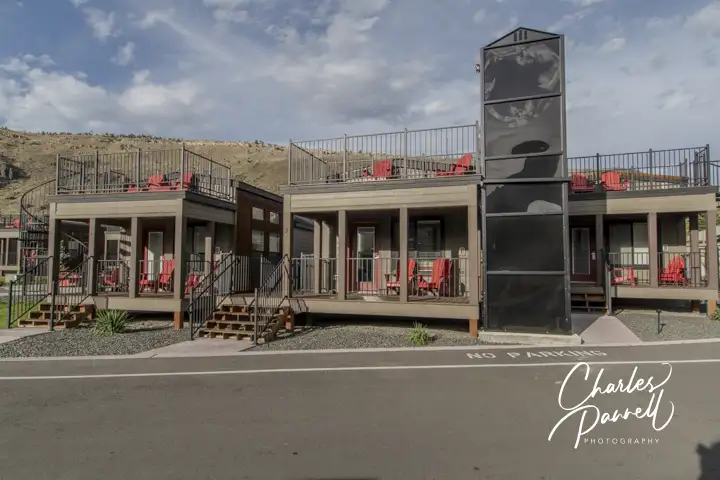
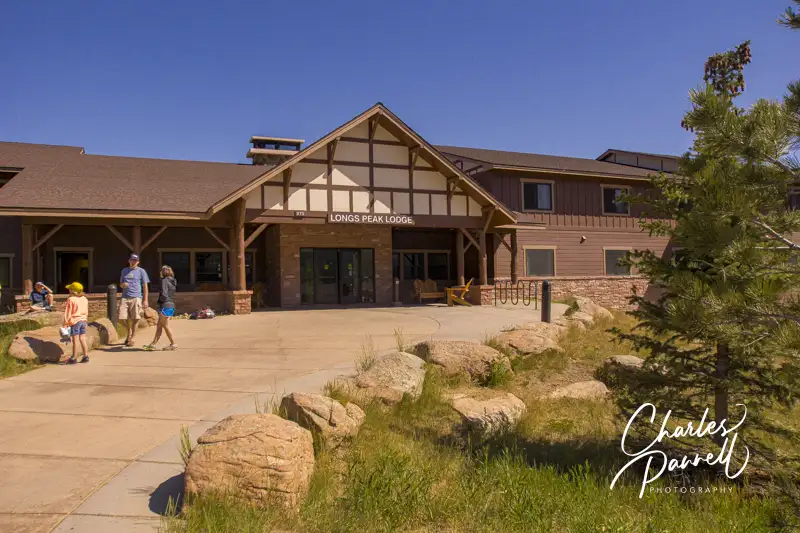
The Jim Bridger Cabins in Gardiner is at the top of our wheelchair-accessible lodging list. Located near the North Entrance to Yellowstone National Park, this complex features a wheelchair-accessible two-bedroom cabin. It includes a compact kitchen, a living room with a fireplace and large bathroom with a roll-in shower. And there’s even elevator access to the top deck, which offers some great star gazing opportunities.
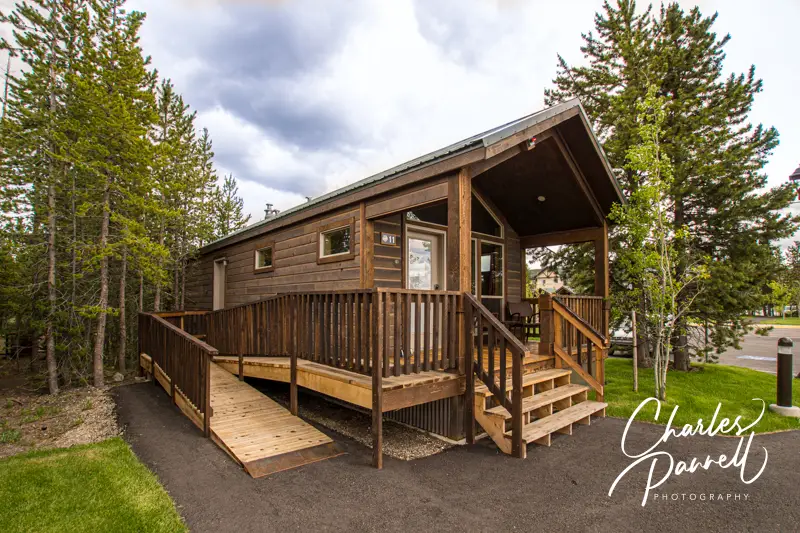
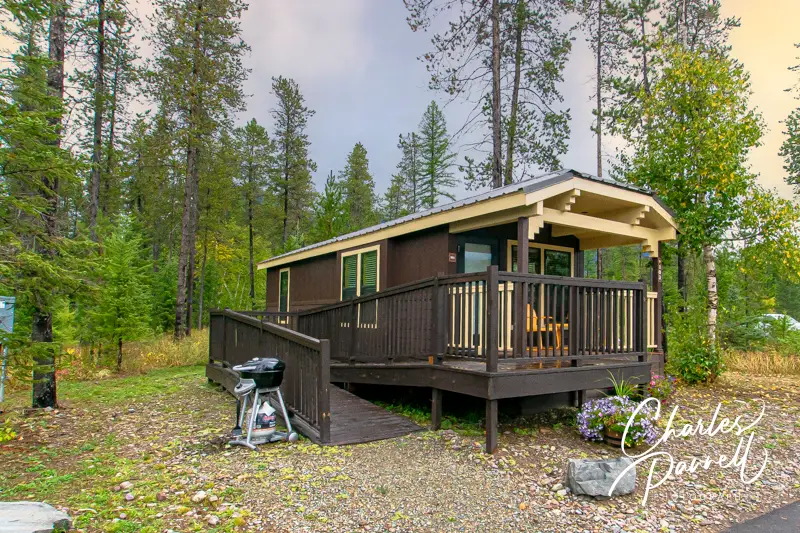
The Explorer Cabins at Yellowstone are located in West Yellowstone, just a short drive from the West Entrance to the park. They have two accessible one-bedroom cabins which each have a small kitchen, a living room with a fireplace, and a bathroom with a roll-in shower. They also include a spacious front porch and several public fire rings where guests can whip up some s’mores.
Located across from the railroad station in West Yellowstone, this historic property was built in 1910 by the Great Northern Railroad. Today it still boasts an old world ambiance but it also includes a nice accessible room with a roll-in shower. It’s a great property for railroad buffs, and it’s just a few minutes from the park entrance.
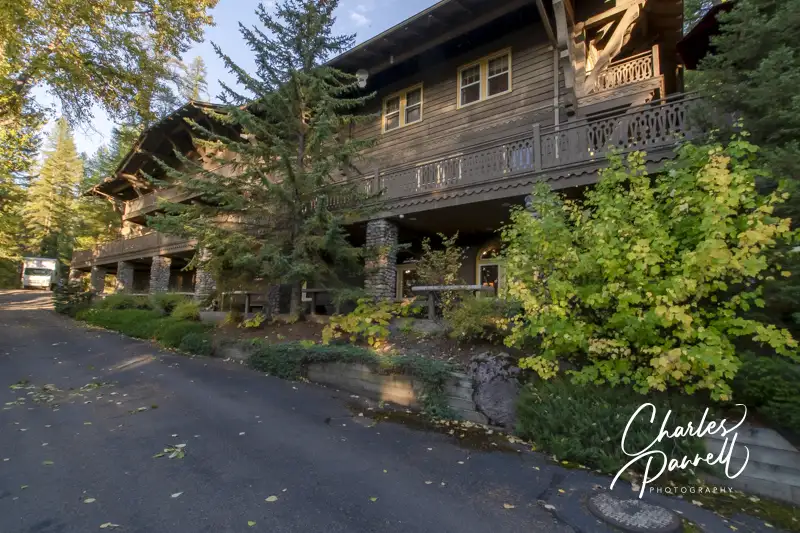
West Glacier Village has two wheelchair-accessible cabins, which each have a full kitchen, a large living room and a bathroom with a roll-in shower. And if you’d like to let someone else do the cooking, the complex is just a short walk away from West Glacier Village, where you’ll find a few eateries and shops.
Zion National Park
AutoCamp Zion
emerginghorizons.com/autocamp-zion-excels-in-accessibility/ This unique lodging complex, which offers a collection of upscale Airstream camping trailers, is located about 20 miles from the South Entrance to Zion National Park. The accessible cabins feature a small kitchen and living area and a bathroom with a large roll-in shower. Add in some nice public spaces, a few fire rings and a swimming pool with a lift, and you have all the essential vacation elements.
This charming little complex is located along Highway 12 about 15 miles from Bryce Canyon National Park. It includes an accessible cabin with a small kitchen, and a nicely equipped bathroom with a roll-in shower. It’s also got a roomy front porch and a nearby picnic table.
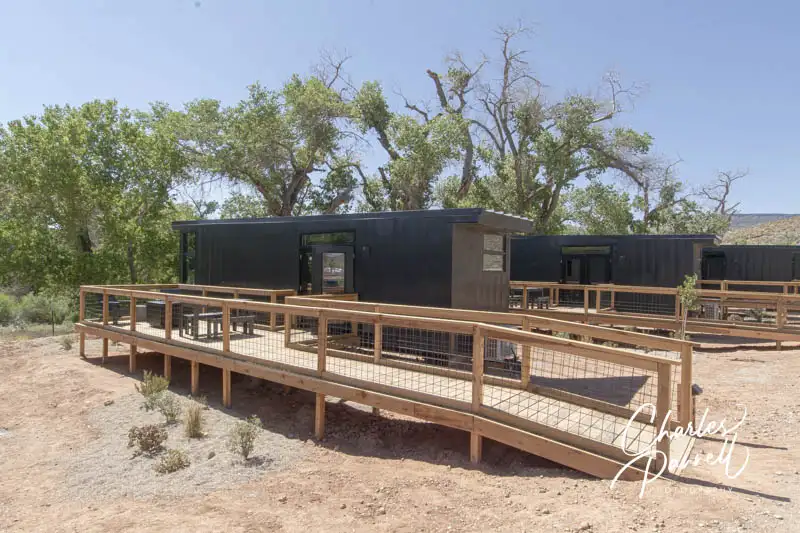
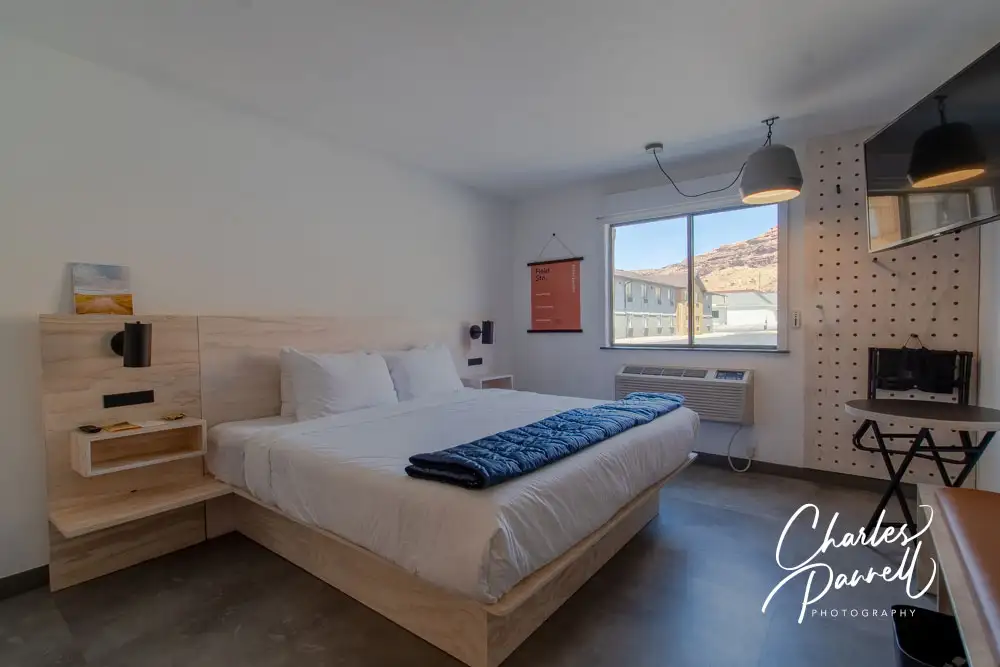
There are no lodges inside of Arches National Park, but Slackline Moab is located in its namesake town, about four miles away from the national park entrance. It has a variety of accessible rooms. Some rooms have roll-in showers, while others have tub/shower combinations. Add in a gear shop, a café, and a nice fire circle, and you have a comfortable and accessible property.
Located near the South Entrance of Yosemite National Park on Highway 41, Waybound Yosemite includes a number of top-drawer wheelchair-accessible cabins, called “havens”. They are nestled in a sugar pine forest next to Tenaya Lodge, and they are available in a variety of bed configurations. The havens also include a kitchen, living area and a small deck. Add in the clubhouse and a few firepits and you have everything you need in an accessible cabin. And guests have access to all the facilities at Tenaya Lodge.
Like its sister property in Zion, AutoCamp Yosemite features comfortable accommodations in upscale travel trailers. It’s located near the Arch Rock Entrance to the park, on Highway 140. The complex includes several accessible units that have a kitchen, living area and a bathroom with a roll-in shower. Add in a spacious deck to enjoy the sunset and you have a very relaxing lodging choice.
This North Cascades retreat features an accessible guestroom with a roll-in shower and a porch with a view. It’s located in the hamlet of Mazama on the eastern side of the park. Along with the creature comforts, the lodge borders a small scenic lake. And if you get a hankering for a pizza, there’s a parlor within walking distance.
Named after a local bush pilot this two-bedroom home features excellent access and has one bathroom with an oversized roll-in shower. It’s located just five miles from the Nisqually Entrance to Mount Rainier National Park, and it has some pleasant outdoor spaces, a fully stocked kitchen and even a pool table in the game room. A comfortable and accessible find.
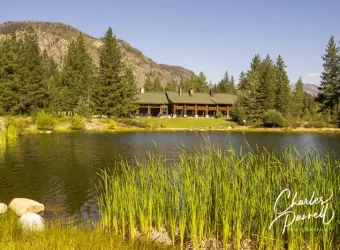
Operated by the YMCA of the Rockies, this complex includes hotel-style accommodations nestled in a Ponderosa Pine forest, about three miles from the Beaver Meadows Entrance to Rocky Mountain National Park. The larger accessible rooms are a great option for families as they have multiple beds, plenty of space and large bathrooms with roll-in showers. Add in some accessible public areas, and a nice cafeteria and you have everything you need for a comfortable – and accessible – stay.
Last but certainly not least on our list of wheelchair-accessible lodging picks, is this collection of Alaska properties located near Denali National Park. Although there are no lodges within the park these three nearby properties have a nice selection of accessible rooms. And as an added bonus, some properties even have a wheelchair-accessible shuttle to and from the park. They all make a great home-base for a Denali visit.
Barrier-Free Travel Glacier, Yellowstone and Grand Teton National Parks for Wheelers and Slow Walkers
Revelation Trail at Prairie Creek Redwoods State Park
Located 50 miles north of Eureka, Prairie Creek Redwoods State Park (www.parks.ca.gov/?page_id=415) features one of California’s last stands of old growth redwoods. And although there are several accessible trails through the grove, the recent acquisition of a track chair makes it easier for everyone to get up-close-and-personal to these majestic beauties. This lush state park makes a great day trip; however if you’d like to linger on a bit, there are also wheelchair-accessible camping cabins in the park. Either way, it’s a relaxing, refreshing and remote getaway.
Drive Through the Redwoods
Although a hike through the redwoods is grand, the drive to the park on Newton B. Drury Parkway is equally appealing. You can access the parkway from Highway 101, six miles north of Orick or four miles south of Klamath – just watch for the signs. This is probably the top scenic drive in the park. It’s about 10 miles long and it takes about 20 to 30 minutes to complete the whole thing. This two-lane road winds through an old growth redwood forest, with a number of pullouts along the way.
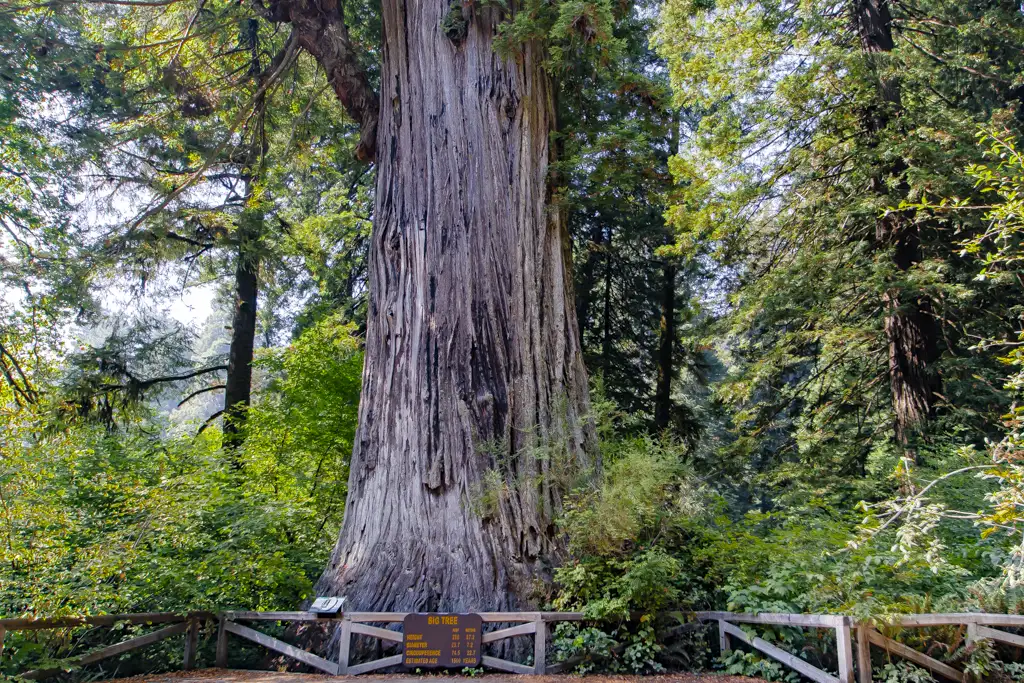
Be sure and stop at the Big Tree Wayside, which is on the right, just north of Cal Barrel Road. There are accessible parking spaces and vault toilets near this wayside exhibit, and a 100-yard paved level path to the tree. Even better, there’s ramp access up to this 304-foot giant, which towers over the surrounding forest. Even if you can’t walk or roll very far, you’ll still be able to experience this exhibit.
Big Tree Wayside
The Prairie Creek Visitor Center is located about a mile south of the Big Tree Wayside. There’s accessible parking nearby, and level access to this small park office. Inside you can pick up a map, get your questions answered and buy a souvenir
The .7-mile Redwood Access Trail begins at the visitor center and winds through the redwood grove and the day use area. Along the way the accessible Revelation Trail branches off the Redwood Access Trail and then reconnects to it about .3-miles down the road.
The Elk Meadow Picnic Area, which is located near the end of the Redwood Access Trail makes a good lunch stop. There’s level access to accessible picnic tables on a level grassy area, and accessible restrooms are located nearby. As an added bonus, elk are known to visit the meadow across from the picnic area, so keep your eyes peeled.
Spend the Night
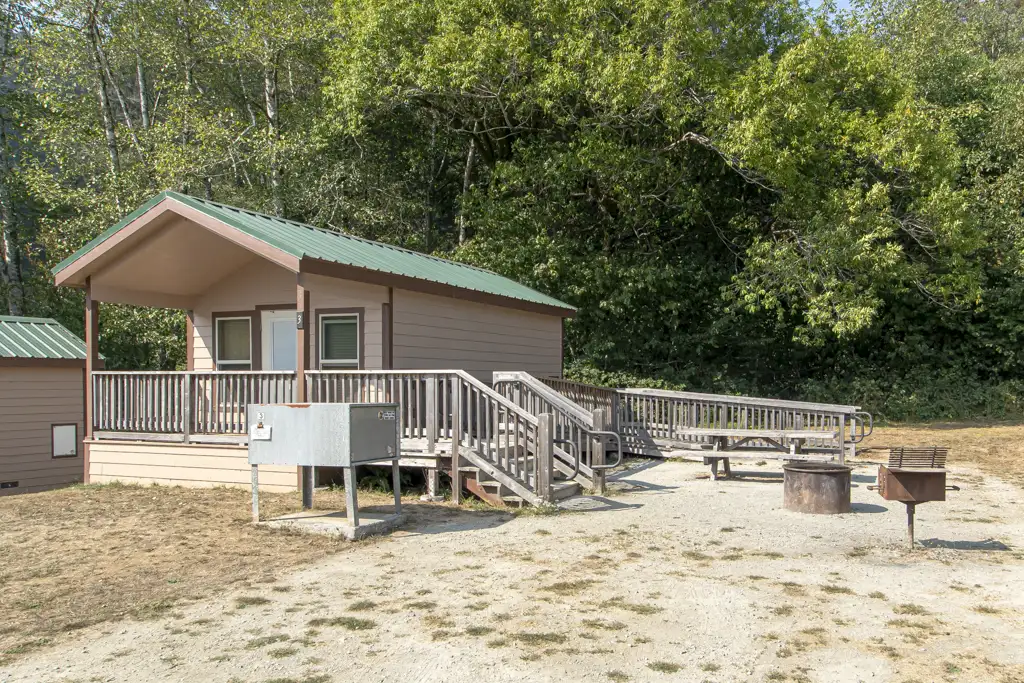
Cabin 3 at Prairie Creek Campground
If you’d like to spend a night or two in Prairie Creek Redwoods State Park, there are four accessible camping cabins in Elk Prairie Campground. Cabins 1, 2, 3 and 4 are all grouped together and they each have accessible parking with ramp access up to the front porch.
Each cabin can sleep six, with two bunk beds which have a single bunk on the top and a double bunk on the bottom. There are no mattress pads on the beds, so it’s best to bring foam padding or an air mattress. Guests also need to bring their own bedding, as it’s not provided. There’s also space outside for a small tent that can accommodate two more guests. Other cabin features include a small counter, electricity, lights and a heater. And there’s a raised grill, an accessible picnic table and a bear box outside in a level area.
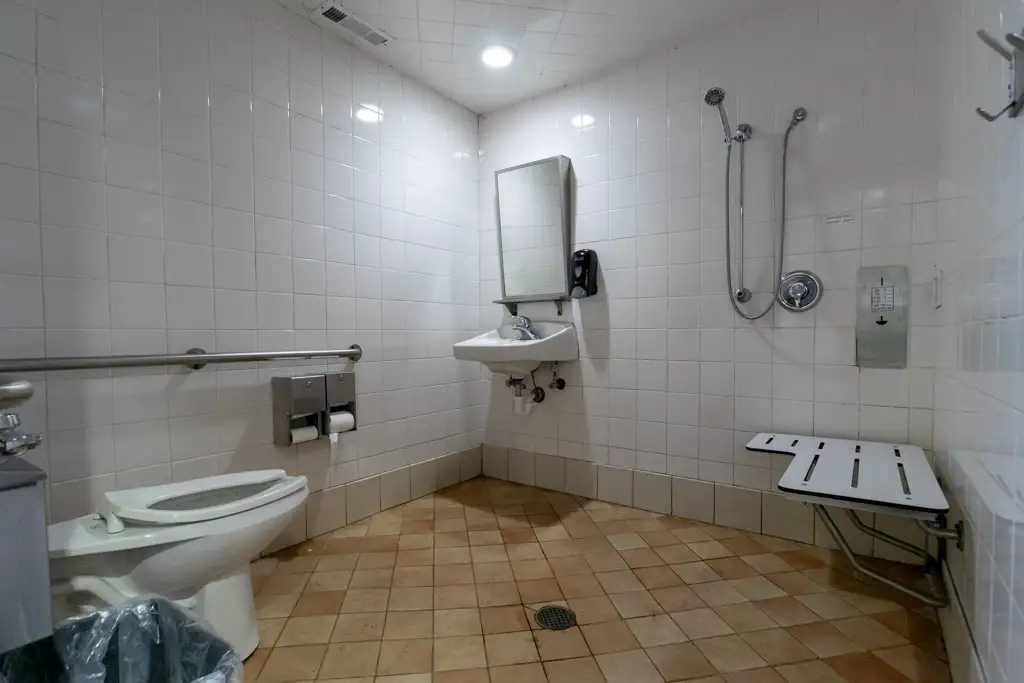
There’s no water in the cabins, but there’s a paved path to a showerhouse with accessible family shower rooms. These shower rooms include a toilet with grab bars, a roll-under sink with an angled mirror, and a roll-in shower with grab bars, a hand-held showerhead and a fold down shower bench. There’s also a full five-foot turning radius in these spacious units.
Family shower room near the accessible cabins
And since the cabins are just across the street from the meadow frequented by the Roosevelt elk, they also offer a prime elk viewing location. It’s a relaxing and accessible spot to spend a night or two.
Barrier-Free Travel California National Park Road Trips for Wheelchair-Users and Slow Walkers
Located in the Southern California Verdugo Mountains, Slough Canyon Nature Center offers loaner track chairs so wheelchair-users and slow walkers can explore the nearby rugged mountain trails. While Southern California has a number of accessible beach programs, this Burbank facility is the first to introduce wheelchair-users to track chair mountain hiking in the area.
The all terrain track chairs are designed to handle the rugged terrain and fire roads in the Slough Canyon Nature Center, They were purchased with funds from community fundraising efforts by Leadership Burbank.
Track chair reservations are available in two-hour time slots, and they must be booked at least 14 days in advance. A companion must accompany the track chair-user, and a trained docent or volunteer will also join the hike. A short safety orientation and a test drive will also be required before hikers can set out on the mountain trails in the track chairs. The track chairs are available to anyone with mobility challenges.
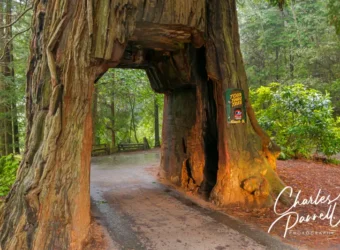
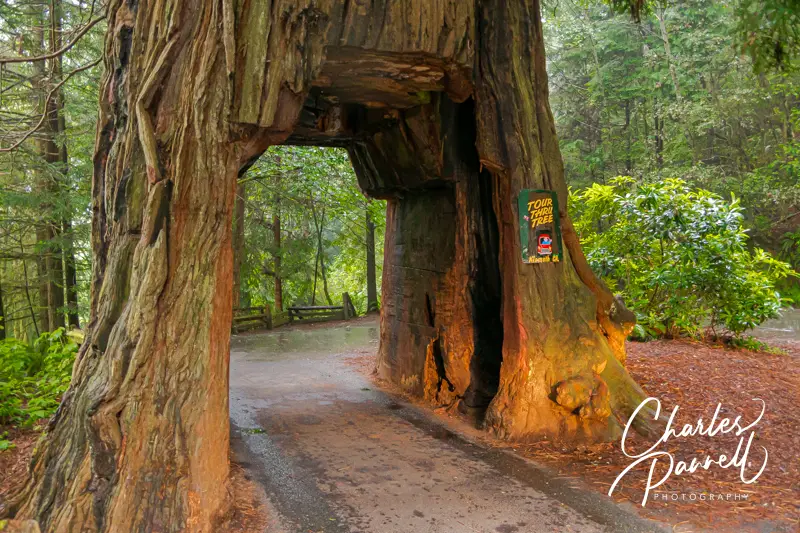
A California redwoods road trip (emerginghorizons.com/explore-californias-wheelchair-accessible-coastal-redwoods/) is a relaxing and enchanting getaway. And although there’s no shortage of places to hike around these majestic trees, driving through a massive redwood is an entirely different experience. And although it’s not standard forest practice today, at one time drive-through trees were a popular tourist attractions. That said, there are still a few places where you enjoy this kitschy experience; so check out these retro drive-through trees on your next Northern California road trip.
Klamath Tour-Thru Tree
Klamath Tour-Thru Tree
Located a quarter-mile off Highway 101, the Klamath Tour-Thru Tree is easy to find. Just take exit 769 (Tewar Valley), then turn east. The tree is just up the road on the left. Like all the drive-through trees, you pay an entrance fee at the kiosk and then follow the road and drive through the giant tree. It should be noted that it’s a pretty tight fit for most vehicles, as the tree tunnel is just 88 inches wide and 114 inches tall, so remember to turn in your mirrors if possible.
The tree tunnel was completed in 1976, and the massive redwood is estimated to be 785 years old. It’s really a quick trip through the tunnel, but for another perspective on the tree, open your sun roof as you pass through. Additionally, it’s best to hit this drive-through tree early in the morning, as there isn’t much room near the tree and traffic can get pretty congested in the afternoon.
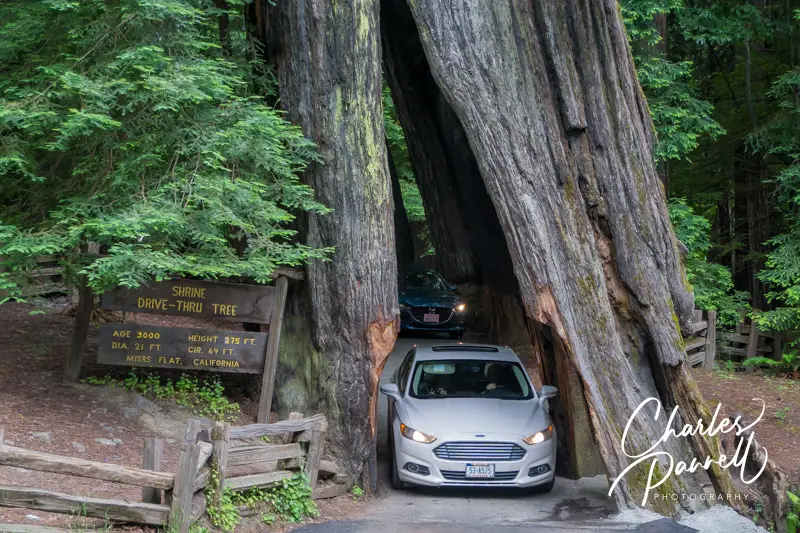
Shrine Tree
Shrine Tree
The next drive-through tree is located about 120 miles south, along the scenic Avenue of the Giants. Continue south on Highway 101, then take exit 674 in Pepperwood and turn left. Follow this scenic byway through the redwoods until you get to Myers Flat, where you’ll find the Shrine Tree on the right.
Although a tad bit larger than the Klamath Tour-Through Tree, this 3,000 year old redwood has an equally tight 91-inch wide clearance. Unlike the other drive-through trees though, the 175-foot tall Shrine Tree has a natural opening rather than a man-made one. And although the drive through the tree is short but sweet, there are also a few carvings in the park to enjoy, as well as a level picnic area.
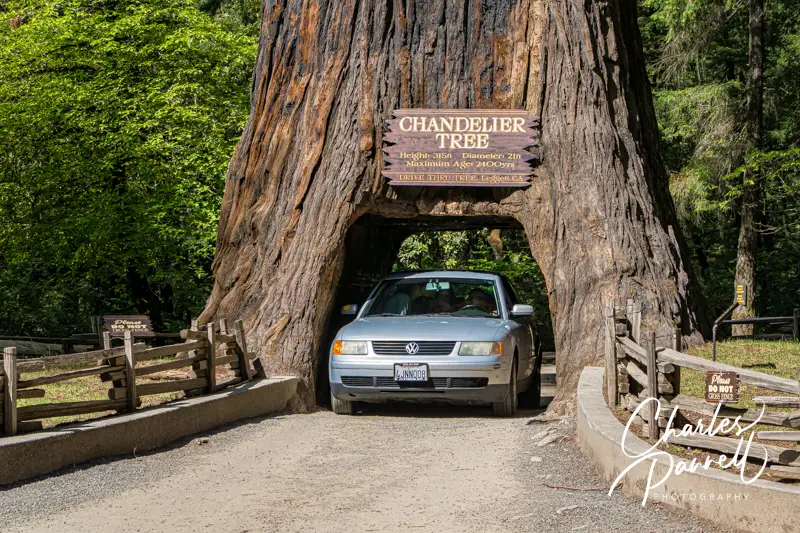
Chandelier Tree
Chandelier Tree
The final drive-through tree on the itinerary is located another 50 miles south in the town of Leggett. Follow the Avenue of the Giants until it ends on Highway 101, then continue south to Drive Through Tree Road and follow the signs to the Chandelier Tree (www.drivethrutree.com).
As you approach this giant, the fern lined drive to the 315-foot tall tree is filled with redwood planters. The tunnel was carved in the mid 1930s, and the tree is estimated to be 2,400 years old. It’s the nicest of the three trees, as there’s a large dirt parking area, and also standard picnic tables on a level grassy area. So pack along a picnic to enjoy after your drive-through experience, and enjoy your meal in the shadow of the towering redwood. And truly, if you only have time for one drive-through experience, the Chandelier Tree is the best choice. Not only is there plenty of room near the tree for photos, but there’s also a large area to linger on and enjoy it all.
Barrier-Free Travel California National Parks Road Trips Travel Ideas for Wheelchair-users and Slow Walkers
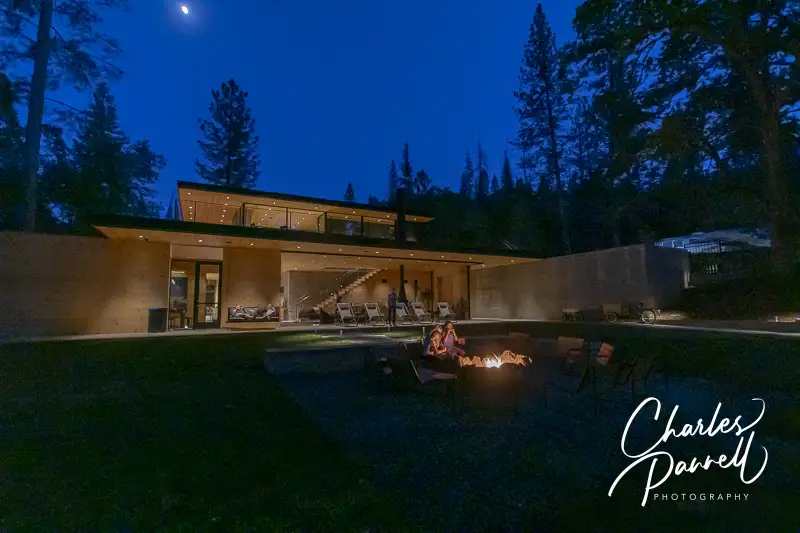
Located just east of Mariposa in Midpines, AutoCamp Yosemite is a great wheelchair-accessible lodging choice (autocamp.com/location/yosemite/) for a national park visit. Nestled on 35 wooded acres in the Sierras, this unique property features a collection of custom-built Airstream trailers, a few cozy cabins and some upscale luxury glamping tents.
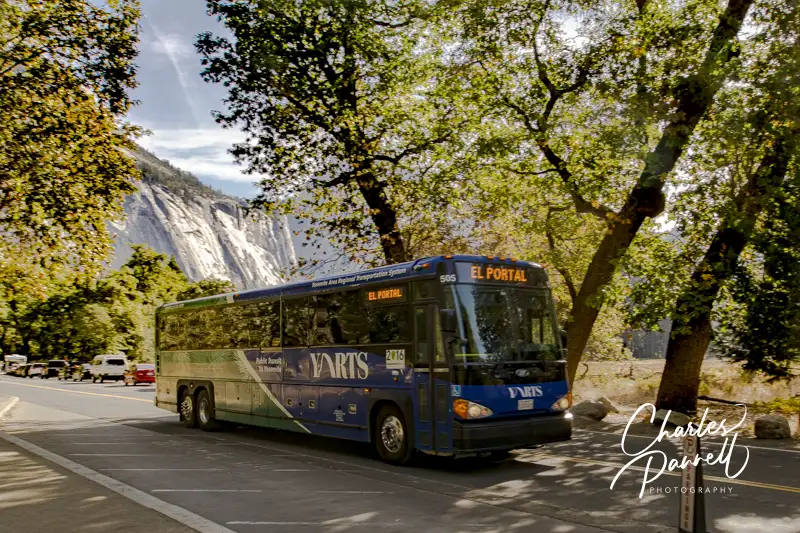
And you just can’t beat the location as it’s only a 20-minute drive to the El Portal Entrance of Yosemite National Park, and another 40 minutes to Yosemite Valley. If, on the other hand, you’d prefer to leave the driving to someone else, you can take the YARTS (www.yarts.com) bus to the park, then use the free wheelchair-accessible Yosemite shuttle bus to explore the popular sites.
YARTS Bus in Yosemite Valley
AutoCamp Yosemite is a luxurious, wheelchair-accessible and convenient lodging option for the quintessential Yosemite visit.
Wheelchair-Accessible Suites
There’s accessible parking in front of the Clubhouse at AutoCamp Yosemite, with ramp access up to this mid-century modern building. Inside you can check-in and then pick up some essentials – including a s’mores kit — in the General Store. And in the evening don’t miss happy hour at the Clubhouse.
All of the accessible units are located near the Clubhouse, along a level paved pathway dotted with mature oaks and ponderosa pines. There are three accessible Premium Suites and two accessible Classic Suites. The main difference between these accessible suites is the location, as the Premium Suites overlook the pond and have more privacy.
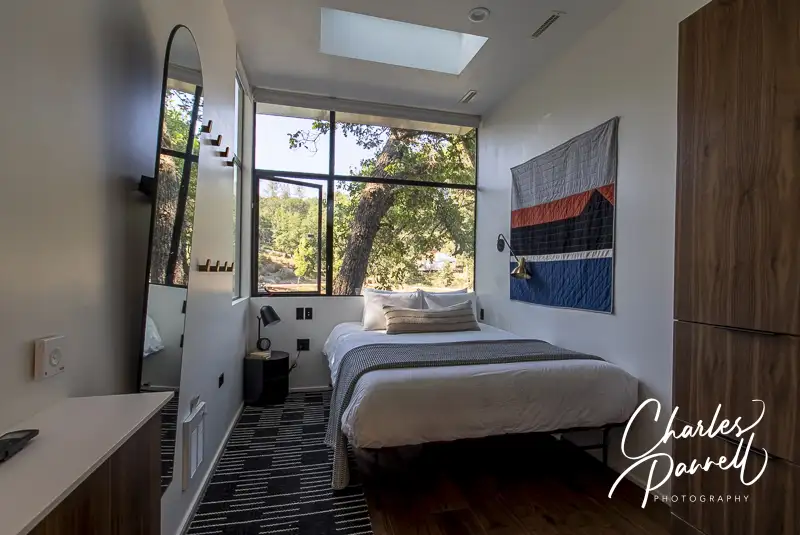
The accessible suites feature ramp access up to the spacious deck, wide doorways, wood floors, lowered environmental controls and lever handles. The bedroom includes a 25-inch high queen-sized bed with wheelchair access on the left side (as you face it), a wardrobe with a lowered clothing rod, a night table and some built-in shelving units.
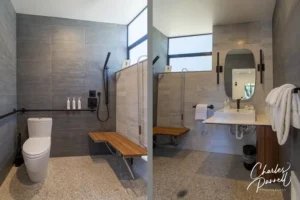
The bathroom, which is located at the other end of unit, is equipped with a Continental shower with an overhead showerhead, a hand-held showerhead, grab bars and a fold-down shower seat. The toilet grab bars are located on the back and right walls (as seated), and the bathroom also has a roll-under sink with a lowered mirror
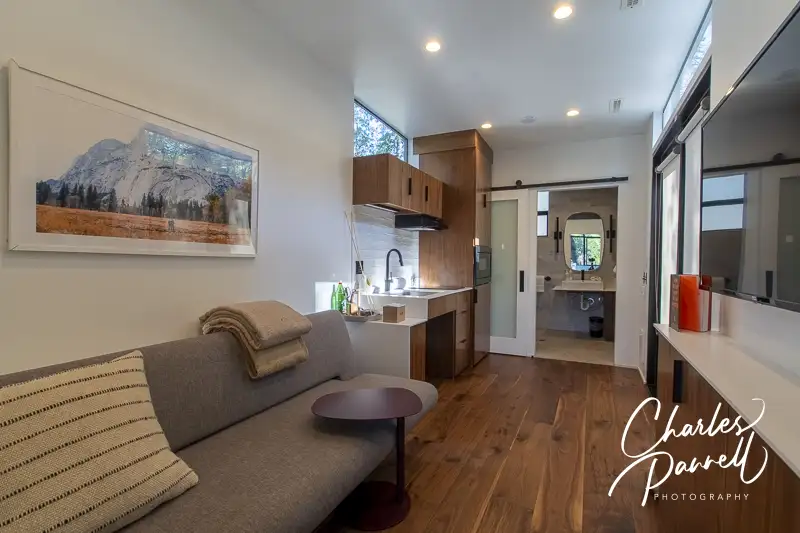
The living area is furnished with a 15-inch high futon, a small table and a television. The galley includes a roll-under sink, a two-burner cooktop, a microwave and a small refrigerator. It also includes dishes, utensils, pots, pans and wine glasses. Round out the unit with a few extras, like a coffee press and coffee, a flashlight, a lantern, a bottle of spring water and even a blue tooth sound system, and you have a very luxurious and accessible retreat.
(click image for slideshow)
Wheelchair-Accessible Suite at AutoCamp Yosemite
Living and Kitchen Space in Wheelchair-Accessible Suite at AutoCamp Yosemite
Bedroom in Wheelchair-Accessible Suite at AutoCamp Yosemite
Bathroom in Wheelchair-Accessible Suites at AutoCamp Yosemite
Accessible Adventure Tent
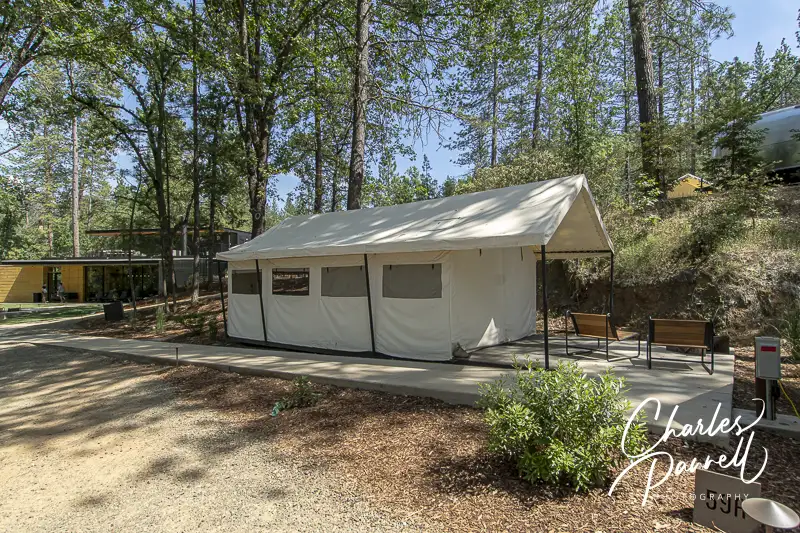
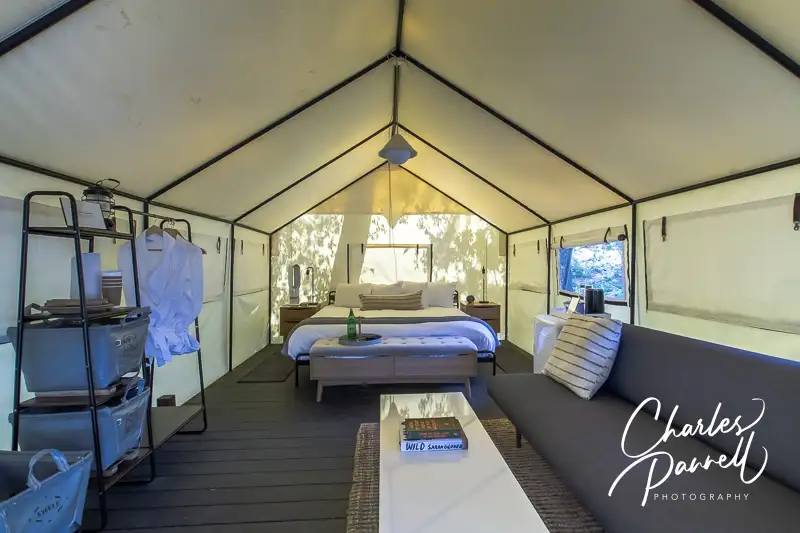
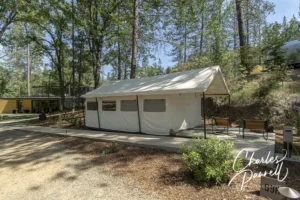
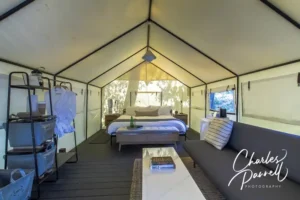
AutoCamp Yosemite also has a wheelchair-accessible Luxury Tent, which is located near the Clubhouse. There’s barrier-free access to the front porch from the sidewalk, and level access to the tent. Inside there’s wheelchair-access on both sides of the 23-inch high king-sized bed, and plenty of room to maneuver a wheelchair throughout the tent.
Other furnishings in the tent include a futon, a coffee table and a refrigerator. Towels, bath amenities, campfire cookware and utensils are also included; and the tent comes equipped with electrical outlets, a fan and a heater. Add in the requisite lantern, mineral water, plush bathrobes and an electric kettle and you’re good to go. And outside there’s level access to a pair of comfy chairs, a fire ring and a grill.
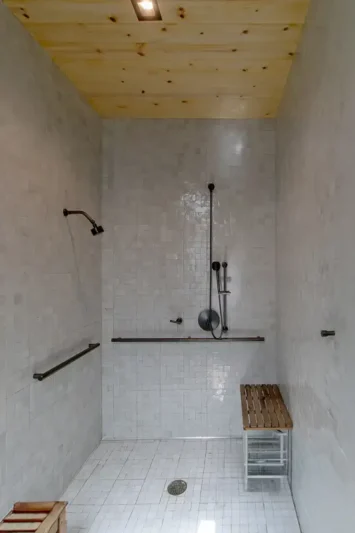
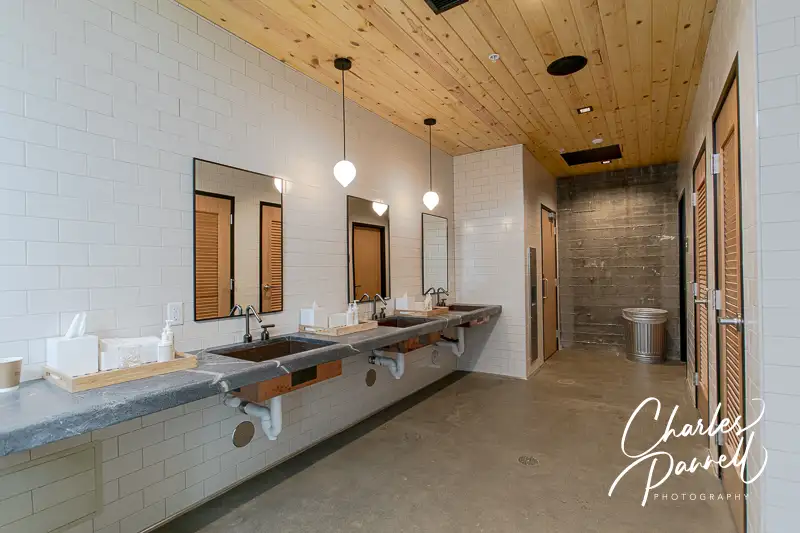
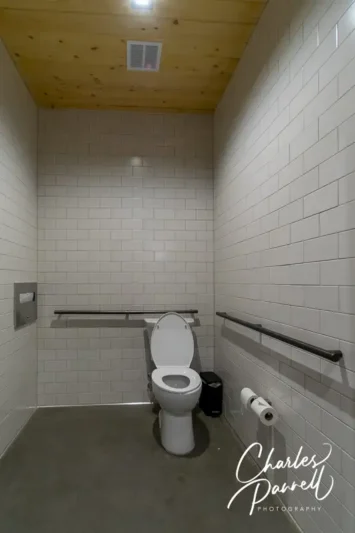
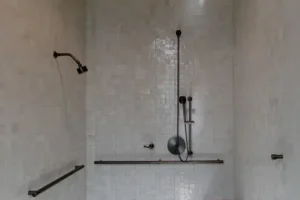
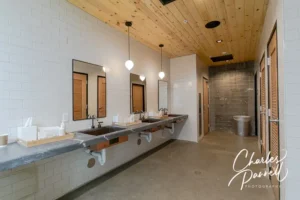
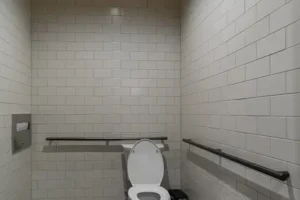
There’s no bathroom in the tent, but accessible facilities are located in the nearby Clubhouse. The men’s and women’s bathrooms both include an oversize accessible stall, and a private roll-in shower with grab bars, a hand-held showerhead and a fold down shower bench. Top it off with some roll-under sinks and lowered mirrors, and you have a very accessible setup.
In keeping with the AutoCamp design that fosters a community experience, a communal fire ring and a number of public spaces are located near the Clubhouse. There’s also a lift-equipped freshwater pool at the Clubhouse, as well as an ample assortment of lounge chairs and a comfortable rooftop BBQ area. In the end, there’s no shortage of accessible things to do in and around AutoCamp Yosemite, which makes it an excellent choice for wheelchair-users and slow walkers who want to experience the beauty of the California Sierras.
(click image for slideshow)
Accessible Adventure Tent at AutoCamp Yosemite
Interior of an Accessible Adventure Tent at AutoCamp Yosemite
Accessible Shower in the Clubhouse at AutoCamp Yosemite
Vanities in the Clubhouse at AutoCamp Yosemite
Accessible Toilet in the Clubhouse at AutoCamp Yosemite
Barrier-Free Travel Yosemite, Sequoia and Kings Canyon National Parks for Wheelchair-users and Slow Walkers