Located on the east side of the state, about five hours from Zion, Canyonlands National Park is the largest of Utah’s “mighty five”. That said, it’s also a pretty rugged park, and you’ll need a four-wheel-drive vehicle to access some of the more remote areas. There are however two sections of the park that are easily accessible in a standard car or truck — the Needles District and the Island in the Sky District. Both of these areas offer scenic drives on paved roads, with overlooks and viewpoints along the route.
Insider Tips
Don’t miss Newspaper Rock which is located just outside the Needles District, about 12 miles from the intersection of Highway 191 and Highway 211. This massive rock contains an impressive collection of historic petroglyphs, which date back some 1,500 years. There’s a 30-foot long level trail next to the petroglyph panels that offer visitors an up-close-and-personal look at these Puebloan and Ute relics.
For the best view in the park, head over to Grand View Point Overlook. From there, you’ll get a very accessible view of the La Sal Mountains and the Colorado River Canyon, and you can even catch a gander of The Needles District in the distance.
Be sure and stop at Shafer Canyon Overlook on your way out of the park. Although there are also turnouts near this overlook on the way in, it’s best to catch the view as you head north– near where the final scene of Thelma and Louise was filmed. Impressive is an understatement.
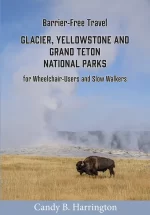
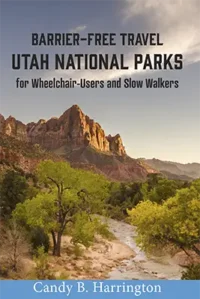
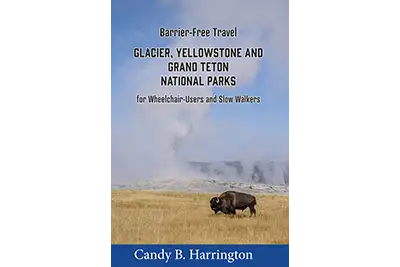
If you’re planning a Western States road trip and are wondering about wheelchair access in Yellowstone, Glacier and Grand Teton National Parks, then be sure and pick up a copy of Candy B. Harrington’s newest access guide, Barrier-Free Travel; Glacier Yellowstone and Grand Teton National Parks for Wheelers and Slow Walkers. Be it a three-day getaway to a single park, or a two-week adventure to all three national parks, this handy resource includes the detailed information and authoritative resources needed to help slow walkers and wheelchair-users plan the perfect visit.
Wheelchair Access in Yellowstone, Glacier and Grand Teton
This comprehensive second edition includes:
Accessible trail and attraction information
Photos and access details of all in-park lodges
Accessible lodging options in gateway communities
Barrier-free campgrounds
Accessible bus, snowcoach and boat tours
Accessible shuttles to and around the parks
Insider access tips
Fly-drive suggestions with accessible rental vehicle resources
National park discounted pass information
This inclusive title is the most recent addition to Harrington’s national park series; and although it’s written for wheelchair-users and slow walkers, stroller moms will also appreciate the access information in this guide. It will help everyone plan a truly accessible Yellowstone, Glacier and Grand Teton National Park road trip.
Says Harrington, “I’m especially excited about the accessible lodging improvements since the first edition of this title. Mammoth Hot Springs Hotel renovated their main lodge rooms, and they now have five accessible guest rooms, including three with roll-in showers. And outside of the parks, there are some excellent accessible choices at two new properties — William Bridger Cabins in Gardiner and West Glacier Cabin Village.”
According to Harrington, park concessionaires are placing an increased emphasis on accessibility. “From Xanterra’s accessible Glacier Red Bus Tours to the accessible boat tours down in Grand Teton offered by Jenny Lake Boating, there really are a lot of options for slow walkers and wheelchair-users in the parks,” she notes.
The National Park Service offers a number of lifetime passes for free admission to national parks and other federal lands. They are available to anyone with a permanent disability, members of the military, veterans, Gold Star Families and people over 62 years old. These passes can be obtained in person at national parks and federal recreation areas across the country (nps.gov/planyourvisit/pickup-pass-locations.htm). The passes are also available online at the USGS store (store.usgs.gov/recreational-passes); however there’s a fee for processing and shipping. And although the national park pass application is pretty straightforward, specific documentation is required for each pass. With that in mind, here’s what you need to have in hand to get your lifetime national park pass.
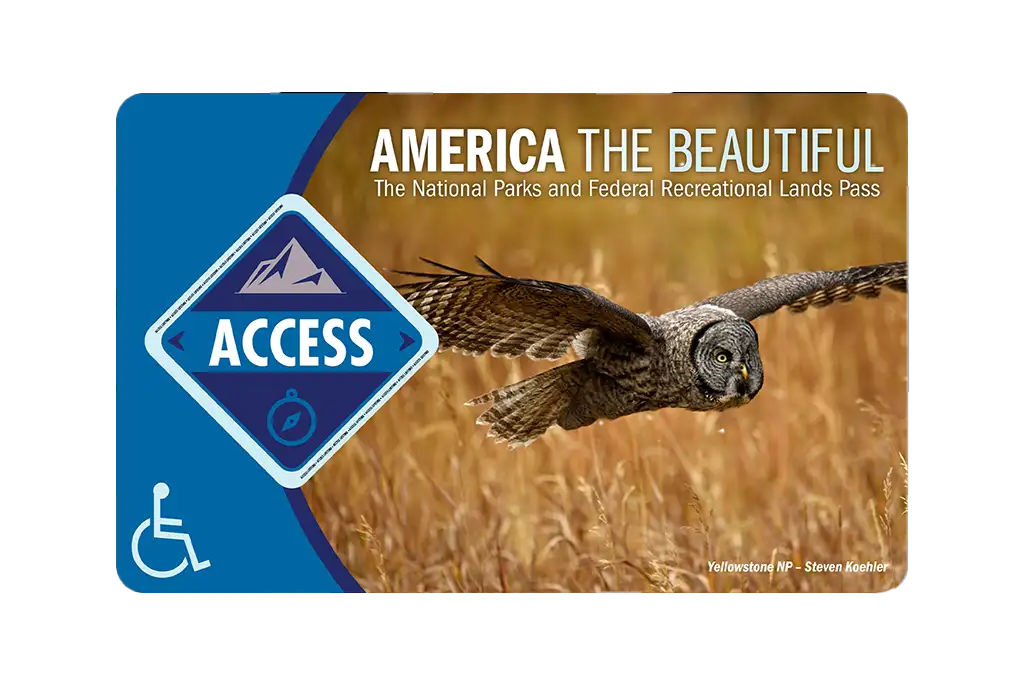
America the Beautiful Access Pass
This free lifetime pass is available to US citizens or residents with a permanent disability. Applicants must provide documentation of a permanent disability and residency or citizenship.
A physician’s letter that states that the applicant has a permanent disability is the most common documentation provided. Documents issued by a federal or state agency are also accepted, but they must include the nature of the disability, and state that the disability is permanent. If the documentation is issued by the Veterans Administration, it must also include the percentage of the disability. Examples of acceptable documentation include a notice of disability benefits from the Social Security Administration, a summary of benefits from the Department of Veterans Affairs, or an award letter from the Veterans Administration.
It’s important to note that an accessible parking placard is not accepted as proof of a permanent disability for the America the Beautiful National Park Pass. Additionally, using a wheelchair or other assistive device is not considered proof of a permanent disability.
A driver’s license, passport or state issued ID is also required to document residency or citizenship.
America the Beautiful Senior Pass
This lifetime pass is available to U.S. citizens or permanent residents age 62 or older. The cost of the pass is $80. An annual America the Beautiful Senior Pass is also available for $20, and the cost for this annual pass can be applied to the purchase of a lifetime pass.
This is probably the easiest pass to document, as a driver’s license, passport or state issued ID are all accepted as proof of age and residency or citizenship.
America the Beautiful Military Pass
Last but not least, the free America the Beautiful Military Pass is available to active duty service members and veterans of the US Armed Forces, including the National Guard and Reserves. It’s also available to Gold Star Families who have lost a family member in the line of duty.
Accepted documentation for this pass includes a Department of Defense identification card, a veteran health identification card or a veteran ID card. A veteran designation on a state issued US driver’s license or identification card is also accepted.
Gold Star Families can self-certify that they meet the required criteria by downloading and signing a voucher at https://www.nps.gov/customcf/goldstar/voucher.htm. Once they arrive at the park they can exchange the voucher for an America the Beautiful Military Pass.
So plan ahead, and pack along the right documentation to get your national park pass.
Barrier-Free Travel Yosemite, Sequoia and Kings Canyon National Parks for Wheelers and Slow Walkers
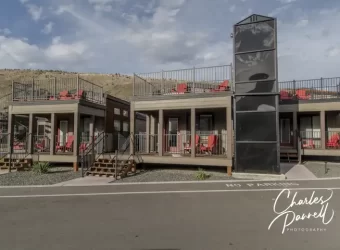
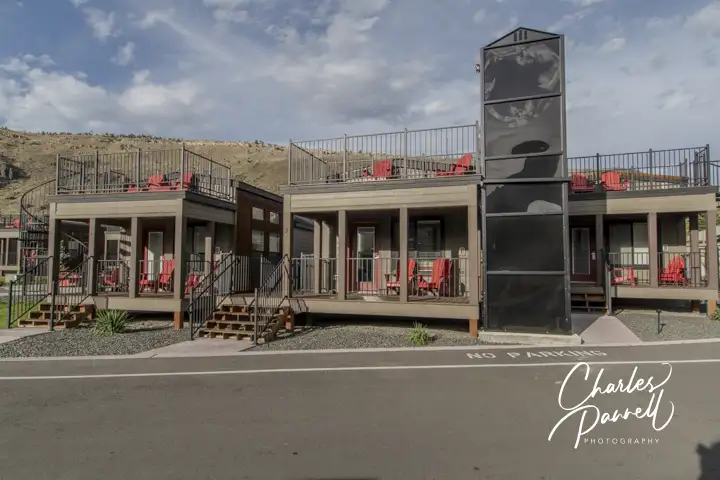
If a trip to Yellowstone National Park is on your travel calendar, then consider staying in Gardiner at the Jim Bridger Explorer Cabins (www.yellowstonevacations.com). This new addition to the Ridgeline Hotel features nine explorer cabins grouped around two community fire pits. It combines the best of both worlds — the feeling of roughing it in the outdoors, but with all the luxuries of home and hearth. And the wheelchair-accessible cabin is packed full of accessible amenities — including a choice of bed heights. As an added bonus, it’s just a short drive from Gardiner to the North Entrance of Yellowstone National Park. It’s the perfect pick for a wheelchair-accessible Yellowstone visit.
Spend the Night
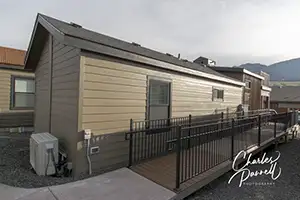
There’s accessible parking near the Ridgeline Hotel office, with level access to the front desk. From there, it’s just a short drive around the corner to the accessible parking space near accessible cabin 2. The parking space is located close to the ramp that winds around to the front porch of the cabin. Alternatively, there are steps up to the front porch, with accessible parking located nearby.
Entry to Cabin 2
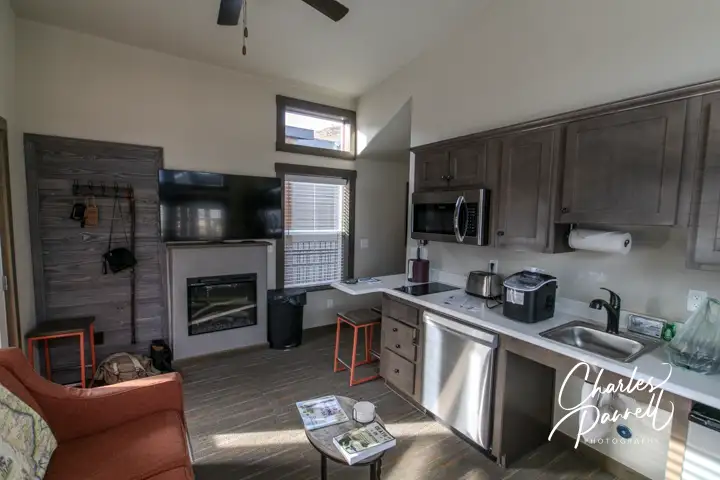
Access features in the cabin include wide doorways, lever handles, good pathway access and low-pile carpet for easy rolling. The great room is furnished with a 13-inch high sleeper sofa and a coffee table in front of a gas fireplace. The kitchenette includes a roll-under sink, a refrigerator, a dishwasher, a cooktop and a microwave. Also included are a nice selection of dishes, glasses, utensils and pots and pans. Add in a toaster, a coffee maker and even an ice maker and you have all your bases covered.
Kitchen in Cabin 2
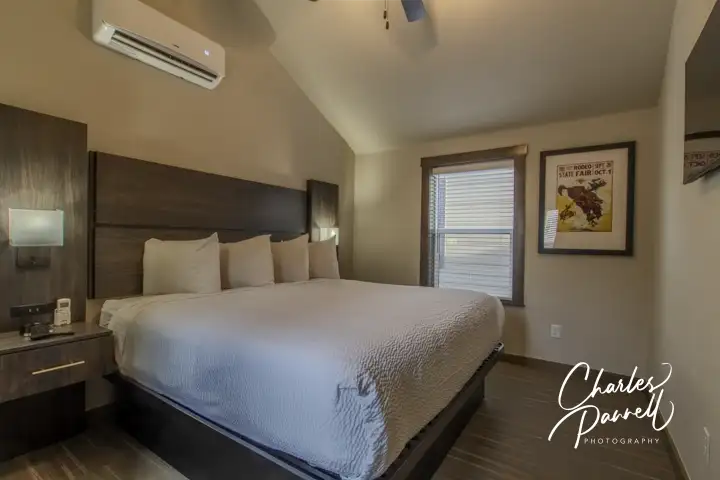
The master bedroom is furnished with a 31-inch high platform bed with wheelchair access on both sides; while the second bedroom has a bunk bed with a double on the bottom (23-inches high) and a twin on top. So between the sleeper sofa and the two bedrooms, guests definitely have a choice in bed heights.
Master Bedroom in Cabin 2
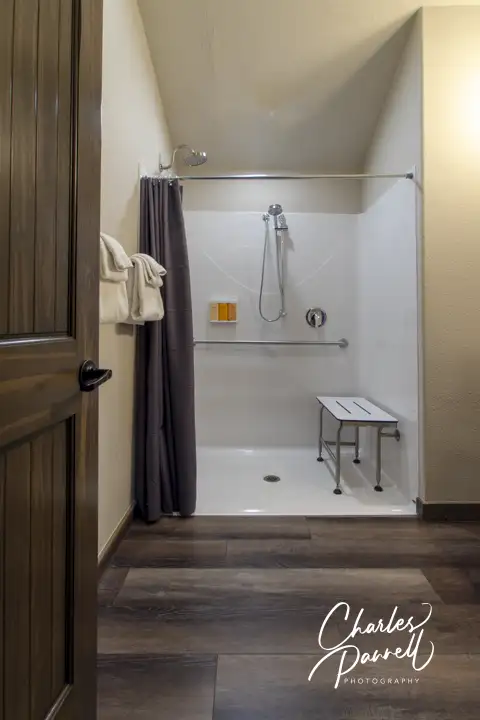
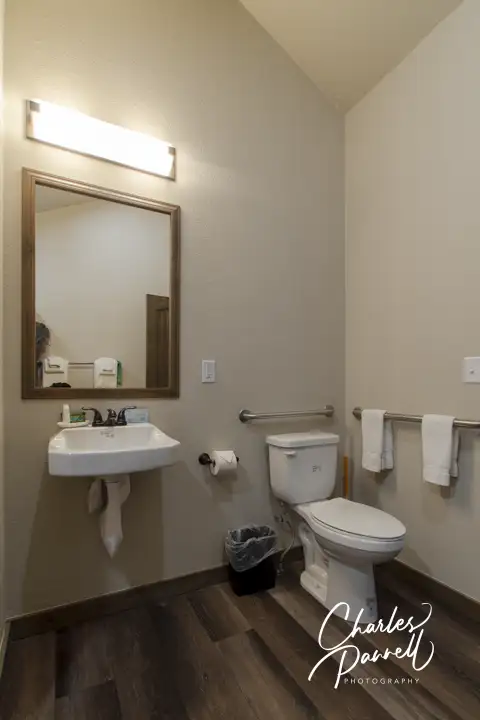
There’s excellent access in the bathroom as well, which boasts a full five-foot turning radius. It’s equipped with a roll-in shower with a fold-down shower bench, grab bars and a hand-held showerhead. Other access features include a roll-under sink and a toilet with grab bars on the back and left walls (as seated).
Shower in Cabin 2
Sink and toilet in Cabin 2
The Extras
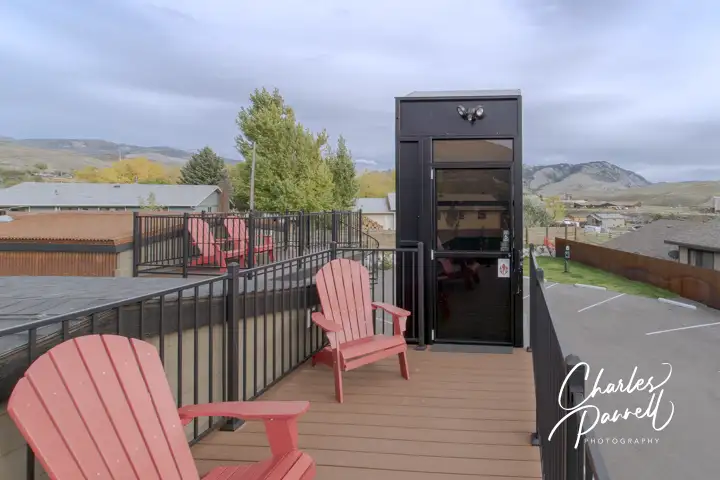
And then there are those little extra features at this fun wheelchair-accessible Yellowstone lodging pick. Lets start out with the private rooftop deck in cabin 2. Although the other cabins have a spiral staircase up to this feature, there’s a private elevator to access the deck in accessible cabin. It’s a great place to chill at night or to enjoy a cup of freshly brewed coffee in the morning.
Rooftop deck on Cabin 2
The explorer cabins come equipped with walking sticks, flashlights and binoculars. There’s also a nice little collection of games in the hall closets, including National Park Monopoly. And if you need to do some laundry, it’s free — along with the detergent — over at the Ridgeline Hotel. Last but certainly not least, there’s the free s’mores kit, so you can craft your own yummy creation around the community fire pit. All in all, it’s a great wheelchair-accessible Yellowstone lodging pick, with plenty of choices for wheelchair-users and slow walkers.
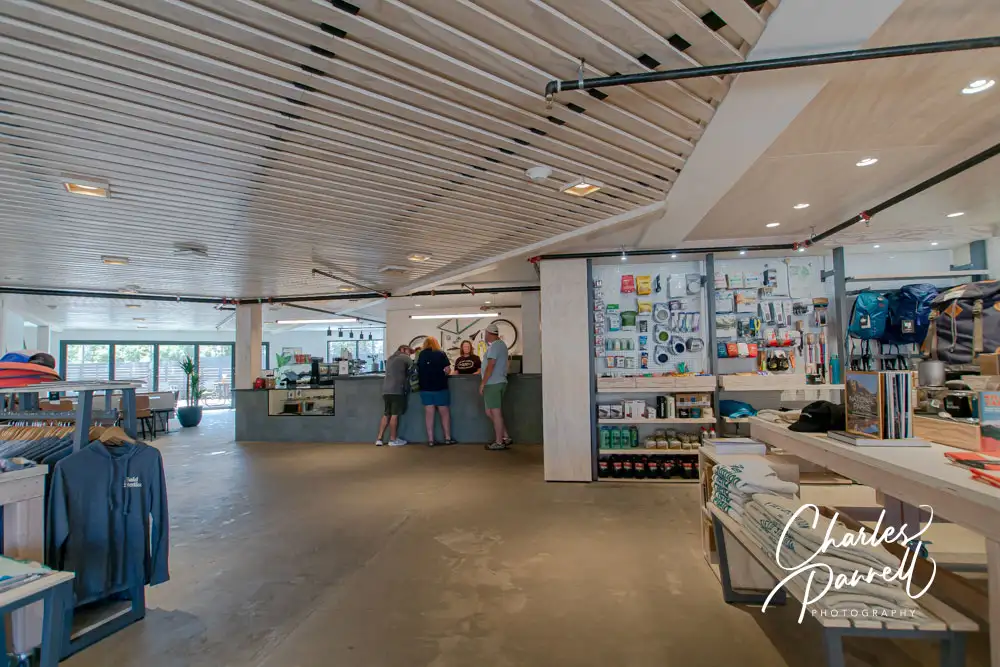
Slackline Moab (https://www.hilton.com/en/hotels/cnymaid-slackline-moab/) exudes a distinctive outdoor vibe, so much so that when you walk in to the front lobby you feel like you’ve just entered a REI or some cool low-key coffee house. The first thing you see is a collection of outdoor gear and apparel, with a few folks lingering over coffee and snacks over to the left. The back wall is a large window, that folds open to create a seamless transition to the comfortable outdoor space. And way over in the corner you can spot the front desk – proof positive that you really are in a hotel. To say it’s a refreshing change is an understatement. And in keeping with this progressive concept, access is also front and center at this Hilton property.
The Public Spaces
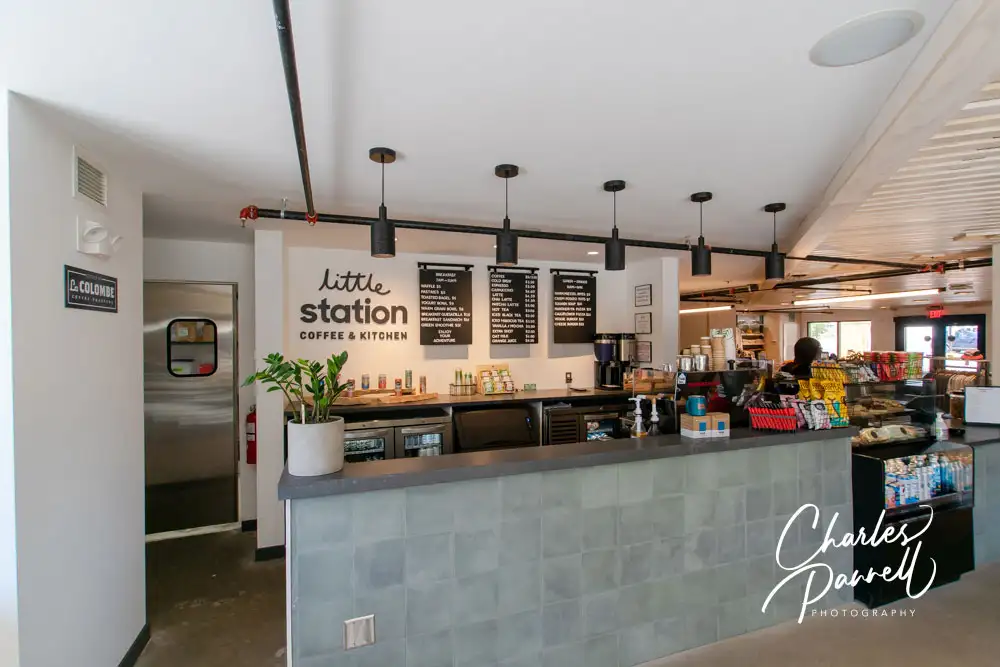
Little Station Café at Slackline Moab
Previously an abandoned and deteriorated Super 8 property, this aging property got a makeover and a new life. And the results are astonishing. In fact it’s hard to imagine that this property was previously ready for the wrecking ball.
And again the access is excellent at Slackline Moab. There’s plenty of accessible parking in the large lot, with level access to the power assist front door. And inside there’s ample room for even the largest wheelchair or scooter to maneuver through the public spaces. Accessible restrooms – which double as changing rooms for the retail space – are located just off the front lobby. And there’s plenty of room for wheelchair-users to enjoy a cup of coffee, a breakfast bagel, pizza or a burger in the Little Station Cafe. Beer and wine are also available, and if you’re in a hurry they have a number of grab-and-go selections.
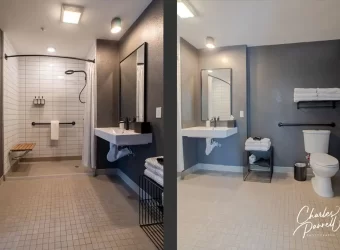
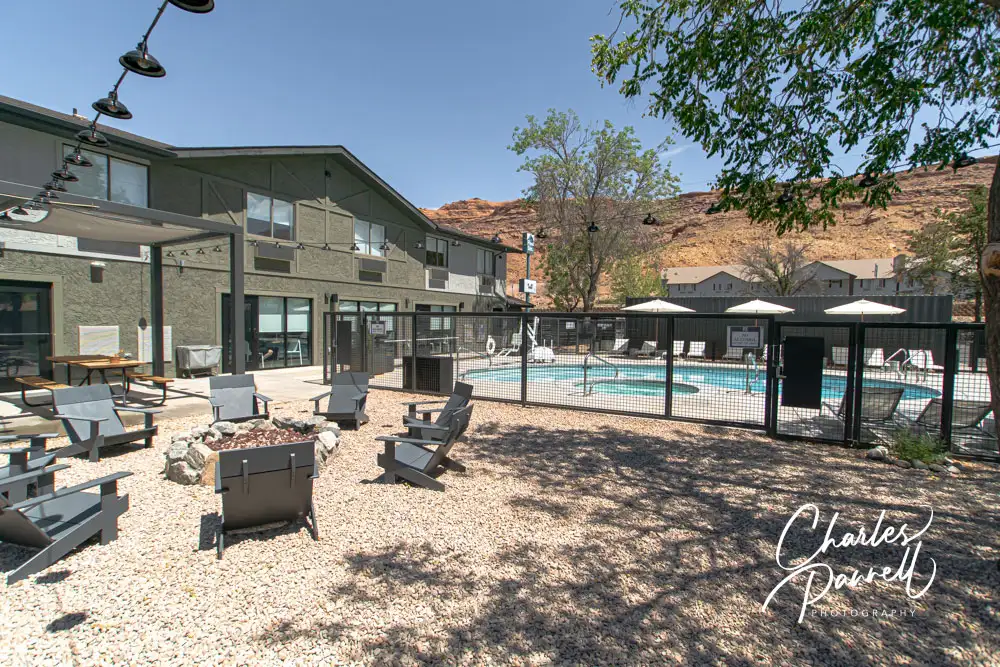
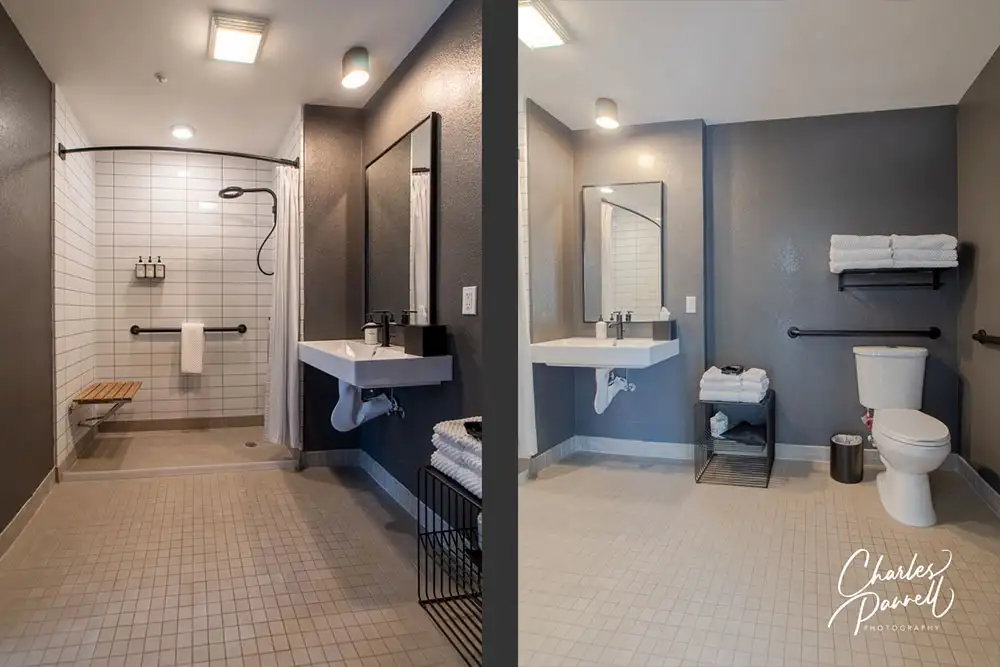
Outside there’s level access to the picnic tables and outdoor furniture, which are bordered by a mister. And in the center you’ll find a welcoming fire circle. There’s also level access to the pool area, and the portable pool lift can be used in the pool or the adjacent hot tub. Next door there are family bathrooms that are each equipped with a roll-in shower with grab bars, a hand-held showerhead and a fold-down shower bench. They also each have a toilet with grab bars and a roll-under sink, and ample room for a large wheelchair and an attendant. They can be used as changing rooms, or as bathroom facilities for folks that rent out the van life spots.
Outside grounds at Slackline Moab
The Rooms
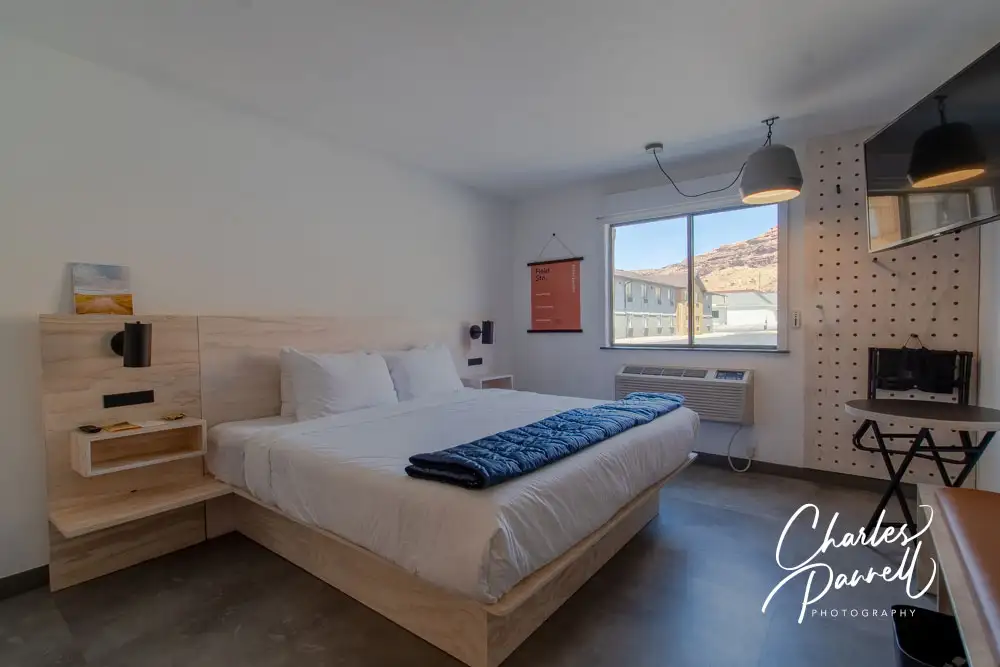
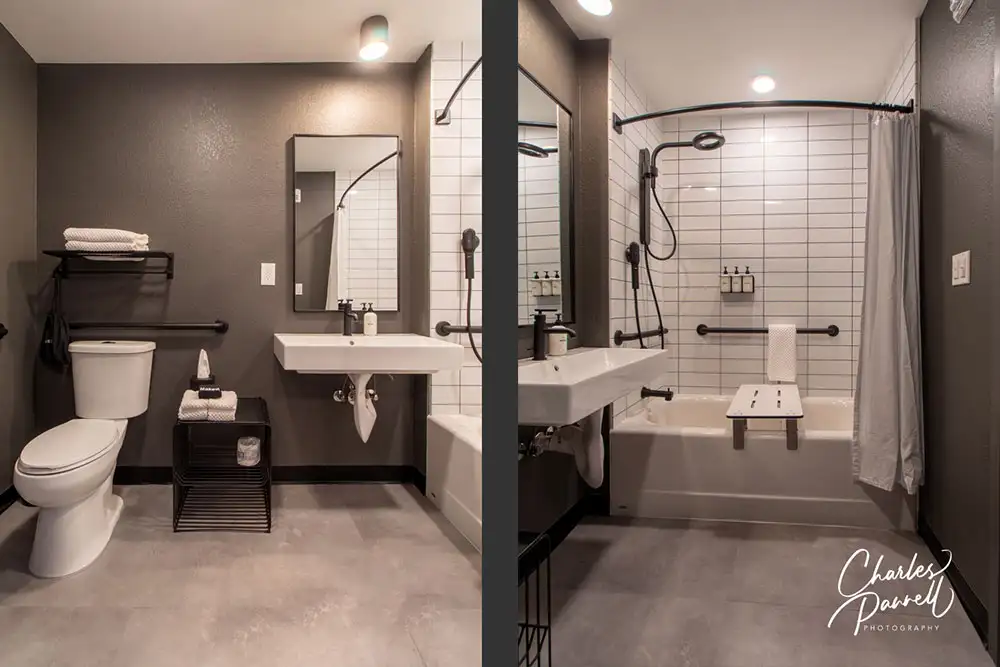
Field Station Moab has seven accessible rooms, all of which are located on the ground floor. Room 101 includes a level threshold, wide doorways, a lowered peephole, lever handles and good pathway access. It’s furnished with a 25-inch high king-sized bed with wheelchair access on both sides, a table and chairs, a bench, a chest of drawers and a refrigerator, And, like all the accessible rooms, it also has remote controlled window shades. The bathroom features a full five-foot turning radius and is equipped with a bathtub with grab bars, a hand-held showerhead and a tub bench. It also includes a roll-under sink and a toilet with grab bars on the back and right walls (a seated). It’s a comfortable room with a definite outdoor feel to it.
Room 101 at Slackline MoabBathroom in room 101 at Slackline Moab
Rooms 103, 114 and 301 are also accessible king rooms with a tub/shower combination. Rooms 349 and 352 are accessible double queen rooms. Room 349 has a tub/shower combination, while room 352 has a roll-in shower.
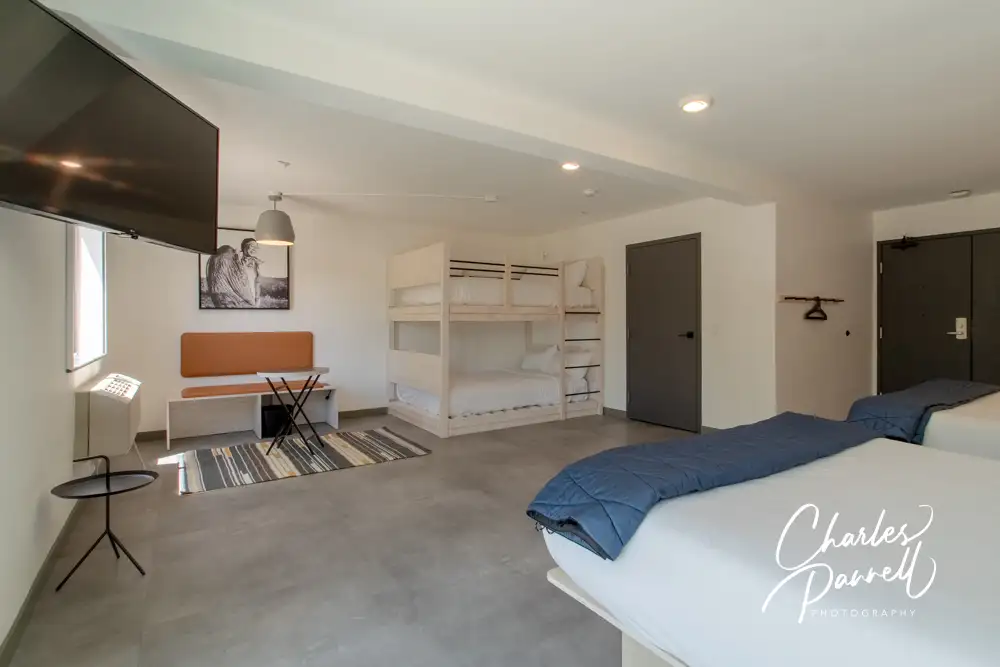
Room 300 – which is huge – can comfortably accommodate up to eight people. It includes the same basic access features as room 101, except that it has a wider double entry door. It’s furnished with two 25-inch high queen sized beds with wheelchair access on both sides, and a double bunk bed (the bottom bunk is 21 inches high). It has the same basic furnishings as room 101. There’s also level access to a patio, which has a few chairs and a fire pit. The bathroom includes a roll-in shower with grab bars, a hand-held showerhead and a fold-down shower bench. Top it off with a roll-under sink and a toilet with grab bars on the back and left walls (as seated).
Room 300 at Slackline MoabBathroom in room 300 at Slackline Moab
The Extras
And then there are the extras. There’s level access to the laundry room with plenty of room for wheelchair-users to access the front loading machines. And if you want to heat up a quick snack there are also microwaves located in the community space.
But one of the best extras at this property are the employees, as they are all local experts in one area or another. Ask them a question and you’ll get great advice from a local. They can also help set up tours or connect you with a local guide. And if you forgot something at home, they have a good selection of rental gear.

 If you’re planning a Western States road trip and are wondering about wheelchair access in Yellowstone, Glacier and Grand Teton National Parks, then be sure and pick up a copy of Candy B. Harrington’s newest access guide, Barrier-Free Travel; Glacier Yellowstone and Grand Teton National Parks for Wheelers and Slow Walkers. Be it a three-day getaway to a single park, or a two-week adventure to all three national parks, this handy resource includes the detailed information and authoritative resources needed to help slow walkers and wheelchair-users plan the perfect visit.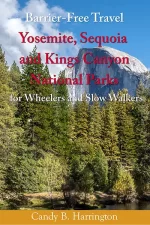
 The National Park Service offers a number of lifetime passes for free admission to national parks and other federal lands. They are available to anyone with a permanent disability, members of the military, veterans, Gold Star Families and people over 62 years old. These passes can be obtained in person at national parks and federal recreation areas across the country (