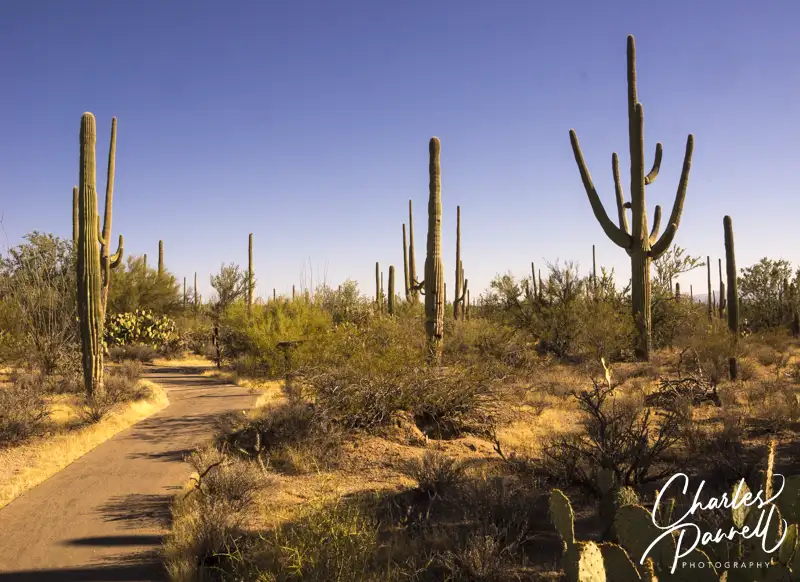
Known as the symbol of the American West, the giant saguaro cactus can only be found in the Sonoran Desert in the Southwestern US and Mexico. These large columnar cacti are covered in spines and develop branches (arms) as they age. There’s nothing like seeing a forest of saguaros framed by a colorful desert sunset. And the best place to do that is at Saguaro National Park (nps.gov/sagu), near Tucson, Arizona. Divided in two sections — with the city of Tucson in between — this scenic desert area offers several accessible trails for wheelchair-users and slow walkers.
Saguaro East
Ecology Trail in Saguaro East
Located in the Rincon Mountain District, Saguaro East is about 10 miles off Interstate 10. Just take exit 27 and follow the signs to the Rincon Mountain Visitor Center in Saguaro National Park. Accessible parking is located near the visitor center, which offers level access and houses a collection of interpretive exhibits. There’s also plenty of room for a wheelchair in the theater, which shows an introductory film throughout the day. And outside there’s level access around the small native garden, and over to a covered shelter with benches.
The eight-mile Cactus Forest Drive scenic loop begins just east of the visitor center. This one-way drive travels through the heart of a saguaro forest, and boasts fabulous windshield views of the gigantic cacti. There are a number of pullouts along the way, all of which have accessible parking. And if you visit in May, you’ll be treated to an eyeful of showy white booms on the giant cacti.
The first accessible trail is located midway along the drive. There’s accessible parking at the Mica View Picnic Area, with level access over to accessible tables and an accessible vault toilet. Although the entire length of the Mica View trail is not not accessible, the first .7 mile is fairly level and is covered in stabilized granite. The Desert Ecology Trail, which is located just up the road, is also worth a stop. This quarter-mile trail features a paved pathway with benches to sit and rest along the way.
When you reach the end of the scenic loop drive, turn left at the stop sign and head through the Javalina Picnic Area. After you leave the picnic area, look to the right as the road curves, for a view of a tall saguaro with a magnificent crown.
Javalina Picnic area in Saguaro National Park East
Saguaro West
Desert Discovery Trail in Saguaro National Park West
Saguaro West is located in the Tucson Mountain District, which is on the west side of the city, just up the road from the Arizona Sonora Desert Museum. From interstate 10, head west on Gates Pass Road, then make a right on Kinney Road. The Red Hills Visitor Center will be on the right, just past the park entrance.
There’s accessible parking in front with level access to the building. Inside there are a number of interpretive exhibits as well as accessible restrooms. Outside there’s a short accessible paved trail that focuses on the ecology of the Sonoran Desert.
The highlight of this section of the park is the Desert Discovery Trail, which is located just a mile past the visitor center, on the left side of the road. This half-mile paved trail features interpretive plaques along the way that describe the plants and animals of the Sonoran Desert. There are benches to rest along the trail, and it’s a favorite spot to catch a spectacular sunset view amidst the cactus forest.
This section of the park also boasts a scenic drive. The 5-mile Bajada Loop Drive winds through the saguaro forest, with plenty of pullouts along the way. Although the road is not paved, it’s still doable in a low clearance vehicle. And if you’d like to pack along a snack, there are two picnic areas along the loop.
Last but not least, don’t forget to ask about the free ranger programs at either visitor center. Offered in the peak winter season, many of the programs are held at accessible areas or trails in or near the visitor centers. These interpretive programs, which focus on the Sonoran Desert and the Saguaro Cactus, greatly enhance any visit to Saguaro National Park.
Generally speaking, caves are not usually a great recreational choice for wheelchair users-and slow walkers. That said, there are a few exceptions. And in that respect Mammoth Cave National Park tops the list. Not only do wheelchair-users and slow walkers have their choice of several accessible trails above ground; but thanks to some recent repairs and renovations, they can also explore the subterranean chambers of this Southwestern Kentucky national park.
A Wheelchair-Accessible Mammoth Cave Tour
Elevator to the accessible Mammoth Cave tour
Mammoth Cave has something that most caves lack — an elevator. Unfortunately it was out of service for several years; but after a massive $2.2 million repair project, it’s once again operational. And after the repairs were completed, an Accessible Cave Tour was added to the roster.
This two-hour tour begins at the visitor center, where participants then drive their own vehicles to the elevator on Cave City Road. There’s accessible parking in the lot, and barrier-free access over to the elevator. The tour of this gypsum cave travels over level cement pathways and visits the Snowball Room, and includes portions of Cleveland Avenue. This accessible tour is an extremely manageable half-mile in length, and it can also accommodate large power wheelchairs and scooters. Additionally, there are benches along the way for slow walkers who need to take a break.
Tickets for the Accessible Cave Tour can be purchased at recreation.gov or by calling (877) 444-6777. They are available up to six months in advance, and it ‘s best to purchase them as soon as possible to avoid disappointment. Some walk-up tickets may be available; however due to the popularity of the tour that’s not always the case. For more information about the Accessible Cave Tours, contact the visitor center at (270) 758-2180.
Accessible River and Forest Trails
The Heritage Trail at Mammoth Cave National Park
There are also a number of trails to include on a wheelchair-accessible Mammoth Cave itinerary. The Heritage Trail, which begins near the visitor center, tops the list. This three-quarter-mile trail starts off as a wide level path, before it transitions to a boardwalk that loops through the forest. There are several scenic stops along the way, including Sunset Point, which offers a panoramic view of the rolling hills of the Green River drainage basin.
There’s also a short 300-foot trail out to the Old Guides Cemetery from the Heritage Trail. The level trail leads over to a abandoned graveyard, where Stephen Bishop — a guide who died in 1857 — was laid to rest. Even if you can’t do the entire trail, it’s still a pleasant stroll, and there are plenty of benches to stop and take a break and enjoy the view along the way.
Echo River Spring Trail at Mammoth Cave National Park
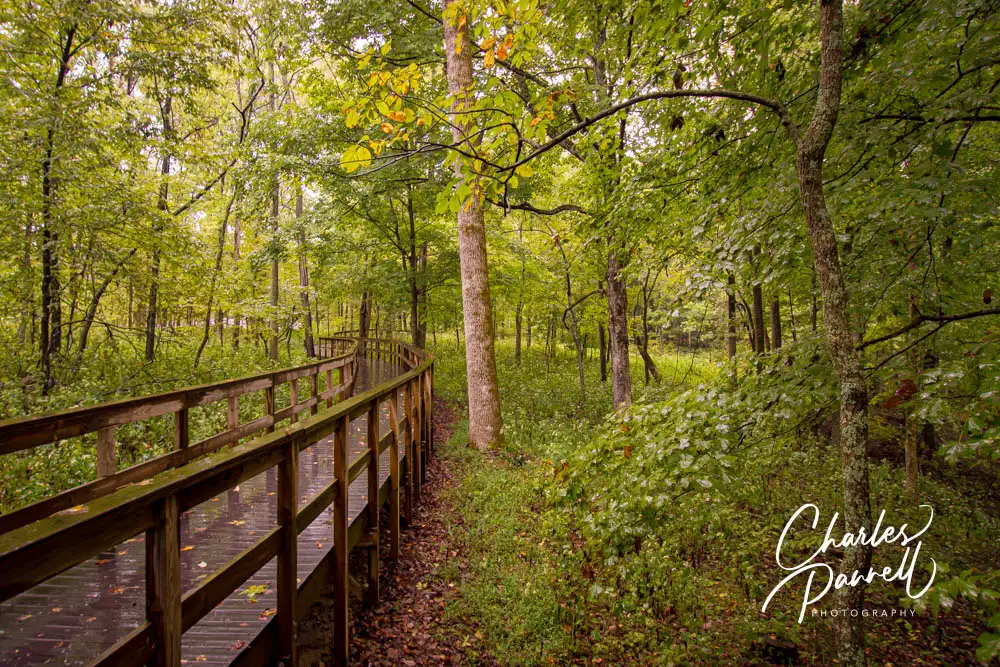
The Echo River Spring Trail is also a good choice for wheelchair-users and slow walkers. The trailhead is located a short drive from the visitor center, in the Green River Ferry parking lot. Accessible parking is available near the trailhead, and there’s also an accessible porta-potty and an accessible picnic table nearby. This .6-mile trail begins as a wide cement walkway, before it transitions to a short boardwalk through the forest. Along the way it passes Echo River Spring, before it loops back to the parking lot. It’s a pleasant stroll, and there are several overlooks with benches to sit back and enjoy the peaceful forest.
More Wheelchair-Accessible Trails!
Sloan’s Crossing Pond Walk at Mammoth Cave National Park
Another couple of wheelchair-accessible trails are located a little further from the visitor center. At the top of that list is Sloan’s Crossing Pond Walk. From the visitor center follow Mammoth Cave Parkway for about three miles, and look for the trailhead on the right, just past Brownsville Road.
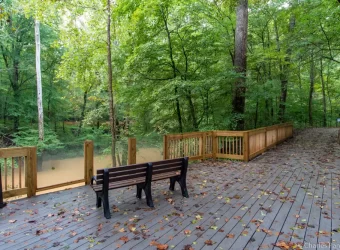
This .4-mile boardwalk that circles the shaded pond was completely renovated in 2023. It’s wide and level, and dotted with accessible viewing platforms, benches and interpretive plaques. Even if you can’t do the whole trail, there’s an excellent pond view from the first overlook, which is just steps from the parking area. As an added bonus there’s also an accessible picnic area there.
Last but certainly not least on our wheelchair-accessible Mammoth Cave National Park itinerary, is a stop at the Sand Cave Trail. Located near southeast park entrance, this short trail makes a good stop if you are heading towards Cave City. The .1-mile boardwalk winds through the forest and features low bumpers which open up the views for wheelchair-users. The trail terminates at an overlook, which has a view of the Sand Cave rescue site.
Floyd Collins, who was an avid cave explorer, was trapped at that site for 17 days in 1925. Unfortunately rescuers were not able to reach Collins before he succumbed from exposure. His body was later removed and interred near his family’s Crystal Cave home. Today the story of his life and death is detailed at the wayside exhibit near the Sand Cave Trail. Although it’s a sad — and somewhat gruesome — tale, the trail actually offers a pleasant stroll; and it’s a great way to top off a Mammoth Cave visit.
Road trips take a lot of planning. From plotting out the most scenic route, to finding quirky roadside attractions and unique lodging options, the devil is definitely in the details. And although everyone should plan for emergency situations, wheelchair-users and slow walkers need to take extra care in the planning process, to make sure they don’t end up stranded on the road. With that in mind, here are some helpful resources and tips to help you plan a successful wheelchair-accessible road trip.
Plan for Emergencies
Emergency road service is essential for any road trip, but very few towing companies have wheelchair-accessible tow trucks. Enter Mobility Roadside Assistance (mobilityroadsideassistance.com). Not only does this company provide all the standard auto club services; but if your vehicle needs to be towed they will also dispatch an accessible vehicle to transport you to the garage. Additionally, they can even dispatch a technician to repair your ramp, lift, wheelchair or scooter.
If you drive an adapted vehicle, consider what you would do if you had problems with your ramp, lift or hand controls. The National Mobility Equipment Dealers Association (nmeda.org) has a great database of dealers that are qualified to work on adapted vehicles. Check out their website before you travel to find repair shops along your route.
Know Your Resources
Many states are part of the 511 network that provides updated information on traffic conditions. Find out if this service is available along your route.
Most national parks also have updated road closure information on their websites, and many even have dedicated traffic information phone numbers. These updates usually have the most recent information as they are maintained by in-park personnel.
Look to newer fast food restaurants for the best accessible restrooms. Most fast food restaurants are consistent in their restroom design; so find a chain that has the access features you need, and stick with it.
If your hotel bathroom isn’t as accessible as you expected on your wheelchair-accessible road trip, stop by a Pilot-Flying J truck stop (pilotflyingj.com). Most have accessible shower rooms with roll-in showers; and although there is a charge to use them, it’s a good alternative in a pinch.
Pack Along These Essentials
Pack along a can of Fix-A-Flat tire inflator. It’s a quick and easy way to repair a flat, and it beats waiting for the tow truck.
Duct tape is also a glove box essential. Not only can it provide a temporary fix for a leaky radiator hose, but it also comes in handy for on-the-spot wheelchair repairs.
A wheelchair repair kit is also essential when you hit the road. And if you need a repair to your wheelchair tire, head to the nearest bicycle shop.
Don’t forget to take your accessible parking placard with you when you hit the road, as it’s valid throughout the US, except in some places in New York City.
Finally, don’t forget to pack your sense of humor on your wheelchair-accessible road trip. Be flexible and don’t stress out if things don’t go exactly the way you planned them. After all, travel is all about experiencing new things.
Barrier-Free Travel 22 Accessible Road Trips for Wheelers and Slow Walkers
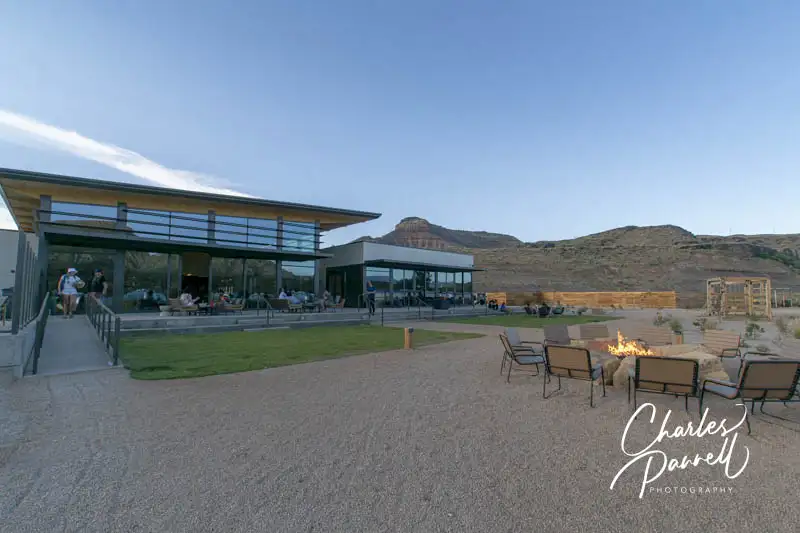
Surrounded by the signature red rock formations that are found throughout Zion Canyon, AutoCamp Zion (autocamp.com/location/zion/?gad_source=1) delivers on both accessibility and ambiance. Located about 20 miles from Zion National Park, this sixth property in the AutoCamp portfolio not only gives guests an upscale glamping experience, but it also goes above and beyond as far as access is concerned.
The AutoCamp formula is simple — they provide upscale airstream camping trailers and fun communal spaces in some of the nation’s most scenic areas. Although they’ve always been keen on providing top-notch accessibility, it seems that each AutoCamp property is more accessible than the last. And happily, that trend continues at the new Zion location.
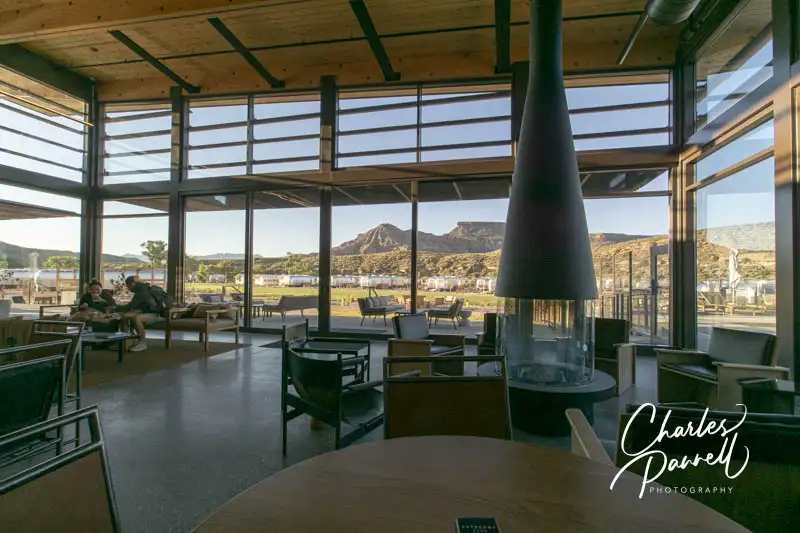
The AutoCamp experience begins at the Clubhouse, where guests leave their cars, check-in and walk — or roll — to their individual units. There’s plenty of accessible parking near the Clubhouse, with ramp access up to the building. Inside there’s ample room to maneuver even a large wheelchair or scooter over to the lowered front desk. It’s just a pleasant space to begin your AutoCamp visit.
Spend the Night at AutoCamp Zion
Accessible suite 104 at AutoCamp Zion
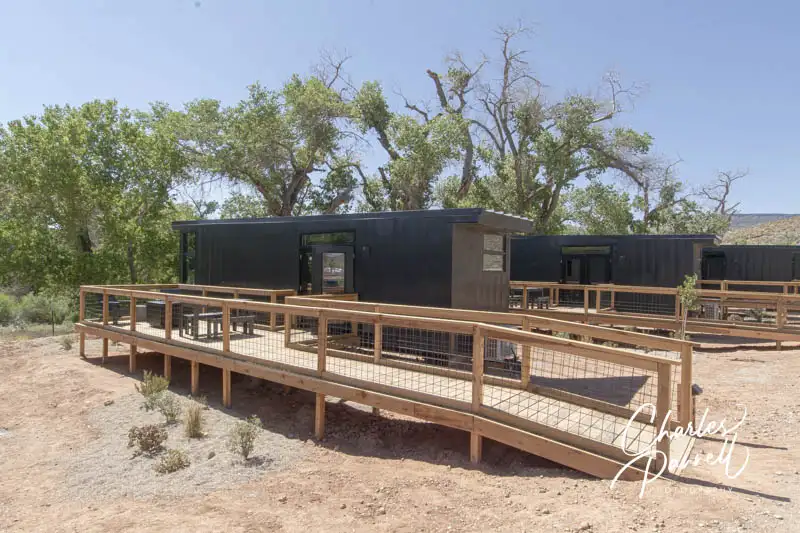
AutoCamp Zion has five accessible units, all of which are located close to the Clubhouse and public areas. Most guests pack their luggage into the colorful AutoCamp wagons and trek off to their trailers. That said, even though the accessible units are just a short accessible roll from the Clubhouse, luggage assistance and transportation to the front door can also be provided upon request. In short, if you need anything, just ask.
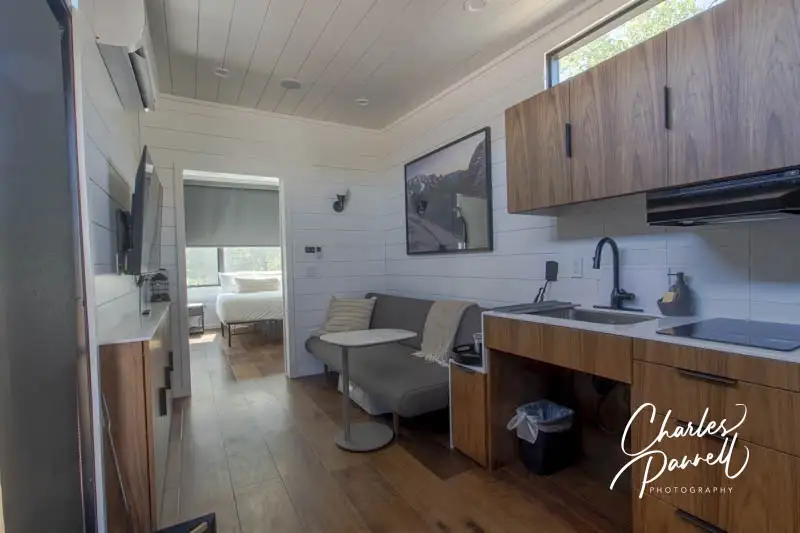
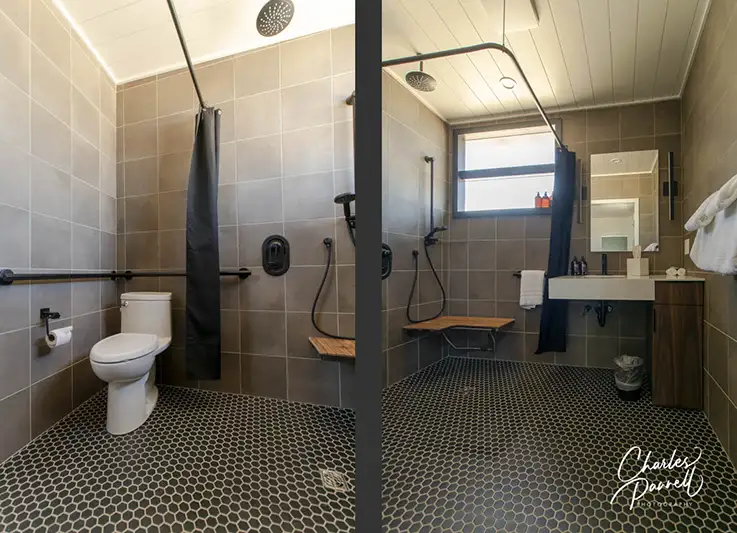
Accessible suite 104 is located a short walk from the Clubhouse, and across from the pool. There’s ramp access up to the deck and level access through the double front door to the accessible suite. Inside, the living area is furnished with a fold-out sofa, a table and a TV; while the adjacent kitchen includes an accessible sink, a cooktop, a microwave and a refrigerator. And of course all the dishes, utensils and cookware that you could possibly need. The adjacent bathroom features a wide barn door and a full five foot turning radius. It’s outfitted with a Continental zero-step shower with a fold-down shower seat, a hand-held showerhead and grab bars. The bathroom also includes a roll-under sink and toilet grab bars on the right side (as seated).
Located on the other end of the trailer, the bedroom features a wide doorway and is furnished with a 25-inch high open-frame queen-sized bed. There’s wheelchair access on the left side of the bed (as you face it) and the panoramic back window offers a great view of the surrounding landscape. It’s a nice place to cuddle up and enjoy the night sky, yet still retain your privacy.
Add in a propane firepit on the front deck to melt some marshmallows for s’mores, and you have the quintessential AutoCamp experience.
Bedroom in suite 104
Kitchen & living area in suite 104
Bathroom in suite 104
Enjoy the Public Spaces
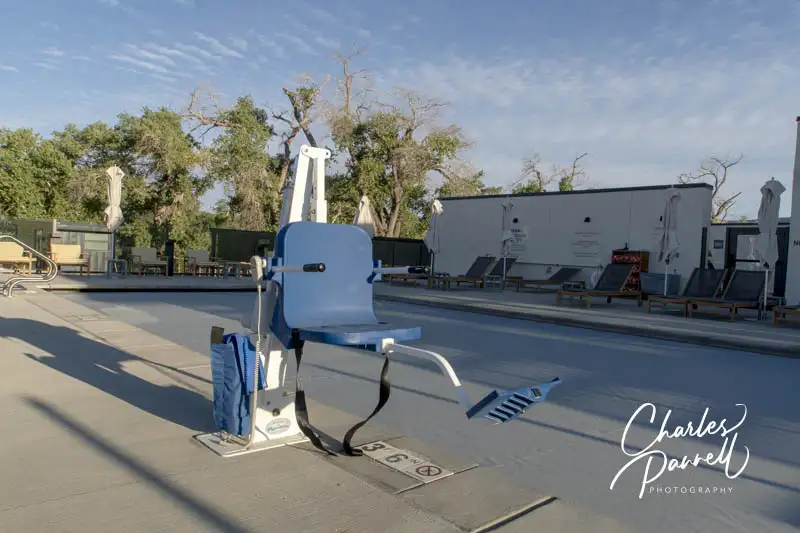
Pool lift at AutoCamp Zion
The public spaces at AutoCamp Zion are equally appealing; in fact they’re a mainstay of the the AutoCamp brand. Take the pool area for example. It’s conveniently located near the accessible units and features good pathway access and a pool lift. And if you’d like to lounge during the midday sun, there are also plenty of umbrellas.
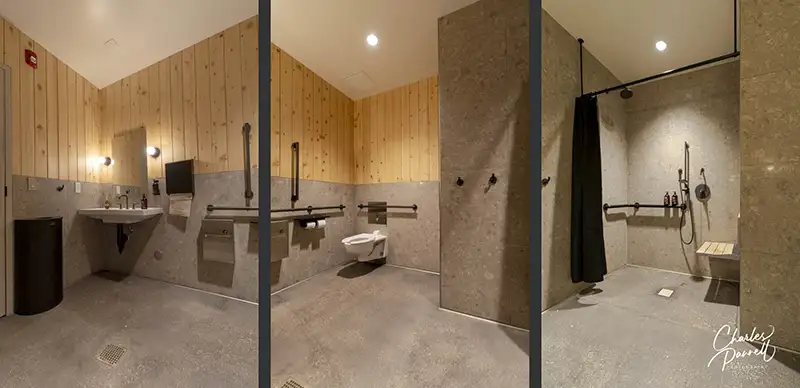
There’s an adjacent bathhouse and changing area, which features individual accessible rooms which each have a roll-in shower, a roll-under sink and a toilet with grab bars. And since half the rooms are on one side of the corridor, and half are on the other, they are mirror images, so you have your choice of toilet grab bar placement. There’s also barrier-free access to this area from the Clubhouse.
Accessible changing room in the bathhouse
And the Clubhouse is more than just a place to register and get your keycard. It’s also home to The Kitchen which offers light breakfast items in the morning, and pizza, burgers and snacks, as well as a nice selection of wine and beer in the afternoon. Eat in the lounge or take it back to your place — the choice is yours. And if you want to make your own meal, they also have all inclusive grill kits available. The small General Store, which is located near the front door, offers beverages, snacks, grocery items and even a s’mores kit. Just add fire and you’re set to go.
Inside the Clubhouse at AutoCamp Zion
And although there are individual firepits at all the sites, if you’d prefer a community experience, there’s also a large fire circle located near the Clubhouse. It’s the perfect place to chill after a full day of exploring Zion; and a great finale to any AutoCamp adventure.
Barrier-Free Travel
Utah National Parks for Wheelchair-users and Slow Walkers
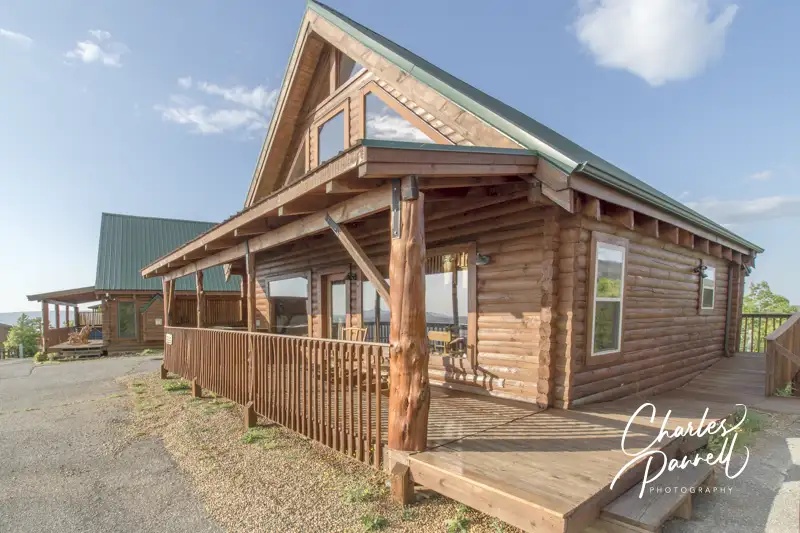
There’s no better place to kick back and enjoy Mother Nature than in Tennessee’s Smoky Mountains. And although there’s certainly no shortage of accessible hotels in Pigeon Forge, Gatlinburg and Sevierville, the best way to really experience the Smoky Mountains is to rent a fully-equipped cabin. So be it a cozy couples getaway or a large family reunion — and everything in between — we have you covered with these wheelchair-accessible Smoky Mountain cabins.
Eagles View
The view from Eagles View
www.awesomemountainvacations.com/eagles-view
The Sevierville address of Eagles View is very misleading, as it’s actually located on a Wears Valley ridge top, midway between Gatlinburg and Pigeon Forge. And it’s within spitting distance of Great Smoky Mountains National Park. This one-bedroom, two-bathroom cabin also features a loft; and although it can accommodate up to five people, it’s still perfectly comfortable for a couple.
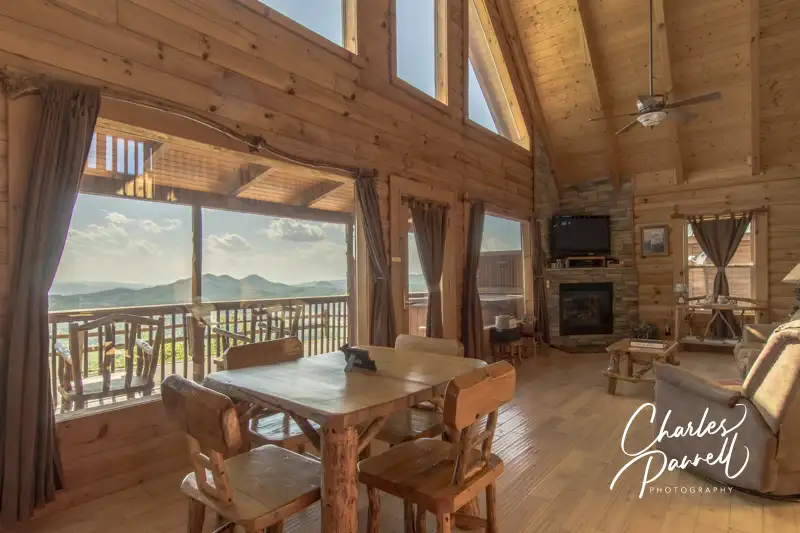
Parking is available in a paved level spot next to the cabin with ramp access to the wrap around porch. There’s level access to the cabin, and good pathway access throughout the first floor. The living room features a 14-inch high queen-sized sleeper sofa, an easy chair, a TV and a gas fireplace; while the kitchen is equipped with a stove, oven, dishwasher, lowered microwave, full-size refrigerator, and a stackable washer and dryer. Top it off with a dining table with four chairs, and a bar with two high chairs and you have just about everything you need.
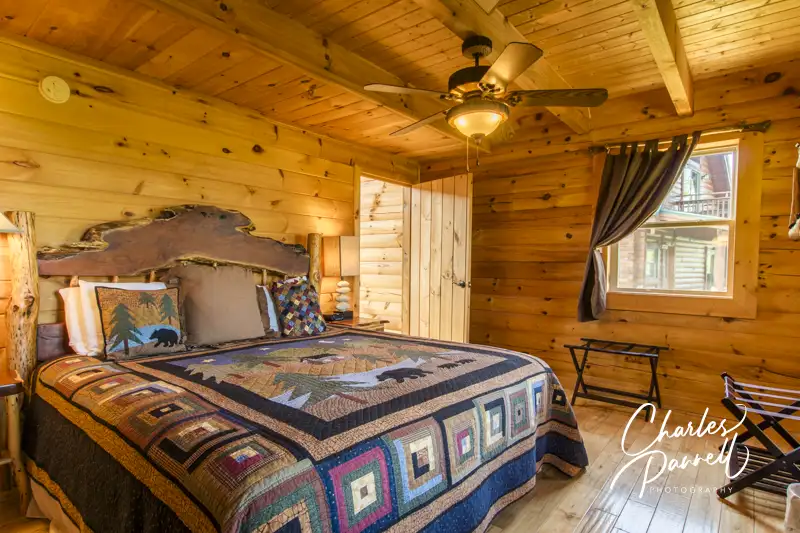
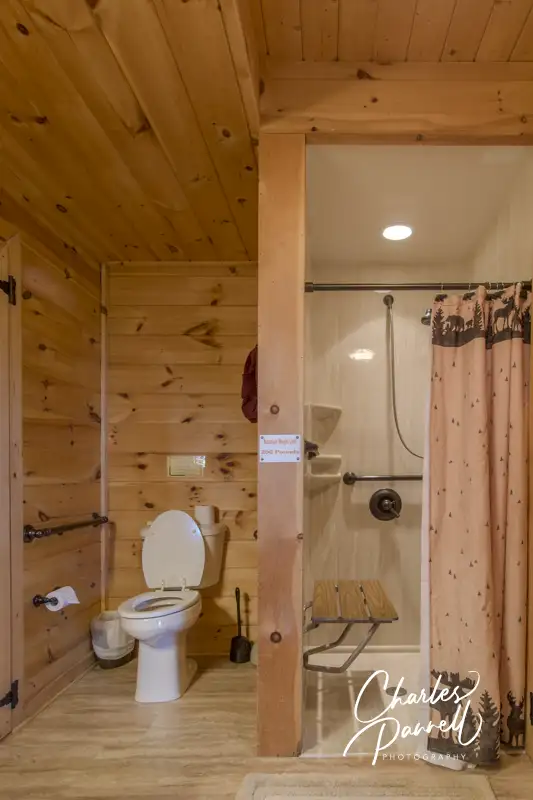
The first-floor bedroom is furnished with a 23-inch high open-frame king-sized bed with wheelchair access on the right side (as you face it). The adjacent bathroom has a full five-foot turning radius and is equipped with 36-inch square roll-in shower with grab bars, a hand-held showerhead and a fold-down shower bench. The toilet is located in a 42-inch wide alcove with grab bars on both sides, and the bathroom also has a roll-under sink.
There’s also a hot tub on the front porch, but you need to be able to navigate two steps to use it. All in all access is nicely done here, and you just can’t beat the view from the front porch.
Eagles View Cabin
Great room at Eagles View
Ground Floor bedroom at Eagles View
Toilet and shower at Eagles View
Vanity in bat at Eagles View
Above the Clouds
Above the Clouds Cabin
www.awesomemountainvacations.com/above-the-clouds
Above the Clouds is located down the road from Eagles View, and it features the same expansive ridgetop view. This three-bedroom cabin includes four bathrooms and it can sleep up to 10 people. And the same folks that own Eagles View also own this gem, and great attention has be paid to wheelchair access.
There’s level access to the ramps which lead up to the first and second floor decks. From there level pathways lead to the spacious inside areas. The second floor has an accessible bedroom that’s furnished with a 26-inch high open-frame king-sized bed; and the adjacent bathroom is equipped with a roll-in shower with a fold-down shower bench, a hand-held showerhead, shower and toilet grab bars and a roll-under sink.
The cabin features the same amenities as Eagles View; and it’s filled with homey touches, so you never feel like you’re in a rental. The view from the deck is simply awesome. There’s also a 150-foot walkway in front of the cabin, which offers an equally appealing valley view. And you just can’t beat the location, as it’s just minutes away from Great Smoky Mountains National Park.
Bedroom in Above the Clouds Cabin
Shower in Above the Clouds Cabin
Sink and toilet in Above the Clouds Cabin
Sweet Memories
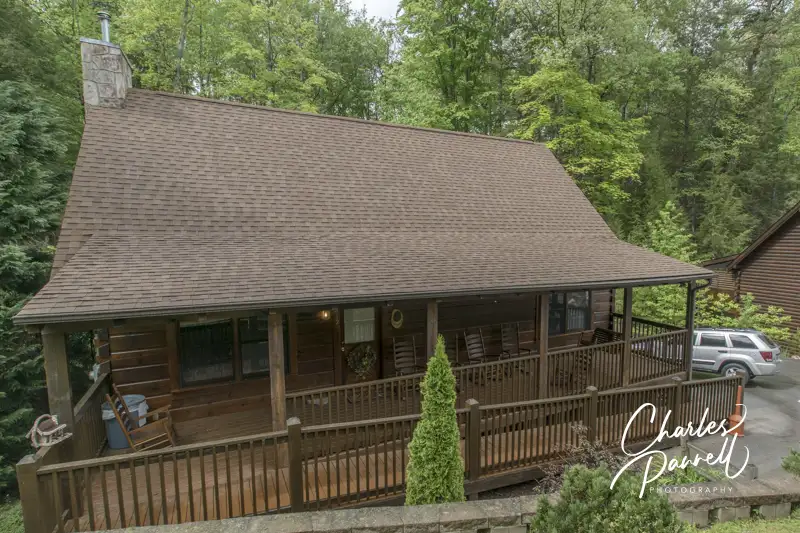
Sweet Memories Cabin
www.airbnb.com/rooms/49978126
Next up on our list of wheelchair-accessible Smoky Mountain cabins is Sweet Memories,
which is located near Dollywood in the Bear Cove Fall Resort. This two-bedroom, two-bathroom cabin can sleep six, and it makes a good choice for two couples or a family with kids in tow.
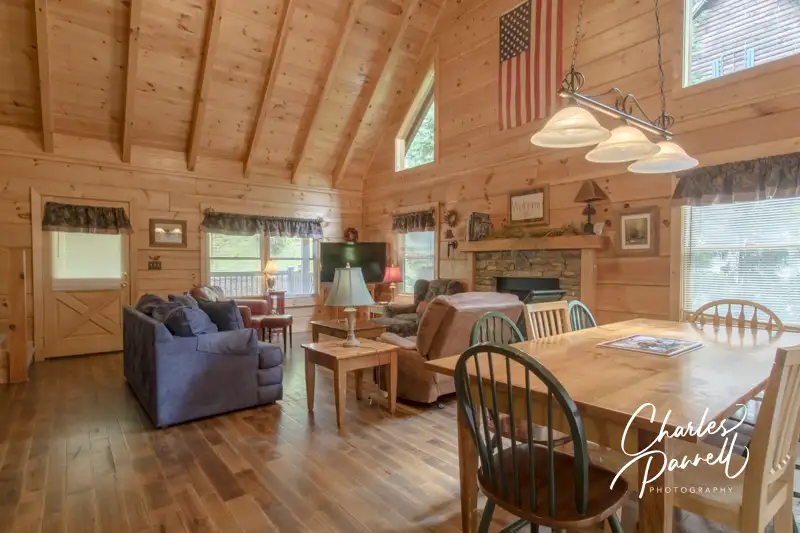
There’s plenty of parking on a level cement pad in front of the cabin, with barrier-free access over to the front door. Inside, the great room separates two one-bedroom suites, and there’s good pathway access on the wood floors throughout this single-story unit.
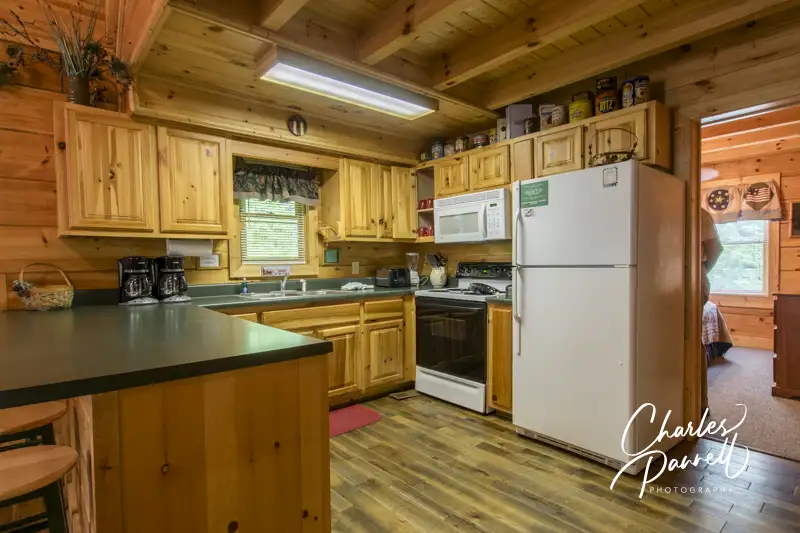
The great room features a 12-inch high king-sized sleeper sofa, a love seat, an easy chair, a TV and a traditional wood-burning fireplace. The adjacent kitchen is outfitted with a stove, microwave, dishwasher, refrigerator, toaster, coffee maker and even a blender. It also includes everything you need to whip up a gourmet meal, including a full set of pots, pans, dishes, glassware and utensils. Additionally there’s a dining table with four chairs, as well as a washer and dryer in the unit.
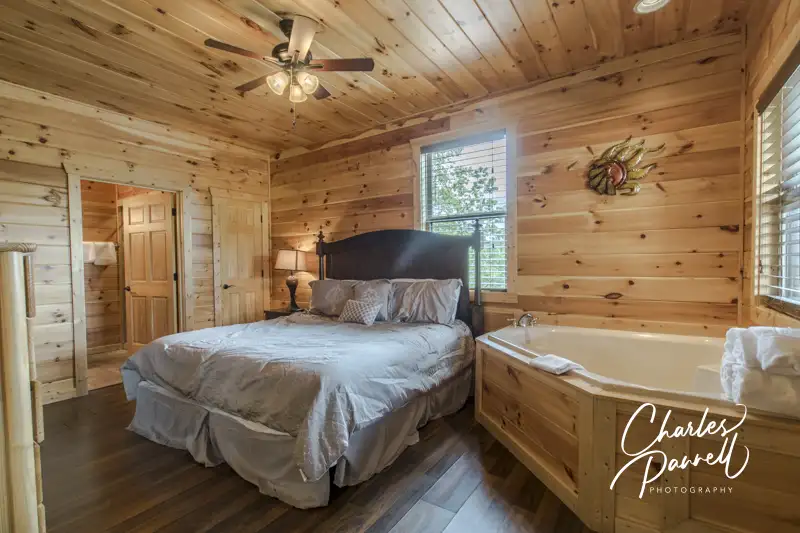
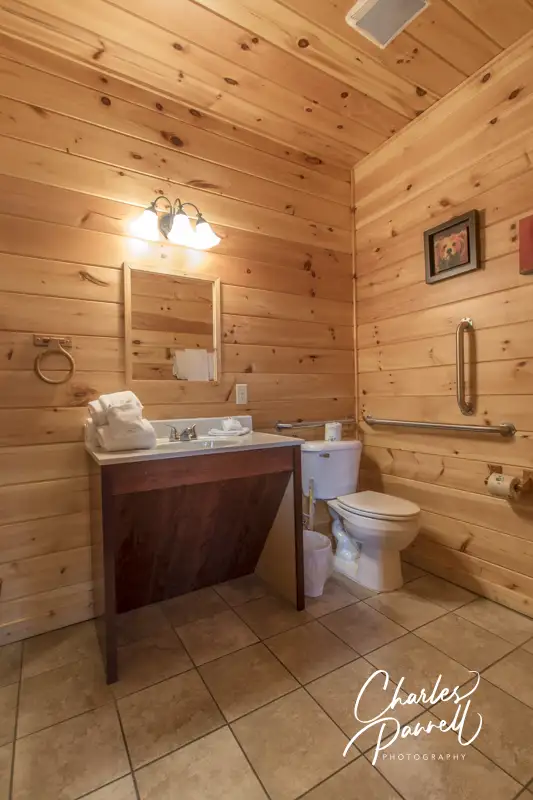
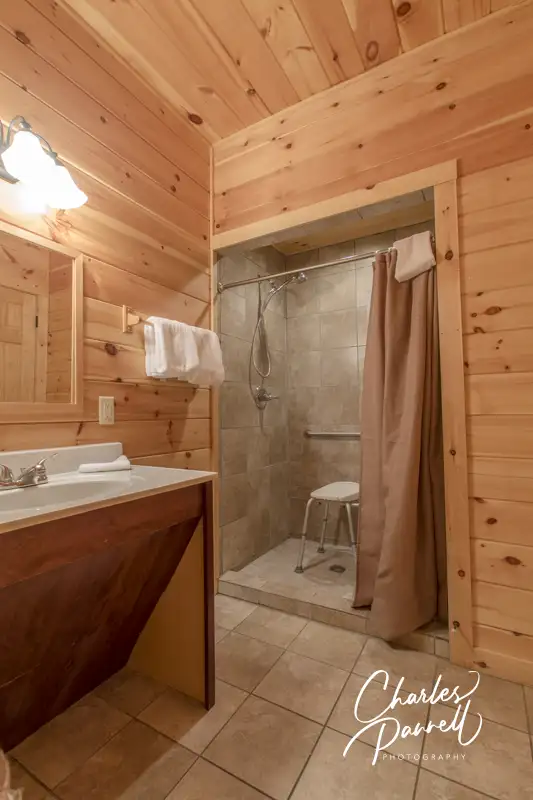
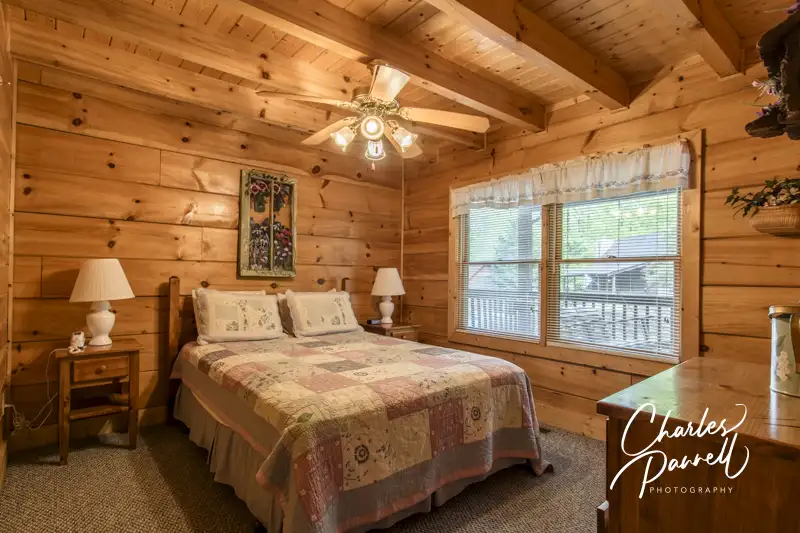
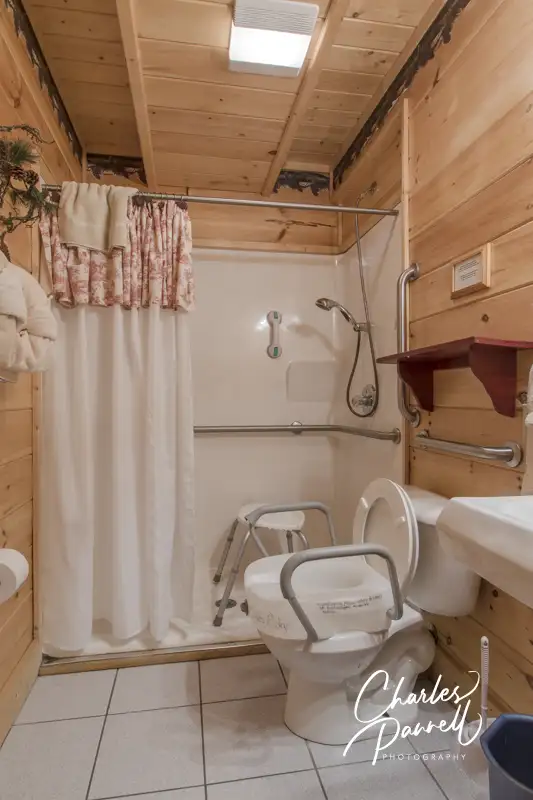
The bedrooms are each furnished with a 25-inch high open-frame king-sized bed. One bedroom has a fireplace, while the other has a Jacuzzi tub. The adjacent bathrooms are mirror images of one another, and they are each equipped with a low step (three inch) tiled shower with grab bars, a hand-held showerhead and a portable shower chair. The toilet grab bars are located on the right and back walls (as seated) in one unit, and on the opposite side in the other. Both bathrooms also have a roll-under sink.
This property is a good choice for many wheelchair-users and slow walkers, as even though the shower has a small step, there’s also ample room to transfer to the portable shower chair.
Great Room in the Sweet Memories Cabin
Great Room in the Sweet Memories Cabin (view 2)
Bedroom in the Sweet Memories Cabin
Sink and toilet in the Sweet Memories Cabin
Shower in the Sweet Memories Cabin
George’s Cabin
George’s Cabin in Pigeon Forge, Tennessee
eaglesridge.com/pigeon-forge-cabin/er309-georges
Located in Pigeon Forge, George’s Cabin is next up on our list of wheelchair-accessible Smoky Mountain cabins. It features five bedrooms and four bathrooms and can sleep up to 14 people. This cabin is a good choice for a two-family getaway, as the two ground-floor bedrooms can accommodate the parents, while the kids can bunk upstairs.
There’s ramped access from the parking area to the rocking chair-lined front porch, and level access into cabin. The first floor of the cabin is wheelchair-accessible, with plenty of room to maneuver a wheelchair through the great room, kitchen and the accessible bedroom suite. The great room is furnished with a comfortable sofa and love seat, and includes a gas fireplace and a TV. The dining area features a table with eight chairs and the fully equipped kitchen includes a stove, microwave, dishwasher and a full-size refrigerator. There’s also a washer and dryer on the first floor.
The accessible first-floor bedroom is furnished with a 25-inch high queen-sized bed with wheelchair access on both sides. The adjacent bathroom is equipped with a roll-in shower with grab bars, a hand-held showerhead and a portable shower bench. The toilet has a grab bar on the back wall, and an optional toilet seat riser with one grab bar on each side. The bathroom also has a roll-under sink. And there’s level access out to the spacious deck, which features a gas grill and a standard hot tub with steps.
Dining and Great Room in George’s Cabin
Kitchen in George’s Cabin
Bedroom in George’s Cabin
Bathroom in George’s Cabin
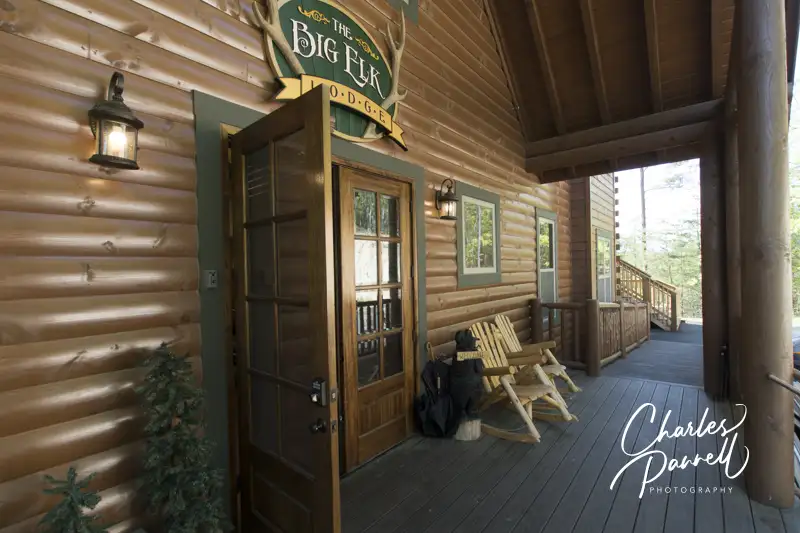
Big Elk Lodge
Entry to the Big Elk Lodge
www.largecabinrentals.com/cabins/the-big-elk-lodge/
Last but not least on our list of wheelchair-accessible Smoky Mountain cabins is Big Elk Lodge. Located in the Wild Briar log home community in Pigeon Forge, this 16-bedroom, 18-bathroom lodge can sleep up to 81 people.
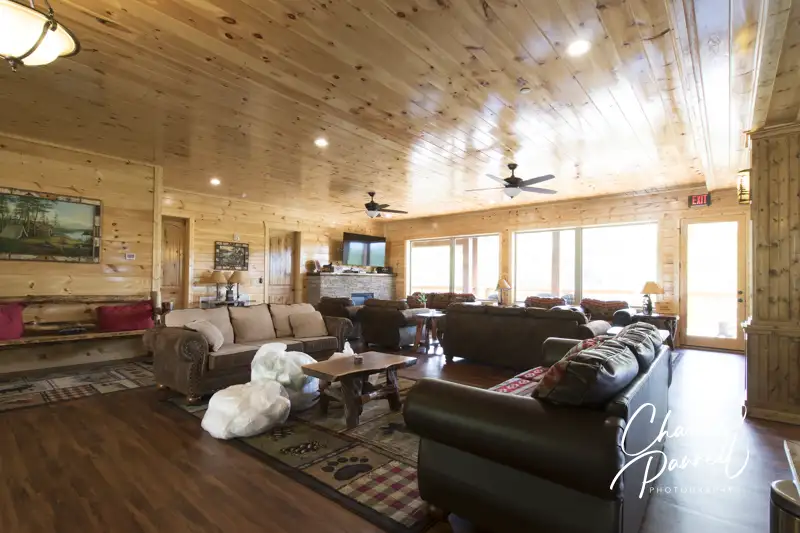
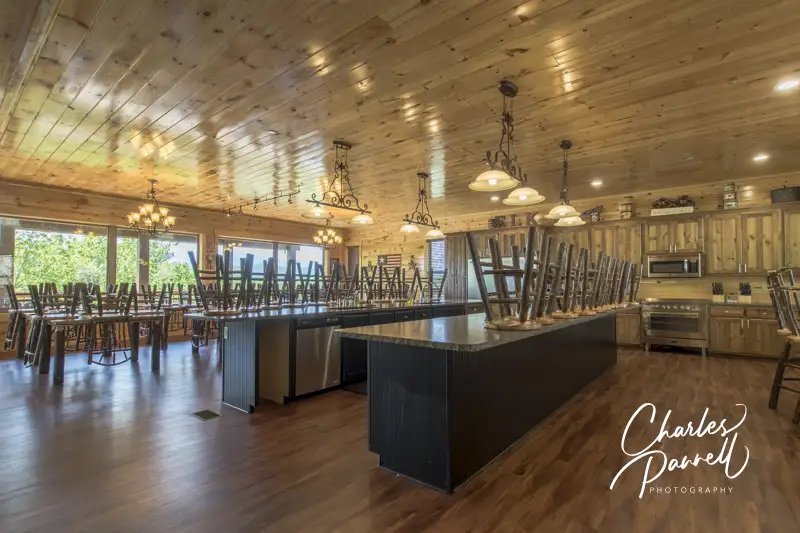
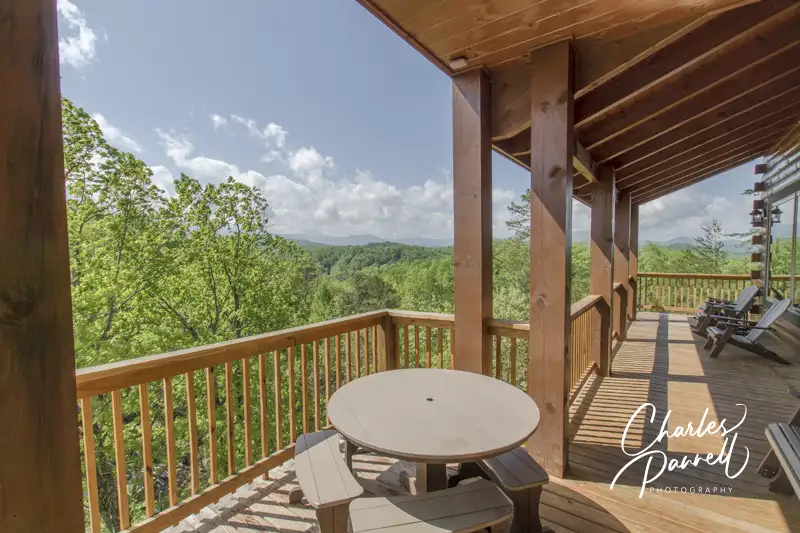
There’s ramp access up to the front door, and level access into the large great room. Inside, there’s a variety of sofas and love seats on the side near the fireplace, and dining tables and chairs on the side near the kitchen. The double commercial kitchen can surely keep pace with any large group, and it comes fully stocked with all the plates, cups, glassware and utensils that you’ll ever need. Plus you just can’t beat the gorgeous mountain view from the great room or the large wrap around deck.
The first-floor accessible suite is located right off the great room, and it’s furnished with a 30-inch high open-frame king-sized bed, a loveseat, a chest of drawers, a table and a TV. There’s wheelchair access on both sides of the bed, but depending on the furniture placement, the table may need to be moved a bit to fully access both sides. There’s also level access out to the wrap around deck from the bedroom.
The adjacent bathroom features a full five-foot turning radius and is equipped with a roll-in shower with grab bars and a hand-held showerhead. The toilet grab bars are located on the back and right walls (as seated), and the bathroom also has a roll-under sink. A portable shower chair is available upon request.
The large lodge also has a washer and dryer, as well as a full theater downstairs, plus plenty of space in the front to set up picnic tables or even a tent. It’s the perfect choice for family reunions, destination weddings and corporate retreats.
Great Room in Elk Lodge
Dining Hall in Elk Lodge
Porch in Elk Lodge
Ground floor bedroom in Elk Lodge
Toilet and sink in ground floor bathroom in Elk Lodge
Shower in ground floor bathroom in Elk Lodge
Barrier-Free Travel National Park Lodges for Wheelers and Slow Walkers
Thanks to a generous donation from the Sam Schneider Legacy Foundation, the Rocky Mountain Conservancy now has a GRIT Freedom Wheelchair to loan visitors to Rocky Mountain National Park. Initially the Foundation offered this all-terrain wheelchair to former Conservancy employee Quinn Brett, who sustained a spinal cord injury while climbing in Yosemite. Brett told the foundation that she would rather let as many people as possible have access to the all terrain wheelchair, and suggested that it be donated to the Conservancy. So now more people can use this all terrain wheelchair in Rocky Mountain National Park.
GRIT Freedom Chair
The donated GRIT Freedom Chair has two standard wheels on the sides of the seat, and a smaller wheel in front of the chair. It can be operated independently with the lever handles on each side of the seat. Alternatively, a companion can use the push handles on the back to propel the chair. Not only will the GRIT Freedom Chair navigate the accessible trails in Rocky Mountain National Park, but it’s also built to tackle rugged backcountry trails.
The all terrain wheelchair in Rocky Mountain National Park is housed at the Estes Park Mountain Shop at 2050 Big Thompson Avenue in Estes Park. There is no charge to use the wheelchair, which can be reserved by calling (970) 586-6548. For safety purposes it’s recommended that all terrain wheelchair-users hike with a companion, and that folks bring along plenty of water, sunscreen, insect repellent and snacks. And don’t forget extra medication, in case there is a delay returning to Estes Park. Additionally, users must be able to transfer to the all terrain wheelchair independently, or with assistance from a companion.
And thanks to the generosity of Estes Park resident Brian Keapplinger, more all terrain wheelchairs will be available in the future. Says Zach Zehr of Estes Park Mountain Shop, “He’s reached out to us to extend the inventory of mobility chairs, for when people come to us and say, ‘Hey, we’d love to use this but it’s already on reservation.’”
For more information about the all terrain wheelchair in Rocky Mountain National Park, visit www.estesparkmountainshop.com/summer-rentals
Barrier-Free Travel 22 Accessible Road Trips for Wheelers and Slow Walkers
Located about 240 miles north of Anchorage and 120 miles south of Fairbanks, Denali National Park (www.nps.gov/dena/index.htm) is one of the crown jewels of the 49th State. One of Alaska’s eight national parks, Denali occupies just over six million acres of wild land bisected by a seasonal road. And if all that sounds a bit rugged for your taste, rest assured it is possible to plan a wheelchair-accessible Denali visit. Granted, scaling the 20,310 namesake mountain may not be on your to-do list; however the park also offers a nice selection of wheelchair-accessible trails, attractions and tours suitable for non-mountaineering visitors.
Getting There
A top concern about a wheelchair-accessible Denali National Park visit is actually getting to the park. Although there’s no airport there, Denali is easily accessible by rail and car. The peak visit time is from late May through early September, but that’s primarily because of the train schedules and the unpredictable weather. Still if you have a vehicle, and a bit of a sense of adventure, late spring and fall can also be beautiful times to enjoy Mother Nature’s majesty in Denali.
Alaska Railroad
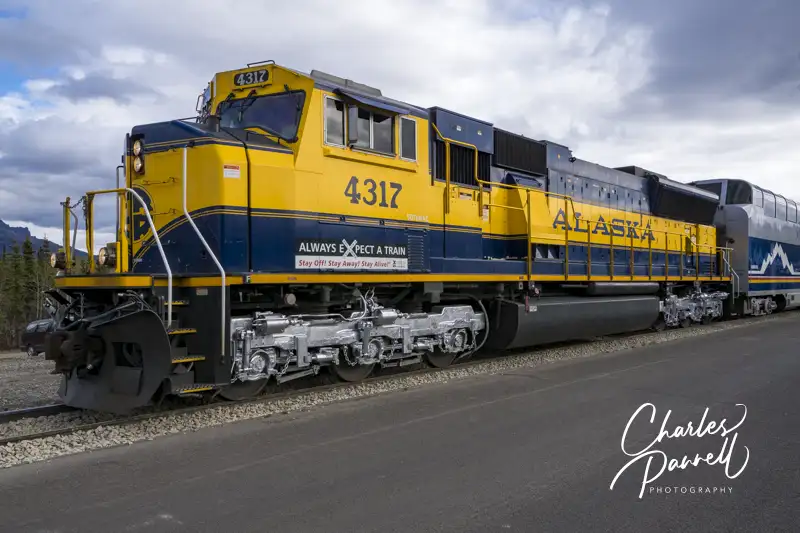
Daily train service is available from Anchorage and Fairbanks on Alaska Railroad’s (www.alaskarailroad.com) Denali Star during the summer months. The northbound train departs from Anchorage, and takes three hours to get to Denali. It stops in Wasilla and Talkeetna along the way. The southbound Fairbanks to Denali nonstop route takes four hours to get to Denali. And the good news is, all the stations include lift boarding, and the GoldStar Dome Cars feature elevator access, accessible seating and accessible lavatories downstairs. Additionally, most of the major cruise lines also offer cruise tour packages that include a Denali stop, on their own accessible railcars.
If you’d prefer to drive, accessible rental vans are available in Anchorage from Alaska Mobility (www.alaskamobility.com). After you pick up your van, just hop on The George Parks Highway (Highway 3). Also designated as a National Scenic Byway, this well traveled route runs between Fairbanks and Anchorage, and offers access to the park. The drive on this well maintained paved road is doable in a day from Anchorage; but plan for extra time as there’s no shortage of viewpoints and roadside stops along the way. And for information on places to stop en route, visit themilepost.com, an excellent Alaska road trip resource.
Wheelchair-Accessible Denali Shuttles
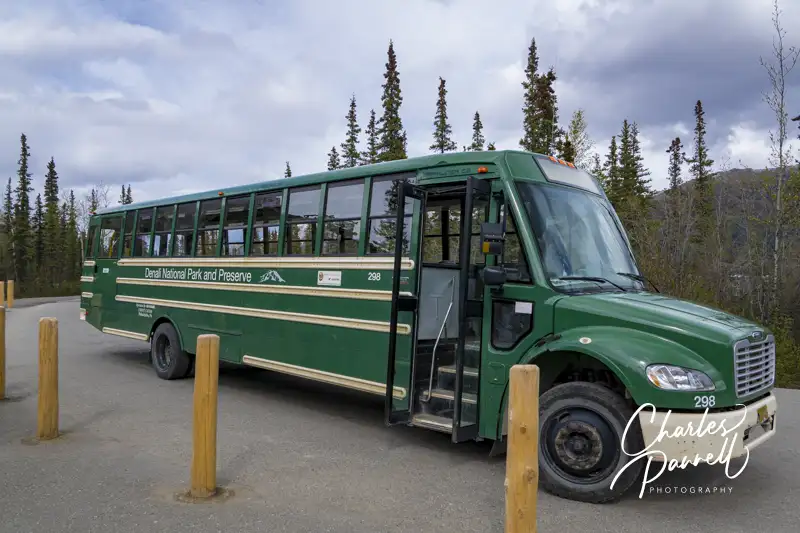
Accessible shuttle bus
Another wheelchair-accessible Denali feature is the free accessible shuttle bus system. After the winter snow is cleared in late spring, the road into Denali National Park is open to private vehicles to the Savage River area. Transportation further into the park is only available from concessionaires, and it’s largely dependent on road conditions.
That said, the free shuttle bus system operates in the Riley River area near the park entrance, and in the Savage River area 15 miles down the road. And all of the shuttle buses and shuttle bus stops wheelchair-accessible. The Savage River Loop and the Riley Creek Loop shuttles run all day and stop at a number of trails and attractions along the way. The Sled Dog Demonstration Shuttle, which runs from the Denali Visitor Center to the sled dog kennels, departs 40 minutes prior to the demonstrations, and returns shortly after they are completed.
The shuttle bus schedule is available at www.nps.gov/dena/planyourvisit/courtesy-shuttle-buses.htm, and it’s also posted at all the shuttle stops. Printed schedules are not available in the park, and cell phone service is limited, so it’s best to save a screen shot of the schedule for planning purposes.
Riley Creek Hikes
McKinley Station Trail
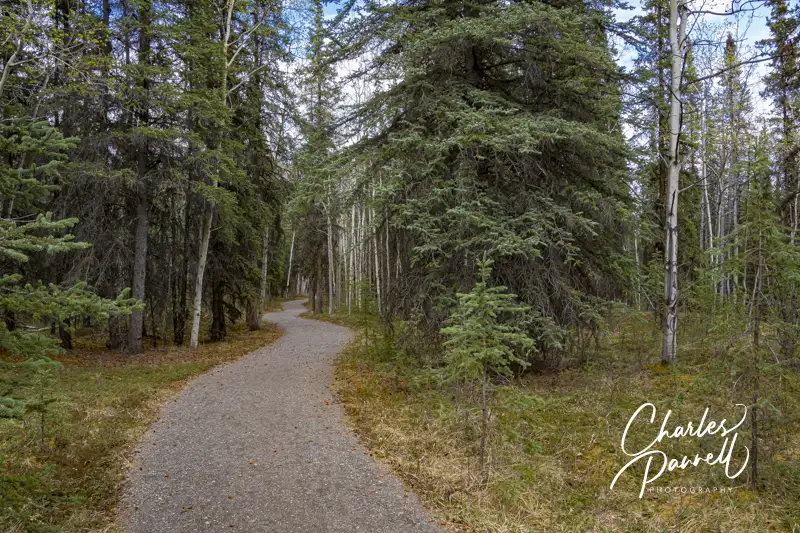
If you’d like to try a hike in the Riley Creek area, then hop on the shuttle, get off at the Riley Creek Campground and explore the McKinley Station Trail. This 1.6-mile hard-packed dirt trail runs from the campground to the visitor center. Although it’s not completely level, it offers an undulating — and accessible — route through the forest. There are also a few accessible boardwalk sections along the way. Be forewarned though — there’s a short cut to the visitor center about half-way along the route, but it goes straight uphill. Stick to the original trail for a gradual accessible path to the visitor center.
If you’d prefer a shorter walk, check out the Spruce Forest Loop, which is located right behind the visitor center. This .15-mile trail meanders through the forest, and offers visitors a good introduction to the vegetation and wildlife found in the park. It’s also very convenient, as you can just take the shuttle to the visitor center and hop on the trail from there.
Sled Dog Demonstration
Sled dog demonstration
The Sled Dog Demonstration is another wheelchair-accessible Denali must-do. Although accessible shuttle service is available from the visitor center, you can also drive over to the kennels. There’s plenty of accessible parking available at the kennels; however it’s a longer jaunt from the parking lot than it is from the bus stop, so slow walkers might want to opt for the shuttle. It should also be noted that the Roadside Trail that runs from the visitor center to the kennels has a steep grade and numerous obstructions, and it’s definitely not an accessible option to get to the kennels.
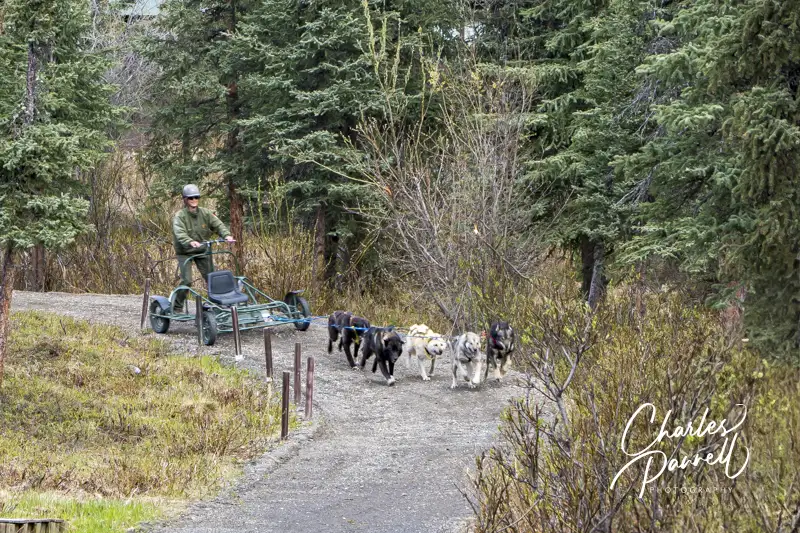
The sled dog demonstration is fun to watch, as the team is hitched to a wheeled sled that speeds around a dirt track. Accessible seating for wheelchair-users and slow walkers is available in the front, so everyone is guaranteed a good view. A ranger is on hand to answer questions about the sled dogs — which are still used in the winter in the park — and folks can walk though the sled shed and around the kennels after the demonstration. Best of all, there’s no charge for this educational demonstration.
Savage River Hikes
Mountain Vista Trail
Last but not least, save some time to explore the Savage River area of the park, which offers a few accessible trails, and some great scenery. The shuttle stops at the Mountain Vista and Savage trailheads; and if Mount Denali is “out” (not obscured by cloud cover), you’ll get a great view from several vantage points along the way.
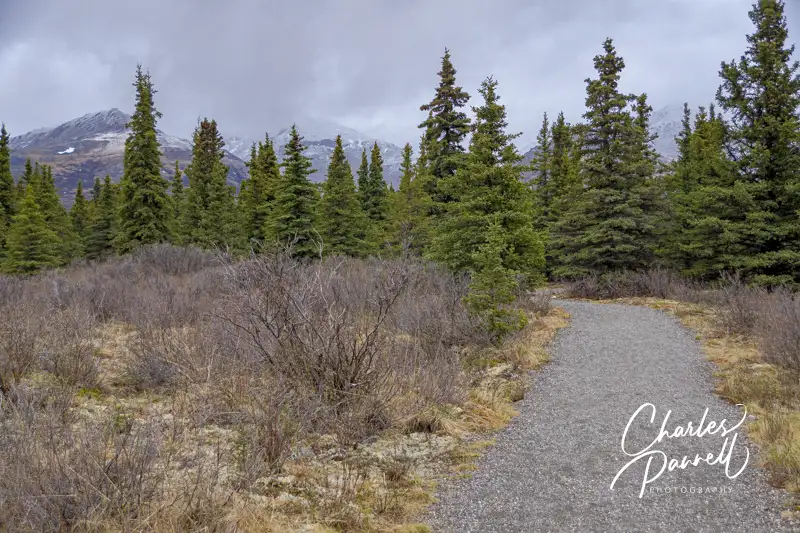
The Mountain Vista Trail is the most accessible trail in the area. This .6-mile hard-packed dirt trail begins near the shuttle stop, behind the accessible vault toilets and picnic shelter. It winds through the tundra, and offers several impressive views of the Alaska Range along the way. And you never know what wildlife you’ll run across, so keep your ryes peeled. Pack along a picnic lunch and enjoy it at one of the accessible tables at the picnic shelter, while you wait for the shuttle to Savage River.
Savage Cabin Trail
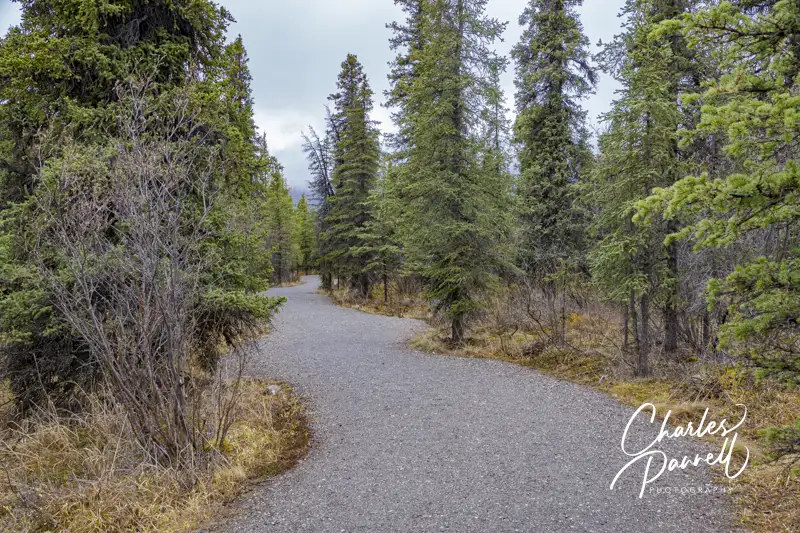
The shorter Savage Cabin Loop begins just to the left of the Savage River Campground shuttle bus stop, near the accessible vault toilet. The .3-mile loop is fairly level — with a few undulations — and is covered in compacted gravel. Midway along the route, you’ll find a historic cabin that was constructed by the Alaska Road Commission in 1924. It was originally used as a ranger cabin, but today it’s an interpretive site. Although the cabin isn’t accessible, you can still get a good glance at the inside from the doorway. And the docent programs are usually presented outside, in an accessible space. Even if there aren’t any docents at the cabin it still make a nice stop on this short jaunt.
Wheelchair-Accessible Denali Lodging Resource
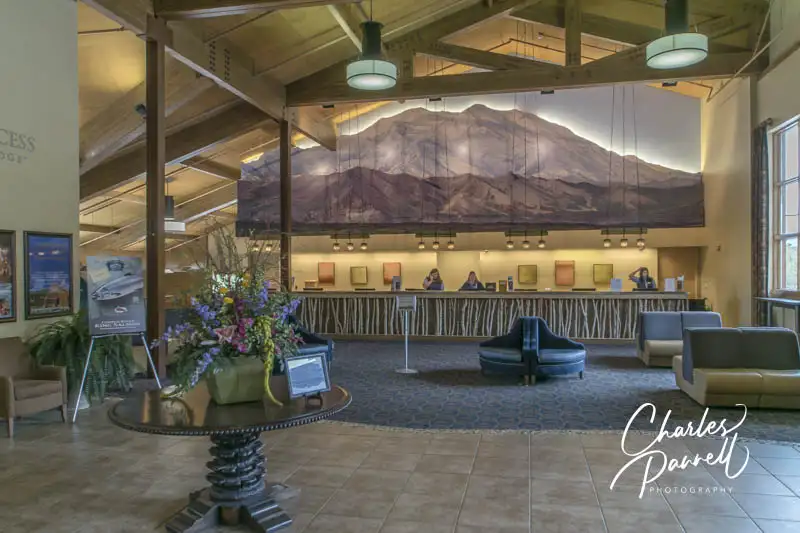
Lobby at the Denali Princess near Denali National Park
Of course, the final piece of the access puzzle in Denali National Park is lodging. There are no hotels or lodges in the park, but the campground has accessible spaces, and there are a number of accessible lodging choices nearby. Visit emerginghorizons.com/wheelchair-accessible-denali-lodging-options for more information.
Barrier-Free Travel Glacier, Yellowstone and Grand Teton National Parks for Wheelers and Slow Walkers
At first glance it appears that Northern California’s coastal redwoods are out of reach for wheelchair-users and slow walkers. After all, these majestic giants are located in some pretty remote areas. Granted, many redwood groves present some formidable access barriers; however these three coastal stands offer a nice selection of accessible trails, picnic areas and even camping cabins. So check out these wheelchair-accessible coastal redwoods on your next California road trip
Redwood National Park
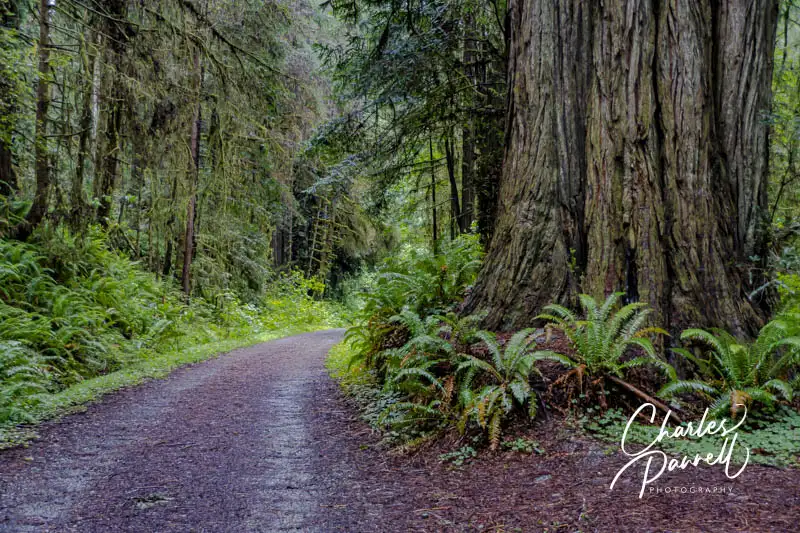
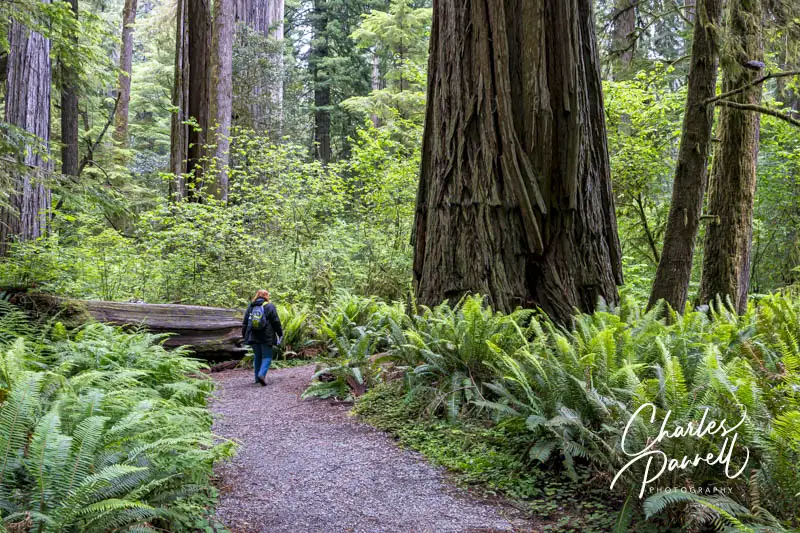
Lost Man Creek trail in Redwood National Park
Located about 320 miles north of San Francisco, Redwood National Park (emerginghorizons.com/redwood-national-and-state-parks/) tops the list of the Golden State’s wheelchair-accessible coastal redwoods. Although the drive through the park offers some stunning windshield views, the Lost Man Creek Trail is definitely worth a stop. The trail is easy to find — just follow Highway 101 north for about five miles from Orick, and turn on Lost Man Creek Road. The trailhead is about a mile down the road.
There’s accessible parking near the trailhead, next to an accessible vault toilet, with level access over to the trail. This former logging road is wide, level and free of obstacles for the first half-mile. After that the grade becomes steeper and there are rocks and other obstacles along the way, until the last bastions of access are obliterated at the ¾-mile point. Still, it makes a lovely out-and-back one-mile hike.
Additionally, there’s an accessible picnic table on a level dirt pad near the trailhead, so bring along a lunch and enjoy your repast in the shaded grove. It’s the ideal way to top off this very accessible hike.
Trees of Mystery
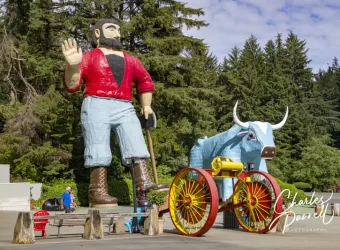
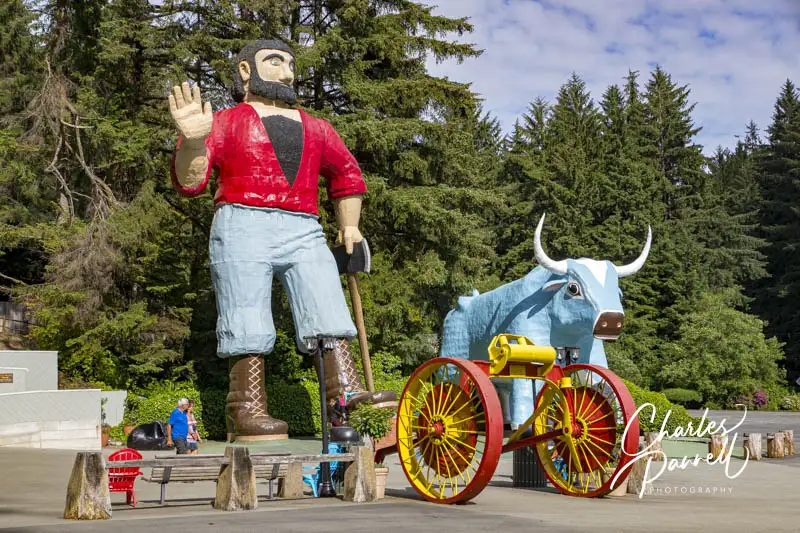
Paul Bunyan and Babe the Ox at the Trees of Mystery
The Trees of Mystery (www.treesofmystery.net) is another fun stop on Highway 101. It’s located about 25 miles north of the Lost Man Creek Trail, up in Klamath. You can’t miss it, as a giant statue of Paul Bunyan and Babe the Ox mark the site of the kitschy yet cool roadside attraction.
There’s plenty of accessible parking in the large lot, and barrier-free access over to the gift shop and ticket booth. The main attraction at this site is the Sky Trail, an aerial tramway which takes visitors on a scenic journey through the tree tops. There is a .8-mile trail that leads from the parking lot to the upper Sky Trail station; however it has a steep grade and a substantial cross slope in a few places, so it’s not a good option for wheelchair-users and slow walkers. Alternatively, accessible transportation in a lift-equipped vehicle to the upper Sky Trail station is available for anyone who can’t manage the trail.
There’s ramped access up to the upper Sky Trail station, with roll-on access and plenty of room for a wheelchair in the individual gondola cars. Be sure and stop for a view from the adjacent observation deck before you board though, as the bird’s eye view is magnificent. From the upper Sky Trail station, it’s a seven-minute 1570-foot descent back down to the lower station. And when you get there, treat yourself to some fudge or ice cream, and take time to browse through the gift shop. It’s a fun stop and definitely a unique way to experience the coastal redwoods.
Jedidiah Smith Redwoods State Park
The Simpson-Reed-Trail at Jedidiah Smith Redwoods State Park
Last but not least on the list of wheelchair-accessible coastal redwoods is Jedidiah Smith Redwoods State Park (www.parks.ca.gov/?page_id=413). This Northern California state park is located about 20 minutes north of Klamath along scenic Highway 199, near Crescent City.
One of the highlights of this park is the accessible Simpson-Reed Discovery Trail, which can be found near the end of Walker Road, off of the main highway. Accessible parking is located next to the accessible vault toilet, near the trailhead. This one-mile loop, passes a number of fallen giants as it weaves through the forest and along the Smith River. It’s a very pleasant — and accessible — stroll.
And if you’d like to spend the night in the park, there are four accessible camping cabins in the campground. Cabins 24, 26, 30 and 105 feature accessible parking with ramp access up to the front porch. They are each furnished with two bunk beds, with a single on top and a double on the bottom. Other cabin features include, electricity, lights, a heater, a raised grill and an accessible picnic table.
Guests need to bring their own bedding, and an air mattress or mattress pad is also recommended. There’s no water in the cabins, but an accessible showerhouse with a roll-in shower is located nearby. It’s a beautiful campground, and the perfect place to top off a visit to California’s wheelchair-accessible coastal redwoods.
Barrier-Free Travel California National Park Road Trips for Wheelchair-Users and Slow Walkers
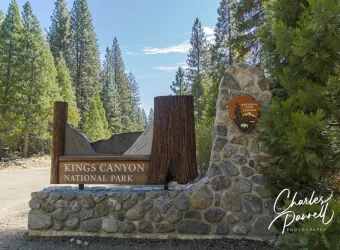
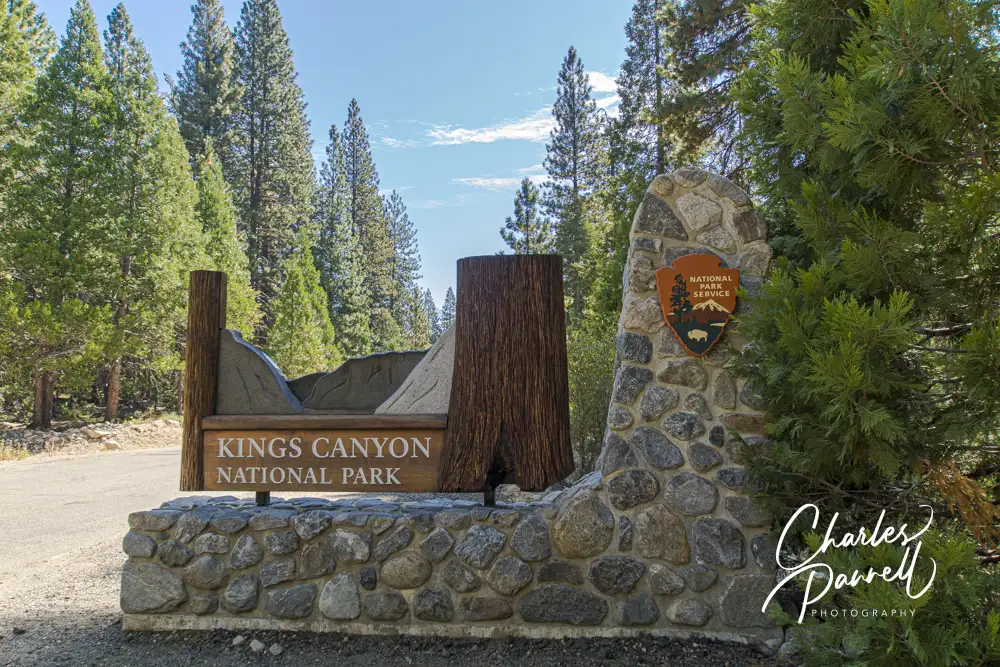
If a trip to the giant sequoias is on your spring travel agenda, then look no further than Kings Canyon National Park . Often overshadowed by the Giant Forest in nearby Sequoia National Park, the Kings Canyon section of the park offers an equally impressive stand of Giant Sequoias. And like its Sequoia National Park counterpart, the Kings Canyon grove boasts an accessible trail for wheelchair-users and slow walkers. So pack a picnic lunch, hit the road, and enjoy a visit to the Kings Canyon sequoias this spring.
Get Your Bearings
Known as the gateway to Kings Canyon National Park, Grant Grove is home to Giant Sequoia groves that were logged back in the 1800s, as well as stands of timber that were preserved for future generations. From Fresno, it’s just an hour drive on Highway 180 to the Big Stump Entrance of the park. From there it’s just a short drive to the Kings Canyon Visitor Center.
Accessible parking is located next to the Kings Canyon Visitor Center, with curb-cut access up to the sidewalk and level access over to the building. Inside, there’s plenty of room to maneuver a wheelchair around the ranger information desk, small book store and interpretive exhibits. There’s also level access to a small theater where a film about the park runs throughout the day.
From the visitor center, head over to Grant Grove Drive, which is located off Highway 180, across the street from the road to Crystal Springs Campground. This short but scenic route leads through a Giant Sequoia grove and terminates in the General Grant Tree parking lot. Even if you are unable to navigate any of the trails in the grove, this drive is a must-do, as it boasts several pullouts and offers some excellent windshield views of the grove. It’s a good way to get an up-close-and-personal look at the Giant Sequoias, even if you are unable to get out of your vehicle. The view from the General Grant Tree parking lot isn’t bad either.
Hike Around the Kings Canyon Sequoias
Trail to the General Grant Tree
One of the main attractions in this grove is the impressive General Grant Tree. This 1,700 year-old stately giant is 40 feet wide and towers 268 feet above the grove. And for a closer look, there’s a half-mile loop trail that leads out to the iconic tree.
The paved trail first passes a grove of young sequoias, then circles the gigantic Fallen Monarch sequoia, before it reaches the General Grant Tree midway along the route. Although the trail isn’t entirely level, it’s generally doable for most folks, with plenty of benches to sit and take a rest along the way. That said, the trail that leads around the back of the General Grant Tree is steep and not accessible, but you can still get a nice view from in front of the tree.
After the trail passes the General Grant Tree, it winds around the Gamlin Cabin, which was built in 1872 by a pair of brothers who grazed sheep in the area. The trail then edges by the Centennial Stump (a 16-foot section of this tree was displayed at the 1876 Centennial Exhibition in Philadelphia), and passes by the other end of the Fallen Monarch, before it returns to the parking area. As an added bonus, the grove is shaded, so it makes for a nice stroll even in the midday sun. And it’s the perfect way to top off a springtime visit to the Kings Canyon sequoias.
Barrier-Free Travel Yosemite, Sequoia and Kings Canyon National Parks for Wheelers and Slow Walkers
Located about 1.5 miles from the entrance to Red Canyon along Scenic Highway 12, Red Canyon Village (www.redcanyonvillage.com) makes a great home base for a Utah national park road trip. It’s just a 20 minute drive to Bryce Canyon National Park so you don’t have to get a 4 AM start to beat the rush. Plus, you can easily wander over to Red Canyon to enjoy the sunset at the end of the day. And since it’s a small complex with some RV spaces and cabins, Red Canyon village is a peaceful and secluded spot to spend the night. Even better — they also have a nice wheelchair-accessible log cabin.
Red Canyon Village
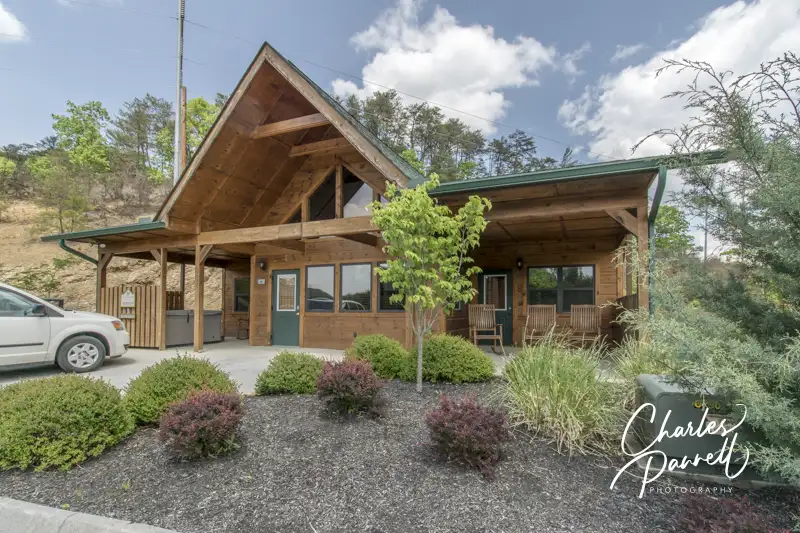
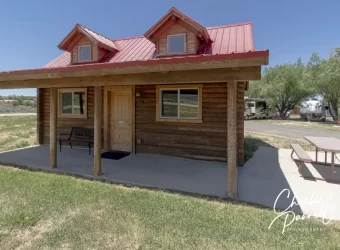
Although there’s a small step up to the front office in Red Canyon Village, just call (435) 676-2243 and the clerk will gladly bring out your key. Log Cabin 12 — the accessible unit — is located a short walk from the office. And although there aren’t any paved parking spaces in the complex, there’s plenty of room to park parallel next to the accessible cabin.
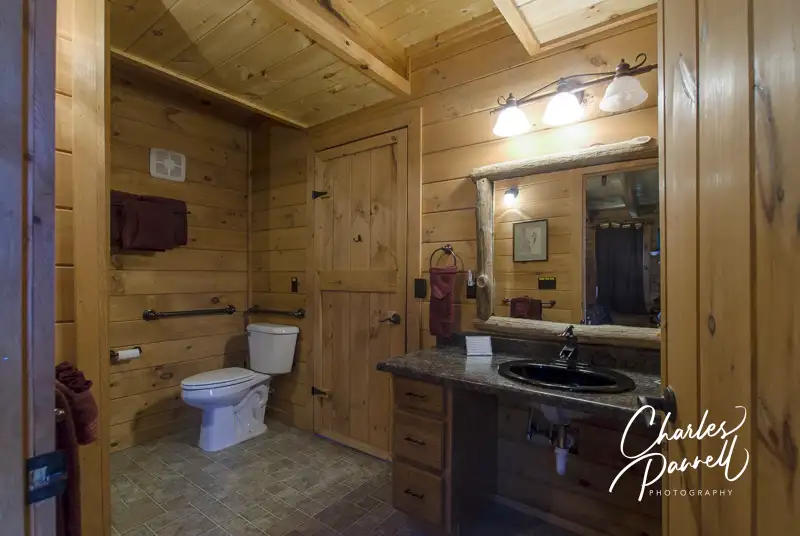
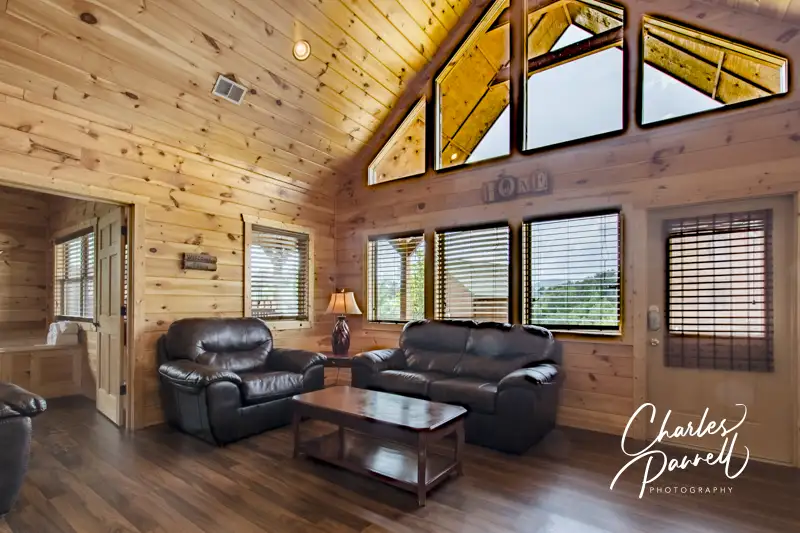
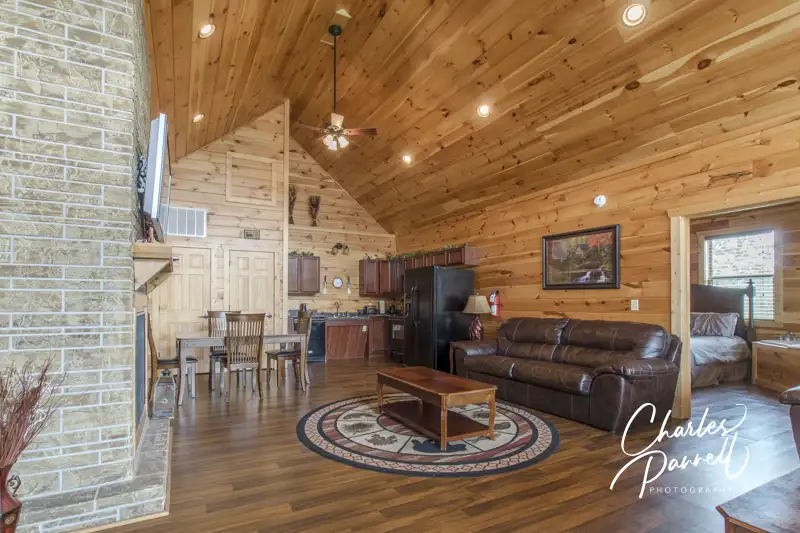
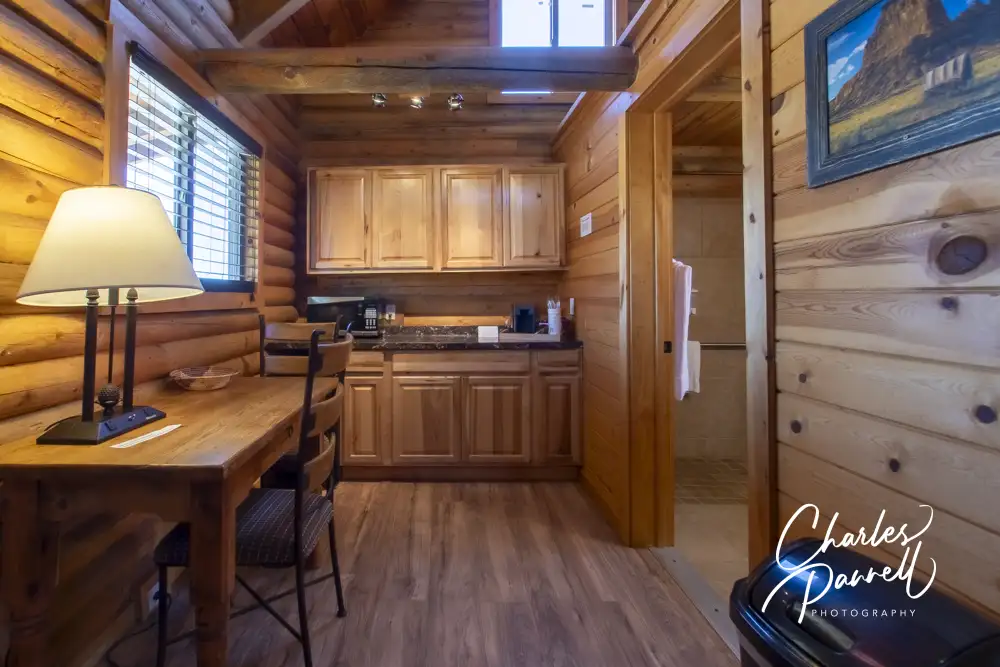
There’s level access to the cabin, which boasts open beams and a wood interior. Access features include wide doorways, laminate floors, lever handles, a lowered clothing rod and good pathway access. The main room is divided into two areas; with the bedroom and living area on one side and a small kitchenette on the other side.
Living area in Cabin 12 at Red Canyon Village
The living area is furnished with a 26-inch high open-frame king-sized bed, which can be moved to allow wheelchair access on either side. Other furnishings include, a nightstand, a mirror, a luggage rack and a loveseat. The kitchenette is furnished with a table, two chairs, a microwave, a refrigerator and a coffee maker. It has everything you need for a snack, a quick meal, or a morning coffee break.
Kitchenette in Cabin 12 at Red Canyon Village
There’s barrier-free access to the bathroom, which is equipped with a roll-in shower with grab bars, a hand-held showerhead and a portable shower bench. It also includes a roll-under sink, and a toilet with a grab bar on the left wall (as seated).
Bathroom in Cabin 12 at Red Canyon Village
Top things off with a roomy paved front porch with plenty of room for a wheelchair, and you’re good to go. There’s also a standard picnic table on a cement pad next to the porch, with room for a wheelchair on the end. And if you forget anything, there’s level access to the The Red Canyon Indian Store and Rock Shop next door.
Barrier-Free Travel
Utah National Parks for Wheelchair-users and Slow Walkers