As a travel writer since 1977, Candy Harrington has been writing about accessible travel exclusively since 1996. She’s the founding editor of Emerging Horizons, and the author of the popular Barrier-Free Travel national park series. With thousands of bylines to her credit, Candy hits the road often, in search of new accessible travel finds. Candy and her travel photographer husband Charles Pannell reside in NE Washington, where they tend to their chicken flock and enjoy a rural lifestyle.
If you’re looking for wheelchair-accessible transportation in Budapest, then look no further than Paratrans (paratrans.hu/en). This local company can provide an accessible vehicle with a driver who is familiar with the city, for airport or rail station transfers as well as city excursions. Their Renault Master is outfitted with a ramp and tie downs, and it can accommodate three wheelchair-users and five additional passengers. And if you need room for another wheelchair, it can be reconfigured to accommodate four wheelchair-users and four additional passengers. For more information about wheelchair-accessible transportation options in Budapest, call Paratrans at +36 30 900 1603 or e-mail them at info@paratrans.hu.
Wheelchair-accessible Netherlands tours are available through AmsterdaMobile (amsterdamobile.com/en/), a Dutch travel agency that was established in 2019. These tours are customized to each participant’s needs and interests, and many tours utilize wheelchair-accessible taxis. Other tours are barrier-free walking and rolling tours, which meet at agreed upon starting points. The agency can also arrange for accessible transfers, hotel reservations and the rental of mobility aids. Favorite accessible Amsterdam tours include a visit to the Van Gough Museum or an Amsterdam Canal cruise. Accessible tours to neighboring cities, including Rotterdam, The Hague, Utrecht, Delft and Leiden are also available. And they can also arrange an accessible tour to the colorful Keukenhof Gardens, in season. The AmsterdaMobile website includes a full description of all the wheelchair-accessible Netherlands tours, along with detailed access information. For more information about AmsterdaMobile call +31 6 15204812 or fill out the form on their website.
The National Park Service offers a number of lifetime passes for free admission to national parks and other federal lands. They are available to anyone with a permanent disability, members of the military, veterans, Gold Star Families and people over 62 years old. These passes can be obtained in person at national parks and federal recreation areas across the country (nps.gov/planyourvisit/pickup-pass-locations.htm). The passes are also available online at the USGS store (store.usgs.gov/recreational-passes); however there’s a fee for processing and shipping. And although the national park pass application is pretty straightforward, specific documentation is required for each pass. With that in mind, here’s what you need to have in hand to get your lifetime national park pass.
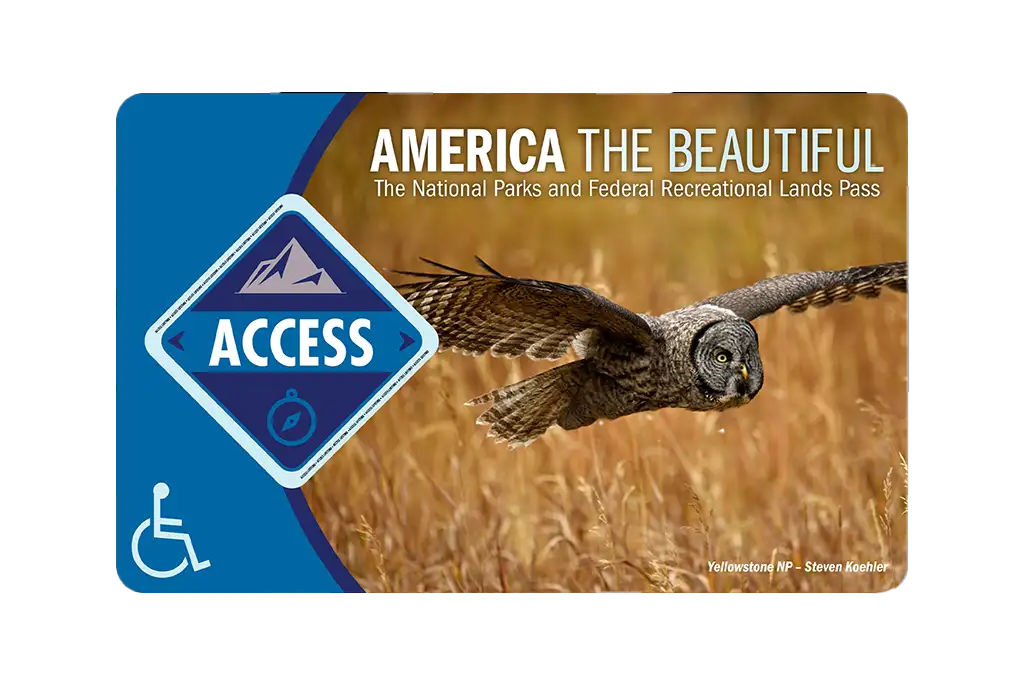
America the Beautiful Access Pass
This free lifetime pass is available to US citizens or residents with a permanent disability. Applicants must provide documentation of a permanent disability and residency or citizenship.
A physician’s letter that states that the applicant has a permanent disability is the most common documentation provided. Documents issued by a federal or state agency are also accepted, but they must include the nature of the disability, and state that the disability is permanent. If the documentation is issued by the Veterans Administration, it must also include the percentage of the disability. Examples of acceptable documentation include a notice of disability benefits from the Social Security Administration, a summary of benefits from the Department of Veterans Affairs, or an award letter from the Veterans Administration.
It’s important to note that an accessible parking placard is not accepted as proof of a permanent disability for the America the Beautiful National Park Pass. Additionally, using a wheelchair or other assistive device is not considered proof of a permanent disability.
A driver’s license, passport or state issued ID is also required to document residency or citizenship.
America the Beautiful Senior Pass
This lifetime pass is available to U.S. citizens or permanent residents age 62 or older. The cost of the pass is $80. An annual America the Beautiful Senior Pass is also available for $20, and the cost for this annual pass can be applied to the purchase of a lifetime pass.
This is probably the easiest pass to document, as a driver’s license, passport or state issued ID are all accepted as proof of age and residency or citizenship.
America the Beautiful Military Pass
Last but not least, the free America the Beautiful Military Pass is available to active duty service members and veterans of the US Armed Forces, including the National Guard and Reserves. It’s also available to Gold Star Families who have lost a family member in the line of duty.
Accepted documentation for this pass includes a Department of Defense identification card, a veteran health identification card or a veteran ID card. A veteran designation on a state issued US driver’s license or identification card is also accepted.
Gold Star Families can self-certify that they meet the required criteria by downloading and signing a voucher at https://www.nps.gov/customcf/goldstar/voucher.htm. Once they arrive at the park they can exchange the voucher for an America the Beautiful Military Pass.
So plan ahead, and pack along the right documentation to get your national park pass.
Barrier-Free Travel Yosemite, Sequoia and Kings Canyon National Parks for Wheelers and Slow Walkers
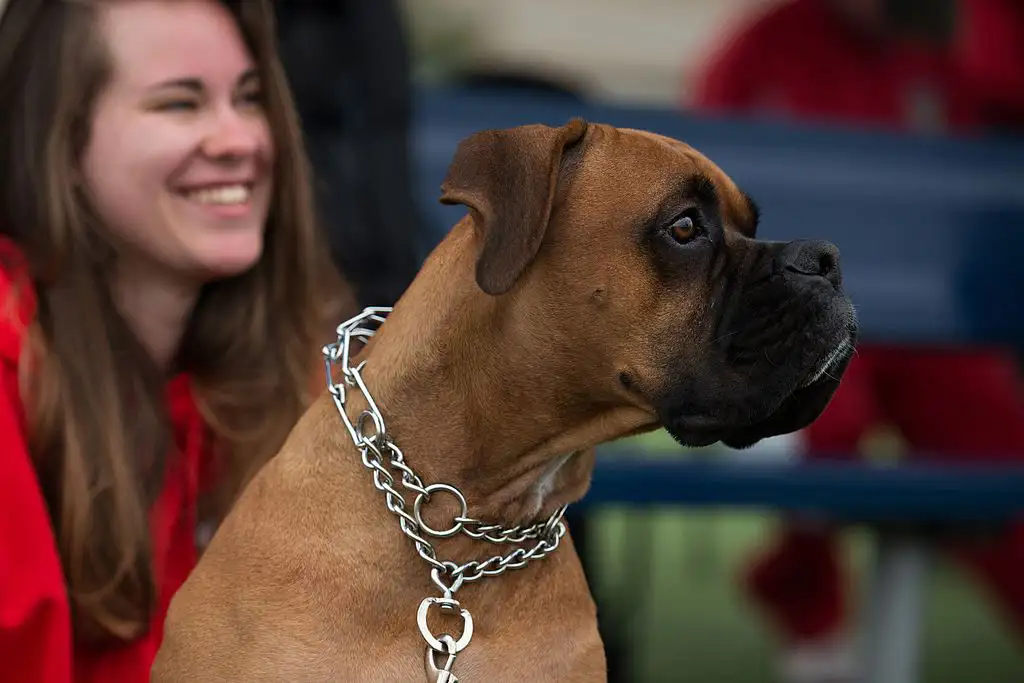
I use a manual wheelchair and I’d like to train my dog to be a service animal so I can travel with him. There are so many places that offer training, certification and registration online, and I really have no idea of where to go. Can you recommend some certified trainers or schools, and also direct me to the official place to register my dog as a service animal?
Service Animal Training Resources
Service dogs help people in wheelchairs do a number of things. They can pick up things, open and close automatic doors, carry items, turn on lights and even retrieve a wheelchair that’s out of reach. That said, under the Americans with Disabilities Act (ADA), no official training, certification or registration is required for a dog to be considered a service animal. The only requirement is that the animal must perform a task or tasks to assist a person with a disability.
You can certainly self-train your dog to perform tasks to assist you — at home and when you travel. A good way to find an experienced trainer to work with you is to contact your local Center for Independent Living (CIL) and ask them for referrals to trainers that have worked with their clients. CILs are located throughout the US and they offer excellent disability-related resources. Here’s a directory to find one near you. ilru.org/projects/cil-net/cil-center-and-association-directory
There are also a number of reputable organizations that train service dogs and then pair them with folks who need them. These organizations usually begin with puppies and the training takes almost two years. After graduation each dog is paired with a person with a disability, and the team then undergoes additional training at the organization’s facility. Financial aid is usually available, and some service dog organizations operate as non-profits and provide the animals to qualified applicants at no charge. The wait for these animals can be several years; however since you want to train your own dog, these organizations aren’t a viable option for you.
Red Flags!
Finally, there are a number of websites that offer service dog certification, registration and equipment. In most cases you should steer clear of these sites, which are more commonly known as card mills. For a fee they will give you a card that says your dog is a service animal, add them to their registry and even send them a vest or a harness. Although there’s nothing technically illegal about this, it’s an unnecessary expense because in most cases you don’t need any official certification, registration or even a card for your dog to be classified as a service animal. Some of these websites also offer to certify dogs as emotional support animals, which are not recognized under the ADA or the Air Carrier Access Act (which governs accessible air travel).
It should also be noted that under the ADA, service animals are not required to wear tags, vests or harnesses that identify them as service animals. All that’s needed is the verbal assurance that the animal preforms tasks for an individual with a disability. Finally, be especially skeptical of any site that claims they are the “official service animal registry”, because according to the ADA there is no such thing.
I’m sure you’ll do a good job training your dog, and in the end you’ll have a great helper.
There’s something more than a bit unsettling about visiting a museum that’s located within spitting distance of a territorial prison. Be it the razor wire, the guard towers or the overly secure gates, it just doesn’t make you feel all warm and fuzzy. Add in some of the grizzly artifacts in the Museum of Colorado Prisons (https://www.facebook.com/pages/Museum%20of%20Colorado%20Prisons/255235554627336/), and you’ll get a definite chill up your spine. That said this Canon City favorite is definitely worth a visit, as not only does it present a comprehensive history of the Colorado prison system, but it also manages to inject a bit of humanity into the mix.
The Museum of Colorado Prisons
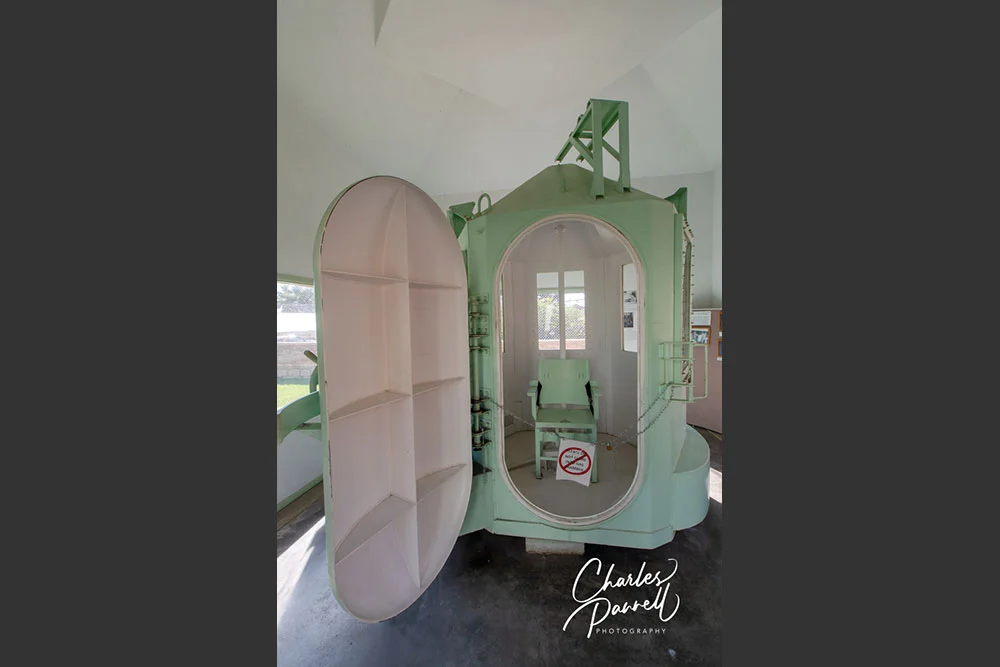
Located in historic Cell House 4, the museum building once housed female inmates. And although it’s a historic building that dates back to 1935, they’ve done a pretty good job with access. There’s stairway access in front, but there’s a ramped entrance and accessible parking in back. Just ring the buzzer and someone will open the door. To view the downstairs gallery, go out the back entrance and roll around the building on the level sidewalk to the accessible lower front entrance. And while you’re in front, don’t forget to have a look at the vintage gas chamber exhibit.
Gas Chamber at the Museum of Colorado Prisons
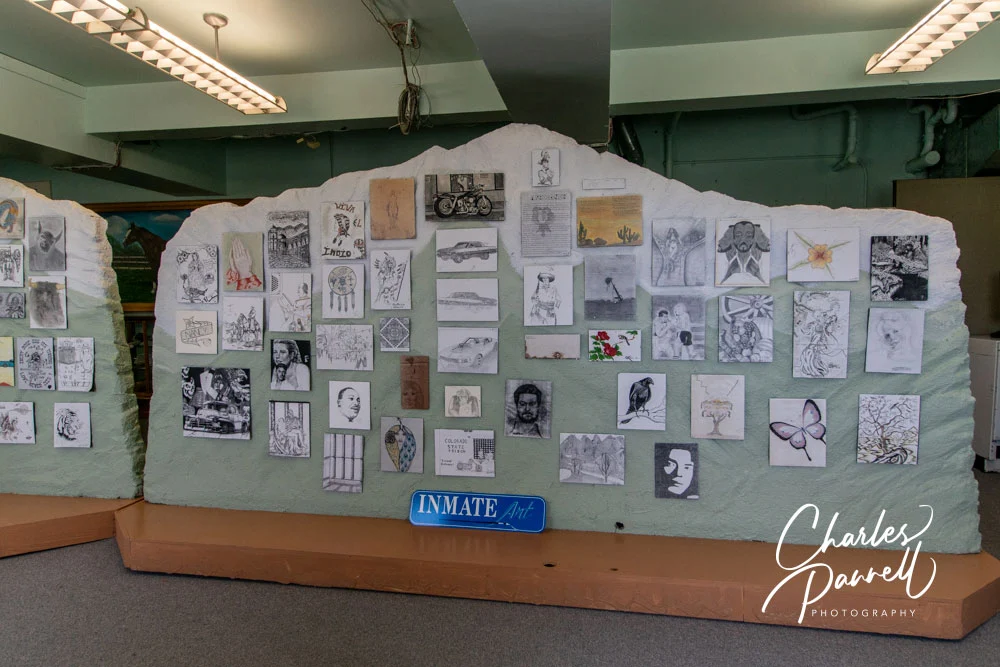
Upstairs there’s level access down the cellblock corridor, where there are artifacts from the old prison system, vintage prison garb, inmate art, and lots of photos. Some of the cells also contain themed exhibits, and although they may be a bit tight for power wheelchair-users, you can still get a pretty good overview of the exhibits from the hallway. Some of the themed exhibits feature details about escape attempts, behavioral control, executions, and the prison section of the public cemetery known as Woodpecker Hill. There’s also a large collection of contraband, skillfully crafted prison weapons, and more than a few creepy prisoner creations.
Inmate Artwork on display at the Museum of Colorado Prisons
Downstairs there’s barrier-free access to most of the former kitchen and dining hall, which is filled with more exhibits. The exception is the small laundry area which has a few steps up; although you can still peer into it. Perhaps the most memorable artifact is the jumpsuit worn by an inmate in the Labor Day 2018 escape, that took place while people were visiting the museum. Imagine looking at a collection of prison weapons, then glancing up to see a prisoner scaling the adjoining prison wall. Fortunately the escapees were caught a few hours later.
Haunted or Haunting?
To be honest, it’s hard to go through this museum without having a chill or two run up your spine. And if you think you may be overreacting or perhaps the victim of an overactive imagination, then think again. The Museum of Colorado Prisons has been singled out as one of the most haunted sites in the state by many paranormal organizations. And in fact ghost hunts and haunted tours are held there throughout the year.
So why is it haunted? Well first off, it’s in close proximity to an active prison that dates back to 1871, where torture, floggings and other brutal practices were commonplace. And then there were the executions, which were far from humane. Take the automatic hangman for example. This tool was designed to relieve the guards of guilt from pulling the trap door lever at hangings. Instead, the device was activated when the prisoner stepped on the platform, and a weight slowly triggered the mechanism that controlled the trap door.
And of course there’s no shortage of weapons on display in the museum, many of which were possibly used to brutally end a person’s life – be it an inmate or a guard.
Is the Museum of Colorado Prisons haunted or just haunting? Who knows; but as one museum employee shared, “I’m sure there are some spirits here. I often hear noises, footsteps and sometimes whistling when I’m here alone. And I know I’m not imagining that.“ Either way, this often overlooked attraction is definitely worth a stop. Is it really haunted? Judge for yourself on your next Canon City visit.
Barrier-Free Travel
Utah National Parks for Wheelchair-users and Slow Walkers
I use a power wheelchair and I will be taking a European vacation with my husband next year to celebrate our 25th wedding anniversary. I’m wondering if I need any special equipment or plugs for charging a power wheelchair in Europe? Can I just plug it into the outlet in my hotel room? Any tips will be greatly appreciated.
Well congratulations on your upcoming anniversary.
There is a lot of confusion about charging a power wheelchair in a foreign country. Electricity is not universal around the world, as different countries use different voltages and plug configurations. Of those two items, the most important thing is the voltage.
The US operates on 120V, while most European countries operate on 230V. If you try and charge a 120V appliance in a 230V outlet, sparks will fly — literally — and you will severely damage your charger. If on the other hand you try to charge a 230V appliance in a 120V outlet it won’t receive the full power needed, and as a result it won’t perform well. In other words, you may only get a partial charge. Additionally, long term use of a lower voltage outlet on a higher voltage charger can damage the unit.
So suffice it to say that plugging into the right voltage is essential.
So first off, check your wheelchair to see if it has a dual voltage charger. If it is marked 120V-240V you are good to go voltage-wise, but you will need some adapters. If you don’t have a dual voltage charger, check with your wheelchair manufacturer to see if they offer one. And if that’s out of the budget, you can purchase a simple voltage converter that you can carry in your suitcase and will work on all of your appliances.
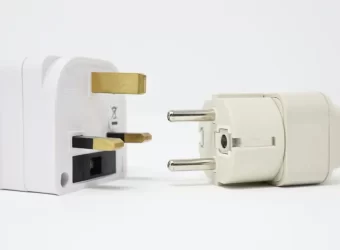
You should also travel with a good selection of adapters, as the standard two or three prong US plugs won’t work in European sockets. Adapters basically change the shape of the plug, You just attach one end of the adapter to the charger cord and plug the other end into the wall. Again, this is a good guide for the type of plugs you will need in countries around the world. skyscanner.net/news/international-travel-plug-adapter-guide
You can get adapters and converters online and at most travel stores. And then you will be all set for charging a power wheelchair in Europe.
Remember, if you don’t use a converter, you will fry your battery. The adapter only changes the shape of the plug, so just because the plug fits the socket, doesn’t mean it’s safe to plug in.
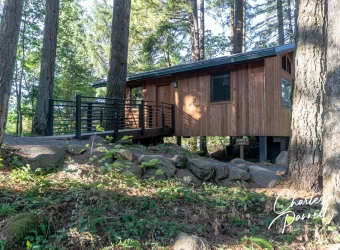
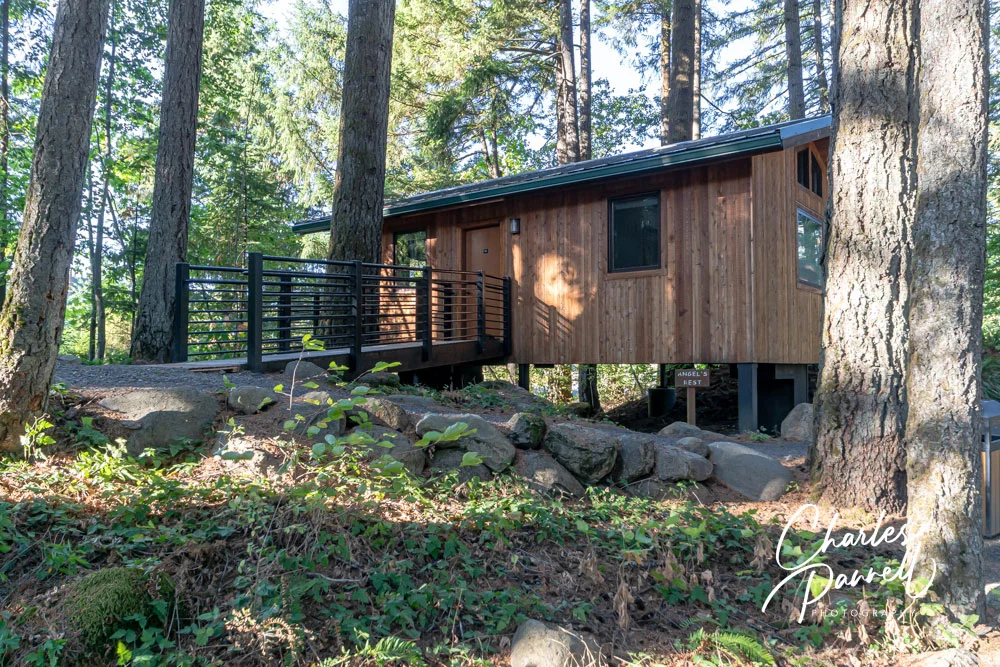
Angels Rest Wheelchair-Accessible Treehouse Suite at Skamania Lodge, Oregon
Although Skamania Lodge (https://www.skamania.com/) is just a 45-minute drive from Portland, it’s a world away from the trappings of urban life. Surrounded by towering evergreens, the 175-acre property offers upscale amenities in the scenic Columbia River Gorge. Of course the standard lodge rooms and suites at Skamania Lodge are beyond comfortable; however if you want to raise the meter on the exclusivity index, then check-in to their new wheelchair-accessible treehouse suite. Located in an private corner of the property, this luxurious tree-level suite offers comfortable furnishings, first-rate-amenities and more than a few little extras. And even though most treehouses aren’t doable for people with mobility issues, this wheelchair-accessible treehouse suite at Skamania Lodge is an excellent lodging choice for wheelchair-users and slow walkers.
A Wheelchair-Accessible Treehouse
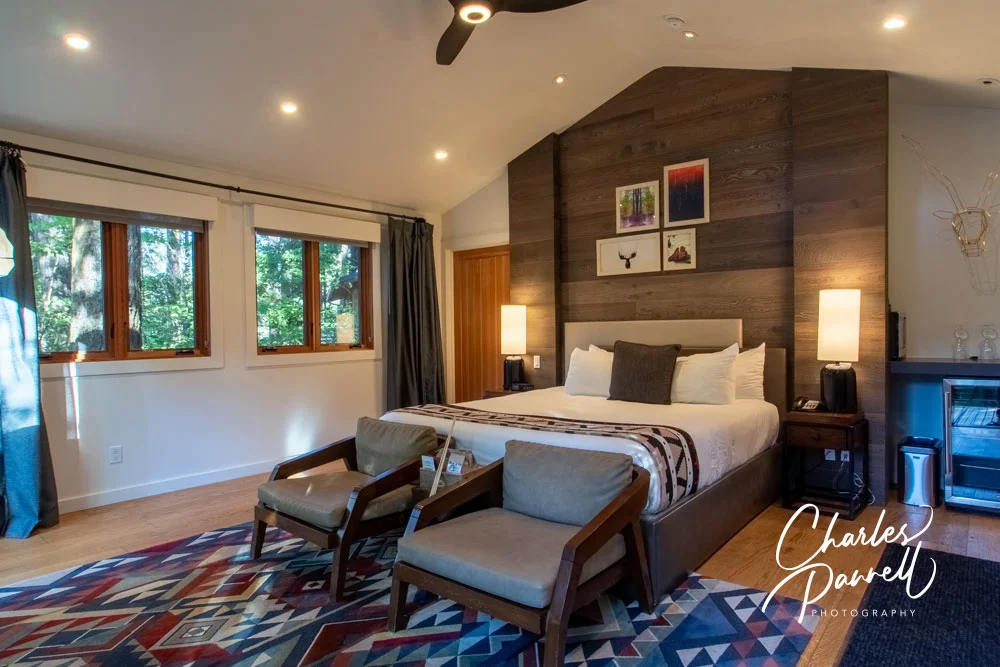
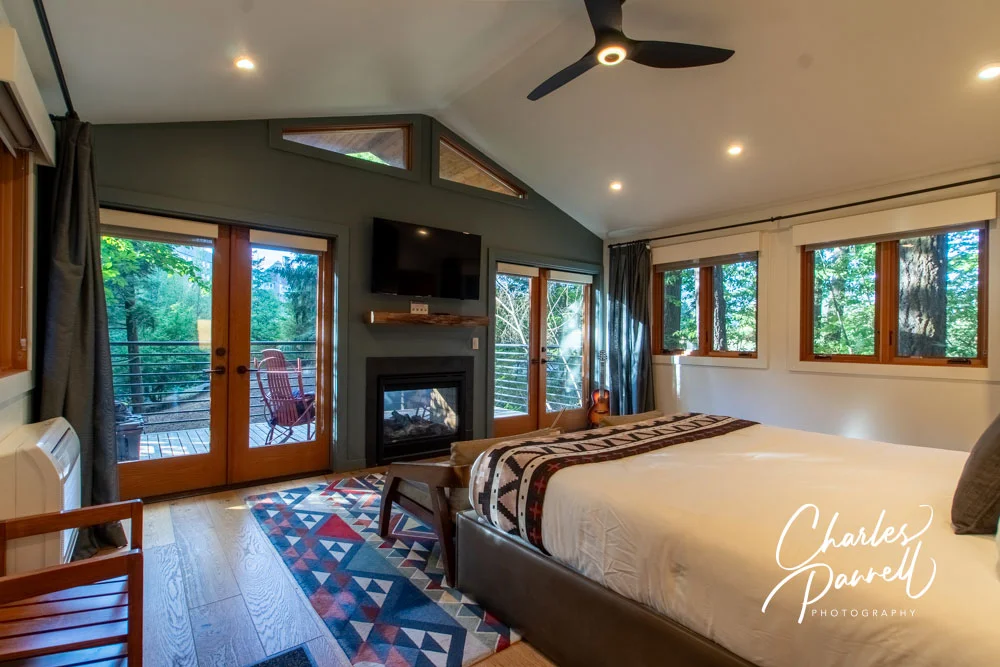
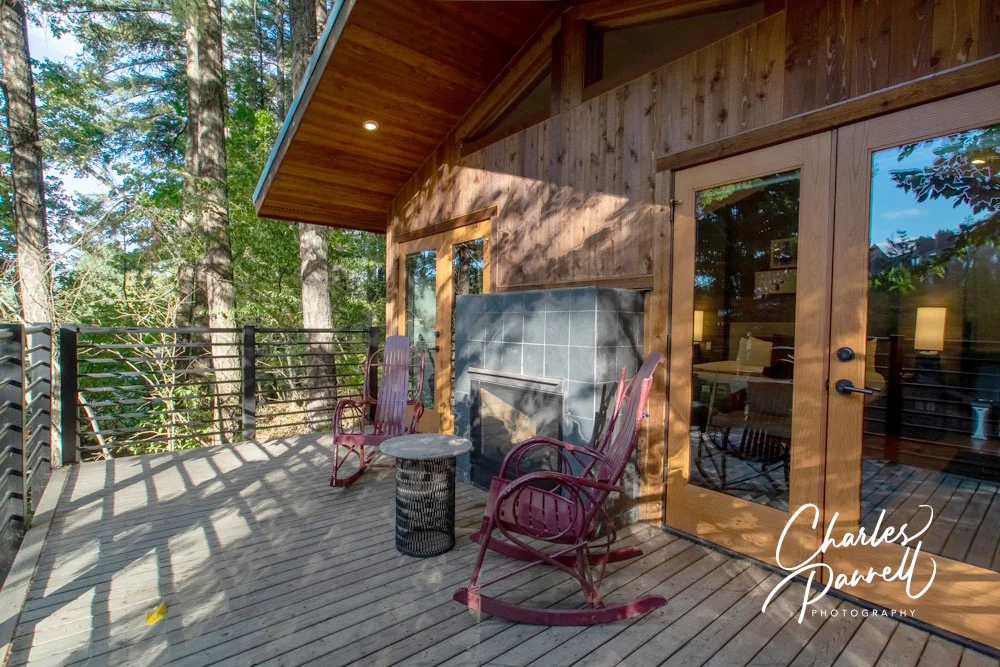
Inside the Angels Rest wheelchair-accessible treehouse suiteThere are Lots of Windows in the Angels Rest wheelchair-accessible treehouse suite
The new treehouse suites are located in a quiet corner of the lodge property that’s reserved for treehouse guests. There’s plenty of room to deploy a ramp in the parking space reserved for the Angels Rest (701) wheelchair-accessible treehouse suite. From there a 300-foot paved pathway leads up to the treehouse. There’s a slight incline to the path near the end, but it’s doable for most power wheelchair and scooter-users. Golf cart assistance is available to anyone who needs it — just inquire at check in. And if you encounter any problems, just call the front desk.
Access features in Angels Rest include wide doorways, lever handles and plenty of room to maneuver a wheelchair or scooter. The main room is lined with windows that bring the outside in — you really feel like you are in a tree. It’s furnished with a 26-inch high king-sized bed with wheelchair access on both sides, two night tables, a refrigerator and a microwave. And there are two comfy chairs in front of the indoor-outdoor gas fireplace, and a vintage guitar tucked away in the corner. There’s also level access to the spacious deck through two double doors.
Deck outside the Angels Rest wheelchair-accessible treehouse suite
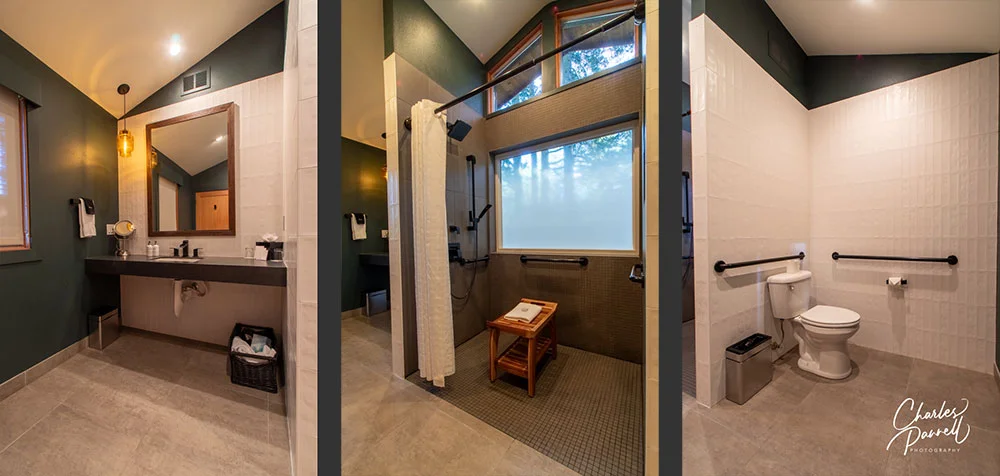
The bathroom is cavernous, and includes a full five-foot turning radius. It’s outfitted with a large roll-in shower with grab bars, a hand-held showerhead and a wooden shower bench. The toilet, which is located in an alcove around the corner, has grab bars on the back and left walls (as seated). Top it off with a large roll-under sink and a lowered mirror and you have a nicely outfitted and accessible suite.
Bathroom in the Angels Rest wheelchair-accessible treehouse suite
Those Little Extras
And then there are those little extras that are included in this luxurious wheelchair-accessible treehouse. For starters, there’s not just a coffee maker, but a Nespresso machine. Just pop in a pod for a perfectly brewed cup of expresso. Of course if you prefer tea or cocoa, they have that too.
And let’s talk about the robes. Many hotels provide guests with robes and slippers, but the treehouse robe was the softest and plushest one I’ve ever worn. Seriously, I didn’t want to take it off.
There were also some nice extras outside. Not only are there comfy chairs and a table on the deck, but there’s also a Yeti ice chest. And it’s filled with ice, so bring your favorite beverage and enjoy. And although the whole treehouse suite simply oozes romance, the deck is a particularly romantic retreat. There’s also a nice open meadow below the deck, where the deer like to hang out near the end of the day.
Last but certainly not least, there’s the gas firepit that’s located close to the treehouse. There’s level access to the firepit, which is reserved for treehouse guests. And you don’t have to worry about actually starting a fire — just push a button and you’re good to go. Of course you can just sit around the fire and enjoy the evening, or you can whip up some tasty s’mores. And in keeping with the “little extras included” theme, s’more kits are also included in the treehouse suites. Truly they thought of everything.
But Wait, There’s More
Of course the wheelchair-accessible treehouse is just the tip of the iceberg at Skaminia Lodge. Let’s not forget the public spaces. There’s plenty of accessible parking near the main lodge building with a barrier-free path over to the spacious lobby. On the far side of the registration desk there’s a large fireplace, with plenty of spots to sit and enjoy the warmth, and take in the view of the surrounding forest.
The Cascade Dining Room, which is located just down the hall, also offers good wheelchair access. Guests can enjoy eggs benedict for brunch and feast on a rack of lamb at dinner. Lighter fare and gluten-free selections are also available. But one of the best features of the dining room is the expansive view of the forest, with the Columbia River in the background.
If you’d prefer some lighter fare, there’s also barrier-free access to the River Rock Lounge, which is located just down the hall.
And if you’d like to go for a swim, then just take the elevator to the basement and check out the indoor swimming pool. Not only is there good access around the pool, but there’s also a wheelchair lift to get into it. And since it’s protected from the elements, you can enjoy the water year-round.
In the end, not only does Skamania Lodge have all the bells and whistles, but it’s also just a short drive from the Historic Columbia River Highway, where you’ll find scenic vistas, jaw-dropping views and cascading waterfalls. It’s the perfect spot for a romantic retreat. After all a segment of The Bachelorette was filmed there!
Barrier-Free Travel Washington National Parks for Wheelers and Slow Walkers
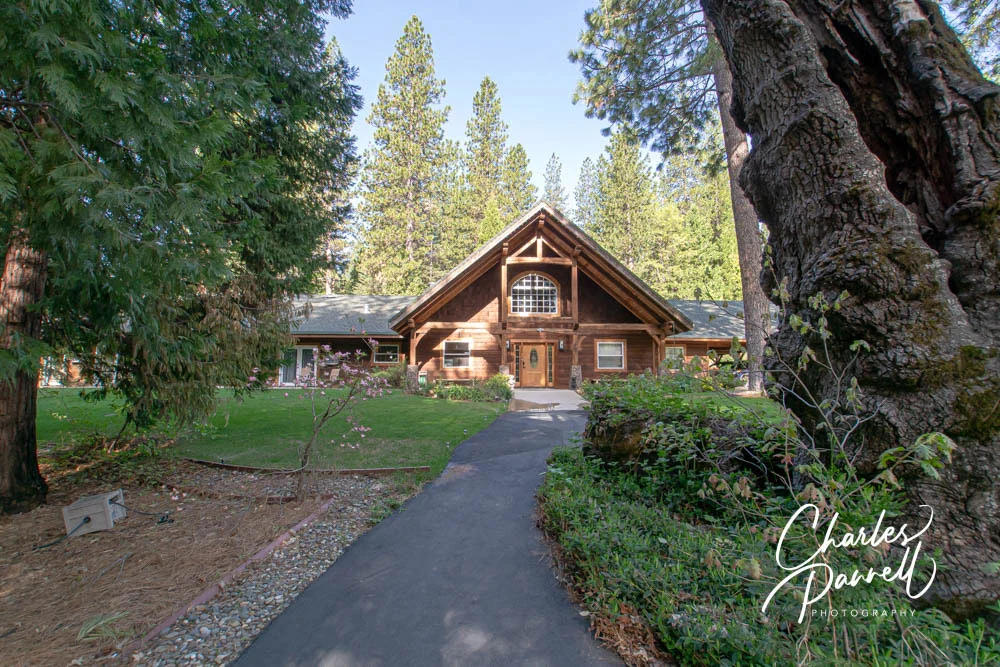
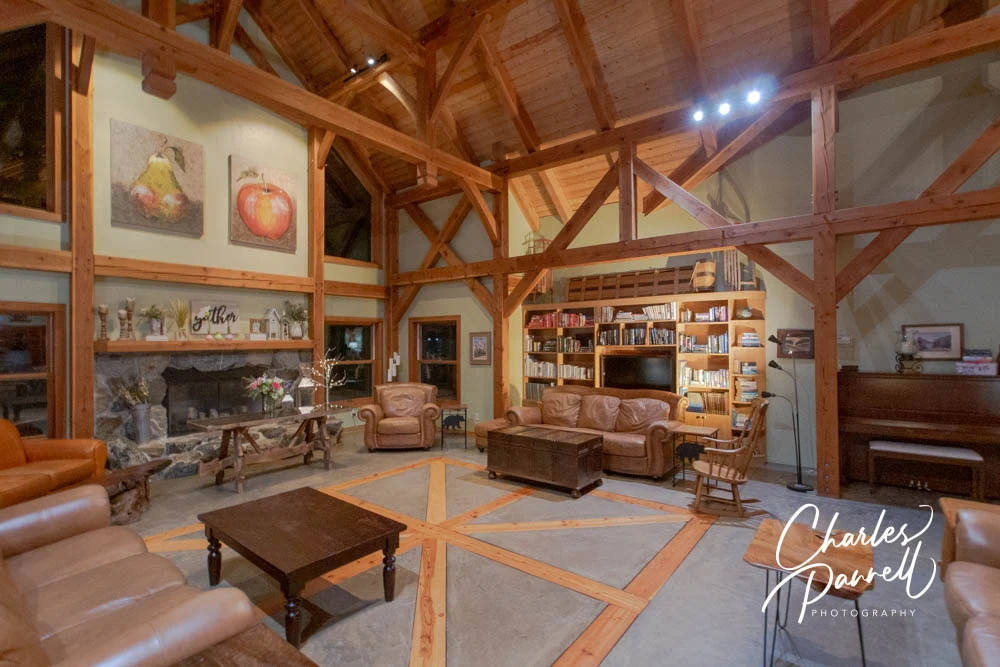
Located in California Gold Country, the Black Bear Inn (www.arnoldblackbearinn.com/) in Arnold makes the perfect home base for a wheelchair-accessible Calaveras County getaway. This five-bedroom lodge is surrounded by the forest, and offers a quiet, comfortable and accessible mountain retreat. From the massive ceiling beams and the welcoming fireplace in the great room, to a secluded patio in the pines, the Black Bear Inn has all the ingredients for a relaxing and refreshing mountain retreat. And if you’d like to explore the area, it’s just a short drive to Calaveras Big Trees State Park, the Sierra Nevada Logging Museum and some fabulous Murphys wineries.
The Calaveras Suite
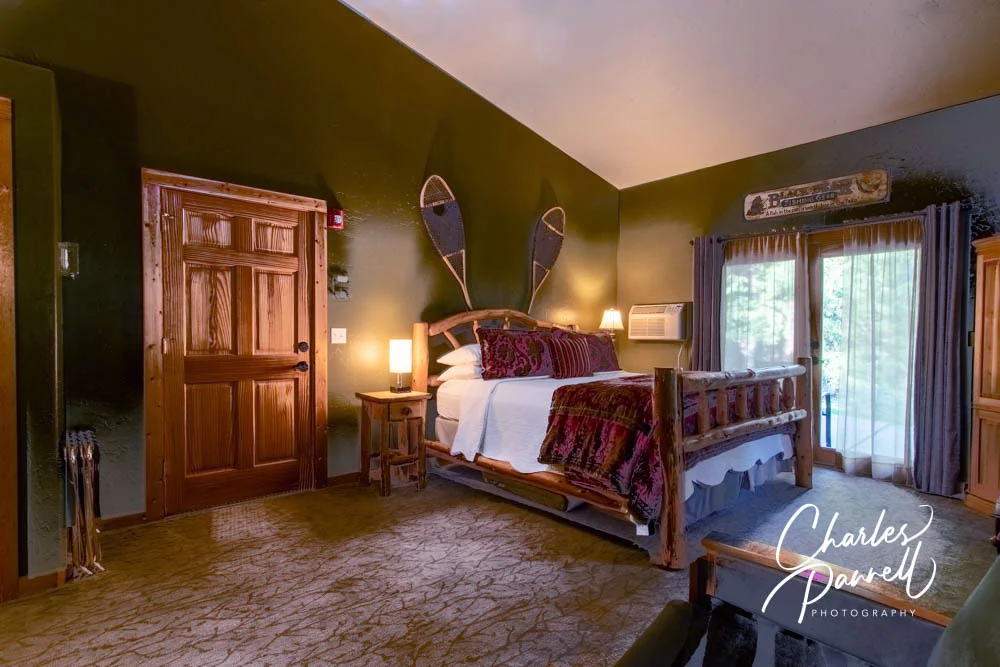
The Black Bear inn offers accessible parking near the entrance with level access over to the front door. Inside there’s plenty of room to roll around the great room, and barrier-free access to the accessible Calaveras Suite at the end of the hall. Access features in the suite include wide doorways, lever handles, good pathway access and low-pile carpet for easy rolling..
The suite is furnished with a 32-inch high king-sized bed with wheelchair access on the left side (as you face it). Other furnishings include two chairs, a table, a chest of drawers and an armoire. There’s also a fireplace in the oversized room, and if you’d like to enjoy the outdoors, there’s plenty of room to roll-around on the private patio. Of course, if you’d prefer to partake of the creature comforts, there’s also Wi-Fi and a TV available.
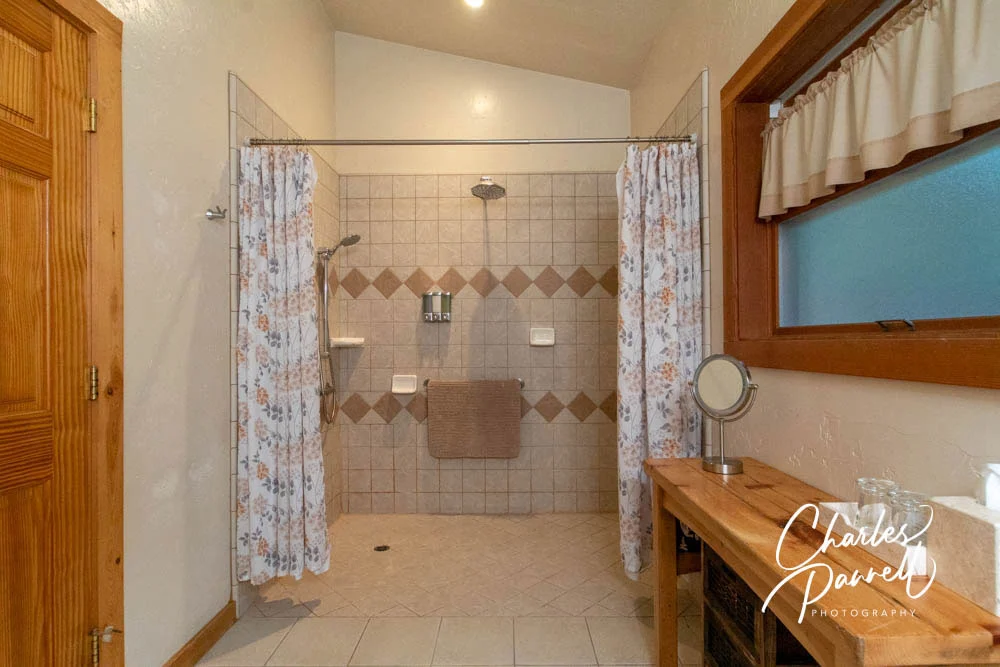
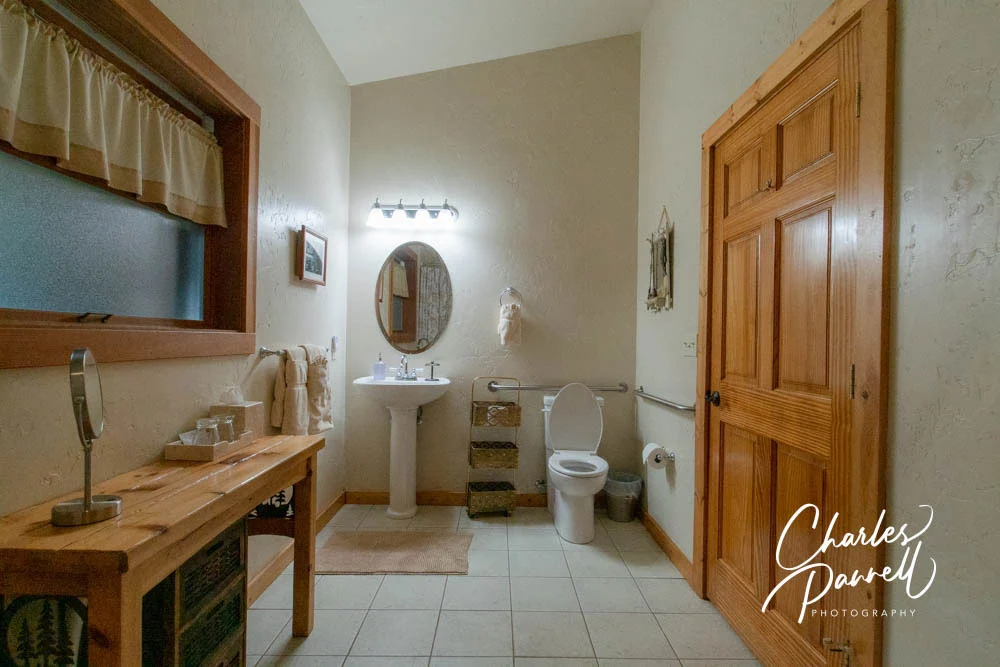
The bathroom includes a full five-foot turning radius, and is outfitted with an extra large — six foot wide by 4 foot deep — roll in shower. Other access features include a hand held showerhead, shower grab bars and a pedestal sink. Top it off with toilet grab bars on the back and left walls (as seated), and you have a very accessible suite.
The Calaveras Suite at the Black Bear Inn in Arnold, California
Shower in the Calaveras Suite
Sink and Toilet in the Calaveras Suite
The Little Extras
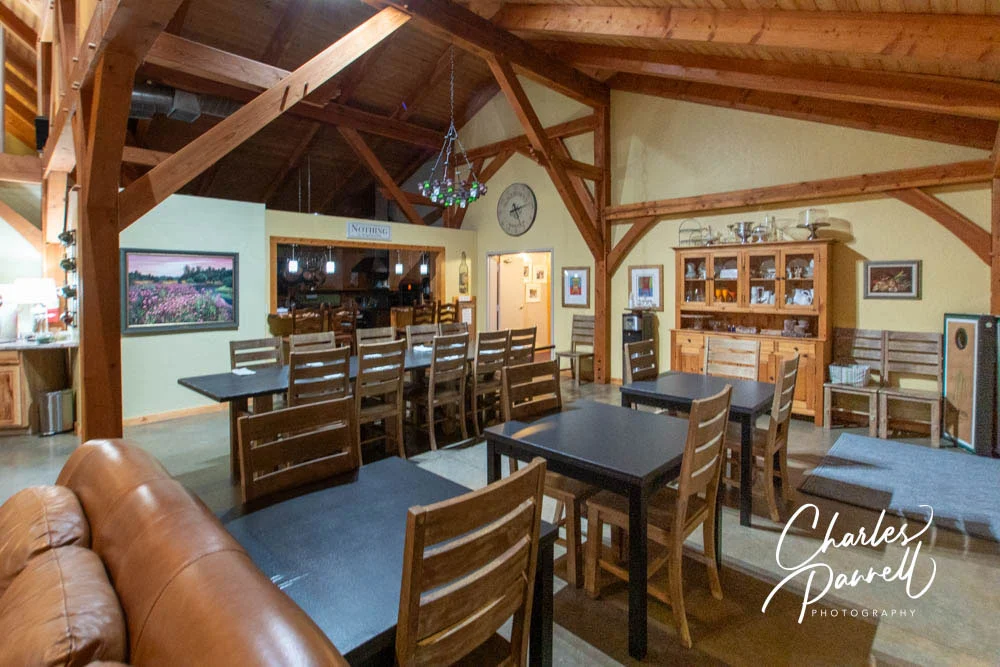
Although the suites at the Black Bear Inn are certainly comfortable, it’s the little extras that set this Calaveras County property apart. First and foremost there’s breakfast. It’s a full sit down affair in the main dining room or on the back patio. Owner Bruce Davison graduated from Le Cordon Bleu Academy in Sacramento, and whatever he serves is a treat. That said, cross your fingers that his delicious Nut Crusted French Toast is in the rotation. Crispy on the outside and creamy on inside, it’s the perfect way to start the day.
And then there’s the afternoon wine and cheese spread. It’s served in the gathering room, the back patio or even on your own private patio. And it includes artisan cheese charcuterie items, crackers and fruit, and of course your choice of local wine.
And for a real treat, Bruce can prepare dinner for you and your party — up to 10 folks. For a more intimate affair it can even be served by candlelight. And if you have a larger gathering like a family reunion or a girlfriends getaway, it can be also served in the larger dining room or on the back patio. Bruce uses fresh local ingredients, and his barbeques are phenomenal; but whatever you choose you won’t go away hungry. It’s truly the perfect way to top off a weekend visit to the Black Bear Inn.
The gathering room at the Black Bear Inn
Dining Room at the Black Bear Inn
Barrier-Free Travel Yosemite, Sequoia and Kings Canyon National Parks for Wheelers and Slow Walkers
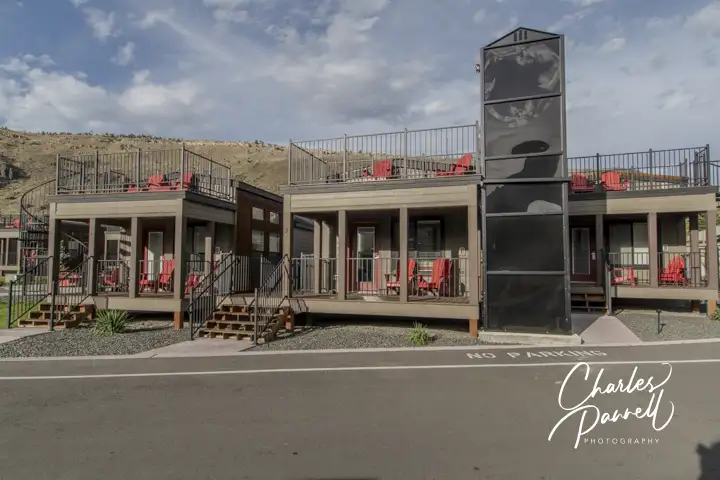
If a trip to Yellowstone National Park is on your travel calendar, then consider staying in Gardiner at the Jim Bridger Explorer Cabins (www.yellowstonevacations.com). This new addition to the Ridgeline Hotel features nine explorer cabins grouped around two community fire pits. It combines the best of both worlds — the feeling of roughing it in the outdoors, but with all the luxuries of home and hearth. And the wheelchair-accessible cabin is packed full of accessible amenities — including a choice of bed heights. As an added bonus, it’s just a short drive from Gardiner to the North Entrance of Yellowstone National Park. It’s the perfect pick for a wheelchair-accessible Yellowstone visit.
Spend the Night
There’s accessible parking near the Ridgeline Hotel office, with level access to the front desk. From there, it’s just a short drive around the corner to the accessible parking space near accessible cabin 2. The parking space is located close to the ramp that winds around to the front porch of the cabin. Alternatively, there are steps up to the front porch, with accessible parking located nearby.
Entry to Cabin 2
Access features in the cabin include wide doorways, lever handles, good pathway access and low-pile carpet for easy rolling. The great room is furnished with a 13-inch high sleeper sofa and a coffee table in front of a gas fireplace. The kitchenette includes a roll-under sink, a refrigerator, a dishwasher, a cooktop and a microwave. Also included are a nice selection of dishes, glasses, utensils and pots and pans. Add in a toaster, a coffee maker and even an ice maker and you have all your bases covered.
Kitchen in Cabin 2
The master bedroom is furnished with a 31-inch high platform bed with wheelchair access on both sides; while the second bedroom has a bunk bed with a double on the bottom (23-inches high) and a twin on top. So between the sleeper sofa and the two bedrooms, guests definitely have a choice in bed heights.
Master Bedroom in Cabin 2
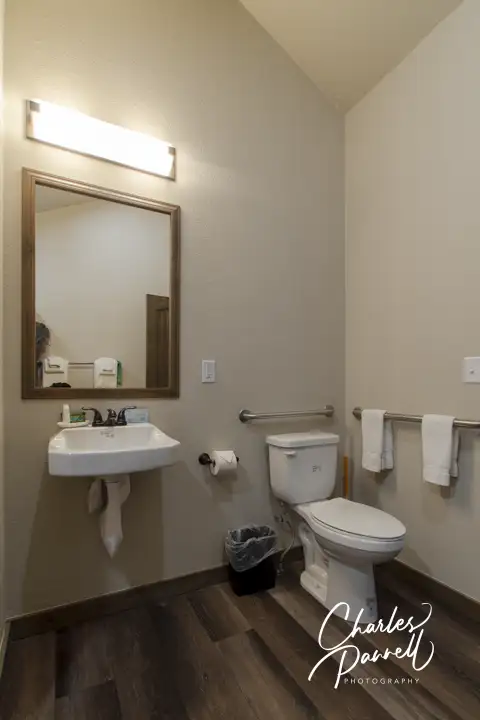
There’s excellent access in the bathroom as well, which boasts a full five-foot turning radius. It’s equipped with a roll-in shower with a fold-down shower bench, grab bars and a hand-held showerhead. Other access features include a roll-under sink and a toilet with grab bars on the back and left walls (as seated).
Shower in Cabin 2
Sink and toilet in Cabin 2
The Extras
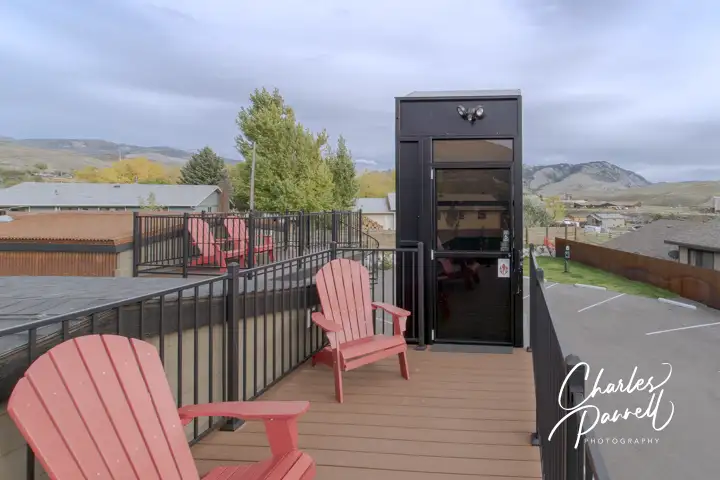
And then there are those little extra features at this fun wheelchair-accessible Yellowstone lodging pick. Lets start out with the private rooftop deck in cabin 2. Although the other cabins have a spiral staircase up to this feature, there’s a private elevator to access the deck in accessible cabin. It’s a great place to chill at night or to enjoy a cup of freshly brewed coffee in the morning.
Rooftop deck on Cabin 2
The explorer cabins come equipped with walking sticks, flashlights and binoculars. There’s also a nice little collection of games in the hall closets, including National Park Monopoly. And if you need to do some laundry, it’s free — along with the detergent — over at the Ridgeline Hotel. Last but certainly not least, there’s the free s’mores kit, so you can craft your own yummy creation around the community fire pit. All in all, it’s a great wheelchair-accessible Yellowstone lodging pick, with plenty of choices for wheelchair-users and slow walkers.
Located along the Historic Columbia River Highway in Dalles, the Columbia River Gorge Discovery Center (gorgediscovery.org) is a must-stop on any Northern Oregon road trip. If you’re already on the historic highway, just follow Taylor Franz Road and Discover Drive to the museum; and if you’re on Interstate 84, then take exit 82 and follow the signs. Either way it’s easy to find.
The Columbia Gorge Discovery Center, which is located in an award-winning 48,200 square-foot building, serves to create appreciation for the Columbia River Gorge through the interpretation of cultural and natural resources. To that end it presents a comprehensive history of the area, offers daily raptor shows and has a wheelchair-accessible trail that’s filled with native plants and exhibits. And it’s also the starting point of the accessible Riverside Trail. It’s a great primer for any Columbia River Gorge trip, and a must do on a Historic Columbia River Highway excursion.
Discover the Gorge
Access is good at the Columbia River Gorge Discovery Center, with plenty of accessible parking, level access to the front door; and ample room to maneuver a wheelchair inside. There’s elevator access to the second floor, and accessible restrooms are located near the boardroom. And if you’d like to bring along lunch, there’s a picnic area with accessible tables in back.
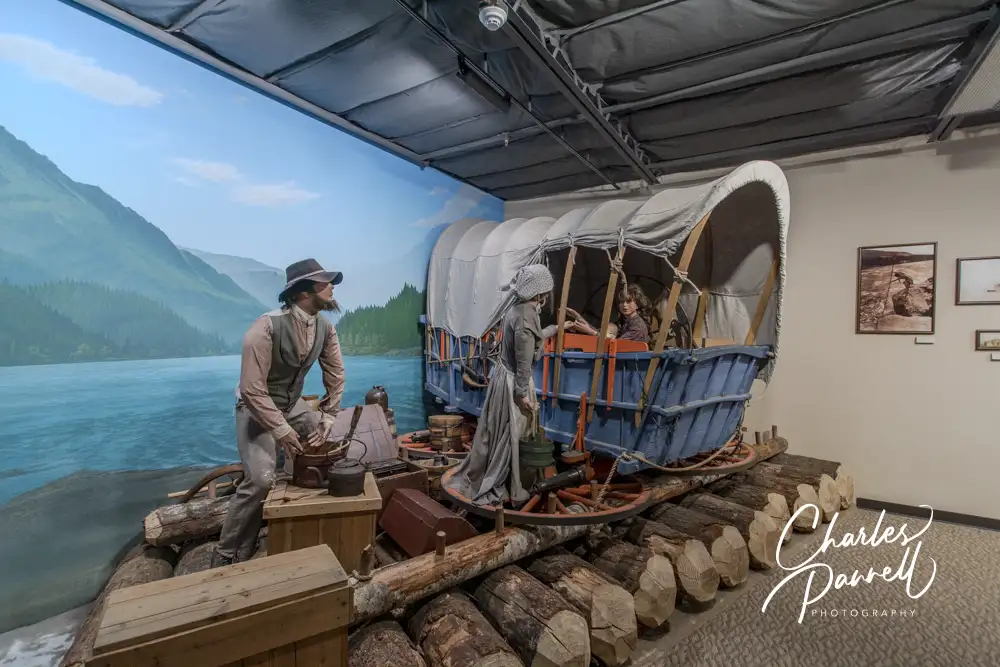
There’s good pathway access throughout the Discovery Center, which focuses on the history of the the gorge from the ice age to present day. Exhibits include displays about the geology of the gorge, Lewis & Clark, gorge ecology, the Oregon Trail and transportation. There are a number of interactive and tactile exhibits, and the whole museum offers a comprehensive look at the Columbia River Gorge.
And don’t miss the live raptor presentations that are held in the theater. These educational seminars are included with admission and in addition to having a raptor — or two — present, they also offer a good overview of raptor habits, behavior and habitat. And there’s barrier-free access to the theater, with plenty of room for wheelchairs in the front and on the sides. Check the theater schedule when you arrive so you don’t miss this educational and entertaining presentation.
A Little History
Display inside the Columbia River Gorge Discovery Center
The Wasco County Historical Museum, which is located in the east wing, also has excellent wheelchair access. Established in 1854, Wasco County is home to portions of the Lewis & Clark Trail and the Oregon Trail; while Native Americans, missionaries, pioneers and folks looking to strike it rich in the gold rush also inhabited the area over the years. And the museum offers a wide variety of displays on the diverse history of the area.
There’s plenty of room for a wheelchair to maneuver around the exhibits about the early inhabitants, shipwrecks on the Columbia River, the former cannery, a rail depot and the old Umatilla House hotel. And there’s even a turn-of the-century street scene of Dalles. Round it out with a agriculture exhibit and a gallery filled with George Lawrence Company saddles, and you get a pretty good picture of the early settlers of Wasco County.
Take a Hike
Along the Native Plant Walk outside the Columbia River Gorge Discovery Center
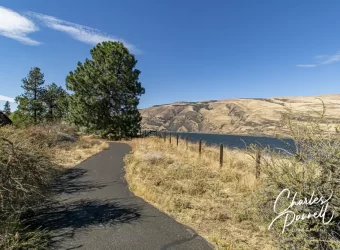
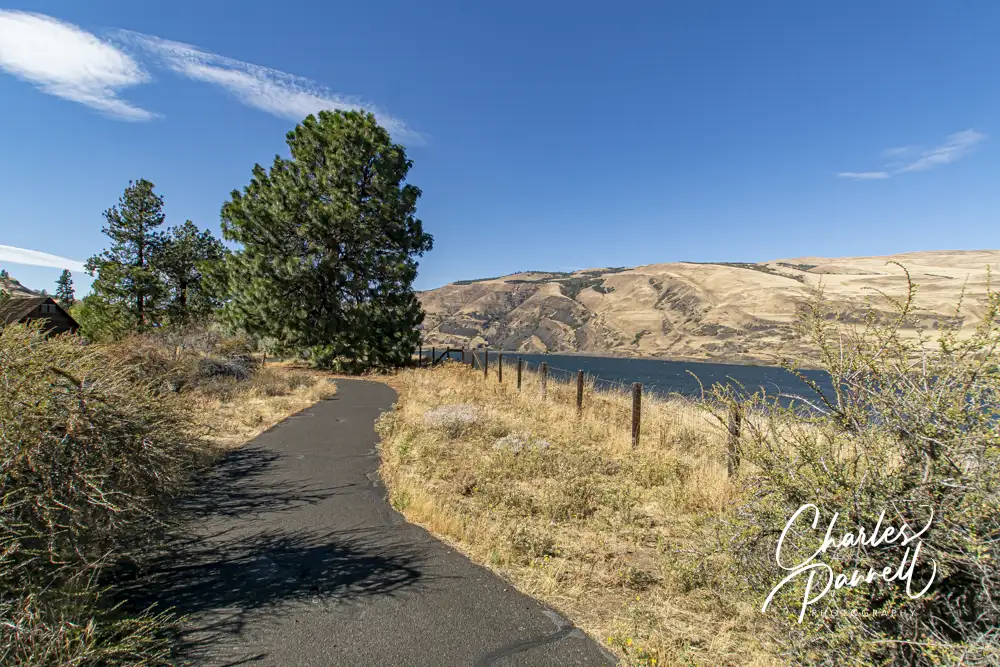
Finally, save some time to explore the outdoor areas of the museum. There’s level access out the back door to the paved Native Plant Walk. Make a left as you exit the museum and head all the way to the end of the trail to the Columbia River scenic overlook, where’ you’ll get a good view of the river with the Klickitat Hills in the background.
Next head back to the museum — past some evidence of beaver activity — to the Native American petroglyph rock art near the back door. The remainder of the trail winds past Olney’s cabin, Crate’s Cabin and a tepee, and includes over 40 identified plants. Pick up a guide at the front desk and see how many you can find. The whole trail is paved and wheelchair-accessible.
And near the end of the Native Plant Walk, you’ll find the beginning on the Riverfront Trail. This wide paved trail winds along the southern bank of the Columbia River, from the Columbia River Gorge Discovery Center to the Dalles Dam Visitor Center. The trail is an excellent option for wheelchair-users and slow walkers; and the great part is, you can do as little or as much of it as you want. That said, even if time is short, try to fit in a short stint along this scenic thoroughfare. It’s the perfect way to top off a visit to the Columbia River Gorge Discovery Center.
Barrier-Free Travel Washington National Parks for Wheelers and Slow Walkers



 If you’re looking for wheelchair-accessible transportation in Budapest, then look no further than Paratrans (paratrans.hu/en). This local company can provide an accessible vehicle with a driver who is familiar with the city, for airport or rail station transfers as well as city excursions. Their Renault Master is outfitted with a ramp and tie downs, and it can accommodate three wheelchair-users and five additional passengers. And if you need room for another wheelchair, it can be reconfigured to accommodate four wheelchair-users and four additional passengers. For more information about wheelchair-accessible transportation options in Budapest, call Paratrans at +36 30 900 1603 or e-mail them at info@paratrans.hu.
 Wheelchair-accessible Netherlands tours are available through AmsterdaMobile (
 The National Park Service offers a number of lifetime passes for free admission to national parks and other federal lands. They are available to anyone with a permanent disability, members of the military, veterans, Gold Star Families and people over 62 years old. These passes can be obtained in person at national parks and federal recreation areas across the country (
 I use a manual wheelchair and I’d like to train my dog to be a service animal so I can travel with him. There are so many places that offer training, certification and registration online, and I really have no idea of where to go. Can you recommend some certified trainers or schools, and also direct me to the official place to register my dog as a service animal?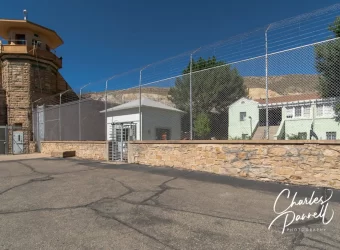

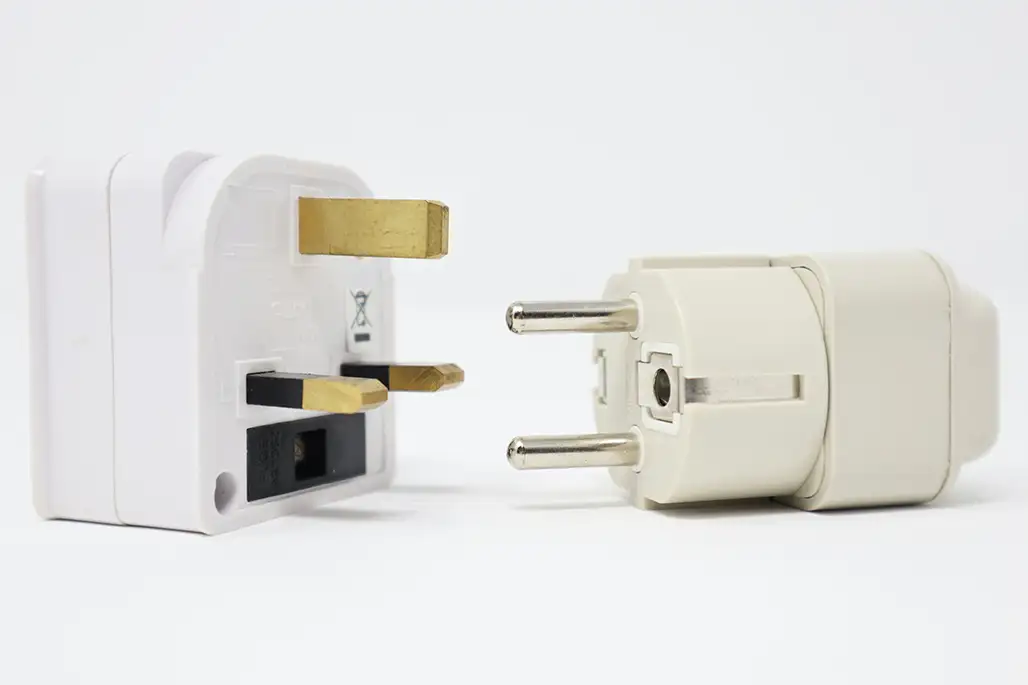 I use a power wheelchair and I will be taking a European vacation with my husband next year to celebrate our 25th wedding anniversary. I’m wondering if I need any special equipment or plugs for charging a power wheelchair in Europe? Can I just plug it into the outlet in my hotel room? Any tips will be greatly appreciated.