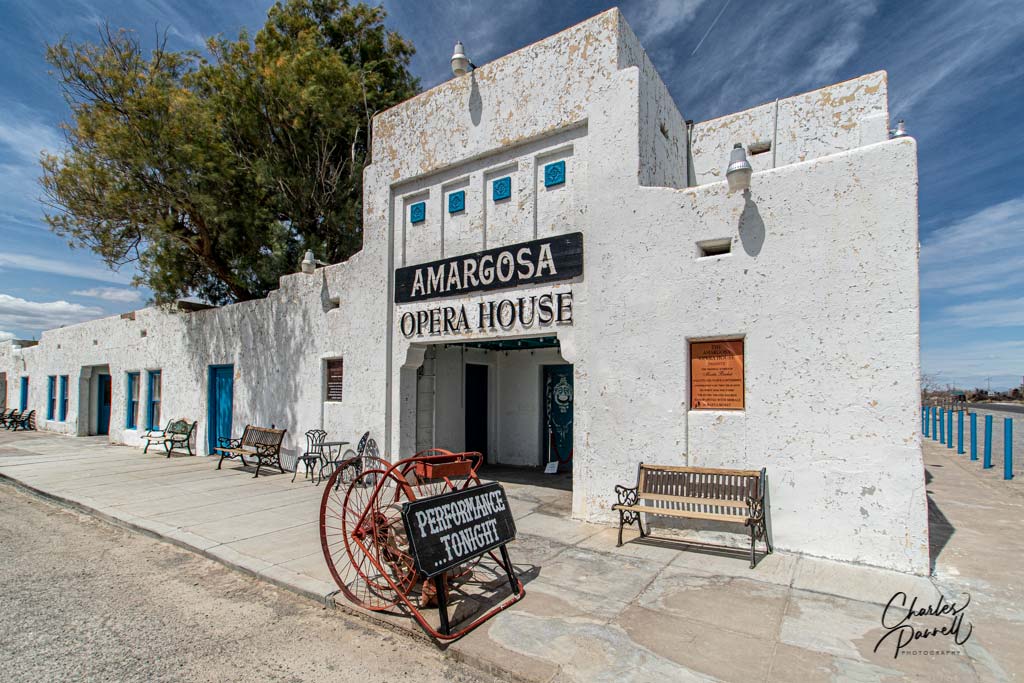
Population 4 Located near the East Entrance of the famed national park, Death Valley Junction has just four (and sometimes fewer) full time residents. That said, during the borax mining boom in the early 1900s there were 300 people living there. In 1960 New York City ballet dancer Marta Becket had a flat tire there and fell in love with the desert. She later transformed the former dorm and recreation hall into the Amargosa Hotel and the Amargosa Opera House (www.amargosaoperahouse.org/).She painted murals throughout the hotel, and even painted an audience on the walls of the opera house. Today the murals still grace the walls of the hotel, and tours of the opera house are available. Both venues have level access so it’s a nice stop for wheelchair-users and slow walkers.
Population 8,517
You just can’t pass up the opportunity to stand on the corner in this Northeastern Arizona town. And since it’s just a few hours from the Grand Canyon, and only 50 miles from the Petrified Forest, it’s the perfect addition to a national park road trip. Standin’ on the Corner Park (standinonthecorner.org) which is located on the corner of 2nd Street (Route 66) and Kinsley, brings the lyrics of the 1972 Eagles hit — Take it Easy — to life. It features a mural by John Pugh, which depicts the famous lyrics, behind a bronze sculpture of a musician with a guitar (known locally as “Easy”), just standin’ on a corner in Winslow, Arizona. It’s a prime selfie spot for sure. Save some time to browse through the La Posada — a restored Harvey House — which is just down the street, before you hop back on the highway. Both attractions feature barrier-free access for wheelchair-users and slow walkers.
Population 16,850
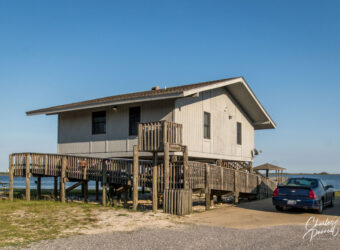
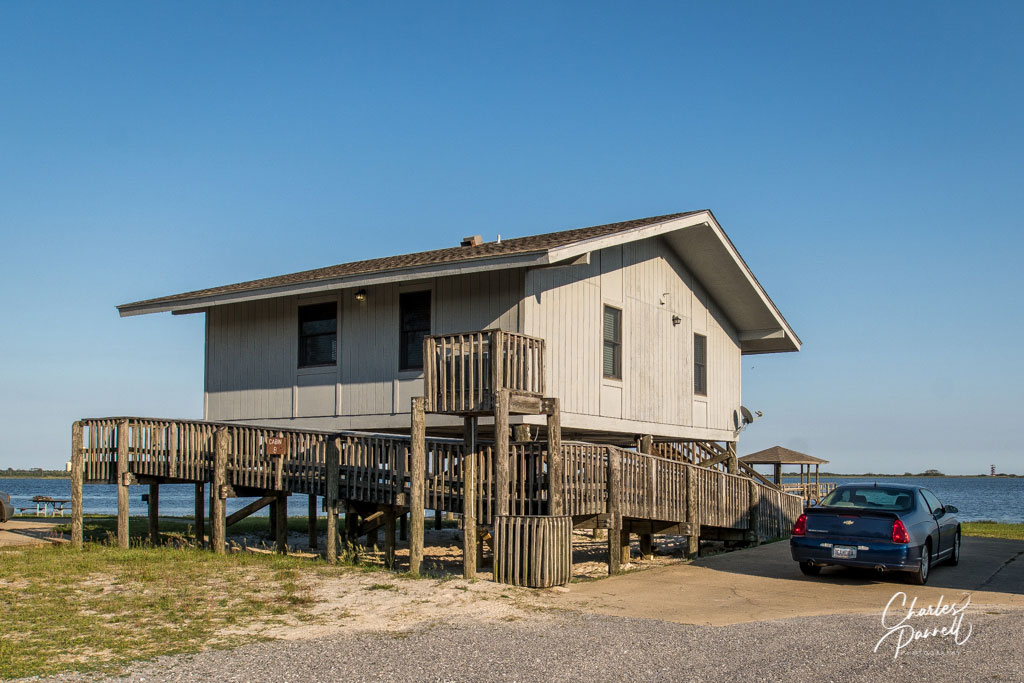
Located about 30 miles off of Interstate 10, Gulf Shores is worth the short detour for Gulf State Park (www.alapark.com/gulf-state-park) alone. This 6,100-acre state park occupies a prime piece of beach real estate, and offers three two-bedroom wheelchair-accessible cabins on the shore of Lake Shelby. The cabins each includes a full kitchen, a spacious great room, a screen porch, and two bathrooms with a roll-in shower. And the cabins are just a short drive from Gulf Oak Ridge Trail — a 3-mile paved level trail that winds through the woods. Accessible restrooms are located along the trail, and there are plenty of spots to stop and take a break. And don’t forget to visit the Fishing and Education Pier, while you’re in the park. There’s accessible parking close to the pier and barrier-free access to the 1,500 foot-long pier, which features a nice water view, with wayside wildlife exhibits along its length.
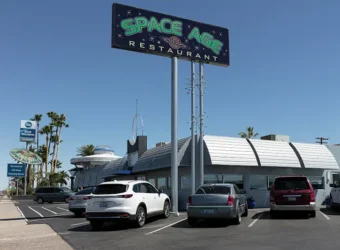
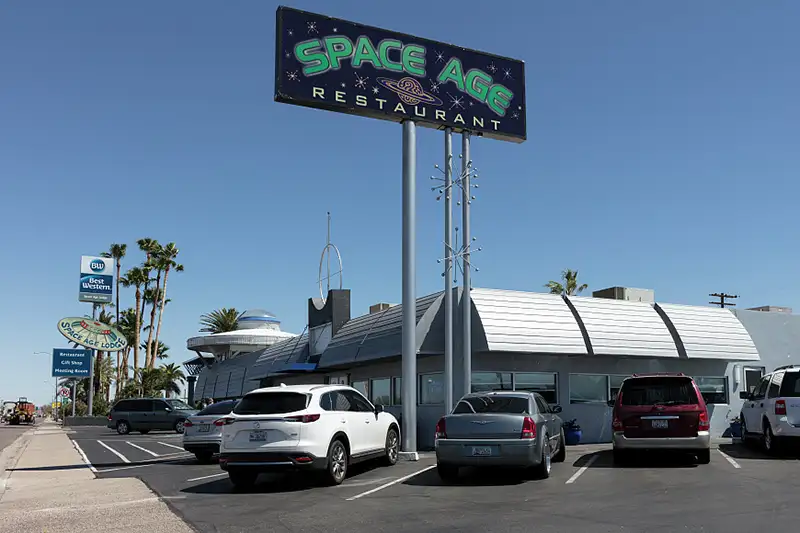
This popular diner is located about two miles off Interstate 10 on the way to Gila Bend Petroglyphs. Its popularity is due to the decor and unusual curb appeal, rather than the menu offerings. There’s accessible parking in front with level access to the restaurant. Inside you find a few aliens, along with some colorful space murals, silver upholstered booths and a ceiling that looks like a hangar. It’s a good stop for kids, and breakfast is served all day. That said the best photo op is of the flying saucer that sits atop of the adjacent hotel lobby. It’s best after the sun goes down as it’s illuminated with neon lights. Good for a quick stop and a photo or two.
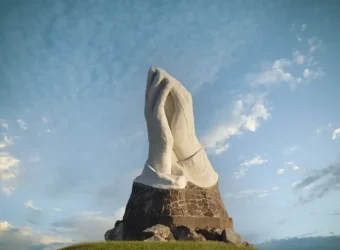
Located on a grassy knoll on Dawson Drive near Main Street in Webb City, this 32-foot high Giant Hands in Prayer sculpture is hard to miss. Constructed by local artist J.E. “Jack” Dawson in 1974, this massive concrete and steel piece weighs in at an impressive 220,000 pounds. Dawson crafted this work of art in his backyard, and then hauled it on a flatbed truck to where it sits today. According to the artist, the sculpture is a response to events in the 1960s, which was “a bad time for our country”.
There’s a small slab of asphalt with three standard parking spaces, just past the Giant Hands in Prayer. From there a short paved path leads over to a memorial wall, which was added to the site. This panel depicts how the hands were created. You can get a good view of this icon from that viewpoint, but if you want to get closer you have to climb up the grassy 40-foot high mound (not accessible). There’s also a small picnic shelter near the parking area which has an accessible picnic table, so this iconic site makes a good lunch stop on a Route 66 Missouri road trip.
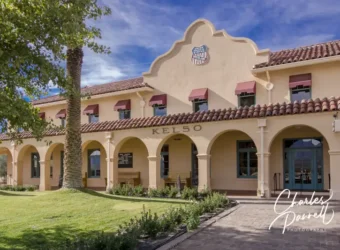
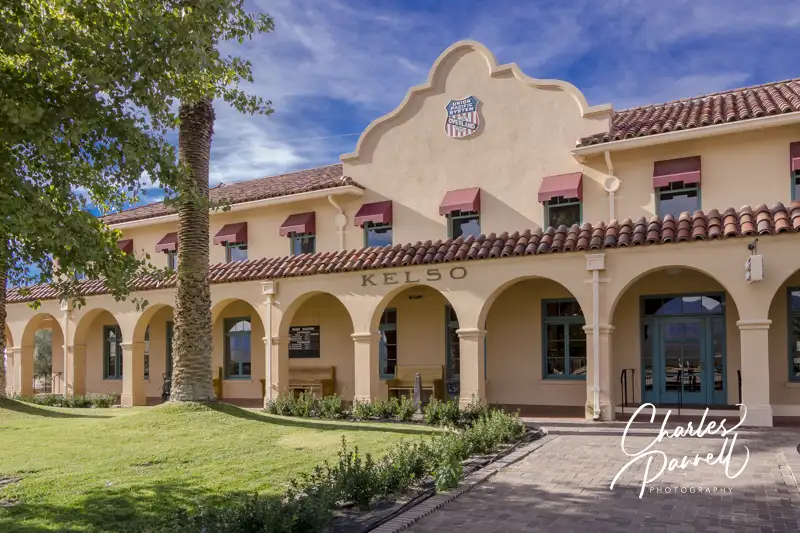
Built in 1924 Kelso Depot was more than just a train depot, as it also included employee sleeping quarters as well as a full-service restaurant. The Los Angeles & Salt Lake Railroad constructed the facility in order to compete with the popular Harvey Houses operated by the Santa Fe Railroad. Kelso Depot was upscale for the time, and it even had a billiard room and a library. The depot ceased functioning in 1962, although the restaurant remained open until 1985. Today it houses the visitor center for the Mojave National Preserve.
Kelso Depot is pretty easy to find — just take Kelebaker Road from Baker, and continue on through the desert for 34 miles until you reach the historic site. Accessible parking is located in front of the depot, with level access over to the visitor center and the nearby accessible restrooms. Inside there’s barrier-free access throughout the facility, which includes interpretive exhibits about the Mojave National Preserve. Additionally the baggage room, ticket office and two dormitory rooms are furnished as they would have been in the 1920s. Even if the visitor center is closed, you can still get a gander at the lunch counter, vintage desks and old equipment through the large front windows. It’s definitely worth a stop while exploring the Mojave National Preserve.
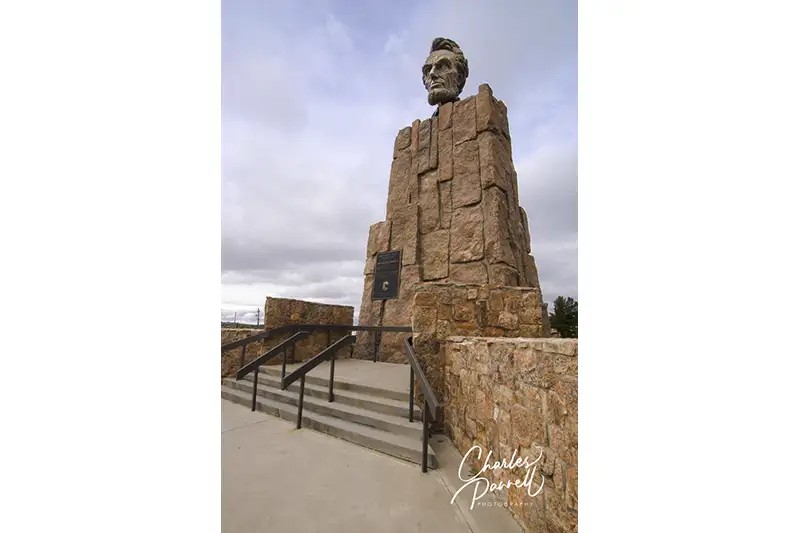
Although it may seem a bit unusual to see a Giant Lincoln Head sculpture in the middle of Wyoming, it makes more sense once you realize that it’s located along the Lincoln Highway. More specifically, it’s on Sherman Summit on Interstate 80, just east of Laramie. And although it’s called a highway, it’s actually a collection of roads that run from San Francisco to New York City. And this stretch of Interstate 80 just happens to be part of that historic route, with Sherman Summit marking the highest place along the way.
The larger-than-life Lincoln head was first sculpted by Robert Russin from 70 tons of clay, and then cast in bronze in Mexico City. The Giant Lincoln Head stands 12.5 feet high, but it rests on smaller shoulders, giving it a somewhat caricature-like appearance. Still it’s an impressive work, with the former president looking down on his audience. And it was fittingly dedicated in 1959, 150 years after the former presidents was born.
Although you can see the massive head from Interstate 80, it’s worth a stop to get a closer look. There’s accessible parking with a cement walkway over to sculpture, and although there are four steps up, you can still get an adequate look at Mr. Lincoln from ground level.
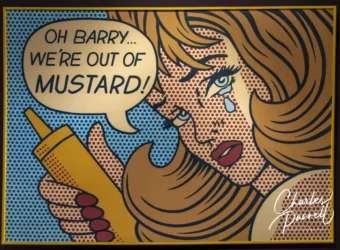
Founded by Barry Levenson, a former Wisconsin Assistant Attorney General, the National Mustard Museum began on what Levenson describes as an impulse shopping trip after his beloved Boston Red Sox went down in defeat. According to the one-time litigator, the mustard “spoke to him” in a Field of Dreams way on this auspicious trip to the market, and he responded by purchasing 15 jars of America’s favorite condiment.
Six months later Levenson spied a unopened mustard jar on a room service tray in a Washington DC hotel hallway. After a brief internal debate on whether the jar was legally fair game — after all her was an attorney — he scooped it up and carried it in his pocket while he argued the finer points of the Fourth Amendment before the US Supreme Court. Justice Anton Scalia and four of his compatriots agreed with Levenson’s arguments and ruled in favor of the state. Levenson considered the jar of mustard his lucky charm; and as the always gregarious barrister tells it, that moment marked the true beginning of the National Mustard Museum.
That was back in 1987, and today the museum boasts thousands of jars of mustard from 70 nations and every state in the union. And although there’s a large gift shop and tasting room upstairs, the museum itself operates independently as a non-profit organization. Truly, it’s more than just a few jars of mustard, and definitely worth a visit.
Accessible parking is located just outside the front door, with level access through the automatic door, and plenty of room to navigate a wheelchair around the gift shop. There’s elevator access down to the well-curated museum, and equally good pathway access around the exhibits. Accessible restrooms are also located downstairs.
Besides the enormous international mustard collection, the National Mustard Museum features recipes, vintage advertisements, Shakespearean citations of mustard, and of course a small exhibit dedicated to horseradish — mustard’s spicy cousin. Round it out with Levenson’s original “lucky charm” from the room service tray, and the world’s only mustard vending machine, and you have a comprehensive — if not eclectic — overview of the condiment. And don’t forget to have your photo taken with the French’s Mustard mascot on your way out, before tasting a few of the more unusual mustard varieties upstairs.
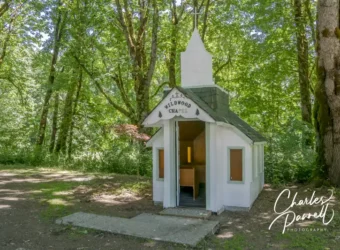
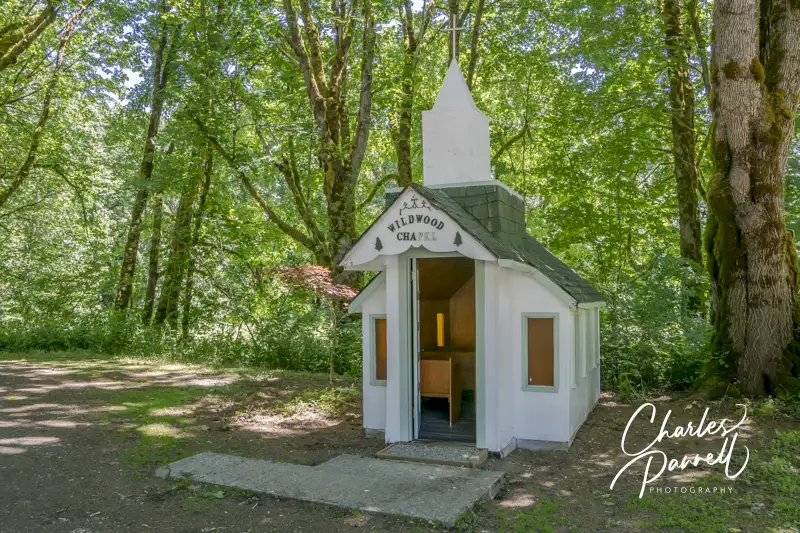
Constructed in 1997, Wildwood Chapel makes a good stop on the way to North Cascades National Park. This tiny chapel is located along Highway 20 near mile-marker 103.5, across the street from Glacier Peak Winery.
There’s a level spot to parallel park near the nondenominational chapel and level access over to the pint-sized building. Constructed by local Tootsy & Rudy Clark, the chapel seats nine, with three two-person pews and three single seats. There’s a slight lip at the 28-inch doorway, but be careful if you wheel inside, because there’s no room to turn around. All in all, the best view is from the doorway.
It’s a pleasant shaded site near the Skagit River, and today many folks use it as a wayside chapel. And yes there have been weddings there.
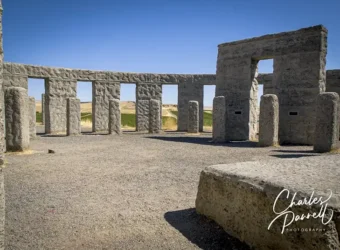
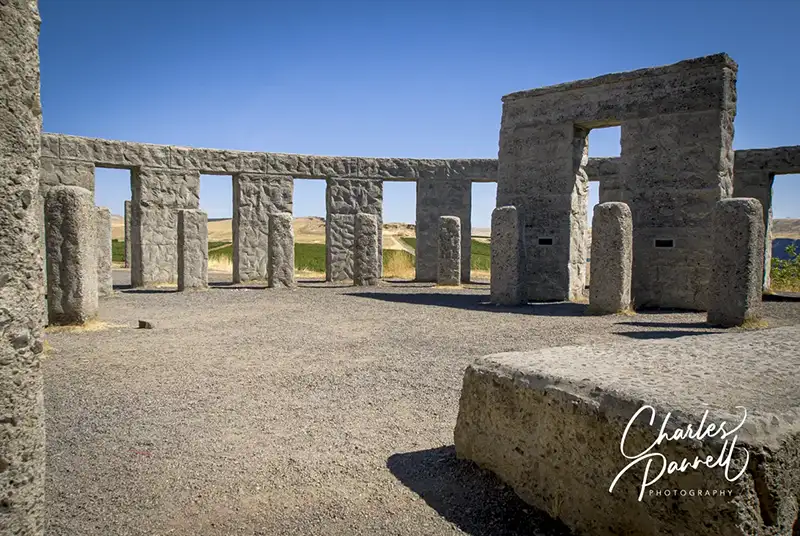
This full-size Stonehenge Memorial is located on the south bank of the Columbia River, just off of Interstate 84, near Biggs Junction, Oregon. Take exit 131, then head north on Highway 97, and make a right on Highway 14. Stonehenge Drive is located just a mile up the road. This monument was erected in 1918 as a memorial to local soldiers who died in World War I. A small memorial ceremony is held on the anniversary of the death of each of the 14 soldiers honored at the monument.
There’s no striped parking at the Stonehenge Memorial, but there’s usually plenty of room to parallel park an adapted vehicle near the monument. Some wheelchair-users may need assistance over the first 15 feet of gravel, but after that it’s hard-packed dirt. There’s plenty of room to explore in and around the monument, which is all on level ground. And if you don’t want to get our of your car, you can also get a great windshield view from the parking area. It’s a nice stop to or from the Columbia River Highway (emerginghorizons.com/explore-the-historic-columbia-river-highway-waterfall-corridor/).

 Population 4


 7477 Hubbard Avenue