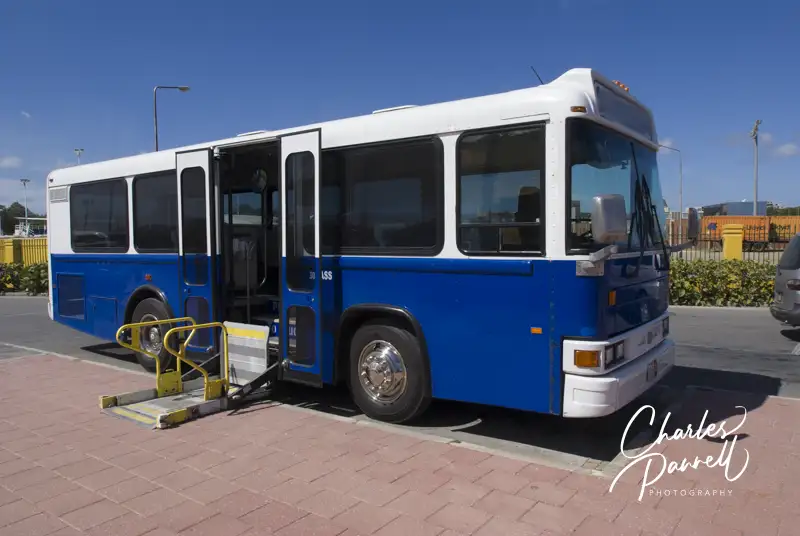
If you’re thinking about taking a cruise that stops in the Bahamas, then check out these wheelchair-accessible Bahamas tour and transportation providers. Make sure and plan ahead and make your reservations as soon as you book your cruise, because accessible choices are limited and they go fast. Some of the cruise lines use these providers too, so there is little to no availability for last minute bookings.
Bahamas Experience Tours
www.bahamasexperiencetours.com/transportation-services/
Based in Nassau, this local company can provide transfers and transportation in wheelchair-accessible vans. They also provide wheelchair-accessible Bahamas shore excursions for most of the major cruise lines. For more information, call (242) 397-5000 or e-mail info@bahamasexperiencetours.com.
Tavares Wheelchair Transportation
accessiblebahamas.com
Tavares Wheelchair Transportation can provide wheelchair-accessible transportation to any destination on Nassau/Paradise Island. They offer their services to both locals and visitors, and can provide airport transfers, transportation to attractions or local appointments, or personalized transportation services. They can also provide Hoyer life and hospital bed rentals. For more information about their wheelchair-accessible Bahamas options, fill out the contact form on their website.
Barrier-Free Travel 101 Accessible Vacations Travel Ideas for Wheelers and Slow Walkers
A project of the Paris Convention and Visitor Bureau, this online resource offers information on visiting Paris in a wheelchair.
It includes a detailed section about getting around, including information on wheelchair-accessible bus, metro, tramway and RER routes in the City of Lights. Also included is a list of adapted taxi companies, information about hiring a wheelchair-accessible vehicle with a driver, adapted van rental resources, and even the low-down on wheelchair-accessible airport transfers. Additionally there are links to local providers that can provide personal travel assistance, as well as information on accessible car parks.
Also included is detailed information about accessible lodgings, restaurants, tours, attractions and even self-guided walks. And if you still have questions, visit their comprehensive FAQ page. This well researched guide is an excellent resource for visiting Paris in a wheelchair. parisjetaime.com/eng/article/accessibility-a646
Barrier-Free Travel Yosemite, Sequoia and Kings Canyon National Parks for Wheelers and Slow Walkers

Getting to and from your vacation destination is one thing, but getting around town without a car — especially if you use a wheelchair — can throw a wrench into even the best laid plans. That is, unless your vacation destination is Portland, Oregon, where accessible and affordable public transportation is abundant and easy to use. So here’s the skinny on how to get around town when you visit Portland in a wheelchair.
Ride the Streetcar
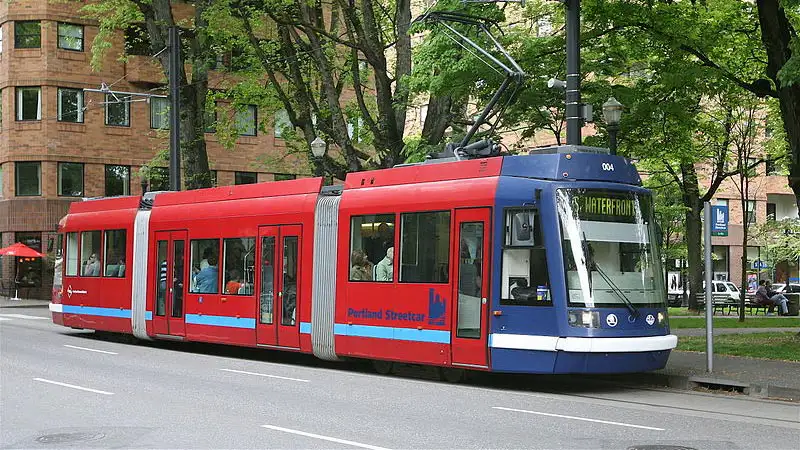
Getting around downtown Portland in a wheelchair is pretty easy, as there are wide sidewalks, plentiful curb-cuts and a fairly level terrain. Add in the Portland Streetcar (portlandstreetcar.org), which runs through the downtown area and connects to nearby business districts, and you have a very accessible way to see the city highlights.
The North – South Line runs from Nob Hill in the north, through the downtown area to the south waterfront; while the A and B loops circle the Lloyd District, Rose Quarter, Pearl District and downtown area. The A Loop runs in a clockwise direction, and the B Loop runs in a counterclockwise direction, so it’s easy to backtrack along the route.
Access is excellent on the Portland Streetcar, as every streetcar has has a ramp-equipped entrance. Boarding is a snap — just press the blue button to deploy the ramp, roll into one of the wheelchair-accessible seating areas and lock your brakes. When the streetcar arrives at your stop, push the blue button to deploy the ramp; and if you run into problems or have an emergency, just use the intercom near the accessible seating area.
Streetcar tickets can be purchased from machines at the platforms or at the Tri-Met ticket office in Pioneer Square. The fare for a 2.5-hour streetcar pass is $2, and the Hop pass (for the city bus) is also good on the streetcar.
Hop on a Bus
Getting around other areas of Portland in a wheelchair is easy too, thanks to the Tri-Met bus line (trimet.org/bus). Tri-Met buses run throughout the downtown area and connect with the Portland Streetcar, as well as offer access to outlying Portland neighborhoods. They are ramp or lift-equipped and many can also kneel, which makes boarding much easier for slow walkers. All buses have priority seating for disabled passengers and wheelchair tie-downs; and the drivers are happy to assist passengers — especially visitors.
If you need the ramp or lift deployed and you disability isn’t obvious, just ask the driver. Drivers are also available to help passengers on and off the the lift, and to secure assistive devices in the tie-downs.
Although Tri-Met buses accept cash, the best deal for visitors is the Hop card, which can be picked up and filled at the Tri-Met ticket office in Pioneer Courthouse Square. A 2.5-hour pass on the Hop card costs $2.80 and a day pass is $5.60 a day. Seniors and disabled passengers get a 50 percent discount, and if you decide to extend your stay in Portland, you can always add more money to your Hop card.
Airport Transfers
Getting to and from the Portland International Airport is easy too, thanks to MAX Rail (trimet.org/max), the city’s light rail system. It also connects downtown Portland with Beaverton, Clackamas, Gresham, Hillsboro, North/Northeast Portland and Milwaukie. And like the rest of Portland’s public transportation, all the MAX Rail lines are wheelchair-accessible.
All MAX Rail trains have accessible boarding areas, which are located in the center of the low-floor cars. The conductor will deploy the ramp for wheelchair-users, but slow walkers can also deploy the ramp by pressing the blue button. The accessible cars all have large accessible seating areas, and a ramp request button next to the doors.
The Hop card is also good on MAX Rail, and it can be purchased or refilled from machines at the station. The MAX Rail Airport Station is located near baggage claim on the lower level
Taxi Tours of Portland in a Wheelchair
Finally, if you’d prefer to just grab a cab, then contact Radio Cab (radiocab.net) for wheelchair-accessible service. Radio Cab offers 24-hour taxi service in lift-equipped vans, throughout the Portland Area. And the fares are the same as standard taxi fares.
Radio Cab also offers accessible day tours of the city with stops at Washington Park, the Rose Gardens, the Japanese Gardens and the Columbia River Gorge. Or if you’d like to get out and do a little wine tasting, Radio Cab can put together a wine tour to the Yamhill Valley and Hood River. And everything is customizable, as you can do as little or as much as you want on a personalized Radio Cab tour.
For more information or to book a Radio Cab call (503) 205-3317. It’s a very accessible way to enjoy all that Portland has to offer.
Barrier-Free Travel Washington National Parks for Wheelers and Slow Walkers
Based in Krakow, Active Poland offers a number of accessible Poland tours for wheelchair-users and slow walkers. The customized Krakow tours can include everything from a stroll around town, to a museum hopping itinerary, and even attending concerts and festivals. All accessible tours are conducted in a wheelchair-accessible van with seating for one wheelchair-user and five other passengers.
Other tours that are doable for wheelchair-users and slow walkers include excursions to Auschwitz-Birkenau, the Bochnia Salt Mine, Zakopane and the John Paul II Trail. Active Poland can also book accessible accommodations and assist with restaurant and nightlife suggestions. Rental wheelchairs and stair lifts are also available. For more information on Active Poland accessible offerings, visit poland-active.com/en/Trips/Trips-For-Handicapped-In-Krakow,ig.
Barrier-Free Travel 101 Accessible Vacations Travel Ideas for Wheelers and Slow Walkers
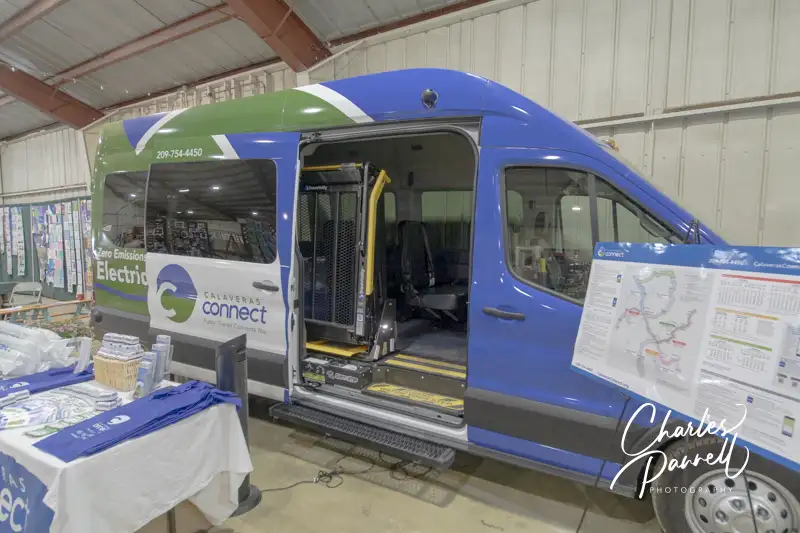
It’s fun to go wine tasting with friends on the weekend. But then you have that age-old problem — who is going to be the designated driver? Of course you could always make a promise to limit your consumption, but sometimes that just doesn’t work. Well, if you happen to be visiting Murphys or Angels Camp on a Saturday, there is another solution — take the Hopper. This short shuttle route connects the two cities and even makes a stop at Ironstone Vineyards. And the good news is, they will also go a little off route with advance notice. So pack your bag, gather your friends, and get ready to enjoy a wine tasting weekend on the Calaveras Hopper.
The Basics
The Calaveras Hopper only runs on Saturdays from 10 AM to 6 PM. But that’s OK, as that’s when the tasting rooms do the bulk of their business. There’s about an hour wait between buses, and the schedules are posted at all hopper stops as well as at calaverasconnect.org/routes/saturday-hopper/. This route is also seasonal — it only operates from March to November.
The fare is a very reasonable $3 (seniors are half price). Drivers do not carry change so the exact fare is required if you pay cash. You can also pay with the Token Transit app, which is available from the App Store, Google Play, or by texting “token” to 41411.
Access is excellent on the Calaveras Hopper, with lift access and wheelchair spaces available. The drivers are also pretty friendly, and are happy to offer assistance if needed.
The route begins in Angels Camp and travels on Highway 4 to Murphys. It makes six stops along the way:
Travelodge Copello (Angels Camp)
WorldMark (Angels Camp)
Save Mart (Angels Camp)
Angels Camp Visitor Center (Angels Camp)
Murphys Creek Theater (Murphys)
Ironstone Vineyards (Murphys)
Murphys Creek Theater is just around the corner from several tasting rooms, and Ironstone Vineyards is a destination in itself. And if you want to get picked up at another spot with ¾ mile of the route, then call (209) 754-4450 at least two hours in advance. Additionally, drivers will usually stop at any safe location along the route. So enjoy a little Saturday wine tasting in Calaveras County, and leave the driving to the Hopper.
Barrier-Free Travel Yosemite, Sequoia and Kings Canyon National Parks for Wheelers and Slow Walkers

Recently I flew to Los Angeles, and although the hotel I stayed at had a free airport shuttle, it was not wheelchair-accessible. I asked the driver and he said that they didn’t have any wheelchair-accessible airport shuttles, and that I should take a taxi or an Uber. It seemed a bit unfair for me to have to pay for transfers, while others got them for free. Are airport shuttles required to be wheelchair-accessible under the Americans with Disabilities Act (ADA)? If so, what can I do if I encounter one that lacks wheelchair access?
The ADA and Wheelchair-Accessible Airport Shuttles
In a word, yes. If a hotel provides free shuttle service it’s also required to provide an equivalent accessible service under Title III of the ADA (ada.gov/topics/title-iii/). Equivalent is the key word here, so for example if passengers routinely wait 20 minutes for an airport shuttle, then wheelchair-accessible airport shuttles must arrive in the same time frame.
That doesn’t mean that hotels have to own their own shuttles though. They just have to provide the equivalent service. For example, a small hotel can share an accessible shuttle with other properties, but they must offer equivalent service as detailed above. Properties can also opt to send accessible taxis to pick up passengers, instead of purchasing and maintaining wheelchair-accessible airport shuttles. And finally they can alternately opt to reimburse guests for their accessible taxi or Uber fares.
When Things Go Wrong
Although equivalent service means that disabled guests will get the same service as non-disabled guests, a little advance planning can go a long way to making this a reality. First and foremost, don’t wait until you arrive at the airport to inquire about the availability of wheelchair-accessible hotel shuttles. Call the hotel in advance of your trip to confirm that they have the appropriate vehicles — and that they are actually operational.
If the hotel employee you are talking with says that they don’t have any wheelchair-accessible airport shuttles, then ask to speak to the manager. Usually managers know the law, and after you point out that wheelchair-accessible shuttle service is required under the ADA, then they will start to work to find a solution. Of course this solution may be that the hotels provides an accessible taxi or pays for your Uber, but that’s an acceptable solution under the law.
On the other hand if the manager balks at your request, it’s best to find another property. You can’t strong arm someone into adhering to the law, and you don’t want to arrive at the airport only to find out that there’s no way to get to your hotel. Give your money to a property that does follow the law and will be able to accommodate you.
Of course, don’t forget the property that didn’t accommodate you. They broke the law and they deserve to be reported to the Department of Justice (DOJ). It’s easy to do too — just complete this simple online form (civilrights.justice.gov/report) to file an ADA complaint. You won’t receive any compensation as the result of filing an ADA complaint, but it will help effect change. And that helps make everything more accessible in the long run.
Barrier-Free Travel California National Park Road Trips for Wheelchair-Users and Slow Walkers
A new United Airlines wheelchair sizer tool was recently unveiled. This digital tool enables wheelchair-users to select flights that can accommodate their specific assistive devices. Why is this important? Well, some larger wheelchairs will not fit through certain aircraft cargo doors without being titled to the side or back. And in some cases, tilting those wheelchairs could seriously damage them.


The Wheelchair Sizer Tool
So how does this new United Airlines wheelchair sizer tool work? Well basically you enter your flight criteria on the United Airlines website or app, then all the flights that meet your criteria are returned. Next you click on the “wheelchair” tab in the top right, and enter the dimensions and battery type of your wheelchair. Finally, click on “check size” and the tool will return all the flights that can accommodate your wheelchair.
And here’s the great part. If you aren’t able to take your preferred flight because your wheelchair won’t fit through the cargo door, and there are other more expensive flights that can accommodate your wheelchair, you can get a refund of the fare difference.
New United Airlines Wheelchair Sizer Tool Result of ACAA Complaint
So why did United Airlines develop this new wheelchair sizer tool? Well, it was all the result of an Air Carrier Access Act (ACAA) Complaint, and a subsequent settlement agreement between the Department of Transportation (DOT) and United Airlines.
The original ACAA complaint that triggered the DOT investigation was filed by Engracia Figueroa. Unfortunately United Airlines damaged her customized wheelchair and left her sitting in an airport wheelchair for five hours. And perhaps if she knew that she had other flight options, she would have taken an alternate flight, where her wheelchair didn’t have to be twisted, turned and tilted to fit through the cargo door. And all that manhandling was what damaged her $30,000 assistive device.
Sadly Ms. Figueroa’s story had a tragic ending. United initially refused to replace her wheelchair, and although Ms. Figueroa fought this decision, it took a toll on her. She subsequently developed a pressure sore as the direct result of improper seating, and by the time United Airlines finally agreed to replace her wheelchair, it was too late. Ms. Figueroa died from a subsequent infection on October 31, 2021.
Trial Program at IAH
Another provision of the DOT settlement agreement requires United Airlines to implement a six-month pilot program at George Bush Intercontinental Airport (IAH). This trial program will explore additional equipment and service options that can be used to accommodate passengers who have had their customized wheelchairs damaged or delayed.
Specifically, this program focuses on the time frame between a customer’s arrival at the airport and the time that United returns their wheelchair or provides an appropriate loaner. The goal is to make extended waits — like Ms. Figueroa had — safer and more comfortable. To that end, United is equipping their IAH loaner wheelchairs with Permobil cushions, in order to improve comfort and stability. Additionally, the airline is also reimbursing customers for transportation expenses, should there be an extended wait for the return of their assistive service. That way they can opt to wait in a more comfortable setting, such as a hotel or their own home.
The DOT has agreed to close its investigation of the ACAA complaint filed by Ms. Figueroa, in return for the implementation of these new wheelchair policies. An although it’s great to see these improvements, they wouldn’t be in place had it not for Ms. Figueroa’s ACAA complaint. So remember that the next time you encounter access problems while flying. Filing an ACAA complaint won’t personally help you, but it could help effect change. You can file a ACAA complaint at https://secure.dot.gov/air-travel-complaint.
And lest you think that it’s no big deal, remember that the ACAA has been in effect since 1986. We shouldn’t still be having these problems today. File that complaint if you encounter access-related issues .
If you are looking for wheelchair-accessible airport transfers in Puerto Vallarta, then look no further than Puerto Vallarta Transportations (puertovallartaairporttransportation.com/puerto-vallarta-handicap-transportation). This local transportation provider has a ramped van that can accommodate even the largest power wheelchair and scooter. Wheelchair-users can stay in their own wheelchairs (and use the tie downs) or opt to transfer to the van seat. The van can accommodate one wheelchair-user and five other passengers, or two wheelchair-users and three other passengers. Top it off with bi-lingual drivers, and an accessible van with plenty of room for all your luggage, and you have a winning combination. For more information about wheelchair-accessible airport transfers in Puerto Vallarta, visit the Puerto Vallarta Transportations website or drop them an e-mail at info@puertovallartaairporttransportation.com.
If you’re looking for wheelchair-accessible transportation in Budapest, then look no further than Paratrans (paratrans.hu/en). This local company can provide an accessible vehicle with a driver who is familiar with the city, for airport or rail station transfers as well as city excursions. Their Renault Master is outfitted with a ramp and tie downs, and it can accommodate three wheelchair-users and five additional passengers. And if you need room for another wheelchair, it can be reconfigured to accommodate four wheelchair-users and four additional passengers. For more information about wheelchair-accessible transportation options in Budapest, call Paratrans at +36 30 900 1603 or e-mail them at info@paratrans.hu.