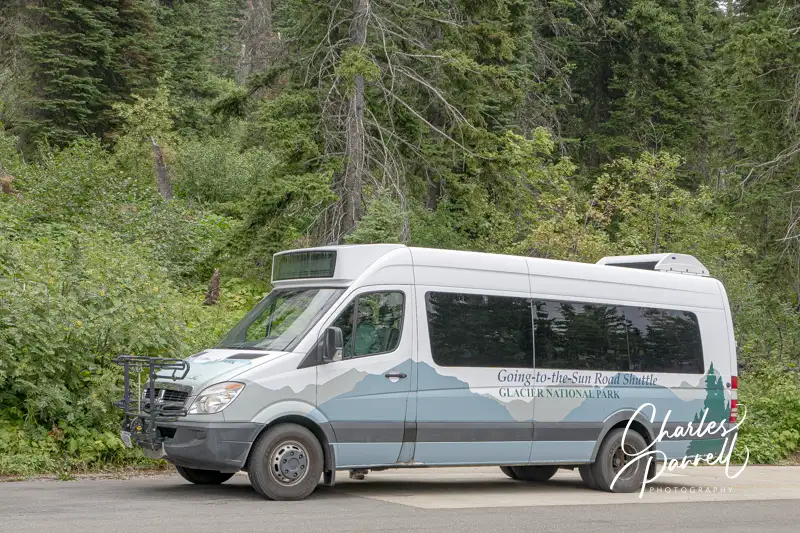
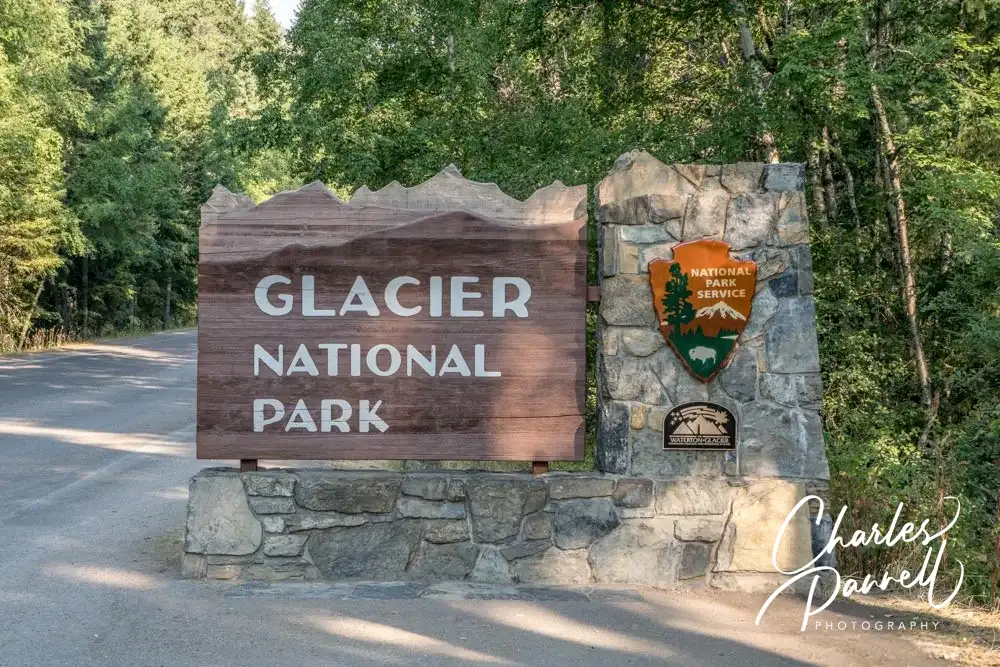
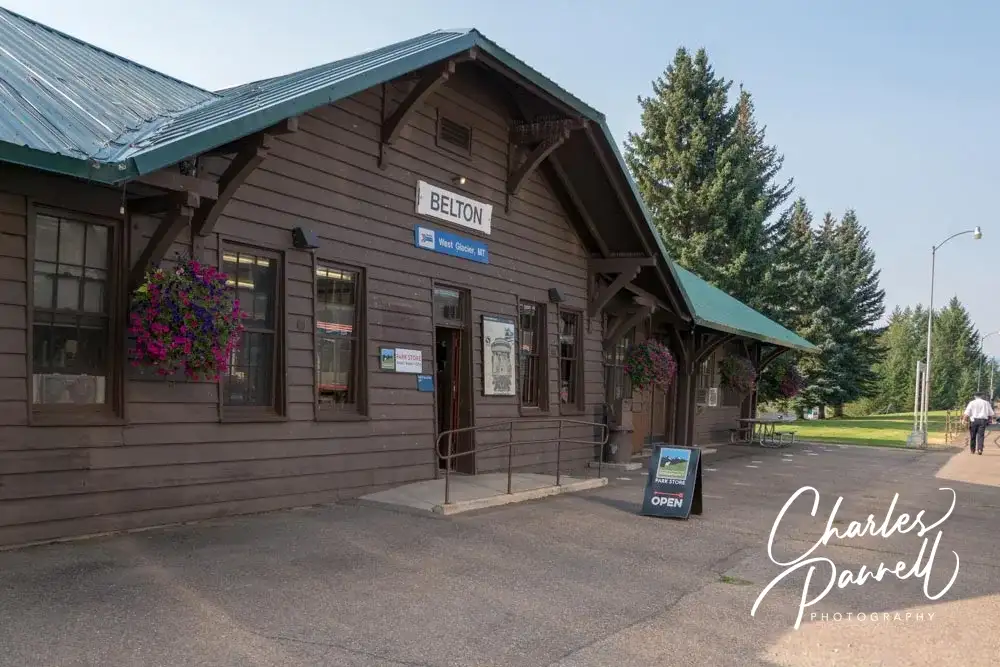
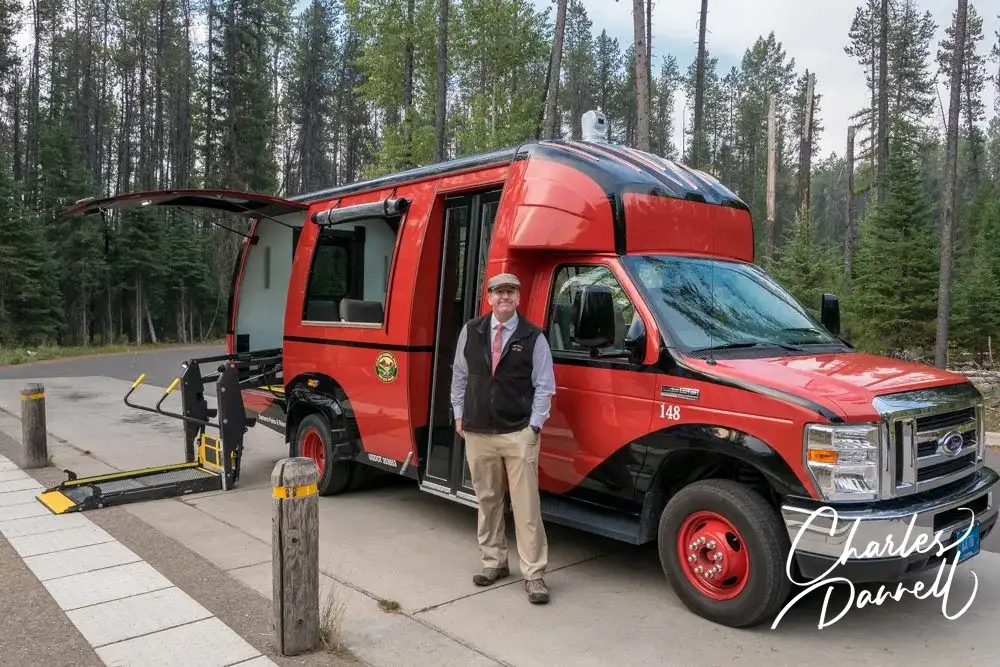
All shuttles are wheelchair-accessible, and the ticket price is a very reasonable $1 for passengers over 2 years old (there’s no charge for lap children). Shuttles depart from Apgar Visitor Center and Lake McDonald Lodge on the west side, and St. Mary Visitor Center and the Rising Sun Picnic Area on the east side. Advance tickets are required, and they are only available at www.recreation.gov. A portion of the tickets are released 60 days in advance, while the remainder are available 7 PM MDT for next day entry. Plan ahead, as walk-up tickets are not available at the park.
Why Take the Shuttle?
And in case you are on the fence about riding the shuttle, here are six reasons that make it a worthwhile choice.
The drive on the winding road up to Logan Pass can be daunting if you’re not used to driving in the mountains. Taking the shuttle allows you to relax and leave the driving to someone else.
You’ll definitely save on gas if you take the shuttle. And you won’t have to worry about filling up your tank to make it to your next destination.
You can really enjoy the view along the way, and even take some breathtaking photos if you’re not driving.
You don’t have to worry about finding a parking place at Logan Pass. The shuttle drops you off right in front of the Visitor Center. And there’s a nice accessible trail near the Visitor Center.
If you’re worried about time management, taking the shuttle can help you keep to a schedule. It’s easy for time to slip away while stopping at every pullout along the way to Logan Pass.
Last but not least, you don’t have to worry about driving in inclement weather if you take the shuttle. Rain storms and even a summer snowfall can make the winding mountain road to the top of Logan Pass slick, and even dangerous, in some places. Play it safe and take the shuttle.
So get your Glacier National Park tickets today at www.recreation.gov and have a safe and relaxing visit to Glacier National Park.
Barrier-Free Travel Glacier, Yellowstone and Grand Teton National Parks for Wheelchair-Users and Slow Walkers
Yosemite has always been a popular destination, and in order to manage the crowds in previous years advance vehicle reservations were necessary. These were cheap and easy to get at www.recreation.gov. And once you got to the park at your appointed time, there wasn’t a wait, because the required vehicle reservations metered the traffic.
Fast forward to 2026, and vehicle reservations are no longer required (https://emerginghorizons.com/yosemite-entrance-reservations-not-required-in-2026-but-plan-ahead/). Why? Well it depends who ask, but there was a huge outcry from locals who opposed the reservations, and then apparently the park statistics showed they weren’t needed. In any case, no vehicle reservations are required in 2026, and that’s led to major traffic jams. Because traffic is no longer metered, there’s a huge back-up at the gates. Just last week there were reports of 90-minute waiting times at the gates – and it’s not even peak season.
Once you get in the park, finding parking is another issue, and of course finding accessible parking is always harder. To be honest, I’d really advise against a visit this year. And it’s not that I’m anti-Yosemite, but I’m just being pragmatic. I grew up in the mountains near Yosemite and for most of my life it was my “home national park”. And I love it. I just feel that with it’s over popularity, and non-metered traffic, it’s just really hard to enjoy this gem. Perhaps things will change next year.
That said, if you absolutely must visit Yosemite in 2026, here are a few tips for wheelchair-users, to help minimize your wait times, and more fully enjoy the park.
Spend the Night
Spending the night in the park is best way to maximize your sleep, and still get that much-needed early start in the morning. That said, lodging in Yosemite Valley can be extremely hard to get during peak season. Hard, but not impossible.
The cancellation period for Yosemite Valley hotels and lodges in seven days. That means that people can cancel their reservations with no penalty up to seven days before their visit. So, if you’re looking for Yosemite lodging in the peak months, and can do a spur-of -the-moment trip, then try searching for available properties early in the day, seven days ahead of time. It’s not guaranteed to work, but it’s the best shot at a vacancy. And yes, sometimes wheelchair-accessible rooms get cancellations too.
And my favorite wheelchair-accessible room in the park is room 421 at the Ahwahnee. It has a king bed, a roomy bathroom with a roll-in shower and an impressive view of Half Dome.
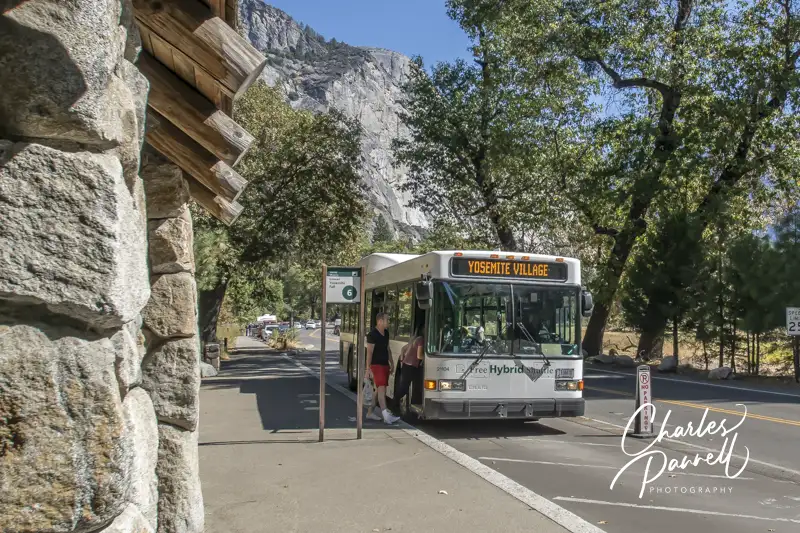
Yosemite Shuttle
Park and Walk (or Roll)
If you can’t spend the night inside the park, then you need to get an alpine start for a hassle-free wheelchair-accessible Yosemite visit in 2026. It depends on where you spend the night, but try to get to the park no later than 6 AM. Yes, you read that correctly, 6 AM.
Years ago, you could have the park to yourself at that time; but with the crowded entrance stations today, it only cuts down on the crowds. Still, that’s a good thing. Your goal after getting to Yosemite Valley is to find an accessible parking spot in the Yosemite Village parking lot. And then leave your car there for the day.
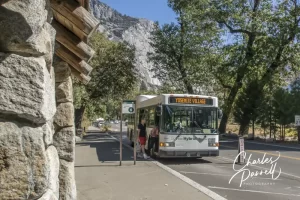
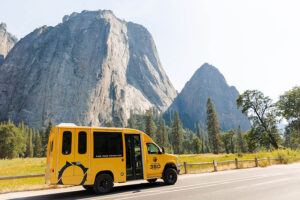
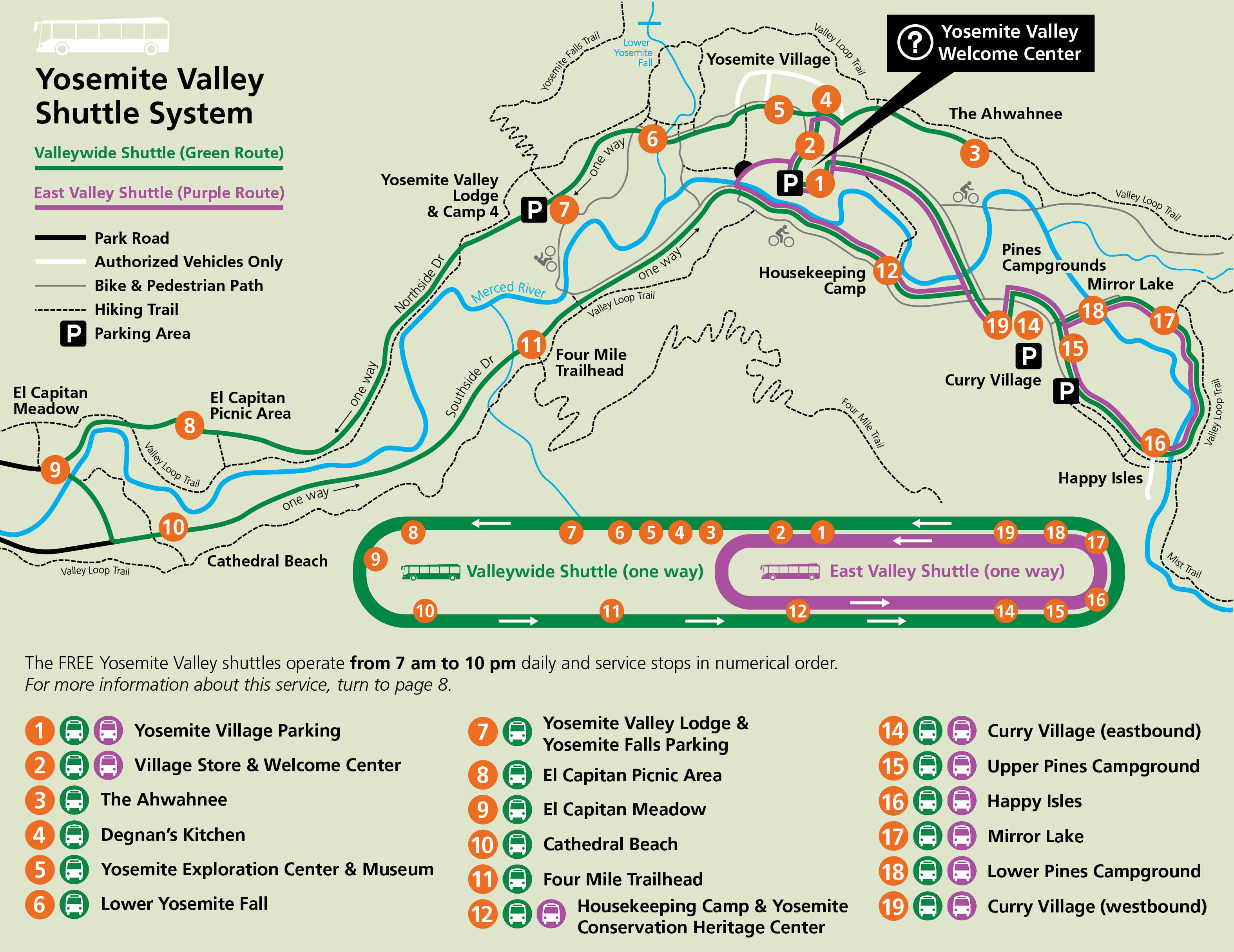
The good news is, there are a lot of sites, viewpoints, concessions and attractions in Yosemite Valley; and they are all connected on the wheelchair-accessible Yosemite Valley shuttle (https://www.nps.gov/yose/planyourvisit/images/valleyshuttle2.jpg). And there’s a shuttle stop near the parking area and in front of the Visitor Center.
The shuttles from 7 AM to 10 PM daily, and there’s usually about a 15-minute wait for a bus. There are two routes in Yosemite Valley – The Valley Shuttle, which covers the whole area, and the East Side Shuttle which stops at Yosemite Village, Curry Village and the campgrounds and trailheads on the east side of the valley
All of the shuttle buses are wheelchair-accessible, and they come equipped with wheelchair-lifts and tie-downs. They can accommodate wheelchairs up to 24 inches wide by 46 inches long, with a weight of up to 750 pounds.
Alternatively it you’d like to get a little exercise, rental handcycles are available at the Curry Village Bike Stand (209-372-8323) and the Yosemite Valley Lodge Bike Stand (209-372-1208). It’s best to reserve those in advance though, as supplies are limited and they go quickly.
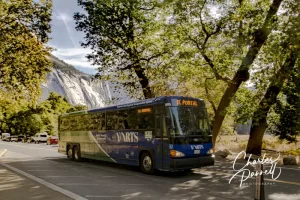
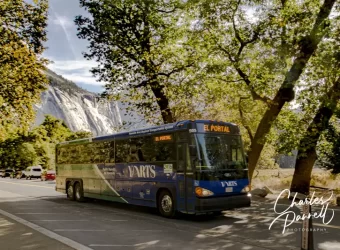
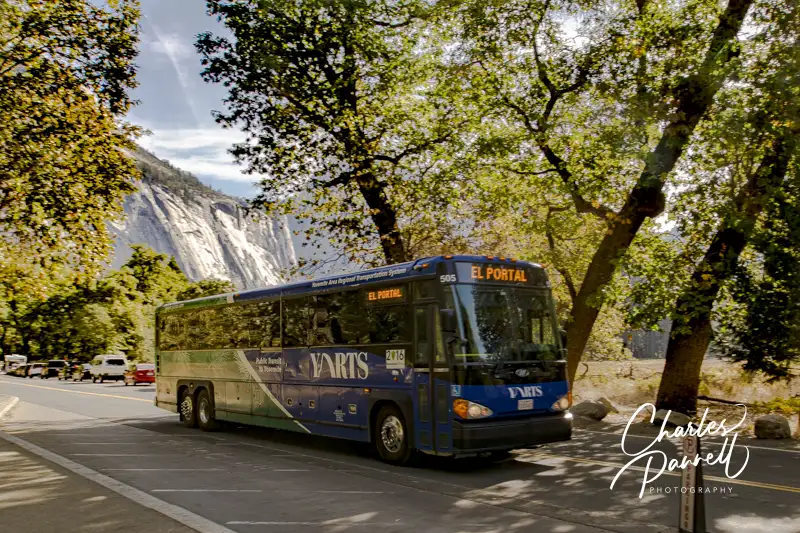
YARTS bus in Yosemite Valley
Ride YARTS!
Another way to to get the most our of your wheelchair-accessible Yosemite visit is to take public transportation to the park – more specifically YARTS (https://www.yarts.com/). Based in nearby Merced, YARTS stands for Yosemite Area Regional Transportation System, and it has four routes that lead to the park. So you can overnight in a nearby community, ride YARTS to the park, and not worry about any delays at the entrance (public transport takes an express lane) or finding an accessible parking space.
The routes run from Merced, Fresno, Sonora, and Mammoth Lakes to Yosemite Valley, and stop at mountain communities along the way. So you could overnight in a variety of places including, Mariposa, Groveland, El Portal, Oakhurst and June Lake. All YARTS buses are equipped with wheelchair lifts; however you either need to contact them 48 hours in advance, or indicate on your online reservation that you require wheelchair seating. And attendants traveling with a wheelchair-user get a 50 percent discount. So not only is riding YARTS accessible it’s also affordable.
Although the general public has to hike in to Mirror Lake, if you have an accessible parking placard or license plate, you can drive along the this road. Although you won’t have the lake to yourself, the hike in – even though it’s easy – eliminates a lot of folks. Even better – go early in the day to dodge the bulk of the visitors.
The road up to mirror lake is about a mile long, and motorists will be sharing the road with pedestrians and cyclists. You must travel with your hazard light on, and the speed limit is 15 mph along this road. And of course you need to watch out for pedestrians – especially kids – along the way.
About half way up, the roads gets steeper, and bicycles are prohibited beyond this point. Once you get to the top there’s accessible parking near the lake. There are some accessible vault toilets nearby and some picnic tables on level ground that may be doable for wheelchair-users. That said, Mirror Lake is seasonal and it usually dries up by late summer; however the granite views are spectacular from there. It’s well worth the drive.
Although they have some great wheelchair-accessible cabins at Tenaya Lodge, you don’t have to be a lodge guest in order to book one of their tours. The accessible tour bus has a lift and tie downs, so you can stay in your own wheelchair or transfer to a seat.
The day-long accessible tours feature stops at all the popular attractions, a picnic lunch, and time to explore Yosemite Valley on your own on the free wheelchair-accessible shuttle. Plus you don’t have to worry about parking, waiting in the entrance line or driving. Book early though, as this popular tour sells out quickly.
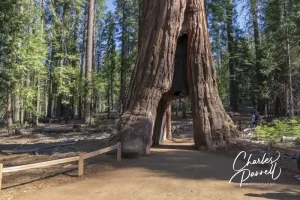
Walk-through Tree at Mariposa Grove in Yosemite National Park
Visit Mariposa Grove
Last but certainly not least, one of the best ways to enjoy a quieter slice of Yosemite is to get out of the valley and visit Mariposa Grove (https://emerginghorizons.com/escape-to-the-wheelchair-accessible-mariposa-grove/). You can access the grove on the Yosemite Shuttle Bus, but if you have a accessible parking placard, you can drive along the road that is reserved for shuttles, hiker and cyclists.
With an accessible parking placard, you can drive to the Mariposa Grove Arrival Center and check out the accessible Big Trees Loop. From there you can drive to the Grizzly Giant Trailhead and take part of the trail to the Grizzly Giant and the California Tunnel Tree. Not only are these massive trees, a must-see on any Yosemite itinerary, but you can dodge some of the crowds by driving there.
And as with any Yosemite itinerary, get an alpine start to beat some of the crowds. This is especially important in 2026, when there are no vehicle restrictions at the entrance stations. So plan ahead for a trouble-free wheelchair-accessible Yosemite visit this year.
In most cases a national park visit requires a vehicle, which can add extra time and expense to a fly-drive itinerary. Factor accessibility into the equation and it becomes even more complicated, as adapted rental vans are sometimes not readily available at gateway airports.
So what’s a traveler to do? Well if Glacier National Park (www.emerginghorizons.com/glacier-national-park) is on your bucket list, it’s now possible to enjoy a seamless accessible national park visit without a car, van, or even an airplane. Thanks to accessible rail connections, as well as a local network of accessible transportation providers, wheelchair-users and slow walkers can now get to, get around and get out and enjoy Glacier National Park without a car.
All Aboard
The first step to visiting Glacier National Park without a car is finding accessible transportation. To that end, wheelchair-accessible rail service is available to Glacier National Park on Amtrak’s Empire Builder train that runs from Chicago to Spokane. The train stops in West Glacier and East Glacier, and also connects to Portland and Seattle from Spokane. The Empire Builder train features an on-board lift, but station lifts are also available at both Glacier park stations.
The east-bound train departs Seattle in the late afternoon and rolls into West Glacier the next morning. The west bound journey is considerably longer — it takes almost 30 hours to reach East Glacier from Chicago. And although the West Glacier station is open year-round, the East Glacier station is closed during the winter months.
Accessible shuttle service is available at both stations to select park lodges. On the west side, Xanterra operates an accessible shuttle to and from Lake McDonald Lodge and the Village Inn at Apgar (both of which have accessible rooms). For more information or to make shuttle reservations, call (855) 733-4522. The East Glacier Train Depot is conveniently located across the street from Glacier Park Lodge; however accessible transfers are available to lodge guests with 24-hours notice. This lodge also has wheelchair-accessible rooms. For more information, contact Pursuit at (844) 868-7474.
Getting Around Glacier
Getting around Glacier National Park without a car is fairly easy too, thanks to a number of accessible shuttles and tours. The National Park Service operates the Going-to-the-Sun Road shuttle on both the east and west sides of the park. The wheelchair-accessible shuttles depart from Apgar Visitor Center and Lake McDonald Lodge on the west side and the St. Mary Visitor Center and the Rising Sun Picnic Area on the east side. It only operates during the summer months. Advance tickets are required for the shuttle, and they can be purchased at www.recreation.gov.
It’s just a short walk to the shuttle stop at Apgar Visitor Center from the Village Inn at Apgar; and the East Side Shuttle connects Glacier Park Lodge guests with the Going-to-the-Sun Road shuttle at the St. Mary Visitor Center. Wheelchair-accessible vehicles are available with 24 hours notice on the East Side Shuttle (844-868-7474).
Take a Tour
Accessible Glacier Red Bus Tour vehicle
Although the historic Red Buses of Glacier National Park are not wheelchair-accessible, Xanterra Parks also has two wheelchair-accessible vehicles in their fleet. These lift-equipped vehicles have two-wheelchair spaces with tie-downs, and can accommodate a total of 14 passengers.
The accessible tours generally follow the same itinerary as the standard tours; however they tend to spend more time at the accessible stops, such as the Trail of the Cedars and Logan Pass. The western tours depart from the Apgar Visitor Center and Lake McDonald Lodge, and the eastern tours depart from the St, Mary Visitor Center. For more information, visit www.glaciernationalparklodges.com, call (855-733-4522 or e-mail redbustours@xanterra.com. Remember to book early though, as these popular tours sell out quickly.
Additionally, Glacier Sun Tours also offers tours of the west and east sides of Glacier National Park in air-conditioned vehicles during the summer months. The tours depart from Apgar Visitor Center and St. Mary Visitor Center. Tour guides are lifetime residents of the Blackfeet Indian Reservation, and they offer visitors a good overview of the natural history of the park, and also integrate their own tribal history and culture into the interpretation. Advance reservations are required, and wheelchair-accessible vehicles are available upon request. For more information on Glacier Sun Tours offerings, visit www.suntours.co/.
Barrier-Free Travel Glacier, Yellowstone and Grand Teton National Parks for Wheelchair-Users and Slow Walkers
The Cathedral Basilica of St. Francis of Assisi on the Santa Fe Pick-Up Shuttle Route
If a trip to Santa Fe is in your future, then check out the Santa Fe Pick-Up (santafenm.gov/public-works/transit/santa-fe-pick-up), the free Santa Fe accessible shuttle.. Funded in partnership with Tourism Santa Fe, the Santa Fe Transit Department and NCRTD, this free shuttle bus runs from the the railroad station to downtown, with stops at popular sites along the way. A complete schedule is available on the website. The buses are all equipped with wheelchair ramps and tie-downs, and the drivers are available to assist wheelchair-users. So check out this free Santa Fe accessible transportation option on your next visit. And once you get off the bus, here’s a wheelchair accessible route to explore the Plaza area (https://emerginghorizons.com/a-wheelchair-accessible-santa-fe-walking-tour/).
Barrier-Free Travel the Grand Canyon for Wheelchair-users and Slow Walkers
Although there’s no train station in Yosemite National Park, with a little advance planning it is possible to plan a wheelchair-accessible Yosemite rail excursion. Here’s what you need to know to ride the rails to Yosemite National Park.
Hop Aboard Amtrak
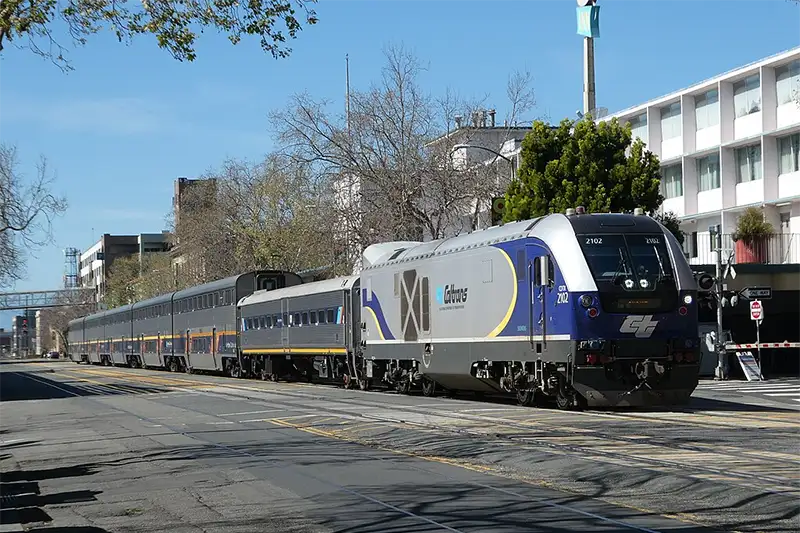
Amtrak Gold Runner
The best way to take a wheelchair-accessible Yosemite rail excursion is to hop aboard Amtrak’s Gold Runner. This route runs through the Central Valley from Oakland to Bakersfield, and offers bus connections from Los Angeles, Sacramento and San Francisco. The train also stops in Emeryville, Richmond, Martinez, Antioch, Lodi, Stockton, Modesto, Denair, Merced, Madera, Fresno, Hanford, Corcoran and Wasco. And it’s easy to transfer to Yosemite via YARTS at the Merced Amtrak Station.
All Amtrak trains feature ramp or lift boarding, wheelchair-accessible seating and large accessible restrooms. Wheelchair-users can remain in their own wheelchair or transfer to a coach seat for the journey. The Gold Runner can accommodate manual and power wheelchairs up to a maximum width of 29.5 inches, and an occupied weight of up to 600 pounds. Special accessibility requests can be submitted at www.amtrak.com/contact-us/email.html (click on accessibility request) at least 72 hours prior to travel, or by calling (800) 872-7245. On-the-spot accessibility requests can usually be accommodated if they do not present a safety issue.
The Gold Runner route features coach seating, free WI-FI, and food for sale on board. Amtrak offers a 10% discount to passengers with a disability and one companion. For more information about Amtrak’s Gold Runner route, visit www.amtrak.com/san-joaquins-train.
Take YARTS to Yosemite
YARTS bus in Yosemite Valley
It’s about a three-hour trip from Oakland to Merced, and a two-hour trip from Bakersfield; plus an additional, 3.5-hour bus connection from Bakersfield to Los Angeles. Amtrak has partnered with YARTS to provide a bus connection from the Merced Amtrak Station to Yosemite, and that transfer is included with your Amtrak ticket.
All YARTS buses feature lifts and accessible seating; however it’s important to note on your Amtrak reservation that wheelchair-accessible seating is required. Alternately, call (877) 989-2787 at least 48 hours in advance to secure an accessible seat. Additionally, reduced fares are available to people with a disability and seniors over 62 years old.
The Highway 140 YARTS route runs from the Merced Amtrak Station to Yosemite Valley with stops in Catheys Valley, Mariposa, Midpines and El Portal. Stops in Yosemite Valley include the Yosemite Valley Visitor Center, Yosemite Valley Lodge and Curry Village. This route runs year-round, and it takes 2.5 hours to get from the Merced Amtrak station to Yosemite Valley.
The Highway 140 YARTS route is an excellent choice for folks with lodging reservations at Yosemite Valley Lodge or Curry Village; however this route also stops at accessible properties outside of the park. Two excellent accessible lodging choices on the route are the Yosemite Bug and AutoCamp Yosemite.
The Yosemite Bug (www.yosemitebug.com/) is located in Midpines and features a large wheelchair-accessible guest room with a roll-in shower. Located nearby, AutoCamp Yosemite (autocamp.com/location/yosemite/) offers wheelchair-accessible accommodations in custom designed luxury travel trailers. And both properties have daily YARTS connections to the national park.
Getting Around Yosemite
Yosemite Shuttle
Passengers who take a wheelchair-accessible Yosemite rail excursion have several options to get around the park. First and foremost is the free Yosemite shuttle system.
There are currently two shuttle routes in the valley — the Valleywide Shuttle and the East Valley Shuttle. The former stops at Yosemite Valley lodges, campgrounds, restaurants and trailheads, while the latter calls on Yosemite Village, Curry Village, the Pines Campgrounds and the eastern Yosemite Valley trailheads. All shuttle buses are equipped with wheelchair lifts and tie-downs, and can accommodate wheelchairs up to 24 inches wide and 46 inches long. The lifts have a weight limit of 750 pounds.
Aramark (www.travelyosemite.com) — a Yosemite lodging concessionaire — also operates several tours. The popular Valley Floor Tour is conducted in an open-air tram and offers good views of the surrounding landscape. Although not all trams are accessible, wheelchair-users can request a lift-equipped one with 48 hours notice. And if you’d like to explore more of the park, opt for four-hour Glacier Point Tour or the day-long Yosemite Grand Tour. Accessible buses for these tours are also available with 48 hours advance notice.
Finally, if you’d like to get a little exercise, then rent a handcycle at the bike stands at Yosemite Valley Lodge or Curry Village and explore the 12 miles of bicycle paths in Yosemite Valley. Most of the bicycle paths are wheelchair-accessible except for a short patch near Housekeeping Camp.
So leave the car at home, and get out and ride the rails to Yosemite National Park. It’s a fun and wheelchair-accessible way to travel.
Barrier-Free Travel Yosemite, Sequoia and Kings Canyon National Parks for Wheelers and Slow Walkers
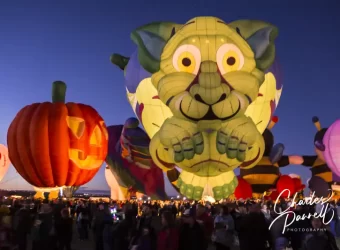
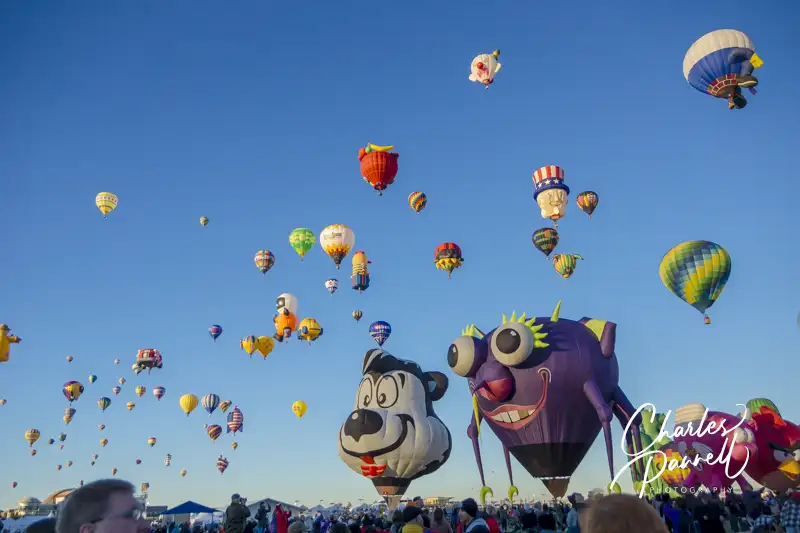
“Shape” Balloons at the Albuquerque Balloon Fiesta
Slated to run from October 4-12, 2025, the 53rd Albuquerque Balloon Fiesta (balloonfiesta.com/) will feature morning skies dotted with colorful balloons, special shaped balloon rodeos and evening balloon glows. Add in some fun exhibits, flavorful food and a variety of vendors, and you have all the ingredients for a fun-filled event. And the good news is, access hasn’t been overlooked at the Fiesta; in fact organizers have gone above and beyond to make sure that wheelchair-users and slow walkers can enjoy this colorful event.
The Basics
The Albuquerque Balloon Fiesta takes place in Balloon Fiesta Park, which is located close to Interstate 25 in the northern part of the city. That said, allow plenty of extra travel time, as traffic congestion is the norm in this area during Fiesta time.
General admission tickets are available on the Balloon Fiesta website or on site. A general admission ticket is good for admission to one session — morning or evening — on any day of the Fiesta. Accessible parking is available for $20 per session, and it is available on a first-come first-serve basis. Accessible parking is available in the Green, Blue, Turquoise, Brown and Yellow lots. Free accessible shuttles are also available from these lots to the entrance.
If you have an accessible parking placard, you can request a free reflective one, so the attendants can easily see you and direct you to the accessible parking section. To obtain one, send a copy of your placard to:
AIBF
4401 Alameda NE
Albuquerque, NM 87113
ATTN: ADA Placard Request
You can also request a reflective placard by e-mailing a copy of your placard to balloons@balloonfiesta.com, with “ADA Placard Request” in the subject line. Reflective placards are mailed out in late August.
Park and Ride
If you’d prefer to dodge the traffic, then take a Park and Ride bus from one of four remote lots. The busses are wheelchair-accessible ,but they cannot accommodate scooters. Tickets can be purchased at balloonfiesta.com/Park-Ride, and they also include general admission to the Fiesta. Park and Ride Shuttle tickets are not available at the parking lots, so plan ahead to avoid disappointment. If you encounter problems purchasing your tickets online, call 505-227-8737 for assistance.
There are four Park and Ride locations.
Hoffmantown Church
8888 Harper Road NE
Park in the northeast lot only.
Cottonwood Mall
10000 Coors Bypass NW
Park in the northeast parking lot near Seven Bar Loop and Coors Bypass NW.
Coronado Center
6600 Menaul Blvd. NE
Park at the southwest corner near San Pedro Dr. and Uptown Blvd.
Intel
1600 Rio Rancho Dr. SE, Rio Rancho, NM
Park in the southeast lot only. This route only runs on weekends.
The Park and Ride buses run from Thursday to Sunday during the morning and evening events. Morning service begins from the remote lots at 4:00 a.m. and ends at 7:00 a.m. Service from Balloon Fiesta Park to the remote lots begins at 8:00 a.m. and ends at 11:00, with straggler buses following until 11:30.
Evening service from the remote lots runs from 3:00 p.m. to 6:00 p.m., with return service from 7:00 p.m. to 9:30 p.m., and straggler buses following until 10:00 p.m.
VIP Packages
Although there’s certainly adequate access to the Fiesta grounds; if you have problems with crowds, you might want to consider one of the VIP packages. For an extra fee, you’ll be able to sit or stand in a private viewing area, and enjoy a few other extra perks. If you have problems standing for long periods of time, or find it difficult to navigate through crowds, this might be just the ticket for you.
The Gondola Club offers barrier-free access to a private viewing area with outdoor seating and a good view of the field. Private accessible restrooms and VIP parking are also included. Additionally, patrons are treated to a breakfast or dinner buffet and an open bar, and they also receive a Gondola Club lapel pin and a special souvenir gift.
Alternatively, you can choose the the Chasers’ Club, which features guaranteed seating in a private patio next to the landing field. Patrons also have access to private accessible restrooms. Food and non-alcoholic beverages are included in the package, with alcoholic beverages available for purchase in the adjacent Chase Lounge. And like the Gondola Club, it’s completely barrier-free.
Last, but not least, the Albuquerque Balloon Museum Foundation, offers a fully catered breakfast or dinner and a spectacular view of the Mass Ascension or Balloon Glow from the museum balcony. There is elevator access to the observation deck, and accessible indoor restrooms are available to patrons. For more information, visit www.balloonmuseum.com.
In the end, no matter what package you pick at the Albuquerque Balloon Fiesta, you’ll be treated to a great show. But make plans early, as some of the more popular packages have been known to sell out.
Balloons Galore
Each day brings a different schedule to the Albuquerque Balloon Fiesta, but no matter when you visit, there are a few must-sees. On most days the Fiesta is divided into a morning session and an evening session, with a break in the action mid-day. The morning sessions usually start around 6:00 am, while the evening ones begin twelve hours later. It should also be noted that some mid-week days lack an evening session.
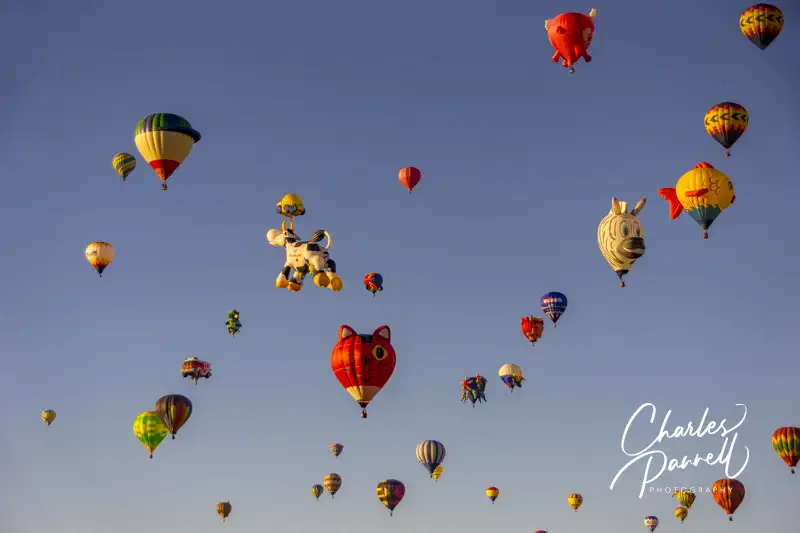
Make plans to see at least one mass ascension. They usually begin around 6:30 a.m., but get there early as traffic is very heavy, especially on the weekends. During this time hundreds of colorful balloons take to sky in two waves. It’s really a site to behold and a great photo opportunity. Although you can see the ascensions from many places around Albuquerque, there’s really nothing quite like seeing it from Balloon Fiesta Park.
The grassy area, which serves as the launch field, is level and easy to walk or roll over; and there is an asphalt pathway along the border. Alternatively, wheelchairs and scooters are available for rent on a limited basis near the information booth.
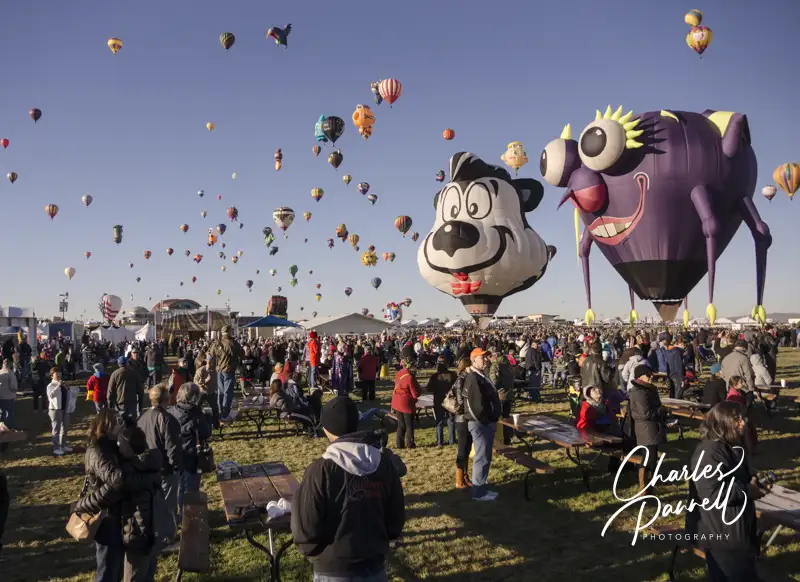
The special shapes rodeo is also a must-see. This morning event began in 1989 and it’s now the most popular event at the Fiesta. You’ll see everything from enchanted castles and dragons to bumble bees, cows and even a scuba diver.
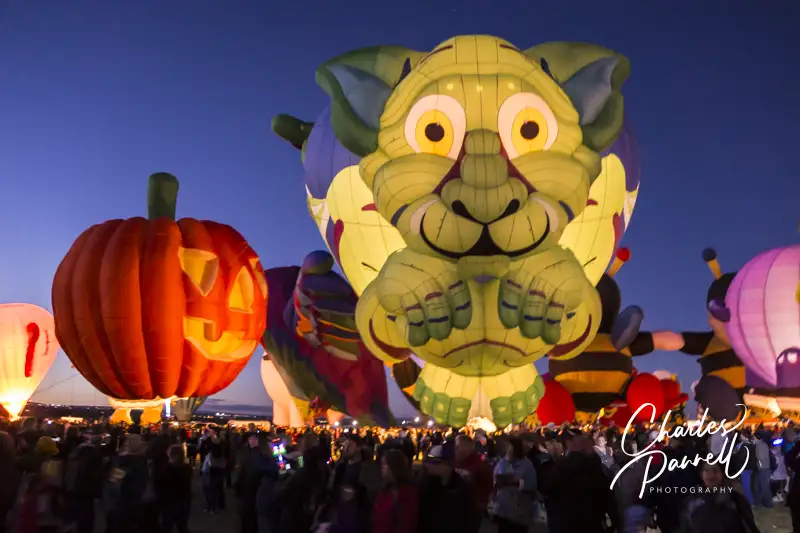
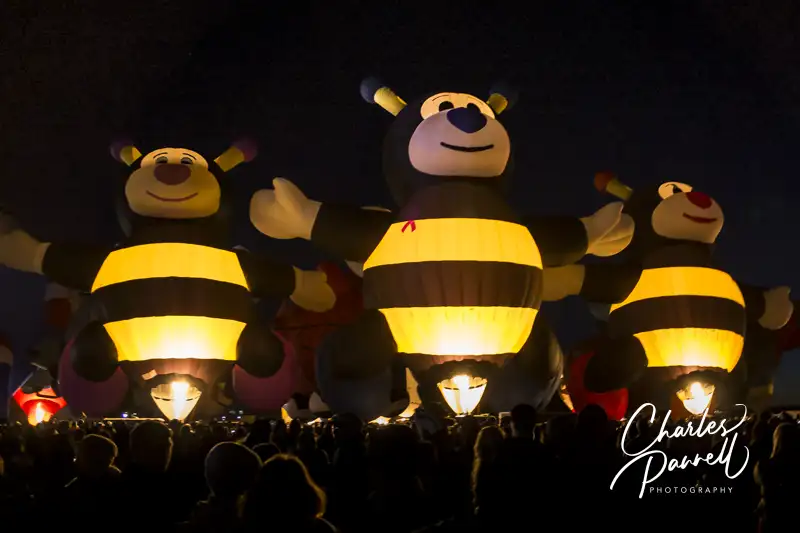
The evening sessions are largely devoted to balloon glows, where the pilots inflate the balloons, but do not launch them. Seeing the balloons glow en mass, is only topped by the spectacular afterglow fireworks show presented at the end of the evening.
The Extras
Balloon Glow at the Albuquerque Balloon Fiesta
There’s more to the Albuquerque Balloon Fiesta than the colorful balloons. For starters, there’s the food. Most of the food vendors are located along Main Street, which features level access and plenty of room to navigate a wheelchair. Food choices include everything from New Mexican cuisine to fair food, with a little bit of something for everyone. ATMs are also located along Main Street, and there are plenty of accessible porta-potties throughout the park.
Main Street is also home to the merchandise vendors, which offer t-shirts, pins, calendars and other souvenirs. And don’t miss the chainsaw carvers booth, which is located at the north end of Main Street. The Balloon Discovery Center, which is also located at the north end of Main Street, offers visitors a good primer on the sport of ballooning, with lots of hands-on activities. And don’t forget to stop by the Main Street Stage, which is located near the center of Main Street, to enjoy a wide variety of musical entertainment,
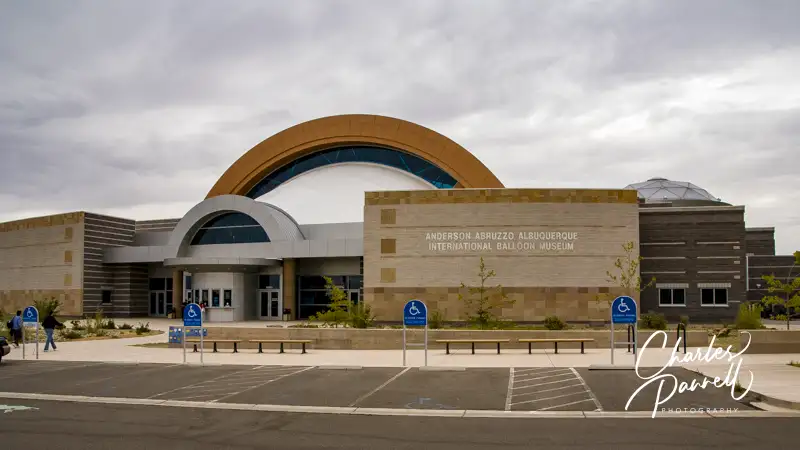
Finally save time for a visit to the Balloon Museum (balloonmuseum.com/) Located next door to Balloon Fiesta Park, this fun and educational museum features accessible parking, loaner wheelchairs, level access to the building and elevator access to all levels. And it’s filled with exhibits about everything from weather balloons to airship models, with videos, balloon equipment and even balloon pins. It’s the perfect way to top off your Albuquerque Balloon Fiesta experience.
Barrier-Free Travel
Utah National Parks for Wheelchair-users and Slow Walkers
In days of yore, visitors would flock to Yosemite on summer evenings to witness the splendor of the Yosemite Firefall. A naturalist’s nightmare in this day and age, the 1960s firefall was created by park concessionaires tossing a burning rubbish pile off of Glacier Point. And to the delighted crowd gathered below, it appeared as if a fire waterfall was tumbling down over the rock face. For obvious reasons this ritual is no longer performed.
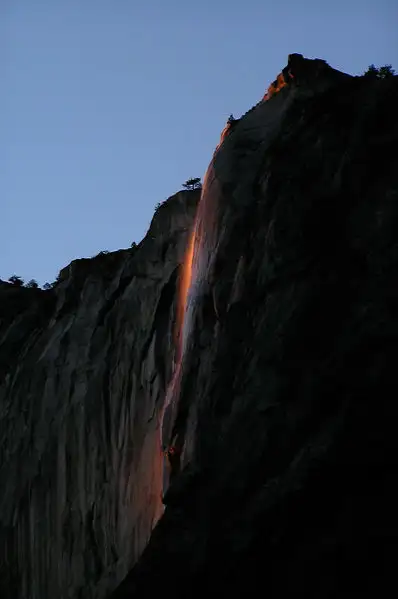
That said, today park visitors can experience a more natural — and just as spectacular — version of a firefall at Horsetail Fall. Every February when this waterfall is backlit near sunset, a vibrant orange glow emanates and mimics the appearance of a waterfall on fire — minus the rubbish pile. And although conditions have to be just right to witness this natural phenomenon, the firefall attracts visitors in droves for the possible opportunity. Of course whenever there are crowds, there are also rules and regulations. So here’s what you need to know — including where to find the accessible viewing areas — to experience the Horsetail Fall lightshow.
Yosemite Firefall Basics
There are several basic requirements for a good Yosemite Firefall. First and foremost you have to have water. A good fall rainfall is helpful for a robust firefall. And Central California has certainly had its share of rain this year!
Second, you need clear skies so the sun can reflect off the granite behind the waterfall. And although this is up to Mother Nature, it also helps to keep an eye on the weather. If it’s overcast, cloudy or foggy, it will probably be a no-go. Of course you have to hit it at the right time of day — sunset — for an optimum firefall experience. The days for the optimum Yosemite Firefall experience in 2026 are February 12 to February 28. And sunset times for those days range from 5:40 PM to 5:47 PM.
Finally, there’s the location. The best place to view Horsetail Fall is near the El Capitan Picnic Area. Best bet is to try and snag a parking spot at Yosemite Falls, and walk 1.5 miles on Northside Drive to the viewing area. If Yosemite Falls parking is full, park in Yosemite Village or Curry Village and take the free shuttle to Yosemite Falls.
Even if you can’t manage the level walk, you can still enjoy this majestic show. Although one lane of Northside Drive will be closed to accommodate the large number of pedestrians, people with an accessible parking placard are allowed to drive to and park in the El Capitan Picnic Area in turnouts on the north side of Northside Drive. That said, it’s important to note that on busy weekends, Northside Drive may close completely for about an hour after the firefall. And if nature calls, remember there’s an accessible vault toilet in the El Capitan Picnic Area.
No Reservations in 2026
Due to the popularity of the Yosemite Firefall, park entrance reservations were required in previous years. This will not be the case in 2026. No reservations will be required to enter the park during the February firefall days.
Southside Drive will be open to vehicles, but parking, stopping, and unloading passengers will be prohibited between the El Capitan Crossover (the road connecting Northside and Southside Drives near El Capitan) and the Swinging Bridge Picnic Area. The area from the Cathedral Beach Picnic Area to the Sentinel Beach Picnic Area, and the area between the road and the Merced River (including the river) will also be closed to all entry.
El Capitan Crossover will “generally” be open, but stopping and parking will be prohibited. And in order to manage congestion, access into Yosemite Valley at the El Capitan Crossover will be controlled. Once the valley is full, vehicles will be diverted out of the valley.
So the best advice for the 2026 Yosemite Firefall is to get there early and bundle up. Visitors are also encouraged to sign up for Yosemite text alerts by texting “Yosemite” to 33311 for real time up dates.
So, plan ahead and have fun at the 2026 Yosemite Firefall.
Barrier-Free Travel Yosemite, Sequoia and Kings Canyon National Parks for Wheelers and Slow Walkers
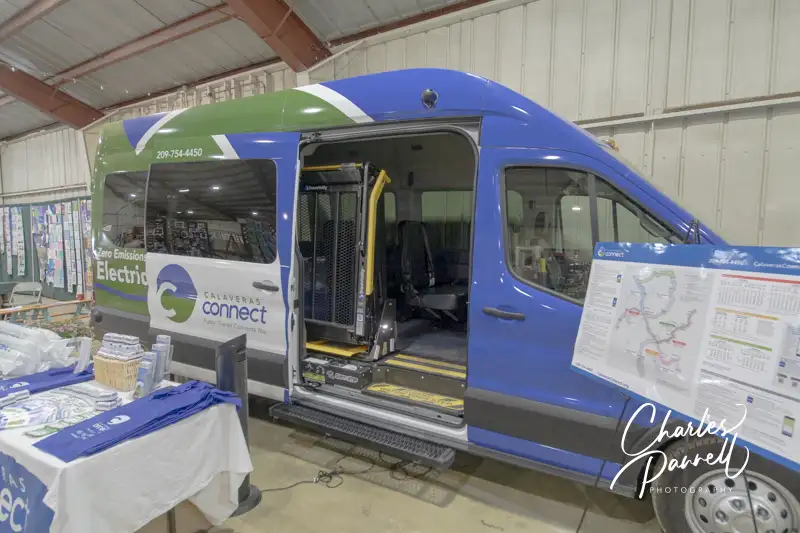
It’s fun to go wine tasting with friends on the weekend. But then you have that age-old problem — who is going to be the designated driver? Of course you could always make a promise to limit your consumption, but sometimes that just doesn’t work. Well, if you happen to be visiting Murphys or Angels Camp on a Saturday, there is another solution — take the Hopper. This short shuttle route connects the two cities and even makes a stop at Ironstone Vineyards. And the good news is, they will also go a little off route with advance notice. So pack your bag, gather your friends, and get ready to enjoy a wine tasting weekend on the Calaveras Hopper.
The Basics
The Calaveras Hopper only runs on Saturdays from 10 AM to 6 PM. But that’s OK, as that’s when the tasting rooms do the bulk of their business. There’s about an hour wait between buses, and the schedules are posted at all hopper stops as well as at calaverasconnect.org/routes/saturday-hopper/. This route is also seasonal — it only operates from March to November.
The fare is a very reasonable $3 (seniors are half price). Drivers do not carry change so the exact fare is required if you pay cash. You can also pay with the Token Transit app, which is available from the App Store, Google Play, or by texting “token” to 41411.
Access is excellent on the Calaveras Hopper, with lift access and wheelchair spaces available. The drivers are also pretty friendly, and are happy to offer assistance if needed.
The route begins in Angels Camp and travels on Highway 4 to Murphys. It makes six stops along the way:
Travelodge Copello (Angels Camp)
WorldMark (Angels Camp)
Save Mart (Angels Camp)
Angels Camp Visitor Center (Angels Camp)
Murphys Creek Theater (Murphys)
Ironstone Vineyards (Murphys)
Murphys Creek Theater is just around the corner from several tasting rooms, and Ironstone Vineyards is a destination in itself. And if you want to get picked up at another spot with ¾ mile of the route, then call (209) 754-4450 at least two hours in advance. Additionally, drivers will usually stop at any safe location along the route. So enjoy a little Saturday wine tasting in Calaveras County, and leave the driving to the Hopper.
Barrier-Free Travel Yosemite, Sequoia and Kings Canyon National Parks for Wheelers and Slow Walkers
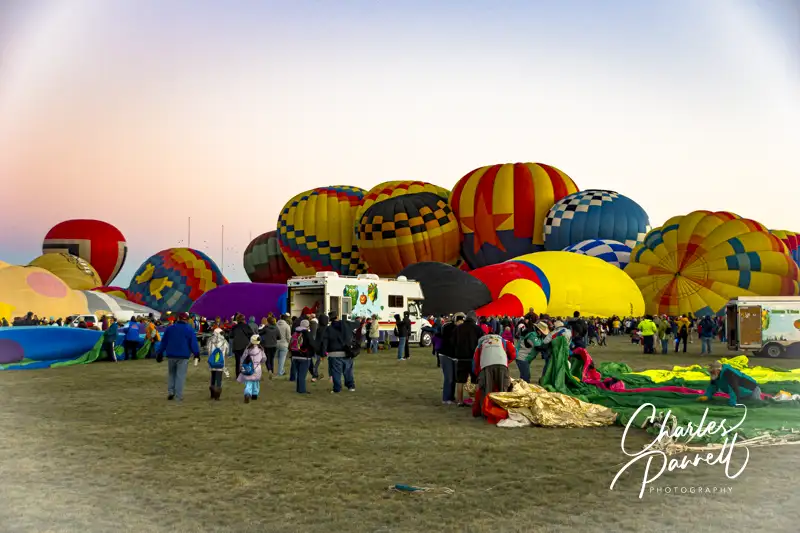
Early in the day at the Albuquerque Balloon Fiesta
Slated to run from October 5-13, 2024, the 52nd Albuquerque Balloon Fiesta (balloonfiesta.com) will be filled with morning skies dotted with colorful balloons, special shaped balloon rodeos and evening balloon glows. Add in some fun exhibits, flavorful food and a variety of vendors and you have all the ingredients for a fun-filled event. And the good news is, access hasn’t been overlooked at the Fiesta; in fact organizers have gone above and beyond to make sure that wheelchair-users and slow walkers can enjoy this colorful event.
The Basics
The Albuquerque Balloon Fiesta takes place in Balloon Fiesta Park, which is located close to Interstate 25 in the northern part of the city. That said, allow plenty of extra travel time, as traffic congestion is the norm in this area during Fiesta time.
General admission tickets are available on the Balloon Fiesta website or on site. A general admission ticket is good for admission to one session — morning or evening — on any day of the Fiesta. Accessible parking is available for $20 per session, and it is available on a first-come first-serve basis. Accessible parking is available in the Pink, Green, Blue, Turquoise, Brown and Yellow lots. Free accessible shuttles are also available from these lots to the entrance.
If you have an accessible parking placard, you can request a free reflective one, so the attendants can easily see you and direct you to the accessible parking section. To obtain one, send a copy of your placard to:
AIBF
4401 Alameda NE
Albuquerque, NM 87113
ATTN: ADA Placard Request
You can also request a reflective placard by e-mailing a copy of your placard to balloons@balloonfiesta.com, with “ADA Placard Request” in the subject line. Reflective placards are mailed out in late August.
Park and Ride
If you’d prefer to dodge the traffic, then take a Park and Ride bus from one of four remote lots. The busses are wheelchair-accessible but they cannot accommodate scooters. Tickets can be purchased at balloonfiesta.com/Park-Ride, and they also include general admission to the Fiesta. Park and Ride Shuttle tickets are not available at the parking lots, so plan ahead to avoid disappointment. If you encounter problems purchasing your tickets online, call (505) 227-8737 for assistance.
There are four Park and Ride locations.
Hoffmantown Church
8888 Harper Road NE
Park in the northeast lot only.
Cottonwood Mall
10000 Coors Bypass NW
Park in the northeast parking lot near Seven Bar Loop and Coors Bypass NW
Coronado Center
6600 Menaul Blvd. NE
Park at the southwest corner near San Pedro Dr. and Uptown Blvd.
Intel
1600 Rio Rancho Dr. SE, Rio Rancho, NM
Park in the southeast lot only. This lot is only open on weekends
The Park and Ride buses run from Thursday to Sunday during the morning and evening events. Morning service begins from the remote lots at 4:00 a.m. and ends at 7:00 a.m. Service from Balloon Fiesta Park to the remote lots begins at 8:00 a.m. and ends at 11:00, with straggler buses following until 11:30.
Evening service from the remote lots runs from 3:00 p.m. to 6:00 p.m., with return service from 7:00 p.m. to 9:30 p.m., and straggler buses following until 10:00 p.m.
VIP Packages
Although there’s certainly adequate access to the Fiesta grounds; if you have problems with crowds, you might want to consider one of the VIP packages. For an extra fee, you’ll be able to sit or stand in a private viewing area, and enjoy a few other extra perks. If you have problems standing for long periods of time, or find it difficult to navigate through crowds, this might be just the ticket for you.
The Gondola Club offers access to a barrier-free hospitality tent with a private viewing area, outdoor seating, bathrooms and a VIP parking area. Additionally, patrons are treated to a breakfast or dinner buffet and an open bar, and they also receive a Gondola Club lapel pin and a special souvenir gift.
Alternatively, you can choose the the Chasers’ Club, which features guaranteed seating in a private patio on the north end of the park. Food and non-alcoholic beverages are included, and alcoholic beverages are available for purchase. And like the Gondola Club, it’s completely barrier-free.
Last, but not least, the Albuquerque Balloon Museum Foundation, offers a fully catered breakfast or dinner and a spectacular view of the Mass Ascension or Balloon Glow from the museum balcony. There is elevator access to the observation deck, and accessible indoor restrooms are available to patrons. For more information, visit balloonmuseum.com.
In the end, no matter what package you pick at the Albuquerque Balloon Fiesta, you’ll be treated to a great show. But make plans early, as some of the more popular packages sell out quickly.
Balloons Galore
Each day brings a different schedule to the Albuquerque Balloon Fiesta, but no matter when you visit, there are a few must-sees. On most days the Fiesta is divided into a morning session and an evening session, with a break in the action mid-day. The morning sessions usually start around 6:00 am, while the evening ones begin twelve hours later. It should also be noted that some mid-week days lack an evening session.
Mass ascension at the Albuquerque Balloon Fiesta
Make plans to see at least one mass ascension. They usually begin around 6:30 a.m., but get there early as traffic is very heavy, especially on the weekends. During this time hundreds of colorful balloons take to sky in two waves. It’s really a site to behold and a great photo opportunity. Although you can see the ascensions from many places around Albuquerque, there’s really nothing quite like seeing it from Balloon Fiesta Park.
The grassy area which serves as the launch field is level and easy to walk or roll over, and there is an asphalt pathway along the border. Alternatively, wheelchairs and scooters are available for rent from Vista Mobility. Advance reservations can be made at (vistamobility.net) or by calling (262) 677-2696. They will also be available on a limited basis near the information booth.
The special shapes rodeo is also a must-see. This morning event began in 1989 and it’s now the most popular event at the Fiesta. You’ll see everything from enchanted castles and dragons to bumble bees, cows and even a scuba diver.
Special Shapes at the Albuquerque Balloon Fiesta
The evening sessions are largely devoted to balloon glows, where the pilots inflate the balloons, but do not launch them. Seeing the balloons glow en mass, is only topped by the spectacular afterglow fireworks show presented at the end of the evening.
After dark “Glow” at the Albuquerque Balloon Fiesta
The Extras
There’s more to the Albuquerque Balloon Fiesta than the colorful balloons. For starters, there’s the food. Most of the food vendors are located along Main Street, which features level access and plenty of room to navigate a wheelchair. Food choices include everything from New Mexican cuisine to fair food, with a little bit of something for everyone. ATMs are also located along Main Street, and there are plenty of accessible porta-potties throughout the park.
Main Street is also home to the merchandise vendors, which offer t-shirts, pins, calendars and other souvenirs. And don’t miss the chainsaw carvers’ booth, which is located at the north end of Main Street. The Balloon Discovery Center, which is also located at the north end of Main Street, offers visitors a good primer on the sport of ballooning, with lots of hands-on activities. And don’t forget to stop by the Main Street Stage, which is located near the center of Main Street, to enjoy a wide variety of musical entertainment,
Balloon Museum in Albuquerque, New Mexico
Finally save time for a visit to the Balloon Museum (balloonmuseum.com). Located next door to Balloon Fiesta Park, this fun and educational museum features accessible parking, loaner wheelchairs, level access to the building and elevator access to all levels. And it’s filled with exhibits about everything from weather balloons and airship models, to balloon equipment, balloon racing and even balloon pins. It’s the perfect way to top off your Albuquerque Balloon Fiesta experience.
Barrier-Free Travel
Utah National Parks for Wheelchair-users and Slow Walkers
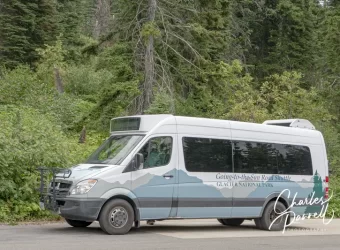
Recently I flew to Los Angeles, and although the hotel I stayed at had a free airport shuttle, it was not wheelchair-accessible. I asked the driver and he said that they didn’t have any wheelchair-accessible airport shuttles, and that I should take a taxi or an Uber. It seemed a bit unfair for me to have to pay for transfers, while others got them for free. Are airport shuttles required to be wheelchair-accessible under the Americans with Disabilities Act (ADA)? If so, what can I do if I encounter one that lacks wheelchair access?
The ADA and Wheelchair-Accessible Airport Shuttles
In a word, yes. If a hotel provides free shuttle service it’s also required to provide an equivalent accessible service under Title III of the ADA (ada.gov/topics/title-iii/). Equivalent is the key word here, so for example if passengers routinely wait 20 minutes for an airport shuttle, then wheelchair-accessible airport shuttles must arrive in the same time frame.
That doesn’t mean that hotels have to own their own shuttles though. They just have to provide the equivalent service. For example, a small hotel can share an accessible shuttle with other properties, but they must offer equivalent service as detailed above. Properties can also opt to send accessible taxis to pick up passengers, instead of purchasing and maintaining wheelchair-accessible airport shuttles. And finally they can alternately opt to reimburse guests for their accessible taxi or Uber fares.
When Things Go Wrong
Although equivalent service means that disabled guests will get the same service as non-disabled guests, a little advance planning can go a long way to making this a reality. First and foremost, don’t wait until you arrive at the airport to inquire about the availability of wheelchair-accessible hotel shuttles. Call the hotel in advance of your trip to confirm that they have the appropriate vehicles — and that they are actually operational.
If the hotel employee you are talking with says that they don’t have any wheelchair-accessible airport shuttles, then ask to speak to the manager. Usually managers know the law, and after you point out that wheelchair-accessible shuttle service is required under the ADA, then they will start to work to find a solution. Of course this solution may be that the hotels provides an accessible taxi or pays for your Uber, but that’s an acceptable solution under the law.
On the other hand if the manager balks at your request, it’s best to find another property. You can’t strong arm someone into adhering to the law, and you don’t want to arrive at the airport only to find out that there’s no way to get to your hotel. Give your money to a property that does follow the law and will be able to accommodate you.
Of course, don’t forget the property that didn’t accommodate you. They broke the law and they deserve to be reported to the Department of Justice (DOJ). It’s easy to do too — just complete this simple online form (civilrights.justice.gov/report) to file an ADA complaint. You won’t receive any compensation as the result of filing an ADA complaint, but it will help effect change. And that helps make everything more accessible in the long run.
Barrier-Free Travel California National Park Road Trips for Wheelchair-Users and Slow Walkers