Located about 20 miles southeast of Salem, Silver Falls State Park is the crown jewel of the Oregon State Park system. There’s no shortage of majestic waterfall views, and if you’d like to get a closer look, there are also several wheelchair-accessible trails to explore. Add in accessible picnic areas, restrooms, food service and visitor facilities, and you have the complete package. And if you’d like to spend a few nights, there’s a nice selection of wheelchair-accessible cabins nears the rivers edge. So pack the car and get ready to experience a cornucopia of natural beauty at Silver Falls State Park.
South Falls District
South Silver Falls
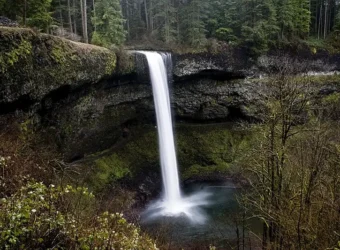
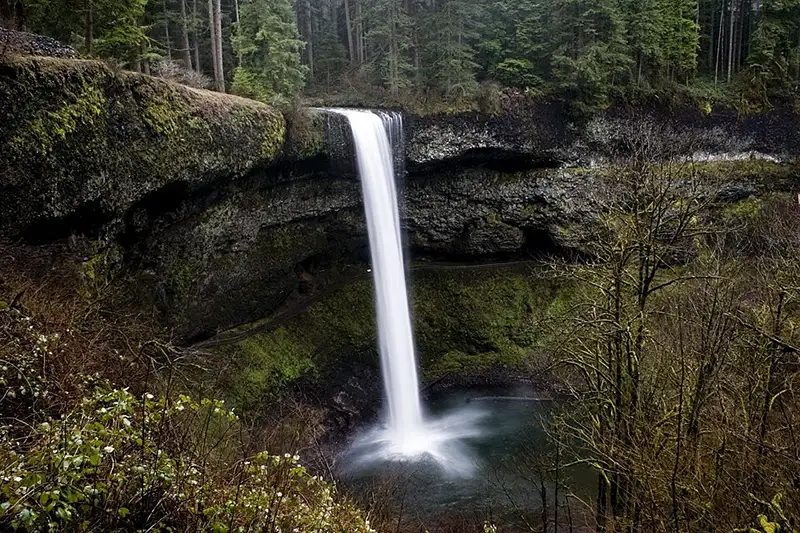
The South Falls District is the most developed area of the park. It features accessible parking in the main lot, near the accessible restrooms and the information board. A wide paved trail leads to the left past the South Falls Café to the stone circle. From there bear left and continue along past the Nature Store. Take the next left and follow the trail out to the viewpoint. This is the closest view of the South Falls, and it’s about .25 from the parking lot. There is a small wall along the rim, and depending on the season some foliage may obstruct your view, so continue along the paved trail for a better vantage point.
After you return to the main trail, take the next left for a better falls view. This viewpoint is about .3 from the parking lot, and a bit downhill, but there’s a bench and a clear view at the end.
The trail past this point is not accessible, but if you head back towards the parking lot you can see the other side of the area. This time, take the right trail from the parking area and wind around the back of the South Falls Cafe and past the second set of restrooms to the Stone Kitchen Shelter on the right. Constructed by the CCC in 1936, this community kitchen was renovated in 2005. There’s an accessible pathway that leads past a picnic area to the right and up to the kitchen, and bypasses the steps in front.
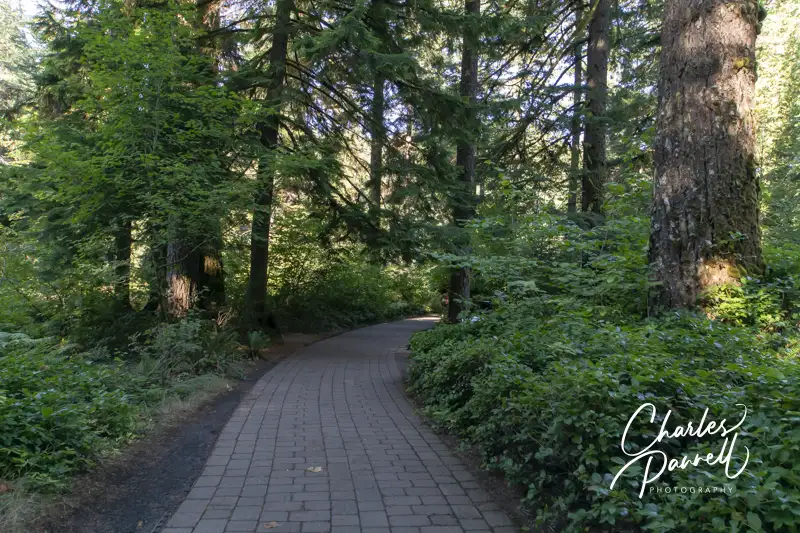
And just past the Stone Kitchen Shelter, there’s a nice accessible boardwalk that winds through the forest. The access ends after the boardwalk, but it’s still a nice little jog through the forest. And a pleasant place to have a picnic lunch.
North Falls District
The North Rim Trail in the North Canyon District
The North Canyon District also has some accessible features, as this area recently underwent a major renovation. It’s located just past the north entrance to the park, and it should not be confused with the North Falls parking area, which is located further south along the road.
There’s accessible parking in the large lot with level access to the accessible restrooms and picnic area. There are a number of tables on the grass under the trees, plus one accessible table near the parking lot with an accessible drop-off are nearby. There’s no shortage of picnic choices here.
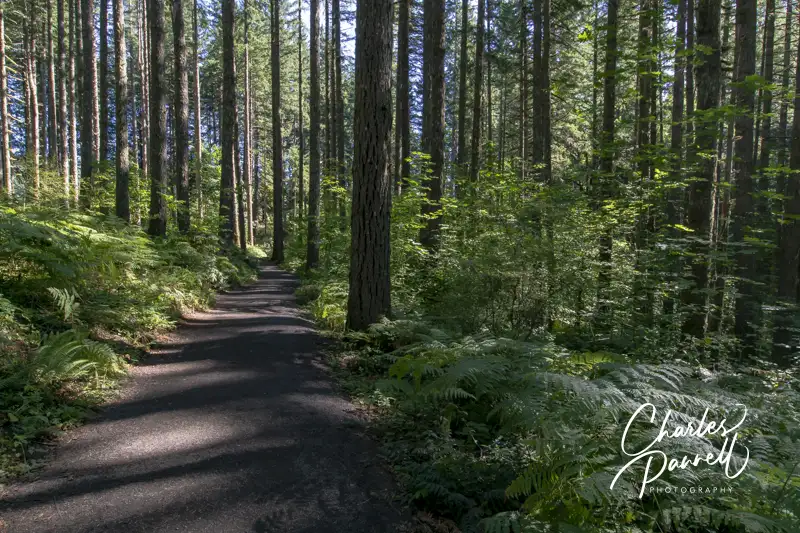
The North Rim Trail begins just to the left of the restrooms. This wide hard-packed dirt trail is covered with crushed rock in the beginning, and then transitions to a dirt trail. It winds through the forest and passes the North Canyon Nature Play Area, where kids can play on nature-themed play equipment. There’s also another picnic area along the route, which is in a level dirt area and has room at the end of the tables for wheelchairs. It’s a more secluded option than the main picnic area.
The trail continues along through the forest, crosses a bridge and has a minimal elevation gain. At about the .6-mile point, there’s an accessible viewpoint with an interpretive plaque and a nice view of the North Falls. After that the trail loses its access, as there are steps, ruts, and elevation gains. Still it makes for a nice 1.2-mile out-and-back hike through the forest, and it offers a great view at the end.
A Taste of Mother Nature
South Falls Trail
The South Falls Campground also boasts a doable trail for many folks. You can access the trail in two places — near the campground entrance and campsite 2, or near the amphitheater and campsite 41. The entrance near campsite 2 has a bridge with about a three-inch step, but there is also an alternate entrance from the campground road.
The whole trail is about 1.25 miles long, but only the end sections are doable, as the middle has narrow pathways, rocks and other obstacles, steep sections and some overgrown foliage. From each entrance the trail is doable for about .4 mile. These sections boast a wide trail in good repair, that meanders along a stream and through the forest with a minimal elevation gain. It’s a good trail for birders, as there’s no shortage of wildlife along the way. Best bet is to take the trail as far as you can manage, and then double back. It’s a beautiful taste of nature.
And if you’d like to spend the night in the campground, accessible campsites 58, 60, 86 and 91 feature a paved driveway, a raised grill, an accessible picnic table and are near the accessible restrooms. As an added bonus, campsite 91 also has a covered picnic table. If you want to bring your rig, campsites 2, 3 and 4 are accessible sites with power. To be honest, this is a pretty level campground and most of the campsites are doable for wheelchair-users — the big difference is the distance from the bathrooms.
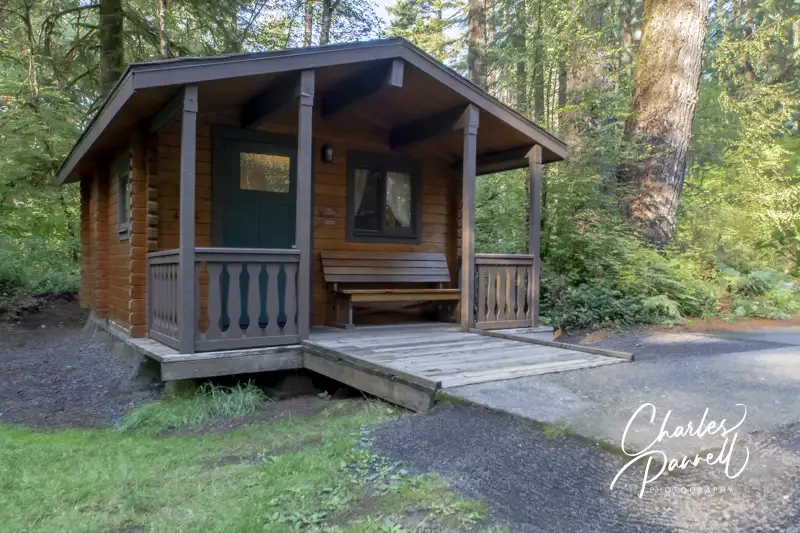
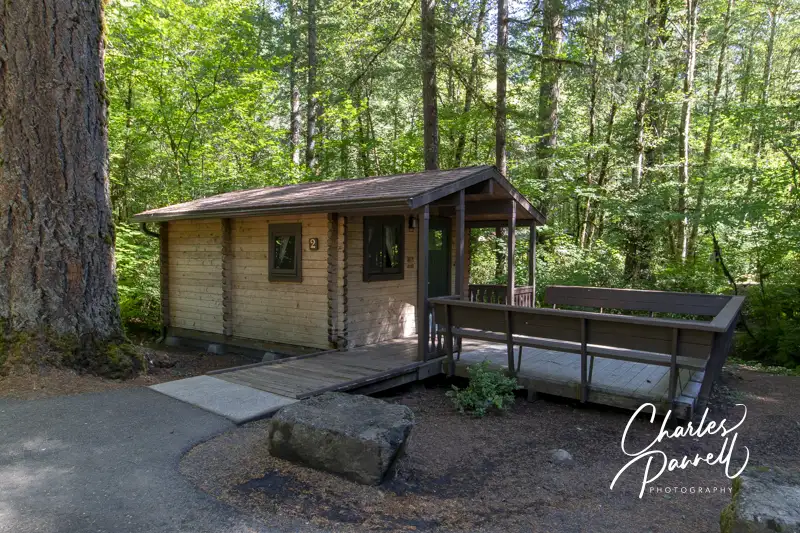
If you want to overnight in the park, but don’t really want to pitch a tent, then consider one of these wheelchair-accessible camping cabins. Located in the cabin village, Cabin 1 is the most private. It features a wide paved driveway and ramped access up to the front porch.
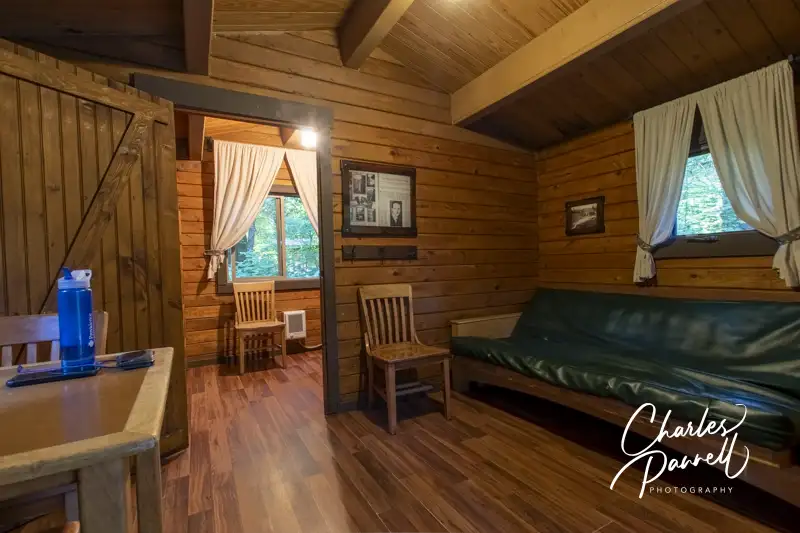
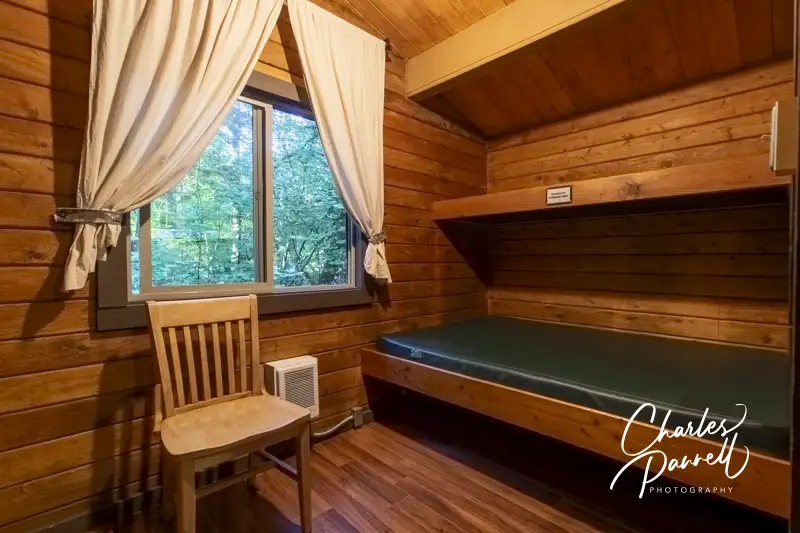
This two-room cabin features electricity, lights, a heater, and plenty of room to maneuver a wheelchair. The front room is furnished with a table with four chairs and a 19-inch high futon; while the other room includes a bunk bed (20-inch high bottom bunk) and a 24-inch high double bed. And outside there’s an accessible picnic table, a raised grill and plenty of room to roll around the level site. This cabin can sleep six, and does not allow pets.
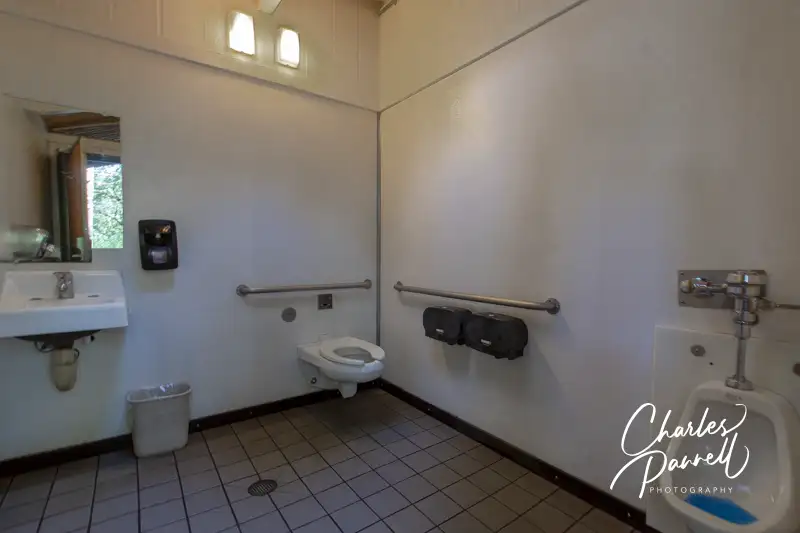
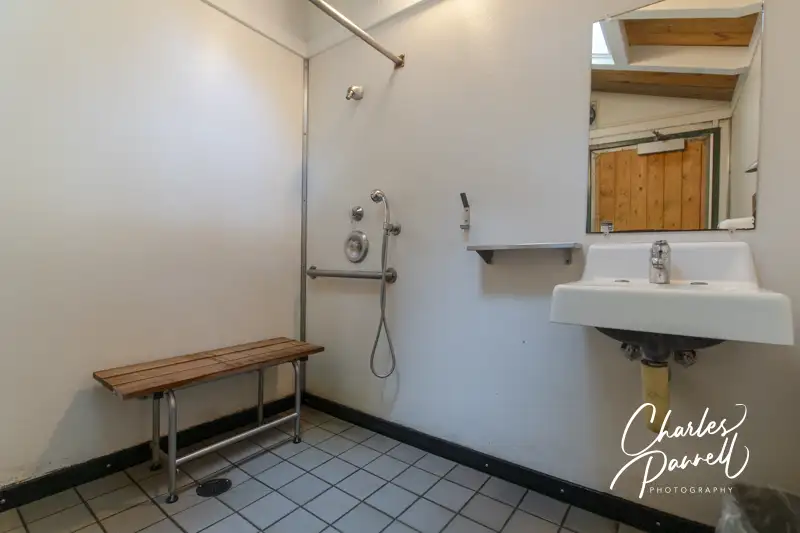
The shower house is about 120 feet away, and it includes a private room with a roll-in shower with grab bars, a fold down shower seat and a hand-held showerhead. It also has a small changing area and a roll-under sink with a lowered mirror. The bathroom is next door and includes a toilet with grab bars on the back and left walls (as seated), a urinal and a roll-under sink.
Cabin 1
Inside Cabin 1
Bedroom in Cabin 1
Toilet and sink in Showerhouse
Shower Room in Showerhouse
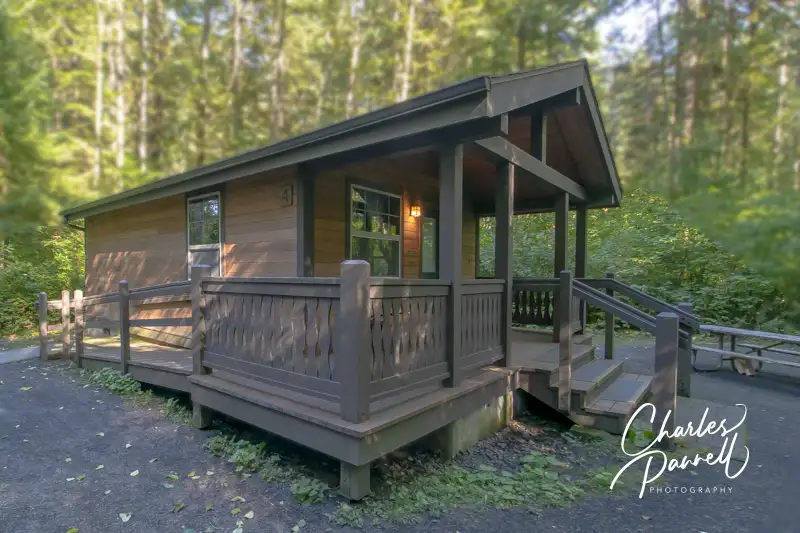
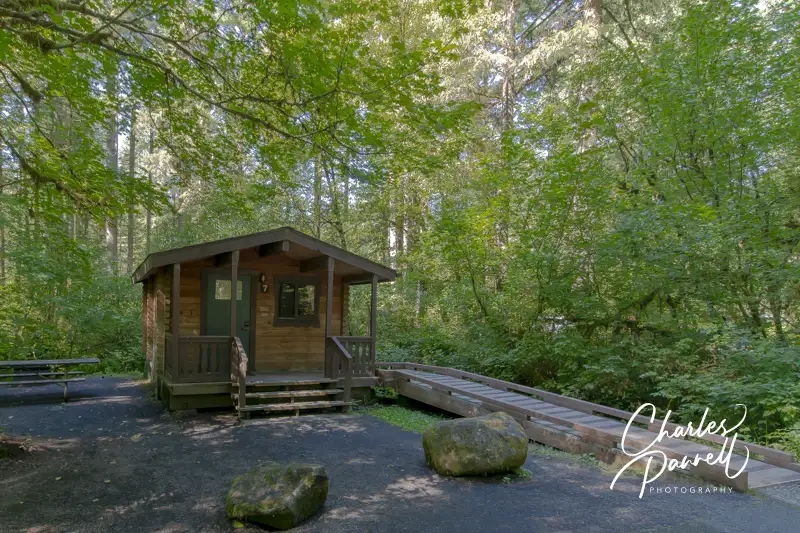
Cabins 3,4 and 7 are also accessible choices in the cabin village. They have the same access features as cabin 1, and they all sleep six and don’t allow pets. Cabin 3 has a large accessible deck, cabin 4 has a side ramp and a large porch, and cabin 7 is the closest to the bathroom.
Additionally, there’s an accessible cabin in the campground (19) which sleeps four people and accepts pets. It’s not as private as those in the cabin village but it’s still a nice accessible place to overnight in Silver Falls State Park.
Cabin 2
Cabin 4
Cabin 7
Barrier-Free Travel California National Park Road Trips for Wheelchair-Users and Slow Walkers
Sometimes wheelchairs and Mother Nature just don’t mix. Although access to natural areas has greatly improved over the years, some panoramic views are still out of reach to wheelchair-users and slow walkers. Fortunately that’s not the case on the Pend Oreille River in Northeastern Washington. In fact, thanks to the efforts of Seattle City Light and the US Forest Service, there are three well developed wheelchair-accessible Pend Oreille River viewpoints near Metaline Falls. Add in a few short trails, some interpretive exhibits and a nice mix of wildlife, and it’s a great place to slip away and enjoy mother nature for a few hours.
Vista House
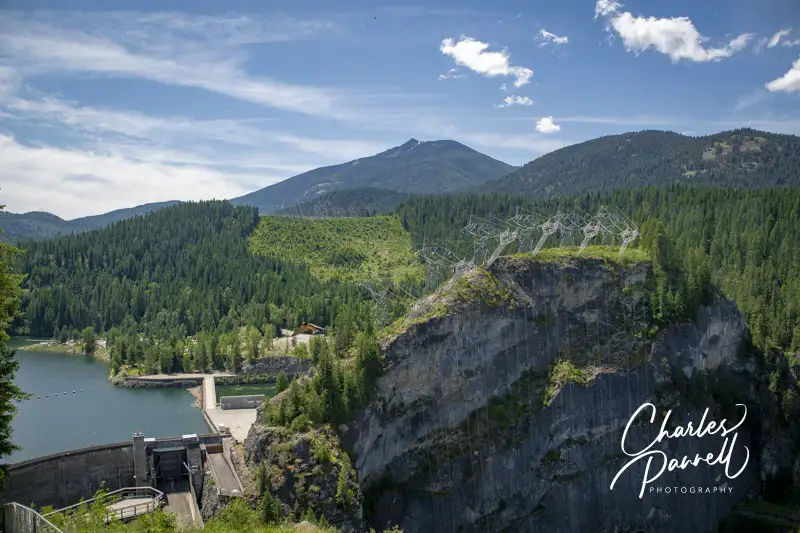
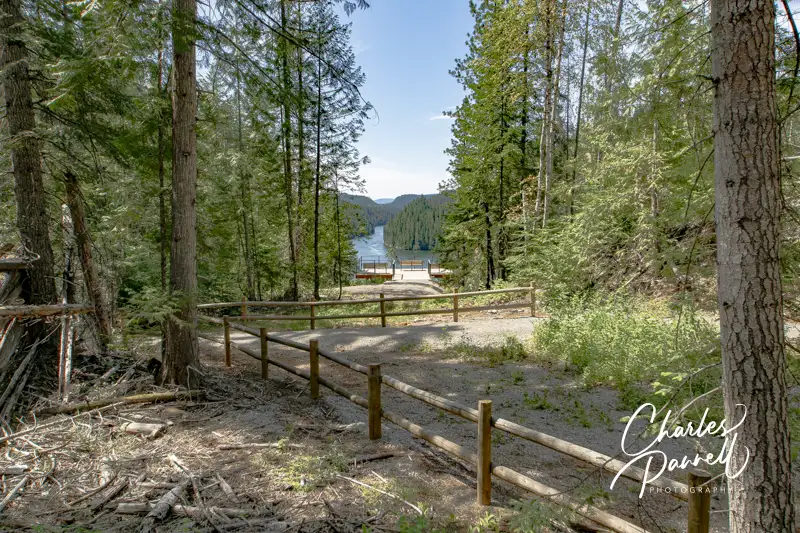
Boundary Dam on the Pend Oreille River Viewed From Vista House
Vista House, which is the first wheelchair-accessible Pend Oreille River view, is located just south of the Nelson-Metaline border crossing along the International Selkirk Loop (emerginghorizons.com/the-international-selkirk-loop-for-wheelchair-users-and-slow-walkers/). From Highway 31, (the International Selkirk Look) turn west on East Side Road near Crescent Lake. As soon as you turn on to East Side Road you’ll be captivated by the view of Crescent Lake on the left, and as you drive through the forest, you’ll see bits and pieces of it along the way. Continue along the road for about two miles, until you reach Vista House at the end of the line.
There’s plenty of accessible parking in the lot, with barrier-free access to Vista House and the nearby accessible restrooms. Vista House is a small interpretive center that overlooks Boundary Dam. There’s level access to the building, which houses a few exhibits; but to be honest the best views can be had from the outside.
There’s a standard picnic table on the left side of the building, with room at the end for a wheelchair. There are also built-in benches that line the deck area which can be used for a picnic. From the left side of Vista House you’ll get a view of the dam, and if you roll around to the right side of the building you’ll get a nice view of the Pend Oreille River.
There’s also a quarter-mile trail that leads down to a lower viewpoint, but because of the elevation change it’s really not doable for wheelchair-users. Some slow walkers may be able to do it, but take some time to evaluate the slope before you give it a try. Still, the view from top is reason enough to put this stop on your list. Even better — it’s not crowded.
Peewee Falls Overlook
Viewpoint at Peewee Falls
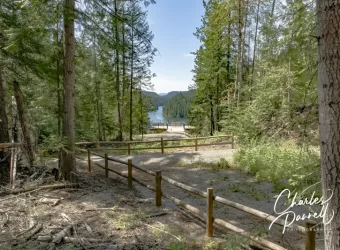
As you head back to Highway 31, be sure and stop at the Peewee Falls Overlook, which is about a mile from Vista House. The turn is well marked, and the dirt road is maintained and doable in a standard vehicle. It may be a bit dusty, but that’s just part of the rustic ambiance.
There’s plenty of accessible parking at the Peewee Falls Overlook in the large paved lot, with barrier-free access to the nearby accessible vault toilets and accessible picnic tables. From the picnic area, a hard-packed dirt trail covered in crushed gravel leads down to the viewpoint.
Peewee Falls cascades down into Boundary Lake, which was formed by the creation of the Boundary Dam on the Pend Oreille River. It’s not a massive waterfall — hence the name — but the lake isn’t very crowed and the whole view is rather calming. It’s a pleasant quarter-mile round trip stroll to the viewpoint; and again, this stop is minus the crowds.
Riverside Canyon Overlook
Trail to Riverside Canyon Overlook
Last but not least, save time for a stop at Riverside Canyon Overlook on your Pend Oreille River drive. From Peewee Falls, continue back to Highway 31 and head south. Make a right on Forest Road 172, about five miles down the road. Although it’s hard to spot the street sign, the turn is well marked by a brown “Riverside Canyon Overlook” sign. Continue down the dirt road for another mile and follow the signs to the overlook parking lot.
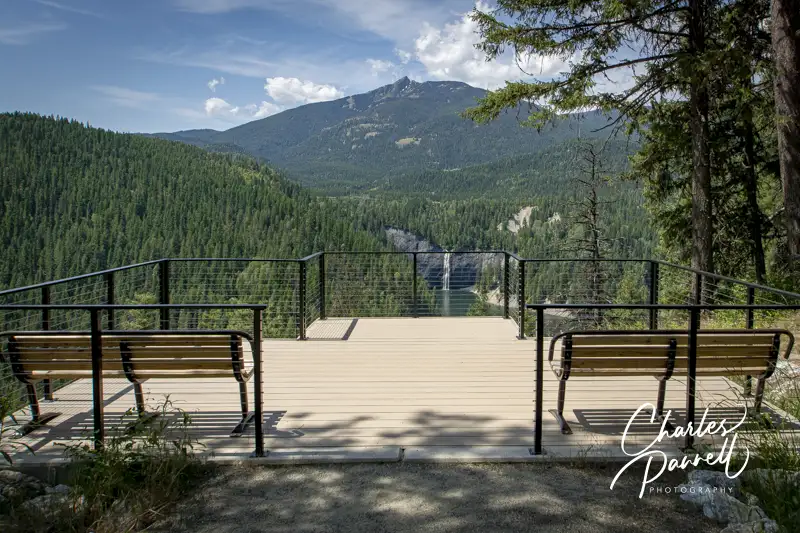
There’s accessible parking near the accessible vault toilets, and a level path over to the accessible picnic tables. From the picnic area a hard-packed dirt trail covered in crushed gravel leads down to the viewpoint. It’s a .4-mile one-way hike, although you can get a slight glimpse of the view from the half-way point. That said, the best view of the river is from the accessible viewing platform at the end of the trail. Although the trail is accessible it’s not level, and there are several uphill and downhill sections along the way. Still it’s within code, with spaces to rest in between the uphill sections. Additionally, you can get a good view of Hooknose Mountain from the parking lot.
After you’ve had a good dose of Mother Nature along the Pend Oreille River, you can continue on along the International Selkirk Loop, take a hike at the Mill Pond Site, and maybe even stop for a bite to eat in Metaline Falls. There’s really no shortage of accessible choices in this scenic neck of the woods.
Barrier-Free Travel Washington National Parks for Wheelers and Slow Walkers
There’s no shortage of scenic beauty in the Pacific Northwest, but the Mount Hood Infinity Loop in Northwestern Oregon offers more that its fair share of eye candy. The route begins about 20 miles east of Portland as it follows Highway 84 alongside the Columbia River, then heads south through vineyards and farmland to majestic Mount Hood. Finally it circles back north through conifer forests, and offers a picturesque side trip through a waterfall corridor.
The 135-mile loop takes about three hours to drive straight through; however it’s best to spend a few nights in the area, take your time and enjoy the stops along the way. And although the route travels through the mountains and other harsh terrain, there are plenty of wheelchair-accessible stops along the way. So get ready to hit the road and enjoy a wheelchair-accessible slice of the scenic Mount Hood Infinity Loop.
Well Dam!
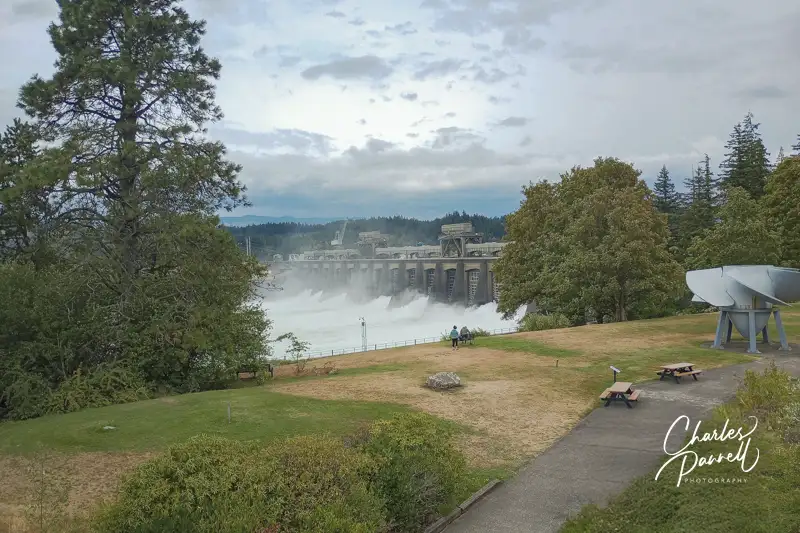
Bonneville Dam on the Mount Hood Infinity Loop
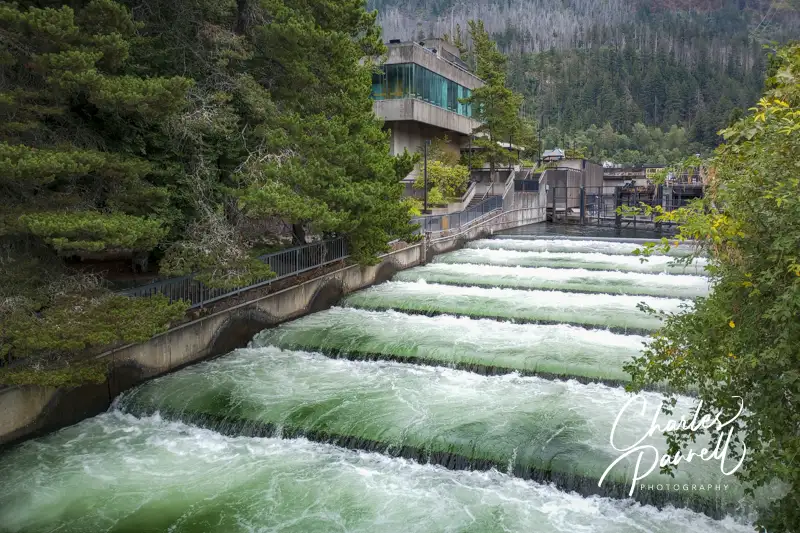
The first stop stop on this accessible Mount Hood Infinity Loop is Bonneville Dam (www.nwp.usace.army.mil/bonneville/). Built in 1938 by the Army Corps of Engineers, the site features the dam, two powerhouses, a spillway, a navigation lock, fish ladders and a fish hatchery. Just take exit 40 from Highway 84 and follow the signs. Bear right at the security gate and head over to the Bradford Island Visitor Center.
There’s accessible parking in the visitor center lot, with level access to the building. Inside, there’s plenty of room to navigate a wheelchair and there are accessible restrooms around the corner. This fourth-floor lobby serves as an information and welcome center. Start your visit with an elevator ride down to the third floor to watch a movie about the dam; then continue on down to the first floor to see some interpretive exhibits and viewing windows on the fish ladders. Complete your visit with a trip to the roof for a birds-eye view of the dam.
The navigation locks are located a short drive away, with accessible parking in front. There’s ramp access up to the viewing platform and lock visitor center. The visitor center has a collection of exhibits that explain the operation of the locks. And if you’re lucky, a ship will pass through and you’ll see them in operation.
Save some time for a stop at the fish hatchery, which includes accessible parking and paved access around the outside display ponds. There’s barrier-free access to the visitor center, which details the operations of the hatchery. There’s also level access to the nearby gift shop. It’s a pleasant and accessible walk through the shaded grounds around the ponds — and don’t forget to feed the trout.
Fish ladder at the Bonneville Dam on the Mount Hood Infinity Loop
The View From Washington
Bridge of the Gods
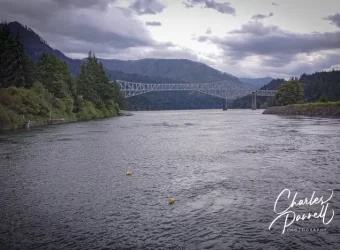
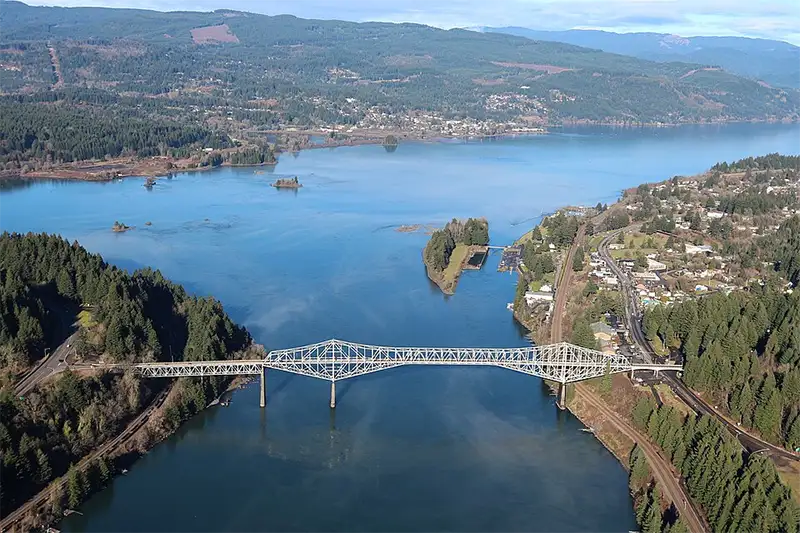
As you continue east on Highway 84, you can’t miss the Bridge of the Gods (www.portofcascadelocks.gov/bridge-of-the-gods). Originally constructed in 1926, this cantilever bridge had to be raised 44 feet after Bonneville Dam was completed. Subsequently, Charles Lindbergh flew under it in true daredevil fashion in 1927.
Although you’ll get a better view of it from afar, it’s also worth a short detour to cross this historic structure. From Highway 84, take exit 44 and follow the signs. This two-lane toll bridge, which is just 22 feet wide, spans the Columbia River and connects Oregon with Washington.
Of course once you cross over to the Washington side, you’ll have good view of the bridge, the Columbia River, and the Oregon side of things. A pleasant place to enjoy that view is Skamania Lodge (www.skamania.com), more specifically the Cascade Dining Room at Skamania Lodge. It’s a nice spot for a leisurely brunch, as it overlooks the Columbia River with views of the lush pine forests on the Oregon side. Menu offerings range from brioche bread French toast and a crab eggs Benedict to steelhead tacos, a pacific crab roll and a delicious seafood salad. The choices are tasty and the view is exceptional.
Stay a Spell
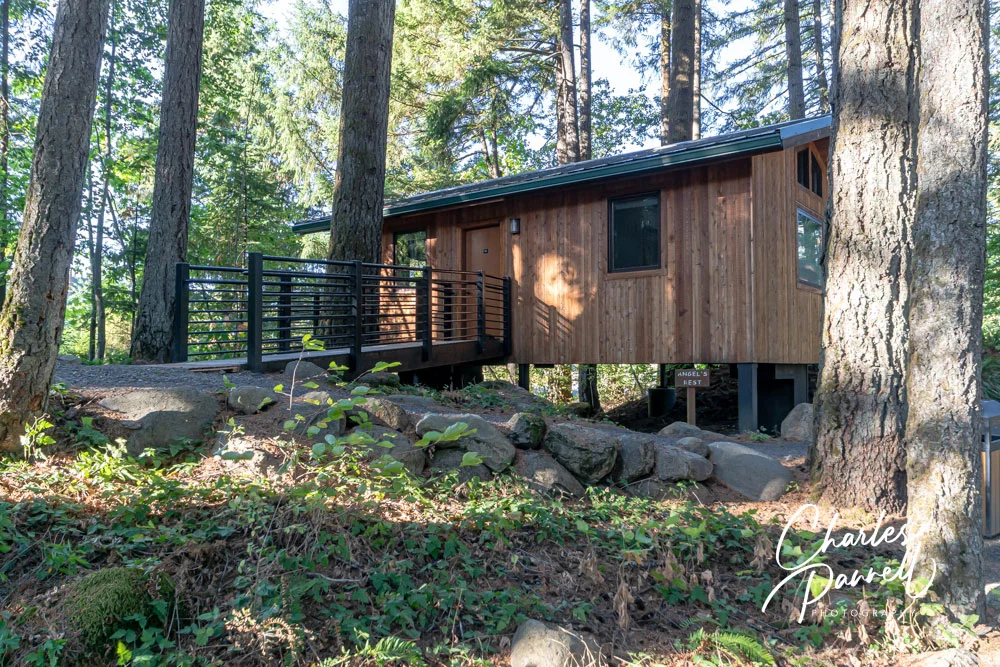
Angels Rest Accessible Treehouse Suite at Skamania Lodge, Oregon
Skamania Lodge also makes an ideal home base for a multi-day Mount Hood Infinity Loop excursion. Access is excellent throughout the property, which offers accessible lodge rooms with either a roll-in shower or a tub/shower combination. And if you’d like something a little different, spend the night in the treetops in a wheelchair-accessible treehouse (emerginghorizons.com/sleep-in-a-wheelchair-accessible-treehouse-at-skamania-lodge/).
The newest addition to the accessible lodging inventory at Skamania Lodge is a luxurious wheelchair-accessible cabin. https://emerginghorizons.com/relax-in-a-skamania-lodge-wheelchair-accessible-cabin/. Nestled away in the treehouse section of the property, this spacious cabin includes a large bathroom with a roll-in shower, a compact kitchen, a separate bedroom, a cozy fireplace and a spacious deck with a firepit — and it’s all wheelchair-accessible.
Vintage Autos & Aircraft Galore
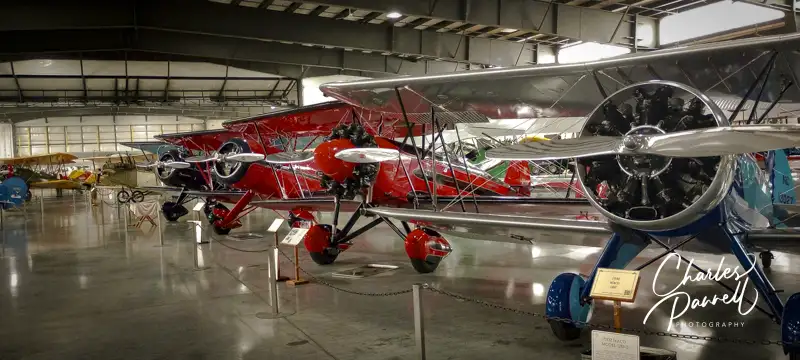
Planes at The Western Antique Aeroplane and Automobile Museum
After a Skamania Lodge visit — or overnight stay — cross back over the Bridge of the Gods and continue east on Highway 84. Take exit 62 about 20 miles down the road, then follow Country Club Drive and Barrett Road to the Western Antique Aeroplane and Automobile Museum www.waaamuseum.org. It’s a pleasant 25 mile drive, as the scenery transitions from the Columbia River landscape to the farming and agricultural region around Mount Hood.
There’s accessible parking near the museum entrance, with level access over to the building. The large collection is housed in three adjacent hangers, which have cement floors and plenty of room to maneuver a wheelchair. There’s also an accessible restroom on site, barrier-free access to the gift shop, and a power wheelchair available to rent.
The thing that makes this massive auto, aircraft and motorcycle museum unique, is that most of the collection is flyable or drivable. And besides the aircraft and autos, you’ll find vintage furniture, appliances, toys and decorations woven between them. This museum houses much more than airplanes — it includes everything that flies, from balloons to gliders — and it also features a substantial Wright Brothers exhibit. And don’t miss the oldest Boeing aircraft, a 1928 40C mail plane — and yes it still flies.
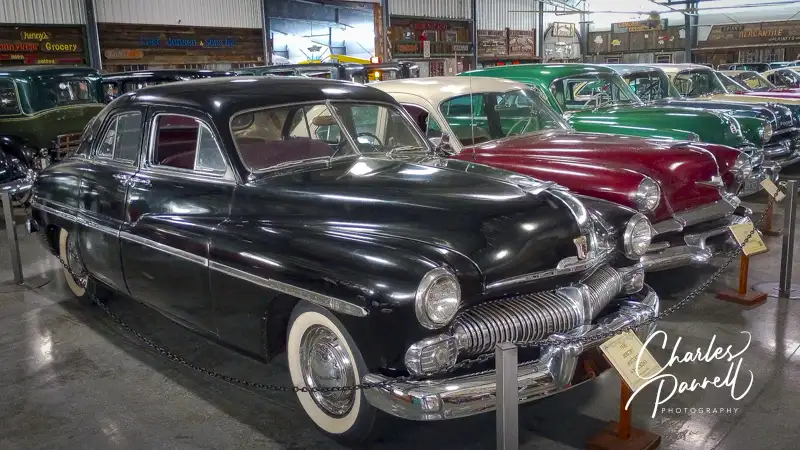
A second hangar is devoted to military planes and includes a large collection of military equipment, from radios and MREs to bicycles, scooters and even a jeep. The final hangar is filled with over 130 cars, including a 1914 electric car, a Studebaker and a Locomobile. And if you get tired, there are plenty of spots to sit and take a break along the way. It’s an excellent and often overlooked museum.
Autos at the Western Antique Aeroplane and Automobile Museum
At the Summit
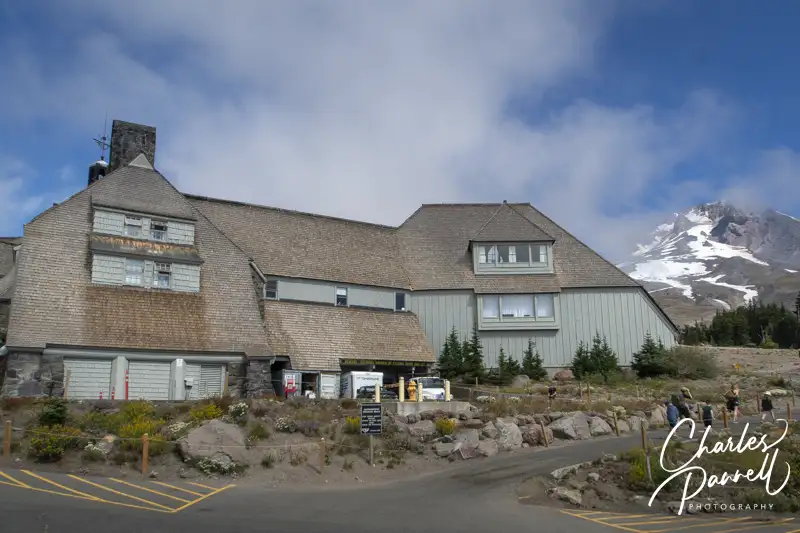
Timberline Lodge at Mount Hood, Oregon
One of the highlights of the Mount Hood Infinity Loop, is a visit to Timberline Lodge (www.timberlinelodge.com) at the summit. From the Western Antique Aeroplane and Automobile Museum follow Odelle and Davis Drive to Highway 35 south, then take Highway 26 east to the Timberline Highway. From there it’s just a six mile drive; however the road has up to a 10% grade with numerous switchbacks along the way. Timberline Lodge is located at 6,000 feet, and it’s not unusual to see snow there, even in the summer.
Known as the showplace of Works Projects Administration projects, Timberline Lodge was dedicated in 1935 by President Roosevelt. The consulting architect, Gilbert Stanley Underwood, who designed national park lodges in Yosemite and Bryce Canyon, was known for using natural materials to help his buildings blend in with their surroundings. The Underwood style caught director Stanley Kubrick’s eye, and he ultimately used aerial shots of the property in the opening scenes of The Shining.
And although the drive is certainly scenic, the best plan of action is to enjoy a little time on top, look around the lodge and have lunch. There are two different parking areas on top. The lot close to the lodge is reserved for overnight guests, while the one further away is for day visitors. And the walk to the lodge is uphill from the day-use parking. Still if you stop at the guard shack and tell them you have a disabled passenger they will let you drive in and drop them off. Although there are steps up to the front entrance, there’s plenty of accessible parking near an elevator that takes you up to the lobby level. It’s a pleasant place for a midday break.
Mount Hood History
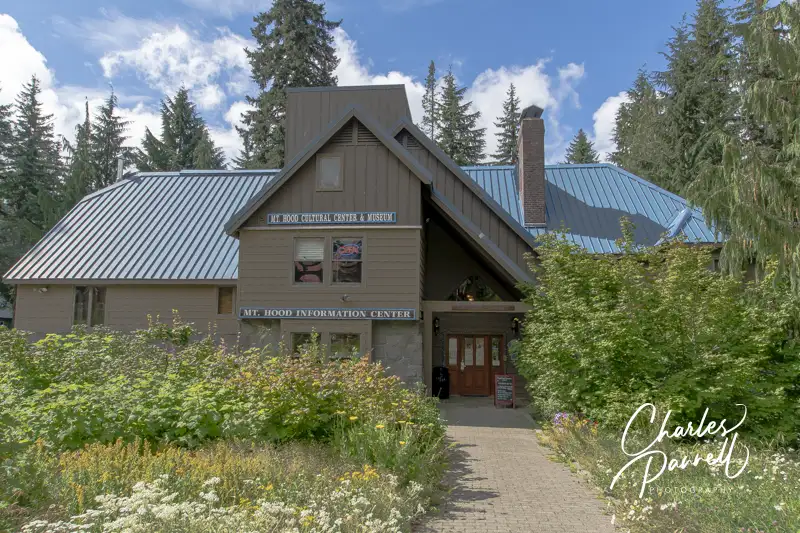
Mount Hood Cultural Center & Museum
After you get descend from the mountaintop, take a little time to learn about some local history at the Mt. Hood Cultural Center & Museum mthoodmuseum.org. To get there, continue east on Highway 26, then make a right on Government Camp Loop, about a quarter-mile down the road. The Mt. Hood Cultural Center & Museum is on the left, with street parking in front.
Accessible parking is located near the museum, with level access over to the building. And although the museum occupies several floors, there’s elevator access between them.
Downstairs, there’s an information center and a gallery that focuses on the history of the ski area and the local ski and recreation clubs. Upstairs there’s a gallery that showcases the works of Mount Hood area artists, and another one that boasts a large collection of skis and details the history of skiing. There’s also a gallery that focuses on the early exploration of the area and one that includes exhibits about the natural history and the regional flora and fauna. All in all this small museum offers a good primer of the area, with volunteers on hand to help you plan your visit, and loads of free brochures available to map out your travels.
Take a Hike
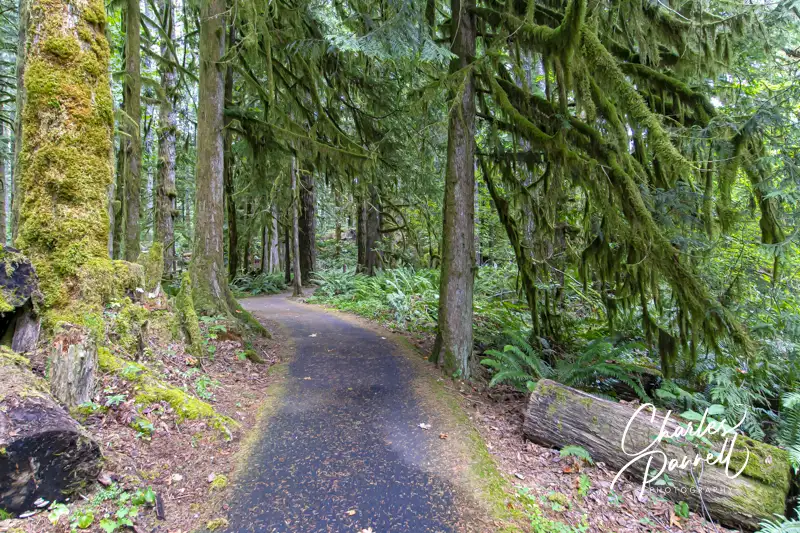
Cascade Streamwatch Trail in the Recreation Area
If you’d like to get out and enjoy a hike or two, head on over to the Wildwood Recreation Site www.blm.gov/visit/wildwood-recreation-site, which is on Highway 26 about 13 miles east of the Mt. Hood Cultural Center & Museum. This site has two accessible trails and a nice picnic area. And although there is a day-use fee at this area, the America the Beautiful Access Pass (emerginghorizons.com/how-to-get-a-lifetime-national-park-pass/) is also good there.
The Cascade Streamwatch Loop is located all the way at the end of the the main park road. There’s accessible parking near the accessible restrooms, and level access over to the trail. Make a right just past the amphitheater and follow this .75-mile paved loop through the alder and conifer forest. Be sure and take a slight detour near the beginning of the trail to the underwater viewing window, where you can see the hidden side of the river ecosystem. After you rejoin the main trail, continue alongside the Salmon River and loop back to the beginning. There are benches to rest along the way, and the picnic area near the pavilion includes an accessible table on level ground. It’s shaded by the trees, and a very pleasant place to take a break.
The equally accessible Wetlands Loop can be accessed from the next parking lot. Although there is a connector trail from the Cascade Streamwatch Loop, it’s steep and not accessible. Accessible parking and restrooms are located near the trailhead, with level access over the .75-mile trail. It begins as a paved trail, crosses the river and continues as a boardwalk through the cattail marsh, before it reconnects to the paved trail and loops back to the parking area.
Million Dollar View
Jonsrud Viewpoint on Highway 36
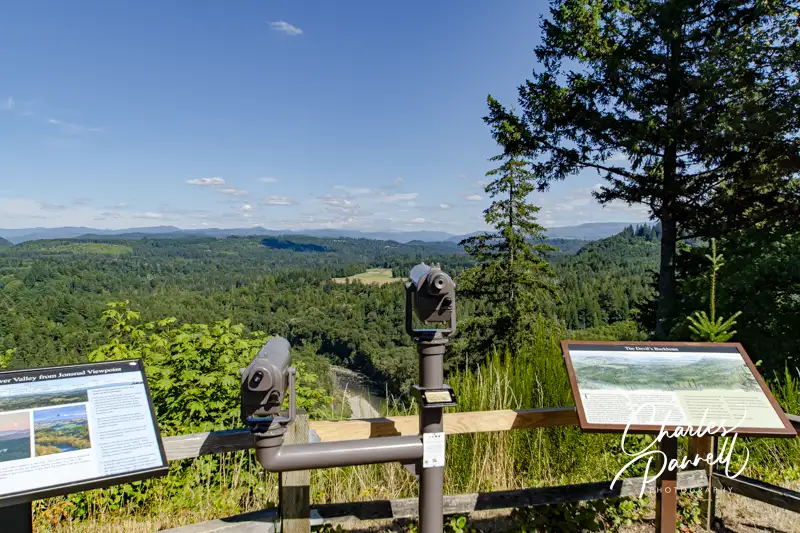
You’ll catch fleeting glimpses of Mount Hood from Highway 26, but for a great photo op continue east along the thoroughfare to an often overlooked viewpoint. It’s located about four miles down the road in Sandy. Turn north at the Walmart on Bluff Road, then continue on for about a mile to the Jonsrud Viewpoint, on the right.
There’s accessible parking near the viewpoint, with curb-cut access to a brick path to the overlook. From there you’ll get what’s billed as “one of the best views of Mount Hood in Oregon.” There’s also a wheelchair-height viewing scope, which allows folks who are color blind to view the vivid scenery of the Sandy River Valley. This neighborhood overlook is also the perfect spot to wait out the clouds and for an unobstructed view of Mount Hood. It’s a great little detour.
Tracking Sasquatch
North American Bigfoot Center
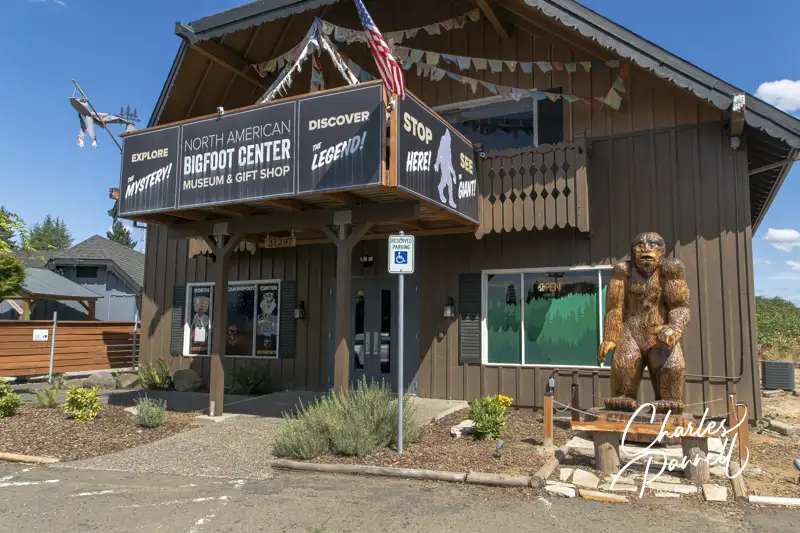
Once you’re back on Highway 26, continue east for five miles to Boring, and make a stop at the North American Bigfoot Center northamericanbigfootcenter.com. Located just off the highway it’s easy to find — turn in at the Chevron, then wind past Chester’s Pub to the back of the parking lot. You can’t miss this eclectic attraction, as the entrance is marked with a giant Bigfoot statue.
There’s accessible parking and a level entrance to the museum, which houses Bigfoot evidence and artifacts from around the world. There’s plenty of room to navigate a wheelchair throughout the galleries, and to roll up to a life-sized Sasquatch (named Murphy) for a photo.
The galleries are filled with photos, films and descriptions of first-person sightings of Bigfoot from around the world. From Vietnam and Australia, to Western Sumatra, California and of course the Pacific Northwest, there are Bigfoot stories from nearly every corner of the world. There’s also a robust collection of Bigfoot artifacts, including, footprints, handprints, fingerprints and even hair (in a Nutella jar). And if you’d like some first-hand information on Bigfoot, the museum is staffed with experienced field researchers who are happy to share their stories. Don’t miss the gift shop, which has a solid collection of Bigfoot books, clothing and assorted trinkets. Even if you don’t buy anything, it’s quite entertaining to browse through the assorted offerings.
A Waterfall Detour & More
Bridal Veil Falls
After you’ve had your Sasquatch fix, continue east on Highway 26 to Troutdale and make a quick stop at Barn Hall (www.facebook.com/THSkingofroads/). Although this small museum has limited hours (check the website), it includes some interesting exhibits about the history of the area. The barn itself was constructed in 1988 by the Troutdale Historical Society, and 10 years later they opened their doors. The exhibits change up a bit every few years, but they always focus on the history of the Columbia River Gorge.
There’s no striped parking in the gravel lot, but depending on the crowds, it’s usually possible to parallel park an adapted van, with room to deploy the ramp. There’s barrier-free access to the museum, and plenty of room to maneuver a wheelchair inside. Although it’s a small museum, it’s definitely worth a stop if you can catch it open when you’re in the area.
To complete the Mount Hood Infinity Loop, hop on Highway 84 and continue east. There is, however, a highly recommended short scenic waterfall detour along the way (emerginghorizons.com/explore-the-historic-columbia-river-highway-waterfall-corridor/). From Highway 84 take exit 22 at Corbet, then follow Corbet Hill Road south on this short section of the Columbia River Highway. The two-lane road meanders past five waterfalls, and it’s especially scenic during the spring runoff. You can drive straight through or stop and linger along the way. Either way, it’s a worthy side trip. And when you’re through, hop back on Highway 84 and continue on your way. It’s the perfect ending to any Mount Hood Infinity Loop scenic drive.
Barrier-Free Travel Washington National Parks for Wheelers and Slow Walkers
In days of yore, visitors would flock to Yosemite on summer evenings to witness the splendor of the Yosemite Firefall. A naturalist’s nightmare in this day and age, the 1960s firefall was created by park concessionaires tossing a burning rubbish pile off of Glacier Point. And to the delighted crowd gathered below, it appeared as if a fire waterfall was tumbling down over the rock face. For obvious reasons this ritual is no longer performed.
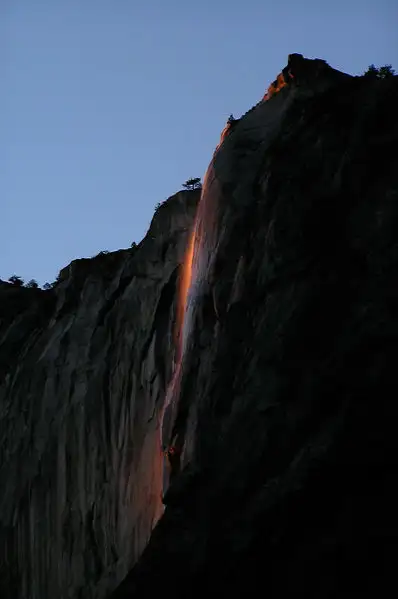
That said, today park visitors can experience a more natural — and just as spectacular — version of a firefall at Horsetail Fall. Every February when this waterfall is backlit near sunset, a vibrant orange glow emanates and mimics the appearance of a waterfall on fire — minus the rubbish pile. And although conditions have to be just right to witness this natural phenomenon, the firefall attracts visitors in droves for the possible opportunity. Of course whenever there are crowds, there are also rules and regulations. So here’s what you need to know — including where to find the accessible viewing areas — to experience the Horsetail Fall lightshow.
Yosemite Firefall Basics
There are several basic requirements for a good Yosemite Firefall. First and foremost you have to have water. A good fall rainfall is helpful for a robust firefall. And Central California has certainly had its share of rain this year!
Second, you need clear skies so the sun can reflect off the granite behind the waterfall. And although this is up to Mother Nature, it also helps to keep an eye on the weather. If it’s overcast, cloudy or foggy, it will probably be a no-go. Of course you have to hit it at the right time of day — sunset — for an optimum firefall experience. The days for the optimum Yosemite Firefall experience in 2026 are February 12 to February 28. And sunset times for those days range from 5:40 PM to 5:47 PM.
Finally, there’s the location. The best place to view Horsetail Fall is near the El Capitan Picnic Area. Best bet is to try and snag a parking spot at Yosemite Falls, and walk 1.5 miles on Northside Drive to the viewing area. If Yosemite Falls parking is full, park in Yosemite Village or Curry Village and take the free shuttle to Yosemite Falls.
Even if you can’t manage the level walk, you can still enjoy this majestic show. Although one lane of Northside Drive will be closed to accommodate the large number of pedestrians, people with an accessible parking placard are allowed to drive to and park in the El Capitan Picnic Area in turnouts on the north side of Northside Drive. That said, it’s important to note that on busy weekends, Northside Drive may close completely for about an hour after the firefall. And if nature calls, remember there’s an accessible vault toilet in the El Capitan Picnic Area.
No Reservations in 2026
Due to the popularity of the Yosemite Firefall, park entrance reservations were required in previous years. This will not be the case in 2026. No reservations will be required to enter the park during the February firefall days.
Southside Drive will be open to vehicles, but parking, stopping, and unloading passengers will be prohibited between the El Capitan Crossover (the road connecting Northside and Southside Drives near El Capitan) and the Swinging Bridge Picnic Area. The area from the Cathedral Beach Picnic Area to the Sentinel Beach Picnic Area, and the area between the road and the Merced River (including the river) will also be closed to all entry.
El Capitan Crossover will “generally” be open, but stopping and parking will be prohibited. And in order to manage congestion, access into Yosemite Valley at the El Capitan Crossover will be controlled. Once the valley is full, vehicles will be diverted out of the valley.
So the best advice for the 2026 Yosemite Firefall is to get there early and bundle up. Visitors are also encouraged to sign up for Yosemite text alerts by texting “Yosemite” to 33311 for real time up dates.
So, plan ahead and have fun at the 2026 Yosemite Firefall.
Barrier-Free Travel Yosemite, Sequoia and Kings Canyon National Parks for Wheelers and Slow Walkers