Located just outside the West Entrance to Glacier National Park (emerginghorizons.com/glacier-national-park/), West Glacier Cabin Village (www.glacierparkcollection.com/lodging/west-glacier-village/ways-to-stay/west-glacier-cabins/) makes the perfect home base for a national park visit. This quiet cabin complex boasts the best of both worlds, as it’s far removed from the hubbub of West Glacier Village, yet it’s within easy walking distance of the shops and restaurants. Access wasn’t overlooked in the construction of the units either, as the complex includes two wheelchair-accessible cabins, which makes it an excellent lodging choice for slow walkers and wheelchair-users.
West Glacier Cabin Village
Nestled in a peaceful mountain forest, West Glacier Cabin Village features accessible parking next to the campstore, with level access to the entrance. Inside there’s plenty of room to maneuver a wheelchair over to the cabin check-in counter.
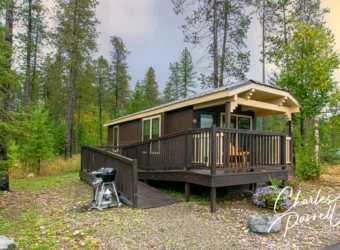
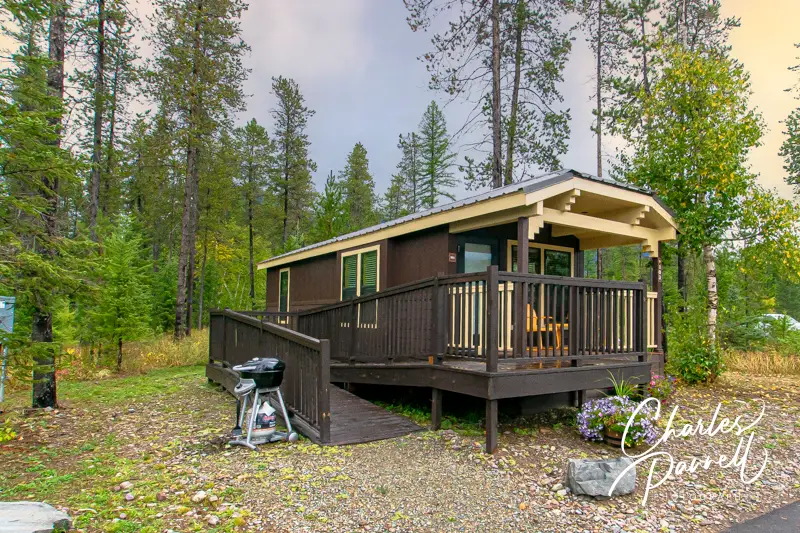
Accessible cabin 103 is located next door. There’s parking in a large level area across from the cabin, and level access over to the cabin. The cabin features ramp access up to a covered front porch that’s furnished with a small table and two chairs. There’s also a propane grill near the cabin.
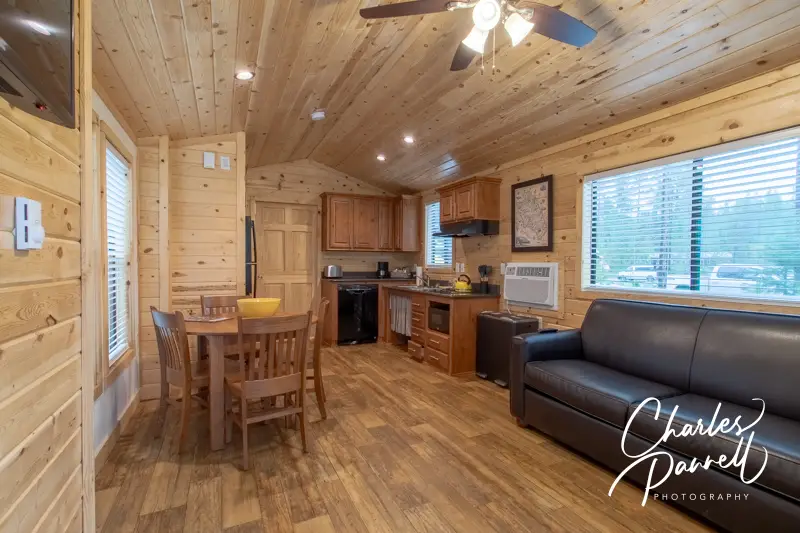
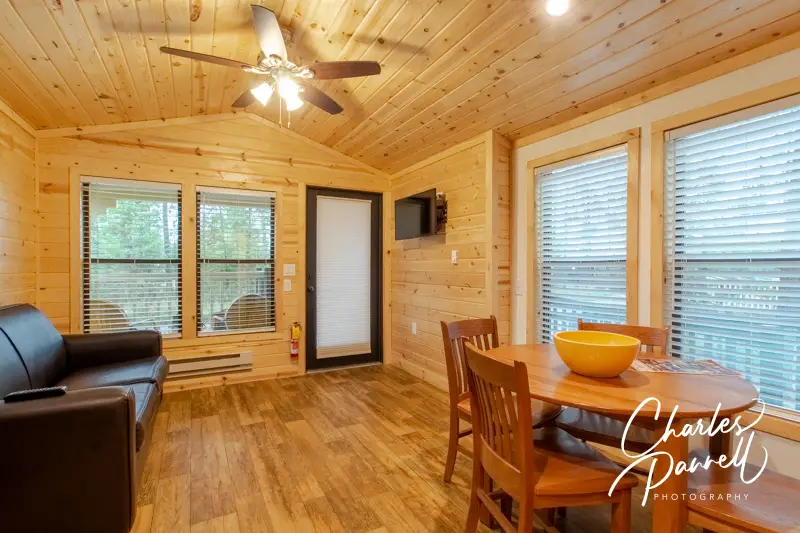
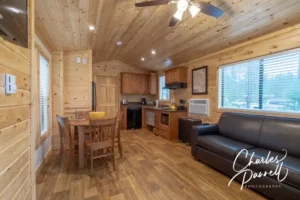
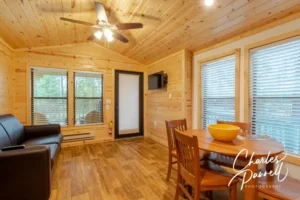
The cabin features a level threshold, and includes wide doorways, good pathway access and wood floors. The large living area is furnished with a 13-inch high sleeper sofa, a television, and a dining table with four chairs. The cabin also has reliable Wi-Fi, which is a hard-to-find feature in the area.
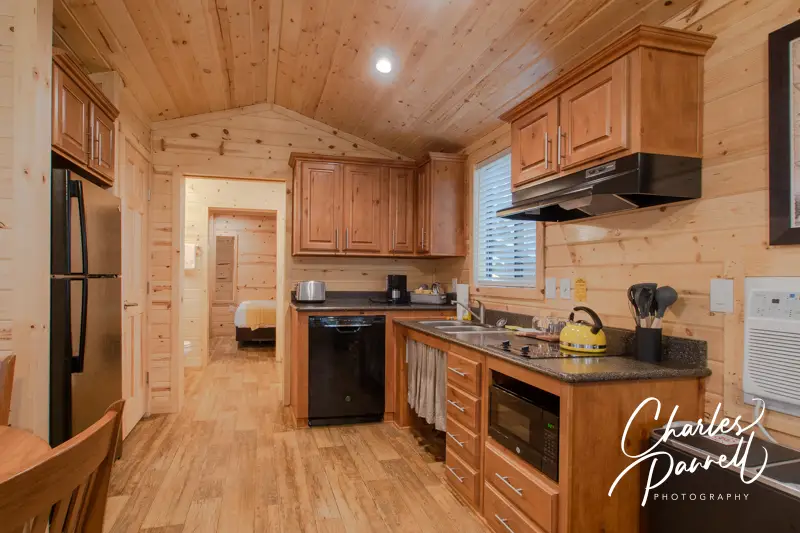
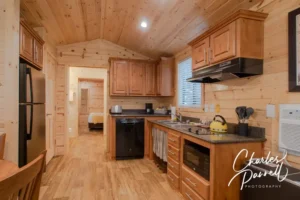
The kitchen is equipped with a refrigerator, a two burner cooktop, a lowered microwave, and a dishwasher. It also includes an ample selection of dishes, utensils and cookware. And to complete the access equation, the kitchen sink features a kneehole for wheelchair access.
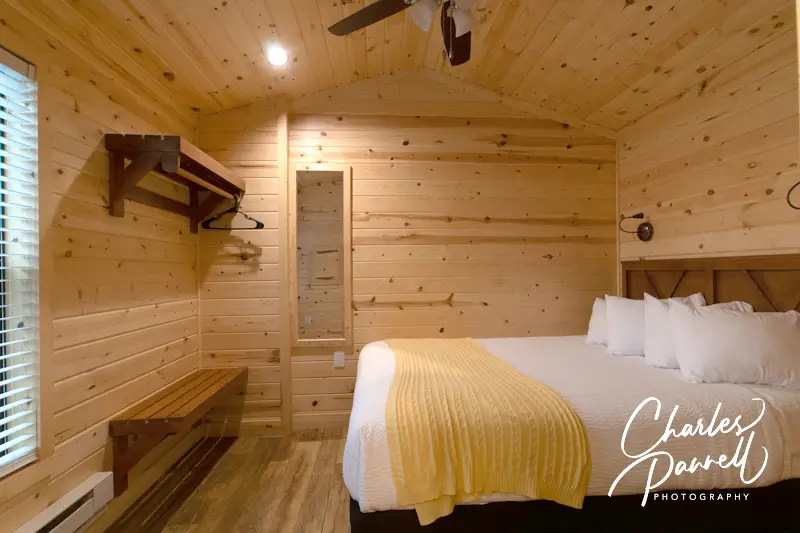
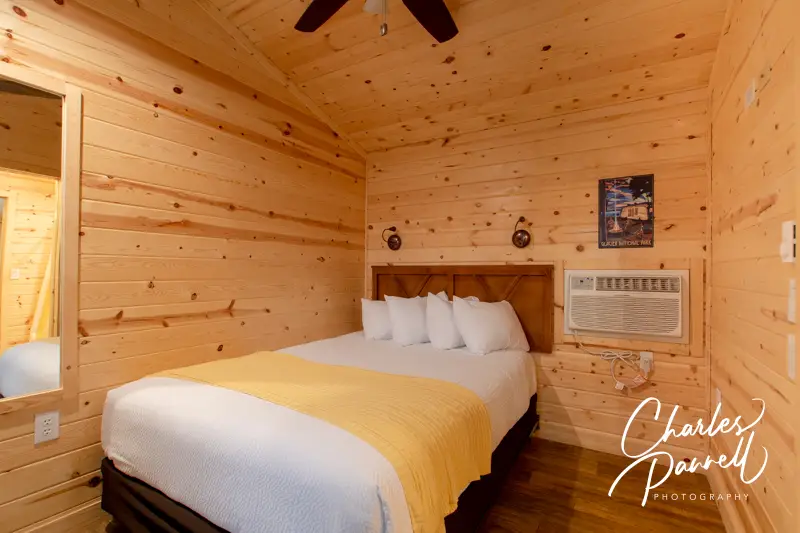
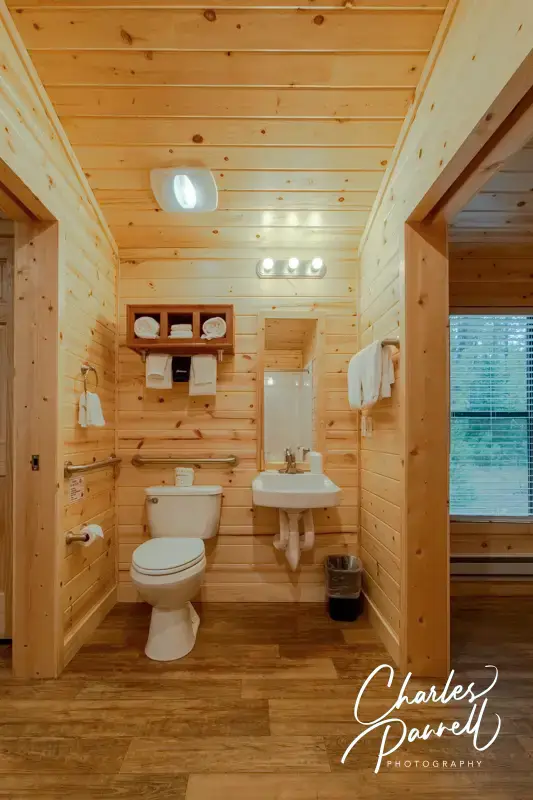
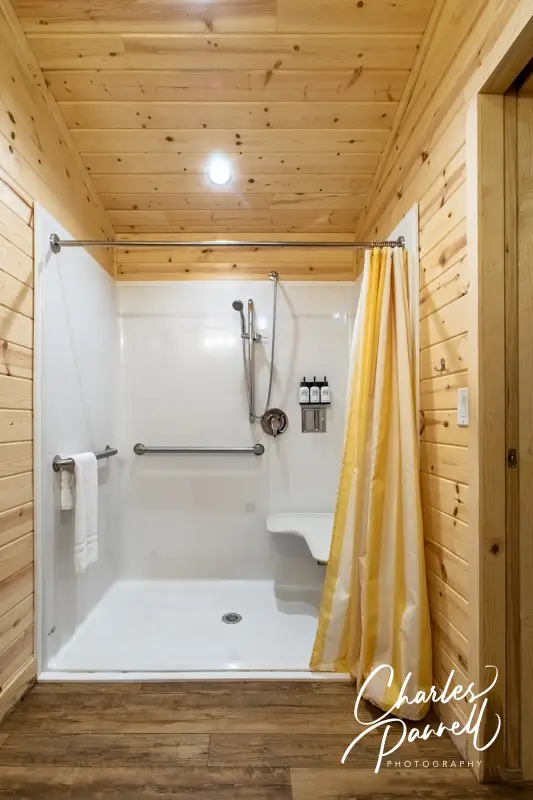
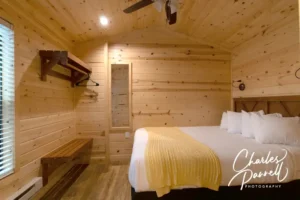
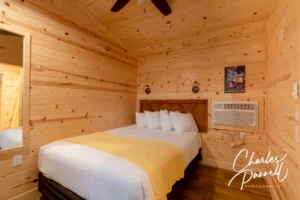
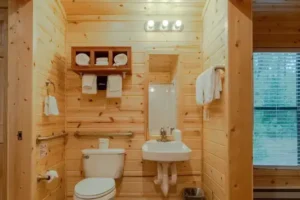
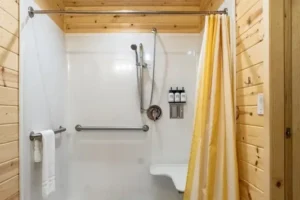
The bedroom, which is located in the back of the unit, is furnished with a 24-inch high queen-sized bed with wheelchair-access on the right side (as you face it). The bathroom includes a full five-foot turning radius and is equipped with a roll-in shower with grab bars, a hand-held showerhead and a padded fold-down shower bench. The toilet grab bars are located on the back and right walls (as seated), and the bathroom also includes a roll-under sink with a lowered mirror.
And if cabin 103 is booked, cabin 104 has the same access features. Either unit makes a comfortable, homey and accessible place to stay near Glacier National Park.
Living Room in Cabin 103 at West Glacier Cabin Village
Dining Area in Cabin 103 at West Glacier Cabin Village
Kitchen Area in Cabin 103 at West Glacier Cabin Village
Bedroom in Cabin 103 at West Glacier Cabin Village
Bedroom in Cabin 103 at West Glacier Cabin Village (view 2)
Toilet and Sink in Cabin 103 at West Glacier Cabin Village
Shower in Cabin 103 at West Glacier Cabin Village
Barrier-Free Travel Glacier, Yellowstone and Grand Teton National Parks for Wheelers and Slow Walkers
Times are a changing and technology is making things possible today that we never thought could happen. But will people ever be able to board an airline in their own wheelchair and stay in it for the entire flight? Well things are moving forward, and that’s good, but it’s not going nearly as quickly as some people have hoped. So here’s an update on where we stand on flying in your own wheelchair.
The Regulations
When I last covered flying in your own wheelchair, the Federal Aviation Administration (FAA) was set to review their regulations by 2025 (https://emerginghorizons.com/flying-in-your-wheelchair-when-will-it-really-happen/). This is really the most crucial first step, as if the FAA won’t allow it, then it’s a no-go from the start.
The majority of airplanes have a boarding door large enough to accommodate most personal wheelchairs.
Boeing 737 and Airbus 320 models would only require modest interior modifications to create a wheelchair securement area at the front of the cabin.
Many personal wheelchairs comply with the crash performance standards (WC19) established by the Rehabilitation Engineering and Assistive Technology Society of North America (RESNA).
The report recommended that the U.S. Department of Transportation and the FAA establish a research program in collaboration with RESNA to test and evaluate a selection of WC19-compliant wheelchairs in accordance with applicable FAA crashworthiness and safety performance criteria. It also recommended that the Access Board sponsor further studies to assess the demand for this service. There is no timeline for these recommendations.
So, in other words, more studies, and no definitive implementation date.
So, unfortunately we are quite a ways away from the reality of anyone flying in their own wheelchair.
Airbus Progress – A Concept Design
Even though the regulations at this point are up in the air (no pun intended) one company is moving forward with a workable design to accommodate personal wheelchairs aboard their commercial aircraft – Airbus.
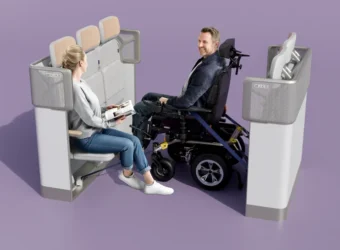
Airbus has created a new concept design — The Airspace U Suite — which would not only accommodate passengers in their own wheelchairs, but also serve as a premium space for other passengers. This universal design concept will most likely appeal to airlines who don’t want to designate valuable space for wheelchair-users, only for it to sit empty when not in use. And not only will it not sit empty, but the airlines will be able to charge a premium for this spacious seating compartment.
The Airbus U Suite will not only accommodate a person in their own wheelchair, but it’s being billed as space for.
Travelers who want to lay down and take a nap
A family space
A business space for an in-flight meeting
In short, it’s universal design in the air.
The Airbus team has taken their first test flight with a wheelchair-user, and they hope to have the concept ready to produce by 2032. And their Airspace U Suite was on prominent display at the Aircraft Interiors Expo in Hamburg last month.
So the design end of things is falling together nicely; but again, that’s only one piece of of an incredibly complex puzzle. Even if they are able to produce the design as expected, it won’t be available to wheelchair-users until the FAA – and worldwide regulatory agencies – approve it. And perhaps that’s why Airbus has included the universal design concept, so it can be used for other travelers in the meantime.
The Reality
The Airspace U Suite looks like a great design, but the question is, what will it cost passengers? Will it be a premium space like first class, or will it be an affordable space for wheelchair-users? That of course remains to be seen, but it does look like it will be a premium ($$) space, located in the front of the aircraft. Still there are plenty of folks with the means to pay for this space. And maybe this is just a first step to create more affordable accessible spaces on aircraft.
And accessibility – when and if it begins – will only be for larger aircraft at first. But that’s good because it’s those longer flights can be the most problematic for wheelchair-users. Even if you use your own wheelchair cushion on the flight, it’s still not the same, and skin issues can develop.
And finally, let’s remember that there’s nothing in the Air Carrier Access Act (ACAA) that requires seating in your own wheelchair on airplanes. That would take a lot of additional work and new regulations. Most likely if anything, the Access Board would allow but not require it. Just like the fact that airlines are allowed to, but not required to, provide on-board medical oxygen.
But still, it’s a start. As the folks at Airbus said, “So we started the process” to develop more accessible solutions and “we are in the middle of it.”
But I’m happy to see research and development moving forward for flying in your own wheelchair. And to put things in perspective, in my lifetime, prior to the ACAA, airlines made wheelchair-users sit on towels because they were afraid they would soil the seats. And they made a big deal about it. So, honestly, I’m really happy with any progress. But again, it will be a while, and unfortunately, probably not in my lifetime.
The North Cascades Scenic Byway is much more than a utilitarian route. Sure it connects North Cascades National Park with points east and west, but it also offers a scenic drive with a few old growth forest wheelchair-accessible hikes along the way. So next time you are tooling along Highway 20 west of North Cascades National Park, be sure and stop for these two wheelchair-accessible big trees trails.
Rockport State Park
Along the West Interpretive Loop in Rockport State Park
First up is the West Interpretive Loop in Rockport State Park (https://parks.wa.gov/find-parks/state-parks/rockport-state-park). It’s located along Highway 20, about 25 miles west of Newhalem. This 1.4-mile round-trip hike offers a beautiful stroll through a wheelchair-accessible slice of an old growth forest.
There’s accessible parking near the picnic area, with level access over to the accessible restroom. From the picnic area, follow the trail west for .2-mile until you get to a junction with a signpost. From there, take a right (away from the Sauk Spring Trail) and continue on the Evergreen Trail for another .2 miles until you get to the West Interpretive Loop.
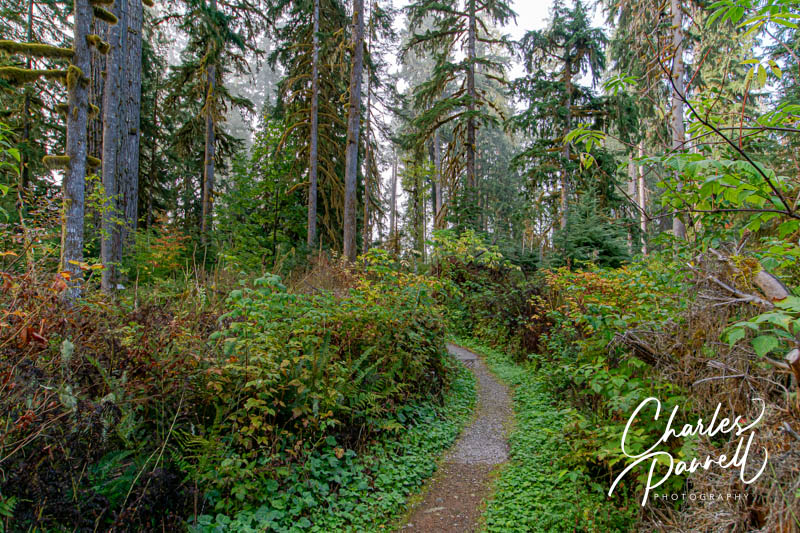
The .6-mile hard-packed dirt trail is covered in crushed rock, and is wide enough to accommodate even large wheelchairs. It’s not a flat trail, but it’s certainly within the ADA trail standards. The undulating trail leads through the lush forest filled with Douglas firs, western red cedars and western hemlocks. There are interpretive plaques along the way, and this shady forest stroll is the perfect place to cool off a hot afternoon. When you complete the loop, head back to the picnic area on the Evergreen Trail. As an added bonus, it’s not a crowded park, so you will probably have the trail to yourself.
Baker Lake
View from Panorama Point at Baker Lake
After you’ve completed the Western Interpretive Loop, continue west on Highway 20 to Concrete, then head north to the Shadow of the Sentinels at Baker Lake (https://www.fs.usda.gov/r06/mbs/recreation/baker-lake). It’s located about 15 miles off Highway 20, but it’s definitely worth the short detour. The trailhead is located in a small pullout, just before the turnoff to Horseshoe Grove Campground. You can’t miss it, as there’s a cross section of a large old growth tree in the parking lot.
Shadow of the Sentinels Trail
There’s accessible parking near the trailhead, and at the other end of the lot near the accessible vault toilet. This .5-mile loop trail begins as a boardwalk through the old growth forest, and transitions back-and-forth between that and an asphalt trail and a hard-packed dirt trail. There’s a slight elevation gain along the way, but it’s well within the standards. The boardwalk is in excellent repair, and although there are a few frost heaves in the asphalt, they are pretty easy to dodge.
The trail is lined with Douglas firs and western hemlocks, with interpretive plaques along the way. There are a number of downed trees and snags in the adjacent forest, and if you’d like to take a break there are a few benches on the trail. There are also a few side trails to viewpoints in the forest, and one to an extra large Douglas fir tree. It’s estimated that some of the trees in this grove are nearly 700 years old.
Shadow of the Sentinels Trail
As an added bonus, the drive up to Baker Lake is beautiful. And if you’d like to sneak a peek at at Baker Lake and the Cascades, then head over to the Panorama Point boat launch or drive down to the end of Mount Baker Dam Road. It’s the perfect way to end this North Cascades scenic outing.
Barrier-Free Travel Washington National Parks for Wheelers and Slow Walkers
Yosemite has always been a popular destination, and in order to manage the crowds in previous years advance vehicle reservations were necessary. These were cheap and easy to get at www.recreation.gov. And once you got to the park at your appointed time, there wasn’t a wait, because the required vehicle reservations metered the traffic.
Fast forward to 2026, and vehicle reservations are no longer required (https://emerginghorizons.com/yosemite-entrance-reservations-not-required-in-2026-but-plan-ahead/). Why? Well it depends who ask, but there was a huge outcry from locals who opposed the reservations, and then apparently the park statistics showed they weren’t needed. In any case, no vehicle reservations are required in 2026, and that’s led to major traffic jams. Because traffic is no longer metered, there’s a huge back-up at the gates. Just last week there were reports of 90-minute waiting times at the gates – and it’s not even peak season.
Once you get in the park, finding parking is another issue, and of course finding accessible parking is always harder. To be honest, I’d really advise against a visit this year. And it’s not that I’m anti-Yosemite, but I’m just being pragmatic. I grew up in the mountains near Yosemite and for most of my life it was my “home national park”. And I love it. I just feel that with it’s over popularity, and non-metered traffic, it’s just really hard to enjoy this gem. Perhaps things will change next year.
That said, if you absolutely must visit Yosemite in 2026, here are a few tips for wheelchair-users, to help minimize your wait times, and more fully enjoy the park.
Spend the Night
Spending the night in the park is best way to maximize your sleep, and still get that much-needed early start in the morning. That said, lodging in Yosemite Valley can be extremely hard to get during peak season. Hard, but not impossible.
The cancellation period for Yosemite Valley hotels and lodges in seven days. That means that people can cancel their reservations with no penalty up to seven days before their visit. So, if you’re looking for Yosemite lodging in the peak months, and can do a spur-of -the-moment trip, then try searching for available properties early in the day, seven days ahead of time. It’s not guaranteed to work, but it’s the best shot at a vacancy. And yes, sometimes wheelchair-accessible rooms get cancellations too.
And my favorite wheelchair-accessible room in the park is room 421 at the Ahwahnee. It has a king bed, a roomy bathroom with a roll-in shower and an impressive view of Half Dome.
Yosemite Shuttle
Park and Walk (or Roll)
If you can’t spend the night inside the park, then you need to get an alpine start for a hassle-free wheelchair-accessible Yosemite visit in 2026. It depends on where you spend the night, but try to get to the park no later than 6 AM. Yes, you read that correctly, 6 AM.
Years ago, you could have the park to yourself at that time; but with the crowded entrance stations today, it only cuts down on the crowds. Still, that’s a good thing. Your goal after getting to Yosemite Valley is to find an accessible parking spot in the Yosemite Village parking lot. And then leave your car there for the day.
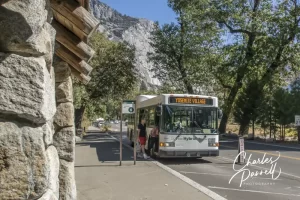
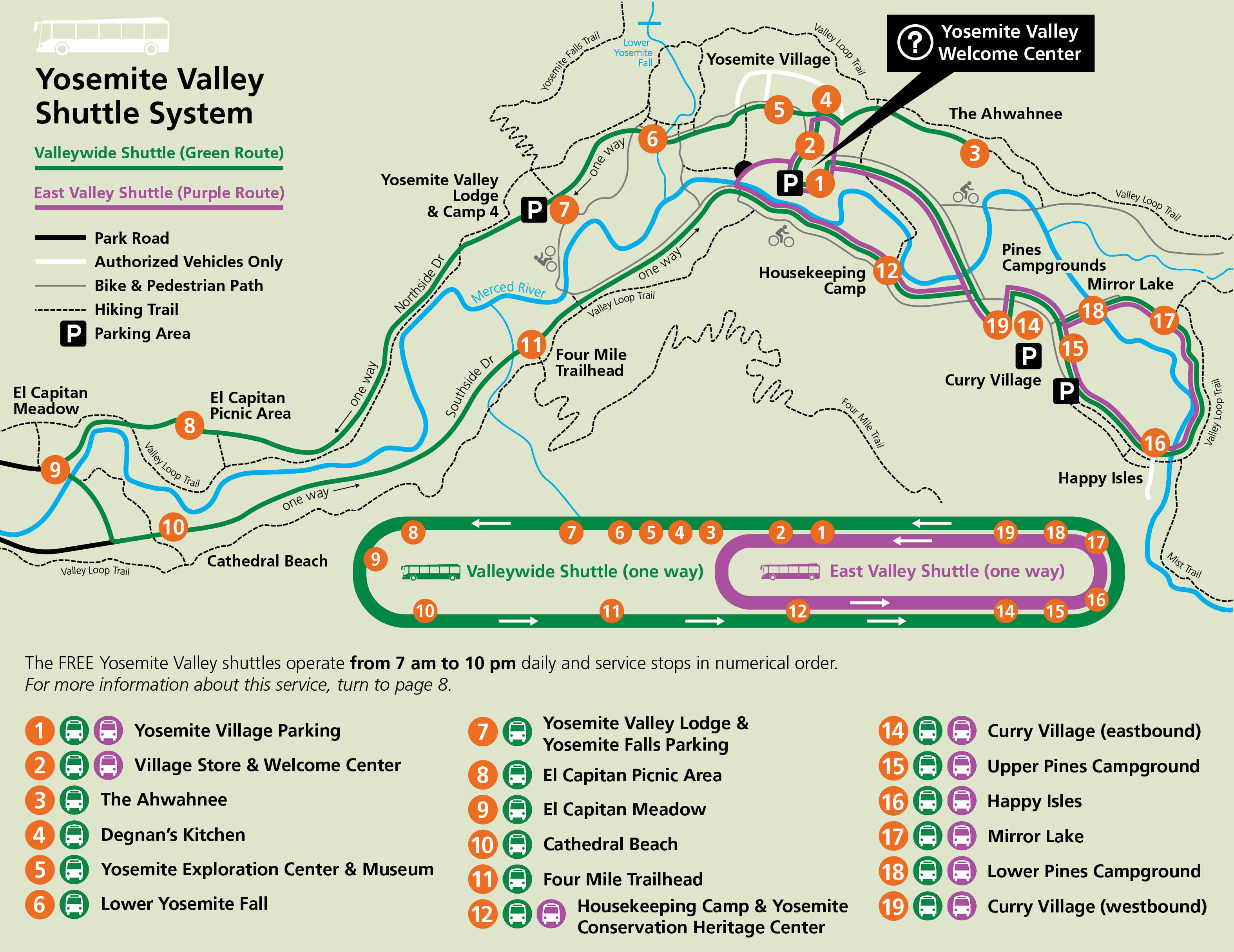
The good news is, there are a lot of sites, viewpoints, concessions and attractions in Yosemite Valley; and they are all connected on the wheelchair-accessible Yosemite Valley shuttle (https://www.nps.gov/yose/planyourvisit/images/valleyshuttle2.jpg). And there’s a shuttle stop near the parking area and in front of the Visitor Center.
The shuttles from 7 AM to 10 PM daily, and there’s usually about a 15-minute wait for a bus. There are two routes in Yosemite Valley – The Valley Shuttle, which covers the whole area, and the East Side Shuttle which stops at Yosemite Village, Curry Village and the campgrounds and trailheads on the east side of the valley
All of the shuttle buses are wheelchair-accessible, and they come equipped with wheelchair-lifts and tie-downs. They can accommodate wheelchairs up to 24 inches wide by 46 inches long, with a weight of up to 750 pounds.
Alternatively it you’d like to get a little exercise, rental handcycles are available at the Curry Village Bike Stand (209-372-8323) and the Yosemite Valley Lodge Bike Stand (209-372-1208). It’s best to reserve those in advance though, as supplies are limited and they go quickly.
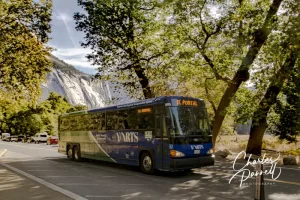
YARTS bus in Yosemite Valley
Ride YARTS!
Another way to to get the most our of your wheelchair-accessible Yosemite visit is to take public transportation to the park – more specifically YARTS (https://www.yarts.com/). Based in nearby Merced, YARTS stands for Yosemite Area Regional Transportation System, and it has four routes that lead to the park. So you can overnight in a nearby community, ride YARTS to the park, and not worry about any delays at the entrance (public transport takes an express lane) or finding an accessible parking space.
The routes run from Merced, Fresno, Sonora, and Mammoth Lakes to Yosemite Valley, and stop at mountain communities along the way. So you could overnight in a variety of places including, Mariposa, Groveland, El Portal, Oakhurst and June Lake. All YARTS buses are equipped with wheelchair lifts; however you either need to contact them 48 hours in advance, or indicate on your online reservation that you require wheelchair seating. And attendants traveling with a wheelchair-user get a 50 percent discount. So not only is riding YARTS accessible it’s also affordable.
Although the general public has to hike in to Mirror Lake, if you have an accessible parking placard or license plate, you can drive along the this road. Although you won’t have the lake to yourself, the hike in – even though it’s easy – eliminates a lot of folks. Even better – go early in the day to dodge the bulk of the visitors.
The road up to mirror lake is about a mile long, and motorists will be sharing the road with pedestrians and cyclists. You must travel with your hazard light on, and the speed limit is 15 mph along this road. And of course you need to watch out for pedestrians – especially kids – along the way.
About half way up, the roads gets steeper, and bicycles are prohibited beyond this point. Once you get to the top there’s accessible parking near the lake. There are some accessible vault toilets nearby and some picnic tables on level ground that may be doable for wheelchair-users. That said, Mirror Lake is seasonal and it usually dries up by late summer; however the granite views are spectacular from there. It’s well worth the drive.
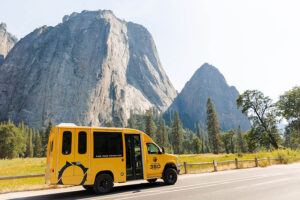
Although they have some great wheelchair-accessible cabins (called havens) at adjacent Waybound Yosemite (operated by Tenaya Lodge) you don’t have to be a lodge guest in order to book one of their tours. The accessible tour bus has a lift and tie downs, so you can stay in your own wheelchair or transfer to a seat.
The day-long accessible tours feature stops at all the popular attractions, a picnic lunch, and time to explore Yosemite Valley on your own on the free wheelchair-accessible shuttle. Plus you don’t have to worry about parking, waiting in the entrance line or driving. Book early though, as this popular tour sells out quickly.
Walk-through Tree at Mariposa Grove in Yosemite National Park
Visit Mariposa Grove
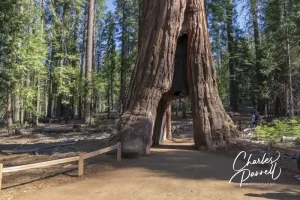
Last but certainly not least, one of the best ways to enjoy a quieter slice of Yosemite is to get out of the valley and visit Mariposa Grove (https://emerginghorizons.com/escape-to-the-wheelchair-accessible-mariposa-grove/). You can access the grove on the Yosemite Shuttle Bus, but if you have a accessible parking placard, you can drive along the road that is reserved for shuttles, hiker and cyclists.
With an accessible parking placard, you can drive to the Mariposa Grove Arrival Center and check out the accessible Big Trees Loop. From there you can drive to the Grizzly Giant Trailhead and take part of the trail to the Grizzly Giant and the California Tunnel Tree. Not only are these massive trees, a must-see on any Yosemite itinerary, but you can dodge some of the crowds by driving there.
And as with any Yosemite itinerary, get an alpine start to beat some of the crowds. This is especially important in 2026, when there are no vehicle restrictions at the entrance stations. So plan ahead for a trouble-free wheelchair-accessible Yosemite visit this year.
Located just off Interstate 5, about 10 miles south of Salem, Ankeny National Wildlife Refuge (www.fws.gov/refuge/ankeny) makes a good Northwest Oregon road trip stop. A vital resting spot for migrating waterfowl, shore birds and songbirds, the refuge is located close to the confluence of the Santiam and Willamette Rivers. The restored wetlands offers year-round habitat to waterfowl, as well as a refuge for migratory birds in the spring and fall. And with a nature center and covered deck for a nice picnic, it’s the perfect spot to take a break, enjoy a snack and explore the boardwalk and blinds. It also makes a nice side trip from Silver Falls State Park (emerginghorizons.com/a-wheelchair-accessible-silver-falls-state-park-getaway/).
Visit the Nature Center
Big Loop Trail at Ankeny Hill Nature Center
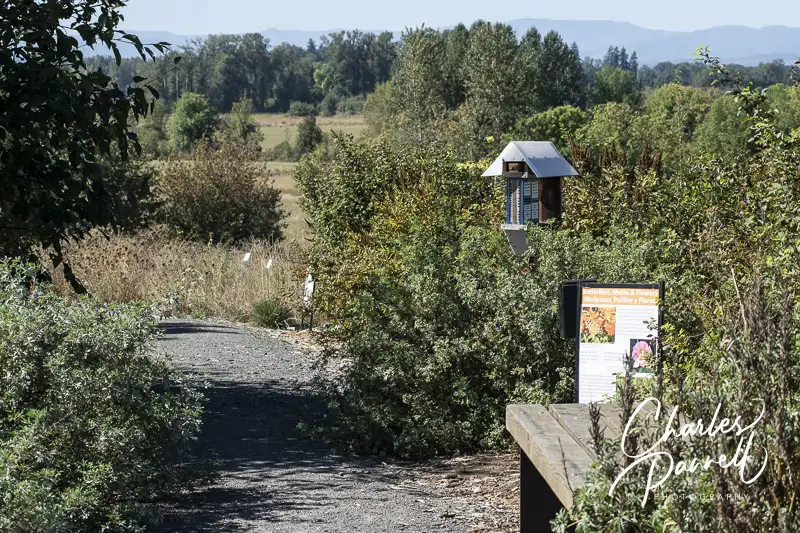
Ankeny Hill Nature Center, which is located on Ankeny Hill Road, just south of Buena Vista Road, is a good place to begin your visit. There’s accessible parking near the entrance, with level access over to the nature center trails. The Big Loop (.65 mile ) and the Little Loop (.12 mile) both have hard packed dirt surfaces. They wind around the outdoor exhibits; and although they aren’t totally level, the elevation changes are minimal.
Along the trails you’ll find exhibits about butterflies, moths, bees and flowers. And don’t miss the pollination garden, which is abuzz with activity in the spring. There’s something for everyone at this stop, and if you can’t do distances, there’s still plenty of opportunities to enjoy the garden sections closest to the entrance.
The nature center is also a good place to take a lunch break, as there’s level access to the covered pavilion next to Mark Gehlar Hall. There are several picnic tables, including an accessible model, on the cement deck. It’s also a good vantage point for bird watching as the deck overlooks Peregrine Marsh. Accessible family restrooms are located on the side of the building. Mark Gehlar Hall is usually closed unless there’s an event or program scheduled, but the deck and the rest of the grounds are open to the public.
Explore the Refuge
Eagle Marsh
From the nature center, head north and take a left on Buena Vista Road, to explore the wildlife refuge. There are several pullouts along the road, so you can just pull in and watch for some avian action. From mid-March to mid-May you’ll spot migrating waterfowl, shorebirds and songbirds; while the fall brings out more migrating waterfowl and raptors.
The Eagle Marsh Blind is up on the left, just before the railroad tracks. There’s accessible parking with level access to the blind, which overlooks the marsh. This is an excellent vantage point to see Northern Pintails, Great Egrets and Great Blue Herons in the fall. And in the winter, be on the lookout for Bald Eagles and Peregrine Falcons.
Eagle Marsh Bird Blind
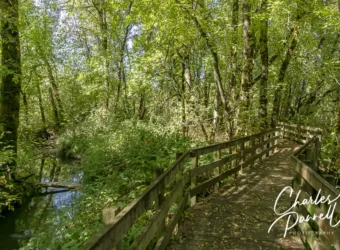
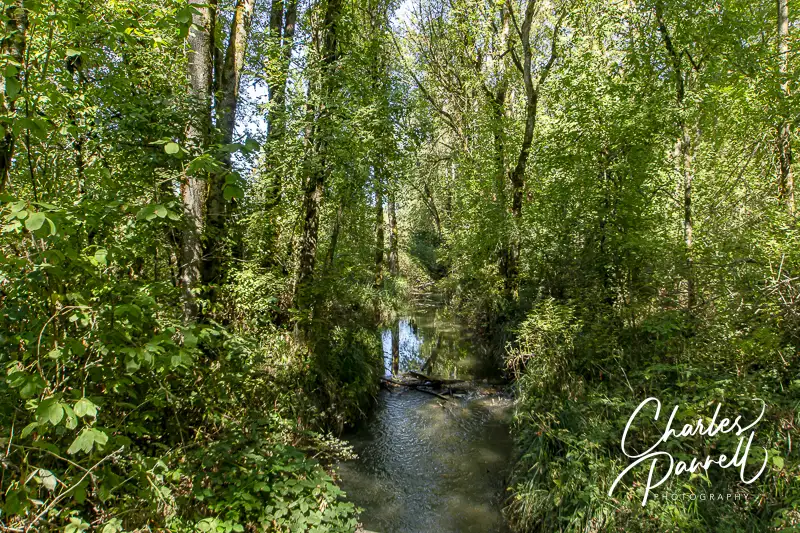
From the Eagle Marsh Blind, follow Buena Vista Road and make a left on Wintel Road. The Pintail and Egret Marsh Boardwalk, which is located on the north side of Wintel Road, is a must-stop in the refuge. There’s parking in a level dirt and gravel area, with plenty of room to parallel park an adapted van. From the parking area, there’s level access over to the .25-mile boardwalk, which follows Bashaw Creek. It’s a pleasant stroll as the trail is shaded by trees, and in the summer you can see — and hear — the red-legged frogs in the adjacent waterway. There’s a nice blind at the end of the boardwalk which overlooks Pintail and Egret Marshes. Be on the lookout for Tundra Swans in the marsh and the occasional osprey soaring overhead.
Pintail and Egret Marsh Boardwalk
Finally, don’t forget to stop at the Willamette Valley Viewpoint on your way out of the refuge. There’s accessible parking near the viewpoint, which offers a panoramic shot of the valley filled with Christmas trees. It’s a pleasant end to any Ankeny National Wildlife Refuge visit.
Willamette Valley Viewpoint
Barrier-Free Travel Washington National Parks for Wheelers and Slow Walkers
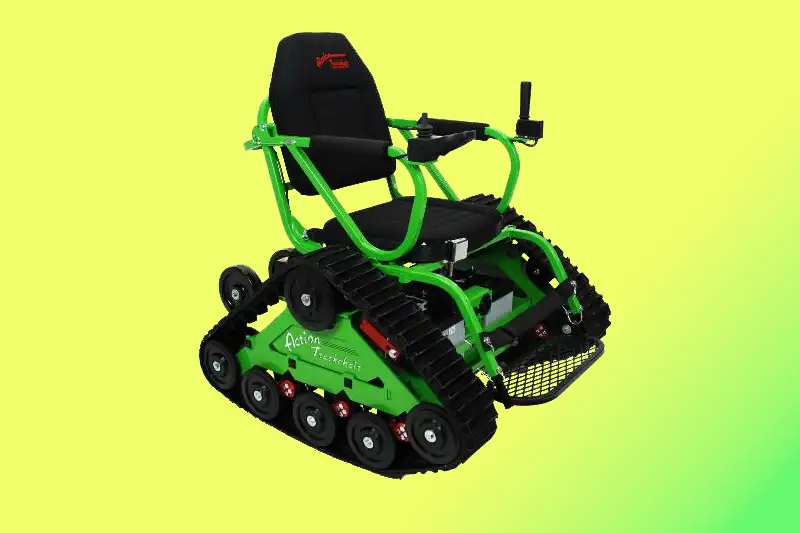
Loaner track chairs are now available at some Missouri State Parks. These off-road wheelchairs allow visitors to more fully explore some inaccessible areas and historic sites in the parks that might not accommodate a standard wheelchair. The track chairs are available to reserve two days in advance, and due to battery life they can only be reserved for a maximum of two hours. Park employees are unable to assist with transfers, and people under 18 years old must be accompanied by a parent or guardian in order to use the track chairs. And before using the track chair, all users must go through a short briefing and sign a user agreement.
Track chairs are available at the following stare parks
Battle of Lexington State Historic Site
Bennett Spring State Park
Bryant Creek State Park
Castlewood State Park
Elephant Rocks State Park
General John J. Pershing Boyhood Home State Historic Park
Details about how to reserve track chairs are listed on the individual state park websites. It’s also important to remember that the track chairs cannot be used in the rain, snow or ice, so plan accordingly. For more information about loaner track chairs at Missouri state parks, visit mostateparks.com/track-chair.
Barrier-Free Travel Washington National Parks for Wheelers and Slow Walkers
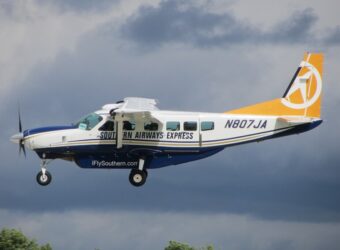
Established long before the Americans with Disabilities Act, the Air Carrier Access Act (ACAA) covers accessible air travel on all US airlines, as well as flights on all airlines to and from the US. But does it cover all types of airplanes, including those small planes which board from stairs on the tarmac? The short answer is no, and that issue was recently brought to light when actress Marissa Bode was recently denied boarding on a Southern Airways (https://www.iflysouthern.com/) commuter flight.
What the ACAA Says
According to the ACAA, lift or ramped boarding must be provided on all covered aircraft. And while most commercial aircraft are covered under the law, there are some exclusions. In fact § 382.97 of the ACAA specifically lists those exclusions. They include:
Float Planes
Aircraft with fewer than 19 seats
Fairchild Metro
Jetstream 31 and 32
Beech 1900 (C and D models)
Embraer EMB-120
It also excludes any other aircraft model determined by the Department of Transportation (DOT) to be unsuitable for boarding and deplaning assistance by lift, ramp, or other suitable device. And the DOT makes that determination if no existing boarding and deplaning assistance device on the market will accommodate the aircraft without a significant risk of serious damage to the aircraft or injury to passengers or employees; or if there are internal barriers that would prevent passengers in an aisle chair from reaching a non-exit row seat.
Southern Airlines is a small commuter airlines which flies the Cessna Grand Caravan 208, which typically seats between 8 and 14 passengers and one pilot. Standard commuter configurations generally hold 10 to 12 passengers, but tighter seat configurations can accommodate up to 14 passengers. In short, it’s less than the 19 passenger requirement under the ACAA, so yes this aircraft is exempt from the ACAA, and not required to carry wheelchair passengers.
What Happened to Marissa Bode?
According to news accounts Marissa Bode discovered this when she was booked on a Southern Airlines flight to attend a speaking engagement in Pennsylvania. Although Bode had some problems locating her virtual ticket at the airport, the real problem arose when she got to the gate and was questioned about her physical abilities. When she replied that she couldn’t stand up and walk, the staff informed he that she couldn’t fly because she needed to climb up a flight of stairs to board the small plane.
In the end, the actress drove three hours to her speaking engagement.
So is Southern Airlines at fault for this denied boarding? Although they followed the letter of the law as to whether or not wheelchairs are allowed on this small commuter plane, there is an issue about the information that was provided to Bode’s “team”.
According to Bode, her people spoke to the airline in advance of the flight and the customer service personnel “fully assured” her manager that they would be able to accommodate Bode and her wheelchair. That’s where the airline dropped the ball, because under the ACAA airlines are also required to provide accurate information to passengers regarding the carriage and stowage of all assistive devices. And according to the actress’ accounts, Southern Airlines failed in that respect. If the airline would have communicated accurate information, the Southern Airlines flight would not have been booked, and Bode would never have been denied boarding.
So yes, Southern Airlines did drop the ball, but not for not carrying wheelchairs on their commuter aircraft. They violated the ACAA for not communicating the correct information to a potential passenger. So no, you can’t fly this airline in a wheelchair, but they do need to improve their employee training and customer service.
Peer-to-peer vehicle rentals are an up-and-coming concept. Some call it car sharing, while others refer to it as the Airbnb of car rentals. The big question is, will it work for wheelchair-users who need adapted vehicles?
The premise is pretty simple. A company contracts with individual owners to rent out their vehicles, offers them to the public, and then gives the owners the lion’s share of the profits. The customers get a reliable rental at a bargain price, and the owners get some cash in their pockets. It’s a win-win for everyone. But is it a realistic option for wheelchair-users?
Turo
Let’s start by looking at one of the leading providers of peer-to-peer vehicle rentals in the US – Turo (https://turo.com). I’ve never used them, but a friend made some extra money by renting her adapted van through them. The rental vehicle requirements are pretty simple.
All Turo Vehicles must:
Be less than 12 years old
Have less than 130,000 miles
Be fully insured
Owners get about 70% of the rental rates, which are about a third of the going rates for accessible vehicles in the US. And of course location is king. My friend lived near the Miami airport, so she did pretty well.
But what about renting an adapted van? Well they do have a filter to find adapted vehicles, but you have to do a city search first. The filter is to the far left, under “all filters”. If you search a major city, you will probably find at least one adapted vehicle, but they are not as available as standard vehicles in smaller cities and towns.
The good news is, there are lots of photos of the adapted vehicles, so you will have a good idea of what features they have. In short, it’s a good economical alternative for major airports in the US. But once you get out of the big cities, the availability of adapted vehicles drops to almost zero. And hey, if you have an adapted vehicle that you don’t use every day, you might consider offering it to Turo as a rental.
The French Approach
The French have an entirely different approach to adapted vehicles as far as peer-to-peer vehicle rentals are concerned. They have a whole company that is entirely dedicated to peer-to-peer adaptive vehicle rentals. It’s called Wheeliz (https://www.wheeliz.com/), and it’s headquartered in Paris. And according to their website they are the first peer-to-peer car rental program for wheelchair-users.
Their concept is pretty simple, and much like Turo. People register their cars on the Wheeliz website, where users search for rentals. When a match is made, the user picks up the vehicle at an appointed place and payment is made through the Wheeliz website. The owner is later paid a percentage of the rental rate.
You can choose from a ramped van or a vehicle with adaptive driving features. And there are plenty of photos, and lots of information about each vehicle, so you really know what you are renting.
The great thing about Wheeliz is that it really seems to be catching on. Of course there’s no shortage of rentals in Paris, but I searched in several rural locations, and many small cities, and still found a good selection of vehicles. And they were all at bargain prices – about 65 Euros for an adapted van.
So hopefully the Wheeliz model will catch on over in the states, but if you’re traveling to France I would most definitely check them out. Not only is it a more economical alternative, but it also benefits someone with a disability. It’s a great idea!
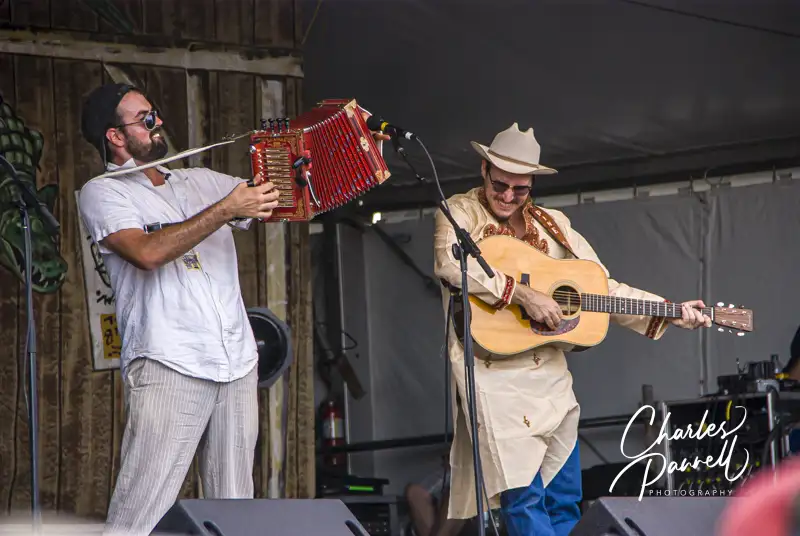
The Pine Leaf Boys perform at the New Orleans Jazz Fest
The 2026 New Orleans Jazz Fest is scheduled to run from April 23 to May 3, 2026. Live music will be presented on April 23 – 26 and April 30 – May 3 at the Fair Grounds Race Course, which is located about 10 minutes from the French Quarter. This massive venue features multiple stages that offer continuous music from 11 a.m. to 7 p.m. And the good news is, wheelchair access at the New Orleans Jazz Fest has not been overlooked.
Music at the festival ranges from jazz, blues and zydeco to folk, rock and rap. There’s even a kid’s tent for the little ones. And as more musicians stream into New Orleans, you’ll find more street performers in the French Quarter. In short, everywhere you look there’s music.
There’s also a large variety of food vendors at Jazz Fest, who feature everything from crawfish and alligator to vegetarian plates and even the standard burgers and brews. And don’t miss the crafts area, where artisans from around the world demonstrate and sell their wares.
For more information about the complete entertainment lineup or to buy tickets for this years Jazz Fest, visit www.nojazzfest.com. And for information on specific access features at this annual event, check out the information below.
Getting There
At the top of the list for wheelchair access at the New Orleans Jazz Fest is getting there. Accessible parking is available near the main gate on Gentilly Boulevard. There is a $65 per day fee for parking on Thursdays and Fridays, and a $75 fee on Saturday and Sundays for these limited accessible spaces. They are only available to folks with a valid accessible placard or plates, and the person who owns the plates or placard must be in the vehicle. These accessible spaces are available on a first-come basis, and credit cards are the only accepted method of payment.
If you’d prefer to let someone else do the driving, then buy a ticket on the Jazz Fest Express (www.graylineneworleans.com/jazz-fest-express/), which is operated by Gray Line Tours. The buses run continuously from the Sheraton Hotel on Canal Street, the Hyatt on Loyola, the Wisner Boulevard parking lot at City Park (5700 Wisner Boulevard) and the Steamboat Natchez Wharf in the French Quarter. They drop passengers off at the main gate on Gentilly Boulevard, which is the accessible entrance. Not all of the buses are lift-equipped, so alert the attendant if you need accessible transportation.
Accessible public transportation to the Jazz Fest is also available on RTA buses (www.norta.com/ride-with-us/know-before-you-go/transit-accessibility) and on the red streetcar line. Alternatively, you may be able to arrange for accessible transportation through RTA ADA Office (504-827-8345); however advance reservations are a must and the demand is usually quite high during Jazz Fest. This option is only available if you are unable to ride public transportation due to a disability. A valid paratransit card is also required.
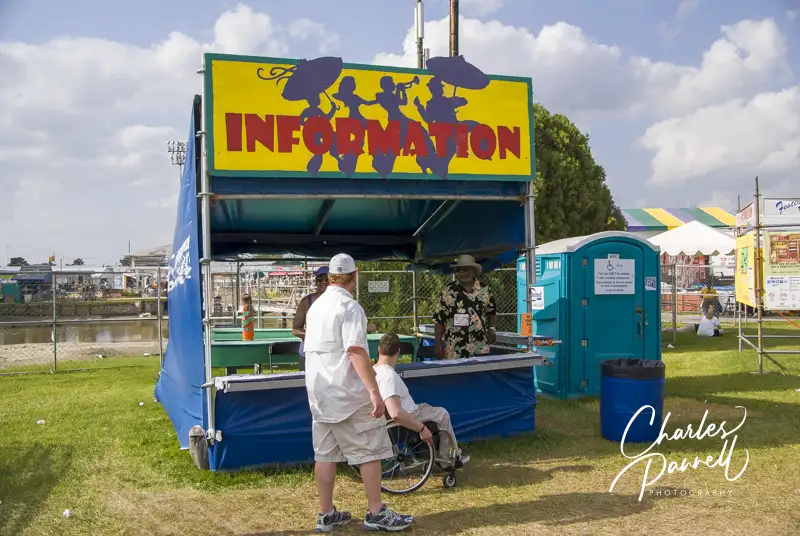
Jazz Fest Access Center
Jazz Fest Access Center
The Jazz Fest Access Center is also an integral part of wheelchair access at the New Orleans Jazz Fest. It’s conveniently located in front of the grandstand. That’s where you can pick up an access map of the grounds, which includes the accessible routes, viewing areas and the locations of the accessible porta-potties (www.nojazzfest.com/downloads/2025_Jazz-Fest-ADA-Map.pdf).
The festival grounds are comprised of a variety of surfaces, including grass fields, a dirt track and paved pathways in the infield. Reinforced surfaces are also installed across the dirt track to increase accessibility. The accessible routes are clearly marked, so be on the lookout for these signs. And don’t hesitate to ask the folks in the Access Center if you need any assistance.
The Paralyzed Veterans of America booth is located next to the Access Center. They can provide loaner wheelchairs to folks who can’t manage distances. There’s no charge for the wheelchairs, but donations are always appreciated. They do run out of wheelchairs on busy days, so it’s best to get there early.
Wheelchair-Accessible Seating
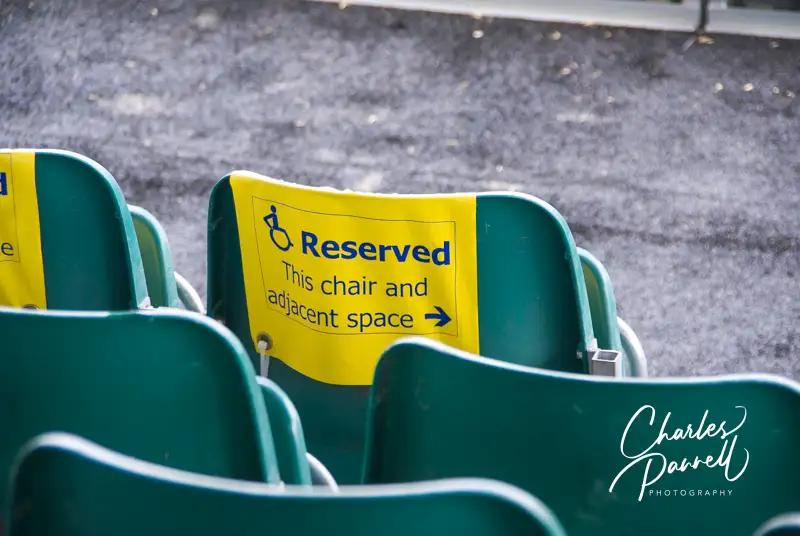
Wheelchair Seating at the New Orleans Jazz Fest
The final component of wheelchair access at the New Orleans Jazz Fest is accessible seating, which is available at all the Jazz Fest music venues. General seating for the main stages is located on the lawn area. Concert-goers either bring their own folding chairs, or spread blankets out on the ground.
Accessible seating and parking is also available in the VIP packages (https://www.nojazzfest.com/tickets/), which must be purchased in advance. Accessible seating for the main stages is limited to wheelchair-users and one companion. To be admitted to the accessible seating section, you must have a wristband, which can be obtained at the Access Center.
Accessible seating for wheelchair-users and one companion is also available at all the tent stages and the grandstand stages. And if you need a break from the heat, keep in mind that the grandstand stages also have air conditioning.
It should also be noted that the accessible seating is designated for patrons who use a wheelchair or scooter, and not those with limited mobility, a temporary injury or who are pregnant. The accessible seating rules are enforced, so that people who need these accommodations will have access to them. If a person does not meet the eligibility requirements, they will be removed from the accessible seating area.
Bottom line — access rocks at Jazz Fest. And so does the Jazz Fest staff. If you have any access related questions, just e-mail access@nojazzfest.com or call (504) 410-6104.
Barrier-Free Travel 22 Accessible Road Trips Driving Vacations for Wheelers and Slow Walkers
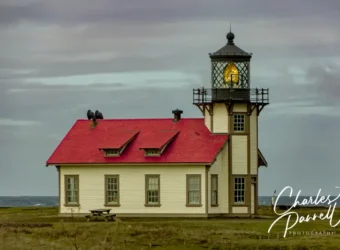
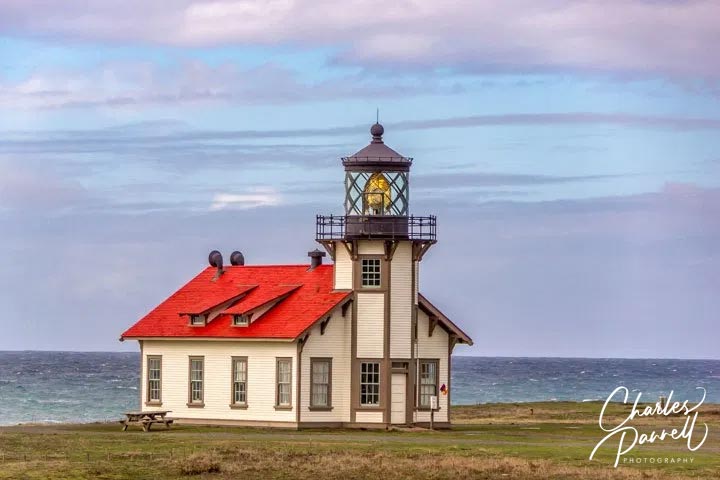
Located on the scenic Mendocino coast, halfway between Russian Gulch State Park and Caspar Beach, Point Cabrillo Light Station (www.parks.ca.gov/?page_id=22276) has long been a beacon to sailors. It was first illuminated on June 10, 1909, and today this active light station offers an interesting glimpse into maritime history. As an added bonus, you can also spend the night in a wheelchair-accessible cottage, and enjoy some coastal peace and quiet after the day visitors depart.
Explore the Light Station
Although there’s no standard parking at the light station, accessible parking is available in the main lot near the Kearn Farmhouse, which is about a half-mile away. The pedestrian path to the light station is wide and paved, however it’s a downhill walk to the light station. That said, if you have an accessible parking placard you can drive down the road and park in front of the 2nd Assistant Lightkeeper’s residence, which is just a short level walk from the lighthouse.
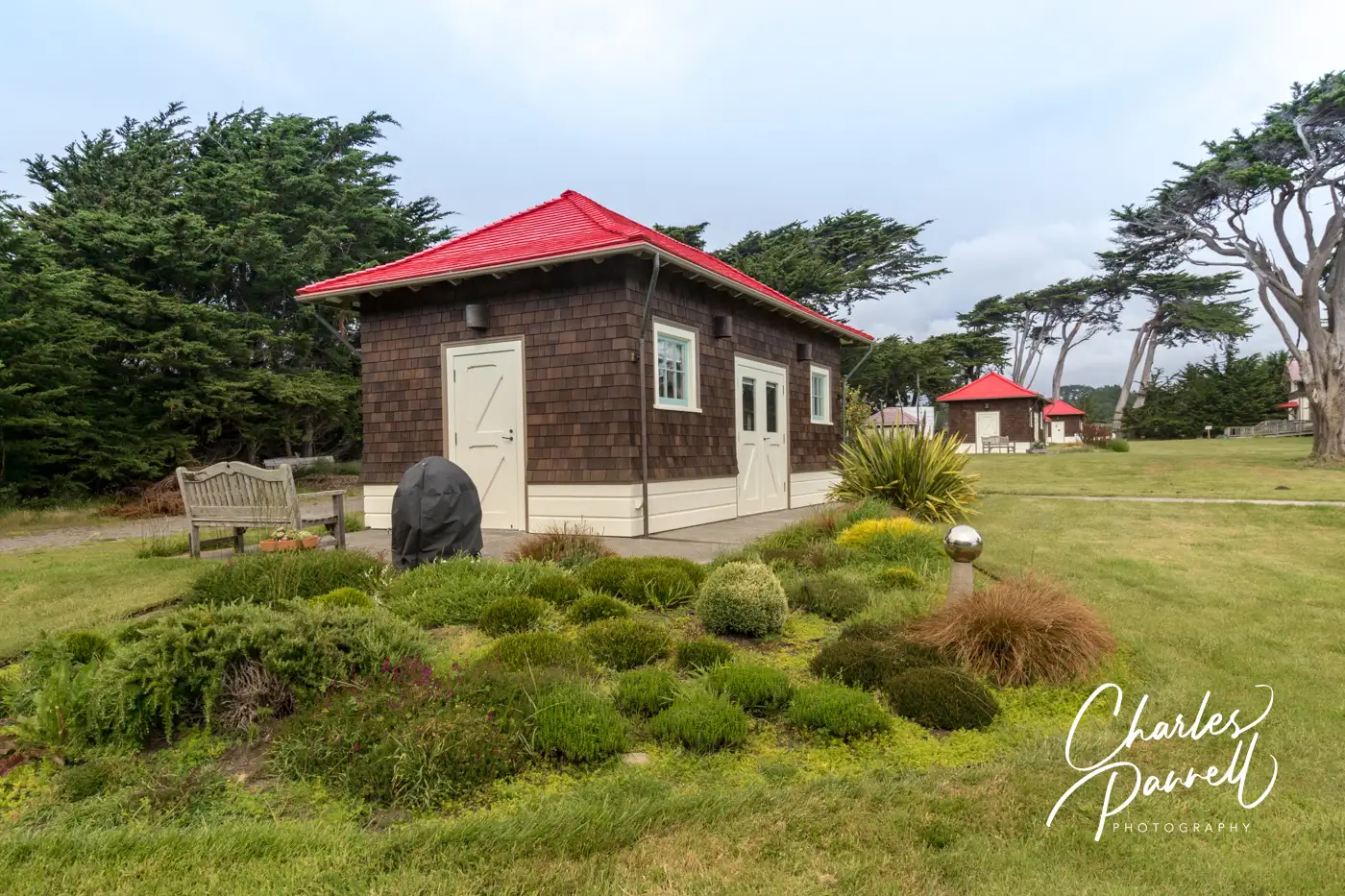
The restored blacksmith and carpentry shop, which is located across from the accessible parking area, is worth a stop on the way to the light station. There is a two-inch cement lip at the entrance, but if you can manage that obstacle, there’s enough room for a wheelchair inside the small building.
The lighthouse itself is located next door. There’s a ramped entry in front, and plenty of room to navigate a wheelchair around the interpretive exhibits and through the small gift shop. Artifacts include old photos, instruments, ship models and even the canon which was salvaged from the Frolic, which crashed into the rocky shore before the Point Cabrillo Light Station was built.
Save some time for a peek inside the 1st Assistant Lightkeeper’s residence, which is located near the accessible parking area. There’s ramp access to the building, and barrier-free access around the first floor. Built in 1909, the residence is furnished as it would have been in 1935, after electricity was added to the building. There are also accessible restrooms in the small building behind the residence.
The Point Cabrillo Light Station is also a lovely spot for a picnic lunch, and there are several accessible picnic tables on a grassy spot near the accessible parking area.
Spend the Night
West Cottage at Point Cabrillo Light Station
Although a day visit to the light station is great, nothing beats spending the night there. There are four restored buildings available for rent, two of which are accessible. West Cottage (www.mendocinovacations.com/houses/point-cabrillo-lighthouse-west-cottage), which is closest to the lighthouse, is a great choice for wheelchair-users and slow walkers.
There’s no on-site lodging manager at the light station, and to be honest that’s part of the beauty of it all. Instead, guests pick up their keys at the Mendocino Coast Reservations Office, just a few miles away in downtown Mendocino. There’s ramp access to the office, with level parking in front, and an accessible parking space across the street.
It’s about a five-minute drive out to the light station from town. Unlike day visitors, overnight guests are permitted to drive their vehicles all the way down the path to the light station. West Cottage is located behind the 2nd Assistant Lightkeeper’s residence, and although there’s no striped parking, there’s plenty of space to park an accessible van near the cottage.
Wheelchair-Accessible West Cottage
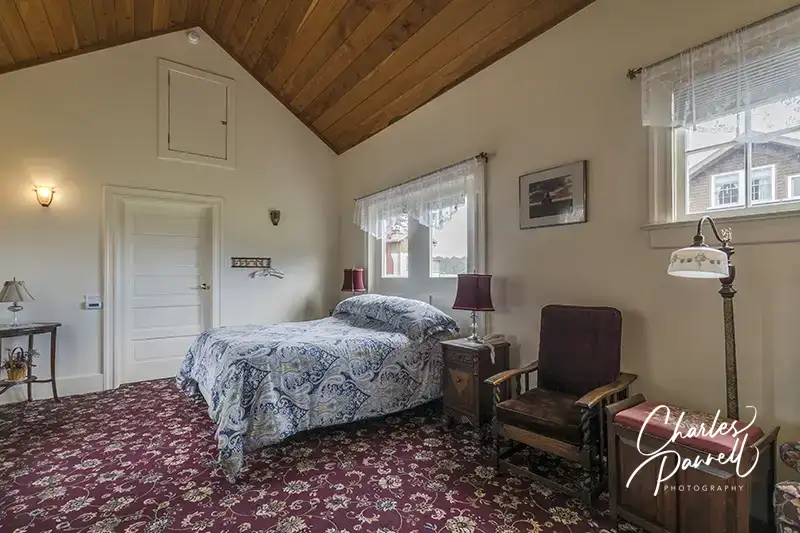
There’s level access over to the wide front door of West Cottage, and plenty of room to navigate a wheelchair through the spacious suite. The cottage is nicely decorated and filled with period furnishings including two chairs and a small table, a vanity, and a 28-inch high queen-sized bed with wheelchair access on both sides. It’s also outfitted with a few modern conveniences such as a small refrigerator, a microwave, a coffee maker, a DVD player and four TV trays.
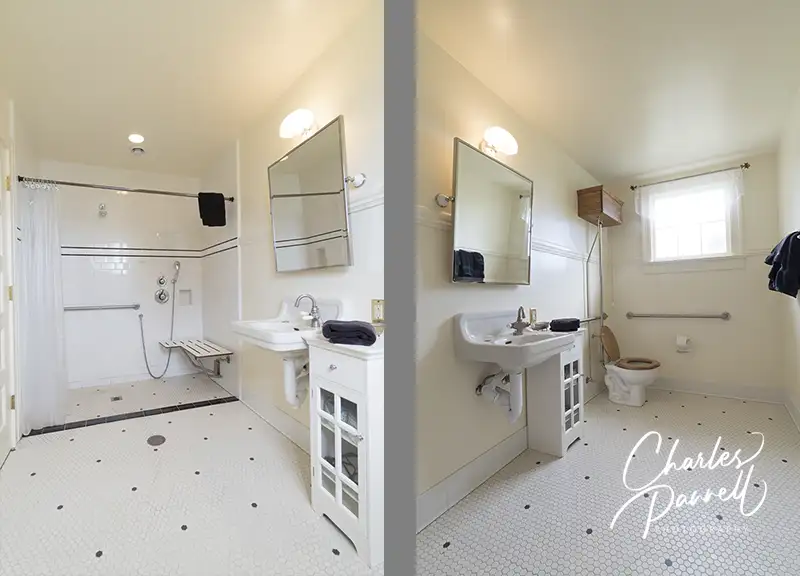
The bathroom has a full five-foot turning radius and is equipped with a roll-in shower with grab bars, a hand-held showerhead and a fold-down shower seat. There’s a nice angled mirror above the roll-under sink, and the toilet grab bars are located on the back and left walls (as seated). And in keeping with the 1930s decorating theme, the floor is covered in black and white chicken wire tile, and the toilet is a vintage water closet with a pull-chain.
Outside there’s a small cement patio with a bench. It’s the perfect place to enjoy the sunset The cottage isn’t fancy, but it’s certainly very comfortable, and includes a lot of often overlooked access features such as low-pile carpet. Plus, you just can’t beat the secluded location. As an added bonus, there’s no cell phone reception or cable TV, so you can really get away from the hubbub of modern life.
West Cottage can be rented alone or along with any of the other three buildings on the premises. And if you need another accessible unit, East Cottage has the same features as West Cottage, but it’s a little farther from the ocean. No matter what your choice though, you definitely won’t be disappointed.
Inside West CottageBathroom in West Cottage
Barrier-Free Travel 22 Accessible Road Trips Driving Vacations for Wheelers and Slow Walkers