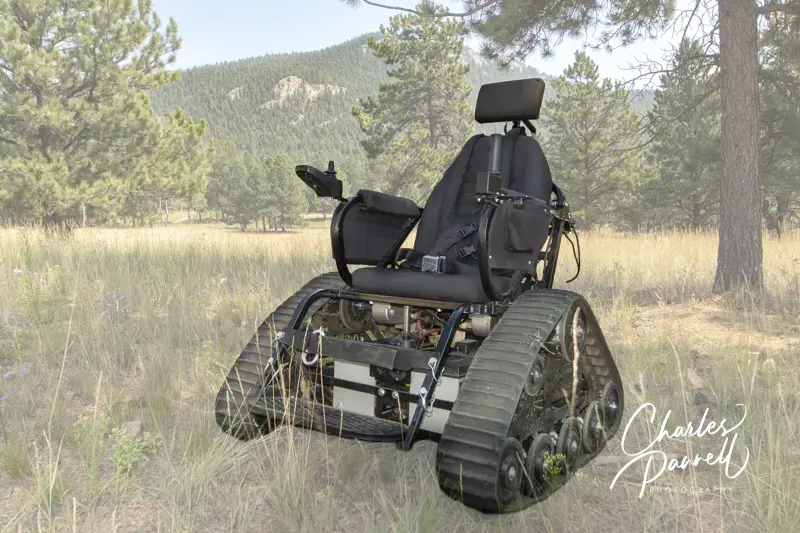
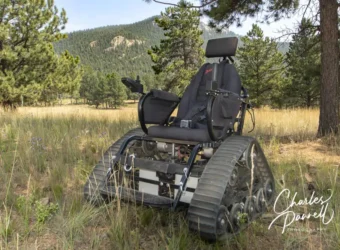
Loaner track chairs are now available at some Missouri State Parks. These off-road wheelchairs allow visitors to more fully explore some inaccessible areas and historic sites in the parks that might not accommodate a standard wheelchair. The track chairs are available to reserve two days in advance, and due to battery life they can only be reserved for a maximum of two hours. Park employees are unable to assist with transfers, and people under 18 years old must be accompanied by a parent or guardian in order to use the track chairs. And before using the track chair, all users must go through a short briefing and sign a user agreement.
Track chairs are available at the following stare parks
Battle of Lexington State Historic Site
Bennett Spring State Park
Bryant Creek State Park
Castlewood State Park
Elephant Rocks State Park
General John J. Pershing Boyhood Home State Historic Park
Details about how to reserve track chairs are listed on the individual state park websites. It’s also important to remember that the track chairs cannot be used in the rain, snow or ice, so plan accordingly. For more information about loaner track chairs at Missouri state parks, visit mostateparks.com/track-chair.
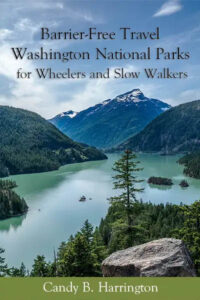
Barrier-Free Travel Washington National Parks for Wheelers and Slow Walkers
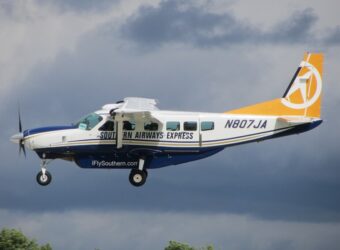
Established long before the Americans with Disabilities Act, the Air Carrier Access Act (ACAA) covers accessible air travel on all US airlines, as well as flights on all airlines to and from the US. But does it cover all types of airplanes, including those small planes which board from stairs on the tarmac? The short answer is no, and that issue was recently brought to light when actress Marissa Bode was recently denied boarding on a Southern Airways (https://www.iflysouthern.com/) commuter flight.
What the ACAA Says
According to the ACAA, lift or ramped boarding must be provided on all covered aircraft. And while most commercial aircraft are covered under the law, there are some exclusions. In fact § 382.97 of the ACAA specifically lists those exclusions. They include:
Float Planes
Aircraft with fewer than 19 seats
Fairchild Metro
Jetstream 31 and 32
Beech 1900 (C and D models)
Embraer EMB-120
It also excludes any other aircraft model determined by the Department of Transportation (DOT) to be unsuitable for boarding and deplaning assistance by lift, ramp, or other suitable device. And the DOT makes that determination if no existing boarding and deplaning assistance device on the market will accommodate the aircraft without a significant risk of serious damage to the aircraft or injury to passengers or employees; or if there are internal barriers that would prevent passengers in an aisle chair from reaching a non-exit row seat.
Southern Airlines is a small commuter airlines which flies the Cessna Grand Caravan 208, which typically seats between 8 and 14 passengers and one pilot. Standard commuter configurations generally hold 10 to 12 passengers, but tighter seat configurations can accommodate up to 14 passengers. In short, it’s less than the 19 passenger requirement under the ACAA, so yes this aircraft is exempt from the ACAA, and not required to carry wheelchair passengers.
What Happened to Marissa Bode?
According to news accounts Marissa Bode discovered this when she was booked on a Southern Airlines flight to attend a speaking engagement in Pennsylvania. Although Bode had some problems locating her virtual ticket at the airport, the real problem arose when she got to the gate and was questioned about her physical abilities. When she replied that she couldn’t stand up and walk, the staff informed he that she couldn’t fly because she needed to climb up a flight of stairs to board the small plane.
In the end, the actress drove three hours to her speaking engagement.
So is Southern Airlines at fault for this denied boarding? Although they followed the letter of the law as to whether or not wheelchairs are allowed on this small commuter plane, there is an issue about the information that was provided to Bode’s “team”.
According to Bode, her people spoke to the airline in advance of the flight and the customer service personnel “fully assured” her manager that they would be able to accommodate Bode and her wheelchair. That’s where the airline dropped the ball, because under the ACAA airlines are also required to provide accurate information to passengers regarding the carriage and stowage of all assistive devices. And according to the actress’ accounts, Southern Airlines failed in that respect. If the airline would have communicated accurate information, the Southern Airlines flight would not have been booked, and Bode would never have been denied boarding.
So yes, Southern Airlines did drop the ball, but not for not carrying wheelchairs on their commuter aircraft. They violated the ACAA for not communicating the correct information to a potential passenger. So no, you can’t fly this airline in a wheelchair, but they do need to improve their employee training and customer service.
Peer-to-peer vehicle rentals are an up-and-coming concept. Some call it car sharing, while others refer to it as the Airbnb of car rentals. The big question is, will it work for wheelchair-users who need adapted vehicles?
The premise is pretty simple. A company contracts with individual owners to rent out their vehicles, offers them to the public, and then gives the owners the lion’s share of the profits. The customers get a reliable rental at a bargain price, and the owners get some cash in their pockets. It’s a win-win for everyone. But is it a realistic option for wheelchair-users?
Turo
Let’s start by looking at one of the leading providers of peer-to-peer vehicle rentals in the US – Turo (https://turo.com). I’ve never used them, but a friend made some extra money by renting her adapted van through them. The rental vehicle requirements are pretty simple.
All Turo Vehicles must:
Be less than 12 years old
Have less than 130,000 miles
Be fully insured
Owners get about 70% of the rental rates, which are about a third of the going rates for accessible vehicles in the US. And of course location is king. My friend lived near the Miami airport, so she did pretty well.
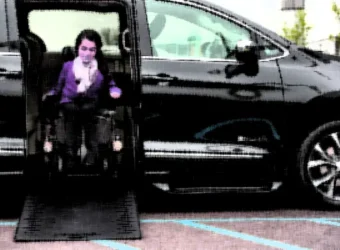
But what about renting an adapted van? Well they do have a filter to find adapted vehicles, but you have to do a city search first. The filter is to the far left, under “all filters”. If you search a major city, you will probably find at least one adapted vehicle, but they are not as available as standard vehicles in smaller cities and towns.
The good news is, there are lots of photos of the adapted vehicles, so you will have a good idea of what features they have. In short, it’s a good economical alternative for major airports in the US. But once you get out of the big cities, the availability of adapted vehicles drops to almost zero. And hey, if you have an adapted vehicle that you don’t use every day, you might consider offering it to Turo as a rental.
The French Approach
The French have an entirely different approach to adapted vehicles as far as peer-to-peer vehicle rentals are concerned. They have a whole company that is entirely dedicated to peer-to-peer adaptive vehicle rentals. It’s called Wheeliz (https://www.wheeliz.com/), and it’s headquartered in Paris. And according to their website they are the first peer-to-peer car rental program for wheelchair-users.
Their concept is pretty simple, and much like Turo. People register their cars on the Wheeliz website, where users search for rentals. When a match is made, the user picks up the vehicle at an appointed place and payment is made through the Wheeliz website. The owner is later paid a percentage of the rental rate.
You can choose from a ramped van or a vehicle with adaptive driving features. And there are plenty of photos, and lots of information about each vehicle, so you really know what you are renting.
The great thing about Wheeliz is that it really seems to be catching on. Of course there’s no shortage of rentals in Paris, but I searched in several rural locations, and many small cities, and still found a good selection of vehicles. And they were all at bargain prices – about 65 Euros for an adapted van.
So hopefully the Wheeliz model will catch on over in the states, but if you’re traveling to France I would most definitely check them out. Not only is it a more economical alternative, but it also benefits someone with a disability. It’s a great idea!
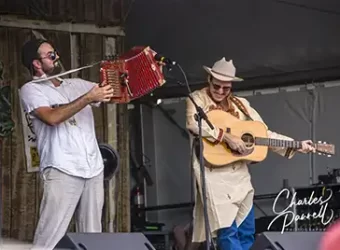
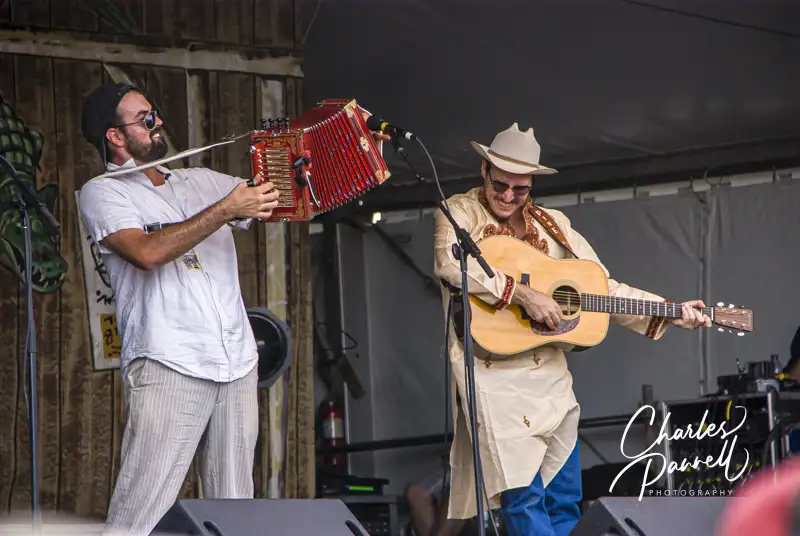
The Pine Leaf Boys perform at the New Orleans Jazz Fest
The 2026 New Orleans Jazz Fest is scheduled to run from April 23 to May 3, 2026. Live music will be presented on April 23 – 26 and April 30 – May 3 at the Fair Grounds Race Course, which is located about 10 minutes from the French Quarter. This massive venue features multiple stages that offer continuous music from 11 a.m. to 7 p.m. And the good news is, wheelchair access at the New Orleans Jazz Fest has not been overlooked.
Music at the festival ranges from jazz, blues and zydeco to folk, rock and rap. There’s even a kid’s tent for the little ones. And as more musicians stream into New Orleans, you’ll find more street performers in the French Quarter. In short, everywhere you look there’s music.
There’s also a large variety of food vendors at Jazz Fest, who feature everything from crawfish and alligator to vegetarian plates and even the standard burgers and brews. And don’t miss the crafts area, where artisans from around the world demonstrate and sell their wares.
For more information about the complete entertainment lineup or to buy tickets for this years Jazz Fest, visit www.nojazzfest.com. And for information on specific access features at this annual event, check out the information below.
Getting There
At the top of the list for wheelchair access at the New Orleans Jazz Fest is getting there. Accessible parking is available near the main gate on Gentilly Boulevard. There is a $65 per day fee for parking on Thursdays and Fridays, and a $75 fee on Saturday and Sundays for these limited accessible spaces. They are only available to folks with a valid accessible placard or plates, and the person who owns the plates or placard must be in the vehicle. These accessible spaces are available on a first-come basis, and credit cards are the only accepted method of payment.
If you’d prefer to let someone else do the driving, then buy a ticket on the Jazz Fest Express (www.graylineneworleans.com/jazz-fest-express/), which is operated by Gray Line Tours. The buses run continuously from the Sheraton Hotel on Canal Street, the Hyatt on Loyola, the Wisner Boulevard parking lot at City Park (5700 Wisner Boulevard) and the Steamboat Natchez Wharf in the French Quarter. They drop passengers off at the main gate on Gentilly Boulevard, which is the accessible entrance. Not all of the buses are lift-equipped, so alert the attendant if you need accessible transportation.
Accessible public transportation to the Jazz Fest is also available on RTA buses (www.norta.com/ride-with-us/know-before-you-go/transit-accessibility) and on the red streetcar line. Alternatively, you may be able to arrange for accessible transportation through RTA ADA Office (504-827-8345); however advance reservations are a must and the demand is usually quite high during Jazz Fest. This option is only available if you are unable to ride public transportation due to a disability. A valid paratransit card is also required.
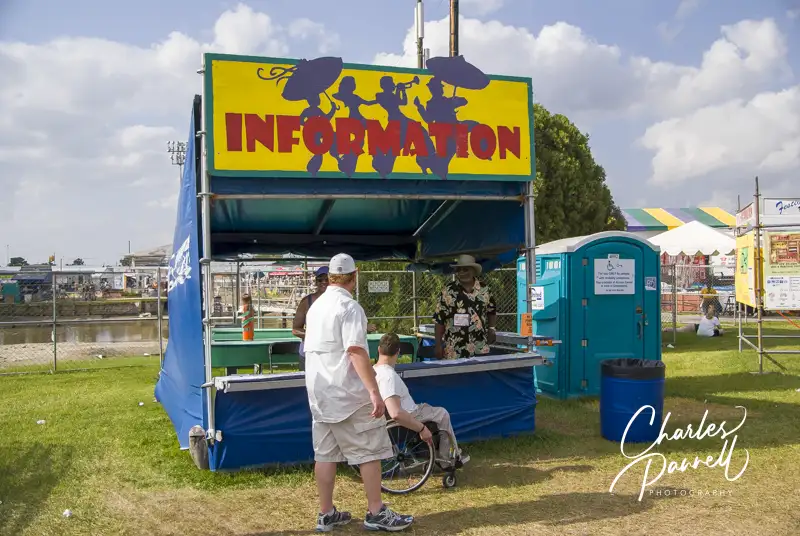
Jazz Fest Access Center
Jazz Fest Access Center
The Jazz Fest Access Center is also an integral part of wheelchair access at the New Orleans Jazz Fest. It’s conveniently located in front of the grandstand. That’s where you can pick up an access map of the grounds, which includes the accessible routes, viewing areas and the locations of the accessible porta-potties (www.nojazzfest.com/downloads/2025_Jazz-Fest-ADA-Map.pdf).
The festival grounds are comprised of a variety of surfaces, including grass fields, a dirt track and paved pathways in the infield. Reinforced surfaces are also installed across the dirt track to increase accessibility. The accessible routes are clearly marked, so be on the lookout for these signs. And don’t hesitate to ask the folks in the Access Center if you need any assistance.
The Paralyzed Veterans of America booth is located next to the Access Center. They can provide loaner wheelchairs to folks who can’t manage distances. There’s no charge for the wheelchairs, but donations are always appreciated. They do run out of wheelchairs on busy days, so it’s best to get there early.
Wheelchair-Accessible Seating
Wheelchair Seating at the New Orleans Jazz Fest
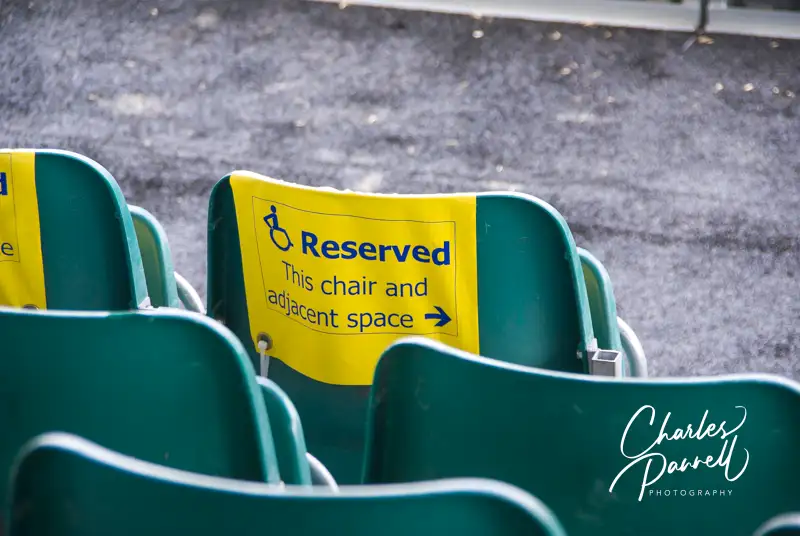
The final component of wheelchair access at the New Orleans Jazz Fest is accessible seating, which is available at all the Jazz Fest music venues. General seating for the main stages is located on the lawn area. Concert-goers either bring their own folding chairs, or spread blankets out on the ground.
Accessible seating and parking is also available in the VIP packages (https://www.nojazzfest.com/tickets/), which must be purchased in advance. Accessible seating for the main stages is limited to wheelchair-users and one companion. To be admitted to the accessible seating section, you must have a wristband, which can be obtained at the Access Center.
Accessible seating for wheelchair-users and one companion is also available at all the tent stages and the grandstand stages. And if you need a break from the heat, keep in mind that the grandstand stages also have air conditioning.
It should also be noted that the accessible seating is designated for patrons who use a wheelchair or scooter, and not those with limited mobility, a temporary injury or who are pregnant. The accessible seating rules are enforced, so that people who need these accommodations will have access to them. If a person does not meet the eligibility requirements, they will be removed from the accessible seating area.
Bottom line — access rocks at Jazz Fest. And so does the Jazz Fest staff. If you have any access related questions, just e-mail access@nojazzfest.com or call (504) 410-6104.
Barrier-Free Travel 22 Accessible Road Trips Driving Vacations for Wheelers and Slow Walkers
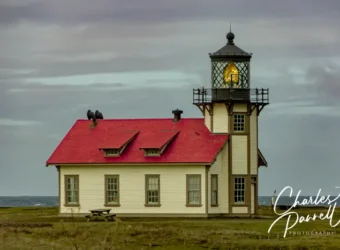
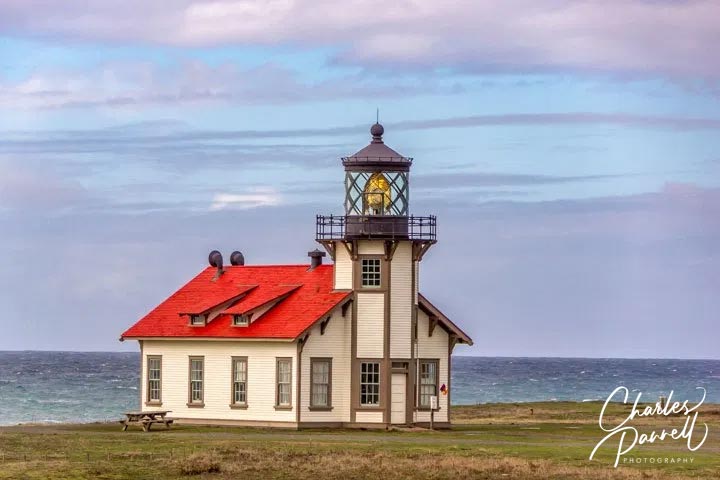
Located on the scenic Mendocino coast, halfway between Russian Gulch State Park and Caspar Beach, Point Cabrillo Light Station (www.parks.ca.gov/?page_id=22276) has long been a beacon to sailors. It was first illuminated on June 10, 1909, and today this active light station offers an interesting glimpse into maritime history. As an added bonus, you can also spend the night in a wheelchair-accessible cottage, and enjoy some coastal peace and quiet after the day visitors depart.
Explore the Light Station
Although there’s no standard parking at the light station, accessible parking is available in the main lot near the Kearn Farmhouse, which is about a half-mile away. The pedestrian path to the light station is wide and paved, however it’s a downhill walk to the light station. That said, if you have an accessible parking placard you can drive down the road and park in front of the 2nd Assistant Lightkeeper’s residence, which is just a short level walk from the lighthouse.
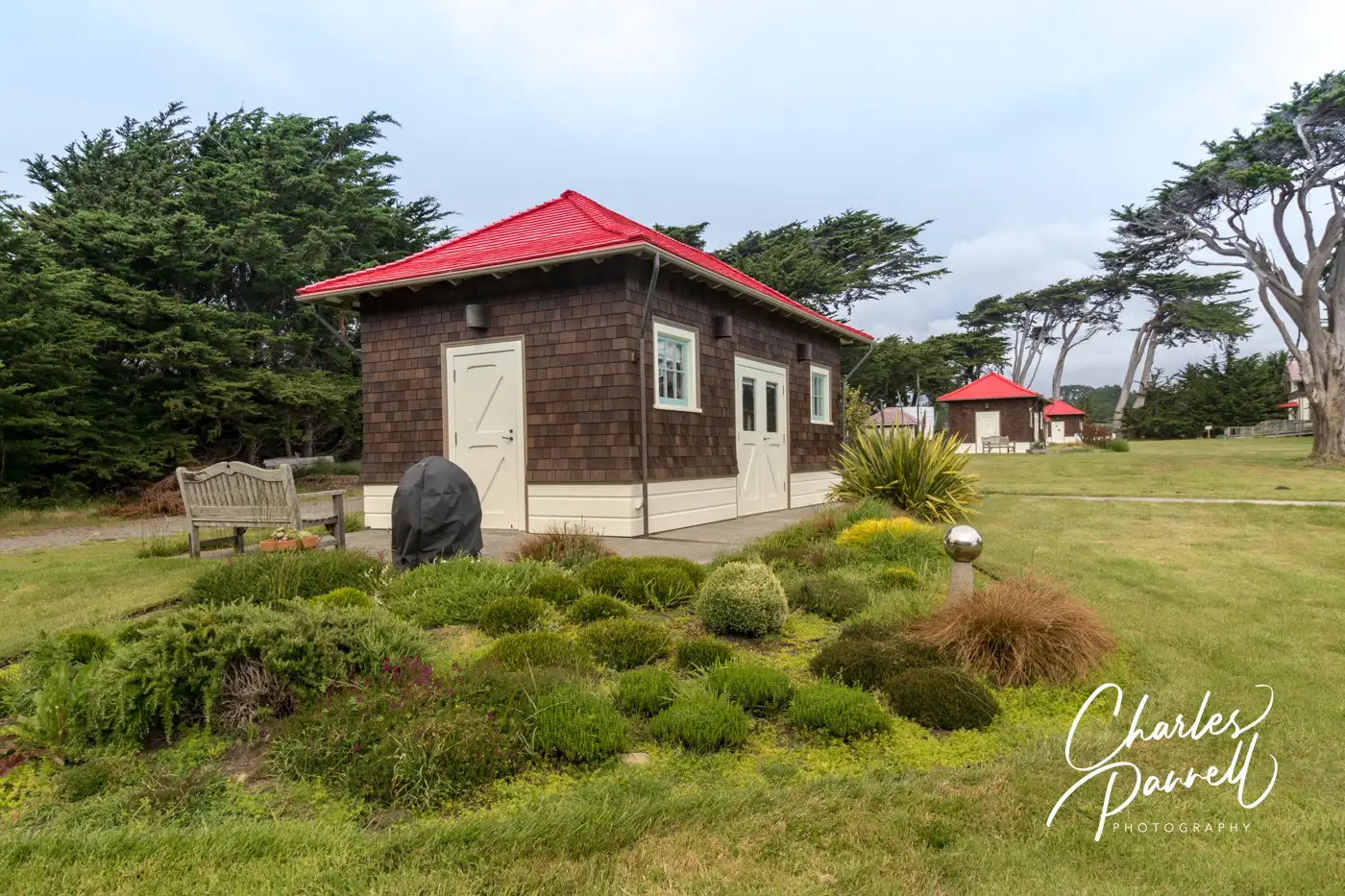
The restored blacksmith and carpentry shop, which is located across from the accessible parking area, is worth a stop on the way to the light station. There is a two-inch cement lip at the entrance, but if you can manage that obstacle, there’s enough room for a wheelchair inside the small building.
The lighthouse itself is located next door. There’s a ramped entry in front, and plenty of room to navigate a wheelchair around the interpretive exhibits and through the small gift shop. Artifacts include old photos, instruments, ship models and even the canon which was salvaged from the Frolic, which crashed into the rocky shore before the Point Cabrillo Light Station was built.
Save some time for a peek inside the 1st Assistant Lightkeeper’s residence, which is located near the accessible parking area. There’s ramp access to the building, and barrier-free access around the first floor. Built in 1909, the residence is furnished as it would have been in 1935, after electricity was added to the building. There are also accessible restrooms in the small building behind the residence.
The Point Cabrillo Light Station is also a lovely spot for a picnic lunch, and there are several accessible picnic tables on a grassy spot near the accessible parking area.
Spend the Night
West Cottage at Point Cabrillo Light Station
Although a day visit to the light station is great, nothing beats spending the night there. There are four restored buildings available for rent, two of which are accessible. West Cottage (www.mendocinovacations.com/houses/point-cabrillo-lighthouse-west-cottage), which is closest to the lighthouse, is a great choice for wheelchair-users and slow walkers.
There’s no on-site lodging manager at the light station, and to be honest that’s part of the beauty of it all. Instead, guests pick up their keys at the Mendocino Coast Reservations Office, just a few miles away in downtown Mendocino. There’s ramp access to the office, with level parking in front, and an accessible parking space across the street.
It’s about a five-minute drive out to the light station from town. Unlike day visitors, overnight guests are permitted to drive their vehicles all the way down the path to the light station. West Cottage is located behind the 2nd Assistant Lightkeeper’s residence, and although there’s no striped parking, there’s plenty of space to park an accessible van near the cottage.
Wheelchair-Accessible West Cottage
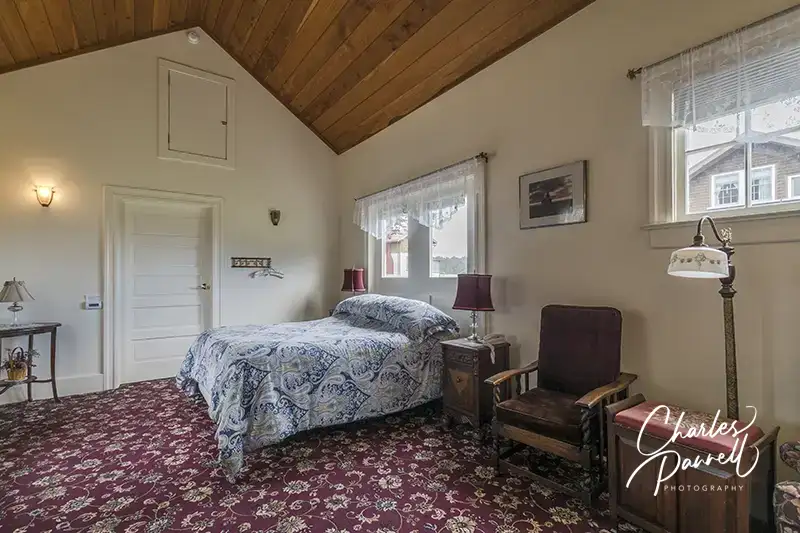
There’s level access over to the wide front door of West Cottage, and plenty of room to navigate a wheelchair through the spacious suite. The cottage is nicely decorated and filled with period furnishings including two chairs and a small table, a vanity, and a 28-inch high queen-sized bed with wheelchair access on both sides. It’s also outfitted with a few modern conveniences such as a small refrigerator, a microwave, a coffee maker, a DVD player and four TV trays.
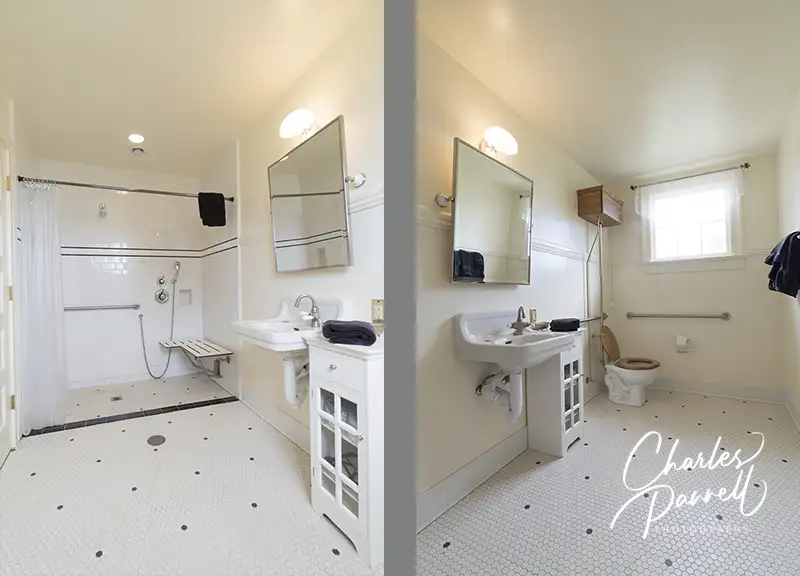
The bathroom has a full five-foot turning radius and is equipped with a roll-in shower with grab bars, a hand-held showerhead and a fold-down shower seat. There’s a nice angled mirror above the roll-under sink, and the toilet grab bars are located on the back and left walls (as seated). And in keeping with the 1930s decorating theme, the floor is covered in black and white chicken wire tile, and the toilet is a vintage water closet with a pull-chain.
Outside there’s a small cement patio with a bench. It’s the perfect place to enjoy the sunset The cottage isn’t fancy, but it’s certainly very comfortable, and includes a lot of often overlooked access features such as low-pile carpet. Plus, you just can’t beat the secluded location. As an added bonus, there’s no cell phone reception or cable TV, so you can really get away from the hubbub of modern life.
West Cottage can be rented alone or along with any of the other three buildings on the premises. And if you need another accessible unit, East Cottage has the same features as West Cottage, but it’s a little farther from the ocean. No matter what your choice though, you definitely won’t be disappointed.
Inside West CottageBathroom in West Cottage
Barrier-Free Travel 22 Accessible Road Trips Driving Vacations for Wheelers and Slow Walkers
Bear Brook State Park (www.nhstateparks.org/find-parks-trails/bear-brook-state-park), which is located in Southeastern New Hampshire, has a loaner track chair available for visitors. The purchase of this track chair was made possible by a contribution from America’s State Park Foundation, with support from The Bronco Wild Fund. The track chair is available for use from 8 AM to 4 PM, with advance reservations. A volunteer will be available to give users a safety demonstration before the track chair is checked out. Reservations can be made by calling the park office at (603) 485-9869.
Barrier-Free Travel the Grand Canyon for Wheelchair-users and Slow Walkers
Located in sleepy little Guerneville, the Creekside Inn (creeksideinn.com) is nestled in the redwoods just a stones throw away from the Russian River. Built on stilts to withstand potential flooding, the majority of the rooms in this Sonoma County Inn are on eye-level with the avian population that inhabits the surrounding forest. And if you listen closely you’ll also hear the familiar “Chicago” call of the resident ground dwelling quail. Truly you are surrounded by the beauty of Mother Nature at this rural property. And the good news is, the Creekside Inn boasts both ambiance and accessibility, with a nice wheelchair-accessible cottage.
The Lark Cottage
The inn itself is divided into two sections — the main house, where the office and six bed-and-breakfast rooms are located; and the surrounding buildings, which house a collection of second-floor cottages, suites and cabins. The accessible Lark Cottage is located in the latter section, with accessible parking near the office and elevator access up to the barrier-free elevated walkway on the top floor.
Access features in the cottage include wide doorways, barrier-free pathways, and plenty of room to navigate a wheelchair. The spacious bathroom is equipped with a roll-in shower with grab bars, a hand-held showerhead and a fold-down shower seat. The toilet is located in a separate alcove with grab bars on both sides; and the bathroom also includes a roll-under sink.
The cottage is furnished with a 23-inch high queen-sized bed, and includes a roomy kitchen with a stove, sink, coffeemaker, refrigerator and even roll-out shelves. There’s also level access to the small deck area just outside the cottage.
The Little Extras
And let’s not forget the little extras, like fresh fruit on the counter and half-and-half in the refrigerator for your morning coffee. There’s also a gas fireplace for those nippy evenings.
Access to the public areas is good too at the Creekside Inn, with a lift available for the pool and hot tub. There’s also a barbecue area with level access and an accessible picnic table. And with the Russian River flowing in the background, it’s the perfect place to sip a glass of wine and enjoy the natural beauty of Sonoma County.
Top it off with a very welcoming and knowledgeable owner — Lynn Crescione — and you have all the key ingredients for a relaxing getaway. Not only is Lynn a first-rate hostess but she’s also very proactive as far as access is concerned. For example, she had a pool lift long before it was ever required. She just saw the need, and as a conscientious owner, she filled it. And that makes for good access.
In short, you just can’t go wrong with the Creekside Inn. Not only is it wheelchair-accessible, but it’s just what the doctor ordered for some serious R&R.
(click for larger image)
Bedroom in the Lark Cabin
Kitchen in the Lark Cabin
Shower and Toilet in the Lark Cabin
Vanity in the Lark Cabin
Barrier-Free Travel Yosemite, Sequoia and Kings Canyon National Parks for Wheelchair-users and Slow Walkers
Track chairs are great for getting out and enjoying Mother Nature and exploring trails that may not be accessible in standard wheelchairs. They are made by a variety of manufacturers, but unlike standard wheelchairs, these heavy duty power chairs have tank tracks rather than wheels. In sort, they are an excellent solution for inaccessible trails.
Disabled hunters can also appreciate the strengths of a track chair, especially while navigating wet and uneven terrain. Unfortunately these track chairs come with a high price tag, and depending on the options they can easily cost in upwards of $20,000. And although that price may put these unique adaptive devices out of the reach of many folks, a Vermont-based LLC now has a program that offers track chair grants to disabled game bird hunters.
Track2wing Track Chair Grants
Track2wing (https://www.track2wing.com/) was founded in 2020 by Terry Wilson and Nancy Anisfield. It’s a self-funded corporation that’s run by a volunteer board. Their mission is to provide a way for disabled game bird hunters to participate in hunting activities with sporting dogs. To that end they offer track chair grants for disabled game bird hunters. And as of 2026, Track2Wing has provided 61 disabled hunters with a track chair.
Applying for a track chair grant is pretty easy. The application period runs from January 1 to March 31. Applicants are asked to fill out a simple form detailing their physical needs as well as their game bird hunting and sporting dog experience. Upon receipt of the application, more information – such as medical documentation or a phone interview – may be requested. The applications are reviewed by the advisory committee, and applicants are notified of their status by the end of April.
Grant recipients are referred to a local Trackchair (https://thetrackchair.com/) dealer to complete the ordering process. Track2wing pays for the full cost of the track chair and even provides funds for accessories and a trailer.
It’s a great program, so get your application in now if you’re interested. Applications can be requested from Track2wing at (802) 482-2561 or track2wing@gmavt.net.
If a trip to the City of Brotherly Love is in your future, then check out CityPASS (www.citypass.com), for an affordable way to explore accessible Philadelphia. CityPASS users can choose from three, four or five of the following attractions; and the ticket book is good for nine days once it’s validated.
Adventure Aquarium
The Franklin Institute
Philadelphia Zoo
Big Bus Company and Philadelphia Trolley Works
Eastern State Penitentiary
Museum of the American Revolution
Battleship New Jersey Museum and Memorial
Academy of Natural Sciences of Drexel University
National Constitution Center
Barnes Foundation
There are several ways to enjoy the Philadelphia CityPASS, but here’s a suggestion for a five-attraction itinerary.
Take A Big Bus Tour
A good way to get a good overview of the city is to hop on the Big Bus (www.bigbustours.com/en/philadelphia/philadelphia-bus-tours). A 24-hour Big Bus pass is one CityPASS ticket option; and although the whole bus fleet is not accessible, arrangements for an accessible bus can be made with 48-hours notice. The wheelchair-lift can accommodate up to 650 pounds, but if you want to enjoy the view from the top of the double-decker bus, you have to negotiate the narrow staircase.
There are two ways to ride the Big Bus; you can ride the entire route as a tour, or you can hop off and enjoy attractions along the way. If you elect to hop off, the same accessible bus will return to your stop two hours later, so be sure and check with the driver and plan accordingly.
Visit the Historic District
A visit to the historic district — including the Liberty Bell, Independence Hall and the Benjamin Franklin Museum — is a must-do on any accessible Philadelphia itinerary. And the good news is, it’s a stop on the Big Bus tour. There’s so much to see in the area, that you might want to set aside two days to see it all at a leisurely pace.
And while you’re in the historic district be sure and use your CityPASS ticket to visit the National Constitution Center (constitutioncenter.org). Located across Arch Street from the Independence Visitor Center, the National Constitution Center is the first and only institution established by Congress to disseminate information about the United States Constitution on a non-partisan basis. And although that sounds like a mouthful, it’s a world away from eighth grade civics.
There is level access to the front entrance through the courtyard on Arch Street, with barrier-free access throughout the galleries. The interactive exhibits depict the effects that milestone events have had on our freedom. From slavery, the New Deal and prohibition, to Watergate, women’s rights and even the Americans with Disabilities Act, it’s a very thought provoking collection. .
Hit the Big House
The Eastern State Penitentiary (easternstate.org), which is also a Big Bus stop is definitely worth a visit. There’s level access over to the entrance, with curb-cuts and wide sidewalks along the way. There are steps down into the ticket office, but they can be easily bypassed (just ask one of the guards). Most of the pathways along the tour route are level, and although a few cells are not accessible, you can certainly get a good look at them from the corridors. They’ve done a pretty good job of making this aging facility doable for wheelchair-users.
Make sure and pick up the audio tour (included with admission) as it’s narrated by former guards and prisoners and it paints an accurate picture of prison life. Opened in 1830, the Eastern State Penitentiary was designed to strike fear into the prisoners, and to isolate them so they could reflect on their crimes. They spent 23 hours a day in their cells, and when they did leave they had to wear a black hood so they wouldn’t see anyone else. Talking to anyone — prisoners or guards — was strictly forbidden. Indeed it was a solitary life and the tour reflects that fact.
Franklin Institute
After the somber prison atmosphere, hop back on the Big Bus and get off at the more relaxed Franklin Institute (fi.edu/en). Although steps grace the front entrance of this Philly favorite, there’s an accessible entrance just to the right. Known as an innovator in hands-on interactive exhibits, the Franklin Institute has a large collection of science-based touchable attractions that explore everything from sports to space. And it’s a great place for wheelchair-users, as there’s barrier-free access through the galleries, with elevator access to all floors.
Admission to the planetarium is also included with the CityPASS ticket. There is level access to the planetarium, with wheelchair and companion seating in front. Unlike most planetariums, the seats don’t tip back a lot, and most of the show is easy to see from a wheelchair or a standard chair.
There are also a number of demonstrations throughout the museum during the day, so make sure and check your program. And although there are a lot of kids at this attraction, it’s also a fun place for adults.
Cross the Delaware
Last but certainly not least, plan to visit the Adventure Aquarium (www.adventureaquarium.com), located across the Delaware River on your Philadelphia visit. If you’re riding the Big Bus, get off at Penn’s Landing and catch the RiverLink Ferry (www.riverlinkferry.com) to cross the river. There is level access to the ferry, and plenty of room for wheelchairs on the main deck, with lots of companion seating nearby. Access to the upper deck is only by stairs, but the view from below is just as nice. It’s almost like a mini river cruise, as you get views of the waterfront, the Benjamin Franklin Bridge, the Battleship New Jersey and the Philadelphia skyline on the way to Camden.
Over on the other side, there’s level access access to the Adventure Aquarium, accessible restrooms inside, and elevator access to the second floor. Additionally, all of the galleries have ramp access, wheelchair-height exhibits and plenty of room to navigate a wheelchair.
Must-sees include Hippo Haven, which houses Nile hippos Button and Genny, and a stop at the Touch-A-Shark exhibit to get up close and personal with epaulet sharks and bamboo sharks. And don’t miss the the Plexiglas tunnel that offers a 360-degree view of the shark exhibit. Last, but not least, check out Penguin Park, where you’ll see the incredibly cute Black-footed African Penguins.
All in all, it’s a great accessible place to spend the day. Take your time to enjoy it all, before you head back to Philadelphia on the return ferry.
If your travels take you to the Volunteer State, then check out the loaner all terrain wheelchairs in Tennessee state parks. The list is growing, but currently over 30 state parks offer these loaner wheelchairs. They are available to both adults and children, and they can be operated independently or with caregiver assistance. And each park has a list of specific trails you can try out in their loaner all terrain wheelchairs. The wheelchairs are available at these Tennessee state parks.
West Tennessee
Chickasaw State Park
Fort Pillow State Historic Park
Meeman-Shelby Forest State Park
Natchez Trace State Park
Nathan Bedford Forrest State Park
Paris Landing State Park
Pickwick Landing State Park
Pinson Mounds State Archaeological Park
Reelfoot Lake State Park
T.O. Fuller State Park
Middle Tennessee
Bledsoe Creek State Park
Cedars of Lebanon State Park
Cumberland Mountain State Park
Cummins Falls State Park
David Crockett State Park
Fall Creek Falls State Park
Henry Horton State Park
Long Hunter State Park
Radnor Lake State Park
Alvin C. York State Historic Park
Tims Ford State Park
East Tennessee
Booker T. Washington State Park
Cove Lake State Park
Cumberland Trail State Park
Harrison Bay State Park
Indian Mountain State Park
Panther Creek State Park
Red Clay State Historic Park
Roan Mountain State Park
Rocky Fork State Park
Sycamore Shoals State Historic Park
Warriors’ Path State Park
Reservations for the all terrain track chairs are available at stateoftennessee.formstack.com/forms/all_terrain_wheelchair_request. Alternatively, you can call the parks directly with your reservation request. This method is preferred when the anticipated visit is less than three days away. And although reservations are preferred, the all terrain wheelchairs are available on a walk-up basis, if they are not already reserved.
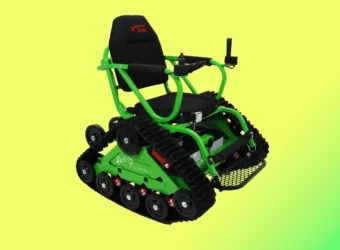

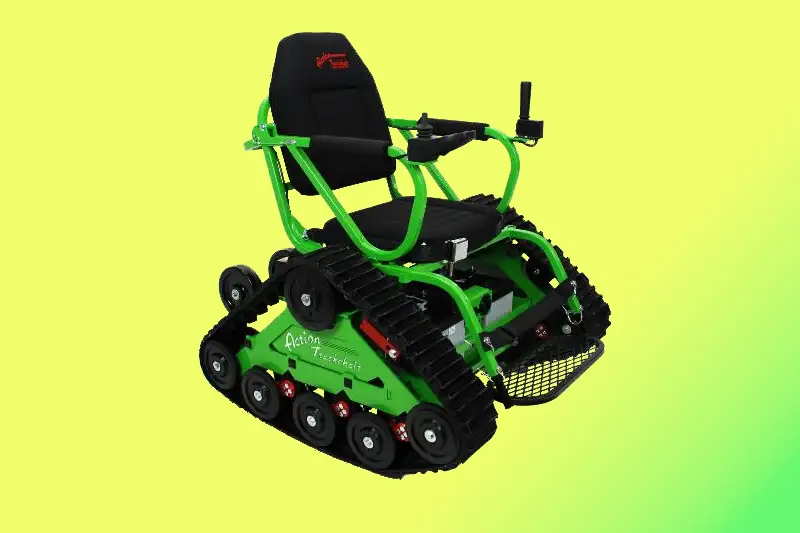 Loaner track chairs are now available at some Missouri State Parks. These off-road wheelchairs allow visitors to more fully explore some inaccessible areas and historic sites in the parks that might not accommodate a standard wheelchair. The track chairs are available to reserve two days in advance, and due to battery life they can only be reserved for a maximum of two hours. Park employees are unable to assist with transfers, and people under 18 years old must be accompanied by a parent or guardian in order to use the track chairs. And before using the track chair, all users must go through a short briefing and sign a user agreement.