As a travel writer since 1977, Candy Harrington has been writing about accessible travel exclusively since 1996. She’s the founding editor of Emerging Horizons, and the author of the popular Barrier-Free Travel national park series. With thousands of bylines to her credit, Candy hits the road often, in search of new accessible travel finds. Candy and her travel photographer husband Charles Pannell reside in NE Washington, where they tend to their chicken flock and enjoy a rural lifestyle.
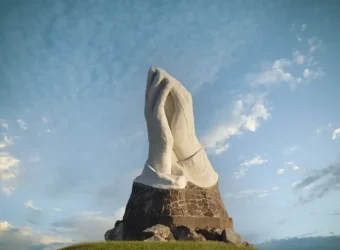
Located on a grassy knoll on Dawson Drive near Main Street in Webb City, this 32-foot high Giant Hands in Prayer sculpture is hard to miss. Constructed by local artist J.E. “Jack” Dawson in 1974, this massive concrete and steel piece weighs in at an impressive 220,000 pounds. Dawson crafted this work of art in his backyard, and then hauled it on a flatbed truck to where it sits today. According to the artist, the sculpture is a response to events in the 1960s, which was “a bad time for our country”.
There’s a small slab of asphalt with three standard parking spaces, just past the Giant Hands in Prayer. From there a short paved path leads over to a memorial wall, which was added to the site. This panel depicts how the hands were created. You can get a good view of this icon from that viewpoint, but if you want to get closer you have to climb up the grassy 40-foot high mound (not accessible). There’s also a small picnic shelter near the parking area which has an accessible picnic table, so this iconic site makes a good lunch stop on a Route 66 Missouri road trip.
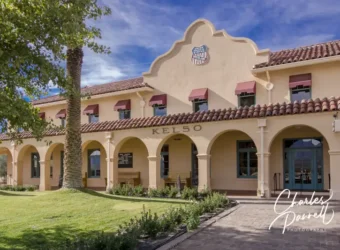
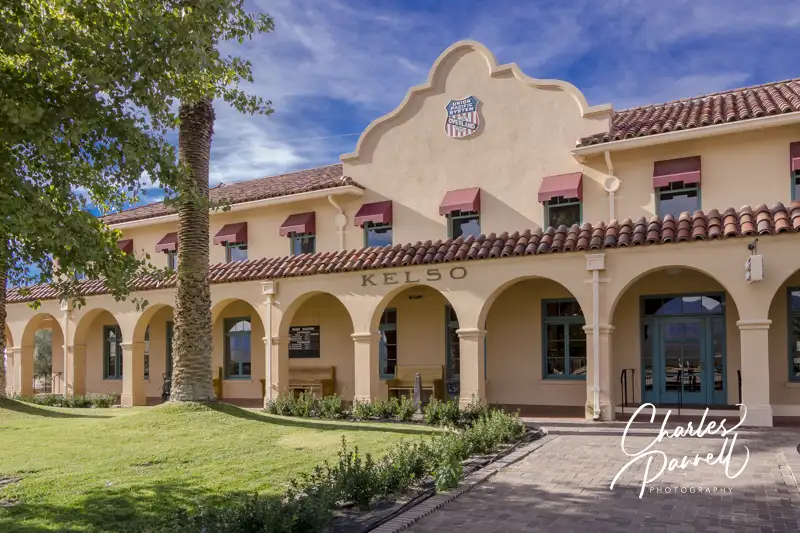
Built in 1924 Kelso Depot was more than just a train depot, as it also included employee sleeping quarters as well as a full-service restaurant. The Los Angeles & Salt Lake Railroad constructed the facility in order to compete with the popular Harvey Houses operated by the Santa Fe Railroad. Kelso Depot was upscale for the time, and it even had a billiard room and a library. The depot ceased functioning in 1962, although the restaurant remained open until 1985. Today it houses the visitor center for the Mojave National Preserve.
Kelso Depot is pretty easy to find — just take Kelebaker Road from Baker, and continue on through the desert for 34 miles until you reach the historic site. Accessible parking is located in front of the depot, with level access over to the visitor center and the nearby accessible restrooms. Inside there’s barrier-free access throughout the facility, which includes interpretive exhibits about the Mojave National Preserve. Additionally the baggage room, ticket office and two dormitory rooms are furnished as they would have been in the 1920s. Even if the visitor center is closed, you can still get a gander at the lunch counter, vintage desks and old equipment through the large front windows. It’s definitely worth a stop while exploring the Mojave National Preserve.
My husband uses a power wheelchair, and we really like road trips. We have an accessible van, and it’s nice that we can pack all our essential equipment with us, and have accessible transportation to get around and see the sights. That said, lately we have had a few problems finding accessible hotels that really meet our needs. I know everyone is different, and it’s nothing against the hotels, but some of the access features we would like to see are purely personal preference.
So I thought that perhaps renting a wheelchair-accessible RV would be a good solution for us. We could tow our vehicle and have an accessible place to spend the night. Sadly I’ve not been able to find a wheelchair-accessible RV for rent at the major dealers, so I think we will probably end up buying a rig. Still it would be nice to be able to “try before we buy”. Do you have any resources or tips for buying or renting a wheelchair-accessible RV in the US? Any information would be greatly appreciated.
Try Before You Buy
Wheelchair-accessible RVs are indeed a great choice for a road trip, for all of the reasons you mentioned. And yes, the “try before you buy” concept is a great idea; however I will say that wheelchair-accessible rental RVs are in short supply. Additionally, chances are they might not be the exact model you will eventually purchase. Still it will give you an idea if you like the RV lifestyle.
Unfortunately none of the mainstream RV rental websites really have what I would call accessible RVs. Granted you can search for “ADA-RVs” or “wheelchair” on some of them, but the results returned are far from what the average person would consider wheelchair-accessible. If you do go this route, I suggest you ask a lot of questions and request copious photos, as what I have seen would not accommodate a power wheelchair.
One good resource for wheelchair-accessible RV rentals is the Handicapped Travel Club. This group has been around for a long time, and the members have accessible RVs and meet annually for rallies. They also have a newsletter, and they share resources about accessible RV travel. Additionally, some of their members rent out their accessible rigs when they are not in use, so it might be a good place to find one to try before you buy. Their website (handicappedtravelclub.com) has lots of accessible RV travel tips, the current newsletter and a link to some accessible used RVs for sale. And their Facebook group (www.facebook.com/groups/handicappedtravelclub) is a good place to connect with other members.
Buying An Accessible RV
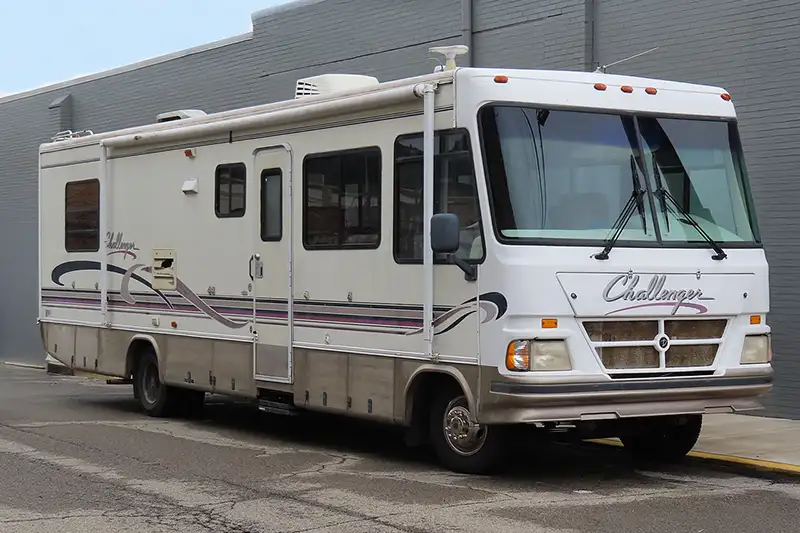
Once you decide you like the RV life, then it’s time to think about purchasing a rig. The good news is that many more companies now offer accessible models. Here are some to choose from.
The accessible Maxvan Pathway (maxvan.com/pathway) is a wide body Class B RV. It has a rear entry ramp, a compact toilet and shower area, a fold-out bed, tie-downs and an awning.
Newmar offers several Class A wheelchair-accessible RVs. (www.newmarcorp.com/wheelchair-accessible/). These spacious units all feature lift access and roll-in showers. And some even come equipped with adjustable height beds and dining tables.
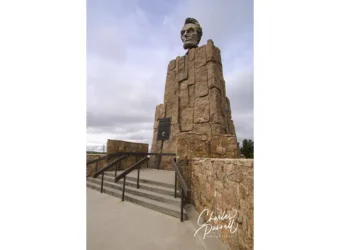
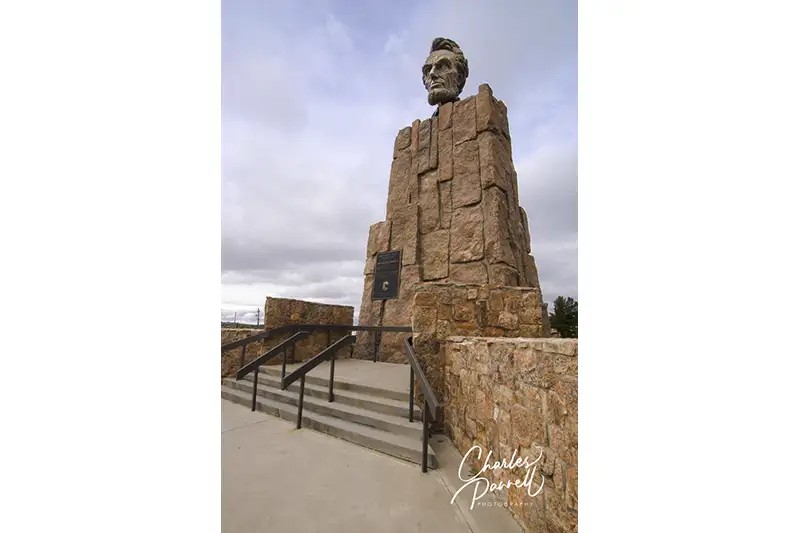
Although it may seem a bit unusual to see a Giant Lincoln Head sculpture in the middle of Wyoming, it makes more sense once you realize that it’s located along the Lincoln Highway. More specifically, it’s on Sherman Summit on Interstate 80, just east of Laramie. And although it’s called a highway, it’s actually a collection of roads that run from San Francisco to New York City. And this stretch of Interstate 80 just happens to be part of that historic route, with Sherman Summit marking the highest place along the way.
The larger-than-life Lincoln head was first sculpted by Robert Russin from 70 tons of clay, and then cast in bronze in Mexico City. The Giant Lincoln Head stands 12.5 feet high, but it rests on smaller shoulders, giving it a somewhat caricature-like appearance. Still it’s an impressive work, with the former president looking down on his audience. And it was fittingly dedicated in 1959, 150 years after the former presidents was born.
Although you can see the massive head from Interstate 80, it’s worth a stop to get a closer look. There’s accessible parking with a cement walkway over to sculpture, and although there are four steps up, you can still get an adequate look at Mr. Lincoln from ground level.
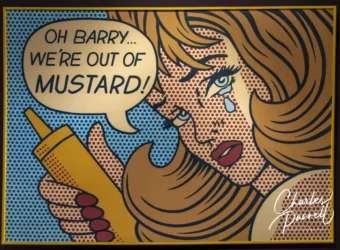
Founded by Barry Levenson, a former Wisconsin Assistant Attorney General, the National Mustard Museum began on what Levenson describes as an impulse shopping trip after his beloved Boston Red Sox went down in defeat. According to the one-time litigator, the mustard “spoke to him” in a Field of Dreams way on this auspicious trip to the market, and he responded by purchasing 15 jars of America’s favorite condiment.
Six months later Levenson spied a unopened mustard jar on a room service tray in a Washington DC hotel hallway. After a brief internal debate on whether the jar was legally fair game — after all her was an attorney — he scooped it up and carried it in his pocket while he argued the finer points of the Fourth Amendment before the US Supreme Court. Justice Anton Scalia and four of his compatriots agreed with Levenson’s arguments and ruled in favor of the state. Levenson considered the jar of mustard his lucky charm; and as the always gregarious barrister tells it, that moment marked the true beginning of the National Mustard Museum.
That was back in 1987, and today the museum boasts thousands of jars of mustard from 70 nations and every state in the union. And although there’s a large gift shop and tasting room upstairs, the museum itself operates independently as a non-profit organization. Truly, it’s more than just a few jars of mustard, and definitely worth a visit.
Accessible parking is located just outside the front door, with level access through the automatic door, and plenty of room to navigate a wheelchair around the gift shop. There’s elevator access down to the well-curated museum, and equally good pathway access around the exhibits. Accessible restrooms are also located downstairs.
Besides the enormous international mustard collection, the National Mustard Museum features recipes, vintage advertisements, Shakespearean citations of mustard, and of course a small exhibit dedicated to horseradish — mustard’s spicy cousin. Round it out with Levenson’s original “lucky charm” from the room service tray, and the world’s only mustard vending machine, and you have a comprehensive — if not eclectic — overview of the condiment. And don’t forget to have your photo taken with the French’s Mustard mascot on your way out, before tasting a few of the more unusual mustard varieties upstairs.
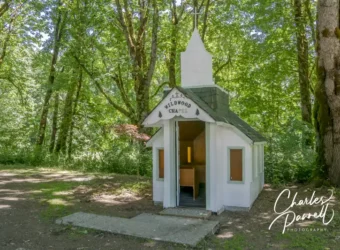
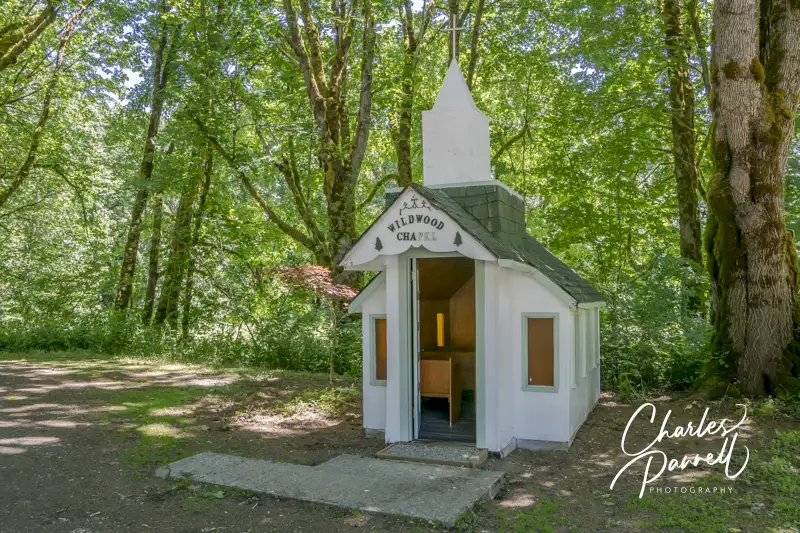
Constructed in 1997, Wildwood Chapel makes a good stop on the way to North Cascades National Park. This tiny chapel is located along Highway 20 near mile-marker 103.5, across the street from Glacier Peak Winery.
There’s a level spot to parallel park near the nondenominational chapel and level access over to the pint-sized building. Constructed by local Tootsy & Rudy Clark, the chapel seats nine, with three two-person pews and three single seats. There’s a slight lip at the 28-inch doorway, but be careful if you wheel inside, because there’s no room to turn around. All in all, the best view is from the doorway.
It’s a pleasant shaded site near the Skagit River, and today many folks use it as a wayside chapel. And yes there have been weddings there.
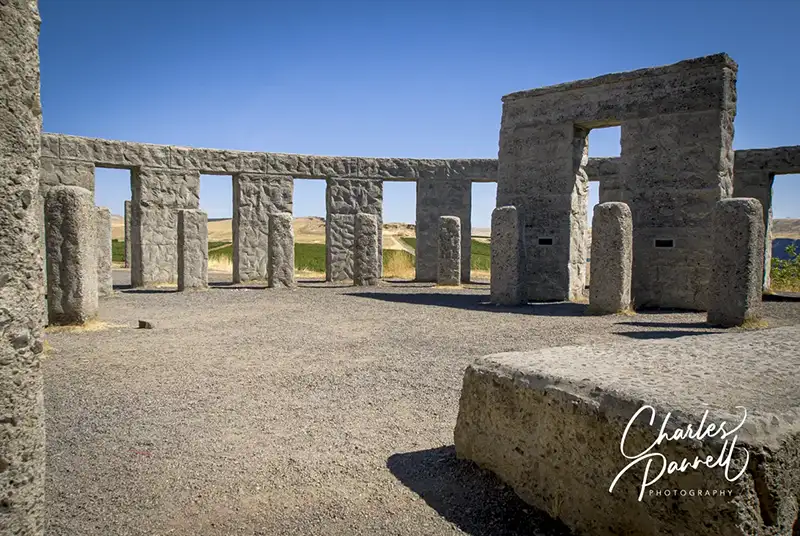
This full-size Stonehenge Memorial is located on the south bank of the Columbia River, just off of Interstate 84, near Biggs Junction, Oregon. Take exit 131, then head north on Highway 97, and make a right on Highway 14. Stonehenge Drive is located just a mile up the road. This monument was erected in 1918 as a memorial to local soldiers who died in World War I. A small memorial ceremony is held on the anniversary of the death of each of the 14 soldiers honored at the monument.
There’s no striped parking at the Stonehenge Memorial, but there’s usually plenty of room to parallel park an adapted vehicle near the monument. Some wheelchair-users may need assistance over the first 15 feet of gravel, but after that it’s hard-packed dirt. There’s plenty of room to explore in and around the monument, which is all on level ground. And if you don’t want to get our of your car, you can also get a great windshield view from the parking area. It’s a nice stop to or from the Columbia River Highway (emerginghorizons.com/explore-the-historic-columbia-river-highway-waterfall-corridor/).
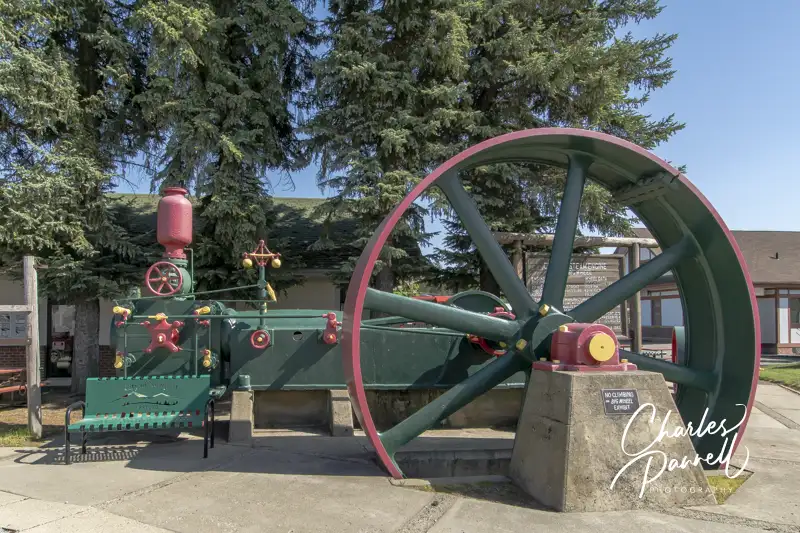
Located in Newport, near the end of the International Selkirk Loop (emerginghorizons.com/the-international-selkirk-loop-for-wheelchair-users-and-slow-walkers/), the Pend Oreille County Historical Museum offers a fun glance into the past. Look for it on the right just as you enter Newport on Highway 2, right next to the Newport Visitor Center, There’s accessible parking in the lot, with level access to the museum. Although the first building is filled to the brim with everything from vintage rodeo gear, an old printing press and even some dental tools from a bygone era, that’s only the beginning. There’s ramp access to the other building that houses even more inside exhibits; and level access around the outside exhibits which include everything from an old schoolhouse to a pioneer church. And if you want to learn about the history of the area, there are knowledgeable volunteers on duty. After you’re done, be sure and slip across the street to Owens (facebook.com/owensgro), for a tasty scoop of homemade huckleberry ice cream.
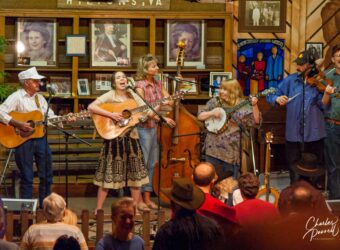
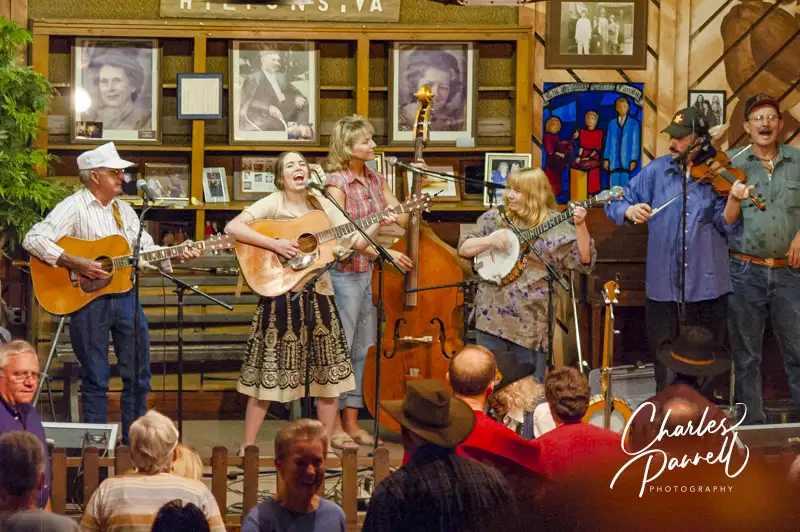
For some down home family entertainment, be sure and plan a visit to the Carter Family Fold while you’re in Virginia Crooked Road Country. Located on the AP and Sara Carter homestead, this large traditional theater only allows acoustic instruments, and alcohol is prohibited. Each week there’s a different headliner, so no two shows are exactly alike. The energy however, is ever present.
Accessible parking is located near the theater with level access to the entrance. Accessible seating (with companion seating) is available up font and it’s the only reserved seating in the house. Indeed the front seats are the ones with a close-up look at all the action, because once the music starts, the area in front of the stage turns into a massive dance floor. But again, that’s all part of the show. All in all, it’s great place to mix with the locals and an excellent opportunity to enjoy a real slice of Crooked Road culture. This Saturday night musical extravaganza is extremely popular, so plan ahead and get your tickets online to avoid disappointment. And If you arrive without a ticket, be prepared, as they only accept cash.
19 South Main Street
Helper, UT
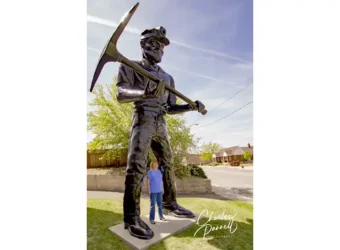
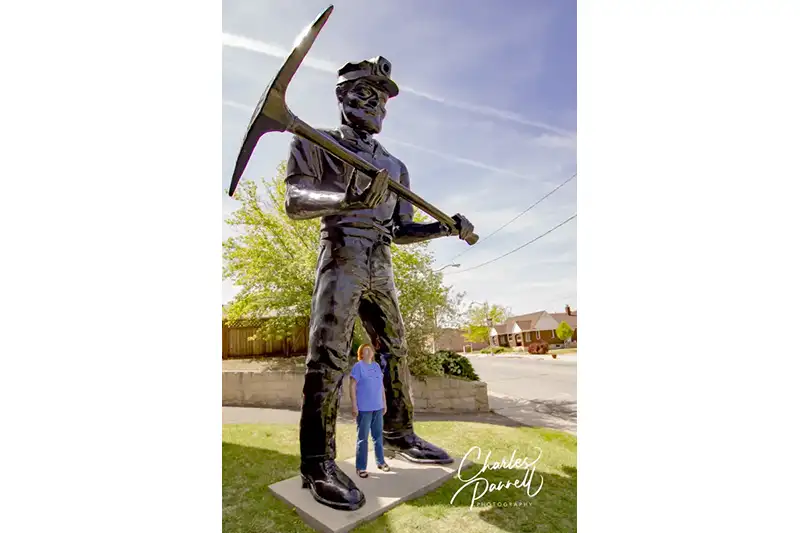
Loved by locals, this fiberglass Big John statue has been standing proud in front of the Helper City Library since the 1960s. Named after the Jimmy Dean song “Big Bad John,” this landmark is an unofficial memorial to the many miners that lost their lives in the local mines. The statue was made from a mold of Paul Bunyan, but a miner’s pick was substituted for the traditional axe held by the iconic figure. Although you can get a good view of this giant from driving down Main Street, there’s plenty of parallel parking available, so stop by and hop out for the photo op.


 348 Dawson Drive

 7477 Hubbard Avenue