Located in Eastern Utah just five miles north of Moab, Arches National Park is known for its more than 2,000 natural stone arches. The main park road runs from the visitor center to the Devils Garden Trailhead, and connects with side roads to the Windows Section and Wolfe Ranch. And although the major sites are marked on the park map, there are also a number of unmarked pullouts along the way that offer spectacular windshield views of the beautiful red rock landscape.
Insider Tips
Don’t miss Balanced Rock – one of the most accessible sites in the park. It offers a nice .2-mile out-and-back accessible stroll around the seemingly precariously perched namesake rock, with a killer view from an overlook located midway along the route.
Although the main trail to Skyline Arch is not accessible, due to steps and rocks. wheelchair-users and slow walkers can easily access the other side of the arch from the Needles Campground. Just drive to the amphitheater, park in the accessible parking area, and take the level sidewalk over to the amphitheater. There’s an absolutely beautiful close-up view of Skyline Arch from just about anywhere in the amphitheater.
In addition to an entrance fee or a park pass, a day use vehicle entrance reservation is also required for Arches National Park, for visits from April through October between 7 AM and 4PM. Reservations are released in monthly blocks on recreation.gov beginning in January. Print out the reservation or do a screen capture, as cell phone service is spotty in the park. Entry reservation are not available at the park, and visitors who don’t have one will not be admitted.
If you don’t have an entrance reservation, consider entering the park before 7 AM. You’ll dodge the crowds and the park is absolutely beautiful as things begin to come to life for the day.
The hottest, driest and lowest point in North America, Death Valley is the largest national park in the lower 48 states. And with over three million acres of wilderness area, there’s a huge diversity in the flora and fauna throughout the park. From majestic sand dunes and salt flats, to snow capped peaks, a lush oasis and even a massive crater, there’s something for just about everyone at this remote national treasure.
Insider Tips
A stop at Badwater – the lowest point in the US — is a must do on any Death Valley itinerary. There’s boardwalk access out to the salt flats, and from there you can roll as far as you like. It’s best to hit this area in the morning though, as it can get quite hot later in the day. Additionally, don’t forget the insect repellent, as the biting flies that are common in Death Valley really like this area of the park – especially in the summer.
Many visitors flock to Zabriskie Point and Dantes View, off of Highway 190; while most folks entirely pass up the scenic 20 Mule Team Canyon Drive, which is located between the two. This 2.5-mile scenic drive winds up and down the colorful eroded badlands, and offers an off-the-beaten-track experience without having to trek through the desert for days.
Although there’s no shortage of food offerings at Furnace Creek, head on over to Timbisha Shoshone land and try something different for lunch. Just follow the signs to Timbisha Village Tacos from highway 190, between the Furnace Creek Inn and Furnace Creek Ranch. There aren’t many choices on the menu – Indian tacos, burritos, taco salad and shaved ice – but the food is tasty and the prices are reasonable. And although their hours vary, they are usually open for lunch. To-go food is also available.
Located 2.5 hours northeast of Bryce Canyon National Park, Capitol Reef National Park is named for two of its prominent geological features. Take the name of a dome-like formation that resembles the US Capitol, and combine it with a massive rock wall that was likened to a barrier reef by early explorers, and voila, you have Capitol Reef. Today the 100-mile long Waterpocket Fold still presents a formidable reef-like obstacle, while Capitol Dome is one of the most recognizable park landmarks. Highway 24 bisects the park, which has a west entrance near Torrey and an east entrance 10 miles west of Caineville.
Insider Tips
If you have little ones in tow, be sure and stop in at the Ripple Rock Nature Center, which offers interpretive programs for children from Memorial Day to Labor Day. Activities include wool spinning, fossil identification and cornmeal grinding. Junior Ranger booklets and Family Fun Packs are also available there. Best of all, the nature center is wheelchair-accessible.
Most visitors completely miss Panorama Point, which offers one of the best views in the park. The turnout to the viewpoint is located west of the visitor center, at milepost 77 on Highway 24; and the overlook features a comprehensive and very scenic overview of the park. And although the trail to the upper viewpoint is steep and not wheelchair-accessible, there’s level access out to the lower viewpoint, and even a great windshield view from the parking lot.
Don’t miss the Petroglyph Boardwalk, which offers good views of the petroglyphs carved into the canyon walls along Highway 24. There’s level access to the viewing platform, which has an accessible scope trained on the canyon wall. The adjacent boardwalk also features level access, as it passes by another collection of petroglyphs believed to have been made by the Hopi and Paiute people.
Located on the east side of the state, about five hours from Zion, Canyonlands National Park is the largest of Utah’s “mighty five”. That said, it’s also a pretty rugged park, and you’ll need a four-wheel-drive vehicle to access some of the more remote areas. There are however two sections of the park that are easily accessible in a standard car or truck — the Needles District and the Island in the Sky District. Both of these areas offer scenic drives on paved roads, with overlooks and viewpoints along the route.
Insider Tips
Don’t miss Newspaper Rock which is located just outside the Needles District, about 12 miles from the intersection of Highway 191 and Highway 211. This massive rock contains an impressive collection of historic petroglyphs, which date back some 1,500 years. There’s a 30-foot long level trail next to the petroglyph panels that offer visitors an up-close-and-personal look at these Puebloan and Ute relics.
For the best view in the park, head over to Grand View Point Overlook. From there, you’ll get a very accessible view of the La Sal Mountains and the Colorado River Canyon, and you can even catch a gander of The Needles District in the distance.
Be sure and stop at Shafer Canyon Overlook on your way out of the park. Although there are also turnouts near this overlook on the way in, it’s best to catch the view as you head north– near where the final scene of Thelma and Louise was filmed. Impressive is an understatement.
Named for Ebenezer Bryce, a Scottish immigrant who settled in the Paria Valley in 1875, Bryce Canyon National Park is known for the spire-like hoodoos that seem to magically rise from the canyon floor. Created by a combination of freezing, thawing and erosion, these unusual limestone formations were sculpted over millions of years. Today, this Utah national park is often described as a cave without a ceiling; as the hoodoos bear a striking resemblance to stalagmites found on cavern floors.
Insider Tips
Free wheelchair-accessible shuttle bus transportation through the park amphitheater is available from April through the end of September. Although cars are allowed along this route, parking is at a premium during the busy summer season, so taking the shuttle bus is the easiest way to see the park.
Don’t miss the Bryce Canyon Shared Use Path – the longest accessible trail in the park. This paved trail begins outside of the park at the shuttle staging area at Ruby’s in Bryce Canyon City, and travels 2.4 miles to the park entrance, then continues another 2.6 miles to Inspiration Point. It also connects with the shuttle system at the visitor center, general store, lodge, Sunset Point, Sunset Campground and Inspiration Point, so you can do as much of the trail as you like, then hop on the accessible shuttle to return to your car.
The historic Lodge at Bryce Canyon, which dates back to 1925, offers four wheelchair accessible rooms – two with roll-in showers and two with tub/shower combinations. This rustic property was the brainchild of Gilbert Stanley Underwood who also designed Old Faithful Lodge at Yellowstone, the Ahwahnee at Yosemite, and Jackson Lake Lodge at Grand Teton National Park.
National park lodges are more than just places to rest your head. Not only are they part of the essential infrastructure of our national parks, but they’re also filled with history . In fact, more than a few national park lodges are listed on the National Register of Historic Places. And the good news is, the bulk of these historic properties have added access upgrades over the years, so wheelchair-users and slow walkers can also enjoy them. Thinking about staying in a national park lodge on your next road trip? Here are a few more benefits of staying “in park”.
Beat the Crowds
The best way to beat the crowds at national parks is to arrive early in the morning, and that’s much easier to do if you stay overnight in the park. The crowds drastically increase after 10 AM, when a lot of tour buses also appear. For example in Grand Canyon National Park, it’s almost impossible to enjoy Hermit Road during peak season in the afternoons. The shuttle buses are full and private vehicles are not permitted along the route. If however you get an early start, you’ll have a much more pleasant experience. Even better, it’s just a short walk to a shuttle bus stop from any of the park lodges, and five of the lodges have wheelchair-accessible rooms.
Nature Surrounds You
There’s just no comparison between staying at a chain hotel in a gateway city and bedding down in a national park lodge surrounded by nature. How can you beat opening your drapes to a view of Half Dome, or enjoying the red rock beauty of Zion Canyon from your front porch?
And Then There’s the Wildlife!
No place is off limits to the native wildlife in national parks. For example, at Mammoth Hot Springs Hotel in Yellowstone National Park, it’s not unusual to see the resident elk graze outside the accessible cabins. It’s an especially impressive sight during the rut, when the large bulls heard their harems. And you’ll never forget the bugling cry of the bulls.
First Dibs on Dinner Reservations
The more popular restaurants in some national parks require dinner reservations, and first dibs on those go to lodge guests. For example in Yellowstone, reservations at the Old Faithful Inn, Grant Village and the Lake Yellowstone Hotel are available 60 days in advance to lodge guests; while folks staying elsewhere can only make same day reservations.
Location, Location, Location
Let’s face it, some national parks are just too far from the city to make a daily commute, so staying at an in-park lodge is the only option. Take Isle Royale National Park for example. It’s located on an island in the middle of Lake Superior, and since it’s a four-hour ferry ride from the mainland, staying overnight just makes sense. Fortunately Rock Harbor Lodge has a comfortable wheelchair-accessible room.
Competitive Pricing
Last but certainly not least, most of the popular national parks have rooms in all price ranges, and some national park concessionaires even have programs in place that offer competitively priced rooms. For example, Curry Village in Yosemite National Park offers affordable family accommodations, while the luxurious Ahwahnee offers high end rooms with prices to match. And over in Yellowstone National Park, the Xanterra Travel Collection prices a good chunk of their in-park rooms at rates comparable to those found in the surrounding gateway communities. So yes, you can book a national park lodge at gateway community prices, but you do have to book early to take advantage of these great bargains.
Located in Northwestern Arizona, the Grand Canyon is 277 miles long, up to 18 miles wide and a mile deep. Carved by the Colorado River and the forces of nature, the majority of this geological formation lies within the borders of the national park. That said, the West Rim, which boasts a horseshoe shaped glass walkway out over the canyon, is located on Hualapai land. But no matter what area of the park you visit, there’s no shortage of breathtaking views at this national treasure.
Insider Tips
For an interesting look at the history of the Fred Harvey Company, El Tovar Hotel and Bright Angel Lodge, pop into the Bright Angel History Room on the South Rim. Exhibits include artifacts from these two Harvey Houses, as well as old photos, an 1880 Harvey House dinner gong, and even a vintage Harvey Girl uniform. It also includes information and photos from a Harvey Indian Detour excursion, which took train passengers on a five-night trip to nearby Native American sites. Both the canyon entrance and the main entrance of the Bright Angel Hotel are wheelchair-accessible.
All the in-park lodges, except Bright Angel Lodge, have accessible rooms. That said, Kachina Lodge is the only property with an elevator, so it’s a good choice for slow walkers who want an upper floor standard room, but cannot do stairs.
Grand Canyon Scenic Airlines offers accessible flightseeing excursions over the Grand Canyon in fixed-wing aircraft from the Grand Canyon Airport in Tusayan. There are six stairs up to the aircraft door, but a portable ramp is available for anyone who can’t manage the climb. Wheelchair-users must transfer to a seat near the aircraft door, and wheelchairs are stored at the airport. It’s a great choice for a scenic overview of the park.
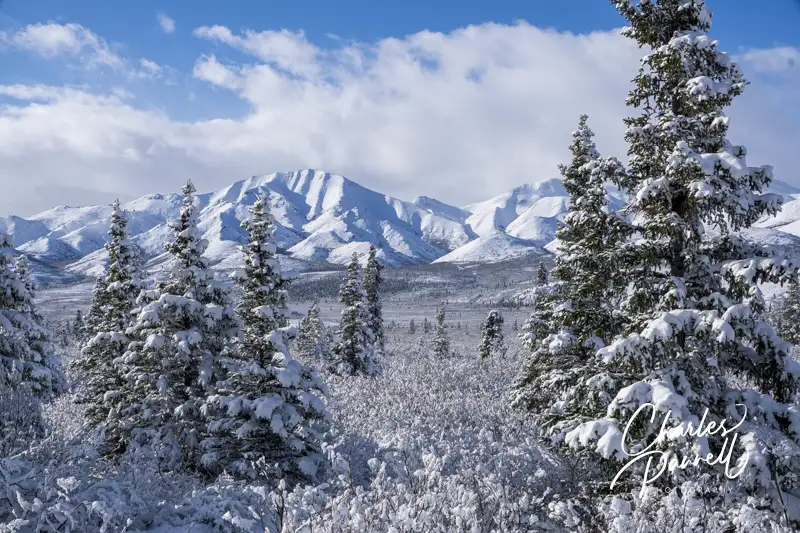
Located about 240 miles north of Anchorage and 120 miles south of Fairbanks, Denali National Park (www.nps.gov/dena/index.htm) is one of the crown jewels of the 49th State. One of Alaska’s eight national parks, Denali occupies just over six million acres of wild land bisected by a seasonal road. And if all that sounds a bit rugged for your taste, rest assured it is possible to plan a wheelchair-accessible Denali visit. Granted, scaling the 20,310 namesake mountain may not be on your to-do list; however the park also offers a nice selection of wheelchair-accessible trails, attractions and tours suitable for non-mountaineering visitors.
Getting There
A top concern about a wheelchair-accessible Denali National Park visit is actually getting to the park. Although there’s no airport there, Denali is easily accessible by rail and car. The peak visit time is from late May through early September, but that’s primarily because of the train schedules and the unpredictable weather. Still if you have a vehicle, and a bit of a sense of adventure, late spring and fall can also be beautiful times to enjoy Mother Nature’s majesty in Denali.
Alaska Railroad
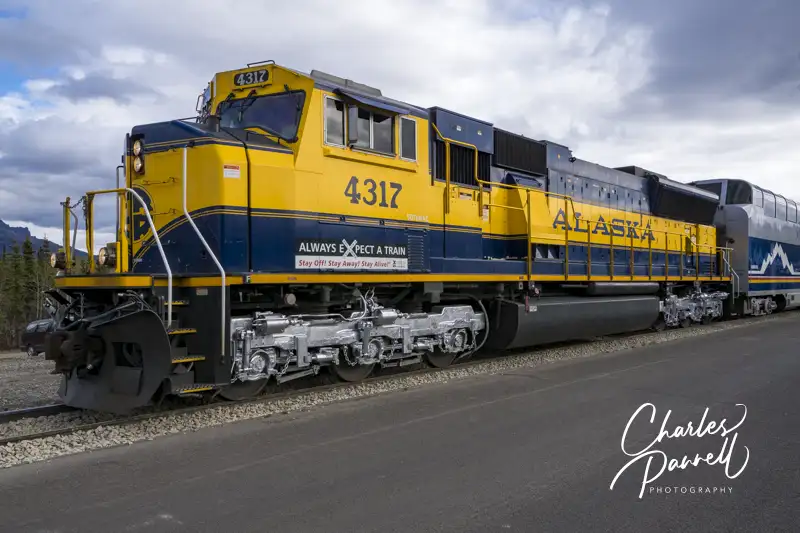
Daily train service is available from Anchorage and Fairbanks on Alaska Railroad’s (www.alaskarailroad.com) Denali Star during the summer months. The northbound train departs from Anchorage, and takes three hours to get to Denali. It stops in Wasilla and Talkeetna along the way. The southbound Fairbanks to Denali nonstop route takes four hours to get to Denali. And the good news is, all the stations include lift boarding, and the GoldStar Dome Cars feature elevator access, accessible seating and accessible lavatories downstairs. Additionally, most of the major cruise lines also offer cruise tour packages that include a Denali stop, on their own accessible railcars.
If you’d prefer to drive, accessible rental vans are available in Anchorage from Alaska Mobility (www.alaskamobility.com). After you pick up your van, just hop on The George Parks Highway (Highway 3). Also designated as a National Scenic Byway, this well traveled route runs between Fairbanks and Anchorage, and offers access to the park. The drive on this well maintained paved road is doable in a day from Anchorage; but plan for extra time as there’s no shortage of viewpoints and roadside stops along the way. And for information on places to stop en route, visit themilepost.com, an excellent Alaska road trip resource.
Wheelchair-Accessible Denali Shuttles
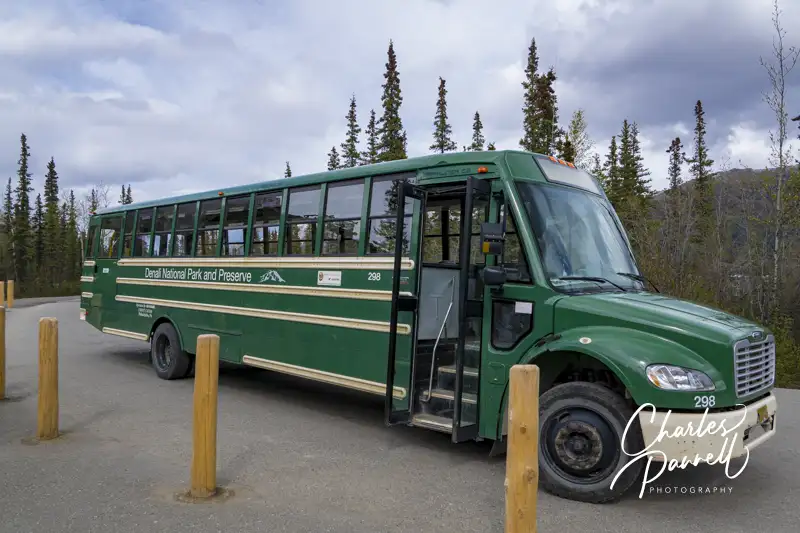
Accessible shuttle bus
Another wheelchair-accessible Denali feature is the free accessible shuttle bus system. After the winter snow is cleared in late spring, the road into Denali National Park is open to private vehicles to the Savage River area. Transportation further into the park is only available from concessionaires, and it’s largely dependent on road conditions.
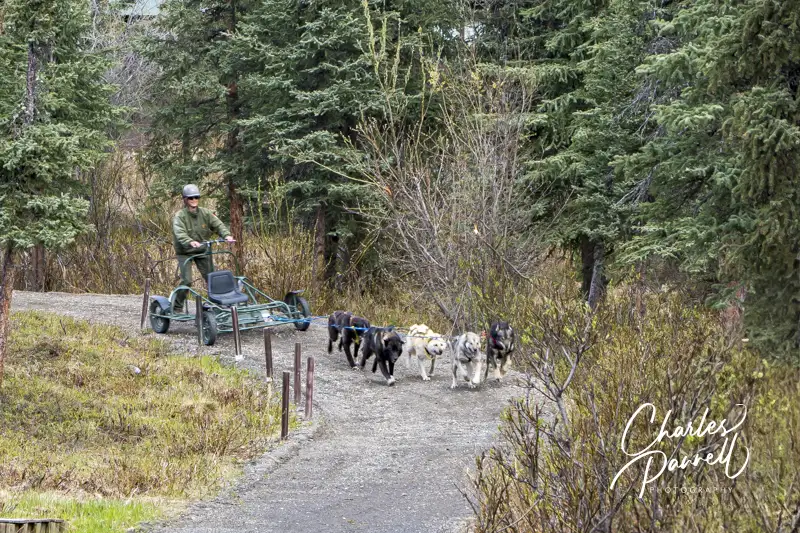
That said, the free shuttle bus system operates in the Riley River area near the park entrance, and in the Savage River area 15 miles down the road. And all of the shuttle buses and shuttle bus stops wheelchair-accessible. The Savage River Loop and the Riley Creek Loop shuttles run all day and stop at a number of trails and attractions along the way. The Sled Dog Demonstration Shuttle, which runs from the Denali Visitor Center to the sled dog kennels, departs 40 minutes prior to the demonstrations, and returns shortly after they are completed.
The shuttle bus schedule is available at www.nps.gov/dena/planyourvisit/courtesy-shuttle-buses.htm, and it’s also posted at all the shuttle stops. Printed schedules are not available in the park, and cell phone service is limited, so it’s best to save a screen shot of the schedule for planning purposes.
Riley Creek Hikes
McKinley Station Trail
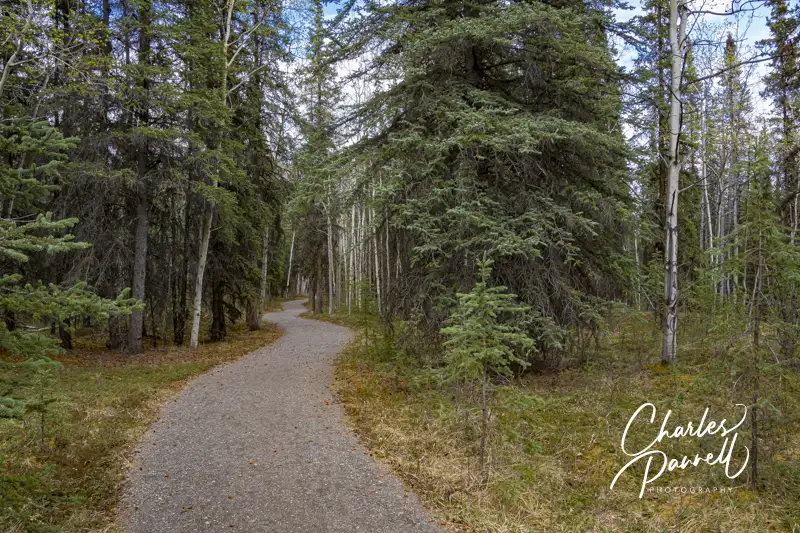
If you’d like to try a hike in the Riley Creek area, then hop on the shuttle, get off at the Riley Creek Campground and explore the McKinley Station Trail. This 1.6-mile hard-packed dirt trail runs from the campground to the visitor center. Although it’s not completely level, it offers an undulating — and accessible — route through the forest. There are also a few accessible boardwalk sections along the way. Be forewarned though — there’s a short cut to the visitor center about half-way along the route, but it goes straight uphill. Stick to the original trail for a gradual accessible path to the visitor center.
If you’d prefer a shorter walk, check out the Spruce Forest Loop, which is located right behind the visitor center. This .15-mile trail meanders through the forest, and offers visitors a good introduction to the vegetation and wildlife found in the park. It’s also very convenient, as you can just take the shuttle to the visitor center and hop on the trail from there.
Sled Dog Demonstration
Sled dog demonstration
The Sled Dog Demonstration is another wheelchair-accessible Denali must-do. Although accessible shuttle service is available from the visitor center, you can also drive over to the kennels. There’s plenty of accessible parking available at the kennels; however it’s a longer jaunt from the parking lot than it is from the bus stop, so slow walkers might want to opt for the shuttle. It should also be noted that the Roadside Trail that runs from the visitor center to the kennels has a steep grade and numerous obstructions, and it’s definitely not an accessible option to get to the kennels.
The sled dog demonstration is fun to watch, as the team is hitched to a wheeled sled that speeds around a dirt track. Accessible seating for wheelchair-users and slow walkers is available in the front, so everyone is guaranteed a good view. A ranger is on hand to answer questions about the sled dogs — which are still used in the winter in the park — and folks can walk though the sled shed and around the kennels after the demonstration. Best of all, there’s no charge for this educational demonstration.
Savage River Hikes
Mountain Vista Trail
Last but not least, save some time to explore the Savage River area of the park, which offers a few accessible trails, and some great scenery. The shuttle stops at the Mountain Vista and Savage trailheads; and if Mount Denali is “out” (not obscured by cloud cover), you’ll get a great view from several vantage points along the way.
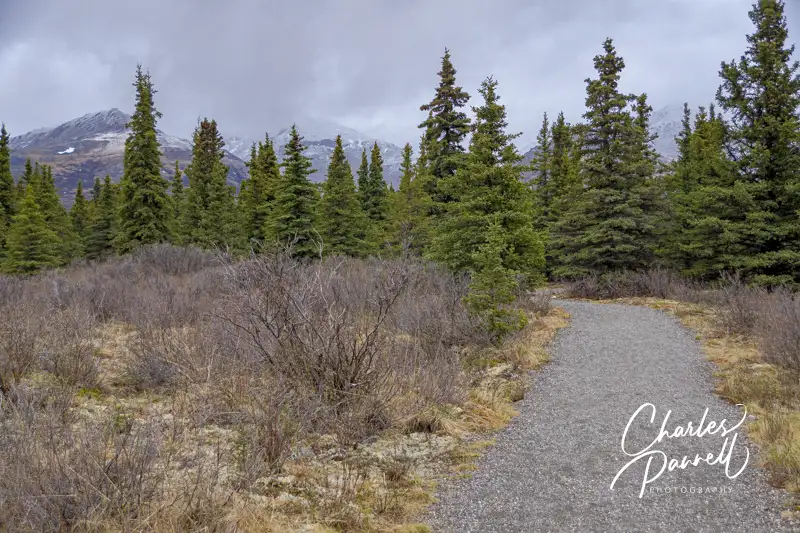
The Mountain Vista Trail is the most accessible trail in the area. This .6-mile hard-packed dirt trail begins near the shuttle stop, behind the accessible vault toilets and picnic shelter. It winds through the tundra, and offers several impressive views of the Alaska Range along the way. And you never know what wildlife you’ll run across, so keep your ryes peeled. Pack along a picnic lunch and enjoy it at one of the accessible tables at the picnic shelter, while you wait for the shuttle to Savage River.
Savage Cabin Trail
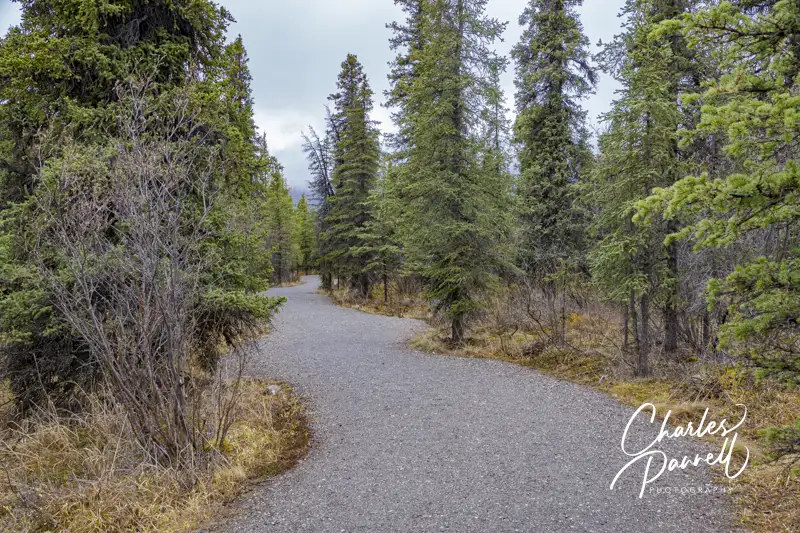
The shorter Savage Cabin Loop begins just to the left of the Savage River Campground shuttle bus stop, near the accessible vault toilet. The .3-mile loop is fairly level — with a few undulations — and is covered in compacted gravel. Midway along the route, you’ll find a historic cabin that was constructed by the Alaska Road Commission in 1924. It was originally used as a ranger cabin, but today it’s an interpretive site. Although the cabin isn’t accessible, you can still get a good glance at the inside from the doorway. And the docent programs are usually presented outside, in an accessible space. Even if there aren’t any docents at the cabin it still make a nice stop on this short jaunt.
Wheelchair-Accessible Denali Lodging Resource
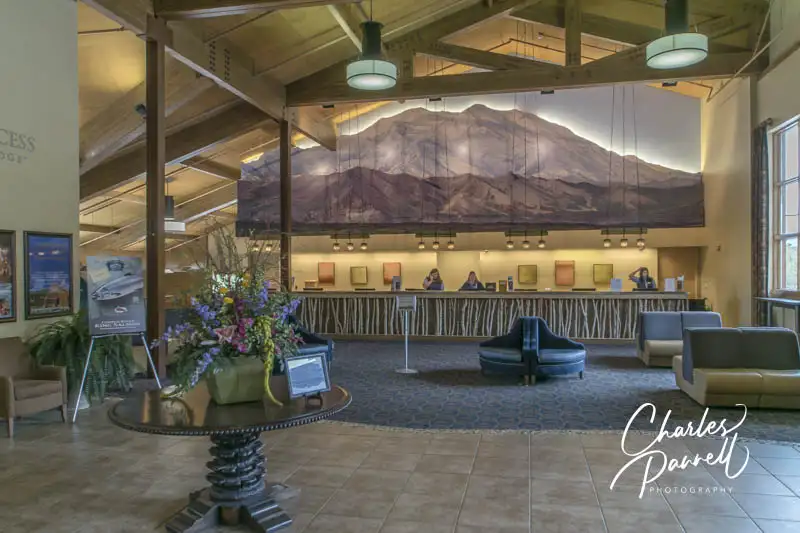
Lobby at the Denali Princess near Denali National Park
Of course, the final piece of the access puzzle in Denali National Park is lodging. There are no hotels or lodges in the park, but the campground has accessible spaces, and there are a number of accessible lodging choices nearby. Visit emerginghorizons.com/wheelchair-accessible-denali-lodging-options for more information.