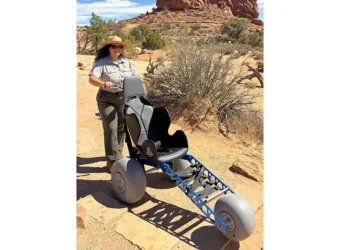
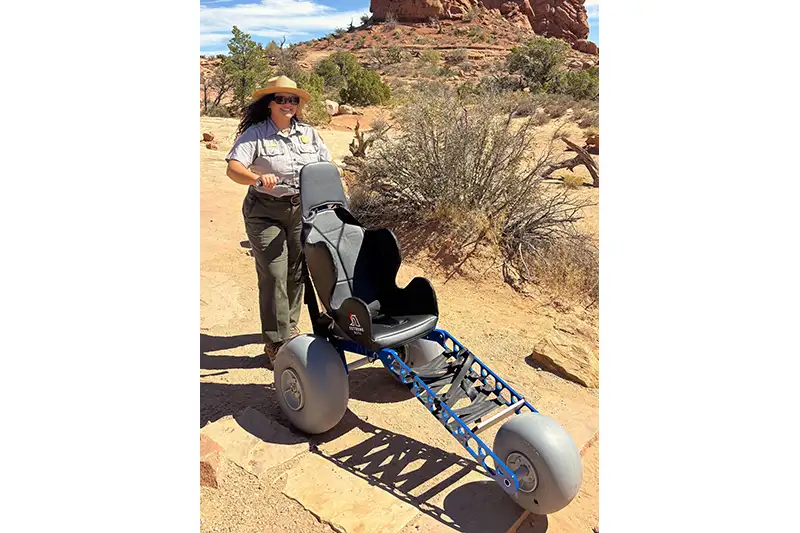
Arches National Park now has an all terrain wheelchair available for loan. This Extreme Motus chair is fitted with three balloon tires, has a long wheelbase, and requires at least one person to push and maneuver the unit. It has a maximum user weight limit of 250 pounds, and a maximum user height limit of 6 feet. The Arches all terrain wheelchair is available for loan at the Arches Visitor Center on a first-come basis. A waiver must be signed prior to checking out the chair, and a ranger will provide a brief training session on how to use the chair. The park cannot store personal wheelchairs, so alternative arrangements must be made while using the Extreme Motus chair.
The Arches All terrain wheelchair can be used on these easy trails, with one assistant.
Landscape Arch Trail
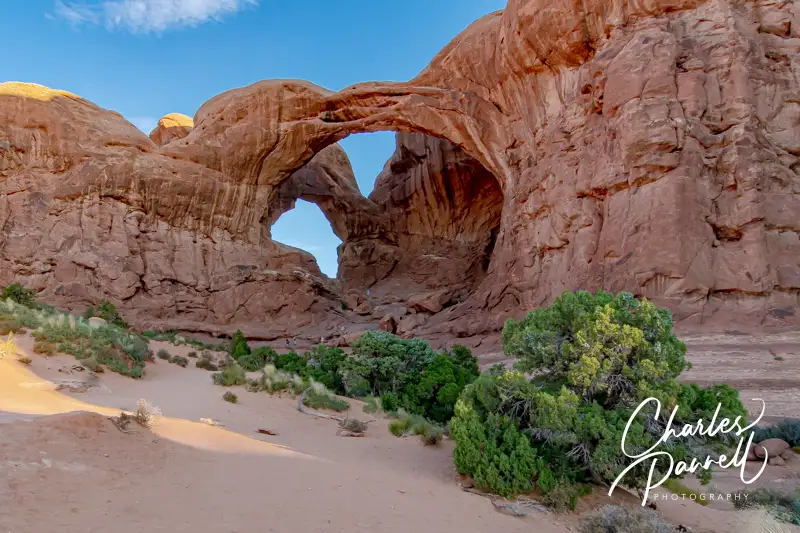
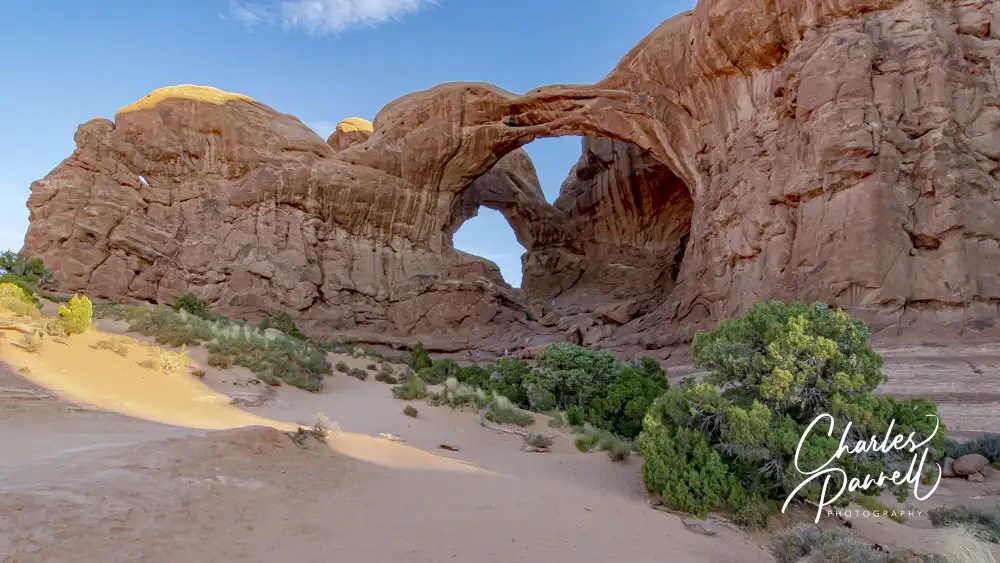
Double Arch Trail
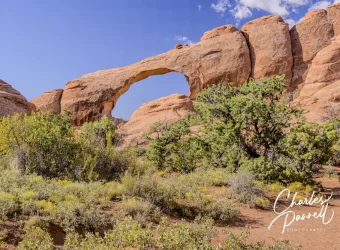
Skyline Arch Trail
Lower Delicate Arch Viewpoint Trail
Double Arch Trail at Arches National Park
Although the Extreme Motus chair is not prohibited on the following trails, sections of them may have steps, uneven terrain and other obstacles that may require the assistance of more than one operator.
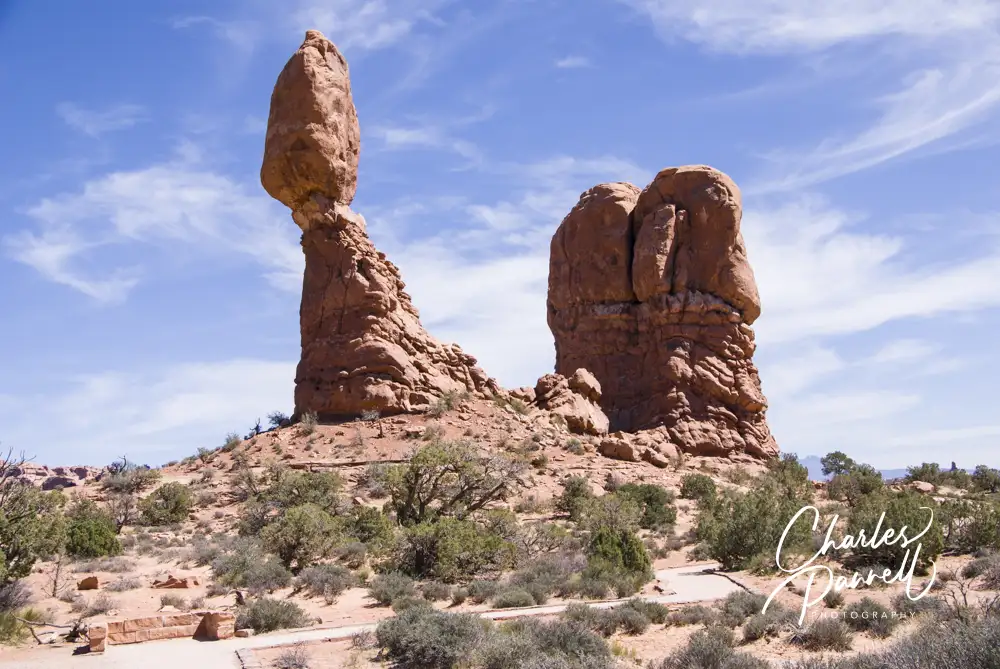
Balanced Rock Viewpoint and Trail
Broken Arch Trail
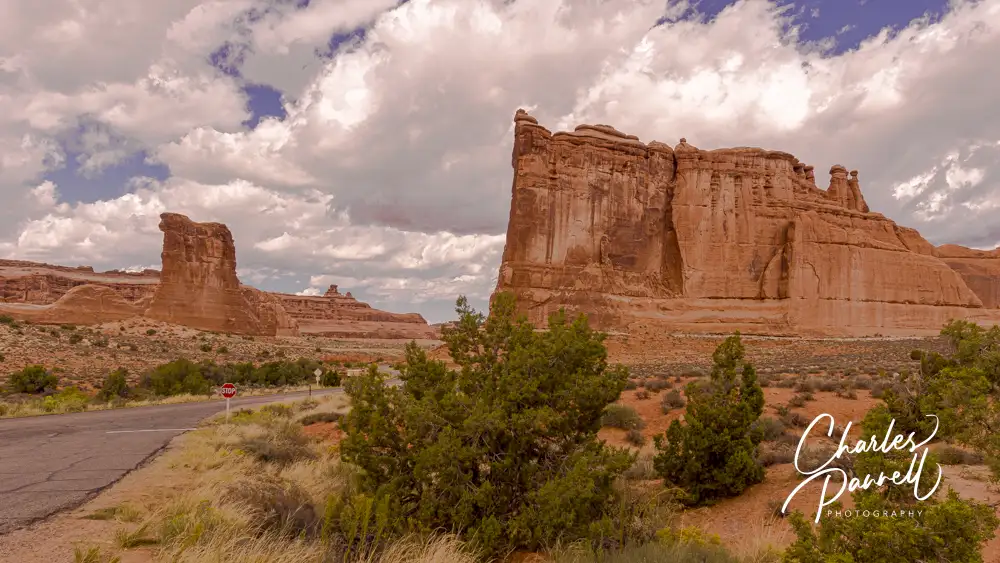
Park Avenue Trail (from Courthouse Towers Viewpoint)
Upper Delicate Arch Viewpoint Trail
Fiery Furnace (Viewpoint Trail only)
Delicate Arch Trail
Tower Arch Trail
Finally, it’s important to note, that the all terrain wheelchair is prohibited on these trails, as they are impassable without causing damage to the natural environment.
Many US National Parks offer a variety of wheelchair-accessible lodging options within their borders. That said, sometimes it’s just not possible to snag a reservation at some of those popular properties. And then there are those remote national parks that don’t offer any in-park lodgings. The solution? Consider booking a property in a national park gateway city. With that in mind, here are some wheelchair-accessible lodging picks located close to some favorite US national parks.
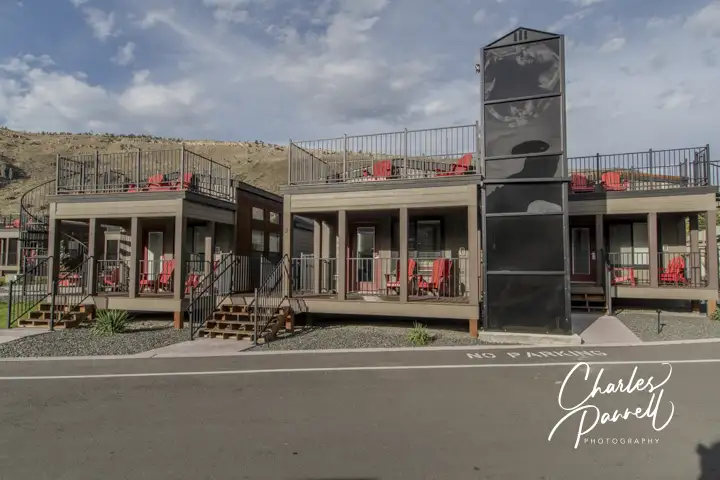
The Jim Bridger Cabins in Gardiner is at the top of our wheelchair-accessible lodging list. Located near the North Entrance to Yellowstone National Park, this complex features a wheelchair-accessible two-bedroom cabin. It includes a compact kitchen, a living room with a fireplace and large bathroom with a roll-in shower. And there’s even elevator access to the top deck, which offers some great star gazing opportunities.
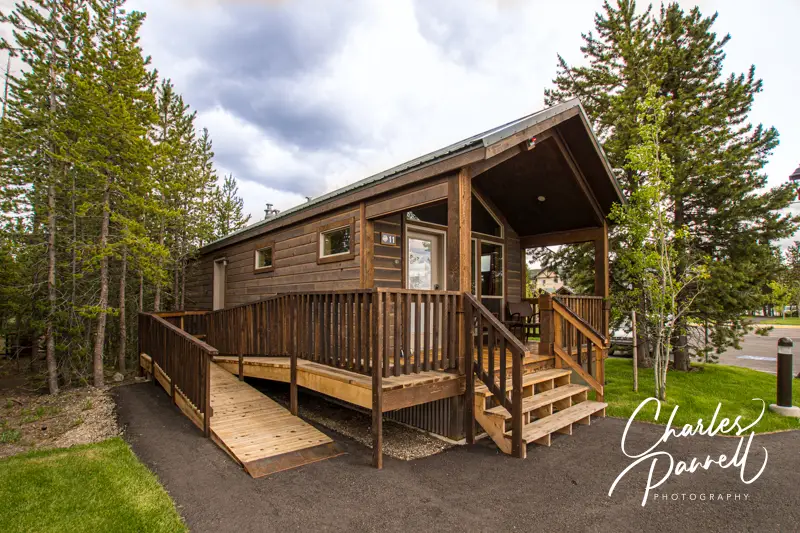
The Explorer Cabins at Yellowstone are located in West Yellowstone, just a short drive from the West Entrance to the park. They have two accessible one-bedroom cabins which each have a small kitchen, a living room with a fireplace, and a bathroom with a roll-in shower. They also include a spacious front porch and several public fire rings where guests can whip up some s’mores.
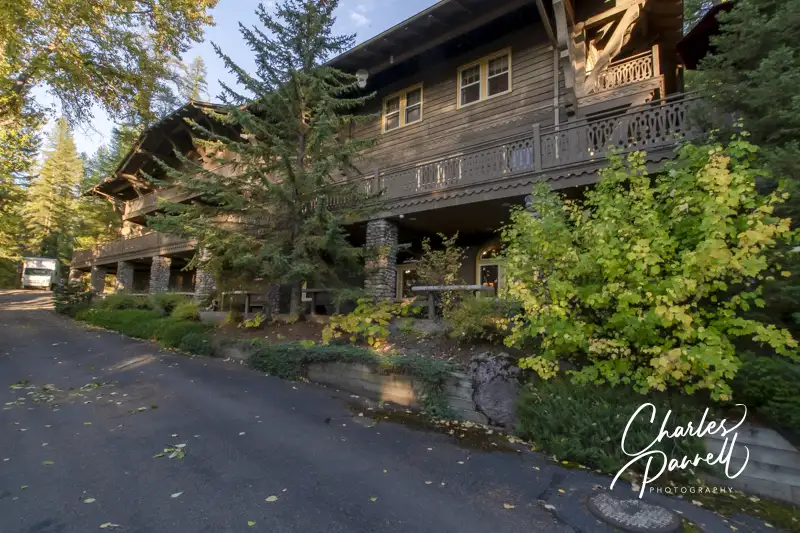
Located across from the railroad station in West Yellowstone, this historic property was built in 1910 by the Great Northern Railroad. Today it still boasts an old world ambiance but it also includes a nice accessible room with a roll-in shower. It’s a great property for railroad buffs, and it’s just a few minutes from the park entrance.
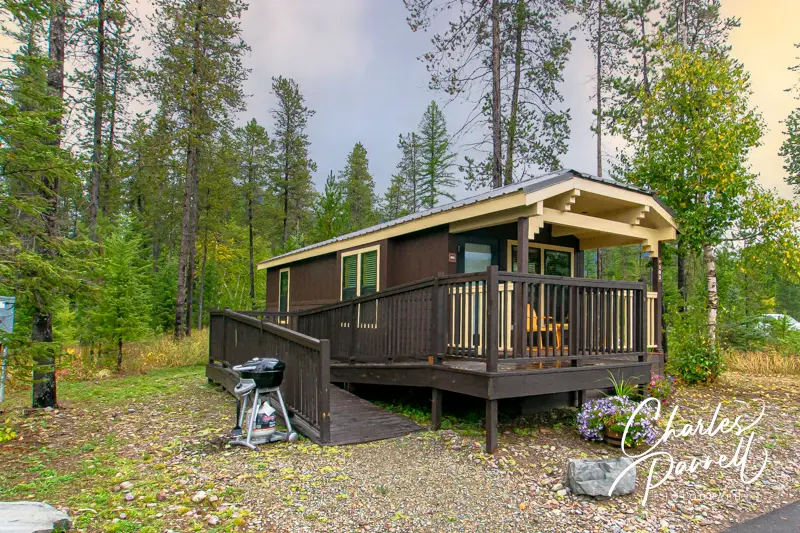
West Glacier Village has two wheelchair-accessible cabins, which each have a full kitchen, a large living room and a bathroom with a roll-in shower. And if you’d like to let someone else do the cooking, the complex is just a short walk away from West Glacier Village, where you’ll find a few eateries and shops.
Zion National Park
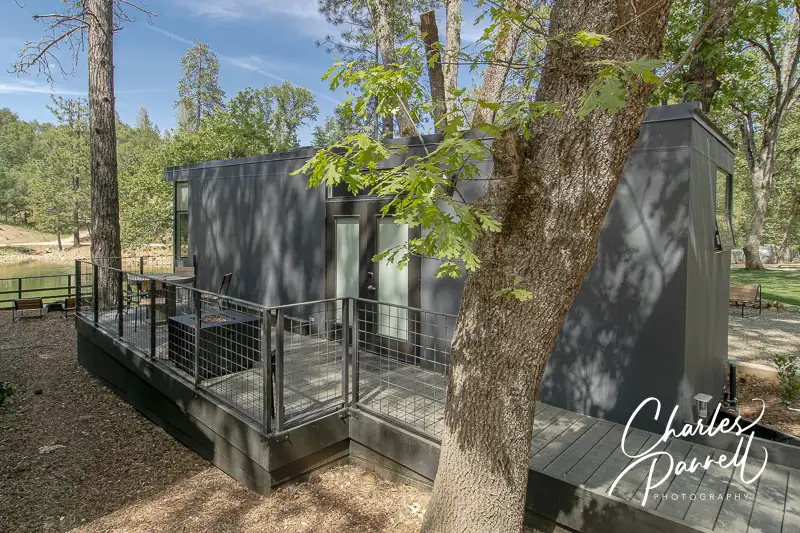
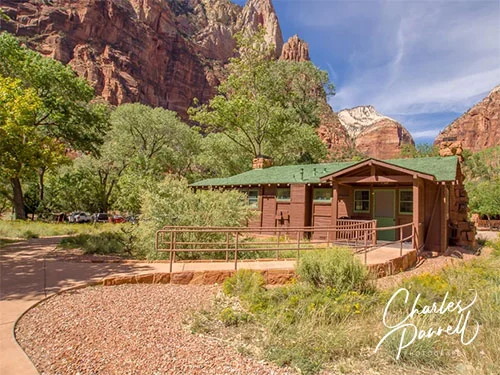
AutoCamp Zion
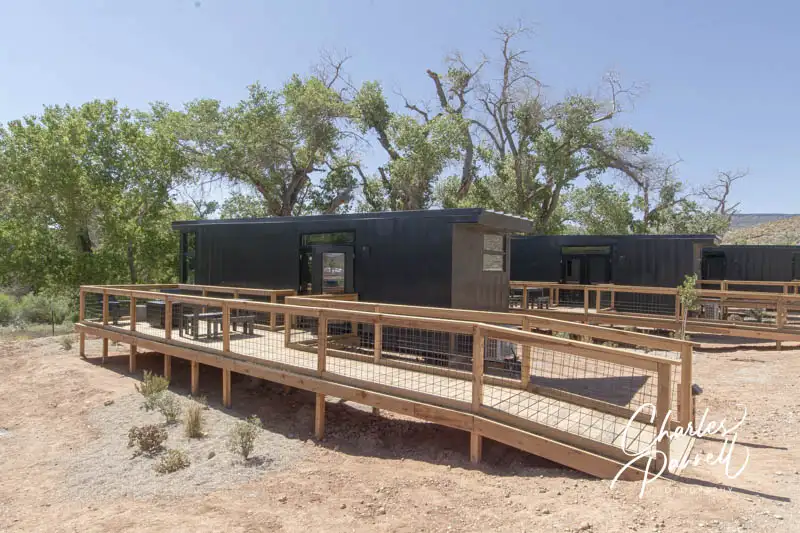
emerginghorizons.com/autocamp-zion-excels-in-accessibility/ This unique lodging complex, which offers a collection of upscale Airstream camping trailers, is located about 20 miles from the South Entrance to Zion National Park. The accessible cabins feature a small kitchen and living area and a bathroom with a large roll-in shower. Add in some nice public spaces, a few fire rings and a swimming pool with a lift, and you have all the essential vacation elements.
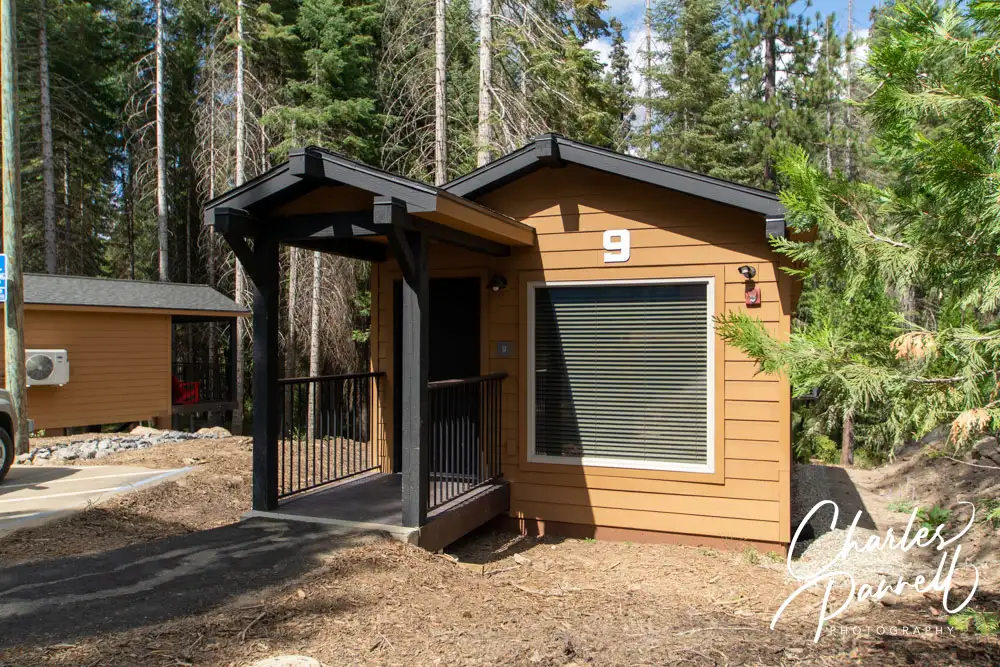
This charming little complex is located along Highway 12 about 15 miles from Bryce Canyon National Park. It includes an accessible cabin with a small kitchen, and a nicely equipped bathroom with a roll-in shower. It’s also got a roomy front porch and a nearby picnic table.
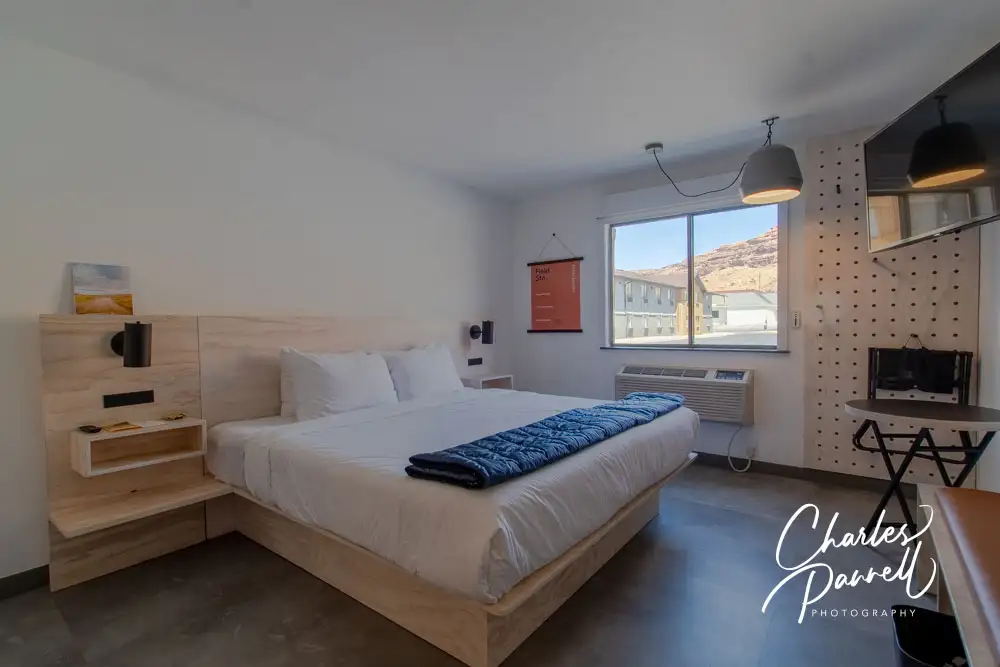
There are no lodges inside of Arches National Park, but Slackline Moab is located in its namesake town, about four miles away from the national park entrance. It has a variety of accessible rooms. Some rooms have roll-in showers, while others have tub/shower combinations. Add in a gear shop, a café, and a nice fire circle, and you have a comfortable and accessible property.
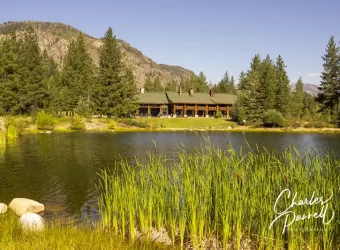
Located near the South Entrance of Yosemite National Park on Highway 41, Waybound Yosemite includes a number of top-drawer wheelchair-accessible cabins, called “havens”. They are nestled in a sugar pine forest next to Tenaya Lodge, and they are available in a variety of bed configurations. The havens also include a kitchen, living area and a small deck. Add in the clubhouse and a few firepits and you have everything you need in an accessible cabin. And guests have access to all the facilities at Tenaya Lodge.
Like its sister property in Zion, AutoCamp Yosemite features comfortable accommodations in upscale travel trailers. It’s located near the Arch Rock Entrance to the park, on Highway 140. The complex includes several accessible units that have a kitchen, living area and a bathroom with a roll-in shower. Add in a spacious deck to enjoy the sunset and you have a very relaxing lodging choice.
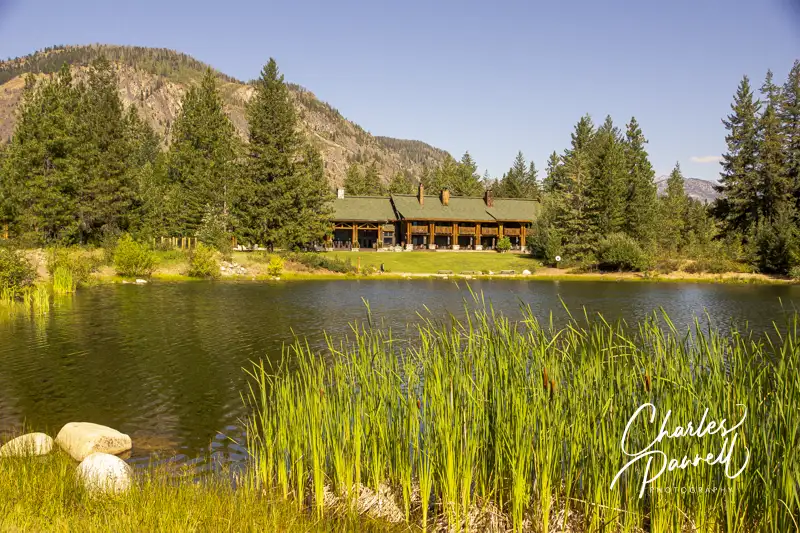
This North Cascades retreat features an accessible guestroom with a roll-in shower and a porch with a view. It’s located in the hamlet of Mazama on the eastern side of the park. Along with the creature comforts, the lodge borders a small scenic lake. And if you get a hankering for a pizza, there’s a parlor within walking distance.
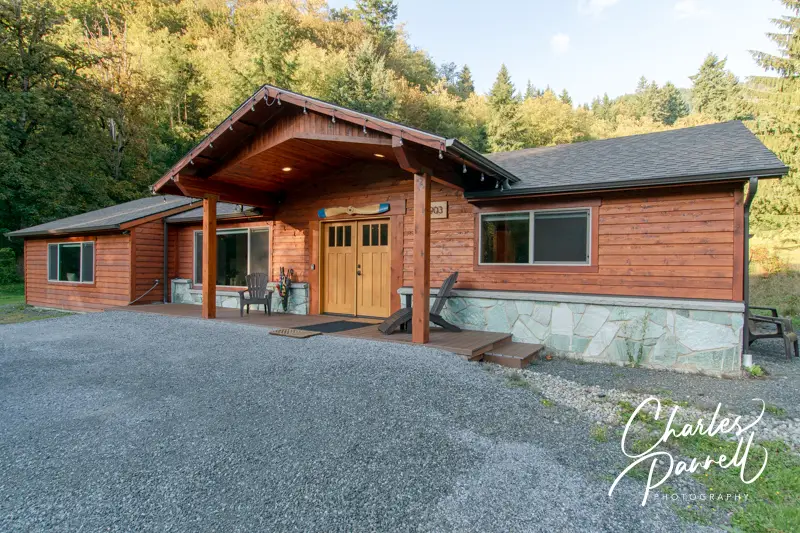
Named after a local bush pilot this two-bedroom home features excellent access and has one bathroom with an oversized roll-in shower. It’s located just five miles from the Nisqually Entrance to Mount Rainier National Park, and it has some pleasant outdoor spaces, a fully stocked kitchen and even a pool table in the game room. A comfortable and accessible find.
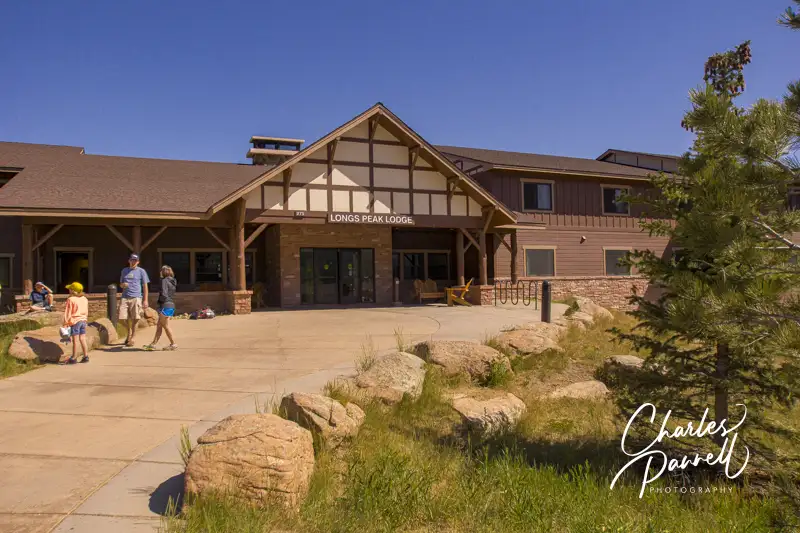
Operated by the YMCA of the Rockies, this complex includes hotel-style accommodations nestled in a Ponderosa Pine forest, about three miles from the Beaver Meadows Entrance to Rocky Mountain National Park. The larger accessible rooms are a great option for families as they have multiple beds, plenty of space and large bathrooms with roll-in showers. Add in some accessible public areas, and a nice cafeteria and you have everything you need for a comfortable – and accessible – stay.
Last but certainly not least on our list of wheelchair-accessible lodging picks, is this collection of Alaska properties located near Denali National Park. Although there are no lodges within the park these three nearby properties have a nice selection of accessible rooms. And as an added bonus, some properties even have a wheelchair-accessible shuttle to and from the park. They all make a great home-base for a Denali visit.
Barrier-Free Travel Glacier, Yellowstone and Grand Teton National Parks for Wheelers and Slow Walkers
Looking back on my career, I think that the first national park I covered for accessibility was Yosemite National Park. Back then there weren’t any accessible trails, and I remember scrambling up the slippery path to the base of Yosemite Falls, and just wondering, “Why can’t this trail be made to be wheelchair-accessible?”
Many years later access improvements were made to that trail, and now it is truly wheelchair-accessible. I remember talking to Mark Wellman at the “grand opening ceremony, and saying that I really wished more national parks would follow suit with improved access. He just nodded in agreement,
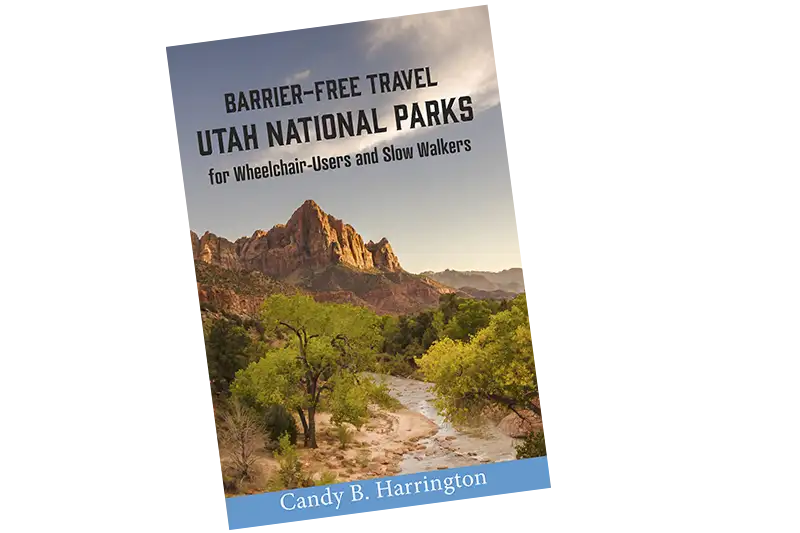
And although it’s taken some time, and a lot of work by advocates, I’m thrilled to see the access improvements at more national lands across the country. In fact, it’s kind of fun to look back and see how much access really has improved whenever I release a new edition of a national park access guide. So as the second edition of Barrier-Free Travel; Utah National Park for Wheelchair-Users and Slow Walkers, (https://emerginghorizons.com/barrier-free-travel-utah-national-parks-for-wheelchair-user-and-slow-walkers/) hits the streets, I’d like to reflect on the improved access in the Utah national parks.
Truly Accessible Trails
At the top of my list for improved wheelchair access in Utah national parks is the creation of more truly accessible trails. Trails that offer folks more than just a short walk near the visitor center – longer accessible trails so wheelchair-users can truly explore the parks.
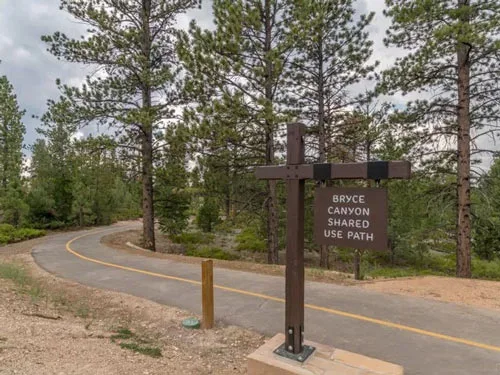
One of my favorite Utah accessible trails is the Bryce Canyon Shared Use Path. This five-mile trail is paved, and it runs from Inspiration Point all the way down to the shuttle staging area at Ruby’s. The great thing about this trail – besides the access – is that you can do as little or as much of it as you like, as it passes several shuttle bus stops along the way. If you get tired, then just hop on the wheelchair-accessible shuttle.
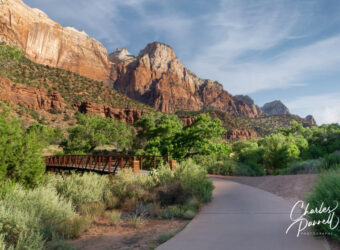
And then there’s the Pa’rus Trail over in Zion National Park. It’s 1.8 miles long and it runs from the Visitor Center up to Canyon Junction. You can’t beat the scenery along this paved trail, as it crosses the Virgin River several times and offers some impressive red rock views. And if you just want to take the trail one-way, it also connects with the park shuttle bus. Scenic, accessible and convenient – what could be better?
Upkeep is Equally Important
Although developing accessible trails is essential, trail upkeep, repair and improvements are also important factors in the national parks accessibility equation. And in that respect, Utah gets great marks.
For example, there was once a slight access issue over at the Petroglyph Boardwalk in Capitol Reef National Park. The boardwalk itself is nicely accessible, and it offers slow walkers and wheelchair-users a close look at the ancient petroglyphs. Unfortunately time and weather had deteriorated the curb-cut that allowed wheelchair-users access to the boardwalk. Well, I’m happy to report that the curb-cut was repaired and this site is once again accessible to everyone.
And over in Zion there was an issue with one of the access points to the Pa’rus Trail. Formerly there was a short section of a steep grade near the Canyon Junction trailhead. But again, that’s all been repaired to make it accessible to everyone.
And then there’s the annual weather damage. This area of the country gets some pretty severe weather, including snow, heavy rains and sometimes even floods. And of course that can take a toll on the trails. That said, I’m happy to report that the weather damage in the Utah National Parks is usually repaired as soon as possible. And that’s a huge thing.
The Little Things
Finally, there are the little improvements that help with the wheelchair access in Utah national parks. First and foremost is the trail signage. I noticed new and more detailed signs at the trailheads – not just for the accessible trails, but all the trails.
And the interesting thing about the signs is the amount of information that they have. They include important details about the length, surface, width, cross slope and grade of the trails. They also list any possible obstructions. I think this is great for some slow walkers who don’t need a totally accessible trail, but would like one with a gentle grade. These signs really paint an accurate picture of the trail conditions.
And then there are the picnic tables. On my last visit to the parks, there was a problem with folks moving the accessible picnic tables to inaccessible areas. This was done not to be vindictive, but merely because it was shadier in the inaccessible areas. I talked to many rangers about this issue, and the tried different solutions. Unfortunately visitors even managed to cut the chains on secured accessible tables in order to move them to shady spots. Sad, but true.
Fast forward to this year, when now more and more picnic tables are covered, so there’s no need to relocate them. I realize this wasn’t done because of access issues, but the result benefits wheelchair-users who need an accessible picnic table. And that’s a very positive change.
All in all, there’s a sustained move to improve access in our national parks, And I look for that that trend to continue over the years. So make plans to go out and enjoy our national parks – and take one of my access guides along with you!
Barrier-Free Travel
Utah National Parks for Wheelchair-users and Slow Walkers
If you’re planning to visit Utah’s Mighty Five National Parks, and wondering if they are wheelchair-accessible, then pick up the newest edition of Candy B. Harrington’s Barrier-Free Travel; Utah National Parks for Wheelchair-Users and Slow Walkers. This essential resource offers essential insider tips to plan a wheelchair-accessible Utah national parks getaway.
Wheelchair-Accessible Utah National Parks
This new edition includes:
Updated information on new access additions.
Fly-drive trip planning information, including accessible van rentals.
Access details and photographs of 33 wheelchair-accessible properties, including all in-park lodging options.
Information about ranger-led tours, loaner wheelchairs and the free America the Beautiful Access Pass.
The scoop on how to nab free accessible bus tours in Bryce Canyon National Park and Zion National Park.
Detailed access information on accessible trails, viewpoints, picnic areas and attractions — in and near the parks.
Information about barrier-free camping options in all the parks.
Insider tips on where to go for the best windshield views, accessible picnic spots and sunset photos.
This inclusive title is the most recent addition to Harrington’s national park series; and although it’s written for wheelchair-users and slow walkers, stroller moms will also appreciate the access information in this guide. It will help everyone plan a truly accessible Utah national parks vacation.
Says Harrington, “I’m very excited to report that Utah National Parks not only added more accessible features since my last edition, but they also maintained the ones they already had. I’m particularly happy to see the access improvements in the Pa’rus Trail as well as the continued upkeep of the accessible Bryce Canyon Shared Use Path.”
For more information wheelchair access in Utah’s National Parks, visit emerginghorizons.com/barrier-free-travel-utah-national-parks-for-wheelchair-users-and-slow-walkers/ and order your copy of Harrington’s newest access resource today.
Barrier-Free Travel Utah National Parks for Wheelchair-users and Slow Walkers
Located in Eastern Utah just five miles north of Moab, Arches National Park is known for its more than 2,000 natural stone arches. The main park road runs from the visitor center to the Devils Garden Trailhead, and connects with side roads to the Windows Section and Wolfe Ranch. And although the major sites are marked on the park map, there are also a number of unmarked pullouts along the way that offer spectacular windshield views of the beautiful red rock landscape.
Insider Tips
Don’t miss Balanced Rock – one of the most accessible sites in the park. It offers a nice .2-mile out-and-back accessible stroll around the seemingly precariously perched namesake rock, with a killer view from an overlook located midway along the route.
Although the main trail to Skyline Arch is not accessible, due to steps and rocks. wheelchair-users and slow walkers can easily access the other side of the arch from the Needles Campground. Just drive to the amphitheater, park in the accessible parking area, and take the level sidewalk over to the amphitheater. There’s an absolutely beautiful close-up view of Skyline Arch from just about anywhere in the amphitheater.
In addition to an entrance fee or a park pass, a day use vehicle entrance reservation is also required for Arches National Park, for visits from April through October between 7 AM and 4PM. Reservations are released in monthly blocks on recreation.gov beginning in January. Print out the reservation or do a screen capture, as cell phone service is spotty in the park. Entry reservation are not available at the park, and visitors who don’t have one will not be admitted.
If you don’t have an entrance reservation, consider entering the park before 7 AM. You’ll dodge the crowds and the park is absolutely beautiful as things begin to come to life for the day.
Road trips are a great way to travel. You can take things at your own pace, pack along all the gear you need, and you don’t have to worry about the airline losing your luggage. And there’s no better way to see some Western US national parks than on a road trip. This epic itinerary begins and ends in Las Vegas and visits nine national parks along the way. The whole route is 1880 miles long, but the longest drive is only 4.5 hours. You can do the whole itinerary, or just tackle a portion of this national park road trip. Either way, it’s a great spring, summer or fall travel choice
The Basics
Although this national park road trip begins in Las Vegas, you don’t have to be a local to give it a try. If you live close you can drive and spend a few days in town before hitting the road. Alternatively, you can grab a flight to Las Vegas and rent an accessible van to explore the national parks.
The good news is, accessible taxis are widely available in Las Vegas. At the airport just join the taxi queue, and the dispatcher will get an accessible cab for you. It’s a quick and easy process, and you don’t have to arrange for accessible transportation ahead of time. If you plan to spend a few days in the city prior to your road trip, most hotels will call for an accessible taxi for you.
Next, order an accessible van from one of these companies in advance, and you’re all set to hit the road.
For an easy first-day drive, just take Interstate 15 to Hurricane, and then follow Highway 9 to Zion National Park (emerginghorizons.com/zion-national-park/). The drive takes about 2.5 hours, and there’s some great scenery along the way. Hop on the wheelchair-accessible park shuttle at the Zion Visitor Center and explore the park, and then spend the night at a wheelchair-accessible cabin at Zion Lodge.
Zion National Park to Bryce Canyon National Park
Shared use trail in Bryce Canyon National Park
From Zion, take Highway 9 to Mt. Carmel Junction and then hop on Highway 89 north to Highway 12 east. Save some time to stop along Highway 12 at the Red Canyon Visitor Center and take a stroll along the accessible Red Canyon Bicycle Trail. Continue on Highway 63, and follow the signs to Bryce Canyon National Park (emerginghorizons.com/bryce-canyon-national-park). If you drive it straight through, it will take about two hours. And there’s no shortage of accessible things to do in the park, including a roll or stroll along along the Bryce Multiuse Trail.
Bryce Canyon National Park to Capitol Reef National Park
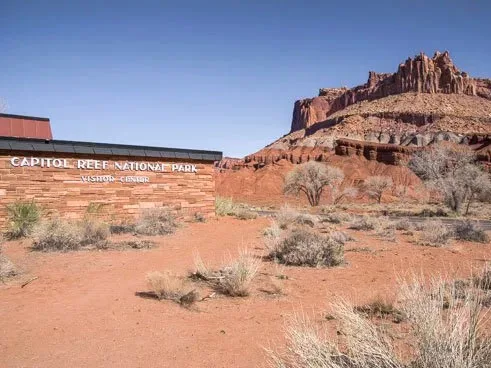
Visitor Center in Capitol Reef National Park
To continue along on your national park road trip, backtrack on Highway 63 and make a right on Johns Valley Road, which becomes Highway 22. Next, make a right on Highway 62, and another right on Browns Lane, then head east on Highway 24 through Torrey to Capitol Reef National Park (emerginghorizons.com/capitol-reef-national-park). It’s a scenic two-hour drive. Pick up a map at the visitor center, then take a driving tour of the park. And don’t miss the petroglyphs along Highway 24.
Capitol Reef National Park to Canyonlands National Park
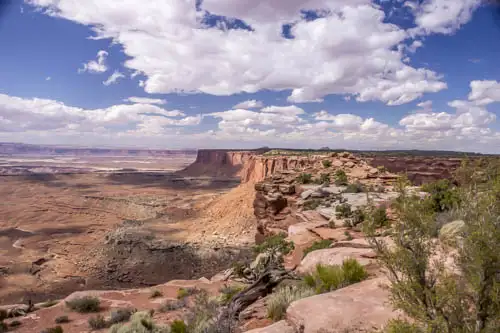
Vista in Canyonlands National Park
The next leg of your national park road trip is about a 4.5-hour drive. From Capitol Reef continue east on Highway 24, then take Interstate 70 east, and Highway 191 south to Highway 63. This will lead you to the Islands in the Sky section of Canyonlands National Park (emerginghorizons.com/canyonlands-national-park). This large mesa “island” rises 1,000 feet above the adjacent land and is surrounded by the Colorado River and Green River. And if you don’t fancy camping out in the park, Field Station Moab (emerginghorizons.com/field-station-moab-a-breath-of-fresh-air) has some comfortable accessible rooms, and it’s just a 30-minute drive away.
Canyonlands National Park to Arches National Park
Devil’s Garden Trail in Arches National Park
For the next leg of your national park road trip, take Highway 313 back out to Highway 191 and continue south to Arches National Park (emerginghorizons.com/arches-national-park). It’s a short 35 minute drive. Stop at the visitor center, then take a driving tour of this beautiful park. Don’t miss the trail at Balanced Rock, Wall Street, the trail to the petroglyphs at Wolfe Ranch, and the Windows Section of the park. Although this park offers some spectacular scenery, advance planning is a must, as timed entry reservations are now required (emerginghorizons.com/national-park-entrance-reservations-required-in-2024). And remember, reservations are not available onsite — you need to purchase them online, ahead of your visit.
Arches National Park to Black Canyon of the Gunnison National Park
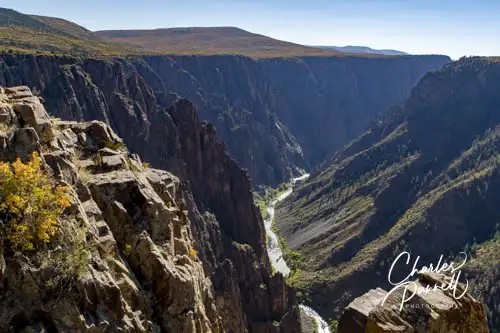
Black Canyon of the Gunnison
The next segment of your national park road trip takes about 2.5 hours. From Arches National Park backtrack north on Highway 191 to Interstate 70 east, then take Highway 50 east to Highway 92 in Delta, to the Black Canyon of the Gunnison National Park (www.nps.gov/blca/index.htm) entrance. There’s no shortage of scenic views on the seven-mile scenic drive along the south rim of the canyon. Even better — most of the viewpoints are wheelchair-accessible. And when it’s time to bed down for the night, there’s a comfy accessible yurt in Ridgeway State Park, which is about a half-hour away.
Black Canyon of the Gunnison National Park to Mesa Verde National Park
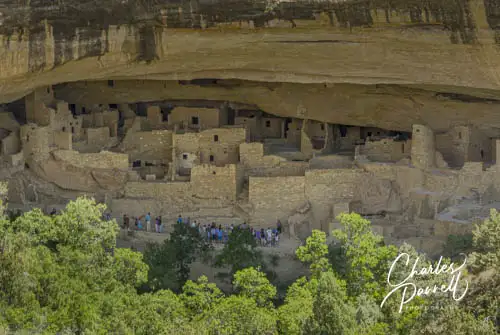
Mesa Verde National Park
To continue your national park road trip, take Highway 50 east to Interstate 550 to Ridgeway. From there take Highway 60 to Highway 145 south to Cortez. To complete this four-hour journey follow Highway 160 to Mesa Verde National Park (www.nps.gov/meve/index.htm). Highlights at Mesa Verde include the scenic Mesa Top Loop Drive, Chapin Mesa Archeological Museum, and the ruins at the Far View Sites. And if you’d like to spend the night in the park, Far View Lodge has some nice accessible rooms with roll-in showers.
Mesa Verde National Park to Petrified Forest National Park
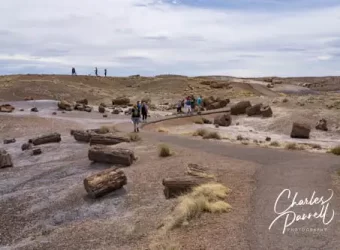
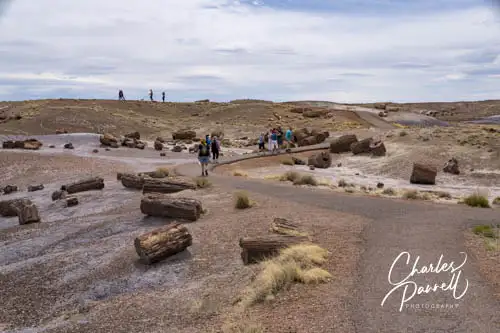
The Crystal Forest in Petrified Forest National Park
From Mesa Verde, backtrack on Highway 160 to Cortez, then head south on Highway 491 to Interstate 40. Go west on the interstate and take exit 311 to reach Petrified Forest National Park (www.nps.gov/pefo/index.htm). The Painted Desert is located near the north entrance, and it features expansive views and a former Harvey House (The Painted Desert Inn). The Crystal Forest is worth a stop near the central part of the park, and don’t miss the Rainbow Forest near the South Entrance. And when you’re done, just exit the south entrance and head north to rejoin Interstate 40.
Petrified Forest National Park to Grand Canyon South Rim
Grand Canyon National Park
After you rejoin Interstate 40, head west and take exit 165 in Williams, then follow Highway 64 to Grand Canyon National Park (emerginghorizons.com/grand-canyon-national-park). It’s a scenic three-hour drive. There’s no shortage of accessible things to do on the South Rim, but for a scenic overview of the whole park, take a wheelchair-accessible flightseeing tour on Grand Canyon Scenic Airlines (www.scenic.com). The 45-minute flight departs from Tusayan, and features ramp access and plenty of room to transfer to a seat. And with the large windows on the plane, you won’t miss a thing. For another great view, check-in to Thunderbird Lodge — the only property in the park that offers wheelchair-accessible rooms with canyon views.
Grand Canyon South Rim to Grand Canyon North Rim
View from the North Rim Grand Canyon Lodge
The last stop on your national park road trip is just a four-hour drive away. From the Grand Canyon Visitor Center, follow the South Entrance Road to Desert View Drive and head east. In Cameron go north on Highway 89, and connect to Highway 89A in Jacob Lake, then just follow Highway 67 south to the Grand Canyon North Rim (www.nps.gov/grca/planyourvisit/north-rim.htm). The great thing about the North Rim is that it doesn’t attract as many visitors as the South Rim. And after the day visitors are gone, it’s just you and the other lodge guests. Grand Canyon Lodge North Rim has a variety of accessible cabins, many which are equipped with roll-in showers. So plan to spend a few days and enjoy the beauty of the North Rim.
Grand Canyon North Rim to Las Vegas
Fabulous Downtown Las Vegas
To complete your national park road trip, take Highway 67 back out to Highway 89A and head north. Next, travel west across the Kaibab Reservation on Highway 389, which turns into Highway 59 when you cross into Utah. Finally, take Highway 9 to Interstate 15 west and circle back to Las Vegas. It’s just a 4.5 hour drive, with lots of great scenery along the way.
Barrier-Free Travel
Utah National Parks for Wheelchair-users and Slow Walkers
Skyline Arch viewed from the Devil’s Garden campground in Arches National Park
Arches National Park is filled to the brim with red rocks, arches and scenic beauty. So it comes as no surprise that it’s a top pick as a Hollywood filming location. The results are some stunning backdrops and jaw-dropping views added to the big screen. And the good news is, many of these sites are pretty easy to find. So take some time to scout out these Hollywood filming locations in Arches National Park on your next visit.
A Little Primer
Moab Museum of Film and Western Heritage
Before you visit the park, plan a stop at the Moab Museum of Film and Western Heritage (moabmfwh.com), which is just a short scenic drive down Highway 128 at Red Cliffs Lodge. Not only will it help you appreciate the complexities of filming on location, but it will also give you some fun inside stories on the productions filmed in the area.
There’s accessible parking in front of the lodge, and although the museum is located down a flight of stairs, there’s an alternate accessible entrance. From the accessible parking space, follow the sidewalk on the left, down around the building to the level back entrance. Inside you’ll find a hallway lined with movie posters, with the museum at the end of the hall on the right. There’s level access to the museum, with good pathway access to all the exhibits.
Take some time to watch the introductory video that details the history of filming in the area and includes some fun facts, stories and recollections about the flicks. The museum is jam packed with memorabilia from the over 120 movies shot in the area, including City Slickers II, Back to the Future III, Thelma and Louise and Indiana Jones and the Last Crusade. Don’t miss the Geena Davis stunt dummy that survived the final crash in Thelma and Louise, or the license plate from the Shaguar in Austin Powers Goldmember. Add in a large collection of photographs, movie posters and memorabilia and you have a complete picture of the filming history in the area. And the best part is – there’s no admission charge to this fun and funky museum.
Filming Locations in Arches
Park Avenue Viewpoint
Park Avenue Viewpoint in Arches National Park
Located about two miles from the park entrance, Park Avenue Viewpoint is the first stop on this filming locations in Arches scenic drive. The opening scenes of Indiana Jones and the Last Crusade were filmed here. Just picture a group of boy scouts — including a youthful Indy –riding their horses through the desert against this magnificent backdrop. There’s accessible parking near the paved 200-foot trail out to the upper viewpoint, where you’ll get a good view of the towering formations that resemble the skyscrapers of Manhattan.
Courthouse Towers
Courthouse Towers in Arches National Park
Just down the road you’ll find Courthouse Towers, the next stop on this Arches filming locations tour. A memorable scene from Thelma & Louse was filmed nearby. It begins as the pair is stopped by a police officer in the middle of nowhere, and concludes when the gals get the officer’s gun and later lock him in the trunk of his car. Just look down the road and try to imagine it all unfolding. There’s accessible parking in the small lot with level access to viewpoints on both sides, so you’ll have a variety of vantage points for a good view.
Balanced Rock
Balanced Rock in Arches National Park
Balanced Rock, which is located just south of the intersection of Arches National Park Road and The Windows Road, is one of the most popular stops in the park. It was also a filming site for Rio Conchos starring Stuart Whitman and Richard Boone in 1964. The infamous rock can be seen in the background in several scenes, but is most prominent in the camping scene. There’s accessible parking in the small lot near Balanced Rock, with curb-cut access up to the interpretive plaque. From there you’ll get an excellent view of this Arches favorite.
Double Arch
Double Arch in Arches National Park
Located in the Windows Section of the park, Double Arch was another filming site for Indiana Jones and the Last Crusade. Again in the beginning of the movie, River Phoenix runs down the hill in front of the arch, after encountering some grave robbers. There’s accessible parking near the trailhead, and the .3-mile trail leads out to this unique arch. It may be doable for some slow walkers and power wheelchair-users, but manual wheelchair-users may require assistance with the first steep grade. And even if you can’t do the trail, you’ll still get a good view of Double Arch from the trailhead.
Devils Garden Trail
Devil’s Garden Trail in Arches National Park
Last but no least on our list of filming locations in Arches is the Devils Garden Trail, which is located at the end of the Arches National Park Road. Although the entire length of this tail is not accessible, the first 100 yards offers some dramatic views for wheelchair-users and slow walkers. It was also the filming site for Taza Son of Cochise. More specifically the scene where the US Calvary was ambushed by the Indians was shot here. Just imagine the troops advancing through the fin, only to be cut down in the attack. The first part of this trail is a must-see, as you don’t often find wheelchair-accessible canyon walks.
Insider Tip
In an effort to better manage the crowds at Arches National Park, entrance reservations are required during the peak visitation season. These reservations are not available for purchase at the park entrance. They must be purchased in advance at www.recreation.gov. And even if you have a national park pass you still need an entrance reservation to enter the park between 7AM and 4PM.
That said, the park is absolutely gorgeous in the early morning hours; so if you don’t happen to score an entrance reservation get there before 7AM. As an added bonus, you’re find fewer people there at that hour, and you won’t have to search in vain for parking at the popular stops. For more information about the required entrance reservations, visit emerginghorizons.com/national-park-entrance-reservations-required-in-2024/.
Barrier-Free Travel
Utah National Parks for Wheelchair-users and Slow Walkers