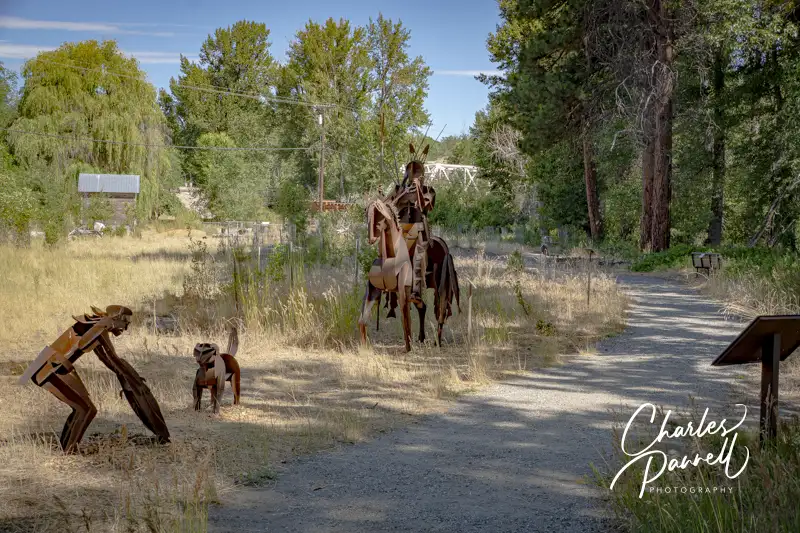
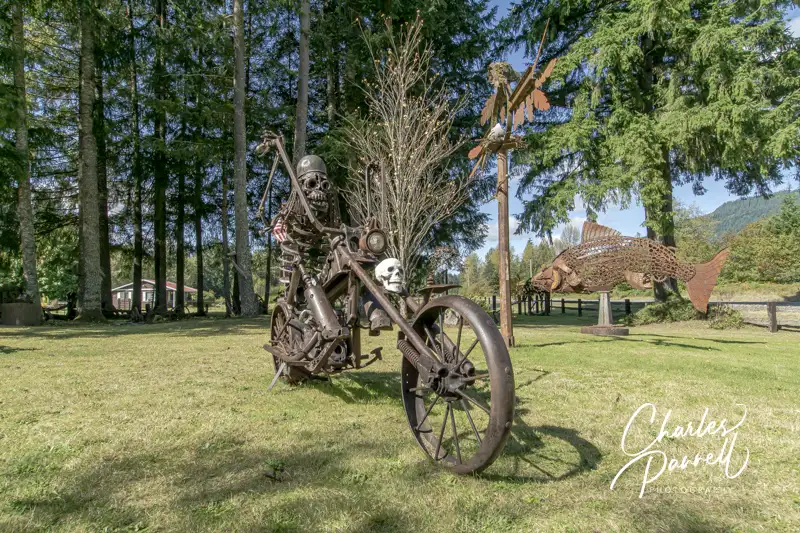
Located 11 miles west of the Nisqually Entrance to Mount Rainier National Park, Recycled Spirits of Iron Sculpture Park features the works of Daniel Klennert. And as the name implies, his creations are crafted from recycled and discarded objects. The front installations are dwarfed by a giant train near the entrance, and they include everything from a broomstick horse, and a wagon wheel, to a seahorse crafted from horseshoes, a collection of birds, and a number of themed motorcycles. Around back the installations continue with another train, more motorcycles, a collection of outhouses and an X-rated Mona Lisa. And although it’s a little bumpy in the back, the front garden and the inside gallery and gift shop are wheelchair-accessible.
Located three miles west of Superior, Boyce Thompson Arboretum (btarboretum.org) is Arizona’s oldest and largest botanical garden. The 323-acre parcel is filled to the brim with plants from deserts around the world, and offers visitors an up-close-and-personal look at desert flora and fauna in the a variety of landscapes. From sheer mountain cliffs to a streamside forest, there’s a wide selection of habitats for wheelchair-users and slow walkers to explore. And since the park is just 65 miles east of Phoenix, it makes an excellent day trip from the city, as well as a fun Arizona road trip stop.
Plan a Picnic
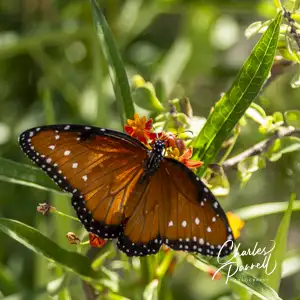
Butterfly in the Demonstration Garden
Access is relatively good throughout this popular Arizona botanical garden, with accessible parking in front and barrier-free access over to the visitor center. Inside, there’s plenty of room to maneuver a wheelchair around the exhibits, and to the accessible restrooms, which are located in the rear of the building. There’s also barrier-free access to the gift shop, which offers souvenirs, gifts, drinks, snacks and sandwiches.
If you’d prefer to bring you own picnic lunch, accessible picnic tables are located near the Demonstration Garden, across from the visitor center. Accessible parking is located nearby, with a level path over to the shaded tables. It’s a pleasant, peaceful spot to enjoy a noontime repast.
Save some time to visit the Demonstration Garden after lunch. There’s level access throughout the garden which offers design and plant selection ideas for a variety of landscapes. Before you set out to explore the rest of the botanical garden, make sure you have an ample supply of water and a hat, as shade is in short supply, and the midday sun can be harsh.
Explore the Main Trail
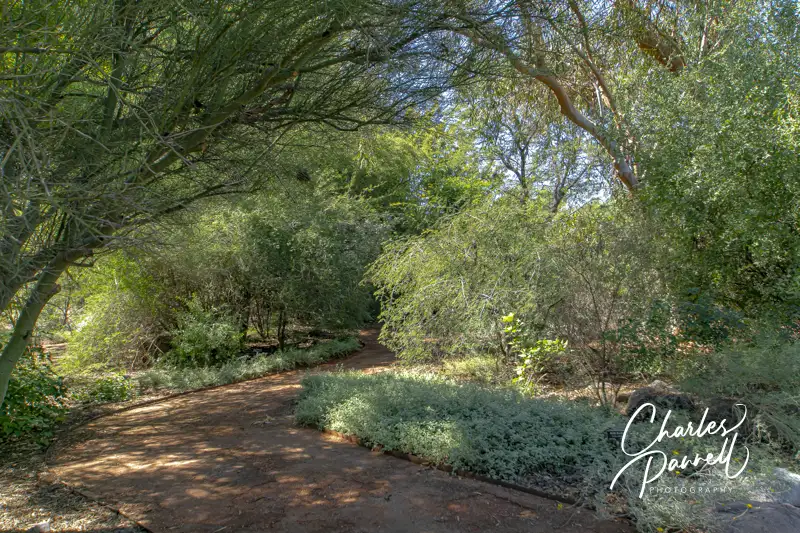
Most of the Main Trail through the botanical garden is doable for wheelchair-users and slow walkers, as this hard-packed dirt trail is wide and fairly level. It begins near the visitor center and allows visitors access to a number of other gardens along the route.
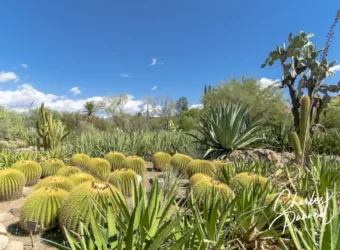
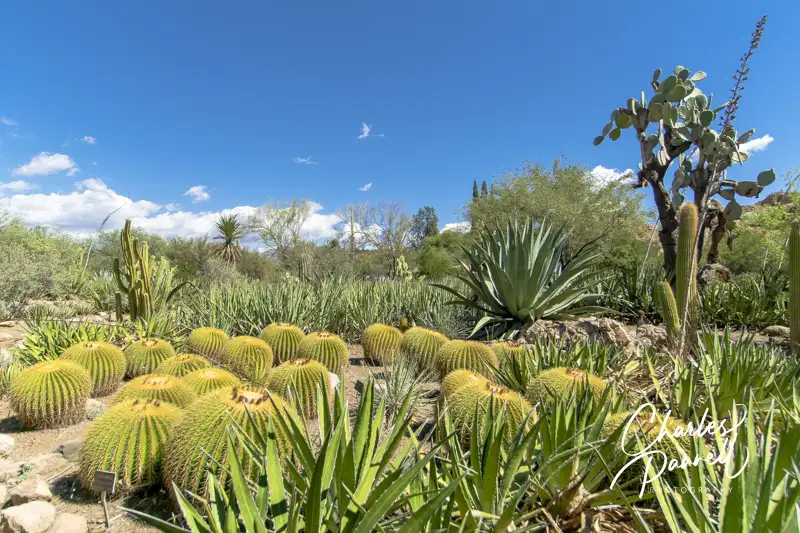
The nearby Heritage Rose Garden also level pathways, and even though they are made of brick they’re still manageable. And don’t miss the Children’s Garden which features level access and boasts a fun water feature. The Taylor Family Desert Legume Garden is another good choice, as it’s is paved and showcases plants from the pea family. And although the trails in the outdoor Cactus Garden are a bit steep and bumpy, there are a few areas near the Main Trail that are doable for wheelchair-users and slow walkers.
The accessible section of this part of the Main Trail ends in about a mile, near Ayer Lake. From there it travels through the Upper Sonoran Natural Area, which has steep grades and a rocky pavement.
Another Main Trail Branch
Along the Main Trail at Boyce Thompson Arboretum
Even though Ayer Lake is the end of the line for one accessible trail, there’s still more for wheelchair-users and slow walkers to explore. From Ayer Lake, you can also double back and explore another branch of the main trail. Just head back toward the Taylor Family Desert Legume Garden, and connect to the other part of the Main Trail loop.
This section of the trail first trail passes through a patch of eucalyptus forest, with level pathways around the trees. The Herb Garden, which is just up the trail, is also fairly level, with plenty of room for wheelchair-users and slow walkers to navigate around the aromatic herbs. Just past the Herb Garden there’s barrier-free access to the suspension bridge, but the High Trail on the other side of the bridge is not accessible. The access on the Main Trail ends just past the pumphouse, where the trail connects to the rugged Upper Sonoran Natural Area.
All in all it’s about a three-mile round trip jaunt from the visitor center to Ayer Lake, over to the the Main Trail branch, and back to the visitor center. That said, if that’s too long, you can always explore the gardens near the visitor center, which offer a good overview of desert habitats. Either way Boyce Thompson Arboretum makes a fun and educational day trip for wheelchair-users and slow walkers.
Barrier-Free Travel the Grand Canyon for Wheelers and Slow Walkers
Located in the Hudson Valley three miles from Cornwall, Storm King Art Center (stormking.org) isn’t your average art installation. For starters it’s located on a 500-acre parcel dotted with meadows, ponds, hills and forests, that offer a taste of the natural beauty and diversity of the area. Add in over 100 small-scale and larger-than-life sculptures in a variety of mediums, and you have one of the region’s largest — and most diverse — outdoor sculpture parks. And although there are a few hills and rocky patches in certain parts of the landscape, Storm King Art Center is still an excellent choice for wheelchair-users and slow walkers.
Access with a Capital A
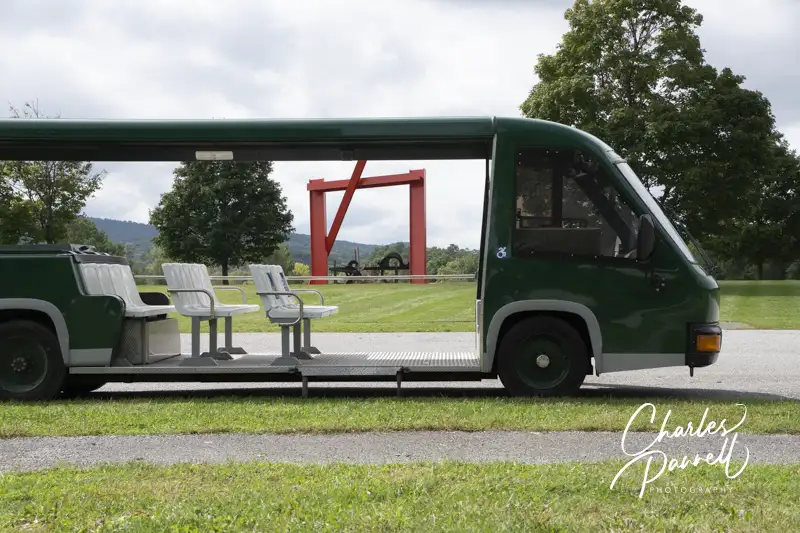
Storm King Art Center Tram
Wheelchair access is first-rate at the Storm King Art Center, starting with their large parking area. There’s accessible parking with level access over to the outdoor lobby, which features accessible restrooms, visitor information and ticketing windows. From there, you have several choices.
The easiest way to explore the park is to hop on the wheelchair-accessible tram. There’s ramp access to the tram, and you can stay in your own wheelchair or transfer to a bench seat. The tram stops at all the major areas of the park, and it’ a great option for slow walkers too.
Alternatively, you can walk over to Museum Hill, the focal point of the park. It’s a .4-mile level walk through the South Fields to the elevator which goes up to Museum Hill. As an added bonus, you can check out some of the sculptures on your stroll through the South Fields.
Although the bulk of the park is flat and easy to navigate in a wheelchair, there are some steep and rocky areas. The free visitor map is an excellent resource, as it points out all the paved pathways, as well as the steep areas, uneven paths and stairs. The park also operates an accessible cart service to help visitors navigate over areas with inaccessible terrain. For more information or to reserve a ride, call (845) 534-3115.
Explore the Grounds
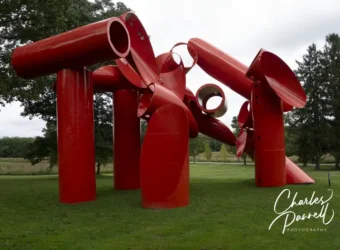
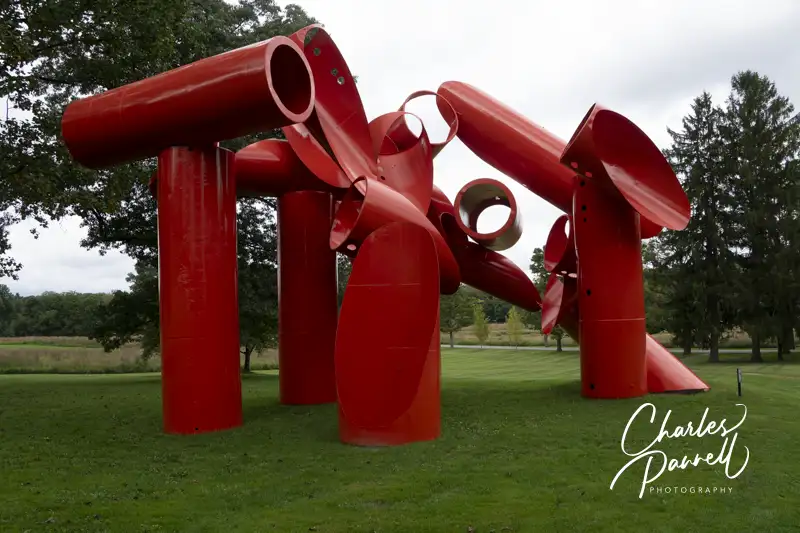
Iliad by Alexander Liberman
The grounds are filled with varied landscapes, and although there are hills here and there, you can also use the accessible tram to bypass them. The best bet is to start with Museum Hill. There’s ramp access to the Museum and ample room to maneuver a wheelchair through the galleries, which offer rotating exhibits. There is a step down to one of the galleries, but it’s also accessible from outside. And if you’re a slow walker, you might want to pick up one of the loaner wheelchairs at the Museum Store.
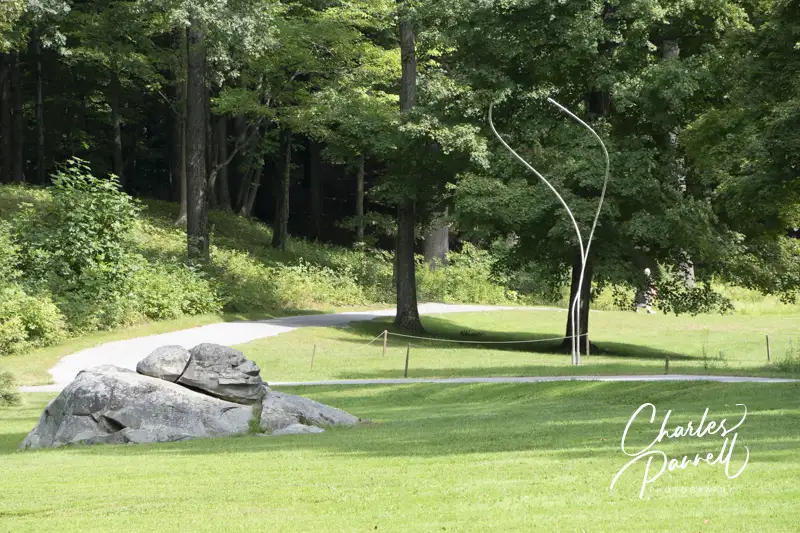
Museum Hill is fairly level, and it’s dotted with abstract cubes, tubes, triangles and a variety of other shapes. Two favorite pieces are also located on Museum Hill — City on the High Mountain, by Louise Nelson and Dwellings by Charles Simonds. Both of these pieces are located near the Museum, so they’re relatively easy to find.
The North Woods, which is located near Museum Hill, is one of the least accessible areas in the park. Although there are some fairly level paths through the lower part, the upper areas are rocky and steep. Still there’s plenty to see in the lower areas, which are located near the tram stop.
New pieces are continually added to the collection at Storm King Art Center, and sometimes there are also special exhibitions. And don’t miss the four Alexander Calder sculptures! Take some time to explore all the areas of the park, and if you get tired, catch the accessible tram and head back to your car. Alternatively you can use the tram as a tour vehicle to see the whole park, as it offers a good look at many of the sculptures along the route.
Grab a Bite to Eat
If you’d like to take a break and grab a bite to eat, stop in at the Storm King Café, which is located near the parking lot in the North Woods. The tram stops near the café, and there’s level access over to the entrance, and plenty of room to maneuver a wheelchair inside. Offerings include a selection of sandwiches, salads, cookies, snacks and soft drinks.
If you’d prefer to pack along your own lunch, there are plenty of places to picnic on the grounds. Management welcomes guests to bring in their own food, but no cooking is allowed in the park. Accessible picnic tables are available near the parking area, or you can bring a blanket and and enjoy your lunch anywhere on the grounds, except for Museum Hill. Pick a spot with a view, and enjoy the sculptures during your lunch break.
It’s also important to note that peak times at the Storm King Art Center are on weekends in September and October. If you don’t like crowds, it’s best to avoid those times. And no matter when you visit, it’s a still good idea to arrive early. That way you’ll have a more serene and crowd-free experience in this beautiful outdoor space.
Barrier-Free Travel the Grand Canyon for Wheelers and Slow Walkers
If you’d like to hit the beach while you are in Honolulu, but you’re a wheelchair-user or slow walker, rest assured it’s still possible. Thanks to the Department of Parks and Recreation, beach mats and beach wheelchairs are available at many Honolulu beaches.
The hard plastic beach mats make it easy for wheelchair-users and slow walkers to navigate over the soft sand. And if you’d like to pave your own way, the beach wheelchairs make that possible too. The beach wheelchairs have three balloon tires, and have a weight capacity of 300 pounds. They are available on a first-come basis, in two-hour increments. It’s important to note that the beach wheelchairs cannot be self propelled, so you must bring along a companion to push you around the beach.
The following locations have beach mats and beach wheelchairs.
Beach Mats
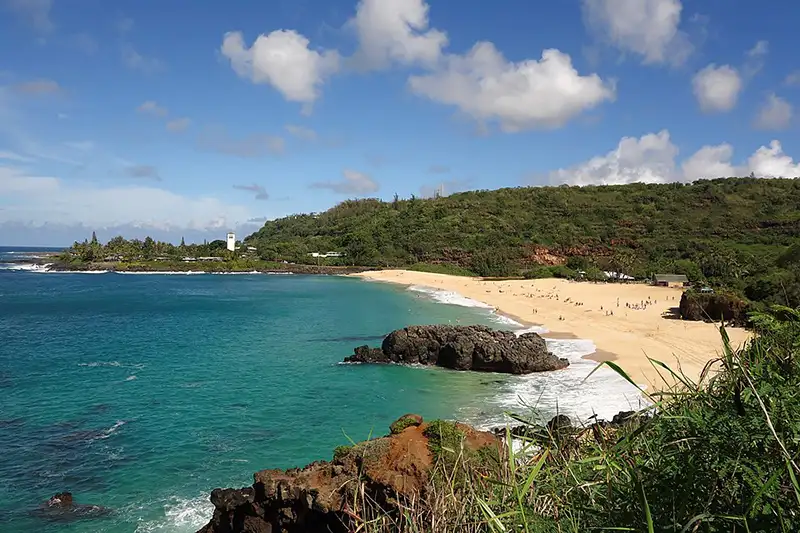
Waimea Bay Beach Park
Ehukai Beach Park
Waimanalo Bay Beach Park
Sans Souci Beach at Kaimana Beach Hotel
Kuhio Beach Park
Hale’iwa Ali’i Beach Park
Hunananiho
Beach Wheelchairs
Kualoa Regional Beach Park
Hanauama Bay Nature Preserve
Beach Mats & Beach Wheelchairs
Kailu Beach
Ala Moana Beach Park
For more information about the Honolulu beach wheelchairs and beach mats, visit www.honolulu.gov/dpr/therapeutic-recreation-beach-wheelchairs/. That site also has a helpful map of all the beach mat and beach wheelchair locations. So get ready to enjoy the sand and surf on your next Honolulu trip.
Barrier-Free Travel California National Park Road Trips for Wheelchair-Users and Slow Walkers
Although it’s great to eat in an iconic restaurant when you’re on a road trip, it’s also nice to be able to stop for a picnic lunch. This is especially true if you’re traveling to a rural destination. Not only does it help trim the food budget a bit, but it’s also very relaxing to enjoy a midday meal surrounded by Mother Nature’s beauty. And Calaveras County is the perfect place to do exactly that. Located in the heart of California’s Gold Country, this rural area is composed largely of unincorporated areas, filled with flowers, greenery and beautiful scenery. So check one of these Calaveras County picnic areas on your next Golden State road trip.
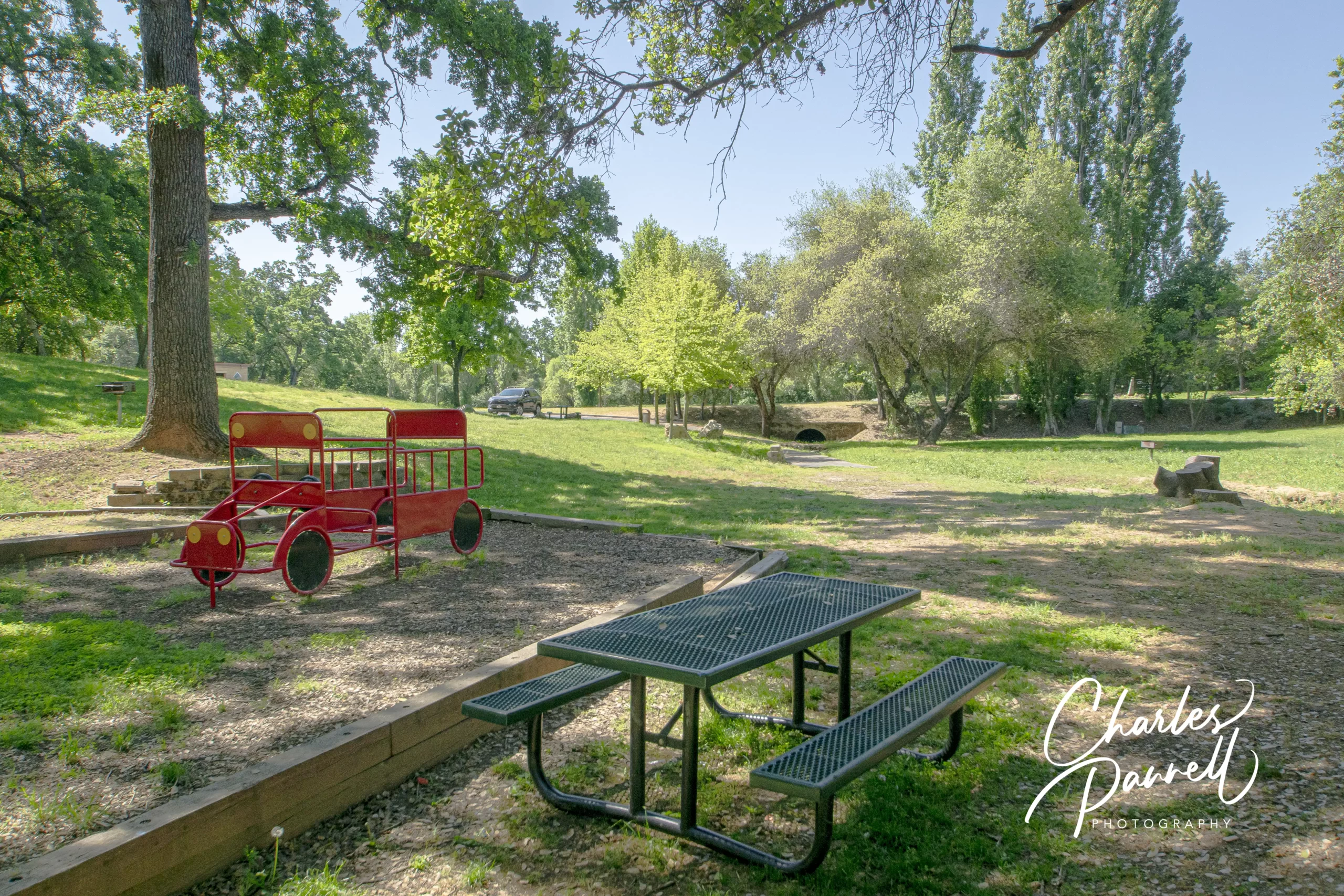
First up on the list of Calaveras County picnic areas is Gateway Park. This small park in Angels Camp is definitely off the tourist trek. There’s accessible parking next to an accessible restroom, and a level trail down to a picnic table in a grassy area. Although it’s a standard table, there’s room for a wheelchair at the end. There’s also a paved path along the creek to another table under a tree near the play area. And although it’s not a busy park, you may have a few deer join you for lunch.
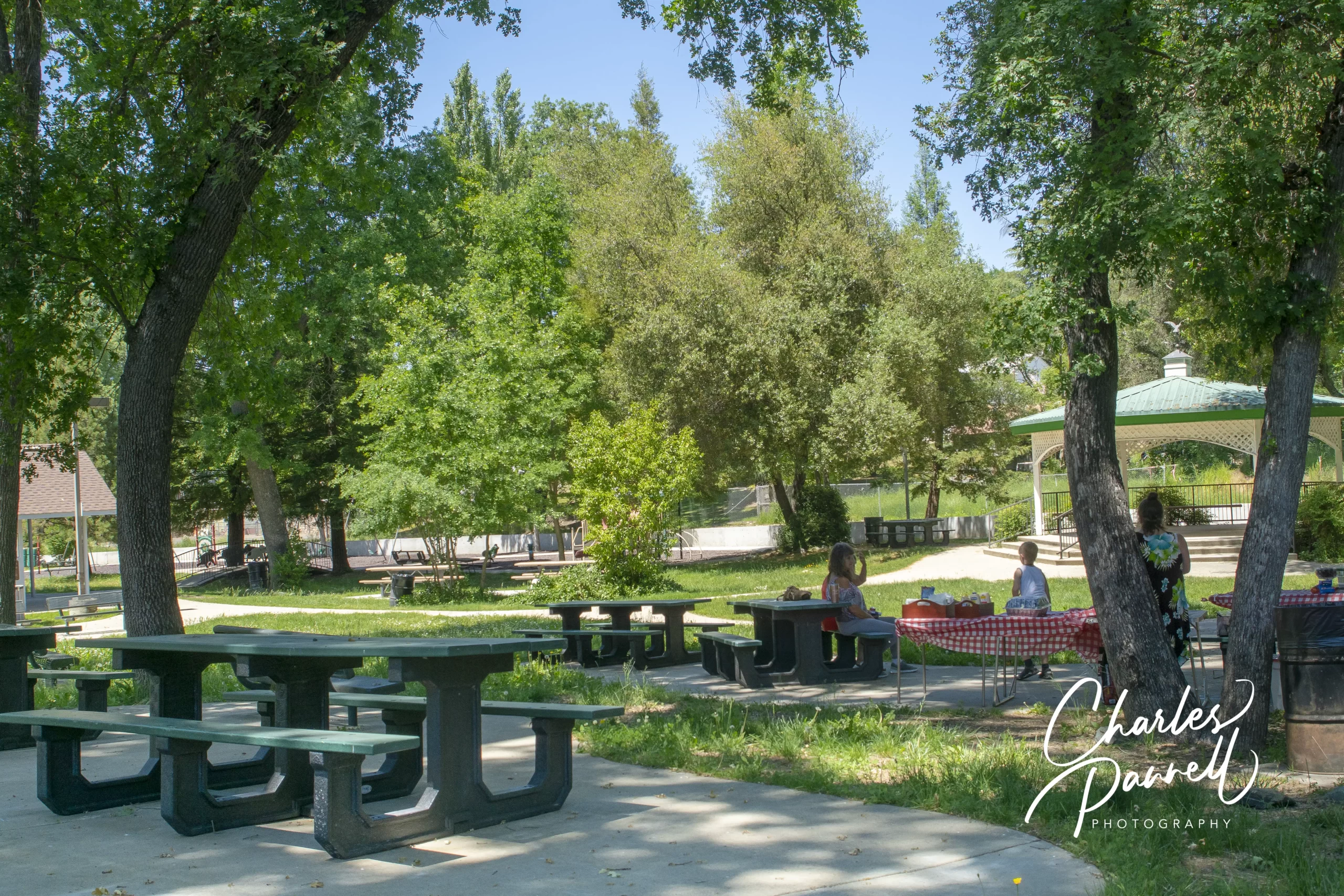
If you use GPS to get to this park, it will take you to a row of houses on Pope Avenue behind the park. If you find yourself in this situation, then just turn on Treat Avenue to find the entrance to this small park. There’s no accessible parking in the small lot, but there’s level access on a cement pathway over to the picnic tables at this community park. And there’s plenty of room for a wheelchair to maneuver around the tables, and there’s room for wheelchair seating on the ends. There’s also a gazebo and a kids area at this park. The restrooms are accessible, but they may be locked in the off season.
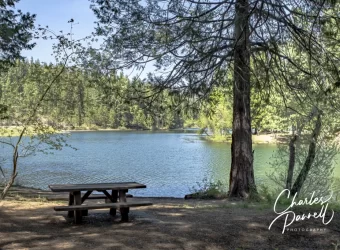
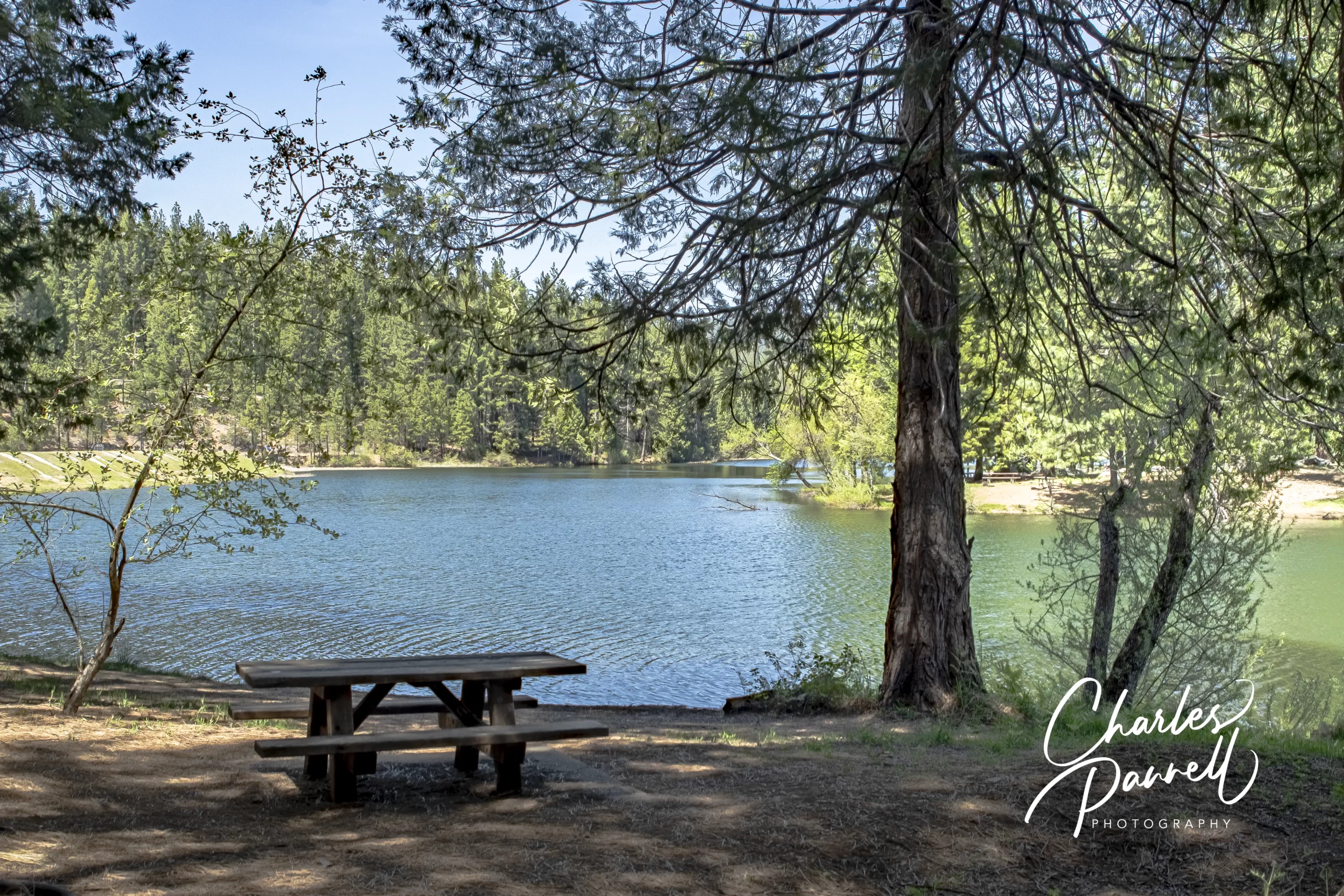
Next up on the list of Calaveras County picnic areas is White Pines Park. This small lakeside park is just down Dunbar Road from the Sierra Nevada Logging Museum. Turn left into the small parking lot just past the museum — it you hit Blagen Road, you’ve gone too far. There’s accessible parking near the lake, with level access out to an accessible picnic table. There are also BBQ grills available near the lakeside tables. And the great part about this park is that you can also wander over and enjoy the outdoor exhibits at the museum, even if they’re not open.
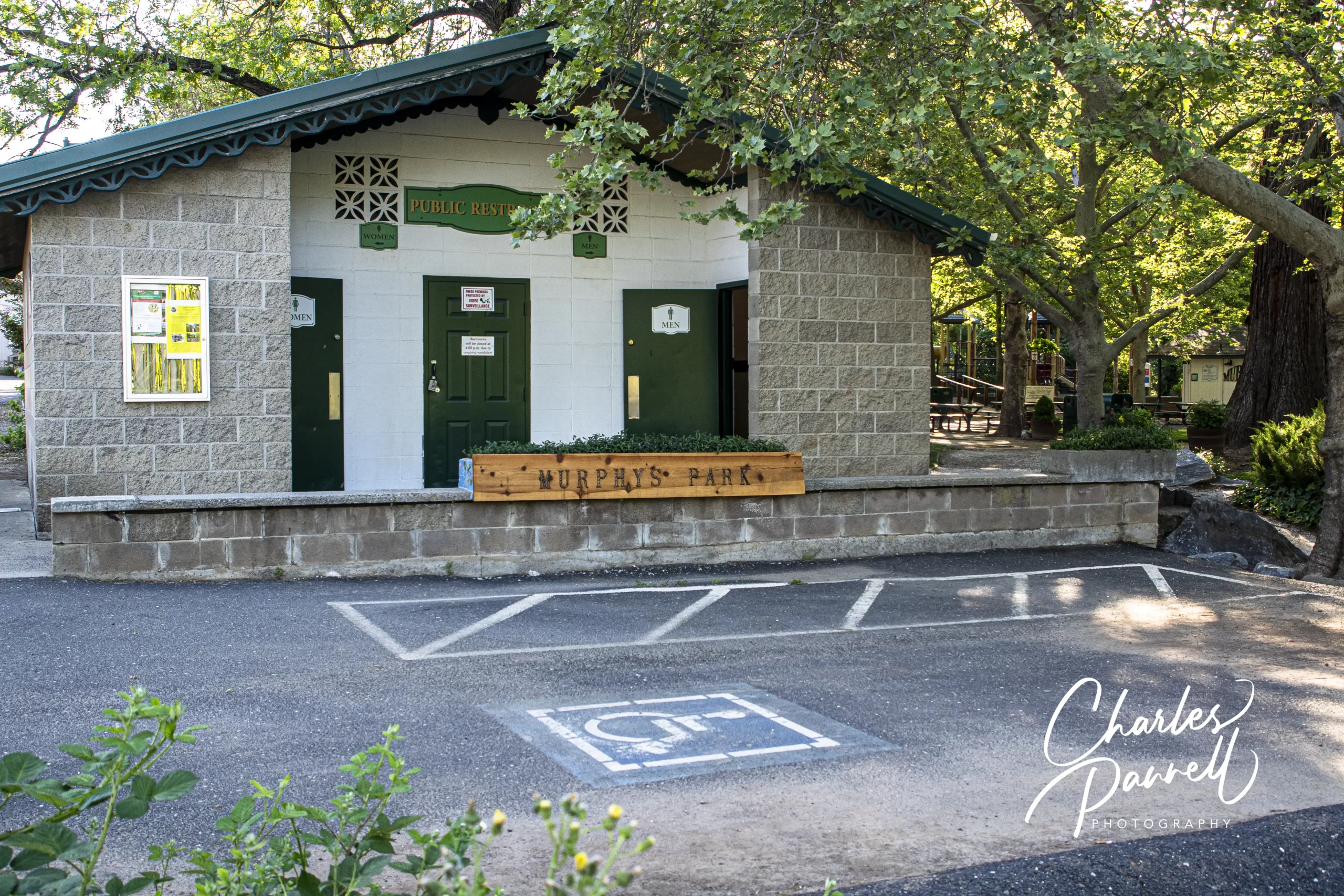
This popular park is located on Algiers Street, just around the corner from the Murphys Historic Hotel. There’s accessible parking in front of the restrooms near the park, and it’s just a short roll down to the park entrance. There’s also a large accessible stall in the park restrooms. Inside the park, there are a number of picnic tables under the trees, and some on pavement near the creek, with plenty of room for a wheelchair. And if you’d like to do a little wine tasting after lunch, you’re just a short walk from the Main Street tasting rooms.
Town Square Park in Copperopolis
facebook.com/TheTownSquareAtCV/
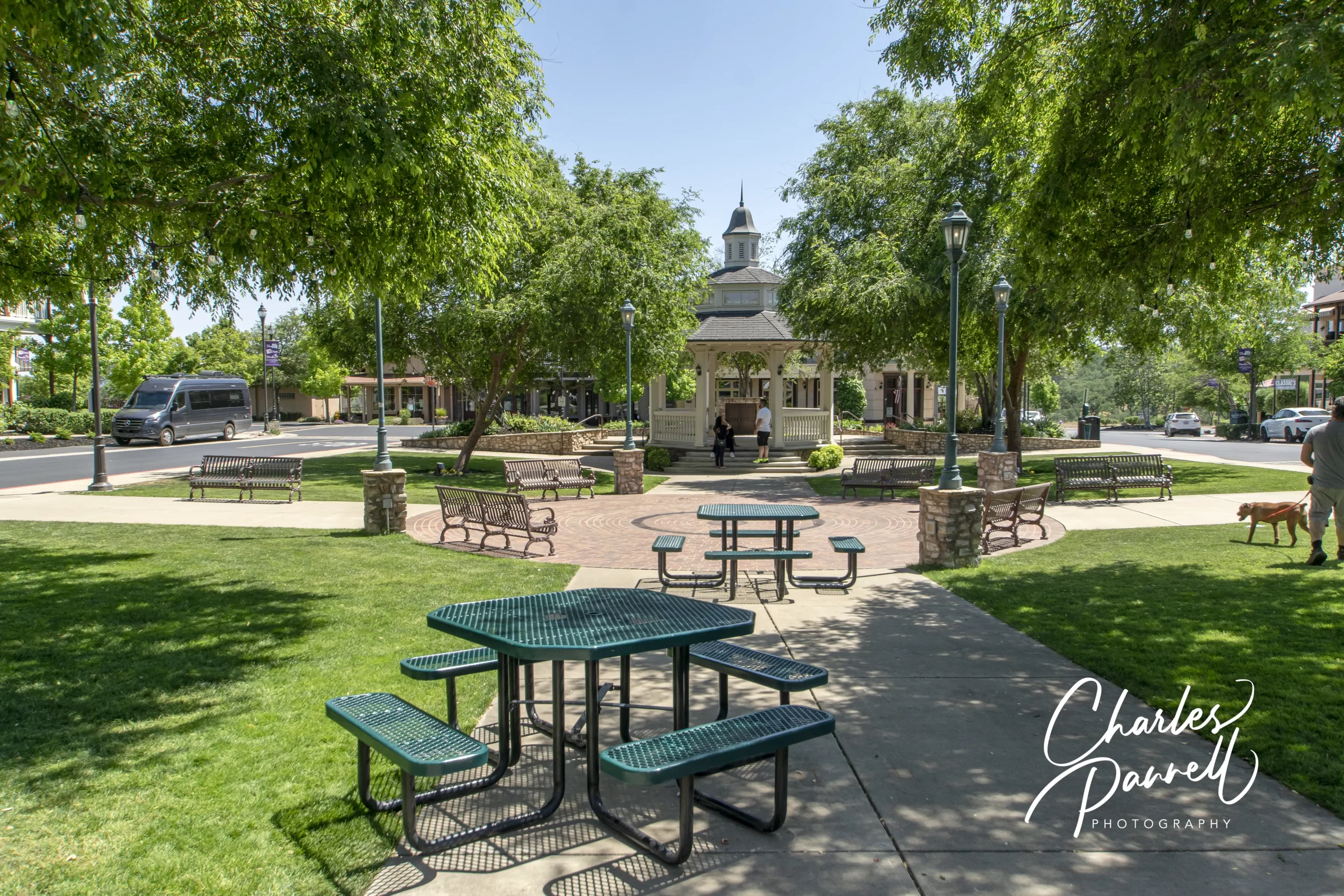
Last but not least on our roundup of Calaveras County picnic areas is Town Square Park in Copperopolis. It’s also one of the newest parks in the area. There’s level access to this small park, which is located across the street from The Gateway Hotel on Stone Street. Accessible parking is located in the Town Square parking lot, and in back of the Gateway Hotel. There’s only a few picnic tables in the park, but there are a number of benches and a gazebo as well. It’s just a pleasant spot to take a break.
Barrier-Free Travel Yosemite, Sequoia and Kings Canyon National Parks for Wheelers and Slow Walkers
Toledo’s Wildwood Preserve Metropark (metroparkstoledo.com/explore-your-parks/wildwood-preserve-metropark/) now has two models of track chairs and some adaptive bicycles for loan. Bisected by the Ottawa River, this 493-acre park is well known for its varied terrain and well developed trail system. And thanks to the Wildwood Preserve Track Chair Loaner Program, everyone can now explore all the nooks and crannies of this popular park.
Track Chairs and Trikes
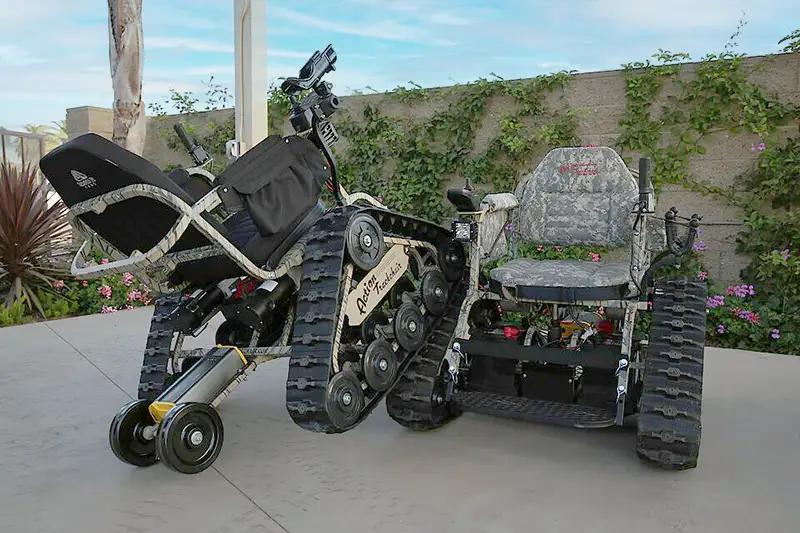
The Wildwood Preserve Track Chair Loaner Program includes one Action Trackchair with a 22-inch wide seat. It’s outfitted with a four-point harness, a seatbelt extension, armrest pockets, an oxygen tank holder and an attendant control. There is no weight restriction on this chair.
The park also has a GRIT Freedom Chair, a recumbent trike and an upright trike to loan.
All of the track chairs and trikes must be reserved at least three business days in advance. They are available for loan in three-hour increments, and all track chair-users must bring along a companion to accompany them on their hikes. The companion must be able to assist with transfers, as park employees are not allowed to help.
The loaner track chairs and trikes can be picked up at the maintenance area in the park, which is close to a number of trails. The closest ADA parking is located at Metz Stables. Accessible restrooms are also located at Metz Stables and near the playground.
Dedicated to the rivers and fish of the Methow Valley, Homestream Park is a spot to pause, reflect and observe. And since it’s just off Highway 20, it makes for a good stop. That said, unless you have an accessible parking placard, there’s no vehicle parking in this urban oasis. There’s level access from the accessible parking area over to a covered and uncovered picnic area. And the good news is, both areas have accessible tables.
A short .2-mile trail runs along the river and loops back to the picnic area. And along the way it’s dotted with works by sculptor Smoker Marchand. These sculptures focus on the salmon and the original inhabitants of the Methow Valley. About half of the level hard-packed dirt trail is accessible, and there are several benches to sit down and take a break along the way. After the halfway point there are nine boulders along the trail, which represent the nine dams that the salmon encounter on their journey to the Pacific Ocean. Some slow walkers may be able to get around the boulders, but most spaces are too tight for wheelchair-users, so you’ll have to double back. Still it’s a nice spot to stop, enjoy a picnic, and peruse the sculptures.
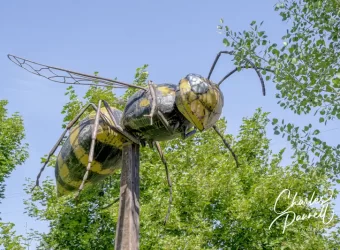
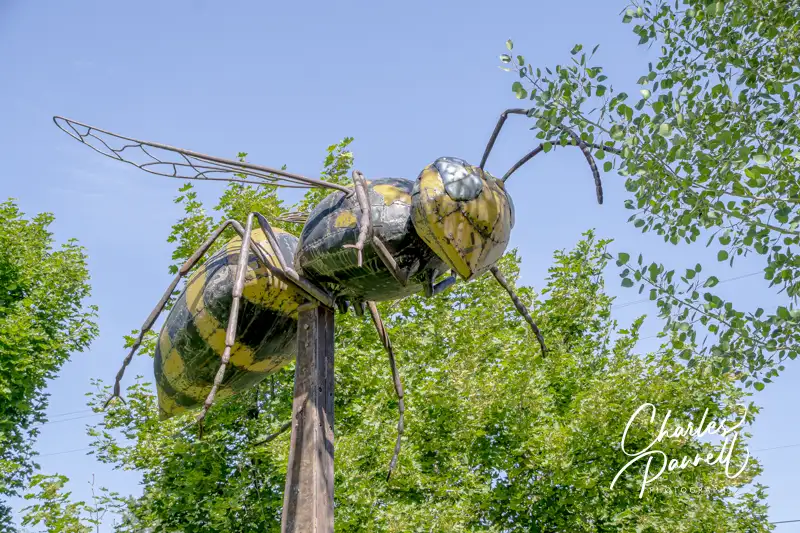
Created by local artist Barry Stromberger, this giant metal yellowjacket sculpture sits on a 15 foot pole in Twisp Commons Park. What makes it unique is that it was crafted from a 1951 Plymouth Cranbrook that was pulled from the Methow River, in an effort to improve the salmon habitat. Why a yellowjacket? It’s widely believed that the name of the town (Twisp) comes from the Okanagan word txʷəc’p, which supposedly translates to yellowjacket or wasp. And in keeping with the theme, the local high school also has a yellowjacket as a mascot.
There’s accessible parking in front of the Methow Valley Community Center across the parking lot from the sculpture. And if you need local visitor information, there’s ramped access to the building which has a nice selection of Methow Valley brochures and maps in the lobby. It makes a nice quick stop off of Highway 20.
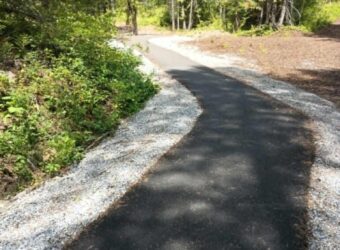
Covering accessible travel isn’t easy. Charles and I do tons of pre-trip research followed by detailed in-person visits, in order to uncover the wheelchair-accessible gems we share with our readers. It’s not exactly glamorous, but I’ve been doing this for over 30 years and I love it. It’s a process that we’ve honed over the years, and with due diligence it yields impressive results. Such was the case last week when we were checking out some possible new accessible additions to the International Selkirk Loop (https://emerginghorizons.com/the-international-selkirk-loop-for-wheelchair-users-and-slow-walkers/). And low and behold we discovered wheelchair-accessible Portage Park, a newly constructed stop on this international driving loop.
Located in the Idaho panhandle, Farragut State Park (parksandrecreation.idaho.gov/parks/farragut/) was once the site of the second largest WWII naval training facility in the country. At its peak the base housed over 100,000 people and included the largest hospital in the Pacific Northwest. Today the foundations of some former buildings, as well as the relatively intact brig are all that remain of this once bustling base.
And as with many historic buildings with a colorful history, rumblings of paranormal activity in and near the former brig pepper the media. Haunted or not, it’s still a great destination for anybody interested in WWII history; and as an added bonus, it also boasts a comfy wheelchair-accessible camping cabin perched on the shore of Lake Pend Oreille.
A Little History
Although far northern Idaho seems an odd location for a naval base, there’s a sound reason behind the choice. Safety. After the attack on Pearl Harbor, the powers that be wanted a base site that was impervious to air or sea attacks. And since this chunk of real estate between Coeur d’Alene and Sandpoint is surrounded by mountains and far from the ocean, it proved an excellent choice.
Named after the famous admiral, Farragut Naval Training Facility occupied over 4,000 acres at its peak. Recruits would arrive in cattle cars and complete 13 weeks of basic training with classes in seamanship and warfare. Field training for gunners consisted of recruits firing wooden “practice shells” at navy aircraft as they swooped down over Lake Pend Oreille. And after they graduated they were sent into battle.
Recruits that broke the rules ended up in the brig. Most inmates were housed in four- or six-man cells, and were were assigned to hard labor, which included smashing boulders into gravel with sledgehammers, or sawing firewood by hand. Those that were convicted of more serious offenses were held in solitary confinement, until they were transported to the federal prison in Treasure Island, CA.
The base was also home to German POWs in 1945. They were treated as soldiers, not prisoners and assigned landscaping, firefighting and cooking tasks. The POWs were not housed in the brig, but lived in separate quarters near the modern day entrance of Farragut State Park. They did however, cook for prisoners in the brig; and it was reported that the quality of the meals greatly improved after their arrival.
Visit the Brig
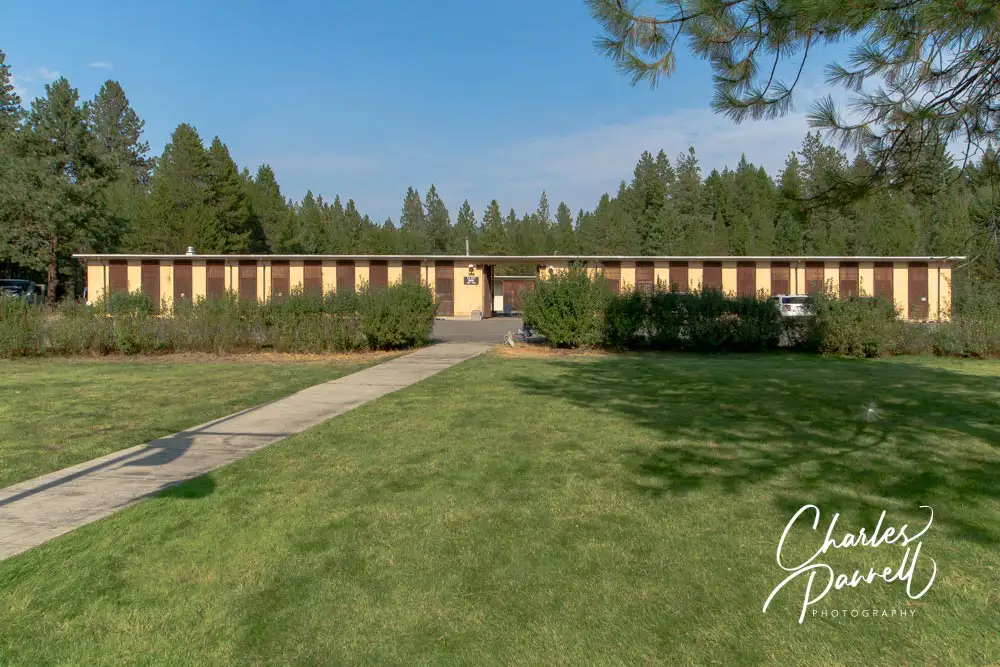
The Brig at Farragut State Park, Idaho
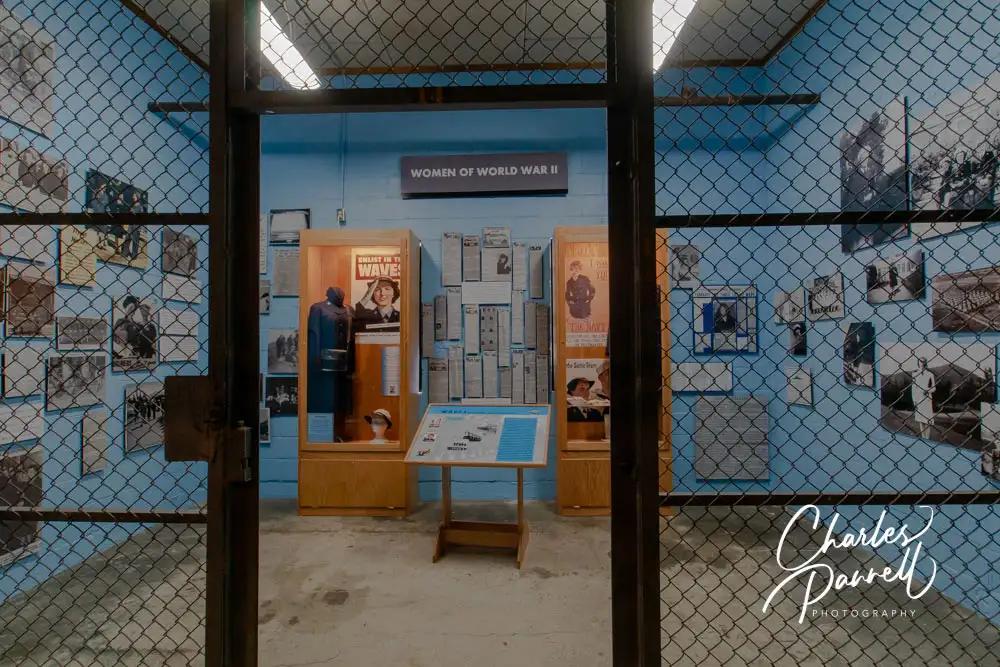
The Museum at the Brig offers a good overview about life at Farragut Naval Training Facility. Accessible parking is located near the entrance, with level access to the courtyard, and barrier-free access to the brick cellblock. The exhibits begin with a short 20-minute orientation film which details the history of the facility. A few cells are set up as they would have been in WWII times, while others contain exhibits about the construction of the facility, the training the took place there, and the social lives of the workers and recruits. There are also exhibits about the POWs and the WAVES, as well as a good overview of WWII. Throw in a large collection of weapons, uniforms and personal items of the recruits, and you have a comprehensive look at life at Farragut Naval Training Facility.
Inside the Museum at the Brig in Farragut state Park, Idaho
Don’t miss the vintage vehicles on display in the courtyard, and the historic exhibits in the opposite wing. And if you have kids in tow, be sure and stop in at the junior ranger activities center on the far side of the courtyard.
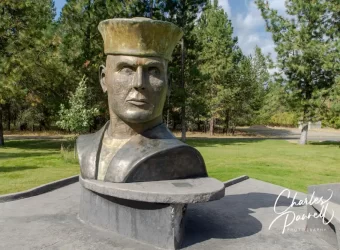
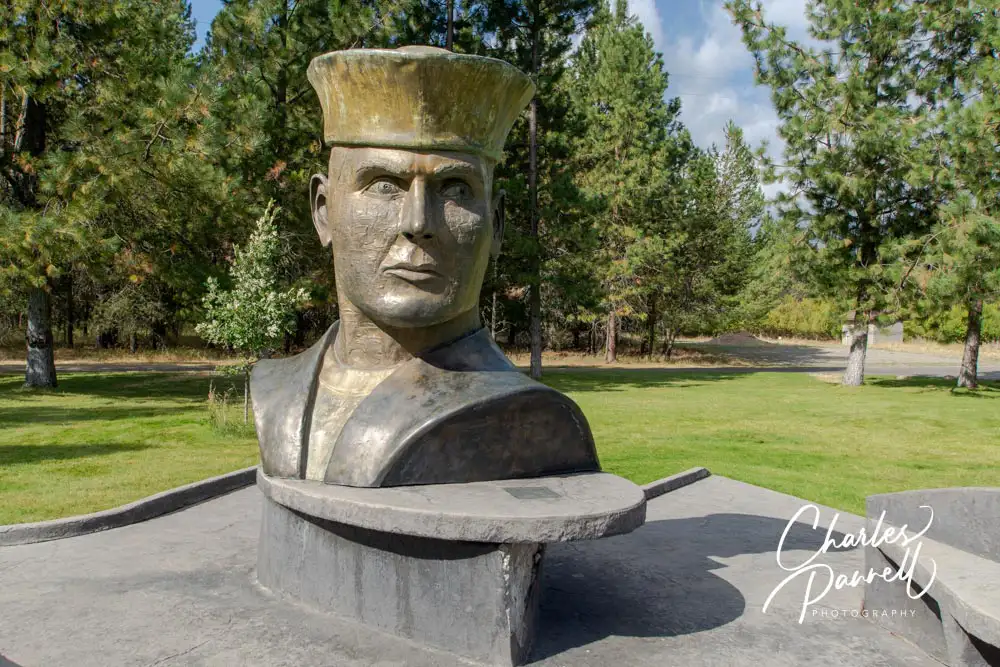
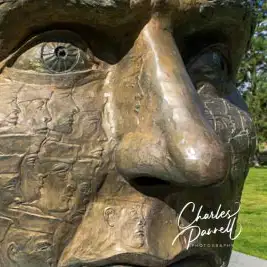
Save some time for a short visit to Memorial Park, located across the street from the brig. There’s barrier-free access to the small park which features a unique statue of a sailor. The bust stares soberly into space, while smaller faces of a multitude of sailors cover his face. It’s said to represent the different recruits that help make a soldier during his training.
Spend the Night
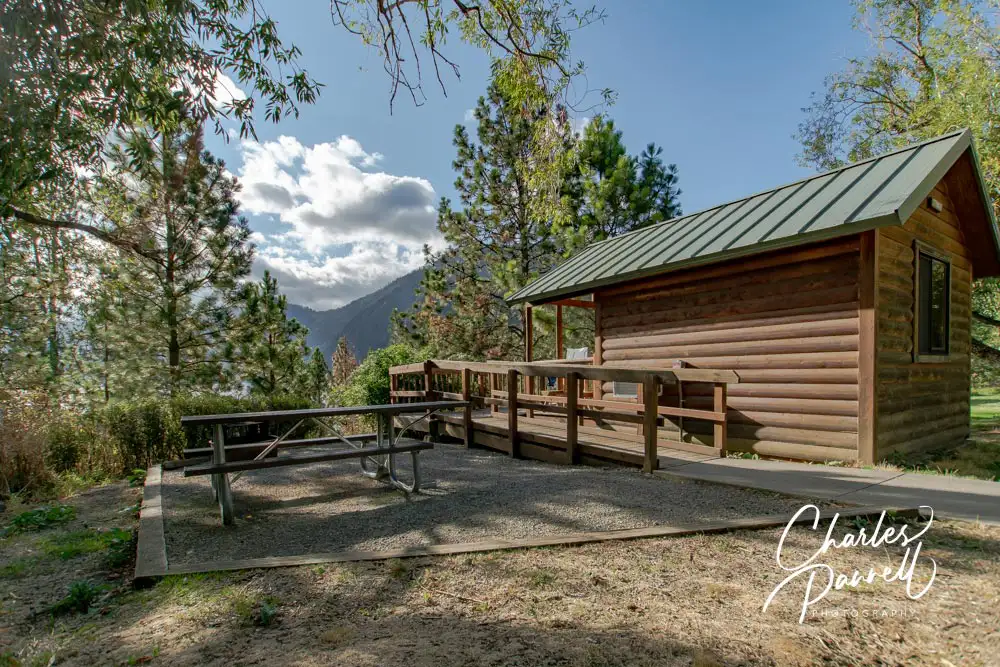
The Syringa Cabin at Farragut State Park, Idaho
In contrast to the stark brig, the Syringa camping cabin offers a pleasant spot to spend the night at Farragut State Park. It’s located near the end of the South Road, nestled in a forest that overlooks Lake Pend Oreille. There’s no accessible parking for the cabin, but there’s level parking in the asphalt lot next to the accessible vault toilet. From there it’s a 200-foot walk on a level sidewalk to the cabin. Alternatively you can parallel park in a level area about 150 feet from the cabin.
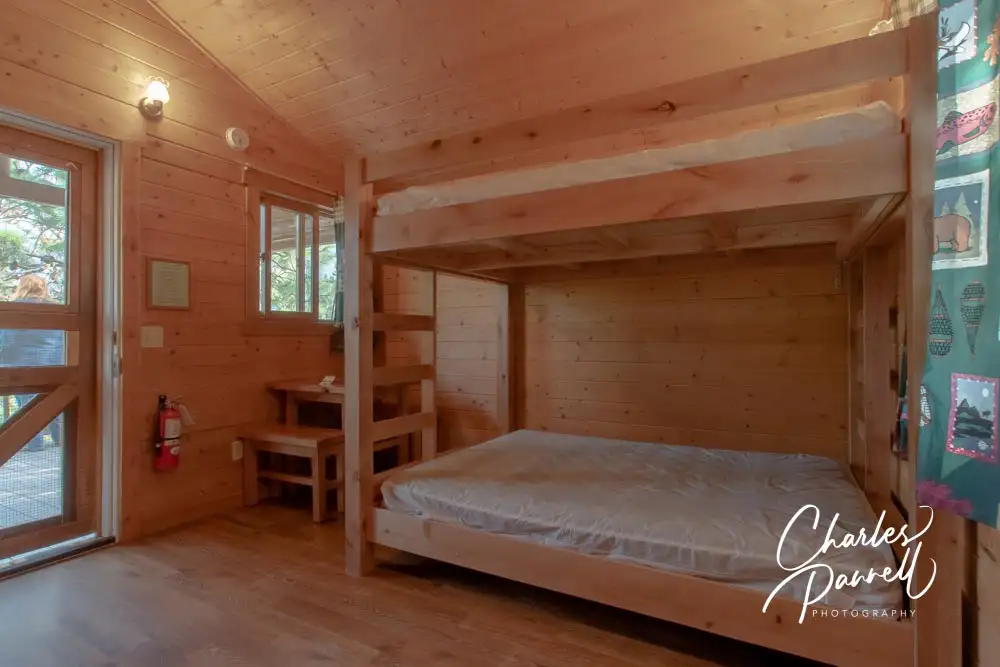
There’s ramp access to this basic camping camping, which includes a spacious deck with a swing and a table. The cabin features a wide front door, and offers plenty of room to maneuver a wheelchair inside. It’s furnished with a simple 17-inch high double bunk bed (bring your own bedding) and a table with two benches. It also includes lights, an air conditioner and an electric outlet.
No cooking is allowed inside the cabin, but there’s a large accessible table and a raised fire ring next to the deck. All in all, it’s a comfortable and affordable place to spend the night. Even better — since there are only four cabins in this area of the park, and the gate closes at dusk, you’ll almost have things to yourself at night.
Inside the Syringa Cabin at Farragut State Park, Idaho
Haunted or Not?
Is Farragut State Park really haunted? Most reports of paranormal activity center around the brig. These include sightings of orbs, objects moving, and the ghostly clanging of cell doors. Several folks have also reported the apparition of a bald man in a prison uniform in the brig, and a man wearing a navy uniform wandering along the shore.
Although the brig is cold and dank, I didn’t see any apparitions during my visit, but I was haunted by the history of the building. It was chilling at times, but it was on a more historical level rather than a ghostly level. That’s not to say there’s no paranormal activity there; just that I didn’t experience anything otherworldly on my visit.
Some strange occurrences have also been reported in Memorial Park. Several people have reported that the statue turned its head and looked at them. To be honest, the statue is a little unsettling, as the somber stare of the sailor seems to follow you as you move throughout the park. But no, I didn’t see the statue actually move. That said as Charles got into the car he excitedly exclaimed, “You want to hear something creepy? My camera recognized that statue as a face instead of an object?”. Haunted or haunting? You decide.
Barrier-Free Travel
Utah National Parks for Wheelchair-users and Slow Walkers
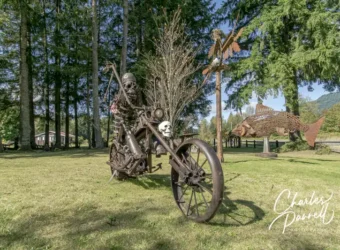

 Located 11 miles west of the Nisqually Entrance to Mount Rainier National Park, Recycled Spirits of Iron Sculpture Park features the works of Daniel Klennert. And as the name implies, his creations are crafted from recycled and discarded objects. The front installations are dwarfed by a giant train near the entrance, and they include everything from a broomstick horse, and a wagon wheel, to a seahorse crafted from horseshoes, a collection of birds, and a number of themed motorcycles. Around back the installations continue with another train, more motorcycles, a collection of outhouses and an X-rated Mona Lisa. And although it’s a little bumpy in the back, the front garden and the inside gallery and gift shop are wheelchair-accessible.