In the spring of 2025 a wildfire destroyed a wooden trestle in a non-operational section of the Mt. Rainier Scenic Railroad (mtrainierrailroad.com). Even though this trestle was not along the scenic rail route, it still was an operational setback for the railway, as crews had to clean up the damage and evaluate the safety of the tracks. The good news is, after a brief shut-down all is well and this iconic railway is up and running. Not only is this classic rail excursion a great addition to any Mount Rainier visit, but it’s also a good choice for wheelchair-users and slow walkers. And as the folks at the railway say, “The fire destroyed a bridge. It didn’t stop the railroad.”
All Aboard!
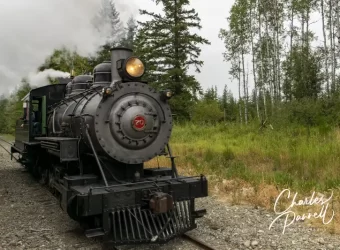
The Mt. Rainier Scenic Railroad station is located in Elbe, which is just a 15-minute drive from the Nisqually Entrance to Mount Rainier National Park. The historic Little White Church of Elbe sits near the back of the parking area, and adds to the nostalgic atmosphere of the experience. Accessible parking is located near the entrance of the parking lot, with level access over to the ticket office. And on the way, there’s a good photo op of a vintage locomotive in front of the station.
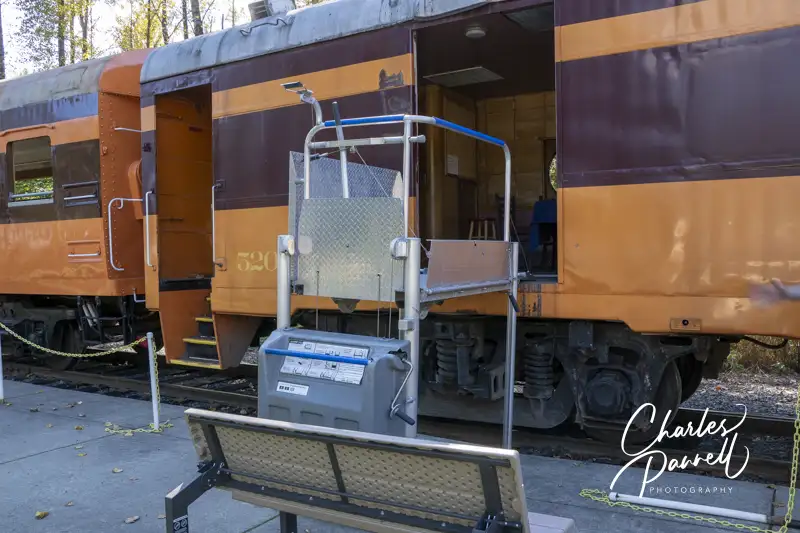
There’s level access to the station, with plenty of room to maneuver a wheelchair around the ticket office and through the adjacent gift shop. The ADA waiting area is located just outside the station, near the manual wheelchair lift. When it’s time to board, the manual lift is usually positioned next to a standard coach car, and the wheelchair- is lifted up to the car. From there, it’s just a short roll from the vestibule to the wheelchair-seating space at the front of the car. Slow walkers or anyone who has difficulty with stairs can also use the wheelchair lift.
According to the conductor, most wheelchair-users can be accommodated in the coach car; however some larger power wheelchairs may need to use the lift to board the baggage car. There’s no seating in the baggage car, which also contains the snack bar. There is however, an open doorway with a safety fence in the baggage car, so you can still get a good view of the passing scenery. The baggage car also has an accessible restroom. That said, the doorways on the connecting cars are narrow and the thresholds are uneven, so it’s best to use the facilities in the station if you are seated in coach.
Ride the Rails
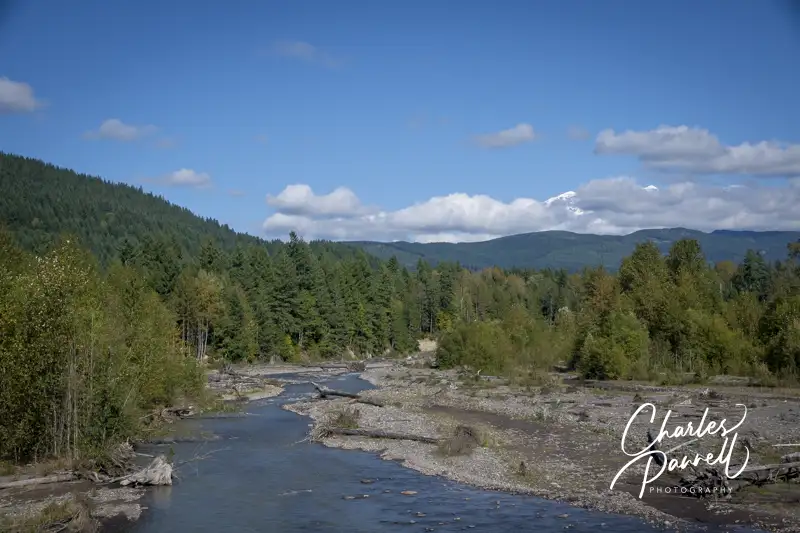
View along the Mount Rainier Scenic Railway Excursion
Part of the ambiance of a Mt. Rainier Scenic Railroad excursion is the vintage rolling stock. The historic train cars are pulled by a Polson Logging No. 70 steam locomotive. This engine was built by the Baldwin Locomotive Works in 1922 for the Polson Logging Company. And today it still chugs along on these scenic excursions.
Passengers can choose from two excursions. The classic ride to Mineral is now joined by a new route to New Reliance. The routes alternate throughout the day, but both travel through the forest and offer scenic views of the countryside. And if the weather is cooperative, you’ll also get a good Mount Rainier view along the route. Once the train reaches its destination, the engine rolls back down a side track and hooks up to the other end of the train. And then it chugs back to the station.
Service is top-drawer too on the railway, with helpful attendants that point out the local attractions and weave in a little bit of history about the area along the way. All in all it’s a great ride, and a perfect Mount Rainier National Park side trip. Additionally, if you have any questions about access for your particular mobility device, just give them a call, as their customer service is excellent. And if you’ve worked up an appetite during your excursion, then stop by the Hobo Pizza Car after your ride. It’s located next door to the railway, and the converted railcar that serves as a dining room has ramp access. It’s a great finale to a Mt. Rainier Scenic Railroad visit.
Barrier-Free Travel Washington National Parks for Wheelers and Slow Walkers
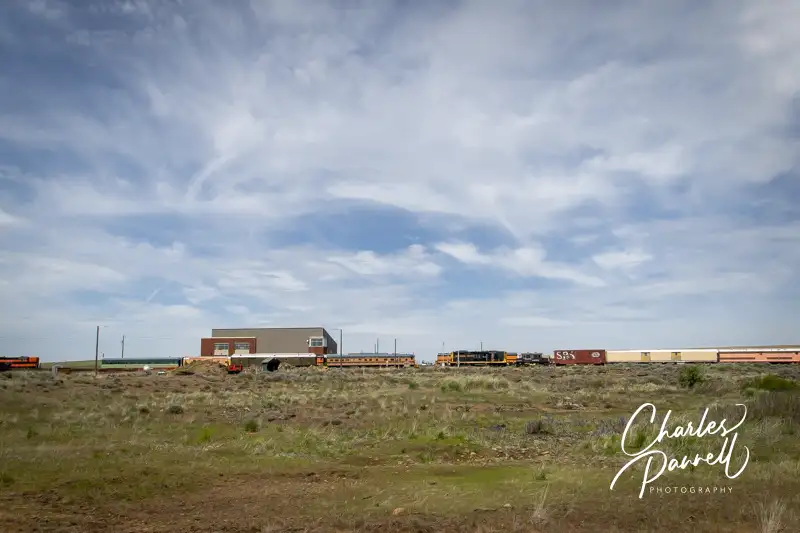
Located off Highway 2, about 25 miles west of Spokane in Reardon, the Inland Northwest Rail Museum (inlandnwrailmuseum.com) is a bit off the beaten path. That said, if you happen to be traveling from Spokane to North Cascades National Park (emerginghorizons.com/north-cascades-national-park/), it makes a nice road trip stop. Make sure and check the website for their operating hours though, as as this largely volunteer-operated museum is open on limited days — usually weekends. Still it’s worth a stop on any North Cascades road trip
A Bit of PNW Railroad History
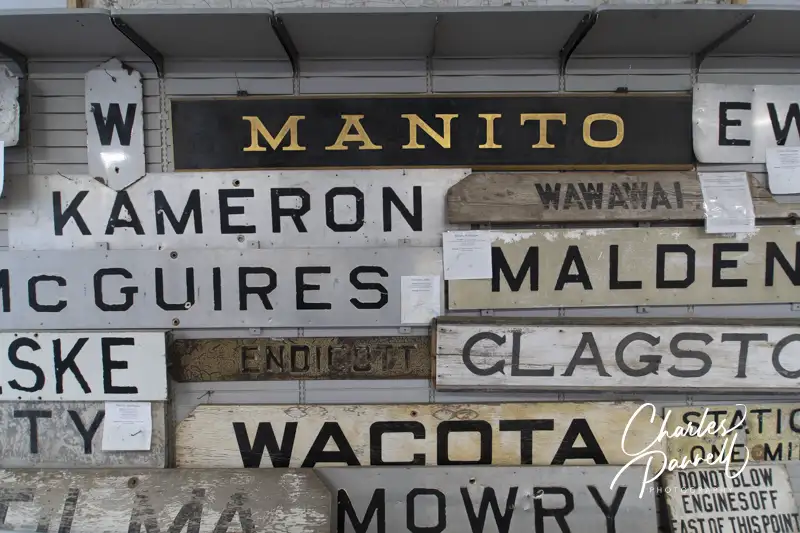
Railroad Signs At The Inland Northwest Rail Museum
The Inland Northwest Rail Museum’s collection focuses on railroad history in the Pacific Northwest (PNW). There’s accessible parking in front, with level access to the front door. And although the folks at the museum have done a good job providing access throughout the facility, there are still some limitations due to the nature of the exhibits.
There’s level access around most of the inside exhibits, elevator access to the second floor, and accessible restrooms on the ground floor. That said, most of the rolling stock — which comprises at least half of their exhibits — can only be accessed by climbing a few steps. Still it’s a great — and very nostalgic stop — for slow walkers.
The centerpiece downstairs exhibit is the 1906 Spokane United Railways Streetcar. After streetcar use was discontinued in Spokane, this car served as a restaurant in Chewelah, and was later donated to the museum. There are several steps up to the streetcar, and it’s kind of fun to walk through, sit down and imagine the public transportation system of yesteryear.
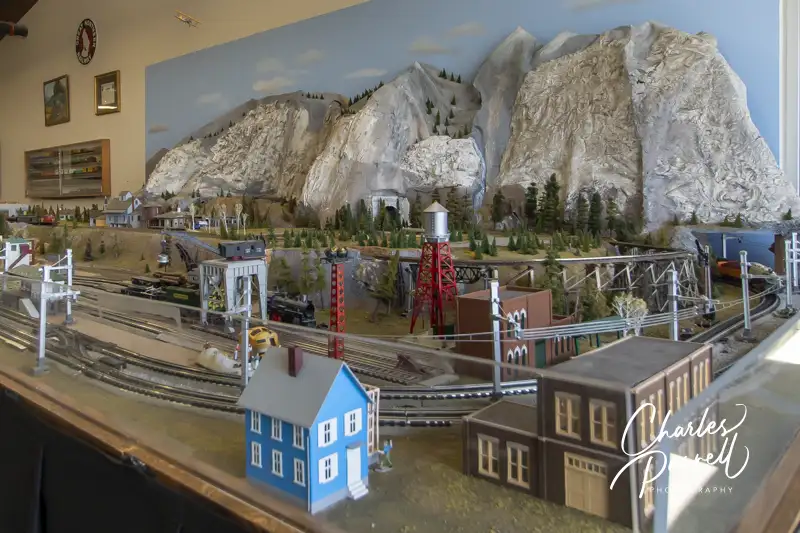
The inside exhibits also include a large collection of railroad equipment, signs, signals, photos, horns, uniforms and lots of interesting tidbits. Don’t miss the model trains and the photo collection of PNW train wrecks upstairs. And while you’re upstairs, stroll down to the end of the building and get a birds eye view of the rolling stock out in the yard.
Model Train Layout at The Inland Northwest Rail Museum
All Aboard!!
The great thing about the rolling stock in the yard is that you can explore as little or as much of it as you want, depending on your energy level. There’s level access to the yard, and the 1941 American Scene Sleeper Car sits rights outside the back door of the museum. Although there’s level access to it — no steps required — the hallways of yesteryear are too narrow for a wheelchair.
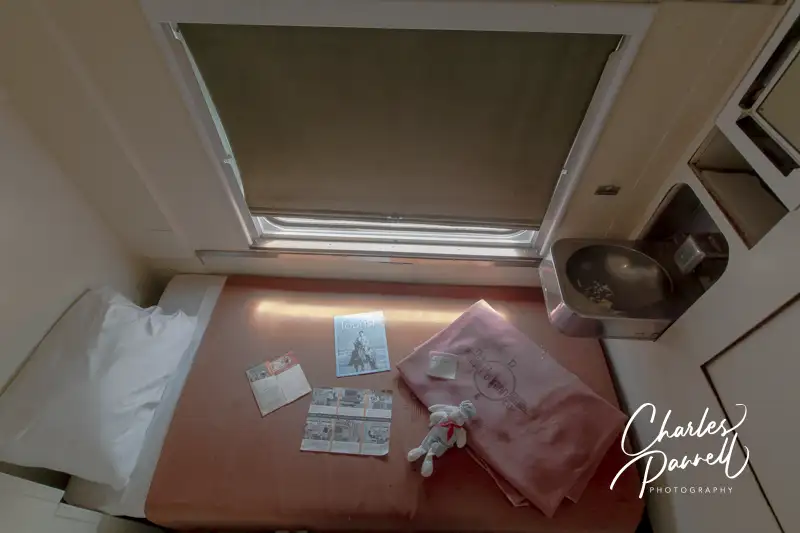
Inside the sleeper car, many of the compartments are set up as they would have been in the 1940s. And there are other exhibits about railroad life peppered in throughout the car. The sleeping car is attached to a dining car which has more exhibits that highlight life on board. From dishes and photos, to a uniform and even a telegraph display, there’s something for everyone.
Berth in Sleeper Car at The Inland Northwest Rail Museum
And don’t miss the Spokane, Portland & Seattle Railway’s St. Helens Sleeper Buffet Lounge Car. It’s located a short walk away, and although the ground is covered with gravel it’s fairly level. There are several steps up to this beauty, which was built by the Pullman Standard Company in 1950. Inside the compartments are roomier than the 1940s model, and they each include a toilet that pulls out from the sink cabinet. Although it’s a far cry from modern day trains, it was luxurious back in the day.
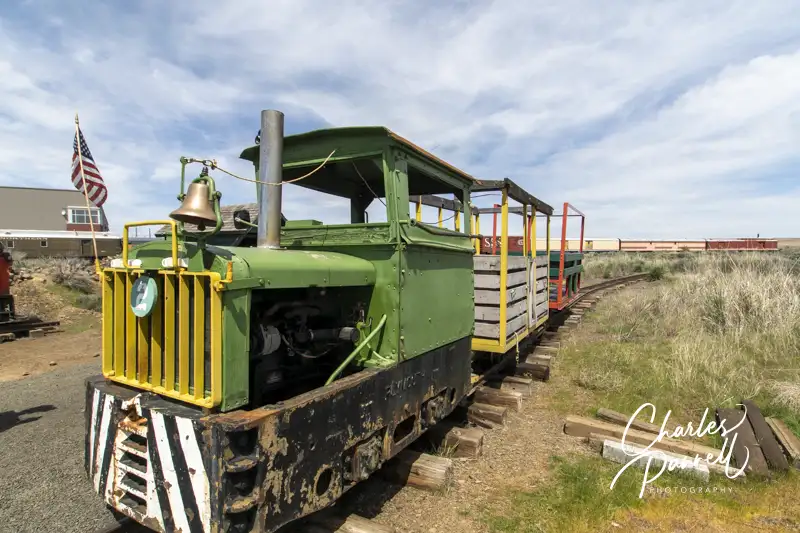
Last but not least, don’t miss a ride on the Rearden Rocket — a two-foot gauge railroad that runs through the museum grounds. You have to be able to step up into the open-air car for this two-mile ride that circles the campus, but it’s a fun finale. The engines are operated by enthusiastic volunteers, and hearing their stories is part of the fun. It’s the perfect finale to any Inland Northwest Rail Museum visit.
The Reardon Rocket at The Inland Northwest Rail Museum
Barrier-Free Travel Washington National Parks for Wheelers and Slow Walkers
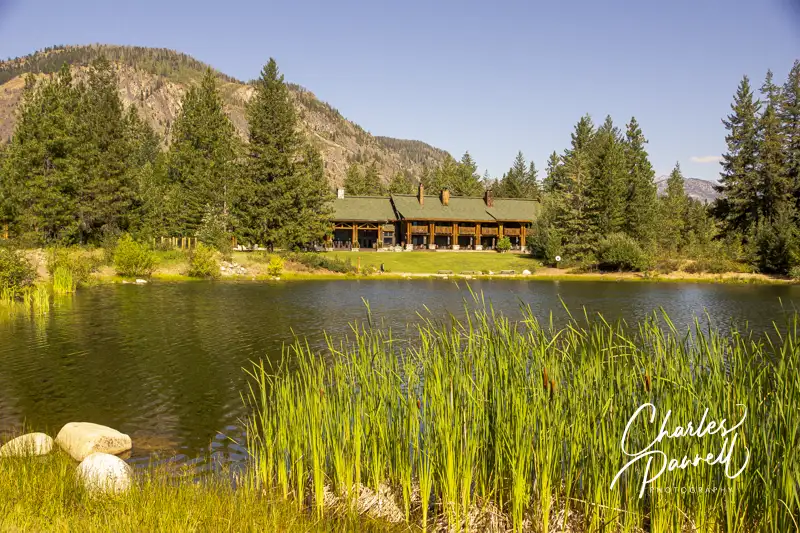
The Freestone Inn, Mazama, Washington (near Eastern edge of North Cascades National Park)
Located about 40 miles from the eastern edge of North Cascades National Park, the Freestone Inn is a true wheelchair-accessible North Cascades retreat. This secluded Mazama property borders a placid private pond, and it’s the ideal spot to kick back, relax and rejuvenate. The property also makes a good home base for exploring the eastern side of the national park. And although the Freestone Inn only has 12 rooms and five suites, the powers-that-be have gone above and beyond as far as access for slow walkers and wheelchair-users is concerned.
An Accessible Room With a View
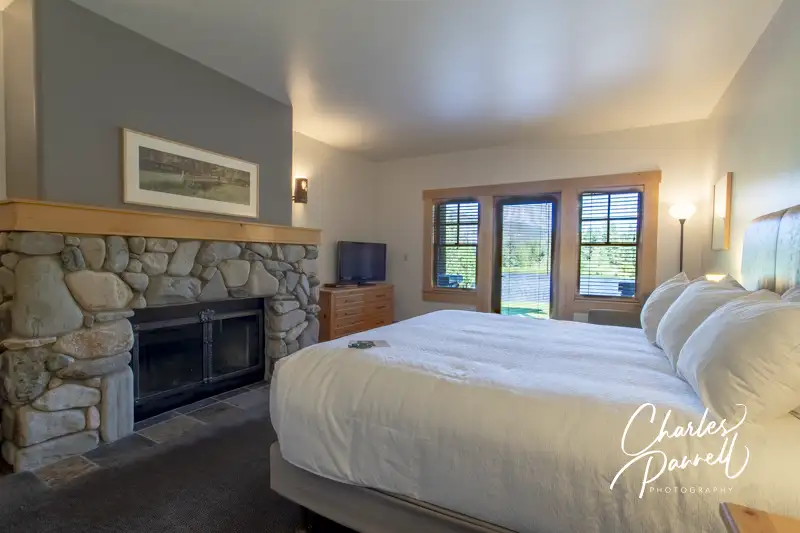
Room 1 at The Freestone Inn, Mazama, Washington (near Eastern edge of North Cascades National Park)
The good access at the Freestone Inn begins the moment you pull up to this lodge-style property. There’s accessible parking in front, ramp access up to the front porch, and barrier-free access over to the lowered key box, where you can complete your no-contact check-in. From there, a barrier-free path leads through the wide front door to accessible room 1, which is located just off the lobby.
Access features in the room include, wide doorways, lever handles, low-pile carpet for easy rolling and excellent pathway access. It’s furnished with a 27-inch high open-frame king-sized bed with wheelchair access on both sides. Other furnishings include a desk with a chair, a nightstand, a dresser, an easy chair and a refrigerator. And for those chilly nights, there’s a large electric fireplace in front of the bed.
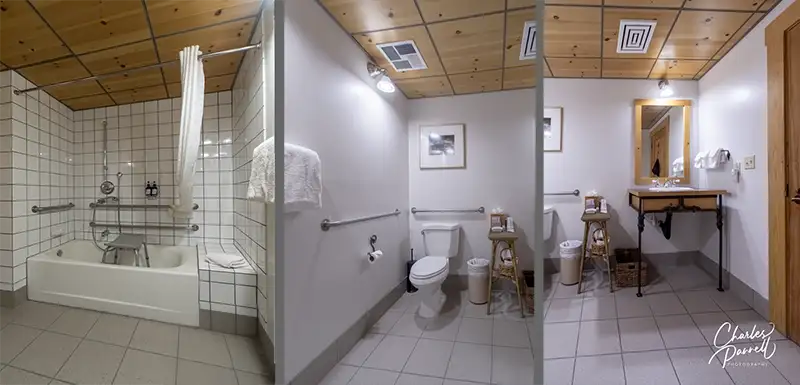
The bathroom includes a full five-foot turning radius, and is outfitted with a tub/shower combination, with grab bars and a hand-held showerhead. There’s a built-in shower bench at the end of the tub, and if that won’t work for you, there’s also a portable shower seat in the oversized bathroom. The toilet grab bars are located on the back and right walls (as seated), and a decorative – but functional — roll-under sink rounds out the bathroom access features.
Bathroom in room 1 at the Freestone Inn, Mazama, Washington (near Eastern edge of North Cascades National Park)
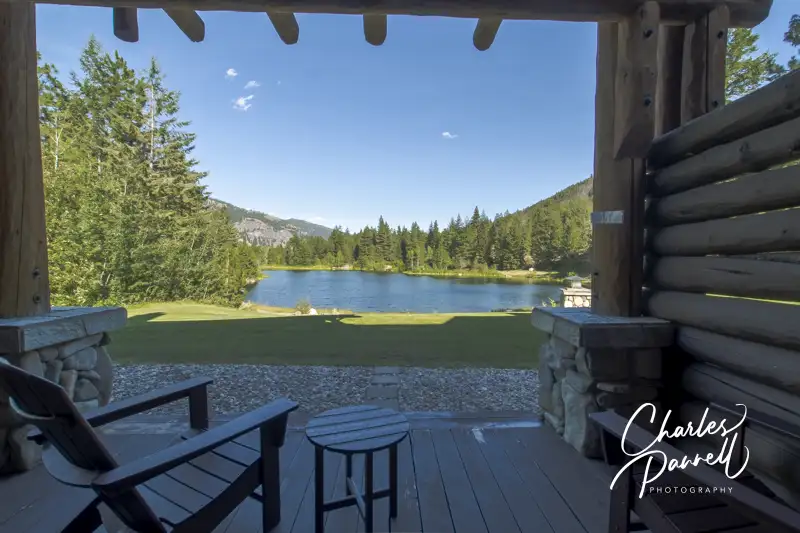
There’s also a wide back door that leads out to one of the nicest features of this room – a wheelchair accessible porch with a sweeping water view. It’s furnished with a pair of Adirondack chairs, but there’s still plenty of room for even a large wheelchair. And if you’d like the chairs removed, just ask the staff, as they are happy to accommodate most any request.
Porch view at the Freestone Inn, Mazama, Washington (near Eastern edge of North Cascades National Park)
The Little Extras
The Freestone Inn is far from a chain hotel, in ambiance, amenities and service. First off it’s a quiet and relaxed property. Because of the low number of guest rooms and the expansive public space, you’ll never feel crowded there. And at times it feels like it’s your own private lakeside retreat.
One of the best features of the property is the pond that sits in the back of the inn. Even if you can’t manage the trail, it’s still a relaxing and refreshing feature to view from your private porch. There is a .4-mile path that circles the pond that some slow walkers may be able to navigate. It’s mostly hard-packed dirt, but there are a few short rocky spots along the way. It’s not a good choice for most wheelchair-users, but again, you can still enjoy it from your private porch.
There is Wi-Fi at the property, although to be honest it’s not really reliable. But you’re on vacation, so ditch the phone and enjoy Mother Nature. There are TVs in the rooms, but there’s no cable; however there’s a large selection of DVDs available to borrow.
And although the accessible room doesn’t have a microwave, there’s a shared kitchen down at the end of the hall. It has a microwave, sink, and a good supply of paper plates and utensils.
If you’d like to leave the cooking to someone else, then stop by Jack’s Hut, which is located across the parking lot from the inn. There’s good wheelchair access to this restaurant, which offers breakfast sandwiches in the morning, and pizza, beer and snacks in the afternoon. The food is yummy, the service is a great, and it’s the perfect way to top off any wheelchair-accessible North Cascades adventure.
Barrier-Free Travel Washington National Parks for Wheelers and Slow Walkers
Located off Interstate 90 in Northwestern Washington, Olmstead Place State Park makes a nice road trip picnic stop. The GPS directions will take you to the old barn, but continue along Ferguson Road to the next driveway for the picnic area. There’s no striping in the small paved lot, but that’s OK because you’ll most likely have it to yourself. There are accessible vault toilets in the parking area, and a level gravel path leads over to several picnic tables on the grass. They aren’t any accessible tables, but there’s room at the end for wheelchairs. There’s a little freeway noise, but it’s a nice departure from the rest area picnic tables. And it’s not crowded.
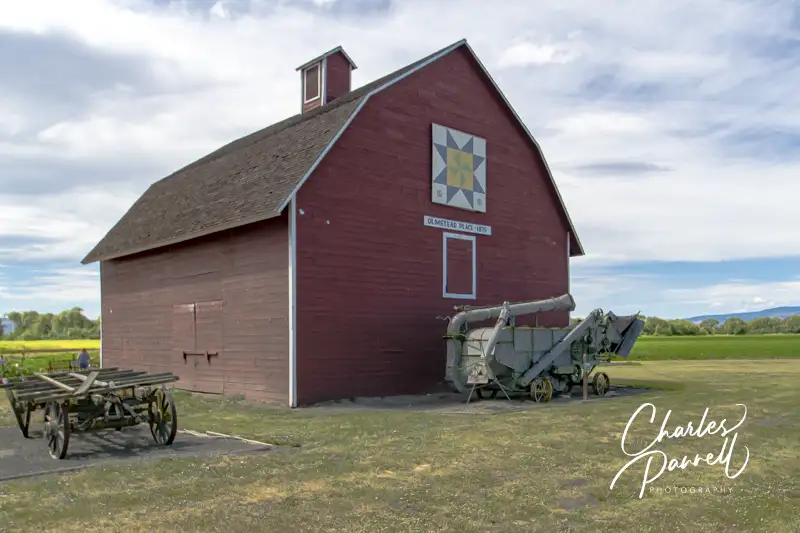
After lunch feel free to browse around the old homestead. The site is level and there are some gravel pathways but you’ll have to roll over the grass to get to a number of the buildings. There are a lot of farm out buildings as well as the old homestead to peruse. The barn area is also worth a look, and if you can’t manage the pathway, then it’s a short easy roll down Ferguson to get to it. There’s not much traffic on Ferguson, so it’s pretty safe. There’s a sizable display of farm implements next to the barn, and a decorative quilt square adorns the front. It’s a nice picnic spot, and a great place to dodge the crowds.
Dedicated to the rivers and fish of the Methow Valley, Homestream Park is a spot to pause, reflect and observe. And since it’s just off Highway 20, it makes for a good stop. That said, unless you have an accessible parking placard, there’s no vehicle parking in this urban oasis. There’s level access from the accessible parking area over to a covered and uncovered picnic area. And the good news is, both areas have accessible tables.
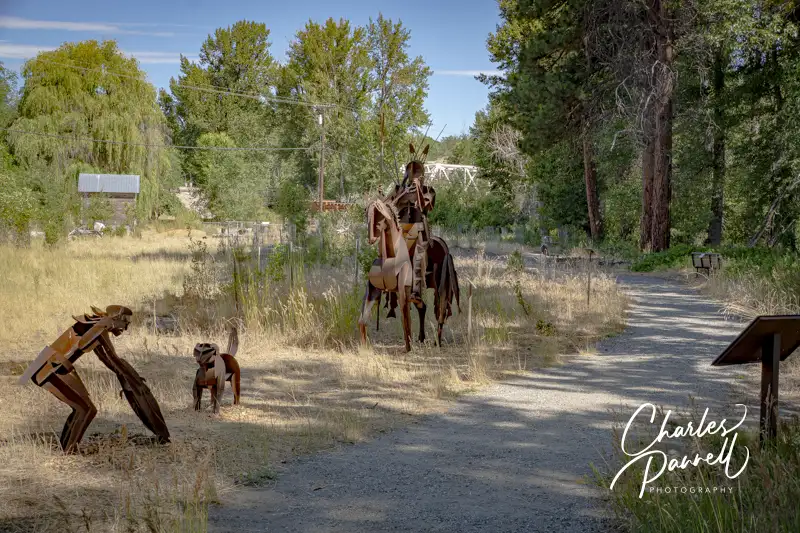
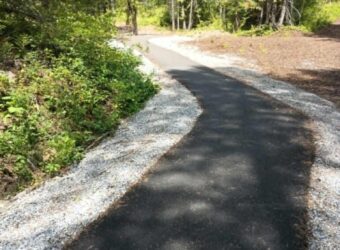
A short .2-mile trail runs along the river and loops back to the picnic area. And along the way it’s dotted with works by sculptor Smoker Marchand. These sculptures focus on the salmon and the original inhabitants of the Methow Valley. About half of the level hard-packed dirt trail is accessible, and there are several benches to sit down and take a break along the way. After the halfway point there are nine boulders along the trail, which represent the nine dams that the salmon encounter on their journey to the Pacific Ocean. Some slow walkers may be able to get around the boulders, but most spaces are too tight for wheelchair-users, so you’ll have to double back. Still it’s a nice spot to stop, enjoy a picnic, and peruse the sculptures.
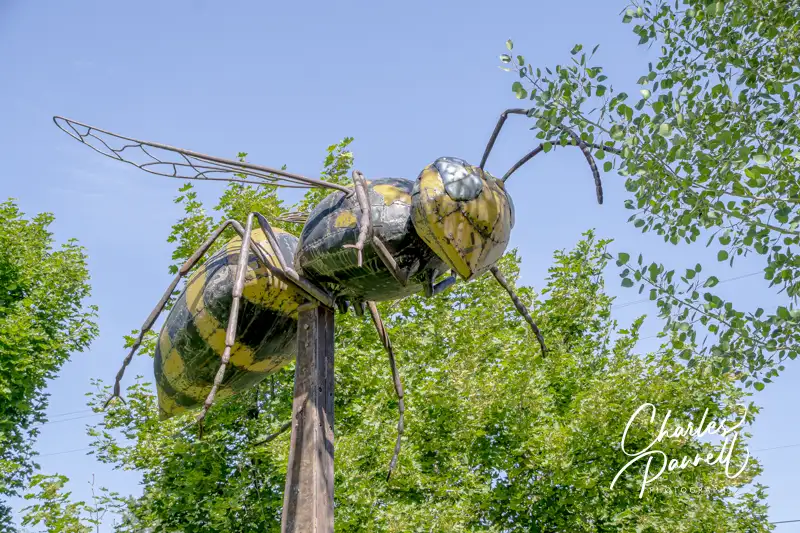
Created by local artist Barry Stromberger, this giant metal yellowjacket sculpture sits on a 15 foot pole in Twisp Commons Park. What makes it unique is that it was crafted from a 1951 Plymouth Cranbrook that was pulled from the Methow River, in an effort to improve the salmon habitat. Why a yellowjacket? It’s widely believed that the name of the town (Twisp) comes from the Okanagan word txʷəc’p, which supposedly translates to yellowjacket or wasp. And in keeping with the theme, the local high school also has a yellowjacket as a mascot.
There’s accessible parking in front of the Methow Valley Community Center across the parking lot from the sculpture. And if you need local visitor information, there’s ramped access to the building which has a nice selection of Methow Valley brochures and maps in the lobby. It makes a nice quick stop off of Highway 20.
Located near the Intersection of Interstate 84 and Highway 97 in rural Washington, Maryhill State Park makes a great rest stop on any Columbia River road trip. With great views of the majestic river, this 81-acre park offers a nice selection of picnic sites, as well as a variety of overnight camping options. Granted it’s a great choice for a quick hop-off-the-highway lunch break, but because of its proximity to some unique roadside attractions, this Southern Washington gem is also an optimal pick for an overnight stay. So hop off the Interstate on your next Columbia River road trip, and stay a spell at Maryhill State Park (parks.wa.gov/find-parks/state-parks/maryhill-state-park).
Eat and Sleep
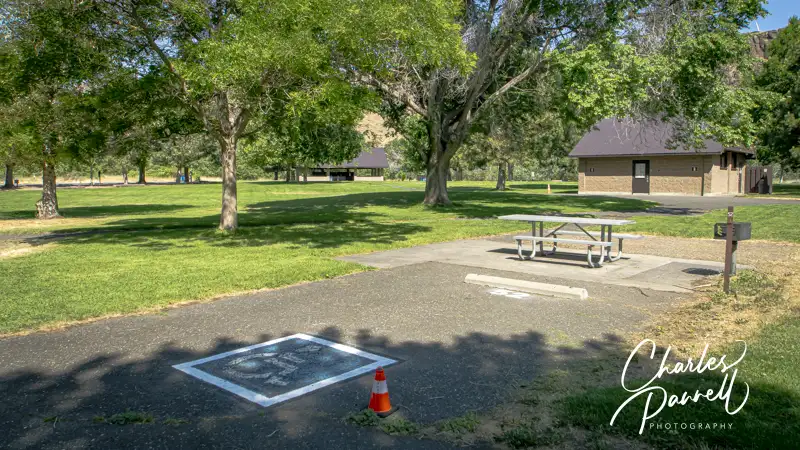
Maryhill State Park has both RV sites and tent sites, with good access in both. Tent Sites 52 and 53 are accessible, and they are located near the accessible restroom and shower house. Both sites have accessible van parking, a level tent site, an accessible picnic table and a raised grill. There’s also a paved path from each site to the restroom, which includes a large accessible stall with grab bars. Each side also has a roomy compartment with a roll-in shower with with grab bars, a lowered showerhead and a fold-down shower seat. Best of all, the showers are free.
Tent Camping Site 53 at Maryhill State Park, Washington
The accessible RV site (51) is located near the day use area. It has a paved driveway, an accessible picnic table, and a standard grill. It’s a short walk away from the accessible restroom, but not as close as the tent sites. This site was an addition to the property and it sits outside of the RV loop, and on the plus side it doesn’t neighbor any other RV sites. All of the accessible sites in the park require proof of disability — such as an accessible parking placard — in order to occupy them. It should also be noted, that there’s some freeway noise and train noise in this park.
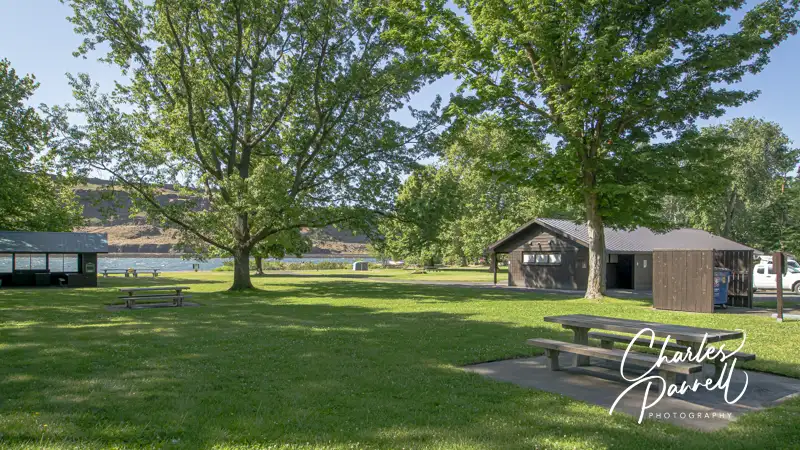
There’s also a nice picnic area in the park, with a Columbia River view. There’s accessible parking near the accessible restrooms. It’s about a 30-foot roll over a level grassy patch out to the closest picnic table. Although it’s a standard table on a cement pad, there’s room for a wheelchair at the end. It’s a pleasant place to stop for lunch on the road.
Art Appreciation 101
The Maryhill Museum of Art
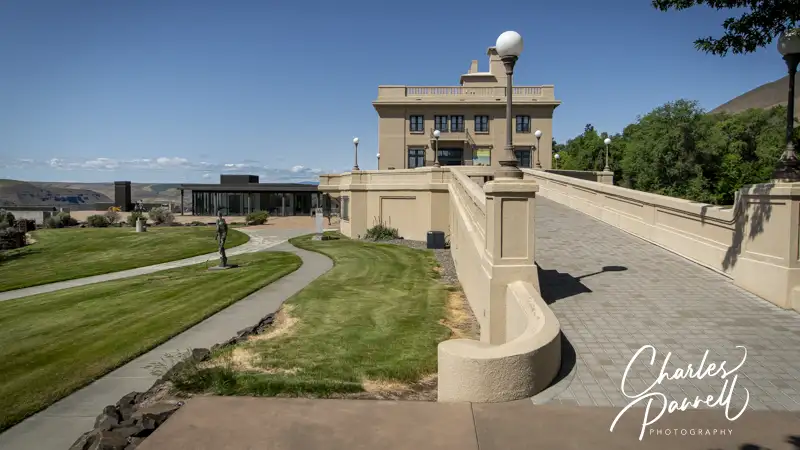
If you’re spending the night at the park, be sure and plan a visit to the Maryhill Museum of Art (www.maryhillmuseum.org), which is just up the road. The museum building was originally the home of Sam Hill. Hill’s goal was to establish a Quaker community — named after his daughter Mary — on his land; however due to a lack of irrigation it never came to fruition. He later donated his home, which subsequently became the Maryhill Museum of Art. It was dedicated by Hill’s friend Queen Marie of Romania in 1926.
There’s accessible parking in front, with a long ramp up to the museum entrance. If the slope and length of the ramp are too much for you, there’s an accessible entrance on the lower level on the left side of the building. Just follow the sidewalk around to the door, and ring the bell. Inside there’s good pathway access throughout the museum, elevator access to all levels and accessible restrooms on the ground level and lower level.
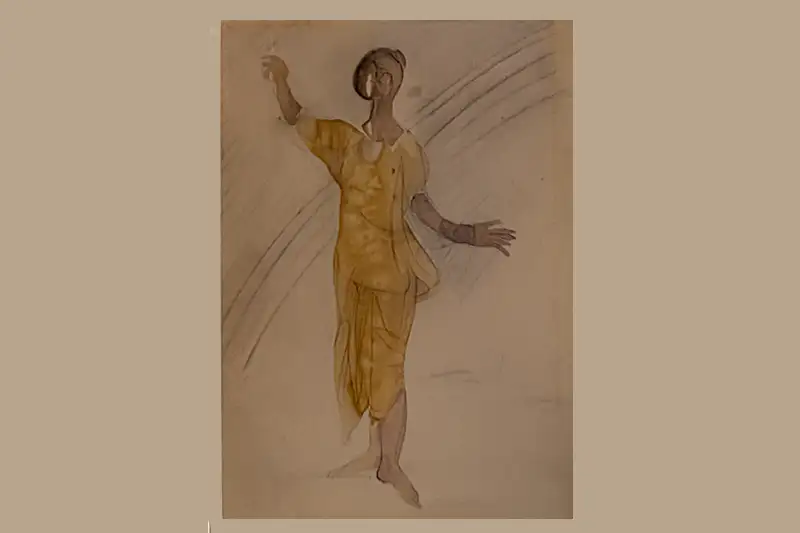
Variety is the key word at this museum, which also offers some interesting visiting exhibitions. Don’t miss the Queen Marie of Romania gallery near the entrance, which includes the gown she wore to the coronation of Nicholas II in 1896. The ground level features a substantial collection of indigenous peoples artifacts, including an extensive basket display. And in contrast, the opposite wing offers and equally diverse Rodin exhibition. Round things out with a display of over 80 chess sets and related works of art, and the contemporary Stevenson Wing that’s lined with windows, for the full Maryhill Museum of Art experience. And don’t forget to take a stroll along the accessible paths outside, to take in some of the garden sculptures and enjoy a Columbia River view.
Rodin Sketch of Cambodian Dancer at the Maryhill Museum
A Little Vino
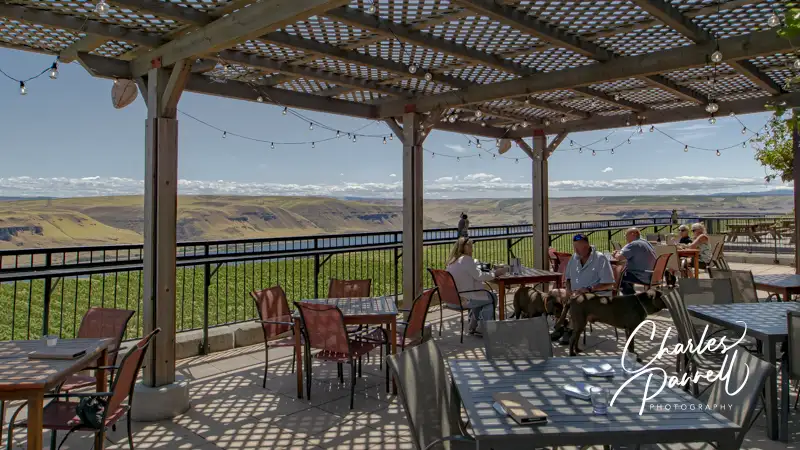
Bistro at the Maryhill Winery
When it’s time for a break, be sure and stop in at the Maryhill Winery (www.maryhillwinery.com), which is just a mile west of the museum. Established in 1999 by Craig and Vicki Leuthold, Maryhill Winery is one of the largest wineries in Washington state. Their first vintage was released in 2001, and since then they’ve garnered over 4,000 awards. They are known for their Washington state varietals, but they also produce some equally impressive blends.
And you just can’t beat their location, high above the Columbia River. Accessible parking is available right next to the entrance. You have two choices here — you can have a bite to eat in the bistro, or you can do a tasting flight in the bistro or the tasting room. Personally I recommend lunch in the bistro, followed by a tasting flight. The menu includes sharable snacks, sandwiches, salads and pizza, and you just can’t beat the Columbia River view.
That said, there’s also level access to the adjacent tasting room, with several lowered tables located near the windows. If Mother Nature isn’t cooperating, it’s another way to snag a great river view while tasting the wines. And with an accessible restroom just around the corner, you have everything you need at Maryhill Winery.
A Historic Museum
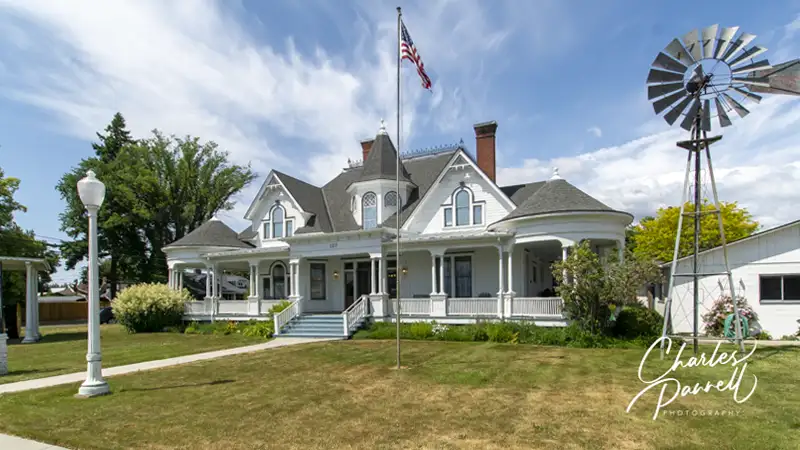
The Presby Museum in Goldendale, Washington
For a different view of the area, head north on Highway 94 and stop in at the historic Presby Museum (www.presbymuseum.com) in Goldendale. Located on the corner of Broadway and Grant, this spacious home was built by Winthrop B. Presby in 1902. He lived there with his second wife Zoe from 1903 to 1915. After that the mansion served as a boarding house for teachers and railway workers, before it was sold to the Klickitat County Historical Society in 1962. Today it’s home to the Presby Museum, where visitors can step back in time and get a taste of yesteryear.
There’s accessible parking to the right of the museum, in the driveway between the museum and the Carriage House. And although steps grace the front facade there’s a wheelchair lift on the side of the house. The first floor of the home is wheelchair-accessible, but the second and third floors can only be accessed by stairs. That said, some of the most interesting pieces are on the first floor.
A larger-than-life pump organ dominates the parlor, which also includes a Victrola and a pianola (a type of player piano). Across the way Mr. Presby’s office includes some interesting artifacts, including a clock from the 1800s and some period law books. The only original piece of furniture — a sideboard hutch — can be found in the dining room. And the kitchen has a gaggle of vintage utensils as well as a wood stove and a washing machine. It’s an interesting peek into the early 1900s.
Finally, the Carriage House and the Annex, have a small one-inch step, and they include everything from a vintage printing press to relics from an old schoolhouse. They’re definitely worth a visit, and if you have questions, just ask the docents.
Don’t Forget Stonehenge
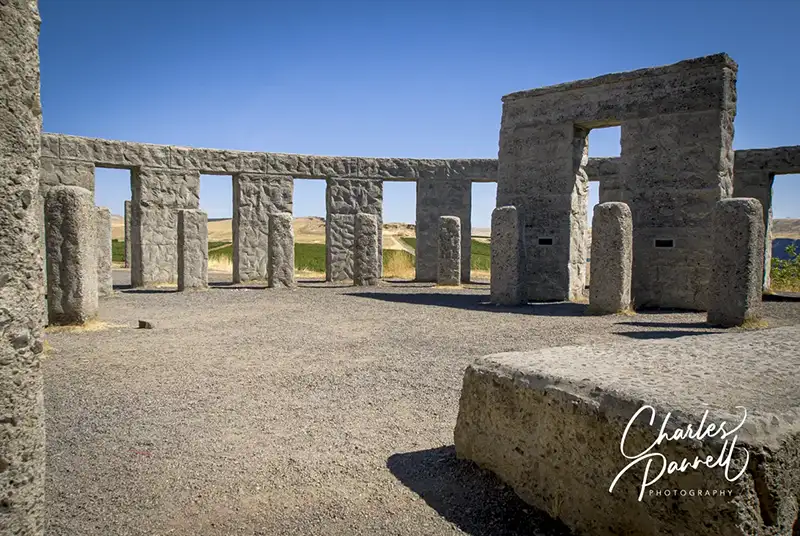
Last but not least, don’t leave the area without a visit to the Maryhill Stonehenge replica (emerginghorizons.com/stonehenge-memorial) down near the Columbia River. At first glance it seems an odd location for this monument, but the reason for the choice was due to misinformation. Sam Hill designed the monument in 1918, as a memorial to local men who perished in the Great War. At that time Hill believed that the original Stonehenge was used as a place for human sacrifices. And he reasoned that the human sacrifices at Stonehenge were not unlike the loss of life in WWI.
And although the replica was designed to look like the original, because of the difference in latitude and different alignment, the Maryhill rendition cannot be used as a astronomical calendar. Still it’s definitely worth a stop, as there’s level access to the entire monument. And like many of the other Maryhill stops, you’ll also get a great Columbia River view from the monument.
Barrier-Free Travel Washington National Parks for Wheelers and Slow Walkers
Covering accessible travel isn’t easy. Charles and I do tons of pre-trip research followed by detailed in-person visits, in order to uncover the wheelchair-accessible gems we share with our readers. It’s not exactly glamorous, but I’ve been doing this for over 30 years and I love it. It’s a process that we’ve honed over the years, and with due diligence it yields impressive results. Such was the case last week when we were checking out some possible new accessible additions to the International Selkirk Loop (https://emerginghorizons.com/the-international-selkirk-loop-for-wheelchair-users-and-slow-walkers/). And low and behold we discovered wheelchair-accessible Portage Park, a newly constructed stop on this international driving loop.
Located off of Highway 14 on the north shore of the Columbia River, the Wishram Locomotive makes a nice stop in Southwestern Washington. Although there’s signage at the Wishram turnoff, about three miles west of Maryhill Winery, that’s pretty much the last directional beacon you’ll find. Still it’s a fun off-the beaten-path adventure. Just follow Wishram Road as it heads down towards the river, and continue on Main Street when you get to town. Then, just past Bunn Canyon Road, make a left into the train depot parking lot. Basically if you stay away from the “not a through street” signs and head towards the river you’ll be just fine.
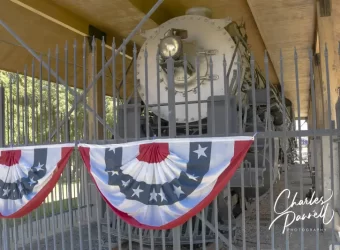
There’s accessible parking near the depot entrance, but the locomotive is located in a small park in front of the station. The 1932 Baldwin Locomotive #2507 once pulled the Empire Builder train as it headed from the Pacific Northwest to Chicago. Today it’s housed in a protective enclosure, surrounded by a wrought iron fence. You can still get a good gander it, but the fence stops folks from climbing on and defacing the locomotive. There’s a level sidewalk around the locomotive, and some standard picnic tables in the shade on the nearby grassy area. And although there are no real facilities at this stop, there is an accessible porta potty in the parking lot. As an added bonus, there are great river views on the way to and from Highway 14.
Located on Highway 14 near the town of Lyle in Southwestern Washington, Schreiner Farms is home to a number of exotic animals. Even better, they welcome visitors as long as they abide by a few simple rules. They ask visitors to stay in their own vehicles, remain on the main main road, yield to farm traffic and refrain from smoking and littering. Best of all — there’s no admission charge.
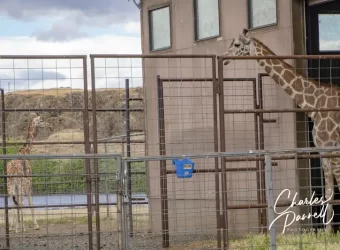
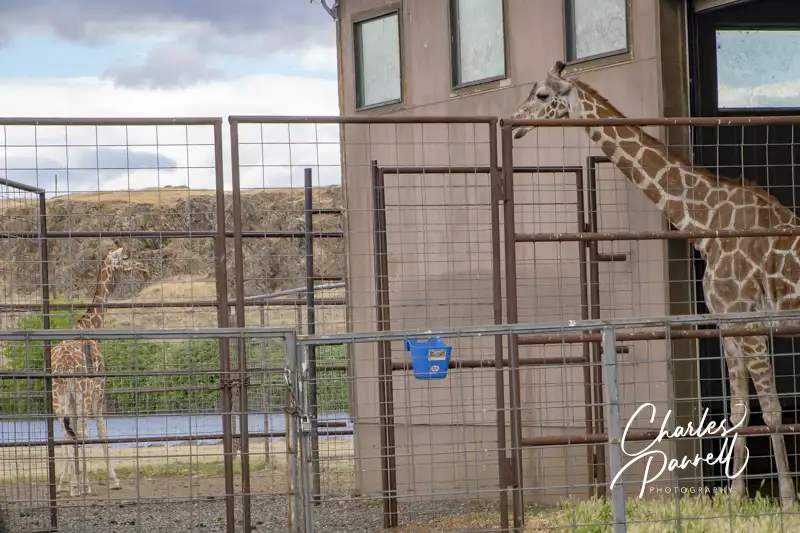
A working cattle ranch, Schreiner Farms also raises a variety of exotic animals. As you cruise along the main ranch road you’ll see enclosures on each side, filled with antelope, emu, ostrich, deer, elk, zebra and llamas. Sometimes the animals get close to the fence, and sometimes they don’t, so sightings are truly the luck of the draw. That said, at the turn-around spot — which is clearly marked — you’ll probably get a good gander of the resident giraffes. Their barn is close to the road and more often than not they hang out there. Either way, this is a great quick road trip stop along Highway 14, as you never know what you’ll see.


 According to the conductor, most wheelchair-users can be accommodated in the coach car; however some larger power wheelchairs may need to use the lift to board the baggage car. There’s no seating in the baggage car, which also contains the snack bar. There is however, an open doorway with a safety fence in the baggage car, so you can still get a good view of the passing scenery. The baggage car also has an accessible restroom. That said, the doorways on the connecting cars are narrow and the thresholds are uneven, so it’s best to use the facilities in the station if you are seated in coach.