As a travel writer since 1977, Candy Harrington has been writing about accessible travel exclusively since 1996. She’s the founding editor of Emerging Horizons, and the author of the popular Barrier-Free Travel national park series. With thousands of bylines to her credit, Candy hits the road often, in search of new accessible travel finds. Candy and her travel photographer husband Charles Pannell reside in NE Washington, where they tend to their chicken flock and enjoy a rural lifestyle.
Population 177
Last but certainly not least, Midpines makes a great stop on a Yosemite road trip — plus it’s the perfect home base for day trips to the park. And there are not one, but two wheelchair-accessible properties in town. The Yosemite Bug (www.yosemitebug.com) tops the list, as this rustic mountain resort offers a wheelchair-accessible room that’s furnished with two queen beds and has a bathroom with a roll-in shower.
And if you’d like to try something different, AutoCamp Yosemite (www.emerginghorizons.com/autocamp-yosemite-a-comfortable-wheelchair-accessible-home-base) offers several accessible glamping options. Their custom built wheelchair-accessible X Suite is reminiscent of an upscale RV. It’s furnished with a small galley, and includes a queen-sized bed and a bathroom with a roll-in shower. Alternatively they also have two accessible Classic Suites and an fully furnished accessible glamping tent. And the YARTS (yarts.com) shuttle stops at the Yosemite Bug in Midpines, which allows folks to sit back and enjoy the ride to the park, and skip the sometimes long entrance lines.
View from Hermit Road In Grand Canyon National Park
Although US National Parks have done a great job with providing inclusive access for disabled visitors, sometimes alternative — but equal — policies have been established. Such is the case with the issue of private vehicle usage is some national parks. For example, some parks limit vehicle access to certain areas in order to control crowds or minimize the environmental impact on fragile ecosystems. In many cases wheelchair-accessible shuttle bus access to these areas is the solution.
But what if your scooter is too big for the accessible shuttle bus, or if you have to tote along a lot of medical equipment? Well in these cases — and many more — alternate access is available to disabled individuals in the form of special driving passes for disabled national park visitors. Check out what these three national parks offer, and find out how to secure a driving pass for your next visit.
Zion National Park
In order to manage traffic in Zion Canyon, only shuttle bus traffic is allowed on Zion Canyon Scenic Drive between March and November, and during the December holiday season. People who have reservations at Zion Lodge are allowed to drive to the lodge and park in the parking lot, with a Red Pass permit and a parking code, which are provided when the reservation is made.
Visitors who need to carry along additional medical equipment or folks who cannot ride the shuttle because of a medical condition are eligible for a Yellow Pass permit to drive their personal vehicles along the entire length of the Zion Canyon Scenic Drive. Visitors who cannot ride the shuttle due to weight or size restrictions are also eligible for this permit. The shuttle lift can accommodate a combined weight limit of 600 pounds, and wheelchairs that are up to 45 inches long and 25 inches wide. The free Yellow Pass permits are available at the information desk at the Zion Canyon Visitor Center.
Grand Canyon National Park
In Grand Canyon National Park, Hermit Road and Yaki Point Road have restrictions on private vehicle usage. Hermit Road is closed to private vehicles from March 1 to November 30; and Yaki Point Road and the Kaibab Trailhead parking lot are closed to private vehicles all year. A free park shuttle is used to transport people to these areas of the park.
A special Scenic Drive Accessibility Permit is available to anybody who has mobility issues, and may have problems boarding the park shuttle buses. All shuttle buses are lift-equipped and can accommodate wheelchairs up to 48 inches long and 30 inches wide. Most motorized scooters will not fit on the buses.
There is no fee for the permit, which is available at park entrances and visitor centers. An accessible parking placard or disabled license plates are required to park in accessible parking spaces in the park, as the Scenic Drive Accessibility Permit is not good for that purpose.
Yosemite National Park
Although Yosemite doesn’t require special driving passes for disabled national park visitors, a few areas of the park where vehicles are restricted are open to visitors that have an accessible parking placard or disabled license plates. These roads include the Happy Isles Loop Road, the Mirror Lake Road and the access road to the Grizzly Giant in Mariposa Grove. The speed limit on these roads is 15 mph, and drivers must use their hazard lights when driving. It should be noted that these roads are open to bicycles and pedestrians, so keep an eye out for them.
Additionally, visitors with a temporary disability or folks who forget their parking placards can obtain a temporary disability placard at the park. This placard allows visitors to park in accessible parking places in the park, as well as drive along Happy Isles Loop Road, the Mirror Lake Road and the access road to the Grizzly Giant in Mariposa Grove. The temporary disability placard is available at park entrance stations or visitor centers.
Barrier-Free Travel the Grand Canyon for Wheelers and Slow Walkers
The fallen Pioneer Cabin Tunnel Tree in Calaveras Big Trees State Park
Make no mistake about it, California can have some brutal winters. Take 2017, for example. Between a record rainfall, mudslides and a late season snow it was definitely a challenge for many mountain communities. And unfortunately there were a few causalities, such as the loss of the Pioneer Cabin “tunnel tree” at Calaveras Big Trees State Park (www.parks.ca.gov/?page_id=551).
Sadly this giant sequoia was uprooted during a torrential downpour; however after a massive spring cleanup the grove reopened, with traffic routed around the fallen giant. Today the forest has evolved, however this Northern California state park is still worth a visit for a very accessible and intimate look at the remaining giant sequoias. And for a nice wheelchair-accessible place to spend the night, check out the nearby Black Bear Inn (emerginghorizons.com/sleep-near-the-big-trees-in-calaveras-county/) in Arnold.
The Majestic North Grove
North Grove Trail in Calaveras Big Trees State Park
Although the giant trees are scattered through the park, the North Grove has the most accessible concentration of them. Accessible parking is located near the visitor center, which offers barrier-free access and features a collection of interpretive exhibits. Accessible restrooms with flush toilets are located next to the visitor center.
The trail to the North Grove begins to the left of the visitor center. This hard-packed dirt tail winds around to the right to the Discovery Stump, the official beginning of the grove. This was the site of the first tree that Augustus T. Dowd found in 1852, while he was chasing a wounded grizzly bear. Sadly the tree was felled in 1853, but remnants of it can be found next to the stump.
The Three Senses Trail — which is located just past the Discovery Stump on the left — is also worth a stop. This .13-mile hard-packed dirt trail features interpretive plaques about the native vegetation, and includes benches to sit and rest along the way. And although the trail has a few bumps here and there, it’s still a good choice for most wheelchair-users and slow walkers.
Three Senses Trail in Calaveras Big Trees State Park
The hard-packed dirt North Grove Trail, continues past the Three Senses Trail, and winds around the Empire Tree, the Old Bachelor, the Mother-of-the-Forest and the Father-of-the-Forest. At times the dirt transitions to a level boardwalk, as this 1.7-mile trail snakes past the named and unnamed giants.
Just past the Abraham Lincoln Tree, there’s a detour around a fallen giant and through the remains of the Pioneer Cabin Tree. The fallen tree will remain on the ground to provide nourishment to new trees, and continue the forest cycle. And although the North Grove is accessible, it’s best to visit after the winter debris has been cleared in the early summer.
A Meadow Boardwalk
Meadow Boardwalk in Calaveras Big Trees State Park
Although the major focus is on the giant sequoias at Calaveras Big Trees, there’s also a nice accessible boardwalk through a meadow near the North Grove. The meadow itself is surrounded by the North Campground, which is just a short level walk from the visitor center. Follow the park road to the North Grove Campground, and if you hit the dump station, go back as you missed the campground.
Stay on the main campground road, and be on the lookout for accessible campsite 16 on the left. There’s an accessible showerhouse right behind the campsite, and the meadow boardwalk begins on the far side of that building.
There’s level access to this short boardwalk. It’s only .3-mile long, but when the wildflowers are in bloom it’s a sight to see. Lupine and corn lilies fill the meadow in June and July; although peak bloom time is weather dependent. And be on the lookout for Western Tanagers which also frequent the meadow. The boardwalk had low bumpers and no railings so wheelchair-users get an unobstructed view of all of natures beauty. And don’t forget to check at the visitor center to see if there are any wildflower walks scheduled.
The Quieter South Grove
Save some time to explore the South Grove at Calaveras Big Trees. Here you’ll find fewer visitors and the nicely accessible Beaver Creek Trail. It’s easy to find, as it’s near the end of the Walter W. Smith Memorial Parkway, about twenty minutes from the entrance station.
Accessible parking is located near the accessible vault toilet, and there’s level access over to several accessible picnic tables shaded by the surrounding forest. The .7-mile Beaver Creek Trail begins behind the vault toilet. This hard-packed dirt trail follows Beaver Creek, then passes the South Grove parking area, before it loops back to the Beaver Creek picnic area.
Make sure and stop at Beaver Creek along the trail, which is just .1 mile from the Beaver Creek picnic area. Not only are there some more picnic tables near the creek, but beach mats allow for access right up to the water.
Beaver Creek viewed from the Beaver Creek Trail in Calaveras Big Trees State Park
If you want to try a more challenging — yet still accessible — trail, then head on over to the River Picnic Area and try the Stanislaus River Trail. The trailhead for this .35-mile round-trip hike on a hard-packed dirt trail is is next to the parking area. The trail winds downhill to the river, however it still maintains an accessible grade. Make sure and take a good look at the trail in the beginning though, as it’s not flat, and you will have to make your way back up to the parking area.
Stanislaus River Trail in Calaveras Big Trees State Park
You’ll get a nice gander of the river from the end of the trail. It’s also pretty secluded and not frequented by a lot of park visitors. Granted this trail won’t work for everyone, but if you fancy a little workout it’s just what the doctor ordered.
Barrier-Free Travel California National Park Road Trips for Wheelchair-Users and Slow Walkers
Located in Eastern Utah just five miles north of Moab, Arches National Park is known for its more than 2,000 natural stone arches. The main park road runs from the visitor center to the Devils Garden Trailhead, and connects with side roads to the Windows Section and Wolfe Ranch. And although the major sites are marked on the park map, there are also a number of unmarked pullouts along the way that offer spectacular windshield views of the beautiful red rock landscape.
Insider Tips
Don’t miss Balanced Rock – one of the most accessible sites in the park. It offers a nice .2-mile out-and-back accessible stroll around the seemingly precariously perched namesake rock, with a killer view from an overlook located midway along the route.
Although the main trail to Skyline Arch is not accessible, due to steps and rocks. wheelchair-users and slow walkers can easily access the other side of the arch from the Needles Campground. Just drive to the amphitheater, park in the accessible parking area, and take the level sidewalk over to the amphitheater. There’s an absolutely beautiful close-up view of Skyline Arch from just about anywhere in the amphitheater.
In addition to an entrance fee or a park pass, a day use vehicle entrance reservation is also required for Arches National Park, for visits from April through October between 7 AM and 4PM. Reservations are released in monthly blocks on recreation.gov beginning in January. Print out the reservation or do a screen capture, as cell phone service is spotty in the park. Entry reservation are not available at the park, and visitors who don’t have one will not be admitted.
If you don’t have an entrance reservation, consider entering the park before 7 AM. You’ll dodge the crowds and the park is absolutely beautiful as things begin to come to life for the day.
If you’re thinking about taking a cruise that stops in the Bahamas, then check out these wheelchair-accessible Bahamas tour and transportation providers. Make sure and plan ahead and make your reservations as soon as you book your cruise, because accessible choices are limited and they go fast. Some of the cruise lines use these providers too, so there is little to no availability for last minute bookings.
Bahamas Experience Tours
www.bahamasexperiencetours.com/transportation-services/
Based in Nassau, this local company can provide transfers and transportation in wheelchair-accessible vans. They also provide wheelchair-accessible Bahamas shore excursions for most of the major cruise lines. For more information, call (242) 397-5000 or e-mail info@bahamasexperiencetours.com.
Tavares Wheelchair Transportation
accessiblebahamas.com
Tavares Wheelchair Transportation can provide wheelchair-accessible transportation to any destination on Nassau/Paradise Island. They offer their services to both locals and visitors, and can provide airport transfers, transportation to attractions or local appointments, or personalized transportation services. They can also provide Hoyer life and hospital bed rentals. For more information about their wheelchair-accessible Bahamas options, fill out the contact form on their website.
Barrier-Free Travel 101 Accessible Vacations Travel Ideas for Wheelers and Slow Walkers
Although Memorial Day is celebrated in a variety of ways across the country, the Eastern Sierra town of Bishop marks this traditional beginning of summer with Bishop Mule Days (muledays.org). This annual event, which promotes the heritage, legacy and talents of mules; draws mule teams and spectators from across the west, and offers a week filled with fun, festivities and good old fashioned western entertainment. Although the 2025 event technically runs from May 20 to May 26, the highlights of the festivities are the weekend parade and arena events.
Everyone Loves a Parade
20 Mule Team at the Bishop Mule Days Parade
The Bishop Mule Days Parade, which is billed as the world’s longest non-motorized parade, is definitely a crowd favorite. It begins at 10 AM at South and Main Streets and travels north on Main Street. This festive event features mule teams, horses, wagons, bands and lots of mules with costumed riders. You never know quite what you’ll see, as the popular costume contest has a different theme every year.
Accessible parking for the parade is available in front of the Bishop Dog Park, but it’s best to ask the officer at the Main Street road block to direct you to other accessible parking areas. The good news is that the town is pretty flat, so it’s easy to navigate in a wheelchair. The not so good news is that the parade draws a huge crowd, so accessible parking can be difficult to find. The best plan of action is to arrive early for first crack at the accessible parking spots, then have a leisurely breakfast and stake out a place to watch the parade. It’s an extremely popular event, and many locals even save their spots with chairs as early as Friday afternoon.
2025 Bishop Mule Days Rodeo
The bulk of the other events take place at the Tri-County Fairgrounds over the next two days. Accessible parking is available in the fairgrounds parking lot, and a paved level pathway leads from the parking area, around the mule barns to the grandstand. Accessible seating for up to two people is available in Box 1 in the grandstand, and for groups of three or more in the first rows of Sections A and E. It’s best to call (760) 872-4263 and order your tickets as far in advance as possible. Additionally, it’s extremely important to specify that you need accessible seating when you place your order.
The arena events resemble something akin to a mule rodeo, where the packers show off their skills. The whole event is steeped in tradition, as mule packers are a fixture in the Sierras for back country camping, hunting and rescue operations. There are no money prizes for the winners, but the bragging rights are huge.
The Main Events
The Scramble that starts the Individual Packing Event
A variety of different competitions are held in the arena, but here’s a sampling of some of the events you can expect to see.
Timed Packers Choice
Packers lead their mule strings over and around their choice of obstacles in this timed event. Obstacles range from bridges, gates, water hazards and logs. Packers earn one point for each obstacle they navigate successfully.
Coon Jumping
In this event, handlers encourage their mules to jump over a bar from a standstill. The bar is raised until there is one mule left. The contest takes its name from the practice of jumping mules over fences during coon hunts. There’s always a laugh or two during this contest as some mules are very hesitant to jump.
Individual Packing
A variety of objects, including ice chests, washtubs, pots and pans are laid out on the ground. Packers then pack everything on their two mules, cover the load with a tarp, and attempt to race to the finish line without losing anything.
Run, Ride and Lead
In this fast-paced event packers run to their mules which are located on the opposite side of the arena. Next they ride their mules back to the start, then lead the animals back across the arena. In the end, more than one packer usually ends up on the ground.
Team Pack Scramble
One of the highlights of the arena events is the Team Pack Scramble. Packers lead their mule strings into the arena, then unpack and unharness the animals. Cowboys then fire blank shots into the air to disperse the animals. Packers must round up their animals, repack them, assemble their strings, then lead them by horseback out of the arena for a lap around the parking lot. A real crowd pleaser!
Make Plans to Attend!
Although distinctly different from a traditional rodeo, Bishop Mule Days is a fun, family-friendly way to celebrate Memorial Day. Afternoon and evening arena events are held on Saturday and Sunday, and you can get a single ticket or a buy an all-event pass. Get your tickets early though, as this popular event sells out quickly. Don’t miss the 2025 celebration – a tradition that dates back 55 years.
Barrier-Free Travel Yosemite, Sequoia and Kings Canyon National Parks for Wheelers and Slow Walkers
Bucharest-based Accessible Romania offers a number of a tour options for wheelchair-users and slow walkers. They have a ramped wheelchair-accessible van available for transfers and tours. This large vehicle can carry up to two wheelchairs and five seated passengers, with room for luggage.
The agency offers a number of day tours, including a wheelchair-friendly tour of Bucharest. It includes transportation in an accessible van with stops at The Palace of Parliament, The Old Center, The Village Museum and Herastrau Park. An English speaking guide and admission to all attractions is included in this all-day tour.
If you’d like a longer tour, then their Accessible Transylvania Tour is your best choice. It includes transfers from Bucharest and stops at Sinaia, Busteni, Brasoe, Sighisoara, Cluj Napoca, Alba lulia and Sibiu. This eight-day tour includes transportation in an accessible van and accommodations at four-star “cozy hotels.”
Although Accessible Romania focuses on inclusion and strives to provide accessible services, there still may be some limits for full time wheelchair-users due to the existing infrastructure in Romania. That said, many of their tours are good choices for seniors and slow walkers. It’s hoped that Accessible Romania will create a greater awareness of access needs in the tourism sector, which will hopefully open up accessible tourism and improve the facilities in Romania. For more information about their offerings, visit accessibleromania.com.
Barrier-Free Travel 101 Accessible Vacations Travel Ideas for Wheelers and Slow Walkers
I just booked an accessible hotel room in a Los Angeles hotel and it was $25 more than the non-accessible room that a friend booked. Can hotels charge more for accessible rooms? I thought that the Americans with Disabilities Act (ADA) prohibited discrimination like this. Is this legal, and if not, what can I do about it?
The Law
Although discrimination on the basis of disability is prohibited in the US, there isn’t enough information to determine if the hotel in question violated the ADA. Under the ADA, hotels are required to have a certain number of accessible rooms based on their size. That number ranges from one accessible room for a property with 25 rooms, to nine accessible rooms in a property with 500 rooms. And properties that have more than 500 rooms are required to have 2% of their rooms flagged as accessible rooms.
But no matter how many rooms a property has, the accessible rooms are supposed to be distributed evenly among the various room types. What does that mean exactly? Well if they have multiple accessible rooms, they have to be equally distributed between the economy rooms and the high-end rooms. It also means that they should offer a choice in bed types, or other amenities such as ocean views.
The problem comes in when the property only has one or two accessible rooms, but a large variety of room types. Then some choices have to be made on how to allocate the rooms so that guests who need these rooms will have a reasonable choice.
Can hotels charge more for accessible rooms? Yes and no. They can’t charge more for an accessible room in the same rate category; however if all the accessible rooms in the lower rate category are booked, and the only accessible room left is one in a higher rate category, then yes you will have to pay that higher rate for that accessible room.
The Solution
The solution to your problem begins with contacting the hotel. Address your access concerns with the property manager. Ask about the property size, and the allocation of the accessible rooms in different rate categories. And be sure to write down those figures for future reference.
If the accessible rooms seem evenly split in all the rate categories, then you really don’t have any recourse. It could be that they had lower rate standard rooms available, but if all of the lower rate accessible rooms were already booked, then the only thing left for you was an accessible room in a higher rate category. So if that’s the case, you’re out of luck. That’s one reason it pays to book early, because the lower rate rooms usually fill up first. Of course it doesn’t hurt to ask for a credit, or a discount on a future stay for your troubles, but the hotel is not required to give you anything.
On the other hand ,if the property has a disproportionate number of accessible rooms in the higher rate category, you should definitely ask for the difference between the lower rate room and the higher rate room. And remember to remind the manager what the ADA requires.
Additionally, it’s a good idea to file an ADA complaint. Even if you are compensated, the property should still be up to ADA standards. After all, you don’t want this to happen again — to you or anyone else. There is absolutely nothing wrong with taking compensation from a property and also filing an ADA complaint. The ADA complaint won’t get you any compensation, but it could help effect change.
Filing an ADA complaint is easy. You can do it online or by mail. Just follow the instructions at www.ada.gov/file-a-complaint/.
More Resources
Of course, this issue is just the tip of the iceberg as far as accessible travel problems are concerned. With that in mind here are a few resources to help you adequately address other access shortfalls.
Located in sleepy Mendocino County, just east of the hamlet of Philo, Hendy Woods State Park (www.parks.ca.gov/?page_id=438) is home to an off-the-beaten-path wheelchair-accessible redwood grove. And although it’s easy to pass by this secluded park, it’s definitely worth a slight detour on any road trip along scenic Highway 128. Whether it’s for a picnic and a short stroll, a longer hike through the grove, or even a sleep-over in a camping cabin, a stop at Hendy Woods offers wheelchair-users and slow walkers an abundance of options.
Wander Through the Grove
All Access Trail in Hendy Woods State Park
There are several wheelchair-accessible hikes in Hendy Woods, but they all begin in the day use area parking lot. There’s accessible parking in the lot with level access over to the picnic area, where you’ll find several accessible tables under the trees. There’s also an accessible vault toilet near the parking area.
The shortest accessible trail begins on the other side of the picnic area. The .3-mile All Access Trail, is wide, level and doable for just about everyone. The hard-packed dirt trail, which winds through Big Hendy Grove, is lined with redwoods and ferns. The trail ends on the park road; and from there you can double back through the redwoods for a .6-mile hike, or roll along the paved park road back to the day use area.
The accessible Discovery Loop Trail, which branches off of the All Access Trail, is another good choice. This .45 mile hard-packed dirt trail travels through the grove for a nice .85-mile hike. And if you’re up for a longer stroll, then take the Upper Loop Trail which branches off the Discovery Loop for a nice 1.8-mile hike through the grove.
Camp in the Redwoods
Puma Cabin in Hendy Woods Redwood State Park
Although spending the day at Hendy Woods is a treat, there’s nothing quite like spending the night surrounded by the giant redwoods. And although the Azalea Campground offers four accessible campsites, the adjacent Wildcat Campground also boasts a comfortable wheelchair-accessible camping cabin.
The Puma Cabin (1), which is located right across from the visitor center, is pretty basic, but it will save you from pitching a tent. There’s accessible parking on a cement slab in front of the unit, with level access over to the front door. Although there’s a slight lip on the threshold, most folks can bump over it easily. Inside there’s plenty of room to maneuver a wheelchair around the bunk bed (double on bottom, single on top), wood stove, table and bench. Bedding is not provided, and you’ll definitely want to bring an air mattress or an egg crate, as the wooden bunks are bare – and hard. Outside there’s level access to a raised grill and an accessible picnic table.
There’s no water or plumbing in the cabin, but an accessible showerhouse is just a short roll away. Both the men’s and women’s sides include a accessible stall, roll-under sinks, and roll-in showers with grab bars, a lowered showerhead and a built-in shower bench. The pay slots for the showers are within easy wheelchair reach, and the accessible shower stalls also feature enlarged changing areas.
Accessible Shower and Toilet in the Showerhouse at Hendy Woods Redwood State Park
All in all the Puma cabin is a rustic but comfortable wheelchair-accessible lodging option. After all, how often do you get to spend the night in an ancient redwood grove?
Barrier-Free Travel California National Park Road Trips for Wheelchair-Users and Slow Walkers
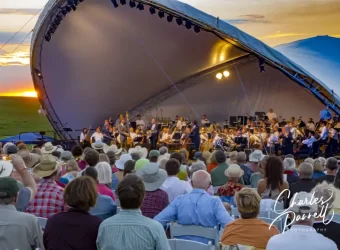
Last month Elaine Perez-Pena was arrested at O’Hare International Airport for smuggling cocaine. I guess that’s not big news by itself, but to add a little twist to the story, Perez-Pena is supposedly a wheelchair-user — or at least she had a wheelchair in her possession at the time of her arrest. She later admitted that she really didn’t physically require a wheelchair, and the only purpose of her assistive device was to conceal illegal drugs.
Cocaine in the Cushions
So here’s how the smuggling bust went down. Perez-Pena was selected for a secondary inspection after she deplaned in Chicago, not because she was a wheelchair-user, but because she was previously convicted of drug smuggling in 2022. So they gave her luggage a through once-over, and put her wheelchair through the x-ray machine. Although nothing was found in her luggage, there were some abnormalities in the wheelchair cushions X-rays. Subsequently a drug-sniffing dog alerted to the wheelchair, so the authorities tore it apart and found an impressive 14 kilograms of cocaine.
This incident was quite a step up from her last endeavor in 2021, when she concealed a mere three kilograms of cocaine in her luggage on her return from the Dominican Republic. She pleaded guilty to that offense and ended up with “time served” which was about nine months in jail. Perhaps she’ll be in custody a little longer for this offense.
Increased Scrutiny for Wheelchair-Users?
Of course since Perez-Pena used a wheelchair to smuggle her goods, many folks are wondering if wheelchair-users will now receive closer scrutiny when passing through airport security checkpoints in the US? I don’t really think so. Don’t get me wrong, I’m sure every TSA employee in the country is aware of this wheelchair-related bust, so they’ll be more aware of the possibility that assistive devices can be used to conceal drugs. That said, Perez-Pena isn’t the first person hide contraband in a wheelchair, so I think this incident will serve as a gentle reminder rather than a great revelation.
For example, in September 2024, a passenger’s power wheelchair was flagged for secondary screening at George Bush Intercontinental Airport, due to unusually large cushions. After an x-ray revealed a hidden metal compartment, the wheelchair was more closely examined and 12 kilos of cocaine were uncovered.
And then there was the traveler at JFK International Airport in New York, who tried to hide over $450,000 of cocaine in her wheelchair wheels. She was flagged for secondary screening when a TSA agent noticed that some of her wheelchair wheels were not turning. That was a big red flag!
So although wheelchair-users may receive a closer look from TSA agents, they probably won’t be flagged for a more intensive screening unless some anomalies are spotted. Or if the wheelchair-user happens to be a convicted smuggler.
What to Expect at Security Checkpoints
Security checkpoints are a necessary evil of modern airline travel, but on the plus side the TSA has specific guidelines about how to professionally and respectfully screen wheelchair-users.
And although TSA PreCheck can help streamline the process a bit, there are still some limitations of that program for wheelchair-users. The good news is that you don’t have to remove your shoes, belts, laptops or liquids when you go through the TSA PreCheck line. And that makes the whole screening process a lot easier for everyone.
That said if you cannot stand and walk through the metal detector — in any line — you will need to undergo a manual pat down. And if there is any sort of flag or alarm during the pat down, then your personal property, carry on and wheelchair may be subject to additional screening. So suffice it to say that if your cushion looks like an overstuffed chair, or the wheels on your wheelchair don’t turn, then it’s off to the x-ray machine for your equipment. And most likely a drug-sniffing dog will also be called in to check your personal property if you are suspected of smuggling.
But for the majority of wheelchair-users, the security checkpoint won’t present any problems. That said, it pays to be prepared, so check out these handy tips before you hit the security checkpoint on your next trip. (https://emerginghorizons.com/the-disabled-traveler-and-airport-security).