As a travel writer since 1977, Candy Harrington has been writing about accessible travel exclusively since 1996. She’s the founding editor of Emerging Horizons, and the author of the popular Barrier-Free Travel national park series. With thousands of bylines to her credit, Candy hits the road often, in search of new accessible travel finds. Candy and her travel photographer husband Charles Pannell reside in NE Washington, where they tend to their chicken flock and enjoy a rural lifestyle.
National parks make a great multigenerational vacation choice. Grandparents can spend time with their grandkids and help them earn their junior ranger badges, while mom and dad can take the afternoon off and enjoy mother nature. And nothing beats a family campfire in the evening. That said, planning a multigenerational national park adventure can be a challenge, as you to need consider a wide range of ages, abilities and interests. And then there’s the lodging issue. On the plus side, if your itinerary includes Rocky Mountain National Park, Estes Park Center (ymcarockies.org/Locations/Estes-Park-Center) makes the perfect wheelchair-accessible home base for the whole family.
Spend the Night
Located just outside of Estes Park, Estes Park Center is about three miles from the Beaver Meadows Entrance to Rocky Mountain National Park. The hotel-style lodge rooms are the perfect choice for several families traveling together, or even a family reunion. Each family can have their own lodge room, and there’s also a comfortable lobby with a fireplace in each building. So you can have you privacy, or be a social butterfly — the choice is entirely yours. And although this property is open to everyone, YMCA of the Rockies members get a discount.
Longs Peak Lodge, which is just a short drive from the office, is one of the most accessible lodge choices. There’s plenty of accessible parking in front, with level access up to the lodge entrance. Accessible Room 8101 is located one floor down and is accessible by elevator.
Room 8101 at Longs Peak Lodge
The room features wide doors and good pathway access, and it’s furnished with two 26-inch high queen-sized beds, with an access aisle between them. A table and two chairs are also included; and a floor futon mattress is available upon request. There’s level access through a wide door to the oversized bathroom, which is equipped with a roll-in shower with a hand-held showerhead, grab bars and a fold-down shower bench. Toilet grab bars are located on the back and right walls (as seated), and there’s also a roll-under sink in the bathroom.
Bathroom in room 8101 at Longs Peak Lodge
And for a nice family meal, head over to the Aspen Dining Room. Although there’s a path down to it from Longs Peak Lodge, it’s a bit steep and rocky. Best bet is to drive down if you have mobility issues. There is level access to the dining room, which offers a breakfast, lunch and dinner buffet. There are also a lot of large tables, so it’s a great family dining option. Even better — breakfast for two is included with each room.
Activities Galore
Part of Estes Park Center is located on 860 pine-studded acres, and surrounded on three sides by Rocky Mountain National Park. A popular reunion venue, this family oriented lodge has plenty of activities for all ages.
Lodge guests can take advantage of the Day Camps, which includes a variety of programs for kids of all ages, as well as a substernal menu of offerings for the whole family. And with advance notice, they are usually able to accommodate children with access needs. It’s a good opportunity for kids to bond, learn a little bit about nature, and get some exercise.
If, on the other hand, you’d prefer to strike out on your own, then check out the wheelchair-accessible Enger Family Nature Trail. It begins at the Boone Family Mountain Center and loops through the surrounding forest, with interpretive panels about the forest ecosystem along the way. It makes for a nice inclusive one-mile walk through the forest.
Finally, you can also take a day trip to Rocky Mountain National Park. Sprague Lake and Bear Lake are good choices, as they they are close and they both have wheelchair-accessible trails. Plan ahead though, as entrance reservations are now required for Rocky Mountain National Park (emerginghorizons.com/national-park-entrance-reservations-required-in-2024/)
The bottom line is, Estes Park Center makes an excellent home base for a Rocky Mountain National Park visit. The park is just a stones throw away, and there’s really no shortage of fun activities for Estes Park Center guests, where the motto is, “boredom is simply not an option.”
Barrier-Free Travel Glacier, Yellowstone and Grand Teton National Parks for Wheelchair-Users and Slow Walkers
With the evolution of the internet, information is just a few keystrokes away. On the other hand, some of that information is a far cry from accurate. This is especially true where accessible travel is concerned. Unfortunately with the emergence of Artificial Intelligence (AI) the credibility of online information has greatly decreased, and a glut of accessible travel misinformation has surfaced. With that in mind, here are some accessible travel misinformation tidbits recently found online; followed by the true facts, and topped off with a handful of accessible travel resources.
Accessible Travel Misinformation — Air Travel
Misinformation: The Americans with Disabilities Act (ADA) is the law that covers air travel for disabled passengers.
Truth: The Air Carrier Access Act (ACAA), which actually predates the ADA, covers airline and aircraft accessibility on US airlines and on foreign airlines on flights to and from the US. The ADA does not cover airline access.
Misinformation: You will get upgraded to first class when you fly if you have a disability.
Truth: Although coach seats may not have enough room for many wheelchair-users, upgrades are few and far between these days. It never hurts to ask for an upgrade, but don’t expect one unless you are a top tier frequent flyer. Occasionally wheelchair-users get upgraded, but it’s far from the norm.
Misinformation: Wheelchair-users are guaranteed bulkhead seating on airplanes.
Truth: Under the ACAA, people with a fused leg and those who travel with a service animal are the only passengers guaranteed bulkhead seating. On the other hand, some air carriers voluntarily block bulkhead seats for wheelchair-users; so check around and then deal with the air carriers that can best meet your seating needs.
Misinformation: You don’t need to make advance arrangements for accessible rooms.
Truth: Well you don’t need to make reservations for any hotel room; however that doesn’t mean there will be a room available when you arrive. The same holds true for accessible rooms. The only way to ensure your room will have the access features you need, is to make an advance reservation. In practice, only a small portion of hotel rooms have access features.
Misinformation: Making a reservation at a property assures you that the accessible room will be there when you arrive, because you have guaranteed it with your credit card.
Truth: Guaranteeing a room with your credit card only locks in a specific rate. Blocking a room sets aside a specific room for a specific guest on a specific date. All accessible rooms in the US are required to be blocked under the ADA.
Misinformation: All accessible guest rooms have roll-in showers.
Truth: In the US, only hotels with over 50 rooms are required to have accessible guest rooms with roll-in showers. Those with under 50 rooms are merely required to have tub/shower combinations with grab bars.
Misinformation: All hotels have to have shuttles that are wheelchair-accessible.
Truth: If a hotel provides free airport transfers, they must also provide accessible transfers at no charge. They don’t have to own their own accessible vehicles though. They can contract out the service or pay for an accessible cab or Uber, but they cannot charge disabled customers for a service that they provide free to other guests.
Misinformation: The ship-sponsored shore excursions on most cruises are usually accessible.
Truth: In order to take most ship-sponsored shore excursions you have to be able to walk a few steps and climb up into a bus. Most of the ship-sponsored tours do not include accessible transportation. The exception is in Alaska, but you have to specifically request an adapted vehicle there, even on tours that are designated as “accessible”.
Misinformation: Wheelchair-users can easily roll off cruise ships at all ports, so even if you don’t book a shore excursion you can still explore the area around the port.
Truth: If you can get off the ship you may be able to roll around and explore the port, but cruise ships don’t always dock at all the ports. In many cases cruise ships drop anchor offshore and shuttle passengers to and from the port in tenders. And in many cases these tenders are not wheelchair-accessible. Check with the cruise line to see what ports are tender ports, and then ask about their policy of tendering wheelchair-users. And remember that any port could become a tender port due to high traffic or other operational issues.
Misinformation: Cruise lines provide manual wheelchairs for passengers who cannot walk very far.
Truth: Most cruise lines provide manual wheelchairs and boarding assistance to slow walkers, during embarkation and disembarkation only. These manual wheelchairs are not for the exclusive use of passengers, and cannot be taken to a cabin. If you need a wheelchair during the cruise or for shore excursions, you need to rent one and have it delivered to the ship, or bring your own from home.
Misinformation: Theme parks let wheelchair-users go to the front of the line so they don’t have to wait.
Truth: In some cases, wheelchair-users are allowed to access certain attractions through the exits, because the main entrances are not accessible. The newer rides and attractions are being built with accessible entrances, so this alternative access (which results in skipping the line) is no longer needed for wheelchair-users. And under the new new Disability Access System, only “developmentally disabled guests who cannot wait in line” are eligible to get a return time for popular rides and skip the queues.
Misinformation: Under the ADA, car rental companies must also rent lift-equipped vans.
Truth: Car rental companies are not required to provide ramped or lift-equipped vans. They are however required to install hand controls on vehicles, given 48-hours notice. If you require a lift-equipped van, you need to deal with a specialty rental firm.
Finally, take a look at how the article is written, when you are ferreting out misinformation. Does it seem completely unbelievable? Does it include photos? Is it written by someone who has actually traveled to the destination? If not, then you may be reading misinformation generated by AI. Here are a few more tips to help you weed out the misinformation when you research your next trip. emerginghorizons.com/wheelchair-accessible-travel-sorting-through-the-misinformation-on-the-internet/.
Barrier-Free Travel National Park Lodges for Wheelers and Slow Walkers
If a trip to Nepal is in your future, then check out the offerings of Accessible Nepal (accessiblenepal.com). Based in Kathmandu, this local agency is the only tour operator in the country that offers wheelchair-accessible tours and excursions. And they invest a portion of their profits in community empowerment programs that benefit the locals. Tour offerings range from day tours to 13-day adventures; and they include everything from city tours to birdwatching and cultural tours, and even a safari tour. All tours are conducted in accessible vehicles that are equipped with ramps. A variety of accessible accommodations are available, and 24-hour on-site assistance is provided. Medical equipment is also available for rent. And if you’d like a customized tour, they can put that together too. For more information on their accessible tours, visit the Accessible Nepal website or e-mail connect@accessiblenepal.com.
Barrier-Free Travel Washington National Parks for Wheelers and Slow Walkers
If you follow accessible travel at all, you’ve probably noticed an uptick of articles about the possibility of staying in your own wheelchair to fly. A few airlines have released prototypes of “accessible” flip up seating units with wheelchair tie-downs; and a number of disability rights organizations have championed the “flying in your wheelchair” movement.
Route 66 — which ran from Chicago to Los Angeles — was given its official numerical designation in 1927. Back then it was just a new moniker for a network of roads that crisscrossed the nation. As Americans embraced road trips in the early 1930s, the route blossomed. Motor courts, diners and roadside attractions sprung up along the way, and business was booming. Nicknamed the Mother Road by John Steinbeck, Route 66 also beckoned Dust Bowl residents to head west in search of prosperity.
Today this historic route has been largely replaced by Interstate 40, however it’s still possible to drive along a few sections of the original Mother Road in Arizona. And although it’s a historic route, it’s still a viable option for wheelchair-users and slow walkers. So hop off the interstate on your next drive through the Grand Canyon State, and experience a taste of a wheelchair-accessible Route 66 road trip.
The Oatman Highway
Burro in Oatman, Arizona
This historic route begins on the Oatman Highway. Just take the Topock exit from Interstate 40 after you cross over the Colorado River and enter Arizona. This part of your wheelchair-accessible Route 66 road trip winds through the Black Mountains, crosses Sitgreaves Pass and offers remnants of a bygone era.
Oatman (www.oatmangoldroad.org), which was founded in 1906 to support nearby gold mining camps, is located 35 miles up the road. Today the town celebrates its rough and tumble past and retains a distinctive wild west flavor. Daily gunfights are held in front of the Oatman Hotel (check the town website for times). Accessible parking is located near the Post Office and there are accessible public restrooms on the east end of town.
And then there are the burros. Years ago the miners used burros to work the gold mines, and today their descendants roam the streets of Oatman. A word of warning — watch were you walk or roll because there are a lot of them. And if you’d like to feed them, there’s no shortage of places that sell burro food. All in all, Oatman is a fun stop, and although some of the shops have steps, there are also restaurants, stores and attractions that have level access.
After you leave town, the narrow road winds up to Sitgreaves Pass. Hairpin turns and sheer drop-offs are the norm on this stretch of the route, and there’s also a noticeable lack of guard rails along the way. On the plus side, there’s no shortage of spectacular windshield views, including one at the summit, and another on the way down near the Mile-30 marker.
Cool Springs
Cool Springs, Arizona
As you continue on this wheelchair-accessible Route 66 road trip, the road winds down Gold Hill and passes the remnants of Ed’s Camp, before it reaches Cool Springs. Barely a wide spot in the road, this rest stop was a welcome sight to road weary travelers back in the day. Hollywood also discovered it in 1992, when it was used as a filming location for Jean-Claude Van Damme’s Universal Soldier. Sadly it was demolished in the final scenes of the movie; however it was later sold and rebuilt to resemble the original 1926 incarnation.
Parking is available in a level dirt area, with barrier-free access to the main entrance of the gift shop and museum. And even though there is one step inside, there’s also access to the raised area of the building from a second accessible entrance.
The makeshift museum offers up a quirky collection of found objects that includes everything from an old gas pump and tools, to oil cans, photos, toys and even vintage post cards. There’s also a t-shirt shop, jewelry counter and a decent selection of Route 66 souvenirs peppered around the memorabilia. Outside, there’s an old 1935 rusted out Nash Sedan to the left of the store. And of course the old gas pump which rests under a restored stone canopy.
Kingman
The Powerhouse Museum in Kingman, Arizona
It’s about a 25-minute drive from Cool Springs to Kingman — the largest city on this wheelchair-accessible Route 66 road trip. The road straightens out and parallels Interstate 40 before it enters town. After that, it turns to the right at the Powerhouse, and becomes Andy Devine Avenue.
The Powerhouse is definitely worth a stop as it’s home to the Powerhouse Route 66 Museum (www.explorekingman.com/attraction-Powerhouse-Route-66-Museum).
There’s elevator access to this kitschy museum, which is located on the second floor. Highlights include information on the Dust Bowl immigrants and the origin of the ubiquitous Burma shave signs. The Historic Route 66 Association of Arizona also has a room filled with exhibits and information about the era. Top it all off with a 1950 Studebaker, and some vintage storefronts, and you get a real feel for the era.
And if you’d like to grab a bit to eat in a nostalgic diner, then stop in at Mr. D’z Route 66 Diner, which is just across the street. Accessible parking is on the side with level access to this retro eatery, which is famous for their burgers and ice cream confections.
After lunch, continue east on Andy Devine Avenue. After you pass the airport, the road narrows to two lanes and transitions to the remnants of Route 66. Along the way you’ll pass vintage Burma Shave billboards, roadside attractions and some fun photo ops. As an added bonus, this section of your wheelchair-accessible Route 66 road trip is fairly level and straight.
Hackberry
The Hackberry General Store
About a half-hour down the road you’ll come upon Hackberry, home of the Hackberry General Store (www.facebook.com/profile.php?id=100043125116622). This restored building features a vintage gas station, a souvenir shop and another great photo opportunity. There’s just a dirt parking area in front, but it is level and there’s usually plenty of room to parallel park an adapted vehicle.
Outside, there’s a treasure trove of memorabilia including some rusted out old cars, signs, tools and even a mock-up of a vintage garage. There’s level access to the store which offers souvenirs, cold drinks and snacks. And although the restrooms are not accessible, the men’s room is worth a look as it’s tastefully decorated with vintage pinup posters. Even if you can’t go all the way in, take a gander at the interior from the doorway.
Valentine
Accessible Tram at Keepers of the Wild Animal Park
The tiny hamlet of Valentine is just five miles up the road. If the landscape along this stretch of the road looks familiar, it’s because the tire change scene from Easy Rider was filmed there. Although there are a few remnants of an old hotel and gas station in Valentine, the big attraction is Keepers of the Wild (www.keepersofthewild.org).
Keepers of the Wild houses over 150 exotic and indigenous animals that were rescued or abandoned. This non-profit animal sanctuary has a strict no breeding policy, with a strong focus on advocacy, education and protection. As part of their educational outreach, the facility is open to the public, and all admission fees go directly to the care of the animals.
Although visitors are welcome to walk around the sanctuary and check out all the habitats, the best way to learn about the animal residents is to also book a Guided Safari Tour. The standard safari tour vehicles are not wheelchair-accessible, but an open-air wheelchair accessible tram is used for wheelchair-users. There’s room for two wheelchairs aboard the the tram, and it’s also a good option for slow walkers who can’t access the traditional safari vehicle.
The tram tours are conducted several times each day; however the prime tour time is at 3:30, as that’s feeding time for the animals. The tour guides are great about pointing out natural animal behaviors and answering questions, but they also tell fascinating tales about how some of the current residents came to the facility. Save some time to explore the sanctuary on your own too. Some of the lower dirt pathways are accessible in good weather. It’s a great attraction, and the staff is well versed in access issues.
Peach Springs
Hualapai Cultural Center in Peach Springs, Arizona
Next up on your wheelchair-accessible Route 66 road trip is Peach Springs, which is just 20 minutes east of Valentine. Located on Hualapai land, it boasts a hotel, a restaurant, a gas station, a cultural center, and a few vintage buildings.
Built on the site of the Qumacho Cafe, the Hualapai Cultural Center may be of interest to some folks. Accessible parking is available on a concrete slab on the left of the building, with level access to the front door. Although there’s no formal tour, the receptionist is happy to show visitors around and answer questions. The cultural center features a nice collection of native artwork, as well as baskets, pottery and other items created by the young people of the tribe.
Remnants of the past can be seen at the Osterman Gas Station, which is located between the Hualapai Cultural Center and Hualapai Lodge. This former Shell station, which was built by Oscar Osterman in the 1920s, did a robust business during the boom days of Route 66. Sadly when the Mother Road was decommissioned, business died off and eventually the business was closed. The building was placed on the National Register in 2012.
Located across the street from the historic Osterman Gas Station, Walapai Market features level access and includes a deli, a bakery and a wide selection of grocery items. And, if you’d prefer to sit down and take a break, the Diamond Creek Restaurant at nearby Hualapai Lodge offers a menu filled with Native American specialties and traditional American favorites. Either way, you won’t go away hungry.
Grand Canyon Caverns
Grand Canyon Caverns (gccaverns.com) which is just 10 minutes down the road is also worth a stop. A large sign marks the entrance to the mile-long flag-lined road that leads to this family-owned attraction. Take a few minutes to have a look at the vintage automobiles near the beginning of the road that’s aptly named Radiator Springs.
Although there’s no accessible parking at Grand Canyon Caverns, the large lot is paved, and there’s usually plenty of room to parallel park an adapted van. And don’t forget to snap a photo of the large dinosaur that guards the entrance to this vintage attraction. From the parking area, there’s level access over to the ramped entry to the restaurant, and barrier-free access to the ticket counter next door.
Although none of the cavern tours are technically wheelchair-accessible, the 45-minute guided tour may work for some wheelchair-users and slow walkers. This tour travels about a quarter-mile on paved trails, and although manual wheelchair-users may need some assistance with some of the grades, it’s doable for some folks. There’s elevator access down to the cavern entrance, and although there are 15 steps at the beginning of the tour, there’s also an alternate step-free route. It’s best to check the website before making plans as the tours are not always offered, but it’s still a fun stop without the tour.
Even if you don’t do the tour, be sure and stop in for a bite to eat at The Caverns Grill, which offers a nice selection of homestyle meals and of course cheeseburgers, fries and yummy desserts.
Seligman
“Downtown” Seligman, Arizona
Known as the birthplace of the “preserve Route 66 movement”, Seligman (seligmanazchamber.com/visit-seligman) is located about a half-hour from Grand Canyon Caverns, at the end of the east section of Route 66. It’s the home town of Angel Delgadillo, the founder of the Historic Route 66 Association, and the man who spearheaded efforts to restore part of the Mother Road.
Street parking is the norm in Seligman; but the good news is that sidewalks and curb-cuts have been added for better access. Many of the historic buildings have been converted to gift shops, and although a few have a step or two at the entrance, a good number of them also offer level access. It’s fun to just stroll down the street and look at the different storefronts. Make sure and stop in at Degadillo’s Snow Cap (www.facebook.com/p/Delgadillos-Snow-Cap-100063560350919/) which was built from scrap lumber by Juan Delgadillo in 1953. There’s level access from the street to the counter — where you can place your order — and plenty of room for a wheelchair or scooter on the large patio dining area.
There’s also a nice collection of vintage cars behind the restaurant in a level area, as well as more tables for overflow dining. From Seligman, you can easily hop back on Interstate 40 and continue your drive through Arizona. And if you’re headed to the Grand Canyon (emerginghorizons.com/grand-canyon-national-park/), it’s less than two hours away from the end of this wheelchair-accessible Route 66 road trip detour.
Barrier-Free Travel the Grand Canyon for Wheelers and Slow Walkers
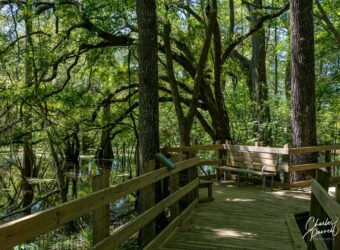
Boardwalk at the Sweet Springs Nature Preserve in Morro Bay, California
Slated for January 16-20, 2025, the Morro Bay Bird Festival promotes an understanding and appreciation of the birds and wildlife along the Central California Coast. And the good news is, many of the offerings at this annual event are wheelchair-accessible.
The Main Events
The festival features two welcome receptions, one on Friday and one on Saturday. They will be held at the Morro Bay Community Center, which is wheelchair-accessible. The welcome receptions will run from 4-6:30 PM each day. During that time attendees can enjoy some wine and cheese, chat with fellow birders and browse through the Bird Festival Bazaar. The bazaar, which will be open throughout the weekend, includes vendor booths and educational exhibits of interest to birders. A detailed list of the vendors can be found at morrobaybirdfestival.org/bazaar/.
There will also be keynote addresses on Friday and Saturday evenings, from 7:00 to 9:00 PM, in the Cuesta College Performing Arts Center. Celebrated birder, David Lindo will take folks around the urban world of birds in his address on Friday January 16, and will be available to sign his books afterwards. On Saturday January 18 Kenn Kaufman will describe the misadventures of early shorebird watchers, and explain how those events are reflected in todays birding experiences. He will also be available for book signings afterwards.
Field Trips, Presentations and Master Classes
Additionally, there will be number of field trips. presentations and Master Classes at the 2025 Morro Bay Bird Festival. Here are the wheelchair-accessible offerings. For a complete catalogue, which includes the description of each event, visit morrobaybirdfestival.org/print-versions
Field Trips
Easy Birding
Shore Birds of the Morro Bay Marina
Birds of the Elfin Forest
Women’s Morro Bay Marina Excursion
Wintering Birds at Cal Poly Pier
Meander Morro Bay Marina
Birding Elfin Forest and Sweet Spring
The Elfin Forest Wonderland
Presentations & Master Classes
Smart Phone Bird Recording
How to Help the Birds Workshops
Columbia: South America Birding Mecca
Bird Banding: Monitoring Avian Productivity and Survivorship
A Splash of Color: Expressive Bird Art in Watercolor
Condor Recovery
Birding for Beginners Workshop
Feathers – A Wondrously Complex and Versatile Structure
Optics Demystified
Critter Cams for Monitoring Wildlife
Digiscoping with a Smartphone
Bats – California’s Amazing Flying Mammals
The Long Billed Curlew
An Identification Study of Birds of Prey
Rookery Wonders in Windy Cove
Ducks and Geese of the Morro Bay Region
Peregrine Falcons of Morro Rock
How to Shoot High Quality Engaging Videos
Avian Respiratory System Adaptations
Principles and Pitfalls of Bird Identification
Birding by Ear Workshop
Shorebird Carving Class
Meet the Raptors – Pacific Wildlife Care
Sister Species – A Conservation Story
Wild Stories from the History of Bird Migration Research
California Condors: Back from the Brink
Shorebirds Made Easy
The Topography of Bird Sounds
Grebes Walk on Water to Find a Mate
From Anatomy to Function/Flight
An Identification Study of Birds of Prey
Gulls of SLO Identified
Surprising Secrets of Bird Biology
Master Classes
Introduction to Bird Photography
The Magic of Bird Sounds
Birding by Careful Observation
Feathers in Focus
Bird Biology Basics
Intro to Journaling; Focus on Birds
So make plans to attend this fun and educational event, and learn a bit more about our feathered friends. For more information about the 2025 Morro Bay Bird Festival, visit morrobaybirdfestival.org or e-mail support@morrobaybirdfestival.org.
Barrier-Free Travel
Utah National Parks for Wheelchair-users and Slow Walkers
Enacted in 1986, the Air Carrier Access Act, covers access-related travel issues on all US airlines, and on foreign airlines on flights to and from the US. And as with many regulations, it’s continually updated. The 2025 Air Carrier Act updates include minor wording changes and definitions, updated training requirements, and some specific changes in existing regulations. This update of the regulations focuses mainly on preventing and mitigating wheelchair damage, and providing timely and appropriate repairs when it does occur. Here are the highlights of what to expect in 2025. These 2025 Air Carrier Access Act Updates will take effect January 16, 2025 unless otherwise noted.
Notification upon Loading Wheelchair
As of December 17, 2025, airlines covered by the Air Carrier Access Act will be required to notify passengers when their assistive devices have been loaded and unloaded from the cargo hold.
Publication of Cargo Hold Dimensions
Airlines will be required to publish the dimensions of their cargo holds — and any limitations they may have — on their websites. This applies to all the aircraft in their fleet.
Prompt Return of Delayed Assistive Devices
As of June 6, 2025 airlines will be required to deliver delayed assistive devices within 24 hours for a domestic flight, 12 hours for an international flight, and 30 hours for a long international flight (more than 12 hours). The passenger will have the choice of picking up the delayed assistive device at the airport or having it delivered to a reasonable location.
Reimbursement For Accessible Ground Transportation
Passengers will be reimbursed for accessible ground transportation should they decide to pick up their delayed assistive device at the airport.
Prompt Repair or Replacement of Damaged Assistive Devices
As of March 17, 2025 carriers must offer passengers a choice in regards to repair or replacement of damaged assistive devices. Passengers can opt to have the carrier arrange for repair or replacement, or the passenger can arrange for repair or replacement at their chosen vendor. If the latter option is chosen, the carrier will transport the assistive device to the repair location and pay for the needed repairs.
It should be noted that the Montreal Convention still remains in effect for the liability limits for assistive devices damaged or lost on international flights. The carrier liability limit for this is $1731.
Appropriate Loaner Wheelchairs
If the airline provides a loaner assistive device because of loss or damage, and it does not meet the passenger’s needs, the passenger can find an appropriate substitute elsewhere. If this happens, the airline must reimburse the passenger for the rental within 30 days. The airline can require receipts, invoices or other documentation.
Rebooking Requirements for Service Failures
If a passenger’s assistive device will not fit into the cargo hold, the airline must book the passenger on the next available flight that can accommodate it. This will be done at no additional charge, even if a partner carrier is used.
New Onboard Wheelchair Standards
Finally, the 2025 Air Carrier Access Act updates include requirements for new safety standards and accessibility features for on-board wheelchairs. These include adequate padding, locking wheels, restraints and new size requirements. They go into effect for new aisle chairs purchased on twin aisle aircraft and aircraft with over 60 seats on October 2, 2026. And they go into effect for all other covered aircraft on October 2, 2031.
I plan to take a Florida cruise next winter and I’d like to spend an extra week exploring South Florida before I fly home. I’d really like to take an airboat tour of the Everglades. I called one place that said they had wheelchair-accessible airboats, and they told me that I’d have to be carried aboard. I use a manual wheelchair, and I’d rather not be carried, but prefer to roll aboard. Do you know of a wheelchair-accessible airboat tour of the Everglades that is truly accessible?
A Truly Wheelchair-Accessible Airboat
I’m glad you are taking some extra time in Florida after your cruise, because there are really some great accessible sites to see, including the Everglades. And although I applaud the tour operator that you contacted for being willing to try and get you on the boat, carrying someone aboard does not equate to “accessible” in my book. Fortunately I’ve found a company that has a truly accessible airboat — Everglades Airboat Excursions (evergladesairboatexcursions.com).
Everglades Airboat Excursions has one wheelchair-accessible airboat. It’s equipped with a ramp in front, so wheelchair-users can just roll aboard. It can accommodate manual or power wheelchairs, and depending on the size of the wheelchairs there’s room for one or two in the level area in the front of the boat. There is also a railing around the accessible seating area, and a place to grab on if you feel you need a bit more support. And, because of how the boat is configured, you can also be close to the rest of your party. Best of all, you’ll get a great unrestricted view of all the action from the front seat.
The Tours
“River of Grass”
Everglades Airboat Excursions offers a number of private tours in their wheelchair-accessible airboat. At the top of the list are the one hour, 90-minute or two-hour day tours. These private tours depart from the Francis S. Taylor Wildlife Management Area and travel through the Everglades sawgrass marshes. Along the way Captain Gerald shares fun facts about the ecosystem, and points out the alligators, sea turtles and sea birds. It’s a fun outing — no matter the length — with plenty of great photo ops along the way.
They also have a sunset airboat tour. This two-hour tour lets visitors enjoy the colorful sunset over the Everglades, while cruising along on the water. It’s a great choice for photographers, and it also makes for a nice romantic excursion.
And for a real treat, book their Red Eye Gator Tour. This two-hour night tour offers a close-up look at the resident alligators. And although it sounds a bit risky, the tour is actually quite safe because the alligators are momentarily blinded by the lights on the approaching airboat. And since they are unable to see, the airboat can safely get closer. It’s also easier to spot alligators at night because you can see the light reflecting off their eyes, even under cover of the tall grass.
No matter what tour you choose, it’s essential to make advance reservations, as walk-ups are not accepted. It’s also a good idea to book the accessible tours as far in advance as possible, especially during the peak season. And if you have any questions or other concerns, then give the folks at Everglades Airboat Excursions a call at (561) 662-2419, or e-mail Captain Gerald at gerald.motes@gmail.com.
Have fun!
Barrier-Free Travel Favorite Florida Parks for Wheelers and Slow Walkers
Built in 1936, the El Rancho Hotel entices prospective guests with the phrase “The charm of yesterday and the conveniences of tomorrow” emblazoned across its front portal. The main building is constructed largely of brick, with stone and wood finishing touches. Inside it’s like a step back into another century – from the vintage shoe shine stand to the cigarette machine near the front door. Add in the lush bordello-like furnishings and the massive wood staircase, and you have a real blast from the past.
And even though access wasn’t an issue when the property was built, there’s an accessible parking space near the front entrance, with curb-cut access up to the porch. From there, it’s an easy roll inside the lobby. There’s also a small gift shop and restaurant on site, if you’d like to extend your stay. Unfortunately the elevator up to the mezzanine gallery looks like it hasn’t worked for decades, so the only way to view the portraits of the stars that stayed there is to climb the stairs. Still, it’s worth a quick stop just to see the outside of the building and the front lobby, which has a few display cases filled with film memorabilia. And it goes without saying, that it’s a must-see for movie buffs, as the El Rancho Hotel was once home base to the movie stars that filmed westerns in the area.
827 Montoya Boulevard
Gallup, NM
A must-stop along Interstate 40 is the Giant Kachina in Gallup, NM. At one time this classic Route 66 icon welcomed weary travelers to Gallup, but sadly the welcome signs are gone today. Just take exit 22 from Interstate 40, drive north on Ford Drive, then make a left on Montoya Boulevard. The statue is on the right, next door to the Fire Prevention Office, There’s plenty of room to park, and a nice level area to get out and take in this beauty. There are even a few covered picnic tables in the parking lot if you’d like to take a longer break. And while you’re in the area, don’t miss the historic El Rancho Hotel (www.emerginghorizons.com/el-rancho-hotel)