As a travel writer since 1977, Candy Harrington has been writing about accessible travel exclusively since 1996. She’s the founding editor of Emerging Horizons, and the author of the popular Barrier-Free Travel national park series. With thousands of bylines to her credit, Candy hits the road often, in search of new accessible travel finds. Candy and her travel photographer husband Charles Pannell reside in NE Washington, where they tend to their chicken flock and enjoy a rural lifestyle.
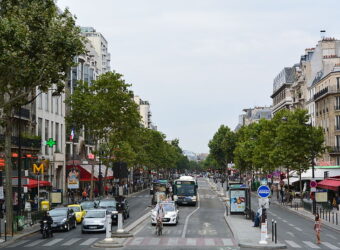
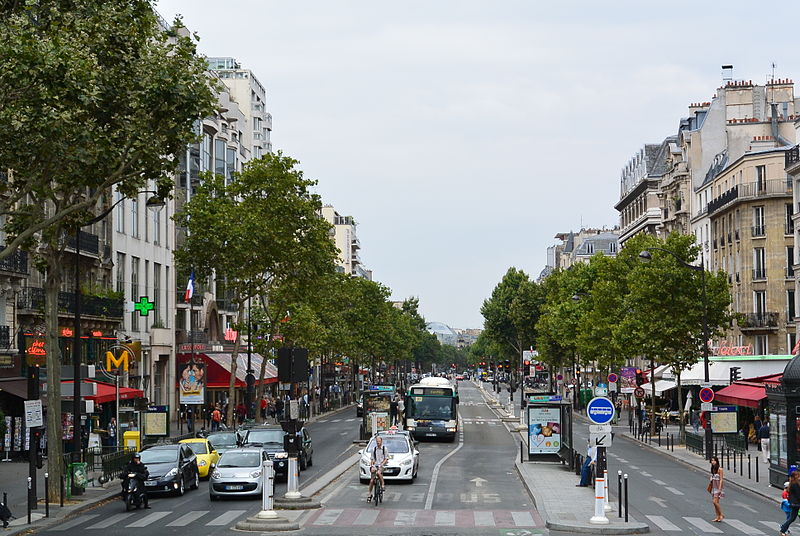
If you’re looking for a long-term wheelchair-accessible Paris apartment, then Lea Lior (www.facebook.com/lea.lior.5) may have just what you need. Located in the centrally located neighborhood of Montparnasse, this fully furnished unit is owned by a power wheelchair-user. There’s elevator access in the building, and the apartment includes an adjustable electric bed and a bathroom with a roll-in shower and a ceiling hoist. A rolling shower chair is also available. The neighborhood is accessible and flat, and there are accessible buses to Champs Elysées, the L’ouvre, Les Invalides, Marais and the Latin Quarter. The minimum rental time is one month, but it’s available for up to nine months if you’d like to extend your stay in the City of Lights. For more information about this wheelchair-accessible Paris apartment, e-mail Lea at liorlea@gmail.com
Barrier-Free Travel the Grand Canyon for Wheelers and Slow Walkers
Located 100 miles southwest of Boston, Mystic, Connecticut was a major shipbuilding center during the 1600s. Today the streets of this quintessential New England village are dotted with an eclectic mix of boutiques, galleries, souvenir shops and eateries. But Mystic is more than just a spot to load up on tourist tchotchkes. This coastal village is also home to two top attractions — both of which focus on the ocean. The Mystic Seaport Museum highlights the maritime and shipbuilding history of the area, while the Mystic Aquarium focuses on creatures and ecology of the sea. And the good news is, both of these popular attractions offer good access for slow walkers and wheelchair-users.
The Historic Seaport
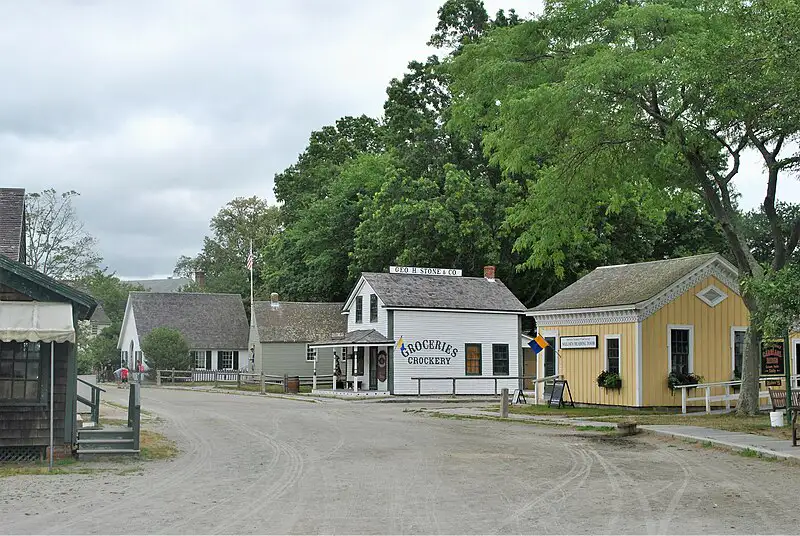
Historic Buildings at the Mystic Seaport Museum
The Mystic Seaport Museum (www.mysticseaport.org) is a required stop on any Mystic visit. This 19-acre open-air museum focuses on maritime history and is filled with shipyard exhibits, historic vessels and maritime galleries. And it’s all built around a replica of a 19th century seafaring village.
Accessible parking is available in the south lot, with ramped access to the Sanger Visitor Reception Center across the street. Wheelchairs are available for loan at the front desk, and a large accessible restroom is located in this building. And the good news is, disabled guests and one companion receive a 50 percent discount on admission.
The seafaring village is filled with over 40 historic and reconstructed buildings. The roads through the village are mostly unpaved but level. The one exception is the area around the Children’s Museum and the Treworgy Planetarium, which has a slight incline. About a third of the village buildings feature level access but many have a step or two at the entrance, narrow doorways and very tight quarters inside. That said, there’s still lots to see for wheelchair-users and slow walkers.
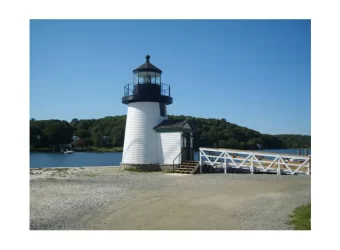
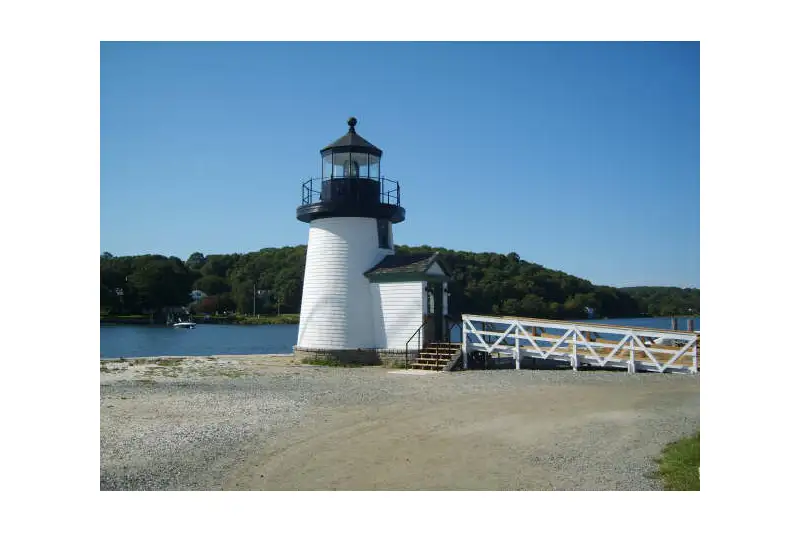
Take some time to roll through the shipyard, and have a look at the drug store, chapel and shipsmith shop, all of which are accessible. There’s also an accessible path out to the replica of the Brant Point Lighthouse at Lighthouse Point. And don’t miss the Charles W. Morgan Whaleship. Although there’s only stairway access to the vessel, you can still get a good look at it from the dock.
There’s also barrier-free access to most of the inside exhibits, which feature everything from ship carvings and folk art to silver trophies, shop figures and even a rare carousel hippocampus. There’s plenty to see and do — for everyone — in Mystic Seaport.
Under the Sea
Beluga Whale at the Mystic Aquarium
For a slightly different perspective of the sea, head on over to the Mystic Aquarium (www.mysticaquarium.org), where you’ll find everything from sharks and manta rays, to seals, sea lions and even Beluga whales.
There’s barrier-free access to the aquarium, with level access over to the Gift Store and the Saltwater Cafe. Accessible family restroom are located next to the Saltwater Cafe, and loaner wheelchairs are available at the front gate. And, if you are visiting with a personal care assistant, there’s no charge for their admission. Contact the admissions office for more information.
There is good access throughout the campus, with accessible pathways outside, and barrier-free access to the inside exhibits. The spacious indoor gallery features a 35,000-gallon tank filled with eels, pufferfish, sharks and rays. There’s also a ray touch pool, an interesting Amazon exhibit and a large collection of jellyfish. Best of all, you can wheel right up to the glass tank in the main gallery for an up-close-and-personal look at the inhabitants.
Outside, there’s also an impressive collection of marine exhibits. At the top of the list is the Beluga whale exhibit. You can roll right over and get an eye level look at these giants. And don’t miss the incredibly cute African penguins. The excellent Roger Tory Peterson Penguin Pavilion offers visitors an up-close-and-personal look at these comical creatures, both above and below the water.
Finally, check out the 200-foot Marsh Trek accessible boardwalk, for a close look at a variety of freshwater species including mallards, herons, bullfrogs and turtles. And make sure and stop at the seal pup play space on your way out. They are almost as entertaining as the African penguins, and it’s the perfect way to top off any Mystic Aquarium visit.
Barrier-Free Travel 22 Accessible Road Trips for Wheelers and Slow Walkers
I use a manual wheelchair, and I plan to travel to London next year. I read online that I will need a RADAR toilet key in order to use the accessible public restrooms. Is this true, and how do I get this key?
RADAR toilet keys were the brainchild of the Royal Association of Disability and Rehabilitation, hence the catchy acronym. In the UK the single-use disabled toilets in public areas, office buildings, restaurants and pubs are kept locked, as they are larger than the standard loos, and sometimes people use them for other purposes (use your imagination on that one). It was also thought that having a key would keep these toilets available to people who really need them. So the key system was set up and RADAR sold keys to people that self-certified that they have a need for an accessible toilet.
Today RADAR is part of Disability Rights UK (DRUK), and they have RADAR toilet keys for sale on their website at disabilityrightsuk.org/shop/official-and-only-genuine-radar-key. These keys also work at Changing Places Toilets (changing-places.org/), which include all the standard access features, plus and adult changing tables and hoists. It should be noted that there are other companies that sell RADAR toilet keys, but since they are not the official keys, they may or not work on all disabled loos.
Do you absolutely need a RADAR toilet key when you travel to London? Not really, as keys are usually available at the venues, and you can obtain them by just asking an employee. That said, sometimes there may not be an employee on-site, or they might have problems locating the key, so there could be a delay in getting one. Since the cost of the key is minimal, and it doesn’t take up much room, I don’t see the harm in purchasing one online before you depart. Although you probably won’t need it most times, you’ll definitely be glad you have it if you do.
Barrier-Free Travel Yosemite, Sequoia and Kings Canyon National Parks for Wheelers and Slow Walkers
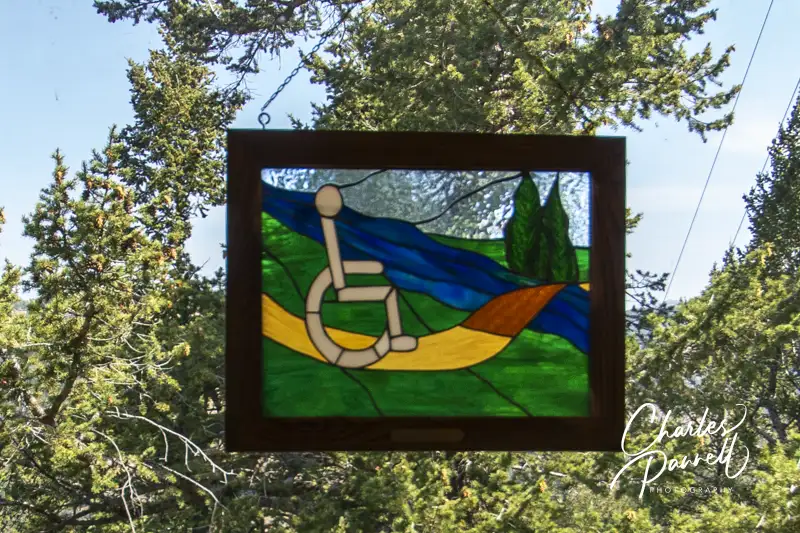
Stained Glass in the Ridge Top Cabin at Wilderness on Wheels, Colorado
Located 60 miles west of Denver near Kenosha Pass, Wilderness on Wheels (WOW) (www.wildernessonwheels.org) offers wheelchair-users and slow walkers the opportunity to hike through a pine forest, fish in a well-stocked pond and spend the night in a tent, hut or in one of two wheelchair-accessible Colorado cabins.
Founded in 1986 by Roger West, WOW is supported through donations, grants and a robust army of dedicated volunteers. There’s no charge to use the boardwalk trails, fishing pond or picnic areas; and the campsites, huts and wheelchair-accessible Colorado cabins are available at very reasonable rates. Not only does WOW make an excellent day trip from Denver, but it can also be worked into a longer Rocky Mountain National Park road trip itinerary (emerginghorizons.com/all-terrain-wheelchair-in-rocky-mountain-national-park/).
Hike, Picnic & Fish
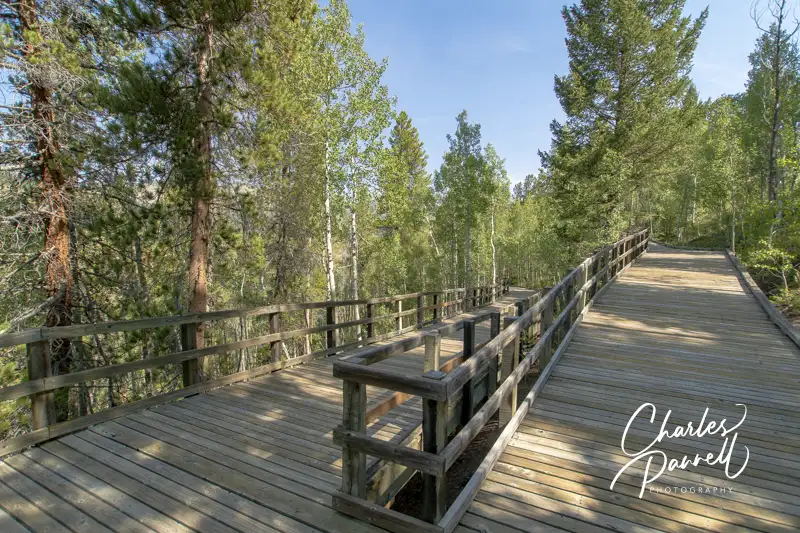
Riverside Boardwalk at Wilderness on Wheels
Accessible parking is available in a large lot at WOW, with barrier-free access over to the ramped office. Inside there’s plenty of room to maneuver a wheelchair or scooter around the office and gift shop.
There are two boardwalk trails on the property — the River Boardwalk and the Mountain Boardwalk. The half-mile River Boardwalk follows a mountain stream, winds past the fishing pond, and continues through the forest to the rustic log cabin. And if you’d like to enjoy a picnic lunch there’s an accessible gazebo near the beginning of the boardwalk, and a ramped picnic shelter near the campsites.
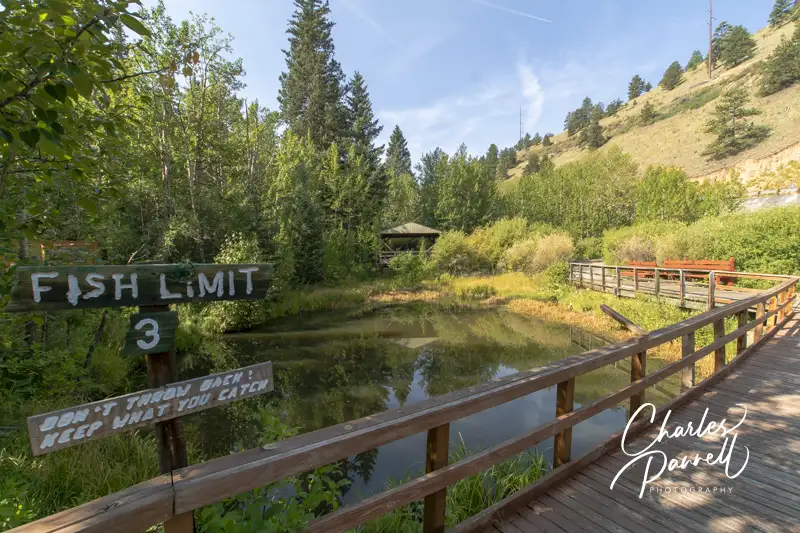
Additionally, there’s level access over to an accessible fishing platform that overlooks the pond. Some accessible fishing gear — including a wheelchair rod holder — is available in the office, but anglers must supply their own fishing rods and bait. The pond is stocked with rainbow trout, and although no fishing license is required for disabled anglers, there is a limit of three fish per person. Able-bodied fisherman with a fishing license are welcome to try their luck over in the stream that runs alongside the boardwalk.
The Mountain Boardwalk at Wilderness on Wheels
The Mountain Boardwalk begins on the other side of the parking lot. This mile-long trail winds gently up to the ridgetop, which has an elevation of just over 9,000 feet. There are several picnic tables along the way, and lots of spots to stop and rest. There’s also barrier-free access to the adjacent property, where the Family Music Festival is held every August. Wheelchair-users can view the festivities and grab a bite to eat on the boardwalk, while the main seating area is located next to the boardwalk. There’s no charge to attend the festival, but it is a fundraiser for WOW, and donations are gladly accepted.
Camp Under the Stars
Tent Platform at Wilderness on Wheels
If you’d like to sleep under the stars, WOW also has a nice selection of accessible campsites and huts along the Riverside Boardwalk. The campsites each include a charcoal grill, a fire ring and an accessible picnic table. Some of the campsites have tent platforms, while the rest have level space to pitch a tent. And some can even accommodate a RV.
Camping Hut at Wilderness on Wheels
The wheelchair-height huts feature a lockable door. Just bring your sleeping bag, roll it out on the platform, then transfer over and tuck yourself in for the night. One hut also includes a cot. The huts all feature a picnic table — some are covered — a charcoal grill and a fire ring. One of the huts also has electricity.
Campers are asked to bring their own charcoal, but plenty of free firewood is available on site. There are no showers in the campground, but accessible restrooms are located near the office. Potable water is also available near the beginning of the River Boardwalk. Plan ahead though, as advance reservations for the campsites and huts are essential.
Wheelchair-Accessible Colorado Cabins
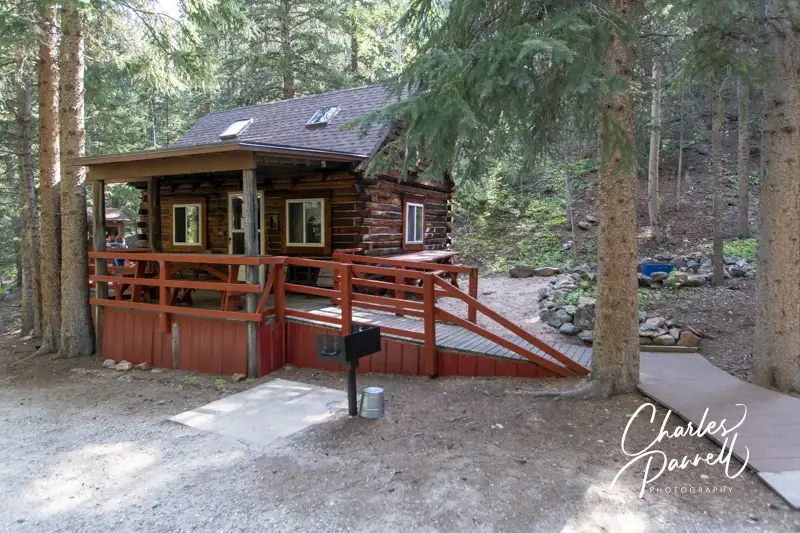
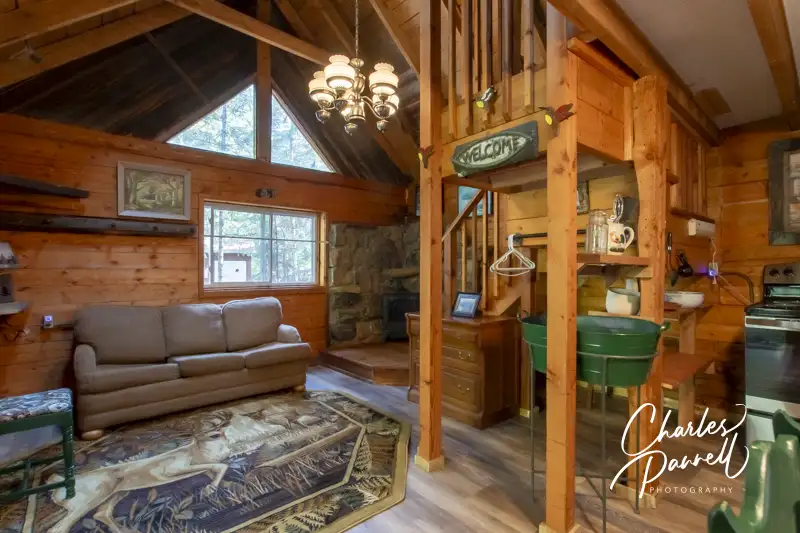
There are also two wheelchair-accessible cabins available at WOW. The Riverside Boardwalk rustic cabin can sleep four and it features ramp access up to the porch and barrier-free access through the wide front door. It includes a full kitchen with a stove, refrigerator, microwave and dishes. There’s a sleeper sofa in the downstairs living area, and a full bed in the upstairs loft. The unit lacks running water, but jugs of water are provided. It’s a comfortable place to sleep in the pines.
(click image to enlarge gallery)
Riverside Cabin at Wilderness on Wheels
Inside the Riverside Cabin
Riverside Cabin Bathroom
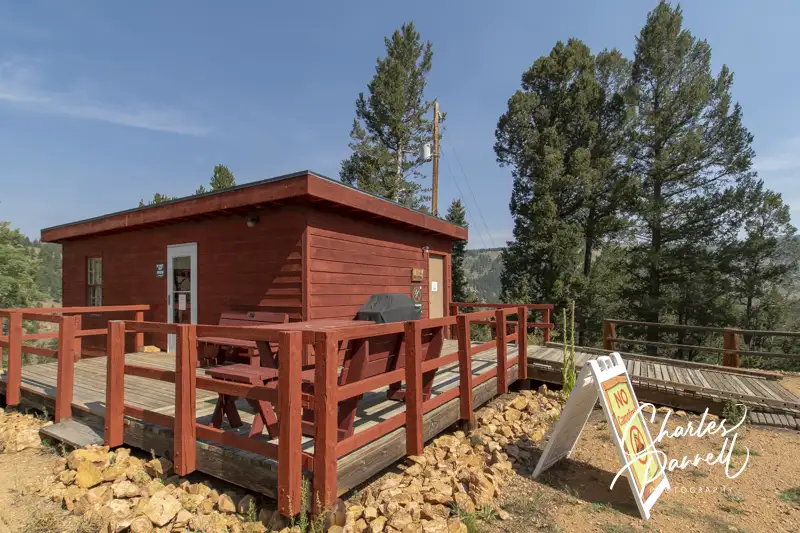
The ridgetop cabin is located near the top of the boardwalk, and you just can’t beat the view. You don’t have to haul your gear up the boardwalk, as you can usually access the cabin from a service road. That said, the road may be impassable for low-clearance vehicles; and if that’s the case the folks at WOW will happily transport you and your gear up to the cabin. Up on top, there’s plenty of room to park an adapted van, and ramp access up to the cabin deck.
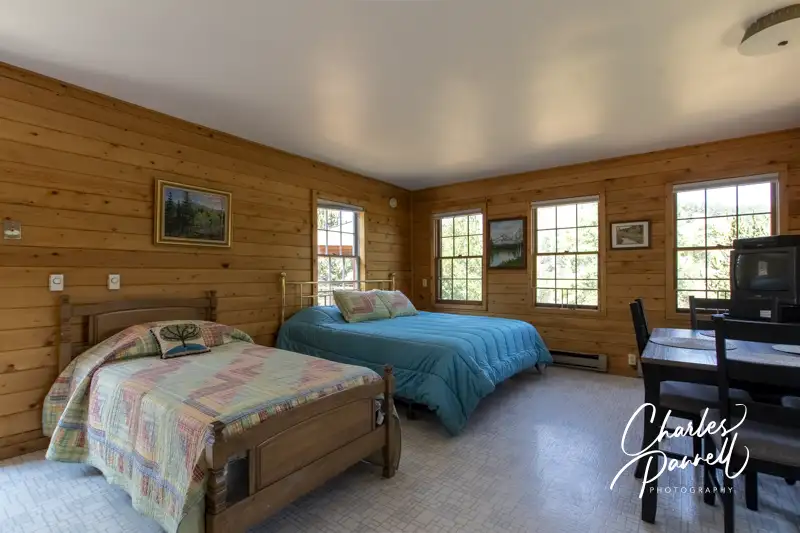
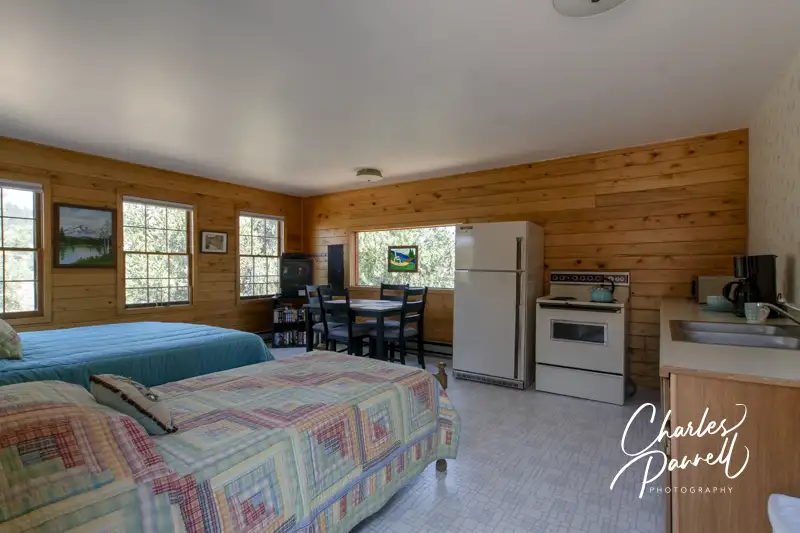
The spacious great room includes a kitchen, dining area, and sleeping space. The kitchen boasts a refrigerator, stove, microwave, and a good selection of dishes, cookware and utensils. There’s also a large dining table near the kitchen, and a 25-inch high king-sized bed, plus a 23-inch high twin bed on the other side of the room.
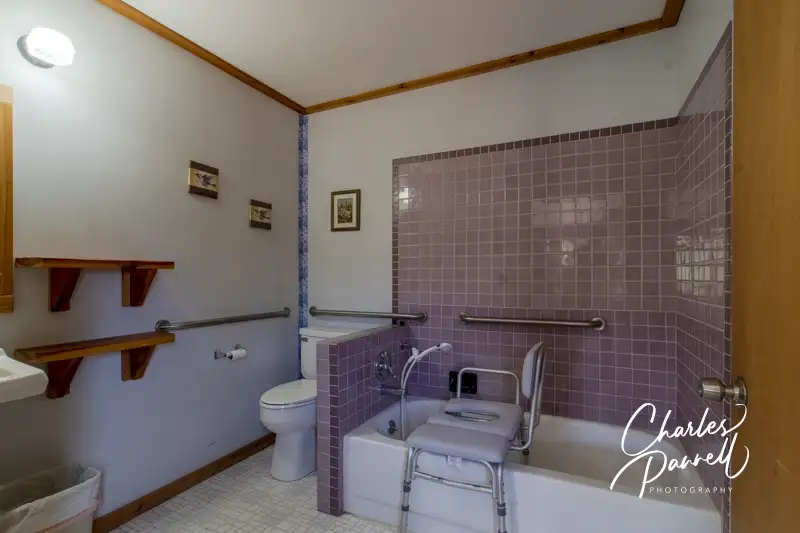
The bathroom is equipped with a tub/shower combination with a hand-held showerhead and grab bars. Other features include a roll-under sink, toilet grab bars on the back and right walls (as seated) and a tub/shower chair.
(click image to enlarge gallery)
Ridgetop Cabin at Wilderness on Wheels
Beds in the Ridgetop Cabin
Kitchen Space in the Ridgetop Cabin
Bathroom in the Ridgetop Cabin
Either one of these wheelchair-accessible Colorado cabins makes an excellent choice for a mountain getaway. Reservations can be made on the WOW website (www.wildernessonwheels.org), but plan ahead as they book up fast.
Barrier-Free Travel Washington National Parks for Wheelers and Slow Walkers
There’s a certain seductive allure to Sedona. Some folks come for the mystical experience, while others enjoy gallery hopping. And then there’s the scenery. You just can’t beat the red rock formations that literally surround this Northern Arizona enclave. And the good news is, a good chunk Sedona’s red rock beauty is accessible to wheelchair-users and slow walkers.
Red Rock Scenic Byway
One of the best ways to enjoy Sedona’s red rock beauty is to take a drive on the Red Rock Scenic Byway. This popular drive is located off of Interstate 17. Just take exit 298, and once you cross the Dry Beaver Creek bridge, the show begins.
The 7.5 mile scenic drive, which winds through the majestic landscape, is often referred to as a “museum without walls”. As you pass Oak Creek Village, the scenery becomes more dramatic. Bell Rock, one of Sedona’s four vortices, is located just past Oak Creek Village on the right. You can’t miss it. Bell Rock is one of the more accessible red rock formations, as the upper part of Bell Rock Trail is wide, level and made of hard packed dirt. It’s doable for most wheelchair-users, however you can also get a great view of the iconic formation from the parking lot overlook.
Be sure to stop at nearby Courthouse Butte to admire the expansive scenery. And don’t miss the Chapel of the Holy Cross (chapeloftheholycross.com), which is built into the red rock buttes. There’s a few accessible parking spots near the sanctuary, and golf cart transportation is available from the remote parking area. The chapel features ramp access, but some manual wheelchair-users may require assistance because of the pitch. Still it’s worth a stop even if it closed, just for a view of the impressive front facade.
Just up the road, the Red Rock Scenic Byway ends at Highway 89A. All in all it only takes 20 minutes to drive the route, but allow for extra time for lots of photo stops And even though a Red Rock Pass is required for hikers, it’s not required for quick photo stops of 15 minutes or less.
Red Rock State Park
Red Rock State Park (www.azstateparks.com/red-rock), which is located on Highway 89A South is also worth a visit. There are a two accessible trails in the park, but they don’t offer much shade, so it’s best to go early in the day.
Accessible parking is located near the visitor center, with ramp access down to the building. Inside there’s plenty of room to maneuver a wheelchair around the gift shop, ranger information desk and interpretive exhibits. Accessible restrooms are located near the front door, and there’s also level access to the theater and classroom next door. And don’t miss the hummingbird garden on the back patio.
The accessible Mesquite Interpretive Loop begins near the parking lot. This short trail features a paved level pathway around garden filled with native plants. There’s a shaded picnic area with accessible tables near the trail; and there’s also a shade structure located in the middle of this quarter-mile trail.
The longer Bunkhouse Trail begins behind the visitor center. Although you can access it from the parking lot, that pathway has a steep grade. Alternatively, there’s level access to the trail from the hummingbird garden. The paved trail is fairly level, although there’s a bit of a grade in the beginning. Power wheelchair-users won’t have a problem, but some manual wheelchair-users may require assistance. There are also some cracks along the paved trail, but other than that it’s fairly smooth rolling.
At about the .2-mile mark there’s an accessible hard-packed dirt trail down to the Kingfisher Bridge, which provides a pleasant — and shaded — view of Oak Creek. From there a hard-packed dirt path follows the creek for another .2 mile before the trail loses its access. All in all it’s a pleasant mile-long out-and-back hike.
Slide Rock State Park
Finally, if you’d like to hit a local favorite, head on over to Slide Rock State Park (www.azstateparks.com/slide-rock). It’s located 20 minutes north of Red Rock State Park on Highway 89A. This park provides access to Oak Creek, and it takes its name from the rocks that many folks use as slides to get into the water.
Unfortunately the path down to the creek is not accessible, but there is a short trail that offers a scenic overlook of the canyon. That said, the admission is pretty steep ($20 to $30 per car, depending on the season) for just that trail; however if you have an Arizona State Park Pass, this park makes a nice lunch stop.
There’s accessible parking near the shaded picnic area — which has several accessible tables — and barrier-free access over to the Pendley Homestead Trail. This paved level trail leads past a small store, and by a display of vintage farming equipment, over to the old homestead which features a tractor display in the adjacent barn.
The trail then connects with the Cliff Top Trail which has a 75-foot paved path out to an accessible overlook that offers an expansive view of Oak Creek Canyon. All in all it’s about a quarter-mile round trip, and it makes for a nice stroll before of after lunch. And if you’d prefer to skip the hike, this piece of Sedona’s red rock beauty is easily visible from the the picnic area.
Barrier-Free Travel the Grand Canyon for Wheelchair-users and Slow Walkers
Billed as “a place of reflection”, the Little Bighorn Battlefield (www.nps.gov/libi/index.htm) makes a good stop on a Southern Montana road trip. Although the fate of Lt. Colonel Custer’s 7th Calvary gets the lion’s share of space in the history books, this national monument gives equal time to the Crow and Arikara scouts that helped Custer, as well as the Cheyenne, Arapaho and Lakota warriors who opposed him. Located off Interstate 90 in Broadus, not only is this stop a good place to learn about the history of the area, but it also boasts some impressive scenery and it’s a fitting memorial to both the US troops and the Plains tribes involved in the historic battle.
A Little History
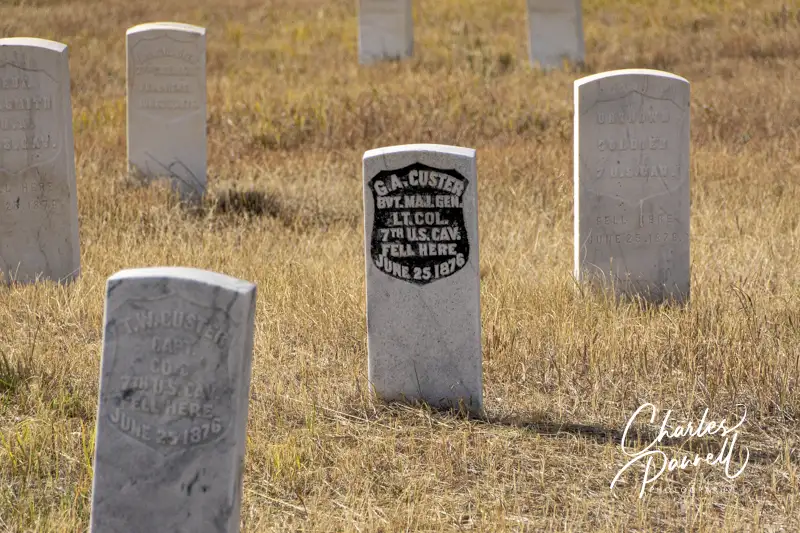
General Custer’s Battlefield Marker
The tensions between the US Army and the Plains tribes technically began in 1868, with the Treaty of Fort Laramie. This document created a large reservation for the Lakota in the Black Hills of South Dakota. That said, some Lakota leaders, including Sitting Bull and Crazy Horse rejected the reservation model, refused to sign the treaty and continued to hunt outside the boundaries of the reservation.
Tensions escalated in 1874 when Custer was dispatched to the area to locate a site inside the reservation for a military post, and to make note of the natural resources in the region. Geologists discovered gold deposits and when word spread of this discovery, miners descended on the Black Hills. This was not taken kindly by the Plains Indians, as it encroached on their hunting land. The US subsequently tried to purchase the land, and when that attempt failed, they ordered the Indians out of the area. That ultimatum was subsequently ignored.
Custer was later dispatched to flank a Lakota, Cheyenne and Arapaho hunting village, and drive the Indians north into the hands of awaiting troops. Custer’s original plan was to attack at dawn on June 25; however when his presence was discovered he was forced to advance immediately. And since the element of surprise was lost, the Battle of the Little Bighorn was a victory for the Plains Indians. During the next year the remaining “hostiles” were hunted down by the US Army, and their land was taken without any compensation.
Custer National Cemetery
Custer Memorial Cemetery at Little Bighorn Battlefield National Monument
The visitor center at the Little Bighorn Battlefield National Monument details the events that led to the historic battle. It also includes an account of the battle, as well as examples of the weapons used by both sides. There’s plenty of accessible parking near the entrance to the visitor center, and barrier-free pathways inside. A short orientation film is shown throughout the day in the wheelchair-accessible theater.
There’s level access to Custer National Cemetery, which is located next to the visitor center. That said, although the pathways through the cemetery are paved, some are level and some are undulating. There are plenty of benches to sit and rest along the way, and there’s also a loaner wheelchair available at the visitor center for folks who can’t do distances.
Last Stand Hill is visible from the back of the visitor center; however the path up to it is too steep for wheelchair-users. Alternatively, you can drive up there. Accessible parking is located near the 7th Calvary Memorial Monument, where the remains of Custer’s soldiers are interred in a mass grave. Custer’s remains are now interred at the US Military Academy at West Point, where Custer graduated in 1861.
Save some time for the 4.5-mile auto tour through the battlefield. There are several pullouts with interpretive panels along the way. There’s also a free cell phone tour available at www.nps.gov/libi/planyourvisit/cell-phone-audio-tour.htm. Not only will the drive give you an appreciation for the expanse of the battlefield, but the white markers that show where the fallen soldiers were found are rather sobering.
Indian Memorial
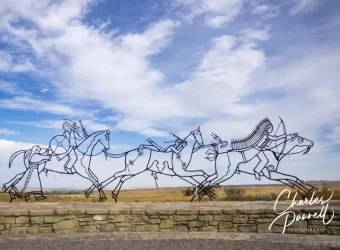
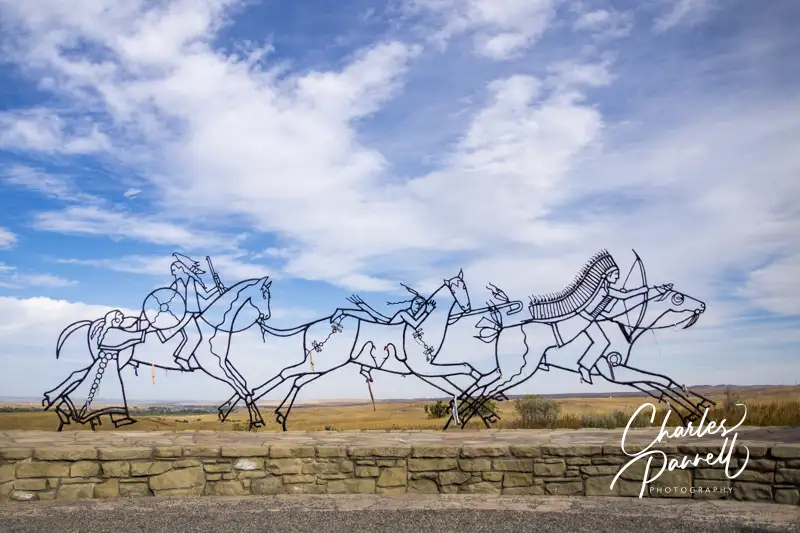
Indian Memorial at Little Bighorn Battlefield Memorial
The Indian Memorial at the Little Bighorn Battlefield, was erected to honor Native American participants in the conflict. To get there, take the left trail in back of the visitor center for about 200 yards and cross the street. From there, a dirt trail winds around to the niche that contains the memorial. The undulating trail has level resting spots every 50 feet, but some manual wheelchair-users may require assistance to get to the monument.
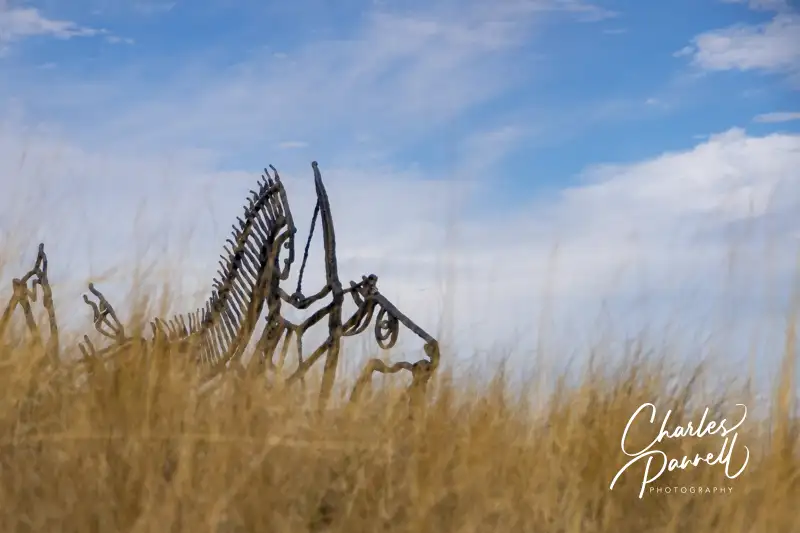
The granite panels of the monument include the names of the Arikara, Apsaalooke, Arapaho, Cheyenne and Oayate warriors who participated in the Battle of the Little Bighorn. The theme of the memorial is “Peace Through Unity”, and it acknowledges the need for cooperation between tribal governments and the federal government. There’s also a bronze sculpture of three spirit warriors riding off to battle next to the granite monument.
The placement of the monument is also significant. The Spirit Gate — a narrow opening in the monument — faces Last Stand Hill. This gate acts as a passage to the afterlife for Custer’s men that are buried on Last Stand Hill. It’s meant to represent the mutual respect between Native Americans and the US government, that has evolved over the years. It also helps reinforce the “Peace Through Unity” theme of the Little Bighorn Battlefield memorial.
Barrier-Free Travel
Utah National Parks for Wheelchair-users and Slow Walkers
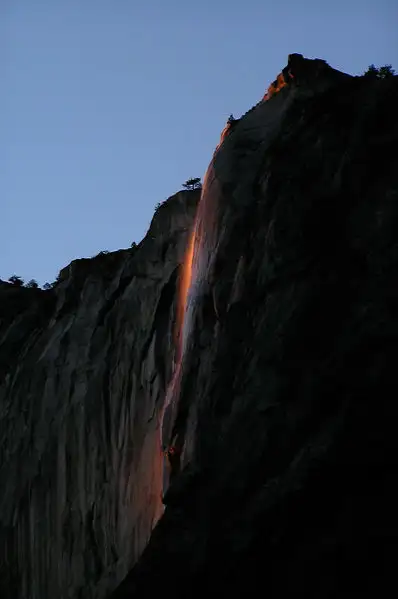
In days of yore, visitors would flock to Yosemite on summer evenings to witness the splendor of the Yosemite Firefall. A naturalist’s nightmare in this day and age, the 1960s firefall was created by park concessionaires tossing a burning rubbish pile off of Glacier Point. And to the delighted crowd gathered below, it appeared as if a fire waterfall was tumbling down over the rock face. For obvious reasons this ritual is no longer performed.
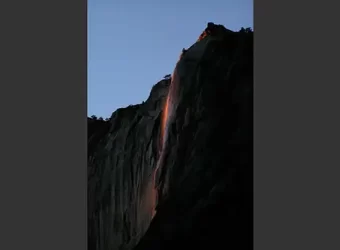
That said, today park visitors can experience a more natural — and just as spectacular — version of a firefall at Horsetail Fall. Every February when this waterfall is backlit near sunset, a vibrant orange glow emanates and mimics the appearance of a waterfall on fire — minus the rubbish pile. And although conditions have to be just right to witness this natural phenomenon, the firefall attracts visitors in droves for the possible opportunity. Of course whenever there are crowds, there are also rules and regulations. So here’s what you need to know — including where to find the accessible viewing areas — to experience the Horsetail Fall lightshow.
Yosemite Firefall Basics
There are several basic requirements for a good Yosemite Firefall. First and foremost you have to have water. A good fall rainfall is helpful for a robust firefall. And Central California has certainly had its share of rain this year!
Second, you need clear skies so the sun can reflect off the granite behind the waterfall. And although this is up to Mother Nature, it also helps to keep an eye on the weather. If it’s overcast, cloudy or foggy, it will probably be a no-go. Of course you have to hit it at the right time of day — sunset — for an optimum firefall experience. The days for the optimum Yosemite Firefall experience in 2026 are February 12 to February 28. And sunset times for those days range from 5:40 PM to 5:47 PM.
Finally, there’s the location. The best place to view Horsetail Fall is near the El Capitan Picnic Area. Best bet is to try and snag a parking spot at Yosemite Falls, and walk 1.5 miles on Northside Drive to the viewing area. If Yosemite Falls parking is full, park in Yosemite Village or Curry Village and take the free shuttle to Yosemite Falls.
Even if you can’t manage the level walk, you can still enjoy this majestic show. Although one lane of Northside Drive will be closed to accommodate the large number of pedestrians, people with an accessible parking placard are allowed to drive to and park in the El Capitan Picnic Area in turnouts on the north side of Northside Drive. That said, it’s important to note that on busy weekends, Northside Drive may close completely for about an hour after the firefall. And if nature calls, remember there’s an accessible vault toilet in the El Capitan Picnic Area.
No Reservations in 2026
Due to the popularity of the Yosemite Firefall, park entrance reservations were required in previous years. This will not be the case in 2026. No reservations will be required to enter the park during the February firefall days.
Southside Drive will be open to vehicles, but parking, stopping, and unloading passengers will be prohibited between the El Capitan Crossover (the road connecting Northside and Southside Drives near El Capitan) and the Swinging Bridge Picnic Area. The area from the Cathedral Beach Picnic Area to the Sentinel Beach Picnic Area, and the area between the road and the Merced River (including the river) will also be closed to all entry.
El Capitan Crossover will “generally” be open, but stopping and parking will be prohibited. And in order to manage congestion, access into Yosemite Valley at the El Capitan Crossover will be controlled. Once the valley is full, vehicles will be diverted out of the valley.
So the best advice for the 2026 Yosemite Firefall is to get there early and bundle up. Visitors are also encouraged to sign up for Yosemite text alerts by texting “Yosemite” to 33311 for real time up dates.
So, plan ahead and have fun at the 2026 Yosemite Firefall.
Barrier-Free Travel Yosemite, Sequoia and Kings Canyon National Parks for Wheelers and Slow Walkers
I’ve been covering accessible travel for nearly 30 years, and in that time I have most certainly seen a lot of changes. Travel really is more accessible today for wheelchair-users and slow walkers. Granted, if you are in your 30s, you probably don’t remember what things were like decades ago with the archaic attitudes about disability — before the ADA and other laws made access possible. If that’s the case I totally understand why you feel things are still not accessible enough, as that’s a fair assessment from your perspective.
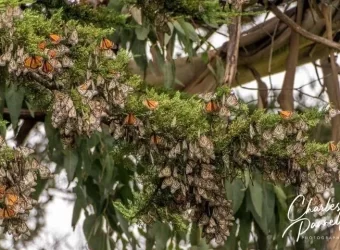
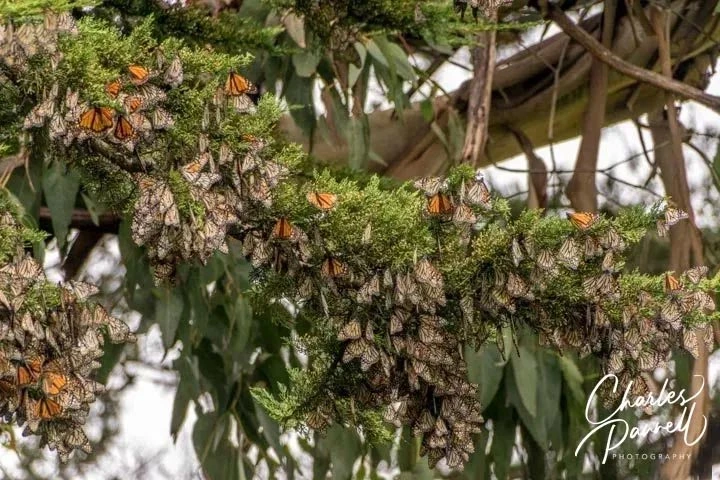
Let’s face it, it’s been a long winter. And there’s no better harbinger of spring than butterflies — more specially Monarch butterflies as they emerge from hibernation along the Northern California coast. After spending several months clumped together in clusters in eucalyptus trees, these migratory Monarchs become more active as they fly around, mate, and prepare for their flights inland to lay their eggs. So check out these three wheelchair-accessible Northern California sites this month, and enjoy a colorful taste of the migratory Monarchs as they emerge from hibernation. But don’t tarry, as these winter visitors will be long gone by the end of March.
Monarch Grove Sanctuary
Monarch Grove Sanctuary in Pacific Grove, California
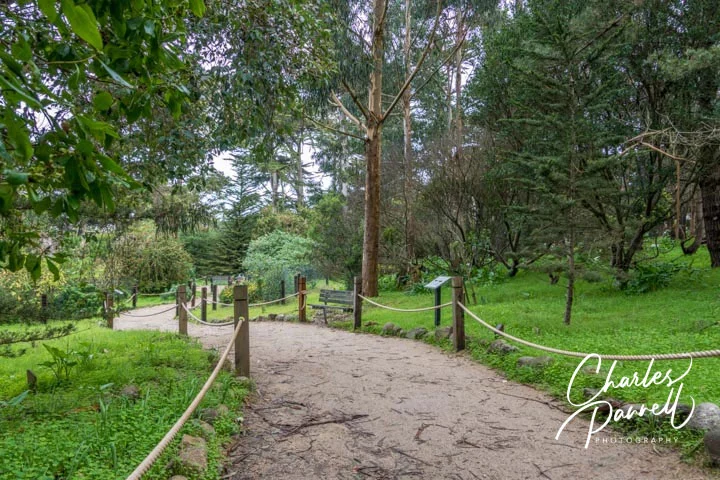
This popular Monarch stopover is located off of Lighthouse Avenue, just south of the Pacific Grove Municipal Golf Course. Keep an eye out for the Butterfly Grove Inn, then turn south on Ridge Road. A white picket fence marks the path to the grove, but accessible parking is located further down Ridge Road on the left. From there; it’s a level roll up the street to the sanctuary entrance.
A .15-mile hard-packed dirt path leads through the grove and dead-ends in the adjacent neighborhood. There is an accessible porta-potty near the end of the path; and although the trail has level spots every 20 to 30 feet, some manual wheelchair-users may require assistance up the slight grade on the return trip.
The best time to hit the Monarch Grove Sanctuary is in the afternoon, because as temperatures warm up, the butterflies become more active and start to fly around through the grove. Although they might not be apparent at first, take some time to scan the tips of the pine and cypress trees, as those are their favorite landing places. Also keep an eye out for what looks to be clumps of dead leaves, as these might be clusters of the overwintering Monarchs. Docents are on duty in the season to help point out the butterflies, but for the best experience bring a pair of binoculars to get a closer look at the Monarchs.
Natural Bridges State Beach
Monarch Boardwalk at Natural Bridges State Park
Another favorite spot to view the migratory Monarchs is located up the coast in Santa Cruz, at Natural Bridges State Beach (www.parks.ca.gov/?page_id=541).
It’s pretty easy to find too. From Pacific Grove follow Highway 1 north, until it turns into Mission Street in Santa Cruz. Turn left on Swift Street, which is the first traffic light after the Safeway, then follow the road until it dead ends on West Cliff Drive. From there, turn right and follow the road along the ocean to the park entrance.
The day use area is located a short drive up the park road. There’s accessible parking in the large lot with level access over to the visitor center. Inside, there’s barrier-free access around a number of interpretive exhibits about the butterflies, their habitat, and of course their migration. Accessible family restrooms are located just outside the front door of the visitor center.
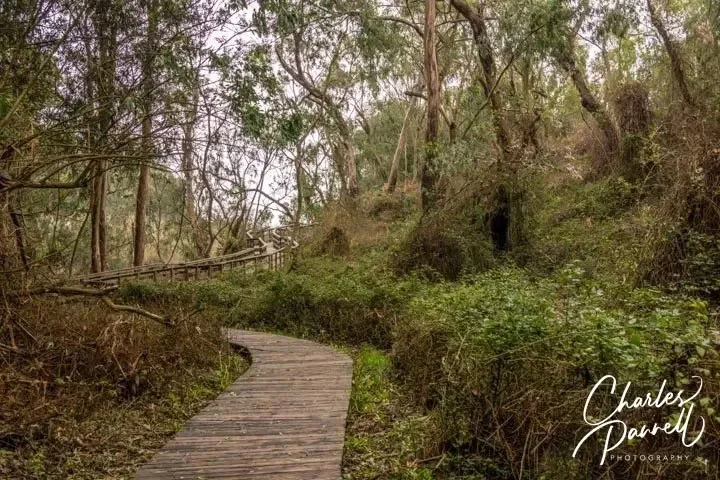
The Monarch Boardwalk is located across the service road from the visitor center. This .15-mile trail winds through a eucalyptus grove, and although it does have a slight downhill grade, there are level spots every 20 to 30 feet. That said, some manual wheelchair-users may need a bit of assistance on the uphill journey.
This is one of the top spots to find the overwintering Monarchs, however it’s usually a hit or miss proposition. Weather plays a big factor in their presence and activity, and you’ll probably strike out after a big storm or on a windy day. That said it is one of their favorite haunts.
Lighthouse Field State Beach
Monarch Butterflies at Lighthouse Field State Beach
Last but not least, don’t forget to stop at Lighthouse Field State Beach, (www.parks.ca.gov/?page_id=550). From Natural Bridges State Beach, back track on West Cliff Drive, pass the lighthouse, and turn into the parking lot for Lighthouse Field on the left. Alternatively, accessible parking is also available across the street in front of the Santa Cruz Surfing Museum.
You’ll find the Monarchs in the Monterey cypress and eucalyptus trees in the grassy field near Pelton Avenue. Although there’s a sizable population during the winter months, getting there can be difficult in rainy years, as the accessible hard-packed dirt paths to the grove flood easily. It’s about a half-mile walk to the grove on the dirt paths.
Bottom line — this is an excellent spot in dry years, as you’ll not only spot the clumps of butterflies, but there are also individual butterflies flying around near the end of the season. Give it a go and see what the dirt paths look like; and if they’re not a mucky mess, then go for it. After all, it’s on the way from Natural Bridges, and it’s definitely worth a quick stop.
Barrier-Free Travel California National Park Road Trips for Wheelchair-Users and Slow Walkers
Known as the “Crown of the Continent” because the Continental Divide bisects the park, Glacier National Park encompasses more than a million acres of coniferous forests, alpine meadows, pristine lakes and glacier-carved peaks. The wildlife in the park is just as diverse at the landscape that supports it, and it includes elk, bighorn sheep, moose, and one of the largest remaining grizzly populations in the lower 48 states.
Insider Tips
A well kept secret along Going-to-the-Sun Road, Red Rock Point offers a beautiful view of McDonald Creek cascading down over the massive red rocks. The turnout is located about a mile north of the Trail of the Cedars on the left side of the road. Keep your eyes peeled when you get close, as there is absolutely no signage to mark the overlook. There’s accessible parking near a hard-packed dirt path that leads .06 miles out to a boardwalk viewing platform.
Although the historic Red Buses of Glacier National Park are not wheelchair-accessible, Xanterra Parks and Resorts has two wheelchair-accessible vehicles in their. The lift-equipped buses have roll-up plastic flaps on the windows, and passengers get a full view of everything around them, thanks to an on-board camera and monitors Even better — the accessible vehicle is booked solely for your party, so you get a private tour at the regular tour price.
In addition to an entrance fee or a park pass, a day use entrance reservation is also required for Glacier National Park visitors during peak visitation periods in the summer. Entrance reservations are currently required for the West Entrance Station, the Camas Entrance Station and Many Glacier Valley. That said the park adjusts the system annually, so check the park website for the most current information. Entrance reservations are not available at the park. They must be purchased at recreation.gov in advance. Visitors without an entrance reservation will not be admitted.