As a travel writer since 1977, Candy Harrington has been writing about accessible travel exclusively since 1996. She’s the founding editor of Emerging Horizons, and the author of the popular Barrier-Free Travel national park series. With thousands of bylines to her credit, Candy hits the road often, in search of new accessible travel finds. Candy and her travel photographer husband Charles Pannell reside in NE Washington, where they tend to their chicken flock and enjoy a rural lifestyle.
Named for the prolific yucca plant that’s found within its borders, Joshua Tree National Park features two distinct desert ecosystems within its 800,000-acre expanse. From cholla and ocotillo cactus, to unusual rock formations sculpted by the harsh desert winds and torrential rains, this Southern California national park is filled to the brim with unique plants and animals. And although the landscape may appear a bit foreboding, rest assured there are a number of wheelchair-accessible trails and attractions in this desert wonderland. Add in a nice collection of scenic drives that offer some some jaw-dropping windshield views, and you have an excellent choice for wheelchair-users and slow walkers.
Insider Tips
The Oasis of Mara, which is located near the North Entrance, offers an accessible half-mile loop trail. Honey mesquite trees dot the desert landscape, which is bordered by mountains in the distance, while a ring of California Fan Palms mark the presence of water — the oasis. Be sure to take a close look in the underbrush near the palms for some Gambel’s Quail, as it’s one of their favorite haunts.
Located on Pinto Basin Road, just a few miles south of the Park Boulevard intersection, the Cholla Cactus Garden boasts a quarter-mile trail through a mature cholla forest. There are a few ruts here and there, but for the most part, they are pretty easy to dodge. There’s also a one-inch lip up to the boardwalk sections of the trail, but most folks can manage it with a little assistance. Even if you can’t do the whole trail, you’ll be surrounded by chollas just by walking 10 feet into the forest.
The Bajada Nature Trail, which is located in the south area of the park, is the oldest accessible trail in the park. This quarter-mile trail passes through the bajada — a broad slope of alluvia material at the base of a mountain — and offers a wonderful view of the surrounding desert. There are interpretive plaques along the way, and although there are a few sandy patches here and there, all-in-all this 1998 “all access trail” has held up fairly well.
Located south of the John D. Rockefeller, Jr. Memorial Parkway and north of Jackson, Wyoming, Grand Teton National Park encompasses over 310,000 acres filled with glacial lakes and bordered by the magnificent Teton Range. There’s no shortage of wildlife in the park either, and visitors commonly encounter elk and bison along the park roads. No mater where you travel in this rugged mountain park, there’s an abundance of scenic windshield views along the way. Grand Teton National Park is truly one of the great – and often overlooked — natural treasures of the American West.
Insider Tips
Although the Jenny Lake Scenic Drive is a must-do, most folks entirely miss a beautiful accessible stroll along the way. The access point is near the end of the drive, at a pullout on the right which boasts an accessible parking spot. From there, a paved service road winds a half-mile through the woods to the campground, and then continues along a .16-mile path to the ranger station. From there, you can connect to the accessible portion of the Jenny Lake Trail. As an added bonus, this route isn’t listed on any park maps, so it’s largely devoid of visitors. Plus it’s very accessible.
For a look at the most iconic structure in the park, head over to the Mormon Row Historic District. Located off of Antelope Flats Road, this historic district dates back to the 1890s when Mormon families began to establish homesteads in the area. The historic T. A Moulton Barn, which has adorned many a calendar, is located just across from the parking area. Even if you can’t walk far you, can still enjoy this historic wooden structure framed by the towering Tetons.
Colter Bay Village Cabins offers two accessible cabins, each with a roll-in shower. Cabin 458 is double the size of cabin 456, yet since both these cabins have the same bed configuration and are in the same rate category they rent for the same price. Cabin 458 is definitely a hidden treasure of a deal!
Located in Northwestern Arizona, the Grand Canyon is 277 miles long, up to 18 miles wide and a mile deep. Carved by the Colorado River and the forces of nature, the majority of this geological formation lies within the borders of the national park. That said, the West Rim, which boasts a horseshoe shaped glass walkway out over the canyon, is located on Hualapai land. But no matter what area of the park you visit, there’s no shortage of breathtaking views at this national treasure.
Insider Tips
For an interesting look at the history of the Fred Harvey Company, El Tovar Hotel and Bright Angel Lodge, pop into the Bright Angel History Room on the South Rim. Exhibits include artifacts from these two Harvey Houses, as well as old photos, an 1880 Harvey House dinner gong, and even a vintage Harvey Girl uniform. It also includes information and photos from a Harvey Indian Detour excursion, which took train passengers on a five-night trip to nearby Native American sites. Both the canyon entrance and the main entrance of the Bright Angel Hotel are wheelchair-accessible.
All the in-park lodges, except Bright Angel Lodge, have accessible rooms. That said, Kachina Lodge is the only property with an elevator, so it’s a good choice for slow walkers who want an upper floor standard room, but cannot do stairs.
Grand Canyon Scenic Airlines offers accessible flightseeing excursions over the Grand Canyon in fixed-wing aircraft from the Grand Canyon Airport in Tusayan. There are six stairs up to the aircraft door, but a portable ramp is available for anyone who can’t manage the climb. Wheelchair-users must transfer to a seat near the aircraft door, and wheelchairs are stored at the airport. It’s a great choice for a scenic overview of the park.
The hottest, driest and lowest point in North America, Death Valley is the largest national park in the lower 48 states. And with over three million acres of wilderness area, there’s a huge diversity in the flora and fauna throughout the park. From majestic sand dunes and salt flats, to snow capped peaks, a lush oasis and even a massive crater, there’s something for just about everyone at this remote national treasure.
Insider Tips
A stop at Badwater – the lowest point in the US — is a must do on any Death Valley itinerary. There’s boardwalk access out to the salt flats, and from there you can roll as far as you like. It’s best to hit this area in the morning though, as it can get quite hot later in the day. Additionally, don’t forget the insect repellent, as the biting flies that are common in Death Valley really like this area of the park – especially in the summer.
Many visitors flock to Zabriskie Point and Dantes View, off of Highway 190; while most folks entirely pass up the scenic 20 Mule Team Canyon Drive, which is located between the two. This 2.5-mile scenic drive winds up and down the colorful eroded badlands, and offers an off-the-beaten-track experience without having to trek through the desert for days.
Although there’s no shortage of food offerings at Furnace Creek, head on over to Timbisha Shoshone land and try something different for lunch. Just follow the signs to Timbisha Village Tacos from highway 190, between the Furnace Creek Inn and Furnace Creek Ranch. There aren’t many choices on the menu – Indian tacos, burritos, taco salad and shaved ice – but the food is tasty and the prices are reasonable. And although their hours vary, they are usually open for lunch. To-go food is also available.
Located on the east side of the state, about five hours from Zion, Canyonlands National Park is the largest of Utah’s “mighty five”. That said, it’s also a pretty rugged park, and you’ll need a four-wheel-drive vehicle to access some of the more remote areas. There are however two sections of the park that are easily accessible in a standard car or truck — the Needles District and the Island in the Sky District. Both of these areas offer scenic drives on paved roads, with overlooks and viewpoints along the route.
Insider Tips
Don’t miss Newspaper Rock which is located just outside the Needles District, about 12 miles from the intersection of Highway 191 and Highway 211. This massive rock contains an impressive collection of historic petroglyphs, which date back some 1,500 years. There’s a 30-foot long level trail next to the petroglyph panels that offer visitors an up-close-and-personal look at these Puebloan and Ute relics.
For the best view in the park, head over to Grand View Point Overlook. From there, you’ll get a very accessible view of the La Sal Mountains and the Colorado River Canyon, and you can even catch a gander of The Needles District in the distance.
Be sure and stop at Shafer Canyon Overlook on your way out of the park. Although there are also turnouts near this overlook on the way in, it’s best to catch the view as you head north– near where the final scene of Thelma and Louise was filmed. Impressive is an understatement.
The Air Carrier Access Act (ACAA), which has been on the books since 1986, details what services US airlines must provide to disabled passengers. These regulations also cover foreign air carriers that fly routes to and from the US. Although it’s a good idea to read the regulations in their entirety at www.ecfr.gov/current/title-14/chapter-II/subchapter-D/part-382, there are a few key provisions that every traveler should note. With that in mind, I’ve created a Disabled Air Travelers Bill of Rights, which highlights those provisions.
Of course, sometimes there’s a big difference between the regulations that dictate what should happen, and what actually happens in real life. With that in mind, not only have I pointed out some possible air travel “realities”, but I’ve also included some helpful tips and tricks about how to remedy access missteps that could pop up along the way. And for your reference, I’ve also noted the specific parts of the ACAA that convey each right.
1. You Have the Right to Curbside Wheelchair Assistance
Curbside wheelchair assistance tops the Disabled Air Travelers Bill of Rights. Some airports are huge, and slow walkers who use a cane or walker literally can’t manage the distance. Under § 382.91 of the ACAA, airlines are required to provide wheelchair assistance from the terminal entrance (or vehicle drop-off point) to the gate. Not only must they provide a wheelchair, but they must also provide someone to push that wheelchair and offer luggage assistance.
The reality of the situation is that sometimes this just doesn’t happen, even when you make advance arrangements. So what should you do if you are left stranded at the curb? The solution to this dilemma actually starts before the trip. Contact the airline prior to your departure and ask for the local number of the airline. Then put it in your cell phone so you have it handy if the airport wheelchair is a no-show. That way you won’t have to spend precious moments on hold and be forced to navigate through endless prompts, in order to get assistance.
And when all else fails call the airline out on social media. This shouldn’t be your initial response, but when your requests for assistance go unanswered, it’s sometimes the fastest way to get results.
Additionally, when you get to your gate don’t let them take the wheelchair away, even if you can easily make it down the jetbridge to the aircraft. The reason for this is that if there’s a gate change – which isn’t uncommon – you will need a wheelchair to get to your new gate. If they take that airport wheelchair away, you will be stranded. And sometimes that new gate can be quite a hike from the original gate.
2. You Have the Right to Remain in Your Own Wheelchair to the Aircraft Door
This is called gate checking your wheelchair and it’s absolutely something that you want to do. Why? First and foremost you will be more comfortable in your own wheelchair. Additionally, the less time the airline has your wheelchair, the less time they have to damage or misplace it. And under the ACAA US carriers are required to gate check wheelchairs whenever possible.
Of course the reality is that not everybody can stay in their own wheelchair all the way to the gate. In order to gate check your wheelchair it must have non-spillable batteries. If your wheelchair has spillable batteries you must arrive one hour earlier, surrender your wheelchair at check-in and then transfer to an airport wheelchair.
If your assistive device has Li-ion batteries, you may be able to stay in it all the way to the gate. Airlines are allowed to – but not required to – accept assistive devices with Li-ion batteries. And all the airlines have different requirements for the packaging, labeling and transport of these batteries.
Bottom line – know your battery, and travel with a non-spillable battery if at all possible. And contact the airlines directly to find out about their requirements or restrictions on Li-ion batteries. Finally, consult § 382.125 of the ACAA to find out the specifics of this provision.
3. You Have the Right to Preboard the Aircraft
Next up on the Disabled Air Travelers Bill of Rights — preboarding. Under § 382.93 of the ACAA, airlines must offer preboarding to disabled passengers who request this service. Preboarding simply means that you board the aircraft before general boarding is announced.
There are several advantages to preboarding. First and foremost, you can take your time going down the jetway, and you don’t have to worry about being trampled or crowded by other passengers. Additionally, you’ll get first crack at overhead storage space, and people won’t be staring at you as you transfer to your seat. Finally, if your seat doesn’t have a flip-up armrest (it happens), the flight attendant can easily reseat you before the other passengers board.
The reality of the situation is that many airlines no longer make preboarding announcements. And under the ACAA, they aren’t required to announce preboarding, they are just required to offer it. With that in mind, make sure and arrive at your gate early, and tell the gate agent that you need to preboard the aircraft. Then — and this is the important part — make yourself very visible at the gate. Do not wander away. Out of sight is out of mind, and you certainly don’t want the gate agent to forget you.
4. You Have the Right to a Dignified Boarding
A very important facet of the Disabled Air Travelers Bill of Rights is the right to a dignified boarding. A dignified boarding is either a level boarding or access to the aircraft by a lift. Under § 382.101 of the ACAA, US airline employees are never allowed to hand carry disabled passengers on board the aircraft.
Accessible boarding — either by a level jetway or a lift — is required on aircraft with 19 or more seats at US airports. Most larger airports have jetbridges, so you can just roll on the aircraft. At airports without jetbridges passengers deplane directly to the tarmac, via a portable stairway. At these airports, lift boarding is required if the airport has more than 10,000 enplanements (passengers) per year.
And although these boarding requirements also apply to foreign carriers that land in the US, it’s not a requirement at foreign airports. With that in mind, it’s a good idea to inquire about your boarding and deplaning options before you buy your ticket, especially on international flights. Additionally, don’t forget to ask about the weight limit of the lift if the airport doesn’t have jetways.
Also keep in mind, planes may enplane or deplane directly on the tarmac, even if the airport has jetbridges. This is usually a traffic issue, and it’s not uncommon at large airports. When this happens passengers deplane directly to the tarmac and are then bussed to the gate. If this is a possibility, it’s important to not only inquire about the availability of a lift, but also of an accessible bus.
5. You Have the Right to Appropriate Seating
Seating is another important topic addressed in the Disabled Air Travelers Bill of Rights. To be honest, there’s a lot of confusion about what type of seating is required for wheelchair-users. Under § 382.61 of the ACAA, US aircraft with more than 30 seats must have movable armrests on at least half the seats. These flip-up armrests make transfers from the aisle chair a bit easier, and they are the only seating accommodation required for wheelchair-users.
That said, airlines cannot require a wheelchair-user to sit in a window seat or bar them from occupying an aisle seat. They can however prohibit a disabled passenger from sitting in an exit row.
Seating is further addressed in § 382.81 of the ACAA, which states that passengers with a fused leg or those who travel with a service animal are guaranteed bulkhead seating. It doesn’t require bulkhead seating for wheelchair-users or slow walkers. And if you qualify for bulkhead seating, it’s important to note that they do not have flip-up armrests.
The good news is, even though bulkhead seating is not required for wheelchair-users under the ACAA, many airlines routinely set aside these seats for any disabled passenger. Check with the carrier about their bulkhead seating policy if this is an accommodation you need. If they can accommodate you, great. If not keep checking until you find an airline that can. It’s also a good idea to check for airlines that offer open seating; because if you preboard you’ll have first pick of seats.
6. You Have the Right to Onboard Wheelchair Stowage on Most Aircraft
According to § 382.67 of the ACAA, US airlines must provide one priority wheelchair stowage space on aircraft with 100 or more seats.
This area must be at least 13 inches by 36 inches by 42 inches, which is deemed large enough to store a typical adult-sized wheelchair without having to remove the wheels. Although this space is usually located in the onboard closet, airlines can also strap a wheelchair to a row of seats. If the onboard wheelchair stowage space is in the closet, a sign must also be installed indicating that assistive devices stowed in this area get priority over all other items, including crew luggage.
The one thing to remember is that there is only one wheelchair stowage space per aircraft, and in order to use it you must preboard. So that’s one more reason to arrive at the gate early and take advantage of preboarding.
§ 382.123 of the ACAA also states that airline personnel are required to move other items — including crew luggage — in order to make room for a passenger’s wheelchair. Of course this doesn’t always happen, and sometimes the crew is reluctant to move their luggage. It’s a good idea to print out this section of the ACAA and take it with you in case that happens. And if that doesn’t work, then you’ll just have to enlist the assistance of the CRO (see #10 below).
7. You Have the Right to Fly
A very important tenet of the Disabled Air Travelers Bill of Rights – airlines cannot deny you passage just because you are disabled. This is detailed in § 382.19 of the ACAA.
And although the airlines cannot deny disabled passengers passage, they can require them to travel with a safety assistant if they feel that they are unable to assist with their own emergency evacuation. That said the the only duty that a safety assistant has is to assist a disabled passenger in an emergency. And anybody – even someone you don’t know – can be a safety assistant. This is detailed in § 382.29 of the ACAA.
So if the gate agent says you can’t fly unaccompanied, all you have to do is ask another passenger to act as your safety assistant. Problem solved. Unfortunately not all gate agents know the law, so it’s a good idea print out this section of the regulations.
And if you have to, contact the CRO (see #10 below).
8. You Have the Right to Relieve Yourself on a Flight When Nature Calls
According to § 382.63 of the ACAA, accessible lavatories are required on all post-1992 US wide body aircraft. And if the aircraft has an accessible lavatory, it is also required to carry an on-board wheelchair.
The reality of the situation is that there are minimal requirements for an accessible lavatory. Basically they have to be big enough to accommodate the onboard wheelchair, and they must include an accessible call button, grab bars and faucets. There are no provisions for enough space for a caregiver or a transfer, so many folks can’t realistically use “accessible” airline lavatories. And again, they are only required on wide body (twin aisle) aircraft.
The good news is, that a revision of the ACAA to require accessible lavatories in single aisle aircraft is currently underway. Unfortunately the timeline for implementation is painfully slow, and if adopted as written, full implementation is at least 45 years away
For now, if you need a large lavatory, look to the newer wide body jets. Specifically, the 787 Dreamliner has a very spacious accessible lavatory. Also the newer Airbus 320 models have large space-flex accessible lavatories. Both of these models have plenty of room for both a wheelchair-user and a caregiver.
And last but not least, if you will need the on-board wheelchair during the flight, ask the flight attendant to check and make sure it’s on the aircraft before takeoff. Sometimes they get offloaded and aren’t promptly replaced. And you don’t want to find this out in the middle of your flight.
9. You Have the Right to Compensation for Wheelchair Damage
Unfortunately wheelchair damage is sometimes a reality of air travel. § 382.131 of the ACAA addresses compensation for wheelchair damage.
On domestic flights (within the US), the airline liability limit for damaged assistive devices is the purchase price — not the replacement cost — of the item. And on international flights the airline liability limit for damaged assistive devices is covered under the Warsaw Convention ($25.29/kilo) or the Montreal Convention ($1731 limit).
So, if you have an older wheelchair, that costs more to replace today, you’ll be responsible for the difference. You’ll only be reimbursed for the original purchase price on domestic flights.
Although this coverage is limited, there are some steps you can take before your flight to make sure you will be adequately compensated. First and foremost, you should determine how much it would cost to replace your assistive device. Then check your homeowners insurance to see how much — if any — coverage you may have. Most policies cover personal property even when it leaves your residence; however some policies exclude assistive devices. And if your policy isn’t clear on this matter, call your agent for the most authoritative answer.
If you find that you don’t have any homeowners coverage, then shop around for a high deductible travel and baggage insurance that includes assistive devices. Again, it’s good to talk to a live person to make sure that you get adequate coverage. And make sure you get it in writing — don’t just rely on a random phone conversation.
10. You Have the Right to Have Your Disability-Related Complaint Addressed
This is perhaps one of the most important aspects of the Disabled Air Travelers Bill of Rights, as it offers an avenue to problem resolution. All US airlines and foreign airlines that fly to and from the US are required to have a Complaints Resolution Official (CRO) on duty during operating hours. This person knows the law and is specifically trained to solve access related problems. This provision is included in §382.151 of the ACAA.
The reality of the situation is that not all airline employees are acquainted with the CRO or the disability complaint process. They are also sometimes not even aware of the ACAA. This is especially true of new hires.
So whenever you run into a wall on an access-related issue, always ask to speak to the CRO. If the employee you are dealing with does not know who or what the CRO is, then ask to speak to a supervisor. They are well aware of CRO duties, and they may even be a CRO; as it’s not uncommon for the airlines to have more than one CRO on duty at a time.
It’s also a good idea to bookmark the ACAA, so you can point out the law if you feel you are being mistreated.
Of course the goal of the CRO is to solve the problem on the spot, but if that doesn’t happen you can most certainly follow up when you return home. You can file an access related complaint directly with the airline within 45 days of your flight.
Additional Recourse For ACAA Violations
Even if you have already filed a complaint with the airline, you can also file a complaint with the Department of Transportation (DOT) for ACAA violations when you get home. This most likely won’t result in a solution to your specific problem, but the DOT has the authority to fine airlines for access shortfalls. And that usually results in better policies and procedures for passengers with disabilities.
Located in northern Ohio, Maumee Bay State Park is a nature lovers dream; but that doesn’t mean you have to rough it when you overnight there. Quite the contrary, as Maumee Bay Lodge (www.maumeebaylodge.com/) offers a comfortable and accessible alternative. Not only can you spend the night in this wheelchair-accessible Maumee Bay cabin, but you’re also just a stone’s throw away from some great accessible trails.
Spend the Night
Billed as Ohio’s premier resort, this family friendly lakeside property features accessible parking in the lodge lot, with a barrier-free path to the lobby door. Alternatively, there’s a large drop-off area directly outside the lobby entrance. Inside, there’s wheelchair access to all the public areas, including the Water’s Edge Restaurant and the Icebreaker Lounge; and plenty of room to maneuver a wheelchair or scooter to the front desk.
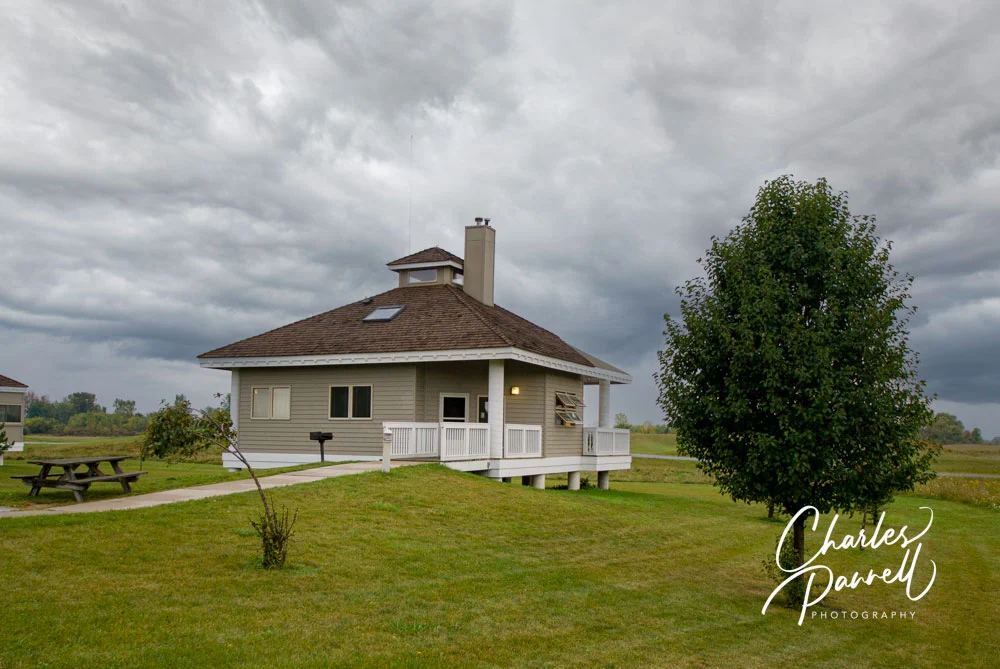
Accessible Cabin 17 is located a short drive away, along a road that overlooks the adjacent marsh. Accessible parking is available in a paved area in front of the cottage, with a wide level walkway up to the front porch. Although there’s a small lip at the transition from the walkway to the porch, it’s doable for most folks with a little assistance. The four-bedroom deluxe cottage features wide doorways and excellent pathway access to all the first-floor rooms, with stairway access to the two upstairs bedrooms.
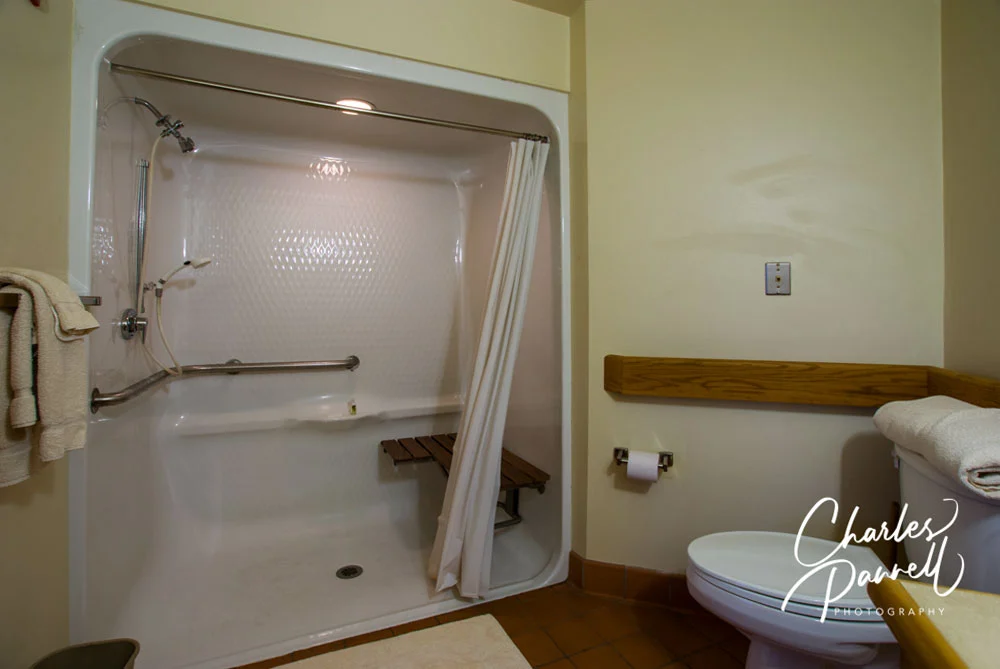
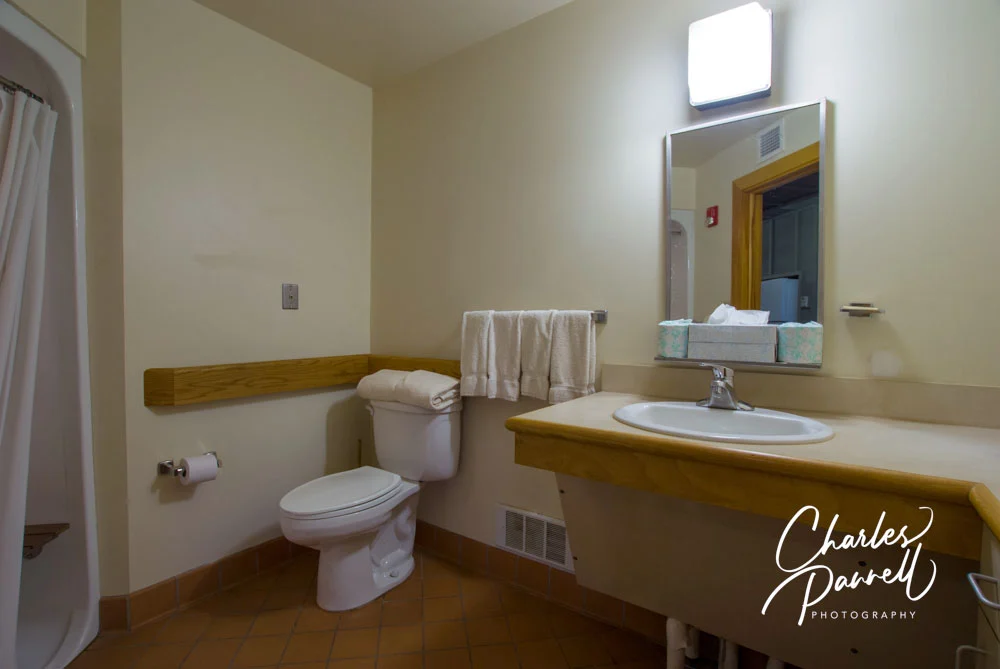
One downstairs bedroom is furnished with a bunk bed and a twin bed, while the other bedroom has a 24-inch high king-sized bed. Upstairs, one bedroom has a bunk bed and a double bed, and the other bedroom has a double bed. The ground floor bathroom is equipped with a roll-in shower with a fold-down shower bench, grab bars and a hand-held showerhead. Other access features include a roll-under sink and toilet grab bars on the back and right walls (as seated). The second-floor bathroom has a low-step shower, but it lacks grab bars or the space to maneuver a wheelchair.
Shower in cabin 17 on the ground floor
Toilet and sink in Cabin 17 on the ground floor
Downstairs you’ll also find a gas fireplace, a washer and dryer, a spacious deck and a standard hot tub. Top it off with a well equipped kitchen and you have everything you need for a family getaway at this wheelchair-accessible Maumee Bay cabin.
Ground floor of cabin 17 at Maumee Bay Lodge
Explore Maumee Bay Lodge
There’s certainly no shortage of recreational activities at Maumee Bay Lodge, many of which are accessible and can be enjoyed by the whole family. There is barrier-free access to the indoor splash area, which includes seven splash features, as well as a waterfall that spills into the pool. There is also an accessible locker room nearby, which is equipped with roll-in showers.
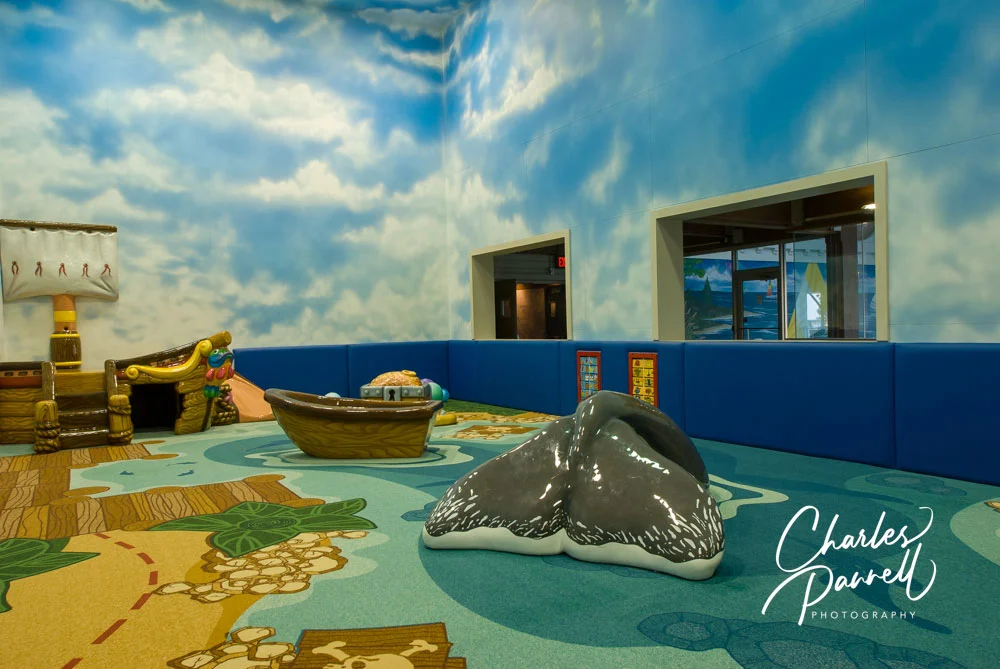
Soft Play Area at Maumee Bay Lodge
If you’d prefer to keep your little ones active but dry, then check out the soft play area for children, which includes pirate-themed climbing features on a cushioned floor. There is level access to this brightly colored indoor play area, and plenty of room to roll around the climbing features.
Outside, there are a number of accessible options, including bicycling or hiking on one of the many bicycle trails throughout the park. Although the trails weren’t specifically designed to be accessible, most of them are level and very doable for wheelers and slow walkers.
If you want to learn a little about the native flora and fauna, head over to the Trautman Nature Center, located next to the lodge. There is barrier-free access to the building, which houses a number of interpretive exhibits detailing the nature and history of the area.
Maumee Bay Lodge boardwalk
Finally, save some time for a first-hand look at the local inhabitants on the two-mile boardwalk, just east of the lodge. There is barrier-free access to this excellent loop trail, and interpretive signs along the way. Best of all, one side of the boardwalk is pleasantly devoid of railings, so wheelers can enjoy unobstructed views of the surrounding wetlands. It’s the perfect way to top off your wheelchair-accessible Maumee Bay cabin stay.
Barrier-Free Travel National Park Lodges for Wheelers and Slow Walkers
When I first started writing about wheelchair-accessible travel some 30 years ago, I was definitely the odd duck in the pond. I remember approaching tourism reps and explaining my niche — travel for wheelchair-users and slow walkers. Usually the response was a polite smile, a nod, a deafening silence or the ever so popular, “we have accessible restrooms in our visitor center” reply.
While I certainly don’t long for those days, it seems that things have come full circle today, and now wheelchair-accessible travel is the cool niche. Diversity is “in”. And although this visibility is a good thing, it’s a double-edged sword. Everyone wants accessible travel content, but the majority of folks don’t want to take the time to appropriately research it, which unfortunately has led to a glut of misinformation. And the internet has made it easy to cobble together articles by cherry picking “facts” from online “resources” that may or may not have been properly researched.
So how do you separate the wheat from the chaff as far as reliable and accurate wheelchair-accessible travel content is concerned? Truth be told there’s not one sure-fire test, but here are a few tips that will help you weed out those poorly researched pieces — ones in which the writers have never actually visited the destinations in question — and direct you to the more useful and accurate access resources.
In this day and age of outsourcing tasks, writing is no different. In fact there are many sites online that offer custom content for as little as $5. And to be honest, who can blame people for going the economical route when getting content for a website? The thing is, you get what you pay for, and in many cases this content is being crafted by folks who speak very little English, and just put their finished work through an on-line translator. And of course, for $5 their research is almost non-existent.
And with the increased usage of Artificial Intelligence to craft articles, credible content is getting harder and harder to find. So, if you start to read an article that makes little sense, keeps repeating the same thing in different ways, or begins to sound like those e-mails that you receive from that Nigerian prince who wants to give you millions, chances are the content is not well researched.
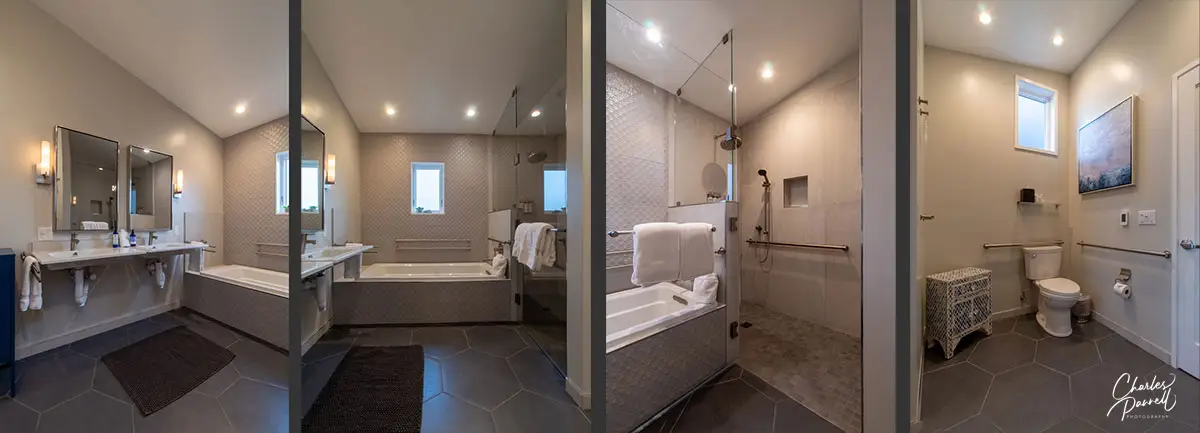
Shower at the Little River Inn, Mendocino County, California
There’s just no way to get around this requirement. That said, all photos are not created equal, as far as website usage is concerned. Be clear, I’m not talking about quality here, but instead photo content. Be wary of wheelchair-accessible travel articles that only show the beautiful glossy tourism photos, and have no specific access photos.
For example, if an article talks about an accessible hotel, but includes a photo of the well manicured gardens under the hotel sign, but fails to feature any photos of the accessible rooms, that’s a huge tip-off that the writer has never been in the accessible room. Chances are they are getting their access information second-hand, which in most cases is incorrect, or at the very least inaccurate. Look for photos that accurately depict access.
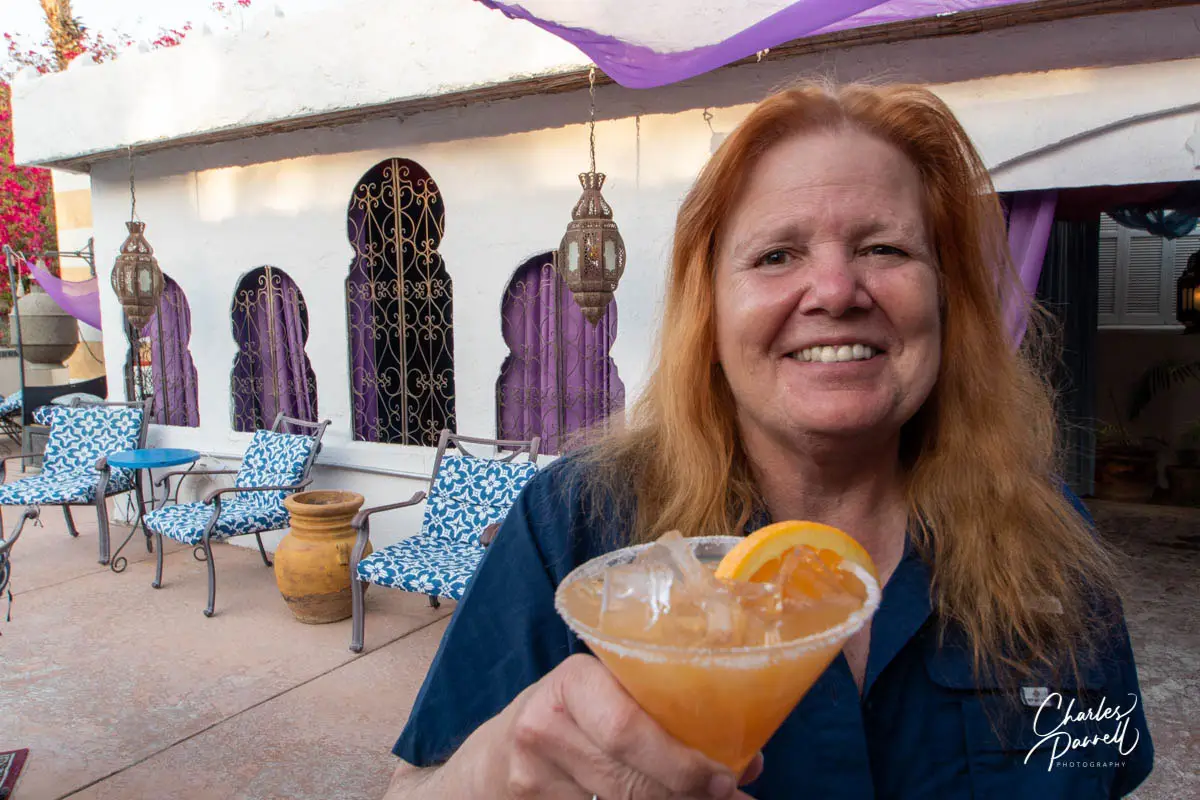
Candy enjoys a Moroccotini at the El Morocco in Desert Hot Springs, California
Although the jury is still out on whether you actually have to visit a destination to write a general travel article about it, there is absolutely no way you can pen a wheelchair-accessible travel piece without a site visit. Unfortunately some people are taking shortcuts and gleaning information from online sites and putting it into their accessible travel articles — all without ever leaving their desk. This of course leads to a lot of misinformation, and then that content is subsequently copied by others and repurposed into more inaccurate articles. It’s a vicious cycle.
So how do you tell if a writer has been to a destination? Well some folks just come right out and tell you, while others weave it subtly into their narrative. And then some folks tell it with detailed photos or stories about their trips. Beware of any article that reads like a travel brochure and gives absolutely no indication that the writer ever visited the destination. Also watch out for articles that continually quote websites — “xyz.com says that the Acme Hotel has accessible rooms with roll-in showers” — as that sometimes indicates the writer has not visited the destination to check out the access first-hand.
And then there are the influencers, who are paid to promote specific destinations. Some influencers present honest reviews, while others just praise destinations and post photos of themself frolicking on the beach in a designer outfit with perfectly coiffed hair. Be wary of any article that paints a picture of a “perfect” destination, without at least taking some of the drawbacks or access shortfalls into consideration. There is no one destination that’s perfect for everyone.
Covering wheelchair-accessible travel is not as easy as it looks — trust me on this one. Not only do you have to do site inspections, but you have to know what to look for. There’s no shortage of places that I’ve visited that claimed to be wheelchair-accessible, but instead had one or two steps at the entrances. And let’s not even talk about the B&B that had two two-by-fours as an entrance ramp. Suffice it to say that if an article only says that a place is wheelchair-accessible, but gives no other concrete access details, chances are either the writer has not visited the place, or they have absolutely no idea about the access needs of wheelchair-users and slow walkers. And remember, everyone’s access needs are different.
Bathroom at the Olea Hotel in Glen Ellen, California
If an article gives little more than the catch phrase “ADA compliant” as the entire access description for a hotel, chances are the writer didn’t visit the property. Additionally, since the average traveler has no idea of the actual ADAAG regulations (https://www.access-board.gov/ada/), that phrase is pretty meaningless. For example, let’s say you are looking for a hotel with a roll-in shower and you read in an article that a certain hotel is “ADA compliant”. Chances are you’d probably assume that hotel has a roll-in shower — and that assumption might be incorrect. According to the ADAAG, only hotels with over 50 rooms are required to have accessible rooms with roll-in showers; so if the hotel only had 45 rooms that “ADA compliant” property would probably only have accessible rooms with tub/shower combinations. And a detailed access description — instead of a short catch phrase — would have clarified that fact.
Don’t automatically rule out an article that includes archaic — by US standards — terminology, like “handicapped” and “infirmed”. Although it would tend to show a lack of understanding if these words were used by someone in the US, they are the norm in some developing countries. Look beyond the words for a true understanding of access issues.
For example if the article assumes that all wheelchair-users can walk and that one or two steps won’t be a problem, then that person does not understand the realities of life in a wheelchair. Moreover, that lack of understanding will most likely result in an inappropriate evaluation of the access. On the other hand, if you find an article by someone who doesn’t quite get the language right, but still has a good understanding of access needs, it may actually provide some important access information on a less-touristed region of the world.
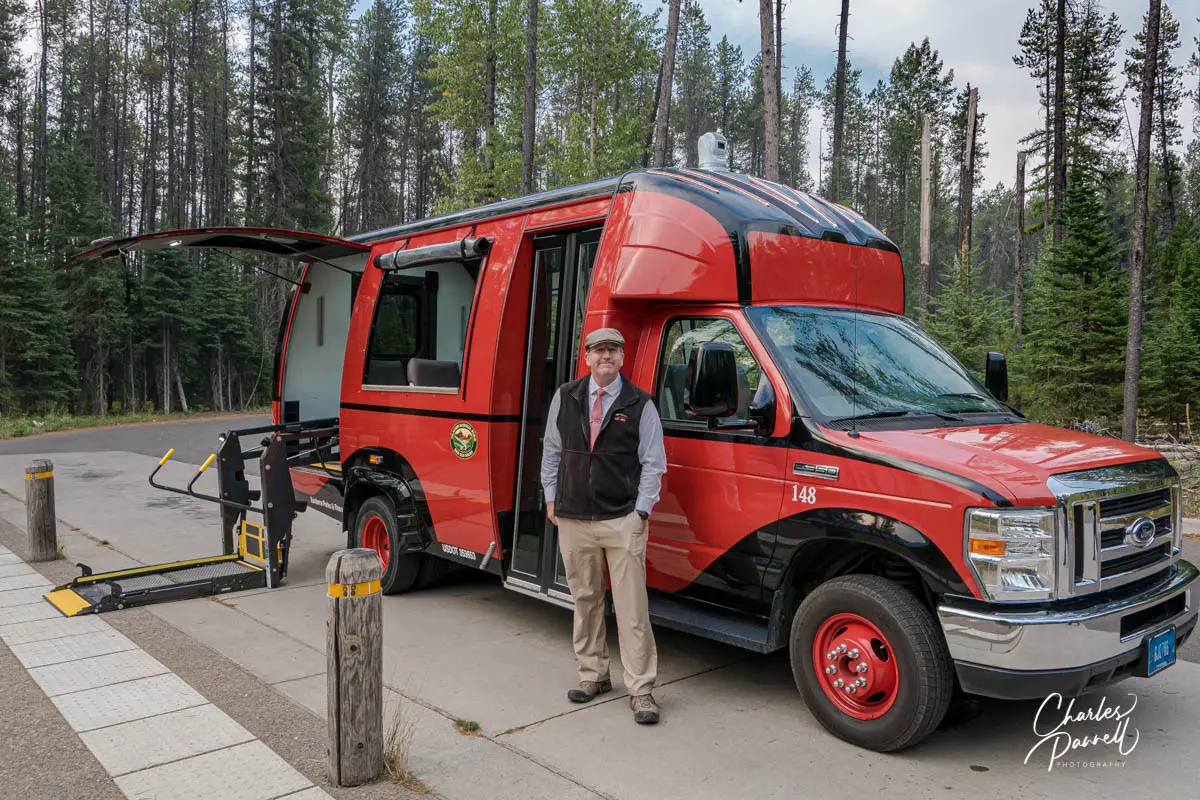
Accessible Red Bus in Glacier National Park, Montana
In order to evaluate access, you need to look at the big picture. Be cautious of destination articles that don’t include access information about ancillary services, such as public transportation. If the author has traveled to the area, they most certainly know about the availability of accessible public transportation, and understand the importance of including this detail in the article.
I’ve seen many an accessible travel article filled with flowery prose, about areas that I know have no accessible public transportation. The authors mention the sandy beaches and gorgeous sunsets, yet fail to acknowledge there is no accessible way to get from the airport to the hotel. Conversely, watch out for articles that claim a destination is accessible because it has an accessible bus system, yet lacks any concrete access details about lodging or attractions.
Finally be wary of roundup articles and listicles. These short pieces are all the rage with editors today, and most have a catchy title like “25 of the Best places to X”. Although they are fun to read, they generally contain very little substantive information; as the writer usually didn’t visit the destinations.
Instead these articles are filled with access information gleaned from the internet and combined with flowery prose from tourist brochures. That said, some legitimate travel writers — myself included — sometimes pen roundup pieces that contain useful access information. In the end, the key is in the access details — look for them. If they are missing or glossed over, that article is probably chock full of misinformation.
I recently ran into an old friend at the grocery store, and as old friends do, we spent a few minutes excitedly catching up with one another. I told Christy about my upcoming book projects, Charles’ battle with Dupuytren’s and the new additions to our flock; while she updated me about her now-teen daughters, her husband’s new job and her growing catering business.
As we were saying our good-byes she added, “Oh yeah, I’m a travel agent now. I signed up last week. I write a travel blog, and people always ask me for advice, so I figured I may as well get paid to help them out now. I might even venture into disabled travel, and if I do I’ll hit you up for advice on that for sure. Catch ya later.” As Christy walked away I just stood there in a state of shock. I mean, how much travel agent training could she get in a week?
I have a number of good friends who have been travel agents for well over 40 years, and I know how hard they work, and how much training they have. Is it really possible for Christy to just sign on the dotted line and become a travel agent – with absolutely no training? This especially concerned me because of her comment about accessible travel – a growing travel niche for sure. So I decided to do a little digging to find more about travel agent training.
For a little primer on travel agent training. I had several discussions with long-time travel agents — those with several decades of experience under their belts. These folks are not only intimately familiar with all aspects of the business side of things, but they are also well versed in the training that new agents may or may not receive.
First and foremost, there’s no national licensing or training requirement for travel agents in the U.S. That said, some states require travel agents to post a surety bond or obtain a sellers permit in order to do business in that state. There are however several business models for travel agents.
The most common business model is an agency owner, who can have independent contractors working for them. In this case the agency, often called a host agency, trains the contracted agents and sometimes provides them with errors and omissions insurance. The independent agents book clients through the host agency and the host agency pays them a commission. A big advantage to this business model is that the host agency has agreements with preferred suppliers and consortiums, who offer extra perks for the agency’s clients. The downside is that the agent training really depends on the host agency – some provide a good deal of training, while others offer minimal support.
Another business model — the employer travel agency model — is much like the independent contractor model. The big difference is that employer travel agents are paid a flat wage and are subject to agency rules and oversight. Like the host agency the employer agency also has agreements with preferred suppliers and usually provides ongoing training to their agents. Examples of employer travel agencies are American Express and AAA.
Another business model is where experienced travel agents buy into a national franchise. It’s not a cheap investment, so these travel agents — now franchise owners — are usually committed to providing their clients with a high standard of service. Like the host agency business model, franchise owners also have access to preferred suppliers for extra client perks. The other advantage to this model is that the franchise owners benefit from the name brand and advertising reach of the national franchise. Some examples of franchises are Cruise Planners and Dream Vacations (formerly Cruise One). Generally speaking franchise owners undergo a large amount of travel agent training.
At the bottom of the food chain in travel agent land is the Multi Level Marketing (MLM) business model. In order to join a MLM, you need to fill out a few forms and pay a fee. Travel agents in this business model receive minimal training — usually in the form of webinars — and in fact their main focus is on building their downline (recruiting more agents) or earning prizes and free trips instead of actively booking travel.
The MLMs recruit new agents by promising free or discounted travel, and in some cases the agents don’t even actively seek out clients. And as my experienced travel agent friends told me, many long time travel agents feel that the MLM agents give them a bad name, because of their narrow focus, little experience and lack of real training.
Travel Agent Training and Professional Memberships
Although there’s no license required to become a travel agent, there are a number of training courses and designations that give travel professionals the extra knowledge and expertise needed to deal with a wide variety of travel-related issues.
At the top of the list are the Certified Travel Associate (CTA), Certified Travel Counselor (CTC) and Certified Travel Industry Executive (CTIE) designations available through the Travel Institute. Although any travel agent can become a rank-and-file member of the Travel Institute and take advantage of their continuing education webinars, travel agents are required to have at least one year of experience in order to attain CTA status. CTC and CTIE designations require at least five years experience in the industry. All of the designations require a significant time and financial investment. In short, if your travel agent has any of these designations, you know you are dealing with a seasoned professional.
Many travel agents also boast about their memberships in trade associations such as the Cruise Lines International Association (CLIA) and the American Society of Travel Advisors (ASTA). These trade associations are open to both both independent contractor and employee travel agents. CLIA requires members to generate at least $5000 in commissions every year, and offers a number of advanced designations, from Certified Cruise Counselor to Elite Cruise Counselor. ASTA Membership, on the other hand, is open to any travel agent who is an employee or independent contractor for an employer agency or host agency who is ASTA member.
At the bottom of the travel agent credential list are certifications from destinations, tourist boards, resorts and cruise lines. Agents can obtain these by attending short informational presentations or longer webinars, training sessions and multi-day conferences. And although product knowledge is good thing, be wary of agents that are “specialists” in everything.
In the end, certifications and professional memberships can be key elements in travel agent training. That said, dedication, professionalism and product knowledge also come into play. Just because you like to travel doesn’t mean you can just pop into a travel agency, sign on the dotted line, and magically be transformed into a competent travel agent. In short, it’s a package deal – hard work, the right certifications and ongoing training will yield the desired outcome. That said, it’s more than an alphabet soup of professional initials on a business card – it’s also about how travel agents conduct their business. With that in mind, here are a few ways to spot a real pro.
First off, your prospective travel agent should ask a lot of questions – about your travel style, budget and general expectations. In travel-agent parlance this is known as “qualifying” a client, and it’s essential, so that clients get what they want, not what the travel agent happens to personally like. This is one thing that legitimate travel agents do, as they realize that the same vacation isn’t right for anybody.
This is especially important for accessible travel, as it’s not a cookie-cutter niche. All disabilities are not alike, and even individuals that have the same disability may have different access needs. For example, one power wheelchair-user may require a roll-in shower, while another person with the exact same disability may need a tub/shower combination with a shower chair. Qualifying a client with a disability takes even longer, because the agent needs to ask a lot of access-related – and sometimes personal – questions. If your prospective travel agent doesn’t spend much time on this, then you are perhaps dealing with someone who lacks the appropriate training.
Destination knowledge also factors into the travel agent training process, and this knowledge comes with experience and repetition. After all, when you book one type of travel day-in and day-out you learn the top attractions, the preferred suppliers and insider secrets. So it only goes to follow that an agency that specializes in a particular type of travel probably has better trained agents than an agency that has no specialty.
Again, that’s because these agents book the same type of travel again and again, and this repetition helps when it comes to training new agents. With that in mind, it’s a good idea to ask a prospective travel agent about their experience with booking your preferred type of travel. Going one step further, it wouldn’t be out of line to ask a prospective cruise agent how many cruises they have taken. After all, a good travel agent should be intimately familiar with their product.
Last, but certainly not least, longevity in the business is also the sign of a real professional, as that experience builds good connections that give clients better offerings. Longevity leads to a large network, and it also leads to knowing what to do – and who to contact – when things go wrong. The real professionals don’t tweet about lost luggage or a delayed flight – they know who to contact on the inside to remedy that problem. And that only comes with experience.
Bottom Line – a properly trained and experienced travel agent can help you find a vacation that suits your tastes, budget and access needs; so make sure and take the time to fully research any travel professional, before you sign on the dotted line.
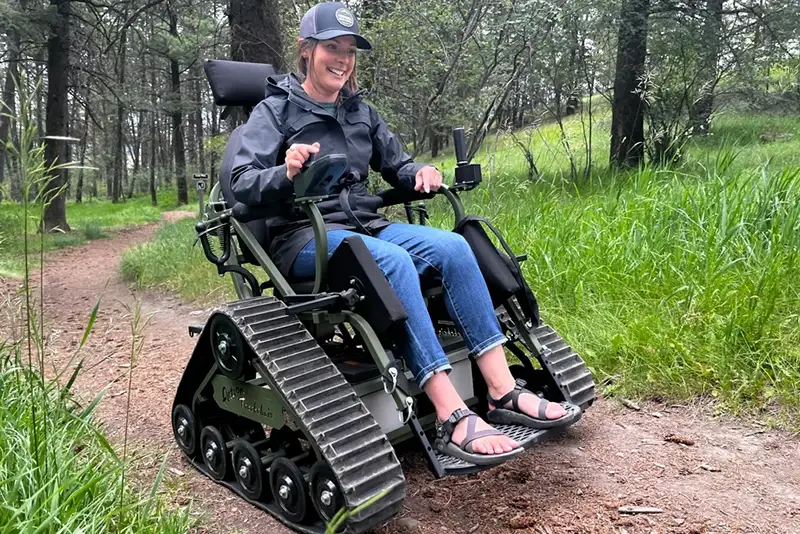
Thanks to the work of David’s Chair, loaner track chairs are now available at a number of Oregon locations. These rugged wheelchairs are outfitted with tank tracks instead of wheels and they can easily travel over sand and other obstacles found on inaccessible trails and beaches.
About the Track Chairs
Three types of track chairs are available — standing models, seated models and a youth chair. All have a maximum weight capacity of 350 pounds. Although the majority of the chairs are available at fixed locations, there are also several several models in the tow-and-go program. This program includes a track chair in a ramped trailer that can be towed by a personal vehicle. Tow vehicles need to have a two-inch ball with a straight four-prong trailer hookup and safety chain hooks.
Advance reservations are required for all loaner track chairs, and a liability waiver must also be signed. Some locations offer limited time slots, so plan ahead to avoid disappointment. Reservations for fixed location chairs can only be made at davidschair.org/request-fixed-location-chair/, while reservations for tow-and-go track chairs can be made at davidschair.org/request-tow-n-go-chair/.
Track Chair Locations
Fixed Locations
Seaside Elks Lodge #1748
324 Avenue A
Seaside, OR 97138
This seated model can be only used at the beach, which is located 2.5 blocks from the lodge.
Manzanita Visitor Center
30 Laneda Avenue
Manzanita, OR 97130
This seated model can only be used at the the beach off of Laneda Avenue, which is a short roll from the visitor center.
Gold Beach Visitor Center
94080 Shirley Lane
Gold Beach, OR 97444
This seated model can only be used on the beach near the Gold Beach Visitor Center.
Heceta Beach County Park
88466 1st Avenue
Florence, OR 97439
This seated model can only be used on the beach north of Driftwood Shores Resort, which can be accessed by the Heceta Beach access point.
Don and Ann Davis Park
840 West Olive Street
Newport, OR 97565
This seated model can only be used to access the beach near Don and Ann Davis Park.
The Pelican (Cape Kiwanda Parking Lot)
33180 Cape Kiwanda Drive
Pacific City, OR 97135
This standing model can only be used to access Pacific City Beach from the nearby parking lot.
Mount Pisgash Arboretum
34901 Frank Parrish Road
Eugene, OR
This seated model can only be used at the Mount Pisgash Arboretum.
Lithia Park Cabin
340 S. Pioneer Street
Ashland, OR
This seated model can only be used in Lithia Park.
Westport by the Sea Condos
1600 W Ocean Ave
Westport, WA 98595
Happy Camp Hideaways
825 Happy Camp Rd.
Tillamook OR 97141
This chair can only be used on the beach off 825 Happy Camp Road.
St Mary by the Sea Catholic Church
275 S. Pacific St.
Rockaway Beach, OR 97136
This chair can only be used on the beach that can be accessed via the St Mary by the Sea parking lot.
Tow-and-Go Locations
White City
This location has a standing model, a seated model and a youth chair.
Coos Bay
This location has a seated model.
For more information about these programs, visit davidschair.org/.
Barrier-Free Travel Washington National Parks for Wheelers and Slow Walkers