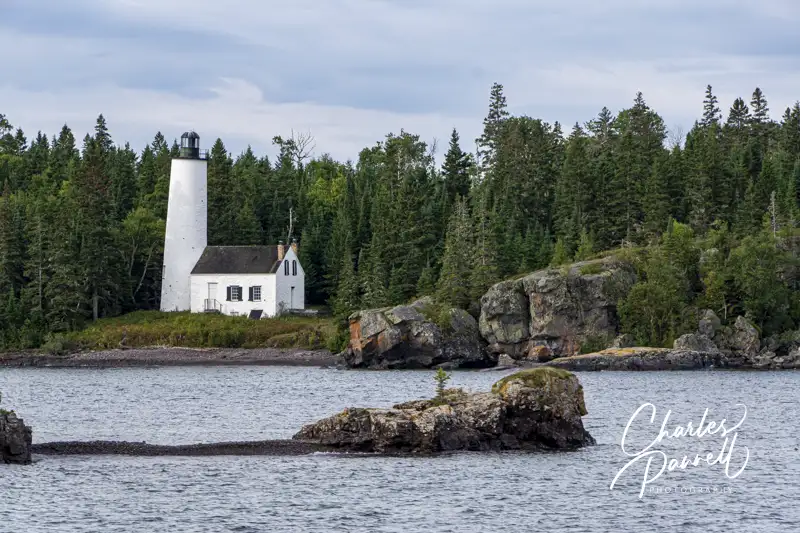
Located in the middle of Lake Superior in Isle Royale National Park, Rock Harbor Lodge (www.rockharborlodge.com/) is probably the most difficult national park lodge to get to, as it’s a six-hour cruise from the mainland. That said the journey over is a scenic adventure itself, and the Ranger III ferry has wheelchair access to the lower deck and an accessible restroom aboard (www.nps.gov/isro/planyourvisit/ranger-iii-info.htm). And once you dock at Isle Royale National Park, you’ll be rewarded with the rugged beauty at this remote retreat. Even though the island itself is rather rustic, Rock Harbor Lodge offers spacious rooms for a comfortable and relaxing Isle Royale wheelchair-accessible retreat.
An Isle Royale Wheelchair-Accessible Room with a View
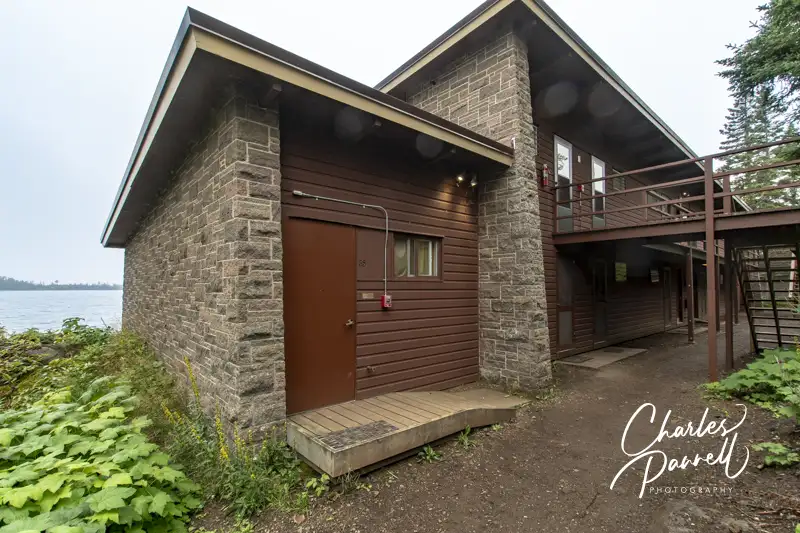
Entry to room 35 at Rock Harbor Lodge
Located along the Lake Superior shore, Rock Harbor Lodge is a .3-mile walk from the boat dock. There’s a paved level path alongside the marina, but golf cart transportation is available for guests who cannot manage the distance. And although there are a few steps up to the front door of the main office at the lodge, the back entrance is ramped.
There are three wheelchair-accessible rooms at Rock Harbor lodge, including room 35 which is located in the Chippewa Building, right behind the main office. There’s ramp access to the front door, with enough space for a wheelchair to maneuver inside the room. Access features include wide doorways, lever handles, a lowered clothing rod and low-pile carpet for easy rolling.
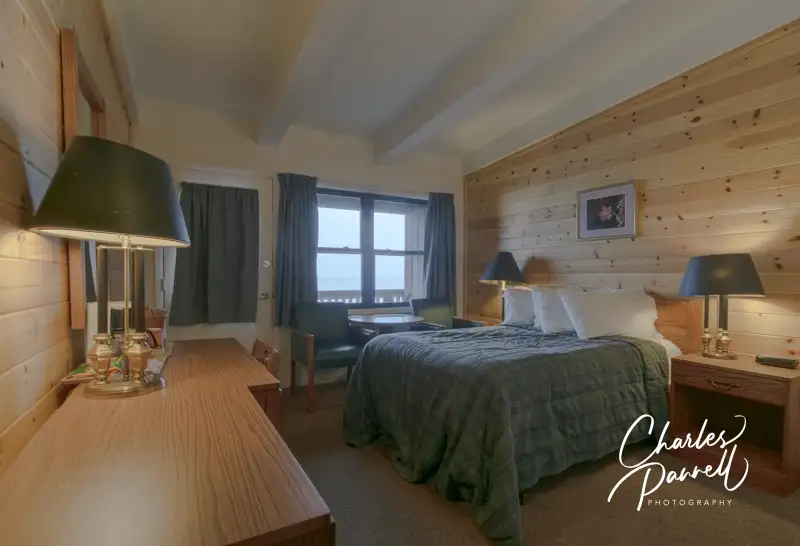
Room 35 at Rock Harbor Lodge
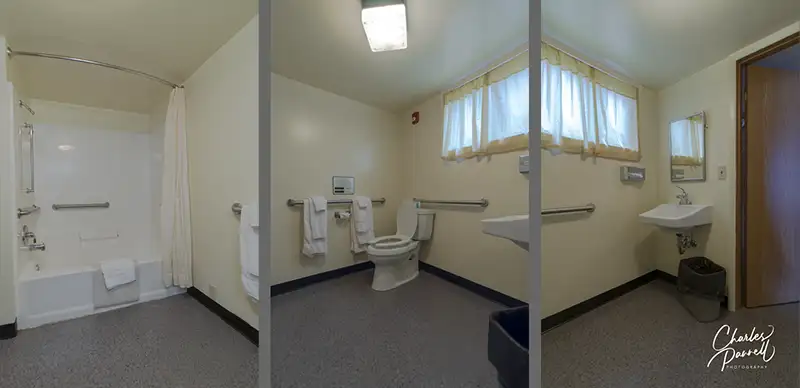
The room is furnished with a 26-inch high open-frame double bed with wheelchair access on the right side (as you face it), a night table, a desk with a chair, a small chest of drawers, and a table with two chairs. The bathroom features a full five-foot turning radius and is equipped with a tub/shower combination with grab bars. The toilet grab bars are located on the back and right walls (as seated), and the bathroom also includes a roll-under sink with an angled mirror. A portable shower bench is available, but make sure to request one when you make your reservation, so it will be in your room when you arrive.
Bathroom in room 35 at Rock Harbor Lodge
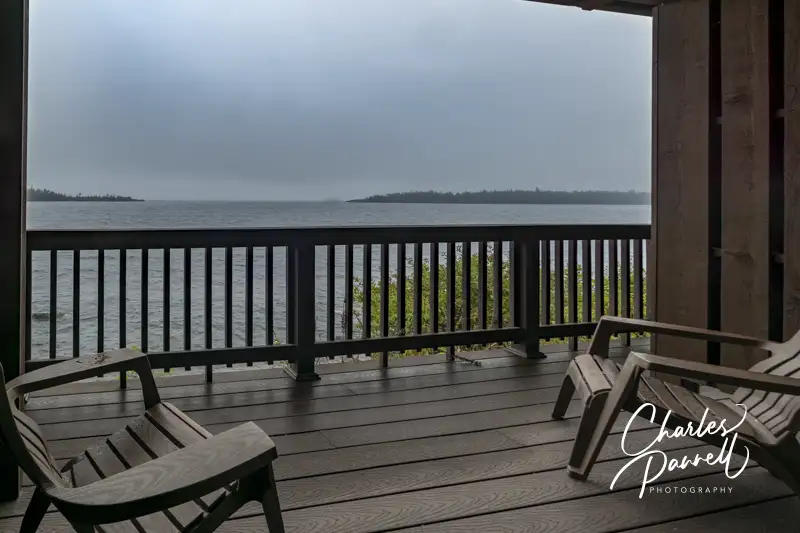
There’s also barrier-free access to the roomy back porch, which is furnished with two Adirondack chairs. Truly one of the best features of this corner room is its location, as the porch allows for an unobstructed view of the waves crashing on the rocks below, and a peek at the barrier-islands across the harbor. It’s definitely an Isle Royale wheelchair-accessible room with a view.
Back porch in room 35 at Rock Harbor Lodge
Eat Drink and Be Merry
There’s good access to the public facilities at this Isle Royale retreat as well. An accessible dirt pathway leads from the accessible room over to the Lighthouse Restaurant and the Greenstone Grill, which are located next to the main office. The grill offers bar service and a light menu of burgers, sandwiches and pizzas; while the restaurant serves up some hearty entrees. There’s barrier-free access to both establishments; but if you’d prefer a bit more privacy you can always order a pizza to go and enjoy it on your back porch.
There’s also ramp access up to the Rock Harbor Auditorium, where evening ranger programs are presented. The dirt path over to the ramp is a little bumpy, but it’s doable with a little assistance.
And although the bulk of the island has inaccessible trails, the cement walkway along the marina offers some good wildlife viewing opportunities. Even though this walkway is well trafficked, it’s not unusual to spot moose along the trail. Even if you don’t happen to see them, the lake view itself is stunning. And that’s reason enough to stay a spell at this remote but pristine national park lodge.
Road trips are an excellent vacation choice for wheelchair-users and slow walkers. Not only can you take things at your own pace on a road trip, but you can also map out a custom itinerary that includes accessible attractions, rest stops and lodging choices. Plus you can pack along all of your equipment, and you don’t have to worry about wheelchair damage by airline baggage handlers.
Additionally, a wheelchair-accessible road trip is are a great way to explore small towns that are often overlooked on large group tours. And although some small towns may lack accessible facilities, that’s not the case across the board. With that in mind, here are 36 towns across America that have wheelchair accessible lodgings, attractions and even trails. Some are along less traveled byways, some are near national parks, and some are located on popular road trip routes; however they’re all worthy of consideration on your next road trip adventure. So add them to your itinerary on your next wheelchair-accessible road trip.
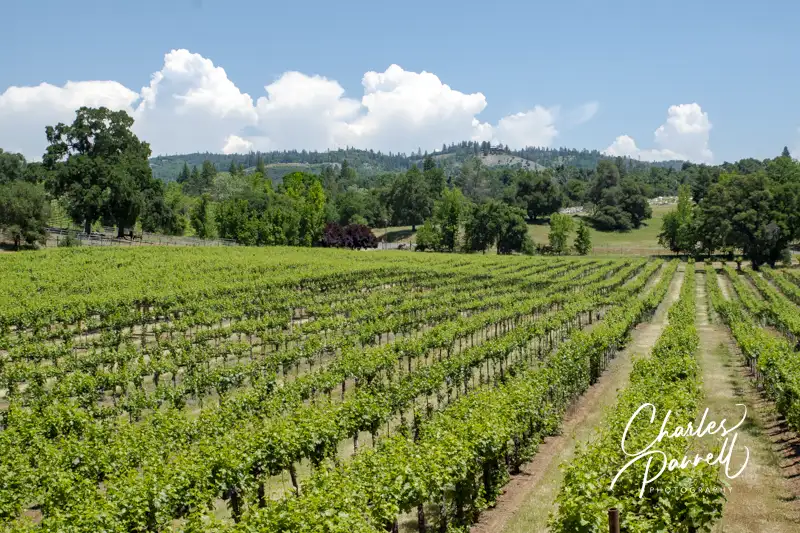
Calaveras County played an integral part in the California Gold Rush, as folks flocked to the area in hopes of striking it rich. Today the 49ers are long gone; however there’s another rush in this famous county — a wine rush, of sorts. The mining equipment of yesteryear has been replaced with vineyards and tasting rooms, as over two dozen wineries now dot the county.
And there’s no better place to enjoy the fruits of the harvest then in the tiny hamlet of Murphys. Located two hours southeast of Sacramento, this quaint town is a wine lovers paradise, as it boasts a gaggle of tasting rooms along the main drag. And even if you can’t walk or roll very far, there are still some excellent choices along this wheelchair-accessible Murphys wine tasting route.
Getting Around Downtown
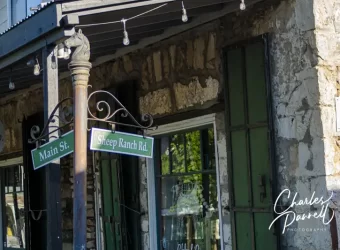
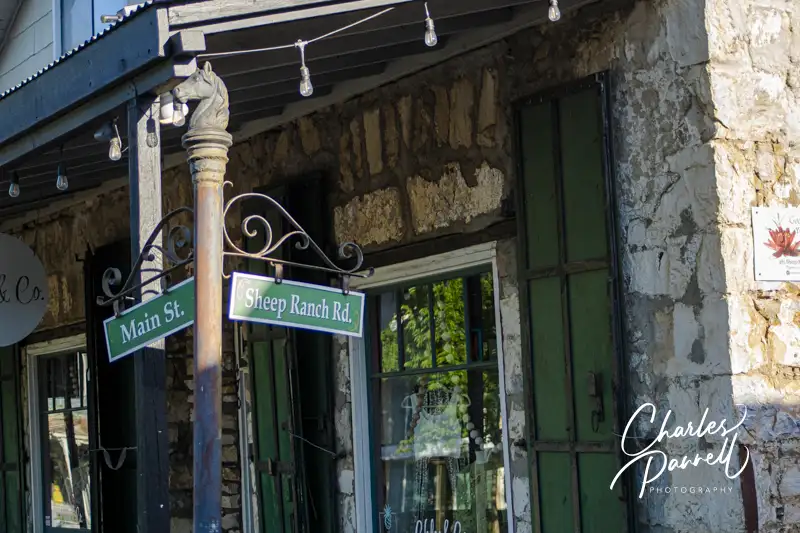
Street Signs and Historic Building in Downtown Murpyys
Although Murphys is a historic town, access upgrades have been added over the years. Accessible parking can be difficult to locate, but the Murphys Creek Theater lot on Algiers Street has the largest number of accessible parking spots. The lot is located about 150 yards off of Main Street, but manual wheelchair-users may require some assistance getting up the steeper section of Algiers Street to access the main drag.
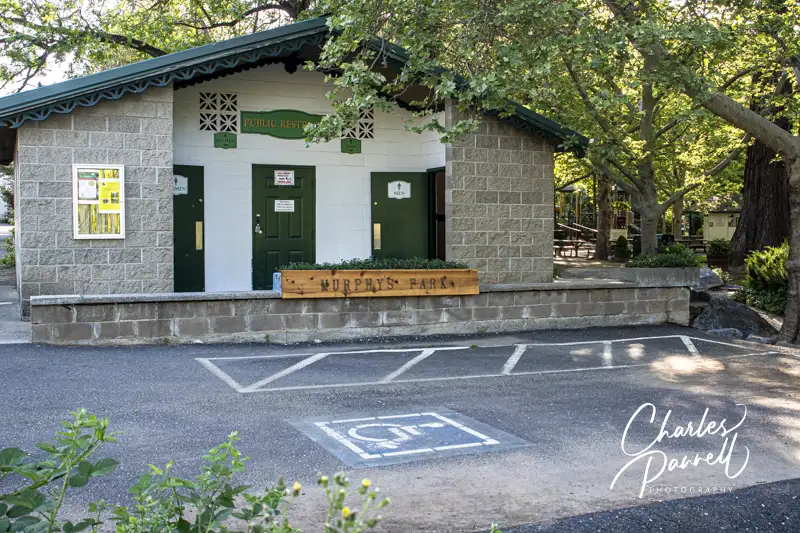
There is also one accessible parking spot next to the City Park restrooms, just down the street from the theater. Additional accessible parking is available in the public lot on Church Street and in the lot behind the Victoria Inn, both of which offer level access to Main Street. And if you can’t walk far, there are two tasting rooms close to accessible parking in Country Square on Main Street.
Most of the sidewalks in town are relatively free of obstructions, and once you get on Main Street, everything is pretty level. Although there are a few steps here and there, it’s still possible to navigate downtown in a wheelchair. Granted, some shops are housed in historic buildings with one or two steps, but all of the tasting rooms mentioned below have barrier-free access.
City Park restrooms in Murphys, California
Take a Wine Stroll
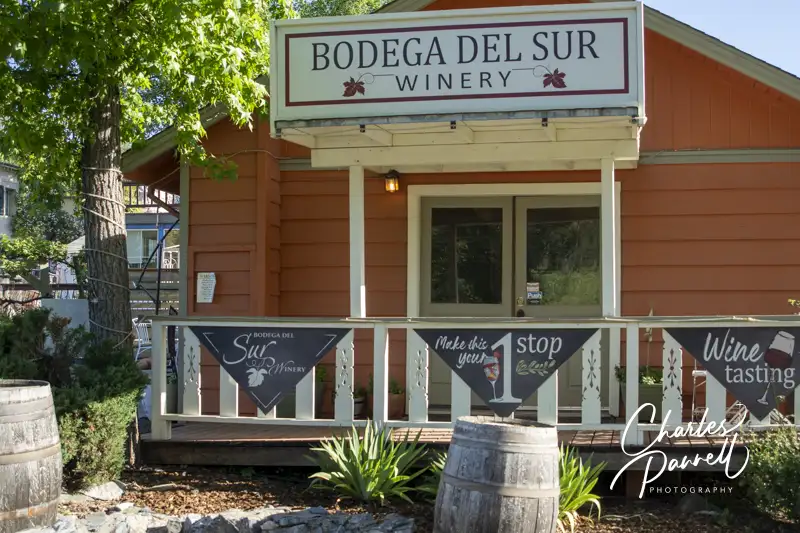
Bodega del Sur in Murphys, California
The Bodega del Sur (bodegadelsur.com) tasting room, which is located on Algiers Street just shy of Main Street, makes a good first stop on any wheelchair-accessible Murphys wine tasting stroll. There’s level access to the tasting room with plenty of room for wheelchairs and scooters inside. This boutique winery features wines made from locally grown grapes, with a decidedly Latin influence.
The Tanner Winery (tannervineyards.com) tasting room is a short walk away on the corner of Algiers and Main Streets. There is level access to the tasting room, where samples of Cabernet Sauvignon, Carignane, Barbera, Mourvèdre and several blends can be had.
Wrap up your Murphys wine tasting stroll at Newsome Harlow (nhvino.com), which is located on Main Street, near Church Street. The tasting room offers level access through the courtyard, with plenty of room to roll around inside. A Murphys favorite, this winery is heavy on the reds and it produces some excellent Zinfandels.
Stay Put and Sip
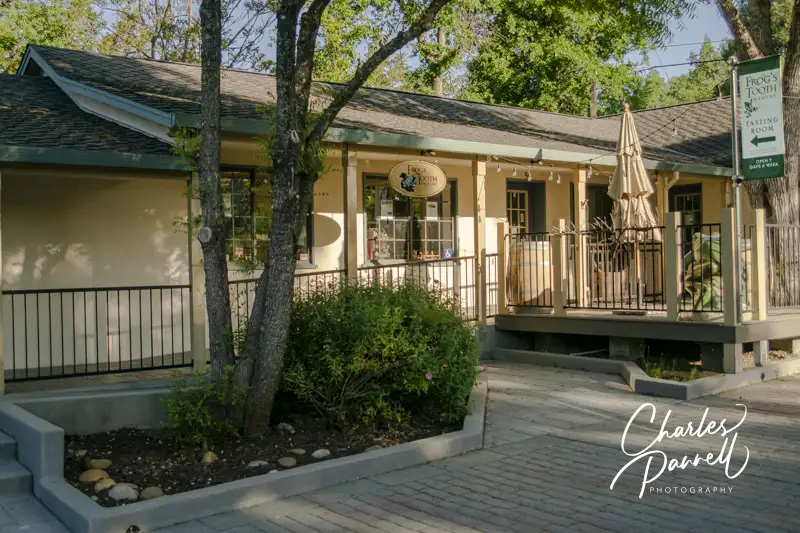
If all that strolling is a bit too much for you, you can also opt to park close to a few tasting rooms in Country Square. Accessible parking is located off of Main Street, but it can only be accessed by vehicle from the back entrance. From Main Street, turn north on Church Street, then make a left at the stop sign. Country Square is the third driveway on the left, past Murphys Pourhouse and Murphys Professional Center. And as luck would have it, the accessible parking space is right across from the Frog’s Tooth
There’s ramp access up to the Frog’s Tooth tasting room and the adjacent deck. Inside you’ll find wood floors, plenty of room to maneuver a wheelchair and a lowered bar. Frog’s Tooth is known for their small batch locally produced wines. Favorites include Tempranillo, Syrah, a variety of red blends, Viognier, Sauvignon Blanc and Rose.
And if you’d like to try another winery, Jazz Cellars (jazzcellars.com/) is located just across the courtyard from Frog’s Tooth. There’s barrier-free access to this tasting room, which features wide doorways and level access. Have a taste of their award-winning Barbera, Viognier, Sauvignon Blanc, Zinfandel or Syrah. And in keeping with their name, you can also often find live music at Jazz Cellars. It’s a great way to top off any wheelchair-accessible Murphys wine tasting stroll.
Barrier-Free Travel Yosemite, Sequoia and Kings Canyon National Parks for Wheelers and Slow Walkers
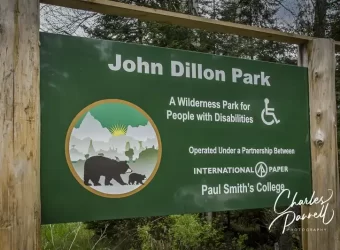
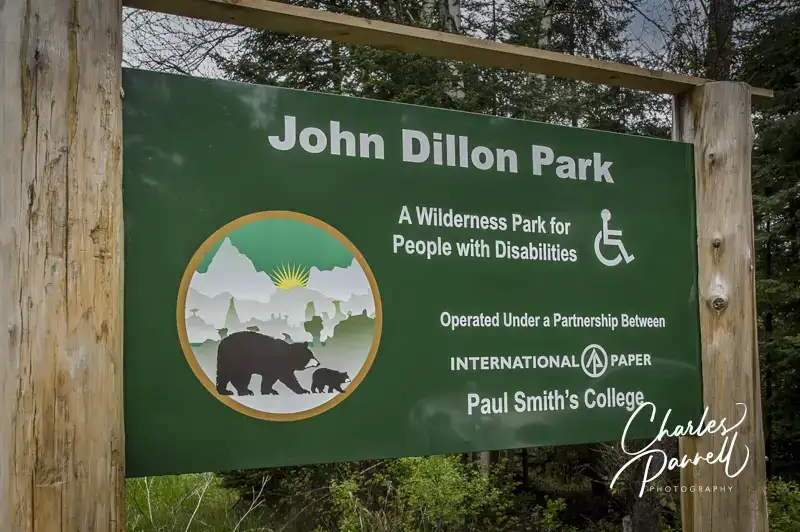
Located 15 miles from Tupper Lake in upstate New York, John Dillon Park (www.paulsmiths.edu/john-dillon-park) is a wheelchair-accessible Adirondack wilderness facility. This purpose-built camp, which is the result of a partnership between International Paper and Paul Smith’s College, was designed from the ground up to be accessible. The vision of International Paper’s former CEO John Dillion, this namesake park is the first facility of its kind. And the goal of its creators is simple – to make the natural landscape of the Adirondacks accessible to wheelchair-users and slow walkers. And, they did an excellent job.
Camping Adirondack Style
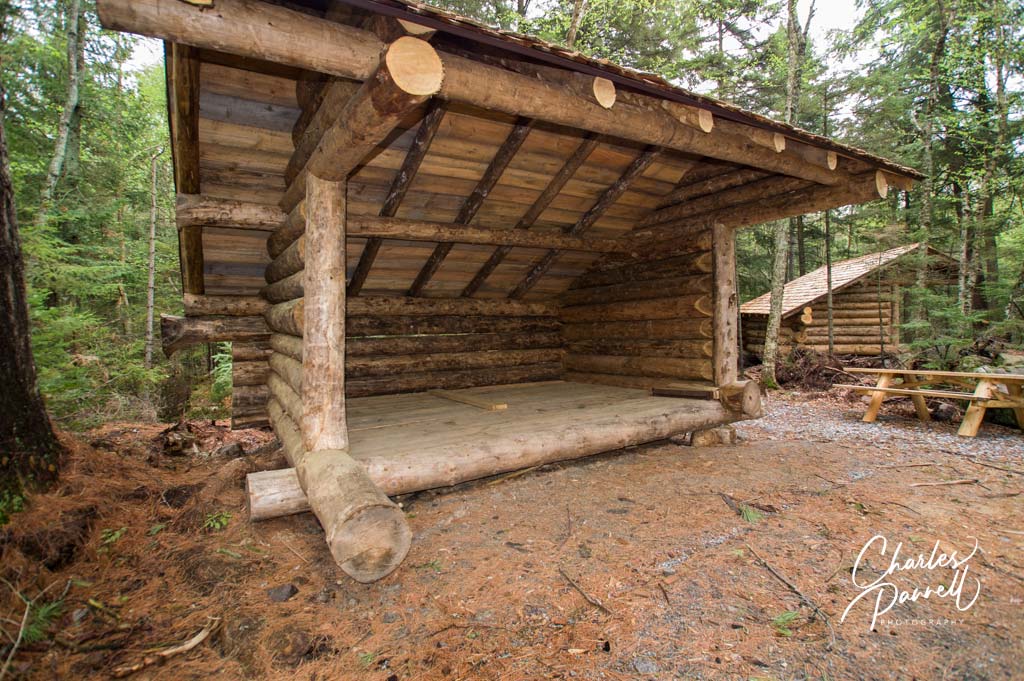
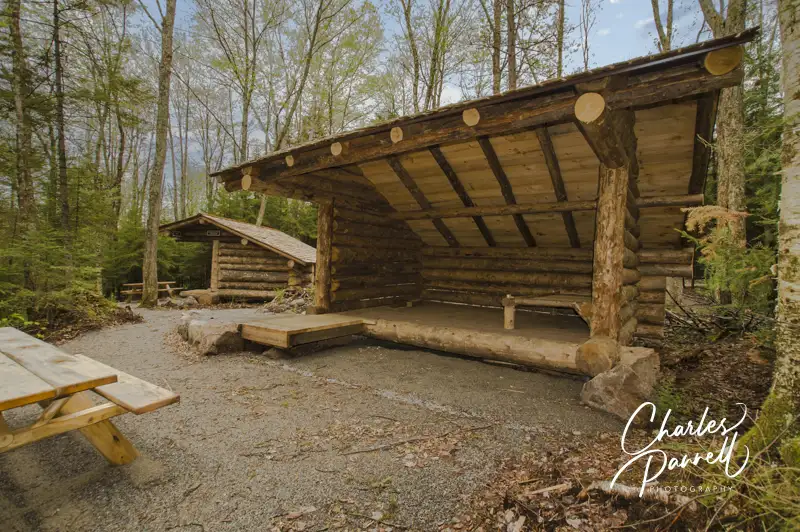
Lean-to at John Dillon Park – A Ramp Has Been Added
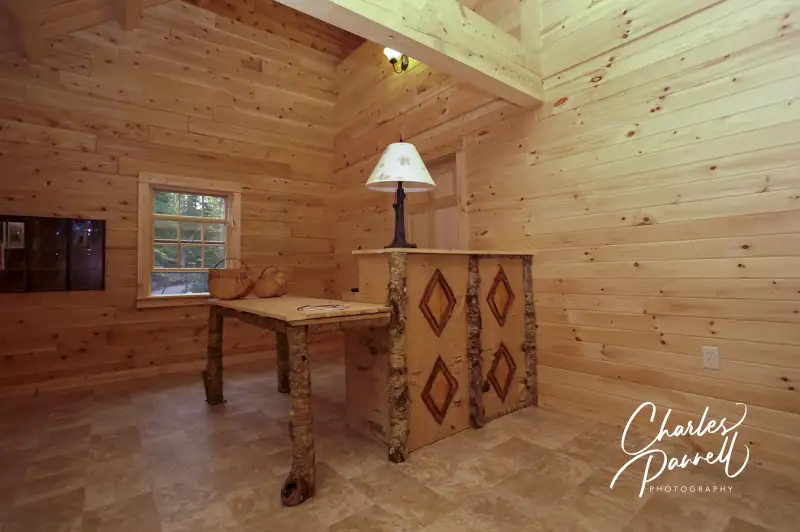
Located about two miles off the main road, John Dillon Park offers campers a chance to get away from the crowds and camp in a wheelchair-accessible Adirondack lean-to or tent. Accessible parking is located near the Welcome Center, which features barrier-free access and plenty of room to maneuver a wheelchair or scooter inside. There’s also an accessible flush toilet (the only one in camp), and a refrigerator for medication storage. After campers register, they set-off to one of the accessible lean-tos or to the tent site on the property.
The only lean-to you can drive to — Bear Cub — is located near the Welcome Center. The others are built in pairs along an accessible trail; with the farthest ones being about 2.5 miles from the Welcome Center. A golf cart is available to help folks transport their gear, so assistance is available if needed.
The lean-tos are open on one side, and they have ramped access. They are equipped with a fold-down bed, a fire ring, an accessible picnic table and a food locker. Accessible composting toilets and potable water are also located at each lean-to site. Additionally, there’s one large accessible tent site, which is located about .04 mile from the Welcome Center. This level site has an accessible fire pit, picnic table and outhouse. And if you happen to have a power wheelchair that needs a charge, a solar powered battery charger can be wheeled to your site upon request.
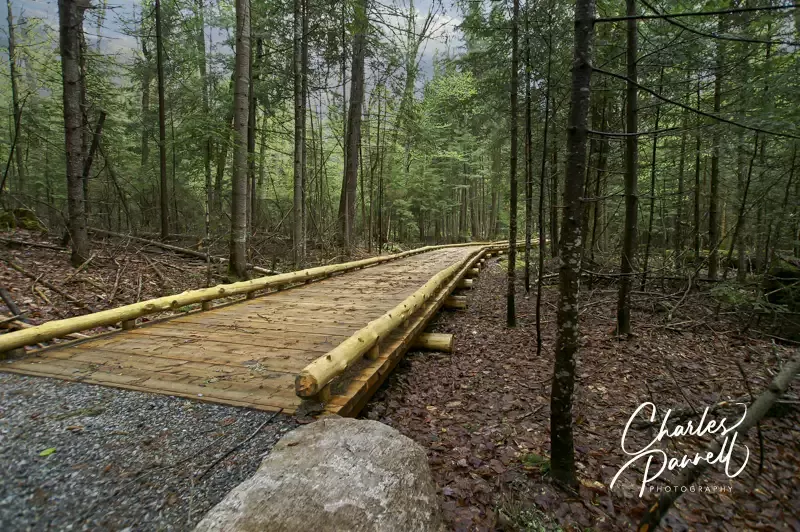
And there’s lot of things to do once you set up camp. With over three miles of accessible trails at John Dillon Park, there’s no shortage of places to explore. Add in an accessible fishing and kayak dock, and an accessible pontoon boat, and you have all the ingredients for a full fledged wheelchair-accessible Adirondack adventure.
Boardwalk Trail at John Dillon Park
Image 1 of 3
Reserve Your Spot
There is no charge to use John Dillon Park, but it’s only open to people with disabilities and their companions. Dogs are permitted, but they must be leashed and they can never left unattended. A valid rabies certificate is required for all dogs. This wheelchair-accessible Adirondack retreat is a quiet place, and no partying, loud music or firearms are permitted. Anyone who does not comply with the rules will be asked to leave.
The maximum stay at John Dillon Park is five nights. Reservations are recommended, although walk-ins can sometimes be accommodated on a space available basis. The park is open from late May through early September. For more information call (518) 806-9774 (summer season only) or e-mail dillonpark@paulsmiths.edu. Reservations can be made online at ipjohndillonpark.checkfront.com/reserve/. So gather your camping gear and get ready to enjoy the accessible Adirondacks this summer.
Welcome Center at John Dillon Park
Barrier-Free Travel the Grand Canyon for Wheelers and Slow Walkers
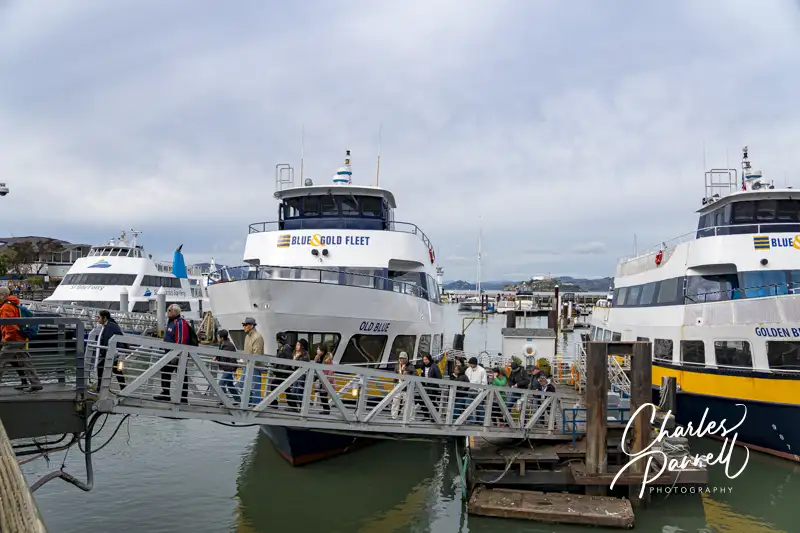
Blue and Gold Fleet cruise boat entering San Francisco Bay
At first glimpse San Francisco seems a challenge for anybody with mobility issues. After all, hills aren’t very wheelchair friendly. And although there’s certainly no shortage of steep streets in the City by the Bay, there are also some level and accessible areas. Take the Embarcadero and Fisherman’s Wharf area, for example. Not only is this popular tourist haunt level and accessible by public transportation, but there’s also a wide variety of attractions to choose from in the area. So here’s the low down on how to explore San Francisco in a wheelchair.
Getting There
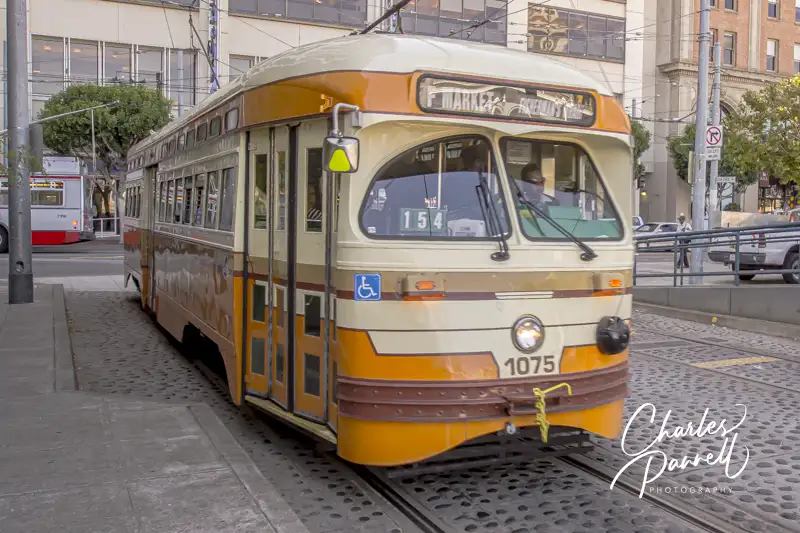
Vintage F-Line Streetcar
There’s no doubt about it, public transportation is the easiest way to explore San Francisco in a wheelchair; and in that respect BART (www.BART.gov) — the local regional rail service — tops the list. All BART trains feature roll-on access, with wheelchair spaces located near the doors. Additionally, all BART stations feature elevator access.
The Embarcadero BART station is conveniently located near the F-Line Streetcar (www.streetcar.org/rider-information-map-2/) stop at Main and Drumm, so it’s easy to get to Fisherman’s Wharf in two accessible legs. Riding the F-line is fun too, as these vintage streetcars have been lovingly restored to their previous glory. And unlike the iconic cable cars, the F-Line Streetcars feature wheelchair access via raised boarding platforms along the route. In short, it’s a very nostalgic way to get to Fisherman’s Wharf.
Cruising!
Blue and Gold Fleet on San Francisco Bay
After you take in the views at Fisherman’s Wharf, follow the accessible sidewalk up to Pier 39 for breakfast at the Eagle Cafe (eaglecafe.com). The eatery is located on the second floor, and the elevators are tucked away under the bridge on the right. This landmark cafe has been serving hungry diners since 1928, and it’s know for its generous portions, so it’s the perfect place to fuel up for the day.
Next door you’ll find level access to the kiosk for the Blue and Gold Fleet (www.blueandgoldfleet.com), which offers an informative and accessible cruise around the bay. There’s level access to the boat and wheelchair access on the main deck, where the accessible restrooms and the snack bar are located. This 60-minue narrated cruise heads out under the Golden Gate Bridge, then cruises around Alcatraz before it returns to the dock. And along the way it offers a good introduction to the history and the culture of the City by the Bay.
Under the Bay
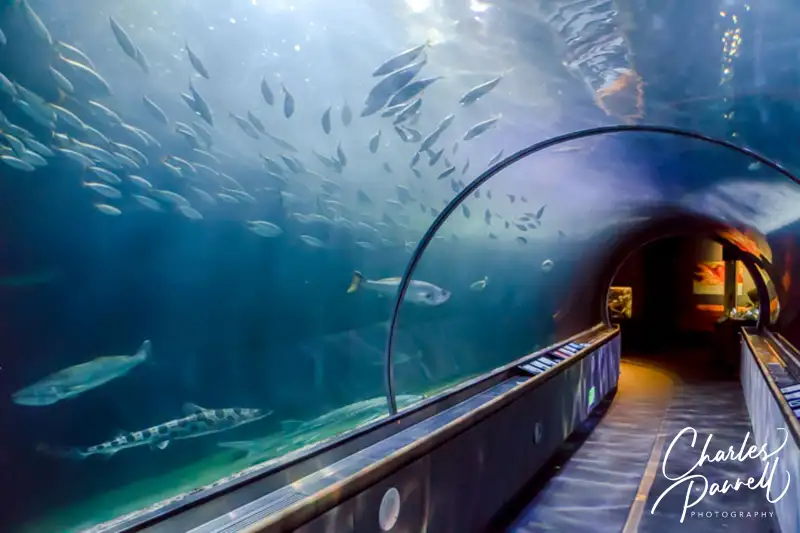
Aquarium of the Bay on Pier 39 in San Francisco
After you’ve seen the bay from above, save some time to explore its deeper reaches at the Aquarium of the Bay (www.aquariumofthebay.org) on Pier 39. There’s a flight of stairs up to the main entrance, but there’s also an elevator to the left of the stairs. Inside, there’s barrier-free access around the exhibits. The top floor includes a nice sampling of fish found in the bay, while the lower level includes 300 feet of crystal clear tunnels under the bay.
There’s barrier-free access to the lower level with wide pathways through the acrylic tunnels. The Nearshore Tunnel features fish of the bay, while the Shark Tunnel offers a collection of sharks, rays and sturgeons. Try and schedule your visit at feeding time, as the fish are most active then.
Top off your visit with a stop at the touch pools and ecological exhibits on the second floor. All in all this mid-sized aquarium presents a comprehensive overview of the marine inhabitants and ecosystems of the region.
Not Just for Kids
Inside the Exploratorium on Pier 15 In San Francisco
After you’ve had your fill of underwater fun, hop on a F-Line Streetcar across the street from Pier 39, at Beach and Stockton Streets. Next stop — Pier 15, home of the Exploratorium (https://www.exploratorium.edu/). This interactive museum presents educational exhibits on science, art and human perception, that truly challenge your mind. And although there’s no shortage of kids at this playground for you mind, it’s also lots of fun for adults — even those without kids in tow.
There’s level access to the front entrance and barrier-free access throughout the galleries. Most of the exhibits are constructed at wheelchair-height, so it’s really quite inclusive. Accessible restrooms are located in the lobby, and a family restroom is located near the first gallery in the atrium.
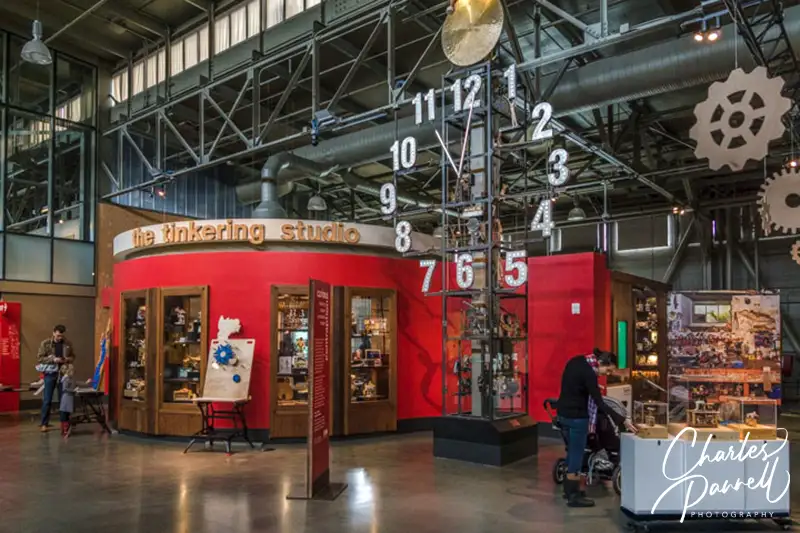
Exhibits range from those on the science of sharing and tinkering, to some that focus on the mechanics of vision, sound and hearing, with a little bit of everything else in between. And don’t miss the Bay Observatory Terrace — which features elevator access — for a splendid view of San Francisco Bay.
Additionally, the Sea Glass Restaurant, located at the east end of the museum, makes a nice lunch stop. It’s not frequented by the school groups, so it provides a quiet respite from the museum hubbub. It offers a lovely ocean view, has good pathway access, and the menu includes a nice selection of sushi, salads, hot dishes and sandwiches.
Stroll to the Ferry Building
Ferry Building on the Embarcadero in San Francisco
Last but certainly not least on this San Francisco in a wheelchair itinerary is the Ferry Building, which is a short stroll from the Exploratorium. But first, a short detour is in order — just follow the Public Shore signs at Pier 17 next to the Exploratorium. This accessible path leads around the back of the Exploratorium to the bay, and features a number of interactive Exploratorium exhibits along the way. It’s just a short half-mile walk on a level sidewalk, but the bay view is definitely worth the detour.
Once you return to the Embarcadero, you can either turn left and follow the sidewalk along the street, or look for the Public Shore signs and opt for the scenic route along the bay. Either way is accessible, and soon you’ll find yourself at the historic Ferry Building (www.ferrybuildingmarketplace.com).
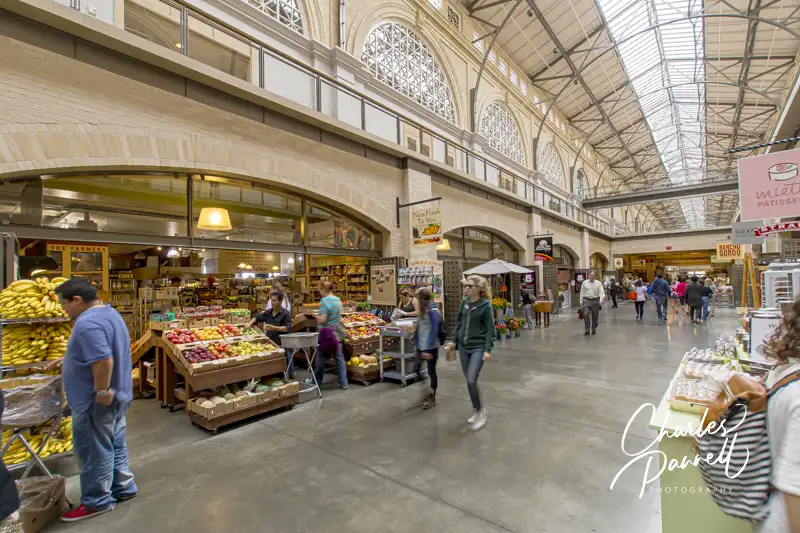
Opened in 1898, the Ferry Building was once a transportation hub for passengers arriving in San Francisco by train and ferry. Sadly with the development of local roadways and bridges, the popularity of the Ferry Building fell off in the 1950s. It was subsequently gutted and converted to office space. The building was later renovated to its prior glory some 50 years down the road, and it reopened in 2003 as The Ferry Building Marketplace. Today it houses a mouth-watering collection of tenants who offer everything from coffee, biscuits and cheese, to mushrooms, chocolate and even wine. Add in some locally sourced restaurants and a few specialty shops, and you have a complete gastronomic marketplace.
Access inside this historic building is good too, with barrier-free access to all the vendors, and spacious accessible restrooms on site. Take your time and wander through the building — sample some cheese, have a cup of coffee and admire the beautifully restored interior.
Inside the Ferry Building on the Embarcadero in San Francisco
Spend the Night
And when you’re ready to call it a day, the Embarcadero BART station is just a short level walk across the street from the Ferry Building. Alternatively, if you’d like to spend the night, the Parc 55 (https://www.hilton.com/en/hotels/sfosfhh-parc-55-san-francisco) is an excellent lodging choice. Located near the Powell Street BART Station, this 1024-room property has all the required business and conference amenities, but the overall layout and design conjures up a decidedly boutique hotel ambiance.
The accessible entrance to the property is located near the valet station, with elevator access up to the second-floor lobby. There’s good pathway access around the lobby and plenty of room to maneuver a wheelchair in the open floorplan. The hotel is also equipped with smart elevators, which eliminate congestion. Guests simply enter their destination floor on the keypad outside the elevator, and they are directed to the appropriate car. And no congestion means other guests don’t crowd in front of wheelchair-users.
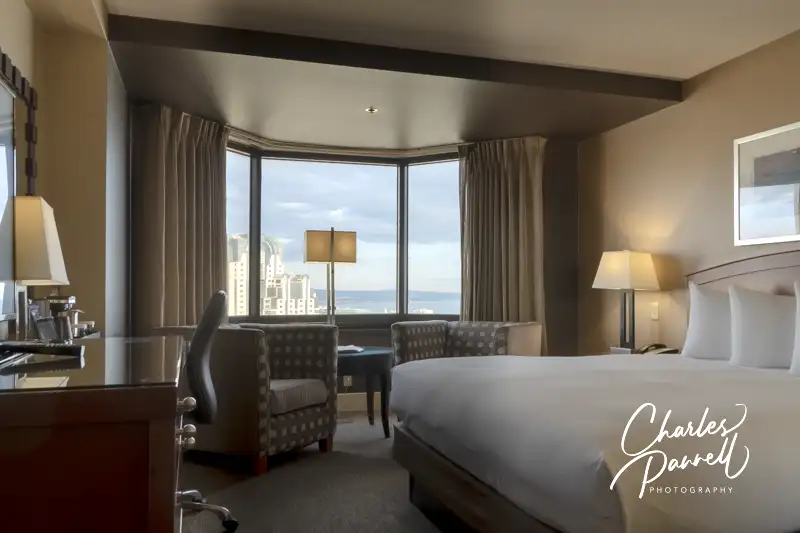
Room 2911 is one of 28 accessible rooms at the Parc 55. Access features include wide doors, lever handles, good pathway access, a lowered closet rod and low-pile carpet for easy rolling. It’s furnished with a 26-inch high king-sized bed, a desk with a chair, a chest of drawers, and a refrigerator. It also includes two easy chairs tucked away in an atrium-like alcove, that offers an impressive city view.
Room 2911 at the Parc 55 Hotel in San Francisco
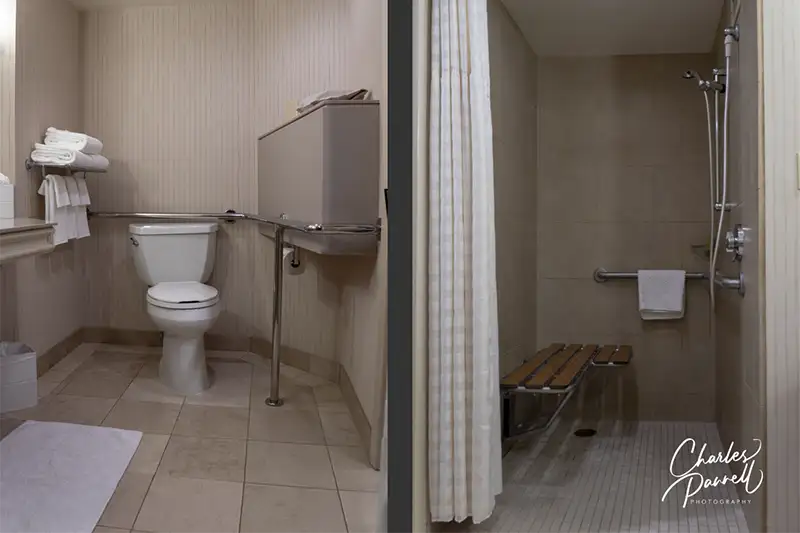
There’s a wide pocket door that leads into the bathroom, which is equipped with a roll-in shower with grab bars, a hand-held showerhead and a fold-down shower bench. Other access features include a roll-under sink, and a toilet with grab bars on the back and left walls (as seated).
Bathroom in room 2911 at the Parc 55 Hotel in San Francisco
It’s a pleasant — and very accessible — place to spend the night, and a fitting inclusion on any San Francisco in a wheelchair itinerary.
Barrier-Free Travel California National Park Road Trips for Wheelchair-Users and Slow Walkers
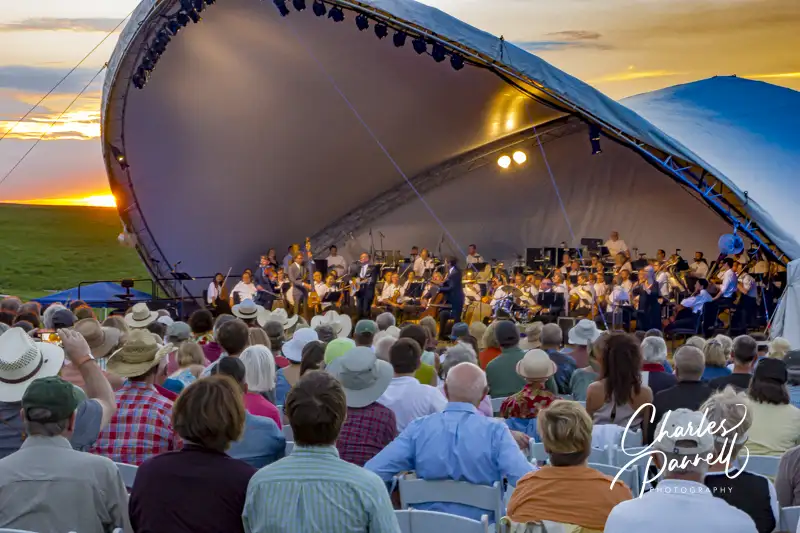
Tickets are now available for the 2025 Symphony in the Flint Hills, which is slated for Saturday June 14, 2025. A eclectic mixture of classical music and cowboy culture, this day-long event celebrates the history, ecology and culture of the last stand of native tallgrass prairie. This years concert will be held at the Evans Family Ranch in Chase County, Kansas. Although the venue changes yearly, great care is always taken to insure this popular event is accessible to wheelchair-users and slow walkers.
Wheelchair Access at 2025 Symphony in the Flint Hills
The Evans Family Ranch is large, and the concert site is located a good distance from the ticket gate. That said, accessible parking will be available to anyone who has a placard, and there will be limited golf cart transportation to the front gate for folks who cannot manage the walk. A special entrance lane will be designated for disabled patrons, where wristbands that allow access to accessible seating and transportation will be available.
Most attendees walk over the rock and dirt covered prairie to the concert site; however accommodations will be in place for folks who can’t manage the walk. A lift-equipped shuttle bus will transport wheelchair-users and slow walkers to the concert site. From there, a separate shuttle will be available to transfer folks with special assistance wristbands between the waiting area, the Patron Tent and the ADA concert area. Accessible porta-potties will also be located throughout the venue.
The Grand Finale
Now in its 20th year, the Symphony in the Flint Hills will celebrate its Grand Finale in 2025. Says Mary Ice, Board Chair of Symphony in the Flint Hills, “This 20th anniversary represents a moment to reflect on how far we’ve come, and the many possibilities ahead for sharing our mission.”
Gates will open at 1 PM. During the afternoon, lectures and activities will be presented in the tents near the concert site. There will be level access to all tents, where you’ll also find a silent art auction, adult libations, and a scrumptious BBQ dinner with all the trimmings. The sunset concert is the highlight of the day, but plan to arrive in the early afternoon so you can enjoy the other activities.
You’ll never forget the experience of listening to the music of the Kansas City Symphony Orchestra set against the backdrop of the tallgrass prairie. As the sun sets, cowboys appear on horseback on the horizon, and then slowly make their way down to the stage area. And when the show nears an end they ride off into the distance. It’s probably the only symphony performance where you’ll feel comfortable in blue jeans and cowboy boots.
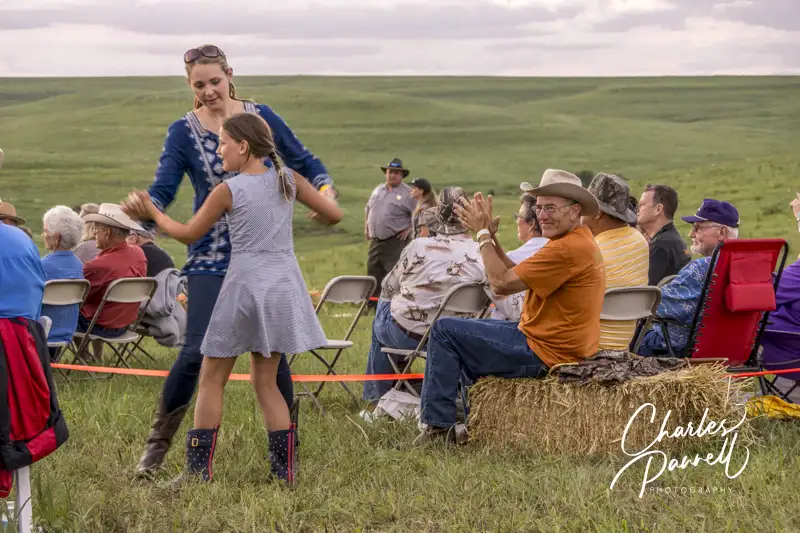
And in keeping with tradition, the performance concludes with a rousing sing along of Home on the Range. Afterwards, guests are welcome to linger on and enjoy the night sky, or maybe listen in on the story circle, or indulge in a little dancing. Whatever you choice, you’ll have a full day of fun on the beautiful Kansas prairie.
Advance tickets are required for the 2025 Symphony in the Flint Hills, and they can be purchased at symphonyintheflinthills.org. Plan ahead though as tickets go like hotcakes, and this popular event always sells out.
Barrier-Free Travel 22 Accessible Road Trips for Wheelers and Slow Walkers
Located near the Canadian border, Voyageurs National Park (www.nps.gov/voya/) was named for the Canadian oarsmen who once navigated the nearby waterways with beaver pelts in tow, on their way to the remote northern trading posts. Largely undeveloped, this secluded national park has a wide variety of natural environments, from hardwood forests and marshes, to rocky outcroppings and pristine lakeshores. The good news is, that even though there are physical obstacles in some areas, it’s still possible to enjoy a wheelchair-accessible Voyageurs National Park getaway.
A Wheelchair-Accessible Voyageurs National Park Cruise
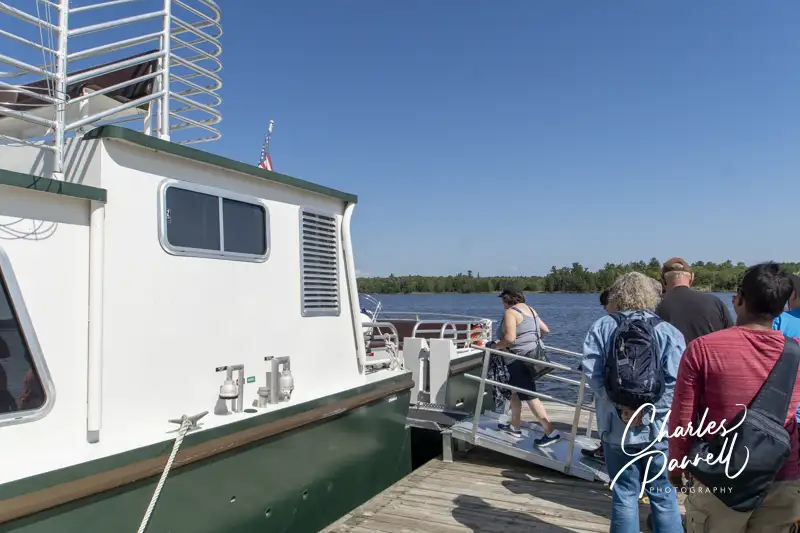
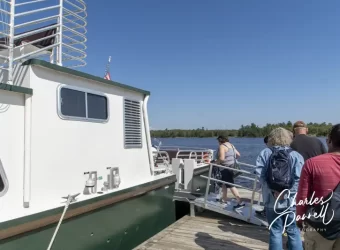
Boarding the cruise boat at Voyageurs National Park, Michigan
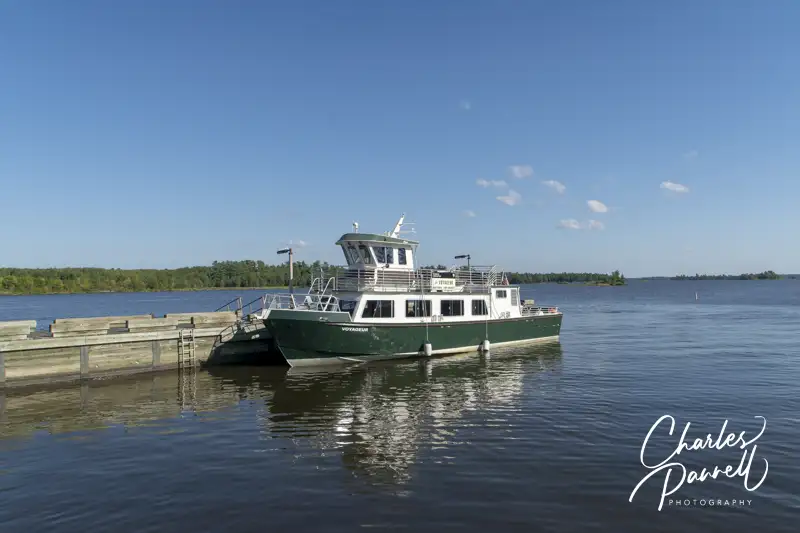
Since 40% of the park is composed of water, a good way to see Voyageurs National Park is on a cruise. And although there are several day cruise choices, the Grand Tour, is the best option for wheelchair-users and slow walkers.
This cruise departs from Rainy Lake Visitor Center. Accessible parking is available at the visitor center, with ramp access up to the front door. Inside there’s plenty of room to maneuver a wheelchair around the ticket counter, ranger information desk, gift shop and interpretive exhibits. There’s also barrier-free access to the theater, where a film about the park is shown. Accessible restrooms are located at the far end of the building, and there’s level access to the back deck, which is outfitted with several standard picnic tables.
The dock is located behind the visitor center, at the end of a short level path. There’s ramp access up to the first deck of the boat, but only stairway access to the top deck. Still you get a great view from below as large picture windows line both sides of the boat. There’s also a large accessible head (restroom) on the lower deck.
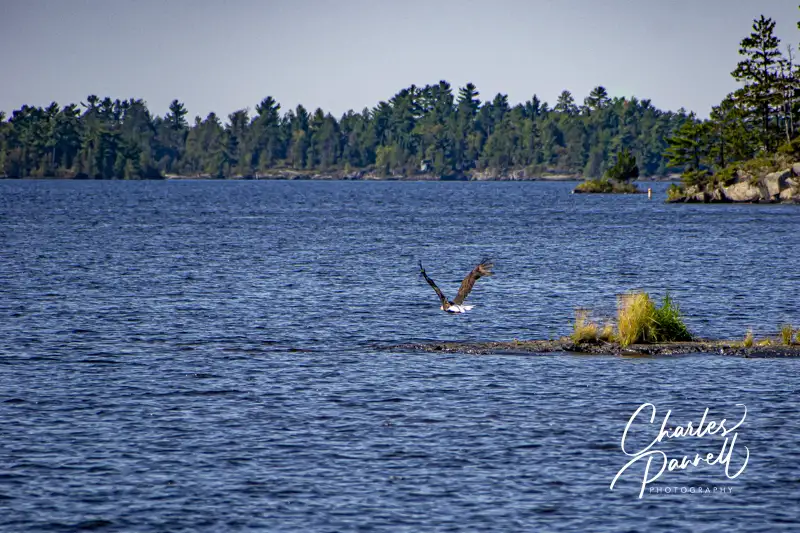
The 2.5-hour cruise includes lots of wildlife viewing, as the captain cruises close to the shore near bald eagle nests. There’s also a short stop on Little America Island, where gold was discovered in the 1890s. There’s one step down from the boat, and although most of the quarter-mile crushed gravel trail is wide and level, there is a steep section near the end. That said, if you’d like to sit out the short hike, shaded benches are available near the dock.
The Ethnobotanical Garden Trail at Voyageurs National Park
Another way to enjoy a slice of wheelchair-accessible Voyageurs National park is to take a hike on one of several accessible trails. The Ethnobotanical Garden Trail, which is just a quarter-mile long, is the shortest accessible trail in the park. This hard-packed dirt trail is located between the Rainy Lake Visitor Center and the dock, so it’s a good post-cruise option. This pleasant trail, which is lined with native plants, has a few undulations, but for the most part is fairly level. Best of all, there are several shady nooks along the route, which offer a welcome respite from the midday sun.
The longer Rainy Lake Recreation Trail begins across the street from the visitor center. This 1.7-mile paved multiuse trail parallels County Road 96, and connects to the bicycle trail at the intersection of Highway 11. From there it’s about a 10-mile hike to International Falls. That said, you can get a perfectly lovely view of Rainy Lake from the quarter-mile point, so give it a try even if you can’t do the whole length.
The final accessible trail is located just south of the Ash River Visitor Center on Kabetogama Lake. There’s accessible parking in the small lot, with barrier-free access to the hard-packed dirt trail that leads out to the Kabetogama Lake Overlook. This undulating trail has plenty of level patches, and there are several benches to sit and rest along the way. It’s a beautiful northwoods jaunt along a fern-lined route, and it just a .3-mile round trip hike. You just can’t beat the serene lake view at the overlook; and as an added bonus the drive along County Road 129 out to the trailhead is quite scenic. It’s the perfect way to top off a wheelchair-accessible Voyageurs National Park visit.
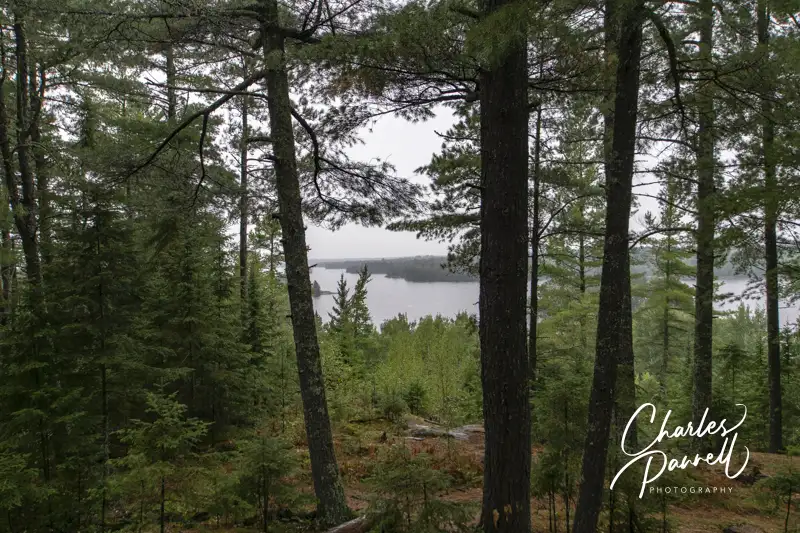
View from Kabetogama Lake Overlook at Voyageurs National Park
Once the headquarters of the Santa Fe Railway, Las Vegas, New Mexico has undergone a cultural rebirth. After the railway offices relocated from Las Vegas to Albuquerque in 2007, merchants moved away, and businesses suffered. Soon shuttered buildings lined the streets, while grand old gems fell into disrepair.
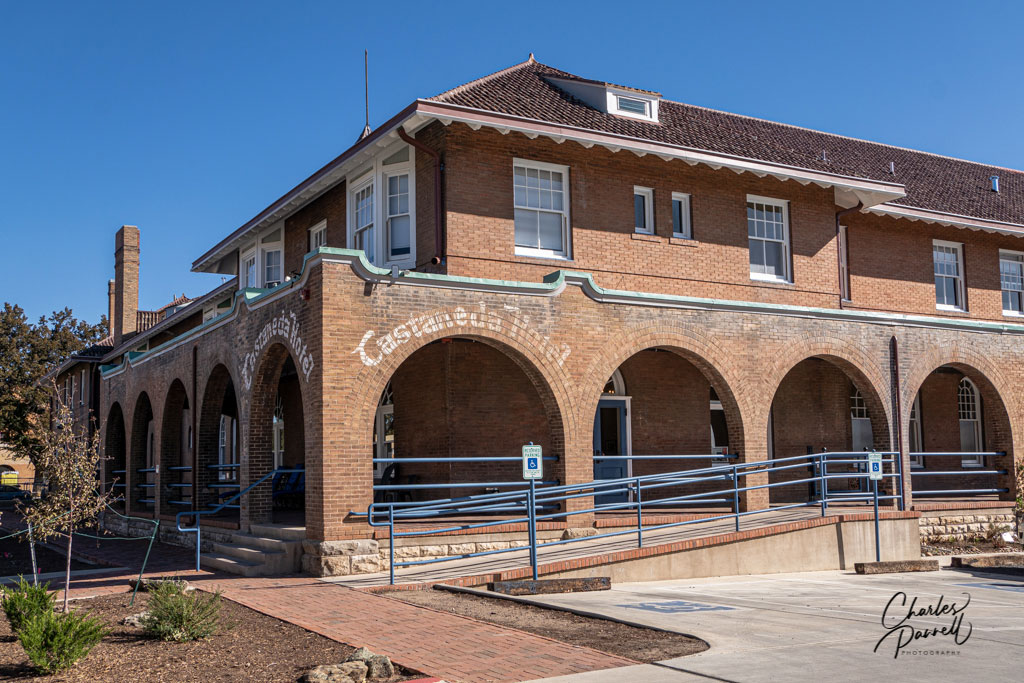
Then in 2014 local developer Allan Affeldt purchased two deteriorated properties — the Plaza Hotel and the Castaneda Hotel. His talented team quickly set to work to restore the properties, and soon other businesses jumped on the restoration bandwagon. As a result, today Las Vegas is the perfect road trip stop for anyone interested in railway history, the Santa Fe Trail, or the old west. And thanks to the inclusive thinking of Affeldt’s design team, wheelchair-users and slow walkers can also explore this historic railroad town.
Railroad History 101
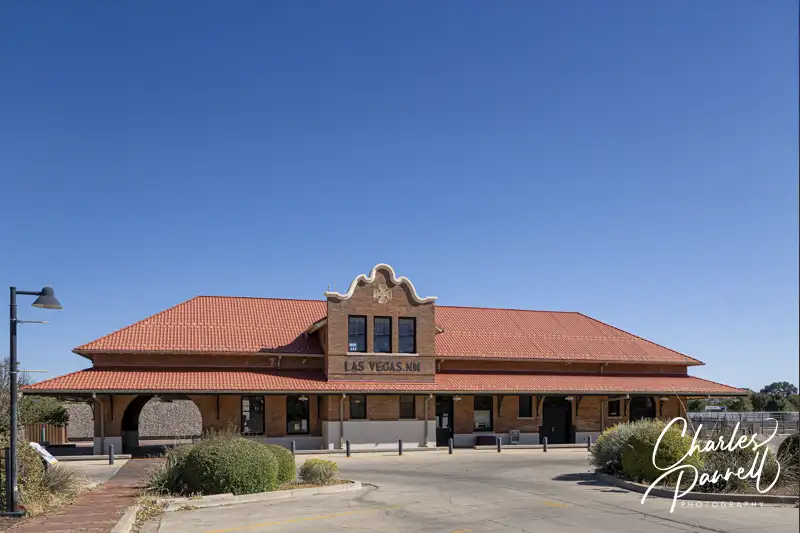
The best place to begin a Las Vegas, New Mexico visit is at the historic train depot. Constructed in 1899 the current red brick building replaces the former 1881 wood structure. In 2000 the depot underwent a complete rehabilitation as part of a $1.2 million project; and it was subsequently featured the movie, All the Pretty Horses.
In addition to the Amtrak waiting room, the depot also houses a visitor information center. There’s accessible parking in front, with barrier-free access to the depot. Take some time to look around the trackside of the building after checking out the restored interior. Then pick up a map and head out to explore the city.
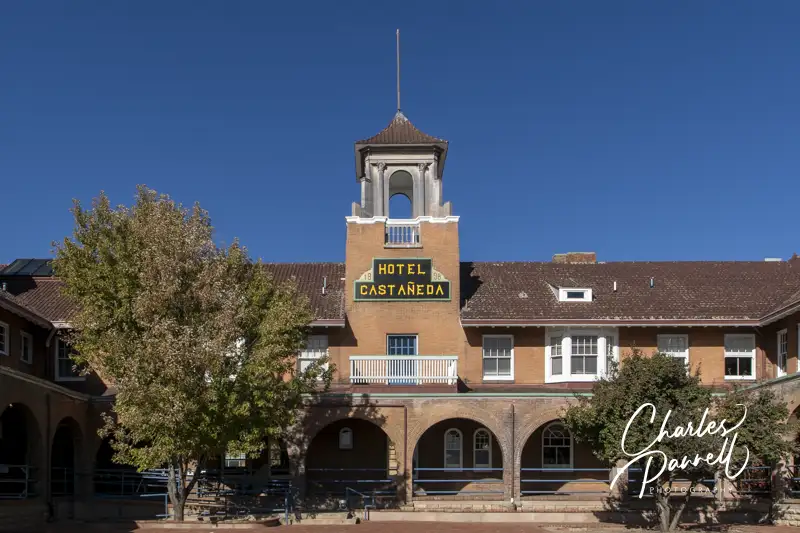
Before you hop back in your car, follow the brick walkway on the trackside of the depot over to the Castaneda Hotel (emerginghorizons.com/the-castaneda-hotel-a-wheelchair-accessible-harvey-house/) next door. From there an accessible pathway winds around to the side, where there’s ramp access up to this renovated 1898 Harvey House. Even if you don’t spend the night, take some time to explore the stately lobby, or stop in to have a drink at the bar. Train buffs will also want to consult the Amtrak schedule, as the Southwest Chief still stops in Las Vegas, New Mexico twice daily.
The Castaneda Hotel In Las Vegas, New Mexico
Don’t miss the restored Rawlins Building, which is located across the street from the Castaneda Hotel. Once a Harvey Girls dormitory, this 1898 gem now houses upstairs apartments and a downstairs retail space. And the outside of the building boasts an impressive restored Mesker sheet metal facade.
A Blast From the Past
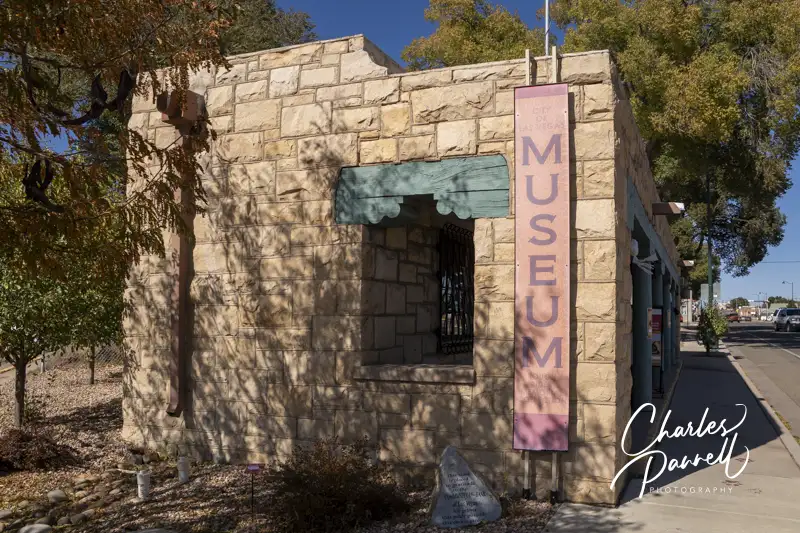
City of Las Vegas Museum and Rough Rider Memorial Collection
For a good primer on the background and lifestyle of some of Las Vegas’ more colorful settlers, stop in at the City of Las Vegas Museum and Rough Rider Memorial Collection (www.visitlasvegasnm.com/things-to-do/rough-rider-museum/), which is just a short drive from the Castaneda Hotel. Accessible parking is located on the side of the building, with barrier-free access to the front door of this 1940 Works Progress Administration Project building.
Inside there’s plenty of room to maneuver a wheelchair or scooter around the downstairs galleries, which contain exhibits about the city’s past and present residents. From old WWII gear, a model of a typical Northern New Mexican adobe home, to information on the Santa Fe Trail and even an old 1855 bell that once hung in the chapel of La Conception, there’s something for just about everyone in this hometown museum. Top it off with a collection of vintage hats, quilts and fashions, and you have a comprehensive look at Las Vegas of yesteryear.
One of the most interesting galleries in the museum features gear, photographs and documents of Theodore Roosevelt’s 1st US Voluntary Calvary Regiment, also known as the Rough Riders. The collection includes items from the Cuban Campaign of the 1898 Spanish-American War, as well as the first reunion of the unit, which was held in 1899 in Las Vegas. Interestingly enough, Roosevelt was one of the first guests at the newly constructed Castaneda Hotel at that reunion. And don’t miss the touching hand-written letter from Eleanor Roosevelt to the last surviving member of the unit.
Explore the Plaza
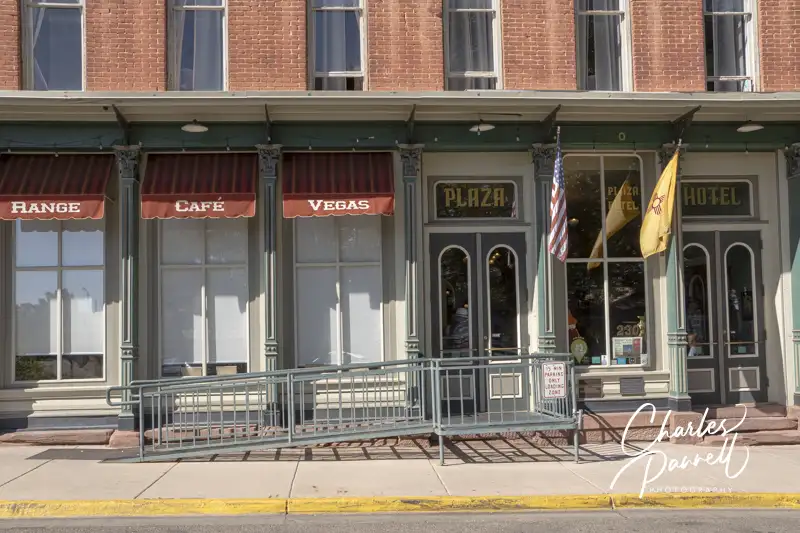
Front entry to the Plaza Hotel in Las Vegas, New Mexico
Last but certainly not least, no Las Vegas visit is complete without a stop at historic Plaza Park. Located just a few miles from the Castaneda Hotel, the stately Plaza Hotel (www.plazahotellvnm.com) is the cornerstone building in this historic district. Built in 1882 by land baron Benigno Romero and associates, it was one of the fanciest hotels in the Southwest. Overlooking Plaza Park, the three-story brick structure sports 14-foot ceilings, while fanciful scrolls adorn the plaza-side windows. Although the property was operational when Affeldt purchased it, he preformed needed repairs, added upgrades and expanded the hotel to the adjacent Charles Ilfeld Building.
Take some time to explore the main-floor lobby and public areas of this historic structure, which now has ramp access up to the front door. There’s plenty of room to maneuver a wheelchair or scooter around the lobby area; and an accessible family restroom is located near the gift shop. Don’t miss the massive walnut staircase that dominates the lobby, which was where Javier Bardem cornered Woody Harrelson in the 2007 flick No Country for Old Men.
There’s also barrier-free access to The Prairie Hill Cafe, which is located in the hotel. Open for lunch and dinner, the restaurant features a menu filled with local flavor. Alternatively if you’d like to enjoy an adult beverage, stop by the equally accessible Byron T’s Saloon on the lobby level.
Save some time for a stroll through Plaza Park, which is just across the street from the hotel. Accessible sidewalks crisscross the park, and there are a number of benches to sit and enjoy the ambiance. There are also a few sculptures and a gazebo located in the park. Not only is it a grand people-watching venue, but it’s also a very relaxing way to top off a historic Las Vegas, New Mexico visit.
Barrier-Free Travel
Utah National Parks for Wheelchair-users and Slow Walkers
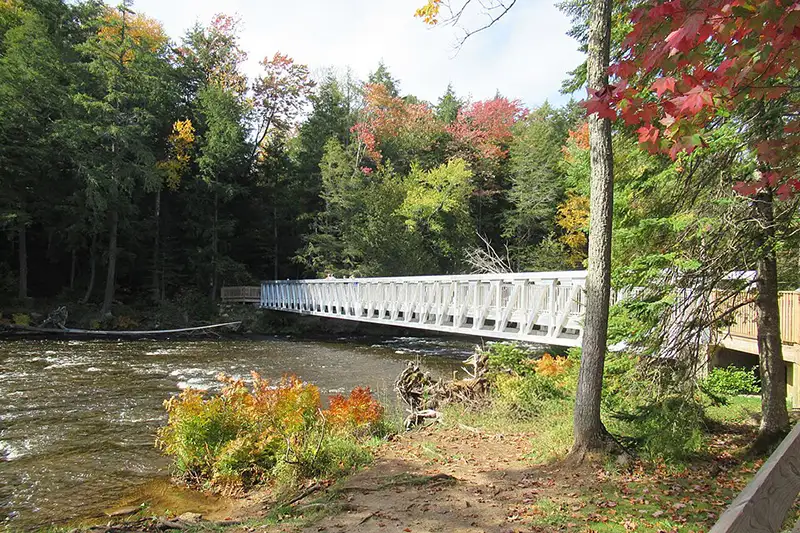
Ronald A. Olson Island Bridge at Tahquamenon Falls State Park
There’s good news for wheelchair-users and slow walkers in Michigan — loaner track chairs are now available at many state park and recreation areas. Track chairs allow people with reduced mobility the freedom to explore places that are otherwise inaccessible to them. These off road wheelchairs have tank tracks instead of wheels, and can easily navigate over sand, rough surfaces and even snow. They also come with a big price tag; but thanks to a massive fundraising effort, loaner track chairs are now available at many Michigan outdoor spaces
The following organizations were instrumental in making these Michigan track chairs a reality.
Grand Haven Area Community Foundation (ghacf.org/)
Where to find Michigan Track Chairs
The loaner track chairs are available at the following Michigan state parks and recreation areas. Each venue has different rules, regulations and hours, so check in advance to avoid disappointment. And keep in mind that some locations also require reservations to borrow the track chairs.
Bald Mountain Recreation Area
Bay City State Park
Brighton Recreation Area
Grand Haven State Park
Harrisville State Park
Hartwick Pines State Park
Lake Hudson Recreation Area
Leelanau State Park
Petosky State Park
Wilson State Park
Holland State Park
Ionia Recreation Area
Island Lake Recreation Area
Ludington State Park
Maybury State Park
Muskegon Recreation Area
North Higgins Lake State Park
Tahquamenon Falls State Park
Warren Dunes State Park
Waterloo Recreation Area
Wilderness State Park
If you didn’t find your favorite Michigan state park or recreation area on the list, don’t worry as this popular program is constantly expanding. New venues for loaner Michigan track chairs are being added as funding becomes available. Visit www.michigan.gov/dnr/about/accessibility/track-chairs to check for the latest additions.
‘
Barrier-Free Travel Glacier, Yellowstone and Grand Teton National Parks for Wheelchair-Users and Slow Walkers
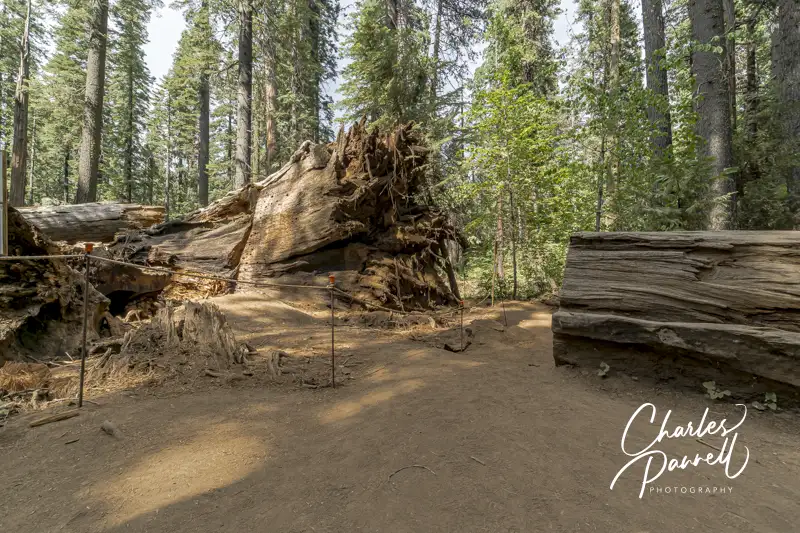
The fallen Pioneer Cabin Tunnel Tree in Calaveras Big Trees State Park
Make no mistake about it, California can have some brutal winters. Take 2017, for example. Between a record rainfall, mudslides and a late season snow it was definitely a challenge for many mountain communities. And unfortunately there were a few causalities, such as the loss of the Pioneer Cabin “tunnel tree” at Calaveras Big Trees State Park (www.parks.ca.gov/?page_id=551).
Sadly this giant sequoia was uprooted during a torrential downpour; however after a massive spring cleanup the grove reopened, with traffic routed around the fallen giant. Today the forest has evolved, however this Northern California state park is still worth a visit for a very accessible and intimate look at the remaining giant sequoias. And for a nice wheelchair-accessible place to spend the night, check out the nearby Black Bear Inn (emerginghorizons.com/sleep-near-the-big-trees-in-calaveras-county/) in Arnold.
The Majestic North Grove
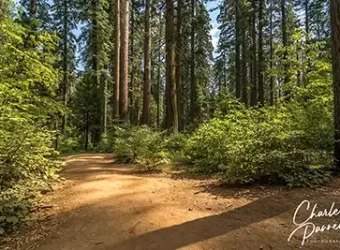
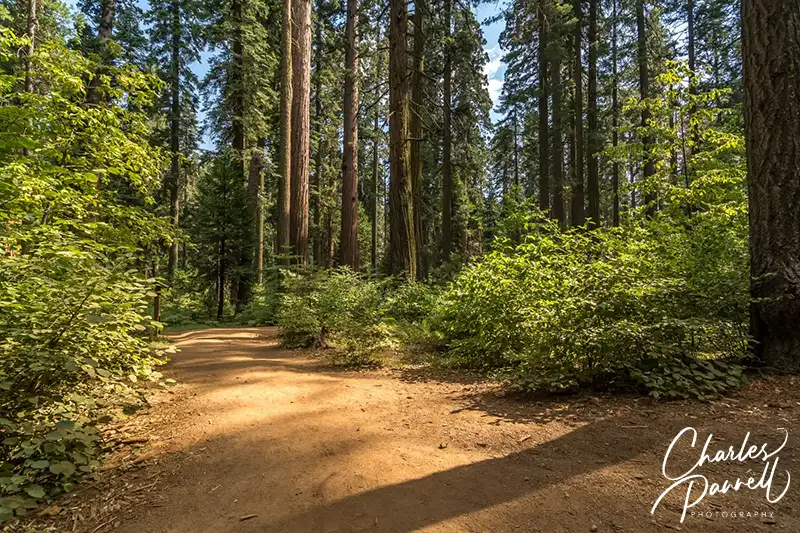
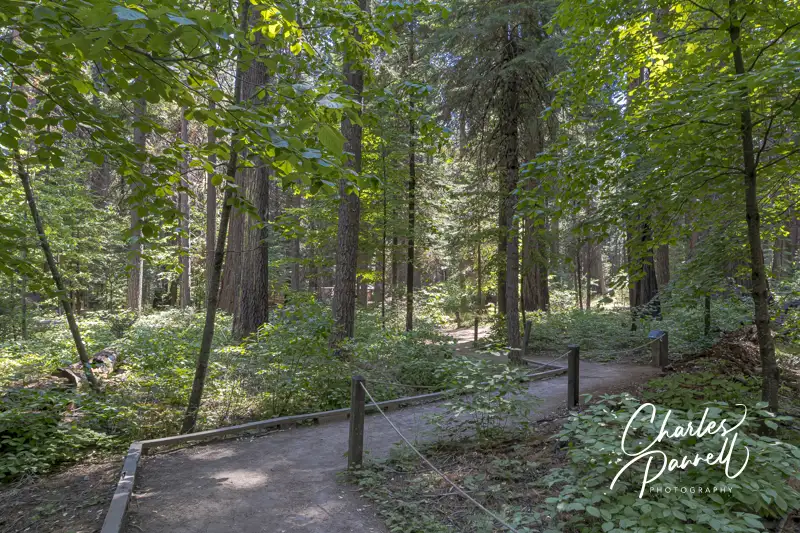
North Grove Trail in Calaveras Big Trees State Park
Although the giant trees are scattered through the park, the North Grove has the most accessible concentration of them. Accessible parking is located near the visitor center, which offers barrier-free access and features a collection of interpretive exhibits. Accessible restrooms with flush toilets are located next to the visitor center.
The trail to the North Grove begins to the left of the visitor center. This hard-packed dirt tail winds around to the right to the Discovery Stump, the official beginning of the grove. This was the site of the first tree that Augustus T. Dowd found in 1852, while he was chasing a wounded grizzly bear. Sadly the tree was felled in 1853, but remnants of it can be found next to the stump.
The Three Senses Trail — which is located just past the Discovery Stump on the left — is also worth a stop. This .13-mile hard-packed dirt trail features interpretive plaques about the native vegetation, and includes benches to sit and rest along the way. And although the trail has a few bumps here and there, it’s still a good choice for most wheelchair-users and slow walkers.
Three Senses Trail in Calaveras Big Trees State Park
The hard-packed dirt North Grove Trail, continues past the Three Senses Trail, and winds around the Empire Tree, the Old Bachelor, the Mother-of-the-Forest and the Father-of-the-Forest. At times the dirt transitions to a level boardwalk, as this 1.7-mile trail snakes past the named and unnamed giants.
Just past the Abraham Lincoln Tree, there’s a detour around a fallen giant and through the remains of the Pioneer Cabin Tree. The fallen tree will remain on the ground to provide nourishment to new trees, and continue the forest cycle. And although the North Grove is accessible, it’s best to visit after the winter debris has been cleared in the early summer.
A Meadow Boardwalk
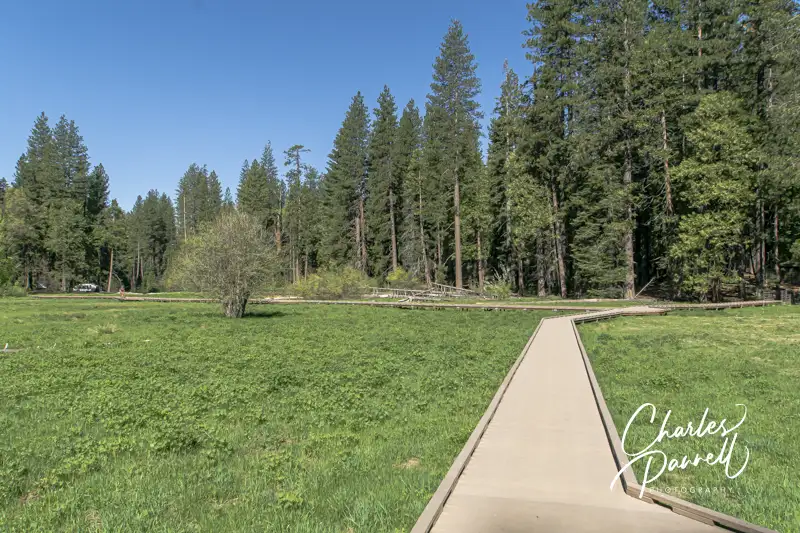
Meadow Boardwalk in Calaveras Big Trees State Park
Although the major focus is on the giant sequoias at Calaveras Big Trees, there’s also a nice accessible boardwalk through a meadow near the North Grove. The meadow itself is surrounded by the North Campground, which is just a short level walk from the visitor center. Follow the park road to the North Grove Campground, and if you hit the dump station, go back as you missed the campground.
Stay on the main campground road, and be on the lookout for accessible campsite 16 on the left. There’s an accessible showerhouse right behind the campsite, and the meadow boardwalk begins on the far side of that building.
There’s level access to this short boardwalk. It’s only .3-mile long, but when the wildflowers are in bloom it’s a sight to see. Lupine and corn lilies fill the meadow in June and July; although peak bloom time is weather dependent. And be on the lookout for Western Tanagers which also frequent the meadow. The boardwalk had low bumpers and no railings so wheelchair-users get an unobstructed view of all of natures beauty. And don’t forget to check at the visitor center to see if there are any wildflower walks scheduled.
The Quieter South Grove
Save some time to explore the South Grove at Calaveras Big Trees. Here you’ll find fewer visitors and the nicely accessible Beaver Creek Trail. It’s easy to find, as it’s near the end of the Walter W. Smith Memorial Parkway, about twenty minutes from the entrance station.
Accessible parking is located near the accessible vault toilet, and there’s level access over to several accessible picnic tables shaded by the surrounding forest. The .7-mile Beaver Creek Trail begins behind the vault toilet. This hard-packed dirt trail follows Beaver Creek, then passes the South Grove parking area, before it loops back to the Beaver Creek picnic area.
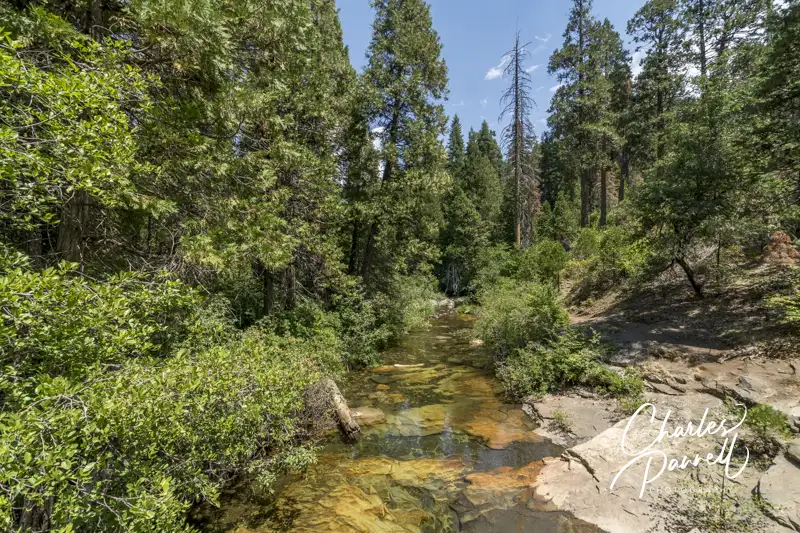
Make sure and stop at Beaver Creek along the trail, which is just .1 mile from the Beaver Creek picnic area. Not only are there some more picnic tables near the creek, but beach mats allow for access right up to the water.
Beaver Creek viewed from the Beaver Creek Trail in Calaveras Big Trees State Park
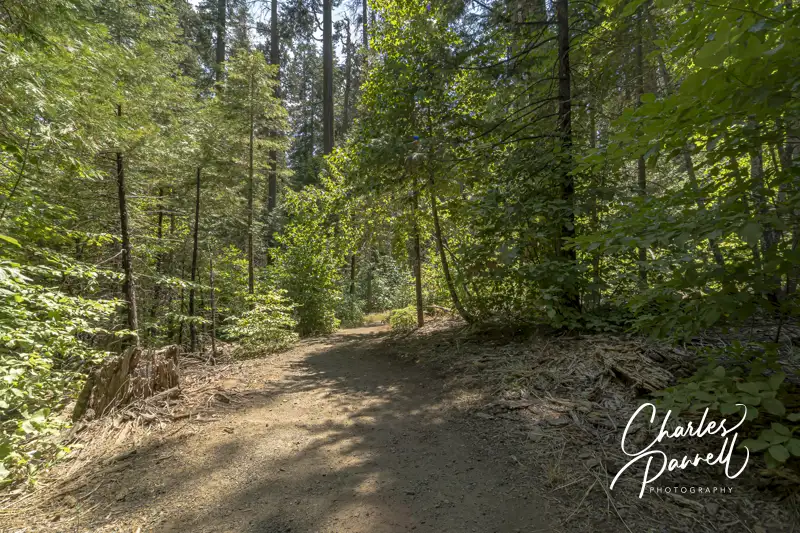
If you want to try a more challenging — yet still accessible — trail, then head on over to the River Picnic Area and try the Stanislaus River Trail. The trailhead for this .35-mile round-trip hike on a hard-packed dirt trail is is next to the parking area. The trail winds downhill to the river, however it still maintains an accessible grade. Make sure and take a good look at the trail in the beginning though, as it’s not flat, and you will have to make your way back up to the parking area.
Stanislaus River Trail in Calaveras Big Trees State Park
You’ll get a nice gander of the river from the end of the trail. It’s also pretty secluded and not frequented by a lot of park visitors. Granted this trail won’t work for everyone, but if you fancy a little workout it’s just what the doctor ordered.
Barrier-Free Travel California National Park Road Trips for Wheelchair-Users and Slow Walkers

 Located in the middle of Lake Superior in Isle Royale National Park, Rock Harbor Lodge (www.rockharborlodge.com/) is probably the most difficult national park lodge to get to, as it’s a six-hour cruise from the mainland. That said the journey over is a scenic adventure itself, and the Ranger III ferry has wheelchair access to the lower deck and an accessible restroom aboard (www.nps.gov/isro/planyourvisit/ranger-iii-info.htm). And once you dock at Isle Royale National Park, you’ll be rewarded with the rugged beauty at this remote retreat. Even though the island itself is rather rustic, Rock Harbor Lodge offers spacious rooms for a comfortable and relaxing Isle Royale wheelchair-accessible retreat.