There’s a certain seductive allure to Sedona. Some folks come for the mystical experience, while others enjoy gallery hopping. And then there’s the scenery. You just can’t beat the red rock formations that literally surround this Northern Arizona enclave. And the good news is, a good chunk Sedona’s red rock beauty is accessible to wheelchair-users and slow walkers.
Red Rock Scenic Byway
One of the best ways to enjoy Sedona’s red rock beauty is to take a drive on the Red Rock Scenic Byway. This popular drive is located off of Interstate 17. Just take exit 298, and once you cross the Dry Beaver Creek bridge, the show begins.
The 7.5 mile scenic drive, which winds through the majestic landscape, is often referred to as a “museum without walls”. As you pass Oak Creek Village, the scenery becomes more dramatic. Bell Rock, one of Sedona’s four vortices, is located just past Oak Creek Village on the right. You can’t miss it. Bell Rock is one of the more accessible red rock formations, as the upper part of Bell Rock Trail is wide, level and made of hard packed dirt. It’s doable for most wheelchair-users, however you can also get a great view of the iconic formation from the parking lot overlook.
Be sure to stop at nearby Courthouse Butte to admire the expansive scenery. And don’t miss the Chapel of the Holy Cross (chapeloftheholycross.com), which is built into the red rock buttes. There’s a few accessible parking spots near the sanctuary, and golf cart transportation is available from the remote parking area. The chapel features ramp access, but some manual wheelchair-users may require assistance because of the pitch. Still it’s worth a stop even if it closed, just for a view of the impressive front facade.
Just up the road, the Red Rock Scenic Byway ends at Highway 89A. All in all it only takes 20 minutes to drive the route, but allow for extra time for lots of photo stops And even though a Red Rock Pass is required for hikers, it’s not required for quick photo stops of 15 minutes or less.
Red Rock State Park
Red Rock State Park (www.azstateparks.com/red-rock), which is located on Highway 89A South is also worth a visit. There are a two accessible trails in the park, but they don’t offer much shade, so it’s best to go early in the day.
Accessible parking is located near the visitor center, with ramp access down to the building. Inside there’s plenty of room to maneuver a wheelchair around the gift shop, ranger information desk and interpretive exhibits. Accessible restrooms are located near the front door, and there’s also level access to the theater and classroom next door. And don’t miss the hummingbird garden on the back patio.
The accessible Mesquite Interpretive Loop begins near the parking lot. This short trail features a paved level pathway around garden filled with native plants. There’s a shaded picnic area with accessible tables near the trail; and there’s also a shade structure located in the middle of this quarter-mile trail.
The longer Bunkhouse Trail begins behind the visitor center. Although you can access it from the parking lot, that pathway has a steep grade. Alternatively, there’s level access to the trail from the hummingbird garden. The paved trail is fairly level, although there’s a bit of a grade in the beginning. Power wheelchair-users won’t have a problem, but some manual wheelchair-users may require assistance. There are also some cracks along the paved trail, but other than that it’s fairly smooth rolling.
At about the .2-mile mark there’s an accessible hard-packed dirt trail down to the Kingfisher Bridge, which provides a pleasant — and shaded — view of Oak Creek. From there a hard-packed dirt path follows the creek for another .2 mile before the trail loses its access. All in all it’s a pleasant mile-long out-and-back hike.
Slide Rock State Park
Finally, if you’d like to hit a local favorite, head on over to Slide Rock State Park (www.azstateparks.com/slide-rock). It’s located 20 minutes north of Red Rock State Park on Highway 89A. This park provides access to Oak Creek, and it takes its name from the rocks that many folks use as slides to get into the water.
Unfortunately the path down to the creek is not accessible, but there is a short trail that offers a scenic overlook of the canyon. That said, the admission is pretty steep ($20 to $30 per car, depending on the season) for just that trail; however if you have an Arizona State Park Pass, this park makes a nice lunch stop.
There’s accessible parking near the shaded picnic area — which has several accessible tables — and barrier-free access over to the Pendley Homestead Trail. This paved level trail leads past a small store, and by a display of vintage farming equipment, over to the old homestead which features a tractor display in the adjacent barn.
The trail then connects with the Cliff Top Trail which has a 75-foot paved path out to an accessible overlook that offers an expansive view of Oak Creek Canyon. All in all it’s about a quarter-mile round trip, and it makes for a nice stroll before of after lunch. And if you’d prefer to skip the hike, this piece of Sedona’s red rock beauty is easily visible from the the picnic area.
Barrier-Free Travel the Grand Canyon for Wheelchair-users and Slow Walkers
Billed as “a place of reflection”, the Little Bighorn Battlefield (www.nps.gov/libi/index.htm) makes a good stop on a Southern Montana road trip. Although the fate of Lt. Colonel Custer’s 7th Calvary gets the lion’s share of space in the history books, this national monument gives equal time to the Crow and Arikara scouts that helped Custer, as well as the Cheyenne, Arapaho and Lakota warriors who opposed him. Located off Interstate 90 in Broadus, not only is this stop a good place to learn about the history of the area, but it also boasts some impressive scenery and it’s a fitting memorial to both the US troops and the Plains tribes involved in the historic battle.
A Little History
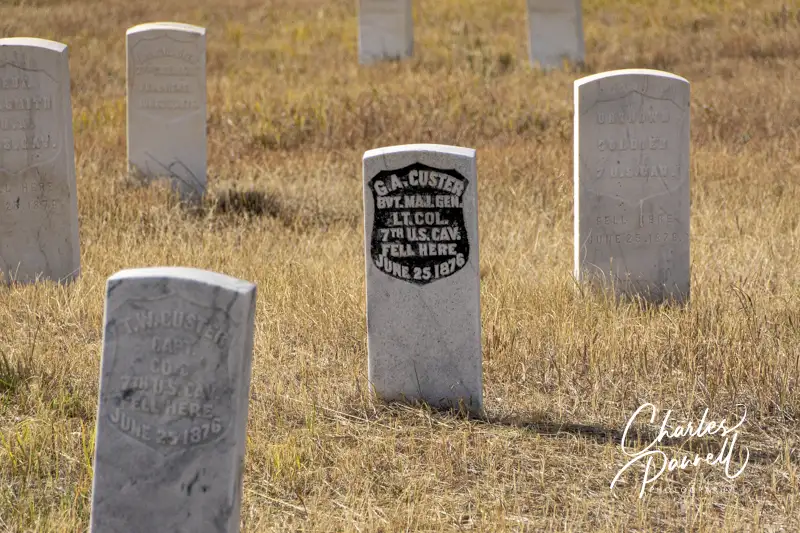
General Custer’s Battlefield Marker
The tensions between the US Army and the Plains tribes technically began in 1868, with the Treaty of Fort Laramie. This document created a large reservation for the Lakota in the Black Hills of South Dakota. That said, some Lakota leaders, including Sitting Bull and Crazy Horse rejected the reservation model, refused to sign the treaty and continued to hunt outside the boundaries of the reservation.
Tensions escalated in 1874 when Custer was dispatched to the area to locate a site inside the reservation for a military post, and to make note of the natural resources in the region. Geologists discovered gold deposits and when word spread of this discovery, miners descended on the Black Hills. This was not taken kindly by the Plains Indians, as it encroached on their hunting land. The US subsequently tried to purchase the land, and when that attempt failed, they ordered the Indians out of the area. That ultimatum was subsequently ignored.
Custer was later dispatched to flank a Lakota, Cheyenne and Arapaho hunting village, and drive the Indians north into the hands of awaiting troops. Custer’s original plan was to attack at dawn on June 25; however when his presence was discovered he was forced to advance immediately. And since the element of surprise was lost, the Battle of the Little Bighorn was a victory for the Plains Indians. During the next year the remaining “hostiles” were hunted down by the US Army, and their land was taken without any compensation.
Custer National Cemetery
Custer Memorial Cemetery at Little Bighorn Battlefield National Monument
The visitor center at the Little Bighorn Battlefield National Monument details the events that led to the historic battle. It also includes an account of the battle, as well as examples of the weapons used by both sides. There’s plenty of accessible parking near the entrance to the visitor center, and barrier-free pathways inside. A short orientation film is shown throughout the day in the wheelchair-accessible theater.
There’s level access to Custer National Cemetery, which is located next to the visitor center. That said, although the pathways through the cemetery are paved, some are level and some are undulating. There are plenty of benches to sit and rest along the way, and there’s also a loaner wheelchair available at the visitor center for folks who can’t do distances.
Last Stand Hill is visible from the back of the visitor center; however the path up to it is too steep for wheelchair-users. Alternatively, you can drive up there. Accessible parking is located near the 7th Calvary Memorial Monument, where the remains of Custer’s soldiers are interred in a mass grave. Custer’s remains are now interred at the US Military Academy at West Point, where Custer graduated in 1861.
Save some time for the 4.5-mile auto tour through the battlefield. There are several pullouts with interpretive panels along the way. There’s also a free cell phone tour available at www.nps.gov/libi/planyourvisit/cell-phone-audio-tour.htm. Not only will the drive give you an appreciation for the expanse of the battlefield, but the white markers that show where the fallen soldiers were found are rather sobering.
Indian Memorial
Indian Memorial at Little Bighorn Battlefield Memorial
The Indian Memorial at the Little Bighorn Battlefield, was erected to honor Native American participants in the conflict. To get there, take the left trail in back of the visitor center for about 200 yards and cross the street. From there, a dirt trail winds around to the niche that contains the memorial. The undulating trail has level resting spots every 50 feet, but some manual wheelchair-users may require assistance to get to the monument.
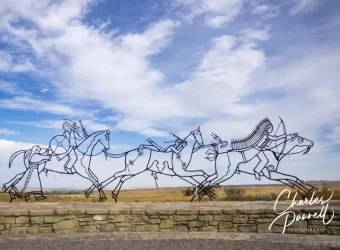
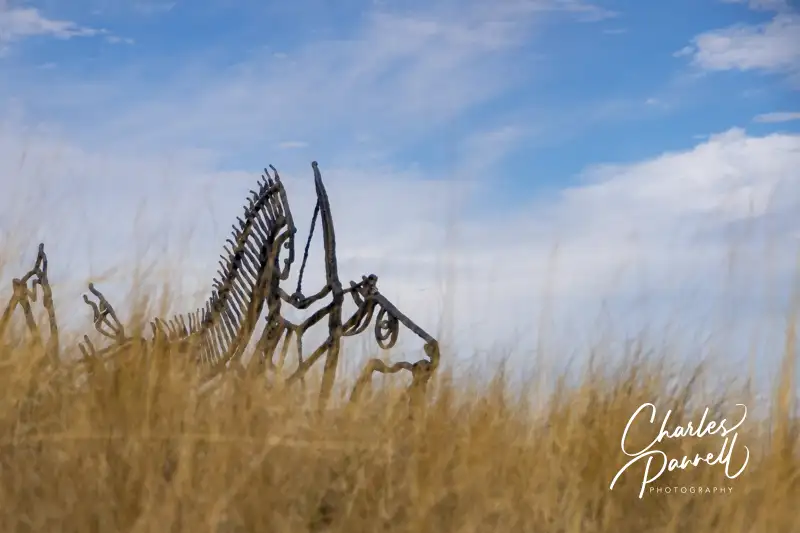
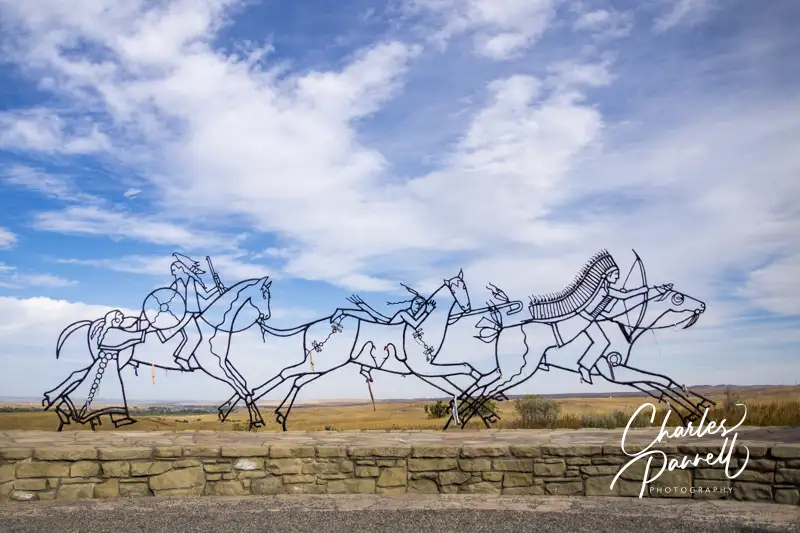
The granite panels of the monument include the names of the Arikara, Apsaalooke, Arapaho, Cheyenne and Oayate warriors who participated in the Battle of the Little Bighorn. The theme of the memorial is “Peace Through Unity”, and it acknowledges the need for cooperation between tribal governments and the federal government. There’s also a bronze sculpture of three spirit warriors riding off to battle next to the granite monument.
The placement of the monument is also significant. The Spirit Gate — a narrow opening in the monument — faces Last Stand Hill. This gate acts as a passage to the afterlife for Custer’s men that are buried on Last Stand Hill. It’s meant to represent the mutual respect between Native Americans and the US government, that has evolved over the years. It also helps reinforce the “Peace Through Unity” theme of the Little Bighorn Battlefield memorial.
Barrier-Free Travel
Utah National Parks for Wheelchair-users and Slow Walkers
In days of yore, visitors would flock to Yosemite on summer evenings to witness the splendor of the Yosemite Firefall. A naturalist’s nightmare in this day and age, the 1960s firefall was created by park concessionaires tossing a burning rubbish pile off of Glacier Point. And to the delighted crowd gathered below, it appeared as if a fire waterfall was tumbling down over the rock face. For obvious reasons this ritual is no longer performed.
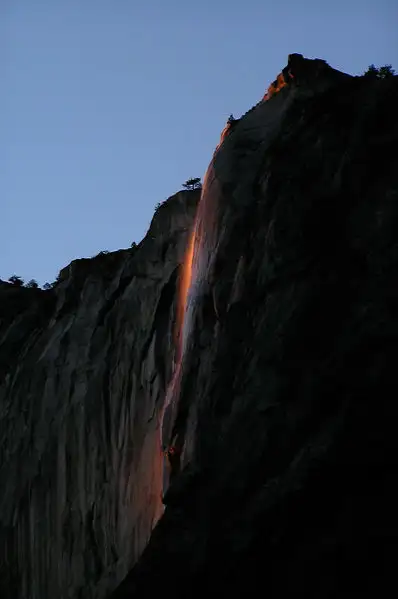
That said, today park visitors can experience a more natural — and just as spectacular — version of a firefall at Horsetail Fall. Every February when this waterfall is backlit near sunset, a vibrant orange glow emanates and mimics the appearance of a waterfall on fire — minus the rubbish pile. And although conditions have to be just right to witness this natural phenomenon, the firefall attracts visitors in droves for the possible opportunity. Of course whenever there are crowds, there are also rules and regulations. So here’s what you need to know — including where to find the accessible viewing areas — to experience the Horsetail Fall lightshow.
Yosemite Firefall Basics
There are several basic requirements for a good Yosemite Firefall. First and foremost you have to have water. A good fall rainfall is helpful for a robust firefall. And Central California has certainly had its share of rain this year!
Second, you need clear skies so the sun can reflect off the granite behind the waterfall. And although this is up to Mother Nature, it also helps to keep an eye on the weather. If it’s overcast, cloudy or foggy, it will probably be a no-go. Of course you have to hit it at the right time of day — sunset — for an optimum firefall experience. The days for the optimum Yosemite Firefall experience in 2026 are February 12 to February 28. And sunset times for those days range from 5:40 PM to 5:47 PM.
Finally, there’s the location. The best place to view Horsetail Fall is near the El Capitan Picnic Area. Best bet is to try and snag a parking spot at Yosemite Falls, and walk 1.5 miles on Northside Drive to the viewing area. If Yosemite Falls parking is full, park in Yosemite Village or Curry Village and take the free shuttle to Yosemite Falls.
Even if you can’t manage the level walk, you can still enjoy this majestic show. Although one lane of Northside Drive will be closed to accommodate the large number of pedestrians, people with an accessible parking placard are allowed to drive to and park in the El Capitan Picnic Area in turnouts on the north side of Northside Drive. That said, it’s important to note that on busy weekends, Northside Drive may close completely for about an hour after the firefall. And if nature calls, remember there’s an accessible vault toilet in the El Capitan Picnic Area.
No Reservations in 2026
Due to the popularity of the Yosemite Firefall, park entrance reservations were required in previous years. This will not be the case in 2026. No reservations will be required to enter the park during the February firefall days.
Southside Drive will be open to vehicles, but parking, stopping, and unloading passengers will be prohibited between the El Capitan Crossover (the road connecting Northside and Southside Drives near El Capitan) and the Swinging Bridge Picnic Area. The area from the Cathedral Beach Picnic Area to the Sentinel Beach Picnic Area, and the area between the road and the Merced River (including the river) will also be closed to all entry.
El Capitan Crossover will “generally” be open, but stopping and parking will be prohibited. And in order to manage congestion, access into Yosemite Valley at the El Capitan Crossover will be controlled. Once the valley is full, vehicles will be diverted out of the valley.
So the best advice for the 2026 Yosemite Firefall is to get there early and bundle up. Visitors are also encouraged to sign up for Yosemite text alerts by texting “Yosemite” to 33311 for real time up dates.
So, plan ahead and have fun at the 2026 Yosemite Firefall.
Barrier-Free Travel Yosemite, Sequoia and Kings Canyon National Parks for Wheelers and Slow Walkers
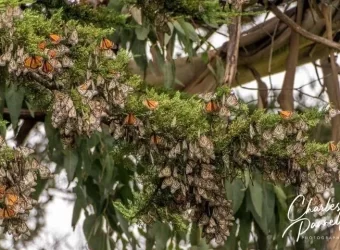
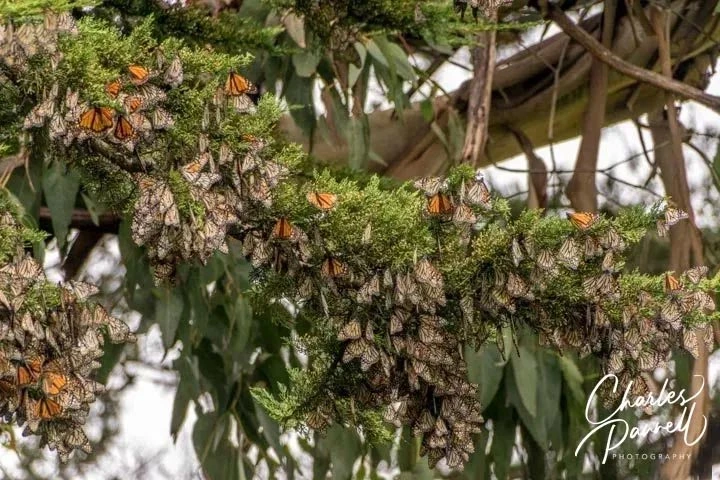
Let’s face it, it’s been a long winter. And there’s no better harbinger of spring than butterflies — more specially Monarch butterflies as they emerge from hibernation along the Northern California coast. After spending several months clumped together in clusters in eucalyptus trees, these migratory Monarchs become more active as they fly around, mate, and prepare for their flights inland to lay their eggs. So check out these three wheelchair-accessible Northern California sites this month, and enjoy a colorful taste of the migratory Monarchs as they emerge from hibernation. But don’t tarry, as these winter visitors will be long gone by the end of March.
Monarch Grove Sanctuary
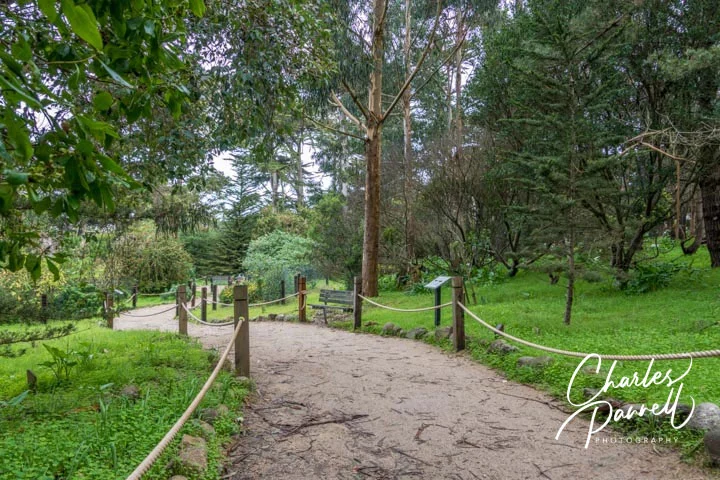
Monarch Grove Sanctuary in Pacific Grove, California
This popular Monarch stopover is located off of Lighthouse Avenue, just south of the Pacific Grove Municipal Golf Course. Keep an eye out for the Butterfly Grove Inn, then turn south on Ridge Road. A white picket fence marks the path to the grove, but accessible parking is located further down Ridge Road on the left. From there; it’s a level roll up the street to the sanctuary entrance.
A .15-mile hard-packed dirt path leads through the grove and dead-ends in the adjacent neighborhood. There is an accessible porta-potty near the end of the path; and although the trail has level spots every 20 to 30 feet, some manual wheelchair-users may require assistance up the slight grade on the return trip.
The best time to hit the Monarch Grove Sanctuary is in the afternoon, because as temperatures warm up, the butterflies become more active and start to fly around through the grove. Although they might not be apparent at first, take some time to scan the tips of the pine and cypress trees, as those are their favorite landing places. Also keep an eye out for what looks to be clumps of dead leaves, as these might be clusters of the overwintering Monarchs. Docents are on duty in the season to help point out the butterflies, but for the best experience bring a pair of binoculars to get a closer look at the Monarchs.
Natural Bridges State Beach
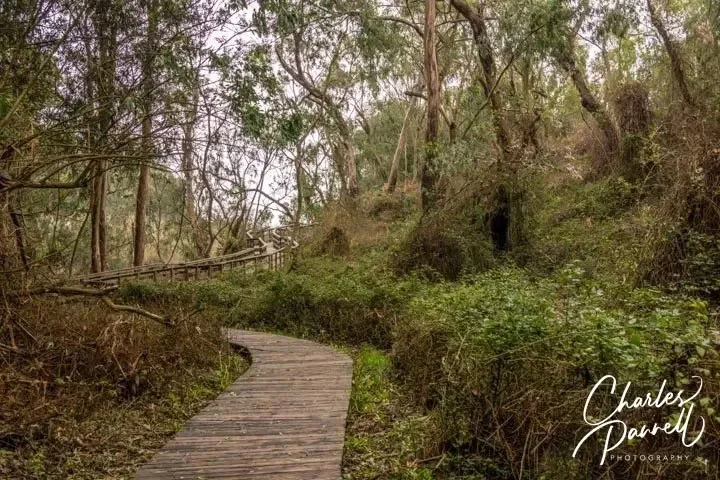
Monarch Boardwalk at Natural Bridges State Park
Another favorite spot to view the migratory Monarchs is located up the coast in Santa Cruz, at Natural Bridges State Beach (www.parks.ca.gov/?page_id=541).
It’s pretty easy to find too. From Pacific Grove follow Highway 1 north, until it turns into Mission Street in Santa Cruz. Turn left on Swift Street, which is the first traffic light after the Safeway, then follow the road until it dead ends on West Cliff Drive. From there, turn right and follow the road along the ocean to the park entrance.
The day use area is located a short drive up the park road. There’s accessible parking in the large lot with level access over to the visitor center. Inside, there’s barrier-free access around a number of interpretive exhibits about the butterflies, their habitat, and of course their migration. Accessible family restrooms are located just outside the front door of the visitor center.
The Monarch Boardwalk is located across the service road from the visitor center. This .15-mile trail winds through a eucalyptus grove, and although it does have a slight downhill grade, there are level spots every 20 to 30 feet. That said, some manual wheelchair-users may need a bit of assistance on the uphill journey.
This is one of the top spots to find the overwintering Monarchs, however it’s usually a hit or miss proposition. Weather plays a big factor in their presence and activity, and you’ll probably strike out after a big storm or on a windy day. That said it is one of their favorite haunts.
Lighthouse Field State Beach
Monarch Butterflies at Lighthouse Field State Beach
Last but not least, don’t forget to stop at Lighthouse Field State Beach, (www.parks.ca.gov/?page_id=550). From Natural Bridges State Beach, back track on West Cliff Drive, pass the lighthouse, and turn into the parking lot for Lighthouse Field on the left. Alternatively, accessible parking is also available across the street in front of the Santa Cruz Surfing Museum.
You’ll find the Monarchs in the Monterey cypress and eucalyptus trees in the grassy field near Pelton Avenue. Although there’s a sizable population during the winter months, getting there can be difficult in rainy years, as the accessible hard-packed dirt paths to the grove flood easily. It’s about a half-mile walk to the grove on the dirt paths.
Bottom line — this is an excellent spot in dry years, as you’ll not only spot the clumps of butterflies, but there are also individual butterflies flying around near the end of the season. Give it a go and see what the dirt paths look like; and if they’re not a mucky mess, then go for it. After all, it’s on the way from Natural Bridges, and it’s definitely worth a quick stop.
Barrier-Free Travel California National Park Road Trips for Wheelchair-Users and Slow Walkers
National parks make a great multigenerational vacation choice. Grandparents can spend time with their grandkids and help them earn their junior ranger badges, while mom and dad can take the afternoon off and enjoy mother nature. And nothing beats a family campfire in the evening. That said, planning a multigenerational national park adventure can be a challenge, as you to need consider a wide range of ages, abilities and interests. And then there’s the lodging issue. On the plus side, if your itinerary includes Rocky Mountain National Park, Estes Park Center (ymcarockies.org/Locations/Estes-Park-Center) makes the perfect wheelchair-accessible home base for the whole family.
Spend the Night
Located just outside of Estes Park, Estes Park Center is about three miles from the Beaver Meadows Entrance to Rocky Mountain National Park. The hotel-style lodge rooms are the perfect choice for several families traveling together, or even a family reunion. Each family can have their own lodge room, and there’s also a comfortable lobby with a fireplace in each building. So you can have you privacy, or be a social butterfly — the choice is entirely yours. And although this property is open to everyone, YMCA of the Rockies members get a discount.
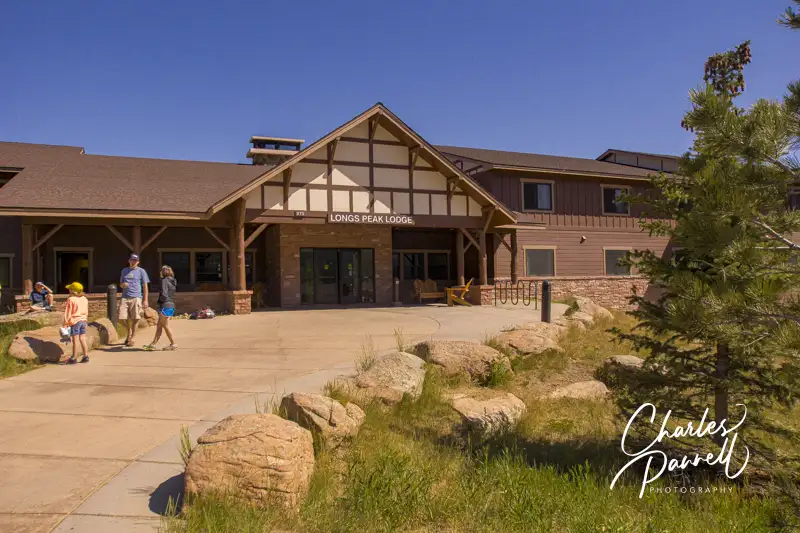
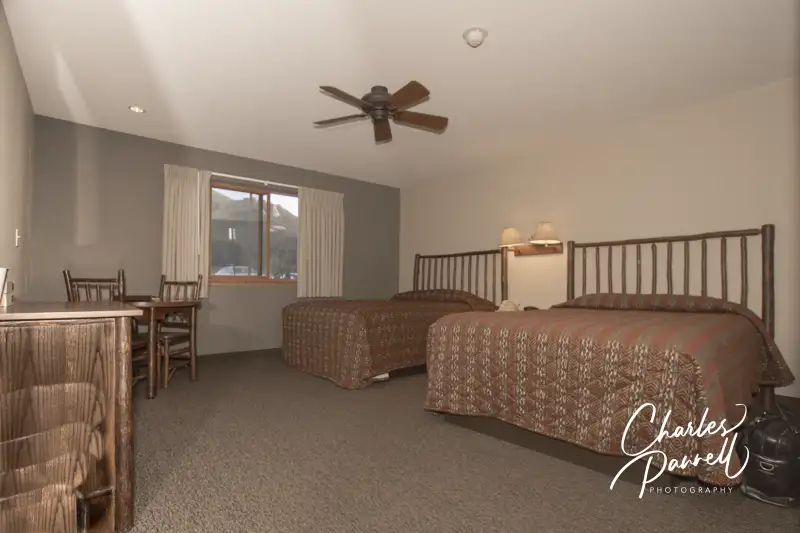
Longs Peak Lodge, which is just a short drive from the office, is one of the most accessible lodge choices. There’s plenty of accessible parking in front, with level access up to the lodge entrance. Accessible Room 8101 is located one floor down and is accessible by elevator.
Room 8101 at Longs Peak Lodge
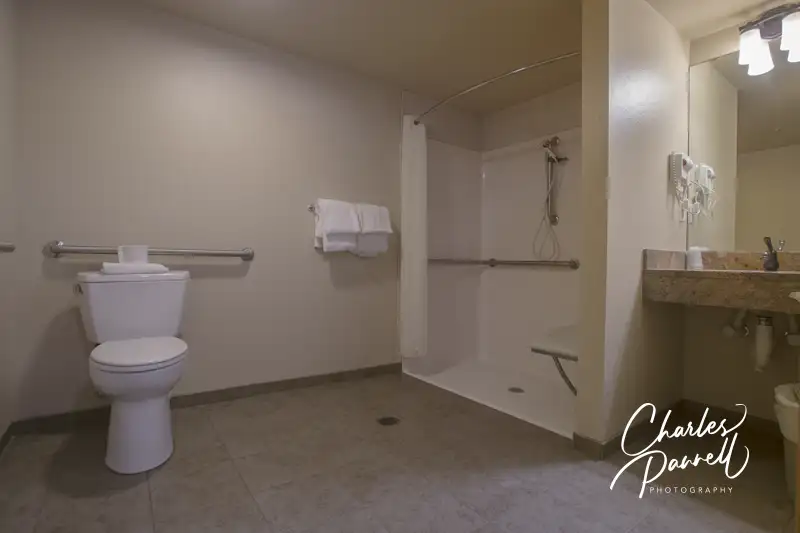
The room features wide doors and good pathway access, and it’s furnished with two 26-inch high queen-sized beds, with an access aisle between them. A table and two chairs are also included; and a floor futon mattress is available upon request. There’s level access through a wide door to the oversized bathroom, which is equipped with a roll-in shower with a hand-held showerhead, grab bars and a fold-down shower bench. Toilet grab bars are located on the back and right walls (as seated), and there’s also a roll-under sink in the bathroom.
Bathroom in room 8101 at Longs Peak Lodge
And for a nice family meal, head over to the Aspen Dining Room. Although there’s a path down to it from Longs Peak Lodge, it’s a bit steep and rocky. Best bet is to drive down if you have mobility issues. There is level access to the dining room, which offers a breakfast, lunch and dinner buffet. There are also a lot of large tables, so it’s a great family dining option. Even better — breakfast for two is included with each room.
Activities Galore
Part of Estes Park Center is located on 860 pine-studded acres, and surrounded on three sides by Rocky Mountain National Park. A popular reunion venue, this family oriented lodge has plenty of activities for all ages.
Lodge guests can take advantage of the Day Camps, which includes a variety of programs for kids of all ages, as well as a substernal menu of offerings for the whole family. And with advance notice, they are usually able to accommodate children with access needs. It’s a good opportunity for kids to bond, learn a little bit about nature, and get some exercise.
If, on the other hand, you’d prefer to strike out on your own, then check out the wheelchair-accessible Enger Family Nature Trail. It begins at the Boone Family Mountain Center and loops through the surrounding forest, with interpretive panels about the forest ecosystem along the way. It makes for a nice inclusive one-mile walk through the forest.
Finally, you can also take a day trip to Rocky Mountain National Park. Sprague Lake and Bear Lake are good choices, as they they are close and they both have wheelchair-accessible trails. Plan ahead though, as entrance reservations are now required for Rocky Mountain National Park (emerginghorizons.com/national-park-entrance-reservations-required-in-2024/)
The bottom line is, Estes Park Center makes an excellent home base for a Rocky Mountain National Park visit. The park is just a stones throw away, and there’s really no shortage of fun activities for Estes Park Center guests, where the motto is, “boredom is simply not an option.”
Barrier-Free Travel Glacier, Yellowstone and Grand Teton National Parks for Wheelchair-Users and Slow Walkers
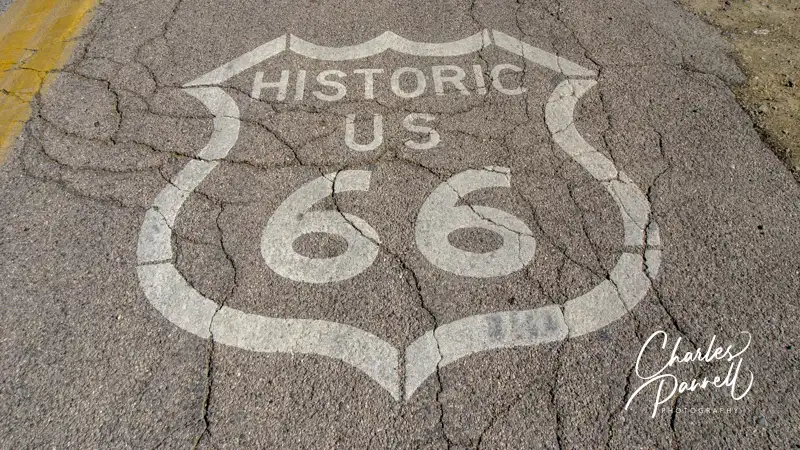
Route 66 — which ran from Chicago to Los Angeles — was given its official numerical designation in 1927. Back then it was just a new moniker for a network of roads that crisscrossed the nation. As Americans embraced road trips in the early 1930s, the route blossomed. Motor courts, diners and roadside attractions sprung up along the way, and business was booming. Nicknamed the Mother Road by John Steinbeck, Route 66 also beckoned Dust Bowl residents to head west in search of prosperity.
Today this historic route has been largely replaced by Interstate 40, however it’s still possible to drive along a few sections of the original Mother Road in Arizona. And although it’s a historic route, it’s still a viable option for wheelchair-users and slow walkers. So hop off the interstate on your next drive through the Grand Canyon State, and experience a taste of a wheelchair-accessible Route 66 road trip.
The Oatman Highway
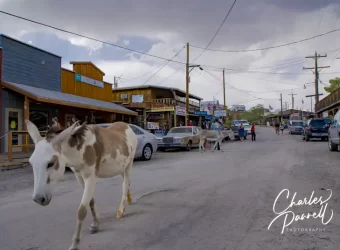
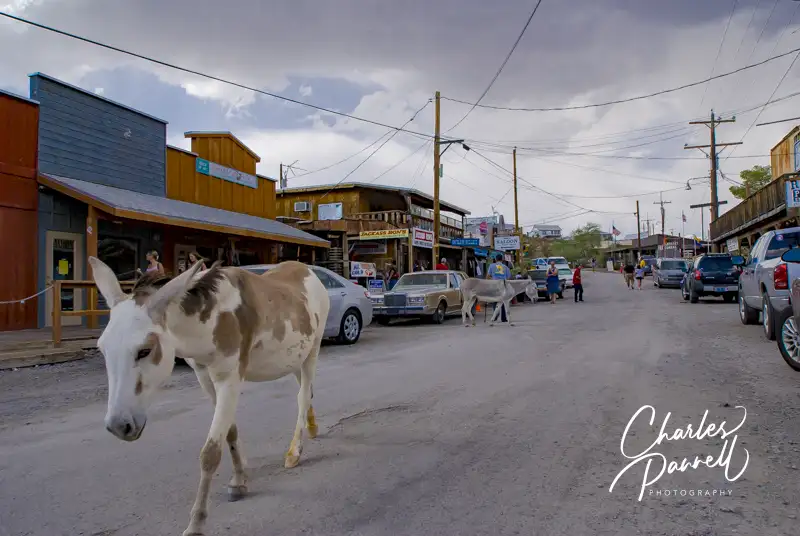
Burro in Oatman, Arizona
This historic route begins on the Oatman Highway. Just take the Topock exit from Interstate 40 after you cross over the Colorado River and enter Arizona. This part of your wheelchair-accessible Route 66 road trip winds through the Black Mountains, crosses Sitgreaves Pass and offers remnants of a bygone era.
Oatman (www.oatmangoldroad.org), which was founded in 1906 to support nearby gold mining camps, is located 35 miles up the road. Today the town celebrates its rough and tumble past and retains a distinctive wild west flavor. Daily gunfights are held in front of the Oatman Hotel (check the town website for times). Accessible parking is located near the Post Office and there are accessible public restrooms on the east end of town.
And then there are the burros. Years ago the miners used burros to work the gold mines, and today their descendants roam the streets of Oatman. A word of warning — watch were you walk or roll because there are a lot of them. And if you’d like to feed them, there’s no shortage of places that sell burro food. All in all, Oatman is a fun stop, and although some of the shops have steps, there are also restaurants, stores and attractions that have level access.
After you leave town, the narrow road winds up to Sitgreaves Pass. Hairpin turns and sheer drop-offs are the norm on this stretch of the route, and there’s also a noticeable lack of guard rails along the way. On the plus side, there’s no shortage of spectacular windshield views, including one at the summit, and another on the way down near the Mile-30 marker.
Cool Springs
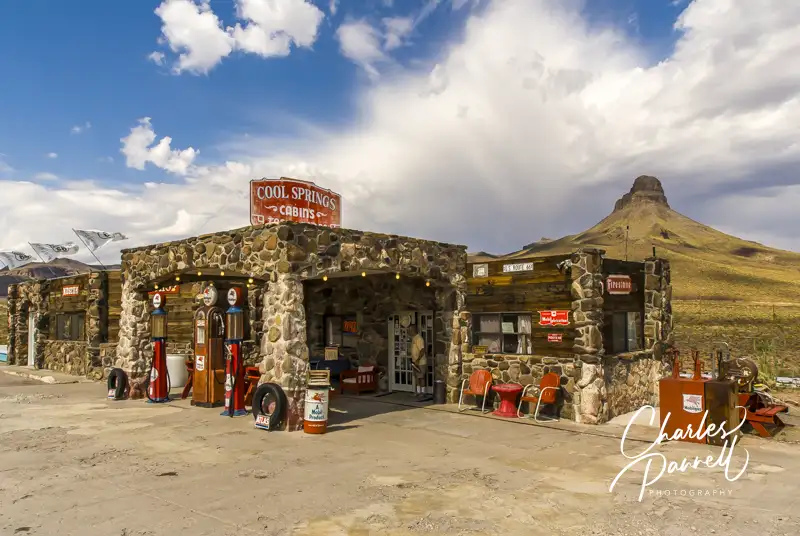
Cool Springs, Arizona
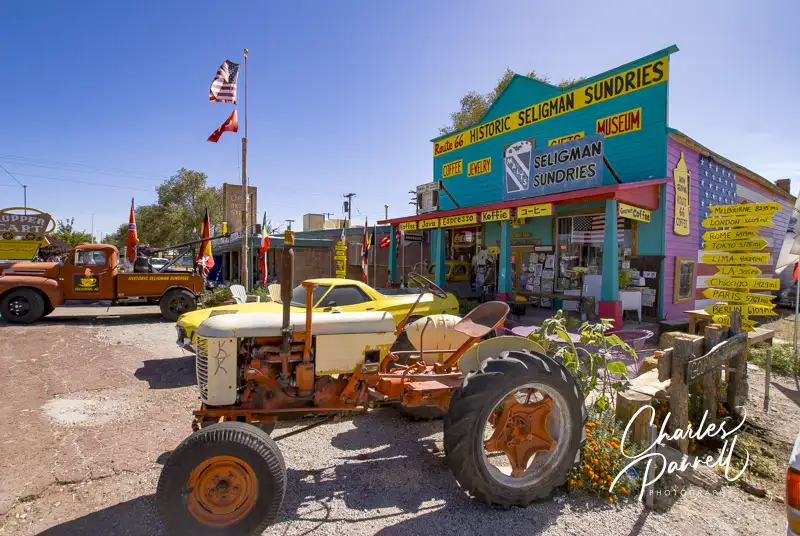
As you continue on this wheelchair-accessible Route 66 road trip, the road winds down Gold Hill and passes the remnants of Ed’s Camp, before it reaches Cool Springs. Barely a wide spot in the road, this rest stop was a welcome sight to road weary travelers back in the day. Hollywood also discovered it in 1992, when it was used as a filming location for Jean-Claude Van Damme’s Universal Soldier. Sadly it was demolished in the final scenes of the movie; however it was later sold and rebuilt to resemble the original 1926 incarnation.
Parking is available in a level dirt area, with barrier-free access to the main entrance of the gift shop and museum. And even though there is one step inside, there’s also access to the raised area of the building from a second accessible entrance.
The makeshift museum offers up a quirky collection of found objects that includes everything from an old gas pump and tools, to oil cans, photos, toys and even vintage post cards. There’s also a t-shirt shop, jewelry counter and a decent selection of Route 66 souvenirs peppered around the memorabilia. Outside, there’s an old 1935 rusted out Nash Sedan to the left of the store. And of course the old gas pump which rests under a restored stone canopy.
Kingman
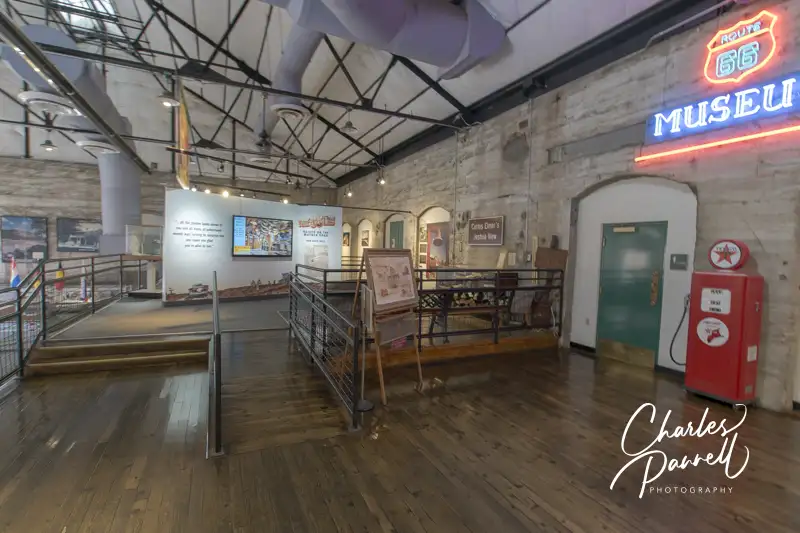
The Powerhouse Museum in Kingman, Arizona
It’s about a 25-minute drive from Cool Springs to Kingman — the largest city on this wheelchair-accessible Route 66 road trip. The road straightens out and parallels Interstate 40 before it enters town. After that, it turns to the right at the Powerhouse, and becomes Andy Devine Avenue.
The Powerhouse is definitely worth a stop as it’s home to the Powerhouse Route 66 Museum (www.explorekingman.com/attraction-Powerhouse-Route-66-Museum).
There’s elevator access to this kitschy museum, which is located on the second floor. Highlights include information on the Dust Bowl immigrants and the origin of the ubiquitous Burma shave signs. The Historic Route 66 Association of Arizona also has a room filled with exhibits and information about the era. Top it all off with a 1950 Studebaker, and some vintage storefronts, and you get a real feel for the era.
And if you’d like to grab a bit to eat in a nostalgic diner, then stop in at Mr. D’z Route 66 Diner, which is just across the street. Accessible parking is on the side with level access to this retro eatery, which is famous for their burgers and ice cream confections.
After lunch, continue east on Andy Devine Avenue. After you pass the airport, the road narrows to two lanes and transitions to the remnants of Route 66. Along the way you’ll pass vintage Burma Shave billboards, roadside attractions and some fun photo ops. As an added bonus, this section of your wheelchair-accessible Route 66 road trip is fairly level and straight.
Hackberry
The Hackberry General Store
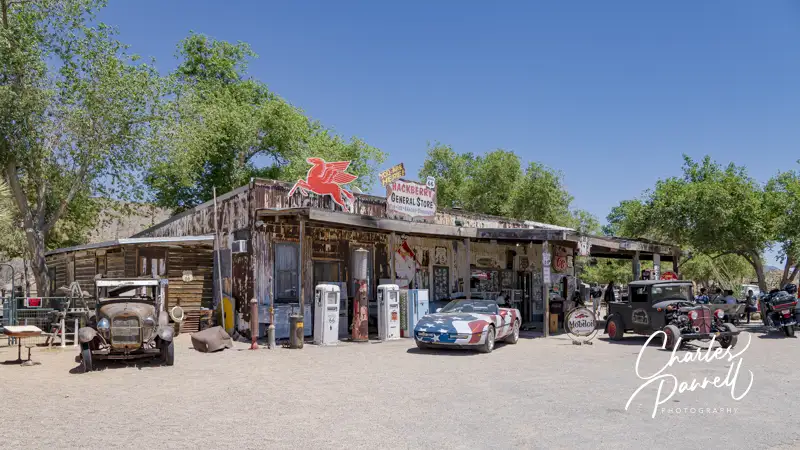
About a half-hour down the road you’ll come upon Hackberry, home of the Hackberry General Store (www.facebook.com/profile.php?id=100043125116622). This restored building features a vintage gas station, a souvenir shop and another great photo opportunity. There’s just a dirt parking area in front, but it is level and there’s usually plenty of room to parallel park an adapted vehicle.
Outside, there’s a treasure trove of memorabilia including some rusted out old cars, signs, tools and even a mock-up of a vintage garage. There’s level access to the store which offers souvenirs, cold drinks and snacks. And although the restrooms are not accessible, the men’s room is worth a look as it’s tastefully decorated with vintage pinup posters. Even if you can’t go all the way in, take a gander at the interior from the doorway.
Valentine
Accessible Tram at Keepers of the Wild Animal Park
The tiny hamlet of Valentine is just five miles up the road. If the landscape along this stretch of the road looks familiar, it’s because the tire change scene from Easy Rider was filmed there. Although there are a few remnants of an old hotel and gas station in Valentine, the big attraction is Keepers of the Wild (www.keepersofthewild.org).
Keepers of the Wild houses over 150 exotic and indigenous animals that were rescued or abandoned. This non-profit animal sanctuary has a strict no breeding policy, with a strong focus on advocacy, education and protection. As part of their educational outreach, the facility is open to the public, and all admission fees go directly to the care of the animals.
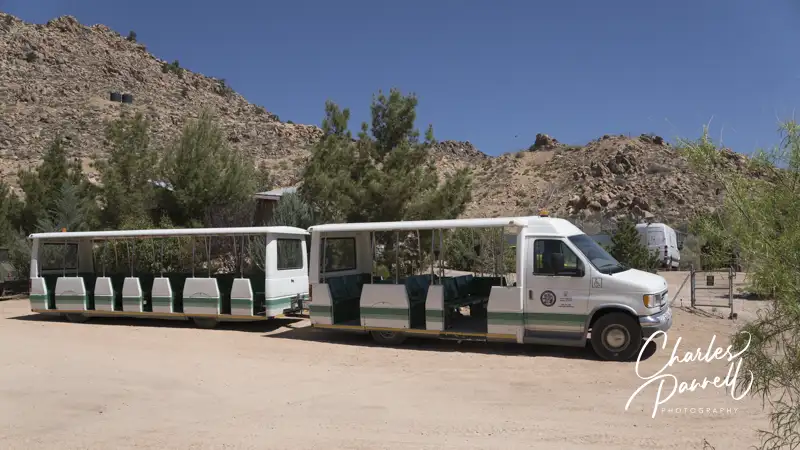
Although visitors are welcome to walk around the sanctuary and check out all the habitats, the best way to learn about the animal residents is to also book a Guided Safari Tour. The standard safari tour vehicles are not wheelchair-accessible, but an open-air wheelchair accessible tram is used for wheelchair-users. There’s room for two wheelchairs aboard the the tram, and it’s also a good option for slow walkers who can’t access the traditional safari vehicle.
The tram tours are conducted several times each day; however the prime tour time is at 3:30, as that’s feeding time for the animals. The tour guides are great about pointing out natural animal behaviors and answering questions, but they also tell fascinating tales about how some of the current residents came to the facility. Save some time to explore the sanctuary on your own too. Some of the lower dirt pathways are accessible in good weather. It’s a great attraction, and the staff is well versed in access issues.
Peach Springs
Hualapai Cultural Center in Peach Springs, Arizona
Next up on your wheelchair-accessible Route 66 road trip is Peach Springs, which is just 20 minutes east of Valentine. Located on Hualapai land, it boasts a hotel, a restaurant, a gas station, a cultural center, and a few vintage buildings.
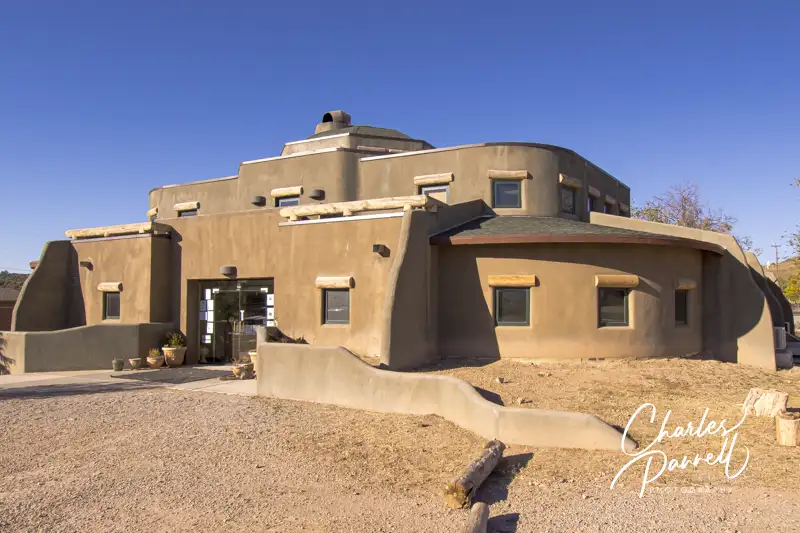
Built on the site of the Qumacho Cafe, the Hualapai Cultural Center may be of interest to some folks. Accessible parking is available on a concrete slab on the left of the building, with level access to the front door. Although there’s no formal tour, the receptionist is happy to show visitors around and answer questions. The cultural center features a nice collection of native artwork, as well as baskets, pottery and other items created by the young people of the tribe.
Remnants of the past can be seen at the Osterman Gas Station, which is located between the Hualapai Cultural Center and Hualapai Lodge. This former Shell station, which was built by Oscar Osterman in the 1920s, did a robust business during the boom days of Route 66. Sadly when the Mother Road was decommissioned, business died off and eventually the business was closed. The building was placed on the National Register in 2012.
Located across the street from the historic Osterman Gas Station, Walapai Market features level access and includes a deli, a bakery and a wide selection of grocery items. And, if you’d prefer to sit down and take a break, the Diamond Creek Restaurant at nearby Hualapai Lodge offers a menu filled with Native American specialties and traditional American favorites. Either way, you won’t go away hungry.
Grand Canyon Caverns
Grand Canyon Caverns
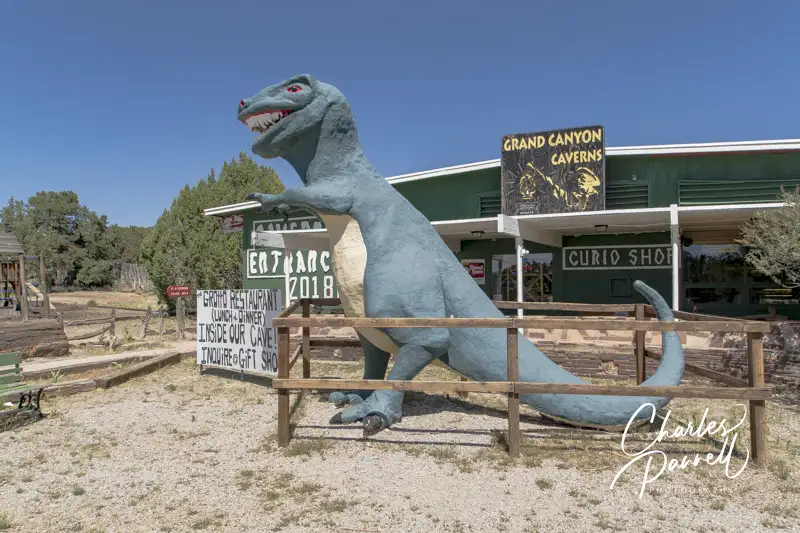
Grand Canyon Caverns (gccaverns.com) which is just 10 minutes down the road is also worth a stop. A large sign marks the entrance to the mile-long flag-lined road that leads to this family-owned attraction. Take a few minutes to have a look at the vintage automobiles near the beginning of the road that’s aptly named Radiator Springs.
Although there’s no accessible parking at Grand Canyon Caverns, the large lot is paved, and there’s usually plenty of room to parallel park an adapted van. And don’t forget to snap a photo of the large dinosaur that guards the entrance to this vintage attraction. From the parking area, there’s level access over to the ramped entry to the restaurant, and barrier-free access to the ticket counter next door.
Although none of the cavern tours are technically wheelchair-accessible, the 45-minute guided tour may work for some wheelchair-users and slow walkers. This tour travels about a quarter-mile on paved trails, and although manual wheelchair-users may need some assistance with some of the grades, it’s doable for some folks. There’s elevator access down to the cavern entrance, and although there are 15 steps at the beginning of the tour, there’s also an alternate step-free route. It’s best to check the website before making plans as the tours are not always offered, but it’s still a fun stop without the tour.
Even if you don’t do the tour, be sure and stop in for a bite to eat at The Caverns Grill, which offers a nice selection of homestyle meals and of course cheeseburgers, fries and yummy desserts.
Seligman
“Downtown” Seligman, Arizona
Known as the birthplace of the “preserve Route 66 movement”, Seligman (seligmanazchamber.com/visit-seligman) is located about a half-hour from Grand Canyon Caverns, at the end of the east section of Route 66. It’s the home town of Angel Delgadillo, the founder of the Historic Route 66 Association, and the man who spearheaded efforts to restore part of the Mother Road.
Street parking is the norm in Seligman; but the good news is that sidewalks and curb-cuts have been added for better access. Many of the historic buildings have been converted to gift shops, and although a few have a step or two at the entrance, a good number of them also offer level access. It’s fun to just stroll down the street and look at the different storefronts. Make sure and stop in at Degadillo’s Snow Cap (www.facebook.com/p/Delgadillos-Snow-Cap-100063560350919/) which was built from scrap lumber by Juan Delgadillo in 1953. There’s level access from the street to the counter — where you can place your order — and plenty of room for a wheelchair or scooter on the large patio dining area.
There’s also a nice collection of vintage cars behind the restaurant in a level area, as well as more tables for overflow dining. From Seligman, you can easily hop back on Interstate 40 and continue your drive through Arizona. And if you’re headed to the Grand Canyon (emerginghorizons.com/grand-canyon-national-park/), it’s less than two hours away from the end of this wheelchair-accessible Route 66 road trip detour.
Barrier-Free Travel the Grand Canyon for Wheelers and Slow Walkers
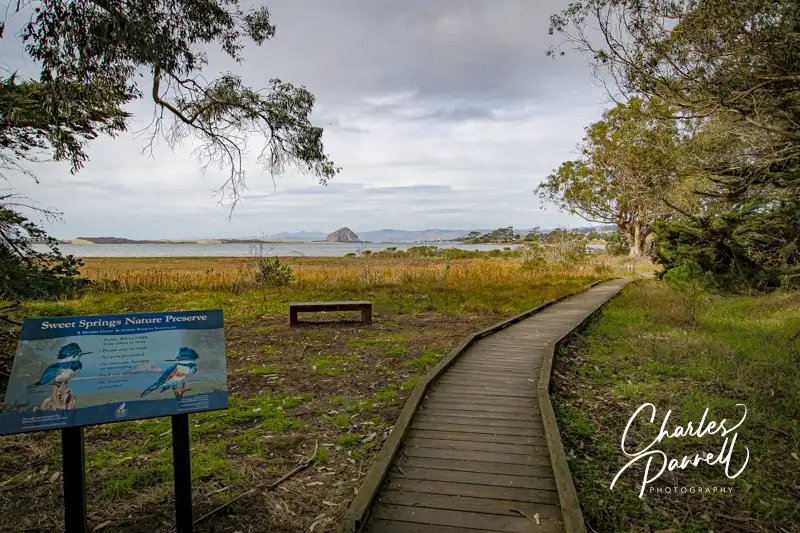
Boardwalk at the Sweet Springs Nature Preserve in Morro Bay, California
Slated for January 16-20, 2025, the Morro Bay Bird Festival promotes an understanding and appreciation of the birds and wildlife along the Central California Coast. And the good news is, many of the offerings at this annual event are wheelchair-accessible.
The Main Events
The festival features two welcome receptions, one on Friday and one on Saturday. They will be held at the Morro Bay Community Center, which is wheelchair-accessible. The welcome receptions will run from 4-6:30 PM each day. During that time attendees can enjoy some wine and cheese, chat with fellow birders and browse through the Bird Festival Bazaar. The bazaar, which will be open throughout the weekend, includes vendor booths and educational exhibits of interest to birders. A detailed list of the vendors can be found at morrobaybirdfestival.org/bazaar/.
There will also be keynote addresses on Friday and Saturday evenings, from 7:00 to 9:00 PM, in the Cuesta College Performing Arts Center. Celebrated birder, David Lindo will take folks around the urban world of birds in his address on Friday January 16, and will be available to sign his books afterwards. On Saturday January 18 Kenn Kaufman will describe the misadventures of early shorebird watchers, and explain how those events are reflected in todays birding experiences. He will also be available for book signings afterwards.
Field Trips, Presentations and Master Classes
Additionally, there will be number of field trips. presentations and Master Classes at the 2025 Morro Bay Bird Festival. Here are the wheelchair-accessible offerings. For a complete catalogue, which includes the description of each event, visit morrobaybirdfestival.org/print-versions
Field Trips
Easy Birding
Shore Birds of the Morro Bay Marina
Birds of the Elfin Forest
Women’s Morro Bay Marina Excursion
Wintering Birds at Cal Poly Pier
Meander Morro Bay Marina
Birding Elfin Forest and Sweet Spring
The Elfin Forest Wonderland
Presentations & Master Classes
Smart Phone Bird Recording
How to Help the Birds Workshops
Columbia: South America Birding Mecca
Bird Banding: Monitoring Avian Productivity and Survivorship
A Splash of Color: Expressive Bird Art in Watercolor
Condor Recovery
Birding for Beginners Workshop
Feathers – A Wondrously Complex and Versatile Structure
Optics Demystified
Critter Cams for Monitoring Wildlife
Digiscoping with a Smartphone
Bats – California’s Amazing Flying Mammals
The Long Billed Curlew
An Identification Study of Birds of Prey
Rookery Wonders in Windy Cove
Ducks and Geese of the Morro Bay Region
Peregrine Falcons of Morro Rock
How to Shoot High Quality Engaging Videos
Avian Respiratory System Adaptations
Principles and Pitfalls of Bird Identification
Birding by Ear Workshop
Shorebird Carving Class
Meet the Raptors – Pacific Wildlife Care
Sister Species – A Conservation Story
Wild Stories from the History of Bird Migration Research
California Condors: Back from the Brink
Shorebirds Made Easy
The Topography of Bird Sounds
Grebes Walk on Water to Find a Mate
From Anatomy to Function/Flight
An Identification Study of Birds of Prey
Gulls of SLO Identified
Surprising Secrets of Bird Biology
Master Classes
Introduction to Bird Photography
The Magic of Bird Sounds
Birding by Careful Observation
Feathers in Focus
Bird Biology Basics
Intro to Journaling; Focus on Birds
So make plans to attend this fun and educational event, and learn a bit more about our feathered friends. For more information about the 2025 Morro Bay Bird Festival, visit morrobaybirdfestival.org or e-mail support@morrobaybirdfestival.org.
Barrier-Free Travel
Utah National Parks for Wheelchair-users and Slow Walkers
Factory Tours offer a fun peek into the manufacturing process, and many even give out free samples and substantial discounts at their factory stores. And although not all areas of many factories are wheelchair-accessible, more and more companies are making their factory tours doable for wheelchair-users and slow walkers. Additionally, factory tours are easy on the the wallet, as many are low-cost or free. With that in mind, here are some fun wheelchair-accessible factory tours across the US.
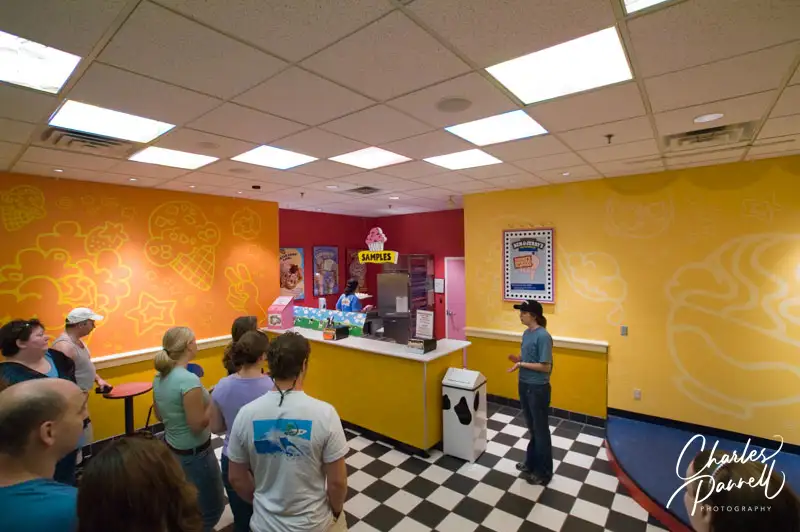
At the top of the list of wheelchair-accessible factory tours is Ben & Jerry’s in rural Waterbury, Vermont. This fun tour chronicles the story of childhood friends Ben Cohen and Jerry Greenfield, and details how they started their business by taking a correspondence course on ice cream making.
Accessible parking is available near the information booth (just follow the signs), but if you can’t do distances, there is a drop-off point in front of the main building. There is level access to the lobby, and a wheelchair is available for loan at the tour desk. The entire tour is wheelchair-accessible, with level access to all areas.
The 30-minute tour begins with a movie about the history of the company, then continues to the mezzanine viewing walkway. Although you don’t go directly in the factory, you get a good birds-eye view of the ice cream making process from this overhead vantage point. There are free samples at the end of the tour, but if you’d like more than a sample, there’s a scoop shop outside. And although it’s not on the tour, be sure and visit the Flavor Graveyard outside. There is a small charge for this popular tour, and it’s a good idea to get your tickets online to avoid disappointment.
Hyundai
www.hmmausa.com
For a look at how Hyundai and Genesis vehicles are made, make sure and take the Hyundai Factory Tour in Montgomery, Alabama. There’s plenty of accessible parking in the visitors lot, with level access to the visitors center, where you’ll find a display of newly minted Hyundai and Genesis vehicles.
The 1.5-hour tour begins with a short movie, after which visitors are escorted to a wheelchair-accessible tram. Head sets and safety glasses are issued to everyone, and then the tram begins its trek through the factory. Along the way the tour guide explains the production process as the tram weaves through the stamping shop, welding shop, general assembly shop and engine shop. The tour ends with a short trip out to the test track. It’s a very interesting tour, and although it’s free, advance reservations are required. The tours are offered during the days on Monday, Wednesday and Friday, and in the evenings on Thursdays. Sorry folks, no free samples on this one.
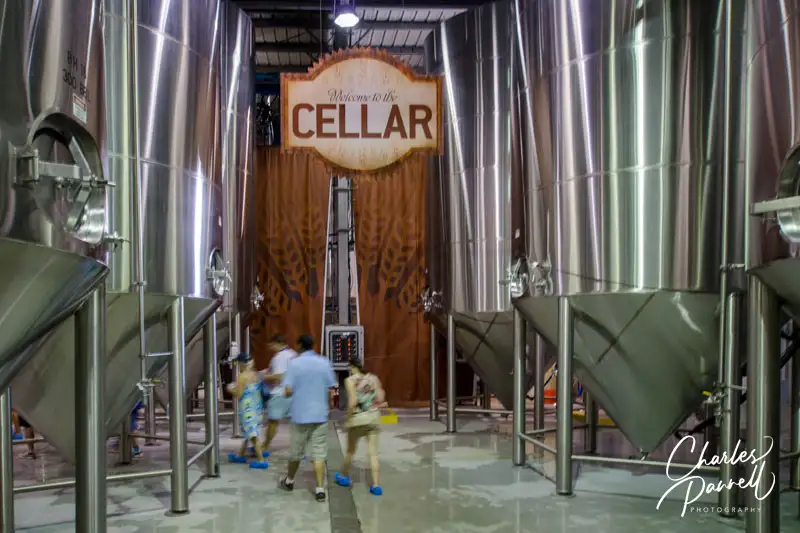
Next up on our list of wheelchair-accessible factory tours is Abita Brewery. Located on the north shore of Lake Pontchartrain, this Louisiana mainstay brews a healthy selection of craft beers and craft sodas.
There is level access to the factory, except the bottling room, which has one step. Still you can get a good look at the bottling process without entering the bottling room. The informative tour last 30 minutes, after which visitors can enjoy a pint in the Tap Room. Alternatively the family-friendly tour offers a walk or roll through the craft soda section of the brewery. This 20-minute tour offers a close-up look at the brewing process, and includes samples of the sodas brewed there. As with the craft beer tour, this tour also offers good wheelchair access.
There is a charge for both tours, and although tickets are available in advance, spots are also held for walk-ups on every tour. These guided tours are held daily in the afternoons, except on Christmas and Thanksgiving. Closed toes shoes are required for all tours.
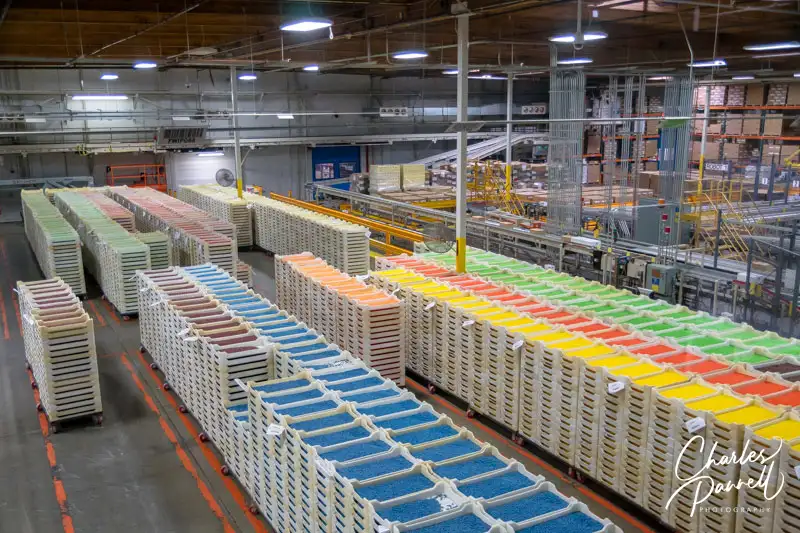
If you’ve ever wondered how jelly beans are made, than a trip the the Jelly Belly factory in Fairfield, California is a must. There’s a small charge for this self-guided tour, but advance reservations are not required. Accessible parking is available in front, with level access to the building. And if you can’t manage the short walk from the parking lot, there’s also a drop-off area near the front door.
All areas on the self-guided tour are wheelchair-accessible, with an elevator up to the second floor gallery that circles the plant. Employees are stationed along the way to answer questions, and videos detail the whole production process. There are even lowered windows in the viewing gallery, so wheelchair-users get an excellent view of everything.
The sugary confections start out as slurry which is poured into molds to create the jelly bean centers. The centers are then transferred to spinning drums filled with sugar to form the hard outer shell. Finally the beans are polished in another set of drums filled with syrup. After all that, they are stamped with the Jelly Belly logo, packaged and sent on their way.
After the tour visitors can browse through the art gallery, which contains jelly bean mosaics of presidents, rock stars and fashion icons, have a jelly bean shaped burger in the cafeteria, or try some fudge in the chocolate shop. And don’t forget to pick up some tasty treats in the gift shop.
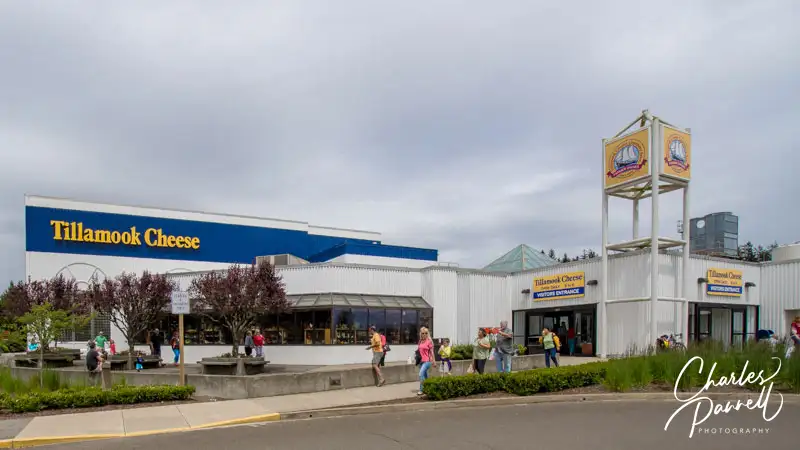
Last but not least on our roundup of wheelchair-accessible factory tours is the Tillamook Creamery. Originally established as a cheese shop in the 1950s, this Oregon cheese factory has offered free tours since 1968. And although it’s probably the most touristed attraction in town, it’s still worth a stop.
There’s plenty of accessible parking in front, with level access to the building. The self-guided factory tour starts in the Farm Exhibit Hall, which focuses on the basics of cow care by Tillamook farmers. After that, visitors take the elevator to the second floor gallery, which offers an expansive view of the factory floor. Videos and touch screen presentations help describe the production process, as the cheese is transported from station to station on conveyor belts. Visitors are able to view the whole process from start to finish, after which they they head back downstairs for a sample of the finished product.
There is level access to the first-floor sample buffet, where you can try the many different varieties of Tillamook cheese. And if you’d like to take home some cheese, there’s also a cheese shop nearby. There’s level access to the adjacent restaurant which features a variety of cheesy treats. And don’t forget to stop by the ice cream counter to order a scoop of Tillamook ice cream. It’s the perfect way to top off a Tillamook Creamery visit.
Barrier-Free Travel 22 Accessible Road Trips for Wheelers and Slow Walkers
Although California’s Central Valley can be dreary during winter, the migrant Sandhill Cranes have an entirely different view of it. To them it’s paradise; as it boasts abundant food, a temperate climate and a suitable habitat. It has everything a Sandhill Crane could want. That’s why every September they hit the Pacific Flyway in droves, and head south to their winter nirvana – the marshes and wetlands near Lodi, California. And although they have specific habitat requirements, they’re easy to find if you know where to look.
Consumnes River Preserve
Sandhill Cranes at the Consumnes River Preserve
Located between San Francisco and Stockton, just off Interstate 5, the Consumnes River Preserve (www.cosumnes.org) is an excellent place to spot the wintering cranes. It makes a great day trip from San Francisco or even a nice diversion on a longer road trip.
If you’re traveling south on Interstate 5, take the Twin Cities exit, turn east and drive for a mile until you reach Franklin Boulevard. Turn south on Franklin Boulevard, drive 1.7 miles and look for the visitor center on your left. Northbound traffic should take the Walnut Grove -Thornton Road exit, turn east on Thornton Road and drive for about 2 miles. You’ll spot the visitor center on your right, just after you cross the Thornton-Franklin Bridge.
There’s plenty of accessible parking in the upper lot next to the visitor center, and ramped access to the front entrance. Inside you’ll find a number of interpretive exhibits, along with an information desk. The building itself overlooks a wetlands area, and there are also several accessible picnic tables on the deck.
Wetlands Walk
Wetlands Walk at the Consumnes River Preserve
Directly behind the visitor center, you’ll find the trailhead for the Wetlands Walk. This one-mile loop begins with a boardwalk though the wetlands, then continues on a paved level trail. There are several viewing areas along the way, and also a secluded accessible picnic table after the first boardwalk. Near the end of the loop, a half-mile boardwalk branches off to the right. It’s wide, level and nicely accessible, with a large viewing platform that overlooks the marsh. It’s an excellent place to spot Great Egrets, Northern Pintails, Red Winged Blackbirds, Turkey Vultures and — in season — Sandhill Cranes.
And if you just want to enjoy the boardwalk, but can’t manage the Wetlands Walk, there’s also accessible parking by the boardwalk next to an accessible pit toilet. This parking area is located north of the Visitor Center on the opposite side of Franklin Boulevard.
It should be noted that the rangers close the boardwalk at dusk, as it’s a favorite night roosting spot for the Sandhill Cranes. That said, the best time to visit this area is early evening, just before dusk, as it’s a beehive of activity then. Visitors are welcome to bring lawn chairs and just sit back and enjoy the show.
After the boardwalk, the Wetlands Walk winds past one final viewing platform and returns to the visitor center. Alternatively, if you’d just like to check out the last viewing platform, there’s also accessible parking and an accessible vault toilet in the lower parking lot at the visitor center. From there, a level sidewalk leads across Franklin Boulevard to the platform.
Woodbridge Ecological Reserve — The Basics
Another good place to get a look at the Sandhill Cranes is at Woodbridge Ecological Reserve (www.wildlife.ca.gov/Lands/Places-to-Visit/Woodbridge-ER ), which is located just south of the Consumnes River Preserve. To get there, follow Franklin Road south to Woodbridge Road, then turn east. The reserve is divided into two sites, across the street from each other — the North Unit and the South Unit.
The South Unit is open to the public, but the North Unit can only be visited on docent-led tours. A CDFW Lands Pass is required to visit either unit, for all visitors 16 years of age and older. You do not need a pass if you have a valid California hunting or fishing license. You can purchase a CDFW Lands Pass online at ca.wildlifelicense.com/internetsales/, then print it out prior to your visit.
Visit Woodbridge Ecological Reserve
The South Unit of the Woodbridge Ecological Reserve has accessible parking near the entrance gates, and a short cement path out to a viewing area that overlooks a wetlands area. It’s a great vantage point to spot the cranes, and there are also a few benches there; however for the optimal Sandhill Crane viewing experience, try to visit right before dusk. For the best daytime crane viewing, continue along Woodbridge Road, and look for the birds feeding in the surrounding farmland.
The North Unit of the reserve can only be seen on guided tours, which are held during the Sandhill Crane wintering season. Advance reservations are required for these docent-led tours, which begin 90 minutes before sunset. The tours begin at the South Unit, with a brief presentation. Afterwards, participants drive to the North Unit in their own vehicles, to view the birds from an accessible shelter. Since there’s very little walking involved, it’s a great option for wheelchair-users. Slow walkers, or folks who have trouble standing for a few hours may want to bring a camp chair. More information about these tours — when available — can be found on the reserve website.
Finally, if you happen to be in the area in early November, be sure and check out the Lodi Sandhill Crane Festival (emerginghorizons.com/enjoy-the-lodi-sandhill-crane-festival/). It’s a full weekend filled with presentations, art, speakers and tours. Not only will you learn more about the Sandhill Cranes, but you’ll also be able to take special tours to see the cranes descend en masse to their overnight roosts. It’s a great addition to any Central Valley birdwatching visit.
Barrier-Free Travel California National Park Road Trips for Wheelchair-Users and Slow Walkers
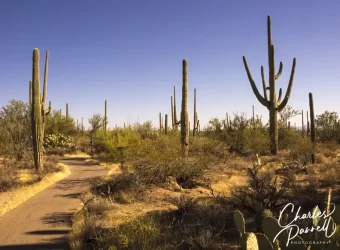
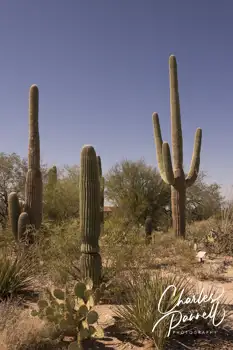
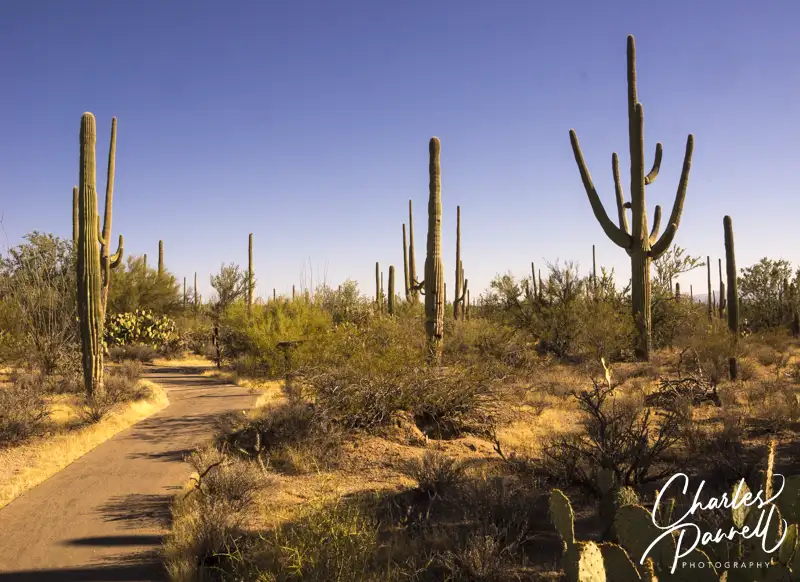
Known as the symbol of the American West, the giant saguaro cactus can only be found in the Sonoran Desert in the Southwestern US and Mexico. These large columnar cacti are covered in spines and develop branches (arms) as they age. There’s nothing like seeing a forest of saguaros framed by a colorful desert sunset. And the best place to do that is at Saguaro National Park (nps.gov/sagu), near Tucson, Arizona. Divided in two sections — with the city of Tucson in between — this scenic desert area offers several accessible trails for wheelchair-users and slow walkers.
Saguaro East
Ecology Trail in Saguaro East
Located in the Rincon Mountain District, Saguaro East is about 10 miles off Interstate 10. Just take exit 27 and follow the signs to the Rincon Mountain Visitor Center in Saguaro National Park. Accessible parking is located near the visitor center, which offers level access and houses a collection of interpretive exhibits. There’s also plenty of room for a wheelchair in the theater, which shows an introductory film throughout the day. And outside there’s level access around the small native garden, and over to a covered shelter with benches.
The eight-mile Cactus Forest Drive scenic loop begins just east of the visitor center. This one-way drive travels through the heart of a saguaro forest, and boasts fabulous windshield views of the gigantic cacti. There are a number of pullouts along the way, all of which have accessible parking. And if you visit in May, you’ll be treated to an eyeful of showy white booms on the giant cacti.
The first accessible trail is located midway along the drive. There’s accessible parking at the Mica View Picnic Area, with level access over to accessible tables and an accessible vault toilet. Although the entire length of the Mica View trail is not not accessible, the first .7 mile is fairly level and is covered in stabilized granite. The Desert Ecology Trail, which is located just up the road, is also worth a stop. This quarter-mile trail features a paved pathway with benches to sit and rest along the way.
When you reach the end of the scenic loop drive, turn left at the stop sign and head through the Javalina Picnic Area. After you leave the picnic area, look to the right as the road curves, for a view of a tall saguaro with a magnificent crown.
Javalina Picnic area in Saguaro National Park East
Saguaro West
Desert Discovery Trail in Saguaro National Park West
Saguaro West is located in the Tucson Mountain District, which is on the west side of the city, just up the road from the Arizona Sonora Desert Museum. From interstate 10, head west on Gates Pass Road, then make a right on Kinney Road. The Red Hills Visitor Center will be on the right, just past the park entrance.
There’s accessible parking in front with level access to the building. Inside there are a number of interpretive exhibits as well as accessible restrooms. Outside there’s a short accessible paved trail that focuses on the ecology of the Sonoran Desert.
The highlight of this section of the park is the Desert Discovery Trail, which is located just a mile past the visitor center, on the left side of the road. This half-mile paved trail features interpretive plaques along the way that describe the plants and animals of the Sonoran Desert. There are benches to rest along the trail, and it’s a favorite spot to catch a spectacular sunset view amidst the cactus forest.
This section of the park also boasts a scenic drive. The 5-mile Bajada Loop Drive winds through the saguaro forest, with plenty of pullouts along the way. Although the road is not paved, it’s still doable in a low clearance vehicle. And if you’d like to pack along a snack, there are two picnic areas along the loop.
Last but not least, don’t forget to ask about the free ranger programs at either visitor center. Offered in the peak winter season, many of the programs are held at accessible areas or trails in or near the visitor centers. These interpretive programs, which focus on the Sonoran Desert and the Saguaro Cactus, greatly enhance any visit to Saguaro National Park.