Based in Krakow, Active Poland offers a number of accessible Poland tours for wheelchair-users and slow walkers. The customized Krakow tours can include everything from a stroll around town, to a museum hopping itinerary, and even attending concerts and festivals. All accessible tours are conducted in a wheelchair-accessible van with seating for one wheelchair-user and five other passengers.
Other tours that are doable for wheelchair-users and slow walkers include excursions to Auschwitz-Birkenau, the Bochnia Salt Mine, Zakopane and the John Paul II Trail. Active Poland can also book accessible accommodations and assist with restaurant and nightlife suggestions. Rental wheelchairs and stair lifts are also available. For more information on Active Poland accessible offerings, visit poland-active.com/en/Trips/Trips-For-Handicapped-In-Krakow,ig.
Barrier-Free Travel 101 Accessible Vacations Travel Ideas for Wheelers and Slow Walkers
Travel by its very nature requires a good amount of preparation, especially when it includes air travel. Factor a disability into that equation and the complexity increases. With that in mind, here are some helpful tips for flying with a wheelchair.
Before You Go
The first thing you should do if you are flying with a wheelchair is to learn the law so you know what to expect. The Air Carrier Access Act (ACAA) — not the Americans with Disabilities Act — is that law that covers access on all US carriers, and foreign carriers on flights to and from the US. You can find the ACAA at https://www.ecfr.gov/current/title-14/chapter-II/subchapter-D/part-382.
Flying with a wheelchair in some parts of the world can come with some additional problems. If your trip involves domestic flights in Asia, Africa and the Caribbean, learn about the local access laws. Many domestic carriers in these regions have denied boarding to unaccompanied wheelchair-users. Choose your airline carefully.
Request a seat with a flip-up armrest when you make your reservation, as it makes transfers easier.
If you need a non-ticketed escort to accompany you to the gate, advise the airline of this when you make your reservation. Your escort will be asked for photo identification and given a security checkpoint pass.
Even if you don’t routinely use a wheelchair at home, consider requesting an airport wheelchair when you book your reservation if you are a slow walker. Some airports are quite large, and the whole boarding process can involve a lot of walking and standing.
Under the ACAA, airlines are required to carry wheelchairs, other mobility aids and assistive devices free of charge. This can include everything from oxygen concentrators and ventilators, to shower chairs and even catheter supplies. That said, remember to pack medical supplies in a clearly labeled box, and do not mix them with your personal items.
If you are traveling with oxygen or a ventilator, contact the airline to find out about their specific rules and procedures. Some airlines require doctor’s forms, so plan ahead for this.
If you have any questions regarding security screening procedures, call the TSA Cares hotline at (855) 787-2227 at least 72 hours prior to your flight. They will be able to supply you with airport specific information regarding your inquiry.
Download the TSA Notification Card (www.tsa.gov/sites/default/files/disability_notification_card_508.pdf), then fill it out with the specifics of your disability. Hand it to the TSA agent when you get to security. This is especially helpful if you have places on your body that are sensitive or painful to touch.
Finally, it you are flying with a wheelchair and you have any questions about the ACAA, call the DOT Hotline at (800) 778-4838.
At the Airport
When flying with a wheelchair, you can stay in your own wheelchair until you get to the gate, if you have non-spillable (gel) batteries. At that time you will be transferred to an aisle chair and boarded, and your wheelchair will be gate checked. If your mobility device does not have non-spillable batteries, you must transfer to an airport wheelchair at check-in, and surrender your wheelchair or scooter at that time.
If your mobility device has lithium ion batteries, contact the specific airline for their rules and regulations. US airlines are allowed to carry mobility devices with lithium ion batteries, however they are not required to do so. Every airline that accepts these devices has their own procedures,
If you use an airport wheelchair, don’t give it up once you get to the gate, because if there is a gate change you won’t have any way to get to the new gate. And sometimes it can be a very long walk.
Always allow extra time to get through security. Carry your wheelchair repair tools in your checked bag. If you encounter any problems at the security checkpoint ask for the Passenger Support Specialist, as these employees have additional training in access issues.
Remember, you are not required to perform any tasks at the security checkpoint that you are physically unable to do. If an TSA employee asks you to stand, walk, or even take off your shoes, just let them know that you are unable to do that.
When flying with a wheelchair, let the gate agent know that you need to preboard the aircraft. This will give you extra time to transfer and stow your gear in a more private setting. And don’t wander off from the boarding area, as you could miss preboarding.
Protect Your Wheelchair
Attach clear assembly and disassembly instructions (in Spanish and English) to your wheelchair or scooter. Photos and illustrations also help.
Remove any loose or protruding parts from your wheelchair or scooter. Protect your joystick with some type of a hard covered object, such as a plastic cup secured with packing tape.
Let a little bit of air out of your wheelchair tires. Carry on all gel cushions. Baggage compartments are not pressurized.
Snap a digital photo of your wheelchair before you board. It’s a good way to document the condition of your assistive device in case of damage.
Make sure you have adequate insurance. US airlines are only liable for the purchase price (not the replacement cost) of assistive devices on domestic flights. And on international flights the airline liability limit for damaged assistive devices is covered under the Warsaw Convention ($25.29/kilo) or the Montreal Convention ($1731 limit).
Put an air tag on your wheelchair. It won’t prevent it from getting misrouted, but at least you will know where it’s at if it doesn’t show up at your gate.
On the Airplane
On aircraft with more than 100 seats, there’s priority storage space aboard for one manual wheelchair. This space is available on a first-come basis, so it pays to get to the boarding area early, to get the first crack at the space.
Make sure an on-board wheelchair is aboard the aircraft before takeoff. If you cannot walk, this is how you will be transported to the lavatory. On-board wheelchairs are required on all aircraft with accessible lavatories, but sometimes they are accidentally offloaded, so it always pays to check.
Consider your toilet options when flying with a wheelchair, and plan ahead. Accessible airline lavatories are available on wide-body (two-aisle) jets. They have to be large enough to accommodate the on-board wheelchair, but in some cases there is not enough room for an attendant. Check out the aircraft diagrams at seatguru.com/ to find planes that have larger accessible restrooms.
If Things Go Wrong
If you encounter any problems when flying with a wheelchair, contact the Complaints Resolution Official (CRO). The CRO is an airline employee that’s specifically trained about the ACAA. All US airlines are required to have a CRO on duty during airport operating hours. Foreign carriers are also required to have a CRO available at airports that serve flights that begin or end in the US.
If your equipment is damaged or you experience a access related service failure, report it to the airline and request compensation. If your assistive device is not usable, be sure to request an appropriate loaner.
And if you experience an access-related service failure, you can also file a ACAA complaint at secure.dot.gov/air-travel-complaint. This complaint will not result in compensation but it can help to make air travel more accessible in the long run.
Barrier-Free Travel National Park Lodges for Wheelers and Slow Walkers
Nearly a year ago, on July 26, 2023, the Department of Transportation (DOT) announced a new accessible airline lavatory rule. Unfortunately it will still be many years before single aisle aircraft with more than 125 seat have accessible lavatories, but at least it’s a start. The rulemaking process has been going on for quite some time and the DOT took into consideration comments from consumers, airlines and disability organizations.
So here are the highlights of the final accessible airline lavatory rule, along with a timeline for when you can expect to see some changes.
Lavatory Interiors
Under the new rule, US single aisle aircraft with more than 125 seats must include the following features in their lavatories. These features will be required on new aircraft delivered three years after the effective date (2023) of the rule.
Grab bars
Accessible faucets
Accessible call button
Accessible door lock
Room for onboard wheelchair
Ample toe Clearance
Privacy screen if door is not able to be closed
So basically you can expect to see start seeing these features in 2026.
But there is a catch. The usual life of a commercial commuter aircraft is 25 years, so only 4 percent of the fleet is replaced annually. This figure is from the DOT. If they start replacing aircraft with ones that include accessible lavatories in 2026 (as required), the entire fleet will not be outfitted with them until 2051. And during that interim time, passengers will not know if they have an accessible lavatory until they board the aircraft.
Onboard Wheelchairs
The new accessible airline lavatory rule also includes a provision that the onboard wheelchair must be maneuverable into the lavatory, so that the wheelchair-user will be able to completely close the door. This also applies to single aisle aircraft with over 125 seats.
Again, aircraft are not required to be retrofitted, and the same timeline applies, so this would begin in 2026 and be fully implemented in 2051.
Accessible Lavatory Space
Perhaps the biggest change with the new accessible airline lavatory rule is the requirement for accessible lavatories to have ample space for a person with a disability and an attendant. More specifically the lavatory must have enough room for two males in the 95th percentile of height and weight (6 ft. 2 in., 246 pounds). That’s a pretty large space and it would make airline lavatories truly wheelchair-accessible. And as with the other regulations this applies to single aisle aircraft with more than 125 seats.
But there is a different implementation time frame for this requirement. Specifically, it’s for aircraft ordered 10 years or delivered 12 years from the effective date. That means this would start in 2036 and 2038, and would be fully implemented in 2061 and 2063. And in the interim you won’t know in advance if your aircraft has a lavatory with this extra space.
To be fair, the preliminary rule required implementation in aircraft ordered 18 years from the effective date or placed into service 20 years from the effective date. On that timeline the fleets would be fully outfitted with accessible lavatories in 2069 and 2071.
I addressed the timeline issue in my public comments to the DOT, as did other folks, so at least they listened a bit. But rulemaking is always a process of give and take.
So bottom line, we will start to see some minor accessibility changes in 2026, with full implementation of this rule in 2071. It’s definitely a step forward, but it’s really for future generations. But then again, so was the ADA. Justin Dart was a visionary but he certainly didn’t live to see the strides in accessibility we have made since the first days of his activism.
There are numerous things that go into planning an accessible vacation; from finding the right hotel room, to securing airport transportation, and even finding out what local attractions are accessible. And then there are the emergency situations. What do you if something unforeseen happens while you’re on the road? Well my best solution is to play a healthy game of “what if ” before your travel.
For example, ask yourself a question like, “What if my wheelchair breaks when I’m on vacation?”. Then find a solution to the problem. In this case, the solution would be to compile a list of wheelchair repair shops in your destination city. Problem solved. Write them down and take them with you. Chances are you won’t need to use the list, but if you do, you are prepared.
And if you happen to be going to Amsterdam, then you’re in luck, because Able Amsterdam has compiled a nice little list of wheelchair repair shops in Amsterdam. And although it contains shops that specialize in repairing medical equipment, it also has a bike shop that has experience repairing wheelchairs and rollators. So check out this list of wheelchair repair shops in Amsterdam for your future travels. www.ableamsterdam.com/blog/wheelchair-repair-service-amsterdam?fbclid=IwAR3H81Hgc_EfU4sVq9YpiWOnFqO-QKiCGtNKii8TCfSiiW7W50rtEzomVDA
Barrier-Free Travel the Grand Canyon for Wheelers and Slow Walkers
Make no mistake about it, Staunton State Park (cpw.state.co.us/placestogo/parks/Staunton) includes some challenging physical access barriers for folks with mobility issues. That doesn’t mean you should cross it off your “to visit” list though. Quite the contrary, as track chairs are now available at this Colorado park. These all terrain wheelchairs make inclusive access a possibility for wheelchair-users and slow walkers. Says Track Chair Program Manager Natalie Bostow, “The goal of our program is to help everyone experience the outdoors, and to enable wheelchair-users and slow walkers to enjoy hikes with friends and family. And the Staunton State Park track chairs are our means to accomplish that.”
An Innovative Program
The Staunton State Park track chairs are the result of a collaborative partnership. The Friends of Staunton State Park (friendsofstauntonstatepark.org) raised the funds to buy the track chairs, while the state park manages the program. To date, a robust group of volunteers have conducted more than 1,000 track chair hikes
The track chairs have tank tracks instead of wheelchair tires, which makes it possible to explore terrain that’s off-limits to standard wheelchairs. They can be operated with a joystick — either a golf ball, a tennis ball or a t-bar — which can be mounted on either side of the track chair. You do need some hand dexterity to operate these chairs; however if you can operate a power wheelchair, you can probably operate a track chair.
Suspension and non-suspension track chairs are available, but the suspension models offer much smoother rides. A car seat is also available, so small children over the age of two can utilize the track chairs. The track chairs can accommodate up to 350 pounds, and there are variety of transfer boards and a sling lift on hand to facilitate safe transfers. The track chairs will work for almost everyone; however because of safety issues they are not appropriate for someone who is 100% ventilator-reliant.
And the track chair rules are pretty simple. All track chair users must be accompanied by a companion as well as a volunteer. After a short orientation the volunteer will walk behind the track chair, so they can jump in to help out if the user can’t manage things. Generally speaking though, the volunteers are there for support and they try to let users be as independent as possible.
Take a Hike
The Staunton State Park track chairs are free, but reservations are required. They can be made online on the Staunton State Park reservation form. They are available from June to October on Fridays, Saturdays and Sundays. Reservations open for the season on May 1, so plan ahead as they fill up quickly. And if you have any questions, just call (303) 816-0912.
When you get to the park, follow the signs to the Meadow Parking Lot. There’s accessible parking in front of the track chair garage, and an accessible picnic table next to it. There’s also an accessible vault toilet in the parking lot.
The track chairs have a battery range of about eight miles, but volunteers usually keep the hikes to four or five miles, just to be on the safe side. All of the track chair trails depart from the Meadow Parking Lot.
The most popular track chair trail is the Davis Ponds Trail, which is a 2.7-mile beginner trail with some stream crossings. There’s an accessible fishing pier and a picnic table at the mid-point, and adapted fishing poles are available at the track chair garage.
The more advanced 2.3-mile Mason Creek Trail includes some rock obstacles, but it also includes a peaceful meadow and stone house ruins. The longest and most difficult track chair trail is the 3.5-mile Staunton Ranch Trail, which travels through aspen filled meadows and offers a great view of Pikes Peak.
The track chairs also come with a backpack that has rain gear, additional water, tools and a blanket, but track chair-users are asked to bring water, medication, additional clothing layers, a seat cushion, a hat, sunblock and glasses. And don’t forget to pack along a lunch as there are a number of pleasant picnic spots to stop for a break throughout the park.
Barrier-Free Travel Glacier, Yellowstone and Grand Teton National Parks for Wheelchair-Users and Slow Walkers
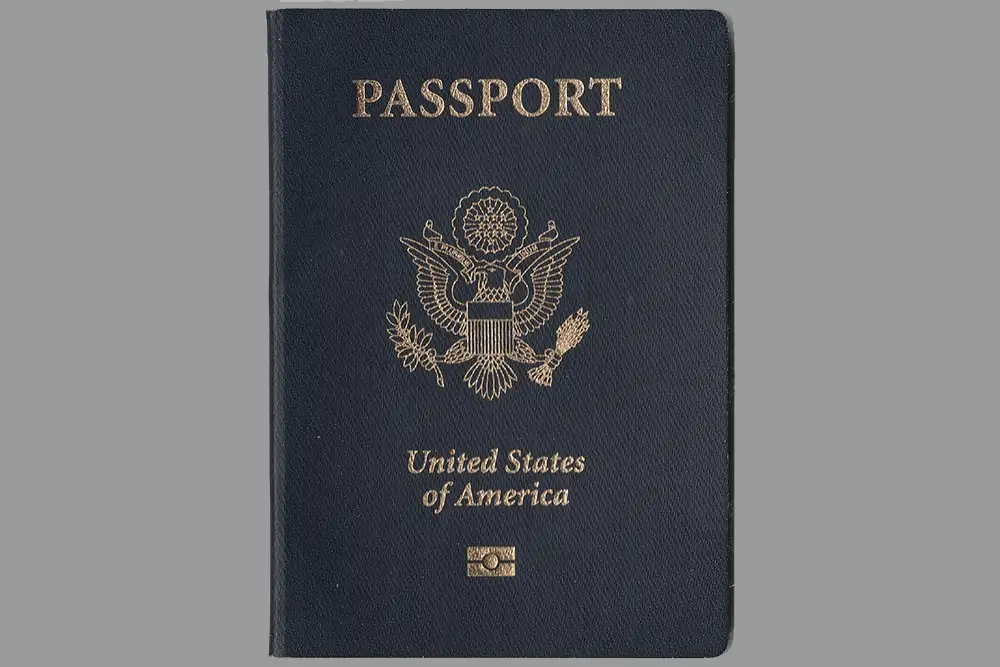
I use a power wheelchair and I am going apply for my first passport this year. I have been told by the passport office that my wheelchair cannot be in my passport photo. Why can’t my wheelchair in my passport photo? I can’t walk at all, so my wheelchair will be with me when I travel. In fact, I consider my wheelchair an extension of my body. Is this true or can my wheelchair be in my passport photo? And if it can’t, how am I suppose to get a passport photo of me without my wheelchair?
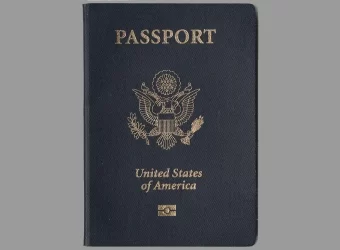
I understand that your wheelchair is an extension of your body, but unfortunately the headrest can be a problem for passport photos. Most headrests are black, and since the background for passport photos is white, they could potentially interfere with the biometric data that is contained on the RFID microchip on US passports. This biometric information helps to positively identify the holder, and it also makes passports more difficult to forge.
The US has been issuing biometric passports since 2007, and passport photos have been held to stricter standards since then. Basically, passport photos need to offer a clear facial image, with no digital alteration, and they need to be taken on a white or off-white background. Glasses, hats or anything that obstructs the face are generally not allowed. If capturing a clear facial image is not possible due to contractures or spasms, an exception could be made with a doctor’s note. There is also a place on the application where you can describe your disability if it effects photo standards.
If you are doing your passport photograph at home, the best thing to do is to drape a white towel over the headrest so it will blend in to the white background. But remember, your facial features must be clearly visible. If they aren’t, the passport agency will reject your passport photo.
Alternatively, you can have your photo taken at a passport agency. They will put a white sheet over the back of your wheelchair, as will other businesses that take passport photos. The advantage to getting the photo taken at a passport agency, is that you know it will be done correctly. To find a passport agency that takes photos (not all do), visit iafdb.travel.state.gov/ and type in your search parameters. You can also search for wheelchair-accessible locations at that site.
Have an Ask the Expert Question?
Barrier-Free Travel Glacier, Yellowstone and Grand Teton National Parks for Wheelchair-Users and Slow Walkers
Power beach wheelchairs at Coronado Beach in San Diego, California
Although a number of San Diego beaches have beach wheelchairs and beach mats, a few locations go one step further. Along with the standard beach wheelchairs — that require a strong helper to push — some San Diego beaches now have power beach wheelchairs to loan.
These San Diego power beach wheelchairs are somewhat of a cross between a standard beach wheelchair with large balloon tires, and a power wheelchair with a joystick. They are easy to operate, and after a brief orientation from the lifeguard you can easily cruise along the sandy beach. And the best part about the power beach wheelchairs is that they allow wheelchair-users independent access to the beach. You don’t need a helper to push you and you can go wherever you want and take things at your own pace. They are also a great option for slow walkers who may tire easily trudging over the sand.
These power beach wheelchairs are available on a first-come basis; however it’s best to call in advance as some locations have limited hours.
The San Diego power beach wheelchairs must stay at least five feet away from the water; however if you’d like to go for a swim, then check out the floating beach wheelchairs at Moonlight Beach in nearby Encinitas. You will need some assistance to wheel these chairs down to the water, but once you hit the surf they float. You can choose to enjoy the ocean by yourself, or have a companion there to assist you. Either way, it’s a great way to enjoy the water.
And if you’d prefer to stay dry, they also have power beach wheelchairs available at Moonlight Beach. For more information about the floating beach wheelchairs or the power beach wheelchairs at Moonlight Beach, call (760) 633-2740.
Barrier-Free Travel California National Park Road Trips for Wheelchair-Users and Slow Walkers
If you’re looking for wheelchair-accessible transportation in Guam, then look no further than Accessible Van Transportation Services (www.avtsguam.com). They serve all 19 villages in Guam and can provide transfers in a wheelchair-accessible van to all the airports, seaports, and hotels on the island. They also offer customized tours of the island, based on the interests and preferences of their clients. For more information about their services call (671) 898-8695 or e-mail avtsguam@gmail.com.
If you’ve always dreamed of enjoying some fun and sun on the beach, but thought it was impossible because you use a wheelchair, then think again. Thanks to an enterprising man on the Gulf Coast, power beach wheelchairs on Alabama beaches are a reality for wheelchair-users and slow walkers..
A Man With a Plan
After retiring to the Gulf Coast, Jerry Nasello was diagnosed with ALS. A diehard beachgoer, Nasello was devastated, but he was also determined to find a way to navigate over the sand without walking. He remembered a power beach wheelchair that he once saw in California, and his analytical mind went to work and he created his own version. And over the years he improved it, so he and other wheelchair users could hit the beach.
His first model used PVC pipe, but subsequent models incorporated lightweight metal frames and non-corrosive alloys into the design. He then added an upholstered seat and a joystick for steering for the perfect beach access solution for wheelchair-users and slow walkers. And shortly thereafter he started a company and began renting his fleet of power beach wheelchair to others.
New Owners Continue The Dream
Sadly Jerry is no longer with us, however his power beach wheelchairs on Alabama beaches are still a reality. Today Beach Power Rentals (www.BeachPowerRentals.com) offers rental power beach wheelchair in Gulf Shores. You can rent them by the day, week or month, and delivery is available for an extra charge. It’s the perfect solution for folks who have level or ramped access to a beach near their accommodations. And if you also need a beach umbrella, manual beach wheelchair, a scooter or a shower chair, they can deliver those too.
Additionally, they can make adjustments to the power beach wheelchairs based on individual needs. They can mount the joystick on either side, or take it off to allow a companion to steer it. They can also adjust the length, height, width and rotation of the footrests. And if there are other adjustments that you need, just let the folks at Beach Power Rentals know, and they will do their best to make it happen.
So get ready to hit the beach in a power wheelchair on your next Gulf Shores visit.
Barrier-Free Travel Favorite Florida Parks for Wheelers and Slow Walkers
A new United Airlines wheelchair sizer tool was recently unveiled. This digital tool enables wheelchair-users to select flights that can accommodate their specific assistive devices. Why is this important? Well, some larger wheelchairs will not fit through certain aircraft cargo doors without being titled to the side or back. And in some cases, tilting those wheelchairs could seriously damage them.
The Wheelchair Sizer Tool
So how does this new United Airlines wheelchair sizer tool work? Well basically you enter your flight criteria on the United Airlines website or app, then all the flights that meet your criteria are returned. Next you click on the “wheelchair” tab in the top right, and enter the dimensions and battery type of your wheelchair. Finally, click on “check size” and the tool will return all the flights that can accommodate your wheelchair.
And here’s the great part. If you aren’t able to take your preferred flight because your wheelchair won’t fit through the cargo door, and there are other more expensive flights that can accommodate your wheelchair, you can get a refund of the fare difference.
New United Airlines Wheelchair Sizer Tool Result of ACAA Complaint
So why did United Airlines develop this new wheelchair sizer tool? Well, it was all the result of an Air Carrier Access Act (ACAA) Complaint, and a subsequent settlement agreement between the Department of Transportation (DOT) and United Airlines.
The original ACAA complaint that triggered the DOT investigation was filed by Engracia Figueroa. Unfortunately United Airlines damaged her customized wheelchair and left her sitting in an airport wheelchair for five hours. And perhaps if she knew that she had other flight options, she would have taken an alternate flight, where her wheelchair didn’t have to be twisted, turned and tilted to fit through the cargo door. And all that manhandling was what damaged her $30,000 assistive device.
Sadly Ms. Figueroa’s story had a tragic ending. United initially refused to replace her wheelchair, and although Ms. Figueroa fought this decision, it took a toll on her. She subsequently developed a pressure sore as the direct result of improper seating, and by the time United Airlines finally agreed to replace her wheelchair, it was too late. Ms. Figueroa died from a subsequent infection on October 31, 2021.
Trial Program at IAH
Another provision of the DOT settlement agreement requires United Airlines to implement a six-month pilot program at George Bush Intercontinental Airport (IAH). This trial program will explore additional equipment and service options that can be used to accommodate passengers who have had their customized wheelchairs damaged or delayed.
Specifically, this program focuses on the time frame between a customer’s arrival at the airport and the time that United returns their wheelchair or provides an appropriate loaner. The goal is to make extended waits — like Ms. Figueroa had — safer and more comfortable. To that end, United is equipping their IAH loaner wheelchairs with Permobil cushions, in order to improve comfort and stability. Additionally, the airline is also reimbursing customers for transportation expenses, should there be an extended wait for the return of their assistive service. That way they can opt to wait in a more comfortable setting, such as a hotel or their own home.
The DOT has agreed to close its investigation of the ACAA complaint filed by Ms. Figueroa, in return for the implementation of these new wheelchair policies. An although it’s great to see these improvements, they wouldn’t be in place had it not for Ms. Figueroa’s ACAA complaint. So remember that the next time you encounter access problems while flying. Filing an ACAA complaint won’t personally help you, but it could help effect change. You can file a ACAA complaint at https://secure.dot.gov/air-travel-complaint.
And lest you think that it’s no big deal, remember that the ACAA has been in effect since 1986. We shouldn’t still be having these problems today. File that complaint if you encounter access-related issues .





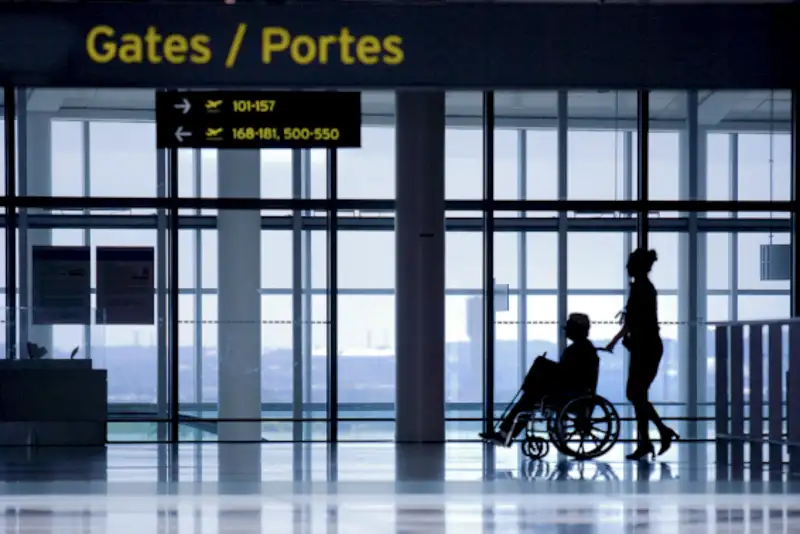 Travel by its very nature requires a good amount of preparation, especially when it includes air travel. Factor a disability into that equation and the complexity increases. With that in mind, here are some helpful tips for flying with a wheelchair.
 Nearly a year ago, on July 26, 2023, the Department of Transportation (DOT) announced a new accessible airline lavatory rule. Unfortunately it will still be many years before single aisle aircraft with more than 125 seat have accessible lavatories, but at least it’s a start. The rulemaking process has been going on for quite some time and the DOT took into consideration comments from consumers, airlines and disability organizations.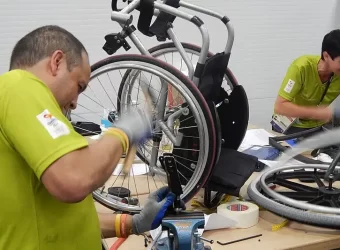
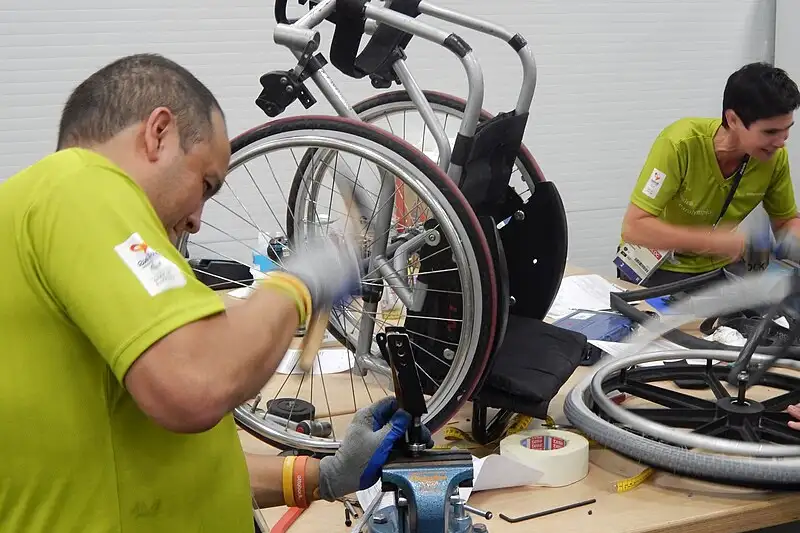 There are numerous things that go into planning an accessible vacation; from finding the right hotel room, to securing airport transportation, and even finding out what local attractions are accessible. And then there are the emergency situations. What do you if something unforeseen happens while you’re on the road? Well my best solution is to play a healthy game of “what if ” before your travel.
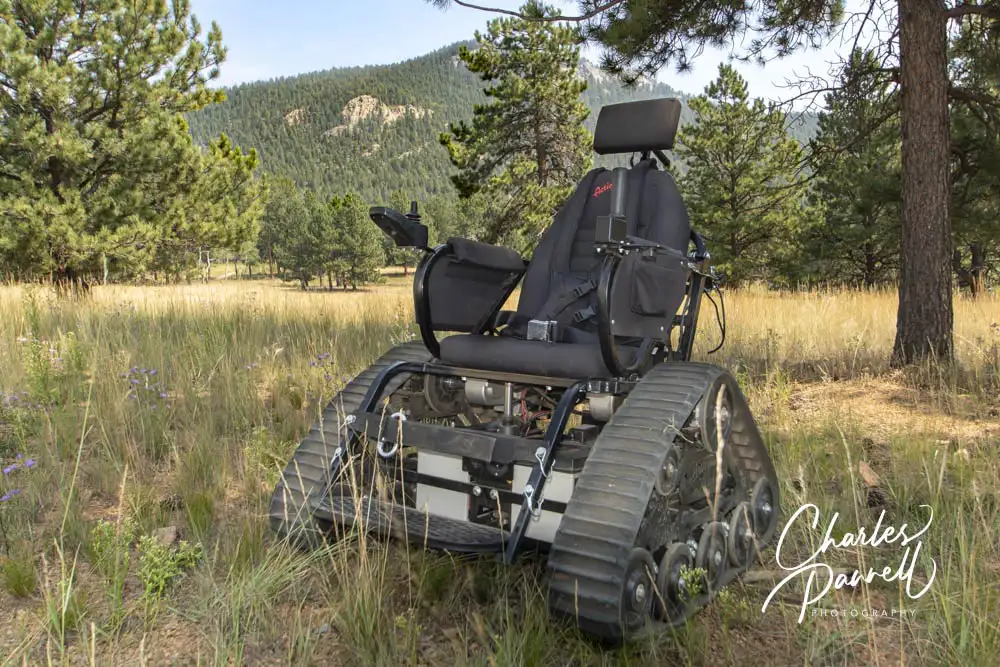 Make no mistake about it, Staunton State Park (




 If you’re looking for wheelchair-accessible transportation in Guam, then look no further than Accessible Van Transportation Services (
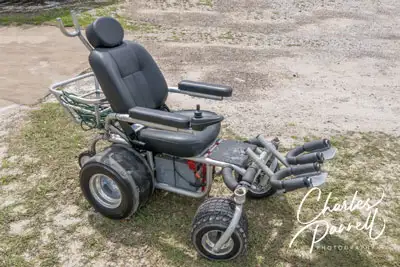 If you’ve always dreamed of enjoying some fun and sun on the beach, but thought it was impossible because you use a wheelchair, then think again. Thanks to an enterprising man on the Gulf Coast, power beach wheelchairs on Alabama beaches are a reality for wheelchair-users and slow walkers..

 A new United Airlines wheelchair sizer tool was recently unveiled. This digital tool enables wheelchair-users to select flights that can accommodate their specific assistive devices. Why is this important? Well, some larger wheelchairs will not fit through certain aircraft cargo doors without being titled to the side or back. And in some cases, tilting those wheelchairs could seriously damage them.