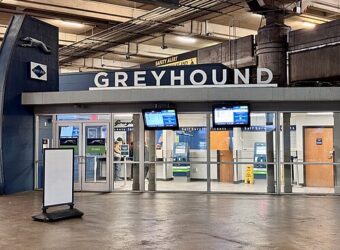
Have you ever had an access-related problem while traveling on Greyhound or FlixBus? If so, the Department of Justice (DOJ) wants to hear from you. After receiving a number of complaints on these carriers, the DOJ is in full investigation mode. But they can’t proceed without your help. They want to hear from you if you’ve ever had your Americans with Disabilities Act (ADA) rights violated. This includes:
Failure to maintain bus lifts.
Refusal to assist disabled passengers.
Refusal to allow service animals aboard.
Abandoned disabled passengers in the middle of their journey.
Failure to assist disabled passengers off the bus at rest stops.
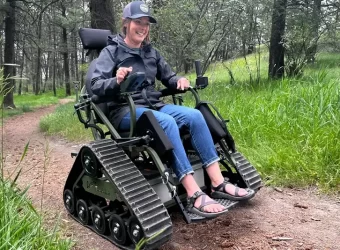
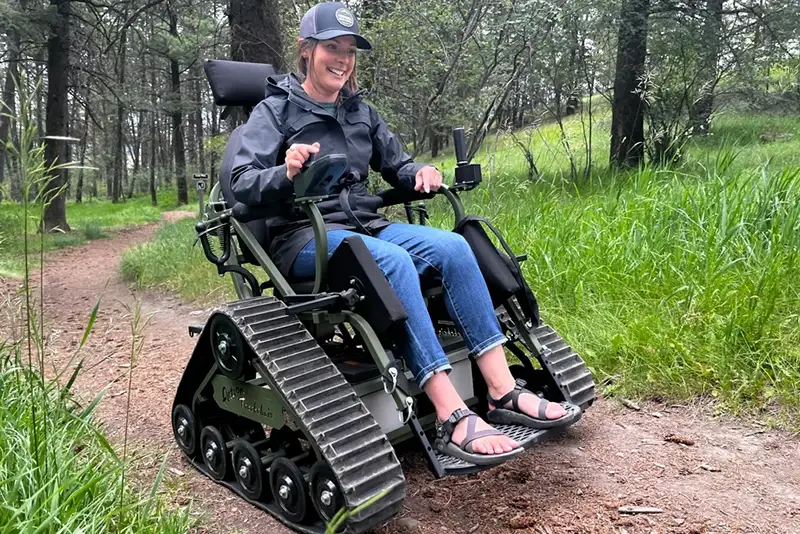
Thanks to a partnership between the Aimee Copeland Foundation (aimeecopelandfoundation.org/) and the Georgia Department of Natural Resources (gastateparks.org/), many Georgia State Parks offer track chairs to disabled visitors. These all terrain wheelchairs are fitted with tank tracks instead of wheels, and can maneuver through mud and over trails that might otherwise be inaccessible in standard wheelchairs. They can be used for hiking, hunting, fishing and other recreational activities. There’s no charge to borrow the track chairs, but a safety certification and a 48-hour advance reservation are required.
Georgia State Park Track Chair Locations
The following Georgia State Parks offer track chairs:
Georgia State Park Track Chair Reservation Process
Advance reservations are required to borrow a Georgia State Park track chair. A valid accessible parking placard is needed in order to make a reservation. A doctor’s statement describing your disability and your need for a track chair is also acceptable. If you do not have either of these, but believe you still qualify, call (770) 866-2815.
All track chair-users must also be accompanied by a companion 18 years of age or older, who is able to navigate the park terrain alongside the track chair. This is important, because the terrain on some of the trails can get pretty rough. The user and the companion must submit a copy of their photo IDs. All documents must be e-mailed to info@allterraingeorgia.org.
Once all the documents are received, the user will be sent a link to a safety/operational tutorial. The user and the companion must view the tutorial and pass an online test. After this is completed, the user will be sent a link and a password to access the online reservation system. They can then make their track chair reservation online
The Freestone Inn, Mazama, Washington (near Eastern edge of North Cascades National Park)
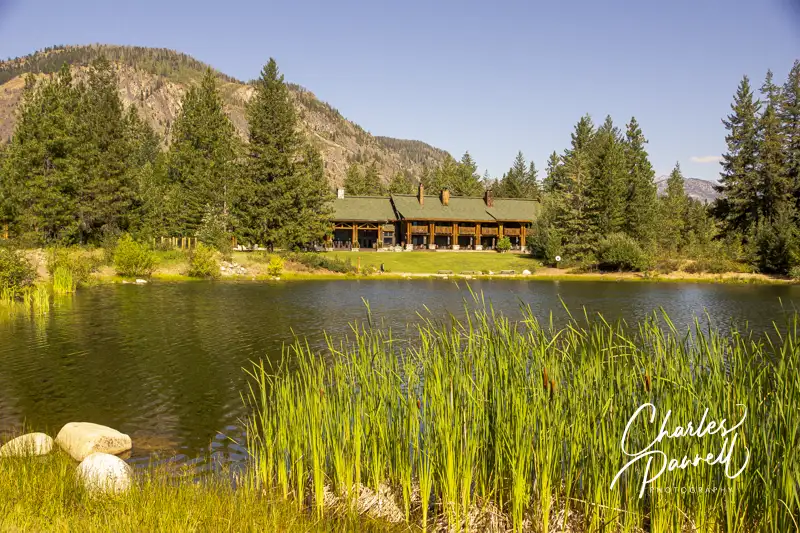
Located about 40 miles from the eastern edge of North Cascades National Park, the Freestone Inn is a true wheelchair-accessible North Cascades retreat. This secluded Mazama property borders a placid private pond, and it’s the ideal spot to kick back, relax and rejuvenate. The property also makes a good home base for exploring the eastern side of the national park. And although the Freestone Inn only has 12 rooms and five suites, the powers-that-be have gone above and beyond as far as access for slow walkers and wheelchair-users is concerned.
An Accessible Room With a View
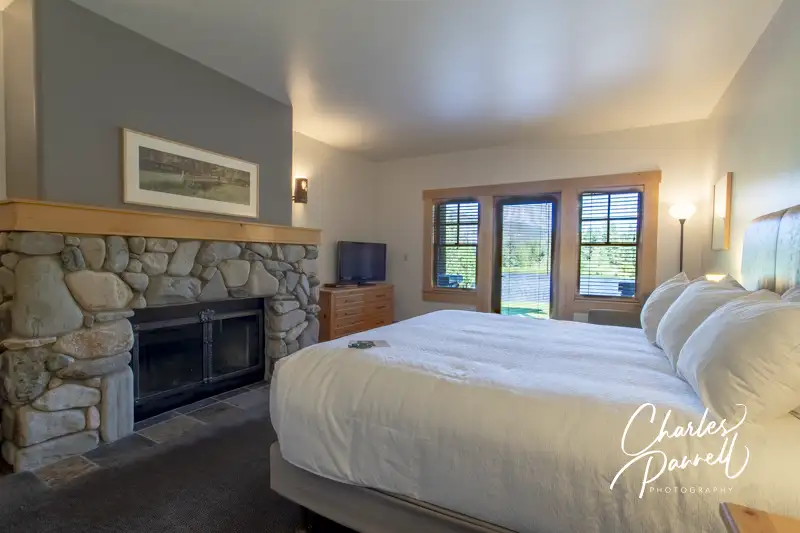
Room 1 at The Freestone Inn, Mazama, Washington (near Eastern edge of North Cascades National Park)
The good access at the Freestone Inn begins the moment you pull up to this lodge-style property. There’s accessible parking in front, ramp access up to the front porch, and barrier-free access over to the lowered key box, where you can complete your no-contact check-in. From there, a barrier-free path leads through the wide front door to accessible room 1, which is located just off the lobby.
Access features in the room include, wide doorways, lever handles, low-pile carpet for easy rolling and excellent pathway access. It’s furnished with a 27-inch high open-frame king-sized bed with wheelchair access on both sides. Other furnishings include a desk with a chair, a nightstand, a dresser, an easy chair and a refrigerator. And for those chilly nights, there’s a large electric fireplace in front of the bed.
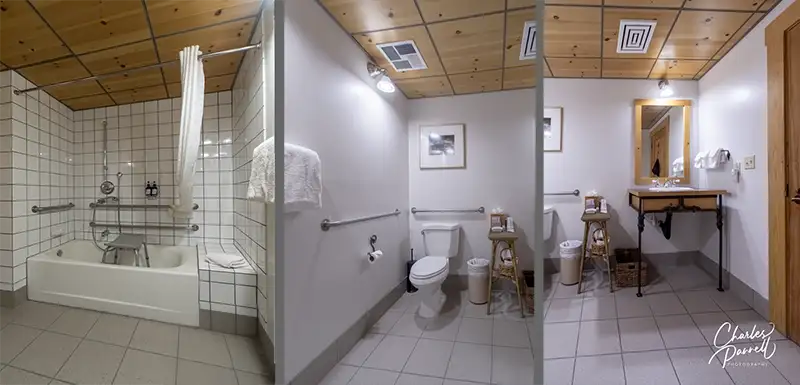
The bathroom includes a full five-foot turning radius, and is outfitted with a tub/shower combination, with grab bars and a hand-held showerhead. There’s a built-in shower bench at the end of the tub, and if that won’t work for you, there’s also a portable shower seat in the oversized bathroom. The toilet grab bars are located on the back and right walls (as seated), and a decorative – but functional — roll-under sink rounds out the bathroom access features.
Bathroom in room 1 at the Freestone Inn, Mazama, Washington (near Eastern edge of North Cascades National Park)
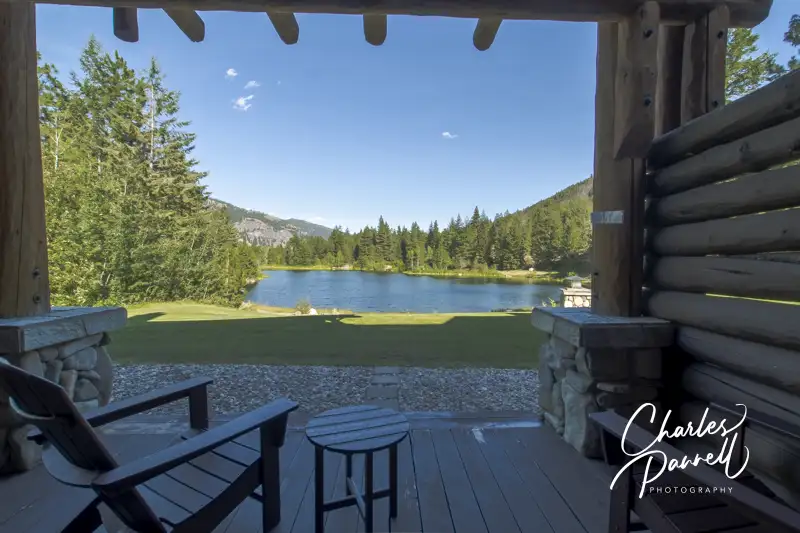
There’s also a wide back door that leads out to one of the nicest features of this room – a wheelchair accessible porch with a sweeping water view. It’s furnished with a pair of Adirondack chairs, but there’s still plenty of room for even a large wheelchair. And if you’d like the chairs removed, just ask the staff, as they are happy to accommodate most any request.
Porch view at the Freestone Inn, Mazama, Washington (near Eastern edge of North Cascades National Park)
The Little Extras
The Freestone Inn is far from a chain hotel, in ambiance, amenities and service. First off it’s a quiet and relaxed property. Because of the low number of guest rooms and the expansive public space, you’ll never feel crowded there. And at times it feels like it’s your own private lakeside retreat.
One of the best features of the property is the pond that sits in the back of the inn. Even if you can’t manage the trail, it’s still a relaxing and refreshing feature to view from your private porch. There is a .4-mile path that circles the pond that some slow walkers may be able to navigate. It’s mostly hard-packed dirt, but there are a few short rocky spots along the way. It’s not a good choice for most wheelchair-users, but again, you can still enjoy it from your private porch.
There is Wi-Fi at the property, although to be honest it’s not really reliable. But you’re on vacation, so ditch the phone and enjoy Mother Nature. There are TVs in the rooms, but there’s no cable; however there’s a large selection of DVDs available to borrow.
And although the accessible room doesn’t have a microwave, there’s a shared kitchen down at the end of the hall. It has a microwave, sink, and a good supply of paper plates and utensils.
If you’d like to leave the cooking to someone else, then stop by Jack’s Hut, which is located across the parking lot from the inn. There’s good wheelchair access to this restaurant, which offers breakfast sandwiches in the morning, and pizza, beer and snacks in the afternoon. The food is yummy, the service is a great, and it’s the perfect way to top off any wheelchair-accessible North Cascades adventure.
Barrier-Free Travel Washington National Parks for Wheelers and Slow Walkers
I use a power wheelchair and I don’t drive or own a vehicle at home. I live in a big city and pretty much rely on public transportation. When I do take a taxi, I must remain in my wheelchair, as I cannot transfer to a standard seat.
I’m planning on taking several trips in the US and although I know that accessible cabs and van hires are available in some places, their service seems spotty and expensive. With the advent of ride sharing services I’m wondering how reasonable it is for me to rely on them for my future travels. Are Uber and Lyft wheelchair-accessible? I’ve heard they have accessible vehicles in some areas, but that’s about it. Can you give me more information on what wheelchair-accessible ride share services are available in the US, and how I can go about reserving them for my future travels.
The short answer to that question is that both Uber and Lyft have limited accessibility for power wheelchair-users; however they do have other services that will work for folks who use manual wheelchairs, or just need a little extra assistance.
Technically these ride sharing services are not required to have wheelchair-accessible vehicles in all of their locations, as they are considered a service that subcontracts out transportation rather than a transportation company. In short, they operate a network, while the individual contactors maintain their own vehicles and provide rides to customers. That said, under a 2022 settlement agreement, they are prohibited from charging waiting fees if disabled patrons happen to take longer to board their vehicles.
So although there’s not across the board accessibility in all locations, both Uber and Lyft can offer some wheelchair-accessible services in select US cities. Here’s how to secure an accessible ride on them.
Uber
Uber provides two type of accessible vehicle options — Uber Assist and Uber WAV. Uber Assist is for people who can transfer from their wheelchair or just need a little extra help getting into the vehicle; while Uber WAV is for wheelchair-users who cannot transfer to a standard seat.
Uber Assist drivers are trained to give assistance to slow walkers and wheelchair-users. Drivers can assist with transfers, and they have room to accommodate folding wheelchairs, collapsible scooters and walkers in their vehicles. These vehicles are not adapted, and they do not have ramps or lifts. Still, if you just need a bit of assistance, then Uber Assist is for you. To see if it’s available, log into the app, select your pick up point and destination, and scroll down to see if Uber Assist is one of the choice. It’s now available in over 40 cities on Uber X rides.
Uber WAV, on the other hand, provides transportation in a wheelchair-accessible vehicle. These vehicles have ramp of lift access so riders do not need to transfer to a seat. You order it the same way you order any Uber vehicle — just open the Uber App and enter your location and destination. If Uber WAV is available in your area it will appear in the choices. It should be noted that because of limited availability, wait times for Uber WAV scan be longer than for standard vehicles.
Uber WAVs are available in these US cities.
Boston
Chicago
Los Angeles
New York
Philadelphia
San Francisco
Washington DC
Lyft
Lyft also provides wheelchair-accessible vehicles (WAV). These WAV rides can fit a fixed frame wheelchair, and have ramp or lift access. You can reserve one much in the same way you reserve an Uber WAV. Once you download the Lyft app, go to the settings tab and check “wheelchair-access”. After you do this you will see a ride type called “wheelchair” when you request a ride. Just click on that, and you are good to go.
As with Uber, Lyft only has wheelchair-accessible vehicles in select markets. If you request a ride in an area that doesn’t have wheelchair-accessible vehicles, Lyft will send you a list of local resources that can provide wheelchair-accessible transportation.
Lyft drivers will assist with boarding wheelchair passengers. Additionally, you don’t need to request an accessible vehicle if you can transfer to the vehicle and stow your assistive device in the trunk. Drivers will also assist with the storage of mobility equipment.
Lyft WAVs are available in these US cities.
Boston
Chicago
Dallas
Los Angeles
New York City
Philadelphia
Phoenix
Portland
San Francisco
Ask a Local
Of course, true wheelchair access with ride share companies is still limited. Additionally, because of driver turnover it’s not always consistent. For the most accurate updated information, it’s best to talk to someone local who uses these services on a regular basis. They will be able to tell you about the local availability of Uber and Lyft wheelchair-accessible vehicles. Alternatively, you can also ask someone who has visited the area recently.
Local Facebook groups are a good resource for this information. Search for them in or around your destination. Additionally, some Facebook accessible travel groups may have folks who have recently visited your destination and are willing to share updated local transportation information.
Finally, be sure to plan ahead and give yourself plenty of extra time, as the waiting times for WAVs may be longer than for standard vehicles. Hopefully as technology and the need expands, we will start to see reliable ride share options in even more cities.
Barrier-Free Travel Yosemite, Sequoia and Kings Canyon National Parks for Wheelers and Slow Walkers
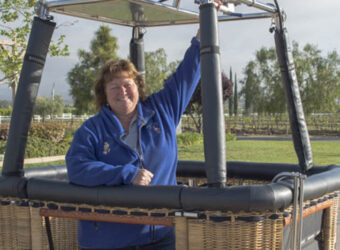
I first spoke with Kim Lynch about 11 years ago. At that time she and her husband David had just taken the reins of Reach for the Stars (https://www.reach4thestars.org/), a non-profit that provides accessible ballooning experiences for everyone. I was doing a feature on accessible ballooning, and since we were traveling down to Temecula — her home base — we arranged for a meet up and a photo shoot of her balloon.
I was impressed with her, and her husband David from the moment we first met.
Kim & David & Accessible Ballooning
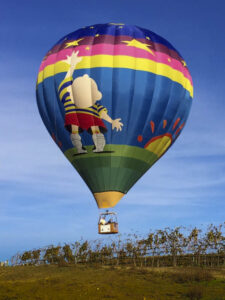
Kim and David were both balloon pilots, and they loved sharing their experience with everyone. To say they were pioneers in the ballooning world is probably an understatement, as they designed one of the first wheelchair-accessible gondolas, so everyone could join in on the fun. Their gondola held one wheelchair user and two able bodied-companions; and the money that they raised from their flights went to the charitable arm of their organization. And as a result of their year-round fundraising efforts, they were able to offer free accessible tethered flights at many children’s camps and events. They really were quite a team.
You may have noticed that I used the past tense in the last paragraph. That’s because, sadly Kim & David passed away recently, as the result of an automobile accident.
And although this is a sad time in the ballooning community, it’s also an appropriate time to remember these pioneers of access. After all, there are no regulations that require hot air balloons to be wheelchair-accessible. But Kim and David made that happen many, many years ago. And they shared this accessibility freely with children and other folks who couldn’t necessarily afford a hot air balloon ride.
The didn’t do it for the headlines — they did it for the access. As did so many other access pioneers. So the next time you get into an accessible vehicle, hike an accessible trail, or even explore the woods on a track chair, take a few moments to quietly thank those pioneers who made it all possible. May of them, like Kim and David, are gone but not forgotten.
As the ballooning community says, soft landings Kim and David. You will be greatly missed. Thanks for your advocacy!
Located in Lake Superior, just off the Bayfield Peninsula, Apostle Islands National Lakeshore (www.nps.gov/apis/) is composed of 21 islands. Early settlers only found 12 of the islands though, so they named the site for the 12 apostles. The only way to explore the lakeshore is by boat – your own or a tour boat – and although there are a number of choices, Apostle Islands Cruises (www.apostleisland.com) is the best wheelchair-accessible Apostle Islands cruise option.
Anchors Aweigh
Based in Bayfield, Wisconsin, Apostle Islands Cruises offers several tours, including the comprehensive Grand Tour. This 55 mile scenic cruise departs from the Bayfield City Dock, aboard the accessible catamaran, Archipelago.
Accessible parking is available on Front Street near Rittenhouse, in front of the Keeper of the Light Gift Shop. There’s ramp access to the Apostle Islands Cruises ticket office, which is located on the corner of Front and Rittenhouse. From there it’s a short level walk out to the dock; however a loaner wheelchair is available for folks who can’t manage the distance.
There is level access to the Archipelago, and wheelchair-users and slow walkers are preboarded upon request (just ask at the ticket office). There’s plenty of room to maneuver a wheelchair around the spacious main deck, which is lined with large windows for panoramic views. There’s also a head on the the main deck that may work for some slow walkers. It has a two-inch coaming and a 28-inch wide doorway, and it’s equipped with one grab bar. On the plus side, the cruise is only 2.5 hours long so it’s easy to plan ahead if this setup won’t work for you.
Best bet is to buy your tickets online, as this is a popular summer tour. That said, feel free to call Apostle Islands Cruises if you have any access related questions or concerns (800-323-7619), as the staff is quite helpful.
The Wheelchair-Accessible Apostle Islands Cruise
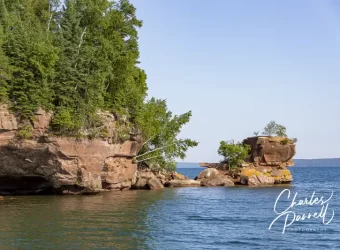
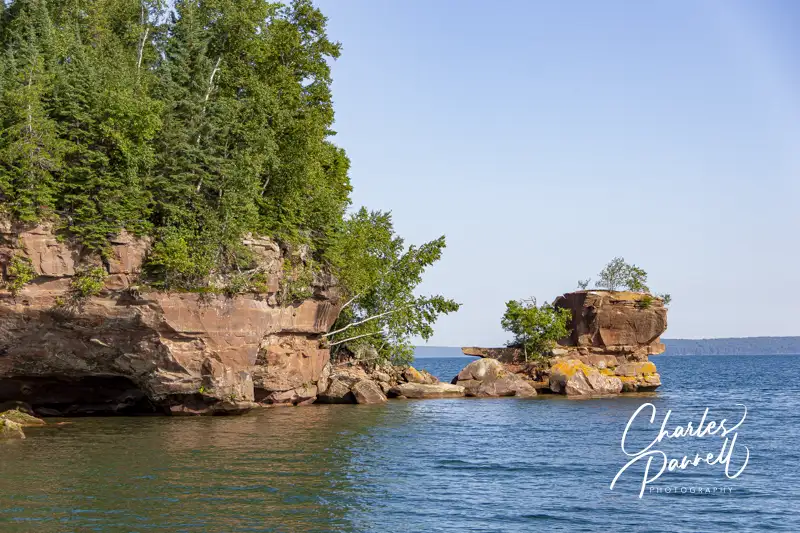
The wheelchair-accessible Apostle Islands Grand Tour features a good overview of the history and natural features of the area, and includes an on-board guide. From the harbor the cruise heads past Basswood Island, which is know for it’s “sea stack” rock formation on the north shore. After that the cruise continues north past the sandstone carved formations on Hermit Island and then passes the tallest of the Apostle Islands — Oak Island.
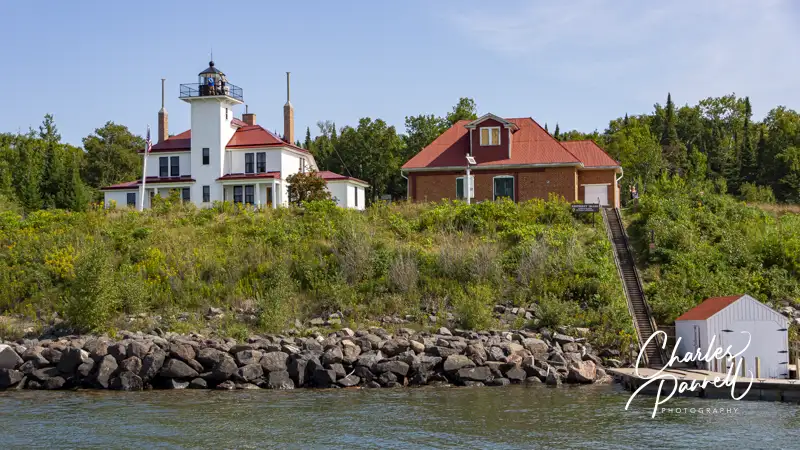
Raspberry Island in Apostle Islands National Lakeshore
Next the captain pulls in to give passengers a close look at the Raspberry Island Lighthouse. Built in 1862 this duplex building features the light tower in the middle with living quarters on both sides. The lighthouse keeper lived in one side, while the assistant lighthouse keeper lived in the other.
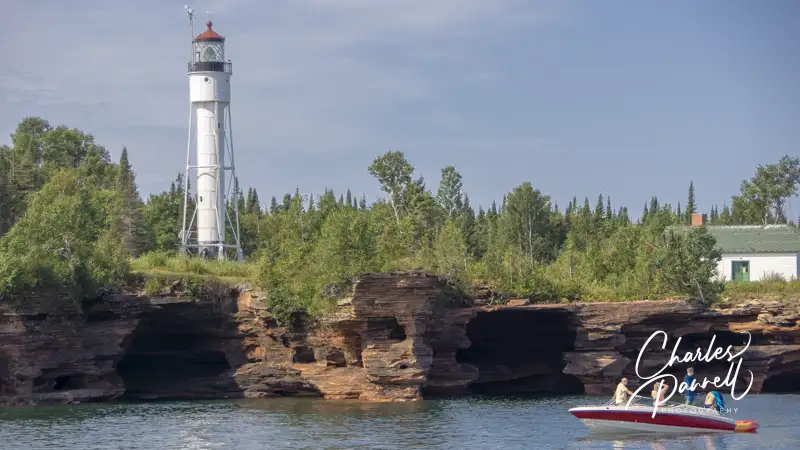
Devil’s Island in Apostle Islands National Lakeshore
After that the cruise continues north past Bear Island before it circles Devils Island for a look at another lighthouse and the rocky southern shore. Native Americans believed the island was haunted — hence the name — because the waves that crashed against the rocks sounded like a woman screaming. Today the shore is a popular spot for sea kayakers. The highlight of the island — Devils Island Light Tower — dates back to 1898, and it’s still in service today.
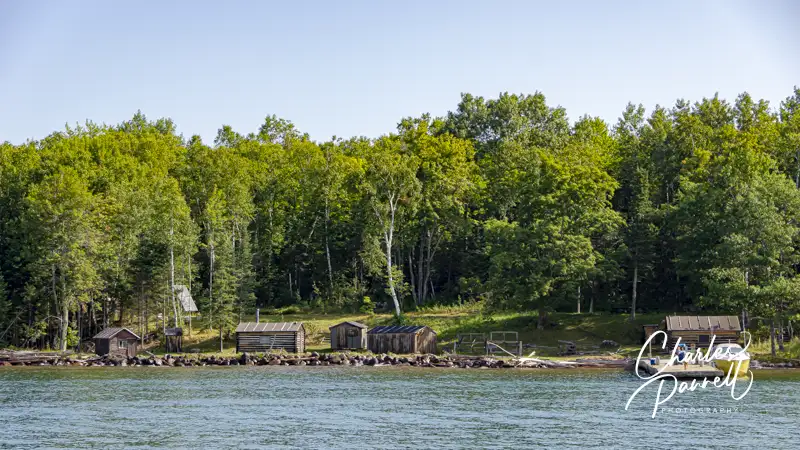
Finally, the cruise heads south past the fish camp on Manitou Island, then skirts Stockton Island, before it returns to the Bayfield City Dock. It’s a pleasant and educational cruise, and a nice accessible way for wheelchair-users and slow walkers to explore this remote national lakeshore.
Fish Camp on Manitou Island in Apostle Islands National Lakeshore
Thanks to the folks at Open Road Access (openroadaccess.co.uk/airport-hire/), wheelchair-accessible rental vans at UK airports are now available. This local company provides service to all the major UK airports, including Heathrow, Gatwick, Manchester, Liverpool, Birmingham and Edinburgh. You can rent a vehicle for a day, a week, or even longer; and the quoted price includes breakdown coverage, comprehensive insurance and unlimited mileage. Open Road Access will deliver the vehicle to your arrival airport, and you can just drop it off there at the end of your stay. And they will also provide a thorough orientation of the vehicle, so you will be comfortable driving it on your holiday.
Rental vehicles come in a variety of sizes and include the Ford Connect, Renault Traffic, Peugeot Horizon and Ford Custom. They all come outfitted with ramps or lifts and tie downs, so you can just roll in and go. Their small vehicle has room for one wheelchair-user and four more passengers, while the medium vehicle can accommodate one wheelchair-user plus four or five additional passengers. And their large vehicle can accommodate one or two wheelchair-users plus four to five other passengers. All vehicles also have ample space for baggage and additional equipment.
And with 24/7 customer support you can have a worry-free holiday. For more information about these wheelchair-accessible rental vans at UK airports, check out the Open Road Access website or give them a call at +44 300 045 4505.
Barrier-Free Travel 101 Accessible Vacations Travel Ideas for Wheelers and Slow Walkers
Thinking about visiting a US national park in a wheelchair? Although most of the parks have rugged back country areas, the majority have also added access upgrades so that wheelchair-users and slow walkers can enjoy these national treasures. As an added bonus, admission discounts are available to seniors and people with a permanent disability. That said, advance planning greatly enhances any national park visit; so with that in mind, here are some tips and tricks to help save time, money, and avoid disappointment on your next national park adventure. Top of Menu
Admission Passes
If you’d like to save a few bucks on your next national park visit, then pick up one of these discount passes at any national park entrance station. They all provide free admission to the passholder and all passengers in the same vehicle, but they each have different eligibility criteria.
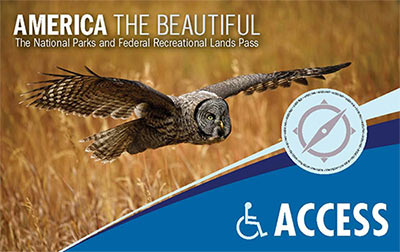
The America the Beautiful Access Pass is available to U.S. citizens or residents with a permanent disability. Proof of disability and residency is required in order to obtain this free lifetime pass. It’s also available by mail for a small handling charge.
The America the Beautiful Military Pass is available to all active duty service members and veterans of the US Armed Forces. There’s no charge for this yearly pass, but a Common Access Card, military ID, veteran ID or a veteran designation on a driver’s license is required to obtain one. This pass also available by mail for a small handling charge,.
The Senior Pass is available to U.S. citizens or permanent residents who are at least 62 years old. This lifetime pass costs $80. An annual Senior Pass is also available for $20, and the cost of that annual pass can be applied to the purchase of a lifetime pass. Proof of age and residency or citizenship are required to obtain either pass. These passes are also available by mail for an additional handling charge.
The National Park Annual Pass is available to anyone and it’s a good choice if you plan to visit many national parks. The pass costs $80 and it’s valid for admission to all national parks for a year. An annual pass for each individual park is also available, and the price for these passes varies depending on the park. This park-specific pass is an attractive choice for folks who live near a national park and plan numerous visits. Both passes are available though the mail for an additional handling charge.
Finally, the free Annual 4th Grade Pass is available to all 4th graders. It’s valid for the duration of the 4th grade school year and the following summer. Paper vouchers can be obtained at everykidoutdoors.gov and exchanged for an Annual 4th Grade Pass at any national park entrance. This pass is also available to home-schooled students.
For more information about these passes, visit store.usgs.gov. Do not purchase at any other websites besides those mentioned here, the official website for each national park or the national park entrance, as scam websites do exist.
A nonresident fee will be charged to each non-US resident aged 16 or older who visits these popular national parks.
Acadia
Bryce Canyon
Everglades
Glacier
Grand Canyon
Grand Teton
Rocky Mountain
Sequoia & Kings Canyon
Yellowstone
Yosemite
Zion
Non-US residents will pay the standard park entrance fee, plus a $100 surcharge for each person aged 16 or older. Alternatively, non-US residents can purchase a non-US resident annual pass for $250, which covers all passengers in the vehicle.
Even if you don’t have a park pass, you can still get free admission on one of the “fee free days” each year. During these days, the park gates swing open and no entrance fees are collected. Unfortunately the parks get pretty crowded on those days. Fee free days are only for U.S. residents. Non-U.S. residents will have to pay the entrance fee and nonresident fee. Here’s a list of the fee-free days, but it’s best to visit www.nps.gov for the exact dates, as some do change slightly every year.
In an effort to control the crowds, some of the more popular national parks require advance reservations during peak seasons. These reservations are required even if you have a national park pass. They are not available at the parks, and visitors who don’t have one will be turned away. The following parks currently require advance entrance reservations.
Arches National Park Carlsbad Caverns National Park Glacier National Park Rocky Mountain National Park Yosemite National Park
Timing is everything, when it comes to a national park visit. Generally speaking, most parks experience peak visitation between Memorial Day and Labor Day. Unfortunately many parks also have abbreviated seasons, so it’s difficult to visit outside of prime time. If you must visit during the high season, try to avoid summer weekends and holidays, as parking, lodging and campsites are difficult — if not impossible — to find at those times.
Additionally, an early morning visit will help circumvent the crowds. The magic hour is usually 10 AM, after which the bus tours start to roll in to the parks. It’s also not unusual to wait an hour in the entrance queue at the more popular national parks, if you arrive in the afternoon during peak season. On the other hand, if you get an early start, you’ll have a more relaxing visit, and you won’t have to fight the crowds. The best way to have a more enjoyable experience is to plan for several morning excursions, if you plan to visit a national park in a wheelchair. Top of Menu
Road Closures
Although many parks are open year-round, some experience seasonal road closures. For example, Going-to-the-Sun Road, which traverses Glacier National Park, is closed from late fall to late spring due to heavy snow. Sections of the road open incrementally, and the entire length is not passable until June or July. Likewise, Tioga Road in Yosemite National Park is usually closed from November to May, and the park is inaccessible from the Tioga Pass Entrance at that time.
Some parks may also experience temporary road closures due to extreme weather conditions. It’s not unusual for Yosemite to close some roads during heavy snow; and the park has closed entirely a few times during heavy floods. And although Bryce Canyon National Park is open year-round, there may be temporary road closures after snow storms, until the roads are cleared.
It’s a good idea to always carry chains or cables when traveling through the western national parks, as spring and fall snow storms are not uncommon. Most parks also have a weather and road condition telephone number posted on their website; however it’s also a good idea to monitor the park’s twitter and Facebook feeds for breaking news about road closures. Top of Menu
Altitude
It’s a good idea to take note of the elevation of the places you plan to visit in the national parks, especially in the Western U.S. Although the symptoms of altitude sickness generally do not appear at elevations under 8,000 feet, wheelchair-users, slow walkers and people with compromised immune systems may feel the effects of increased altitudes at significantly lower elevations. Symptoms can include headaches, dizziness, shortness of breath, lethargy, insomnia and gastrointestinal disturbances.
If you are unfamiliar with the effects that higher elevations have on your body, it’s best to take it slow and drink plenty of water for the first few days at any increased elevation, especially if you live at sea level. Additionally, you may want to consult your doctor regarding the effects that increased elevations may have on your specific condition, before you visit a national park in a wheelchair. Top of Menu
Loaner Wheelchairs and More
Many national park visitor centers have free loaner wheelchairs for visitors who can’t walk for or who tire easily. In most cases the loaner wheelchairs cannot be taken to other areas of the park. Additionally, they are available on a first-come basis, so if you absolutely need an assistive device to get around, it’s best to bring one with you.
Some parks go a step or two beyond providing a standard wheelchair. For example, Redwood National Park has beach wheelchairs and all-terrain track chairs available at many locations; while Great San Dunes National Park has a sand wheelchair available. Additionally, Yosemite National Park has a handcycle rental concession, so everyone can explore the 12 miles of paved bicycle trails that wind through the park. And if you plan to visit Rocky Mountain National Park, be sure and pick up a free loaner track chair at the Estes Park Mountain Shop (www.estesparkmountainshop.com/) to explore the park. Top of Menu
Service Animals
If you are planning to visit a national park in a wheelchair, and you have a service animal, there are no restrictions on the areas that you and your service animal may visit. This includes public buildings, lodges, shuttle buses, campgrounds and outdoor areas. Under the ADA, a service animal is defined as a dog that is individually trained to do work or preform a task for a disabled person. Furthermore, the work or task that the dog provides must be directly related to the person’s disability.
Dogs whose sole function is to provide comfort or emotional support — Emotional Support Animals — do not qualify as service animals under the ADA. Emotional Support Animals are subject to the park’s pet regulations and restrictions.
It should also be noted that although some organizations sell “service animal registration” documents on-line, these documents do not convey any rights under the ADA, and the Department of Justice does not recognize them as proof that a dog is a service animal.
For more information on the ADA definition of a service animal, visit www.ada.gov/. Top of Menu
Wheelchair-Accessible Lodging
Many national parks have hotels or lodges; and although many of the properties are historic, access upgrades have been added over the years. As a result a good number of in-park lodges offer updated wheelchair-accessible rooms with roll-in showers.
All of the in-park lodgings are managed by authorized concessionaires, who have contracted with the National Park Service, and operate under strict guidelines. They are responsible for the daily operations of the facilities, as well as improvements and upgrades. It’s important to deal with these concessionaires directly when you make a reservation; as not only will you get the best price there, but you will also have access to employees who can block the accessible rooms and describe the access details of each available unit.
Unfortunately these concessionaires do not always come up first in internet searches because paid advertisements appear before them. Some of these paid advertisements even list “national park lodges” that are located many miles outside the parks, which is misleading to people who are unfamiliar with the local geography. The authorized concessionaires for all the national park lodges are listed below, so look for their branding on any booking engine for national park properties. To avoid disappointment, deal directly with these concessionaires when making plans to visit a national park in a wheelchair.
Big Bend National Park (Chisos Mountains Lodge) Bryce Canyon National Park (The Lodge at Bryce Canyon) Grand Canyon National Park (Grand Canyon Lodge at the North Rim) Grand Teton National Park (Signal Mountain Lodge) Isle Royale National Park (Rock Harbor Lodge) Mesa Verde National Park (Far View Lodge) Olympic National Park ( Sol Duc Lodge, Lake Quinault Lodge) Yosemite National Park (Curry Village, Yosemite Valley Lodge, The Ahwahnee, Wawona Hotel)
Grand Canyon National Park (Yavapai Lodge) Kings Canyon National Park (Cedar Grove Lodge, John Muir Lodge, Grant Grove Cabins) Olympic National Park (Kalaloch Lodge) Sequoia National Park (Wuksachi Lodge) Shenandoah National Park (Skyland Lodge, Big Meadows Lodge, Lewis Mountain Cabins)
Death Valley National Park (Inn at Death Valley, Ranch at Death Valley) Glacier National Park (Swiftcurrent Motor Inn, Many Glacier Hotel, Lake McDonald Lodge, Rising Sun Motor Inn, Village Inn Motel) Grand Canyon National Park (El Tovar Hotel, Kachina Lodge, Thunderbird Lodge, Maswik Lodge, Bright Angel Lodge) Yellowstone National Park (Canyon Lodge & Cabins, Lake Yellowstone Hotel, Lake Lodge Cabins, Mammoth Hot Springs Hotel, Roosevelt Lodge, Old Faithful Lodge, Old Faithful Snow Lodge, Old Faithful Inn, Grant Village Lodge) Top of Menu
Wheelchair-Accessible Transportation
Some of the busier national parks offer shuttle bus transportation within the parks, to cut down on traffic. And although they are not mandatory, it’s a good idea to make use of them when they are offered, as parking is at a premium during peak season in the more popular national parks.
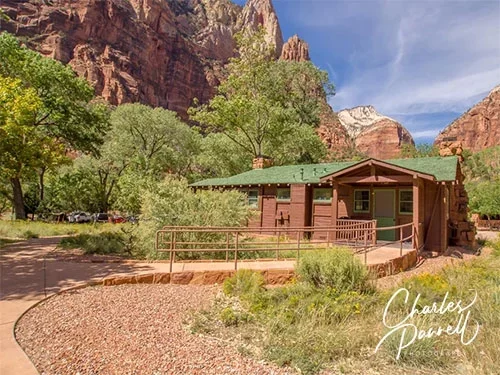
Grand Canyon National Park, Yosemite National Park, Sequoia National Park, Bryce Canyon National Park, Denali National Park and Zion National Park all have accessible shuttle buses. And although most of the shuttles are optional the Zion shuttle is mandatory, north of Canyon Junction from March to October, on weekends in November, and during the holiday season in December. Zion Lodge guests are given special passes at the entrance station that allow them to drive to the lodge parking lot. Visitors who need to carry along additional medical equipment or who cannot ride the Zion shuttle for medical reasons are eligible for a Yellow Pass Permit, which allows them to drive their personal vehicles on Zion Canyon Drive. The pass is free and is available at the Zion Canyon Visitor Center.
Some parks — such as Yosemite and Grand Canyon — also allow disabled visitors to drive on roads that are normally closed to vehicles. Yosemite visitors who have a disabled placard can drive on Happy Isles Road and Mirror Lake Road; while Grand Canyon visitors who have a mobility issue can get a Scenic Drive Accessibility Permit, that allows them to drive on Yaki Point Road and Hermit Road when it’s closed to private vehicles. A disabled placard is not required in order to obtain this permit; however vehicles are prohibited from parking in accessible parking places in the park without a disabled placard or license plate. The permit is available at the visitors centers and park hotels.
Some communities also offer shuttle transportation from gateway cities to the national parks. Groome Transportation (groometransportation.com/flagstaff/) provides accessible transfers between the Flagstaff Amtrak Station and Pulliam Airport to Maswik Lodge on the South Rim of the Grand Canyon. Accessible vehicles are available but they must be requested at least 24 hours in advance. And over in California, YARTS (yarts.com) provides fixed route public transportation to Yosemite from the surrounding gateway communities. There are four YARTS routes, which enter the park through each of the main park entrances. All YARTS buses are wheelchair-accessible; however passengers must contact YARTS at least 48 hours in advance insure availability. Top of Menu
Camping
Most national parks have campgrounds with accessible campsites that are operated by the National Park Service or private concessionaires. These sites usually include a paved parking space, a level tent site, a raised grill and an accessible picnic table. They are located near an accessible shower house which usually has a roll-in shower, an accessible toilet stall and a roll-under sink.
Some accessible campsites also have raised tent platforms, which are built at wheelchair height for easier transfers. Grand Teton offers the raised tent platforms at Jenny Lake Campground and Signal Mountain Campground; while they are available in Yosemite at Upper Pines Campground, Lower Pines Campground and Wawona Campground.
Some parks may require proof of disability in order to occupy an accessible campsite. If nobody has a need for an accessible site, able-bodied campers may be asked to move to a non-accessible site if a qualified person with a disability has a need for the accessible site. In most cases, accessible campsites may not be reserved by able-bodied campers unless they are the only sites left at the time of reservation.
Reservation for accessible campsites may be made at www.recreation.gov or on the concessionaire’s website. Top of Menu
Ranger Programs
Free ranger-led programs are available throughout the day at most national parks. The programs include lectures about the local environment, guided hikes and evening campfire programs. Most of the lectures and campfire programs are wheelchair-accessible, but some of the ranger-led hikes take place on inaccessible trails. Consult the park newspaper or check at the visitor center for a current schedule and the accessibility details of the ranger-led programs.
Some national parks also offer special ranger programs that require advance registration, For example, the excellent Ride with a Ranger accessible bus tour is offered twice a day in Zion National Park. There is no charge for the tour, but reservations must be made in person at the Zion Canyon Visitor Center. Seating is limited and reservations can be made up to three days in advance.
Likewise Arches National Park sporadically holds night sky viewing programs in their nicely accessible viewing space at Panorama Point. The space includes interpretive panels, bench seating and a presentation bay. It’s a great vantage point day or night.
And don’t forget about the Junior Ranger Program, which isn’t just for kids. Pick up a junior ranger field manual at the park visitor center, complete the activities and get a junior ranger badge upon completion. There’s no cost for the field manual or the badge, and some parks even throw in a cool extra treat, like the moose eraser I picked up at Isle Royale National Park. Even if you don’t go the full nine yards and get the official badges, you’ll still learn a lot about the national parks you visit by completing the activities in the junior ranger field manuals. Top of Menu
Wheelchair-Accessible Trails
Most national parks have at least one wheelchair-accessible trail; however that doesn’t mean it’s a completely level trail. According to ADA guidelines, accessible trails must be wide and on firm ground; and although most of the trail will most likely have a slope of less than 5%, no more than 30% of the the total length of an accessible trail may have a running slope greater than 8.33%. Additionally, running slopes between 8.33% and 10% are only allowed in 30-foot segments, with resting intervals at the top and bottom of each segment. And the running slope of an accessible trail may never exceed 12%. On the plus side, many accessible trails also include signs that list their length, width, grade and cross slope.
The most accessible trails are usually located near visitor centers. For example, up in North Cascades National Park, the extremely accessible .05-mile Sterling Munro Boardwalk starts in the back of the visitor center and winds through the forest out to a scenic viewpoint. This trail is wide and level, and doable by most people.
Boardwalks are also popular around wet areas; in fact Yellowstone National Park has a number of accessible boardwalks near the park’s geothermal features. Midway Geyser Basin is a mile-long boardwalk that gains some elevation but the slope is gradual, and there are level spots to stop and rest along the way. There are wide level viewing spots along this trail that circles Excelsior Geyser, Turquoise Pool, Opal Pool and Grand Prismatic Spring – the largest hot spring in the park. It’s truly one of the nicest — and most colorful – geothermal areas in the park.
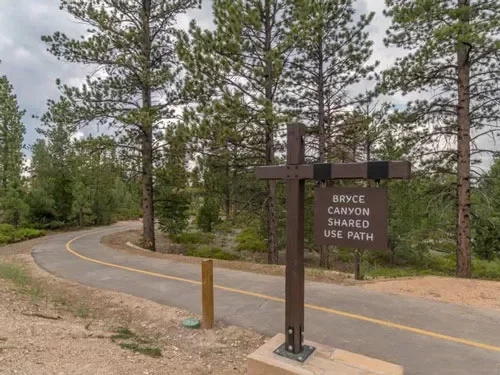
Don’t overlook multiuse trails either, as many of them are wide, paved and wheelchair-accessible The Bryce Canyon Shared Use Path is an excellent example. The trail begins outside of the park at the shuttle staging area at Ruby’s in Bryce Canyon City, and travels 2.4 miles to the park entrance, then continues another 2.6 miles to Inspiration Point. And the good news is, the entire five-mile length is paved, level and wheelchair-accessible. It also connects with the shuttle system at the visitor center, general store, lodge, Sunset Point, Sunset Campground and Inspiration Point, so you can do as much of the trail as you like, then hop on the shuttle to return to your car.
Many national parks also feature accessible trails to some of their top attractions. Such is the case in Yosemite National Park, which boasts the nicely accessible Lower Yosemite Fall Trail. This wide paved half-mile trail leads through the forest to the base of Lower Yosemite Fall. A short boardwalk section of the trail also covers a muddy stretch, and has low bumpers for unobstructed wheelchair viewing. There are benches and interpretive plaques along the way, and it’s a pleasant spot to just sit back and enjoy Mother Nature. Plus you just can’t beat the feel of mist on your face as you admire the roaring falls. Top of Menu
Accessible Tours
Although it’s entirely possible to see most national parks on your own, some concessionaires offer guided tours for a more in-depth experience. These accessible tours vary from park to park, but here are a few examples.
In Grand Canyon National Park, Xanterra (www.grandcanyonlodges.com) offers a number of narrated bus tours that depart from Grand Canyon Village on the South Rim. Tour choices range from the Sunrise Tour that covers the west side or the park, the Hermits Rest Tour which travels along Hermit Road, the Desert View Drive Tour which focuses on sights in the east end of the park, and the Sunset Tour which concludes with a stop at one of the South Rim’s most panoramic viewpoints. Accessible buses are available for any of the tours with 48-hours advance notice, but it’s best to reserve space as far in advance as possible, as these popular tours fill up quickly.
Over in Glacier National Park, Xanterra (www.glaciernationalparklodges.com) also offers a wheelchair-accessible alternative to the historic Red Bus Tours. These tours are conducted in luxury lift-equipped buses with two wheelchair spaces and tie-downs. Passengers get a full view of everything around them, thanks to an on-board camera and monitors, and roll-up plastic flaps on the windows. Tours are available on the west and east sides of the park, with stops at accessible trails and viewpoints along the way. And although these tours are a great option for wheelchair-users, they are available to slow walkers, people who use canes, or anyone who feels they can’t manage the two narrow 18-inch high steps and the bench seats on the historic vehicles. Even better, you get the entire bus to yourself, so it’s almost like a private tour.
Thr Zion Lodge Tram Tour (www.ZionLodge.com) is also a great option for wheelchair-users and slow walkers. The open-air tram tour departs from Zion Lodge in the late afternoon, and travels along Zion Canyon Scenic Drive. The hour-long tour features ramp access with wheelchair and companion seating aboard the tram. The tour is usually available from spring to fall, and tickets can be purchased at the front desk at Zion Lodge. Visit the Zion Lodge website for tour times and more information.
Last but not least, Aramark (www.travelyosemite.com) offers the incredibly scenic Valley Floor Tour in Yosemite National Park. This two-hour naturalist-led tour introduces visitors to the highlights of Yosemite, and presents a good primer on the natural history of the park. During good weather the tours are conducted in open-air trams which offer magnificent views of the surrounding natural features; but in inclement weather, buses replace the trams. Accessible tour vehicles for this popular tour should be requested at least 48 hours in advance, so book early to avoid disappointment. Top of Menu
Resources
All of the parks have an official National Park Service page, which can be found at www.nps.gov. Although they contain maps and general information about each specific park, these pages are not updated daily.
For updated information about road closures or other time sensitive information, it’s best to visit the Facebook page or follow the twitter feed of the national park in question. Many concessionaires also maintain a strong social media presence and are quite responsive to questions. Top of Menu
Additional Information for Exploring a National Park in a Wheelchair
Mount Rushmore is a bucket list item for many folks. It’s also makes a great stop on any Black Hills road trip. And although the stately presidential carvings are indeed a sight to see, there’s also a scenic drive with lots of wildlife viewing opportunities nearby. And the the good news is that Mount Rushmore — like the majority of US National Parks and monuments — includes some upgraded access features. So don’t forget to make a stop at wheelchair-accessible Mount Rushmore on your next trip through South Dakota.
Mount Rushmore for Wheelchair-Users
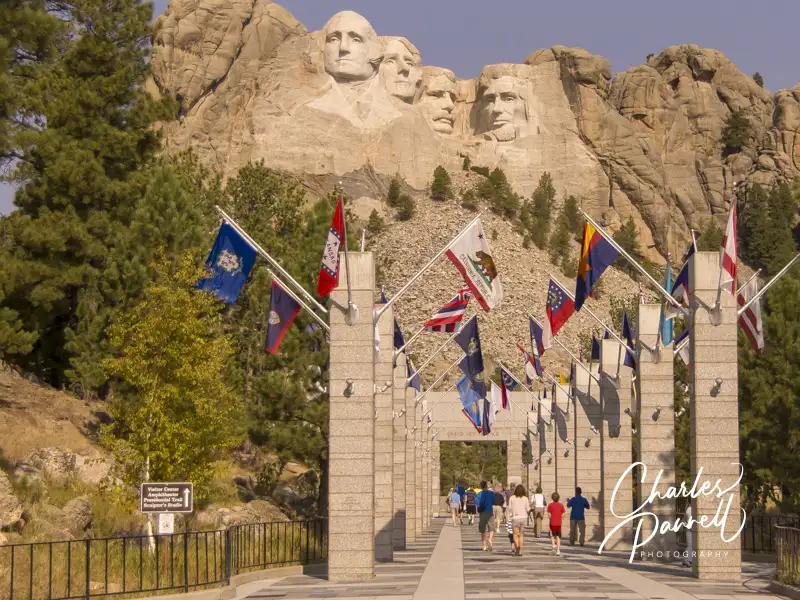
Avenue of the Flags at Mount Rushmore National Memorial, South Dakota
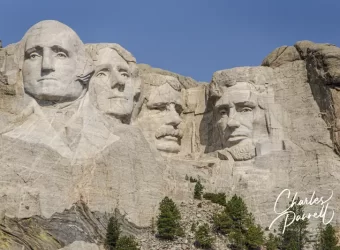
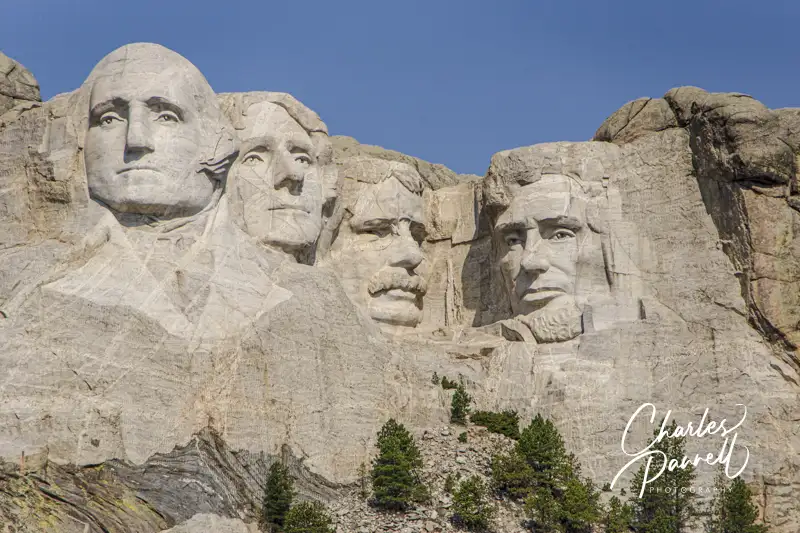
Located just 35 minutes from Rapid City, Mount Rushmore (www.nps.gov/moru/) was sculpted by the father-son team of Gutzom and Lincoln Borglum. It took them 14 years to complete the intricate carvings of the four presidents — Washington, Jefferson, Roosevelt and Lincoln. And as a result of their hard work, the sculptures have stood the test of time.
Although there’s no entrance fee to Mount Rushmore, there is a fee to park in the garage. Accessible parking is available in the garage, with ramp and elevator access up to the main level. Additionally, there’s a drop-off area right in front of the main entrance. Loaner wheelchairs are available at the Information Center, which is located near the main entrance, just across from the restrooms (which are also accessible).
There is barrier-free access down the Avenue of the Flags to Grand View Terrace, where you’ll catch your first glimpse of the four presidents. From there, take the left entrance to the Presidential Trail, which travels past the Lakota Indian Heritage Village to four alcoves with optimal views of each president. The trail is paved and level, and the accessible portion ends at the Upper Terrace, where you’ll get another good view of the mountain. From there you’ll have to double back, as the trail continues downhill with lots of steps along the way. Still, the quarter-mile accessible stretch offers the best views of the presidential carvings.
There’s also elevator access to the amphitheater and the Lincoln Borglum Visitors Center, on both sides of Grand View Terrace. And if you’ve worked up an appetite, the Carver’s Cafe along the Avenue of the Flags is wheelchair-accessible.
A Scenic Drive and More
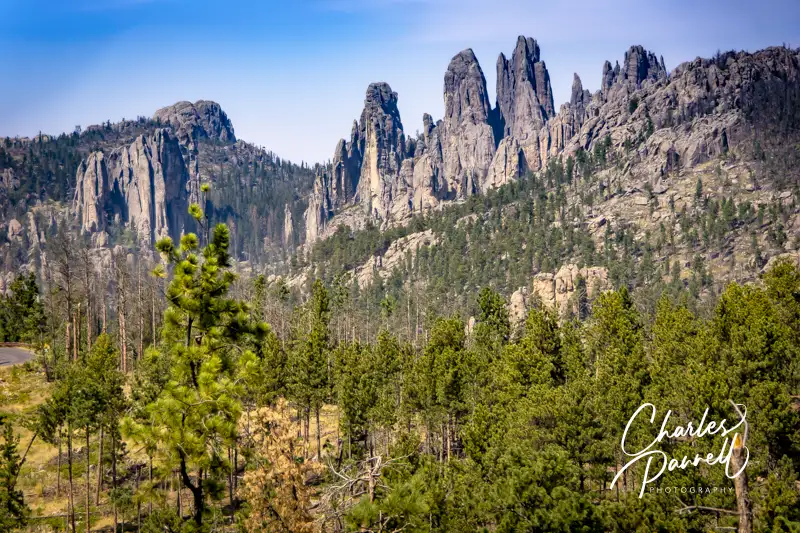
Little Devil’s Tower and Cathedral Spires on the Needles Highway Scenic Drive in Custer State Park, South Dakota
After your wheelchair-accessible Mount Rushmore visit, save some time to enjoy one of the most scenic drives in the state. From Mount Rushmore, follow the signs back to Highway 16A, then head towards Custer State Park. Along the way you’ll pass through three one-lane tunnels, and get some absolutely gorgeous windshield views of the scenic Black Hills. Have your camera ready as you exit the second tunnel, as it’s a great vantage point for the iconic shot of Mount Rushmore.
After your visit, be sure to take a cruise along the Needles Highway Scenic Drive. At the end of Wildlife Loop Road, take a right on Highway 87 and follow the signs. Named for the needle-like formations and cathedral spires that dot the landscape, the route traverses a Ponderosa Pine forest and passes through three narrow tunnels.
There are lots of spots to stop and enjoy the view, but make sure and use the pullout right before tunnel five, for a great view of Little Devil’s Tower and Cathedral Spires. After that, you’ll get up-close-and-personal with the spire-like formations, as the road cuts right through them. It’s a once-in-a-lifetime drive, and a great way to end a wheelchair-accessible Mount Rushmore visit.
If a trip to Greece is in your future, then a stop at the Acropolis is an absolute must. This ancient citadel sits on an hill that overlooks the city and contains the remains of several structures, including the Parthenon. And although ruins can be problematic for wheelchair-users and slow walkers, this wheelchair-accessible Acropolis guide (www.acropolis-athens-tickets.com/wheelchair-accessibility), provides some much needed information on how to access this historic structure.
This wheelchair-accessible Acropolis guide includes information on how to get free admission if you are disabled, a link to details about the accessible routes through the ruins, plus information on the location and hours of the elevator to the Parthenon. This accessible Acropolis guide also includes information on how to get to the site by the accessible Athens Metro, and includes lots of helpful tips and even a FAQ section. Although the tours mentioned on the website do not appear to be accessible, this guide provides important details for anybody with a mobility issue who wants to include this historic site on their Greece itinerary.
Barrier-Free Travel the Grand Canyon for Wheelers and Slow Walkers




 If you’d like to save a few bucks on your next national park visit, then pick up one of these discount passes at any national park entrance station. They all provide free admission to the passholder and all passengers in the same vehicle, but they each have different eligibility criteria.