As a travel writer since 1977, Candy Harrington has been writing about accessible travel exclusively since 1996. She’s the founding editor of Emerging Horizons, and the author of the popular Barrier-Free Travel national park series. With thousands of bylines to her credit, Candy hits the road often, in search of new accessible travel finds. Candy and her travel photographer husband Charles Pannell reside in NE Washington, where they tend to their chicken flock and enjoy a rural lifestyle.
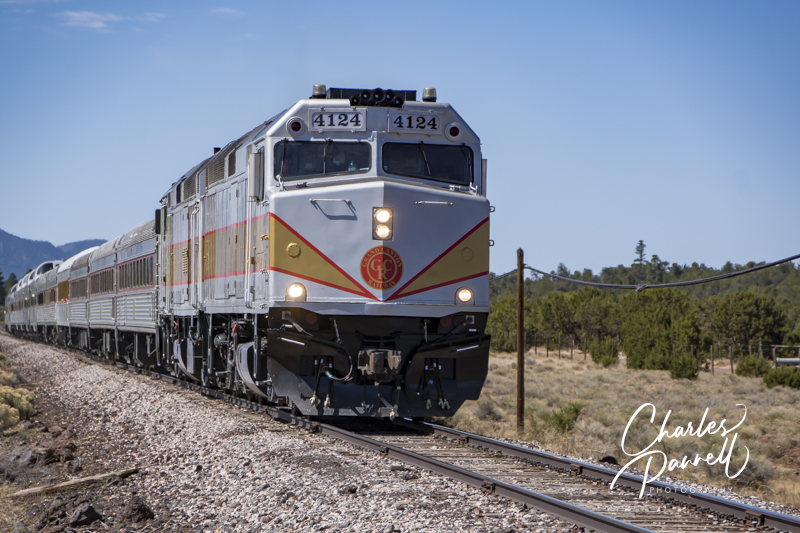
The Grand Canyon is definitely a must-see on the life bucket list. Most people arrive at this popular national park by car, as there’s not exactly an international airport on the rim. That said, there’s an alternative way to get to the South Rim of the Grand Canyon – ride the rails on the Grand Canyon Railway (www.thetrain.com)). And not only is this journey scenic, it’s also wheelchair-accessible. So check out this fun excursion on your next Arizona visit.
The Historic Williams Depot
This scenic rail excursion begins at the Williams Depot; and despite the historic nature of the building, there’s good wheelchair access to all areas. The Fray Marcos Hotel — which opened to the public in 1908 — once occupied the left portion of the depot. Today most vestiges of this 43-room Harvey House are gone;, however there are some vintage photos in the former lobby which is located next to the gift shop.
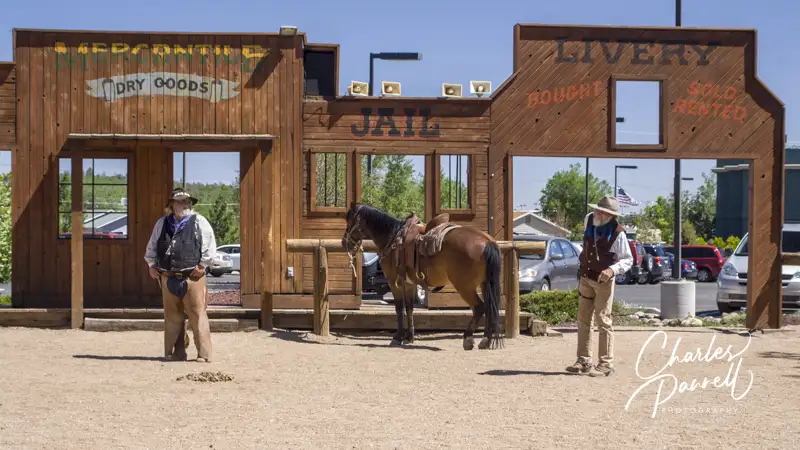
And while you’re at the depot, there’s also a little entertainment before boarding the train. The local marshal and the nefarious Cataract Creek Gang stage a wild west shootout before the train departs. There is level access to the show area, and wheelchair-accessible seating is available in front of the bleachers or at nearby tables. Then after the shootout, everyone heads over to the train.
Cataract Creek Gang at the Grand Canyon Railway
Access Aboard the Railway
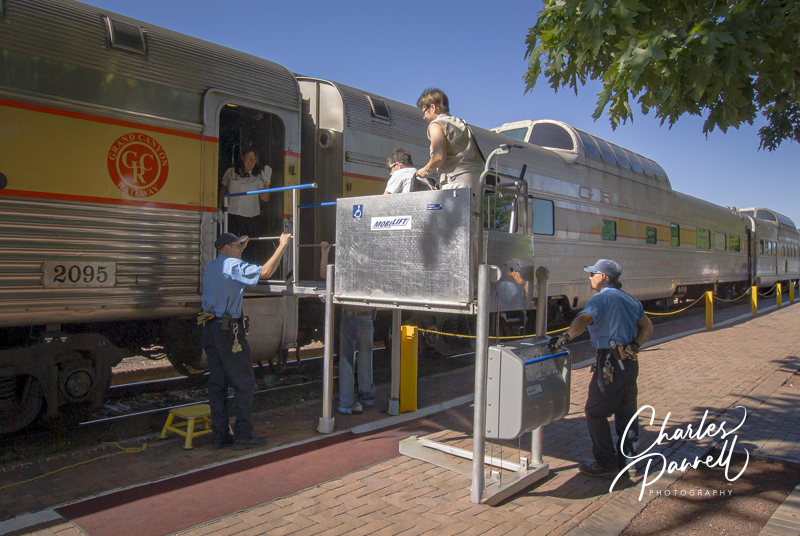
Boarding the Grand Canyon Rail
The excellent access at the Grand Canyon Railway continues with pre-boarding, when wheelchair-users and slow walkers are boarded before the rest of the passengers. Access is good on this historic train; and train buffs are wowed by the vintage train cars which are pulled by diesel locomotives. There are six classes of service, with Pullman, Coach and First Class being the most accessible.
The Harriman-Style Pullman cars have bench seats that flip so families can sit together and windows that open; while the Budd coach cars have front facing bench seats and air conditioning. The first-class cars have comfortable reclining seats, large windows and air conditioning. All of these cars can be accessed by a portable lift, and they all have wheelchair tie-downs and nearby companion seats. Accessible restrooms with grab bars, wide doorways and ample pathways are also located in these cars
And of course, if you just can’t make up your mind about which class to book, you can always mix classes; and take one class going up and another on the return trip.
The Trip and Beyond
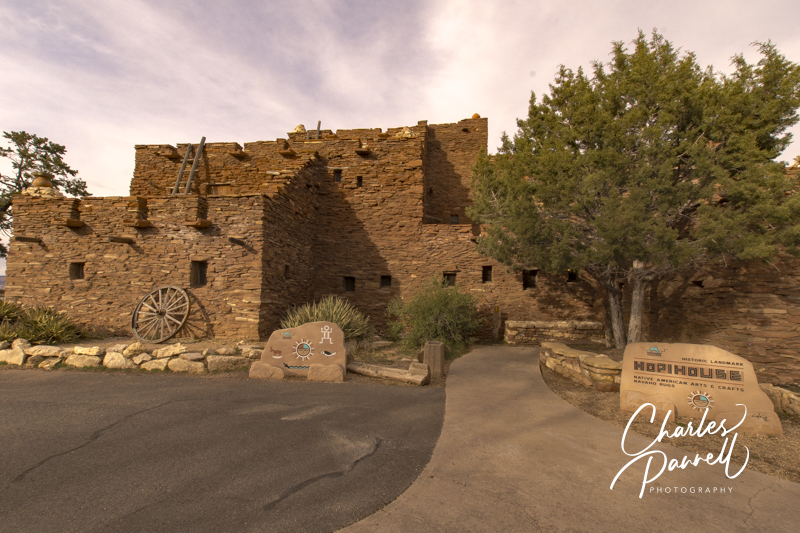
Hopi House on the South Rim of the Grand Canyon
The journey to the South Rim of the Grand Canyon takes about two hours, and you just can’t beat the passing scenery. As an added bonus, roving musicians entertain passengers with western songs along the way. And on-board attendants are always available to field questions and suggest activities for the stop on the South Rim.
Once the train arrives, passengers can explore the South Rim on the the wheelchair-accessible Grand Canyon shuttle. The return train departs for Williams about three hours later; however if you’d like to spend more time on the South Rim you can extend your visit for a night or two. The railway also offers South Rim hotel packages with wheelchair-accessible rooms. And if you’d like to spend the night in Williams after the train returns, they also have wheelchair-accessible rooms at the Grand Canyon Railway Hotel.
No matter which package you choose, you’ll have a great time on this scenic railway. Not only is the scenery second-to-none, but the railway employees are extremely accommodating. It’s a great wheelchair-accessible way to experience the Grand Canyon.
Barrier-Free Travel the Grand Canyon for Wheelchair-users and Slow Walkers
My husband uses a manual wheelchair and we are planning a European vacation. I’d like to rent a van and do a self-drive trip instead of relying on a car with a driver or a tour. Do you know of any agencies that rent wheelchair-accessible rental vans in Europe?
Doing a self-drive European vacation is a great idea, because it allows you a lot of flexibility. You can visit sites whenever you want, and take a break if you feel a little low on energy. It also puts you in total control of doing exactly what you want to do every day on your vacation.
Here are a few resources for finding wheelchair-accessible rental vans in Europe.
Handynamic
handynamic.com Handynamic has agencies located in France and Portugal, which offer wheelchair-accessible vehicles. They have vans with multiple wheelchair spaces, minivans with one wheelchair space, and cars with hand controls.
Wheeliz
wheeliz.com/en Headquartered in France, Wheeliz partners with private individuals to offers the largest fleet of wheelchair-accessible rental vehicles in the country. Offerings include both ramped vans and cars with hand controls. As an added bonus, the car owner’s insurance covers the rental, so no additional policy is necessary.
Mobility Ireland
motabilityireland.com/hire-vehicle Available at the Dublin Airport, Mobility Ireland offers several adapted vehicle rental options. They have an automatic transmission van with hand controls and steering aids, as well as a ramped accessible van available. Hand controls are also available on the ramped van.
Europcar
europcar.com/en-us/p/offers/mobility-for-disabled-people Last but not least in our lineup in wheelchair-accessible rental vans in Europe is Europcar. Located in Switzerland, they have a VW Caddy Maxi that can accommodate four passengers as well as one wheelchair-user. It includes a rear-entry ramp and tie-downs in the vehicle. And thanks to co-financing from the Cerebral Foundation, these adapted rental vehicles are available at a reduced cost.
Barrier-Free Travel 22 Accessible Road Trips Driving Vacations for Wheelers and Slow Walkers
Located in Hua Hin, these two wheelchair-accessible Thailand villas are a great holiday choice. Villa Coconut Grove and Villa Si Daeng both have two bedrooms and two adapted bathrooms. They each can accommodate up to six adults. Access features include a level entry, wide doorways, good pathway access and tiled floors for easy rolling. The bathrooms include a Continental shower with grab bars, a hand-held showerhead, and a fold-down shower seat. There are fold-down grab bars on both sides of the toilets, and the sinks have wrapped pipes and plenty of room for a wheelchair to roll under them.
Villa Coconut Grove and Villa Si Daeng
Villa Coconut Grove is located at the end of a dead-end street, in a small complex of 10 villas. It includes a large living area and a fully equipped kitchen, with level access out to the covered veranda surrounded by a tropical garden. The adjacent terrace includes a swimming pool and a Jacuzzi that can be accessed by a pool lift. It’s also just a short walk or roll to the beach, a mall, a bakery and a number of restaurants.
Villa Si Daeng is also located on a dead-end street, in the middle of a row of five houses. It has an open floor plan with a living area and a kitchen, and a spacious veranda. The pool and Jacuzzi can be accessed by a lift or stairs. As an added bonus, many small restaurants are located nearby, and the villa is about one kilometer from the beach.
Both of the villas come with a lot of extra adaptive equipment, including hospital beds, shower wheelchairs, patient lifts and beach wheelchairs. Dinner is included on the first night, and there’s also a free grocery package for breakfast the next day. Wheelchair-accessible airport transfers and local transportation in an accessible van can also be arranged; and a personal care assistant can be provided for an additional charge. Villa Coconut Grove also comes with a housekeeper and free laundry service.
Romantic retreats come in all shapes and sizes, From a secluded cabin in the woods to a lakeside lodge, or even a Moroccan retreat, there’s something out there for just about everyone. And today slow walkers and wheelchair-users don’t have to be left out, as many of these choices are now accessible. So with Valentines Day just around the corner, here are some wheelchair-accessible romantic retreats to share with your sweetheart.
Skamania Cabin
Cabin 744 at Skamania Lodge
emerginghorizons.com/relax-in-a-skamania-lodge-wheelchair-accessible-cabin Located on the fringe of Skamania Lodge in Southwestern Washington, this cozy cabin is perfect for a romantic getaway. It’s got a nice fireplace in the living room, a compact kitchen, a large bedroom, and a bathroom with a roll-in shower. And you can even order room service and enjoy it on the private deck.
Mendocino Retreat
Sunset View from Room 166 at the Little River Inn
emerginghorizons.com/a-wheelchair-accessible-mendocino-coast-retreat Next up on our list of wheelchair-accessible romantic retreats is The Little River Inn on California’s Mendocino Coast. This wheelchair-accessible room overlooks the ocean and has a luxurious bathroom with a roll-in shower. And if you get a little chilly, there’s also a cozy fireplace in the front room. A great choice for folks who love the coast.
Tenaya Lodge Cabin
Cabin 9 at Tenya Lodge
emerginghorizons.com/wheelchair-accessible-explorer-cabins-at-tenaya-lodge If you prefer the mountains, then head up to Yosemite and spend a few nights in this accessible Explorer Cabin at Tenaya Lodge. The cabin is located on a remote slice of the lodge property, which is just a short drive from the national park. And it has two bedrooms, a compact kitchen and a living area with a fireplace. The bathroom is nicely accessible with a roll-in shower, and there’s also a cozy private deck off the master bedroom.
Historic Harvey House
Room 204 at the Castaneda Hotel
emerginghorizons.com/the-castaneda-hotel-a-wheelchair-accessible-harvey-house History buffs with love this former Harvey House property, which is located in Las Vegas, New Mexico. The Castaneda Hotel, which was originally opened in 1898, was restored and reopened in 2019. And although access wasn’t really a thing back in the days of the Harvey Girls, the new rendition has a nice accessible room with a roll-in shower. It’s a fun property in a historic town.
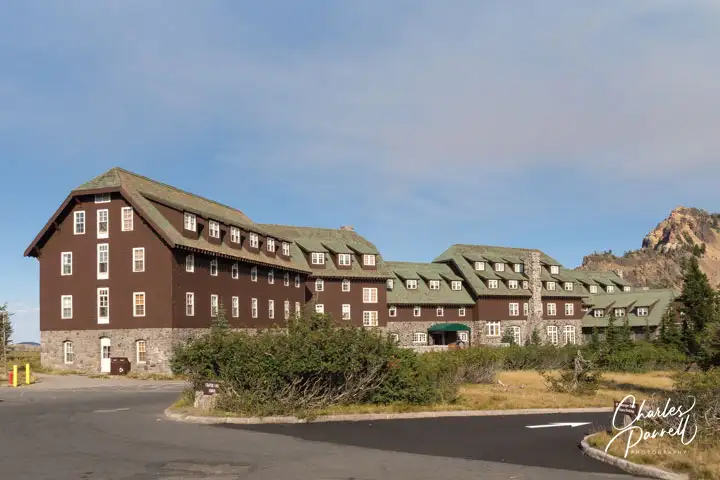
Crater Lake Lodge
Crater Lake Lodge
emerginghorizons.com/spend-the-night-at-wheelchair-accessible-crater-lake-lodge Next up on our list of wheelchair-accessible romantic retreats is a rustic lodge that sits on the shore of a mountain lake – Crater Lake to be more specific. The historic lodge is a great place to spend a romantic weekend. The spacious wheelchair-accessible room is located on the ground floor, just steps from the lobby, dining room and terrace. After a day of exploring the lake, settle in for a nice dinner and top it off with drink on the terrace. You just can’t beat the lake view. It’s also a great spot to enjoy a romantic sunset.
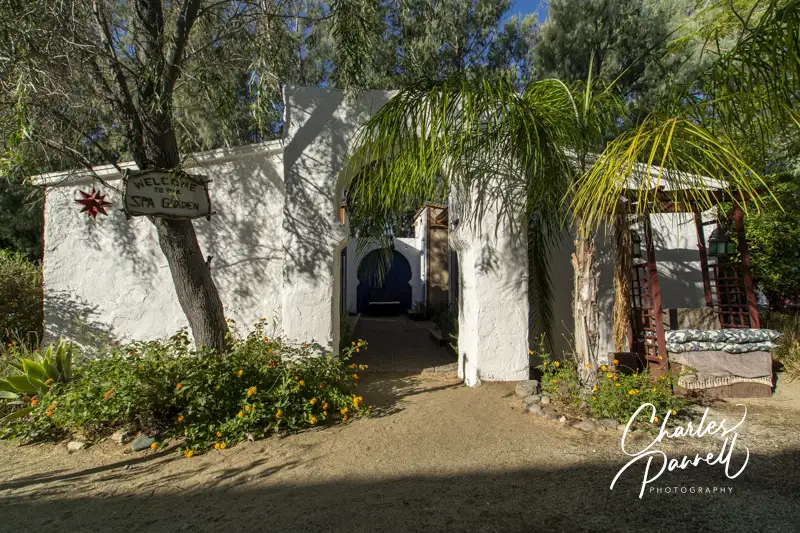
A Desert Oasis
Spa Garden at the El Morocco Inn
emerginghorizons.com/the-el-morocco-inn-a-wheelchair-accessible-oasis-in-the-california-desert For a taste of Morocco without leaving the US, check out the El Morocco Inn in the California desert. Located in Desert Hot Springs, this accessible oasis includes a nice wheelchair-accessible room with a roll-in shower. There’s also good access to the public areas, including the swimming pool and the spa. And if you’d just like to chill, you can kick back in the library and enjoy a book or DVD. Truly there’s something for everyone at this relaxing retreat.
Santa Fe Suite
Suite 102 at the Chimayo Hotel
emerginghorizons.com/a-wheelchair-accessible-santa-fe-lodging-choice This Santa Fe Hotel offers a nice wheelchair-accessible suite, just steps from the historic Plaza. The Hotel Chimayo features a spacious accessible suite with a large bathroom and a roll-in shower. And there’s also a cozy fireplace in the living room to snuggle up with your sweetheart. Don’t forget to stop in at the Low n’ Slow Bar while you are there. Not only do they have a wide selection of beverages and snacks, but you just can’t beat the retro low rider décor.
Red Canyon Cabin
Cabin 12 at Red Canyon Village
emerginghorizons.com/spend-the-night-in-red-canyon-village Last but not least on the list of wheelchair-accessible romantic retreats is this Bryce Canyon cabin at Red Canyon Village. Located just a few miles from the national park entrance along scenic Highway 12, this log cabin is just a short walk from the office. It includes a king-sized bed, a compact kitchen and a large bathroom with a roll-in shower. And if you’d like to dine al fresco there’s a picnic table outside and a few chairs on the front porch. A perfect Red Canyon getaway.
Barrier-Free Travel California National Parks Road Trips Travel Ideas for Wheelchair-users and Slow Walkers
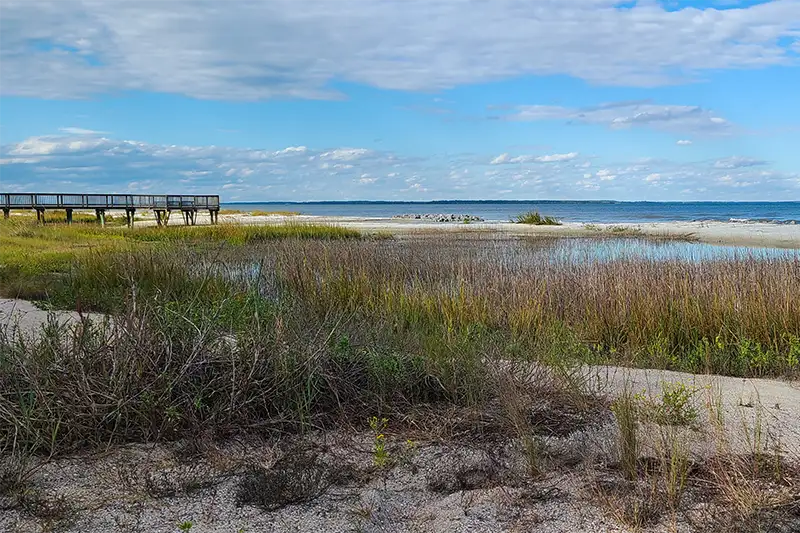
Wheelchair-Accessible Hilton Head beaches are now a reality, thanks to a number of local programs and improvements.
For starters, many of the public beach parks and access points have beach mats down to the high water line. These mats allow wheelchair-users and slow walkers to access the beach without sinking into the sand. The beach mats can be found at these locations.
Alder Lane Beach Access
Burkes Beach Access
Coligny Beach Park
Driessen Beach Park
Fish Haul Beach Park
Folly Field Beach Park
Islanders Beach Park
Additionally, there are also loaner beach wheelchairs available at several beach locations. It’s easy to reserve a beach wheelchair on the town website. Just go to secure.rec1.com/SC/hilton-head-island-sc/catalog and create an account. Then look at the calendar and pick an available date.
Beach wheelchairs are available for loan in eight-hour blocks from 8 AM to 4PM, seven days a week. They must be reserved at least three days in advance. After you’ve made your selection, you’ll be prompted to sign a waiver, and then enter a payment method for the $25 refundable deposit. The deposit will be refunded within three business days after the beach wheelchair is returned. Once the transaction is complete, you’ll be given instructions on when and where to pick up your loaner beach wheelchair.
So make plans to explore the wheelchair-accessible Hilton Head beaches.
Barrier-Free Travel 101 Accessible Vacations Travel Ideas for Wheelers and Slow Walkers
Located across the country, presidential museums and libraries (https://www.archives.gov/presidential-libraries) not only contain an archive of presidential photos and documents, but they also offer exhibits about the former presidents and the eras of their presidency. In most cases they are funded by private foundations and donations; and they are located in the former presidents’ home state or in a state where they had close ties or spent the majority of their life. And the good news is, since these museums serve as visible faces of the former presidents, most of them go well beyond the letter of the law as far as wheelchair access is concerned. So check out these favorites in your future travels.
Dwight D. Eisenhower Presidential Museum
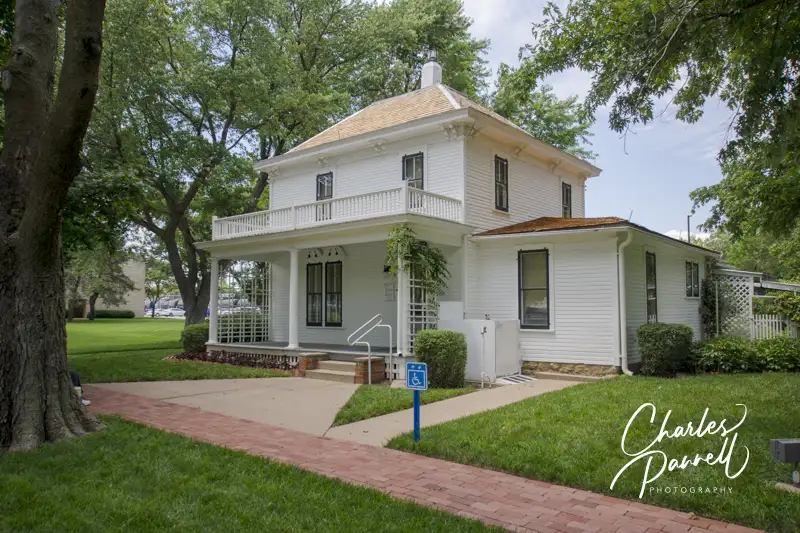
President Eisenhower’s boyhood home at the Eisenhower Presidential Library, Museum & Boyhood Home
eisenhowerlibrary.gov Located in Abilene, Kansas the Eisenhower museum complex includes a visitors center, the Place of Meditation, Ike’s boyhood home, the museum and the library. There is level access to the visitors center, where you can pick up a loaner wheelchair. Just to the left of the visitors center you’ll find Ike’s boyhood home. Although there are three steps at the front, there is also a wheelchair lift on the side. The first floor of the house is open to the public and it features original furnishings, photographs and personal items of the Eisenhower family.
The museum itself is just a short walk from the home and it features barrier-free access and a wheelchair-lift at the front entrance. It’s really a must-see for anyone interested in World War II history, as the excellent Military Gallery features documents, photographs and artifacts from the war. It also includes a gallery devoted to Mamie Eisenhower, and one that presents a comprehensive overview of President Eisenhower’s life and achievements.
Last but not least, save some time to visit the Place of Meditation, where President Eisenhower was buried on April 2, 1969. There is level access to the chapel and good pathway access inside. The stained glass windows, which were designed by Odell Prather, are particularly striking.
The LBJ Library
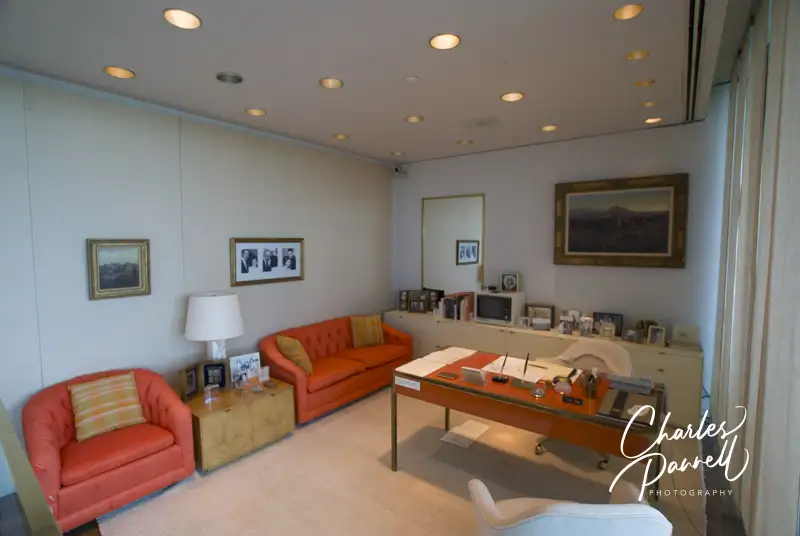
Replica of Lady Bird’s office at the LBJ Presidential Library
lbjlibrary.org This presidential museum is located on the campus of the University of Texas at Austin. Free accessible parking is available in lot 38, which is just a short walk from the museum entrance. Access is excellent throughout the museum too, with elevator access to all floors, accessible restrooms, loaner wheelchairs and plenty of space to wheel around the galleries.
As with all presidential museums, a good chunk of the exhibits chronicle the lives of the first family. And along the way you’ll learn some interesting tidbits. For example, Lady Bird got her nickname from a nurse who declared that she was “as pretty as a lady bird”. Add in a reproduction of the Oval Office, as well as Lady Bird’s office, and the official presidential limousine and you have a well-rounded representation of presidential life.
Like the other presidential museums this one also focuses on the events of the times — in this case the 1960s and the 1970s — so if you happened to grow up in those decades it will be especially interesting to you.
Richard Nixon Presidential Library and Museum
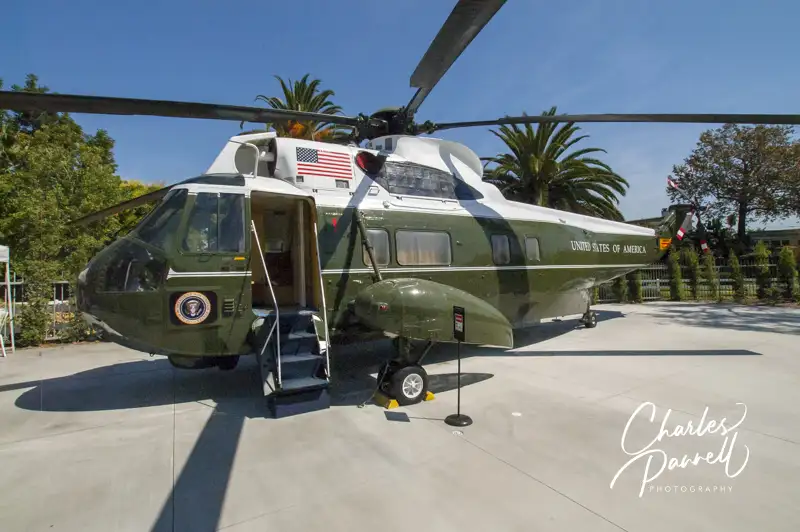
Sikorsky VH-3A “Sea King” helicopter Richard Nixon used for his final departure from the White House after resigning in 1974 at the Richard Nixon Presidential Library and Museum
nixonlibrary.gov Although the Richard M. Nixon Presidential Library and Museum tends to focus more on Mr. Nixon’s long political career, this Yorba Linda museum also includes some small exhibits on Watergate, the Middle East and Nixon’s farewell speech. The Vietnam Gallery also offers some interesting insights on the conflict, as well as an exhibit of items collected by the POWs. Outside, there’s the Richard Nixon birthplace and the presidential helicopter, which was used by presidents Kennedy, Johnson, Nixon and Ford.
Access is good throughout the museum with plenty of accessible parking, ramped access to the front entrance and barrier-free access throughout all the galleries. There is an accessible path from the museum to the birthplace, and a ramped entrance at the back door of the birthplace. There are several steps up to the helicopter; however there is a wide level space around it, with plenty of room to navigate a wheelchair. And it’s an excellent photo op.
Gerald R. Ford Presidential Museum
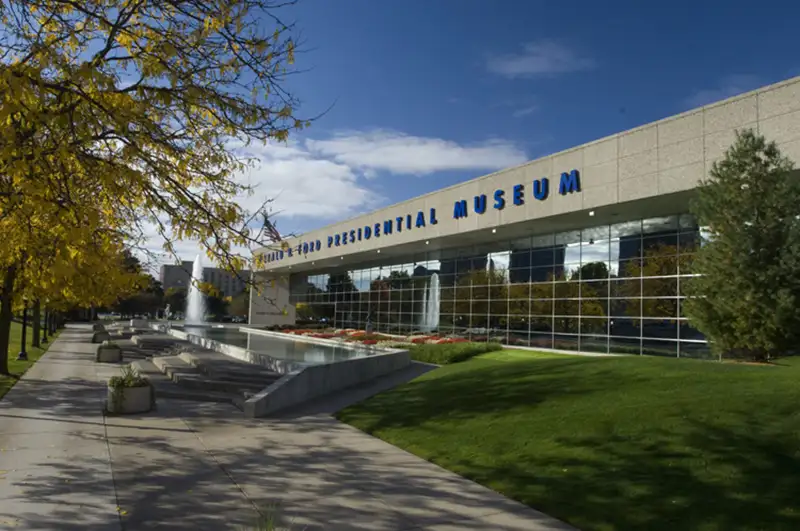
Gerald R. Ford Presidential Library and Museum
fordlibrarymuseum.gov Located in Grand Rapids, Michigan, this presidential museum gives visitors a good dose of 1970s history. No matter what your political party affiliation, if you lived through the Watergate years, you’ll love this museum. That’s because the former president wanted the museum to be more about history and less about him.
There is level access to the front entrance of the museum, elevator access to all floors and ample room to wheel around in all of the galleries. Part of the museum focuses on the 38th President’s career, family and military life; however the bulk of it is dedicated to events that occurred just prior to and during his presidency, or those that were influenced by his presidency. Must-sees include the tools used in the Watergate break in and a fascinating exhibit about the Nixon pardon.
Jimmy Carter Library and Museum
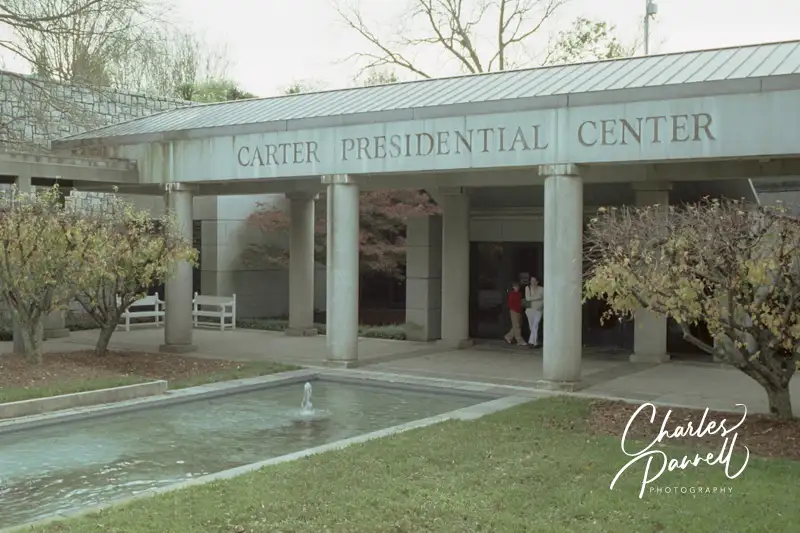
Jimmy Carter Presidential Library and Museum
jimmycarterlibrary.gov The Jimmy Carter Library and Museum is located about five minutes from downtown Atlanta, on a 35-acre wooded parcel dotted with ponds. Highlights of this museum include a replica of the Oval Office, photographs and memorabilia from the Carter Presidency, and an interesting Camp David exhibit. And of course, don’t miss the gallery filled with Head of State gifts.
Accessible parking is located near the museum, with ramp access to the entrance. Inside there’s plenty of room to wheel around the spacious galleries, with ramp access to some exhibits. Outside, paved pathways lead around the spacious grounds, with wheelchair access to most areas.
Ronald Regan Library & Museum
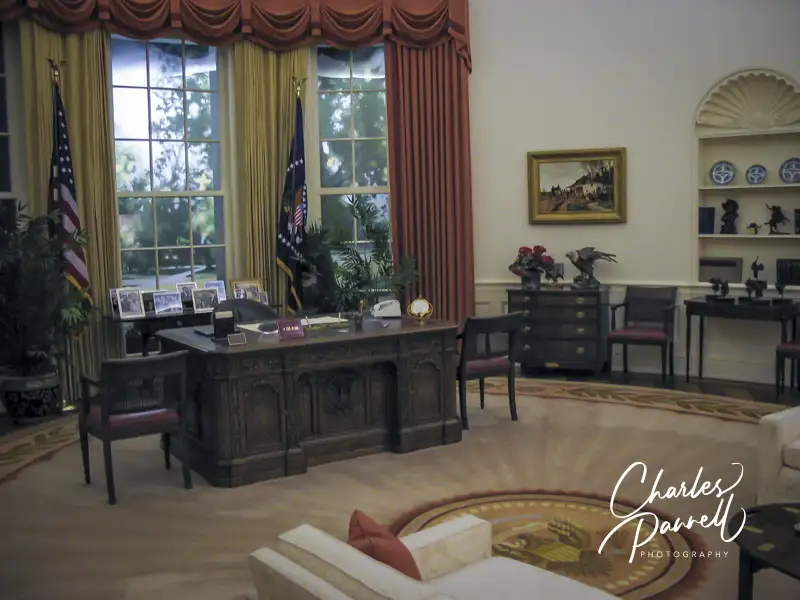
Replica of the Oval Office at the Ronald Regan Presidential Foundation & Institute
reaganlibrary.com Located in Simi Valley, California, the Ronald Regan Library & Museum features hundreds of artifacts that chronicle the former-president’s life, career and political accomplishments. There’s a drop-off area for wheelchair-users and slow walkers in front of the museum, with barrier-free access to the entrance and good pathway access inside. A loaner wheelchair is also available at the front desk.
The museum features 125,000 square-feet of gallery space that highlights Regan’s family life, movie career and life in the White House. It also includes a replica of the Oval Office and a section of the Berlin Wall. As an added bonus, many of the exhibits are interactive, so visitors can act in a movie with Ronald Regan or set a table for a White House dinner.
One of the highlights of the museum is Air Force One. There is elevator access down to the tarmac in the Air Force One Pavilion, where you can walk and roll around the plane. Although stairs lead up to the plane, there is also a lift available. That said the airplane aisle is only 28-inches wide, so it may be too narrow for some wheelchair-users. Still it’s fun to great a peek inside.
George H.W. Bush Presidential Library and Museum
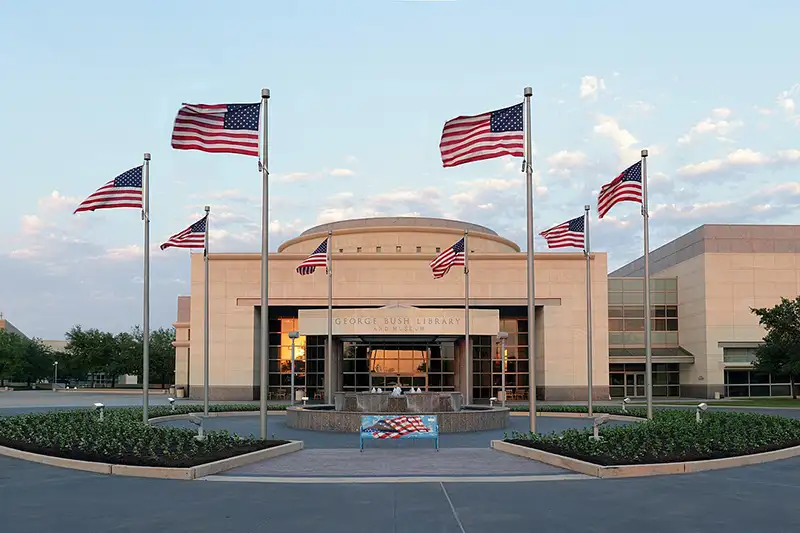
George H.W. Bush Presidential Library and Museum
bush41.org Located about 100 miles east of Austin, College Station is the site of the George H. W. Bush Presidential Library and Museum. More specifically, the museum is located on the Texas A&M University Campus.
There’s plenty of accessible parking near the museum, with level access through the plaza to the front lobby. Wheelchairs are available for loan at the front desk, and there’s elevator access to all floors, with barrier-free pathways though the galleries.
Exhibits focus on the life of the former president, and include some reflections of Mr. Bush’s time in the Navy. As one of the Navy’s youngest pilots, he was shot down in the Pacific, and his rescue was recorded on a hand-held movie camera. Today that film clip is on display in the museum. Other exhibits focus on Mr. Bush’s presidential campaigns, his oil business and his stint as a United Nations Ambassador.
Several exhibits focus on events that had an impact on the Bush presidency, with video screens playing back snippets of history. Then there’s the replica of the Oval Office, the collection of state gifts and even the president’s reaction to Watergate. And of course there is a gallery dedicated to the First Lady, as well as one which focuses on the life of President and Mrs. Bush after leaving the White House.
Clinton Presidential Center
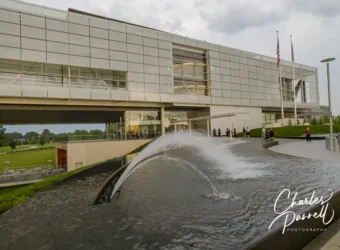
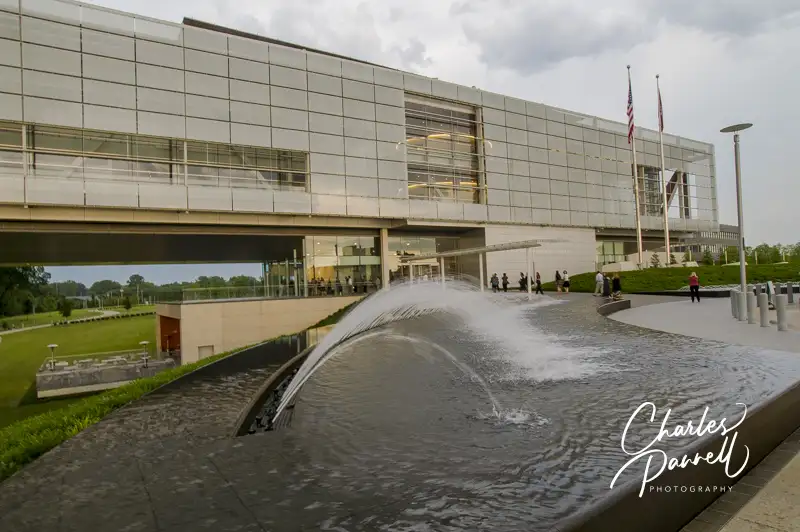
Clinton Presidential Center
clintonfoundation.org/clinton-presidential-center Last but certainly not least in our roundup of presidential museums is the Clinton Presidential Center, located in the River Market District in Little Rock, Arkansas. The 20,000 square-foot exhibit space features excellent access to all galleries, sleek wood floors and level access to the front entrance. And if you don’t think you can manage this massive space on foot, loaner wheelchairs are available.
The exhibits chronicle the Clinton presidency, and include a replica of the Oval Office (complete with a moon rock), items from Bill’s childhood, and even a collection of Saturday Night Live clips featuring Clinton impersonations. There’s also a wing that features the splendor of the White House during the holidays and shows how the Clinton’s gave the presidential residence special touches to really make it their home.
All in all the Clinton Presidential Center houses one of the best presidential collections, and it’s definitely worth a visit. Plan to spend the whole day there though, as there’s definitely a lot to see.
Barrier-Free Travel 22 Accessible Road Trips Driving Vacations for Wheelers and Slow Walkers
Winter is bald eagle migration time across the US. Every year these majestic birds head south, in search of viable winter food sources. And the good news is, they return to the same food sources year after year; so once you identify that food source you have a good chance of spotting eagles en masse during the winter exodus. Of course timing is everything when it come to spotting bald eagles, but to increase your odds, here are a few popular sites they return to time and time again. Even better, these sites are all doable locations for most wheelchair-users and slow walkers.
Lake Coeur d’Alene
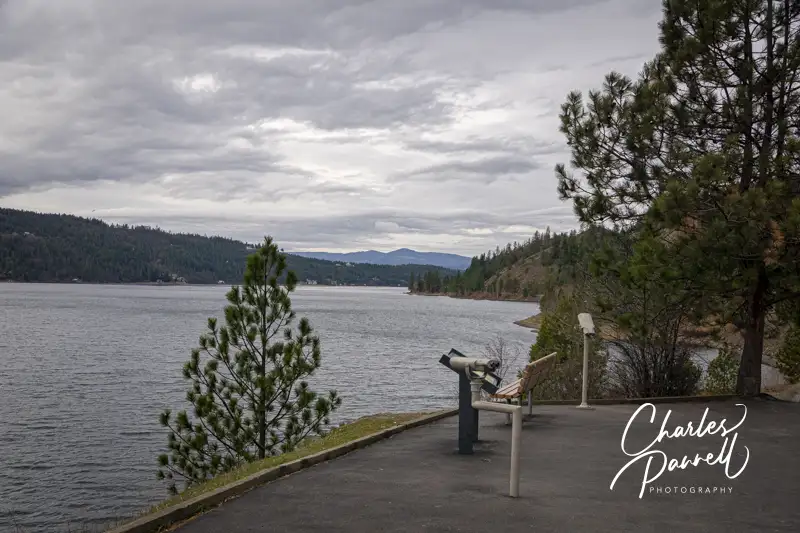
Higgens Point on Lake Coeur d’Alene, Idaho
Located about 40 miles east of Spokane off of Interstate 90, Lake Coeur d’Alene (parksandrecreation.idaho.gov/parks/coeur-d-alene-parkway/) is a popular Idaho stop for the bald eagle migrants. In fact they return yearly to feast on the spawning kokanee salmon found in Wolf Lodge Bay.
One of the best bald eagle viewing sites is Higgens Point, which is located on the north shore of the bay. Just take exit 15 off of Interstate 90 east, then follow East Coeur d’ Alene Lake Drive for about 6 miles, until it dead ends at the final parking area along the lakeshore. Although there’s no accessible parking in this lot, there’s plenty of room to parallel park near the end or on the side. Alternatively, there’s accessible parking available at the parking area before the boat launch.
From the end of the road a wide level paved trail leads a quarter-mile over to Higgens Point, which offers an excellent vantage point of Wolf Lodge Bay. There’s a wheelchair-height viewing scope and a bench to sit and rest. Keep your eye out for eagles overhead, across the bay and in the forest. And if you’ve lucky you’ll see them drop down and grab a bite to eat from the lake. Even if you can’t manage the trail, you can still get a gander at the eagles from the parking area, or even along the drive. The eagles are usually in residence from November to February, with peak populations near the end of December and the beginning of January.
Carson Valley
Bald Eagle and Calf in Carson Valley, Nevada
Another good bald eagle viewing site is Carson Valley, which is located southwest of Lake Tahoe, just over the Nevada state line. The food source that attracts the eagles here are cattle placentas. And since the cattle give birth from December to February, that’s when you’ll find the eagles there.
State Route 88 is lined with cattle pastures, and a good choice if you don’t want to get out of your car. The strip of road near the Dangberg Ranch in Minden is usually an active site, and it’s not unusual for the eagles to perch on fence posts or chow down on the placentas in the adjacent pastures. And since you can enjoy the show from the comfort of your own vehicle, you don’t have to worry about access.
Another good place for wheelchair-users and slow walkers to spot bald eagles is at River Fork Ranch (www.nature.org/en-us/get-involved/how-to-help/places-we-protect/river-fork-ranch) — a combination nature preserve and working cattle ranch. Located off Highway 206 in Genoa, this 800-acre parcel boasts a patchwork of pastures, meadows and wetlands.
There’s accessible parking next to the Whit Hill Interpretive Center, and ramp access up to the porch. Even if the interpretive center is closed, the large wrap-around porch is an excellent vantage point for spotting the eagles in the nearby pastures. Alternatively the .75-mile trail that begins near the back deck may work for some folks. The trail is fairly level, but there are more than a few bumps along the way; and at times it’s only two-feet wide. Still it may work for some slow walkers, and you can always turn around if it’s too much for you.
Old Chain of Rocks Bridge
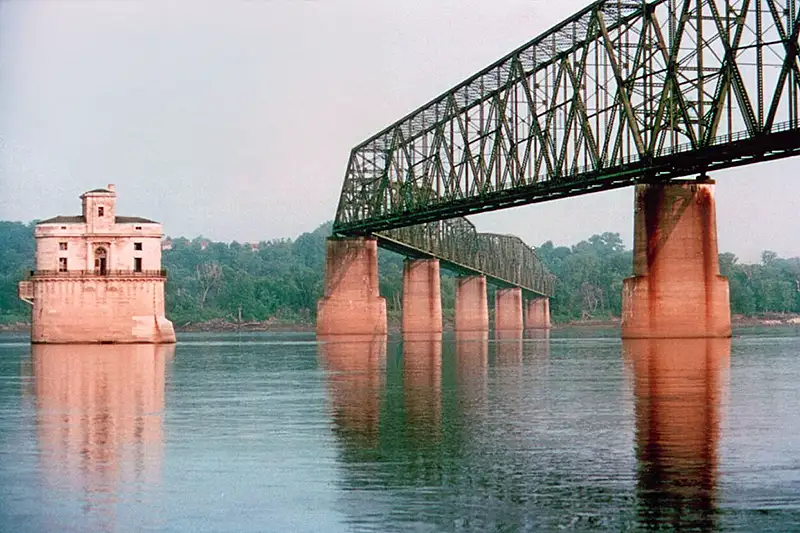
Old Chain of Rocks Bridge
Last but certainly not least, the Old Chain of Rocks Bridge (www.nps.gov/places/chain-of-rocks-bridge.htm) , which crosses the Mississippi River and connects Granite City, IL to St. Louis, MO, is another good bald eagle viewing site. This historic bridge was once part of iconic Route 66, but after the new interstate was built, traffic dramatically decreased on the old Chain of Rocks Bridge. It was finally closed to vehicle traffic in 1968, and today it’s strictly a pedestrian bridge.
The big eagle food source at this location is the abundance of fish in the waters of the Mississippi River. The rapids, which are located just south of the bridge offer the perfect fishing waters for the eagles. And that’s why this site has one of the largest concentrations of bald eagles in North America.
Accessible parking is available on the Illinois side, with level access over to the bridge on the quarter-mile Chouteau Island Nature Trail. It’s about a half-mile roll to the center of the bridge. Keep your eyes peeled to the south for feeding eagles, and along the shore for roosting ones. The birds usually show up in December and depart in early February. As an added bonus, the bridge also offers a nice view of the St. Louis skyline.
Barrier-Free Travel Utah National Parks for Wheelchair-users and Slow Walkers
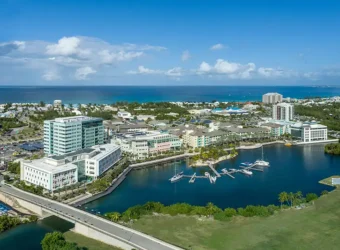
Developed by the Cayman Islands Department of Tourism, this handy website (explorecayman.com/getting-around/accessibility) includes helpful Cayman Islands wheelchair access information for visitors. It offers details about airport and airline accessibility and provides information about the local tour and taxi companies that have accessible vehicles. Other useful information includes some suggested accessible attractions, a local wheelchair rental service, and information about the location of mobi-mats on the area beaches. There are also details about a local adaptive diving resource. Check out this handy resource before you book your flight!
Barrier-Free Travel Yosemite, Sequoia and Kings Canyon National Parks for Wheelchair-users and Slow Walkers
Located 11 miles west of the Nisqually Entrance to Mount Rainier National Park, Recycled Spirits of Iron Sculpture Park features the works of Daniel Klennert. And as the name implies, his creations are crafted from recycled and discarded objects. The front installations are dwarfed by a giant train near the entrance, and they include everything from a broomstick horse, and a wagon wheel, to a seahorse crafted from horseshoes, a collection of birds, and a number of themed motorcycles. Around back the installations continue with another train, more motorcycles, a collection of outhouses and an X-rated Mona Lisa. And although it’s a little bumpy in the back, the front garden and the inside gallery and gift shop are wheelchair-accessible.
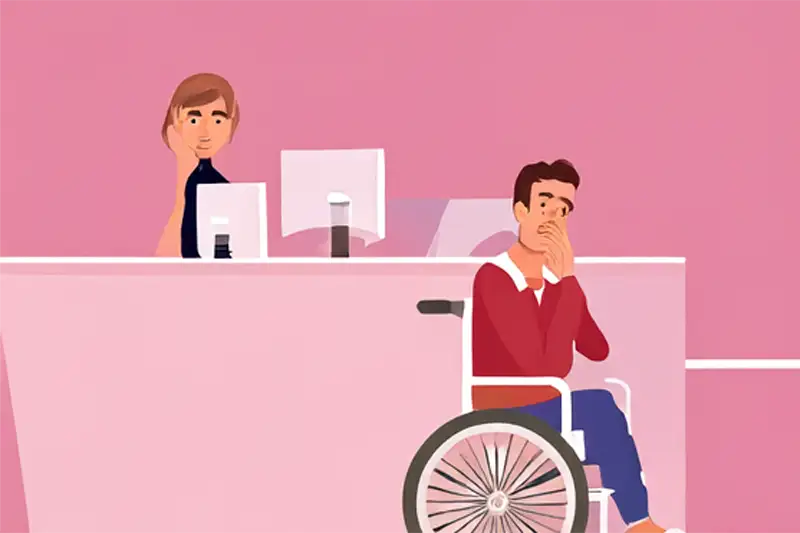
I reserved an accessible room through an online third-party booking site. All seemed OK when I reserved the room, but when I got to the hotel, there was no accessible room for me. The hotel blamed it on the booking site and the booking site blamed it on the hotel. What did I do wrong and what can I do to avoid this in the future?
Who is to Blame?
First and foremost, you didn’t do anything wrong. Unfortunately it’s a bit of a convoluted system. Basically it’s up to each property to provide third-party booking sites with the availability and description of their of accessible rooms. Unfortunately this can and does change a lot, as folks also make reservations directly at the hotels. So, the hotel is supposed to keep the booking sites updated with this information. Does this always happen? In a word, no.
When it doesn’t happen, people end up making reservations for accessible rooms that are already reserved and should have been taken out of inventory. So, when a guest who has booked one of these non-existent accessible rooms arrives, that room is not available.
And unfortunately, since you technically didn’t make a reservation through the hotel, they cannot refund your money to you. You have to go back to third-party booking site to recover it. To say it’s a flawed system is somewhat of an understatement.
What’s a Traveler to Do?
It’s a difficult situation when each entity claims that it’s the other ones fault. And quite frankly, customers just don’t have the time to figure it all out. I feel strongly that you should file an ADA complaint in this situation, but who do you complain about? If you can’t figure it out, then let the Department of Justice (DOJ) sort it out.
File an ADA complaint against the third-party booking site and the hotel, and let the chips fall where they may. The DOJ needs to hear about cases like this, not only to possibly enforce the regulations, but to see and understand why they are not working. Filing an ADA complaint is easy – here are the details (emerginghorizons.com/why-you-should-file-an-ada-complaint/)
I’d also refrain from making reservations for an accessible room through a third-party booking site in the future. I understand that the discounted priced is a big draw; however is it really worth the discount if the accessible room won’t be available when you arrive? And today many properties advertise that they will meet the discounted rates of third-party booking sites, so I’d at least give them a call and ask if that’s a possibility.
In the end, it really is better to to book directly. Sometimes having a middleman just introduces errors, and when accessibility is at stake, you really don’t want errors.
I’m sorry you had this experience, and I hope that your next trip goes better.
Barrier-Free Travel Glacier, Yellowstone and Grand Teton National Parks for Wheelers and Slow Walkers


 The Grand Canyon is definitely a must-see on the life bucket list. Most people arrive at this popular national park by car, as there’s not exactly an international airport on the rim. That said, there’s an alternative way to get to the South Rim of the Grand Canyon – ride the rails on the Grand Canyon Railway (www.thetrain.com)). And not only is this journey scenic, it’s also wheelchair-accessible. So check out this fun excursion on your next Arizona visit.