This local landmark has a fun history, and it’s a nice spot to take a break while driving along Highway 195 in the Palouse. It’s a small site, so if you have an adapted van it’s best to parallel park on the street in front of the tiny park that surrounds the Codger Pole. There’s also standard parking in the Farmers Insurance lot next door. From either point there’s level access to this unusual monument, which also has a picnic table on a cement pad.
The story behind the Codger Pole dates back to a historic 1938 football game between the Colfax Bulldogs and the St. John Eagles. The Colfax team lost, but 50 years later the “old codgers” asked for a rematch, and this time they won. This monument stands to commemorate the resolve and determination of that team. The pole, which is actually comprised of five 65-foot tall cedar poles, was carved with a chainsaw by John LaBenne. It includes the faces of all 51 players along with their original leather football helmets. It’s a fitting tribute to codger-hood.
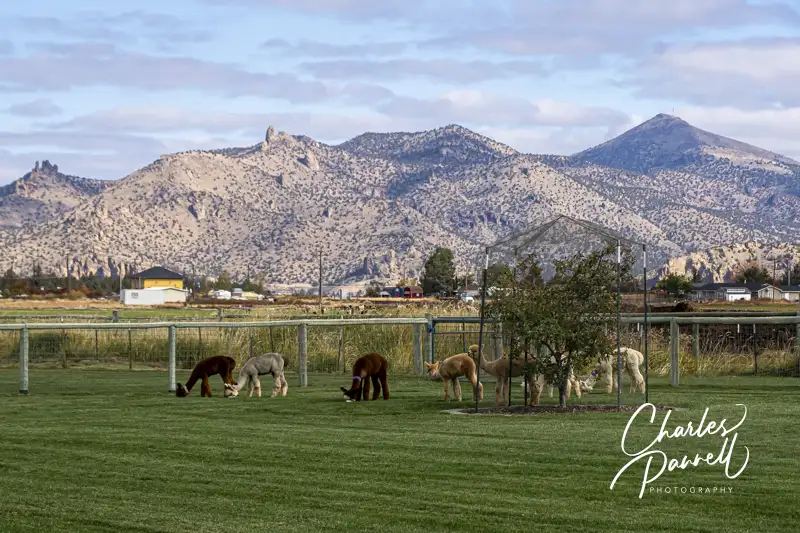
Crescent Moon Ranch is a working alpaca ranch, which is located on Highway 97 in Western Oregon, about 20 miles north of Bend. There’s accessible parking in front of the boutique — a required stop before you tour the grounds — with level access to the front door. Inside there’s plenty of room to roll around amongst the alpaca products, from socks and scarves to sweaters, shawls and even toys. And if you’d like to buy some food to feed to the alpacas, you can also find that there.
From there, you can wind around the barn and follow the marked path to the alpaca pens. The pathway is level, and a combination of dirt and grass. Although passable in a wheelchair, it’s muddy when it rains. The path winds arounds some large enclosures, and since the alpacas are used to getting fed, they’ll come up to you even if you don’t have any food. Along the way, you’ll get a little alpaca education from the informational signs posted on the pens. About half of the trail is doable for wheelchair-users; and after that the trail goes a bit uphill, crosses an irrigation pipe and bridge, and then heads over to the other side of the pasture. And the trail on that side is pretty uneven. So go in and enjoy the alpacas, and when the trail loses its access for you, just turn around. As an added bonus there are also some great views of the Three Sisters, Mt. Jefferson and Smith Rock from the ranch.
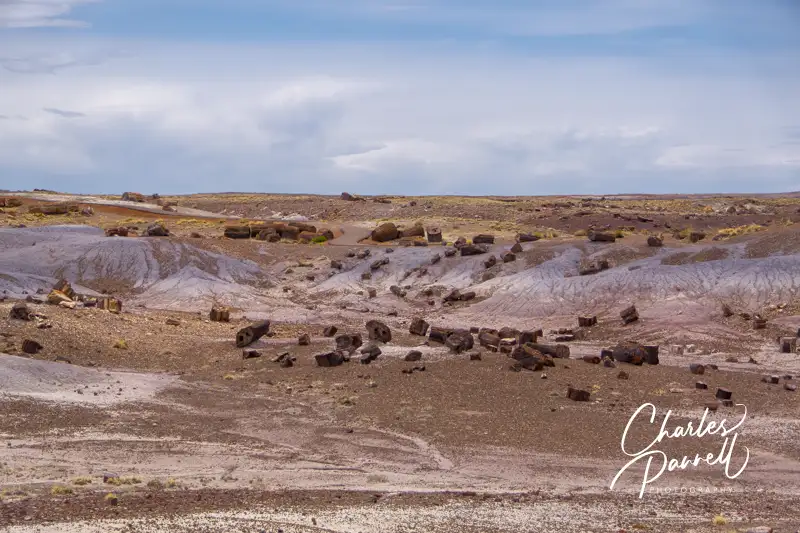
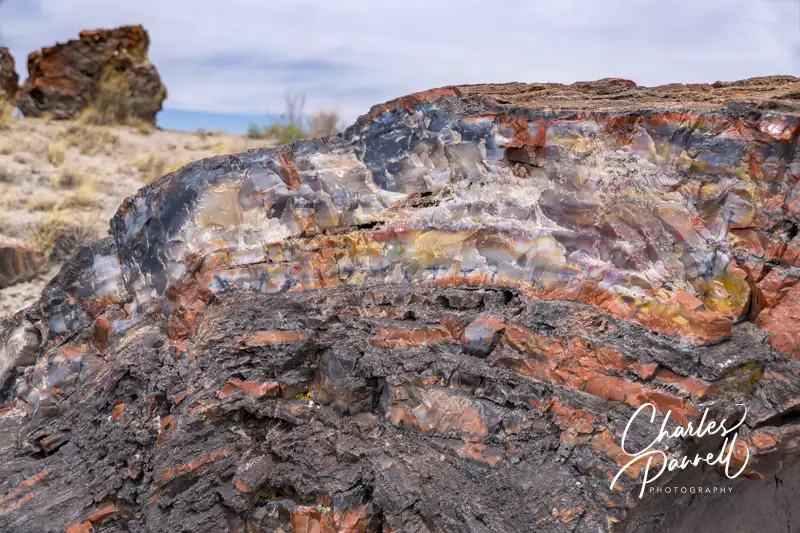
Located about an hour east of Winslow, Petrified Forest National Park (www.nps.gov/pefo/) boasts the largest concentration of petrified wood in the world. Not only does this Arizona gem offer some dazzling desert scenery, but it also includes a number of accessible trails and overlooks for wheelchair-users and slow walkers. And since the park is located right off Interstate 40, it’s an excellent addition to any Grand Canyon road trip.
The Basics
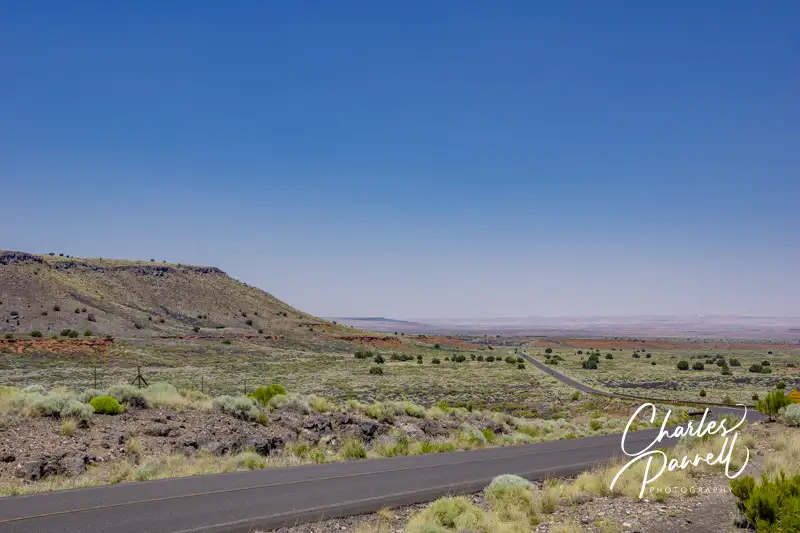
Windshield View on Highway 180
It’s easy to do a one-way jaunt through the park, stop at a few trails and viewpoints along the way, then reconnect to the highway and continue on your journey. If you’re traveling east, take the Highway 180 exit (exit 285) and use the south entrance of the park; and if you’re traveling west, take exit 311 and use the north entrance. Either way, after you’ve explored the 28-mile route, it’s simple to hop back on the interstate.
The whole drive takes an hour without any stops, and although there are some wonderful windshield views along the way, there are also some very scenic turnouts and sights that are definitely worth a stop. It should also be noted that the gates to this national park open at 8:00 a.m. and close at 5:00 p.m., so plan accordingly to avoid disappointment.
The Painted Desert Visitor Center, which is located near the north entrance, makes a good first stop in the park. Accessible parking is located near the entrance, with level access to the building. Inside there’s a small gift shop, a ranger information desk and accessible restrooms. Pick up a park map, then head out to explore this national treasure.
Views and More
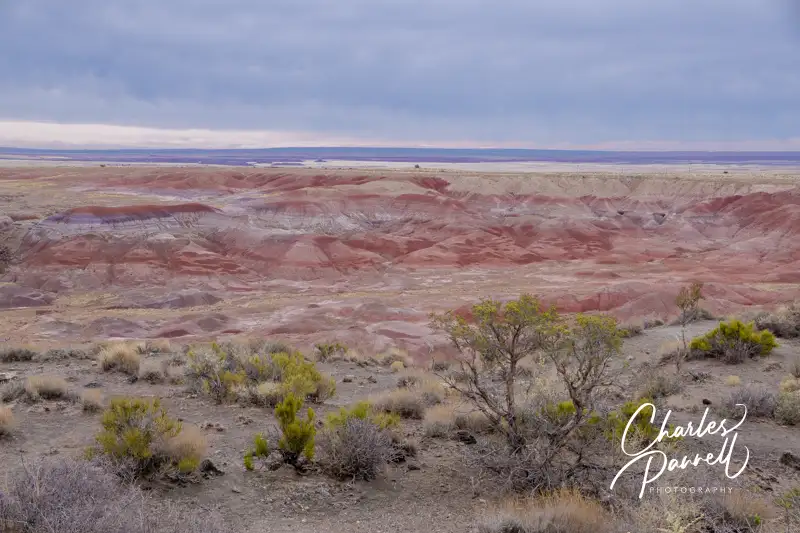
View at Tawa Point
Although there are no shortage of scenic views in the Petrified Forest National Park, make sure and stop at Tawa Point, just past the north entrance, for that first expansive view of the Painted Desert. Accessible parking is located near curb-cut access up to a short .1-mile paved trail out to the viewpoint. The last 20 feet of this path is a bit steep for manual wheelchair-users; however you can get a good view of the colorful desert from any place along the trail, or even from the parking lot.
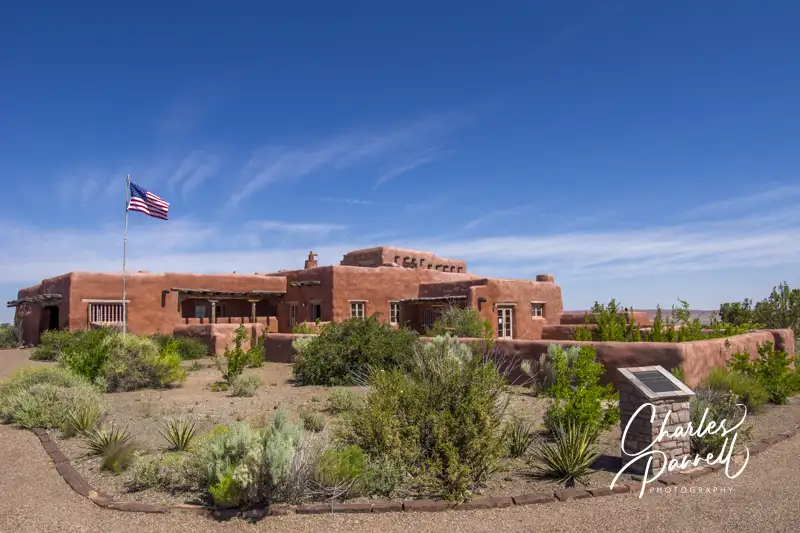
The Painted Desert Inn, which is located just a half-mile up the road, is also worth a stop. This former Harvey House features accessible parking, and level access to the building. There inn houses a number of historic exhibits, but you just can’t beat the panoramic desert view from the second floor of this split-level structure. Additionally, there’s a 300-foot paved level pathway out to nearby Kachina Point, which offers an equally impressive desert view.
Painted Desert Inn
Another worthwhile stop is Puerco Pueblo, which is a few miles up the road, just past the railroad tracks. Accessible parking with curb-cut access up to the sidewalk is located near the accessible vault toilets. From there it’s about a 200-foot walk out to a .3-mile paved trail that circles the ruins of these ancestral Puebloan homes which were occupied from 1250 to 1380.
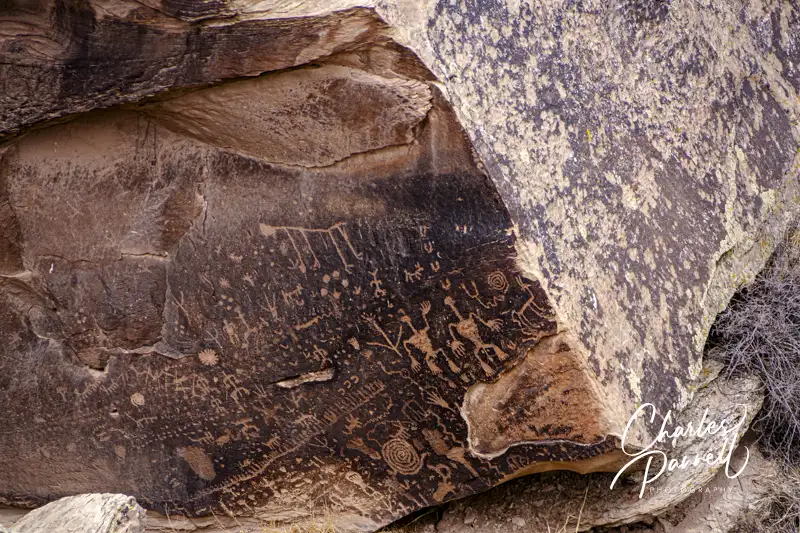
And don’t miss Newspaper Rock, which is short drive down the road. That site features a 200-foot paved level trail out to some Puebloan petroglyphs, which were created 2,000 years ago. There’s an accessible spotting scope at the overlook, which offers a good view of the 650-plus petroglyphs.
Petroglyphs on Newspaper Rock
Petrified Wood Galore
Crystal Forest
There’s also a substantial collection of petrified wood sites — such as the Crystal Forest — along the main park road. Although a paved .8-mile trail leads past the petrified logs at this site, it’s got a section or two of 20% grade, so it’s not a good choice for wheelchair-users and slow walkers. That said there is a 400-foot paved level path that leads out to the trailhead, that offers a good overview of the remains of this ancient forest.
Rainbow Forest Visitor Center
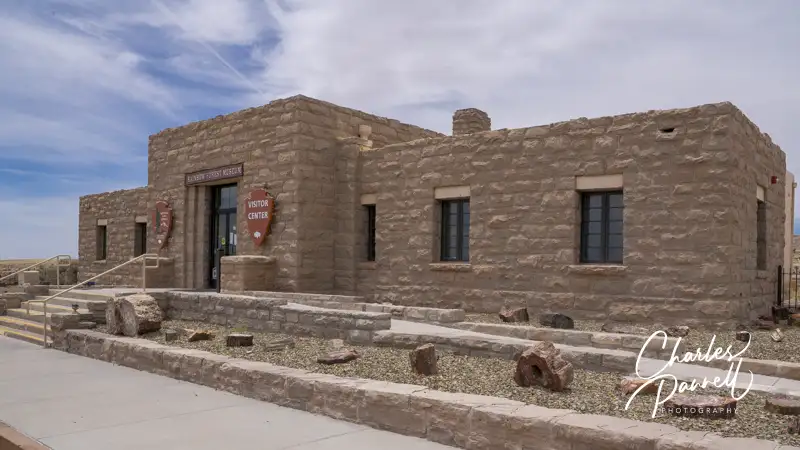
Finally, don’t miss the Rainbow Forest, which is located just north of the south entrance. There’s accessible parking near the Rainbow Forest Visitor Center, with ramp access up to the front door. Inside there’s barrier-free access to the interpretive exhibits, ranger information desk and accessible restrooms. There’s also plenty of room for wheelchairs and scooters in the theater, where a movie about the park is shown throughout the day.
The Giant Logs Trail is located out back, and although this paved trail starts out level, the access ends 600 feet later at the Mather plaque, where steps block the rest of the route. Still, there’s a good view of the site from this point, or even from the back of the visitor center.
And if you’d like to grab a bite to eat before you hit the road, stop in at the curio shop at the far end of the parking lot. There’s level access to the shop, which offers snack items, gifts and souvenirs. All in all, Petrified Forest National Park is well worth the short detour off the interstate.
Planning a family reunion can be quite a challenge, especially if it’s a multi-day event that requires overnight lodging. On the other hand, a large house or cabin allows folks to visit and reminisce for the entire weekend. And although finding a reunion house is one thing, finding one that is wheelchair-accessible can be an added challenge. And in that respect Stanford House (www.conservancyforcvnp.org/experience/plan-your-visit/retreats-lodging/) — which is located in Northeastern Ohio’s Cuyahoga Valley National Park (https://www.nps.gov/cuva/index.htm) — fills the bill perfectly.
Historic Stanford House
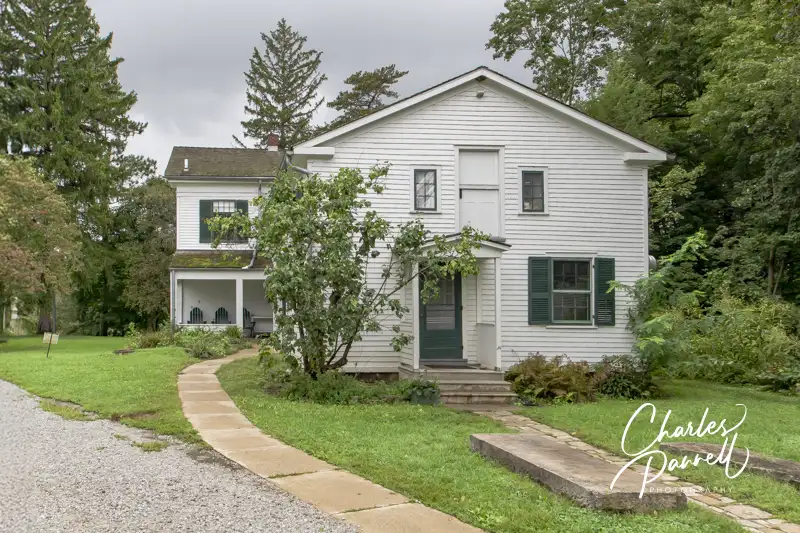
Located near Boston Mills Visitor Center, Stanford House was built in 1843 and can accommodate up to 30 overnight guests. And the good news is, access features have been added over the years to this historic home, so today it’s a great multigenerational lodging choice.
There’s accessible parking in front of the two-story home, and a barrier-free pathway over to the front porch. The grand old home features wide doorways, wood floors, good pathway access and wheelchair access on the first floor. The home is decorated with vintage wallpaper, stately wood moldings and historic chandeliers; while several comfortable rocking chairs line the accessible front porch.
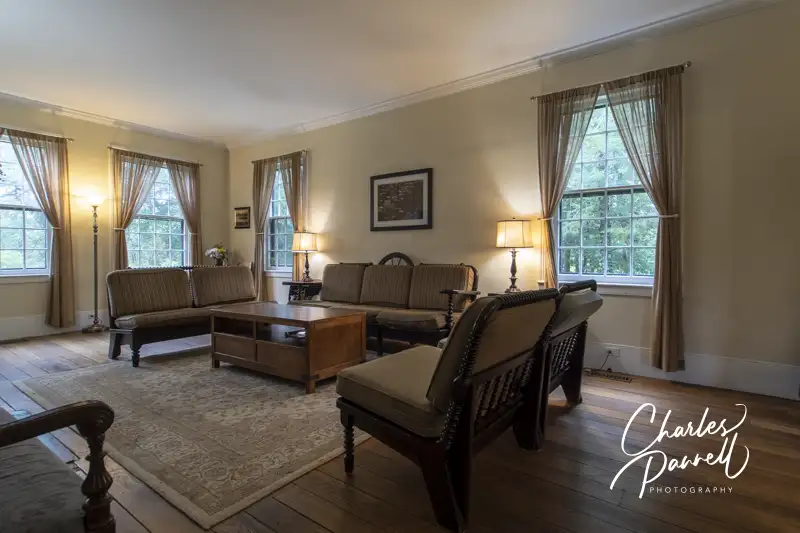
The living room is furnished with a sofa, two love seats, a settee and a few chairs; and there’s still plenty of room to maneuver a wheelchair or scooter around the period pieces and reproductions.
Living Room in the Stanford House
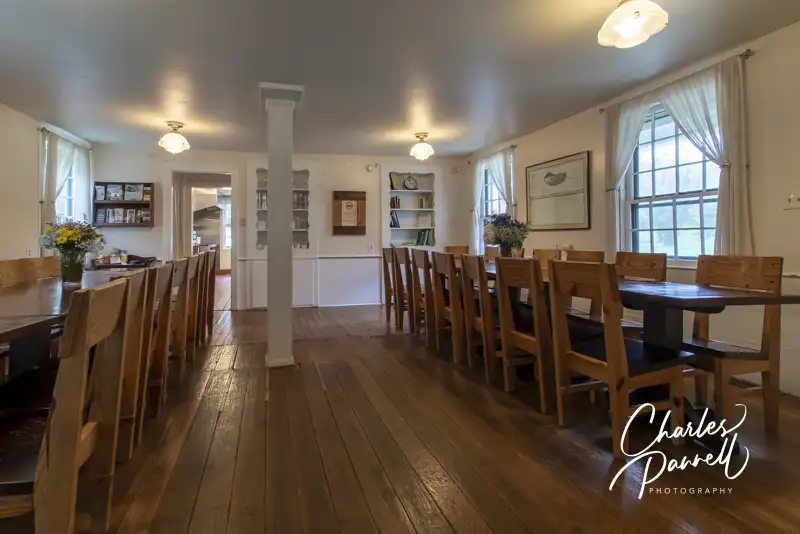
The dining room is massive and it includes two long wooden tables which each can each seat 30 people. There’s a small hutch which is filled with cups, plates, glasses and dishes; and the adjacent commercial kitchen is equipped with a refrigerator, freezer, microwave, and just about every small appliance and utensil you can imagine. And if you’d like to dine outside, there’s level access to a picnic table on the lawn, and the nearby fire circle.
Dining Room in the Stanford House
Access Features Galore
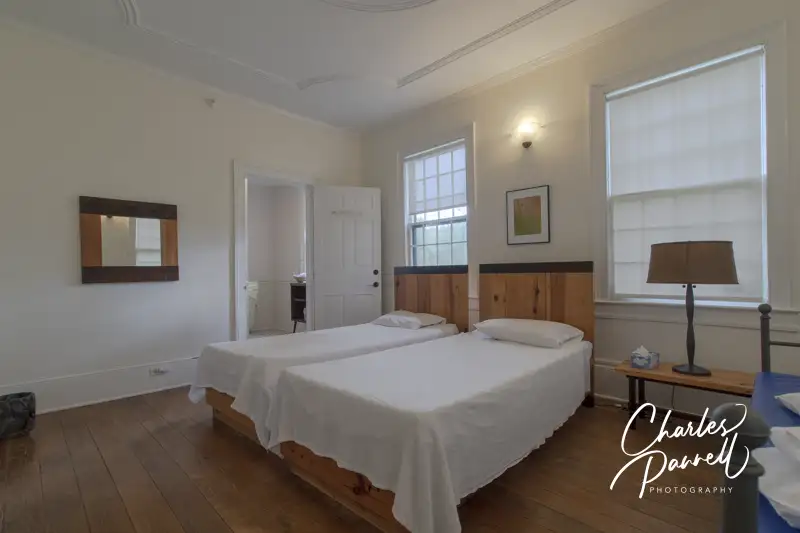
Although the bulk of the dormitory style sleeping areas are located upstairs, there’s also a wheelchair-accessible suite located on the first floor. It’s furnished with two 19-inch high twin beds (which can be pushed together) with access on both sides, as well as a trundle daybed. Truly wheelchair-users have their choice of beds in this home. Top it off with a lowered bedroom mirror and you have a nice accessible room.
Ground Floor Accessible Suite
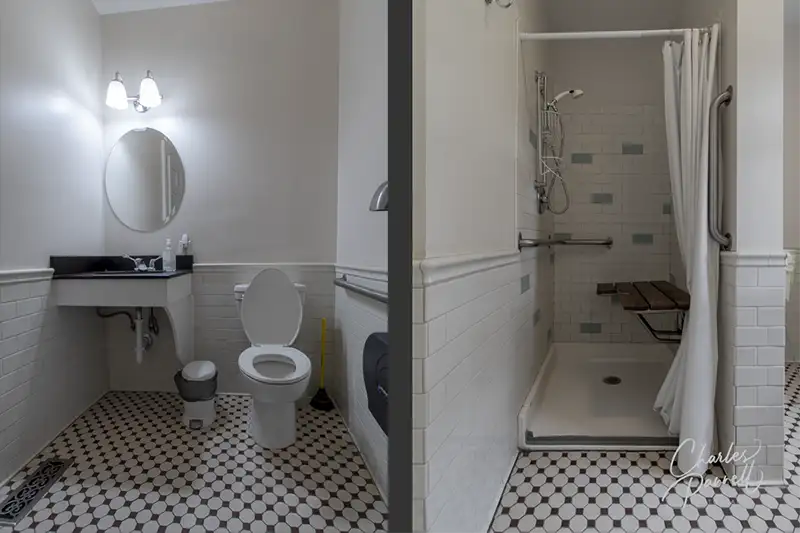
The adjacent bathroom features a full five-foot turning radius and is equipped with a 36-inch square transfer-type shower, with a fold-down shower bench, grab bars and a hand-held-showerhead. There’s ample floor space in front of the shower to transfer to the shower bench, and level access to roll-in to the unit. Other bathroom access features include a roll-under sink, and a toilet with a grab bar on the left side (as seated).
Bathroom in the Ground Floor Accessible Suite
The access features are well done, and truly this wheelchair-accessible suite will work for folks with a wide range of mobility disabilities. Additionally, the home is secluded and private, so your group will have the area all to yourself.
Explore Cuyahoga Valley National Park
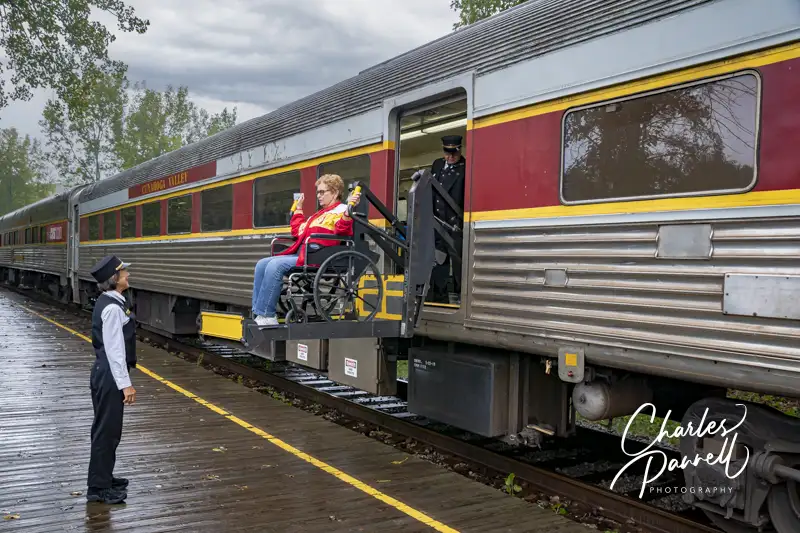
Boarding the Cuyahoga Valley Scenic Railroad
Stanford House also makes perfect home base for daily jaunts to some of Cuyahoga Valley National Park’s accessible attractions. At the top of the list is the Canal Exploration Center, which is located on the north end of the park. There’s accessible parking with level access to the front entrance of this former 1800s tavern, which now houses a store and an information center. And since the paved wheelchair-accessible towpath runs right in front of the building, you can take an accessible hike in either direction.
Brecksville Nature Center, which is located near the Station Road Bridge, is also worth a stop. Accessible parking is located next to an accessible picnic table, so pack along a lunch and enjoy a midday break. From there it’s a .15-mile walk on an accessible trail to the nature center. Accessible restrooms are located next door, and there’s level access to the nature center, which features a number of interpretive exhibits. The building also boasts floor-to-ceiling windows that overlook the garden bird feeders. It’s an excellent place to sit back and enjoy some of the 200-plus different avian visitors that have been spotted in the park.
And don’t miss a ride on the Cuyahoga Valley Scenic Railroad (www.cvsr.org). The three-hour scenic excursion winds through the park, and offers visitors a good overview of the area. Even better, the train has a lift-equipped car with plenty of wheelchair seating, and an accessible restroom. The trip begins at the Rockside Station in Independence and heads south along the Cuyahoga River, before it winds its way down to the Akron Northside Station. After that, it turns around and heads back to the Rockside Station. It’s a great way to explore Cuyahoga Valley National Park, and you just can’t beat the views.
Located just off what’s often been called “the loneliest road in America”, Great Basin National Park (nps.gov/grba/) is the epitome of remote. Named for the dry and mountainous basin between the Sierra Nevada and Wasatch mountain ranges, this Eastern Nevada national park offers a diverse landscape, from subterranean caverns to high alpine peaks. And as one of America’s least visited national parks, it’s the perfect place to take a welcome break from hectic city life. The good news is, even though parts of this park are quite rugged, it still offers plenty of places for wheelchair-users and slow walkers to admire Mother Nature’s handiwork.
Get Your Bearings
Wheeler Peak Viewpoint
One of the most accessible ways to enjoy Great Basin National Park is to take the 12-mile scenic drive up to Wheeler Peak. The best place to begin your adventure is at the Great Basin Visitor Center, located on Highway 487 in Baker. There’s accessible parking in front, with level access to the visitor center. Inside there’s plenty of room to navigate a wheelchair around the interpretive exhibits. This is a good place to get your bearings, pick up a park map and get first-hand information from the rangers on duty.
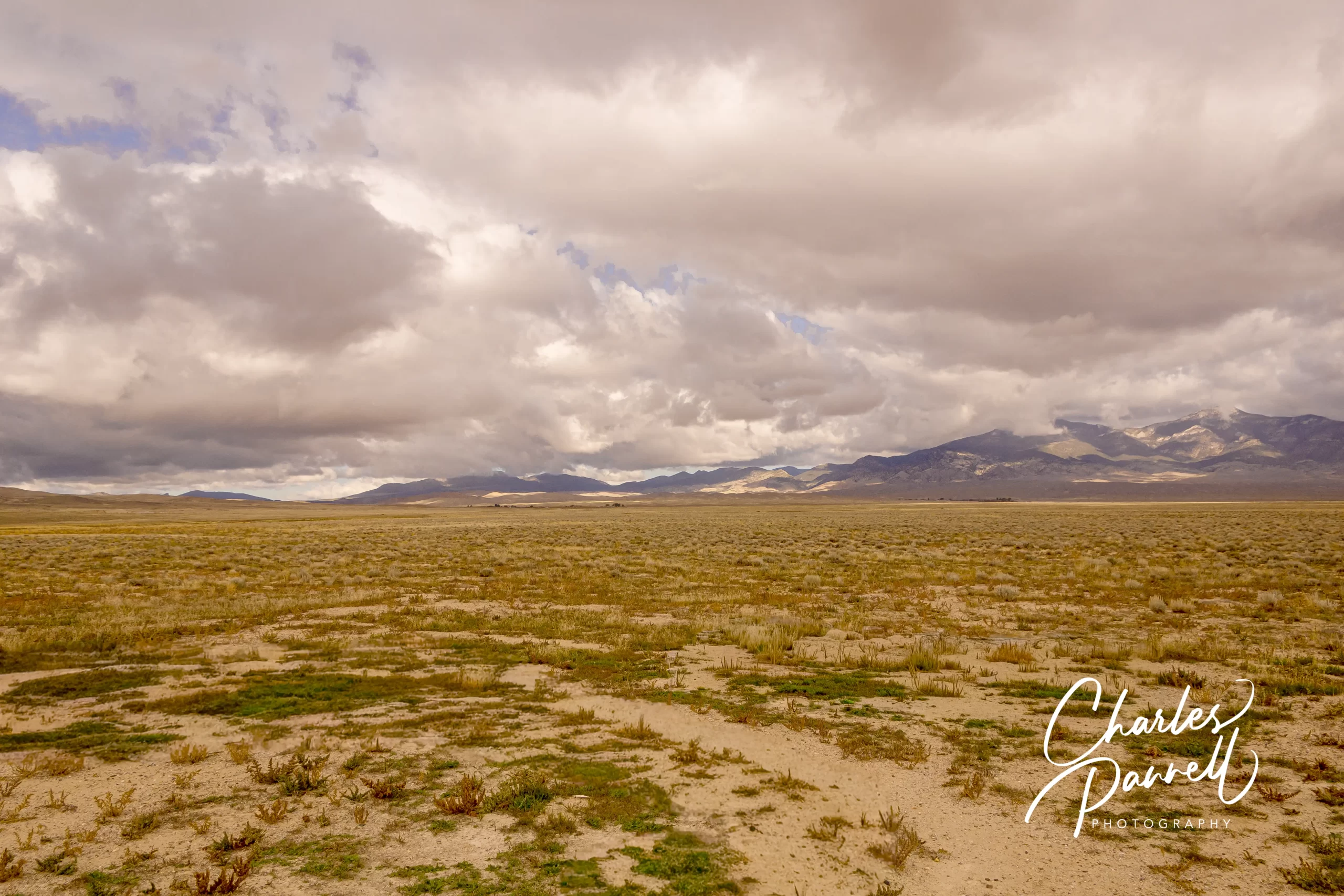
From the visitor center, continue along Highway 488 until you reach the park. Just past the park entrance, make a right turn on Wheeler Peak Scenic Drive. This winding road hugs the mountain as it passes through several ecosystems on the way to the summit. The landscape is dotted with sagebrush, before it gives way to a pinion juniper woodland, and then transforms into a conifer forest. There’s no shortage of great windshield views along the way, and there are several scenic viewpoints where you can admire the sweeping vistas. And although the road is paved, the average grade is eight percent, and vehicles and trailers longer than 24 feet are prohibited. On the plus side, that means you won’t see any tour buses at the top.
Enjoy the View
Sky Island Forest Trail
There are several scenic viewpoints along Wheeler Peak Scenic Drive, that are definitely worth a stop. First up on the drive is the Osceola Ditch trailhead, which is located just past Lehman Creek campgrounds. There’s plenty of room to parallel park in the asphalt pullout, with level access over to the interpretive panel about the Osceola Ditch. This 18-mile flume dates back to 1890, when it was built to carry water to the nearby gold mining operation. Although the mines saw some success in the beginning, they shut down in 1905, but some remnants of the Osceola Ditch still stand.
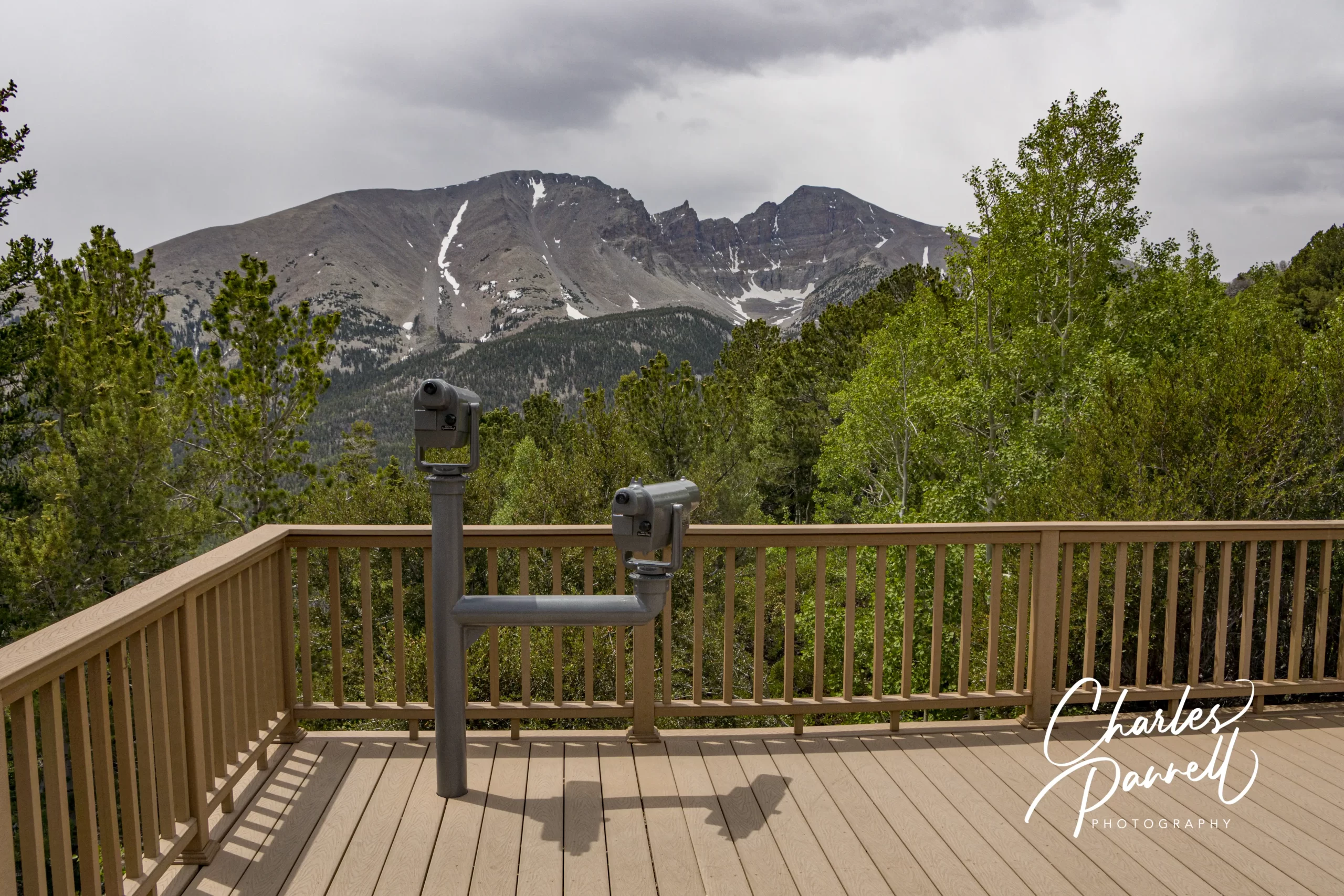
Just up the road you’ll find two viewpoints which offer great views of the vast Great Basin. Mather Overlook is just a short drive off the main road, and it features level access to the viewing deck, which has a wheelchair-height scope. There is also an accessible vault toilet and a picnic table on a cement pad at this overlook. Wheeler Peak Overlook also offers level access to a viewing deck with a wheelchair-height scope, where you’ll get an excellent view of the Wheeler Peak Glacier.
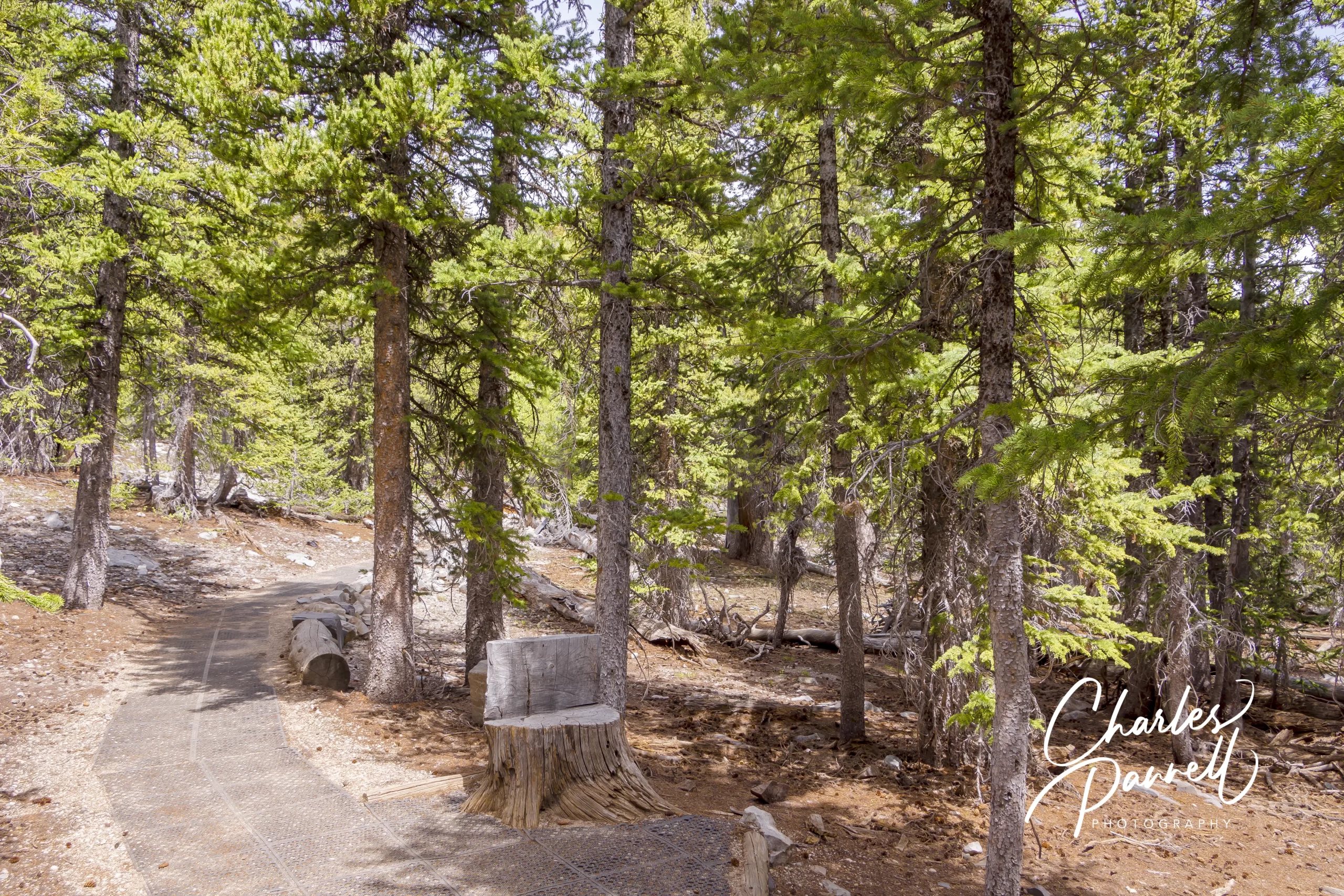
Up at the top there is accessible parking in the Bristlecone Parking Lot, with level access to the Sky Island Forest Trail. This .4-mile loop is very nicely done, with rubber mats and boardwalk sections to make it accessible in all weather. The maximum grade along the 32-inch wide trail is eight percent, and there are benches along the way to stop and rest. Interpretive plaques dot the trail, which winds through a fir and pine forest. Located at 10,000 feet, this trail offers a unique opportunity for wheelchair-users and slow walkers to explore the sub-alpine forest.
The Wonder Down Under
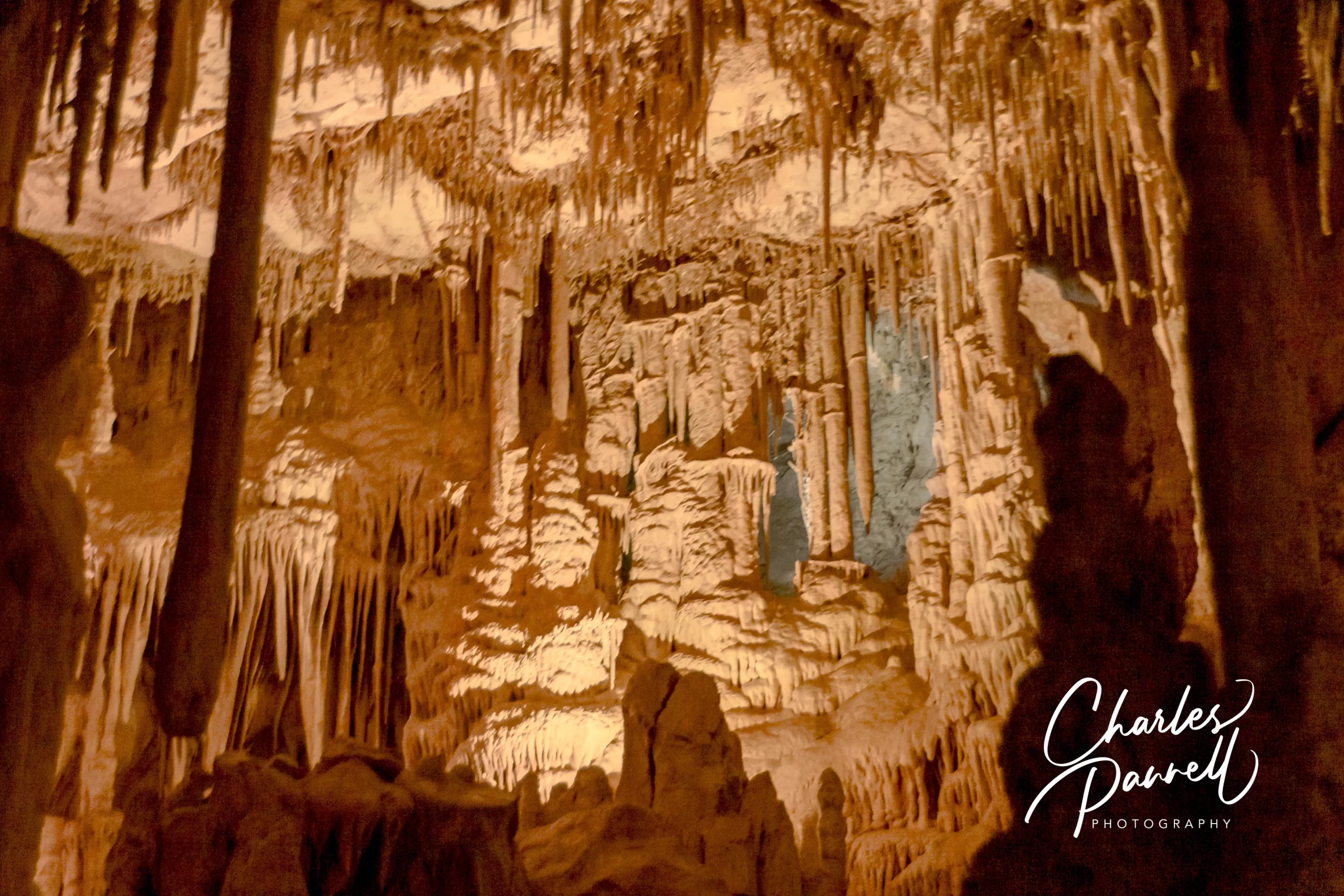
The Gothic Room at Lehman Caves in Big Basin National Park
There’s another side to Great Basin National Park – a subterranean side. After you finish the scenic drive, head down to Lehman Caves for an entirely different view of the park. Located at the end of Highway 488, the Lehman Caves Visitor Center offers accessible parking, with a ramp up to the back entrance. Inside, there’s barrier-free access to the visitor center and gift shop.
Although there are 76 steps on the regular cave tour, a special “mobility tour” is also available. Although not 100 percent accessible it may work for some wheelchair-users and slow walkers. The tour is actually a shorter version of the regular tour, and people who can’t manage the steps and grade just go to the first room — the Gothic Room — and then return to the visitor center.
There’s level access on a paved pathway to the cave entrance, but there’s a five-to-eight-percent grade to the Gothic Room. Wheelchair-users must be accompanied by a companion who can push them in and out of the cave. And although it may sound a bit restrictive, it’s a good opportunity for some wheelchair-users and slow walkers to get a look at the fabulous stalactite and stalagmite formations inside the cave.
The availability of the mobility tour is dependent on the staffing, as there has to be an extra ranger to take wheelchair-users and slow walkers back early. For more information on the mobility tour or to find out about availability, call (775) 234-7517. Tickets for this tour are not available online, but it’s definitely worth the extra effort to make arrangements for the mobility tour in advance.
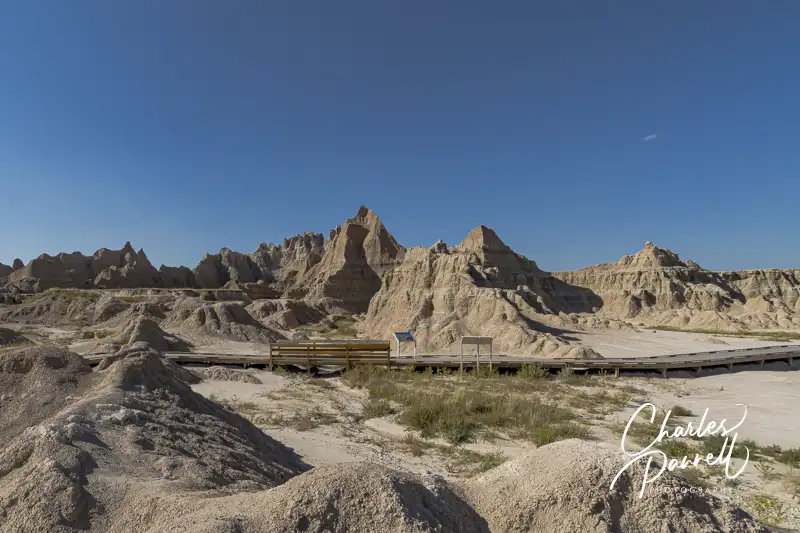
Located in Southwestern South Dakota, Badlands National Park (www.nps.gov/badl) features a rugged landscape dotted with an almost otherworldly collection of geological formations. The windshield views of the convoluted rock formations are spectacular, so you don’t even need to get out of your vehicle to enjoy it all. On the other hand, if you’d like to linger a bit, there are plenty of wheelchair-accessible Badlands options; including numerous trails and overlooks along the way. And there’s even an accessible lodge to spend the night.
Take a Hike
Fossil Exhibit Trail in Badlands National Park
Although the landscape looks foreboding, it’s easy to plan a wheelchair-accessible Badlands trip. To get a good overview, take a drive along Badlands Loop Road, where you’ll find a number of wheelchair-accessible viewpoints and pullouts that aren’t even marked on the park map.
There are also several accessible trails along Badlands Loop Road, including the Window Trail and the Door Trail, which are just a short drive from the visitor center. Both trails can be accessed from the same parking lot, which includes accessible parking and an accessible vault toilet.
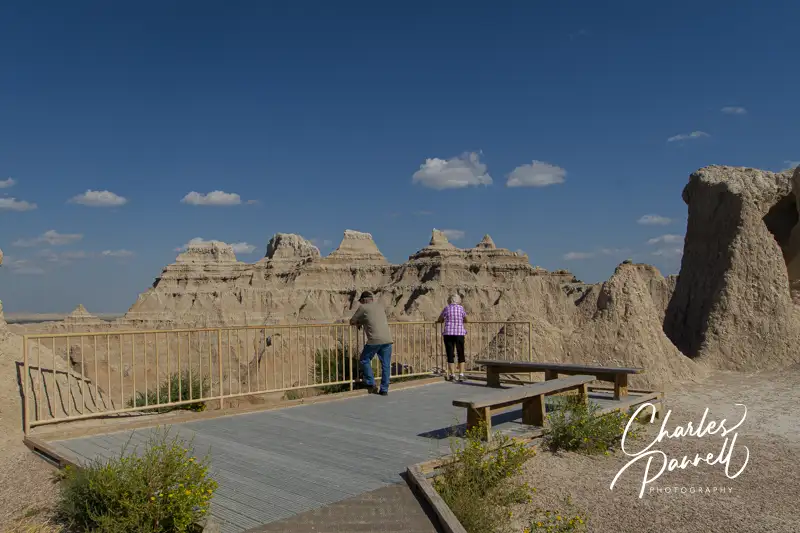
The Window Trail is located on the south side of the parking lot. The level boardwalk leads out to a natural window that looks out on eerie hoodoo-like formations off in the distance. It’s a pleasant quarter-mile out-and-back stroll.
Viewing Platform at the End of the Windows Trail in Badlands National Park
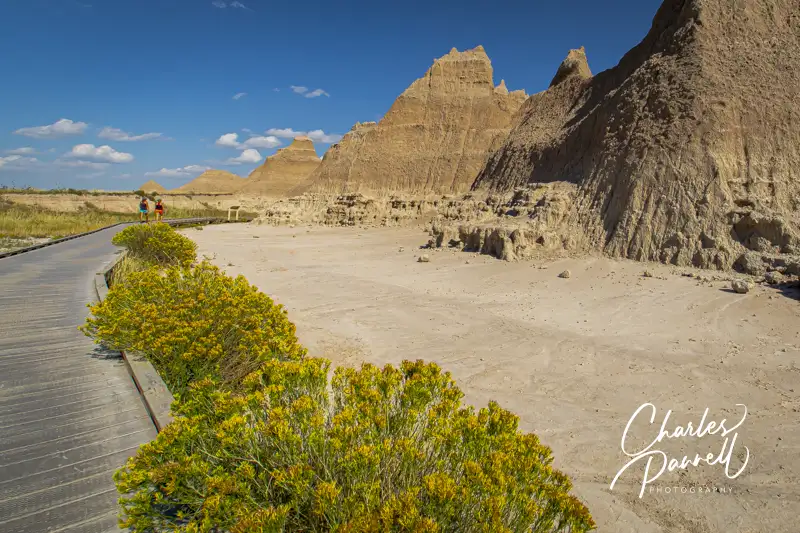
The Door Trail is located at the other end of the parking lot, near the much needed shade structure. The level boardwalk snakes between a break in the Badlands Wall — called The Door — and opens up to a sweeping sandstone canon view at the end. It’s a .75-mile round-trip hike.
Start of the Door Trail in Badlands National Park
And don’t miss the Fossil Exhibit Trail, which is located near White River Valley Overlook. Accessible parking and an accessible vault toilet are located near the trailhead. This quarter-mile boardwalk features low bumpers for unobstructed views, and includes interpretive panels that describe the extinct creatures that once roamed the area. Examples of fossils are also located along this nicely accessible loop trail.
Each trail offers a different look at the varied landscape, but don’t forget the sunscreen, as shade is in short supply in this neck of the woods
Stay a Spell
To ramp up your wheelchair-accessible Badlands experience, plan to spend at least one night at Cedar Pass Lodge (www.cedarpasslodge.com). Not only is it one of the newer properties in the national park system, but it’s also conveniently located right next door to the Ben Reifel Visitor Center.
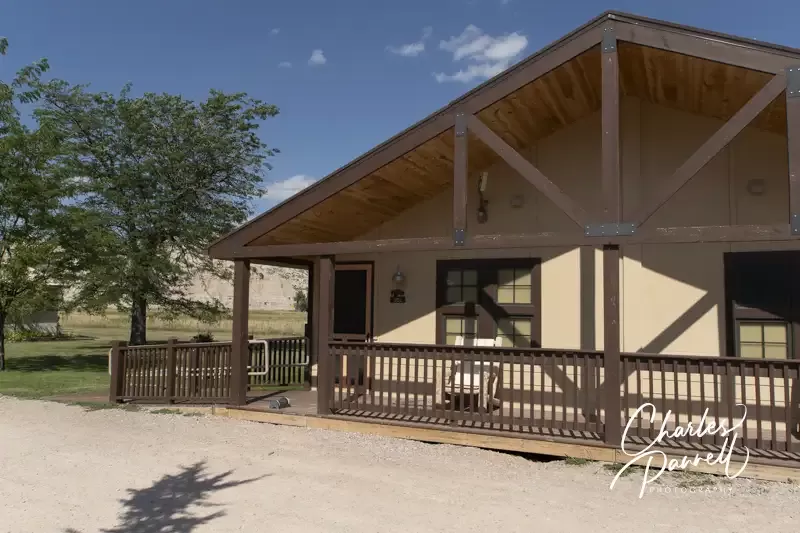
Designed to resemble the rustic 1928 Cedar Pass cabins, this modern incarnation includes all the creature comforts that travelers expect today. It has several accessible cabins, including cabin 101, a duplex model.
Access features include ramp access to the front porch, wide doorways, excellent pathway access, a lowered clothing rod, and wood floors for easy rolling. The interior is equally striking and includes walls paneled with beetle-kill pine from the Black Hills, and furnishings that are hand-crafted from Lodgepole pines.
Furnishings include a 23-inch high bed with wheelchair access on both sides, a table, two chairs, a refrigerator and a microwave. There’s also level access out to the spacious back deck, which is a great place to enjoy the sunset.
The bathroom is furnished with a roll-in shower with grab bars, a hand-held showerhead and a padded shower bench. The toilet grab bars are located on the back and right walls (as seated), and the bathroom also includes a roll-under sink and a lowered mirror. And like the rest of the cabin, there’s plenty of room to maneuver even the largest wheelchair or scooter around the bathroom.
Cabin 101 at Cedar Pass Lodge in Badlands National Park
Image 1 of 4
There’s also good access to the public areas of the property, including the gift shop, registration area and the restaurant. The only in-park lodging option in Badlands National Park, Cedar Pass Lodge makes a great home-base for any wheelchair-accessible Badlands visit. And you just can’t beat the scenery!
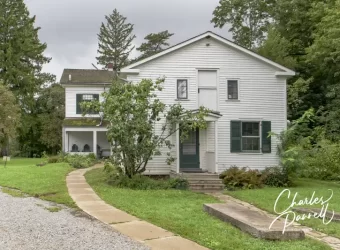
Created by Jane Orleman and Dick Elliott, this downtown Ellensburg home is decorated in a conglomeration of reflectors and other common items. And it’s more than just a work of art, as Jane still lives there. Sadly Dick passed away in 2008, but his artistic creation lives on in this house that the couple purchased in 1978.
The home is surrounded by a fence with posts adorned with everything from nails and keys, to bottle caps, insulators and even a few cooking implements here and there. A “Life is But a Dream” mural graces one side of the fence, and a nook with a guest book sits near the end. Add in a few insulators on the side, a racy mannequin with reflectors for boobs (Big Red), and a man with a camera for a face and you have everything but the kitchen sink — all artistically done of course. And don’t miss the gigantic hand that adorns the front, near the doorway. Dick and Jane’s Spot is truly a work of art, and everywhere you look, you find something different — and sometimes it’s pretty subtle. Other times, it’s hard to miss.
Access is good around the house, with sidewalks lining the venue, and curb-cuts at the corner. And there’s a little side alley that gives folks access to another aspect of the decorated home. There’s a parking lot that’s adjacent to the house, but there are no accessible parking spaces. Best bet is to park in the accessible street parking spots in front of the police station across the street. If you need accessible parking, set your GPS to 100 N. Pearl Street, as otherwise you’ll be routed through a few parking lots to the side of the house. Worth a quick stop for sure — an excellent photo-op.
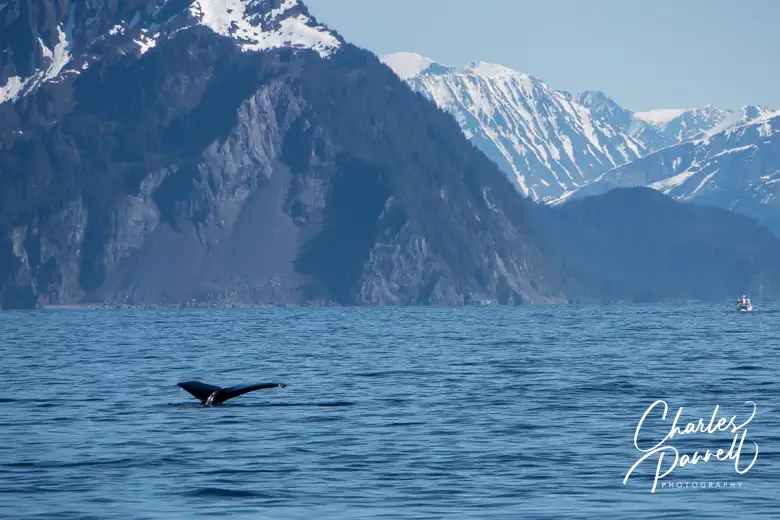
Whale Tail Breaching at Kenai Fjords National Park
Located at the head of Resurrection Bay, Seward is a popular port for many cruise ships, including Celebrity, Viking, Royal Caribbean and Silversea vessels. It’s also the gateway to rugged Kenai Fjords National Park, and the southern terminus of the Seward Highway. The good news is, it is possible to explore Seward in a wheelchair. In fact, this port city offers visitors a number of wheelchair-accessible tours and attractions. And that’s reason enough to spend at least one day in this Kenai Peninsula community on your next Alaskan cruise or road trip.
Explore Kenai Fjords
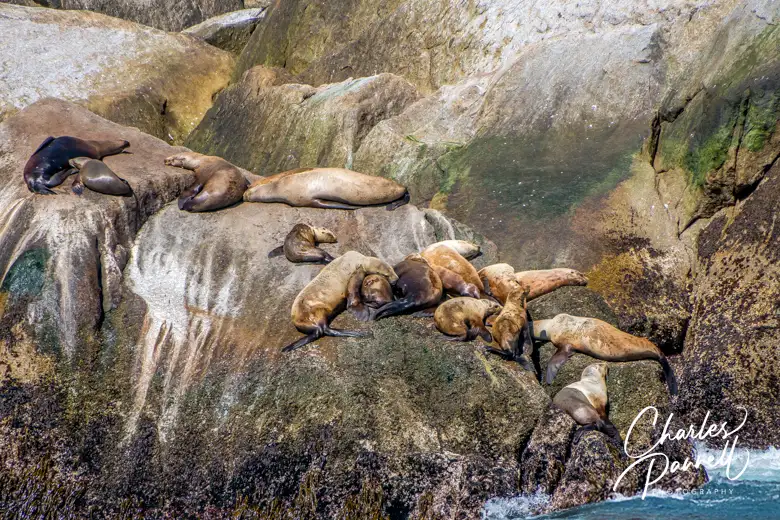
Seals viewed on the Kenai Fjords Tours
Although the lion’s share of Kenai Fjords National Park (www.nps.gov/kefj/) is comprised of backcountry trails and inaccessible glaciers, visitors can get a peek at the diverse wildlife and stunning scenery of the park on a day cruise.
Conducted by Kenai Fjords Tours (www.alaskacollection.com/day-tours/kenai-fjords-tours/), the Classic Kenai Fjords Park Tour tour departs twice daily from the Seward harbor. There’s level access to the ticket office , with a large drop-off area in front. Accessible parking is available in front of the Kenai Fjords Tours office, and in the remote parking lot, which is a few blocks away. There’s also accessible shuttle service from the remote parking lot to and from the harbor.
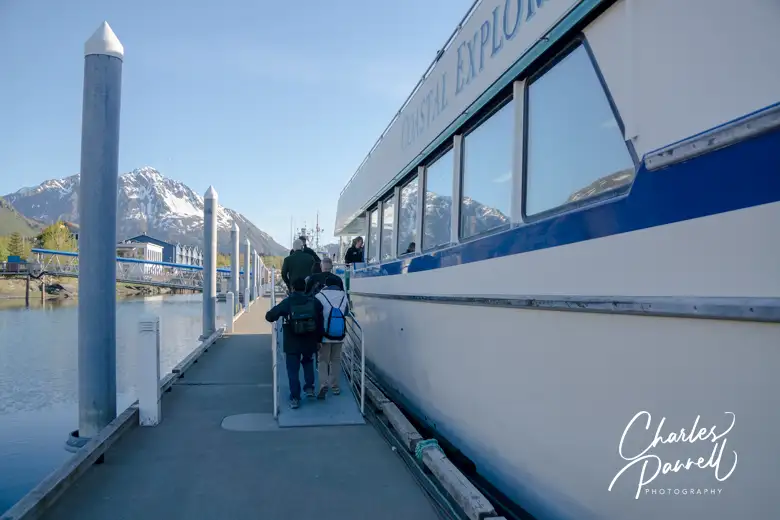
There’s level access out to the tour boat, and employees will provide boarding assistance with advance notice. Unfortunately the vessels cannot accommodate scooters. The main deck features good pathway access; and wheelchair users can transfer to a reserved accessible table or stay in their own wheelchair. If you opt for the latter, there’s also a handy fold-down table next to the accessible space. Additionally, there’s a large accessible marine head — reserved for disabled passengers — on the main deck.
Enjoy the Cruise
Boarding the Kenai Fjords Tour Boat
Although there’s only stairway access to the top deck, the main deck has large picture windows, so the view is equally good in both spaces. And the captain provides an excellent interpretation of the wildlife found in the water and along the shore. Sightings include whales, seals and puffins and maybe even bear or moose.
About midway along, the captain stops and turns off the engine so passengers can see and hear the glaciers calve off into the water below. Afterwards the crew retrieves a piece of an iceberg, so everybody can get a closer look. In short, it’s a very scenic, informative and entertaining cruise. Add in a tasty lunch served at your table, and a very accommodating crew, and you have the perfect way to enjoy Seward in a wheelchair.
Alaska Sealife Center
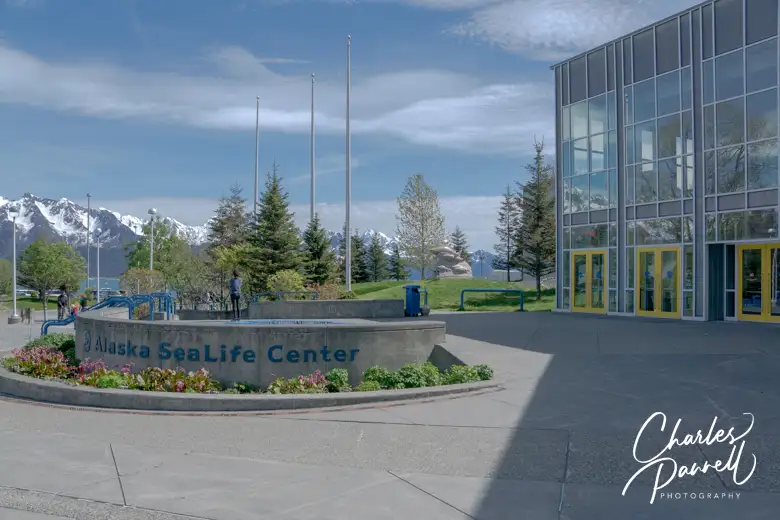
Alaska Sealife Center
A visit to the Alaska Sealife Center (www.alaskasealife.org/) is the ideal companion to a Kenai Fjords Cruise, as it offers a closer look at some of the local marine life. This unique facility, which is a cross between an aquarium and a research center, was partially funded by Exxon after the Valdez oil spill in 1989. Prior to that disaster, researchers had very little knowledge about the delicate ecosystem of Prince William Sound.
The tourism component of the facility allows visitors the chance to get up-close-and-personal with a variety of marine mammals, birds and fish found in the area. Accessible parking is available in the adjacent lot, and there’s level access to the center. There’s barrier-free access throughout the building, elevator access to all floors and a loaner wheelchair at the information desk. Best of all, the wheelchair-height aquariums offer unobstructed views of the marine life.
The first-floor exhibits include interpretive panels about fishing sustainably and wild Alaskan seafood, while the second floor has a nice collection of interactive exhibits. There’s also level access to the seabird aviary on the second floor, where visitors can get a close look at the resident puffins, cormorants and murres. And don’t miss the equally enjoyable antics of the stellar sea lions, harbor seals and ringed seals in the enclosure across the hall. And if you’d like a backstage look at the animal enclosures, a level overlook offers an accessible glimpse of that too. All in all, the Alaska Sealife Center is a fun and educational stop, and a must-see on any Seward itinerary.
Puffin at the Alaska Sealife Center
Visit Exit Glacier
Exit Glacier in Kenai Fjords National Park
Finally, a drive out to Kenai Fjords National Park to see Exit Glacier is a must-do on any Seward visit. Not only is it one of Alaska’s walk-up glaciers, but Exit Glacier is the only part of Kenai Fjords National Park that is accessible by road. It’s located three miles north of Seward, just off the Seward Highway. Keep a lookout for Herman Leirer Road and follow it for about eight miles, until it dead-ends in the parking lot.
There’s accessible parking near the Exit Glacier Nature Center, with level access over to the small building. Inside there are a few exhibits as well as a staffed ranger desk. There are also a few accessible picnic tables outside, near the accessible restrooms.
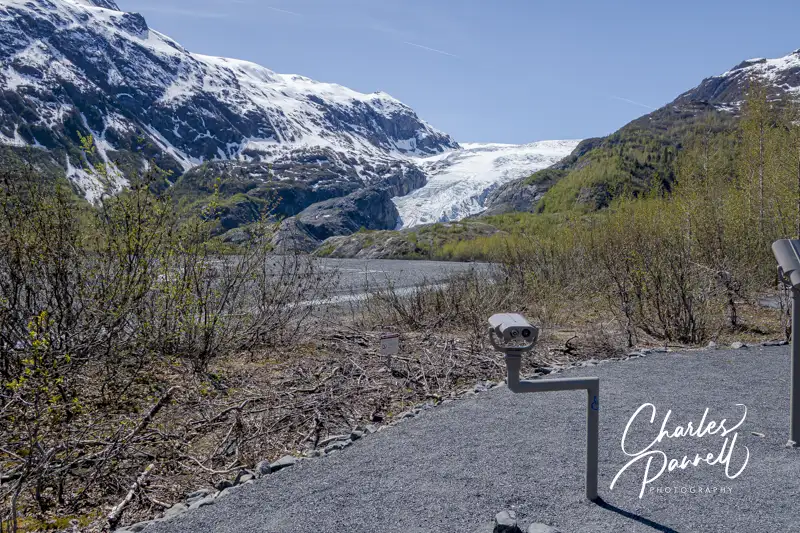
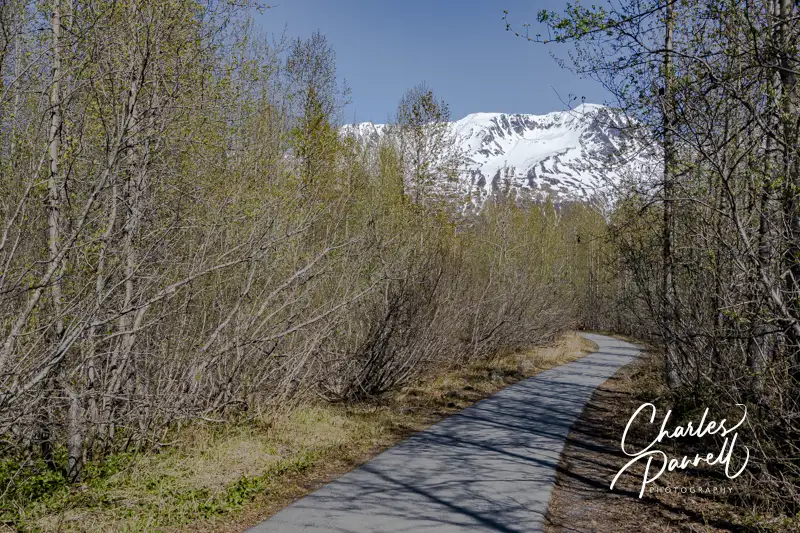
The wheelchair-accessible one-mile Glacier View Loop Trail begins on the other side of the nature center. The paved trail leads through a cottonwood forest and transitions into a hard-packed dirt trail topped with stabilized granite. About halfway along the trail there’s a level viewing spot, where you can get an excellent view of Exit Glacier, as it spills down the mountain from the Harding icefield. And if you didn’t bring along binoculars, there’s also a wheelchair-height viewing scope in the viewing area.
And although the view is spectacular, the walk is equally pleasant, as there are interpretive plaques and benches to sit and enjoy the forest along the way. And if you are visiting Seward on a cruise, Exit Glacier makes a great shore excursion. No matter how you get there, Exit Glacier is a must-see for anyone who visits Seward in a wheelchair.
Trail to the Exit Glacier in Kenai Fjords National Park
Don’t let the “state park” moniker fool you, as this spot really is just a quick road trip stop. It makes for a good break if you are tooling along Interstate 90 in Southern Montana. Just take exit 208, then follow Highway 1 for about seven miles. You can’t miss it — just look for the small parking area right before abandoned guard shack.
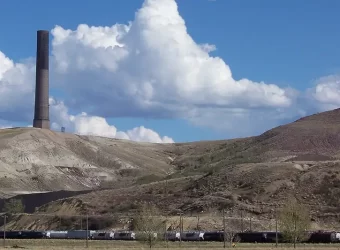
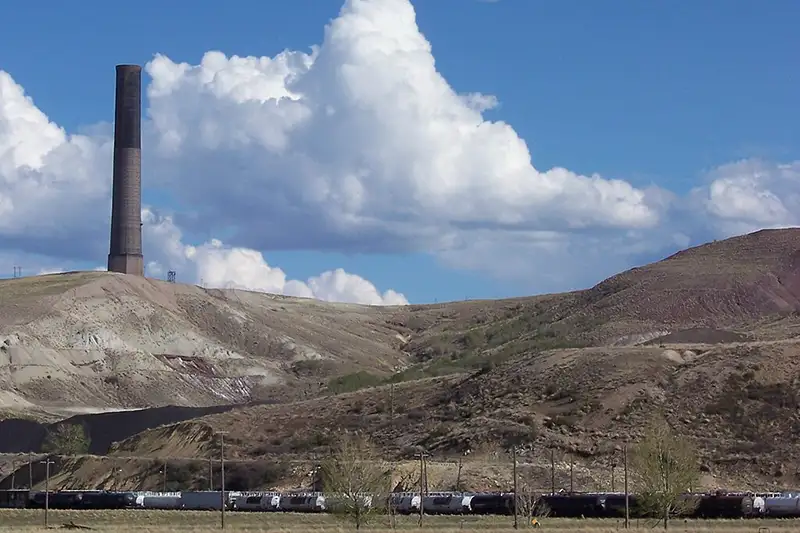
There’s accessible parking in the parking lot, with level access over to the exhibits. The first installation is a metal sculpture of a miner, a smelter worker and a railroad worker, and it represents the labor that built the local copper industry. From there, a level sidewalk leads up to a viewing area where you can get a good look at the remaining smoke stack. The smoke stack is 585 feet tall — about 30 feet taller than the Washington Monument. It’s one of the tallest freestanding brick structures in the world, and it serves as a reminder of the copper smelter industry that once dominated the local economy. Today the smokestack is all that remains of that era, and that industry.
There are no facilities in the parking lot — which pretty much comprises the whole state park — but there’s a rest area near the Interstate 90 exit. The smoke stack makes a nice detour if you are getting off to use the rest area; and it’s a good vantage point to get some smoke stack photos. And it’s free.
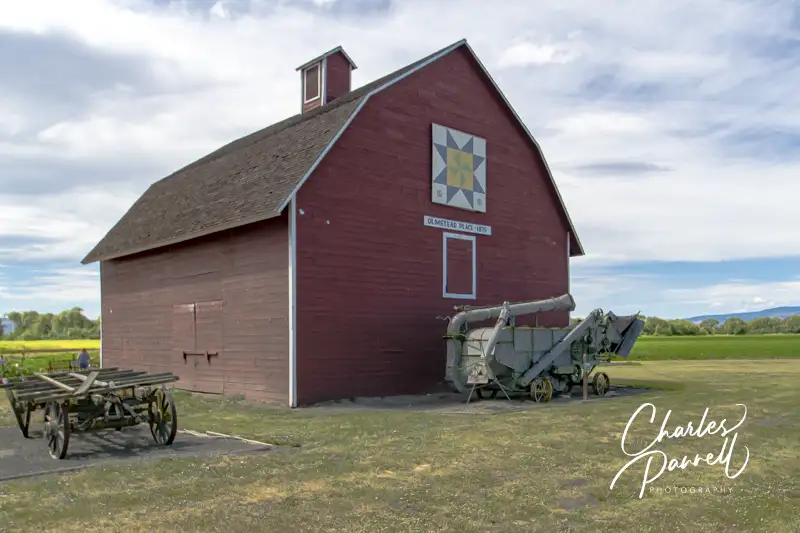
Located off Interstate 90 in Northwestern Washington, Olmstead Place State Park makes a nice road trip picnic stop. The GPS directions will take you to the old barn, but continue along Ferguson Road to the next driveway for the picnic area. There’s no striping in the small paved lot, but that’s OK because you’ll most likely have it to yourself. There are accessible vault toilets in the parking area, and a level gravel path leads over to several picnic tables on the grass. They aren’t any accessible tables, but there’s room at the end for wheelchairs. There’s a little freeway noise, but it’s a nice departure from the rest area picnic tables. And it’s not crowded.
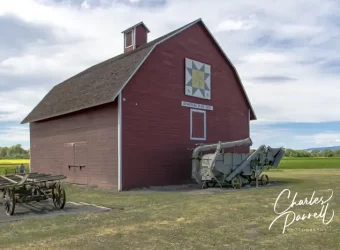
After lunch feel free to browse around the old homestead. The site is level and there are some gravel pathways but you’ll have to roll over the grass to get to a number of the buildings. There are a lot of farm out buildings as well as the old homestead to peruse. The barn area is also worth a look, and if you can’t manage the pathway, then it’s a short easy roll down Ferguson to get to it. There’s not much traffic on Ferguson, so it’s pretty safe. There’s a sizable display of farm implements next to the barn, and a decorative quilt square adorns the front. It’s a nice picnic spot, and a great place to dodge the crowds.

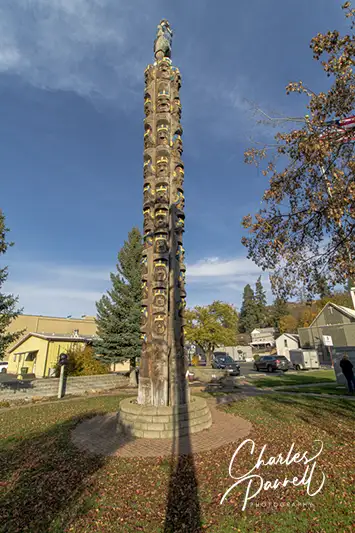 This local landmark has a fun history, and it’s a nice spot to take a break while driving along Highway 195 in the Palouse. It’s a small site, so if you have an adapted van it’s best to parallel park on the street in front of the tiny park that surrounds the Codger Pole. There’s also standard parking in the Farmers Insurance lot next door. From either point there’s level access to this unusual monument, which also has a picnic table on a cement pad.


 101 N. Pearl Street