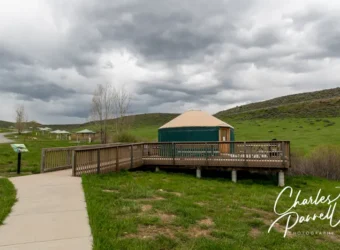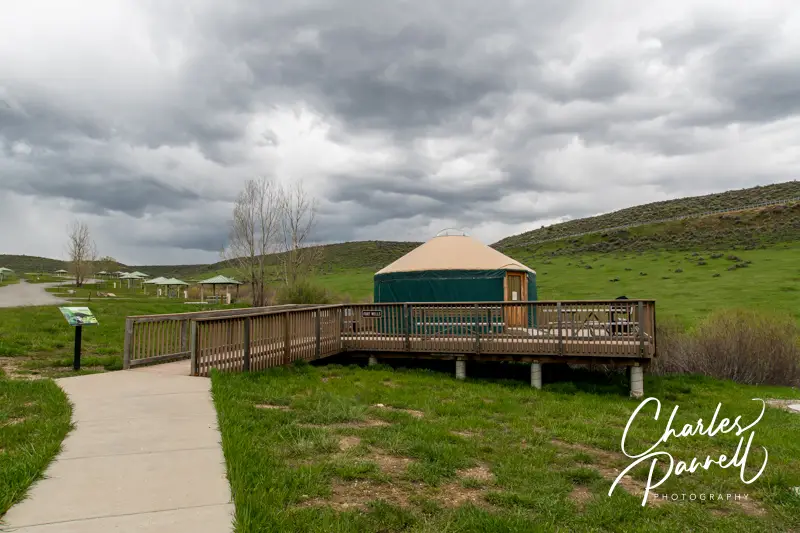
Located in Northeastern Utah, East Canyon State Park (https://stateparks.utah.gov/parks/east-canyon/) is the perfect place to take a quiet break, and enjoy a scenic overnight stay in a wheelchair-accessible lakeside yurt. Perched on the hillside, the yurt village overlooks the reservoir, and offers visitors a scenic and serene place to spend the night.
Spend The Night
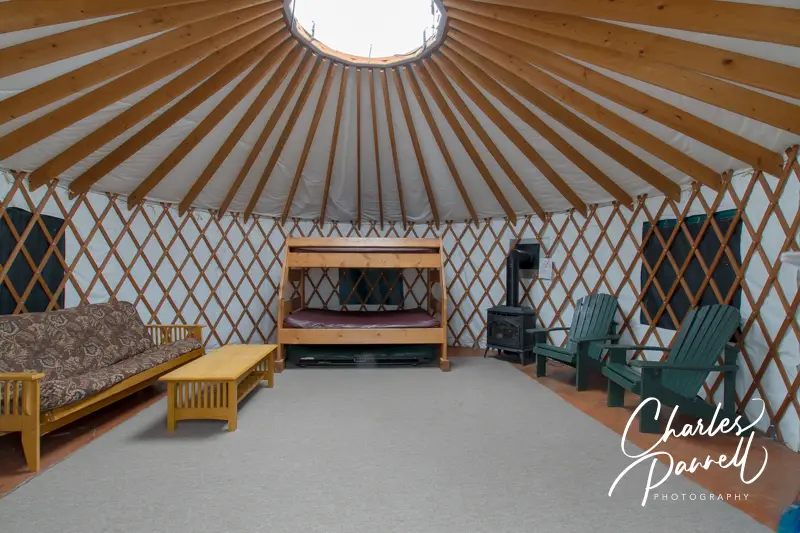
Inside the Wells Yurt in East Canyon State Park, Utah
Accessible parking is located next to the Wells yurt, with ramp access up to the spacious deck. The wide front door features level access, and there’s plenty of room to navigate a wheelchair inside the yurt.
Furnishings include two Adirondack chairs, a futon, a coffee table, and a bunk bed with a double on the bottom (19 inches high) and a single on the top. There’s also an eight-inch high trundle bed under the bunk. Round it out with electricity and propane heating and you have a very comfortable yurt. Just bring your bedding, towels, cooking gear and food and you’re good to go. And since there are just four yurts in the village, this lakeside yurt is also a peaceful spot to spend the night.
But Wait…There’s More
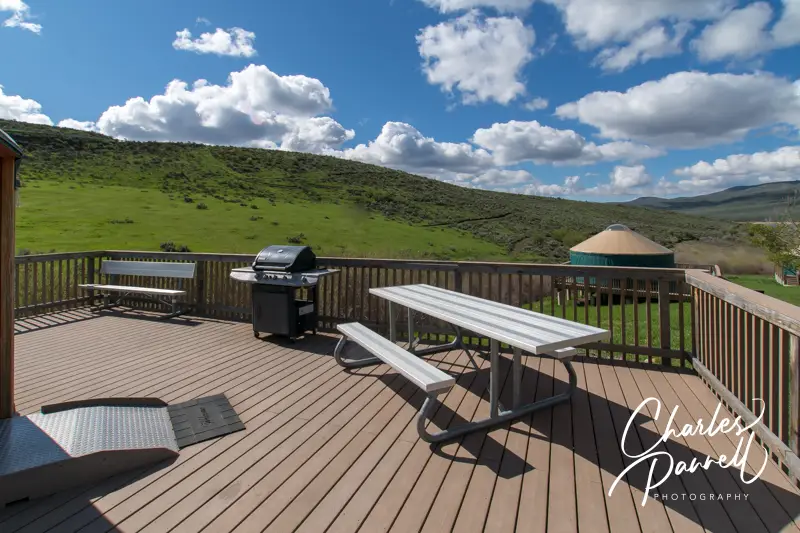
Deck at the Wells Yurt in East Canyon State Park, Utah
Outside, there’s plenty of room to wheel around the deck, which is furnished with a gas bbq, an accessible picnic table and two benches. And if you’d like to toast a few marshmallows, there’s also a fire ring in a level area near the deck.
The accessible yurt is located next to the bathhouse, which is equipped with a private shower room that’s outfitted with a roll-in shower with grab bars, a hand-held showerhead and a fold-down shower bench. A family restroom is located next door, and it features a full five-foot turning radius, toilet grab bars on the back and left walls (as seated), and a roll-under sink. A mirror image family restroom, with toilet grab bars on the back and right walls (as seated), is located on the other side of the accessible shower room. It’s a very accessible setup, and usable by folks with a variety of disabilities.
All in all, this wheelchair-accessible lakeside yurt is a great place to rest your head while exploring Northeastern Utah.
Barrier-Free Travel Utah National Parks for Wheelchair-users and Slow Walkers
Rasar State Park (https://parks.wa.gov/find-parks/state-parks/rasar-state-park) offers a peaceful taste of the forest with some great Skagit River views, a few barrier-free hikes, and several wheelchair-accessible deluxe camping cabins. This lush state park is located about 40 miles west of the North Cascades National Park Visitor Center in Newhalem, just off Highway 20. And with a second-growth forest filled with big-leaf maples, Douglas firs and western red cedars, it’s the perfect place to sit back, relax and enjoy all that Mother Nature has to offer.
Stay in Style
If you’d like to spend the night in Rasar State Park, but don’t want to pitch a tent, then check out one of their three wheelchair-accessible deluxe camping cabins. There’s accessible parking in front of the accessible Chinook Cabin, with paved access over to the front porch. Outside there’s an accessible picnic table and a raised grill, and two oversized Adirondack chairs.
The cabin features a level threshold, wide doorways, lever handles, good pathway access and laminate floors for easy rolling. There’s a small kitchen counter area, with a few cabinets and a sink, with a dinning table and four chairs next to it. The kitchen includes a microwave, a small refrigerator and a K Cup coffee maker (bring your own K Cups).
This rustic cabin features exposed beams and natural wood, and includes hand crafted log furniture. For sleeping, there’s a 16-inch high futon in the living area and a bunk bed near the bathroom. The bunk bed includes a 16-inch high double on the bottom and a single on the top. There’s a night table next to the bunk beds, and a floor lamp in the living area. Top it off with a roomy closet, overhead lights, heating and a ceiling fan, and you have a pretty comfortable setup.
The bathroom features a full five-foot turning radius and includes a 36-inch-square transfer-type shower, with a fold-down shower bench, a hand-held showerhead and grab bars. The toilet grab bars are located on the back and left walls (as seated) and the bathroom also has a roll-under sink.
The Coho Cabin, which is located next door has the same access features, but if you want more privacy, choose the Skagit Cabin across the road. On the plus side, all of the cabins are surrounded by the lush forest.
Living Area in the Chinook Cabin at Rasar State Park
Bathroom in the Chinook Cabin at Rasar State Park
Bedroom in the Chinook Cabin at Rasar State Park
Take a Hike
Even though it’s fairly small, Rasar State Park offers a varied landscape with several accessible trails. Most of the trails are located in the south area of the park, near the Skagit River. There’s accessible parking near the picnic area, and level access over to the trailheads. There are also accessible picnic tables on the grass, if you’d like to stop for a short lunch break.
The paved Skagit River Access begins near the picnic area, and winds through the meadow out to the river. It’s about a .3-mile jaunt down to the river, and although you can walk a little further on the hard-packed sand beach, the wheelchair-access ends at that point. After that you’ll encounter steps, bumps, rocks, and a significant uphill climb. Still, it’s a nice accessible out-and-back trail to the river.
Skagit River Trail at Rasar State Park
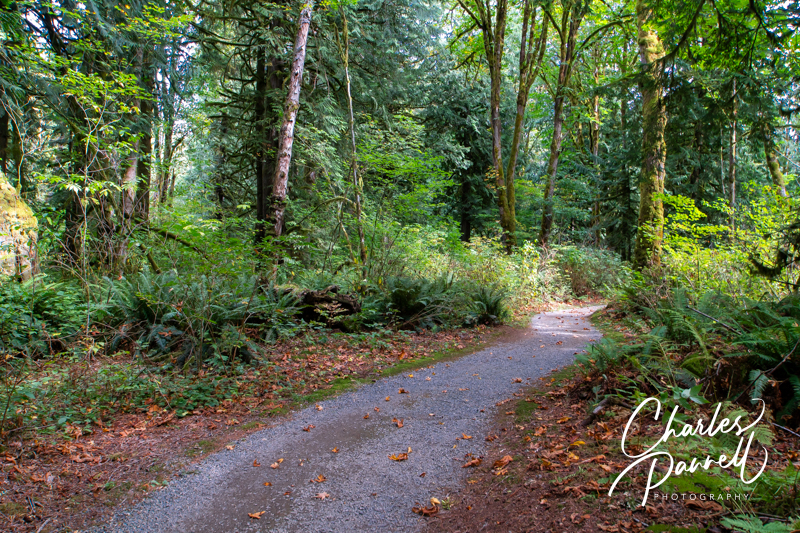
The Cedar Trail also starts in the picnic area. This hard-packed dirt trail leads through a canopy of trees, before the access ends at the .25-mile point. Still it’s another nice out-and-back walk, and there are a few shaded picnic tables along the way.
Cedar Trail at Rasar State Park
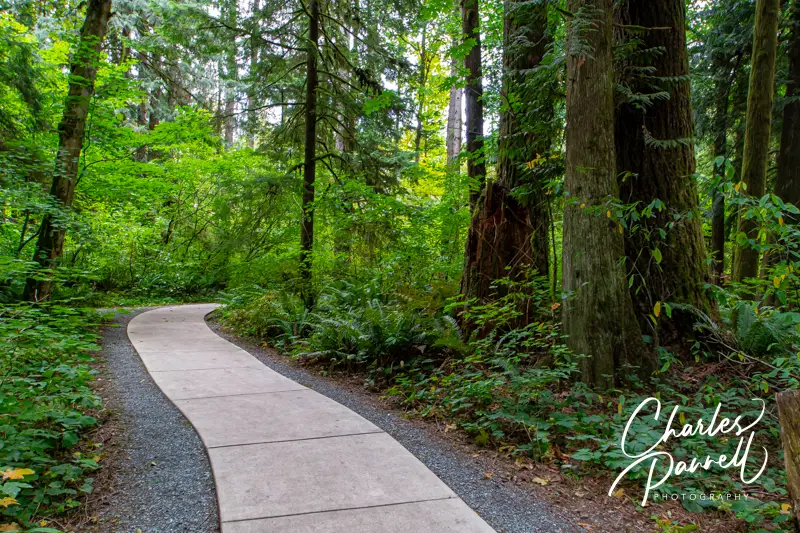
Another accessible trail option is located on the north side of the park. This hard-packed dirt trail loops through the second-growth forest, past the cabins and group campsites. This 1.5-mile trail begins across the road from the Chinook Cabin and to the right of the Skagit Cabin, and continues past the group camps and the private lands that border the park. And if you’d like a shorter hike, it’s easy to exit the trail at the halfway point.
Finally, if you’d like to hike through some old growth forest nearby, be sure to check out Rockport State Park and Baker Lake for some accessible options. It’s a great way to extend a Rasar State Park Visit.
Barrier-Free Travel Washington National Parks for Wheelers and Slow Walkers
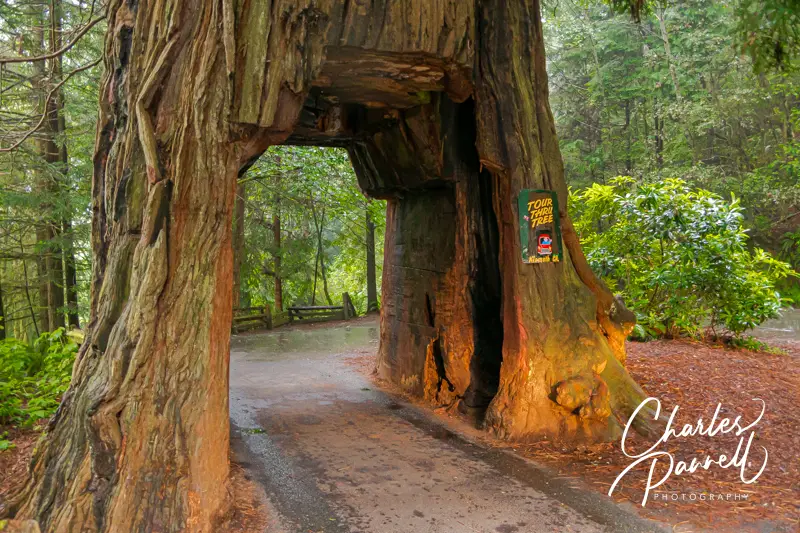
A California redwoods road trip (emerginghorizons.com/explore-californias-wheelchair-accessible-coastal-redwoods/) is a relaxing and enchanting getaway. And although there’s no shortage of places to hike around these majestic trees, driving through a massive redwood is an entirely different experience. And although it’s not standard forest practice today, at one time drive-through trees were a popular tourist attractions. That said, there are still a few places where you enjoy this kitschy experience; so check out these retro drive-through trees on your next Northern California road trip.
Klamath Tour-Thru Tree
Located a quarter-mile off Highway 101, the Klamath Tour-Thru Tree is easy to find. Just take exit 769 (Tewar Valley), then turn east. The tree is just up the road on the left. Like all the drive-through trees, you pay an entrance fee at the kiosk and then follow the road and drive through the giant tree. It should be noted that it’s a pretty tight fit for most vehicles, as the tree tunnel is just 88 inches wide and 114 inches tall, so remember to turn in your mirrors if possible.
The tree tunnel was completed in 1976, and the massive redwood is estimated to be 785 years old. It’s really a quick trip through the tunnel, but for another perspective on the tree, open your sun roof as you pass through. Additionally, it’s best to hit this drive-through tree early in the morning, as there isn’t much room near the tree and traffic can get pretty congested in the afternoon.
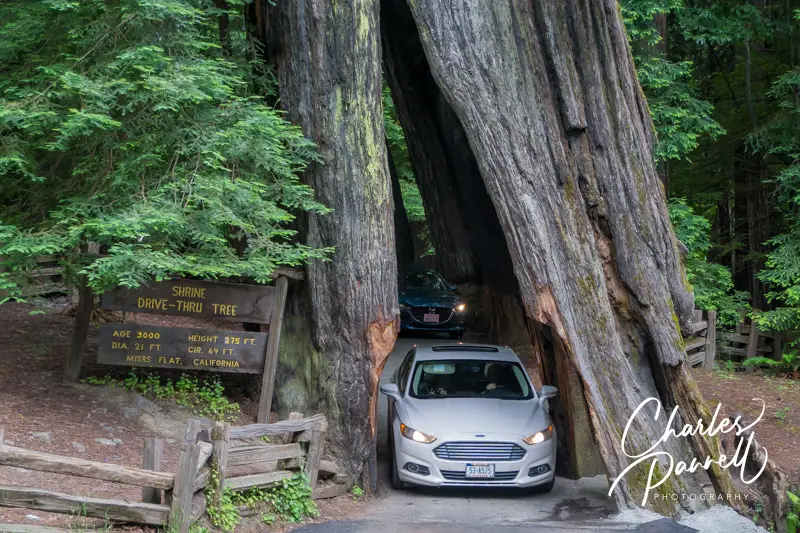
Shrine Tree
Shrine Tree
The next drive-through tree is located about 120 miles south, along the scenic Avenue of the Giants. Continue south on Highway 101, then take exit 674 in Pepperwood and turn left. Follow this scenic byway through the redwoods until you get to Myers Flat, where you’ll find the Shrine Tree on the right.
Although a tad bit larger than the Klamath Tour-Through Tree, this 3,000 year old redwood has an equally tight 91-inch wide clearance. Unlike the other drive-through trees though, the 175-foot tall Shrine Tree has a natural opening rather than a man-made one. And although the drive through the tree is short but sweet, there are also a few carvings in the park to enjoy, as well as a level picnic area.
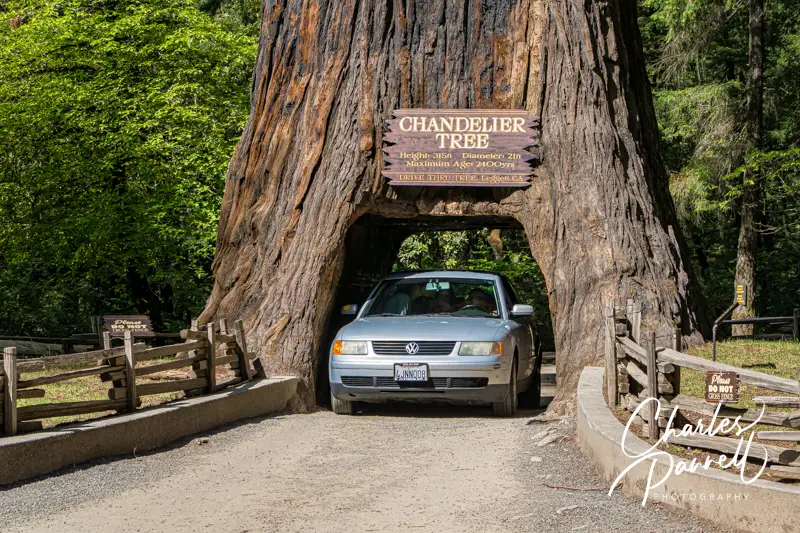
Chandelier Tree
Chandelier Tree
The final drive-through tree on the itinerary is located another 50 miles south in the town of Leggett. Follow the Avenue of the Giants until it ends on Highway 101, then continue south to Drive Through Tree Road and follow the signs to the Chandelier Tree (www.drivethrutree.com).
As you approach this giant, the fern lined drive to the 315-foot tall tree is filled with redwood planters. The tunnel was carved in the mid 1930s, and the tree is estimated to be 2,400 years old. It’s the nicest of the three trees, as there’s a large dirt parking area, and also standard picnic tables on a level grassy area. So pack along a picnic to enjoy after your drive-through experience, and enjoy your meal in the shadow of the towering redwood. And truly, if you only have time for one drive-through experience, the Chandelier Tree is the best choice. Not only is there plenty of room near the tree for photos, but there’s also a large area to linger on and enjoy it all.
Barrier-Free Travel California National Parks Road Trips Travel Ideas for Wheelchair-users and Slow Walkers
The North Cascades Scenic Byway is much more than a utilitarian route. Sure it connects North Cascades National Park with points east and west, but it also offers a scenic drive with a few old growth forest wheelchair-accessible hikes along the way. So next time you are tooling along Highway 20 west of North Cascades National Park, be sure and stop for these two wheelchair-accessible big trees trails.
Rockport State Park
Along the West Interpretive Loop in Rockport State Park
First up is the West Interpretive Loop in Rockport State Park (https://parks.wa.gov/find-parks/state-parks/rockport-state-park). It’s located along Highway 20, about 25 miles west of Newhalem. This 1.4-mile round-trip hike offers a beautiful stroll through a wheelchair-accessible slice of an old growth forest.
There’s accessible parking near the picnic area, with level access over to the accessible restroom. From the picnic area, follow the trail west for .2-mile until you get to a junction with a signpost. From there, take a right (away from the Sauk Spring Trail) and continue on the Evergreen Trail for another .2 miles until you get to the West Interpretive Loop.
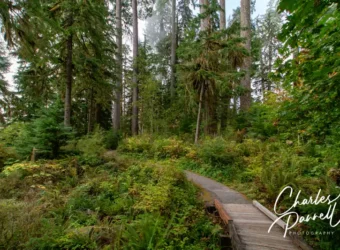
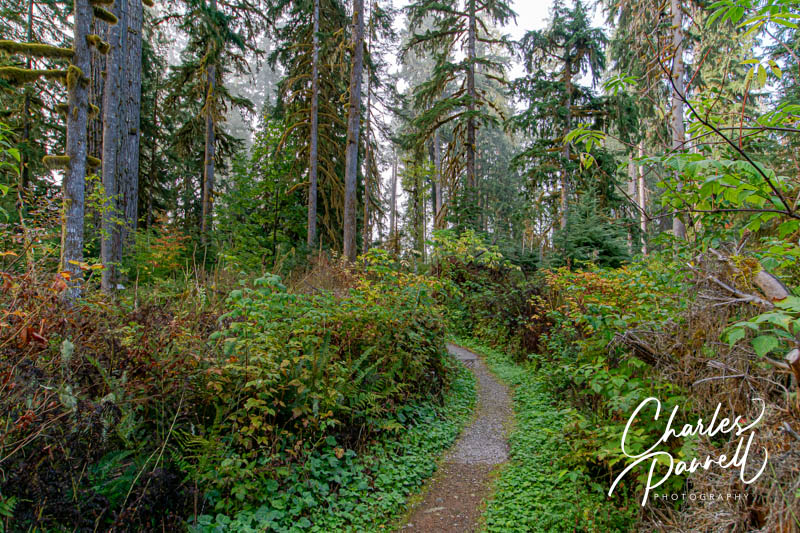
The .6-mile hard-packed dirt trail is covered in crushed rock, and is wide enough to accommodate even large wheelchairs. It’s not a flat trail, but it’s certainly within the ADA trail standards. The undulating trail leads through the lush forest filled with Douglas firs, western red cedars and western hemlocks. There are interpretive plaques along the way, and this shady forest stroll is the perfect place to cool off a hot afternoon. When you complete the loop, head back to the picnic area on the Evergreen Trail. As an added bonus, it’s not a crowded park, so you will probably have the trail to yourself.
Baker Lake
View from Panorama Point at Baker Lake
After you’ve completed the Western Interpretive Loop, continue west on Highway 20 to Concrete, then head north to the Shadow of the Sentinels at Baker Lake (https://www.fs.usda.gov/r06/mbs/recreation/baker-lake). It’s located about 15 miles off Highway 20, but it’s definitely worth the short detour. The trailhead is located in a small pullout, just before the turnoff to Horseshoe Grove Campground. You can’t miss it, as there’s a cross section of a large old growth tree in the parking lot.
Shadow of the Sentinels Trail
There’s accessible parking near the trailhead, and at the other end of the lot near the accessible vault toilet. This .5-mile loop trail begins as a boardwalk through the old growth forest, and transitions back-and-forth between that and an asphalt trail and a hard-packed dirt trail. There’s a slight elevation gain along the way, but it’s well within the standards. The boardwalk is in excellent repair, and although there are a few frost heaves in the asphalt, they are pretty easy to dodge.
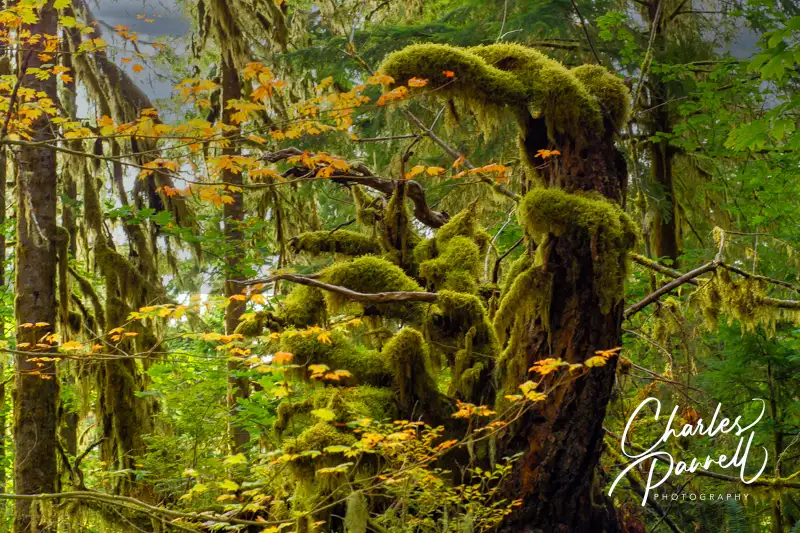
The trail is lined with Douglas firs and western hemlocks, with interpretive plaques along the way. There are a number of downed trees and snags in the adjacent forest, and if you’d like to take a break there are a few benches on the trail. There are also a few side trails to viewpoints in the forest, and one to an extra large Douglas fir tree. It’s estimated that some of the trees in this grove are nearly 700 years old.
Shadow of the Sentinels Trail
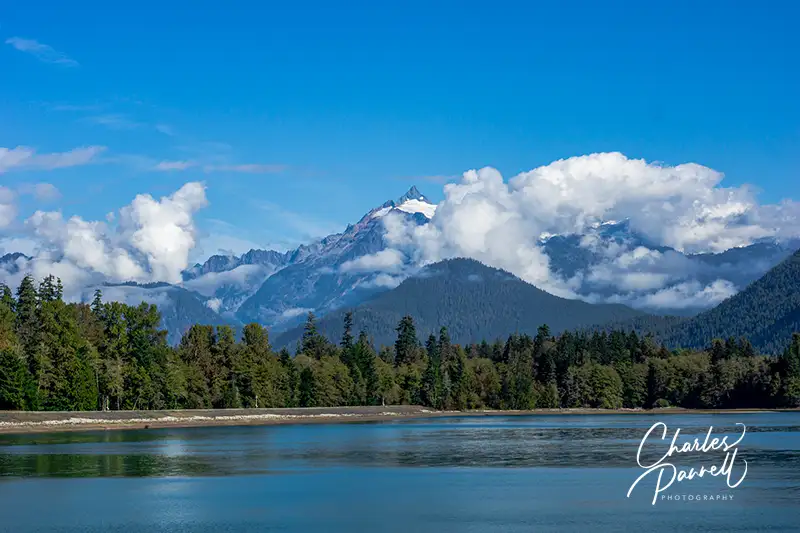
As an added bonus, the drive up to Baker Lake is beautiful. And if you’d like to sneak a peek at at Baker Lake and the Cascades, then head over to the Panorama Point boat launch or drive down to the end of Mount Baker Dam Road. It’s the perfect way to end this North Cascades scenic outing.
Barrier-Free Travel Washington National Parks for Wheelers and Slow Walkers
Located just off Interstate 5, about 10 miles south of Salem, Ankeny National Wildlife Refuge (www.fws.gov/refuge/ankeny) makes a good Northwest Oregon road trip stop. A vital resting spot for migrating waterfowl, shore birds and songbirds, the refuge is located close to the confluence of the Santiam and Willamette Rivers. The restored wetlands offers year-round habitat to waterfowl, as well as a refuge for migratory birds in the spring and fall. And with a nature center and covered deck for a nice picnic, it’s the perfect spot to take a break, enjoy a snack and explore the boardwalk and blinds. It also makes a nice side trip from Silver Falls State Park (emerginghorizons.com/a-wheelchair-accessible-silver-falls-state-park-getaway/).
Visit the Nature Center
Big Loop Trail at Ankeny Hill Nature Center
Ankeny Hill Nature Center, which is located on Ankeny Hill Road, just south of Buena Vista Road, is a good place to begin your visit. There’s accessible parking near the entrance, with level access over to the nature center trails. The Big Loop (.65 mile ) and the Little Loop (.12 mile) both have hard packed dirt surfaces. They wind around the outdoor exhibits; and although they aren’t totally level, the elevation changes are minimal.
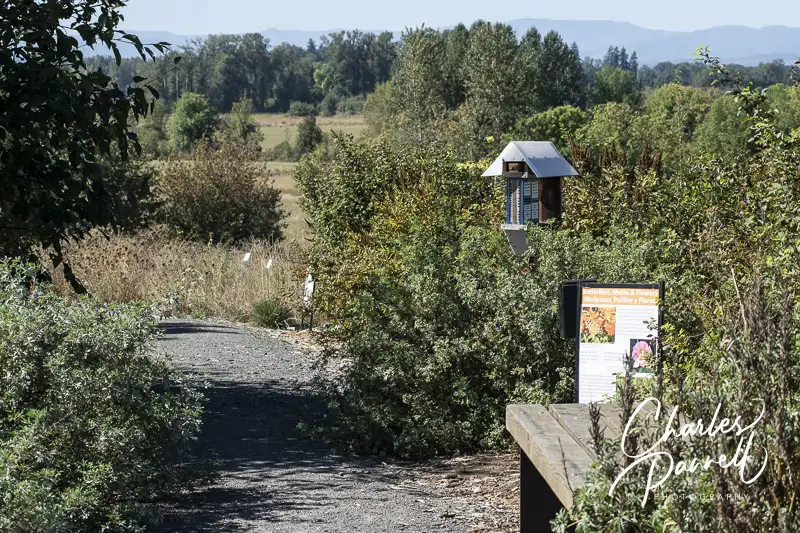
Along the trails you’ll find exhibits about butterflies, moths, bees and flowers. And don’t miss the pollination garden, which is abuzz with activity in the spring. There’s something for everyone at this stop, and if you can’t do distances, there’s still plenty of opportunities to enjoy the garden sections closest to the entrance.
The nature center is also a good place to take a lunch break, as there’s level access to the covered pavilion next to Mark Gehlar Hall. There are several picnic tables, including an accessible model, on the cement deck. It’s also a good vantage point for bird watching as the deck overlooks Peregrine Marsh. Accessible family restrooms are located on the side of the building. Mark Gehlar Hall is usually closed unless there’s an event or program scheduled, but the deck and the rest of the grounds are open to the public.
Explore the Refuge
Eagle Marsh
From the nature center, head north and take a left on Buena Vista Road, to explore the wildlife refuge. There are several pullouts along the road, so you can just pull in and watch for some avian action. From mid-March to mid-May you’ll spot migrating waterfowl, shorebirds and songbirds; while the fall brings out more migrating waterfowl and raptors.
The Eagle Marsh Blind is up on the left, just before the railroad tracks. There’s accessible parking with level access to the blind, which overlooks the marsh. This is an excellent vantage point to see Northern Pintails, Great Egrets and Great Blue Herons in the fall. And in the winter, be on the lookout for Bald Eagles and Peregrine Falcons.
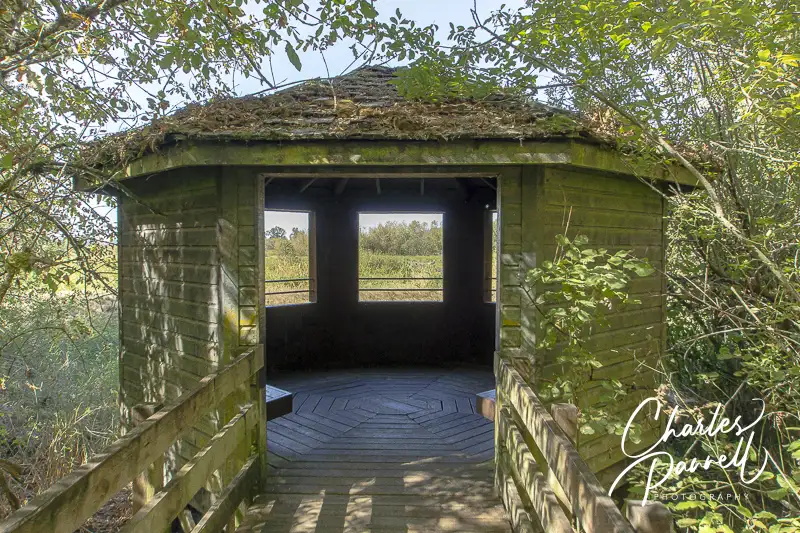
Eagle Marsh Bird Blind
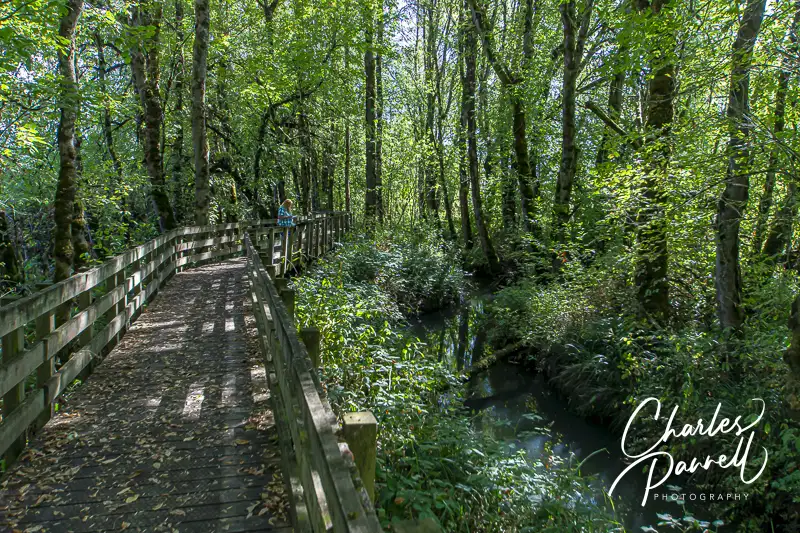
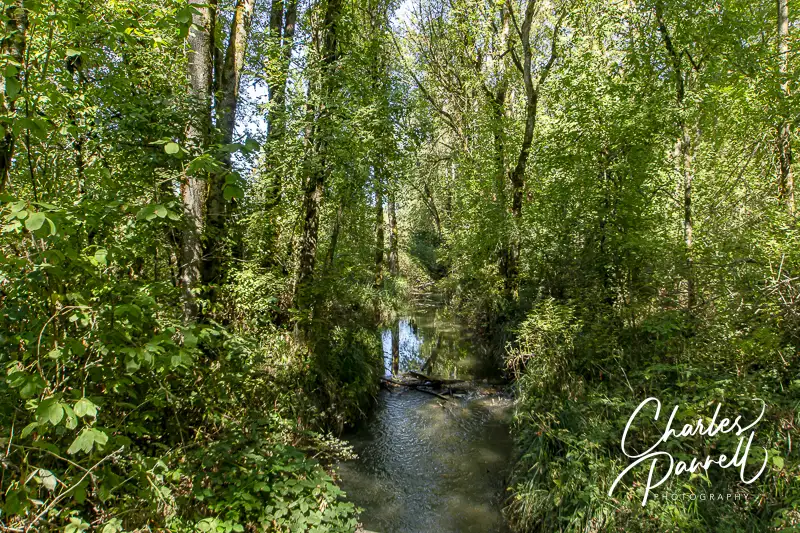
From the Eagle Marsh Blind, follow Buena Vista Road and make a left on Wintel Road. The Pintail and Egret Marsh Boardwalk, which is located on the north side of Wintel Road, is a must-stop in the refuge. There’s parking in a level dirt and gravel area, with plenty of room to parallel park an adapted van. From the parking area, there’s level access over to the .25-mile boardwalk, which follows Bashaw Creek. It’s a pleasant stroll as the trail is shaded by trees, and in the summer you can see — and hear — the red-legged frogs in the adjacent waterway. There’s a nice blind at the end of the boardwalk which overlooks Pintail and Egret Marshes. Be on the lookout for Tundra Swans in the marsh and the occasional osprey soaring overhead.
Pintail and Egret Marsh Boardwalk
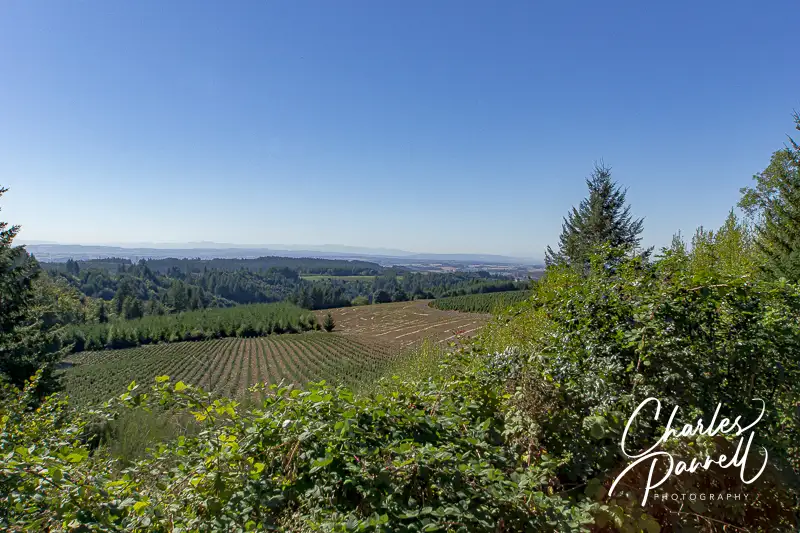
Finally, don’t forget to stop at the Willamette Valley Viewpoint on your way out of the refuge. There’s accessible parking near the viewpoint, which offers a panoramic shot of the valley filled with Christmas trees. It’s a pleasant end to any Ankeny National Wildlife Refuge visit.
Willamette Valley Viewpoint
Barrier-Free Travel Washington National Parks for Wheelers and Slow Walkers
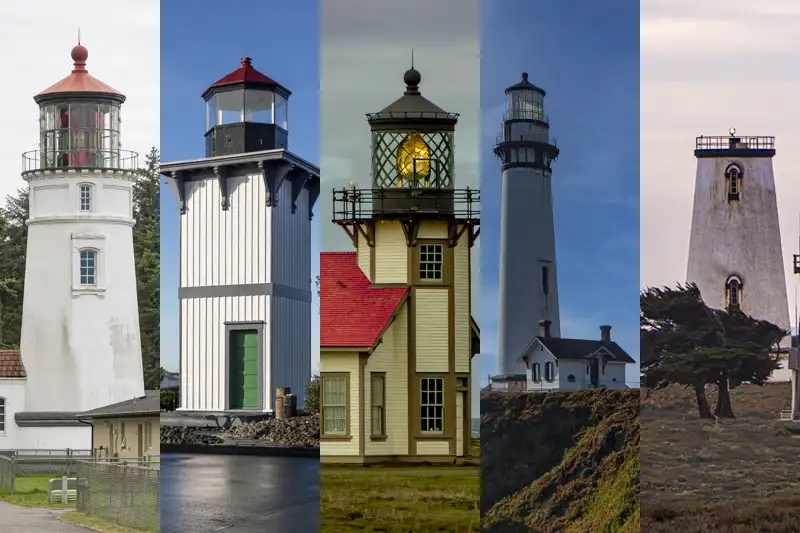
Lighthouses, by their very design, aren’t exactly wheelchair accessible. Most of these historic structures were constructed well before the Americans with Disabilities Act, and many even have steps up to their lower levels. Add in some long winding inside staircases, and you have an access nightmare. The good news is, many of these maritime treasures can be admired from the outside, which makes them an excellent addition to any road trip. So add these historic Pacific Coast lighthouses to your next coastal road trip.
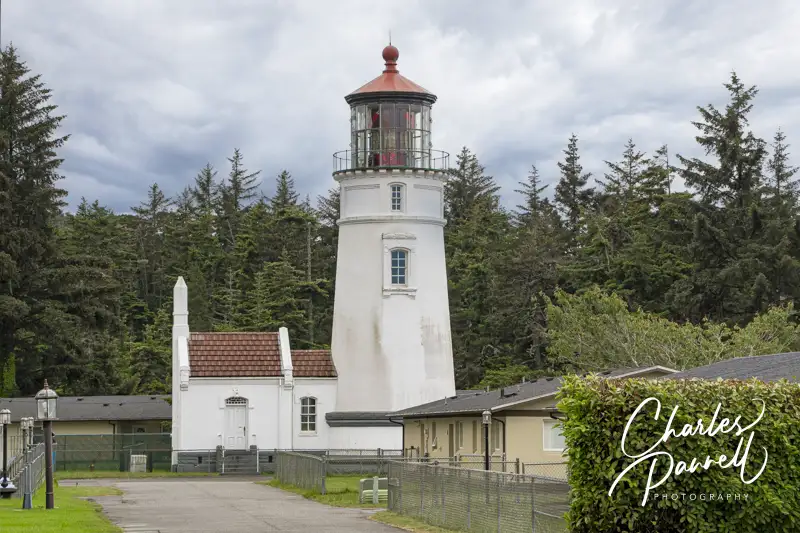
First up on our Pacific Coast lighthouses list is Umpqua River Lighthouse, which overlooks Winchester Bay just south of Reedsport, Oregon. For a close look at this 1857 beauty, take the Salmon Harbor Drive exit from Highway 101, make a left on Lighthouse Road, and keep your eyes peeled for this Oregon coast landmark on the right.
Accessible parking is located near the lighthouse, and there’s plenty of room to roll around and get a gander at this historic gem. There’s also a nice wheelchair-accessible overlook across the street, which offers a panoramic view of the Umpqua River and the Pacific Ocean. As an added bonus, it’s also a great spot to catch a glimpse of migrating gray whales in the distance. Granted, whale watching is a matter of timing and luck, so plan a visit for January during the peak migration to increase your odds. And don’t forget to pack along your binoculars. Additionally there’s a wheelchair-accessible deluxe yurt available nearby if you’d like to spend the night. (emerginghorizons.com/wheelchair-accessible-umpqua-yurt-offers-deluxe-accommodations/).
Table Bluff Lighthouse Eureka, CA
Table Bluff Lighthouse
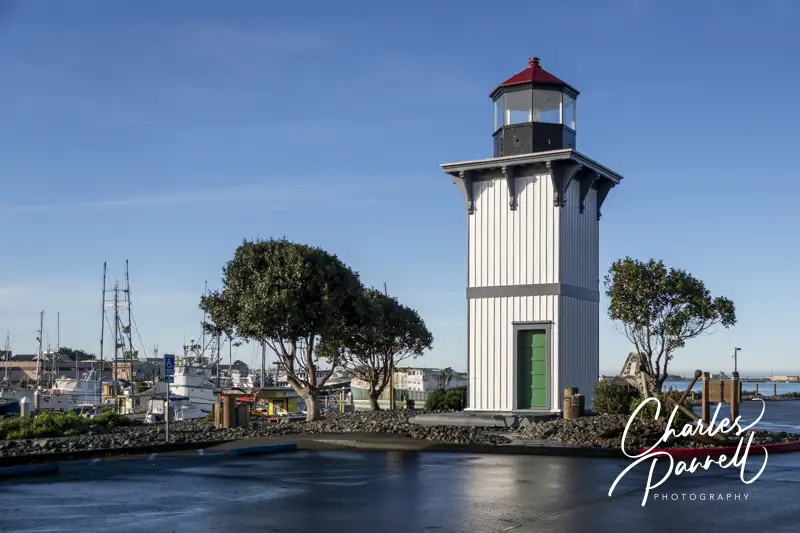
Although the Table Bluff Lighthouse originally stood at the north entrance to Humboldt Bay in Northern California, that proved to be an inappropriate location. Unfortunately that venue was prone to flooding, and this historic lighthouse was also often obscured by heavy fog. The Table Bluff Lighthouse was subsequently moved four miles south in 1892, where it guided mariners until 1975. It was moved to its present location on Woodley Island in 1987, and although it’s a few miles off Highway 101, it’s pretty easy to find.
From Highway 101, head west on R Street, then follow the signs to the marina. The lighthouse is located at the far southwestern tip of the island, at the end of the road. There’s accessible parking next to the lighthouse and level access over to the structure. Although the Table Bluff Lighthouse is just 35 feet tall, it’s light was said to be visible 20 miles out at sea. There’s also a nice memorial for fisherman lost at sea on the far side of the lighthouse, and a few standard picnic tables on a level grassy area where you can enjoy a noontime meal.
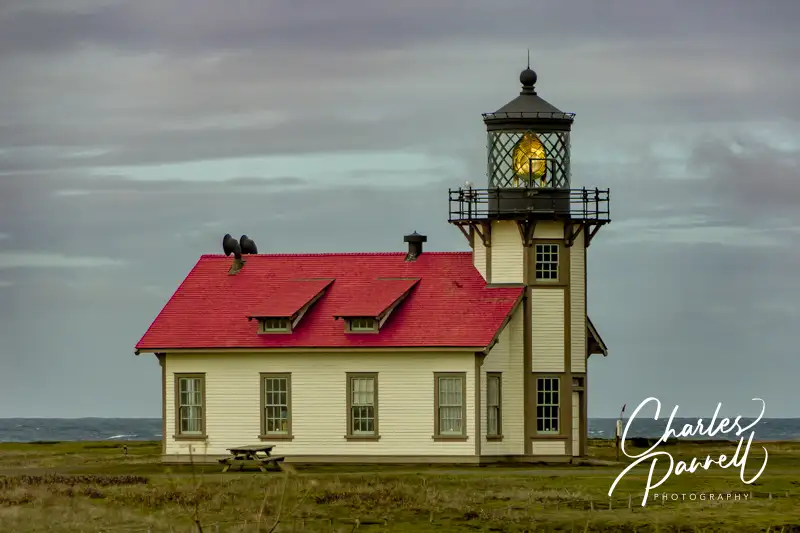
Constructed in response to the numerous shipwrecks along the Mendocino coast, the Point Cabrillo Light Station began operation in 1909. Today the lighthouse and some related structures have been restored. From Highway 1 in Mendocino, follow Point Cabrillo Drive for a little over a mile, then turn left on Lighthouse Road. Although standard parking is about a half-mile away from the historic lighthouse, people with an accessible parking placard can drive down the dirt pedestrian path and park in the accessible parking area right next to the lighthouse.
Although the Point Cabrillo Lighthouse is ramped, it’s also a gem to admire from the outside. Additionally the blacksmith and carpentry shop and the 1st Assistant Lightkeeper’s residence are also restored and accessible. Take some time to enjoy the beautiful coastal views as you roll around the light station. Point Cabrillo Light Station also makes a great picnic stop, as there are several accessible ocean view tables on the grassy area near the accessible parking spots. And if you’d like to spend the night, wheelchair-accessible overnight accommodations are available in the restored lightkeeper’s cottages ( emerginghorizons.com/spend-the-night-at-point-cabrillo-light-station).
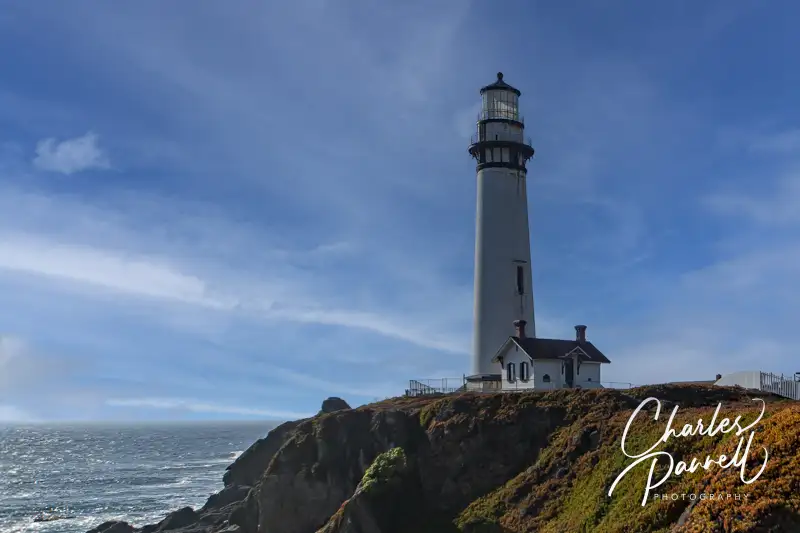
Although Pigeon Point Light Station is clearly visible from Highway 101, it’s worth a quick stop for a closer look. Located midway between San Francisco and Santa Cruz, the turnoff to this historic Pescadero landmark is clearly marked. Accessible parking is located next to a level dirt path that leads over to a small picnic area near to this 115-foot tall 1872 lighthouse.
From the picnic area, an asphalt driveway leads straight ahead, past the hostel to the park store. There’s ramp access up to the level boardwalk in front of the store, which leads over to a viewpoint that offers a good view of the light station and the ocean. It’s just a 300 foot walk or roll from the picnic area to the viewpoint. There’s also level access to the Fog Signal Building, which includes a number of interpretive exhibits. And as an added bonus, if you visit in the right season you might also spot some migrating whales in the ocean.
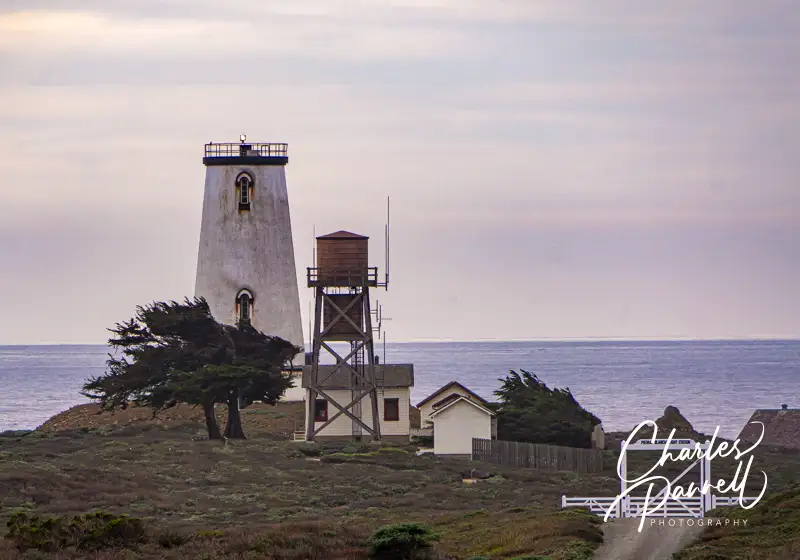
Last but not least our list of Pacific Coast lighthouses is Piedras Blancas Light Station, which is located along Highway 1 near San Simeon. Built in 1875 this historic lighthouse was originally 100 feet tall; however after significant earthquake damage the upper levels were removed, so it stands at just 70 feet today. The light station’s grounds are only open to guided tours – when they are available. That said, it’s still possible to admire this beauty from afar from the nearby Piedras Blancas Northern Elephant Seal Rookery (elephantseal.org).
Located about 4 miles north of Hearst Castle on scenic Highway 1, this stop also offers a seasonal look at the elephant seals. Accessible parking is located at each end of the parking lot, next to accessible boardwalk trails that overlook the beach. That said, the best view of the lighthouse is from the overlook between the two boardwalks, which is just a short roll from the south accessible parking area. And although this stop is a pleasant diversion any time of the year, it’s more entertaining from December through March, when the elephant seal population peaks.
Barrier-Free Travel Yosemite, Sequoia and Kings Canyon National Parks for Wheelchair-users and Slow Walkers
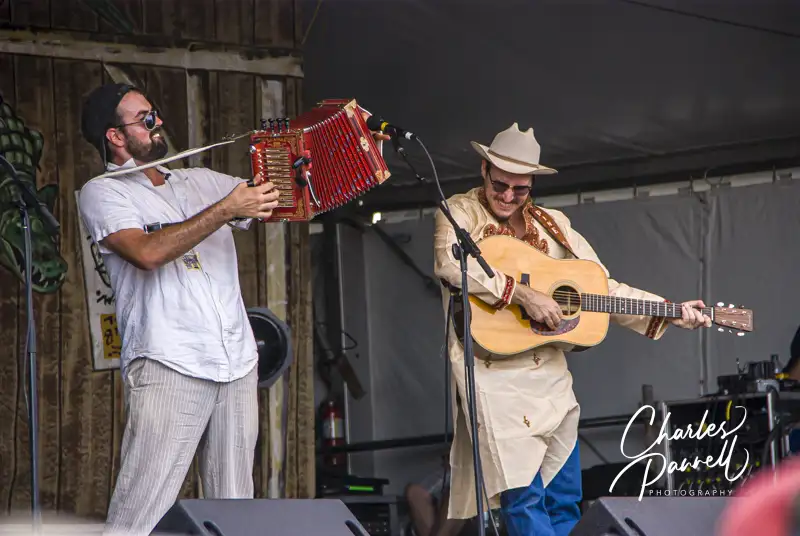
The Pine Leaf Boys perform at the New Orleans Jazz Fest
The 2026 New Orleans Jazz Fest is scheduled to run from April 23 to May 3, 2026. Live music will be presented on April 23 – 26 and April 30 – May 3 at the Fair Grounds Race Course, which is located about 10 minutes from the French Quarter. This massive venue features multiple stages that offer continuous music from 11 a.m. to 7 p.m. And the good news is, wheelchair access at the New Orleans Jazz Fest has not been overlooked.
Music at the festival ranges from jazz, blues and zydeco to folk, rock and rap. There’s even a kid’s tent for the little ones. And as more musicians stream into New Orleans, you’ll find more street performers in the French Quarter. In short, everywhere you look there’s music.
There’s also a large variety of food vendors at Jazz Fest, who feature everything from crawfish and alligator to vegetarian plates and even the standard burgers and brews. And don’t miss the crafts area, where artisans from around the world demonstrate and sell their wares.
For more information about the complete entertainment lineup or to buy tickets for this years Jazz Fest, visit www.nojazzfest.com. And for information on specific access features at this annual event, check out the information below.
Getting There
At the top of the list for wheelchair access at the New Orleans Jazz Fest is getting there. Accessible parking is available near the main gate on Gentilly Boulevard. There is a $65 per day fee for parking on Thursdays and Fridays, and a $75 fee on Saturday and Sundays for these limited accessible spaces. They are only available to folks with a valid accessible placard or plates, and the person who owns the plates or placard must be in the vehicle. These accessible spaces are available on a first-come basis, and credit cards are the only accepted method of payment.
If you’d prefer to let someone else do the driving, then buy a ticket on the Jazz Fest Express (www.graylineneworleans.com/jazz-fest-express/), which is operated by Gray Line Tours. The buses run continuously from the Sheraton Hotel on Canal Street, the Hyatt on Loyola, the Wisner Boulevard parking lot at City Park (5700 Wisner Boulevard) and the Steamboat Natchez Wharf in the French Quarter. They drop passengers off at the main gate on Gentilly Boulevard, which is the accessible entrance. Not all of the buses are lift-equipped, so alert the attendant if you need accessible transportation.
Accessible public transportation to the Jazz Fest is also available on RTA buses (www.norta.com/ride-with-us/know-before-you-go/transit-accessibility) and on the red streetcar line. Alternatively, you may be able to arrange for accessible transportation through RTA ADA Office (504-827-8345); however advance reservations are a must and the demand is usually quite high during Jazz Fest. This option is only available if you are unable to ride public transportation due to a disability. A valid paratransit card is also required.
Jazz Fest Access Center
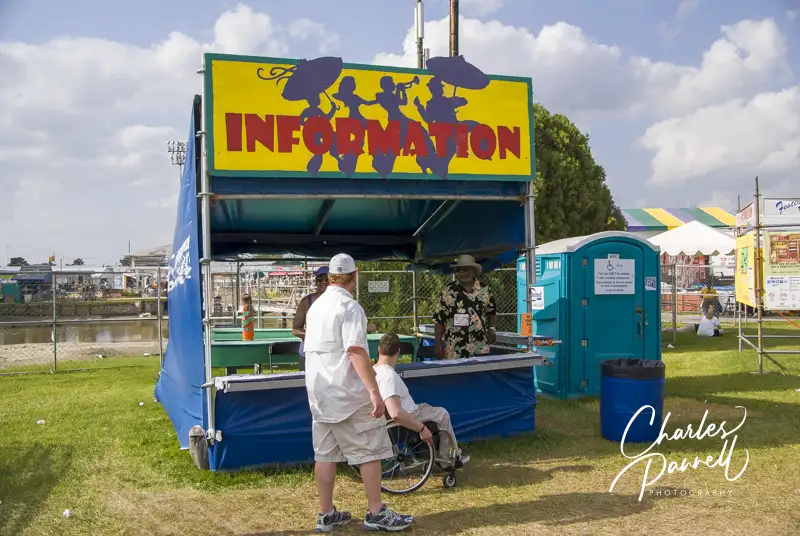
The Jazz Fest Access Center is also an integral part of wheelchair access at the New Orleans Jazz Fest. It’s conveniently located in front of the grandstand. That’s where you can pick up an access map of the grounds, which includes the accessible routes, viewing areas and the locations of the accessible porta-potties (www.nojazzfest.com/downloads/2025_Jazz-Fest-ADA-Map.pdf).
The festival grounds are comprised of a variety of surfaces, including grass fields, a dirt track and paved pathways in the infield. Reinforced surfaces are also installed across the dirt track to increase accessibility. The accessible routes are clearly marked, so be on the lookout for these signs. And don’t hesitate to ask the folks in the Access Center if you need any assistance.
The Paralyzed Veterans of America booth is located next to the Access Center. They can provide loaner wheelchairs to folks who can’t manage distances. There’s no charge for the wheelchairs, but donations are always appreciated. They do run out of wheelchairs on busy days, so it’s best to get there early.
Wheelchair-Accessible Seating
Wheelchair Seating at the New Orleans Jazz Fest
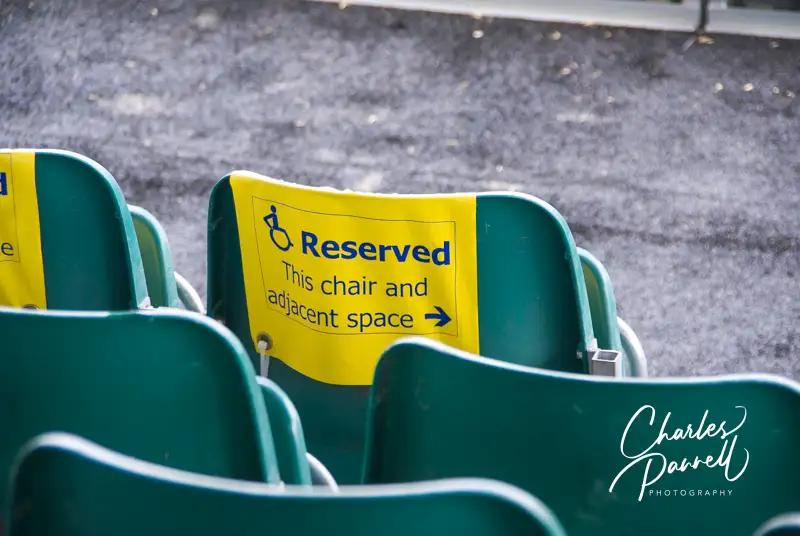
The final component of wheelchair access at the New Orleans Jazz Fest is accessible seating, which is available at all the Jazz Fest music venues. General seating for the main stages is located on the lawn area. Concert-goers either bring their own folding chairs, or spread blankets out on the ground.
Accessible seating and parking is also available in the VIP packages (https://www.nojazzfest.com/tickets/), which must be purchased in advance. Accessible seating for the main stages is limited to wheelchair-users and one companion. To be admitted to the accessible seating section, you must have a wristband, which can be obtained at the Access Center.
Accessible seating for wheelchair-users and one companion is also available at all the tent stages and the grandstand stages. And if you need a break from the heat, keep in mind that the grandstand stages also have air conditioning.
It should also be noted that the accessible seating is designated for patrons who use a wheelchair or scooter, and not those with limited mobility, a temporary injury or who are pregnant. The accessible seating rules are enforced, so that people who need these accommodations will have access to them. If a person does not meet the eligibility requirements, they will be removed from the accessible seating area.
Bottom line — access rocks at Jazz Fest. And so does the Jazz Fest staff. If you have any access related questions, just e-mail access@nojazzfest.com or call (504) 410-6104.
Barrier-Free Travel 22 Accessible Road Trips Driving Vacations for Wheelers and Slow Walkers
Named for the giant Rio Grande bend that carves out its southern border, Big Bend National Park is located more than 100 miles from the nearest freeway, hospital or shopping mall. And spring is the ideal time to visit this remote Texas park, as not only is the desert filled with colorful wildflower blooms, but the temperatures are also fairly mild. And despite its seemingly inhospitable environment, Big Bend also boasts wheelchair-accessible trails, overlooks, scenic drives, and even an accessible overnight lodging option. In short, Big Bend is the perfect road trip stop for wheelchair-users and slow walkers, who want to ditch the crowds and enjoy the wide open spaces of the Lone Star State.
Windshield Views Galore!
Sotol Vista Trail
The best way to enjoy this 800,000-acre expanse is to take a drive, and in that respect the Ross Maxwell Scenic Drive tops the list. This 30-mile route leads past the Castolon Historic District and Santa Elena Canyon, and passes through some historic and geologic treasures along the way. The drive takes about 45 minutes one-way, but be sure to allow extra time to stop and admire the scenery.
The drive begins just off the main park road, with a south turn at the Castolon – Santa Elena Junction. There are a number of scenic overlooks along the way, including the Homer Wilson Ranch Overlook and Mule Ears Viewpoint — both of which have accessible parking with barrier-free access out to the viewpoints. The former features views of the old ranch house and surrounding land, while the latter offers the best vantage point for a glance at the iconic Mule Ears rock formation.
Located between those two overlooks, Goat Mountain Viewpoint, features accessible parking, with ramp access out to the overlook; while nearby Sotol Vista offers a panoramic southern view with accessible parking, an accessible vault toilet, and barrier-free access to the overlook.
Last but not least, don’t miss the Santa Elena Overlook at the end of the road. From the overlook you can gaze down at the limestone canyon created by the Rio Grande, and look across into neighboring Mexico. Although there’s no curb-cut access from the parking area to the overlook, you can wheel down to where the curb ends and roll out to the overlook. Even though the ground is a bit bumpy in places, it’s still doable for most people, and the spectacular view is well worth the effort.
Scenic Desert Trails
Window View Trail
Although there’s no shortage of great windshield views in the park, there are also a few accessible trails. Panther Path, which is located next to the Panther Visitor Center offers a short – but accessible – introduction to some of the plants found in the park. Accessible parking is located near the visitor center, with level access over to this short 100 yard sidewalk that’s lined with interpretive plaques that identify desert plants.
A portion of the Rio Grande Village Nature Trail is also a good choice for wheelchair-users and slow walkers. It’s located in the southeast area of the park, near Boquillas Canyon. The trailhead is actually located in the campground at Rio Grande Village, across from campsite 18. The trail begins with a short dirt path to the quarter-mile boardwalk over the pond. Some folks may need a bit of assistance over the dirt trail, as it’s a bit bumpy, but the floating boardwalk offers excellent access, and it’s a great spot to enjoy the sunrise or sunset. It’s also an excellent birding location.
Sunsets are phenomenal in Big Bend National Park, and there’s no better place to enjoy one than from the Window View Trail (not to be confused with the inaccessible Window Trail). The trailhead is located near the Basin Store at Chisos Mountains Lodge. This .3-mile paved trail takes its name from the “window” opening in the canyon that affords a panoramic view of the valley below. It offers a gradual descent to the window viewpoint, which is a pleasant place to linger and enjoy views of the spectacular canyon walls and the Chisos Mountains. And if you need to stop and rest, there are also a few benches along the route.
Comfy Accommodations
Because of its remote location, an overnight stay in Big Bend National Park is a must; and to that end Chisos Mountain Lodge (www.chisosmountainslodge.com) offers some comfortable accessible rooms. There’s accessible parking in front of the office, with level access to the main lobby through automatic doors. Inside there’s plenty of room to maneuver a wheelchair over to the front desk and the gift shop. The accessible rooms are located a short drive away in the Casa Grande section of the property.
Accessible parking is located in front of room D2 — an accessible ground floor room – with sidewalk access over to the front door. Access features in room D2 include wide doorways, a lowered peephole, lever handles, good pathway access and tile floors for easy rolling. The room is furnished with a 25-inch high open-frame double bed with wheelchair access on the left side (as you face the bed). That said, there’s plenty of room to move the bed if you require wheelchair access on the opposite side. Other furnishings include a night stand, two easy chairs, a dresser, a refrigerator and a microwave.
There’s barrier-free access to the bathroom, which features a roll-in shower with grab bars and a hand-held showerhead. The toilet grab bars are located on the back and right walls (as seated), and a portable shower bench is available upon request. A roll-under sink is located in the adjacent sleeping area, in order to free up more room space in the bathroom.
Best of all, this guest room also has level access out to the shared back patio, which is the perfect place to enjoy an sunset, and then take in another one of Big Bend’s natural features – the dark night sky.
(Click image for larger images of Room D2 at the Chisos Mountain Lodge)
Room D2 at the Chisos Mountain Lodge
Room D2 at the Chisos Mountain Lodge (view 2)
Bathroom in Room D2 at the Chisos Mountain Lodge
Barrier-Free Travel Utah National Parks for Wheelchair-users and Slow Walkers
Although Memorial Day is celebrated in a variety of ways across the country, the Eastern Sierra town of Bishop marks this traditional beginning of summer with Bishop Mule Days (muledays.org). This annual event, which promotes the heritage, legacy and talents of mules, draws mule teams and spectators from across the west, and offers a week filled with fun, festivities and good old fashioned western entertainment. Although the 2026 event technically runs from May 19 to May 24, the highlights of the festivities are the weekend parade and arena events.
Everyone Loves a Parade
The Bishop Mule Days Parade, which is billed as the world’s longest non-motorized parade, is definitely a crowd favorite. The 2026 parade begins at 10 AM on Saturday May 23 at South and Main Streets, and travels north on Main Street. This festive event features mule teams, horses, wagons, bands and lots of mules with costumed riders. You never know quite what you’ll see, as the popular costume contest has a different theme every year.
Accessible parking for the parade is available in front of the Bishop Dog Park, but it’s best to ask the officer at the Main Street road block to direct you to other accessible parking areas. The good news is that the town is pretty flat, so it’s easy to navigate in a wheelchair. The not so good news is that the parade draws a huge crowd, so accessible parking can be difficult to find. The best plan of action is to arrive early for first crack at the accessible parking spots, then have a leisurely breakfast and stake out a place to watch the parade. It’s an extremely popular event, and many locals even save their spots with chairs as early as Friday afternoon.
The bulk of the other events take place at the Tri-County Fairgrounds over the next two days. Accessible parking is available in the fairgrounds parking lot, and a paved level pathway leads from the parking area, around the mule barns to the grandstand. Accessible seating for up to two people is available in Box 1 in the grandstand, and for groups of three or more in the first rows of Sections A and E. It’s best to call (760) 872-4263 and order your tickets as far in advance as possible. Additionally, it’s extremely important to specify that you need accessible seating when you place your order.
The arena events resemble something akin to a mule rodeo, where the packers show off their skills. The whole event is steeped in tradition, as mule packers are a fixture in the Sierras for back country camping, hunting and rescue operations. There are no money prizes for the winners, but the bragging rights are huge.
The Main Events
A variety of different competitions are held in the arena, but here’s a sampling of some of the events you can expect to see.
Opening Ceremony of the Mule Days Rodeo
Timed Packers Choice
Packers lead their mule strings over and around their choice of obstacles in this timed event. Obstacles range from bridges, gates, water hazards and logs. Packers earn one point for each obstacle they navigate successfully.
Coon Jumping
In this event, handlers encourage their mules to jump over a bar from a standstill. The bar is raised until there is one mule left. The contest takes its name from the practice of jumping mules over fences during coon hunts. There’s always a laugh or two during this contest as some mules are very hesitant to jump.
Individual Packing
A variety of objects, including ice chests, washtubs, pots and pans are laid out on the ground. Packers then pack everything on their two mules, cover the load with a tarp, and attempt to race to the finish line without losing anything.
Run, Ride and Lead
In this fast-paced event packers run to their mules which are located on the opposite side of the arena. Next they ride their mules back to the start, then lead the animals back across the arena. In the end, more than one packer usually ends up on the ground.
Team Pack Scramble
Start of the Team Pack Scramble
One of the highlights of the arena events is the Team Pack Scramble. Packers lead their mule strings into the arena, then unpack and unharness the animals. Cowboys then fire blank shots into the air to disperse the animals. Packers must round up their animals, repack them, assemble their strings, then lead them by horseback out of the arena for a lap around the parking lot. A real crowd pleaser!
Make Plans to Attend!
Although distinctly different from a traditional rodeo, Bishop Mule Days is a fun, family-friendly way to celebrate Memorial Day. Afternoon and evening arena events are held on Saturday and Sunday, and you can get a single ticket or a buy an all-event pass. Get your tickets early though, as this popular event sells out quickly. Don’t miss the 2026 celebration – a tradition in the Eastern Sierras.
Barrier-Free Travel Yosemite, Sequoia and Kings Canyon National Parks for Wheelchair-users and Slow Walkers
Once a standard feature in every downtown business district, neon signs reached their peak in the US from the 1930s to the 1950s. Although you can spot some “neon-esque” copycats today, most modern incarnations use energy-efficient LED lights to mimic the effects of the original light shows. Even though neon technology is technically a thing of the past, you can still get a feel for the history and the glitz of this gaudy signage at two US neon sign museums. One is located at the ground zero capital of gaudy signage, while the other is located in a sleepy little town on the Columbia River. Both are worth a visit, as you’ll come away with a deeper appreciation of this artistic vintage signage.
A Sin City Favorite
Las Vegas Neon Museum Home at the Former La Concha Hotel
First stop on this tour of neon sign museums is at the granddaddy of gaud — Las Vegas, Nevada. Founded in 2012, The Neon Museum www.neonmuseum.org offers a fun and fanciful look at Las Vegas’ past.
Located off The Strip in the lobby of the former La Concha Motel, the Neon Museum is easy to find. The former aquatic-themed hotel was built in 1961 and was designed to resemble a shell by architect Paul Revere Williams. It was originally located on the strip but it was moved to its present location in 2012, when the museum opened. Today it houses the museum office and gift shop; and even though the building is the epitome of retro, there’s a level entry, automatic doors and plenty of room to navigate a wheelchair inside.
Guided tours are offered of the adjacent boneyard, which has an impressive collection of retired neon signs. There is level access throughout the hard-packed dirt paths through the boneyard, with benches to sit along the route. The tour includes tid-bits of Las Vegas history associated with select neon signs.
Favorite neon signs include the Moulin Rouge, the El Cortez and Lady Luck, which was featured in Vegas Vacation. Then there’s the animated happy shirt sign from Steiner’s Cleaners, and the favorite Ugly Duckling sign from a defunct car dealership. The oldest sign in the boneyard, which dates back to the 1930s, is from the Green Shack Restaurant on Fremont Street; while one of the most unusual signs was fashioned to resemble a yucca plant, for a hotel of the same name. All in all, it’s an informational, insightful and colorful tour.
The La Concha Neon Sign in the Boneyard at the Las Vegas Neon Museum
An Oregon Up-And-Comer
National Neon Museum
Over in The Dalles, Oregon, the National Neon Museum www.nationalneonsignmuseum.org, which opened in 2019, presents a comprehensive history of neon signage. Unlike the open-air Las Vegas museum, this site is located entirely inside, in the 1910 Elks Temple building. There’s parallel parking on the street, and an accessible ramped entrance around the corner on Court Street. Inside there’s good access to the first floor, with accessible restrooms near the gallery.
The visit begins with a short movie about the art on neon sign construction. There’s level access to the theater and plenty of room for wheelchairs in the front. After the film, visitors are taken on a docent-led guided tour, and then given time to explore the museum on their own.
Neon Exhibit at the National Neon Museum
The galleries begin with a mix of when science meets art, with the invention on neon lighting by Ceorges Claude. This French inventor introduced neon lighting at the Paris Motor Show in 1910. And by the 1920s this art form had migrated over to the US, and it began to increase in popularity after the Great Depression. There are several examples of early neon signage, including the Regal Boot from a Boston sign, and a good overview of the history and the process of creating these artworks.
There’s also a large gallery that houses founder David Benko’s collection of neon signage, as well as displays of different sign companies . The upstairs gallery, which is only accessible by stairs, includes storefronts filled with neon signage. From the ice cream parlor and BBQ chicken joint, to the jeweler and a TV store, it’s a true blast from the past.
And looking to the future, Benko plans to add the restored Jantzen Beach Carousel in 2028. And when that addition is made, the entire upstairs section will also be accessible.
More Neon Exhibits at the National Neon Museum
Barrier-Free Travel California National Parks Road Trips Travel Ideas for Wheelchair-users and Slow Walkers