As a travel writer since 1977, Candy Harrington has been writing about accessible travel exclusively since 1996. She’s the founding editor of Emerging Horizons, and the author of the popular Barrier-Free Travel national park series. With thousands of bylines to her credit, Candy hits the road often, in search of new accessible travel finds. Candy and her travel photographer husband Charles Pannell reside in NE Washington, where they tend to their chicken flock and enjoy a rural lifestyle.
Nearly a year ago, on July 26, 2023, the Department of Transportation (DOT) announced a new accessible airline lavatory rule. Unfortunately it will still be many years before single aisle aircraft with more than 125 seat have accessible lavatories, but at least it’s a start. The rulemaking process has been going on for quite some time and the DOT took into consideration comments from consumers, airlines and disability organizations.
So here are the highlights of the final accessible airline lavatory rule, along with a timeline for when you can expect to see some changes.
Lavatory Interiors
Under the new rule, US single aisle aircraft with more than 125 seats must include the following features in their lavatories. These features will be required on new aircraft delivered three years after the effective date (2023) of the rule.
Grab bars
Accessible faucets
Accessible call button
Accessible door lock
Room for onboard wheelchair
Ample toe Clearance
Privacy screen if door is not able to be closed
So basically you can expect to see start seeing these features in 2026.
But there is a catch. The usual life of a commercial commuter aircraft is 25 years, so only 4 percent of the fleet is replaced annually. This figure is from the DOT. If they start replacing aircraft with ones that include accessible lavatories in 2026 (as required), the entire fleet will not be outfitted with them until 2051. And during that interim time, passengers will not know if they have an accessible lavatory until they board the aircraft.
Onboard Wheelchairs
The new accessible airline lavatory rule also includes a provision that the onboard wheelchair must be maneuverable into the lavatory, so that the wheelchair-user will be able to completely close the door. This also applies to single aisle aircraft with over 125 seats.
Again, aircraft are not required to be retrofitted, and the same timeline applies, so this would begin in 2026 and be fully implemented in 2051.
Accessible Lavatory Space
Perhaps the biggest change with the new accessible airline lavatory rule is the requirement for accessible lavatories to have ample space for a person with a disability and an attendant. More specifically the lavatory must have enough room for two males in the 95th percentile of height and weight (6 ft. 2 in., 246 pounds). That’s a pretty large space and it would make airline lavatories truly wheelchair-accessible. And as with the other regulations this applies to single aisle aircraft with more than 125 seats.
But there is a different implementation time frame for this requirement. Specifically, it’s for aircraft ordered 10 years or delivered 12 years from the effective date. That means this would start in 2036 and 2038, and would be fully implemented in 2061 and 2063. And in the interim you won’t know in advance if your aircraft has a lavatory with this extra space.
To be fair, the preliminary rule required implementation in aircraft ordered 18 years from the effective date or placed into service 20 years from the effective date. On that timeline the fleets would be fully outfitted with accessible lavatories in 2069 and 2071.
I addressed the timeline issue in my public comments to the DOT, as did other folks, so at least they listened a bit. But rulemaking is always a process of give and take.
So bottom line, we will start to see some minor accessibility changes in 2026, with full implementation of this rule in 2071. It’s definitely a step forward, but it’s really for future generations. But then again, so was the ADA. Justin Dart was a visionary but he certainly didn’t live to see the strides in accessibility we have made since the first days of his activism.
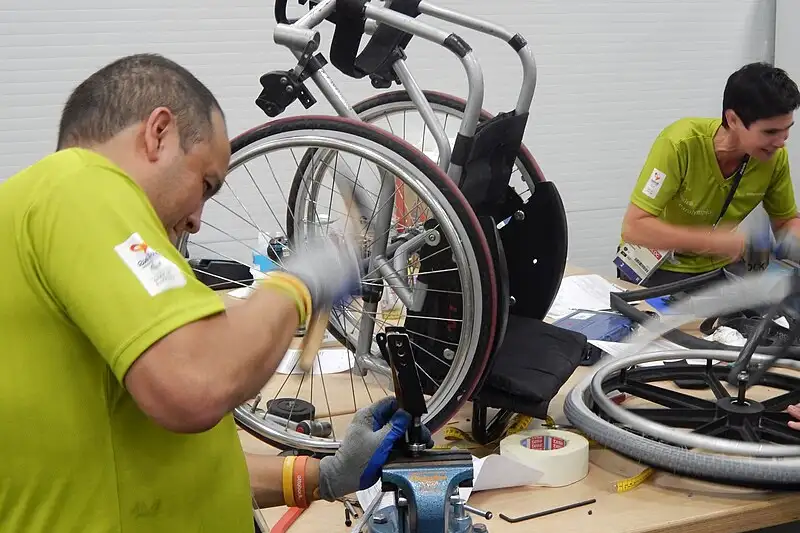
There are numerous things that go into planning an accessible vacation; from finding the right hotel room, to securing airport transportation, and even finding out what local attractions are accessible. And then there are the emergency situations. What do you if something unforeseen happens while you’re on the road? Well my best solution is to play a healthy game of “what if ” before your travel.
For example, ask yourself a question like, “What if my wheelchair breaks when I’m on vacation?”. Then find a solution to the problem. In this case, the solution would be to compile a list of wheelchair repair shops in your destination city. Problem solved. Write them down and take them with you. Chances are you won’t need to use the list, but if you do, you are prepared.
And if you happen to be going to Amsterdam, then you’re in luck, because Able Amsterdam has compiled a nice little list of wheelchair repair shops in Amsterdam. And although it contains shops that specialize in repairing medical equipment, it also has a bike shop that has experience repairing wheelchairs and rollators. So check out this list of wheelchair repair shops in Amsterdam for your future travels. www.ableamsterdam.com/blog/wheelchair-repair-service-amsterdam?fbclid=IwAR3H81Hgc_EfU4sVq9YpiWOnFqO-QKiCGtNKii8TCfSiiW7W50rtEzomVDA
Barrier-Free Travel the Grand Canyon for Wheelers and Slow Walkers
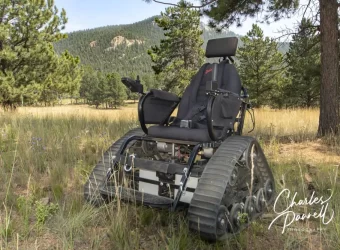
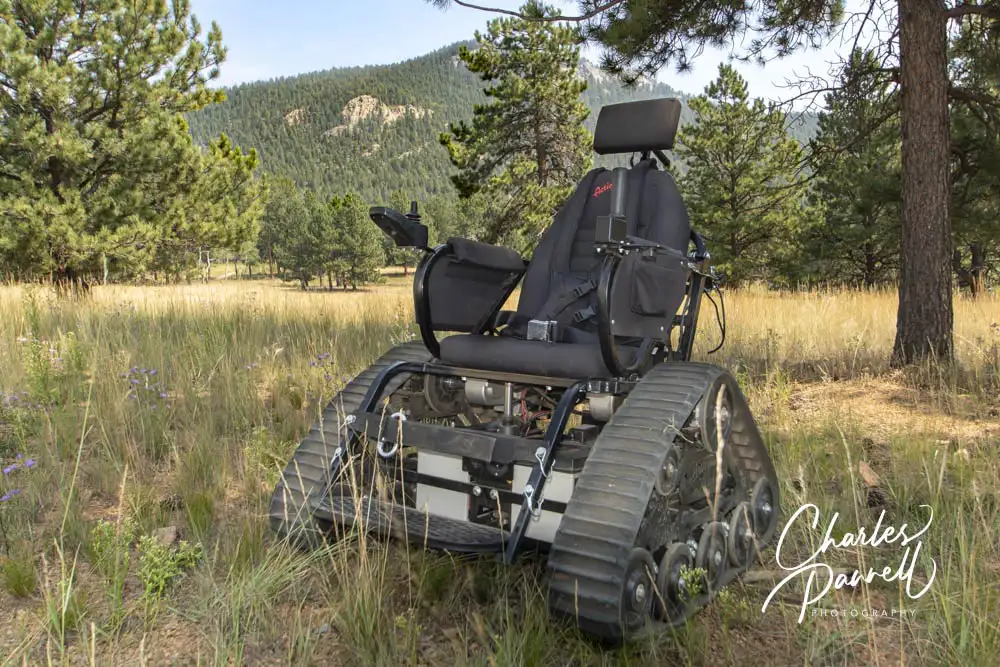
Make no mistake about it, Staunton State Park (cpw.state.co.us/placestogo/parks/Staunton) includes some challenging physical access barriers for folks with mobility issues. That doesn’t mean you should cross it off your “to visit” list though. Quite the contrary, as track chairs are now available at this Colorado park. These all terrain wheelchairs make inclusive access a possibility for wheelchair-users and slow walkers. Says Track Chair Program Manager Natalie Bostow, “The goal of our program is to help everyone experience the outdoors, and to enable wheelchair-users and slow walkers to enjoy hikes with friends and family. And the Staunton State Park track chairs are our means to accomplish that.”
An Innovative Program
The Staunton State Park track chairs are the result of a collaborative partnership. The Friends of Staunton State Park (friendsofstauntonstatepark.org) raised the funds to buy the track chairs, while the state park manages the program. To date, a robust group of volunteers have conducted more than 1,000 track chair hikes
The track chairs have tank tracks instead of wheelchair tires, which makes it possible to explore terrain that’s off-limits to standard wheelchairs. They can be operated with a joystick — either a golf ball, a tennis ball or a t-bar — which can be mounted on either side of the track chair. You do need some hand dexterity to operate these chairs; however if you can operate a power wheelchair, you can probably operate a track chair.
Suspension and non-suspension track chairs are available, but the suspension models offer much smoother rides. A car seat is also available, so small children over the age of two can utilize the track chairs. The track chairs can accommodate up to 350 pounds, and there are variety of transfer boards and a sling lift on hand to facilitate safe transfers. The track chairs will work for almost everyone; however because of safety issues they are not appropriate for someone who is 100% ventilator-reliant.
And the track chair rules are pretty simple. All track chair users must be accompanied by a companion as well as a volunteer. After a short orientation the volunteer will walk behind the track chair, so they can jump in to help out if the user can’t manage things. Generally speaking though, the volunteers are there for support and they try to let users be as independent as possible.
Take a Hike
The Staunton State Park track chairs are free, but reservations are required. They can be made online on the Staunton State Park reservation form. They are available from June to October on Fridays, Saturdays and Sundays. Reservations open for the season on May 1, so plan ahead as they fill up quickly. And if you have any questions, just call (303) 816-0912.
When you get to the park, follow the signs to the Meadow Parking Lot. There’s accessible parking in front of the track chair garage, and an accessible picnic table next to it. There’s also an accessible vault toilet in the parking lot.
The track chairs have a battery range of about eight miles, but volunteers usually keep the hikes to four or five miles, just to be on the safe side. All of the track chair trails depart from the Meadow Parking Lot.
The most popular track chair trail is the Davis Ponds Trail, which is a 2.7-mile beginner trail with some stream crossings. There’s an accessible fishing pier and a picnic table at the mid-point, and adapted fishing poles are available at the track chair garage.
The more advanced 2.3-mile Mason Creek Trail includes some rock obstacles, but it also includes a peaceful meadow and stone house ruins. The longest and most difficult track chair trail is the 3.5-mile Staunton Ranch Trail, which travels through aspen filled meadows and offers a great view of Pikes Peak.
The track chairs also come with a backpack that has rain gear, additional water, tools and a blanket, but track chair-users are asked to bring water, medication, additional clothing layers, a seat cushion, a hat, sunblock and glasses. And don’t forget to pack along a lunch as there are a number of pleasant picnic spots to stop for a break throughout the park.
Barrier-Free Travel Glacier, Yellowstone and Grand Teton National Parks for Wheelchair-Users and Slow Walkers
Road trips are a great way to travel. You can take things at your own pace, pack along all the gear you need, and you don’t have to worry about the airline losing your luggage. And there’s no better way to see some Western US national parks than on a road trip. This epic itinerary begins and ends in Las Vegas and visits nine national parks along the way. The whole route is 1880 miles long, but the longest drive is only 4.5 hours. You can do the whole itinerary, or just tackle a portion of this national park road trip. Either way, it’s a great spring, summer or fall travel choice
The Basics
Although this national park road trip begins in Las Vegas, you don’t have to be a local to give it a try. If you live close you can drive and spend a few days in town before hitting the road. Alternatively, you can grab a flight to Las Vegas and rent an accessible van to explore the national parks.
The good news is, accessible taxis are widely available in Las Vegas. At the airport just join the taxi queue, and the dispatcher will get an accessible cab for you. It’s a quick and easy process, and you don’t have to arrange for accessible transportation ahead of time. If you plan to spend a few days in the city prior to your road trip, most hotels will call for an accessible taxi for you.
Next, order an accessible van from one of these companies in advance, and you’re all set to hit the road.
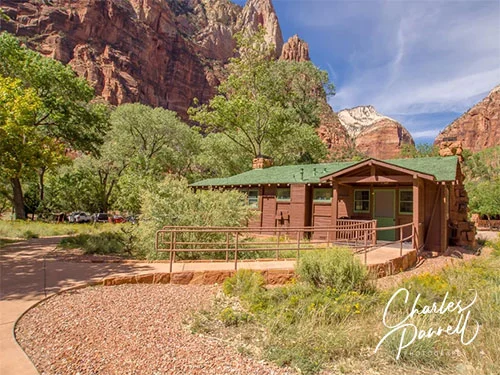
For an easy first-day drive, just take Interstate 15 to Hurricane, and then follow Highway 9 to Zion National Park (emerginghorizons.com/zion-national-park/). The drive takes about 2.5 hours, and there’s some great scenery along the way. Hop on the wheelchair-accessible park shuttle at the Zion Visitor Center and explore the park, and then spend the night at a wheelchair-accessible cabin at Zion Lodge.
Zion National Park to Bryce Canyon National Park
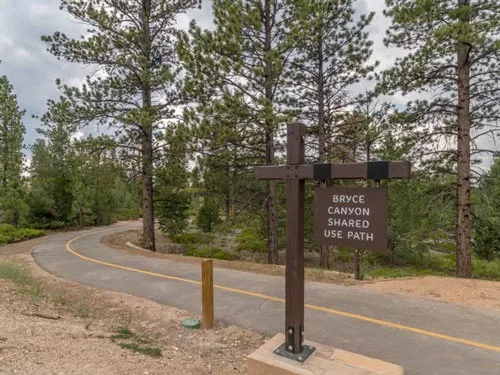
Shared use trail in Bryce Canyon National Park
From Zion, take Highway 9 to Mt. Carmel Junction and then hop on Highway 89 north to Highway 12 east. Save some time to stop along Highway 12 at the Red Canyon Visitor Center and take a stroll along the accessible Red Canyon Bicycle Trail. Continue on Highway 63, and follow the signs to Bryce Canyon National Park (emerginghorizons.com/bryce-canyon-national-park). If you drive it straight through, it will take about two hours. And there’s no shortage of accessible things to do in the park, including a roll or stroll along along the Bryce Multiuse Trail.
Bryce Canyon National Park to Capitol Reef National Park
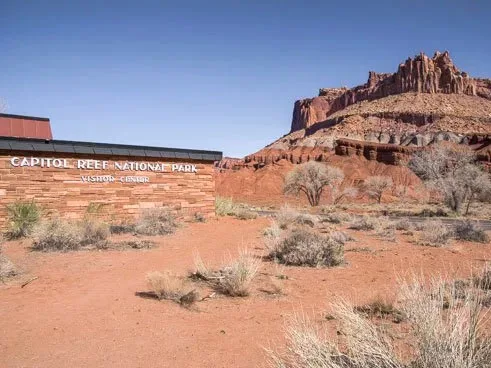
Visitor Center in Capitol Reef National Park
To continue along on your national park road trip, backtrack on Highway 63 and make a right on Johns Valley Road, which becomes Highway 22. Next, make a right on Highway 62, and another right on Browns Lane, then head east on Highway 24 through Torrey to Capitol Reef National Park (emerginghorizons.com/capitol-reef-national-park). It’s a scenic two-hour drive. Pick up a map at the visitor center, then take a driving tour of the park. And don’t miss the petroglyphs along Highway 24.
Capitol Reef National Park to Canyonlands National Park
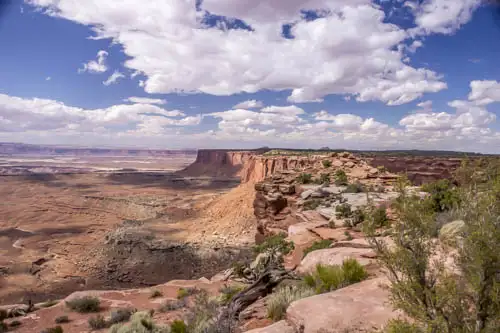
Vista in Canyonlands National Park
The next leg of your national park road trip is about a 4.5-hour drive. From Capitol Reef continue east on Highway 24, then take Interstate 70 east, and Highway 191 south to Highway 63. This will lead you to the Islands in the Sky section of Canyonlands National Park (emerginghorizons.com/canyonlands-national-park). This large mesa “island” rises 1,000 feet above the adjacent land and is surrounded by the Colorado River and Green River. And if you don’t fancy camping out in the park, Field Station Moab (emerginghorizons.com/field-station-moab-a-breath-of-fresh-air) has some comfortable accessible rooms, and it’s just a 30-minute drive away.
Canyonlands National Park to Arches National Park
Devil’s Garden Trail in Arches National Park
For the next leg of your national park road trip, take Highway 313 back out to Highway 191 and continue south to Arches National Park (emerginghorizons.com/arches-national-park). It’s a short 35 minute drive. Stop at the visitor center, then take a driving tour of this beautiful park. Don’t miss the trail at Balanced Rock, Wall Street, the trail to the petroglyphs at Wolfe Ranch, and the Windows Section of the park. Although this park offers some spectacular scenery, advance planning is a must, as timed entry reservations are now required (emerginghorizons.com/national-park-entrance-reservations-required-in-2024). And remember, reservations are not available onsite — you need to purchase them online, ahead of your visit.
Arches National Park to Black Canyon of the Gunnison National Park
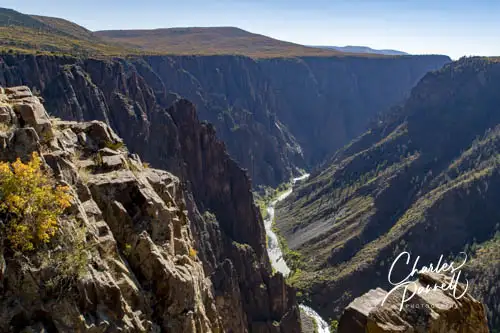
Black Canyon of the Gunnison
The next segment of your national park road trip takes about 2.5 hours. From Arches National Park backtrack north on Highway 191 to Interstate 70 east, then take Highway 50 east to Highway 92 in Delta, to the Black Canyon of the Gunnison National Park (www.nps.gov/blca/index.htm) entrance. There’s no shortage of scenic views on the seven-mile scenic drive along the south rim of the canyon. Even better — most of the viewpoints are wheelchair-accessible. And when it’s time to bed down for the night, there’s a comfy accessible yurt in Ridgeway State Park, which is about a half-hour away.
Black Canyon of the Gunnison National Park to Mesa Verde National Park
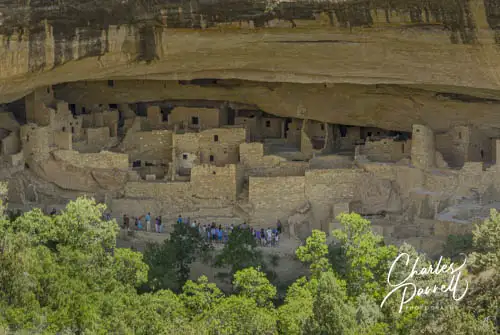
Mesa Verde National Park
To continue your national park road trip, take Highway 50 east to Interstate 550 to Ridgeway. From there take Highway 60 to Highway 145 south to Cortez. To complete this four-hour journey follow Highway 160 to Mesa Verde National Park (www.nps.gov/meve/index.htm). Highlights at Mesa Verde include the scenic Mesa Top Loop Drive, Chapin Mesa Archeological Museum, and the ruins at the Far View Sites. And if you’d like to spend the night in the park, Far View Lodge has some nice accessible rooms with roll-in showers.
Mesa Verde National Park to Petrified Forest National Park
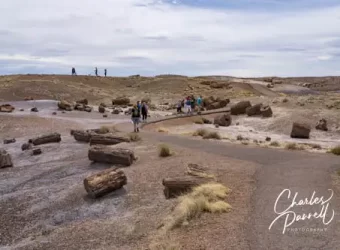
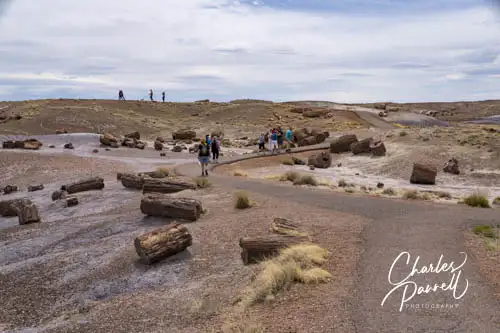
The Crystal Forest in Petrified Forest National Park
From Mesa Verde, backtrack on Highway 160 to Cortez, then head south on Highway 491 to Interstate 40. Go west on the interstate and take exit 311 to reach Petrified Forest National Park (www.nps.gov/pefo/index.htm). The Painted Desert is located near the north entrance, and it features expansive views and a former Harvey House (The Painted Desert Inn). The Crystal Forest is worth a stop near the central part of the park, and don’t miss the Rainbow Forest near the South Entrance. And when you’re done, just exit the south entrance and head north to rejoin Interstate 40.
Petrified Forest National Park to Grand Canyon South Rim
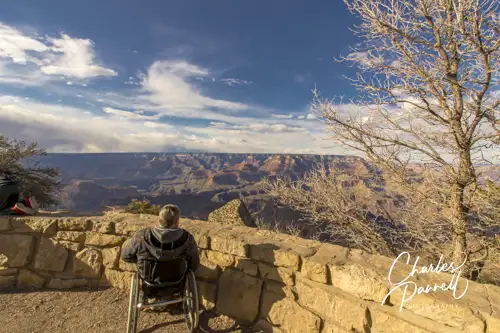
Grand Canyon National Park
After you rejoin Interstate 40, head west and take exit 165 in Williams, then follow Highway 64 to Grand Canyon National Park (emerginghorizons.com/grand-canyon-national-park). It’s a scenic three-hour drive. There’s no shortage of accessible things to do on the South Rim, but for a scenic overview of the whole park, take a wheelchair-accessible flightseeing tour on Grand Canyon Scenic Airlines (www.scenic.com). The 45-minute flight departs from Tusayan, and features ramp access and plenty of room to transfer to a seat. And with the large windows on the plane, you won’t miss a thing. For another great view, check-in to Thunderbird Lodge — the only property in the park that offers wheelchair-accessible rooms with canyon views.
Grand Canyon South Rim to Grand Canyon North Rim
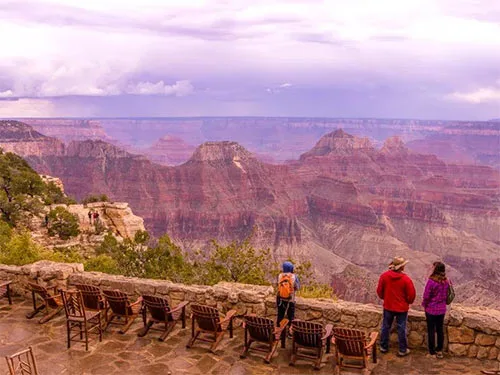
View from the North Rim Grand Canyon Lodge
The last stop on your national park road trip is just a four-hour drive away. From the Grand Canyon Visitor Center, follow the South Entrance Road to Desert View Drive and head east. In Cameron go north on Highway 89, and connect to Highway 89A in Jacob Lake, then just follow Highway 67 south to the Grand Canyon North Rim (www.nps.gov/grca/planyourvisit/north-rim.htm). The great thing about the North Rim is that it doesn’t attract as many visitors as the South Rim. And after the day visitors are gone, it’s just you and the other lodge guests. Grand Canyon Lodge North Rim has a variety of accessible cabins, many which are equipped with roll-in showers. So plan to spend a few days and enjoy the beauty of the North Rim.
Grand Canyon North Rim to Las Vegas
Fabulous Downtown Las Vegas
To complete your national park road trip, take Highway 67 back out to Highway 89A and head north. Next, travel west across the Kaibab Reservation on Highway 389, which turns into Highway 59 when you cross into Utah. Finally, take Highway 9 to Interstate 15 west and circle back to Las Vegas. It’s just a 4.5 hour drive, with lots of great scenery along the way.
Barrier-Free Travel
Utah National Parks for Wheelchair-users and Slow Walkers
Thanks to modern technology it’s now possible to share your travel photos with friends and family with just a few swipes and a tap or two. And I absolutely love seeing those smiling faces enjoying cruises, beaches and luxury resorts. But lately I’ve also been seeing another kind of travel post – it usually features a photo of an obviously inaccessible room, with the caption “Really? This is a wheelchair-accessible hotel room?”
And the truth is, well, maybe it isn’t.
How Does This Happen?
I’ve looked at thousands of wheelchair-accessible hotel rooms over my career, and I’ve seen just about every kind of access faux-paus you can imagine; however I’ve also had more than a few managers take me to view a supposed “accessible room” only to discover that it wasn’t. So how does that happen? According to many a red-faced hotel manager, “Somehow the rooms type was entered into the computer incorrectly.”
And although this seems like a minor computer error it can wreck havoc on travelers who need a wheelchair-accessible hotel room. Think about it for a minute. You reserve an accessible room, and because the inaccessible room is coded wrong that’s the room you get. Even worse, when you open the door and discover the lack of access and report it to the front desk, the clerk continues to insist that you ARE in an accessible room. Why? Because the computer says so. And believe me, it’s darn near impossible to convince a rank-and-file employee that the computer is wrong.
Clues That You Aren’t in a Wheelchair-Accessible Hotel Room
Although access features can and do vary from property to property, there are a few clues that you may have been incorrectly assigned to a standard room, rather than a wheelchair-accessible hotel room (in the US). Here are a few tip-offs.
Check the bathroom. Although access features may vary in the shower or tub, check out the toilet area. Are there grab bars by the toilet? If not, you may well be in a standard room, as that’s one access feature that is seldom missed.
Is the roll-in shower really a low step shower? Many hotels have replaced their tub/shower combinations with low-step showers in their standard rooms. Look inside the shower – if the only access feature you see is a set of grab bars, then you may be in a standard room. In this day and age even standard rooms have shower grab bars for safety, so that by itself doesn’t really indicate you are in an accessible room. Look for a hand-held showerhead.
It’s also important to note that under the Americans with Disabilities Act, accessible rooms can have either a roll-in shower a tub/shower combination or a transfer-type shower. In fact properties with 50 or fewer rooms aren’t required to have an accessible room with a roll-in shower. That said, if your tub/shower combination only has grab bars, and does not include a hand-held showerhead and some type of shower bench, you may be in a standard room.
Next, look out in the hallway. Do you see any rooms marked with the wheelchair pictogram? Are there any that have lowered peepholes? These are sure signs of an accessible room. If some rooms have them, but your room lacks them, it may be a sign that you are in a standard room.
How to Remedy the Situation
Of course if your room is listed incorrectly in the inventory, you won’t get much satisfaction from the front desk. You will have to go higher. Ask to speak to the manager. Ask the manager what features their wheelchair-accessible rooms have. Tell him that you are supposedly in a wheelchair-accessible room, but your room does not have those features. Then show him photos of the room.
And then perhaps suggest that this room was entered into the inventory incorrectly.
Chances are if this is the case, the manager will find you another room – one that is truly accessible. Of course there’s always the chance that there won’t be any accessible rooms available; in which case you should ask to be accommodated at a nearby property. After all, you did book an accessible room, and the mistake wasn’t your fault.
Granted this is a time consuming – and somewhat frustrating — process, so go ahead and ask to be compensated for your time. You may get some free points or maybe even a free night. In the end, managers want happy customers, so don’t be afraid to ask for whatever you feel you deserve.
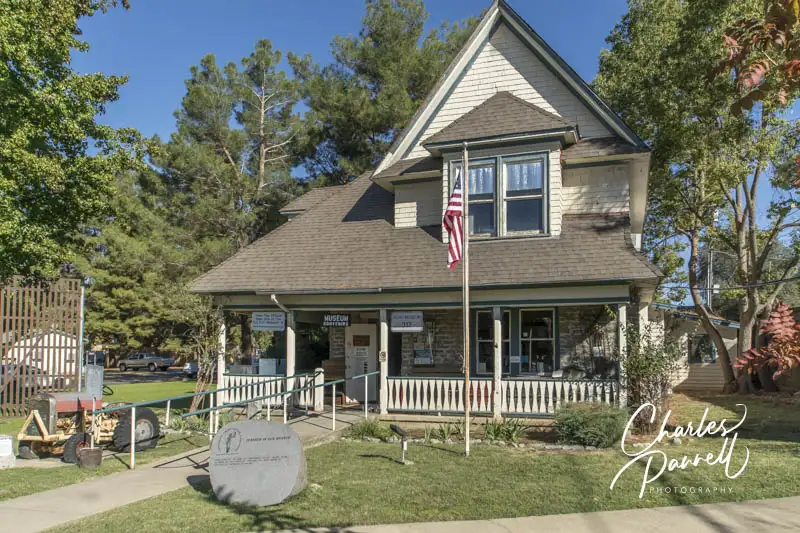
Driving along Prison Road the sight of the massive granite walls of Folsom State Prison are unmistakable, as you approach the nation’s first maximum-security prison. Interestingly enough, the granite for the walls was quarried by the prisoners, and the imposing structure was later built by inmates back in the early 1900s. That’s just one of the fun facts you’ll learn on a visit to the Folsom Prison Museum (www.bighouseprisonmuseum.org).
To be honest, visiting the museum is a tad bit intimidating, as it’s located just inside the prison grounds. That said, I timidly approached the guard after following the “museum” signs that led to the prison entrance, and hesitantly stammered, “I’m looking for the museum”. I heaved a giant sigh of relief when the guard cracked a smile and enthusiastically directed me to the museum entrance, located just beyond the checkpoint.
Accessible parking is located across the street from the checkpoint, and there’s a level pathway over to the ramped museum. Inside, quarters are a bit tight in the historic structure, however there’s still room enough to maneuver a wheelchair around the exhibits. The tiny restroom is not accessible — so plan ahead — and there’s about a half-inch step down to the Johnny Cash room, but again it’s all quite manageable.
The Folsom Prison Museum
Folsom Prison Museum
Operated by retired correctional officers, the museum features an impressive collection of weapons, shackles and confiscated items. Highlights include a hand-crank Gatling gun, a substantial number of inmate-crafted firearms, and even a homemade bomb. Add in some old gas masks, an operating table and Rick James’ guitar, and you have a very eclectic collection. There’s also a sizable display of things made from everyday items by the inmates, including a purse made from potato chip bags, a Ferris wheel crafted from a quarter-million toothpicks, a hangman’s noose made from toilet tissue and a number of creative soap bar carvings. A large collection of California license plates also adorn one wall in this room, just to remind folks where they are all manufactured today.
There’s also a room devoted to Johnny Cash, who visited the prison and recorded a live album there in 1968. There’s a load of photographs of Cash and his wife at the prison, along with his own “gag” mug shot and even some stationary from the Sacramento hotel where he stayed. It’s definitely a must-see for any Cash fan.
Granted this small museum doesn’t warrant a dedicated trip to Folsom; however if you’re heading to South Lake Tahoe on Highway 50, it’s definitely worth a stop. Just take the Folsom Boulevard exit, turn left and then make a right on Natoma Street. From there turn left on Prison Road which dead-ends in the visitor parking lot. And when you’re back on your way to Lake Tahoe, take note of the granite mileage markers along the road, as those were also crafted by Folsom Prison inmates.
Barrier-Free Travel Yosemite, Sequoia and Kings Canyon National Parks for Wheelers and Slow Walkers
At first glance it appears that Northern California’s coastal redwoods are out of reach for wheelchair-users and slow walkers. After all, these majestic giants are located in some pretty remote areas. Granted, many redwood groves present some formidable access barriers; however these three coastal stands offer a nice selection of accessible trails, picnic areas and even camping cabins. So check out these wheelchair-accessible coastal redwoods on your next California road trip
Redwood National Park
Lost Man Creek trail in Redwood National Park
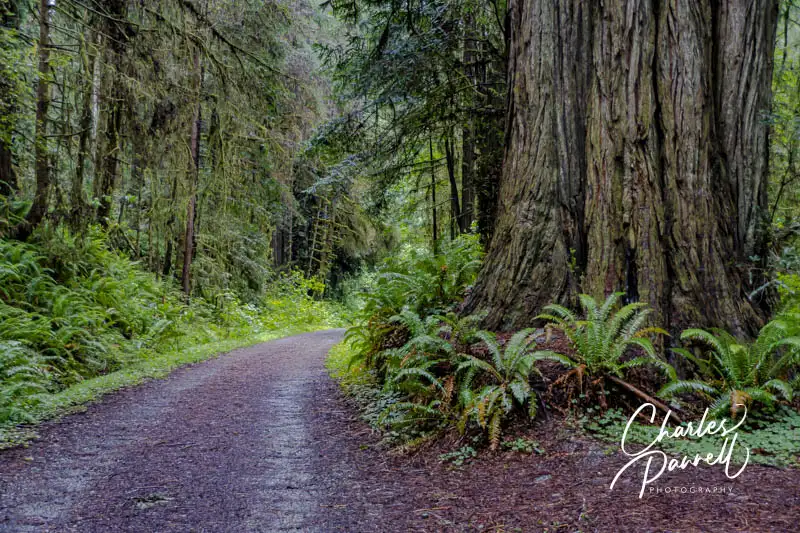
Located about 320 miles north of San Francisco, Redwood National Park (emerginghorizons.com/redwood-national-and-state-parks/) tops the list of the Golden State’s wheelchair-accessible coastal redwoods. Although the drive through the park offers some stunning windshield views, the Lost Man Creek Trail is definitely worth a stop. The trail is easy to find — just follow Highway 101 north for about five miles from Orick, and turn on Lost Man Creek Road. The trailhead is about a mile down the road.
There’s accessible parking near the trailhead, next to an accessible vault toilet, with level access over to the trail. This former logging road is wide, level and free of obstacles for the first half-mile. After that the grade becomes steeper and there are rocks and other obstacles along the way, until the last bastions of access are obliterated at the ¾-mile point. Still, it makes a lovely out-and-back one-mile hike.
Additionally, there’s an accessible picnic table on a level dirt pad near the trailhead, so bring along a lunch and enjoy your repast in the shaded grove. It’s the ideal way to top off this very accessible hike.
Trees of Mystery
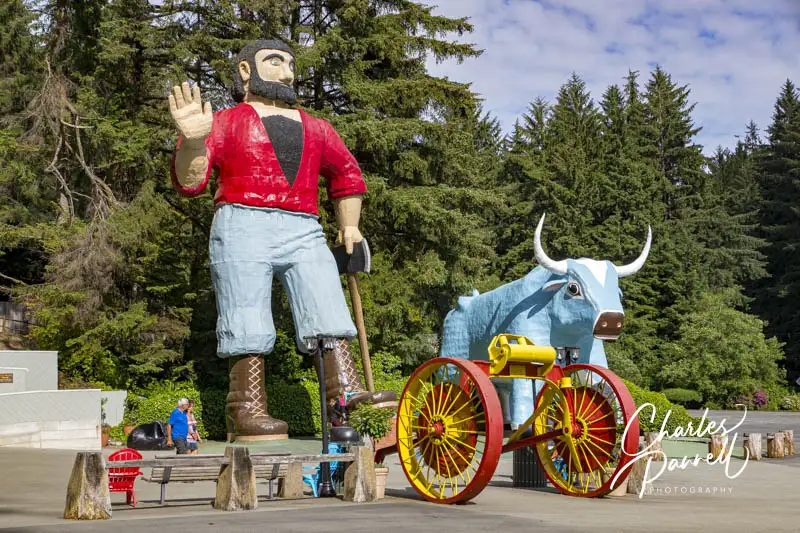
Paul Bunyan and Babe the Ox at the Trees of Mystery
The Trees of Mystery (www.treesofmystery.net) is another fun stop on Highway 101. It’s located about 25 miles north of the Lost Man Creek Trail, up in Klamath. You can’t miss it, as a giant statue of Paul Bunyan and Babe the Ox mark the site of the kitschy yet cool roadside attraction.
There’s plenty of accessible parking in the large lot, and barrier-free access over to the gift shop and ticket booth. The main attraction at this site is the Sky Trail, an aerial tramway which takes visitors on a scenic journey through the tree tops. There is a .8-mile trail that leads from the parking lot to the upper Sky Trail station; however it has a steep grade and a substantial cross slope in a few places, so it’s not a good option for wheelchair-users and slow walkers. Alternatively, accessible transportation in a lift-equipped vehicle to the upper Sky Trail station is available for anyone who can’t manage the trail.
There’s ramped access up to the upper Sky Trail station, with roll-on access and plenty of room for a wheelchair in the individual gondola cars. Be sure and stop for a view from the adjacent observation deck before you board though, as the bird’s eye view is magnificent. From the upper Sky Trail station, it’s a seven-minute 1570-foot descent back down to the lower station. And when you get there, treat yourself to some fudge or ice cream, and take time to browse through the gift shop. It’s a fun stop and definitely a unique way to experience the coastal redwoods.
Jedidiah Smith Redwoods State Park
The Simpson-Reed-Trail at Jedidiah Smith Redwoods State Park
Last but not least on the list of wheelchair-accessible coastal redwoods is Jedidiah Smith Redwoods State Park (www.parks.ca.gov/?page_id=413). This Northern California state park is located about 20 minutes north of Klamath along scenic Highway 199, near Crescent City.
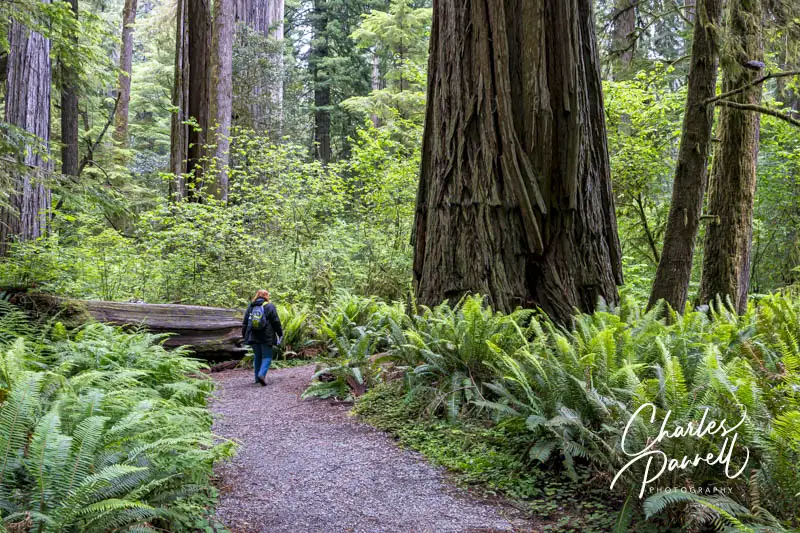
One of the highlights of this park is the accessible Simpson-Reed Discovery Trail, which can be found near the end of Walker Road, off of the main highway. Accessible parking is located next to the accessible vault toilet, near the trailhead. This one-mile loop, passes a number of fallen giants as it weaves through the forest and along the Smith River. It’s a very pleasant — and accessible — stroll.
And if you’d like to spend the night in the park, there are four accessible camping cabins in the campground. Cabins 24, 26, 30 and 105 feature accessible parking with ramp access up to the front porch. They are each furnished with two bunk beds, with a single on top and a double on the bottom. Other cabin features include, electricity, lights, a heater, a raised grill and an accessible picnic table.
Guests need to bring their own bedding, and an air mattress or mattress pad is also recommended. There’s no water in the cabins, but an accessible showerhouse with a roll-in shower is located nearby. It’s a beautiful campground, and the perfect place to top off a visit to California’s wheelchair-accessible coastal redwoods.
Barrier-Free Travel California National Park Road Trips for Wheelchair-Users and Slow Walkers
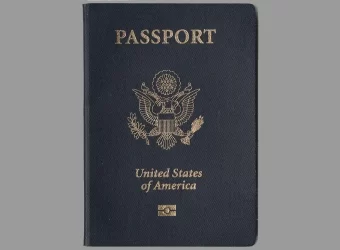
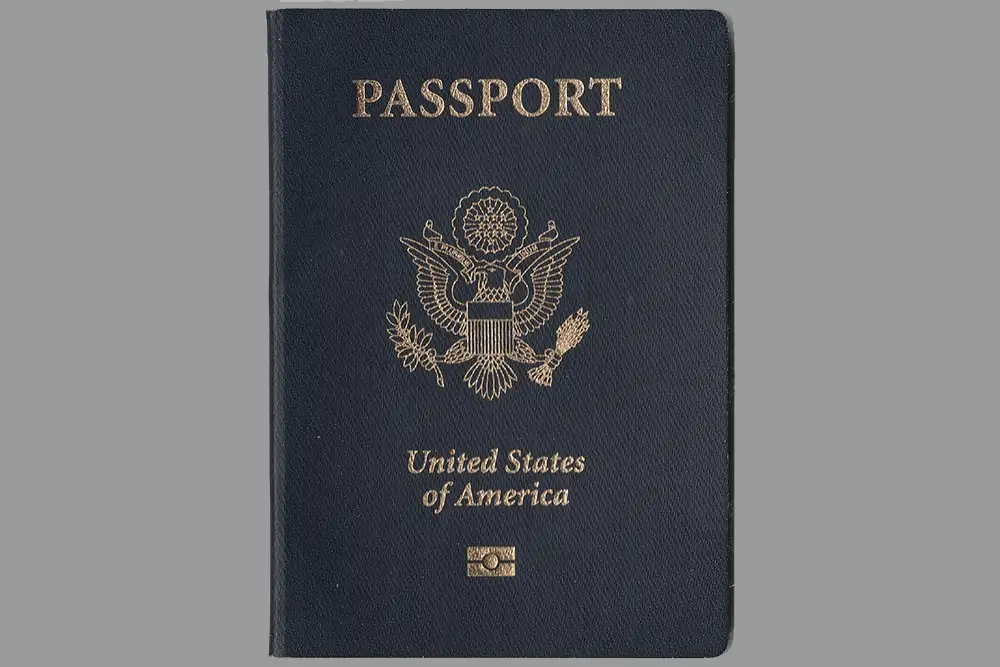
I use a power wheelchair and I am going apply for my first passport this year. I have been told by the passport office that my wheelchair cannot be in my passport photo. Why can’t my wheelchair in my passport photo? I can’t walk at all, so my wheelchair will be with me when I travel. In fact, I consider my wheelchair an extension of my body. Is this true or can my wheelchair be in my passport photo? And if it can’t, how am I suppose to get a passport photo of me without my wheelchair?
I understand that your wheelchair is an extension of your body, but unfortunately the headrest can be a problem for passport photos. Most headrests are black, and since the background for passport photos is white, they could potentially interfere with the biometric data that is contained on the RFID microchip on US passports. This biometric information helps to positively identify the holder, and it also makes passports more difficult to forge.
The US has been issuing biometric passports since 2007, and passport photos have been held to stricter standards since then. Basically, passport photos need to offer a clear facial image, with no digital alteration, and they need to be taken on a white or off-white background. Glasses, hats or anything that obstructs the face are generally not allowed. If capturing a clear facial image is not possible due to contractures or spasms, an exception could be made with a doctor’s note. There is also a place on the application where you can describe your disability if it effects photo standards.
If you are doing your passport photograph at home, the best thing to do is to drape a white towel over the headrest so it will blend in to the white background. But remember, your facial features must be clearly visible. If they aren’t, the passport agency will reject your passport photo.
Alternatively, you can have your photo taken at a passport agency. They will put a white sheet over the back of your wheelchair, as will other businesses that take passport photos. The advantage to getting the photo taken at a passport agency, is that you know it will be done correctly. To find a passport agency that takes photos (not all do), visit iafdb.travel.state.gov/ and type in your search parameters. You can also search for wheelchair-accessible locations at that site.
Have an Ask the Expert Question?
Barrier-Free Travel Glacier, Yellowstone and Grand Teton National Parks for Wheelchair-Users and Slow Walkers
Located a little over two hours from Sacramento, the tiny town of Murphys is barely a blip on the map. And although that’s not such a good thing if you need the services of a metropolitan city, it’s just what the doctor ordered if you’re seeking refuge from the hustle and bustle of city life. And the Courtwood Inn (www.courtwoodinn.com) is the perfect place to get a heaping helping of the latter. As an added bonus, you just can’t beat the wheelchair access.
Courtwood Inn
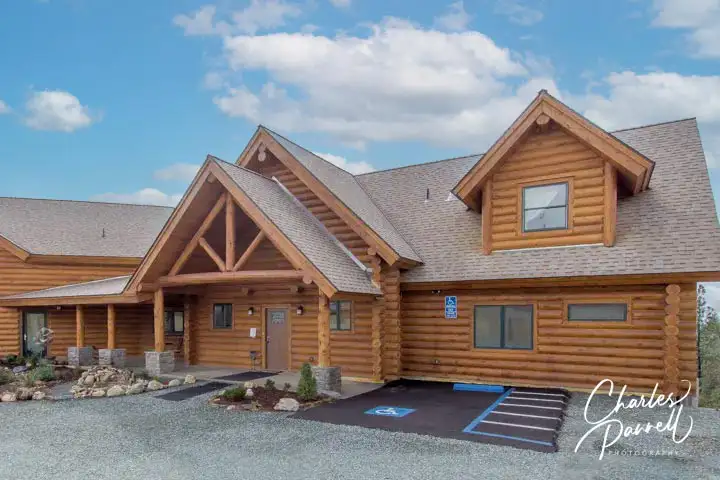
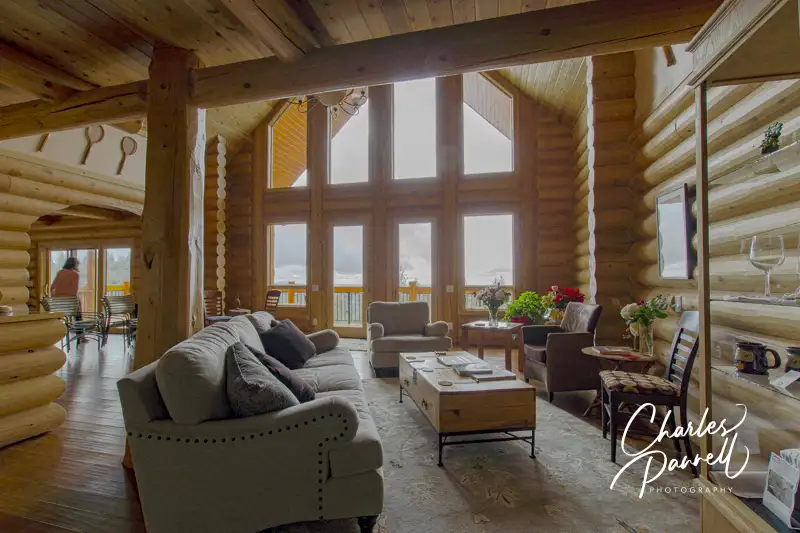
Perched on a pine-covered hillside just outside of town, this five-room tennis-themed inn is the brainchild of Larry and Chris Parker. It’s named for two things that this tennis pro couple holds near and dear — the game of tennis and their lovely three story cedar log lodge. And although local codes didn’t require an accessible room, the Parkers opted to include one, so everyone can enjoy this peaceful mountain retreat.
Access is excellent at the inn, with accessible parking just steps from the front door, and level access to the entrance. Inside, there’s barrier-free access throughout the great room, which offers a magnificent view of the pine-studded hillside. In keeping with the tennis theme, each guestroom is named after a grand slam event, and decorated with items reminiscent of the host country. The accessible US Open room is located right off the great room.
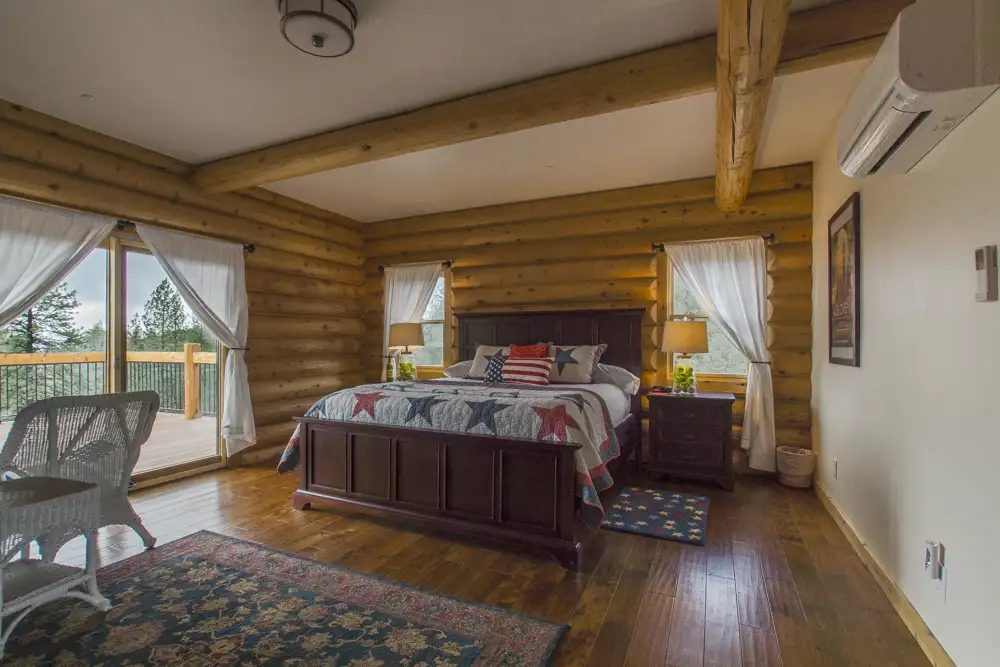
Wheelchair-Accessible US Open Room
The US Open room at Courtwood Inn
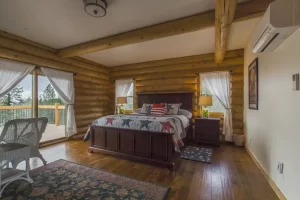
Access features in the US Open room include wide doorways, level access and plenty of room to maneuver even the largest wheelchair or scooter. It’s furnished with a 32-inch high king-sized bed, but with advance notice it can be replaced with a lower bed. Other furnishings include two bedside tables, a chest of drawers, two chairs and a small table.
Decorated in a red, white and blue palette, the color scheme reflects the location of the US Open; while rackets, balls and even a poster for the event can be found throughout the room. And for a bit a local flavor, the room also comes adorned with a stuffed frog, in honor of Mark Twain’s famous short story, The Jumping Frog of Calaveras County.
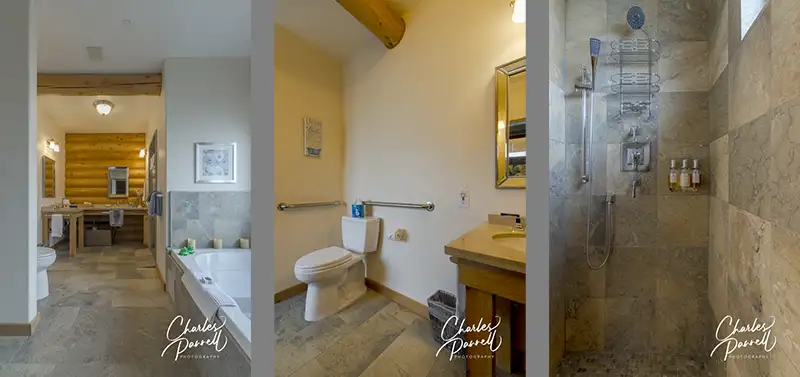
The bathroom is equipped with a tiled roll-in shower with a built-in shower bench and a hand-held showerhead. A portable shower chair is also available. Other access features include a roll-under sink, and toilet grab bars on the back and right walls (as seated). There’s also a hydrotherapy tub in the bathroom, and in keeping with the Calaveras theme, the standard rubber ducky has been replaced with a rubber frog. There’s also a refrigerator and a coffee maker in the large walk-in closet, which is adjacent to the bathroom.
Bathroom in the US Open Room at Courtwood Inn
The Little Extras
One of the best features of this room is actually located outside — the large deck that offers a great view of the surrounding forest. There’s level access to the deck through a sliding door, and plenty of room to roll around outside. It’s a nice place to watch the sunset or enjoy a quiet morning cup of coffee.
There’s also barrier-free access to the dining room, where Chris serves up a healthy breakfast every morning. And the beverage bar, along with homemade snacks and goodies is open all day.
Although it took the Parkers nearly two years to build their dream inn, they didn’t stop there. They also added tennis courts (the lower one is accessible) and now they offer private tennis lessons to their guests. It’s the perfect fit for two former professional tennis players, and a great addition to this tennis-themed inn. And they are always adding new features to the inn, so check back often — you never know what else the Parkers might have up their sleeves.
Inside the Couetwood Inn
Barrier-Free Travel Yosemite, Sequoia and Kings Canyon National Parks for Wheelers and Slow Walkers
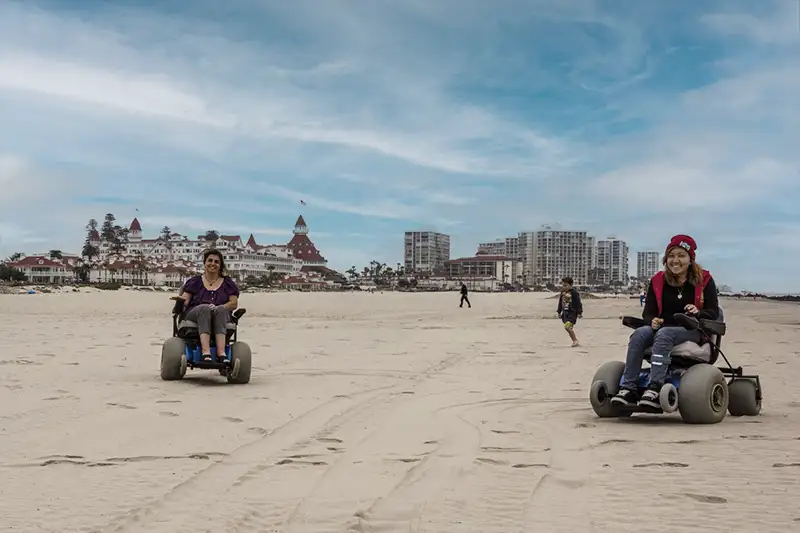
Power beach wheelchairs at Coronado Beach in San Diego, California
Although a number of San Diego beaches have beach wheelchairs and beach mats, a few locations go one step further. Along with the standard beach wheelchairs — that require a strong helper to push — some San Diego beaches now have power beach wheelchairs to loan.
These San Diego power beach wheelchairs are somewhat of a cross between a standard beach wheelchair with large balloon tires, and a power wheelchair with a joystick. They are easy to operate, and after a brief orientation from the lifeguard you can easily cruise along the sandy beach. And the best part about the power beach wheelchairs is that they allow wheelchair-users independent access to the beach. You don’t need a helper to push you and you can go wherever you want and take things at your own pace. They are also a great option for slow walkers who may tire easily trudging over the sand.
These power beach wheelchairs are available on a first-come basis; however it’s best to call in advance as some locations have limited hours.
The San Diego power beach wheelchairs must stay at least five feet away from the water; however if you’d like to go for a swim, then check out the floating beach wheelchairs at Moonlight Beach in nearby Encinitas. You will need some assistance to wheel these chairs down to the water, but once you hit the surf they float. You can choose to enjoy the ocean by yourself, or have a companion there to assist you. Either way, it’s a great way to enjoy the water.
And if you’d prefer to stay dry, they also have power beach wheelchairs available at Moonlight Beach. For more information about the floating beach wheelchairs or the power beach wheelchairs at Moonlight Beach, call (760) 633-2740.
Barrier-Free Travel California National Park Road Trips for Wheelchair-Users and Slow Walkers


 Nearly a year ago, on July 26, 2023, the Department of Transportation (DOT) announced a new accessible airline lavatory rule. Unfortunately it will still be many years before single aisle aircraft with more than 125 seat have accessible lavatories, but at least it’s a start. The rulemaking process has been going on for quite some time and the DOT took into consideration comments from consumers, airlines and disability organizations.
 There are numerous things that go into planning an accessible vacation; from finding the right hotel room, to securing airport transportation, and even finding out what local attractions are accessible. And then there are the emergency situations. What do you if something unforeseen happens while you’re on the road? Well my best solution is to play a healthy game of “what if ” before your travel.
 Make no mistake about it, Staunton State Park (