As a travel writer since 1977, Candy Harrington has been writing about accessible travel exclusively since 1996. She’s the founding editor of Emerging Horizons, and the author of the popular Barrier-Free Travel national park series. With thousands of bylines to her credit, Candy hits the road often, in search of new accessible travel finds. Candy and her travel photographer husband Charles Pannell reside in NE Washington, where they tend to their chicken flock and enjoy a rural lifestyle.
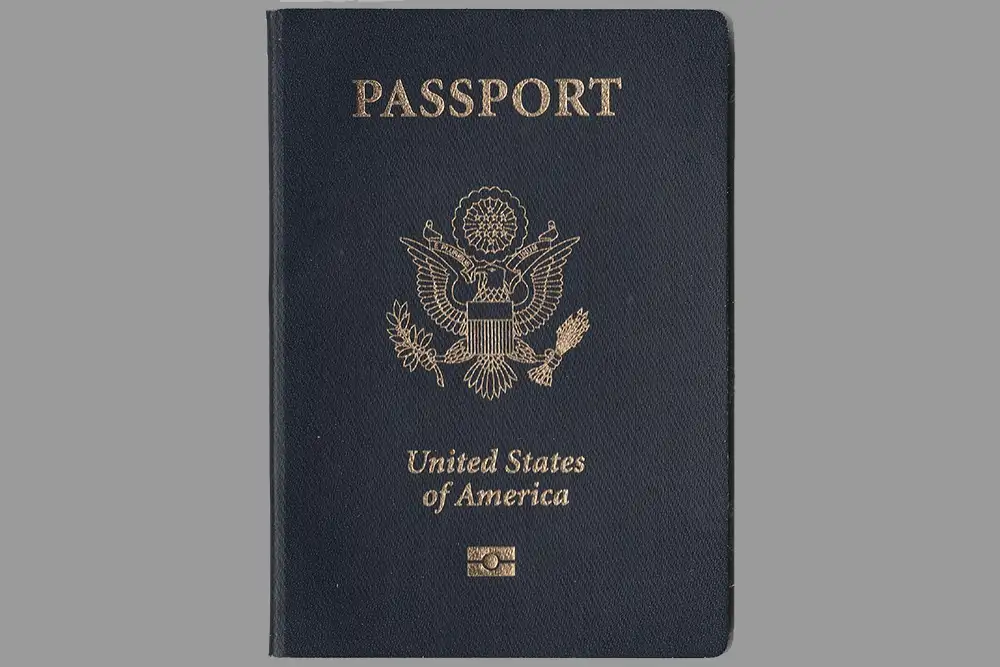
I use a power wheelchair and I am going apply for my first passport this year. I have been told by the passport office that my wheelchair cannot be in my passport photo. Why can’t my wheelchair in my passport photo? I can’t walk at all, so my wheelchair will be with me when I travel. In fact, I consider my wheelchair an extension of my body. Is this true or can my wheelchair be in my passport photo? And if it can’t, how am I suppose to get a passport photo of me without my wheelchair?
I understand that your wheelchair is an extension of your body, but unfortunately the headrest can be a problem for passport photos. Most headrests are black, and since the background for passport photos is white, they could potentially interfere with the biometric data that is contained on the RFID microchip on US passports. This biometric information helps to positively identify the holder, and it also makes passports more difficult to forge.
The US has been issuing biometric passports since 2007, and passport photos have been held to stricter standards since then. Basically, passport photos need to offer a clear facial image, with no digital alteration, and they need to be taken on a white or off-white background. Glasses, hats or anything that obstructs the face are generally not allowed. If capturing a clear facial image is not possible due to contractures or spasms, an exception could be made with a doctor’s note. There is also a place on the application where you can describe your disability if it effects photo standards.
If you are doing your passport photograph at home, the best thing to do is to drape a white towel over the headrest so it will blend in to the white background. But remember, your facial features must be clearly visible. If they aren’t, the passport agency will reject your passport photo.
Alternatively, you can have your photo taken at a passport agency. They will put a white sheet over the back of your wheelchair, as will other businesses that take passport photos. The advantage to getting the photo taken at a passport agency, is that you know it will be done correctly. To find a passport agency that takes photos (not all do), visit iafdb.travel.state.gov/ and type in your search parameters. You can also search for wheelchair-accessible locations at that site.
Have an Ask the Expert Question?
Barrier-Free Travel Glacier, Yellowstone and Grand Teton National Parks for Wheelchair-Users and Slow Walkers
Located a little over two hours from Sacramento, the tiny town of Murphys is barely a blip on the map. And although that’s not such a good thing if you need the services of a metropolitan city, it’s just what the doctor ordered if you’re seeking refuge from the hustle and bustle of city life. And the Courtwood Inn (www.courtwoodinn.com) is the perfect place to get a heaping helping of the latter. As an added bonus, you just can’t beat the wheelchair access.
Courtwood Inn
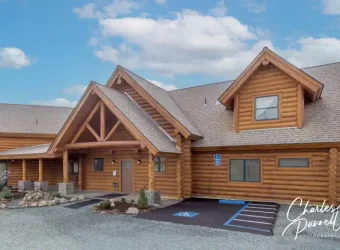
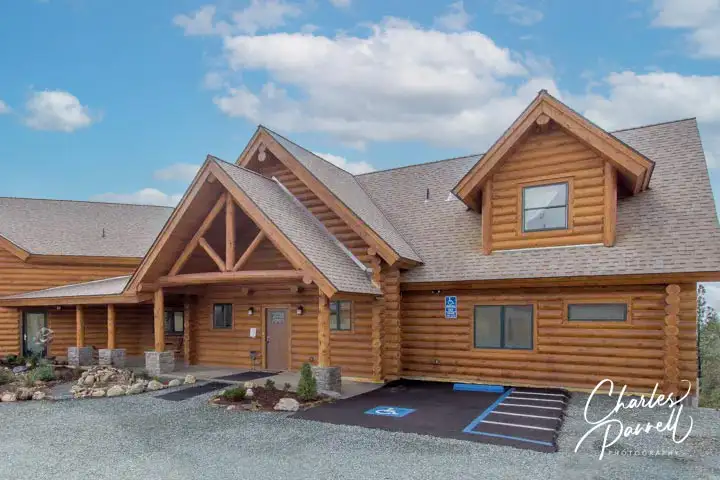
Perched on a pine-covered hillside just outside of town, this five-room tennis-themed inn is the brainchild of Larry and Chris Parker. It’s named for two things that this tennis pro couple holds near and dear — the game of tennis and their lovely three story cedar log lodge. And although local codes didn’t require an accessible room, the Parkers opted to include one, so everyone can enjoy this peaceful mountain retreat.
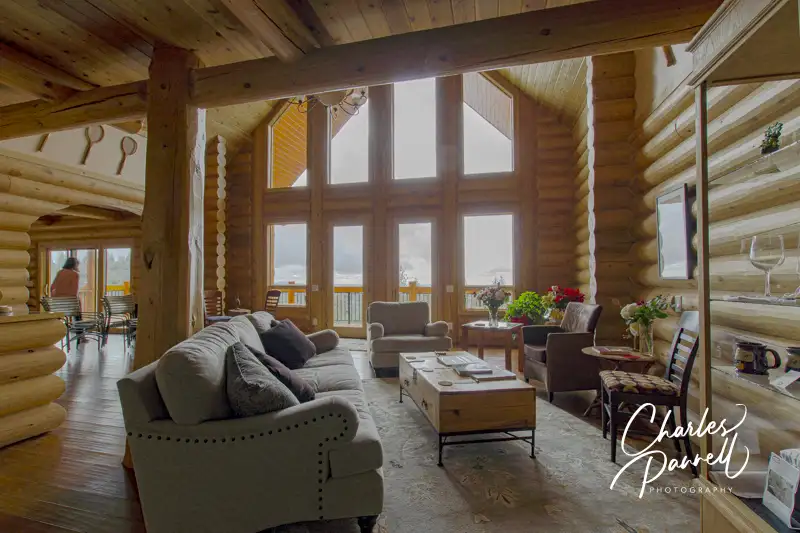
Access is excellent at the inn, with accessible parking just steps from the front door, and level access to the entrance. Inside, there’s barrier-free access throughout the great room, which offers a magnificent view of the pine-studded hillside. In keeping with the tennis theme, each guestroom is named after a grand slam event, and decorated with items reminiscent of the host country. The accessible US Open room is located right off the great room.
Wheelchair-Accessible US Open Room
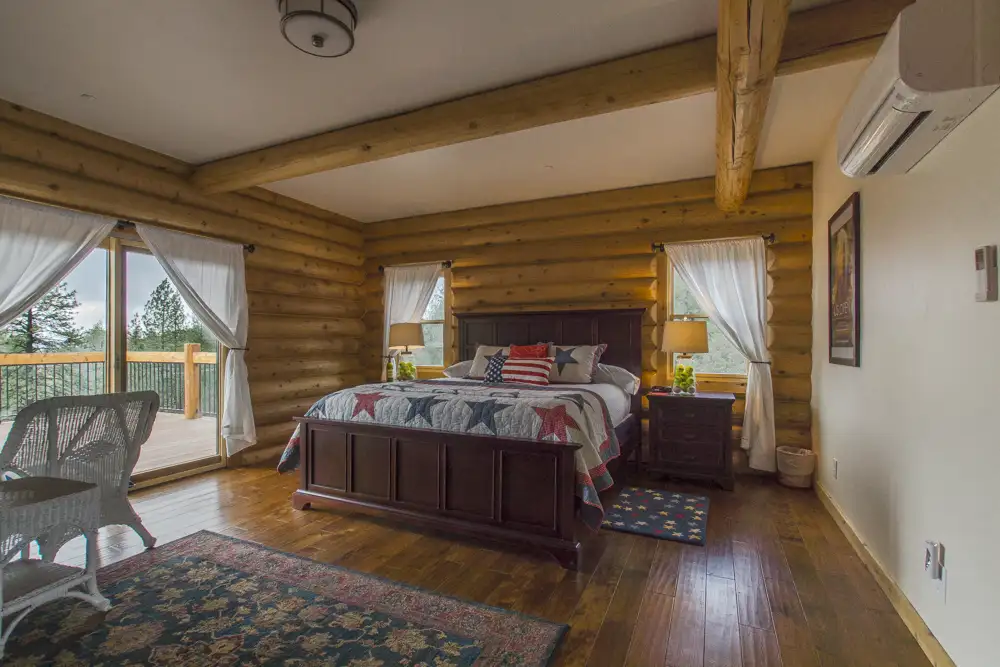
The US Open room at Courtwood Inn
Access features in the US Open room include wide doorways, level access and plenty of room to maneuver even the largest wheelchair or scooter. It’s furnished with a 32-inch high king-sized bed, but with advance notice it can be replaced with a lower bed. Other furnishings include two bedside tables, a chest of drawers, two chairs and a small table.
Decorated in a red, white and blue palette, the color scheme reflects the location of the US Open; while rackets, balls and even a poster for the event can be found throughout the room. And for a bit a local flavor, the room also comes adorned with a stuffed frog, in honor of Mark Twain’s famous short story, The Jumping Frog of Calaveras County.
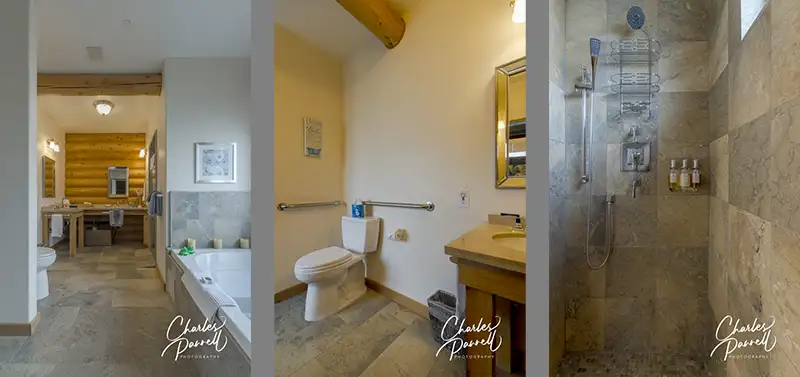
The bathroom is equipped with a tiled roll-in shower with a built-in shower bench and a hand-held showerhead. A portable shower chair is also available. Other access features include a roll-under sink, and toilet grab bars on the back and right walls (as seated). There’s also a hydrotherapy tub in the bathroom, and in keeping with the Calaveras theme, the standard rubber ducky has been replaced with a rubber frog. There’s also a refrigerator and a coffee maker in the large walk-in closet, which is adjacent to the bathroom.
Bathroom in the US Open Room at Courtwood Inn
The Little Extras
One of the best features of this room is actually located outside — the large deck that offers a great view of the surrounding forest. There’s level access to the deck through a sliding door, and plenty of room to roll around outside. It’s a nice place to watch the sunset or enjoy a quiet morning cup of coffee.
There’s also barrier-free access to the dining room, where Chris serves up a healthy breakfast every morning. And the beverage bar, along with homemade snacks and goodies is open all day.
Although it took the Parkers nearly two years to build their dream inn, they didn’t stop there. They also added tennis courts (the lower one is accessible) and now they offer private tennis lessons to their guests. It’s the perfect fit for two former professional tennis players, and a great addition to this tennis-themed inn. And they are always adding new features to the inn, so check back often — you never know what else the Parkers might have up their sleeves.
Inside the Couetwood Inn
Barrier-Free Travel Yosemite, Sequoia and Kings Canyon National Parks for Wheelers and Slow Walkers
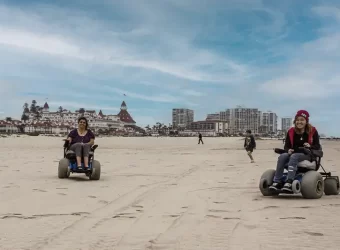
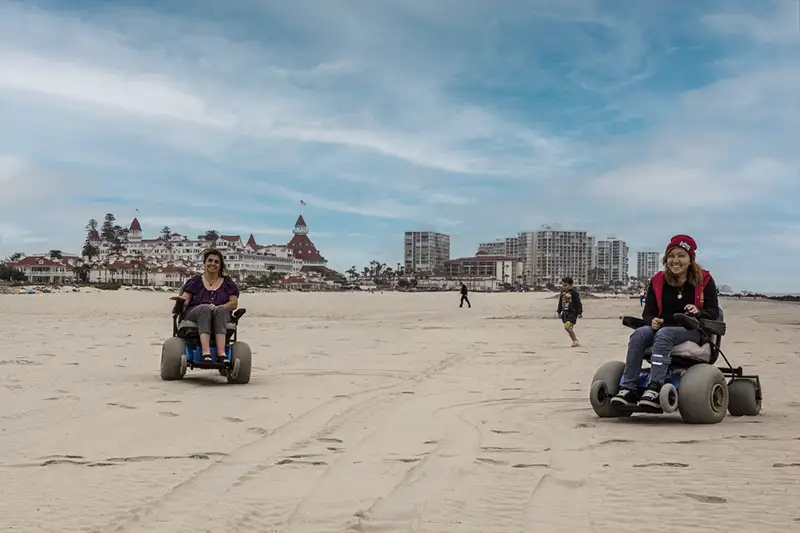
Power beach wheelchairs at Coronado Beach in San Diego, California
Although a number of San Diego beaches have beach wheelchairs and beach mats, a few locations go one step further. Along with the standard beach wheelchairs — that require a strong helper to push — some San Diego beaches now have power beach wheelchairs to loan.
These San Diego power beach wheelchairs are somewhat of a cross between a standard beach wheelchair with large balloon tires, and a power wheelchair with a joystick. They are easy to operate, and after a brief orientation from the lifeguard you can easily cruise along the sandy beach. And the best part about the power beach wheelchairs is that they allow wheelchair-users independent access to the beach. You don’t need a helper to push you and you can go wherever you want and take things at your own pace. They are also a great option for slow walkers who may tire easily trudging over the sand.
These power beach wheelchairs are available on a first-come basis; however it’s best to call in advance as some locations have limited hours.
The San Diego power beach wheelchairs must stay at least five feet away from the water; however if you’d like to go for a swim, then check out the floating beach wheelchairs at Moonlight Beach in nearby Encinitas. You will need some assistance to wheel these chairs down to the water, but once you hit the surf they float. You can choose to enjoy the ocean by yourself, or have a companion there to assist you. Either way, it’s a great way to enjoy the water.
And if you’d prefer to stay dry, they also have power beach wheelchairs available at Moonlight Beach. For more information about the floating beach wheelchairs or the power beach wheelchairs at Moonlight Beach, call (760) 633-2740.
Barrier-Free Travel California National Park Road Trips for Wheelchair-Users and Slow Walkers
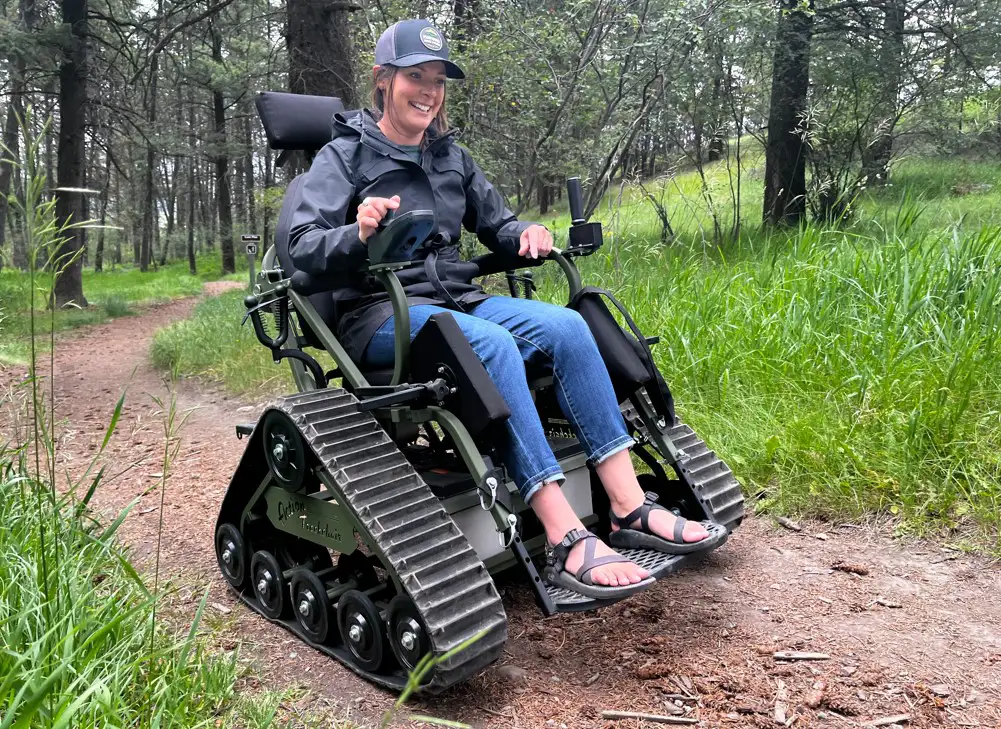
If you’d like to explore Montana’s State Parks, but don’t think you can navigate some of the trails in your wheelchair, then rest assured there’s now a viable solution. Action Trackchairs are now available for loan in Lone Pine State Park (fwp.mt.gov/lone-pine) and Lake Elmo State Park (fwp.mt.gov/lake-elmo). These power wheelchairs feature tank tracks instead of tires, and they allow folks access to areas not navigable in standard wheelchairs. So here are the details about the trackchairs in Montana State Parks.
Lone Pine State Park
Thanks to support from the Montana State Parks Foundation, the Christopher and Dana Reeves Foundation, and Hydro Flask’s Parks for All, Lone Pine State Park was the first Montana State Park to acquire an Action Trackchair.
The trackchair is available at the Lone Pine State Park visitor Center to anybody with a physical disability. There’s no charge to borrow the chair, but proof of disability must be provided. Additionally, the trackchair-user needs to be accompanied by a non-disabled companion while using the chair.
The trackchair can be used on the primary trails in the park, as well as the wheelchair-accessible overlook. For more information or to reserve the trackchair, call (406) 755-2706.
Lake Elmo State Park
Lake Elmo State Park followed suit in August 2023, and added an Action Trackchair to their offerings. This was made possible by grants from the Montana State Parks Foundation, the Christopher and Dana Reeves Foundation, and Hydro Flask’s Parks for All. Like in Lone Pine State Park, you must provide proof of disability and be accompanied by a non-disabled companion in order to use the trackchair. And there’s no charge to borrow the trackchair.
The trackchair can be used on the primary trails in Lake Elmo State Park, as well as the accessible fishing pier. For more information or to reserve the trackchair, call (406) 422-2277 or (406) 247-2940.
And let’s look for more trackchairs in Montana state parks in the near future. They seem to be on a roll with this access upgrade.
Barrier-Free Travel Glacier, Yellowstone and Grand Teton National Parks for Wheelchair-Users and Slow Walkers
Train travel has many advantages. You can leave the driving to someone else and sit back and enjoy the scenery. When nature calls you can just roll down the aisle to an accessible restroom. And if you get hungry there are many tasty onboard choices. Additionally, unlike auto travel, you can also enjoy an adult beverage during your journey. And the good news is, not only does Amtrak offer wheelchair-accessible seating, but they also give disabled passengers a 10% discount off their fares. Ready to ride the rails? Then here’s how to book a wheelchair-accessible seat on Amtrak.
Check That Box!
Making a reservation for a wheelchair-accessible seat is pretty straightforward; however there is one critical component to the process. Go to www.Amtrak.com and enter your departure station, your destination and your travel dates. On the next line, select the number of travelers, and then check the box that says “passenger with disability or assistance needed”. It’s easy to miss, but it’s an essential step in order to get an accessible seat.
After you check that box, a disability assistance questionnaire will appear. The first window asks about your disability, while the second window asks if you need an Amtrak wheelchair, or if you travel with a wheelchair or a cane. The third window determines your accessible seating preference, as it asks if you want to travel in your manual wheelchair, stow your collapsible wheelchair on board, or if you use a power wheelchair or scooter. The next window asks about service animals, and the final window has a few questions about station assistance. And if you need assistance with something not listed, you can always give them a call at (800) USA-RAIL to have it added to your profile
After that you can select your train from the displayed choices and complete your reservation. If you are on a reservable train, you will automatically be assigned the accessible seating choice you selected. If you are traveling on a non-reservable train, then it will alert personnel to your accessible seating needs. If, on the other hand, you didn’t check the “disability box”, neither of these things will happen; and you won’t get an accessible seat.
If Things Go Wrong
Of course, sometimes people miss the check box and end up not being able to select a wheelchair-accessible seat on Amtrak. That was the case with one recent passenger on the Acela train out of New Jersey. He missed the check box and was assigned a standard seat. Since he needed an accessible seat he tried the online chat option to resolve the issue. The only solution they offered was to cancel his original reservation and rebook him in an accessible seat. Unfortunately, since the fare had gone up since he initially booked his ticket, he would of been charged nearly double his original fare just to get an accessible seat. It’s not Amtrak’s policy to charge disabled passengers more for an accessible seat, but the chat option just didn’t resolve things.
So the passenger reached out to everyone he could and eventually he worked his way up the ladder. Ultimately he was rebooked in an accessible seat at no additional charge, but it did take a lot of legwork on his part.
In the end, it’s important to remember that when you book a wheelchair-accessible seat on Amtrak it will be the same price as a standard seat. If you find that isn’t the case, or if you have been charged extra for an accessible seat in the past, then it’s time to contact Amtrak. According to an Amtrak spokesperson, they will make it right. They are adamant about not only going the extra mile to provide disabled passengers with accessible seating and assistance; but they also do it for the same price that non-disabled passengers pay. If you find that’s not the case, then give them a call at (800) USA-RAIL or use the online contact form at www.amtrak.com/contact-us/email.html to rectify the matter.
Barrier-Free Travel National Park Lodges for Wheelers and Slow Walkers
Known as America’s Mountain, Pikes Peak is a don’t-miss while you’re in the Colorado Springs area. Of course you can certainly admire the mountain from afar; however there are also two accessible ways to get to the top. One way is take the Pikes Peak Cog Railway and leave the driving to someone else. And although the railway is also a must-do while you’re in the area, save some time to take the other accessible route to the top — drive the Pikes Peak Highway. Not only is it an equally scenic alternative, but you can take things at your own pace and spend as much time on top as you like.
The Basics
The Pikes Peak Highway is located about 15 miles west of Colorado Springs, just off Highway 24 in Cascade. The tollgate is a quarter-mile past the North Pole amusement park. In an effort to make sure there’s ample parking at the summit for all guests, a timed entry permit is required from late May to late September. The permits are good for a two-hour window, and one permit per car is required. In addition to the permit, everyone in the car must also purchase an admission ticket. Timed entry permits and admission tickets are available at https://coloradosprings.gov/pikes-peak-americas-mountain/page/tickets-and-reservations.
The road closes at night, and although it’s technically open year-round, the higher elevations are closed in the winter. Typically the road is only open to the 13-mile mark beginning in mid-October, or after the first snow storm. The round-trip drive itself usually takes two to three hours, but if you plan on stopping at every viewpoint, allow four or five hours. Best bet is to get an early start and have at least a half-tank of gas when you begin. Don’t be in a rush to get to the top, but remember to use the pullouts if you go slower than the traffic flow.
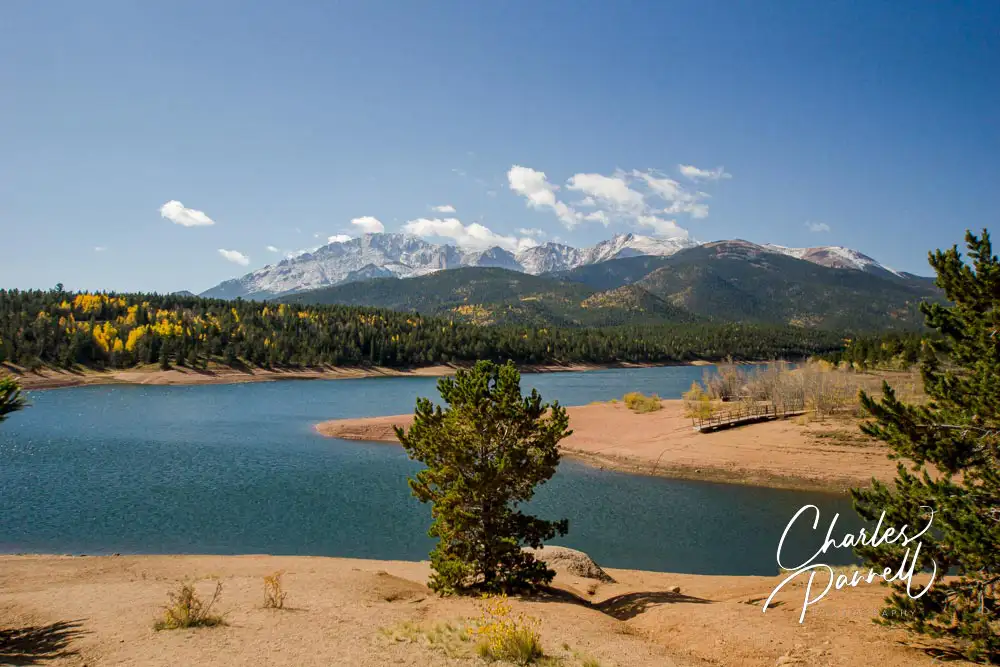
Crystal Reservoir
Crystal Reservoir
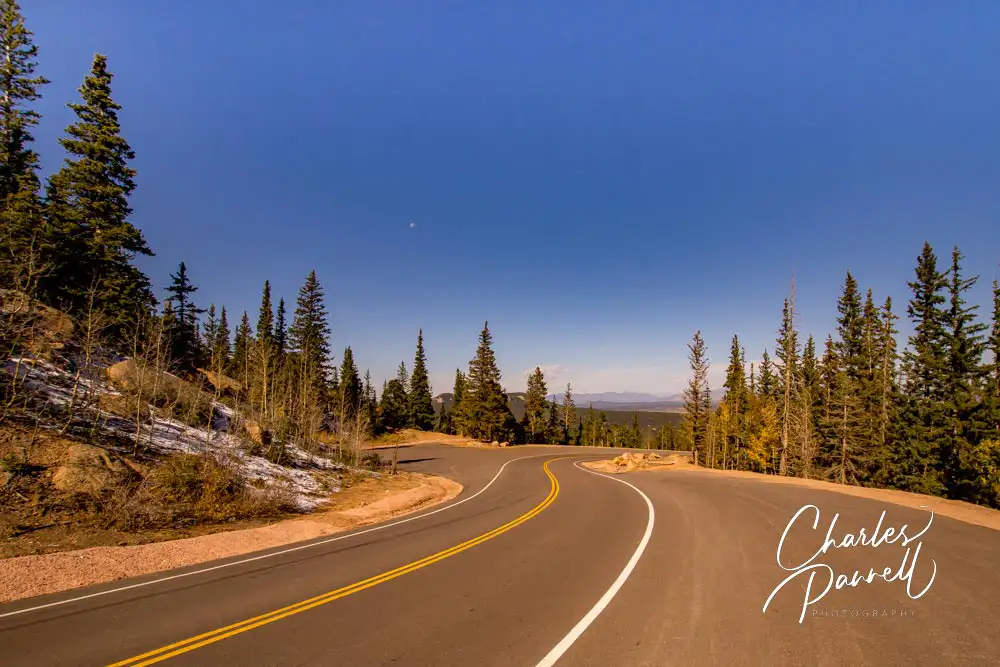
The 20-mile route starts at 7,800 feet and climbs to the 14,115-foot summit with lots of scenic overlooks along the way. Pikes Peak is first visible around the three-mile mark as the highway winds through Pike National Forest.
The Crystal Reservoir Visitor Center is located at the six-mile mark. Accessible parking is available on a level asphalt patch and there are accessible vault toilets in the parking lot. There’s level access to the visitor center and gift shop, and some nice accessible picnic tables on a cement slab next to the visitor center. And there’s also a short 200-yard paved pathway down to the boat ramp, which offers a nice view of the reservoir. The path to the right of the visitor center winds past some accessible restrooms and also dead ends in the reservoir. It’s about a .2-mile round trip hike.
The road begins to slowly climb up the hill past the Crystal Reservoir Visitor Center, and the Halfway Picnic Area is about four miles ahead on the right. At first glance this stop appears to be a no-go for wheelchair-users as there are no accessible parking spots or restrooms along the main road. That said, if you turn down the dirt road just before the parking area there’s a nice secluded accessible table next to an accessible vault toilet. And there’s a large level area to park near the facilities.
Glen Cove and Beyond
The Glen Cove Lodge
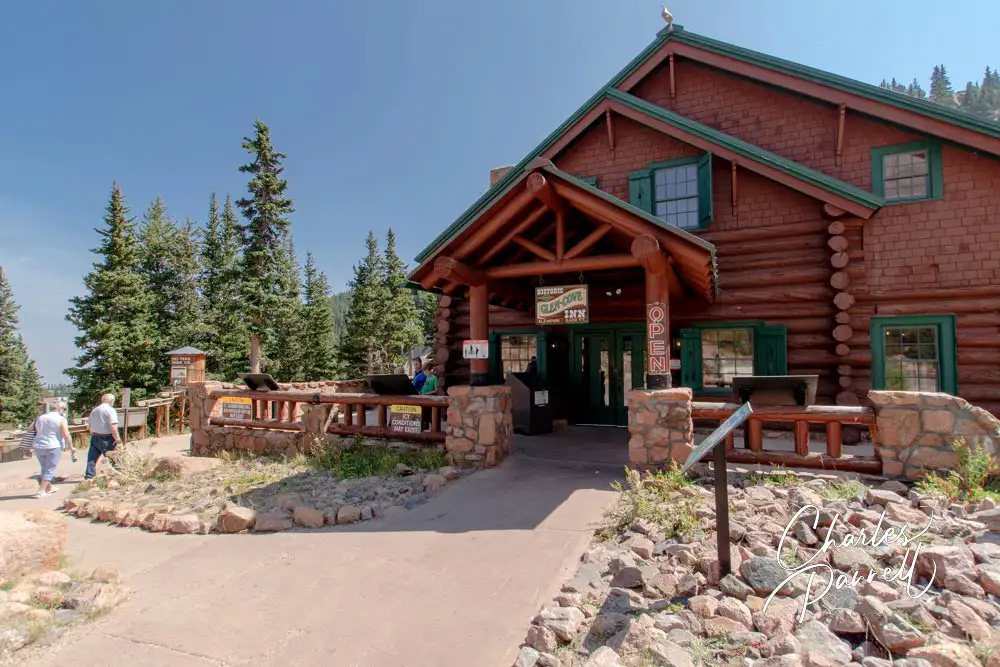
Glen Cove, which is located near mile 13, is also worth a stop. There’s accessible parking in front of the lodge, with ramp access to the front door. Inside there’s plenty or room to maneuver around the gift shop, and over to the small café which offers burgers, hot dogs and snacks. An accessible family restroom is also located inside. A small picnic area with accessible tables on a cement pad is located on the the right side of the building. Glen Cove is also the site of the mandatory brake check on the way back down the mountain.
As you climb up the mountain past Glen Cove you get a real sense of the the elevation gain. After mile 14 there’s a lot of exposure and precious few guardrails, so if you’re skittish about heights it’s best to turn around at Glen Cove. Alternatively you can take the shuttle bus from the mile 7 parking area. Advance tickets are required to take the shuttle, and a lift-equipped bus is available upon request. Shuttle tickets can be purchased at https://coloradosprings.gov/pikes-peak-americas-mountain/page/tickets-and-reservations.
Be sure and stop at the pullout near mile 16 for an impressive view of the switchbacks below, as well as Pikes Peak Reservoir and the Platte River Valley. And as you near the top, be on the lookout for big horn sheep
At the Summit
At the top there’s accessible parking and barrier-free access to the Summit House, which was constructed in 2021. Inside there’s level access to the visitor center, a gift shop, a cafeteria and accessible restrooms. The cafeteria serves up sandwiches, burgers and soup, but their homemade doughnuts are a must on any Pikes Peak adventure.
Save some time to browse through the interpretive exhibits which include information on the history, geology and climate of Pikes Peak, as well as an entertaining story about the first woman to summit the mountain — “the bloomer girl”. And don’t forget to take the elevator upstairs for more spectacular mountain views before you head back down the mountain. And when you head downhill, you’ll be treated to an entirely new set of windshield views!
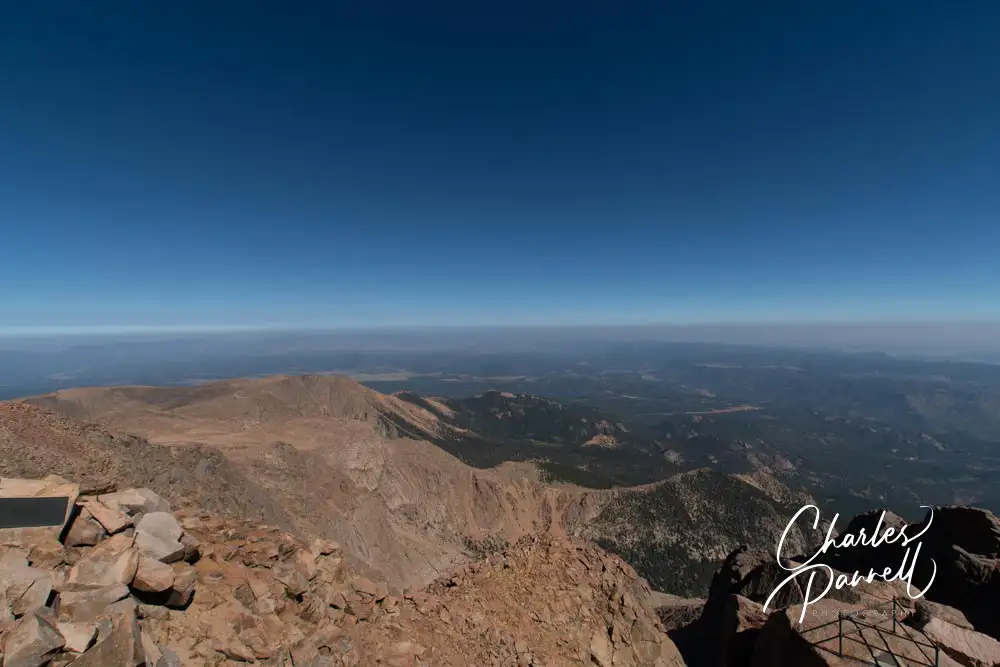
View from the summit of Pikes Peaks Highway
Barrier-Free Travel
Utah National Parks for Wheelchair-users and Slow Walkers
I know you’ve visited a lot of places, and I wondering what you think the most accessible destination for wheelchair-users and slow walker is. And why.
I’ve been covering accessible travel for nearly 30 years, and I’ve certainly seen some great examples of accessibility; including many places which go above and beyond the letter of the law.
Las Vegas (www.lvcva.com) tops my most accessible destination for wheelchair-users and slow walkers list. They truly have made it accessible to everyone. You can easily hail an accessible taxi at the airport, the monorail is accessible, and many hotels have wheelchairs or scooters for loan. Many properties have more than the minimum number of accessible rooms, and some hotels even have ceiling track lifts, (which are not required under the law.)
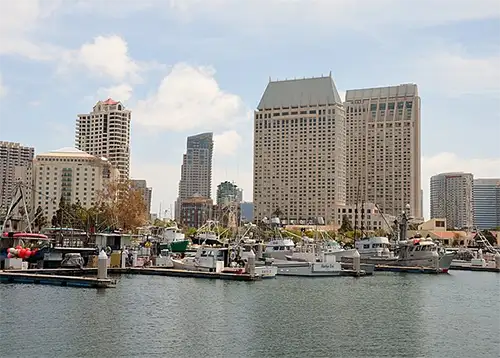
San Diego Marina
I also love San Diego (www.sandiego.org). Not only does it have the perfect climate year round, but there are free loaner power beach wheelchairs at many beaches. This is important because standard beach wheelchairs are heavy and awkward to push, while the power beach wheelchairs offer wheelchair-users independent access to the beach.
Old Faithful in Yellowstone National Park
And of course I love the US National Parks; in fact I’ve written many books about them. People with a disability can get a lifetime pass that’s good for free admission to all the national parks, and most of them have accessible trails, lodging and facilities. A National Park road trip is a good choice as you can easily pack along all your medical equipment, and take things at your own pace.
Cruise ship in Curacao
Of course cruises are also a popular choice for wheelchair-users and slow walkers. That said, before you pick a cruise, make sure that accessible shore excursions are available at your ports of call. Additionally, check to see if any of the ports are tender ports, as most tenders cannot accommodate wheelchair-users.
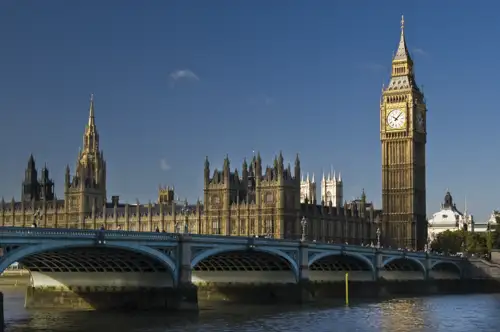
Houses of Parliament, London, England
Overseas, I like London, as all London Black Cabs are required to be wheelchair-accessible. Visit London Taxi Tours (www.visitlondontaxitours.com) even offers a wide variety of wheelchair-accessible tours. The tours are conducted in new London Black Cabs that are equipped with ramps, and each tour includes a knowledgeable local driver and guide.
Hope that helps. Accessibility is really improving worldwide, and wheelchair-users and slow walkers have many more choices today than they did 20 years ago. And I can imagine it will be even better 20 years from now.
Have an Ask the Expert Question?
Barrier-Free Travel National Park Lodges for Wheelers and Slow Walkers
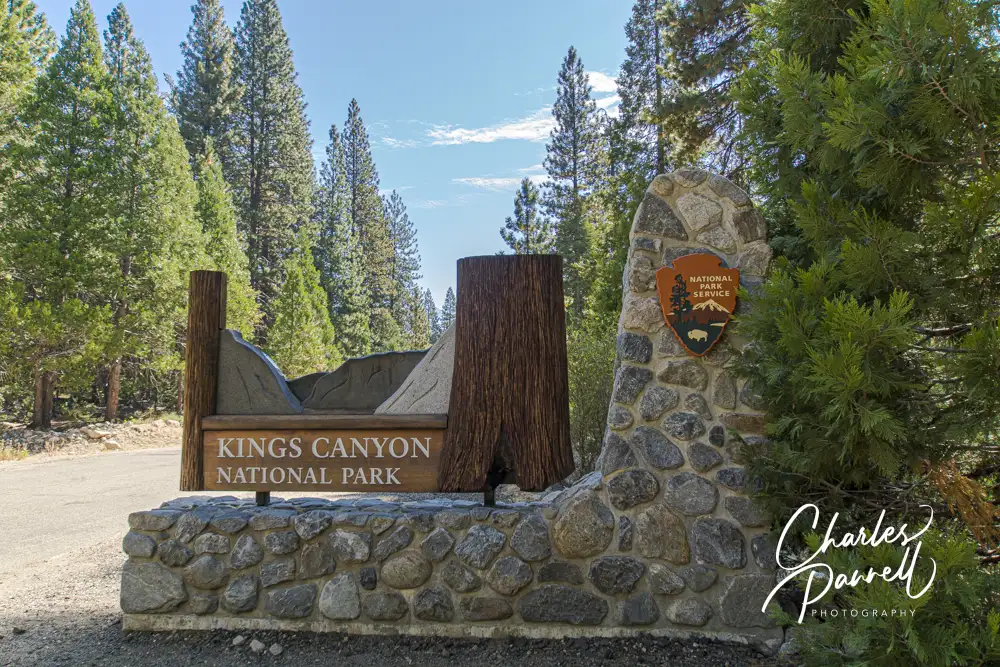
If a trip to the giant sequoias is on your spring travel agenda, then look no further than Kings Canyon National Park . Often overshadowed by the Giant Forest in nearby Sequoia National Park, the Kings Canyon section of the park offers an equally impressive stand of Giant Sequoias. And like its Sequoia National Park counterpart, the Kings Canyon grove boasts an accessible trail for wheelchair-users and slow walkers. So pack a picnic lunch, hit the road, and enjoy a visit to the Kings Canyon sequoias this spring.
Get Your Bearings
Known as the gateway to Kings Canyon National Park, Grant Grove is home to Giant Sequoia groves that were logged back in the 1800s, as well as stands of timber that were preserved for future generations. From Fresno, it’s just an hour drive on Highway 180 to the Big Stump Entrance of the park. From there it’s just a short drive to the Kings Canyon Visitor Center.
Accessible parking is located next to the Kings Canyon Visitor Center, with curb-cut access up to the sidewalk and level access over to the building. Inside, there’s plenty of room to maneuver a wheelchair around the ranger information desk, small book store and interpretive exhibits. There’s also level access to a small theater where a film about the park runs throughout the day.
From the visitor center, head over to Grant Grove Drive, which is located off Highway 180, across the street from the road to Crystal Springs Campground. This short but scenic route leads through a Giant Sequoia grove and terminates in the General Grant Tree parking lot. Even if you are unable to navigate any of the trails in the grove, this drive is a must-do, as it boasts several pullouts and offers some excellent windshield views of the grove. It’s a good way to get an up-close-and-personal look at the Giant Sequoias, even if you are unable to get out of your vehicle. The view from the General Grant Tree parking lot isn’t bad either.
Hike Around the Kings Canyon Sequoias
Trail to the General Grant Tree
One of the main attractions in this grove is the impressive General Grant Tree. This 1,700 year-old stately giant is 40 feet wide and towers 268 feet above the grove. And for a closer look, there’s a half-mile loop trail that leads out to the iconic tree.
The paved trail first passes a grove of young sequoias, then circles the gigantic Fallen Monarch sequoia, before it reaches the General Grant Tree midway along the route. Although the trail isn’t entirely level, it’s generally doable for most folks, with plenty of benches to sit and take a rest along the way. That said, the trail that leads around the back of the General Grant Tree is steep and not accessible, but you can still get a nice view from in front of the tree.
After the trail passes the General Grant Tree, it winds around the Gamlin Cabin, which was built in 1872 by a pair of brothers who grazed sheep in the area. The trail then edges by the Centennial Stump (a 16-foot section of this tree was displayed at the 1876 Centennial Exhibition in Philadelphia), and passes by the other end of the Fallen Monarch, before it returns to the parking area. As an added bonus, the grove is shaded, so it makes for a nice stroll even in the midday sun. And it’s the perfect way to top off a springtime visit to the Kings Canyon sequoias.
Barrier-Free Travel Yosemite, Sequoia and Kings Canyon National Parks for Wheelers and Slow Walkers
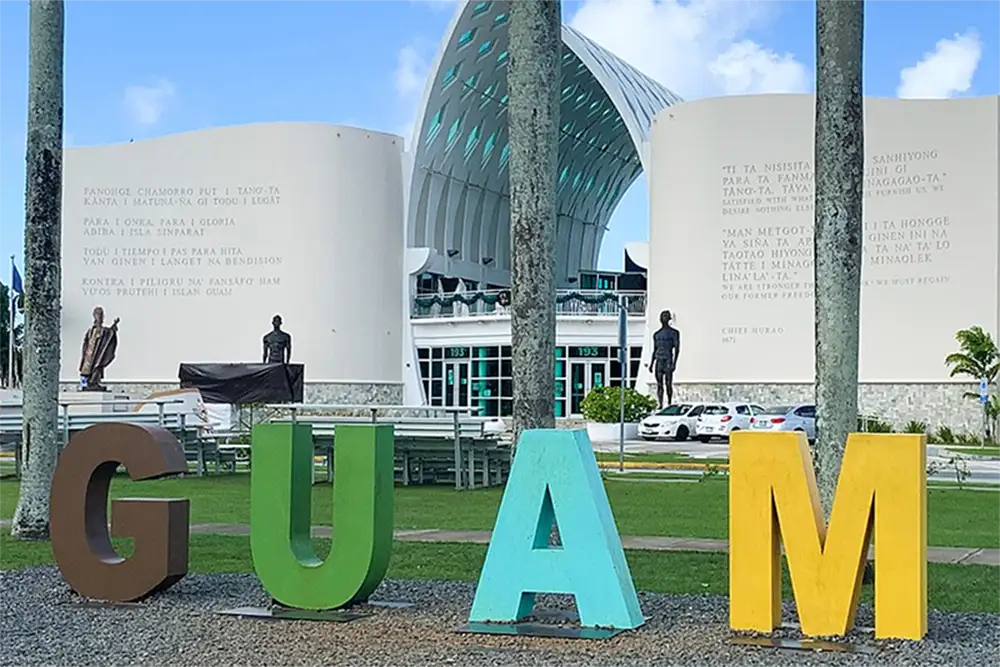
If you’re looking for wheelchair-accessible transportation in Guam, then look no further than Accessible Van Transportation Services (www.avtsguam.com). They serve all 19 villages in Guam and can provide transfers in a wheelchair-accessible van to all the airports, seaports, and hotels on the island. They also offer customized tours of the island, based on the interests and preferences of their clients. For more information about their services call (671) 898-8695 or e-mail avtsguam@gmail.com.
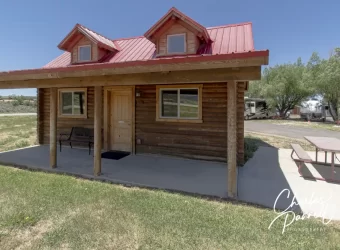
Located about 1.5 miles from the entrance to Red Canyon along Scenic Highway 12, Red Canyon Village (www.redcanyonvillage.com) makes a great home base for a Utah national park road trip. It’s just a 20 minute drive to Bryce Canyon National Park so you don’t have to get a 4 AM start to beat the rush. Plus, you can easily wander over to Red Canyon to enjoy the sunset at the end of the day. And since it’s a small complex with some RV spaces and cabins, Red Canyon village is a peaceful and secluded spot to spend the night. Even better — they also have a nice wheelchair-accessible log cabin.
Red Canyon Village
Although there’s a small step up to the front office in Red Canyon Village, just call (435) 676-2243 and the clerk will gladly bring out your key. Log Cabin 12 — the accessible unit — is located a short walk from the office. And although there aren’t any paved parking spaces in the complex, there’s plenty of room to park parallel next to the accessible cabin.
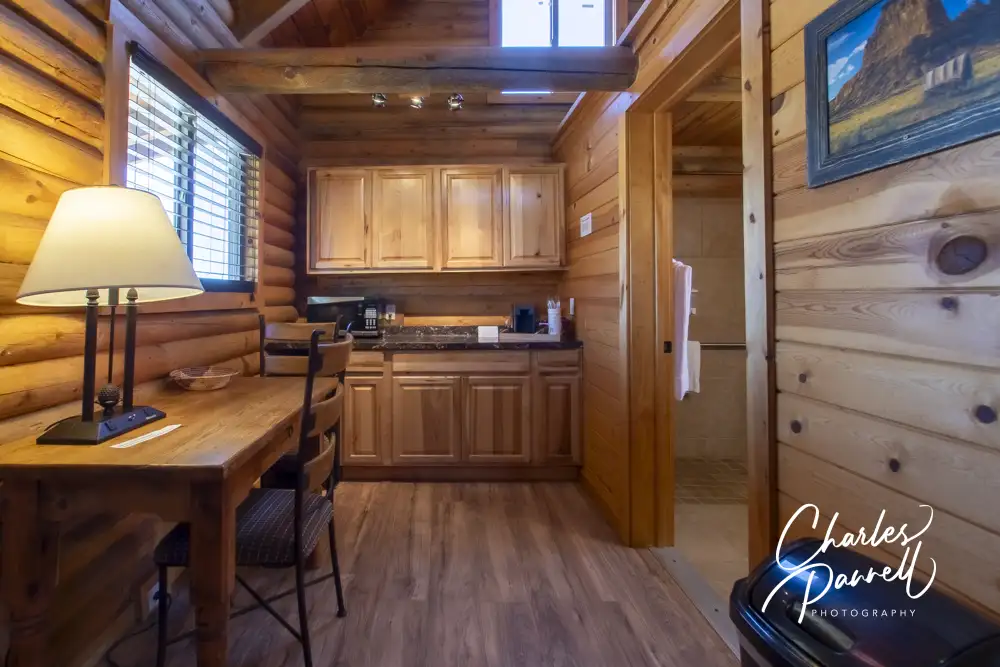
There’s level access to the cabin, which boasts open beams and a wood interior. Access features include wide doorways, laminate floors, lever handles, a lowered clothing rod and good pathway access. The main room is divided into two areas; with the bedroom and living area on one side and a small kitchenette on the other side.
Living area in Cabin 12 at Red Canyon Village
The living area is furnished with a 26-inch high open-frame king-sized bed, which can be moved to allow wheelchair access on either side. Other furnishings include, a nightstand, a mirror, a luggage rack and a loveseat. The kitchenette is furnished with a table, two chairs, a microwave, a refrigerator and a coffee maker. It has everything you need for a snack, a quick meal, or a morning coffee break.
Kitchenette in Cabin 12 at Red Canyon Village
There’s barrier-free access to the bathroom, which is equipped with a roll-in shower with grab bars, a hand-held showerhead and a portable shower bench. It also includes a roll-under sink, and a toilet with a grab bar on the left wall (as seated).
Bathroom in Cabin 12 at Red Canyon Village
Top things off with a roomy paved front porch with plenty of room for a wheelchair, and you’re good to go. There’s also a standard picnic table on a cement pad next to the porch, with room for a wheelchair on the end. And if you forget anything, there’s level access to the The Red Canyon Indian Store and Rock Shop next door.
Barrier-Free Travel
Utah National Parks for Wheelchair-users and Slow Walkers


 If you’d like to explore Montana’s State Parks, but don’t think you can navigate some of the trails in your wheelchair, then rest assured there’s now a viable solution. Action Trackchairs are now available for loan in Lone Pine State Park (


 Las Vegas (



 If you’re looking for wheelchair-accessible transportation in Guam, then look no further than Accessible Van Transportation Services (